
*
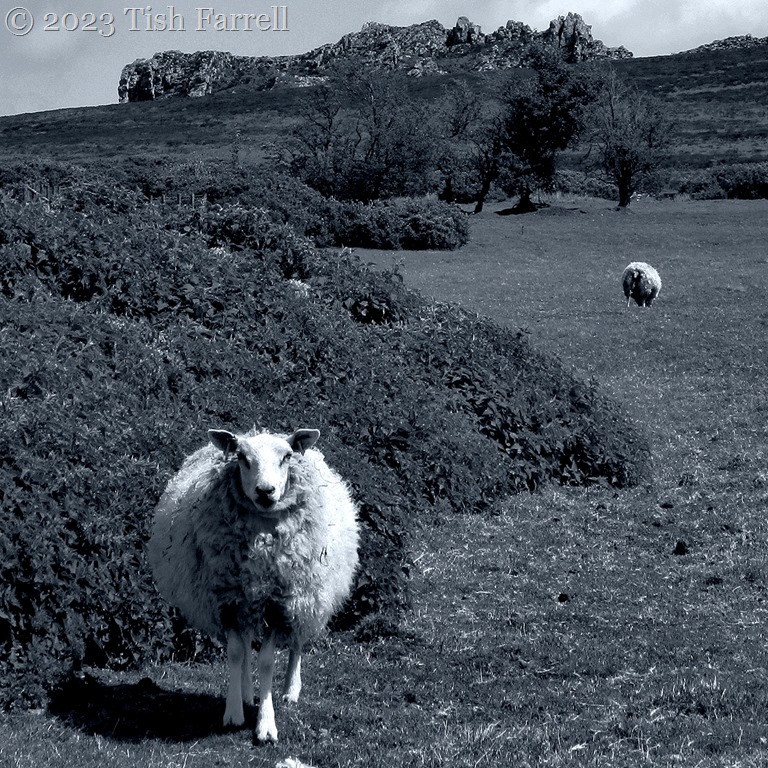
The sheep eyeing me here is posing so neatly beneath the rocky outcrop of the Devil’s Chair. She is clearly untroubled by that landmark’s eerie and supernatural associations.
This is a stunning landscape, the hills rolling westwards out of Shropshire and into Wales. But it is no easy place to live, the ground marginal, rocky and exposed to all weathers. These days, many farming families struggle and must deploy much ingenuity to keep a viable foothold in the small upland communities, sheep being the primary source of income. Yet, as managed wildernesses go, this is surely priceless terrain; rightly protected and designated an Area of Outstanding Natural Beauty.
It is also a landscape that has been inhabited across five and more millennia. The prehistoric people who lived here left us many signs of themselves – their cycles of living and dying, their field systems and burial cairns, house circles, standing stones, hillforts and henges. The fields, in particular, appear to be at altitudes too exposed for successful cultivation. But then there is also evidence from various post-glacial times indicating the climate was warmer than today, particularly during in the Bronze Age. So perhaps those prehistoric farmers did enjoy their place in the upland sun and a spell of good growing and grazing.

There are other historical ironies. The whole locality is riven with old lead mine shafts and workings, some dating from Roman times, but most belonging to the lead mining heyday in the 1850s when the nearby Snailbeach Mine employed 500 men and was known as the richest land per acre in Europe. It is hard to comprehend this now. Other valuable minerals were also extracted: barytes (the main source of barium used in the taking of X-rays), zinc, calcite, fluorspar and even some silver.
Now lamb chops are the primary resource along with farmhouse B & Bs catering for holiday hikers and cyclists. But also, we can be glad to hear, after many difficult years, hill farmers are now being given credit and support as they continue to farm environmentally protected landscapes.
Here’s a nice story of smallholder Hare Hill Farm and how its owners are making a living with sheep and vegetable growing.
*
*
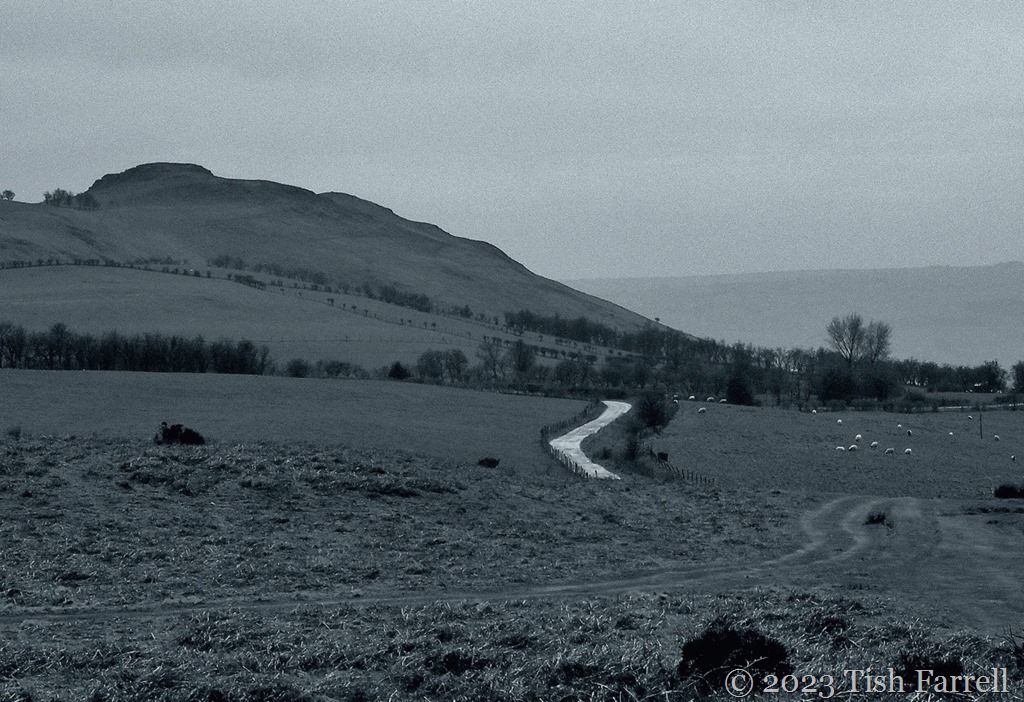
Corndon Hill, Powys border sheep country.
Photo taken from Mitchells Fold Stone Circle
*
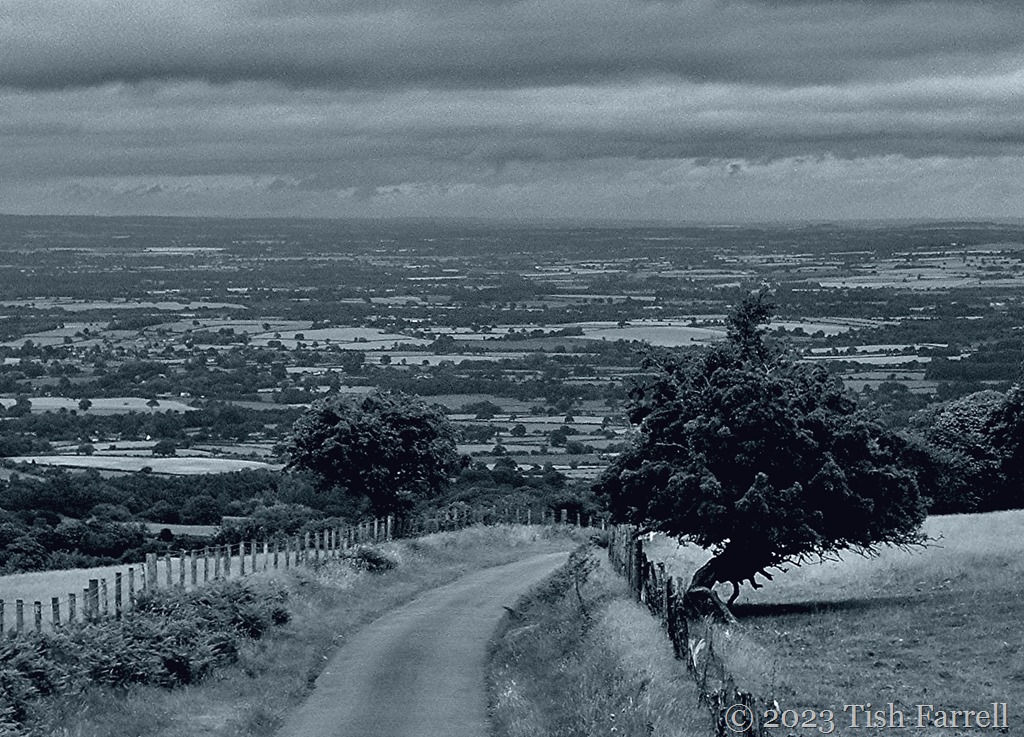
By contrast, the easterly parts of Shropshire below the hill country, are plain-like. As you can see, it is largely farm fields and scattered habitation. Most production is arable (wheat, barley, hay, oil seed rape, root crops including sugar beet, maize) with some beef, pig and dairy farming.
Photo taken from Shropshire’s most famous hill, the Long Mynd.
*
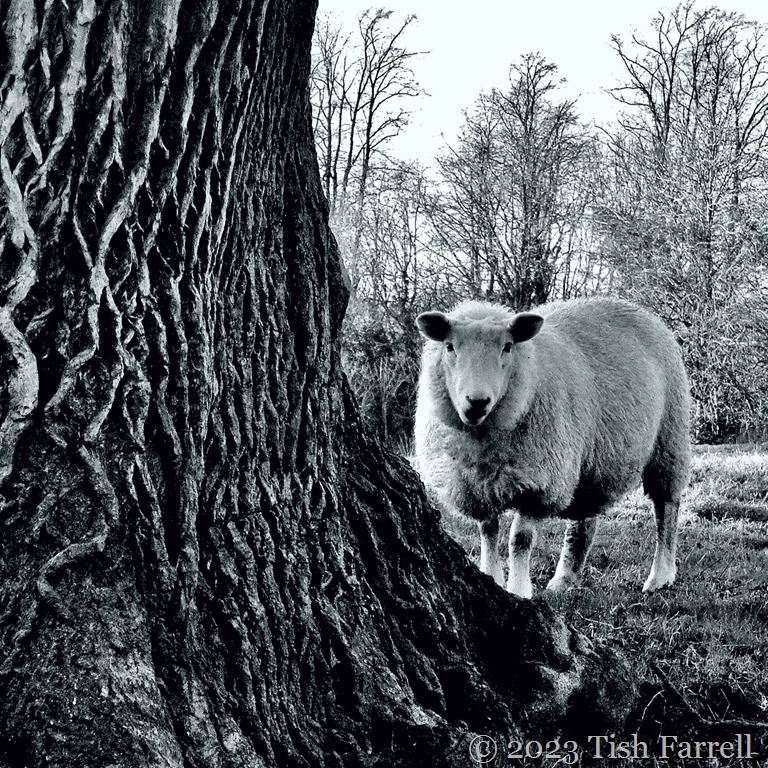
And now for a favourite sheep photo. One of a flock of sheep, so I was told, brought from Wales to Much Wenlock for a spot of sheltered winter grazing on the Wenlock Abbey estate.
*
To find out more about Shropshire’s Area of Outstanding Natural Beauty and all the things that go on in our beautiful uplands, take a look at the AONB site HERE. Lots of stunning photos.
*
Cee’s Black & White Photo Challenge: all things farm related

What a wonderful post for this week. I adore your photos 😀 😀
Thank you, Cee. Happy Weekend!
Cardingmill Valley- what a walk that was, Tish! You seem to be settling well.
Nowhere quite like Carding Mill. Not been there lately. Typical, when one has a good spot like that on the doorstep, though it’s apparently grown very crowded in the last couple of years.
Ah, Cardingmill valley….long time since I was there…. And once upon a time I tried unsuccessfully to find any remnants of Snailbeach
There’s quite a little visitor centre at Snailbeach now, i.e. amongst the remains the lead mine buildings.
Oh, interesting
I would have found this fascinating, but it opened some years after my parents had left the area
Good info and the sheep look to be ready for a clip.
They are very woolly looking. June is usually clipping time.
Sheep after shearing always look…well, a bit sheepish without their woolly coats. 🙂 Glad to see yours are still decked out. I love lamb chops so hurrah for that and also for ” hill farmers are now being given credit and support as they continue to farm environmentally protected landscapes.”
Happy you liked the woolly coats and more besides, Janet. I wish I hadn’t mentioned the lamb chops. Making me hungry 😉
Me too!
Beautiful shots here, Tish. I love the shot from Long Mynd hill.
Cheers, Thom.
Great photos, especially that last one! It’s good to hear the farmers there are getting some support, it’s the only way landscapes like this will survive I suspect.
Thanks, Sarah. You’re right about the need for farmer in-put in landscape preservation. The National Trust is also involved with environmental management of the Shropshire uplands, working together with farmers.
It’s good to know that you have local farmers determined to work in environmentally positive ways.
I think farmers are much more aware these days, which can only be a good thing.
Reblogged this on Hutts Ultra Blogging World.
Now I understand why mutton is so popular in the UK. 😉
🙂 🙂 🙂
🐏 🐑
Hi Tish
what a good idea to present these pictures in black and white. That creates a special arty atmosphere we like.
Thanks for sharing
The Fab Four of Cley
🙂 🙂 🙂 🙂
Thank you for those appreciative words, Klausbernd 🙂
Your gallery is stunning and I love your favorite sheep photo.
I love the way it scrutinised me so blatantly.