Once On Mombasa Beach

img059sq

Our first stint in Kenya was meant to be for three months. It stretched to nine, a long time to be away from home when none of it had been planned. On our return to the UK in September ‘92 we weren’t sure what would happen next. But come November we were flying off to Lusaka, Zambia, on another short-term contract.

This time Graham was seconded to the EU Delegation to take charge of the Commission’s food aid distribution. Zambia had been suffering a prolonged drought, but as it happened, and fortunately too, our arrival coincided with a return of good planting rains; food aid was only needed to bridge the gap until harvest time. And so once again, like strange migrating birds, we left Africa in September. And once again, two months later, we were heading back again, to Kenya on yet another short-term contract, this time to close down the Larger Grain Borer project based at the Kiboko research station. This was the project Graham had been attached to as a consultant in 1992. (See previous post).

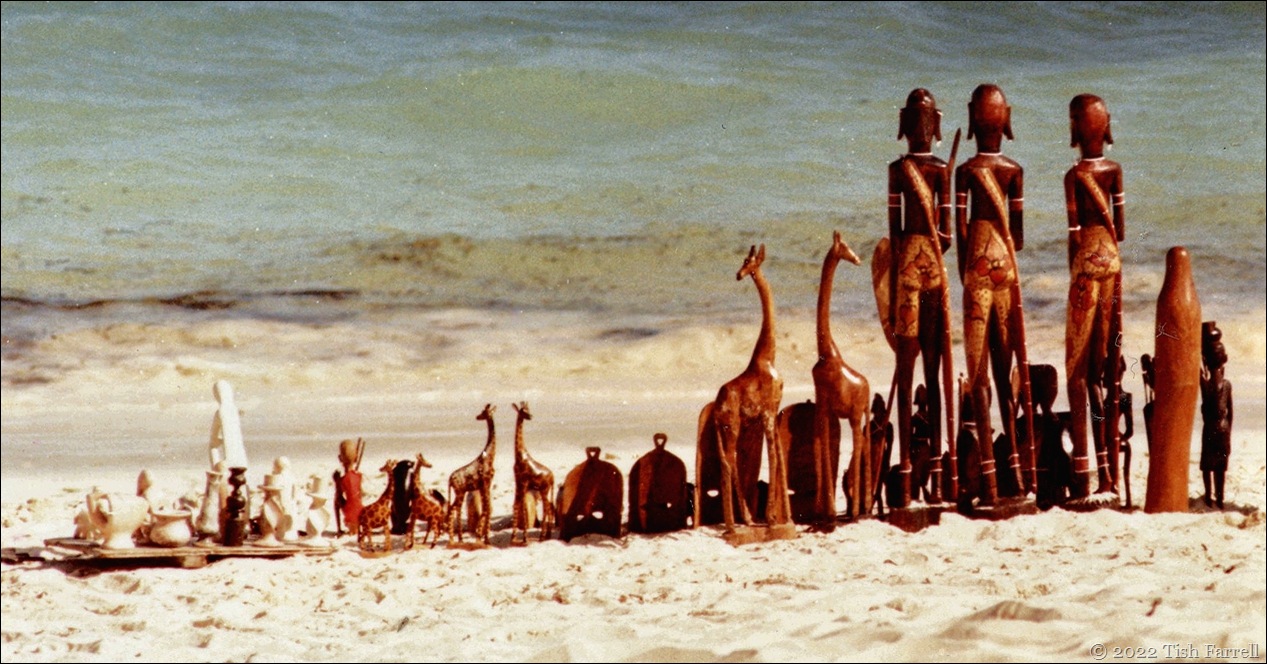
A year later, we were still in Kenya, one contract having evolved into another. In December ‘94 Graham, as head of the UK crop protection project, had to chair a three-day agriculture conference in Mombasa. I went too and, as I had the use of a rather good camera,  I spent my days sitting under a palm tree in the hotel garden, looking out on a slice of Indian Ocean, sometimes taking photos of the passing beach traffic.

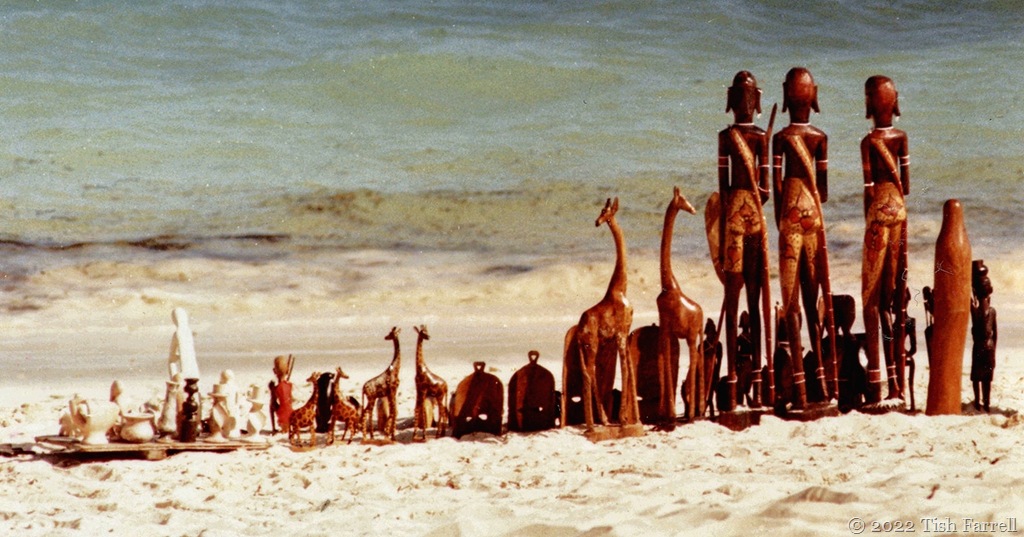
Hotel beachfronts around the world are places where business is done. Mombasa beach is no different and young Kenyan traders are smart, quick to cater to all tourist wants. The Akamba wood carvings and makeshift stalls of kanga wraps are among the more innocent lines of merchandise, although often the means of making contact and enabling further transactions.

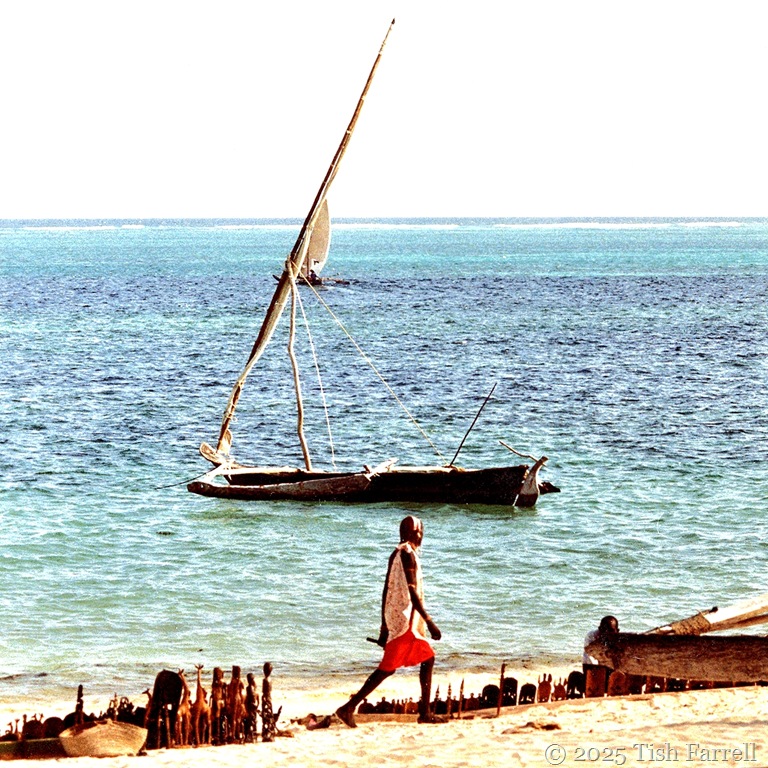
Needless to say the deemed exoticism of Maasai morani (young men of the warrior age set) can hold a particular appeal to visiting women of a certain age. So much so, enterprising lads of other upcountry communities might don the gear and pass themselves off as Maasai, or so a Kenyan friend told me.

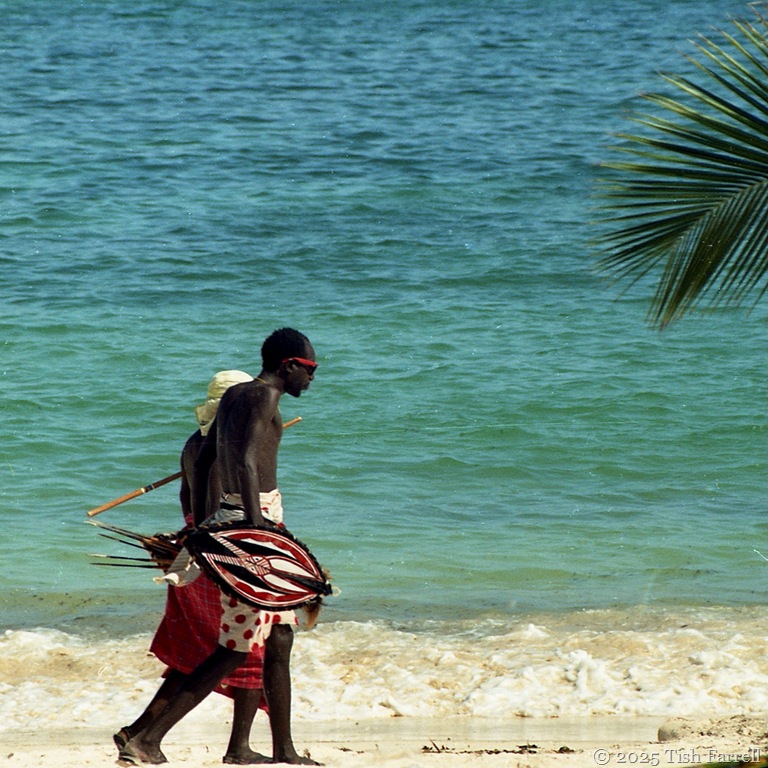
That said, I’d bet that the young man in the header is Maasai, that lilting stride and spare frame. He could be a member of one of the traditional dance troupes employed by the big hotels. These next guys, though, look more like beach-wise traders with their made-for-tourists weaponry. Very cool sunspecs and matching kanga wrap though:

Mombasa beach traders

img049 header


#SimplyRed Day 16


Letters From Lusaka #5 ~ The Road To Petauke And The Man With The Yellow Maize

Eastern Provinceed

In 1992-1993, during the first years of Zambia’s multi-party democracy, we were posted to Lusaka, Zambia’s capital. Graham was charged with organising the distribution of European Union food aid to drought-stricken Zambians. (Part 1 is HERE and part 2 HERE and part 3 HERE and part 4 HERE)
zambia-political-map

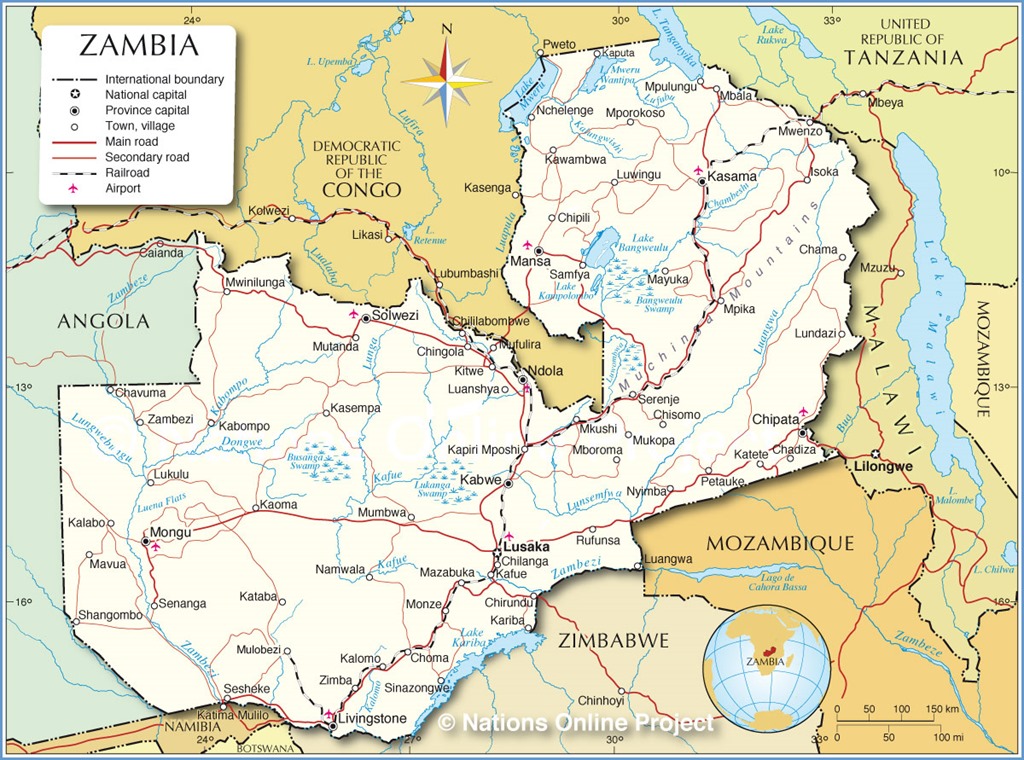
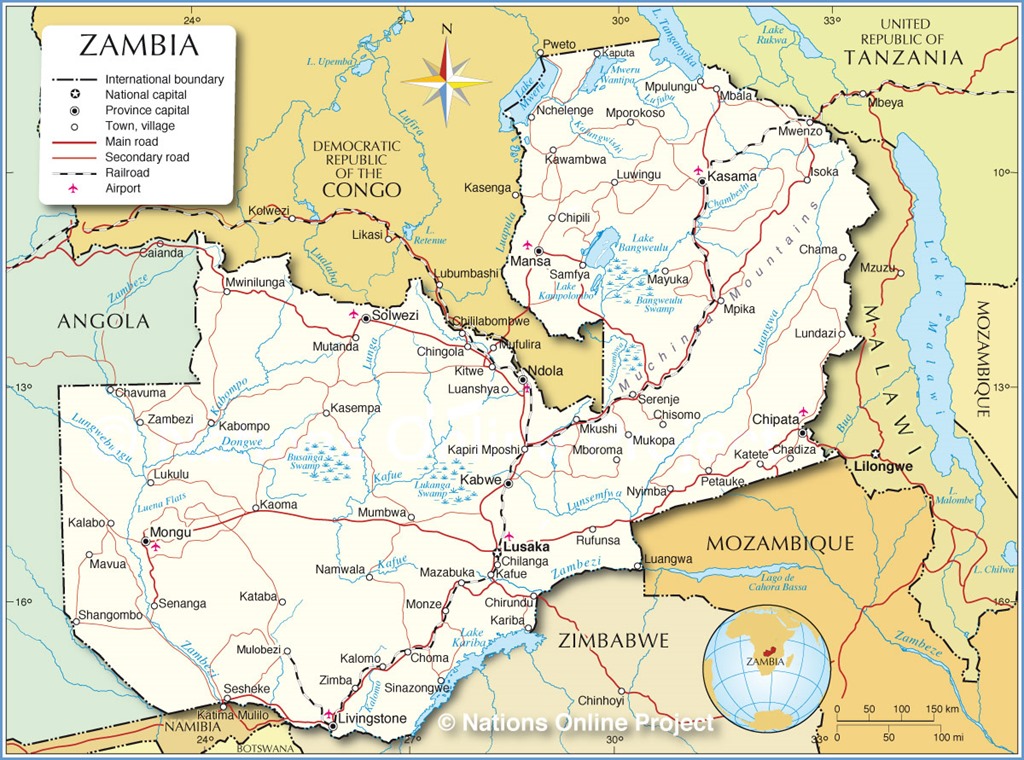
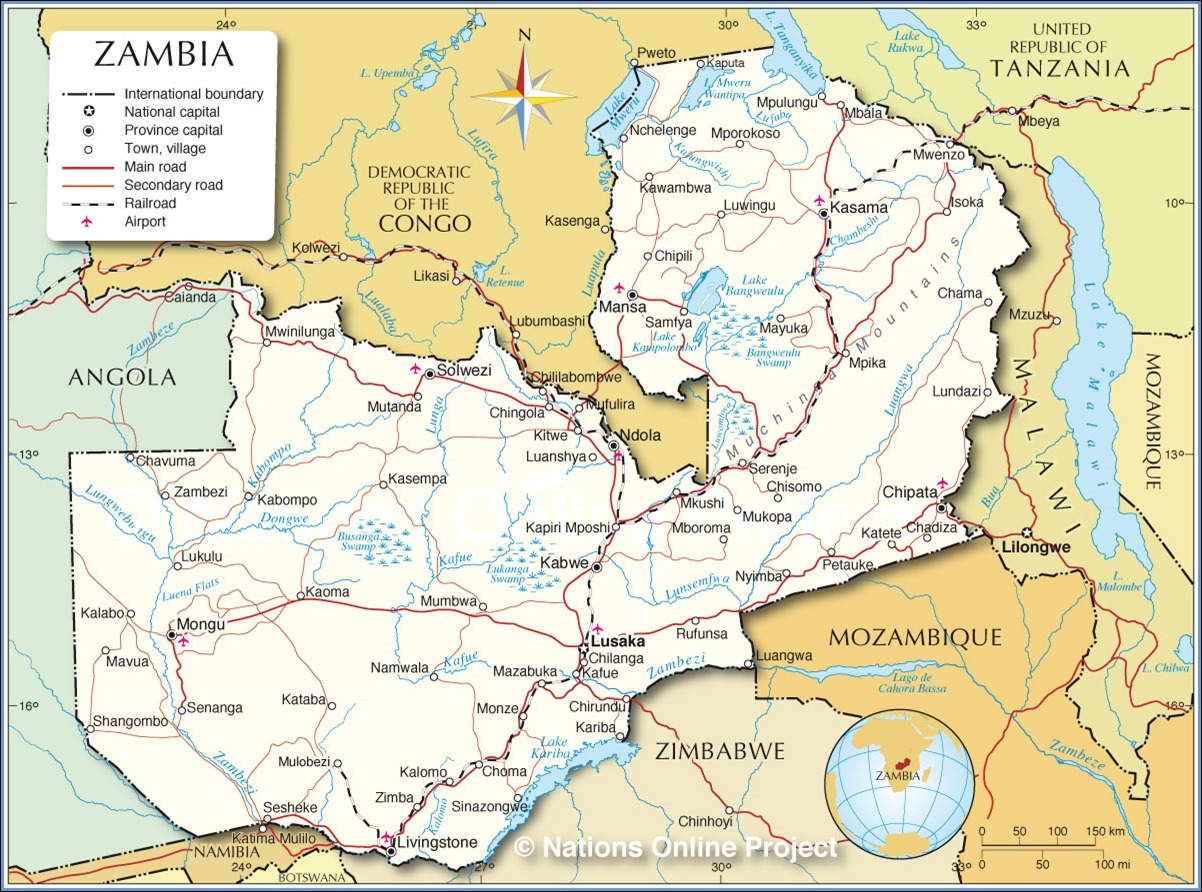
Early in April 1993 Graham has another upcountry mission, this time to check on the arrival of maize at the Ukwimi refugee settlement area near Petauke, Eastern Province. The initiative, in an area north of the Mozambique border, is managed by the Lutheran World Federation, an organisation overseeing some 25,000 refugees in 73 villages spread over 300 square kilometres, an area that also includes several indigenous Zambian communities.

The incomers are village farming folk who have fled the civil war in their own country. Many among them share both language and cultural traditions with Eastern Province Zambians (i.e. communities historically divided by colonial map makers). At Ukwimi they are settled on parcels of land and given every assistance to become self-sufficient. In April 1993, with peace negotiated between Frelimo and Renamo forces, most recent cross-border arrivals in Ukwimi have been driven there by hunger.

*

It’s a 400 kilometre drive to Ukwimi HQ*, and another Monday morning appointment. We set out on Sunday at midday, leaving Lusaka on the Great East Road. The sky is overcast and it’s rather cool.  As we pass by large dairy farms, among them Waterfall Farm owned by mining conglomerate Lonrho, the sight of green fields with Friesian cattle tells the brain we’ve somehow been flipped to Cheshire in the English Midlands.

But no. Now there are here-and-there banana thickets, palm trees with swollen boles and dishmop tops. And now we’re in bush country and the road stretching out. And now there are no other vehicles, but there are people, and we soon find that Zambians have many uses for highways beyond driving on them. We begin to see many people carrying palm fronds. It is Palm Sunday and the devout are walking down the middle of the road. And why not choose a smooth path.

Young lads sit on the road edge, leaning back, hands on the tarmac. They simply seem to sit and sit.

At Changwe there is a roadside trading centre with a few stores and a smart hacienda style bar and restaurant. We pass a bicycle race there.

At one point we bowl over a crest in the road and come on a big church gathering, filling both carriageways. People are singing and drumming. The crowd parts like magic and with great good humour, they wave us through.

*

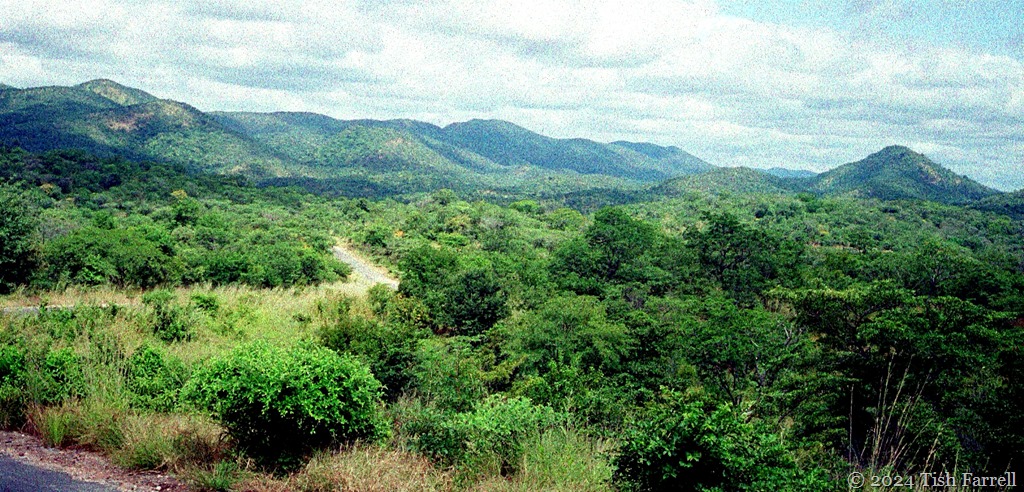
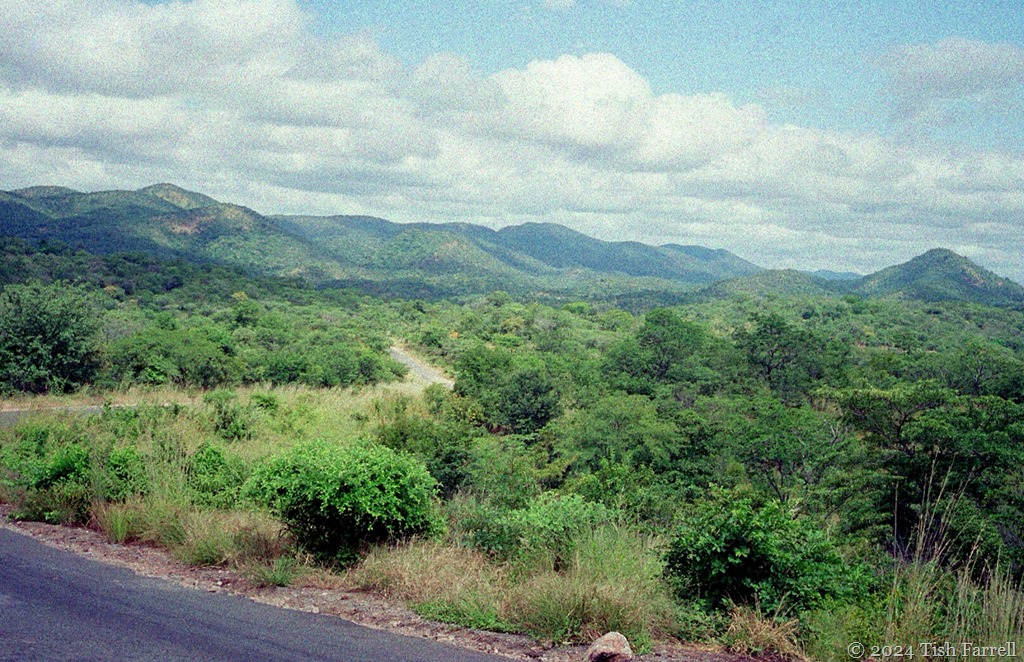
Bush country flanks the asphalt, tall grasses on either hand and beyond them glimpses of shaggy thatched roofs, clusters of dwellings under thorn trees, small plots of maize. In places where the bush meets the tarmac there are hand-painted signs announcing the presence of bus stops, the gates to small farms: Mulenga, Mulaliki, Mulawzi; to the local medicine man.

We are travelling along a low ridge, to the south the land falls away in lightly wooded plains; to the north is a spine of blue hills. There are road-side stalls selling pumpkins and squashes of all shapes and sizes. There are wigwams of sugarcane, neat cords of firewood, sacks of charcoal. A woman walks by with a large zinc bath on her head. As she stops to adjust the load, a wave slooshes over the edge. The sight takes my breath away. I feel my spine contract.

And still there are few other moving vehicles along the road although we see many stranded broken ones.

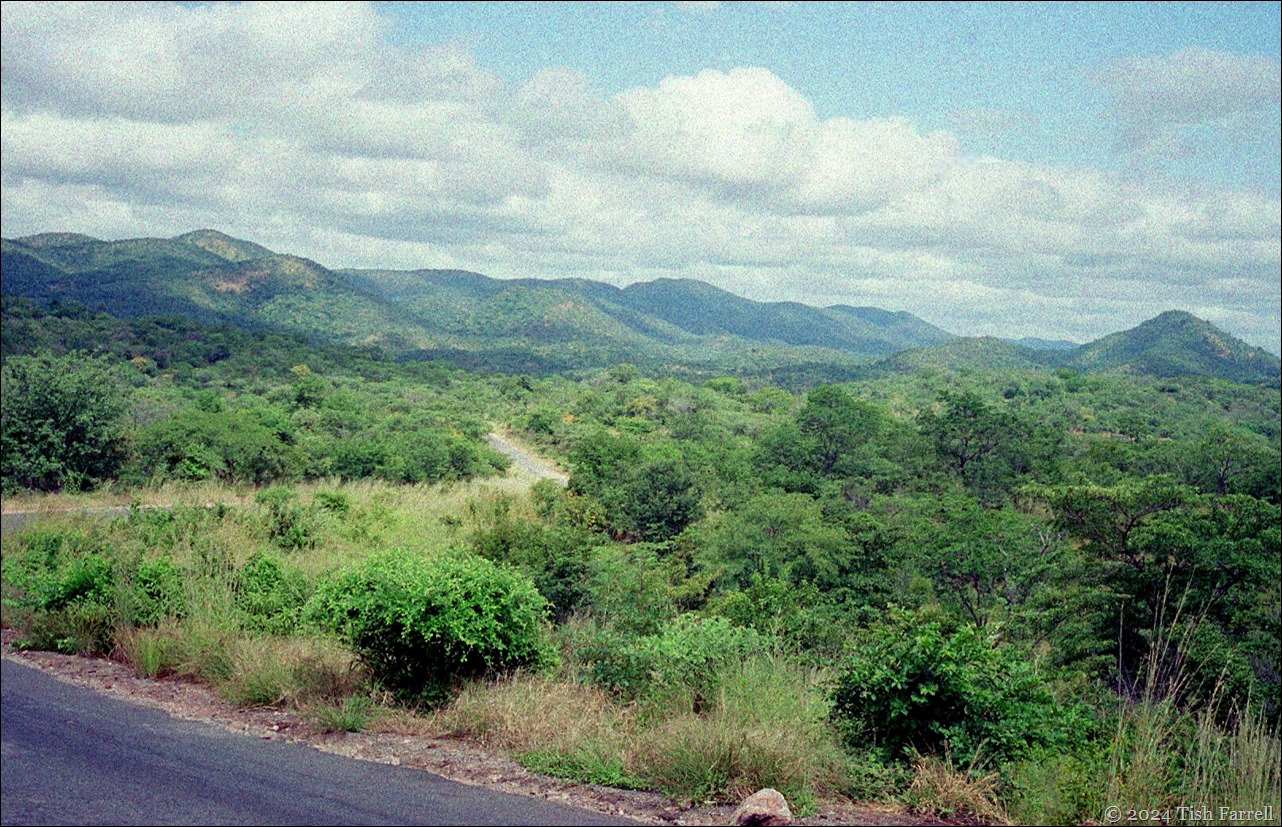
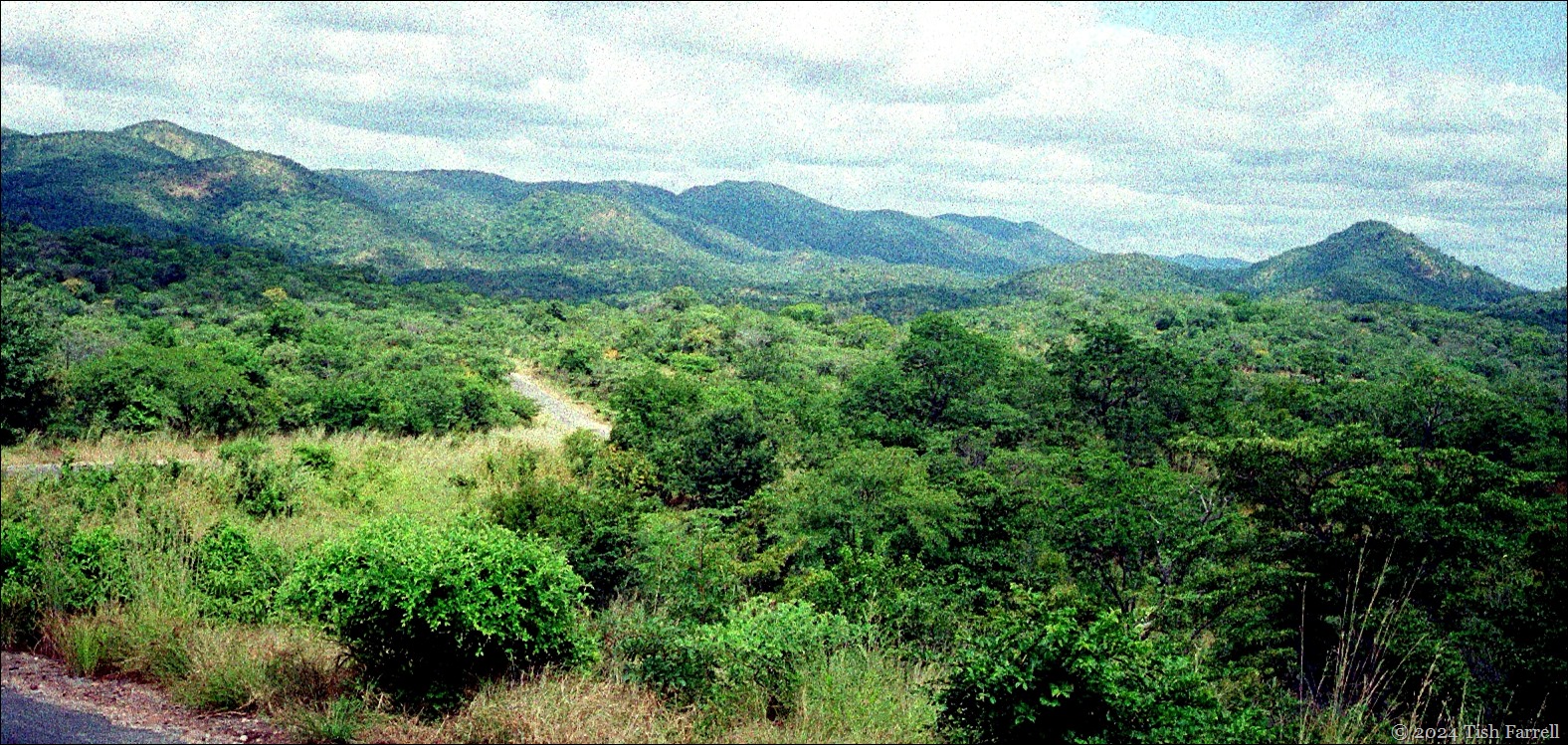
Now the countryside is more hilly and densely wooded. There are roadside flowers, deep yellow daisies, pale yellow hibiscus, and a plant that looks like broom (also yellow). The villages have little thatched gazebos on the top of knolls with seats so you can look out to the blue hills. Meanwhile, the road that was good is not so good. There are big potholes, and to add to the driving confusion, some are filled with red dirt and others not. Where the road cuts through rock, it is carmine red and glinting with quartz.
Eastern Province Luangwa Valley 2 ed

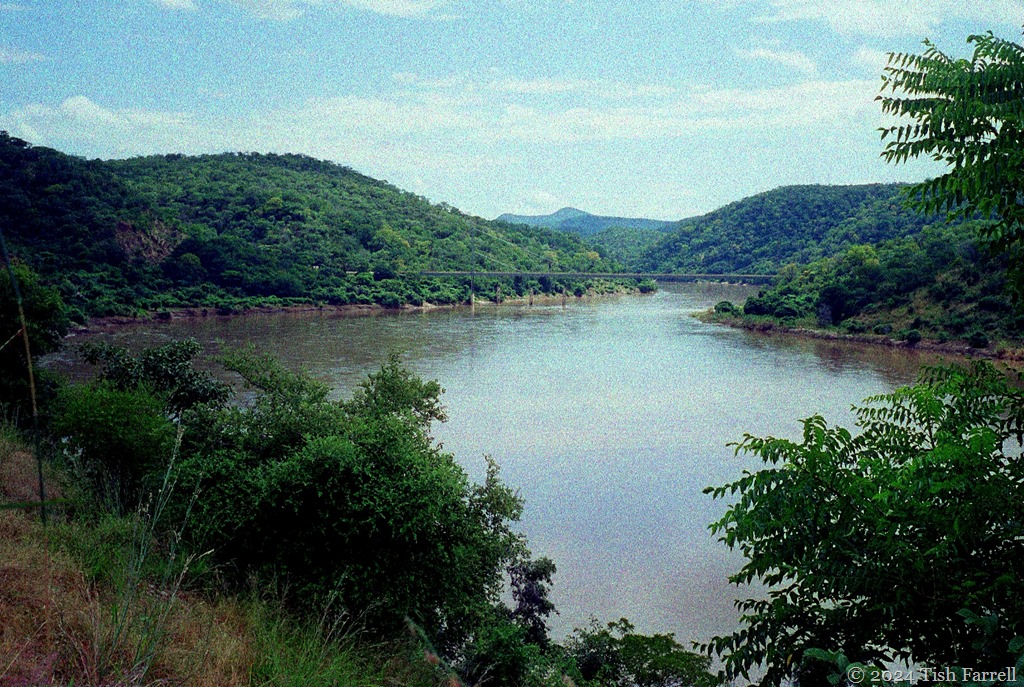
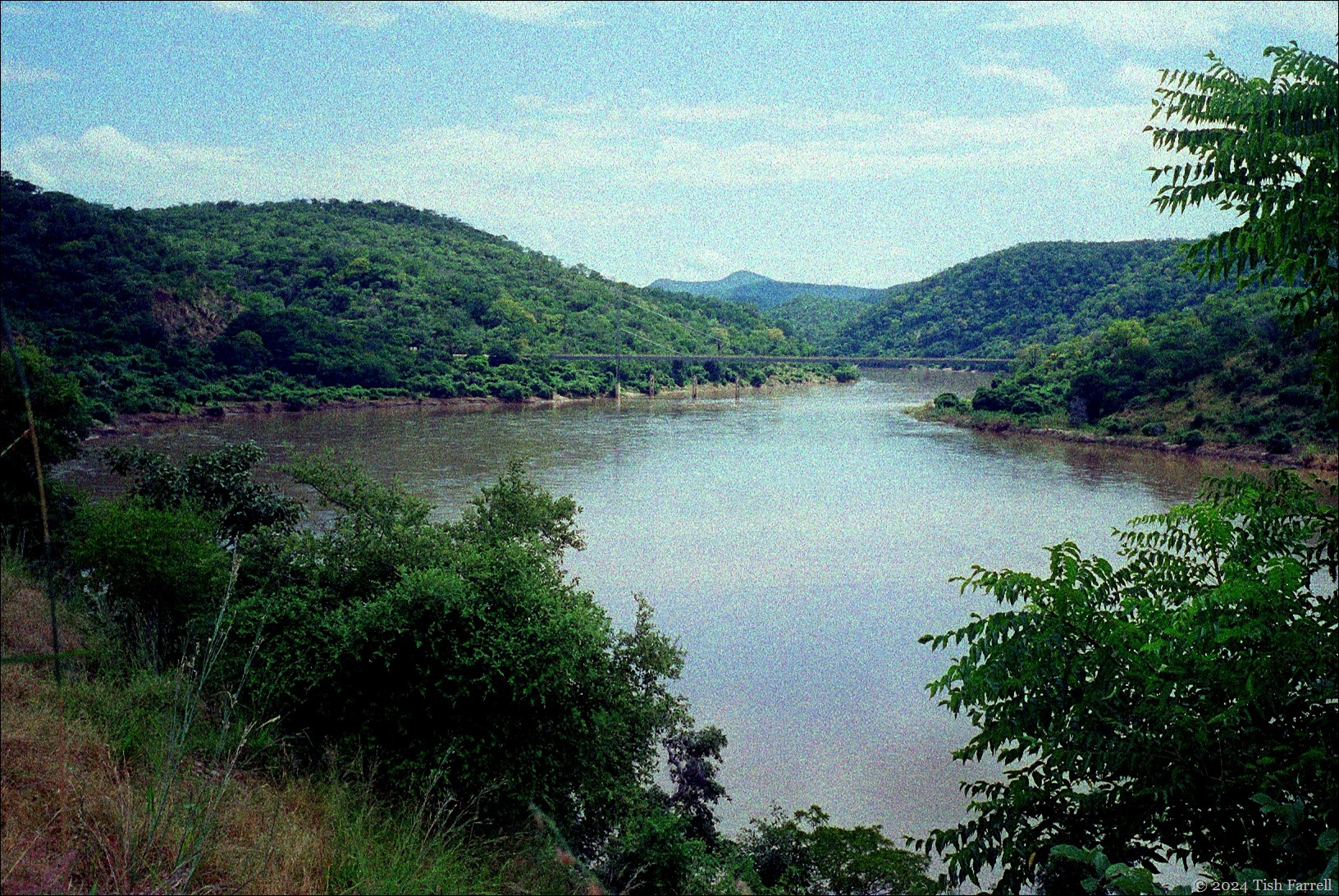
We cross the broad expanse of the Luangwa River between wooded gorges. There is a suspension bridge opened in 1968 by former President Kenneth Kaunda. It looks sturdy enough, but a sign instructs drivers that only one vehicle at a time may cross, speed limit 10 kph. And so we cross.

About 50 km from Petauke we drive through a small village and fail to stop at the police check point. There is no one manning it. But ahead a khaki figure dashes from a roadside hut and waves us back. My heart sinks. We’ve had some uncomfortable moments at Kenyan checkpoints. But the young officer is charming. He apologises for not being in the road where we would have seen him. He had been growing too hot standing there, he says. We can see his point, but he still wants to see some I.D.

As Graham fumbles with his brief case, trying to find something that might serve, he says he works for the European Union. Ah, says the policeman, the man with the yellow maize. Some of your trucks have already gone through.

Graham says he is going to Petauke to check on their arrival. The officer smiles broadly and asks Graham for his name, salutes me with a “Madame” and bids us farewell, all without need of paperwork.

Further on at the turn for Petauke there is another road block. This time we are questioned by a young man who is clearly not a policeman. He tells us he is acting on his brother’s behalf.  “Just to be friendly”, he says, “my brother needs to know who you are.” He is happy with Graham’s business card, finally retrieved from the brief case.

Now the roadside shopping opportunities include furniture, items parked in splendid isolation in the bush – a bed,  a dining table, a row of Adirondack chairs.

Most striking of all is a lone Welsh dresser – the full deal, cupboards below, shelves above. There it stands, surrounded by elephant grass, challenging me, like one of the White Queen’s six impossible things before breakfast. And I wonder from what colonial or mission original was this piece so faithfully copied? And who does its maker think will buy it, here on the road to Petauke where so few people with the means to transport it seem to pass?

I’m still wondering when we check into the Nyika Motel and are shown to our bungalow. The bedroom walls are turquoise with orange paintwork, the chandelier green with most of its drops missing, curtains blue, the bedspread blue and black nylon, dark green cloths on the coffee table and sideboard – a colour scheme to jangle the nerves. But it does not matter. The place is scrupulously clean, with plenty of hot water, although we have to improvise a bath plug.

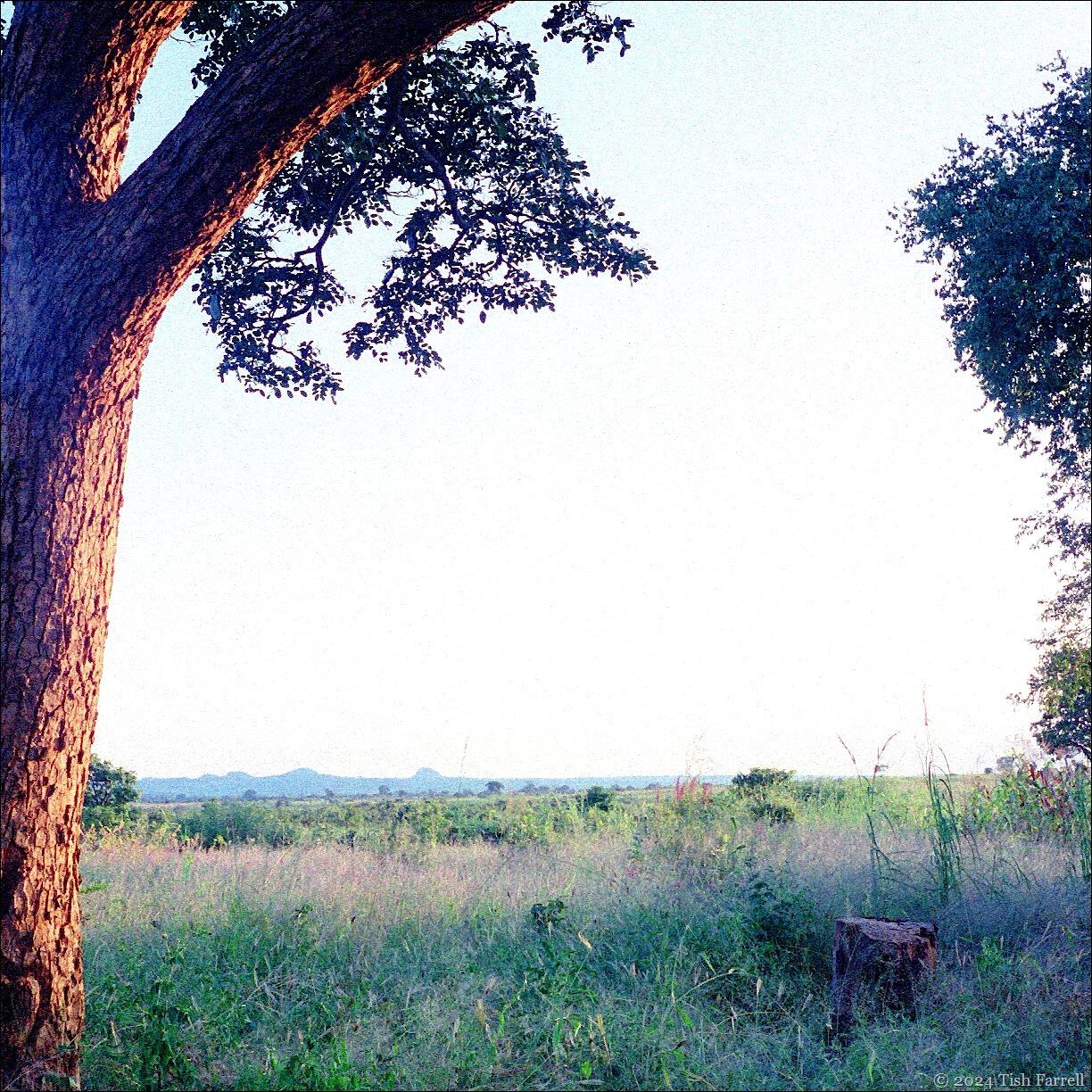
By now, the late day sky has seen off its gloom. There are magnificent cumulus cloud formations against the blue. We sit on the doorstep and watch the sun go down over the bush country, strange rocky outcrops to the south. There are rufous swallows, drongos, mousebirds, the bubbling call of the water bottle bird. The crickets tune up. There is lightning, wind in the thorn trees. I’m so glad to be there.
Eastern Province sq

Copyright 2024 Tish Farrell

*Ukwimi HQ is now a Trades Training Centre for Zambians, the refugee centre no longer needed.
Eastern Province heaader

Letters From Lusaka #2: of roving armies, the cholera season and making a new home

Lusaka agricultural show - kids ed

In 1992-1993, during the first years of Zambia’s multi-party democracy, we were posted to Lusaka, Zambia’s capital. Graham was charged with organising the distribution of European Union food aid to drought-stricken Zambians. (Part 1 is HERE)

002

*

While we are still ‘living’ at the Pomodzi Hotel, and Graham is away at the European Union Delegation, getting to grips with his mission while walking a tightrope of diplomatic protocol, I do the unthinkable as far as white locals are concerned. I walk out of the hotel grounds and down a couple of avenues to the Ridgeway Hotel. One of Graham’s  Natural Resources Institute colleagues, a regular visitor to Lusaka, has told me the place has a good gift shop, and that there may be a chance of finding some local books.

I set off on the basis that as I am not travelling by car, I will not be car-jacked. I am not. The gift shop is wonderful, brimming with Zambian craftwork. I buy a beautiful Tonga basket and a small olive-wood elephant for luck. I have it still on my Bishop’s Castle mantelpiece.

IMG_7545

*

I’m disappointed to find no books at The Ridgeway, but I do find a map: a Lusaka street map one side, Zambia on the other. At last we can properly see where we have landed. I study the country’s boundaries, trying to make sense of the colonial cobbling that created a nation whose North Province lies to the east of its Central Province. (The British were here in erstwhile Northern Rhodesia for the copper).
zambia-political-map

*

The country nestles in the heart of southern Africa between eight countries. In outline it resembles a foetal chick curled on its back within a protecting shell. In reality, though, I soon learn that Zambia has no such protection. It simply has too many borders and not enough military personnel. In 1993 there are only some 300, 000 taxpayers in a population of eight million, which is not enough to pay for more soldiers. The north-west border with Democratic Republic of Congo is lethally porous. Members of then President Mobutu’s own unpaid armed forces regularly drive into Zambia’s Copper Belt and conduct armed pillaging campaigns against innocent drivers and householders. Sometimes they come as far south as Lusaka.

*

We are told that when driving at night, we must never stop at red traffic lights (locally called robots), since this is the moment that car-jackers will choose to pounce. Over in Eastern Province the threat comes from the conflict in Mozambique as RENAMO guerrillas cross the border to shoot up Zambian buses and steal food. In Western Province UNITA fighters from Angola’s war terrorize Zambian villagers. Famine, then, is only one cause of death; there are many others, and the mineral resources that Cecil Rhodes sought so hard to control through his dark-hearted dealings with local chiefs are high on the list.

Then there is malaria and tuberculosis, and as the rains bucket down through December, the cholera season begins. Overflowing septic tanks and pit latrines are polluting the city’s boreholes. At first, oblivious of such dangers, we eat out at downtown restaurants. We are down in Livingstone, near the Zimbabwe border, Graham checking out the contents of grain stores, when I am stricken with amoebic dysentery. Again it is the Delegation secretary who comes to the rescue and directs us to the mining companies’ private clinic, downtown on Cairo Road. The diagnostic facilities there are impressive, the British-born doctor patronizing. But after a three-day course of very large pills, I recover. I am lucky. Of course I am.

Sable Road - compound pool

Six or so houses share the gardens, including a very small pool.

*

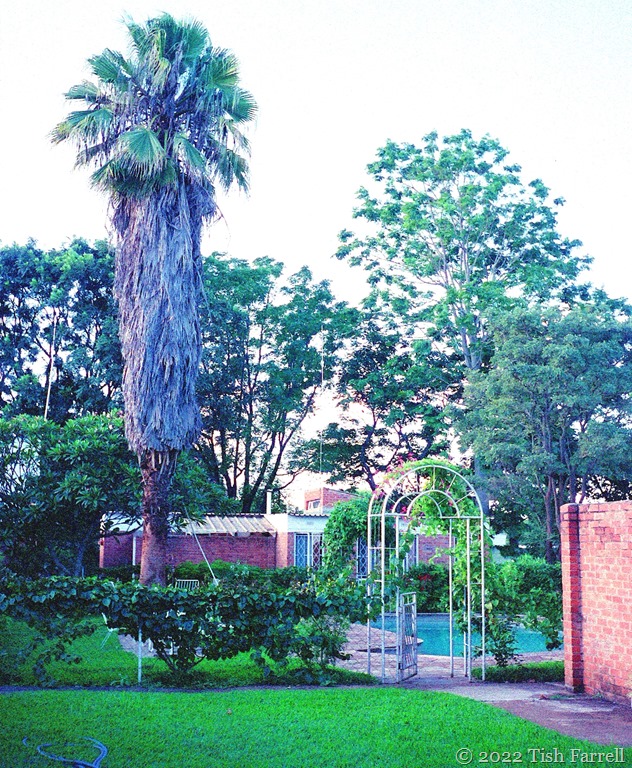
After a fortnight’s dispiriting search for a bolt-hole away from the Pomodzi, viewing sprawling premises we can’t afford, the Delegation Secretary suggests a vacant house on a small compound in Kabulonga. It is small, red brick, single storey with a sheet iron roof that, during the rains, resounds as if someone is firing bullets into a host of upturned buckets. The kitchen and bathroom are 1950s basic, but the spacious living room has French doors opening onto a tiny high-walled garden. There is a big avocado tree in the corner where African sparrows come twittering in to roost in late afternoon. Above the perimeter wall, when it is not raining, arcs the blue Zambian sky. To the rear, the kitchen gives onto a walled back yard and a patch of grass. There are two bedrooms, and a tiny study. Outside the front door is a communal garden and terrace – garden seats set by a small swimming pool, a tall palm that rustles endlessly in the high plateau breezes, a sweet scented frangipani tree. No house overlooks any other and there are shady walk ways in between each property.

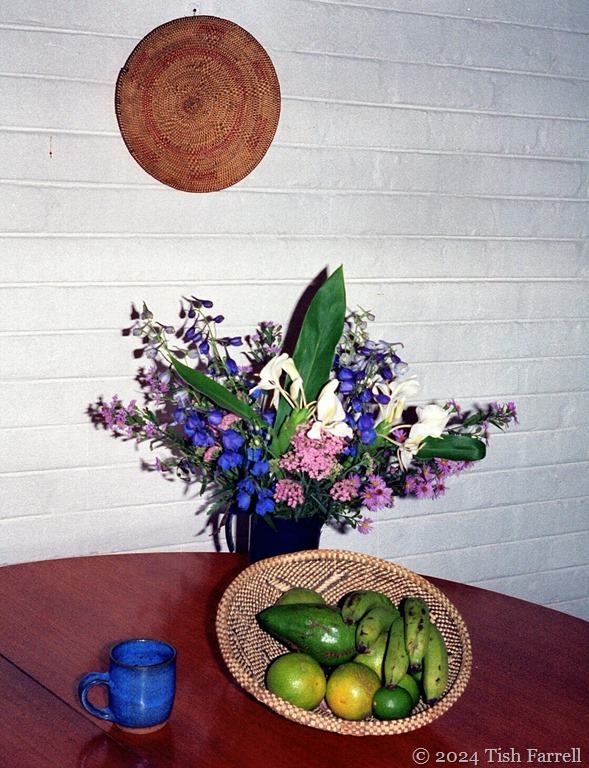
Zambian produce - still life

Produce including delphiniums and ginger lilies from the local co-operative on Sable Road

*

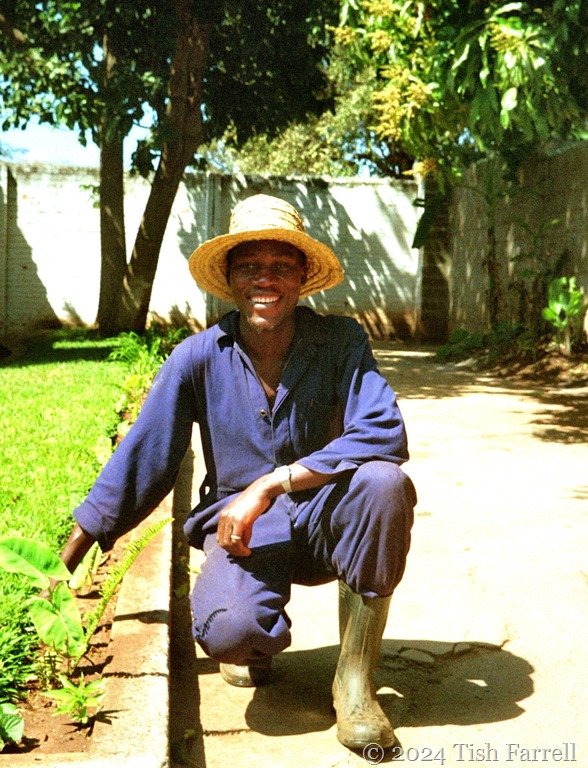
The gardens are tended by a gentle young man called Stephen Nyangu. His name suggests erstwhile connections with the Nyanja royal clan. But Stephen’s situation is a far cry from tribal pre-eminence. He sweeps, mows, weeds, plants, prunes and waters six days a week, from seven in the morning to five in the afternoon. Then he cycles the couple of miles to his compound home in Leopard’s Hill Road where he lives with his wife and four children. The gardens he cares for bloom strangely under sub-tropical skies with tea roses, violets, pansies, Sweet William and Madonna lilies. He also washes all the cars and hefts all the dustbins to the big compound gate to be emptied once a week. For this he earns twelve thousand kwacha a month, about eighteen pounds. He has no leave beyond national holidays, and after work he runs a cigarette stall.

Stephen Nyangu the compound gardener 4

Stephen Nyangu works day and night to keep his family.

*

On my first day in our new home, it is Stephen who knocks on my door.

“Good morning, madam. My name is Stephen. If there is anything you want me to do, I am just out there.” He gestures in the general vicinity of the pool. “Call me.”

He is the only person on the compound who bothers to introduce himself. In ten months we scarcely see any of the other tenants beyond the Sikh couple who live next door. They nod to us. They have two much pampered, miniature Pomeranians and a  maid called Isa. Isa looks a good-hearted soul and she works in several of the other households on the compound once she has done her daily tasks for the Sikhs. These include much furious chopping at seven a.m. Perhaps she is chopping for the Pomeranians. When she is left in charge of them for three months while their owners go on leave, she grows so fed up with their insistent yapping that one day she yells SHUT UP. And so shocked are the indulged little canines, that they do just that. I want to hug Isa.

I further decide that my house is scarcely big enough to justify even a once-a-week cleaner, this despite the constant slick of red dust that blows in every day. I thus do my own housework.

Our compound is in Kabulonga, the heart of the diplomatic quarter. Our next door neighbour is the Egyptian Embassy. At night the guards fire off rifles. We never do know what is going on there, and sometimes it sounds like a siege. Our compound is one of the least fortified on the road. The iron gate has open railings instead of sheet metal armour plating, and our day guard, Sammy, always leaves it unlocked  anyway during the day, while he plays draughts with a neighbouring house-guard. He’s a bit  nonplussed by my habit of going out on foot, and at first dashes from his game to open the gate as if I were a passing vehicle. We soon come to a silent arrangement whereby we greet each other, I open the gate for myself and he keeps on with his game.

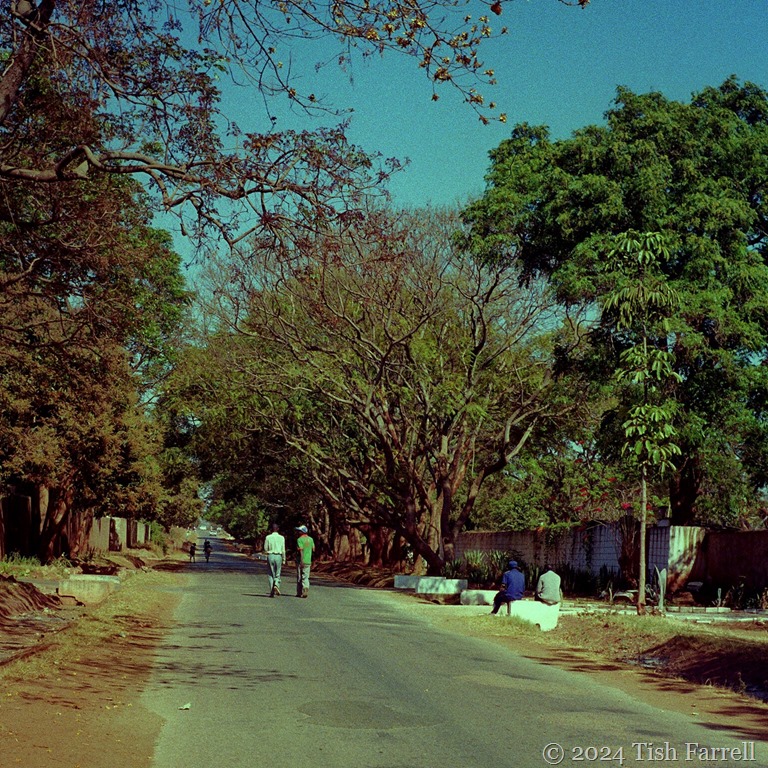
There is a sense of excited liberation as I step out onto Sable Road. I never meet another European walking here on this lovely tree-shaded avenue.

Sable Road in the dry season ed

Sable Road in the dry season.

To be continued

copyright 2024 Tish Farrell

Thursday Doors Appeal

Here’s how to make someone’s life better:

Dr Alfred Prunesquallor's avatarHave Stethoscope, Will Travel

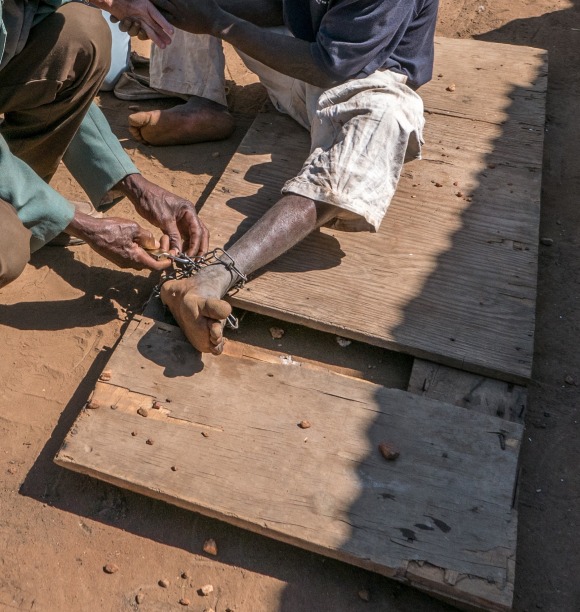
If you have been following my contributions to Thursday Doors over the years, you will know that I do voluntary work as a doctor overseas. Last year I was working at Kakumbi Rural Health Centre in Eastern Province, Zambia. It was distressing to see the lack of medical care for people with severe mental illness, schizophrenia and bipolar disorder. Their families would look after them as best they could; but if the patients became violent or started destroying property, this support could end. Patients would roam around the village, clearly very disturbed, behaving inappropriately (throwing stones at vehicles, wandering about naked).

Thursday’s door – torn off its hinges during a violent outburst by the man wearing white trousers. He has a long history of bipolar disorder. Neighbours managed to subdue him and chained him to the door to prevent him from doing more damage to people and property. They felt…

View original post 378 more words

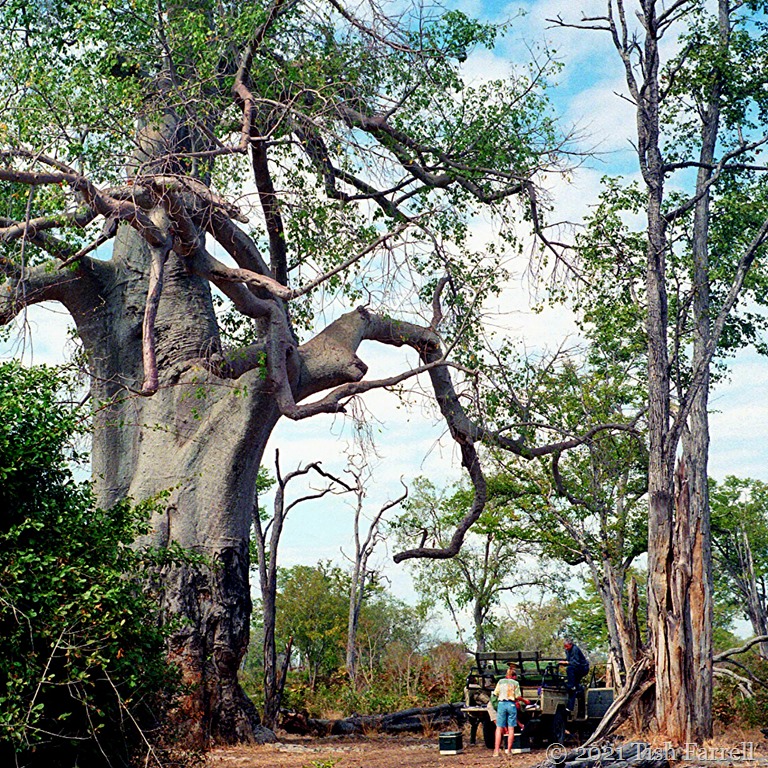
A Very Big Zambian Baobab

sq

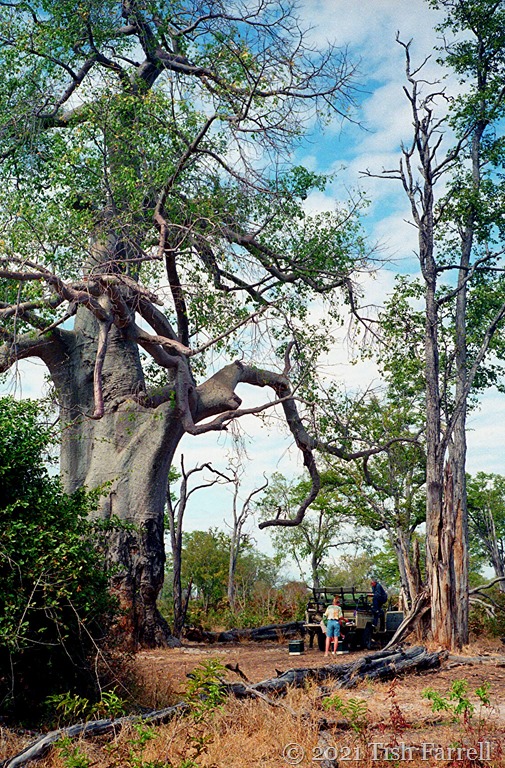
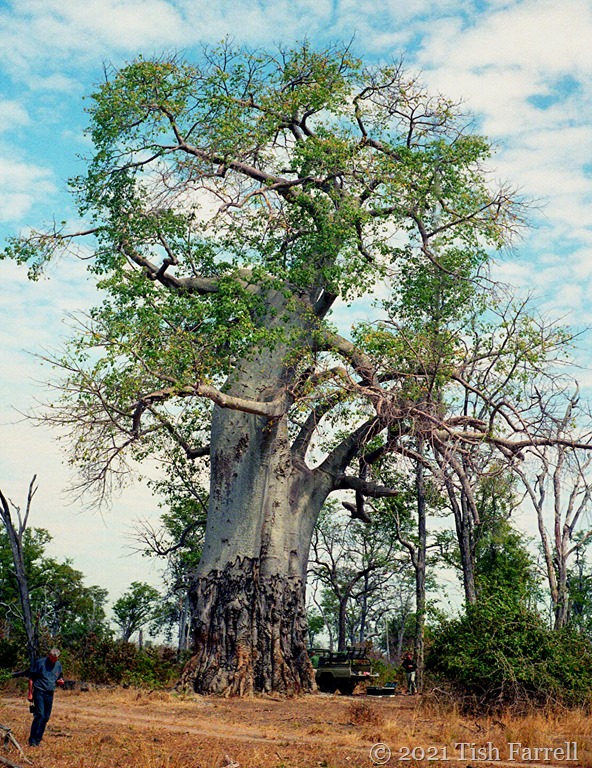
Zambia is a country blessed with some magnificent trees and miombo woodland that makes for parkland like landscapes. This particular tree is in South Luangwa National Park, one of the world’s wildlife treasure spots. (Do not believe the tales that Africa has no wildlife left. It is absolutely untrue.)

Here is more of the tree that wouldn’t fit in the square. The damage on the lower trunk is probably due to elephants and/or other other grazers:

South Luangwa - mighty poachers' baobab 2

South Luangwa - mighty poachers' baobab

Tree Square #30

Vintage Zimbabwe

Hwange - waterhole and elephants 4sq

Late 1992-3 and we were living in Lusaka, Zambia, Graham on secondment from the Natural Resources Institute in Kent to the European Union Delegation – his job to manage the logistics of food aid deliveries to drought-stricken parts of Zambia.

These were exciting times. As we arrived, long-term presidential incumbent, Kenneth Kaunda (he who had led Northern Rhodesia to independence in 1964) had recently ceded to Frederick Chiluba, the first elected president after the return to multi-party democracy. Which sounds positive, but it also involved the International Monetary Fund structurally adjusting the nation, causing hikes in staple food prices, and stopping free schooling and medical care for the poor so they could become even more hard done by.

Then there were the international corporations who continued not to pay taxes on their exploitation of Zambia’s copper mines. Then Kenneth Kaunda’s army officer son, Rezi, had thoughts of starting a coup and was said to behind much of the criminal activity in the capital, and then over in the neighbouring Congo (or so the story went) President Mobutu had neglected to pay his army thus causing them to come on regular night-raiding missions to the diplomatic quarters of Lusaka.

One could have become very anxious, but actually, none of this was my experience of Lusaka. It always seemed rather sleepy under the wide blue skies of breezy white clouds, the locals ever quick to smile and share a joke.

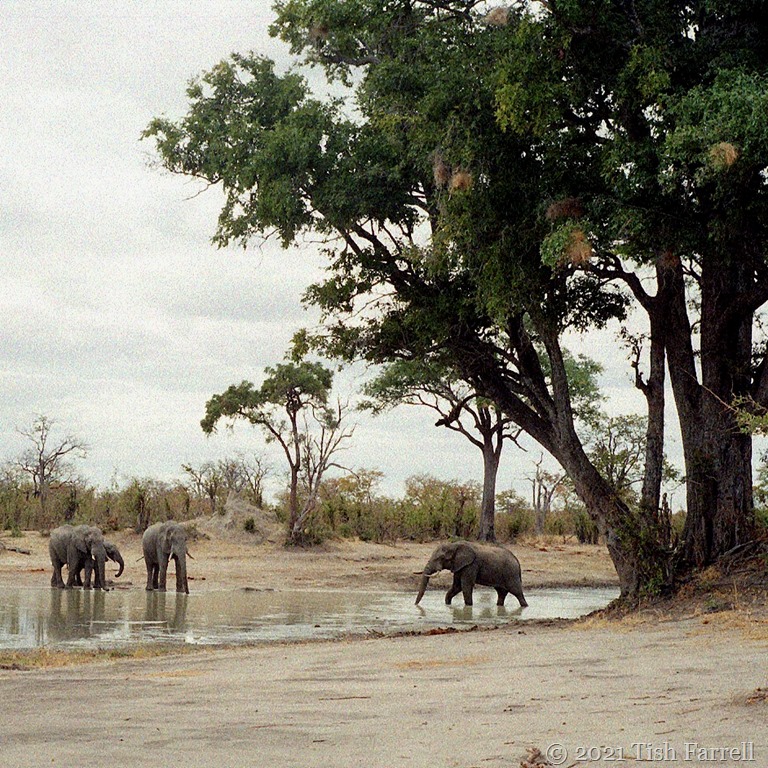
Anyway by July ‘93, winter in southern Africa, we thought we needed a holiday, and headed south for the then peaceably prosperous neighbour-state of Zimbabwe. We drove on near empty roads all the way to Harare. Back then that city  seemed like a wonderland, the epitome of sophistication compared to Lusaka where the downtown stores had empty shelves and all seemed stuck in a 1950s time-warp.  And after Harare we set off across Zimbabwe – nothing booked ahead – empty roads. The only downside was a gloomy day or two when we were in Hwange National Park and my little camera could not cope with low light levels. Still, it just about managed to capture the elephants under this very large acacia. They turned up while we were eating our picnic lunch.

Photo: Hwange National Park, Zimbabwe.

Tree Square #29

Did We Dream Great Zimbabwe?

4_0003 Great Zimbabawe2

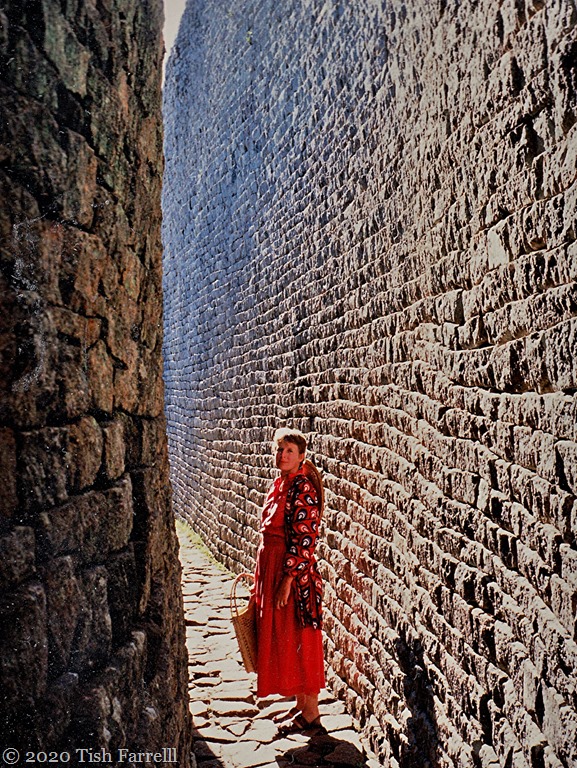
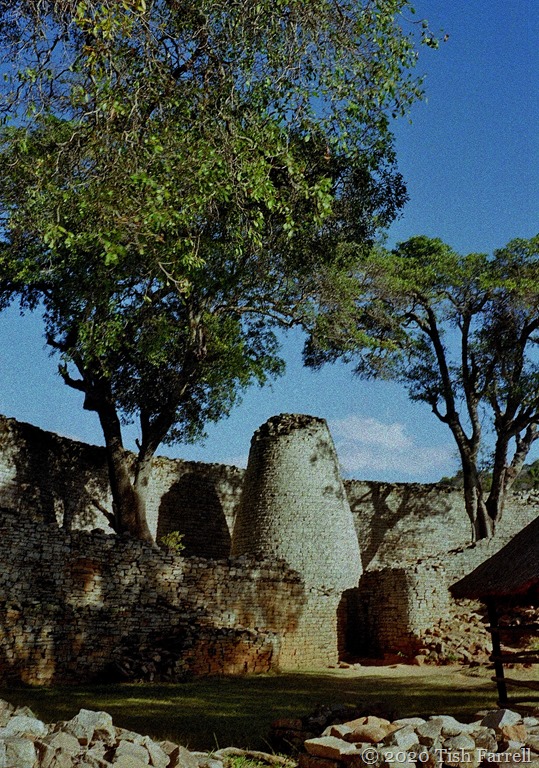
Great Zimbabwe inside the great enclosure

I’m thinking we did dream it. These vintage scenes look unreal. I remember it as a perfect day, though more drowsy English summer – the sort we like to think once happened – than an actual African afternoon. It was July, southern Africa’s winter, the daytime temperatures cool enough for me to be wearing my Zambian cotton jacket, at least in the shadows within the Great Enclosure. Strangely, we had the ruins to ourselves, us and our two companions. For a time, before starting our exploration, three of us had sat outside on the grass, our backs against the enclosure’s monumental, drystone wall. The air was still; the granite warm.

We were living in Zambia at the time, but were on a two-week road trip across Zimbabwe. This ancient African city was a high spot on the itinerary. Yet the conversation below the great wall wound on; quite unrelated to the place we were. Crickets chuntered. Time passed. A sense of treading water. Soon we would have to move on to find somewhere to stay for the night. It was all unknown territory. We had nothing booked. There was a moment when I thought if I don’t break free of this reverie, my one-time chance to see this place will be lost. It almost was.
*

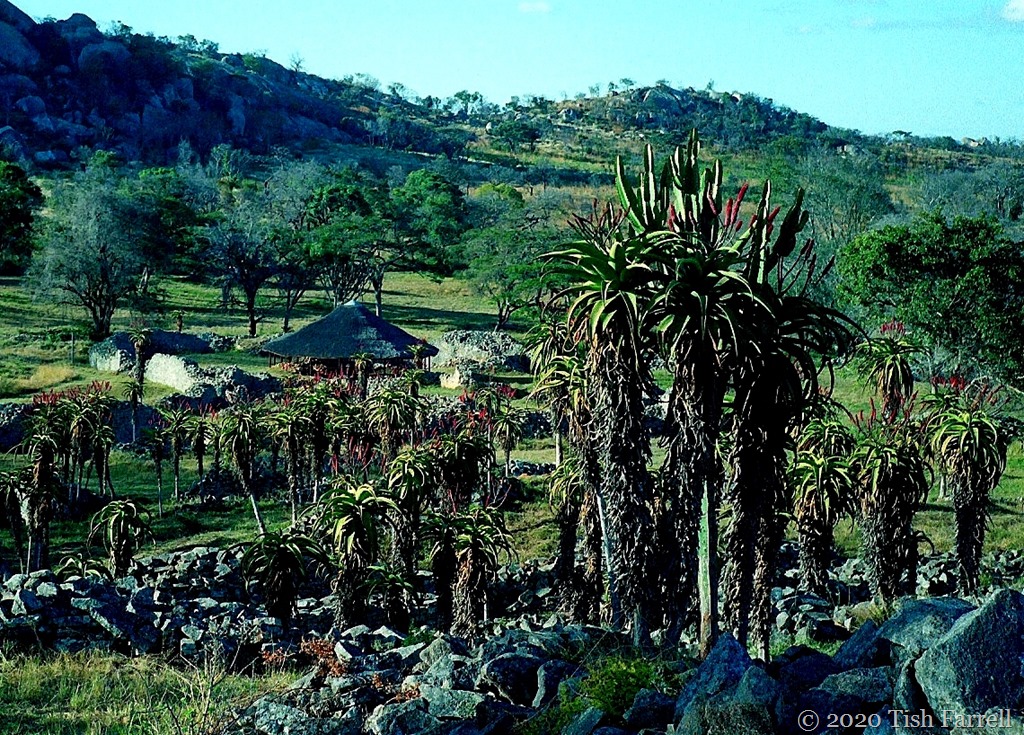
Great Zimbabwe general view

Amy at Lens-Artists asks us for precious moments. It was hard to choose from our eight-year stay in Africa. It often felt we were present for all of it – all senses always switched full on. But Great Zimbabwe was certainly one of highest high spots. I still have that jacket too, stitched by hand from cloth bought in a Livingstone store, near Victoria Falls.

Many of you have seen these photos before, but I’m sure you don’t mind another look. I’m also reprising the text of a long-ago post for those who want to know something about the ruins.

Great Zimbabwe

No one knows exactly why this great African city  was abandoned. For some 350 years, until  around 1450 AD,  Great Zimbabwe had been a flourishing merchant centre that drew in from the surrounding country supplies of gold, copper, ivory, animal skins and cotton. The city’s entrepreneurs then traded these goods on to the Swahili city states of Sofala and Kilwa on the East African coast. (You can read more about the Swahili HERE). In return, the traders brought back luxury goods including jewellery,  Chinese celadon dishes and Persian ceramics.

The city’s ruins cover 80 hectares, its many stone enclosures commanding the southern slopes of Zimbabwe’s High Plateau watershed between the Zambezi and Limpopo Rivers. The site is well watered with good grazing throughout the year. It is above the zone of the deadly tsetse fly that can infect both cattle and humans with sleeping sickness; and the plateau’s granite scarps provide plentiful building stone and other raw materials.

Even so, these favourable circumstances do not explain why this settlement rose to such particular prominence. Great Zimbabwe was not a singular phenomenon. Contemporary with it,  and across the High Plateau region, are the remains of at least a hundred other mazimbabwe (houses of stone) settlements. Several were large enough to have been the capitals of rival states. Others may have been satellite communities occupied by members of Great Zimbabwe’s ruling lineage.

So who were the city’s builders?

During Zimbabwe’s colonial times, and until independence, the  Rhodesian government actively supressed  evidence that Great Zimbabwe was built by Africans.  Many of the other stone ruins were destroyed or re-purposed by European settler farmers. The official view claimed that the city was Phoenician, and that the Queen of Sheba’s fabled kingdom of Ophir had been discovered. Archaeologists, however, have long demonstrated  that it was the cattle-owning Karanga Shona who built Great Zimbabwe. The first phase of stone building began around 1100 AD. Thereafter, the city’s rising fortunes and successive building phases suggest its increasing control of the ancient High Plateau trade routes to the Swahili cities of Sofala and Kilwa.

Gold was the key commodity, and it is likely that it was Great Zimbabwe’s successful cattle production that provided it with the trading power to secure gold supplies from mines some 40 kilometres away. The more prosperous the city became, the more sophisticated its demonstrations of prestige. In around 1350 AD  the Great Enclosure of finely dressed stone was built. This huge elliptical structure with its mysterious platform and conical tower is thought to be the royal court. There is no indication that the walls were defensive. This was  a regime confident in its power and authority.

IMG_0889

Peter Garlake’s reconstruction of the Great Enclosure Platform from Life at Great Zimbabwe,  Mambo Press 1982

Then why did the city decline?

There are various explanations: the people had let their herds overgraze the land; they had cut down all the trees; there was a prolonged period of drought as may happen in southern Africa. But somehow none of these theories quite explain why, after 350  flourishing years, a community of perhaps 20,000-plus people should simply pack up and leave. Did all these farmers, herders, miners, craftspeople, soldiers, traders, accountants, court personnel and the city’s rulers  leave on a single day, or did the city die slowly?  The archaeological evidence does not say.

But we do know there were disruptive external forces. In the 15th century the Portuguese invaded the Swahili coastal city of Sofala. They were on the hunt for gold and so pressed inland with Swahili guides. Their interfering presence drove the trading routes north, giving rise to the Mutapa state. This new state may well have been founded by people from Great Zimbabwe. Certainly by the time the Swahili traders were coming up the Zambezi to trade with the Shona directly, the old trade route through Great Zimbabwe was no longer used. At this time, too, we see the beginning of another Shona city state: the construction of the stone city at Khami near Bulawayo in southwest Zimbabwe. In the following centuries this became the centre of the Torwa-Rozvi state whose other major cities during the 16th and 17th centuries included Naletale and Danangombe.

And so into history…

Of course with the Portuguese incursions comes the first documentary evidence. From the early 1500s Zimbabwe’s royal courts enter the historic record in the accounts of the Portuguese conquistadores. In 1506 Diogo de Alcacova writes to his king, describing a city  of the Mutapa state

“called Zimbany…which is big and where the king always lives.”  His houses are “of stone and clay and very large and on one level.” Within the kingdom there are “many very large towns and many other villages.”

The Portuguese historian Faria y Sousa also describes the King of Mutapa’s great retinue which included the governor of the client kingdoms, the commander-general of the army, the court steward, the magician and the apothecary, the head musician “who had many under him and who was a great lord”. Also noted were the vast territories over which the king ruled, the revenues and subject kingdoms of the king’s several queens.

And suddenly we have a true glimpse of what this land called Zimbabwe might have looked like in the past, a bustling, mercantile, metropolitan culture, supported by gold miners, farmers, cattle herders and craftspeople. And so it remained until well into the 18th century, albeit with a shift of Shona power to the southwest and the Torwa-Ruzvi state as the Portuguese presence caused increasing instability. Then in the 19th century came new invaders – the Nguni, the Ndebele and the British.

This centuries’ old heritage of royal courts is not a picture that the likes of Cecil Rhodes or, the later Rhodesian government of Ian Smith ever wanted anyone to see. And so in the end this is not so much a story of a city abandoned by its people, but of a people wilfully excluded from their past.  In 1980 when Zimbabwe became an independent state, some of this past was reclaimed: the new state took its name from the first great Shona city, and  adopted for its flag and coat of arms, an image of one of the city’s ceremonial soapstone birds. These are small steps forward, but there is still a long way to go before the world sees the indigenous histories of the Africa continent in their true perspective, or acknowledges their intrinsic cultural worth.


References: The classic work on the excavations of the city is Peter Garlake’s Great Zimbabwe 1973. For an overview of the mazimbabwe culture see Innocent Pikirayi’s The Zimbabwe Culture  Alta Mira Press 2001. For a broader historical perspective Randall L. Pouwels The African and Middle Eastern World, 600-1500 Oxford University Press.


Lens-Artists: Precious moments

Back To The Old Africa Album ~ All Manner Of Waiting In All Sorts Of Places

Hwange National Park - elephant crossing our path

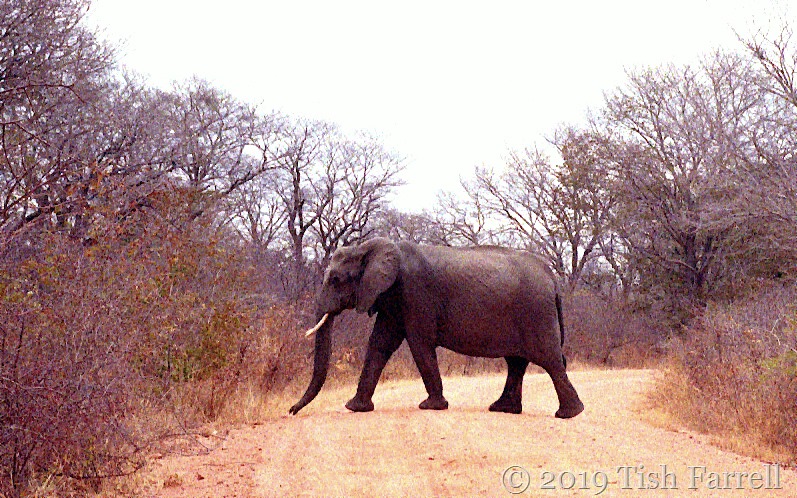
It’s always best to wait when an elephant decides to cross your path. This particular elephant crossing episode happened in Hwange National Park, Zimbabwe. The photo was taken in July, southern Africa’s winter. The bush country was tinder dry and the skies overcast, and the nights chilly. We were living in Zambia at the time and had driven down for a couple of weeks meandering. Zimbabwe is a very fine country for a spot of meandering.

Harare night guards waiting to go on duty

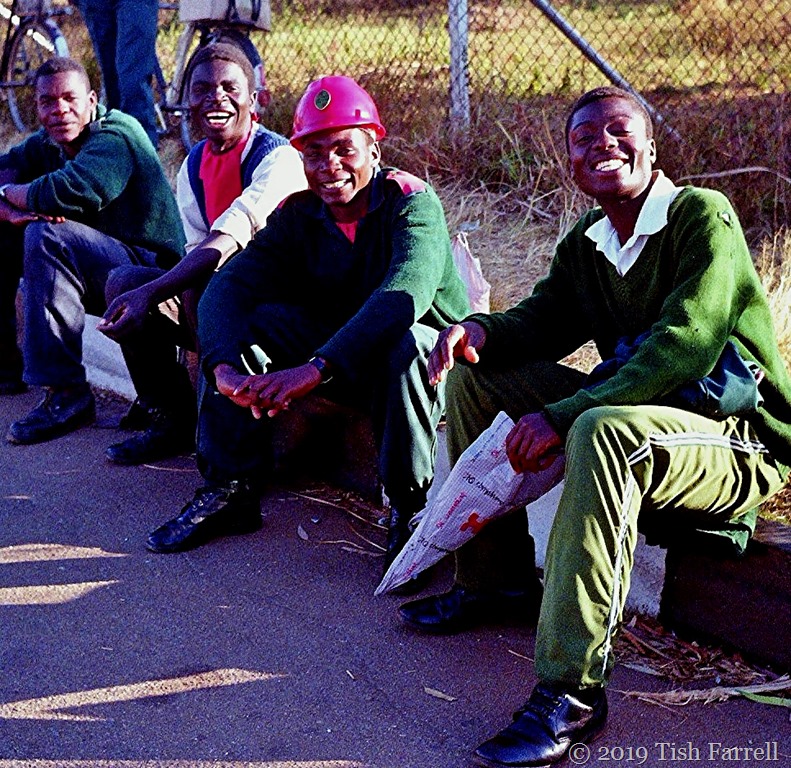
This photo was a piece of pure happenstance. I’d just walked out of the post office somewhere in down-town Harare. These security guards were waiting to start the 6 o’ clock night shift. I was invited to take their picture. A treasured shot.

*

Lusaka agricultural show - Dog Show

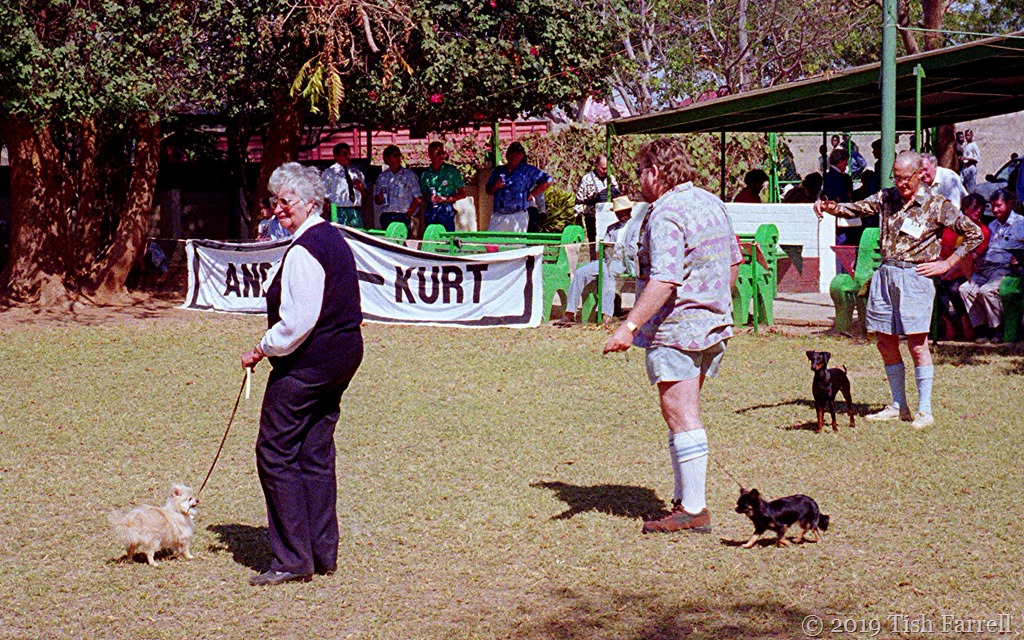
We’re in Lusaka, Zambia for this dotty photo. One of the institutions that the colonial British left behind in the African territories they invaded is the annual agricultural show. These days it is a big family day out for Zambians and but oddly also includes (mostly for members of the European and Asian communities) a dog show. Here we see entrants in the terrier class waiting for the all important judging moment. I seem to remember it was the Manchester terrier (far right) that got the first prize rosette.

*

Lusaka agricultural show - kids

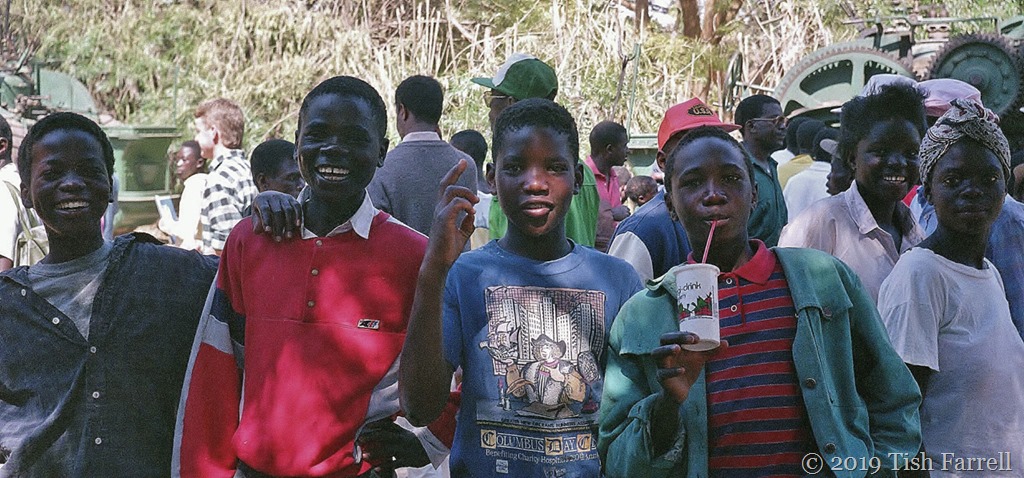
Kids doing what kids do everywhere – hanging out in hopes something interesting might happen.

*

Lusaka agricultural show - African cow

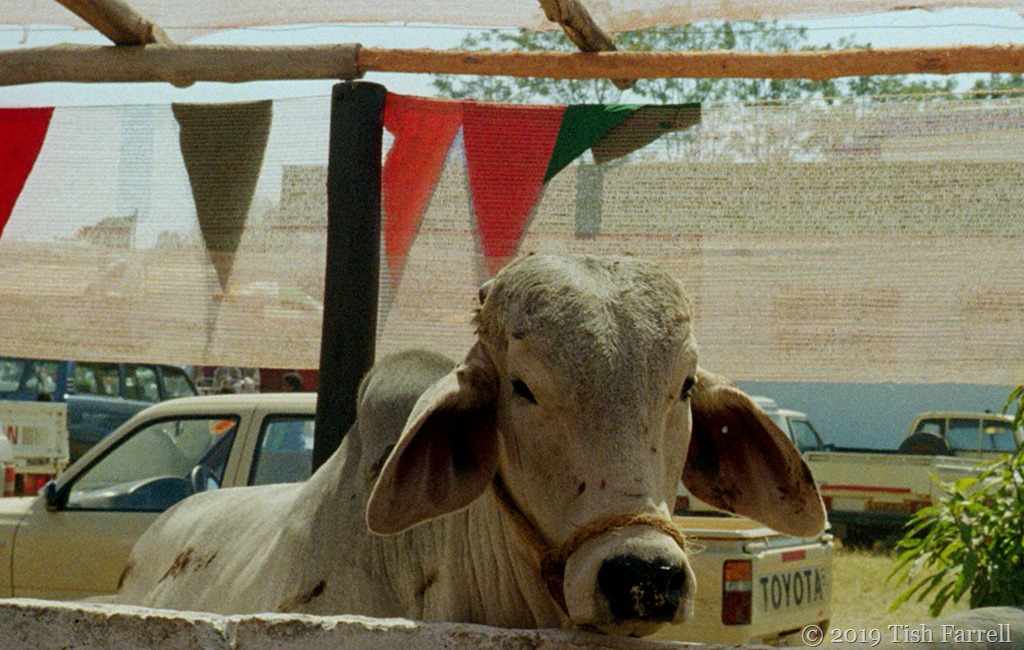
A patient zebu bull waiting for his moment in the judging ring.

*

004

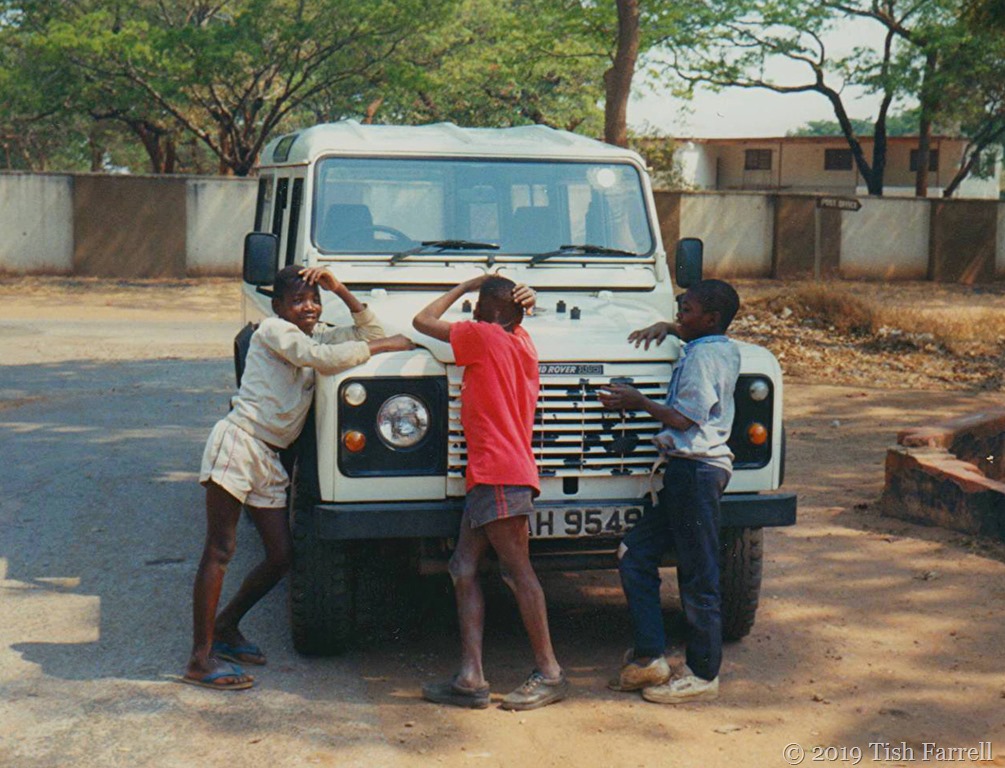
Woodside shopping centre, Lusaka. Parking boys waiting for their guarding fee from the car owner. All over the continent, where millions of young people are unemployed, this is how some lads make a living.

*

Kamwala roadside furniture market

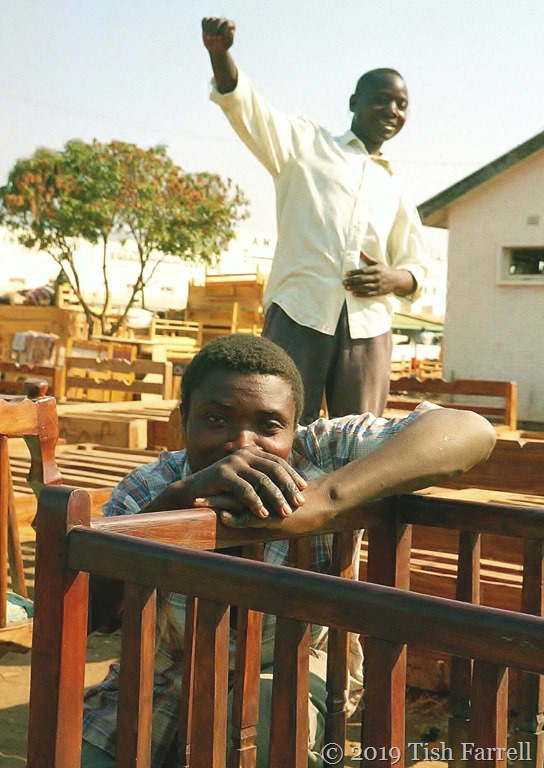
Waiting to make a sale: Kamwala furniture market, Lusaka. We bought most of our big household items, beds, chairs etc,  from roadside craftsmen. They made good stuff, a lot of it from recycled shipping crates, or by simply repurposing reeds and timber from the highway verges. I miss this way of life. It’s how we should be living: local produce, locally sold by the people who made it, and no need to drive to the out-of-town shopping mall; and none of it shrink-wrapped in sheaves of plastic.

*

races_0004 - Copy

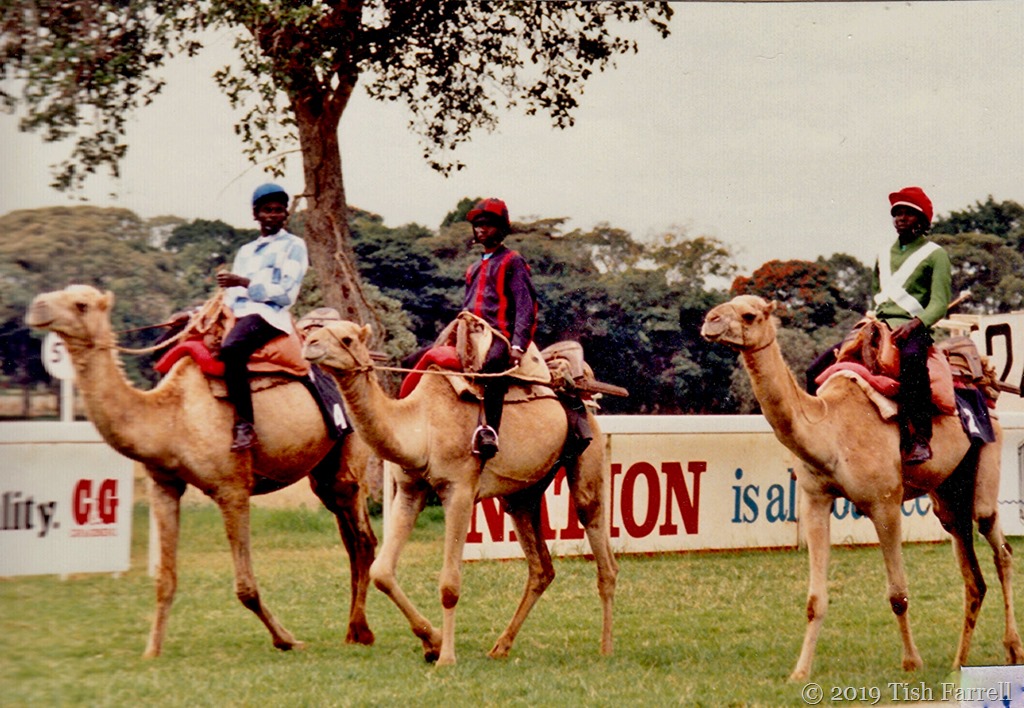
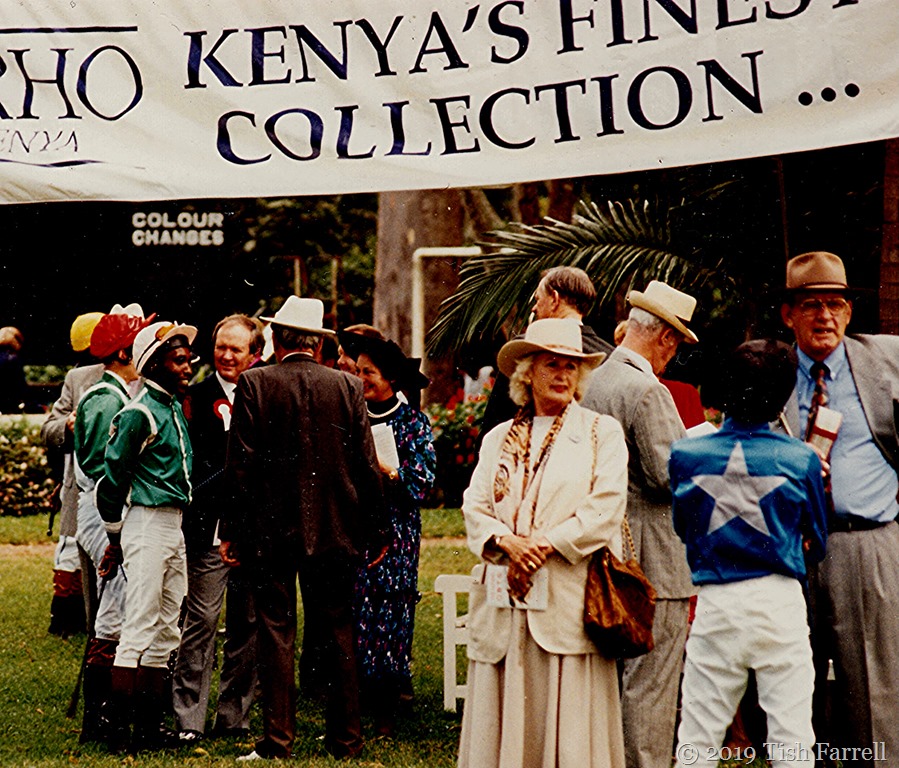
We’re in Nairobi now, at the Ngong Racecourse. These are members of the Kenya Police Anti-Stock Theft Unit who operate in the arid northern district. This was supposed to be a race, but the camels couldn’t summon the enthusiasm – either to start or to finish. So here we are waiting for them to pass the finish post.

The Ngong Races are another hangover from  colonial times, wherein the institution of ‘Race Week’ was laid on over the Christmas period to provide white settlers with the excuse to come to town, get totally blotto and so escape the lonely toil on their isolated farms. These days the races are popular with Nairobians from all walks of life, though a glimpse of the members’ enclosure and of the memsahibs in their big hats might make you think you’d landed at an English county race meeting.

races

Waiting for the next race.

*

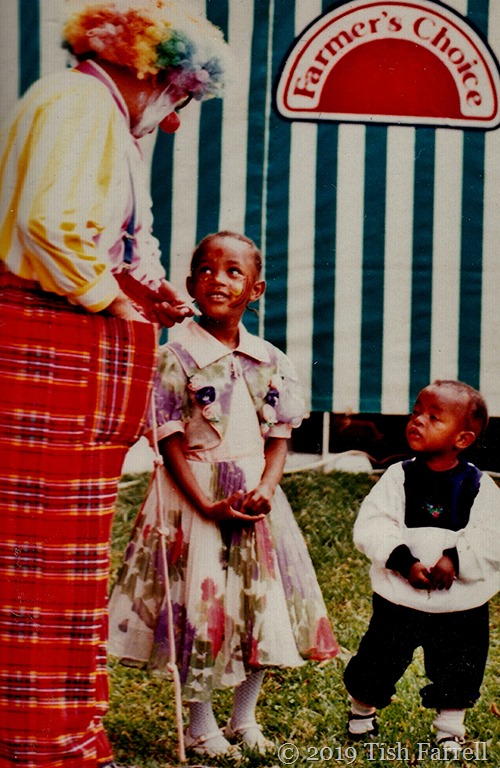
Race Day is also very much a family event, so there is lots to keep the children amused: face painting, donkey rides, ice creams and Mr. Magik doing tricks.

races_0004 - Copy (3)This little boy does not seem too impressed: waiting for magic to happen perhaps.

Lens-Artists: Waiting Amy set this week’s challenge. Go and see how she has interpreted ‘waiting’.

My Big Basket Of Beautiful Borlotti And A Few Shades Of Africa

IMG_1580

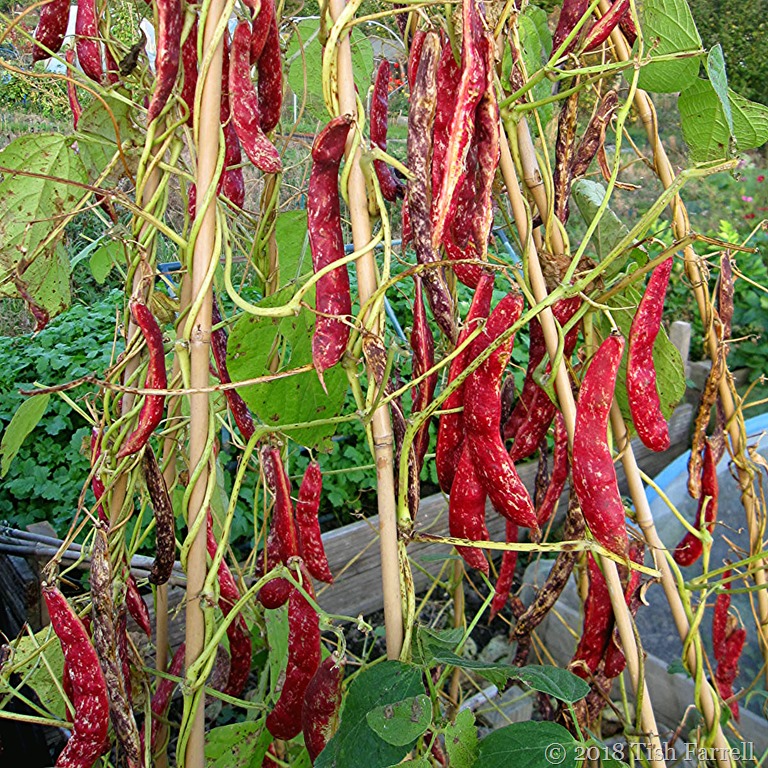
I cannot tell you how excited I get about the prospect of the late summer borlotti harvest. I grow the climbing version, also called Firetongue or Lingua di Fuoco – you can see why – and just now the leaves are falling from the stems and leaving clusters of hot pink pods to light up my allotment plot.

I harvested the first row last week, prompted by the sudden appearance of a fungal looking disorder on some of the pods. Usually I let them dry on the sticks, but the ones in the header were quickly blanched and put in the freezer. This anyway means they are much quicker to cook – favourites in chilli, re-fried beans and bean soup.

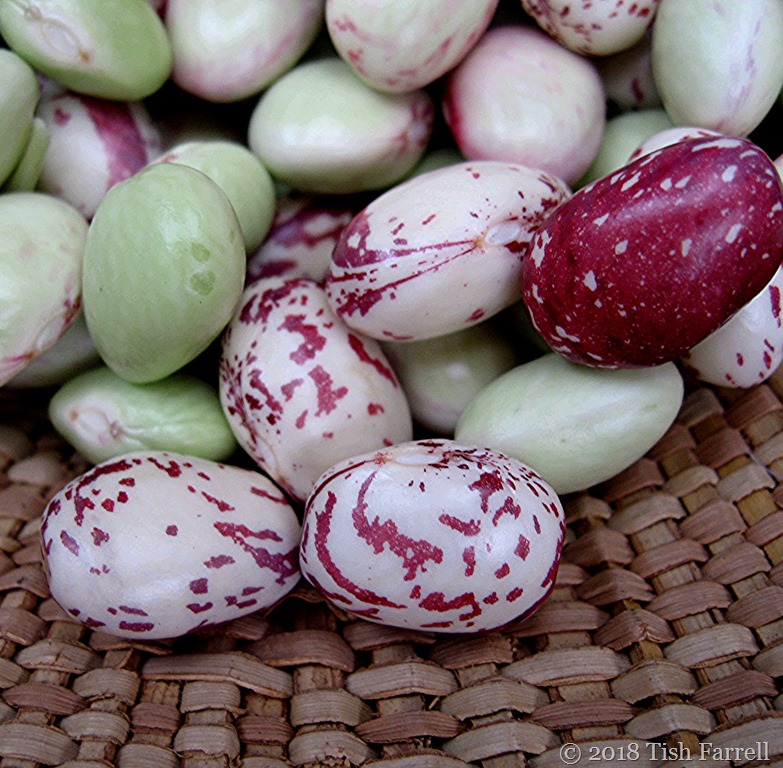
I’ve been keeping my eye on the second row. They are at the other end of the plot, and seem to be drying nicely with no signs of infection. I showed the diseased pods to the Resident Plant Pathologist chez Farrell i.e. Dr. Graham, but all he said was, ‘It’s probably due to the funny weather.’ Which is a bit like going to the G.P.’s surgery with an ailment and being told: ‘there’s a lot of it about.’ Ah well. As long as I have lots of pods to shell I’m happy. Until you open them you never know quite what colour the beans will be. I’m easily pleased. When all is said and done, they are SO very beautiful.

The basket is a favourite too – made by the Tongabezi people of southern Zambia (they who were forcibly displaced from their ancestral Zambezi Valley lands by the British in the 1950s so Lake Kariba and the hydro-electricity dam – between what was then Northern and Southern Rhodesia – could be constructed.) I bought it long ago in the museum shop in Livingstone, near Victoria Falls. The beans are also grown in Africa where they are called Rose Coco, and sold by farm mamas who measure out the quantities in old (scrubbed) jam tins at their roadside market stalls.

It’s interesting the apparently unrelated resonances that, well, resonate down one’s personal time-line on a Monday morning here on Wenlock Edge.

IMG_6134

copyright 2018 Tish Farrell

In the Pink #17

Flight From Lusaka To Seychelles

We were living in Lusaka, Zambia in 1993. Multiparty democracy had not long arrived, and the long-outstayed-his-welcome president, Kenneth Kaunda been sent into retirement. The future might have looked bright but for the fact that the rains had failed in 1992 and many Zambians were starving. On top of this, the price of the national staple, maize, had anyway been going through the roof, courtesy of the International Monetary Fund, who had decided, under the new regime, that the time was ripe for the country to be structurally readjusted. The object of course was some much needed fiscal cleansing, which looks fine on paper, but somehow overlooked the effect on actual human beings. It also neglected to deal with the fact that the rich resource-grabbing nations of North America, UK et al had been robbing Zambians blind for decades, making off with cheap copper and somehow neglecting to pay their taxes. These are the same nations that call African regimes corrupt. It’s all a case of copper pots and kettles.

In the city there were people dying from AIDS, the endless funeral corteges to Leopard’s Hill cemetery. Then there was an epidemic of cholera due to polluted bore holes. Even the nation’s pigs were sick with swine fever. The Zairean Army over the border in the Copper Belt (now Democratic Republic of Congo) had not been paid, and so had taken to conducting armed raiding sprees down the Great North Road and into Lusaka. We were told if driving in the city at night never to stop when the traffic lights (robots) were on red since we were likely to be ambushed. To the east, the civil war in Mozambique was also spilling into Zambia, the fighters predating on already impoverished farmers.

Then Son of Kaunda started a campaign of national unrest ending in an attempted coup, the national football squad was tragically killed in an air crash, which depressed everyone, and I had amoebic dysentery which wouldn’t quite go away. Meanwhile Graham was based in the European Union Delegation, organising the distribution of food aid to the worst famine-stricken areas. His immediate boss was French and communication was conducted in fragmented French on Graham’s part, and confused English on Bernard’s part, and over all, they were subjected to the dogmatic rule of an envoy of volatile Mediterranean disposition who thought he spoke better English than Graham and would alter his reports. And so when the chance came to take a break in the Seychelles, we were more than ready for it.

There is more about our Zambia life at Letters from Lusaka I and II and Once in Zambia: in memoriam.  And before you join our much needed Indian Ocean getaway, I should say that I really loved Zambia – this despite the catalogue of human misery. The people we met, from immigration officials onwards, were so very gracious. It is also a very beautiful land with some of the world’s best places for wildlife viewing.

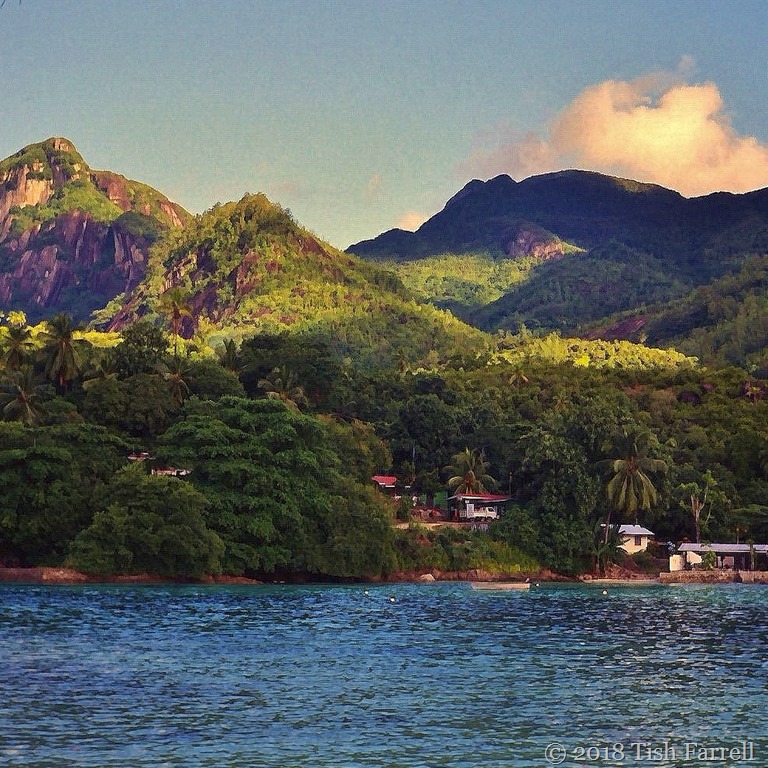
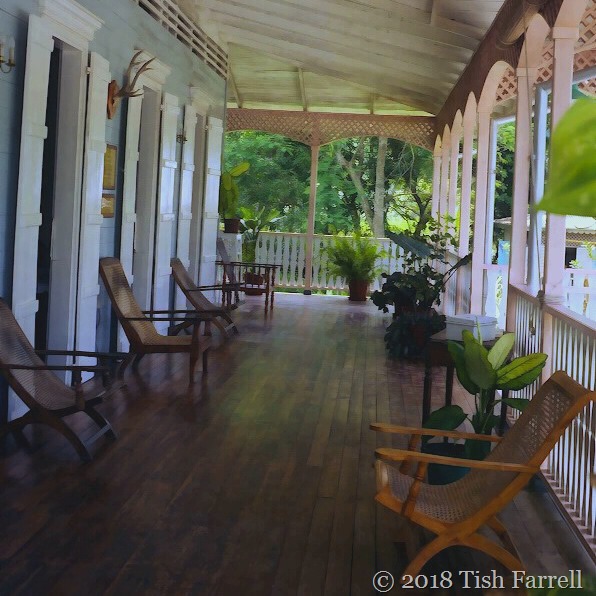
Now for some Seychelles rooftops for Becky. We were staying on the main island Mahé:

copyright 2018 Tish Farrell

Roof Squares 26


This slideshow requires JavaScript.