Wall to Wall Poppies In Wenlock

P1050054

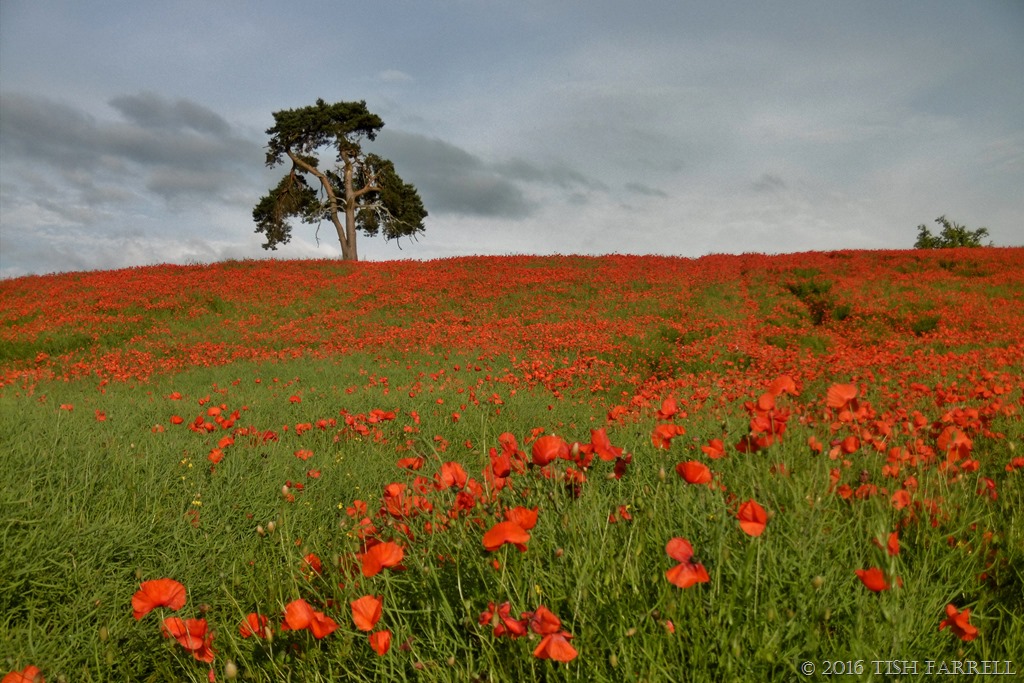
I spotted the blood red field across the town from Windmill Hill on Midsummer’s Eve. Yesterday at sunset, I gave up picking field beans and strawberries at the allotment, and went to seek it out. After a dull afternoon and early evening, the sun suddenly put in an appearance and I surmised it would be shining right on the poppies, and it was.

What a glorious sight. I have never seen such a profusion of scarlet heads, pushing their way up through the ripening stems of oil seed rape.

P1050068

Of course the question I ask myself – is this happenstance or has someone gone in for some guerrilla gardening on an epic scale? Either way, it cannot be rivalled as a piece of earth art. And of course with the hundred year anniversary of the Battle of the Somme upon us, it strikes other chords – the pointless waste of so much promise; of so many brave young men.  Today, too, just over half of the British voting public opted to leave the Europe Union, one of whose founding objectives was the avoidance of another European conflict. I feel very sad about this outcome. I think change can be best effected by participation and engagement from within. In fact we Farrells were so fed up this afternoon we had to visit the poppy field once more to cheer ourselves up.

So here’s to poppy power and creative cultivation. A potent beautiful force.

Changing Seasons: June On Windmill Hill

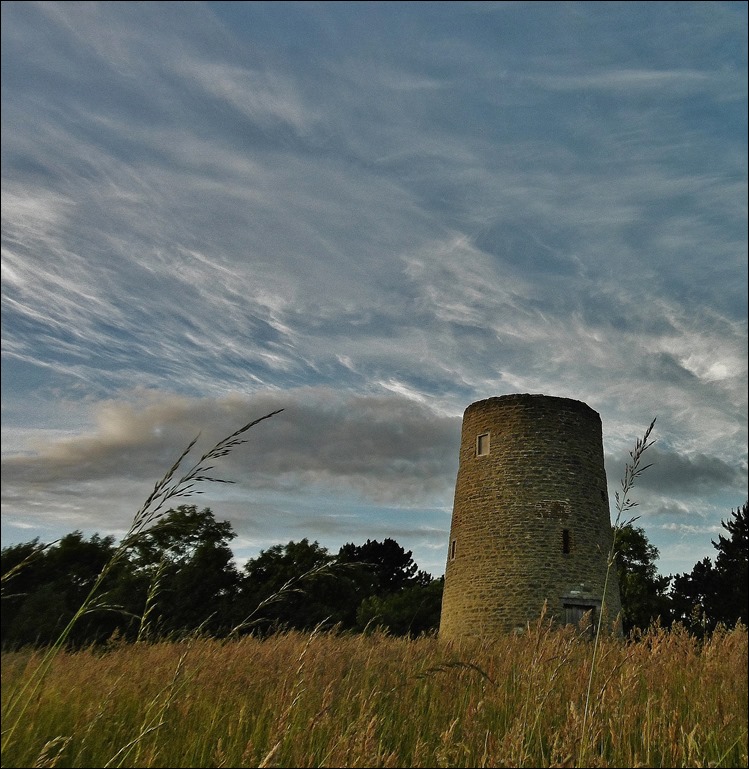
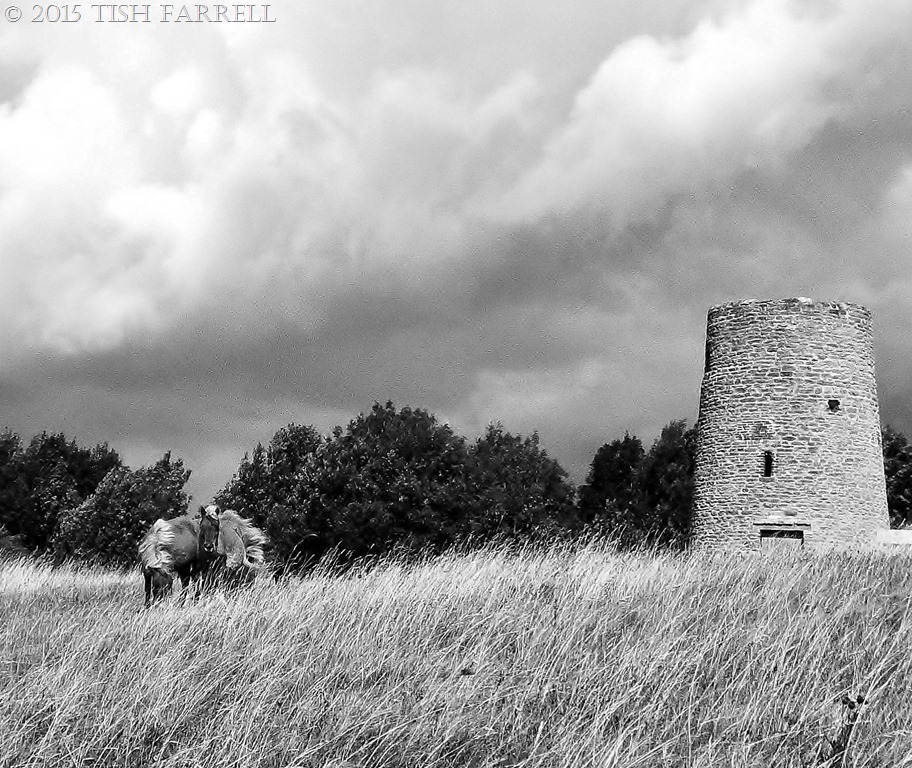
With this shot I’m back to what Meg at 12monthsinWarsaw calls my Monet’s Haystack mode – i.e. there just cannot be too many shots of the old windmill near my house. I succumb every single time I’m there with a camera to hand. I snapped it yesterday in celebration of the summer solstice, caught in a quick walk between supper’s first course of dhal and Staffordshire oat cakes, and the strawberry crumble that was to follow.

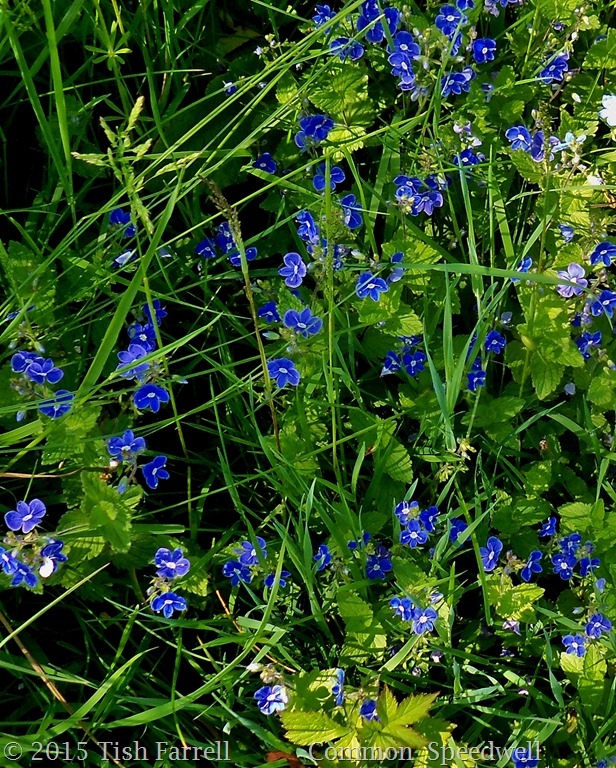
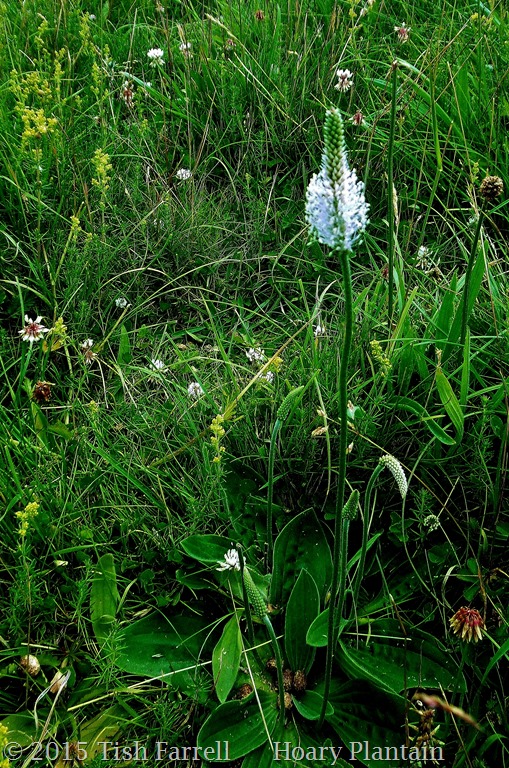
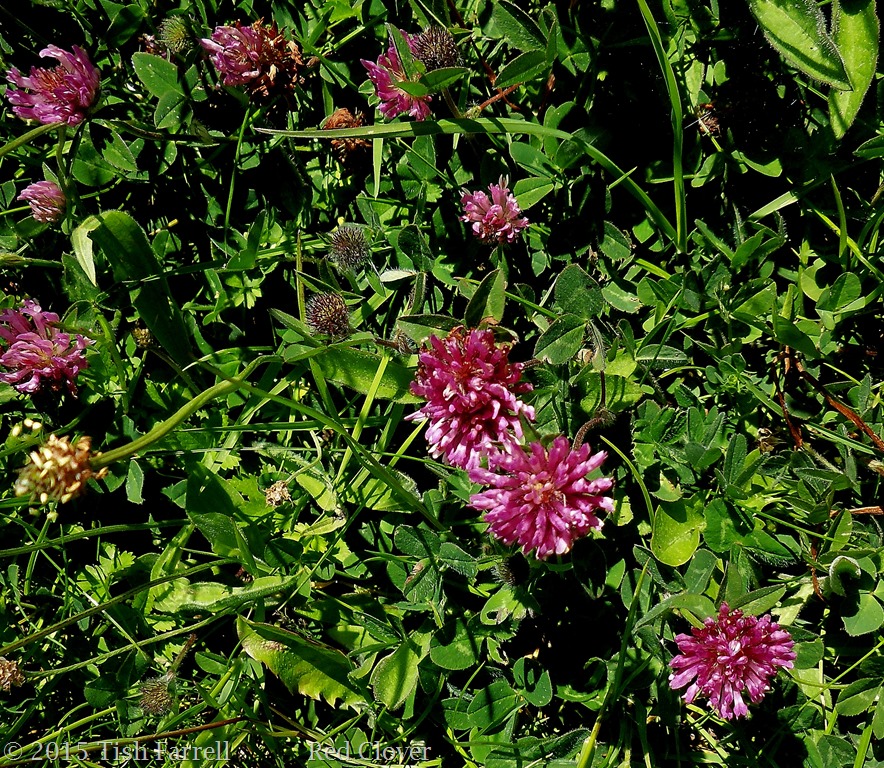
I was also taken by the midsummer meadow in all its lushness – so many different kinds of grasses that I cannot name, and masses of pyramidal orchids – far more than last year. There were also spotted orchids, meadow sweet, vetch, red and white clovers, ladies bedstraw, and white bladder campion which is most usually seen growing on seaside cliffs. And also the sky above was filled with clouds that looked like dragons.


Please visit Cardinal Guzman’s Changing Seasons for more on this challenge.

copyright 2016 Tish Farrell

March: Windswept

P1030512

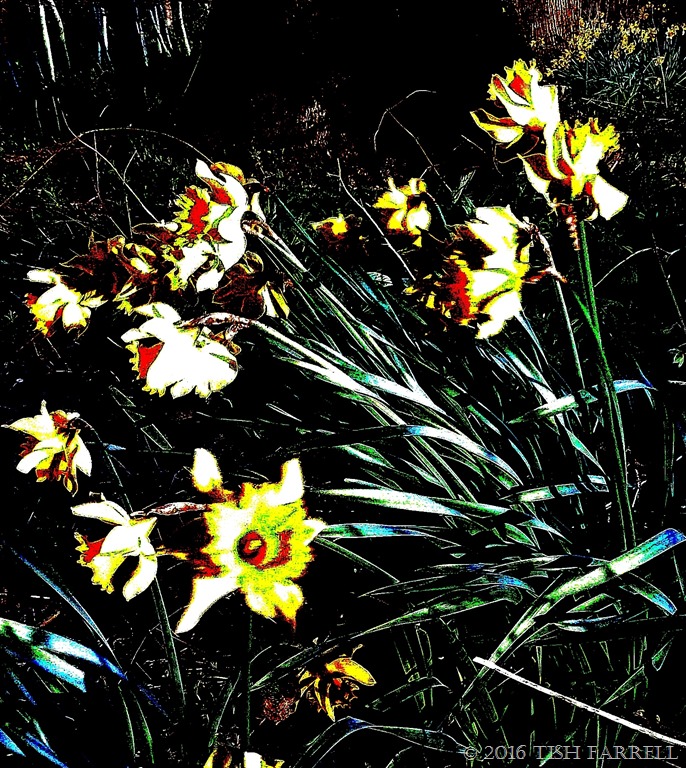
It was blowing a gale when I took the February #ChangingSeasons  photo on Windmill Hill. So too for this March photo. On Sunday the wind was so fierce I could hardly hold the camera steady, and these poor daffodils at the foot of the hill were being whooshed off their roots. You can almost hear their trumpeting distress calls.

So if, as the saying goes, March means to go out as a lamb, and not persist in roaring at us, then it needs to go in a corner and think some calming, and softly woolly thoughts. It does not need to cover us in snow as it did in the early hours of Monday morning. Not that I saw it for myself. I was up far too late, by which time it had melted. Even so, we are left with icy draughts that zoom inside any gap in one’s under-layers, or sting the ears that are silly enough to go outside without a hat.

So what is going on with all this gust and bluster? Is this more El Nino effect? In between the rain and wind storms, spring seems to have been teasing us here in the UK since December. That was when I photographed the first daffodils, albeit in the slightly milder climes of south-coast Cornwall. Meanwhile at home on Sheinton Street, the tulips have been pushing out of the garden pots since January, accompanied by flurries of white flowering currant blossom – all far too early. So spring, if you truly do mean to come this year, please get on with it, and cut out the frigid blasts. Now please visit Changing Season’s host, Cardinal Guzman. This month not only does he give us fine photos, but also a master class in sofa assembly.

Cardinal Guzman: Changing Seasons

There are two monthly Changing Seasons 2016 challenges, and you can join in at any time. Here are the Cardinal’s rules:

The Changing Seasons 2016 is a blogging challenge with two versions: the original (V1) which is purely photographic and the new version (V2) where you can allow yourself to be more artistic and post a painting, a recipe, a digital manipulation, or simply just one photo that you think represents the month. Anyone with a blog can join this challenge and it’ll run throughout 2016. It doesn’t matter if you couldn’t join the first month(s), late-comers are welcomed. These are the rules, but they’re not written in stone – you can always improvise, mix & match to suit your own liking:

Rules for Version 1 (The Changing Seasons V1)

  • Tag your posts with #MonthlyPhotoChallenge and #TheChangingSeasons
  • Each month, post 5-20 photos in a gallery.
  • Don’t use photos from your archive. Only new shots.
  • Rules for Version 2 (The Changing Seasons V2):
  • Tag your posts with #MonthlyPhotoChallenge and #TheChangingSeasons
  • Each month, post one photo (recipe, painting, drawing, whatever) that represents your interpretation of the month.
  • Don’t use archive stuff. Only new material!

Related: My chosen location for tracking the changing seasons is Windmill Hill  and its associated Linden Field – a few minutes walk from my house in Much Wenlock, Shropshire.  Here are the  January and February posts.

February: Windmill Hill Twilight

There are two Changing Seasons challenges over at  Cardinal Guzman’s.  It’s a monthly challenge and if you want to join in you can find the rules below.

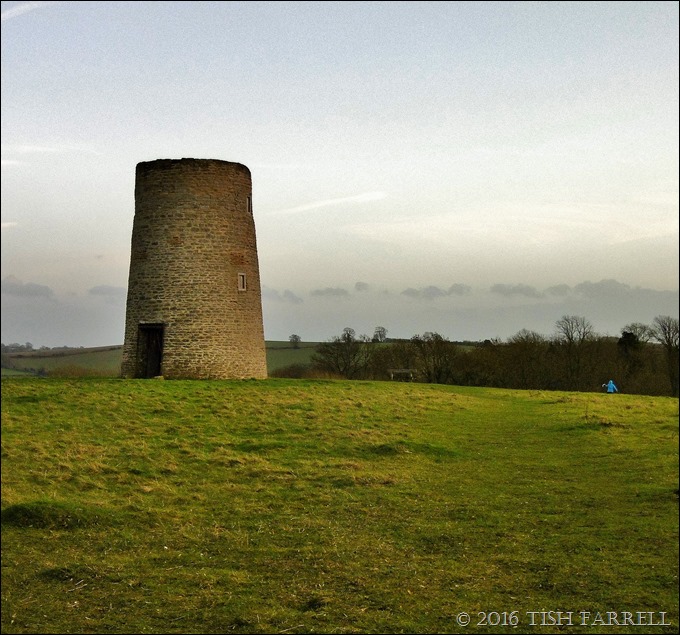
For my February photo I’ve chosen this recent shot of Windmill Hill. I caught it – in this single shot – just as the sun was going down. The landscape is still wintery, but the strange light suggests the possibility of spring. Also the windmill seems more impressive than it usually does in broad daylight. It’s good to see its mysterious side; we actually know very little about how it looked and functioned in this, its 17th century phase, only that it was probably struck by lightning.

Our local archaeologist also thinks it may be standing on or near the site of an ancient trackway, although recent trial excavations have yielded no evidence to support this. But never mind. I anyway like the glimpse (far right) of the swiftly departing small figure in blue. It rather reminds me of Daphne du Maurier’s Don’t Look Now. And yes I know that was set in Venice, but the residual horror is enough to resonate here in Shropshire and so evoke the February chills.

You can see January’s Changing Seasons HERE. In this series I am featuring Windmill Hill and the nearby Linden Field where the world’s first modern Olympian Games were held from the 1850s onwards. The Much Wenlock Games inspired the present day Olympic Movement, a fact that is now recognized. That’s a big claim to fame for our very small town, and I think it’s worth bragging about at every opportunity. Windmill Hill provided a natural auditorium back in Victorian times. Spectators and competitors came from all over Britain, and from the 1860s they could arrive by train, the station conveniently sited beside the Linden Field where most of the events took place.

*

Please visit the Cardinal to see his and others’ changing seasons. And then join in, if not this month, then next.

Here are the Cardinal’s Rules:

«The Changing Seasons 2016» is a blogging challenge with two versions: the original (V1) which is purely photographic and the new version (V2) where you can allow yourself to be more artistic and post a painting, a recipe, a digital manipulation, or simply just one photo that you think represents the month. Anyone with a blog can join this challenge and it’ll run throughout 2016. It doesn’t matter if you couldn’t join the first month(s), late-comers are welcomed. These are the rules, but they’re not written in stone – you can always improvise, mix & match to suit your own liking:

These are the rules for Version 1 (The Changing Seasons V1):

  • Tag your posts with #MonthlyPhotoChallenge and #TheChangingSeasons
  • Each month, post 5-20 photos in a gallery.
  • Don’t use photos from your archive. Only new shots.

These are the rules for Version 2 (The Changing Seasons V2):

  • Tag your posts with #MonthlyPhotoChallenge and #TheChangingSeasons
  • Each month, post one photo (recipe, painting, drawing, whatever) that represents your interpretation of the month.
  • Don’t use archive stuff. Only new material!


The Changing Seasons 2016: January On Wenlock’s Olympian Field

We had the first hard frost of winter today and, after weeks of dreariness and both rising and falling damp, it was a great relief to feel some good crisp cold. Not only that there were clear skies. And sun. And brilliance. Up on Windmill Hill there were also fine views all round, although the midday light did have the strangest quality – creating vistas that were sharp in parts, but soft-focus in others. The landscapes I snapped looked like water colours even before I snapped them. Also the farm fields loomed in unnatural shades of green, at least for January.

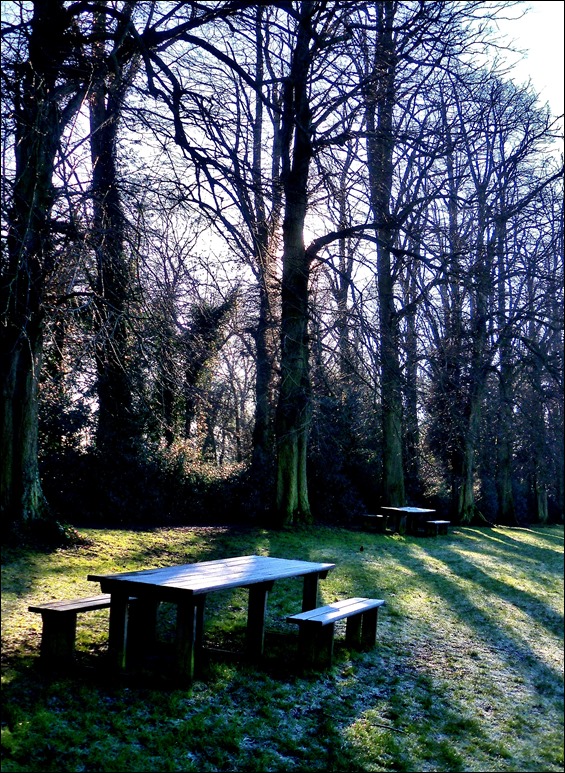
As we strode home beside the Linden Walk we passed the frosty picnic tables. They looked as if they had been freshly spread with perfect white cloths, but sadly there was no sign of lunch. It seemed a long way off till summer.

This post was inspired by Cardinal Guzman’s The Changing Seasons monthly photo challenge, which now comes in two versions. Please follow the link for more details.

I’ve chosen to feature Much Wenlock’s Linden Field and nearby Windmill Hill, since this was where the modern Olympic Movement had its beginnings, and was (and continues to be) the venue for the annual Much Wenlock Olympian Games, founded by Dr. William Penny Brookes, the town’s physician, in 1850.

These days the games take place at the William Brookes School just below Windmill Hill, and on purpose built tracks, but in the old days spectators sat on the hillside and watched the events taking place in the field below. Please conjure races on penny farthing bicycles, hurdling, tilting, and all manner of athletic events – not least the Long Foot Race that was only open to Greek speakers. There would also have been cricket and football matches, and fun events such as ‘an old woman’s race’ for a pound of tea, and a blindfold wheelbarrow race.

Dr. Brookes had serious objectives however. He was a man ahead of his time, who embraced a holistic view of human health that included both physical and mental exercise. He also planted the Linden Walk, no doubt because as a trained herbalist as well as a physician, he knew of the soothing effect, and sense of well-being imparted by lime tree blossom on warm summer days. It is good to walk in his footsteps.

copyright 2016 Tish Farrell

Looking For Space On Wenlock’s Windmill Hill

100_7821 - Copy

This month the photo challenge at PerelincolorsTech of the Month is to compose shots that make good use of empty space. So here are some views of Windmill Hill, near my house – some recent, some taken earlier in the year. I thought that by having big skies in the background, or a large expanse of meadow in the foreground, and also by shooting downhill or lying down, it would create both scale and a touch of drama. Also it was an attempt to add interest to a scene that, though pleasing in itself, could not in any way be described as spectacular. And finally I was trying to capture a sense of something special about a place that I am perhaps overly familiar with. See what you think.

100_7835

P1010939

P1010448

P1000782

Perelincolors

Lucile de Godoy

The Carrion Crow

100_7827

A large black bird that feeds on the carcasses of beasts

Dr Samuel Johnson


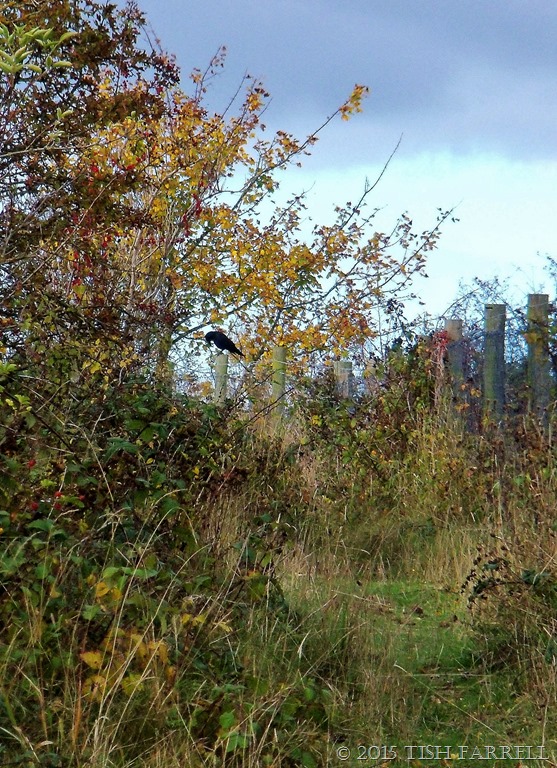
I didn’t think this shot would work. My little Kodak EasyShare was on maximum 5x zoom. But when I looked at the image on screen, I decided it was worth posting. It anyway illustrates an important fact about carrion crows. They are very hard to sneak up on, which is why I couldn’t get any closer and take a better shot.

The next second it was gone, flying off with its guttural ‘kraaar’ call.

Carrion crows are solitary birds unless, that is, they have a mate. This one does have a consort. The pair’s territory includes Windmill Hill, the Linden Field and Townsend Field behind our house; at least this is where I see them foraging together. They are usually a little way apart, rooting  through the grass. They are also notorious egg thieves and snatchers of poultry and pheasant poults, and so are much despised by country folk in general, and game keepers in particular.

When separated, the crows call one to the other. The single ‘kraaar’ that echoes through the trees, or across the fields. It is  a melancholy sound, but also a wake-up call. I find myself instantly responding, scanning the landscape, tuning in to its resonance. What’s going on out there?  Perhaps I have crows in my ancestry.

These birds are very clever. In nest-building season they perch in the tops of trees and watch where the other birds are building their nests.  They also, as their name and Dr Johnson suggests, eat dead animals. Well somebody has to clean up the environment.

You can tell them apart from rooks by their longer, sleeker profile. Rooks are altogether shaggier with a long, greyish bill and a face-patch. Rooks of course hang out in crowds, some of their rookeries being known to have several thousand nests.

But all in all, I like the crows best. They teach me to be watchful.

copyright 2015 Tish Farrell

It’s a wonderful world…

100_7819

Earlier in the week, and in between leaf gathering for the allotment leaf mould project, finishing off a short story about Swahili spirit possession, I took myself on a wander around Wenlock’s byways to see what was what. We are very lucky in that respect. Our town is compact, having grown up around the medieval Wenlock Priory. One minute you’re on the High Street, the next you’re out in the Shropshire countryside. And there’s just so much to see out there.

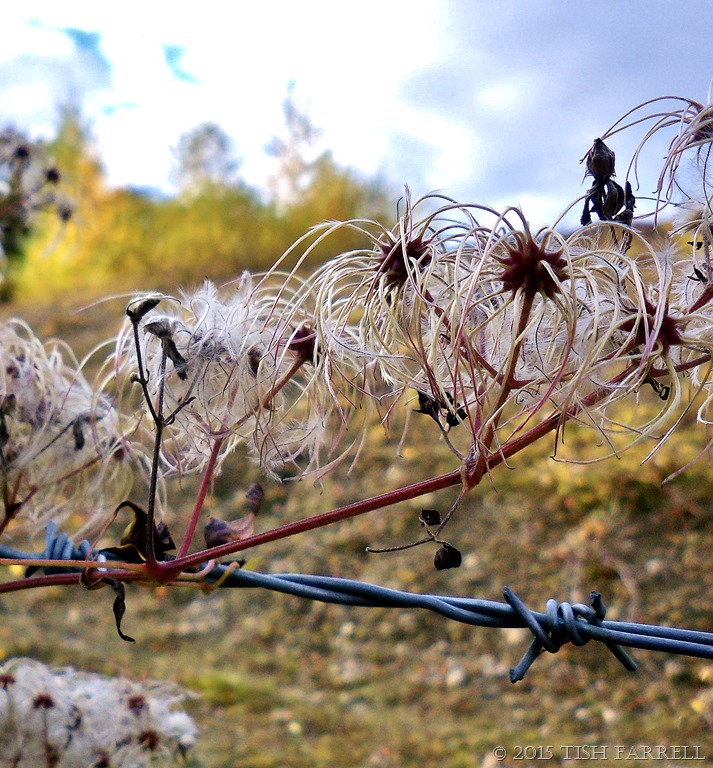
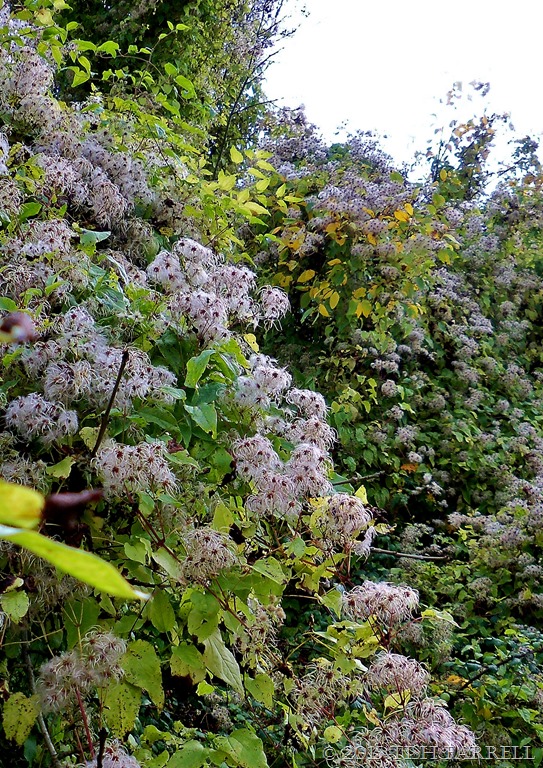
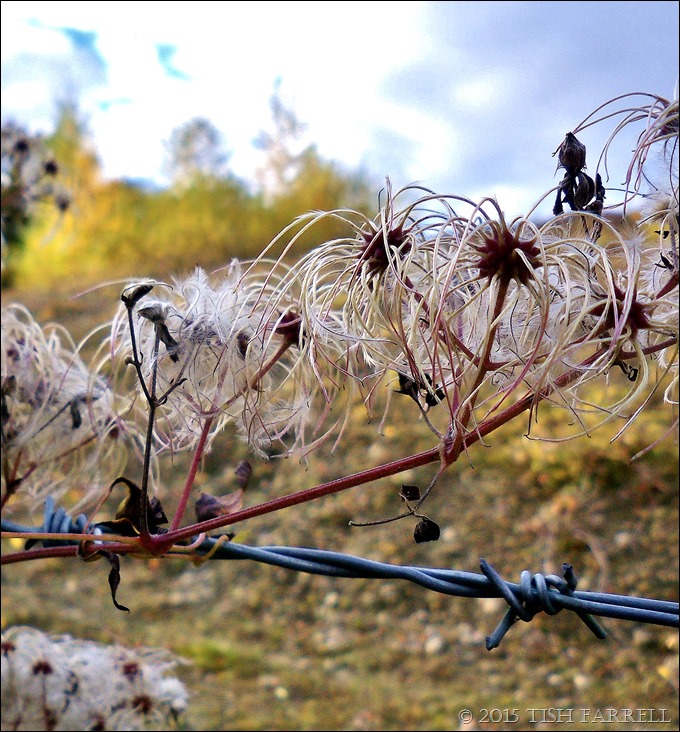
This wild clematis, aka Old Man’s Beard, caught my eye (above and below). It was arching over the path beside the abandoned Shadwell Quarry, and had then anchored itself on the fence. I like the congruity of the barbed wire and the twining plant stem.

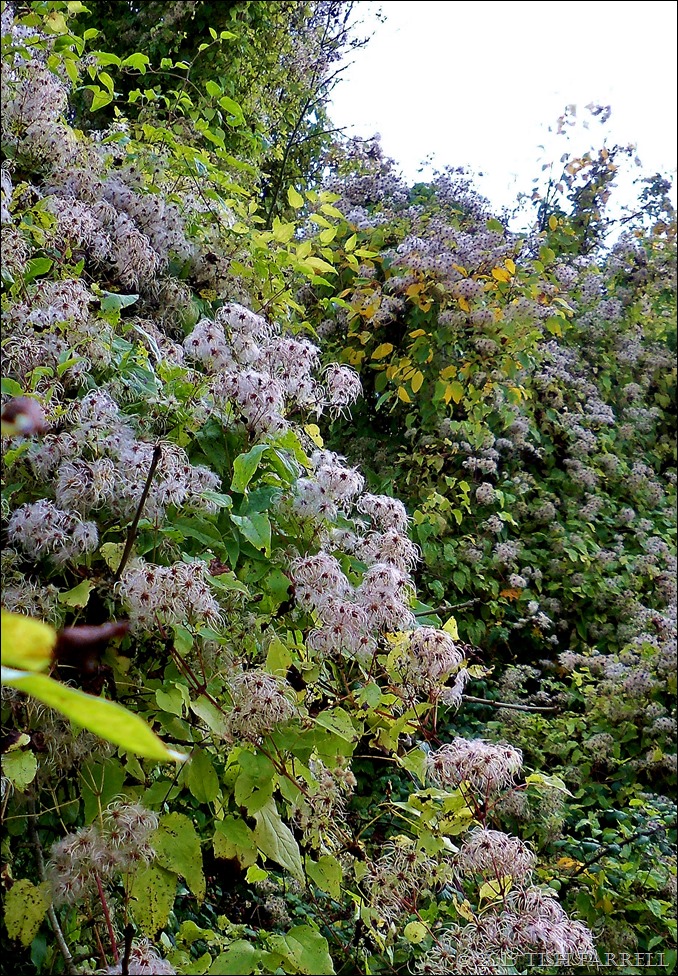
It comes into its own in the autumn with its feathery seed heads, and as you will see in a moment, it is an impressive climber.

During the summer it mostly creeps greenly through the trees and you tend not to notice it. I’m also grateful to Richard Mabey’s treasure book Flora Britannica for reminding me that another country name for this plant is Traveller’s Joy.  Mabey tells us that the plant was christened by 16th century botanist and herbalist, John Gerard who named it  thus because of its habit of ‘decking and adorning waies and hedges, where people travell’. He sounds like a sound chap, to pay tribute to the joy-making qualities of plant life.
100_7818

Like many varieties of clematis, this one does have medicinal properties – for kidneys and skin complaints – but as the whole plant is very acrid, it requires careful preparation. The most common traditional use is to roll the dried stems and smoke them as cigarettes, hence the plant’s other names of boy’s bacca and smokewood.

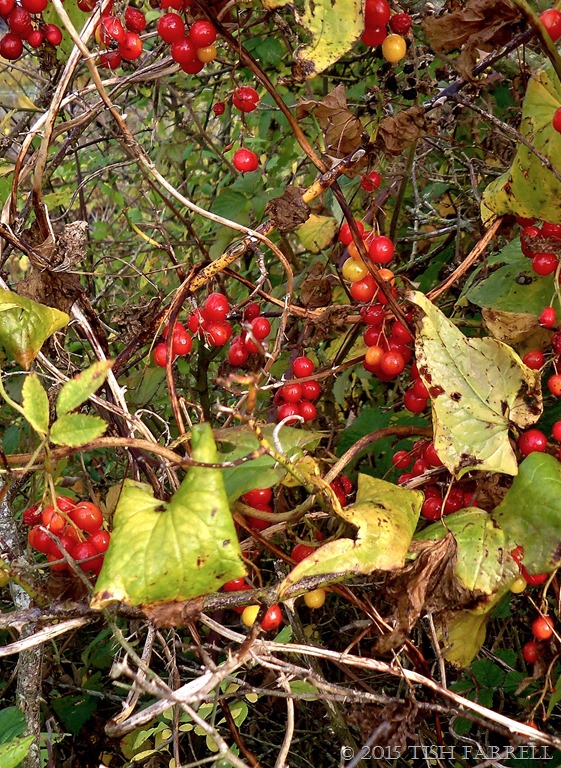
But this next plant is definitely one you do NOT want to consume in any form, despite its being related to cucumbers. All parts of White Bryony are poisonous and cattle deaths from eating it have been well recorded. But in autumn it is so very beautiful, and twines through hedgerows like strings of red and gold amber beads.
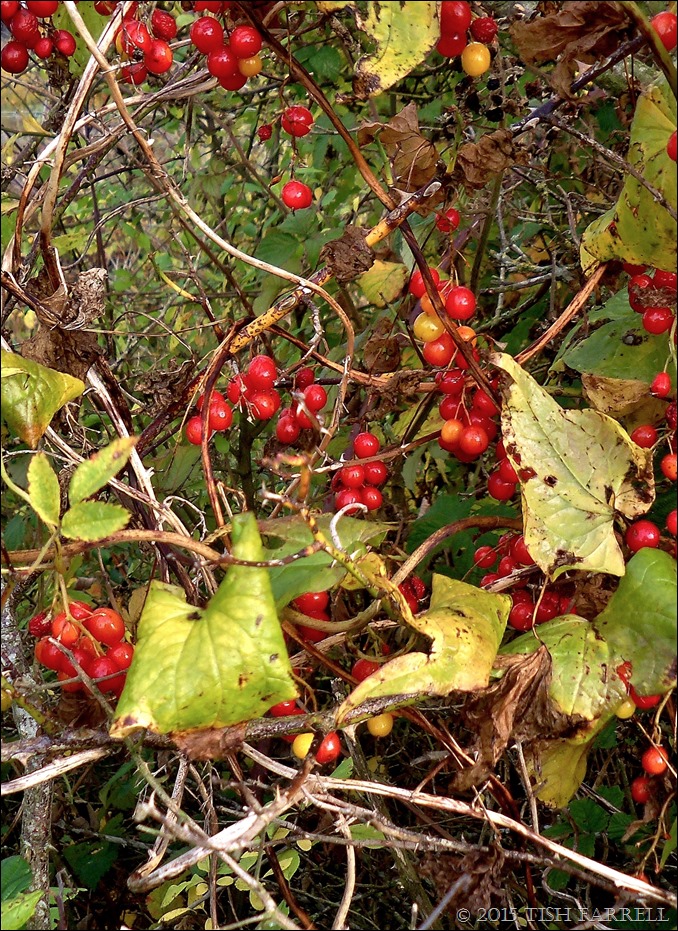
100_7828

The roots, though, are particularly toxic and grow very large. In 18th century Britain they featured in the mandrake root scam. Mandrake is a Mediterranean plant with a root that looks pretty much like a naked man or woman. It was in great demand as an aphrodisiac and narcotic. (If you know your Harry Potter, you will know that mandrake shrieks when it is being uprooted.) Unprincipled persons of the rabbit-catching variety thus began to fashion bryony roots into the highly desirable mandrake root. It was by no means an easy process either, and involved several phases to complete the subterfuge. Presumably the recipients did not live to tell any tales.
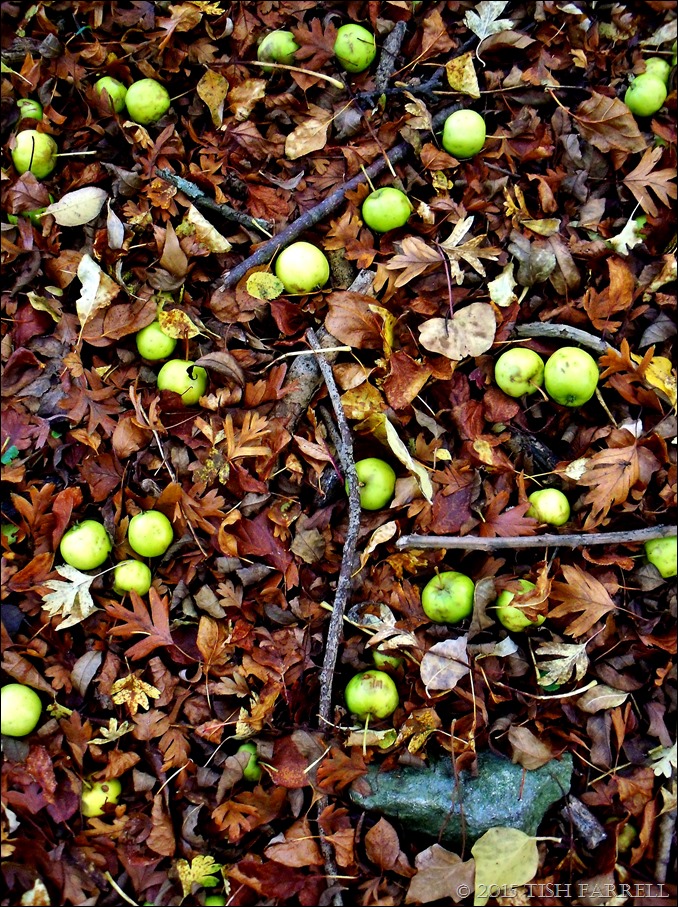
100_7815

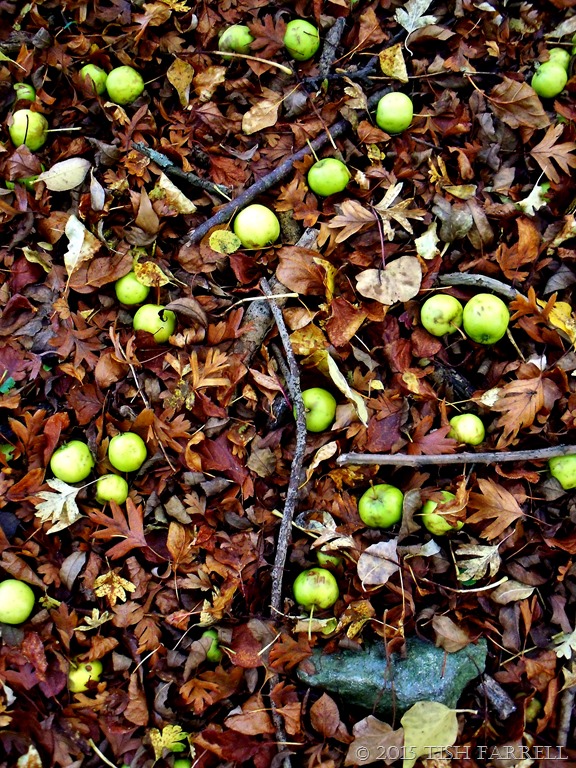
And here are some crab apples, Malus sylvestris  in Latin, woodland apples. They make brilliant, jewel like jelly which is good on toast or with roasts. Mabey says they are the ‘most important ancestor of the cultivated apple, M. domestica. More than 6,000 named varieties have been bred over the centuries, of which probably only a third still survive.’

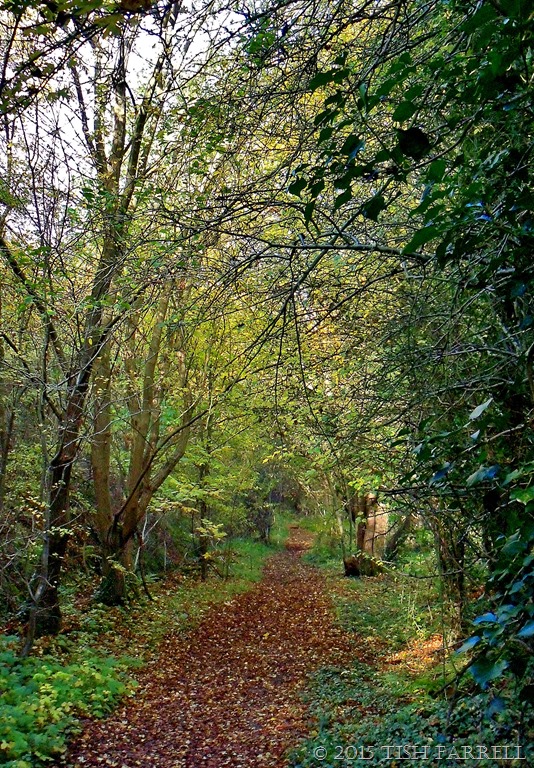
I found these, a little bruised, beside the old railway line that once served Shadwell Quarry. Now a footpath, this is one of the town’s most attractive places to walk. Ash trees and ivy overhang the track these days, and it has an other-worldly feel, far removed from industrial quarrying, trucking and smelting .
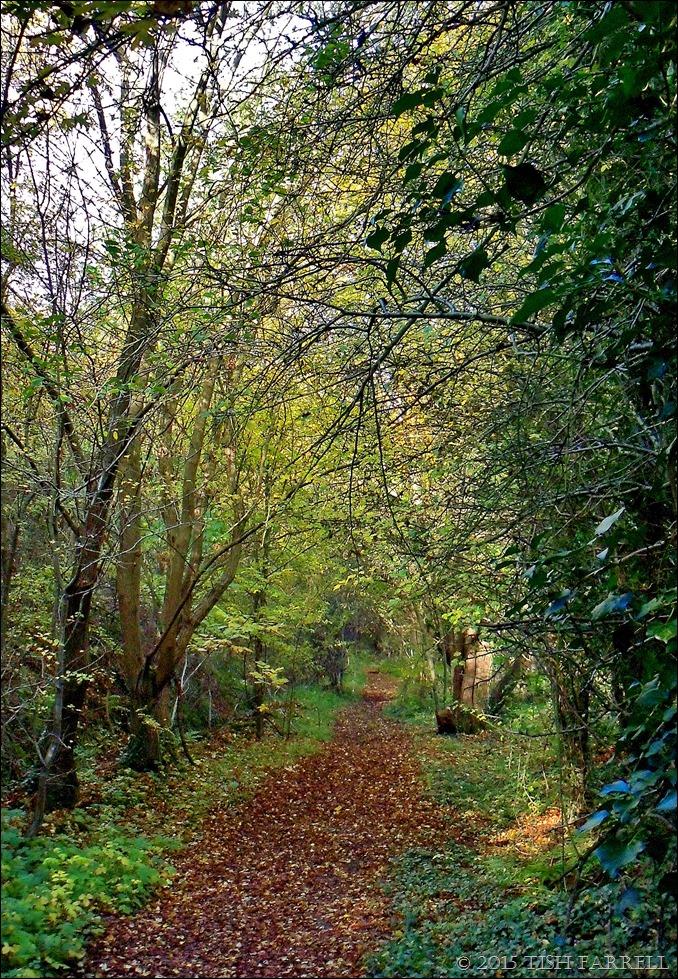
100_7809

It is hard to imagine that steam trains once came chugging down this track. The branch was built specifically to haul away Shadwell limestone to use as fluxing stone in the iron-smelting industry. In 1873, alone, 22,500 tons was shipped out of Wenlock.

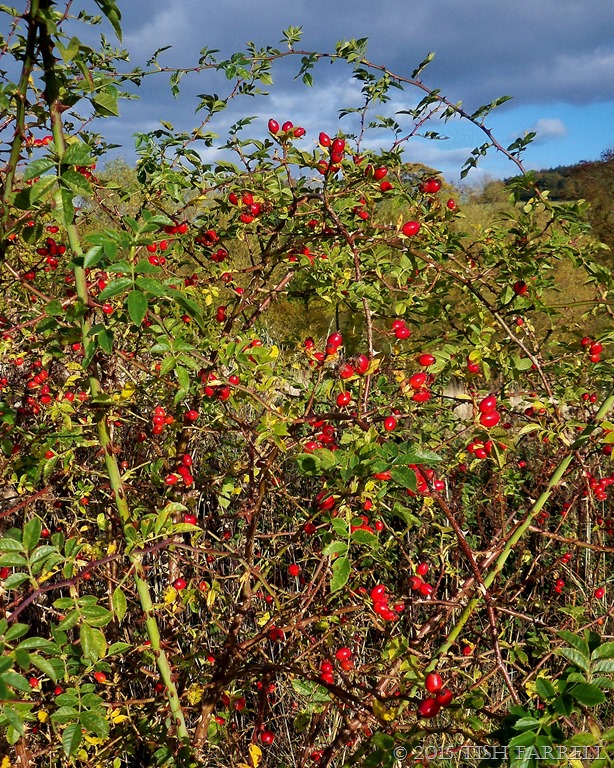
You can walk ‘there and back’ along the path, or there’s a longer circular route that takes you across fields, and down the lane to the Priory and into town. Out in the fields I found that the rose-hips, fruits of wild roses,  were doing pretty good jewel impressions too. They are also known as heps or itchy-coos.
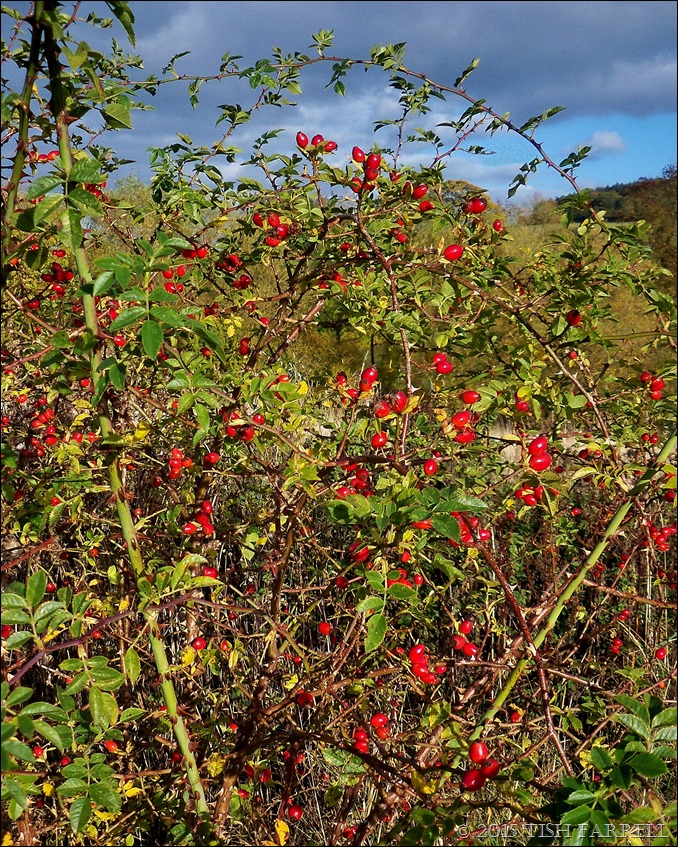
100_7806

The fruit have hairy insides which are a powerful irritant (and presumably much known to aggravate the coos or cows), but once removed, the hips have highest vitamin C content of any common native British fruit. During World War 2 and into the 1950s there was a national campaign to collect hips to make syrup according to Ministry of Food guidelines. It involved much mincing, stewing and straining, and a lot of sugar which I think was possibly counterproductive health benefit-wise. Nonetheless, caring mothers spooned it into their children.  Some of us will still remember the taste.

*

Finally a note about this post. Apart from celebrating the Shropshire countryside, it’s also inspired by 1) Lucile Godoy at Photo Rehab and Perelincolors who in Tech of the Month have been urging us to ‘fill the whole picture’ in our compositions. See their blogs for some useful guidance. (Photos here taken with a Kodak EasyShare 380).

And 2) by Jo’s Monday Walk.

Happy composing and walking everyone.

copyright 2015 Tish Farrell

One thing leading to another on Windmill Hill: everything is connected

P1010943

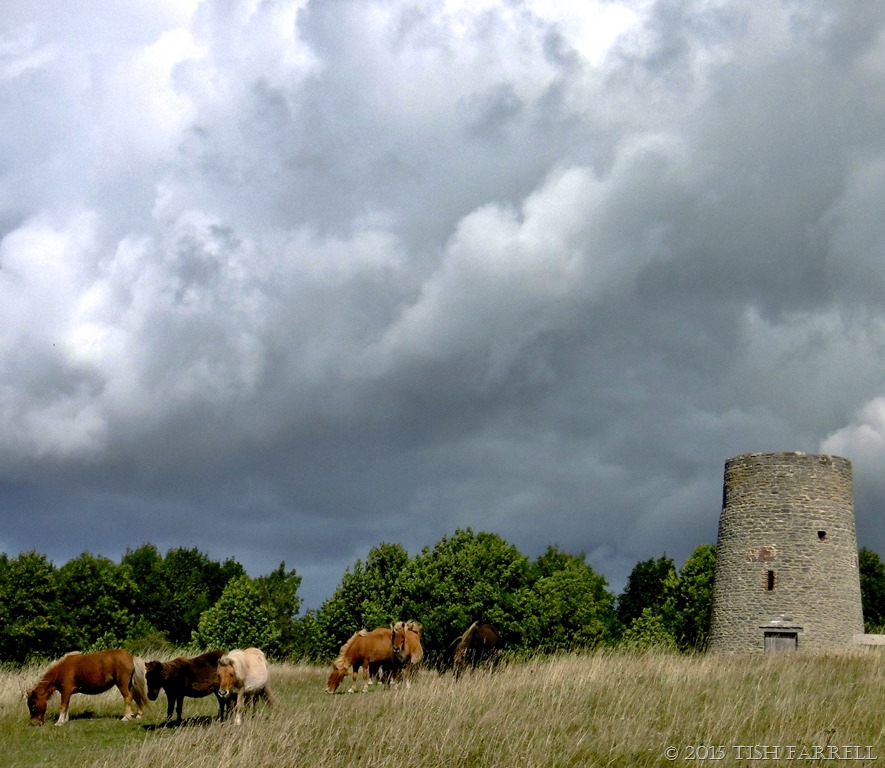
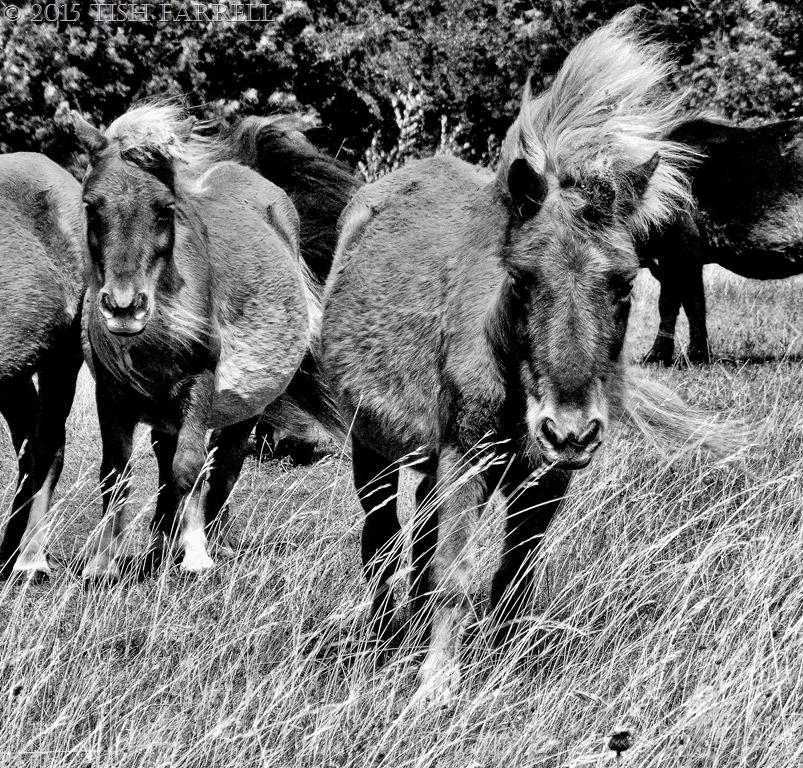
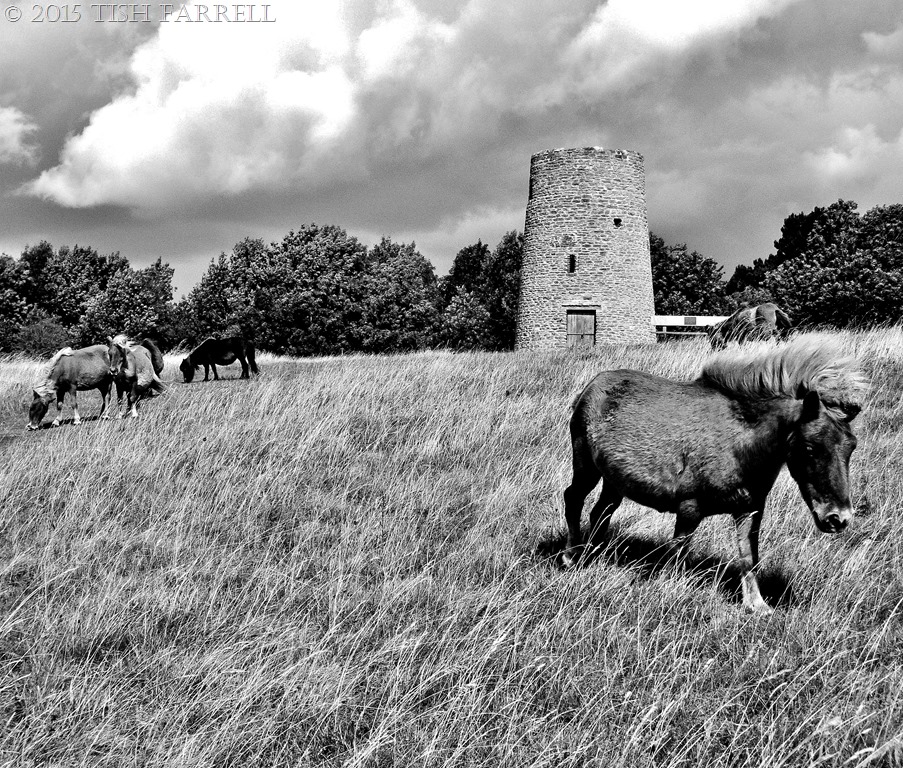
We’re barely into September and already autumn is here in Shropshire. It must be so, because the little horses are back on Windmill Hill. They will spend the next few months grazing off the dying summer grasses and wild flowers. They look very windswept, but the punk-mane-effect is mainly down to thickets of cleavers (goose grass) seeds in their top knots.

P1010945

P1010942

Looking across the hill there’s hardly a sign of the June-July flowering – all those buttery clouds of Lady’s Bedstraw quite gone. Not a trace of the orchids either. Only the dark and brittle seed heads of knapweed that always strike a note of dreariness. The weather doesn’t help either. For weeks it has been rain between showers.

Nor was I encouraged by the BBC radio science programme I heard yesterday. I caught it in the midst of recompiling a glut of runner beans into chutney (beans at least like rain). The guest climate experts were soon informing us that the El Nino effect they promised us all in 2014 did not come to much. In fact, they opined, (and they sounded quite definite about it too) we still have it very much to look forward to – the worst El Nino effect hitherto experienced, they said. For some reason the Pacific Ocean keeps heating up. And this means disrupted weather patterns worldwide, and for Europe, an even wetter winter than usual.

MORE RAIN? I wish we in Shropshire could email some of it to those lands whose dramatically changing climates mean that they now receive little or none. Mongolia is one place suffering massive desertification. Likewise, the countries of Africa’s Sahel that border the Sahara. In both regions, and many others besides, human actions, poverty and climate shift combine in a vicious downward spiral that results in increasing degradation of land and water sources. This, apart from war, is one of the main drivers of human migration. It’s all connected, despite what the climate change naysayers may wish to believe.

All of which is to tell myself to count my blessings.  I am free to wander where I like without fear of being terrorized by extremists. I have all the food I need and more. I enjoy every comfort. I have the luxury to meander along Shropshire byways, talking to little horses, musing on the meaning life, the universe and everything, while across the globe desperate others risk all to find somewhere they can live a decent life with their families. Some people, we hear, do not want to share their land with refugees. It is assumed that they will be nothing but a drain on resources. Yet who knows what gifts in talent and skills these homeless souls might be bringing us? Also, not sharing may cost us more than we could ever imagine. In some societies the truest measure of civilisation is the gift of hospitality. Perhaps we need to think about this with a little more application. At least, I know I do.

P1010956

copyright 2015 Tish Farrell
Connected

Getting down and dirty in a Shropshire meadow

100_5683

So much goes on beneath our feet, and beneath our gaze. For instance, if you want to find out what is going on in an English meadow, then you need to get down and in amongst it. There’s a whole other world down there, or maybe a thousand tiny universes. On the other hand, finding a meadow in the first place could well be a challenge. They have been dwindling since the 1920s. Mechanisation – bigger machines and bigger fields – plus a continuous drenching of agrichemicals has done for most of them. (One local landowner once told me he had to give his brussels sprout crop 14 separate dressings of pesticide).

Of course we have to be fed, but I often wonder if mass-production monoculture is the only way. I also wonder if there are perhaps still unrecognised consequences of us so radically down-sizing our natural biodiversity, and that what currently seems advanced, scientifically devised, and wealth-creating might in the end prove ill-conceived and ultimately impoverishing. But then perhaps we do not think it matters to lose potentially useful medicinal plants, or rich habitats that support a host of insects and other life forms, or to fail to rear our stock on the best and most varied herbage, both for their good and for ours.

In  Much Wenlock we are lucky to still have several limestone meadows; fortunate too that they have been officially designated Sites of Special Scientific Interest, which gives them some protection. They do need to be managed however. A meadow does not just keep itself. My father used to talk of being roped in as a lad to help with mowing the hay in his village. He said the menfolk would walk in step, spread out across the field, each swinging his scythe with an easy, even rhythm.

These days how many people know how to use a scythe without cutting themselves off at the ankles? Our surviving meadows thus require the seasonal addition of grazing animals to keep them in some sort of order, usually after the summer wild flowers are over. And of course, in the past, the hay from a wildflower meadow would have provided farm animals with a wealth of mineral nutrients and vitamins, dietary additions that humans, too, would have benefitted from, particularly in the milk they drank.

Even back in Shakespeare’s time, the consquences of mismanaged land were well understood. The following passage from Henry V  Act V Scene II is thus much cited by meadow management proponents:

The even mead that erst brought sweetly forth
The freckled cowslip, burnet and green clover
Wanting the scythe, all uncorrected, rank
Conceives by idleness, and nothing teems
But hateful docks, rough thistles, keksies, burs,
Losing both beauty and utility.

In fact the whole of Burgundy’s speech in this scene is a condemnation of bad agricultural practices – “husbandry doth lie on heaps, corrupting in its own fertility.”

All of which is to say, wherever we live in the world, we would do well to pay attention to the ground beneath our feet and to what is going on there. Our long-term health, the health of every living thing, depends on the quality of the soil. Right now most of it needs some concentrated TLC.

My home county of Shropshire is one of England’s biggest agricultural counties, with many large gentry-owned estates of ten thousand acres and more. And so, apart from the upland sheep grazing of the hill country, most farming here is highly mechanised. Of the few exceptions that still practice traditional mixed farming, Pimhill Farm is one of the most noteworthy. It has been managed organically by the Mayall family since 1949 – wheat, oats and dairy – so it proves it can be done. Their oat products are fantastic. Even their humble, savoury oatmeal biscuits taste out of this world, and porridge made from their oats is unbelievably creamy (no milk needed). You can read the Pimhill story by following the link.

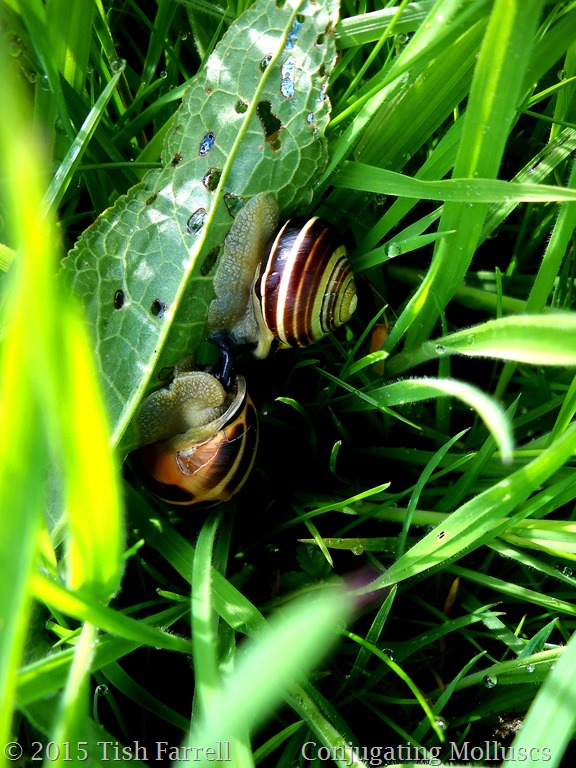
And now I’m putting my soap box away in order to get down in the dirt in my local meadow on Windmill Hill. Please also imagine the sweet and subtle scents of grasses, thyme and Lady’s Bedstraw that may only be fully savoured by lying down with them. First, though, look out for the snails:

100_5451

P1010617

100_5651

100_5460

100_5985

100_5950

copyright 2015 Tish Farrell
Beneath Your Feet

#PimhillFarm #organicfarming