Garden Treasures: The Salvaged And The Self-Seeded

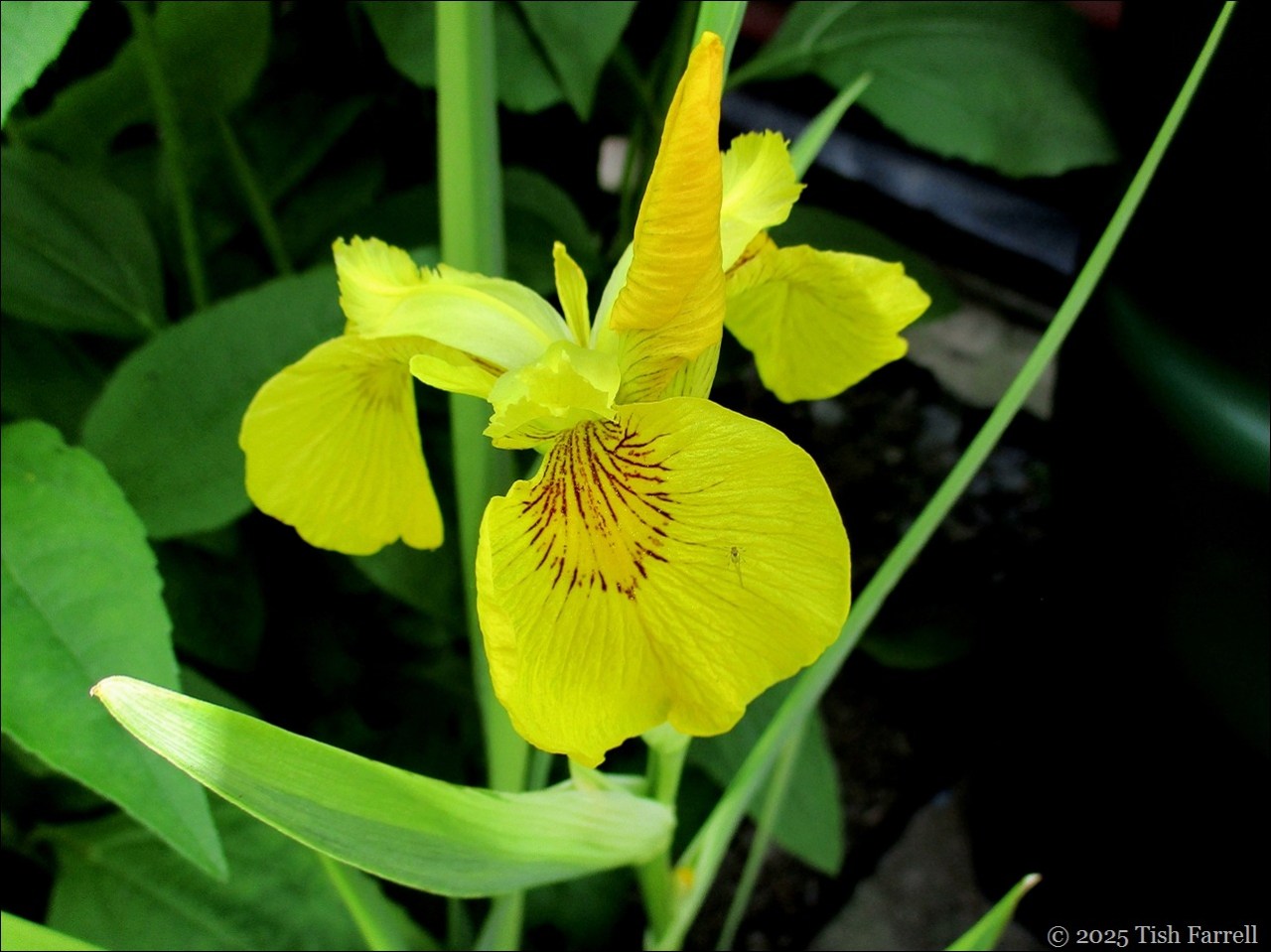
IMG_7726 variegated yellow flag

Well, this was a big surprise last week, and a very lovely one too. It is the unexpected outcome of a little rescue job performed over a year ago, not long after we’d moved into The Gables. Back then, in the August of 2023, I was making a start on de-jungling various flower beds and found some rhizome fragments swamped by phygelius and euonymus and assorted weedy thugs. They had small spikes of green and white leaves and I thought they might be Japanese iris so I replanted them in a cleared corner and pretty much forgot about them. They certainly didn’t do anything last summer, and when I looked at them early this spring I decided that they weren’t likely to either.

So it just goes to show what can happen when you’re not paying attention.
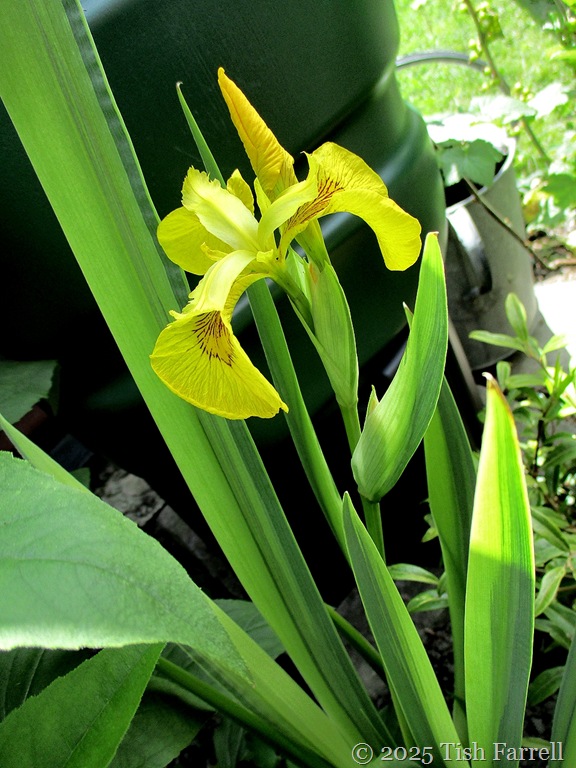
IMG_7720 variegated iris 2

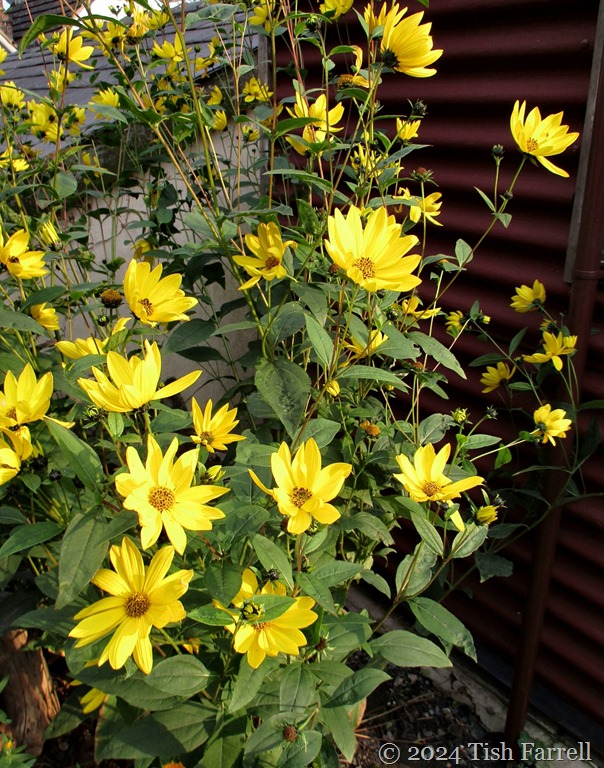
The spot where they’re growing is fairly sheltered, between Graham’s shed, a blackcurrant bush, the path and the hot composting bin. They are also being encroached on by some super-charged perennial helianthus ‘Lemon Queen’ (more of which in a moment). And here’s the puzzle.

When I first spotted the opening iris I couldn’t quite believe my eyes. It looked exactly like the wild yellow flag that grows in and near ponds and marshes. The only difference appeared to be the green stripy leaves. Some internet sleuthing was thus required, and this soon revealed that the iris was indeed a variegated cultivar of the wild form. But how come? There is no standing water in its vicinity. Until last week we’ve been many weeks without rain, and on sunny days, out of the wind, it’s been quite hot, leaving other herbaceous plants in parched beds.

Then I considered the size of the neighbouring helianthus clump. The first shoots are waist high already and the leaves huge. I then began to wonder if the hot compost bin has been having a hand in things. It does make a quantity of liquid gloop which, if I haven’t drained it, dribbles onto the path and onto the flower bed (?). Also the soil there is largely unimproved and thus dark and heavy; slow to dry out where the shed shades it.

Hm. Who knows? I’m just hoping that the iris will decide to stay. There are signs that the plant with the flowering stem is beginning to clump up. The smaller cuttings, in amongst a spreading geranium and rudbeckia,  are also beginning to look promising. And now we’ve installed a nearby water butt, I’ve no excuse not monitor watering requirements.

All the same, all the gardening sites do call the variegated yellow flag a wetland plant, and also warn that it, too, can develop thuggish tendencies. A watching brief then.

*
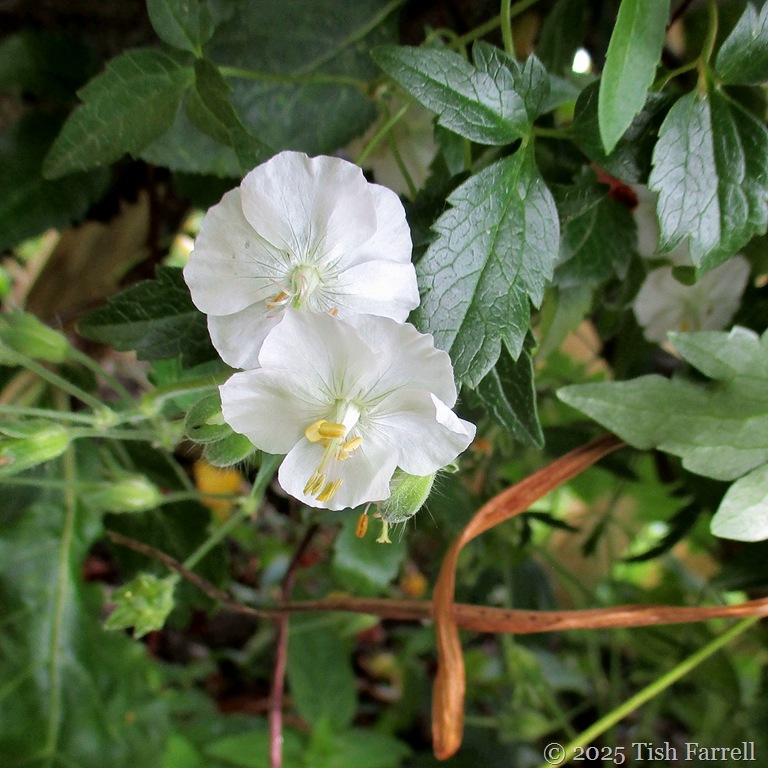
IMG_7776 geranium phaeum alba

I rescued this geranium phaeum album early last summer. I discovered it behind the compost bin, lurking mostly under the fence with next door’s garden. It’s now growing under the apple tree at the bottom of the garden, though it’s a spot prone to drying out. It’s doing better in an open sunny border along with geranium Anne Thomson. Damp shadiness is supposed to suit it best.

*

The recent downpours have bruised many of the geranium faces, but the rescued clumps of Johnson’s Blue (I think that’s what they are) have been putting on a good show and pleasing the bees.
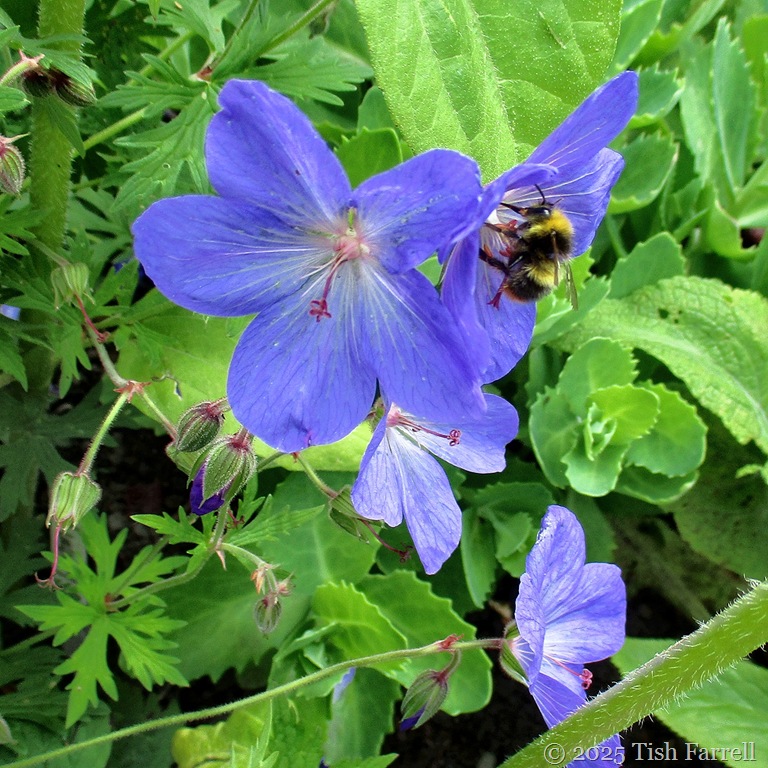
IMG_7765 blue geranium and bee

Here they are with this year’s number one self-seeders: white foxgloves. They are everywhere about the garden, although there was no sign of white ones over the last two summers. I love their cool and stately demeanour.
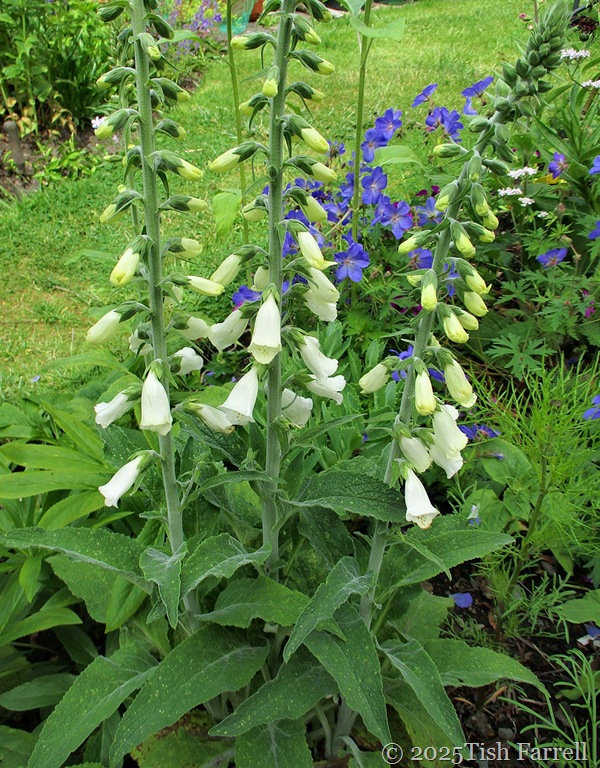
IMG_7764 white foxgloves

*

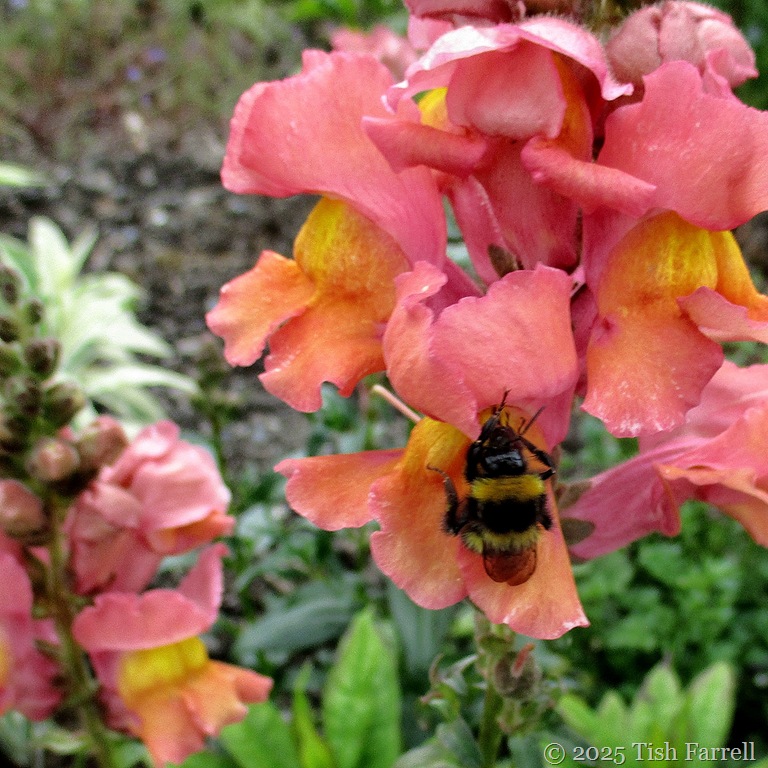
And at the hotter end of the colour palette, in the front garden we have a row of snapdragons, self-seeded along the wall in a remarkably orderly fashion. Anyone would think I’d put them there.
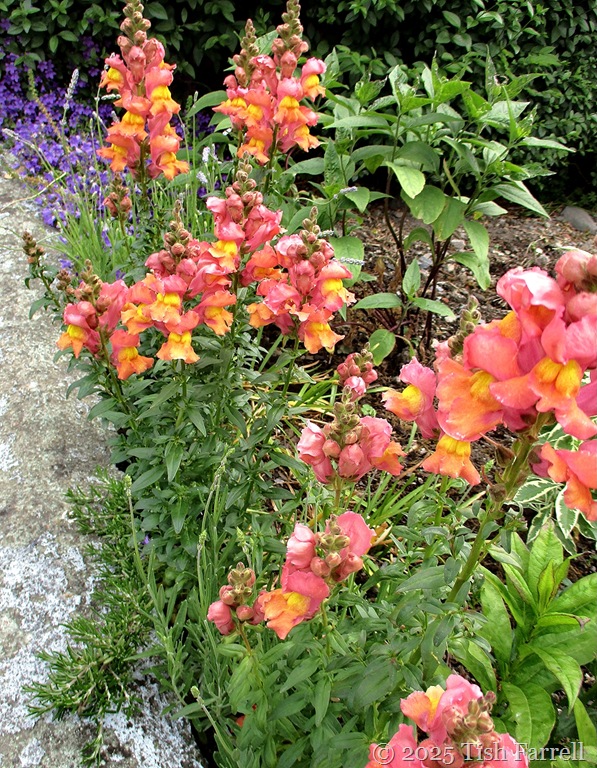
IMG_7758 snapdragon 3

IMG_7756 snapdragon and bee

They glow in late afternoon sunshine.

*

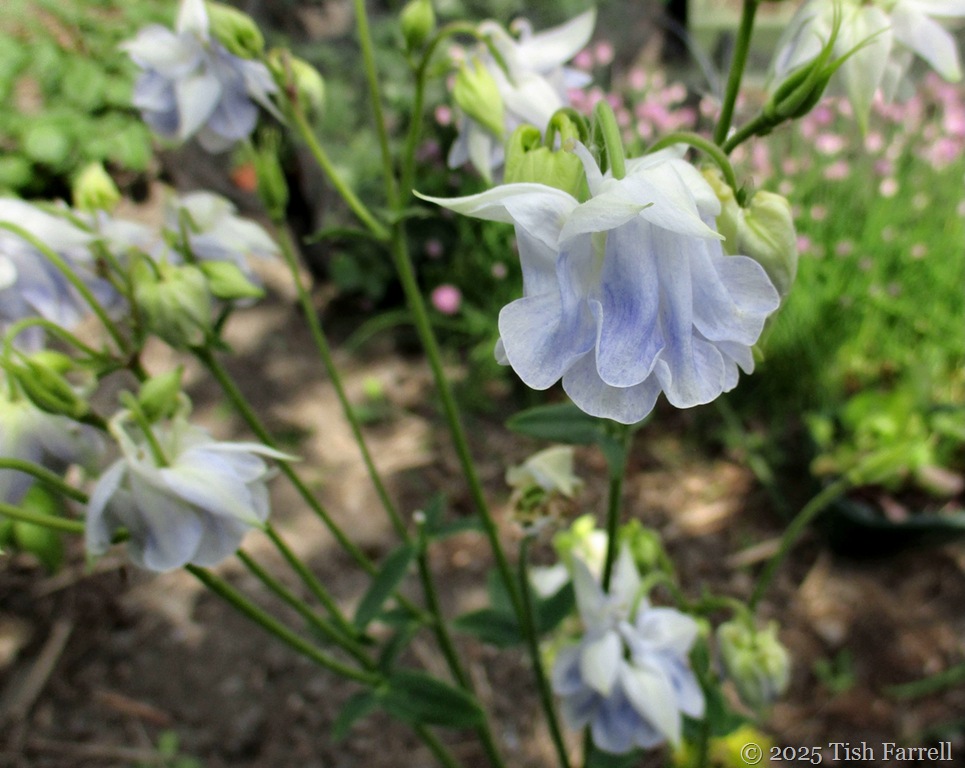
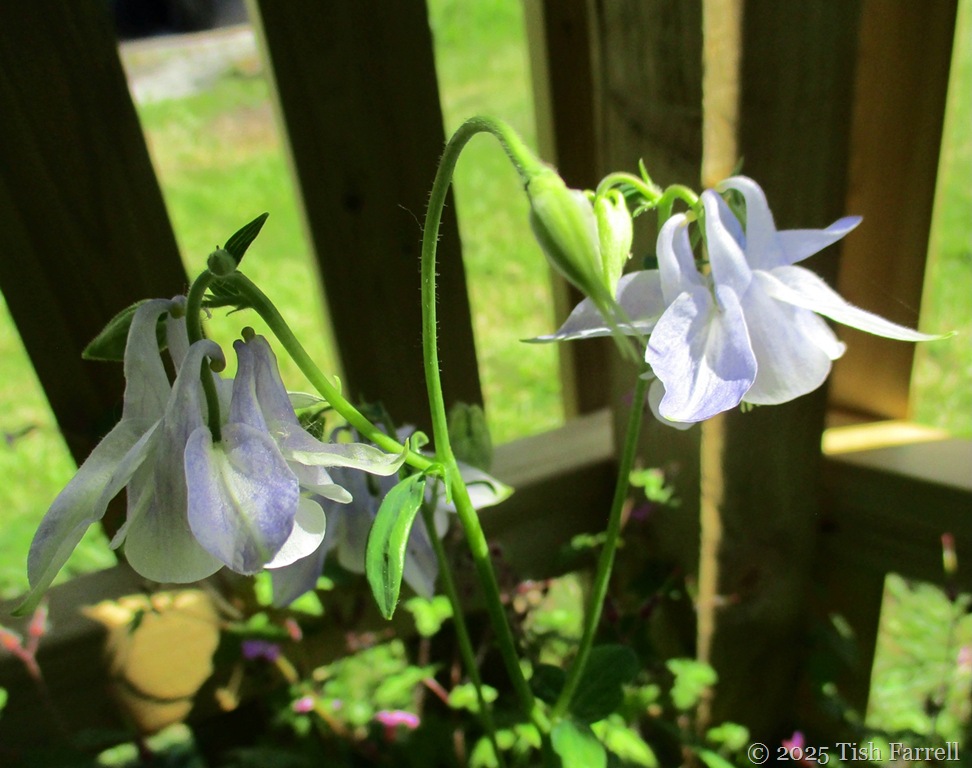
Throughout May we had profusions of columbines, mostly pink and dark mauve. They are actually too much of good thing on the self-seeding front, and I spend much time rooting seedlings out of the vegetable beds. But then amongst them were two plants of delicate lavender, each with a different ‘frock’, one by the green house, and another in the far corner behind an apple tree.  They are over now. But I know where they are.
IMG_7562 columbine lavender

IMG_7554 columbine lavender 2

*

Six On Saturday  Please visit host Jim’s lovely garden – so many treats to be found there.
Six On Saturday: Of Flying Saucers, Scorpionweed And An End To The Great Gobbling

IMG_6143

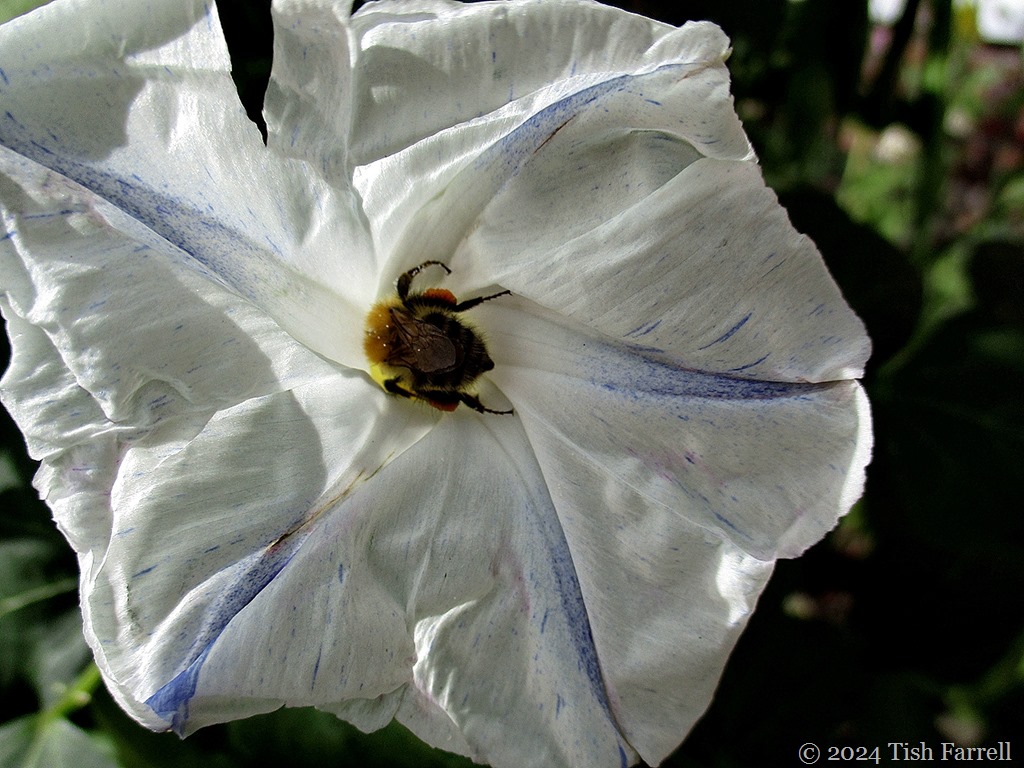
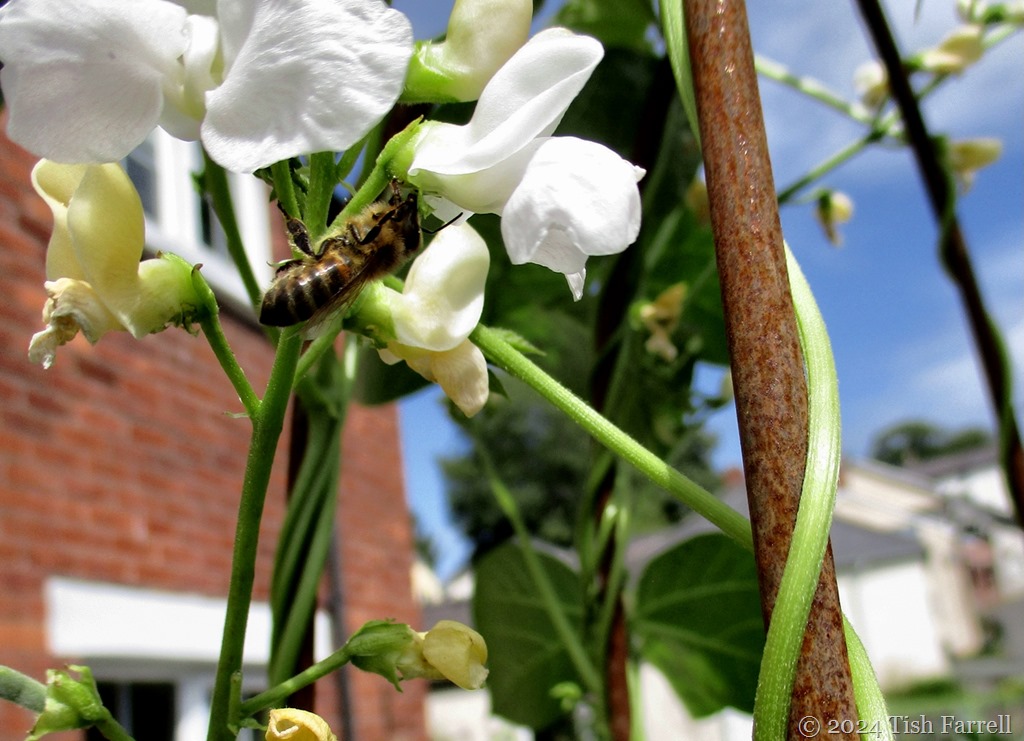
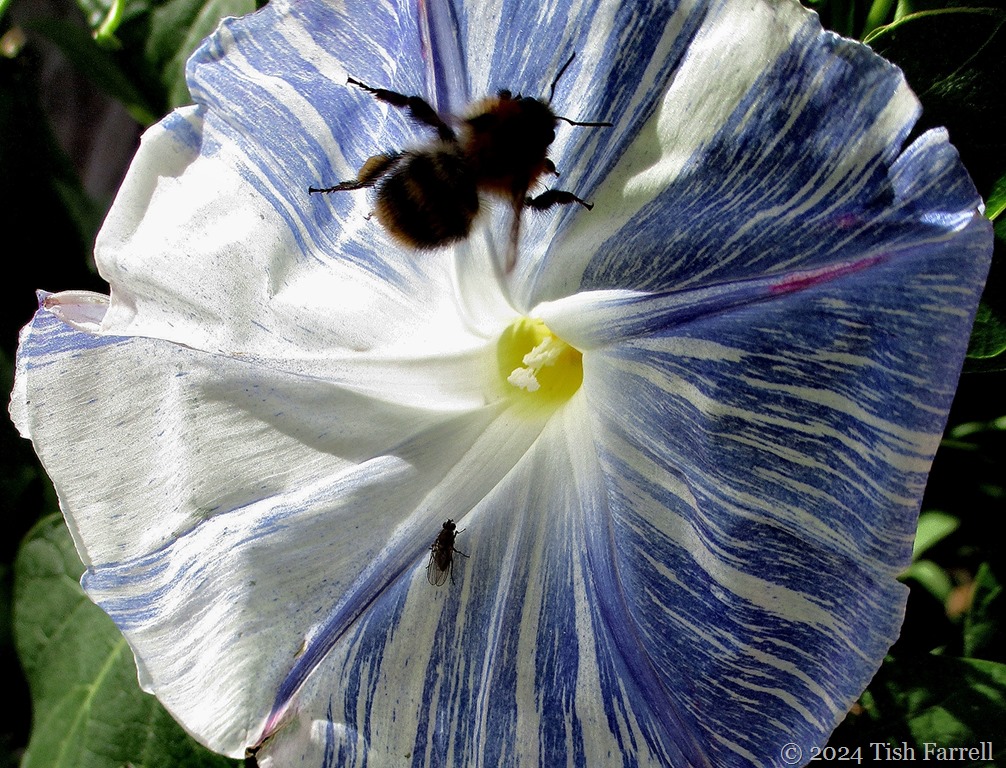
And no, we have no extra-terrestrial sightings here in Bishop’s Castle, at least not over The Gables, but I do have a few Flying Saucer Morning Glories. They are late on parade, growing up my obelisk of butter beans in the front garden.  I wasn’t really expecting them: the seed was several years old. Yet here they are, busy luring insectkind.

IMG_6145

*

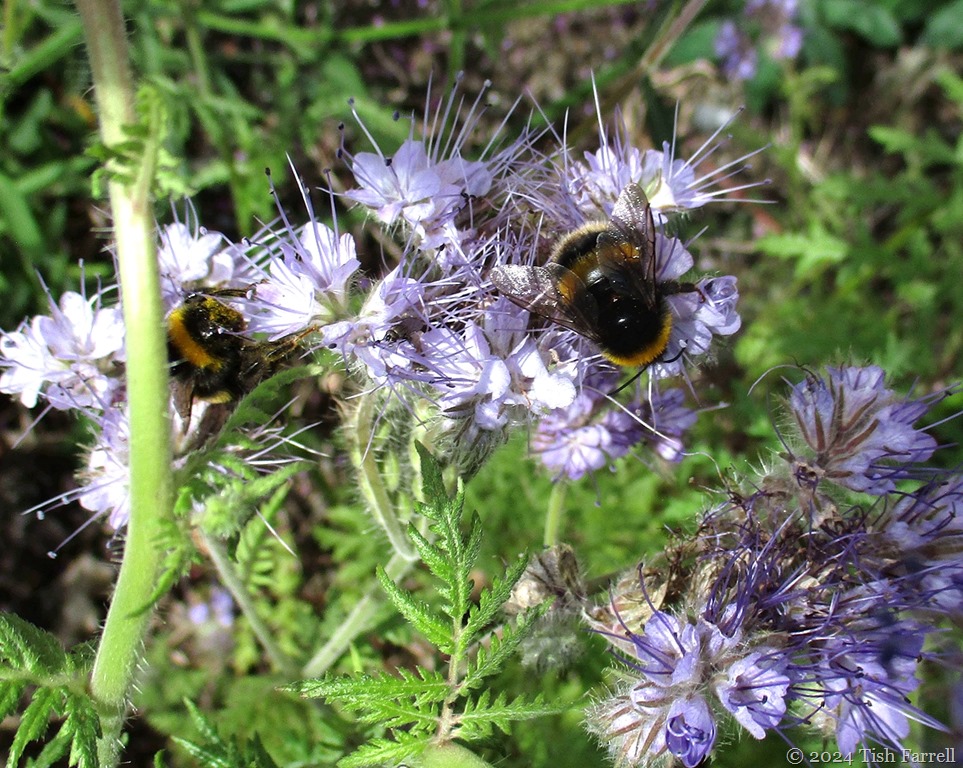
Also in the front garden, in the opposite bed, the phacelia has been flourishing for the past few weeks, every day alive with bee hum.

IMG_6172ed

IMG_6166ed

This borage family member hails from North and Central America where it also goes by the name of Scorpionweed, which sounds hair-raising. So far there has been no sign of cohabiting scorpions (no doubt a huge comfort to other half who was bitten on the foot by one while overlanding in the Sahara.)

I sowed the seeds quite late, probably around the beginning of July. As with the Flying Saucers, I was prepared for them not to germinate. The packet was left over from Wenlock allotment days. I grew it back then either as green manure or a cover crop. But then on a trip out in late June I’d spotted fields of it around Ludlow. I’d never seen it growing on an agricultural scale before. It was in full bloom and the fields seem to float in a mauve haze. More than a good enough reason to try it.

These days there is much farmer emphasis on improving soils and attracting insects on land taken out of food production (food security no longer seems to be a priority in government policy for British agriculture). Hairy crops like phacelia, vetch, linseed have been found to improve worm populations, this even in light and sandy soils.

I decided to try it on the ground where we had lifted paving slabs and left behind a layer of old mortar which had mostly been broken up into the soil. It looked very unpromising territory, and I wanted to see if anything would grow there. And it did. The seeds sprouted in a few days.

Usually if you’re growing phacelia to provide green manure, it should be dug in before it flowers to stop self seeding. But I thought never mind about that. The flowers are so pretty, their scent so subtle and, while they last, their kindness to insects immeasurable. The first frost will doubtless fell the plants, and I’ll probably leave them to dig in before spring.

*

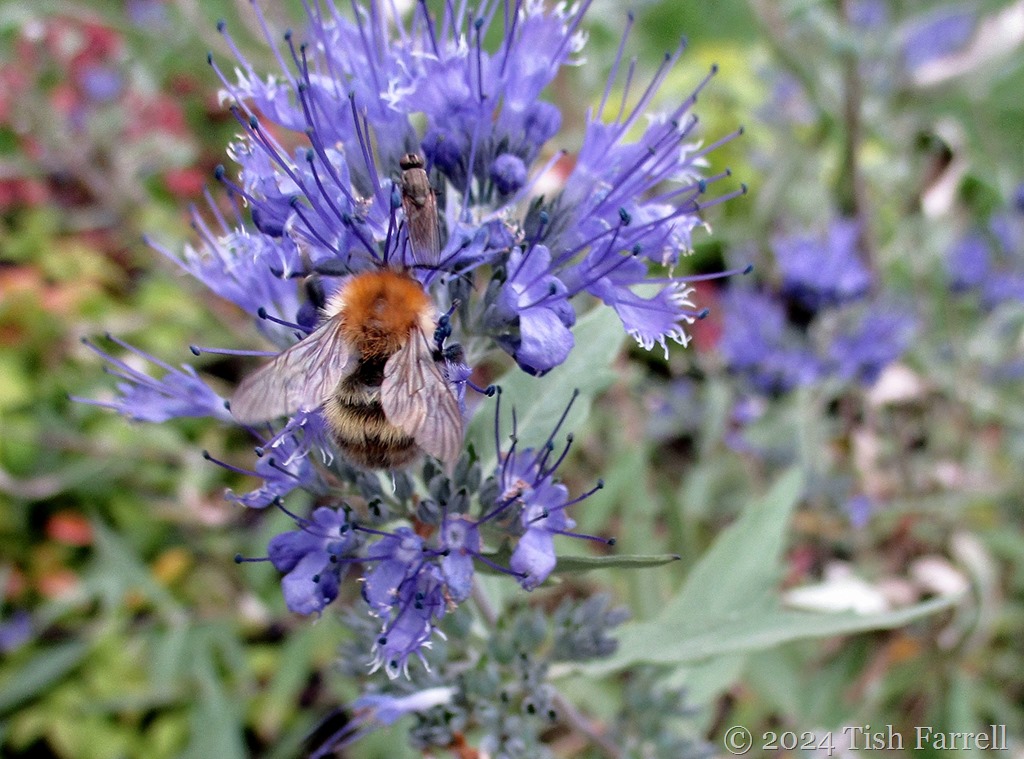
IMG_6271ed

And here’s another insect friendly plant, doing its end of season feeding duty while looking lovely too: Caryopteris ‘Heavenly Blue’, a fairly compact hardy shrub bought back in the spring. It clearly loves our garden and has opened its branches so generously. The flowers are scented too, and it’s taken over catering duties from the neighbouring purple agastache, which is now a mass of dusky seed heads and no longer of interest to the bees.

Much of the rest of garden has a look of late-summer weariness. We had a couple of real summer days earlier this week, but there’s a real sense of autumn in the offing. My runner beans simply stopped producing at the end of August, for no reason that I can fathom. Although I did notice yesterday that a single plant has decided to grow a couple of strands worth. Perhaps one last small meal then.

Meanwhile, the Flying Saucers’ hosts, the butter beans are still flowering like mad up the front garden obelisk. There are many pods but they are being very slow to fatten, doubtless down to the lacklustre summer and cold-spring start. I’m now hoping for an amiable October that might give the beans the chance to finish off. And for now, the blossom is still performing essential services.

IMG_5976

*

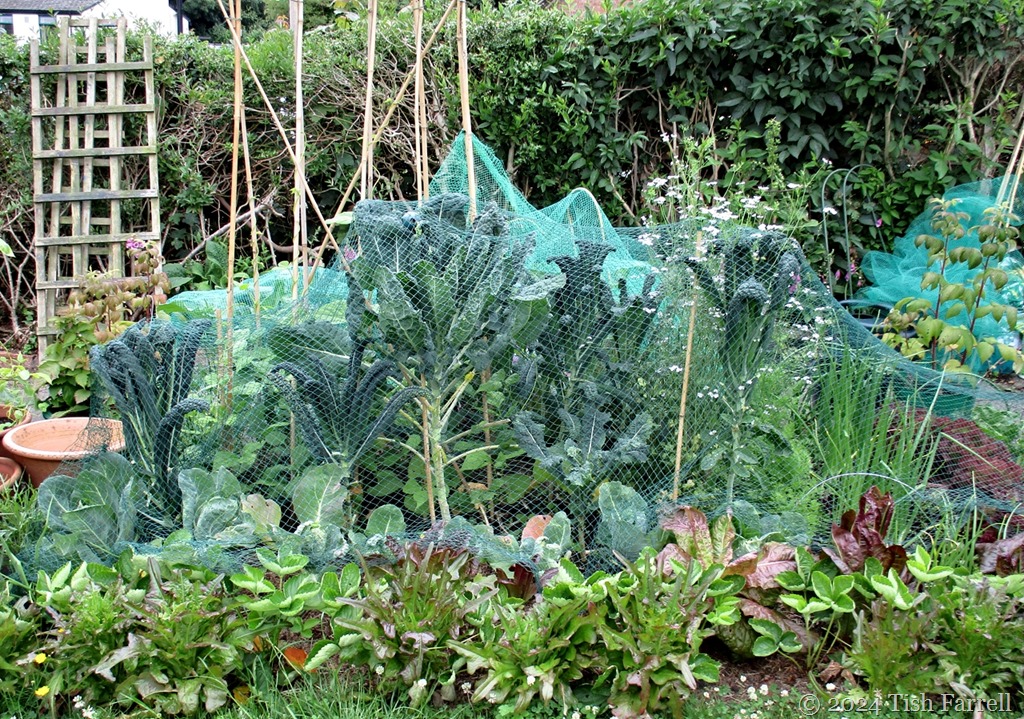
The good news, though, is that the horrendous brassica gobbling has ceased, this after the cabbage white caterpillars ate every kale plant down to the stalks. It did not matter that I’d covered crops with so-called butterfly netting and fine grade enviromesh. Somehow the butterflies sneaked in to lay their eggs. Patrolling the plants even twice a day proved a losing battle. They made inroads in the pointy cabbages too, but I’ve managed to save some of those.

Ever hopeful, I’ve replanted Russian and Tuscan kale plantlets under extra-fine mesh. The butterflies are still about, but not in the flocks we experienced earlier in the summer. Fingers crossed.

IMG_6282

There are other bright corners in the garden, and especially this towering clump of helianthus, a perennial sunflower. Back in the spring when I planted it out, it was three single small stems with only a few roots between them. The cuttings came from my sister’s Little Stretton garden, descendants from plants that grew in our Aunt Miriam’s Devon garden. I’m so pleased to have it. I did not have a chance to grab a segment or two of my Wenlock helianthus before we moved. It used to be the star of the late summer guerrilla garden there. It’s growing even more vigorously in Bishop’s Castle.

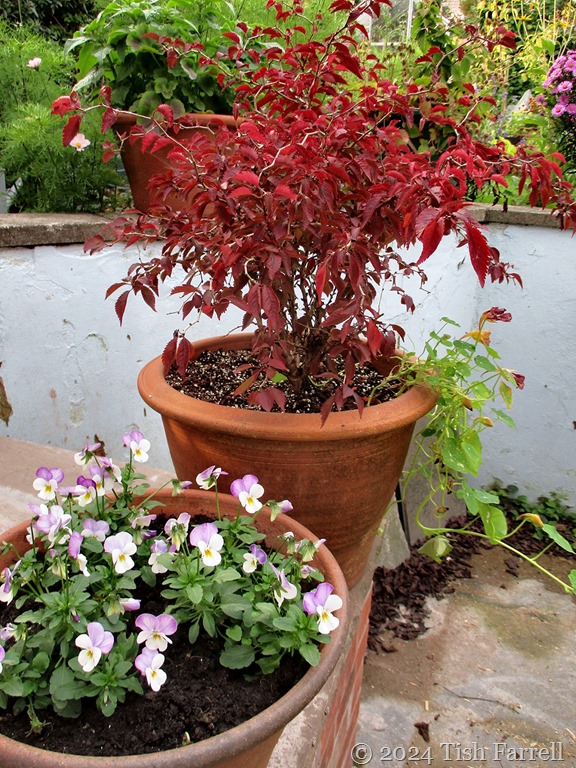
And last but not least, but definitely with an eye to autumn in its new russet foliage, this is a newcomer to the Farrell garden, Japanese cherry kojo-no-mai. (Posing here with some very sweet violas).

IMG_6254

It will eventually grow into a small tree, but for now seems happy in this pot.

*

Six on Saturday  Please visit Jim at Garden Ruminations. He needs some get-well wishes.

Six on Saturday ~ More From The Random Garden

IMG_5634

As I said in my last Six on Saturday post we have a new garden. I also said that for various reasons – rampant weeds to clear and too much wet weather from winter to spring – I was all behind come growing time; things got sown or planted out wherever there was space at that particular moment.

This has since made protecting cabbages, purple sprouting, kale and cauliflowers, first from pigeons, and more recently from hoards of cabbage white butterflies intent on laying their eggs, somewhat problematical, not to say given rise to a mishmash of netting and other protective devices rather too reminiscent of my former allotment contrivances.

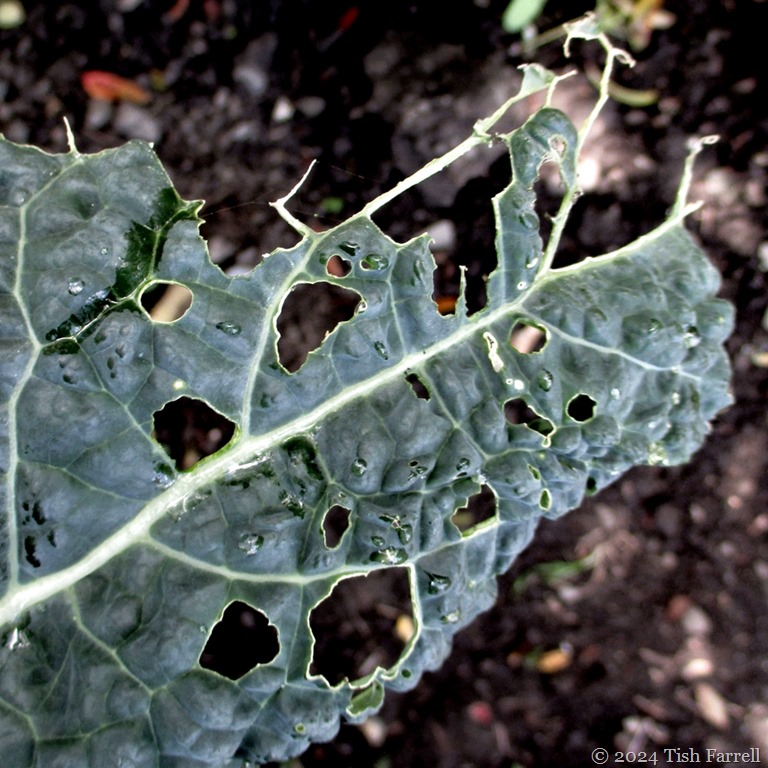
So number 1, since it is preying on both my mind and on my brassicas: CABBAGE WHITE BUTTERFLIES…

IMG_5954

Caterpillar damage on Tuscan kale

*

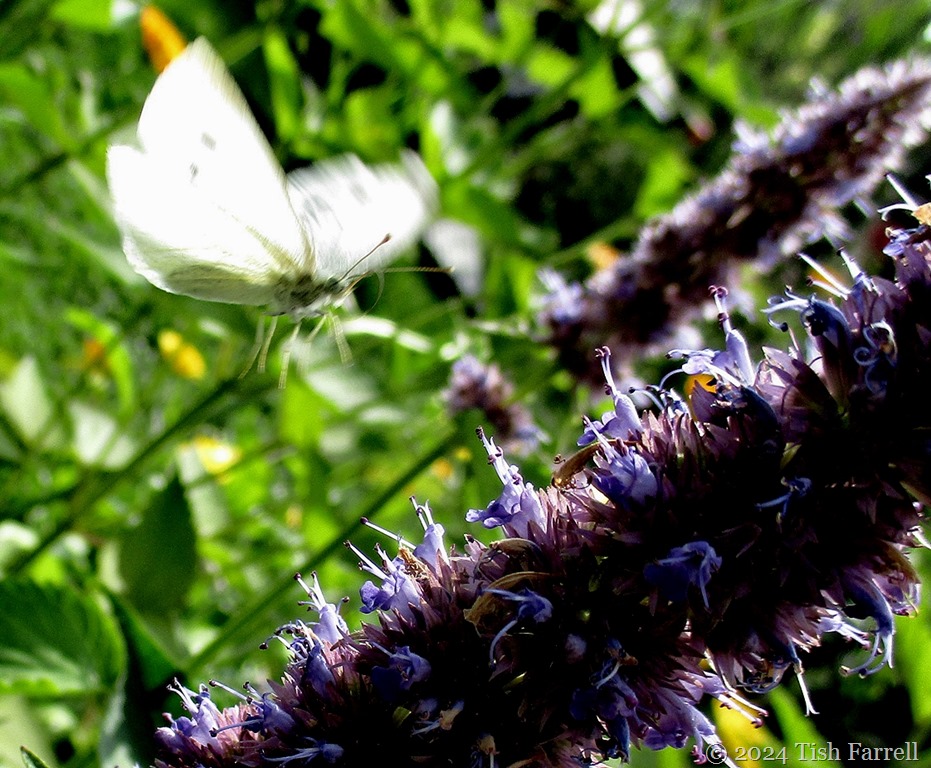
cabbage white

I actually quite like this photo. The more so as the target of interest is my SoS 2: agastache or Vietnamese Mint. The butterfly is calling in for an energy fix, which I suppose I should mind. (Enough procreation, thank you!)

IMG_5898

*

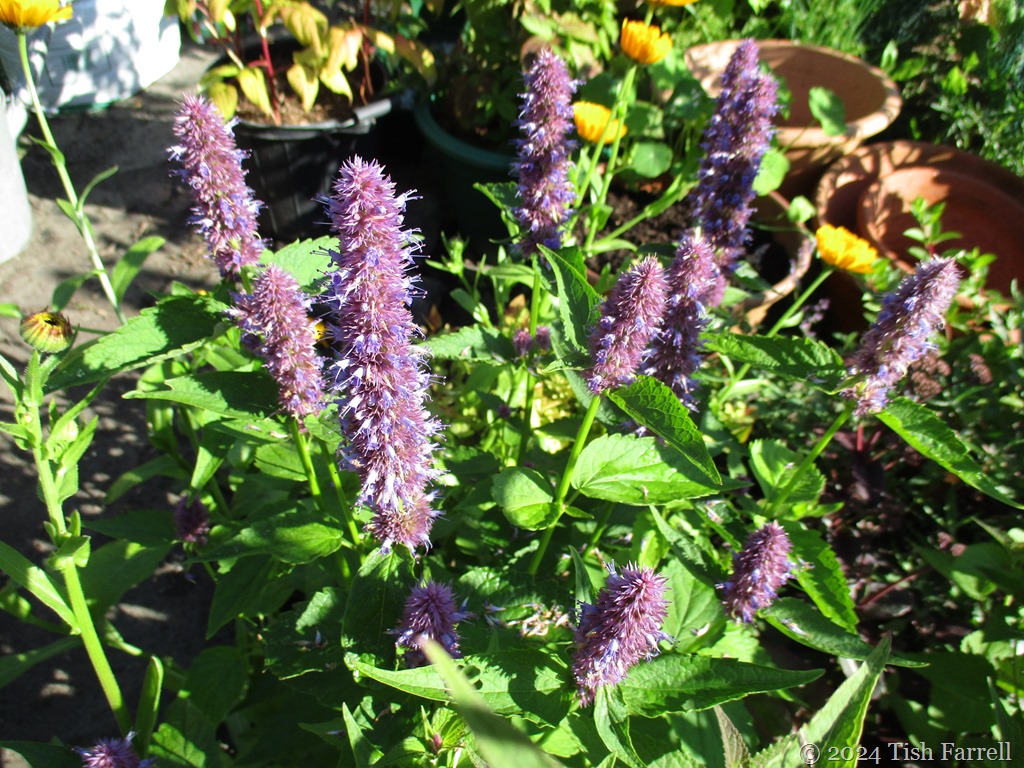
I love the agastache. It smells of aniseed and its leaves are edible. It’s a perennial (I grew lots of it from seed this spring), though I’m not sure how hardy it will prove in a Bishop’s Castle winter. Anyway, it is a very tidy plant, growing beautifully upwards with lots of purple-mauve spires – not easy to photograph well.

IMG_5844

*

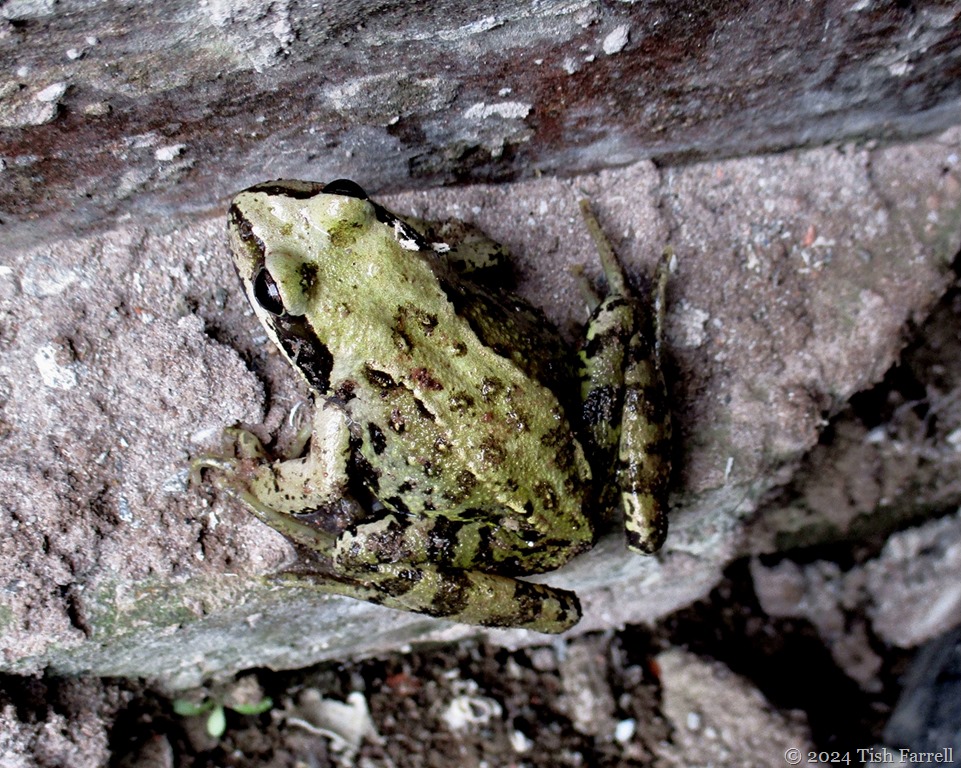
SoS 3 is one of this week’s very pleasing finds: a nice young toad lurking by the outside tap.

a young toad

We’d already found a much bigger toad hiding under an old tile by Graham’s new garden shed creation. I’m wondering if there may be more, because so far there has been very little slug damage along the vegetable rows – so little in fact, I can’t quite believe it. (Lull before storm?)  We were besieged with molluscs in Much Wenlock. We do have the odd big snail however.

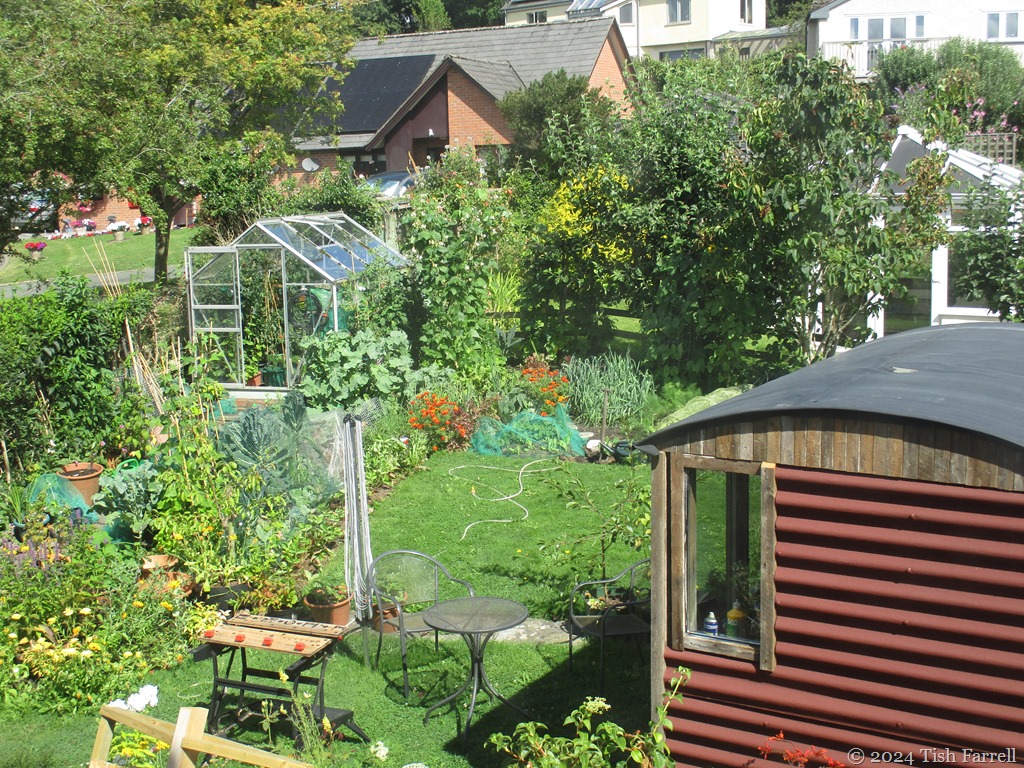
Talking of the new garden shed, this is number 4. I’ve mentioned elsewhere that it’s being built from scratch, incorporating recycled parts from our April roof makeover and other assorted materials, the whole inspired by a Great Western Railway goods wagon. I’ve had to sacrifice what might otherwise have been a large and useful garden border, but never mind. I’m liking the shed. It’s presently having its rubber roof applied.

IMG_5883

IMG_5942*

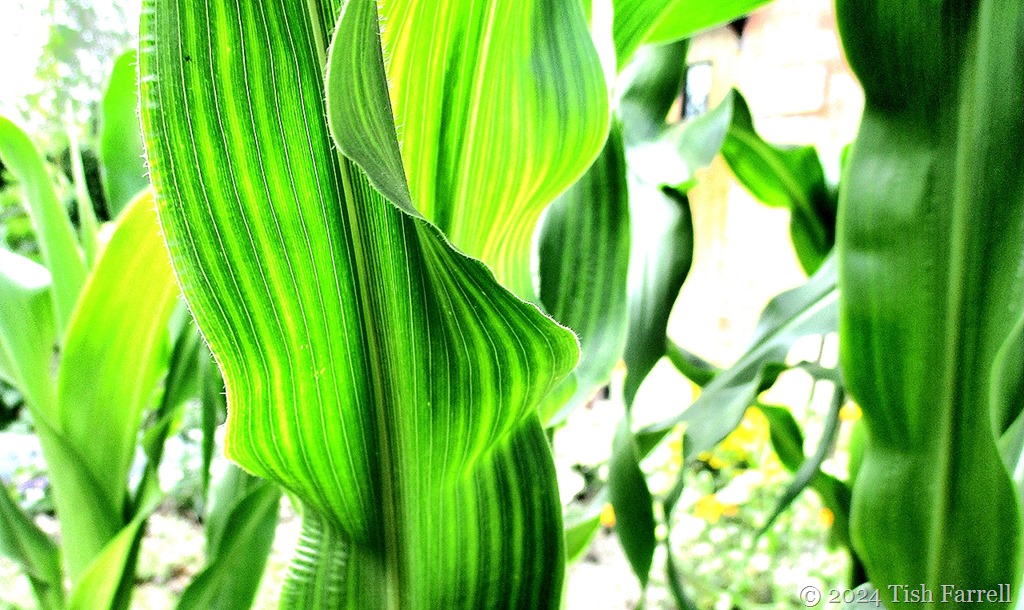
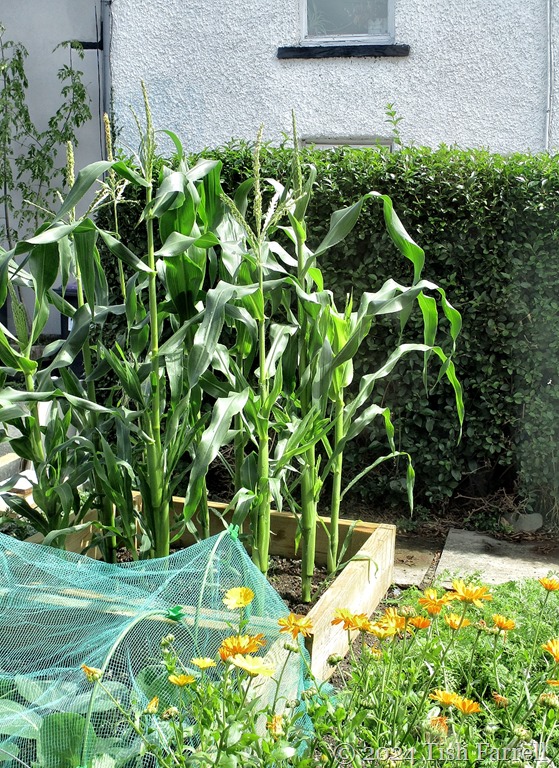
SoS 5 is the front garden sweet corn. It’s growing tall and starting to tassel. Possibly planted rather tightly, but so far the plants don’t seem to mind.

 IMG_5947

*

As seen a couple of weeks ago:

IMG_5912

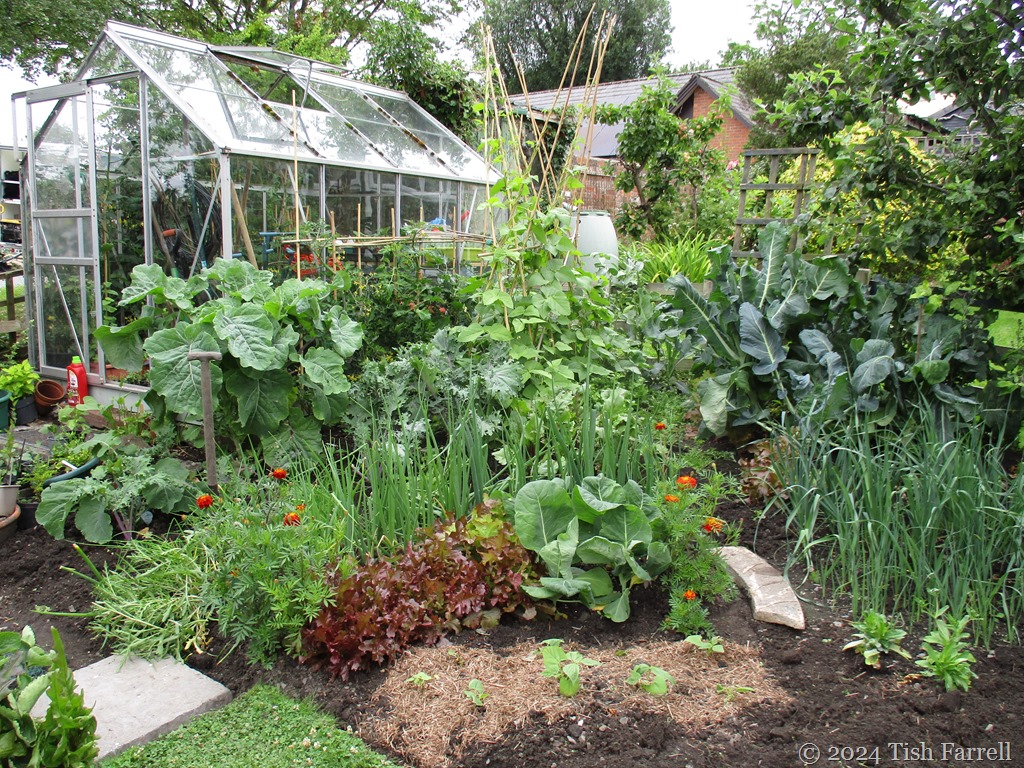
I also have a neighbouring raised bed with cabbages and spring onions. On the farther side of the front garden there is now a row of purple sprouting growing where the potatoes were, netted of course.

The two raised beds seen here were made from building work off-cuts, and I’m hoping for more to be made when the shed is done, and eventually I’ll move these to the back garden.

Or maybe not. The front garden does seem a good growing spot.

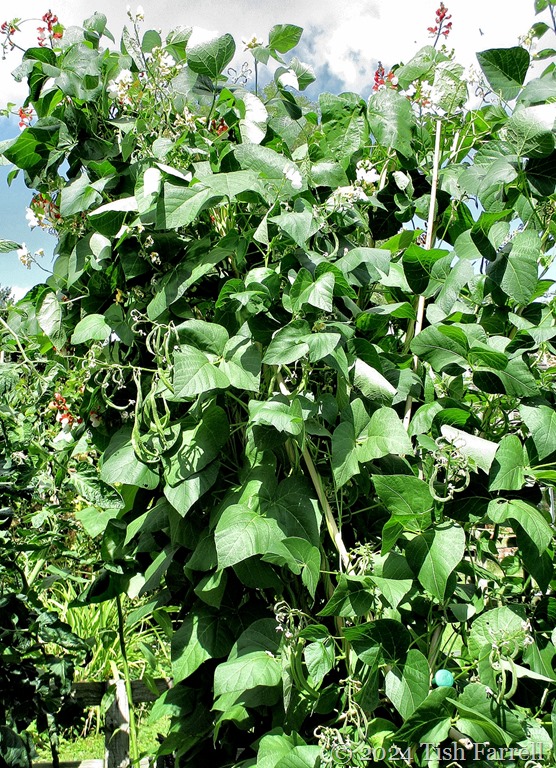
There’s also some good growing going on at the bottom of garden. I’m pleased that back in the winter I managed to make a good compost filled trench for the runner beans. It brings me to no. 6 – last night’s first meal of the season. Always a gardening landmark in Farrell household.

IMG_5944

IMG_5948

The trench of garden waste and hot bin compost certainly seems to be working  well for runner beans Emergo and Painted Lady

*

IMG_5958

Up, up and away…

*

Six on Saturday

Please visit Jim’s lovely garden at Garden Ruminations


header sweet corn

Six On Saturday: On Random Gardening

IMG_5631

Starting a new garden is always exciting; daunting too. And our particular garden, being a hundred years old, had traces of many a planting disaster venture. More recently, though, all had been overgrown, and invaded by rampant phygelius (Cape fuchsia), ground elder, vagrant raspberries, bindweed and Spanish bluebells. The two front garden beds (south-east facing) were covered with concrete slabs and Spanish bluebells.

Most of it had to go.

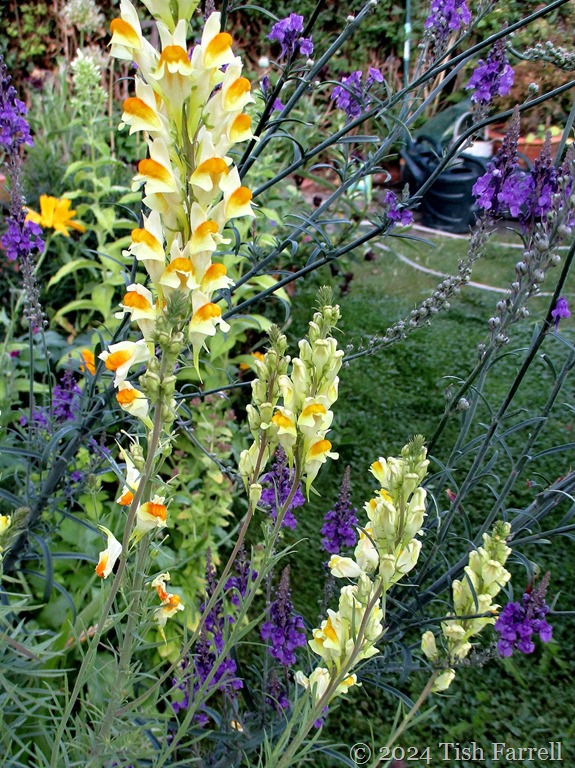
1: Because we’d had to rent between selling one house and buying another, I’d brought only a handful of plants from our Much Wenlock garden. Among them was yellow toadflax (Linaria vulgaris), a favourite flower since childhood when I’d first seen it lighting up the verges of the Shropshire Hills. I’d grown it from seed, bought on-line from Jekka’s Herbs. Now, by some pleasing accident, it seems to have grown up with some purple toadflax.

IMG_5791ed

*

When we moved into The Gables, just under a year ago, my most pressing concern was vegetable growing. I knew we would miss the produce from my allotment plots of 16 years (if not the heavy labour), so tackling the most weed-infested areas to make beds for food crops was my first priority. My thinking here was that these beds would be cleared every year, so repeat ground elder and bluebells wouldn’t be quite the same bother they would be in shrub or herbaceous borders.

I made a start last summer, but then the following months were mostly too wet and cold for gardening. And then in spring the house roof had to be taken off and rebuilt. And then the building work on the rear extension began, all of which saw parts of my territory invaded, first by a mountain of broken roof tiles and battens and then by piles of construction materials. There were times, too, when I couldn’t reach the projected vegetable plots in the back garden, it being uphill from the house, other than by climbing a ladder. All of which means that bed making efforts were piecemeal and, in the end, things (vegetables, herbaceous perennials, herbs, developing shrubs) were planted out wherever there was a space at the time.

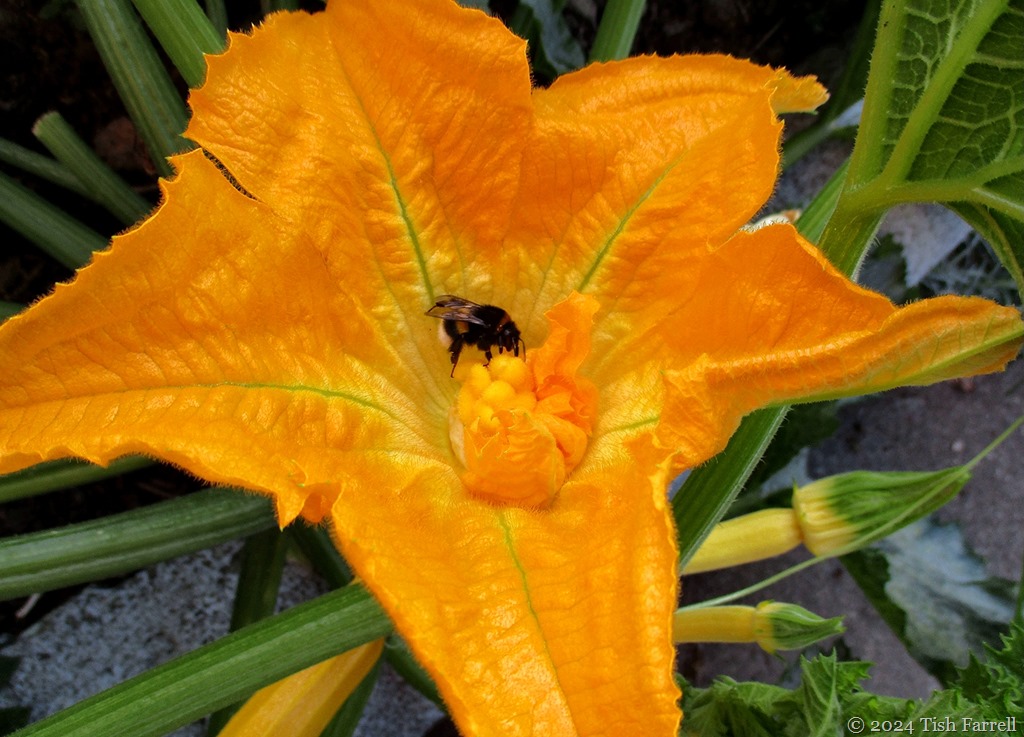
2: But it’s all alright. Everything is growing all over the place. I have yellow courgettes at the front door, which is actually quite handy…

IMG_5826ed

*

3: The front garden bed is also yielding some very nice Charlotte potatoes (despite going in very late). The building debris and old mortar from the lifted slabs seem to have provided some good drainage in our heavy-ish soil:

IMG_5679

*

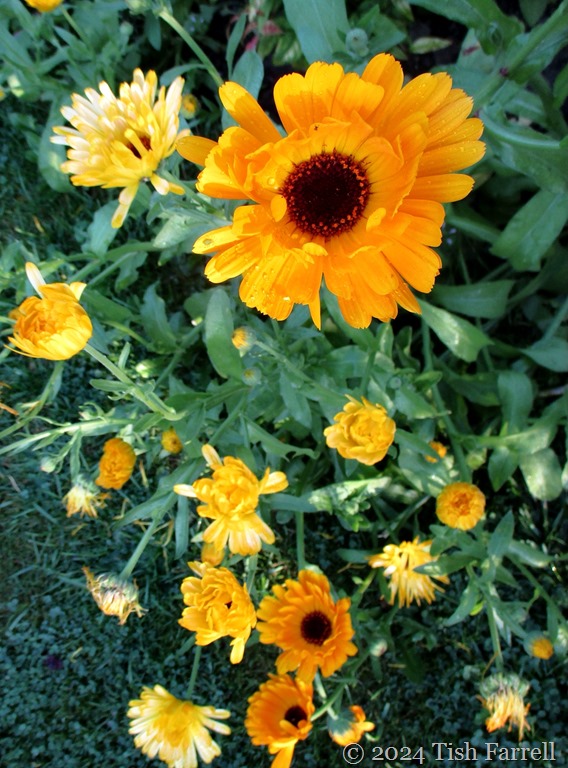
4: In the spring I’d sown some marigold (calendula) seeds, obtained from the Bishop’s Castle seed bank (local growers’ donations) and they’d germinated prolifically. So I planted them out all over the garden, front and back, because you can’t beat marigolds for their spirit-lifting qualities. And now we have masses of golden heads, which of course are edible too:

IMG_5817

IMG_5808ed

*

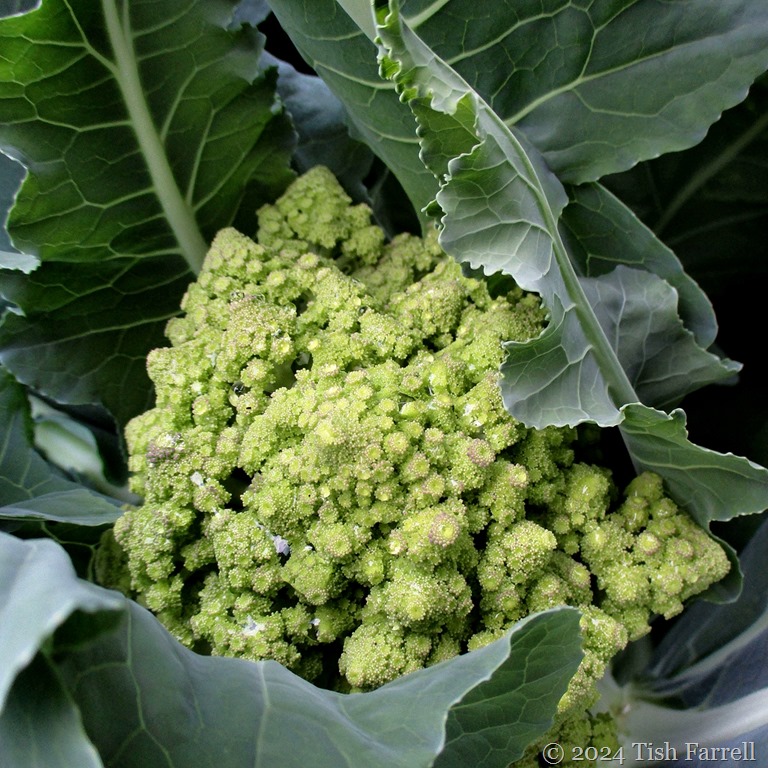
5: And on the eating front, since spring we’ve done rather well with all manner of greens, but most particularly the Romanesco cauliflowers, which I haven’t grown before. They are much sweeter than white caulis, and if you cut them and leave the stalk, they sometimes produce more sprouts. They don’t need much cooking either.IMG_5574

*

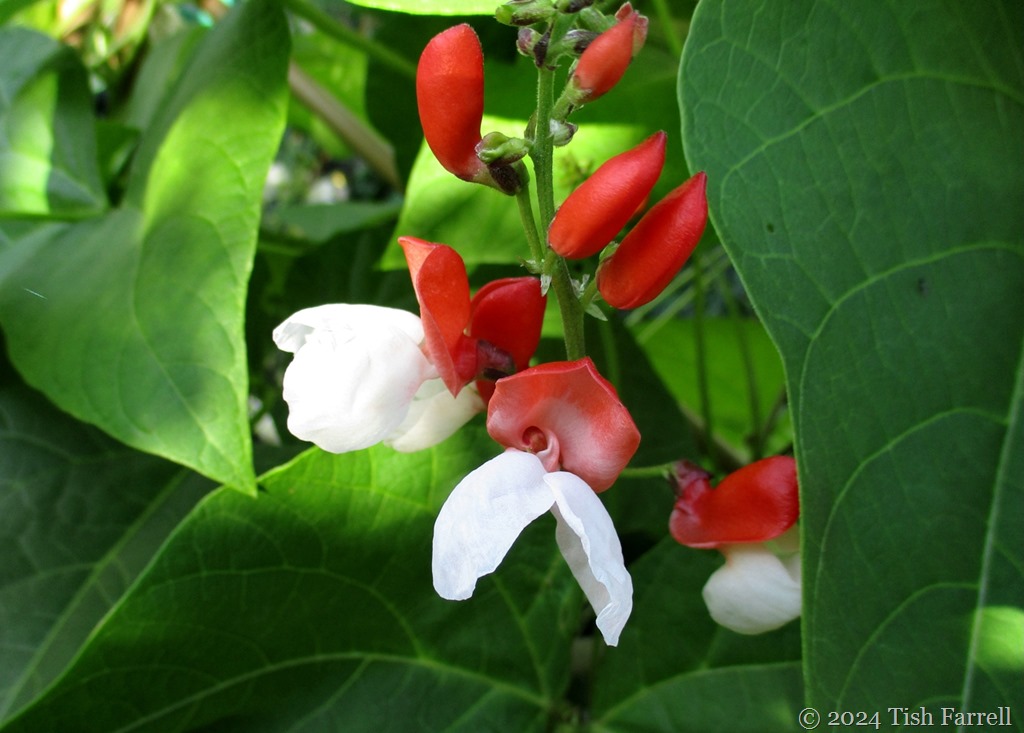
6: But best of all, are signs that the runner beans are thriving. I have three varieties growing together: Emergo (white flowers), Painted Lady (red and white as in featured photo), and St. George (red):

IMG_5800

IMG_5774ed

*

I mean to say, what could be lovelier than this Painted Lady bean flower. And then to think: there will be beans!

*

Six on Saturday  Jim at Garden Ruminations is the host. Please pay him and his splendid garden a visit.