Not Any Old Bridge ~ But The World’s First Cast Iron Bridge Built By Abraham Darby in 1779

P1000831

For this week’s Thursday’s Special Paula is asking us to focus on traces of the past.  For those of you who have not seen my earlier posts on the Ironbridge Gorge, this bridge was the first to be made from cast iron, and in a single arch that spans the River Severn in Shropshire. It crosses the Severn Gorge just a few miles from my house, and is a World Heritage Site.

The height of the bridge was dictated by Quaker Ironmaster, Abraham Darby’s desire to show off – not only to prove the versatility and potential of cast iron, but also to build the first bridge on the the Severn that would allow the river’s big sailing barges (Severn trows) to pass under with out lowering their sail masts. One up on all the river’s stone bridges then! And what a sales (sails) pitch it was too, for people to see his bridge with a fully rigged sailing barge passing beneath it.

He also built the bridge in one of the most spectacular parts of the Gorge, and on the site of a treacherous ferry crossing. Before the bridge was built people had to cross between the two industrial settlements of Broseley and Coalbrookdale in a coracle, an ancient skin covered craft that was used by local poachers.

The bridge itself is a curious construction. If you look closely at the iron framework you can see that although Abraham Darby was breaking new ground (and in its day the Iron Bridge was definitely a world wonder), the building techniques include the kind of joints that people would expect to see in carpentry: mortise and tenon joints and dovetails.

It is hard to know if Darby was erring on the side of caution by sticking to tried and tested construction methods, or simply being innovative in ways that weren’t too innovative for people’s sensibilities. After all, one of the best ways to make people accept and welcome the new, is to start from something they already know and recognise. In such ways does the past follow us into the future.

P1000843

copyright 2016 Tish Farrell

Traces of the Past

Bumble Bee Bliss & A Change In The Weather

IMG_2157

April and it’s all change. On Saturday I was whinging about the snow that had invaded our early morning landscape. By Sunday we were sitting coatless on Benthall Hall’s tea room terrace, and consuming carrot cake and hot chocolate with the sun on our faces. It was February when were last there, and grey and stormy, with no possibility of sitting outside. Now we were in danger of overheating with a nice grey hen pootling around our feet, and the air filled with bee-hum. Later, when we ambled around the gardens, we came upon these newly opened rhododendron flowers and a very happy bumble bee. To say it was gorging itself is an understatement. Up to its armpits in pollen it was. Food at last. Bzzzzzzz.

*

Check in at Cee’s Flower of the Day for  more floral displays.

The Winter Walker

100_7046

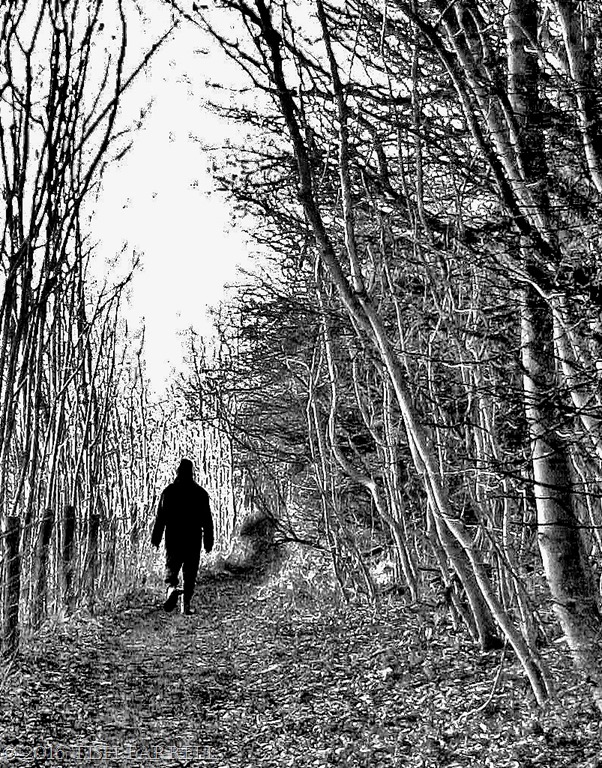
You can step back through time on Wenlock Edge. The trackways across the ridge-top have doubtless been trodden by itinerant traders since Stone Age times. In fact if I didn’t know that the lone figure on the path ahead of me was Graham, I might tell you that this is the shade of a six thousand year-old stone axe merchant, or a four thousand year-old Bronze Age smith. Or closer to our time, say two thousand two hundred years ago, it could be an Iron Age farmer trekking through the woods.

There are also traces of Roman farms either side the Edge, and from the Middle Ages until modern times the limestone from which the Edge is formed would have been quarried for building and for iron making, and also  burned in kilns to make lime mortar and fertilizer. And then there is the 400 million year geological history of the Edge itself – starting in times before fish had evolved, let alone mammals. (I won’t mention the four foot long giant water scorpions that lived back then).

But landscape as a portal to the past – it’s an intriguing notion.

*

This week at Black & White Sunday Paula’s guest, Lisa Dorenfest, gives us the theme of ONE. Please go and see her stunning photo, and Paula’s own response to the challenge.

Creative Intervention Rescues A Ruin

P1010246

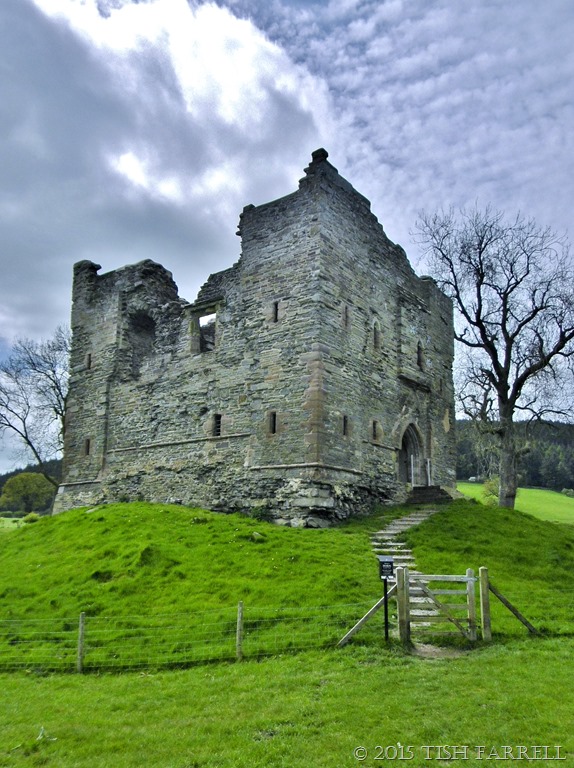
Here we have the remains of Hopton Castle, an enigmatic ruin in the Shropshire borderland, eleven miles northwest of of Ludlow. It is called a castle, but it might be better described as an upscale medieval tower-house. That it survives at all, in this accessible state, is down to the creative efforts of the Hopton Castle Preservation Trust whose members toiled for 11 years to raise funds to consolidate the main structure, and then spent a further five years overseeing the work.

The ruin is full of puzzles. The preservation work revealed hints of 11th, 12th, 13th, and 14th century construction, but with no clear evidence for the date of the main surviving structure. It’s been suggested that the Hopton family, who owned it between the 11th and 15th centuries, at some stage deliberately set out to create a faux antique country residence much as the Victorians did with their  mock Tudor ‘cottages’. In other words, the Hoptons went in for some creative intervention of their own.

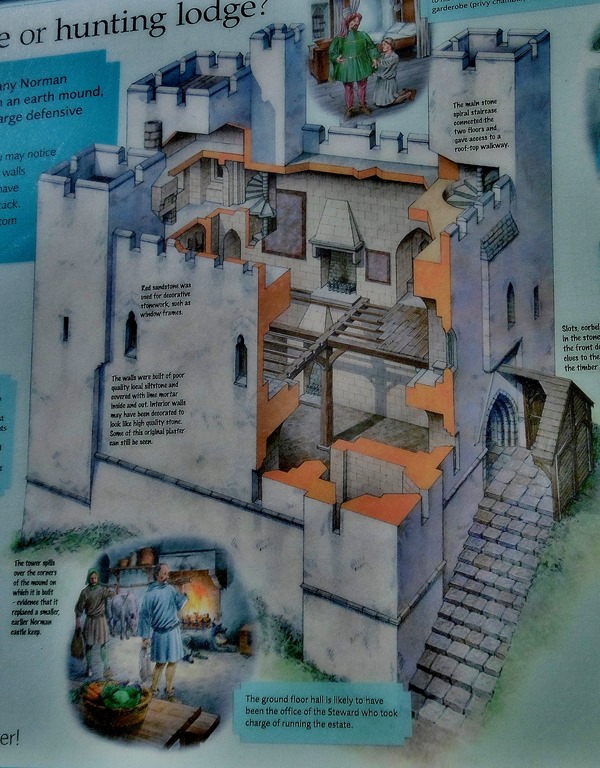
One theory is that it was a hunting lodge. The interior work of all  three floors appears to have been very grand, and definitely of ‘lordly’ quality.

P1010211

photo: Hopton Castle Preservation Trust

*

Also, the tower was clearly not intended as a defensive structure. As you can see from the photo and the reconstruction, any besieger could simply walk up to the front door. Yet the building it replaced, the first ‘castle’ on the mound was indeed a functioning fortification – a motte and bailey castle typical of the Normans’ early conquest of Britain after 1066. Made of timber, they could be constructed swiftly, and as the need arose, later re-built and expanded into domineering stone fortresses.

But this did not happen at Hopton. The stone walls that replaced the 11th century motte and bailey appear to have been built of poor quality stone, unsuited to withstanding a siege. Meanwhile, the interior fittings and design suggest considerable expense.

So it’s a pretend castle then? A place for Sir Walter Hopton, Sheriff of Shropshire and Staffordshire, to display his wealth and status while entertaining well chosen guests for a spot of deer hunting?

P1010230

Perhaps some of the answers lie in Shropshire Council’s five miles of archives that include shelves and shelves of unread medieval documents. In which case, they are likely to stay hidden. Probably forever. The on going local authority cuts mean there is little chance that the necessary scholarly research will ever be done. The archivist was one of the first people to be dispensed with, and for years before the cuts the archives were always under-resourced.

But if we don’t know much about the castle’s medieval history, we do know quite a lot about the bloody siege of Hopton in 1644, wherein Royalist forces attacked the staunch Parliamentarian Wallop family, who then owned the castle. It’s a swashbuckling tale, and you can read more about it HERE.  Some years ago Time Team carried out an excavation in an attempt to verify the circumstances of the battle. You can find the full episode on YouTube:  https://www.youtube.com/watch?v=MIiYOgmO-Cs


copyright 2015 Tish Farrell


My treat – today in Ludlow

100_7924

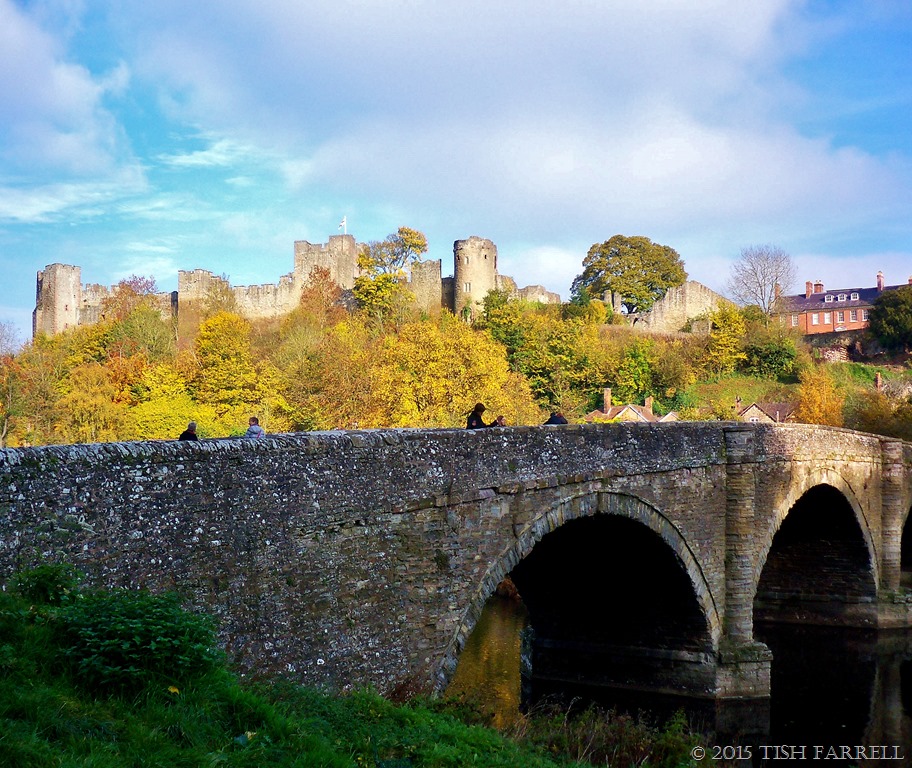
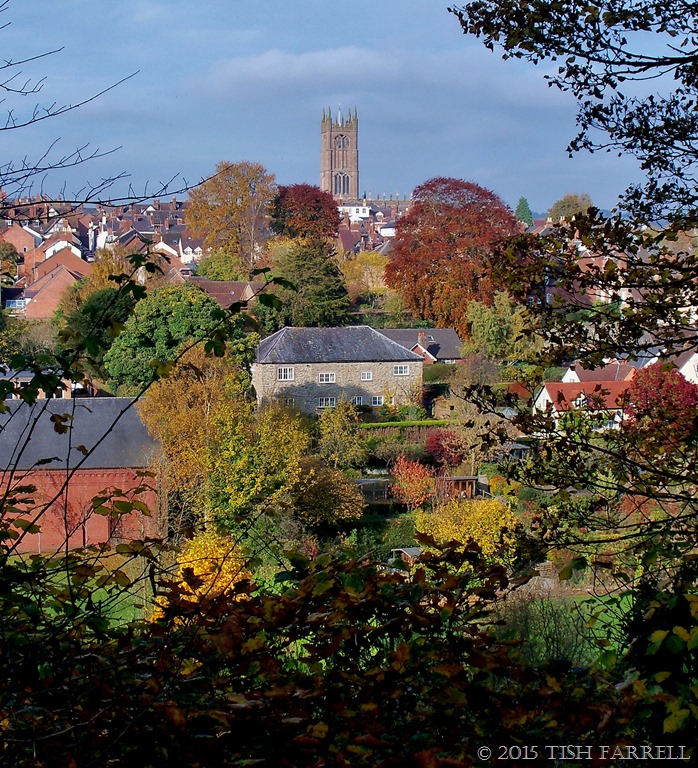
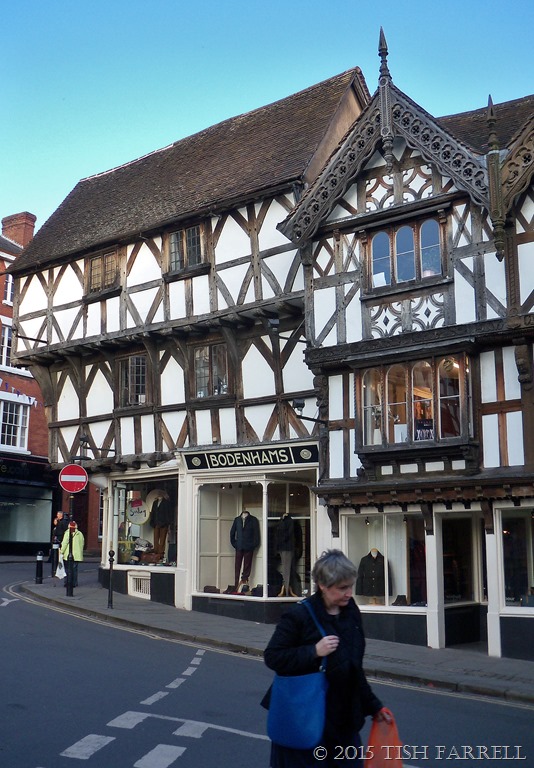
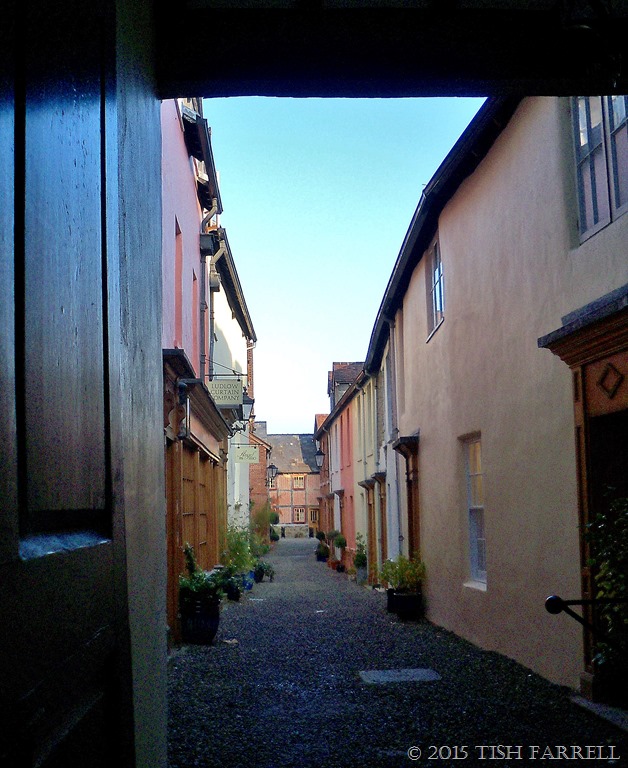
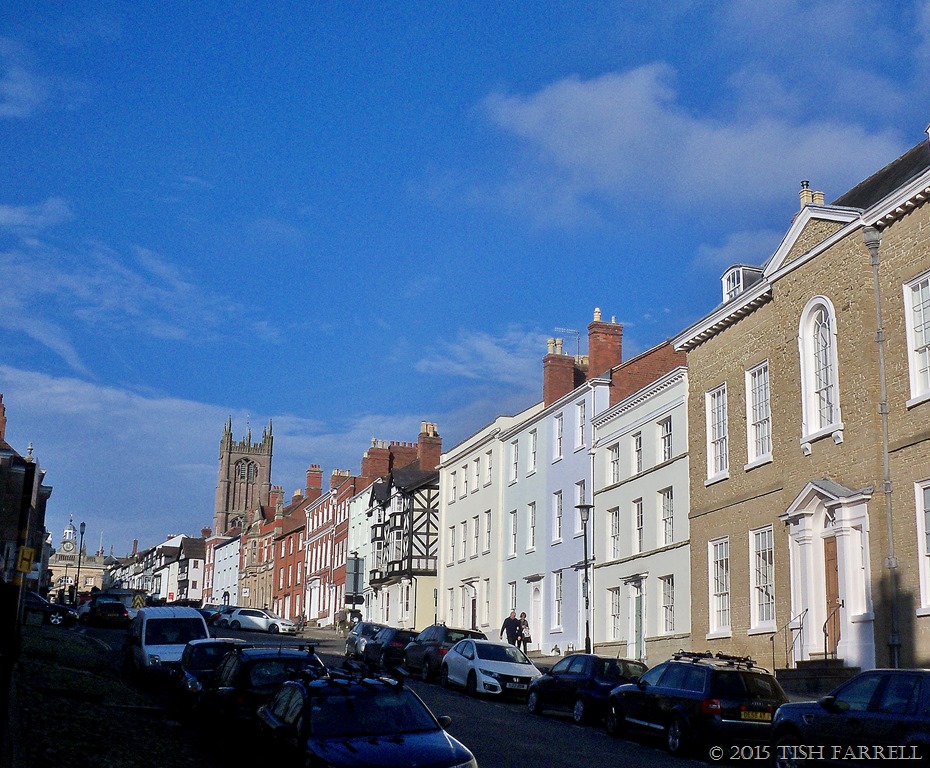
It could have been summer today – warm enough to sit outside without a coat. Well for heavens’ sake, just look at that sky. And what better place for a meander on a dreamy autumn day than Ludlow. It is one of Shropshire’s loveliest towns, and has more antiquity than you can shake a stick at.

The castle, whose ruins dominate the skyline, was begun over a thousand years ago during the Norman Conquest of Britain. It was built to secure the border with Wales, and was one of the first stone castles in the country. Over ensuing centuries it figured in all manner of political machinations including the York v Lancaster Wars of the Roses.  When the Lancastrian side won, the victor, Henry Tudor, shortly to become Henry VII claimed Ludlow Castle. He later gave it to his eldest son, Prince Arthur. In 1501 Arthur and his bride, a fifteen-year-old Katherine of Aragon, came here for their honeymoon.  A year later Arthur was dead. Katherine was then betrothed to Prince Henry, Arthur’s brother, but it wasn’t until 1509 that they were married. By then Henry was king. Their marriage endured for 24 years before things went horribly wrong. And we all know what happened next – Anne Boleyn and some serial beheadings.

So enough history. Here are some more views – my treat to you:

100_7936

100_7940

100_7941

100_7945

100_7949

100_7956
100_7958
100_7963
100_7946

Treat

It’s a wonderful world…

100_7819

Earlier in the week, and in between leaf gathering for the allotment leaf mould project, finishing off a short story about Swahili spirit possession, I took myself on a wander around Wenlock’s byways to see what was what. We are very lucky in that respect. Our town is compact, having grown up around the medieval Wenlock Priory. One minute you’re on the High Street, the next you’re out in the Shropshire countryside. And there’s just so much to see out there.

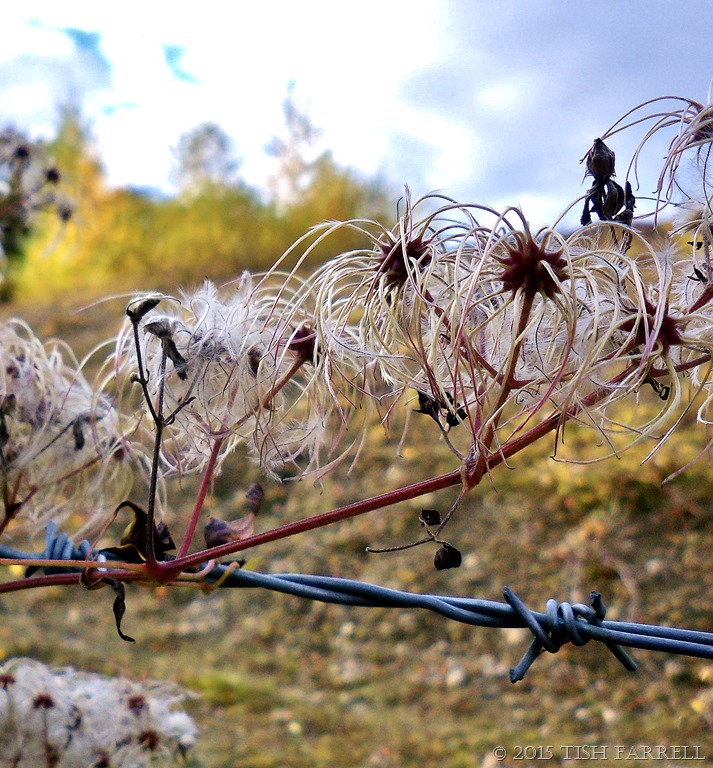
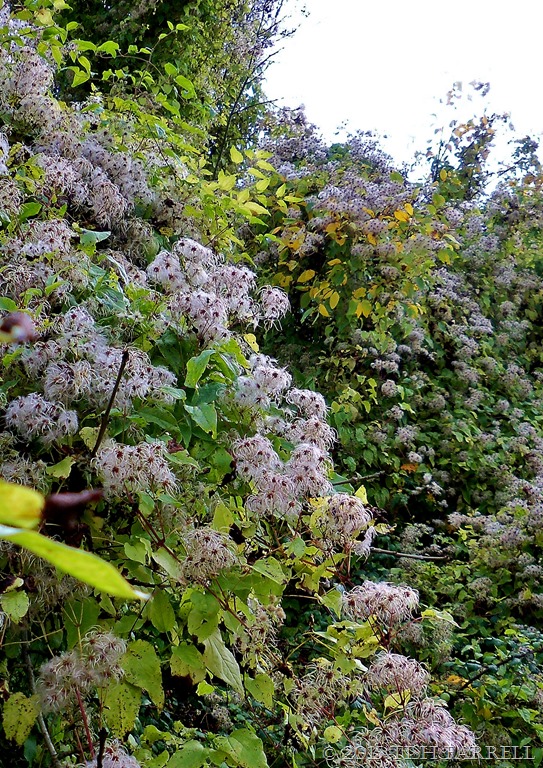
This wild clematis, aka Old Man’s Beard, caught my eye (above and below). It was arching over the path beside the abandoned Shadwell Quarry, and had then anchored itself on the fence. I like the congruity of the barbed wire and the twining plant stem.

It comes into its own in the autumn with its feathery seed heads, and as you will see in a moment, it is an impressive climber.

During the summer it mostly creeps greenly through the trees and you tend not to notice it. I’m also grateful to Richard Mabey’s treasure book Flora Britannica for reminding me that another country name for this plant is Traveller’s Joy.  Mabey tells us that the plant was christened by 16th century botanist and herbalist, John Gerard who named it  thus because of its habit of ‘decking and adorning waies and hedges, where people travell’. He sounds like a sound chap, to pay tribute to the joy-making qualities of plant life.

100_7818

Like many varieties of clematis, this one does have medicinal properties – for kidneys and skin complaints – but as the whole plant is very acrid, it requires careful preparation. The most common traditional use is to roll the dried stems and smoke them as cigarettes, hence the plant’s other names of boy’s bacca and smokewood.

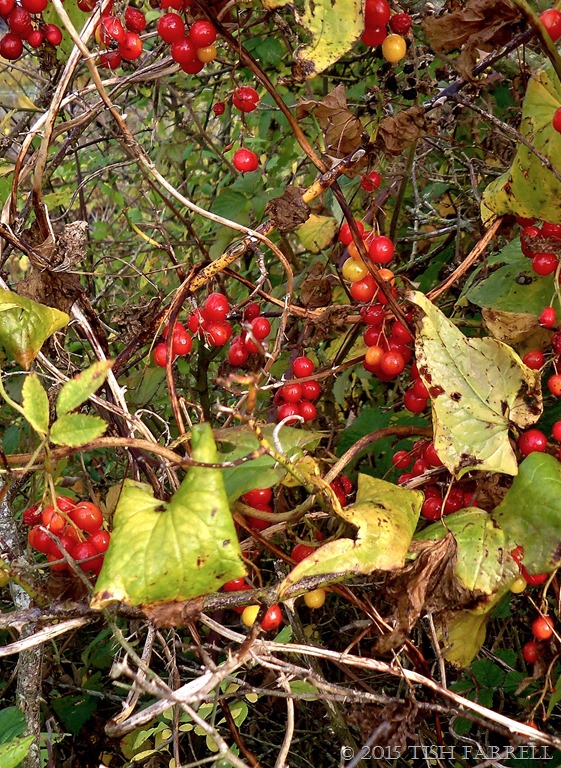
But this next plant is definitely one you do NOT want to consume in any form, despite its being related to cucumbers. All parts of White Bryony are poisonous and cattle deaths from eating it have been well recorded. But in autumn it is so very beautiful, and twines through hedgerows like strings of red and gold amber beads.

100_7828

The roots, though, are particularly toxic and grow very large. In 18th century Britain they featured in the mandrake root scam. Mandrake is a Mediterranean plant with a root that looks pretty much like a naked man or woman. It was in great demand as an aphrodisiac and narcotic. (If you know your Harry Potter, you will know that mandrake shrieks when it is being uprooted.) Unprincipled persons of the rabbit-catching variety thus began to fashion bryony roots into the highly desirable mandrake root. It was by no means an easy process either, and involved several phases to complete the subterfuge. Presumably the recipients did not live to tell any tales.

100_7815

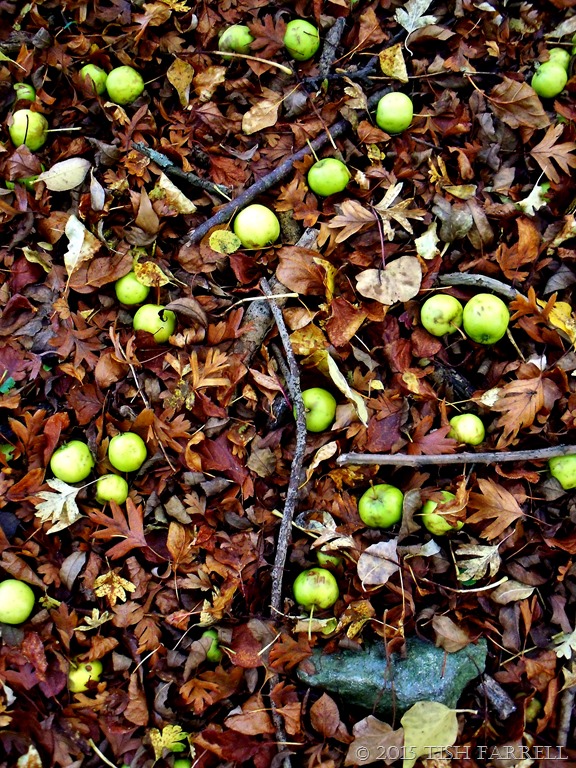
And here are some crab apples, Malus sylvestris  in Latin, woodland apples. They make brilliant, jewel like jelly which is good on toast or with roasts. Mabey says they are the ‘most important ancestor of the cultivated apple, M. domestica. More than 6,000 named varieties have been bred over the centuries, of which probably only a third still survive.’

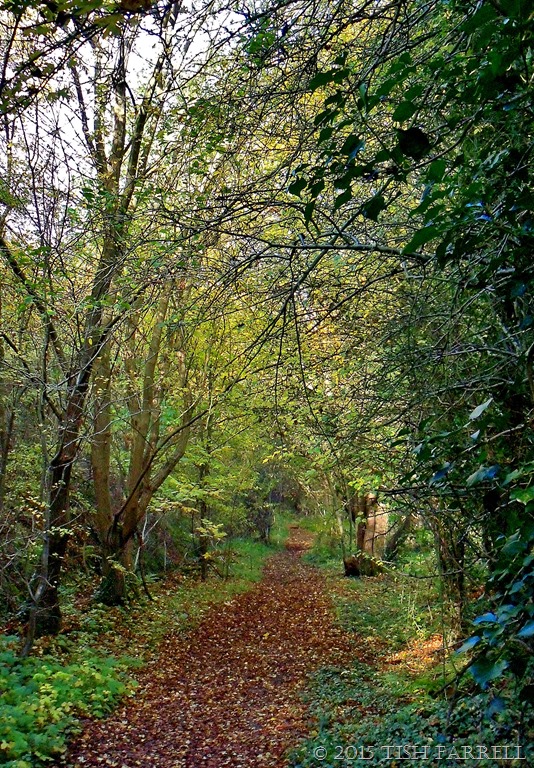
I found these, a little bruised, beside the old railway line that once served Shadwell Quarry. Now a footpath, this is one of the town’s most attractive places to walk. Ash trees and ivy overhang the track these days, and it has an other-worldly feel, far removed from industrial quarrying, trucking and smelting .

100_7809

It is hard to imagine that steam trains once came chugging down this track. The branch was built specifically to haul away Shadwell limestone to use as fluxing stone in the iron-smelting industry. In 1873, alone, 22,500 tons was shipped out of Wenlock.

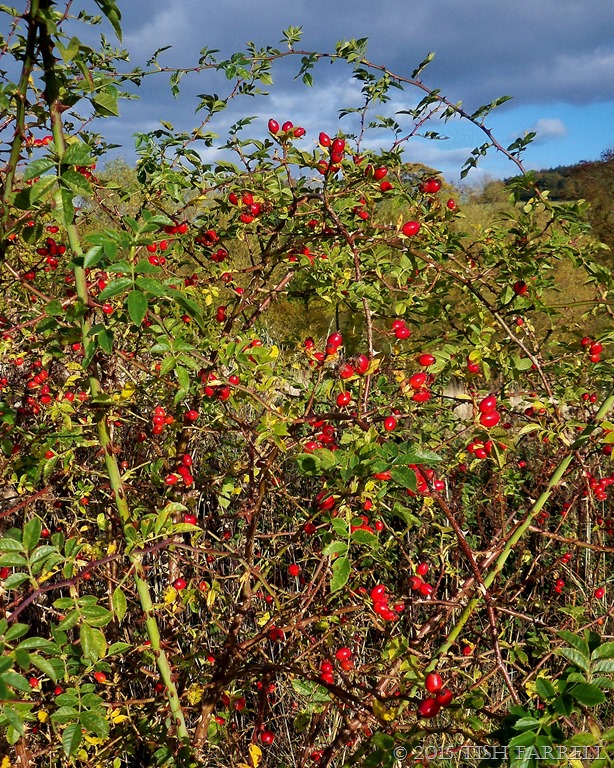
You can walk ‘there and back’ along the path, or there’s a longer circular route that takes you across fields, and down the lane to the Priory and into town. Out in the fields I found that the rose-hips, fruits of wild roses,  were doing pretty good jewel impressions too. They are also known as heps or itchy-coos.

100_7806

The fruit have hairy insides which are a powerful irritant (and presumably much known to aggravate the coos or cows), but once removed, the hips have highest vitamin C content of any common native British fruit. During World War 2 and into the 1950s there was a national campaign to collect hips to make syrup according to Ministry of Food guidelines. It involved much mincing, stewing and straining, and a lot of sugar which I think was possibly counterproductive health benefit-wise. Nonetheless, caring mothers spooned it into their children.  Some of us will still remember the taste.

*

Finally a note about this post. Apart from celebrating the Shropshire countryside, it’s also inspired by 1) Lucile Godoy at Photo Rehab and Perelincolors who in Tech of the Month have been urging us to ‘fill the whole picture’ in our compositions. See their blogs for some useful guidance. (Photos here taken with a Kodak EasyShare 380).

And 2) by Jo’s Monday Walk.

Happy composing and walking everyone.

copyright 2015 Tish Farrell

They call it the Slave Grave, but who was I.D.?

P1020124


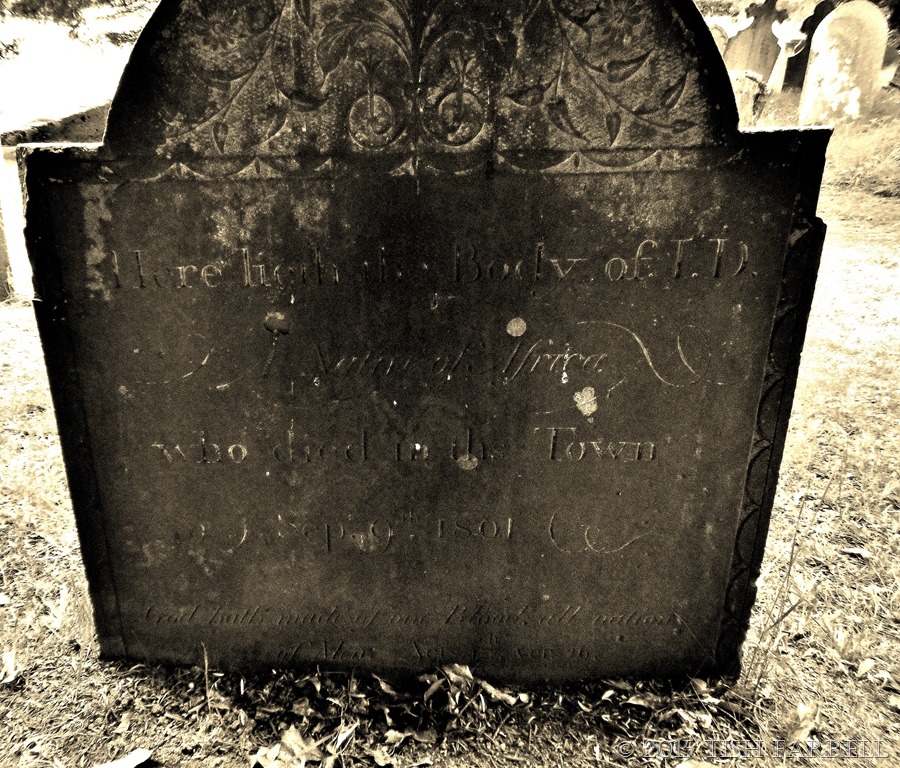
Here lieth the Body of I. D.

A Native of Africa

who died in ths Town

Sept 9th 1801


God hath made of one Blood, all nations of Men. Acts 17 ch. ver. 26

*

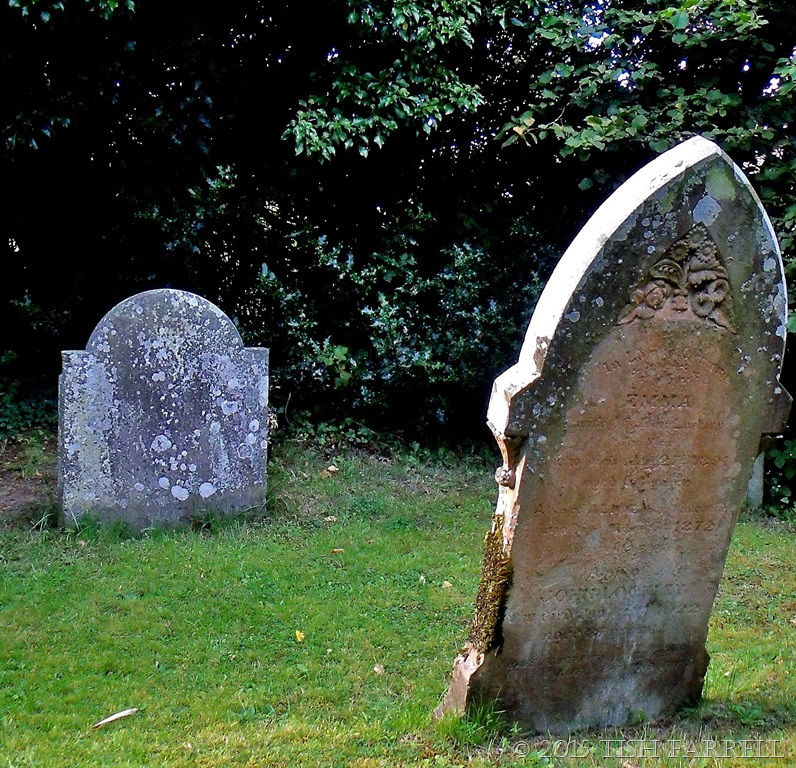
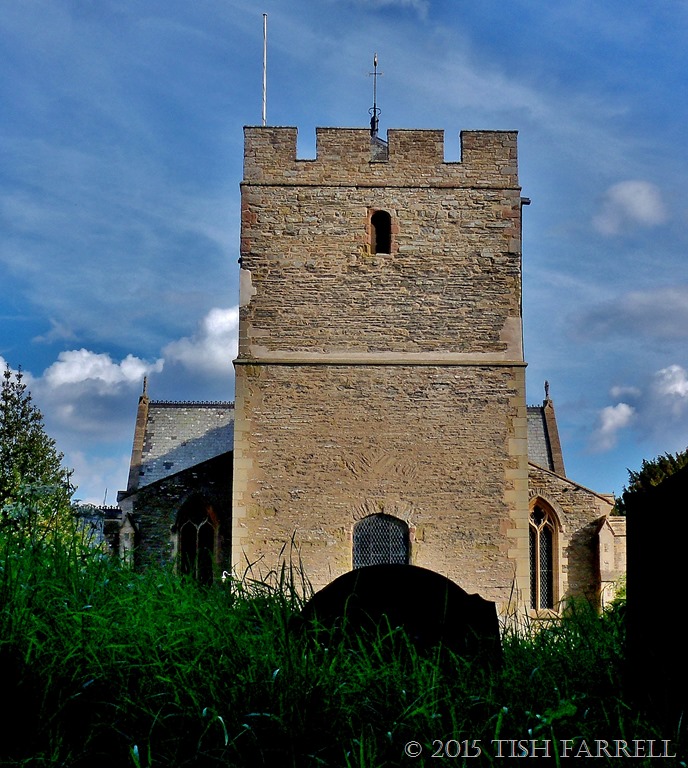
Our recent outing to the Bishop’s Castle Michaelmas Fair (see Summer came back on Saturday and took us to the fair) wasn’t all giant bubbles, stilt walking and steam traction engines. In the graveyard of St John the Baptist parish church there is a mystery. In the north east corner, and well shadowed by English ivy, holly and hazel is the finely carved gravestone dedicated to an African whose only identity is indicated in the letters I.D.  Also, unlike the other memorial stones, the inscription is sited on the western rather than the eastern face. It is hard to read now, and even harder to photograph.

100_7350

There seems to be some strong indication (see the quote below) that I.D. stood for John Davies. ‘I’s’ were often used interchangeably with ‘J’s’ in old records and inscriptions, and the only burial record for around the date on the gravestone 9th September 1801, is for one John Davies on the 12th of that month. There is apparently some original annotation in the church record that links this name to the gravestone.

So what can be deduced from this scant evidence? Clearly whoever undertook to bury the African did not spare any expense. The stone is beautifully carved. The Bible quotation also indicates their disposition towards equality in a line that was also quoted by slavery abolitionists such as Dr Joseph Priestly. I.D. may not have been a slave at the time of his death, but a free man and/or the servant of a rich landowner. It was usual for slaves to be given their masters’ names. Yet the elegance of the stone itself indicates someone who had attained high status, and was very highly regarded.

In an interesting article in the  South West Shropshire Archaeological Society no 19, 2008, Judith Payne discusses the evidence. Firstly, she says no record can be found of a John Davies living in the town of Bishop’s Castle. However, this does not preclude his being a slave or servant – perhaps to gentry who owned a house locally as well as elsewhere. It had long been the fashion for wealthy Britons to have black servants.

She also suggests that he might have been travelling with someone connected with the abolitionist movement, since abolitionists were active and had much support in Shropshire. A 1790s petition against slavery delivered from the county was nine and half feet long, and in November 1793, Thomas Clarkson, a prominent campaigner, was known to be visiting Bishop’s Castle.

Another possibility is that I.D. belonged to the household one of the land-owner politicians who around 1801-2 was attempting to end  the Clive family’s political control of the town. Bishop’s Castle was a notorious rotten borough.  Payne also posits that the reason for the simple I.D. instead of the full name, was because whoever buried him, knew that this was not his true name. That he was placed in a Church of England graveyard further implies that he was a Protestant.

I also had the notion that whoever had I.D. buried, might not necessarily have known him. They were perhaps some local benefactor with a passion for abolition, someone who wished to make reparation for the shame of slavery by giving some poor itinerant black man a decent burial.

And there we have it. The mystery remains. But the stone itself has been listed by Historic England. Here is what they have to say:

 We have no absolutely certain information about the person commemorated by this headstone. However, the burial register records the internment of John Davies on 12 September 1801, and contains an historic annotation linking Davies with the I.D. tombstone. Shropshire is not notable for its links with the West Indies and the slave trade, but it seems likely that ‘I. D.’ came to Bishop’s Castle or to one of the country houses hereabouts, at least initially, as a servant. The quality of the headstone, with its elegant inscription and decoration, suggests that the person commemorated held a certain status, whether as a servant or not. The biblical quotation is one sometimes employed by abolitionists, and its levelling sentiments suggest that the person responsible for erecting the memorial was sympathetic to the movement. The positioning of the tomb is very curious, it being turned away from the other graves in the area. This headstone faces west, towards an ancient yew tree; the inscription is therefore hidden from general view.

Historic England listing


100_7362

We are not ones for religious dogma in the Farrell household, but as we left I.D.’s grave, and walked away from this picturesque English churchyard, we were heartened by this small monument of human compassion with its fierce sense of justice. Why in the name of the universe does skin colour matter? Why should people be judged superior on the basis of whiteness. Why do many still look down on people of colour because they were once enslaved? If the palaeontologists are correct, we are all Africans under the skin. And if Africa is where we evolved, then everyone’s ancestors would have been some shade of brown.

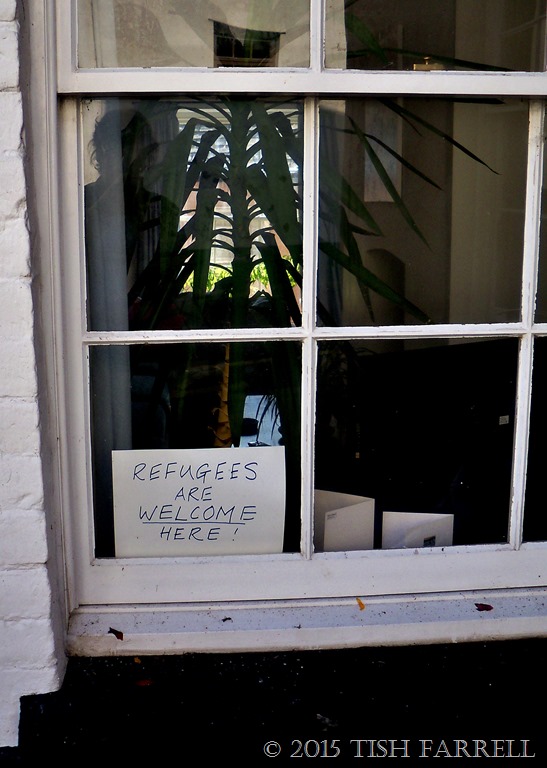
But this unsolved mystery is not the end of this particular story. At the top of Bishop’s Castle’s steep main street that leads up from the church, we came upon a current and timely expression of human compassion. Someone had placed a notice in the window of their house:

100_7236

Written in response to Ailsa’s Travel Theme: letters – and commemorating a visit to Bishop’s Castle where different ‘letters’ came together to form powerful messages of common humanity.


copyright 2015 Tish Farrell

Summer came back on Saturday and took us to the fair…


100_7330

…to the Bishop’s Castle Michaelmas Fair, to be precise. And not only did summer come back to us after a week of dreary coldness, it was warm, and bright and stayed ALL day.

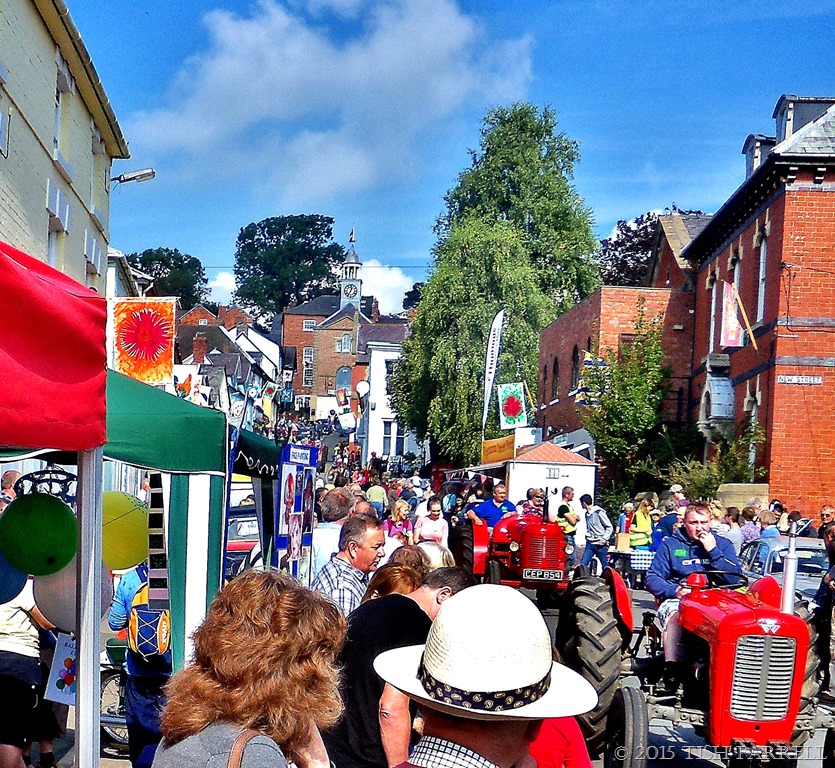
The fair was to be found in every quarter of the town, from St John the Baptist Church at the bottom of the hill to the Three Tuns Inn at the top of the hill, and with here-and-there enclaves in between.
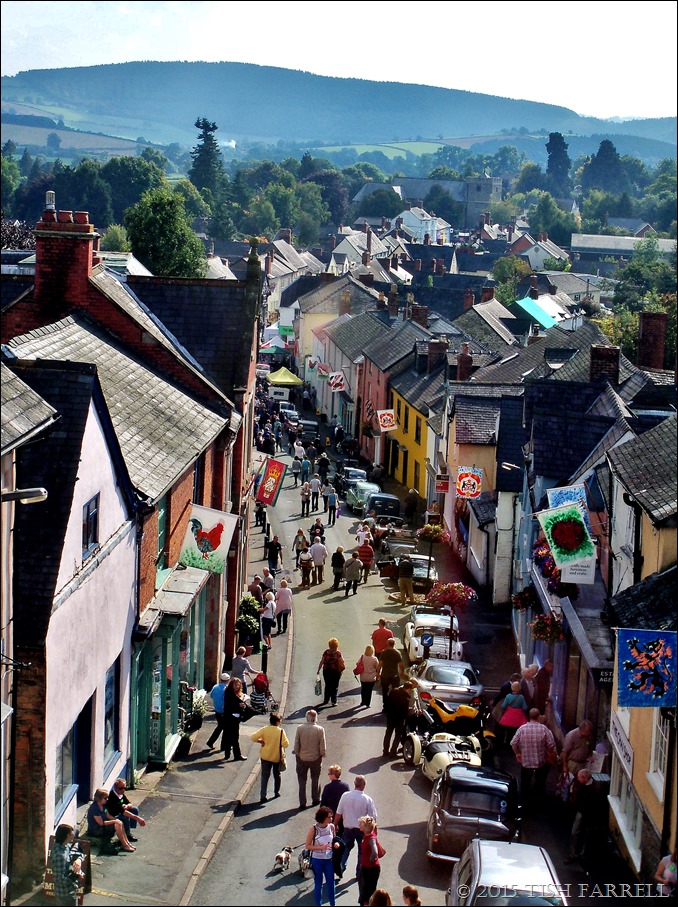
100_7291

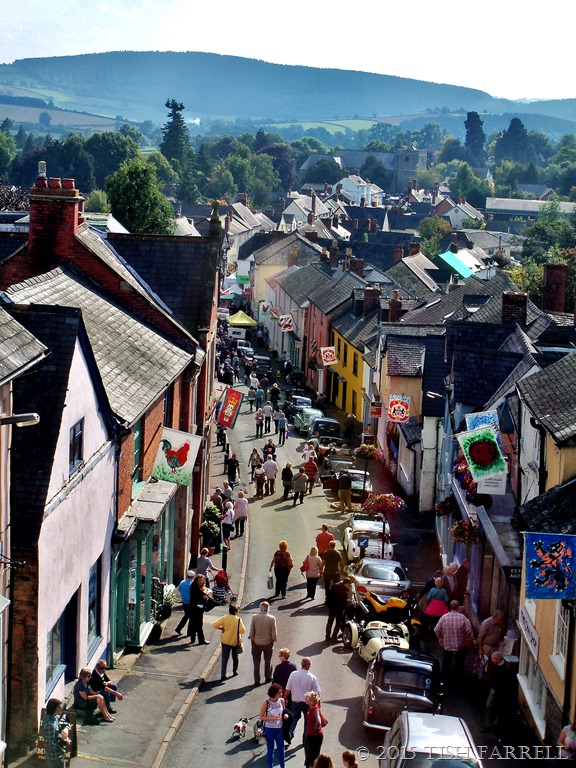
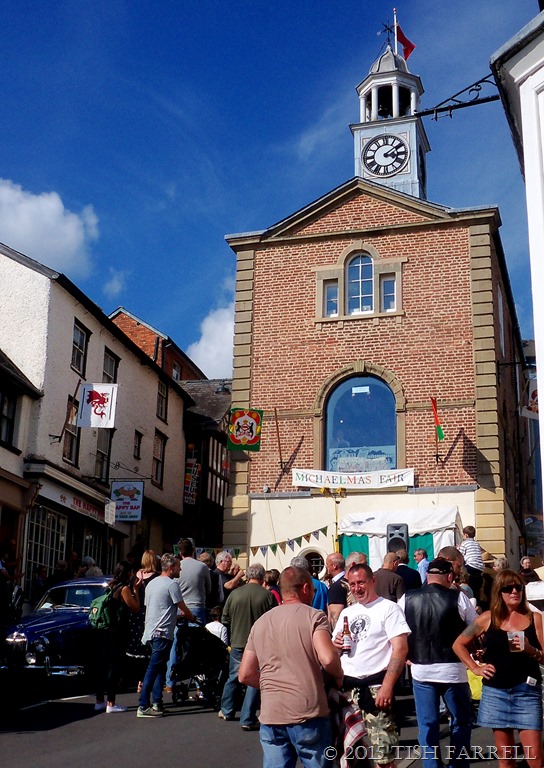
This shot of the High Street looking towards the church was taken from the window from the Town Hall. This handsome civic building (coming up next) has recently been refurbished and doubles up as the town’s market. This year it is celebrating its 250th  birthday…
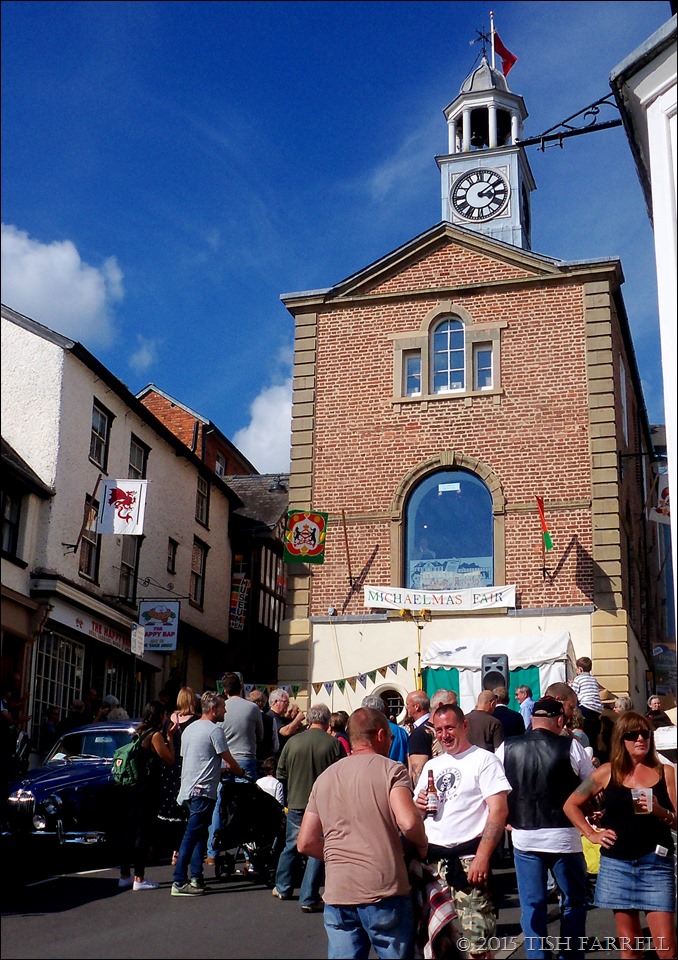
100_7311

Wending on upwards past the Town Hall, and bearing to the right, you come to the Three Tuns Inn. It is one of Shropshire’s real ale treasures. They’ve been brewing beer there since 1642, so they must be doing something right. It’s apparently the oldest licensed brewery in Britain, but…

100_7274

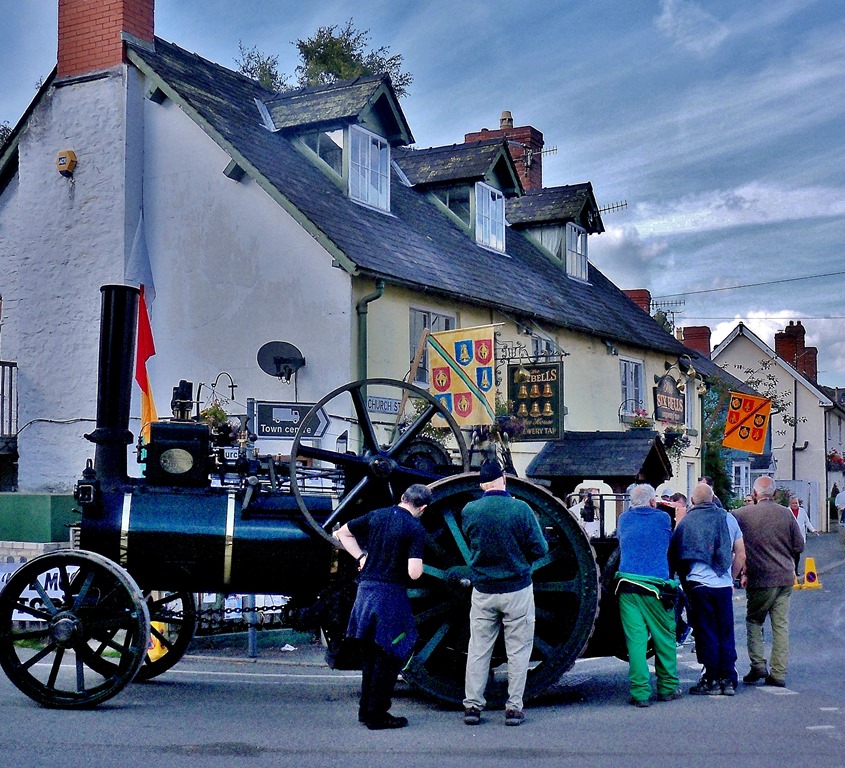
…it is not the only  micro-brewery in this small town. For those who don’t care to climb hills for a pint, you can sample the Six Bells’ Cloud Nine, a piece of real ale heaven, down on the corner of Church Street.
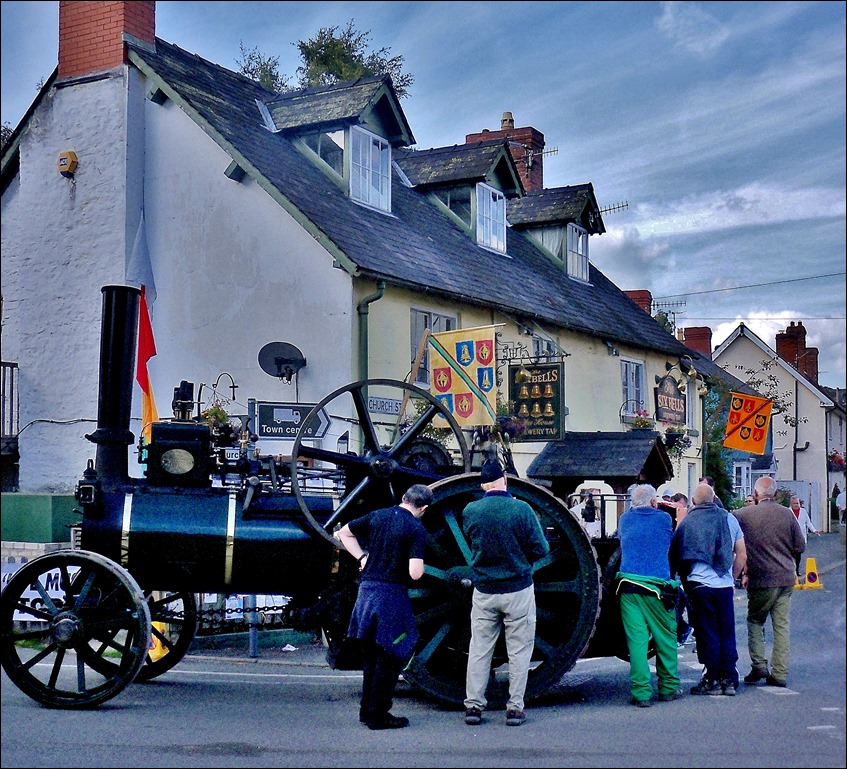
100_7351

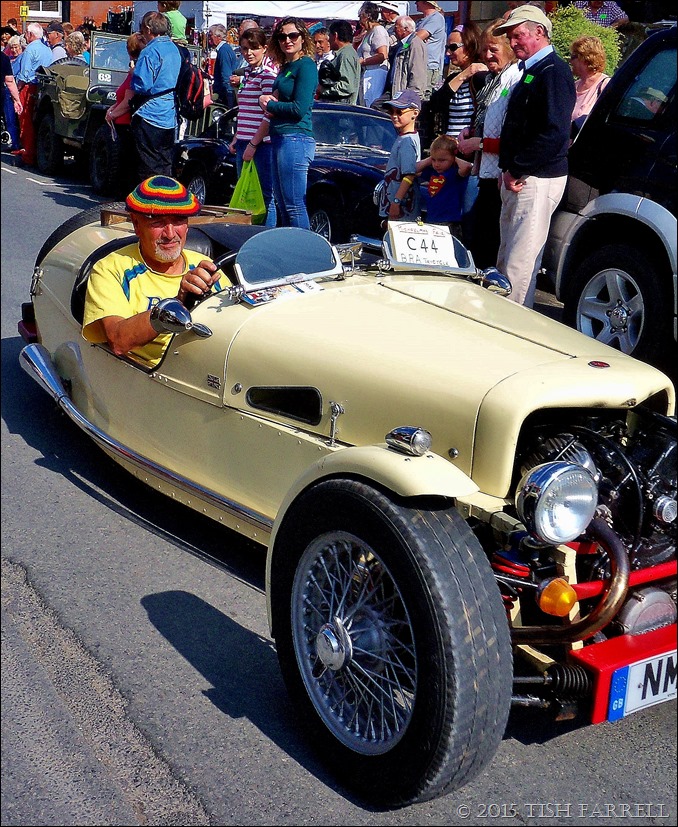
A nice set of wheels, chaps?

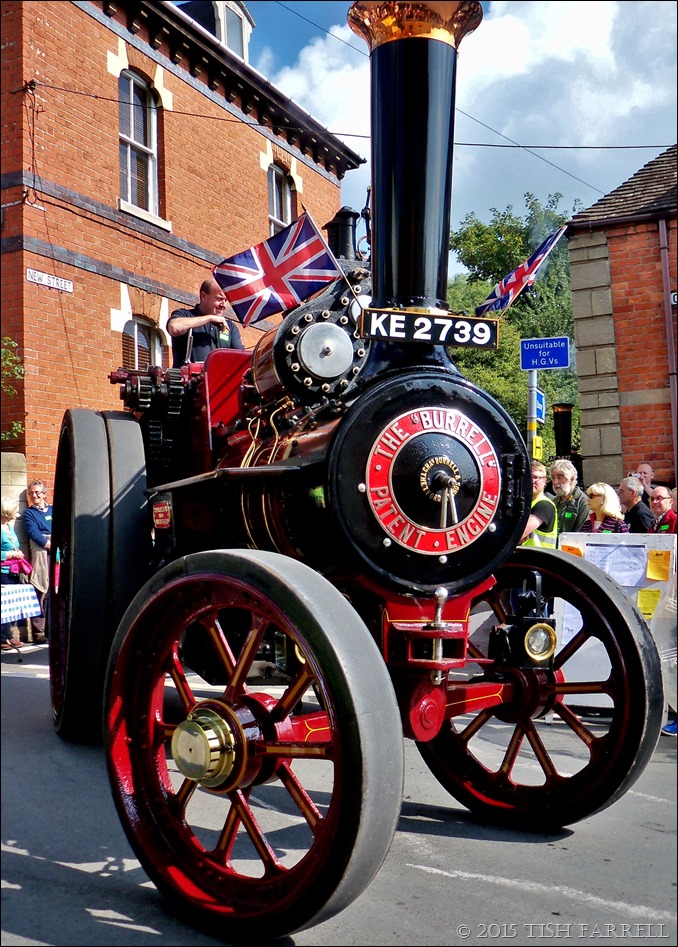
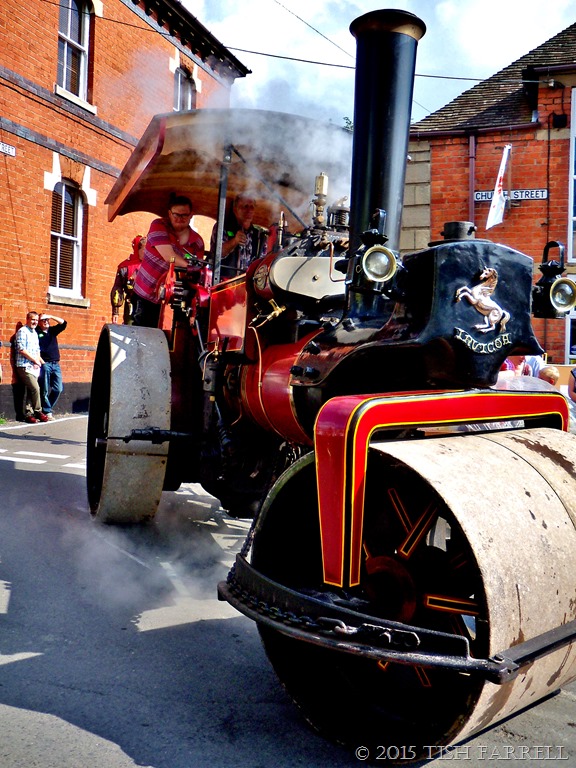
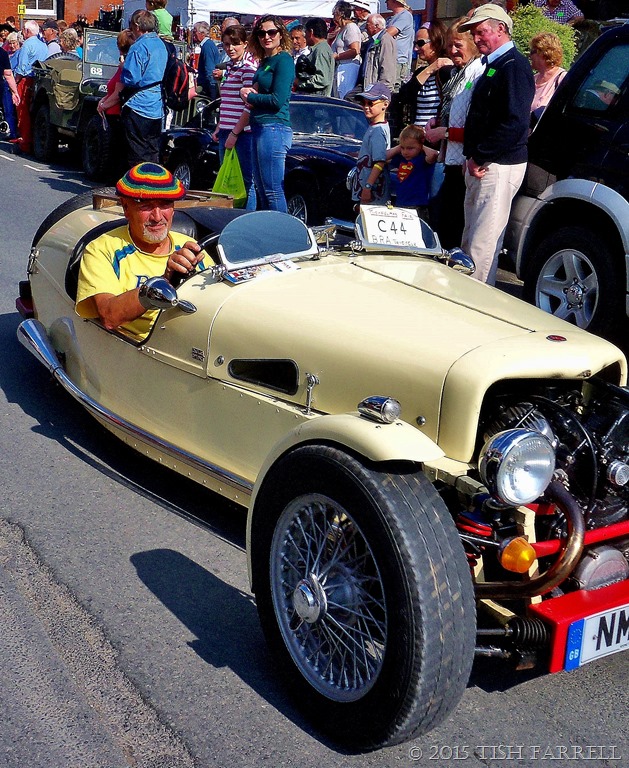
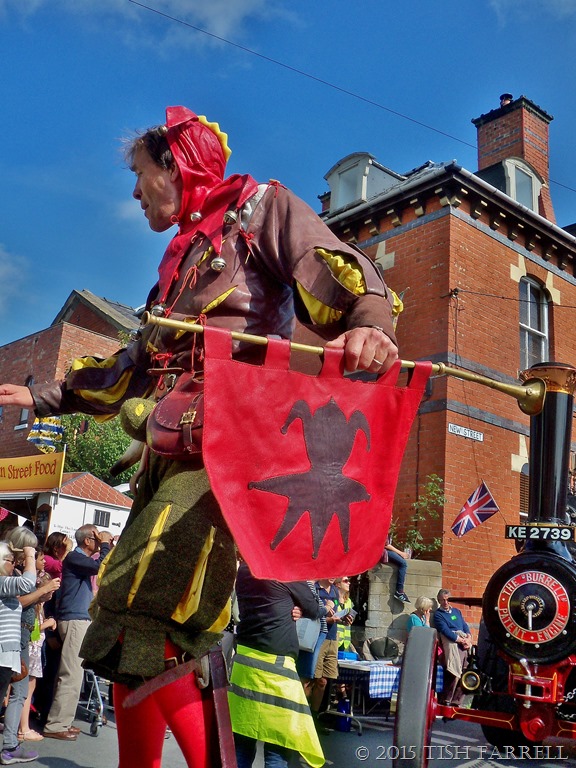
Which brings me to another big excitement of the day – the Michaelmas Fair Parade. Not only did we have beer, bubbles, folk songs, indie rock, ballads and wall to wall bonhomie, there were also classic cars, tractors, and steam powered vehicles. But before all that we had…

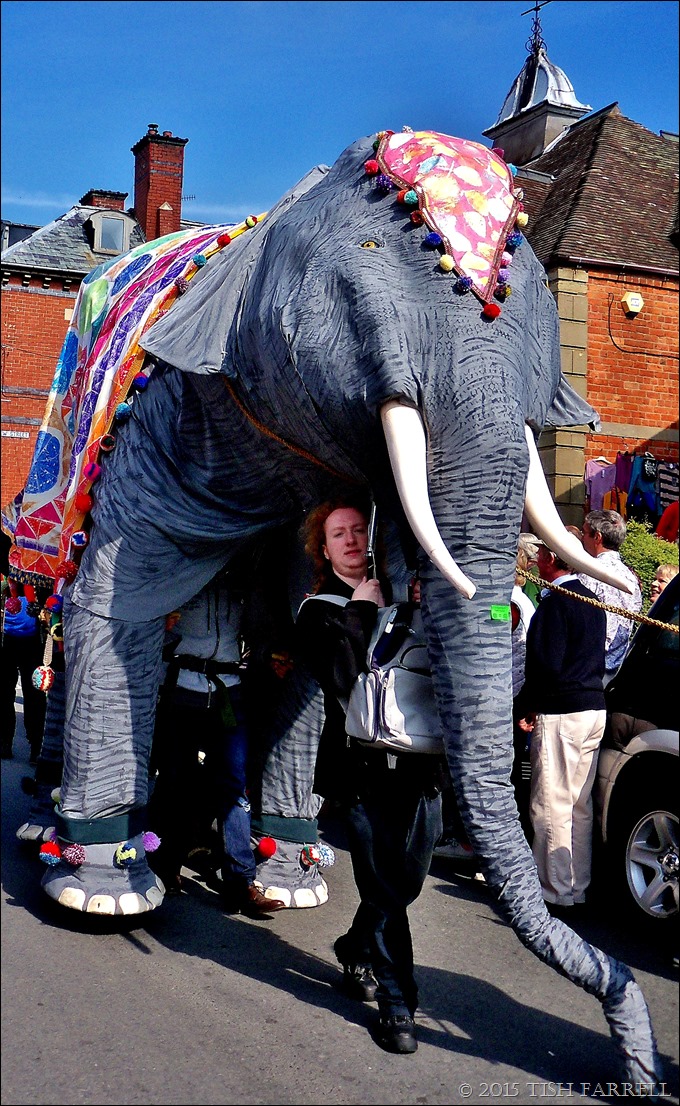
Oh ye, oh ye. Make way for the Bishop’s Castle Elephant…
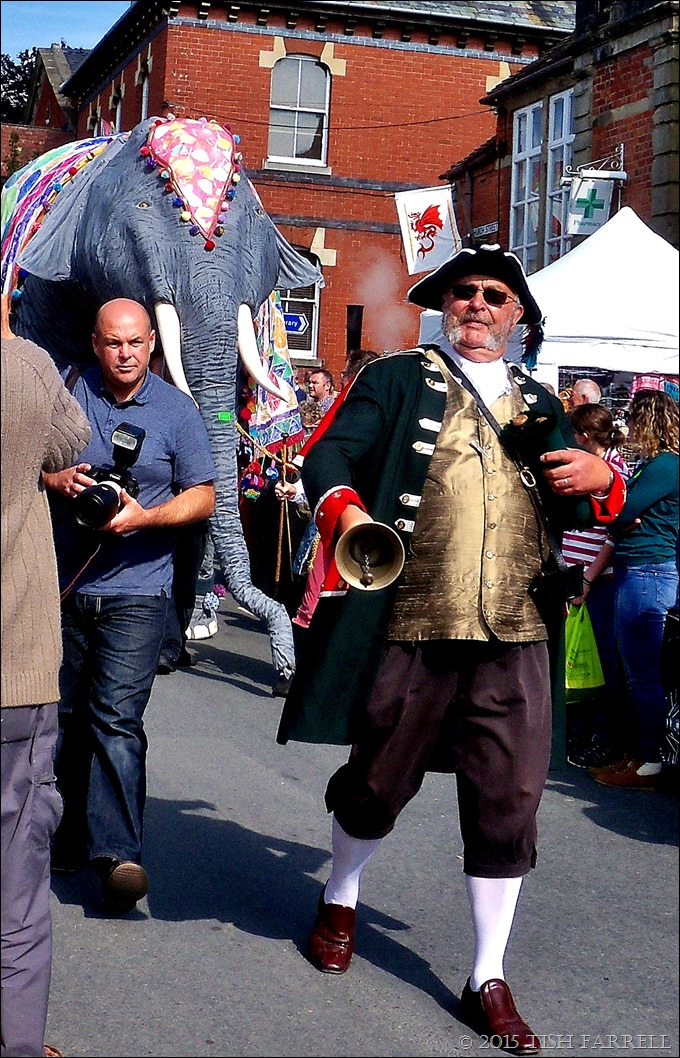
100_7179

100_7181

He’s called Clive, and was created by local maker, Bamber Hawes, with help from the town’s Community College students. Bishop’s Castle artist, Esther Thorpe designed Clive’s ‘skin’, and the primary school children did the printing. And if you want to know why Bishop’s Castle has an elephant on parade, I’ll explain later.

For now, watch your toes, here comes a huge steam roller…
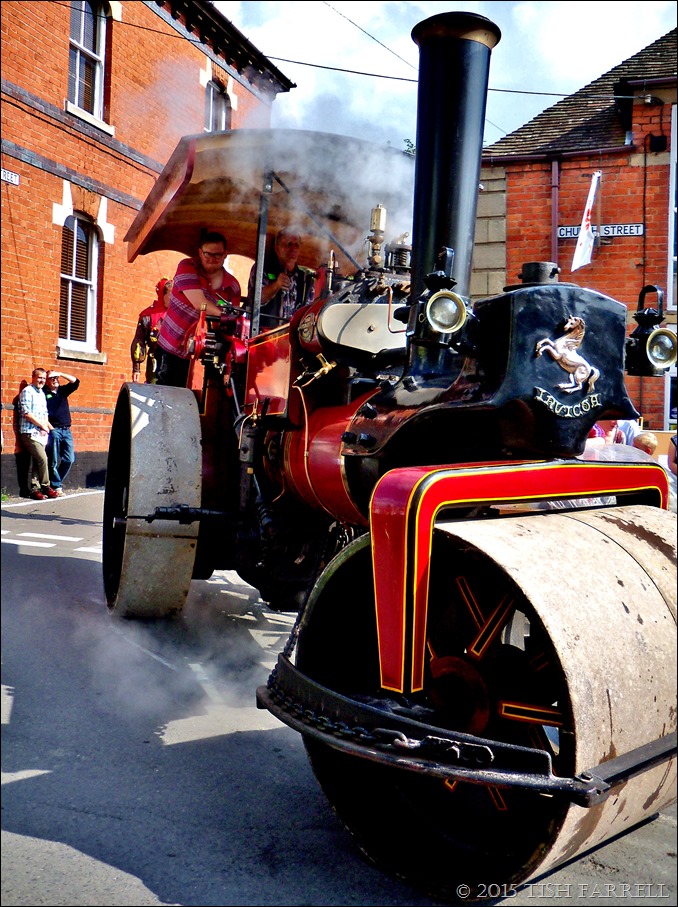
100_7217

…and Peterkin the Fool on his stilts. He nearly trod on me…
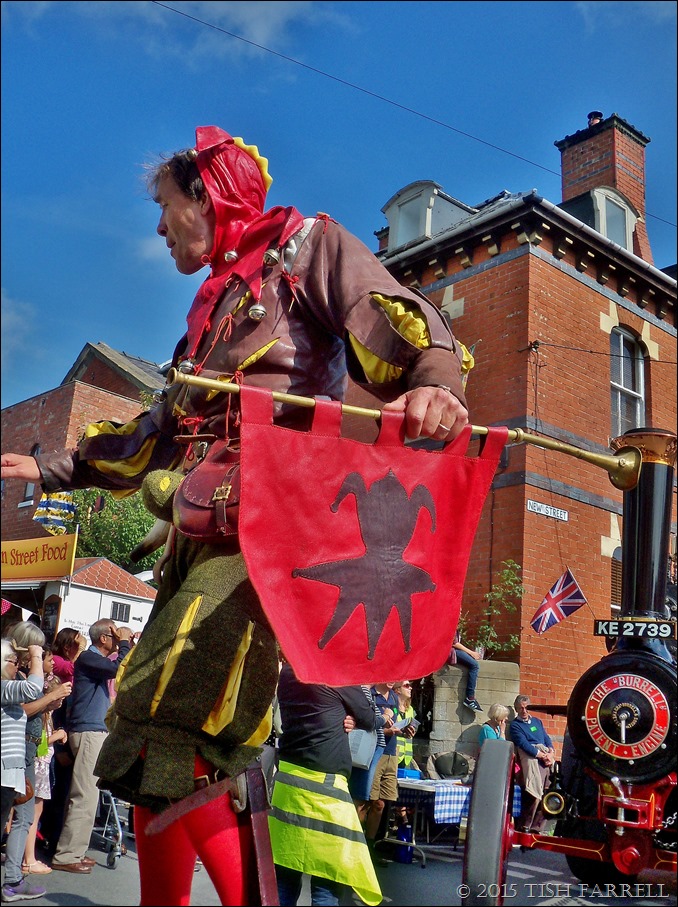
100_7204

100_7205

…and then there were tractors (I remember when farmers had these)…
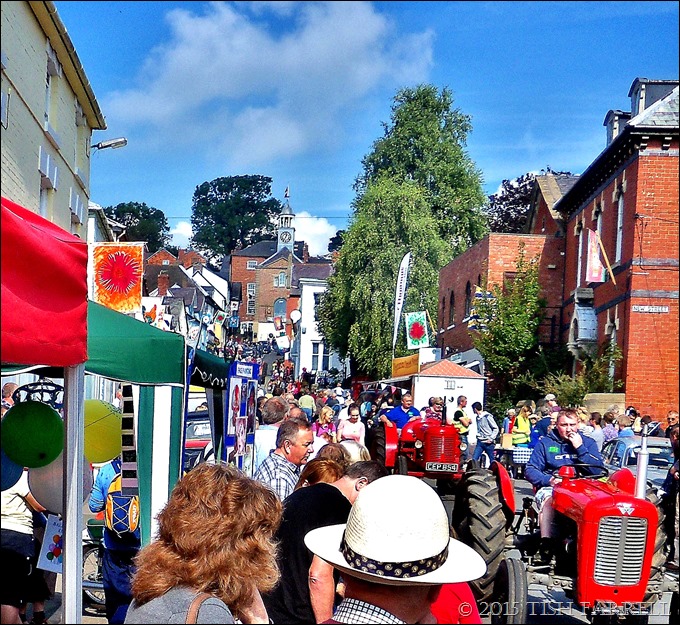
100_7190

…and cool types in classic cars…

100_7195

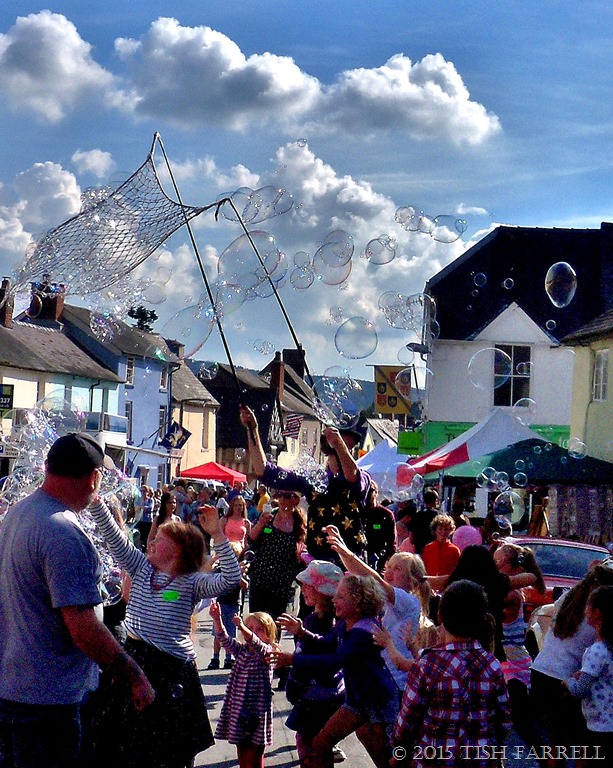
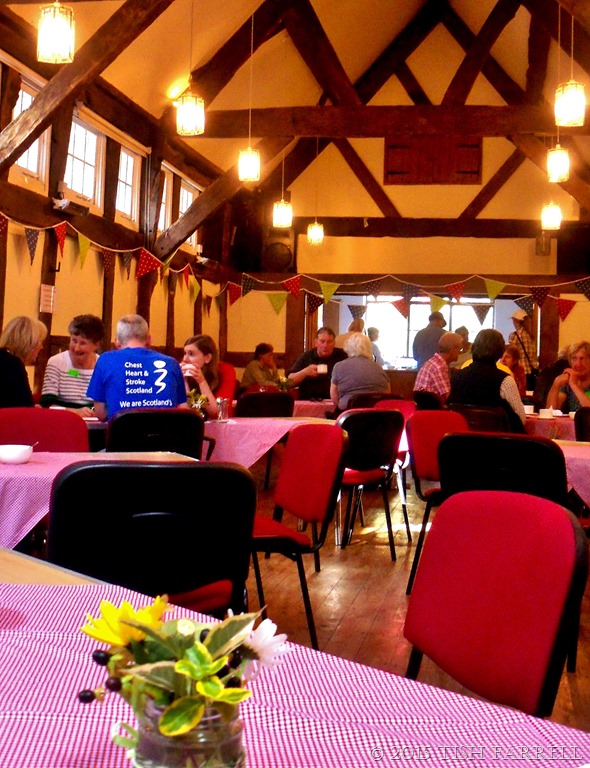
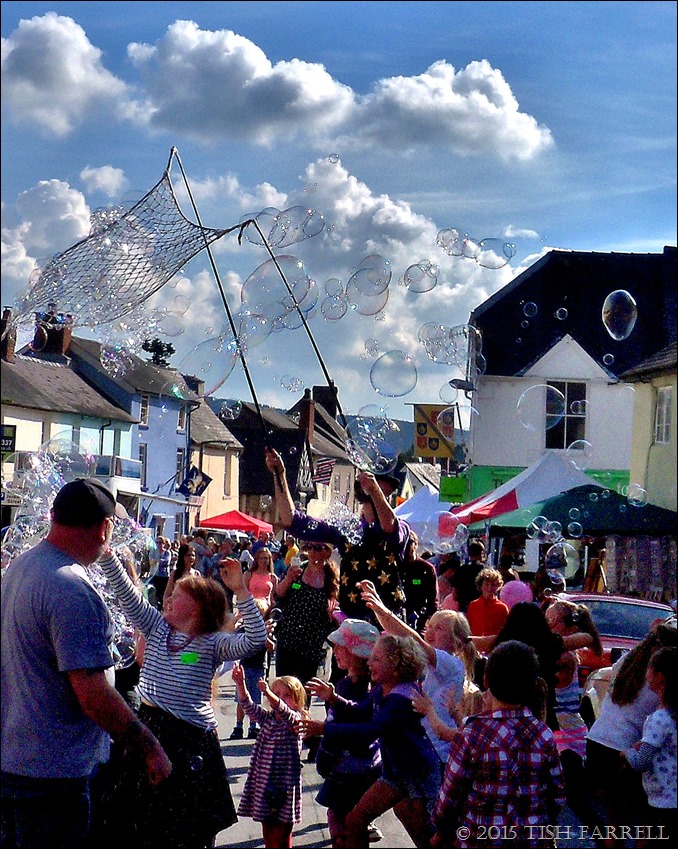
Then there were owls to hold, alpacas with socks to sample, more bubbles from the world’s tallest bubbleologist. We were so excited we had to resort to the Church Barn for soothing tea and brownies. After all, no good English ‘do’ is complete without afternoon tea…
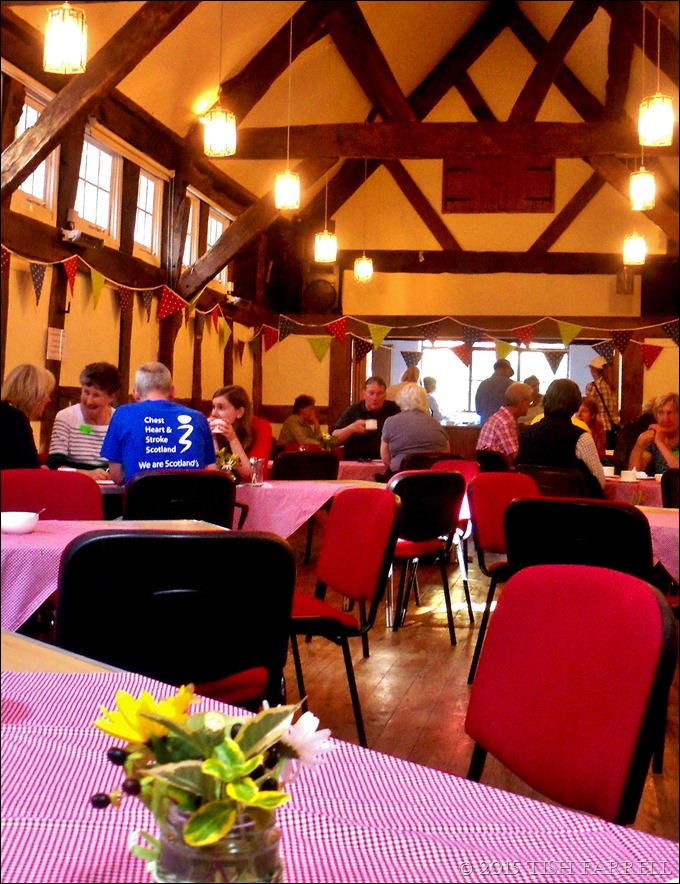
100_7358

And now as promised, a bit of a yarn about Clive the Elephant. It’s a tale of dirty dogs and political shenanigans of 250 years ago. These were the days when Bishop’s Castle was a notorious Rotten Borough. There were two Members of Parliament, and only 150 people with the right to vote. How people cast their vote was a matter of public record, and this meant voters could be intimidated into supporting particular candidates.

Enter Shropshire-born Robert Clive, aka First Baron Clive aka Clive of India.  He was on a mission to build political power, and had the money to buy it. He had used his position in the (also notorious) British East India Company not only to found the British Empire in India, but also to return from the Sub-Continent with shiploads of loot. He then set about buying votes for the  men he wished to have as MPs. As part of his scheme of self-aggrandizement he added an elephant to his coat arms. It symbolized India, and his personal power. Today, a stone carved version may still be seen in Bishop’s Castle’s old market place…
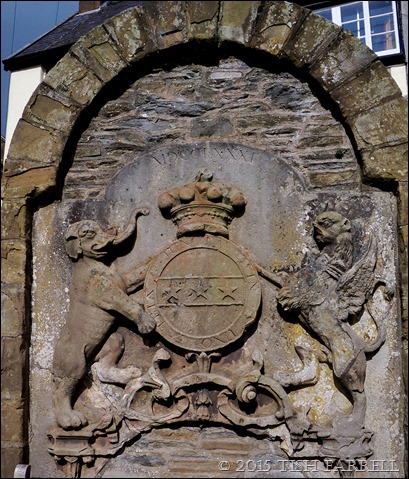
100_7269

The reason Clive wanted power was so he could set about reforming the East India Company, and get rid of corruption in the administration. This did not come to much. Pots and kettles come to mind here. He died at the age of 49. All sorts of allegations were made as to cause of death – that he stabbed himself, cut his throat with a penknife, died of an opium overdose. It seems he suffered from gallstones, and was using the drug to deaden the pain. A more recent interpretation of events concludes he died of a heart attack due to the over-use of opium.

However you look at it, this is not a good elephant story. Far more heartening is the fact that during World War 2, a circus elephant was looked after in the town, and  lived quietly in the stable of the Castle Hotel.

Finally a few more scenes of fun and jollification. I should also say that if I didn’t live in Much Wenlock, Bishop’s Castle would be the place I would most like to live – no longer a rotten borough, but a place bursting with community good spirits…

copyright 2015 Tish Farrell

Even though it was a Saturday, I’m linking this to Jo’s Monday Walk

Please visit her blog. There is no better place to be inspired to get out and about with your camera.

Connected, on and off the rails: a passion for steam

IMG_1835 - Copy

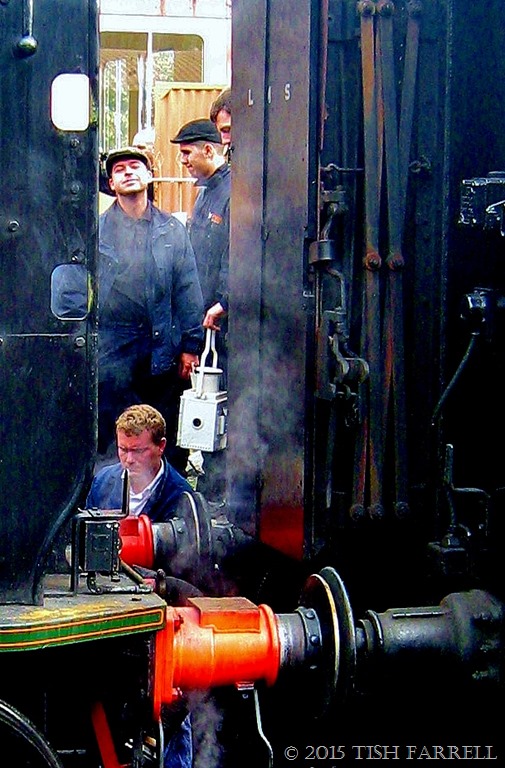
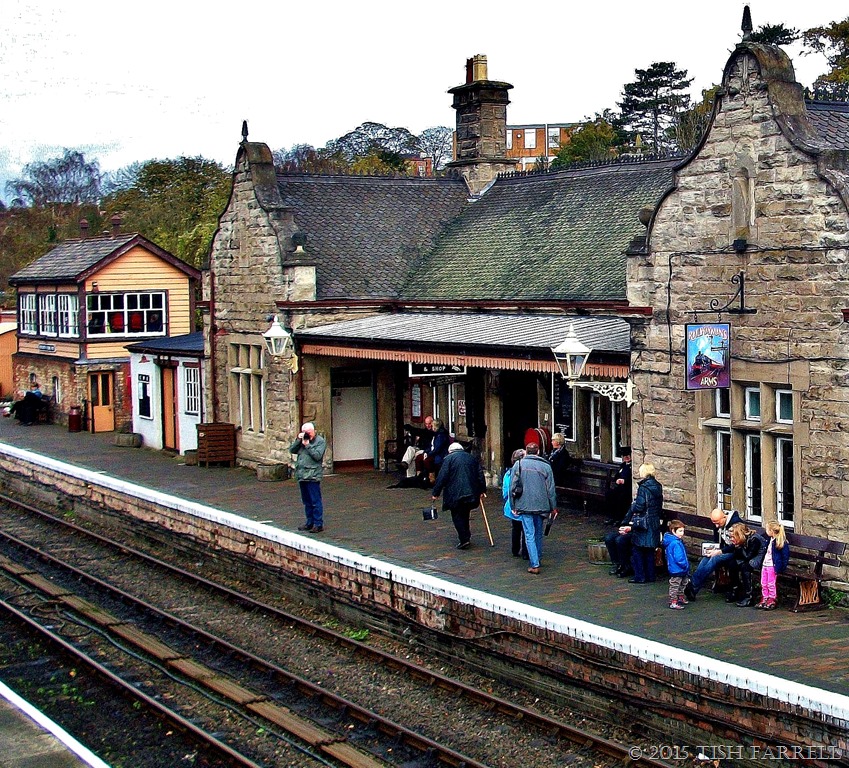
This year Shropshire’s Severn Valley Railway celebrates 50 years as a tourist attraction. That this 16-mile remnant of an 1862 main line railway is still up and running is due to the efforts of several generations of steam engine enthusiasts who lobbied, fund-raised, rescued and restored old rolling stock, and then threw the lot open to a willing public that now loves to spend its spare time watching and riding on steam trains. I mean who wouldn’t want to catch the Santa Special? If you’re up for it, I should tell you that advance booking opens on September 14th.

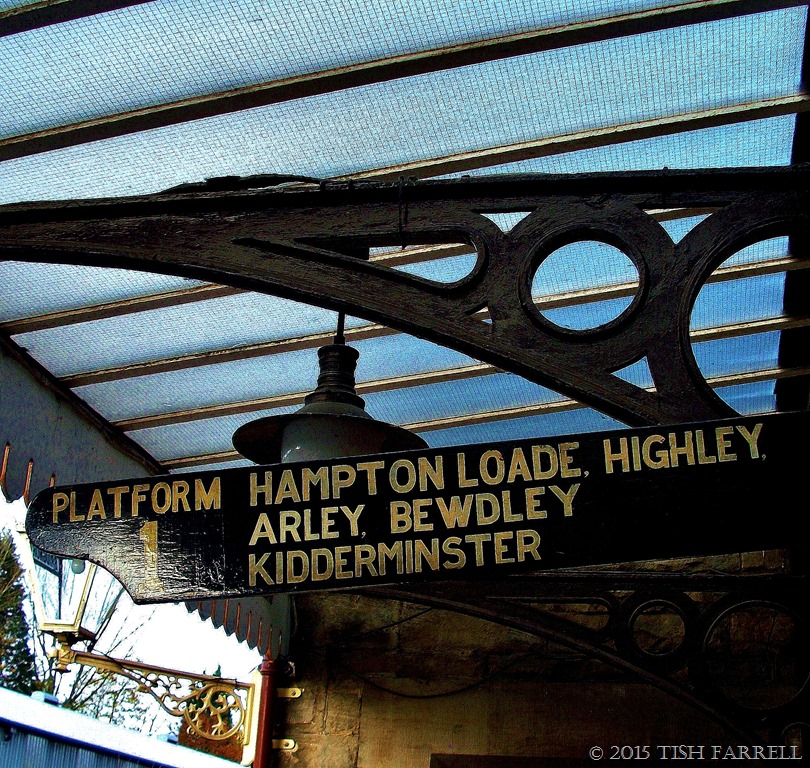
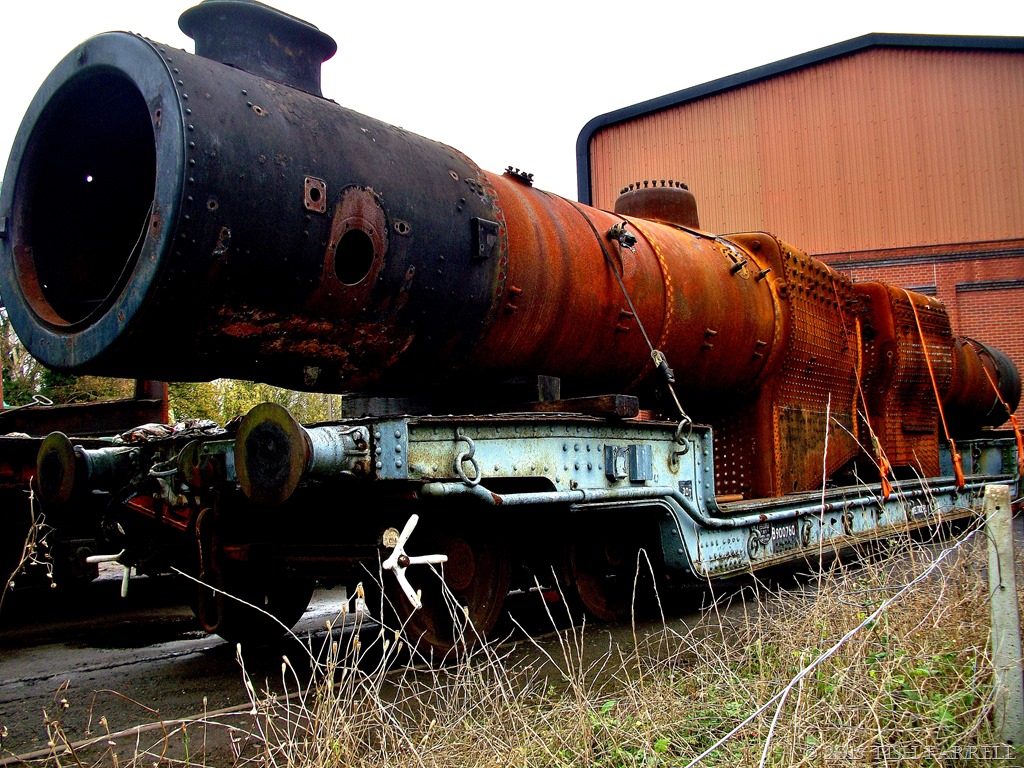
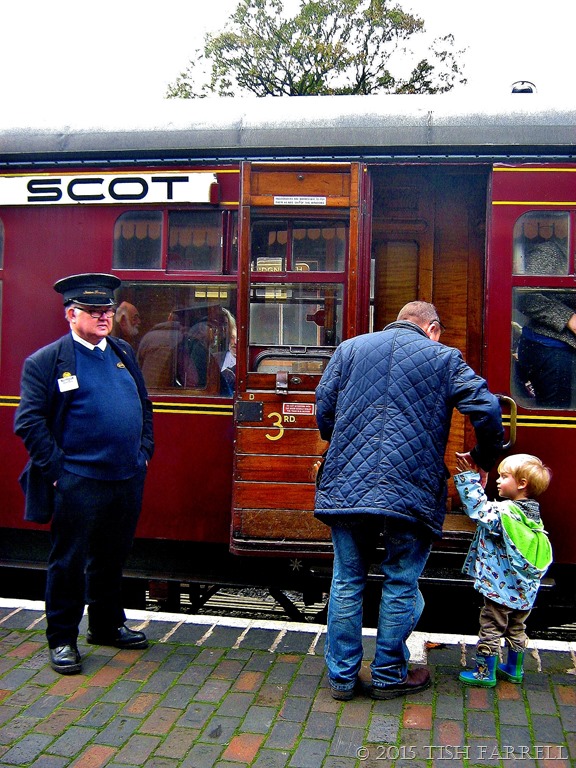
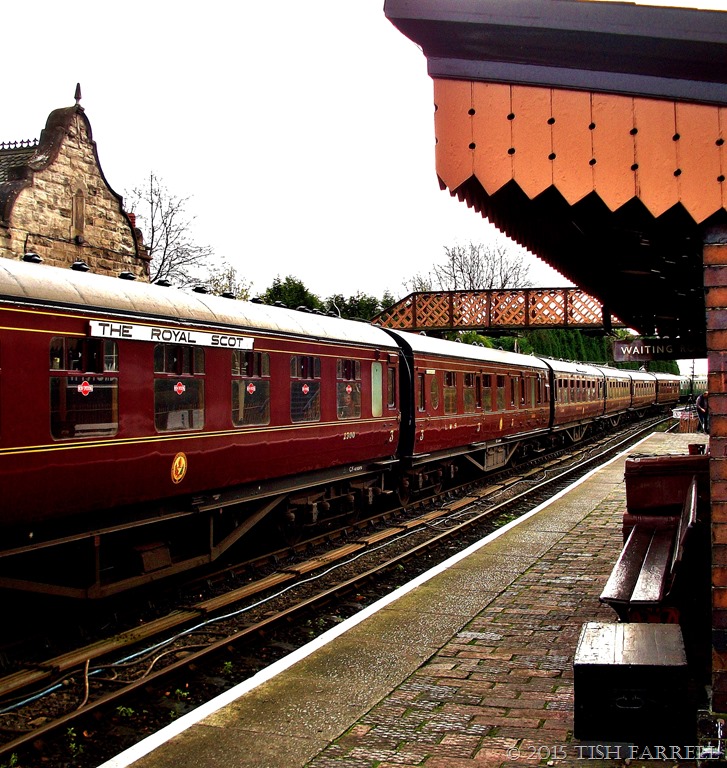
These photos were all taken back in the winter at Bridgnorth Station, our nearest market town, and the railway’s terminus. Graham was there on a mission – to look at rivets. I was just there to savour the steam. Aaaaah. Oh yes, and to take snaps. But perhaps I’d better explain about the rivets.

100_6762

First a little back story. Rewind 153 years…

In 1862 a branch from the original Severn Valley line was built through Much Wenlock. Mainly it served the limestone quarries, but at Whitsuntide, the Great Western Railway put on special trains to bring thousands of spectators to see William Penny Brookes Wenlock Olympian Games. Conveniently, the station was right beside the Linden Field where the games were, and are still held every year.

And because it was Wenlock’s William Penny Brookes who inspired the notion of the modern Olympic Games, and because we are proud Wenlock residents, some time in 2011 Graham had the idea, as a de-stressing pursuit, and as his own celebration of our town’s connection to the 2012 Olympics, to make a gauge 1 model of the  ‘Olympic Special’.

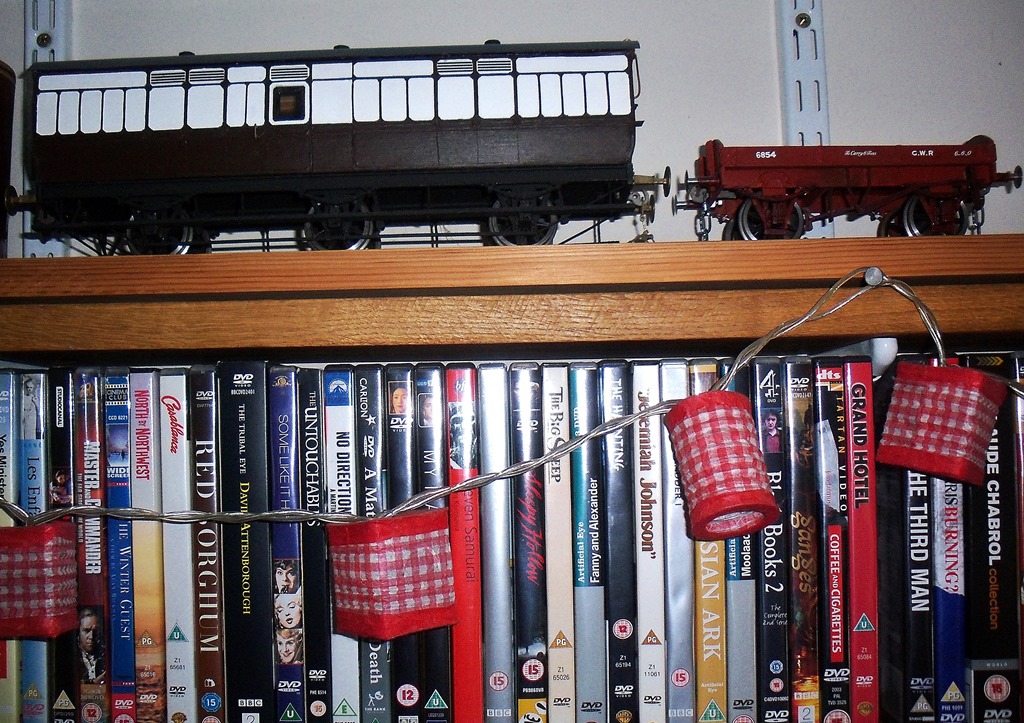
This resulted in the creation of very pleasing passenger carriage, and a goods waggon that was the original practice piece for the enterprise. The superstructures of both were  made from scratch, following some 1860s plans that Graham had unearthed. I don’t remember where he found them. But then came the stumbling block – the locomotive itself.

For this, he would need equipment he did not own, and skills he did not think he possessed. Ever since he has been pondering on how to set about it, egged on by our good neighbour, Roger, who does have handy engineering skills. Part of the on-going pondering included first-hand experience of GWR engine rivets so that Graham could judge the scale of them. And who am I to throw cold water on a chap’s enthusiasm.

Besides, as a child, I spent a lot of time on steam trains, and more specifically waiting to catch one on Crewe Station. And anyone who knows their railway history will know that Crewe Station, built in 1837, is one of the world’s oldest stations, and that its junction was once a thing of railway wonder. So, all in all, I was glad to tag along on the boiler rivet hunt, and thereby have the chance sniff hot coal and engine oil, and look at rust on old locomotive hulks. Graham always claims I was born on the foot plate. And no. My father was not an engine driver.100_6822

100_6813

*

Also it was good to watch the happy voyagers waiting to embark on The Royal Scot…

100_6779

IMG_1846

100_6791

*

And finally that brings me to the work in progress. It’s sitting over the DVD/CD shelves in the kitchen, waiting for an 1860s vintage locomotive to take it away.  Passengers please take note. This train may not be leaving until the advent of the next Olympic Games. Graham says it’s good to have a deadline…

100_6961

copyright 2015 Tish Farrell

Severn Valley Railway Go here to find out more about the SVR

#SVR #SevernValleyRailway #steamrailways


Connected

One thing leading to another on Windmill Hill: everything is connected

P1010943

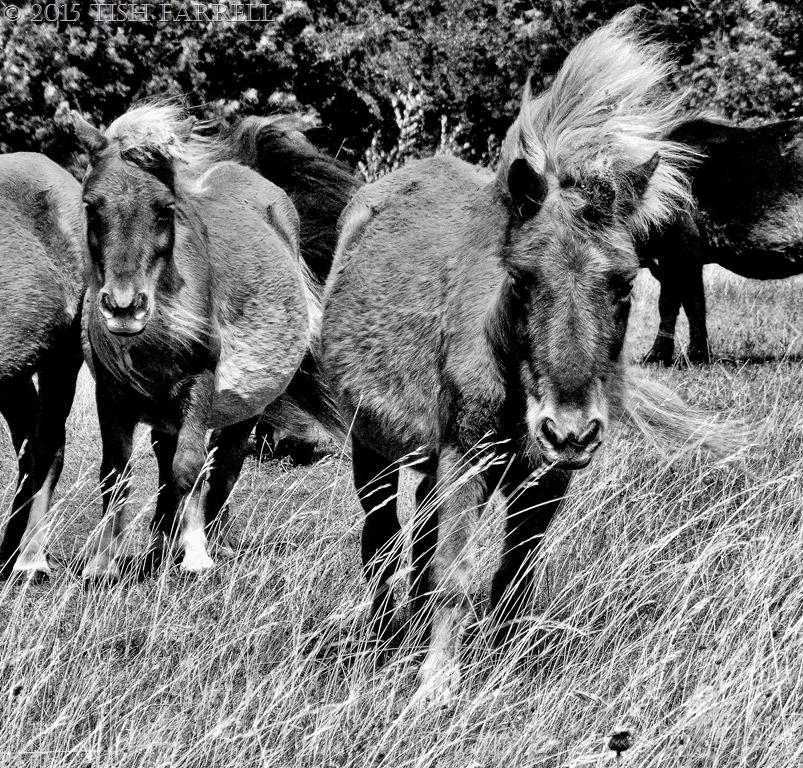
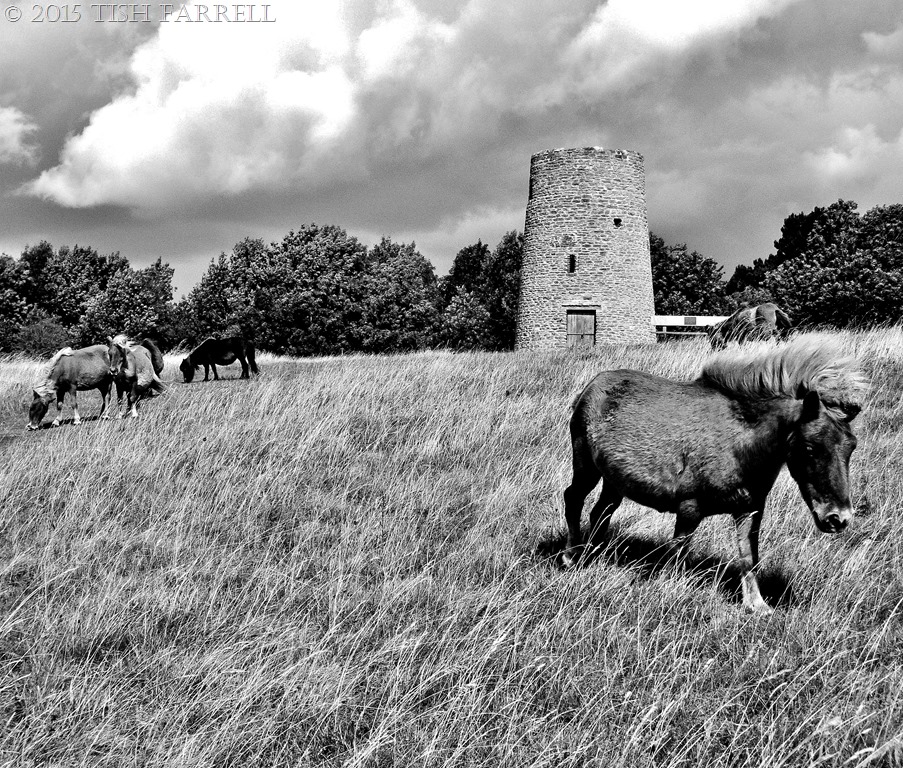
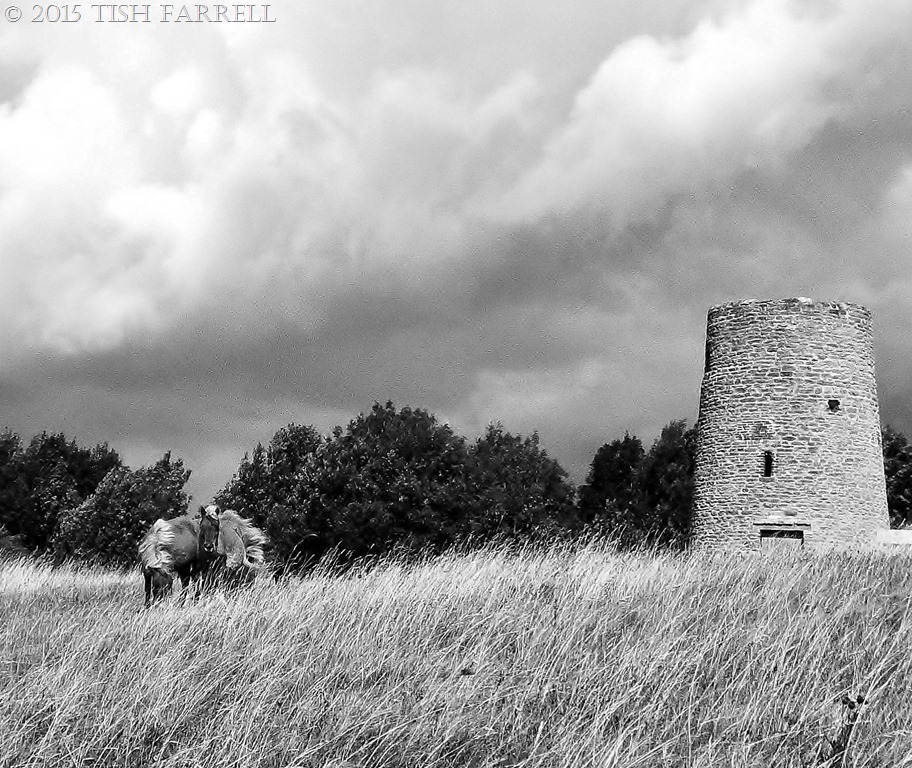
We’re barely into September and already autumn is here in Shropshire. It must be so, because the little horses are back on Windmill Hill. They will spend the next few months grazing off the dying summer grasses and wild flowers. They look very windswept, but the punk-mane-effect is mainly down to thickets of cleavers (goose grass) seeds in their top knots.

P1010945

P1010942

Looking across the hill there’s hardly a sign of the June-July flowering – all those buttery clouds of Lady’s Bedstraw quite gone. Not a trace of the orchids either. Only the dark and brittle seed heads of knapweed that always strike a note of dreariness. The weather doesn’t help either. For weeks it has been rain between showers.

Nor was I encouraged by the BBC radio science programme I heard yesterday. I caught it in the midst of recompiling a glut of runner beans into chutney (beans at least like rain). The guest climate experts were soon informing us that the El Nino effect they promised us all in 2014 did not come to much. In fact, they opined, (and they sounded quite definite about it too) we still have it very much to look forward to – the worst El Nino effect hitherto experienced, they said. For some reason the Pacific Ocean keeps heating up. And this means disrupted weather patterns worldwide, and for Europe, an even wetter winter than usual.

MORE RAIN? I wish we in Shropshire could email some of it to those lands whose dramatically changing climates mean that they now receive little or none. Mongolia is one place suffering massive desertification. Likewise, the countries of Africa’s Sahel that border the Sahara. In both regions, and many others besides, human actions, poverty and climate shift combine in a vicious downward spiral that results in increasing degradation of land and water sources. This, apart from war, is one of the main drivers of human migration. It’s all connected, despite what the climate change naysayers may wish to believe.
All of which is to tell myself to count my blessings.  I am free to wander where I like without fear of being terrorized by extremists. I have all the food I need and more. I enjoy every comfort. I have the luxury to meander along Shropshire byways, talking to little horses, musing on the meaning life, the universe and everything, while across the globe desperate others risk all to find somewhere they can live a decent life with their families. Some people, we hear, do not want to share their land with refugees. It is assumed that they will be nothing but a drain on resources. Yet who knows what gifts in talent and skills these homeless souls might be bringing us? Also, not sharing may cost us more than we could ever imagine. In some societies the truest measure of civilisation is the gift of hospitality. Perhaps we need to think about this with a little more application. At least, I know I do.

P1010956

copyright 2015 Tish Farrell

Connected