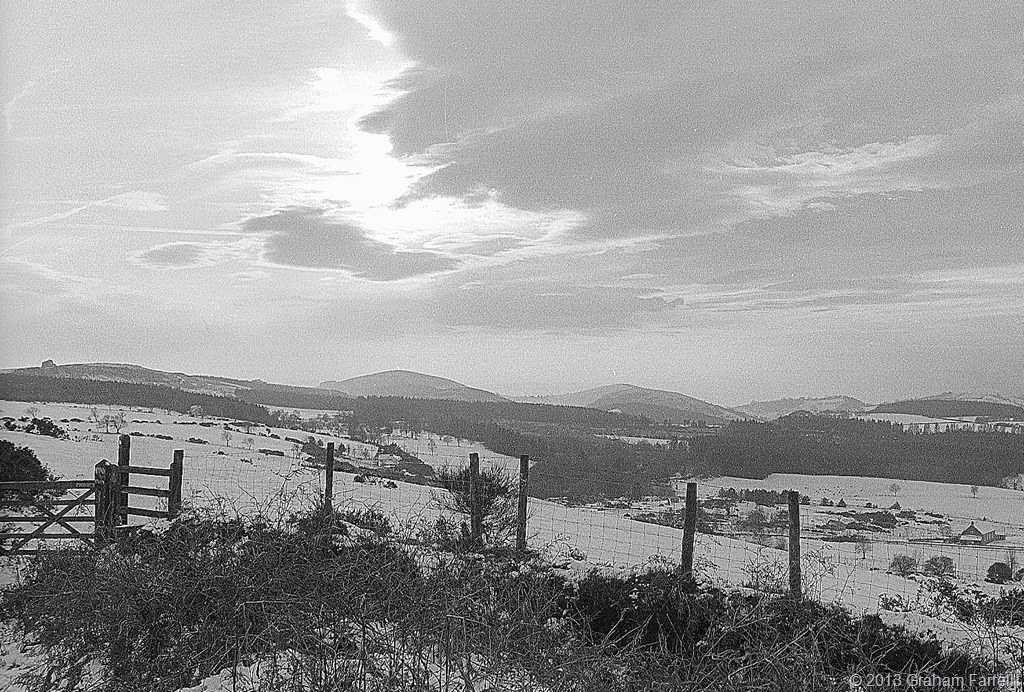
Naturally, suffering as I do from Out-of-Africa-itis (some of you may just have noticed this) any mention of ‘wild’ instantly conjures the sweeping Mara grasslands and herds of wildebeeste. Or scenes of Zambia’s South Luangwa as featured in the last post (here). But then I thought it was time I took more joy in the place where I actually live and, indeed, grew up – the wonderfully rural county of Shropshire. And for those of you who do not know England, Shropshire is in the Midlands, along the border with Wales. Also as I have mentioned in other posts, this segment of Great Britain was once (400 million years ago) to be found somewhere off East Africa. Shropshire’s rocks are thus among the world’s oldest, and its hills a magnet for geologists from all over the planet.
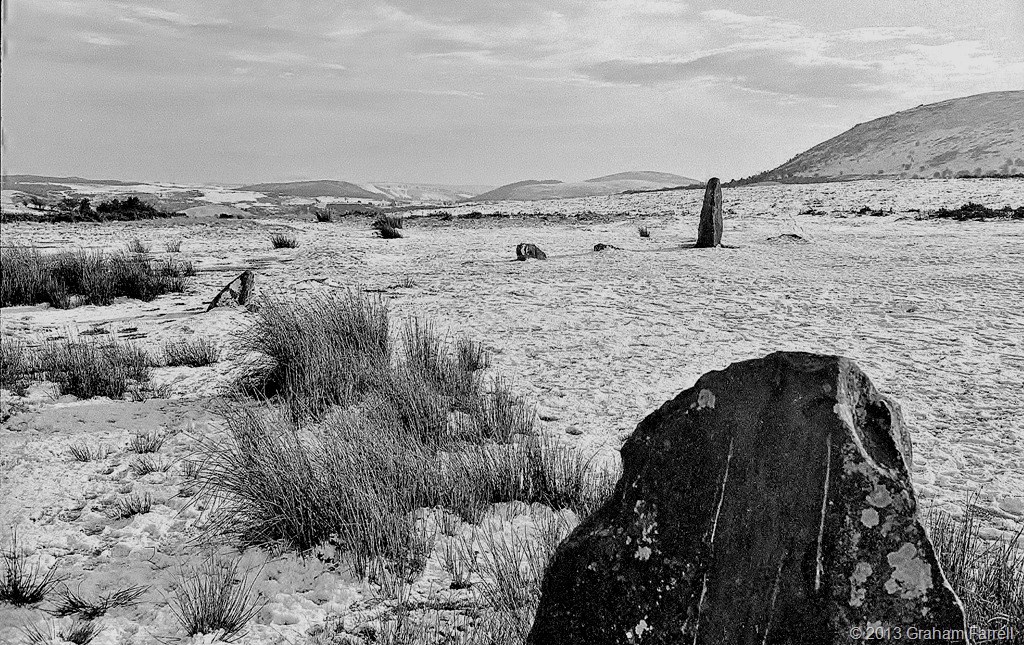
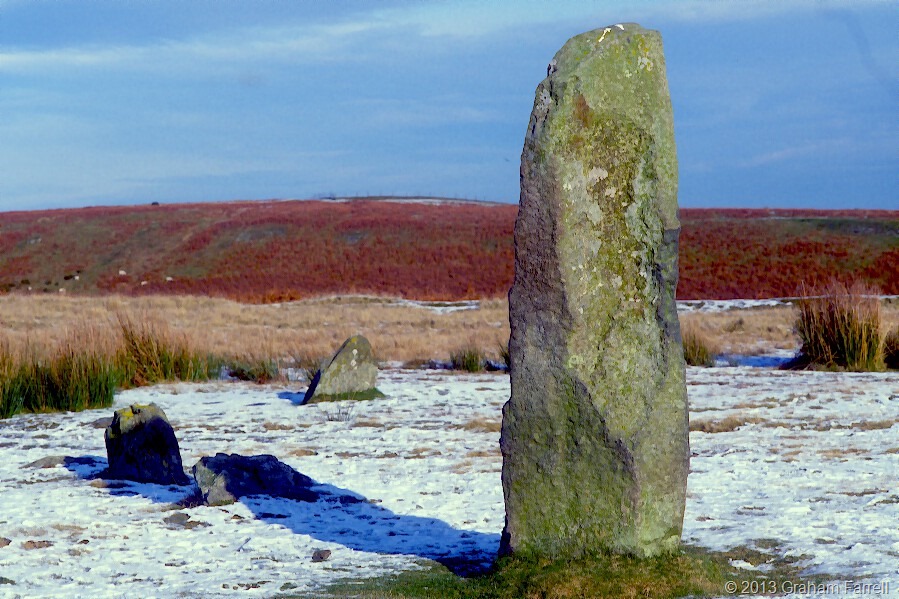
My home county, then, is largely farming country – dairy, sheep, and arable – the population living in scattered small settlements and market towns, many dating back to Roman times and the early Middle Ages. But there are also many wild places, especially up in the hill country overlooking Wales. One such place is Mitchell’s Fold, a Bronze Age stone circle.
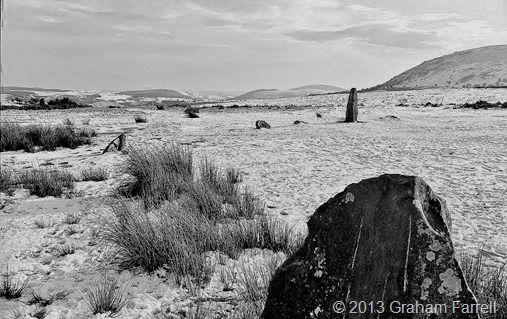
This bleakly sited monument comes with a strange legend attached – the tale of a wicked witch and a fairy cow. And so one December day Nosy Writer and the Team Leader set off to explore. Winter seemed a good time to go searching for the spirits of the past. The photographs, by the way, are all Graham’s. Nosy Writer said she could not possibly take her gloves off in such frigid conditions.
The site itself is near the Welsh Border on Stapeley Hill, south west Shropshire. The stone circle was created between three and four thousand years ago, and originally comprised thirty stones of local dolerite. Today, only fifteen are visible. Some were perhaps re-purposed by subsequent generations; others buried. Often such circles were regarded with superstitious dread, particularly during the Middle Ages.
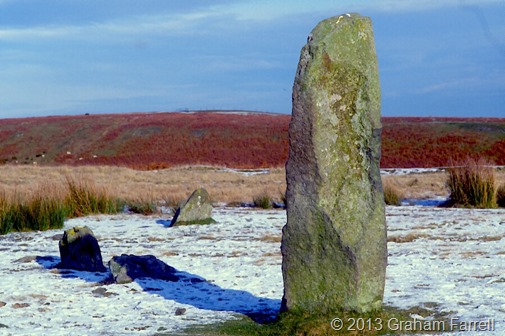
In the prehistoric past, though, the place was not so isolated as it appears today. In the vicinity are two other stone circles, although one of these, known as Whetstones was blown up in the 1860s. The other, Hoarstones, was said by locals to be a fairy ring, where on moonlit nights, six ‘fairesses’ would dance. There are also numerous cairns and a long barrow, and, not too far away, the Bronze Age stone axe factory of Cwm Mawr whose finely carved mace heads were traded far and wide across England and Wales. Of the reasons for this and the other circles, all is shrouded in mystery. All that may be said is that once these upland places were of great importance to the people who laboured to make them.
But what about the witch-catching story, I hear you ask. Well that I can tell you. It goes like this.
Once, when there was a terrible famine in the district, the fairies took pity on the starving peasants and sent them a snow-white cow. The cow was kept in a circle of stones on Stapeley Hill, and, as with all such gifts, there were strict conditions as to usage. Every person was allowed to milk the cow by turns, but only so long as the cow was never milked dry, and each person took no more than one pail full.
Everyone followed these instructions, and all went well until the wicked old witch who lived nearby grew envious of the peoples’ good fortune. Why had they not called on her to solve their problems? Her name was Mitchell, and out of sheer spite, she thought up an evil plan.
And so one night, when all honest folks were asleep in their cottages, she approached the cow and began to milk it. The only thing was, the bottom of her bucket was full of holes. She milked and milked until the cow was dry, thus breaking the fairy charm. At once the cow sank into the ground, never to be seen again. But Mitchell did not escape either. She had challenged the forces of good too far and found herself trapped inside the stones. And when the people came next day and saw their fairy cow gone, and they saw the false pail and pool of wasted milk, they knew exactly what the witch had done. So just to make sure she never escaped, they walled up old Mitchell inside the stone circle, where she was said to have finally starved to death.
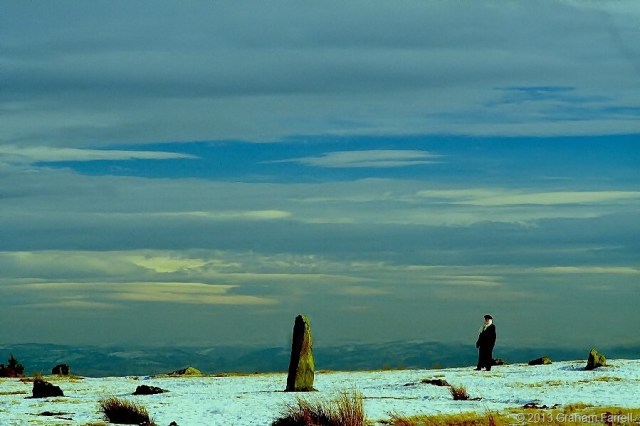
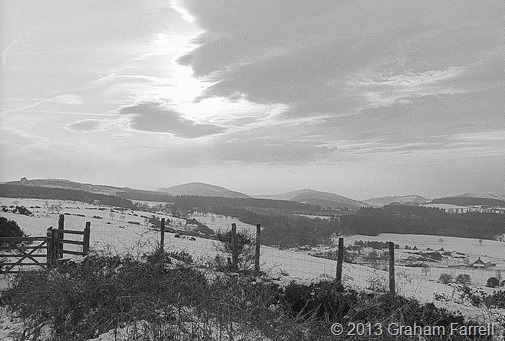
And just in case you are wondering, no, this is not Mitchell’s ghost in the photo, but me, wrapped up in many post-Africa layers. And beyond me, the Welsh hills.
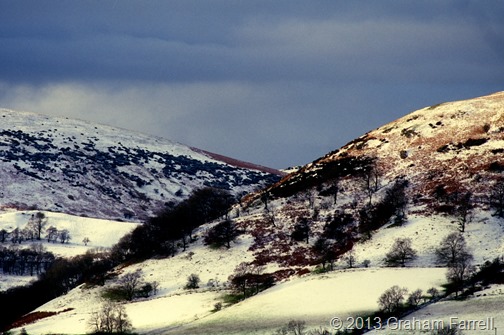
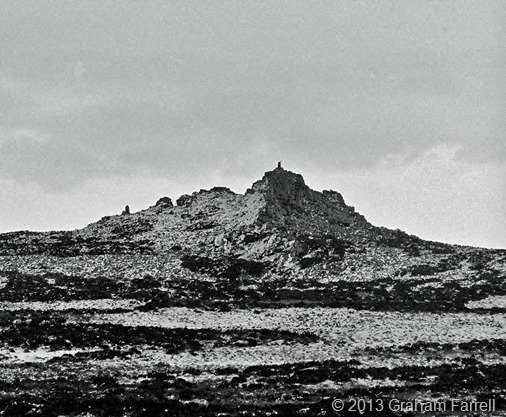
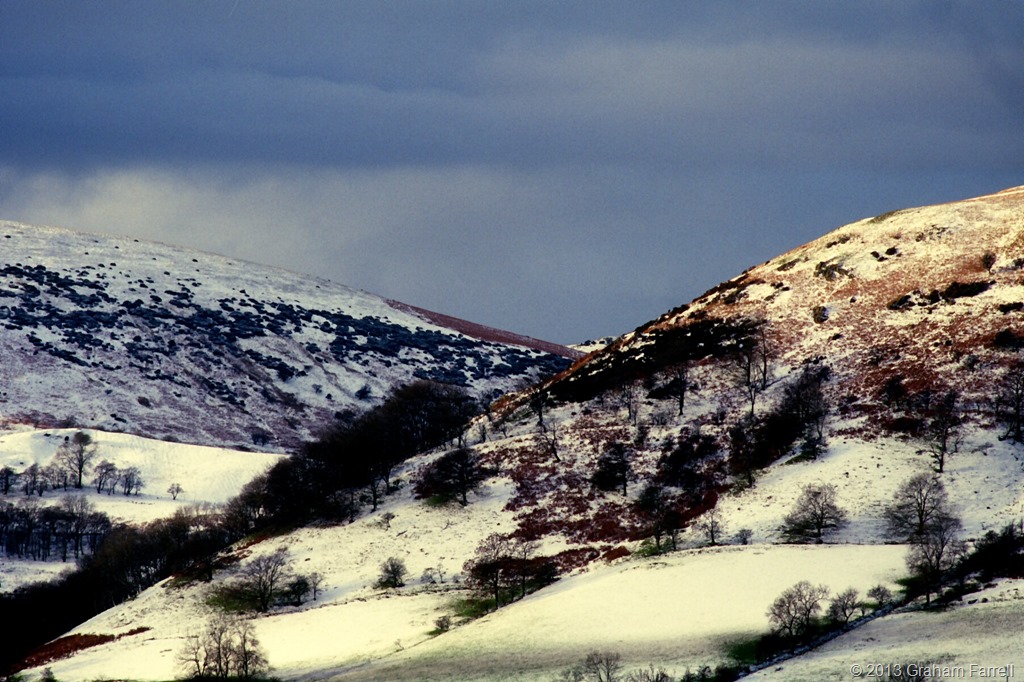
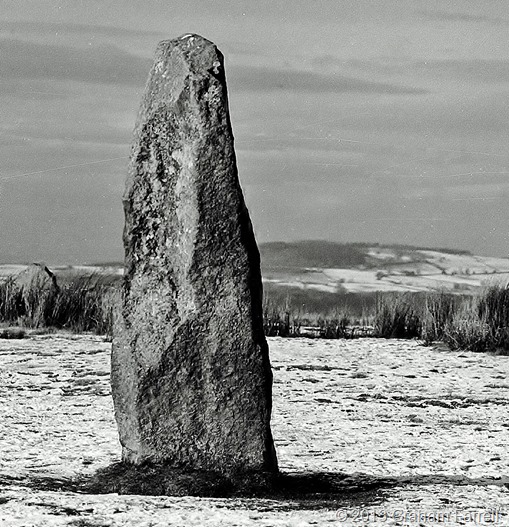
Finally, here are more scenes of Wild Shropshire – in particular, the hills known as the Stiperstones, which featured often in the novels of Shropshire writer, Mary Webb. The last photograph shows one of the Stiperstones’ natural ‘cairns’, just visible from Mitchell’s Fold. These bleak hills also feature in many local legends, but they will have to wait for another post.