Six On Saturday ~ Produce!

IMG_7953 back garden

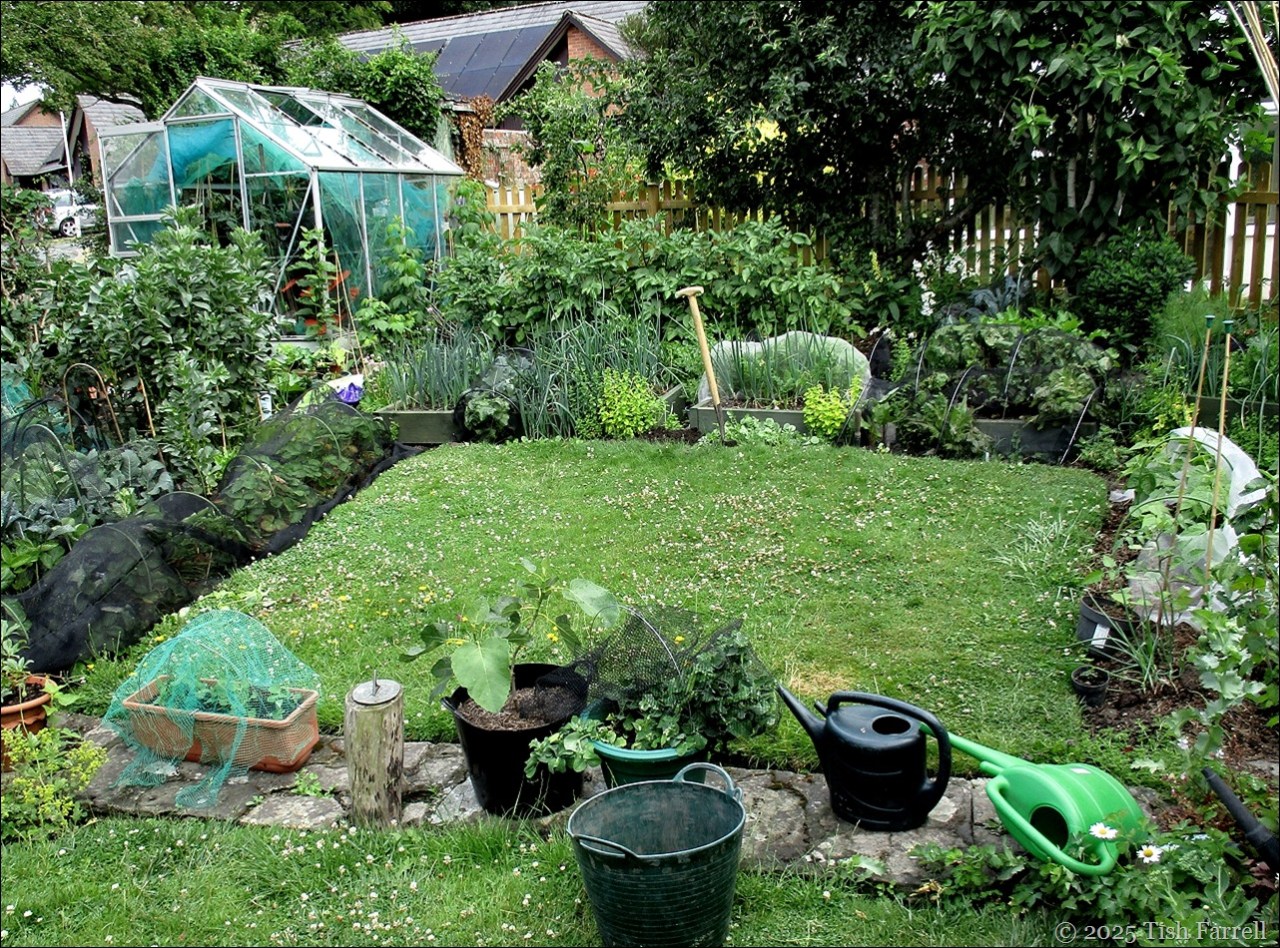
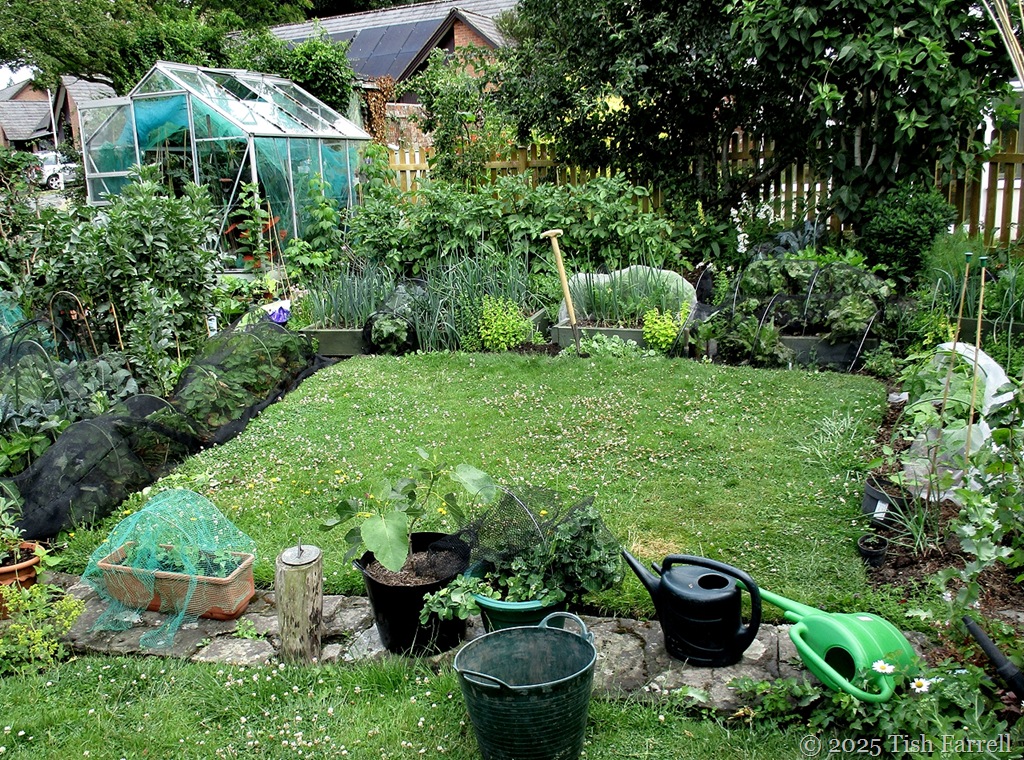
As you can see, the ‘upstairs’ garden behind our house is really rather modest. And here, currently, and probably for the foreseeable future, chaos reigns; this courtesy of a gardener who still thinks her growing spaces comprise two seventy by 15 foot allotment plots  plus the home garden with its adjacent stretch of ‘guerrilla gardened’ field over the back fence. Heigh ho! Those were the days when we lived beside Wenlock Edge.
IMG_7954 back garden 2

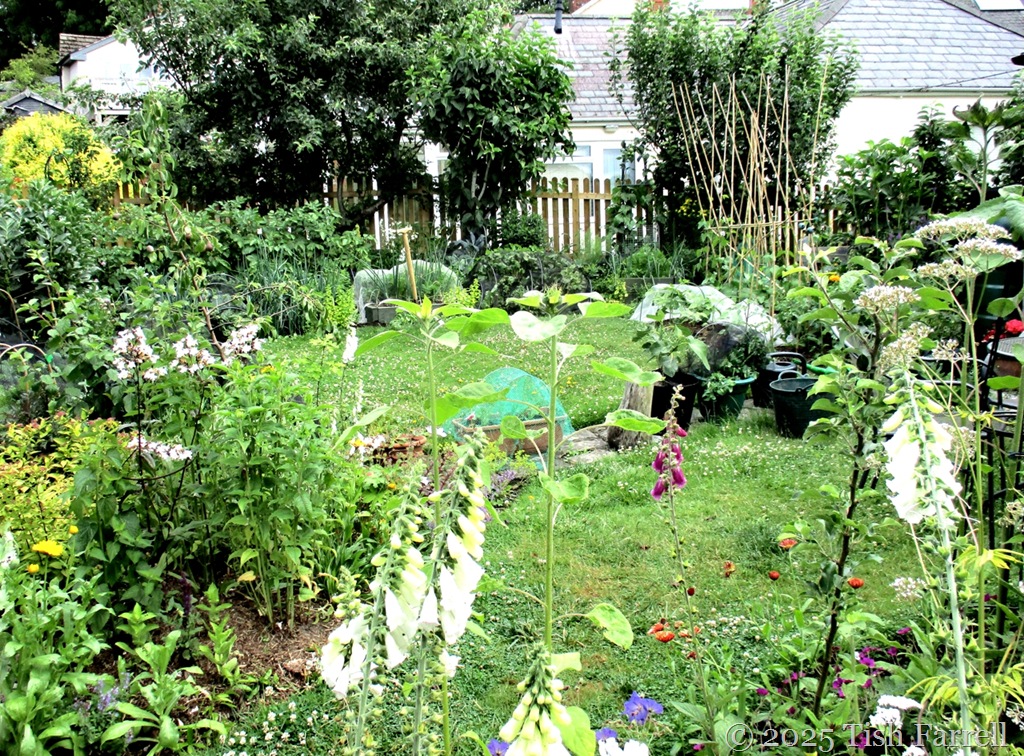
Now, mostly settled in our new home, I do know I must cut my cultivating cloth according to the physical means of production. (The lawns, though, do seem to keep shrinking). Also this year there’s been the matter of watering through the mostly rainless months of spring and early summer. This has been quite hard work. (I know mulching is much of the answer, but my hot compost bin can only yield so much stuff, and so far it’s spread rather too thinly). And then there are birds and cats and insects to contend with which means everything edible has to be netted, which is not very attractive. So, as I say, chaos presently reigns, but with a few organised segments in between.

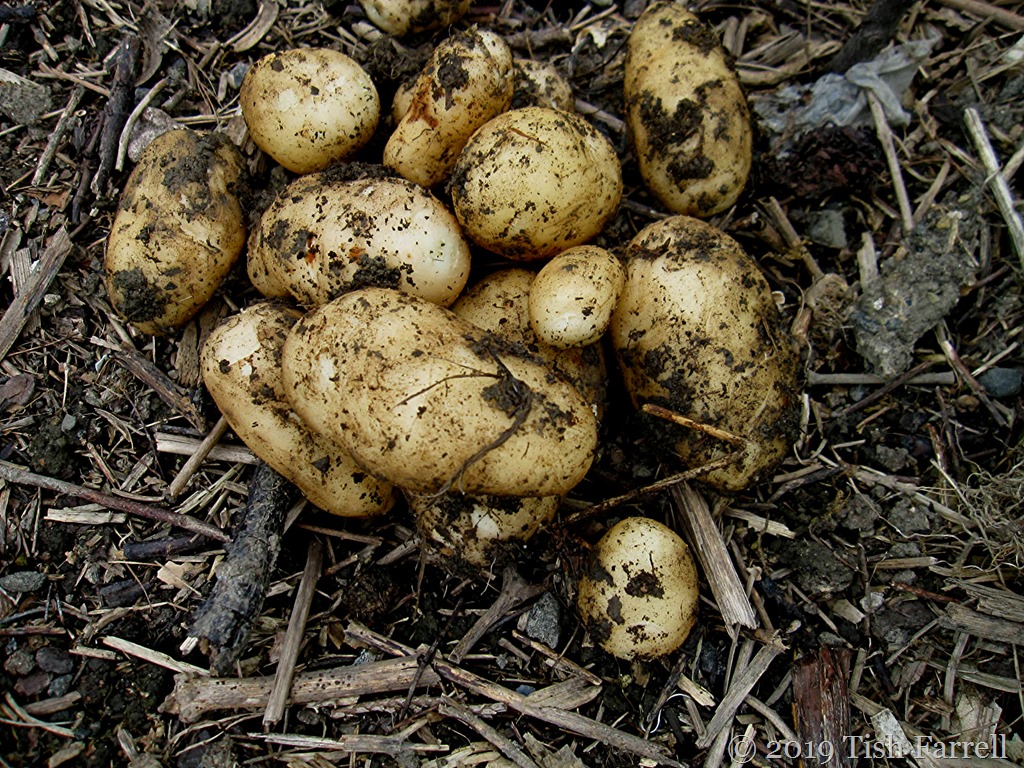
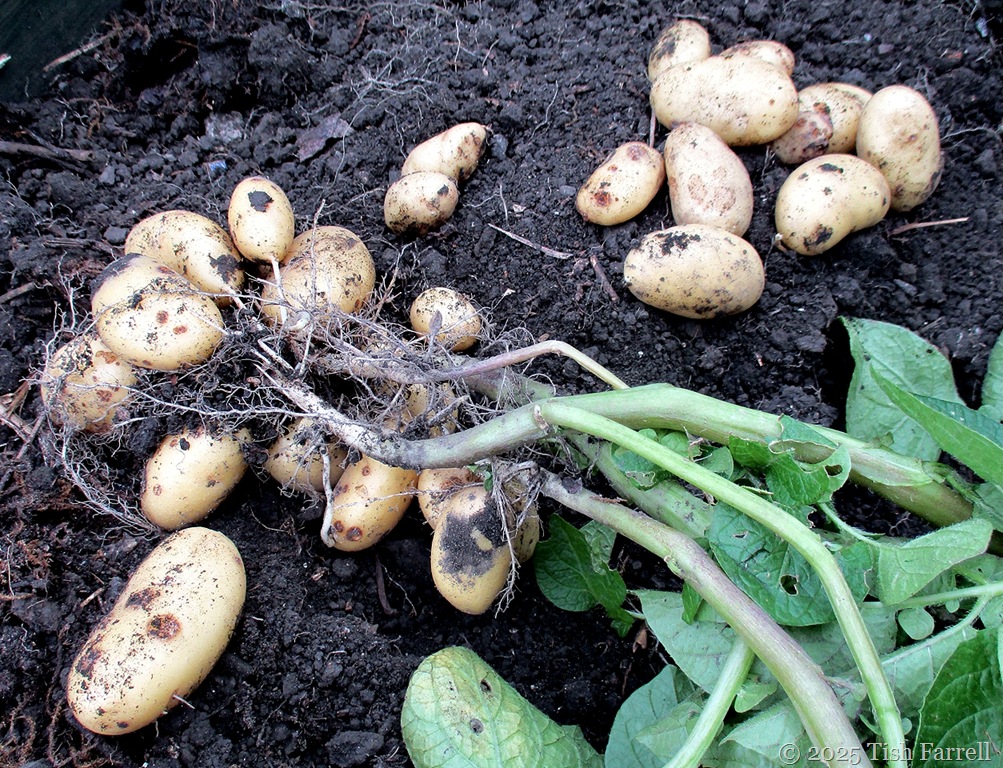
1.) The first of these to produce excitement in the Farrell household are the two short rows of potatoes. They were planted at the end of March, ten in each row. Even with little rain, and not much watering, the Belle de Fontenay have produced some lovely salad potatoes. (They’re also a main crop variety if left longer, but that’s unlikely to happen).
IMG_7943 belle de fontenay 2

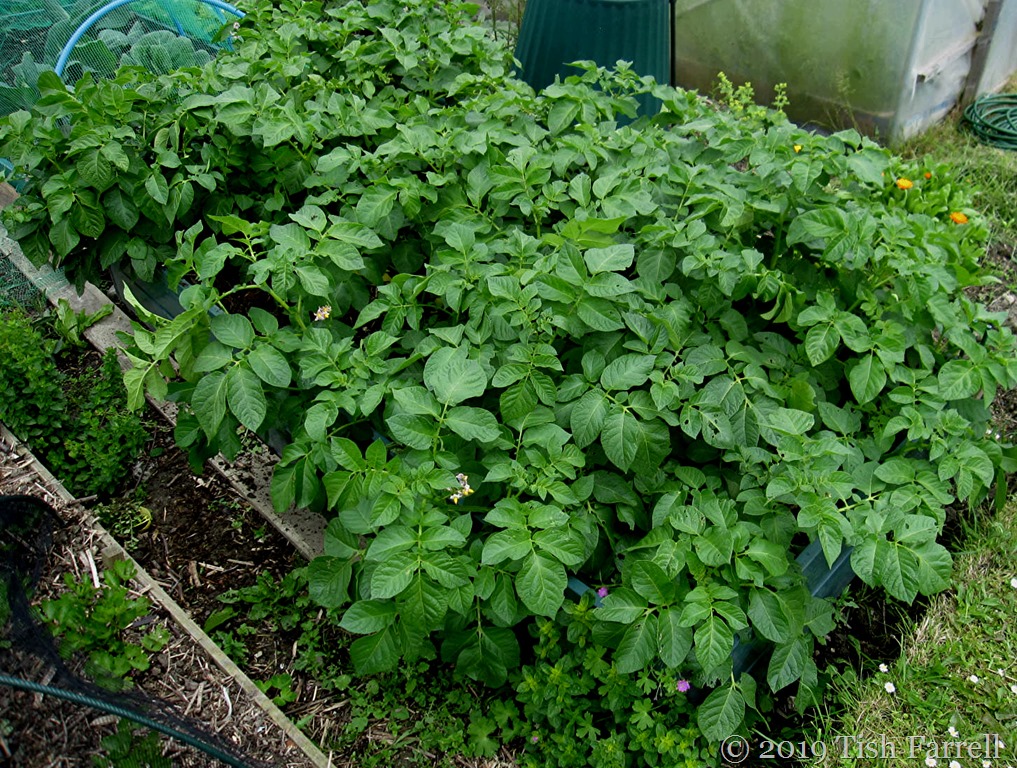
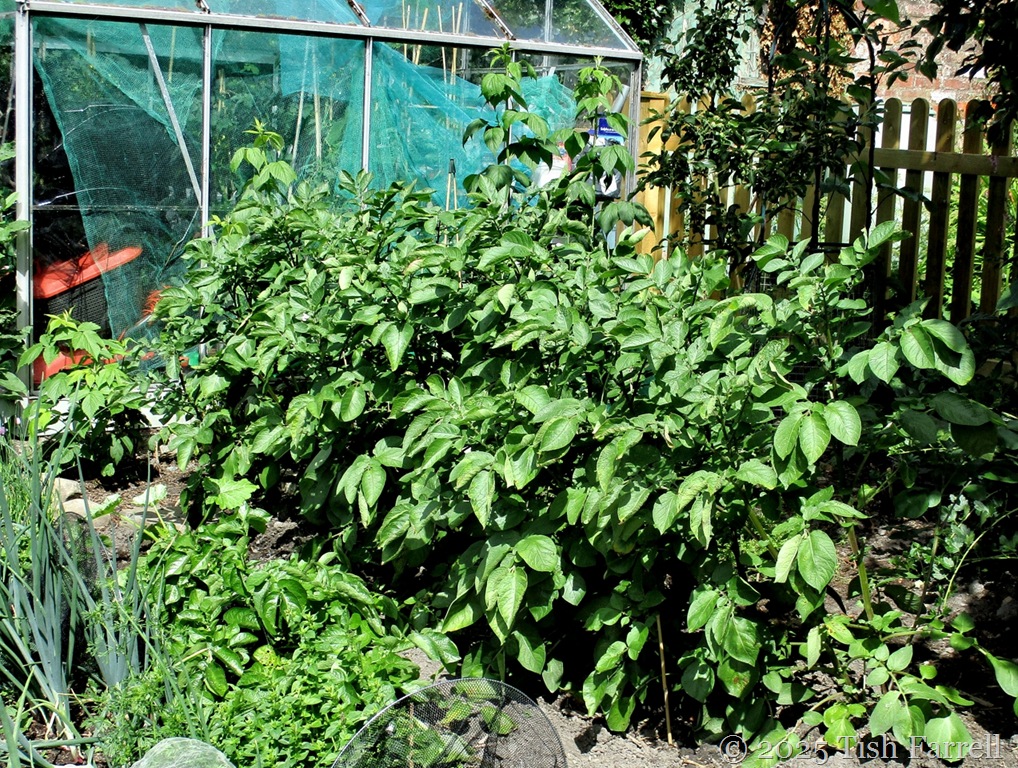
Behind them is a row of Rooster red spuds, also main crop. The plants have grown astonishingly tall, given the weather, while the Belle de Fontenay have flopped flat in front of them. I think the Rooster must have commandeered the downward flow of any available groundwater from the hill above.
IMG_7971 rooster potatoes

*

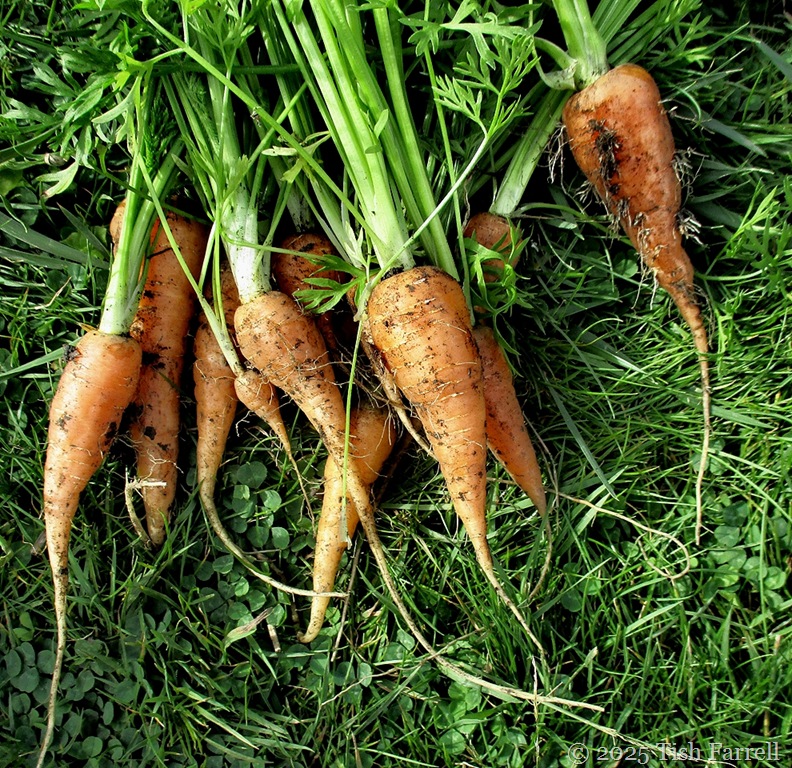
2.) The next excitement this week was a bunch of carrots, and not a single sign of carrot root fly in any of them. I have attempted to protect the rows by growing them in a raised bed, between onions and covered with some fine mesh. Last year all my carrots were root-flied.
IMG_7964 carrots

*

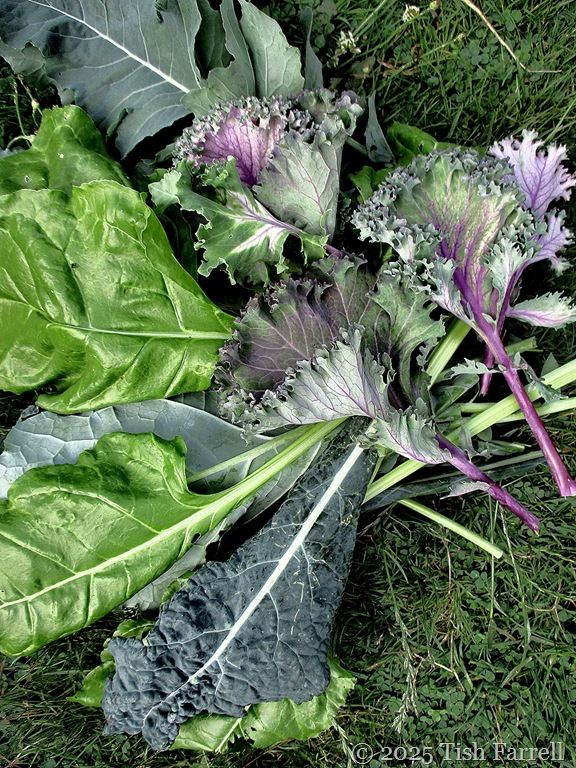
3.) We eat a lot of greens, and this year I’ve grown some different varieties of kale, including, pink frilly, Tuscan, and a crossed Tuscan and Daubenton’s perennial kale, the seed produced by a forest gardener on eBay. (There’s also some Swiss chard in the bunch below.) I know kale isn’t to everyone’s taste, and I’ve yet to try this, but I recently learned you can roast it till crispy. This involves ripping up the washed and dried leaves (without the stalks), tossing the pieces in oil, spreading them on a baking sheet and cooking for 15-20 minutes in a fairly hot oven. Sesame seeds and favourite spices along with sea salt and black may be added.
IMG_7965 greens

*

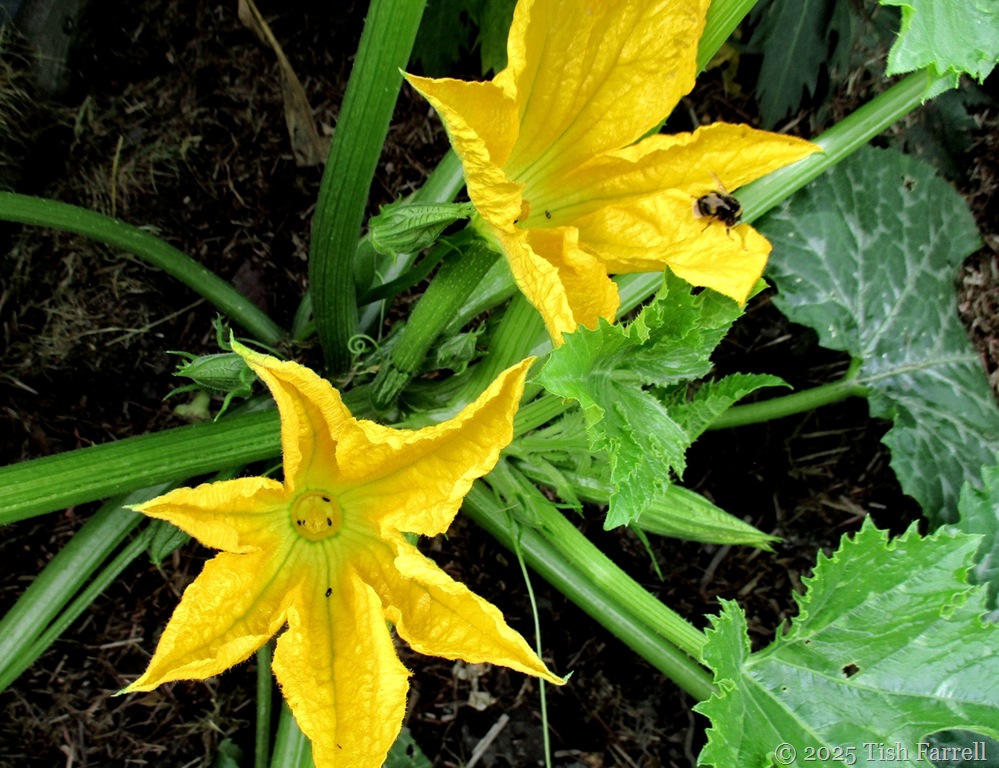
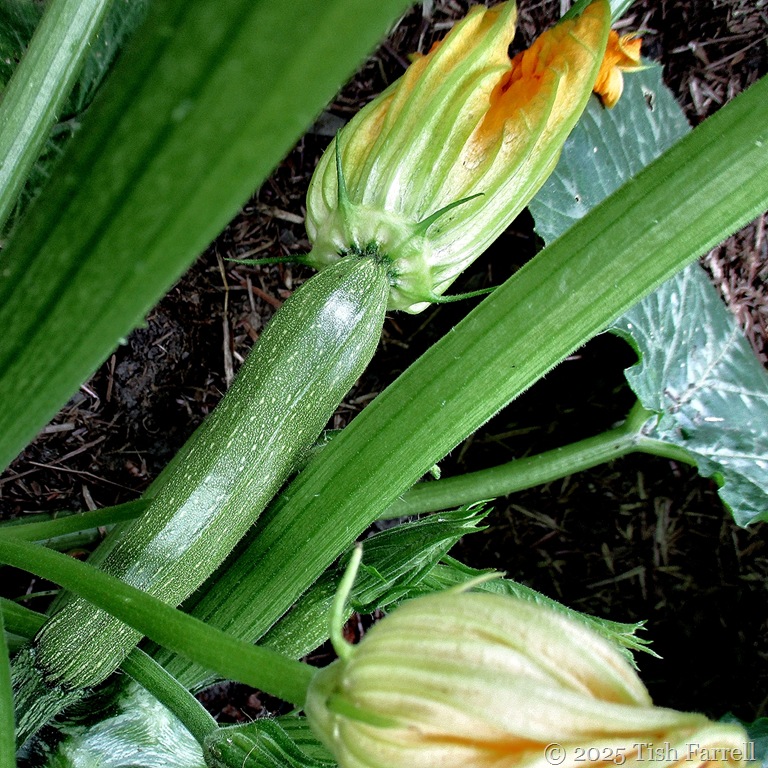
4.) Yesterday we ate our first homegrown courgette (zucchini), and very nice it was too, sliced and lightly browned in the fat from cooked lardons and then added to a salad.IMG_7999 courgette 2
IMG_7982 courgettes

I put the plant in beside the compost bin, a position that clearly is suiting it. I have some yellow courgettes coming on nearby.

*

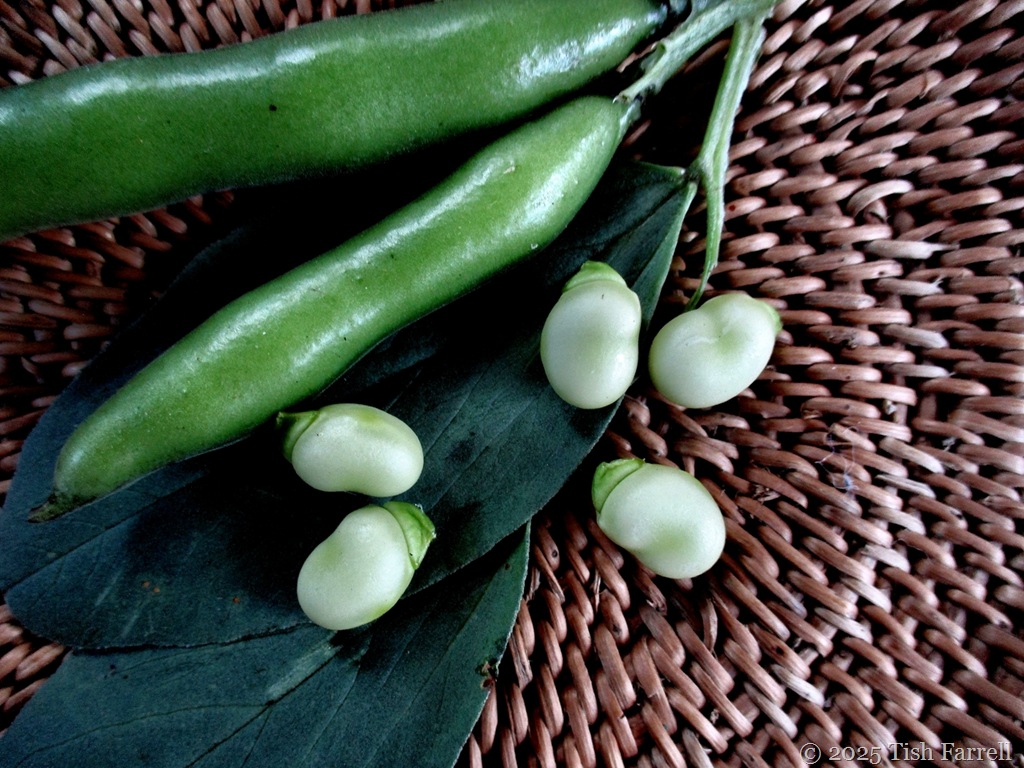
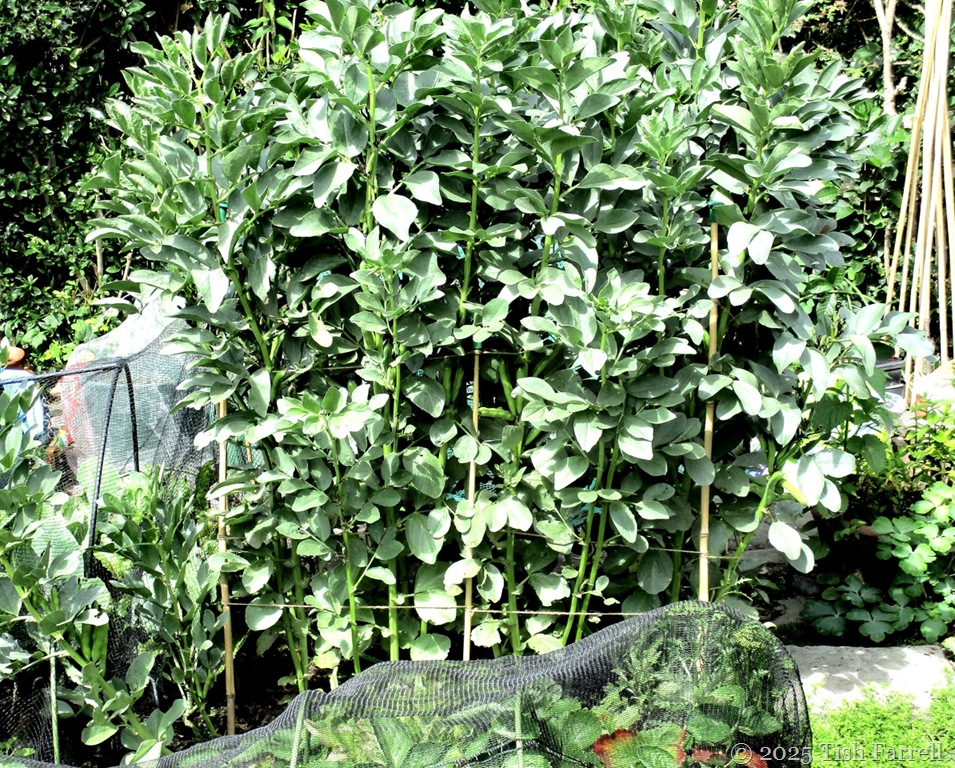
5.) Also in last night’s salad were the first of the field beans. These are a variety of broad (fava) bean, grown mostly in the UK as animal feed or as a green manure, ploughed back in the soil before producing beans. This, I feel, is a lost opportunity. The plants grow four or five feet and taller, while the beans themselves are little bigger than peas. But then the plants are prolific, and so ideal if you haven’t a large enough space to grow their bigger cousins. My field bean plot is around a square metre/yard.

They have anyway, become something of a summer staple in the Farrell household. Picked at the right moment they are deliciously tender and can work as a rather good imitation of guacamole. If they get over-ripe and a bit floury, they make excellent soup and refried beans. The downside is they are fiddly to pod. But then the mass of little pods is good fodder for the hot compost bin, as is all the vegetation (chopped up) when the plants are done.

IMG_7977 field beans 2

IMG_7975 field beans 3

IMG_7992 field beans

*

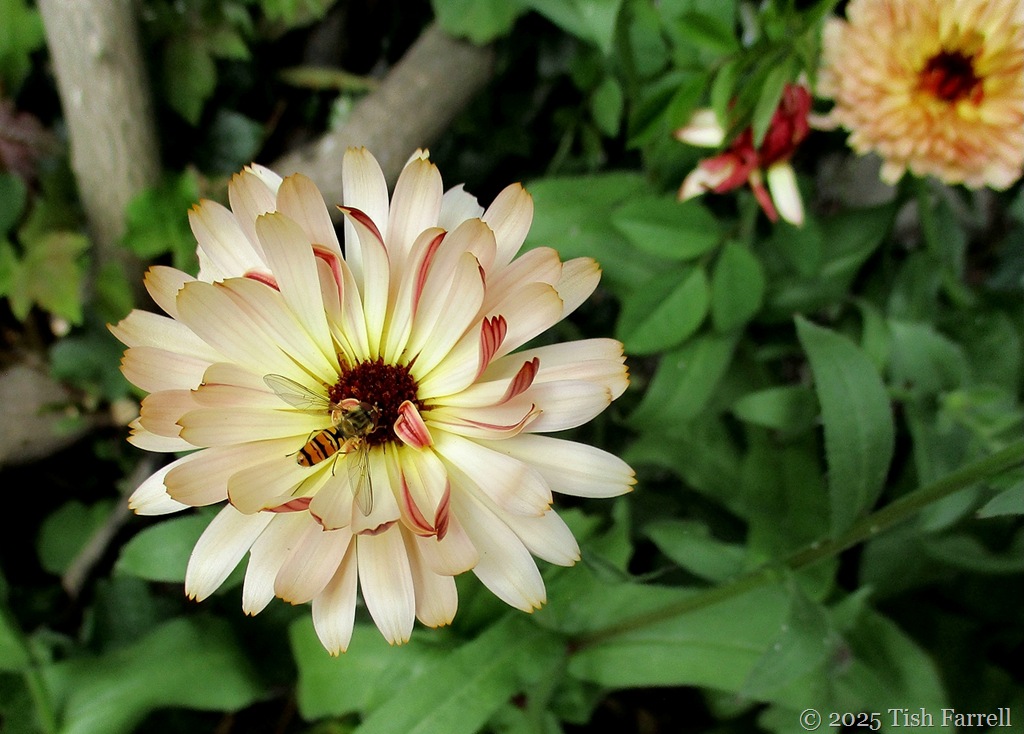
6.) Last but not least on the garden foraging front are the marigolds (Calendula officionalis). I use them in herbal tea. They contain all sorts of therapeutic properties, known and made use of for a couple of thousand years. But mostly I add the petals to salads, taking care not to include any passing hoverfly. This particular variety is called Sherbet Fizz. We also have lots of self-seeded bright orange and yellow ones from last year’s crop. I love them all. They have to be one of the most heartening of flowers. Simply to gaze on them lifts the spirits.
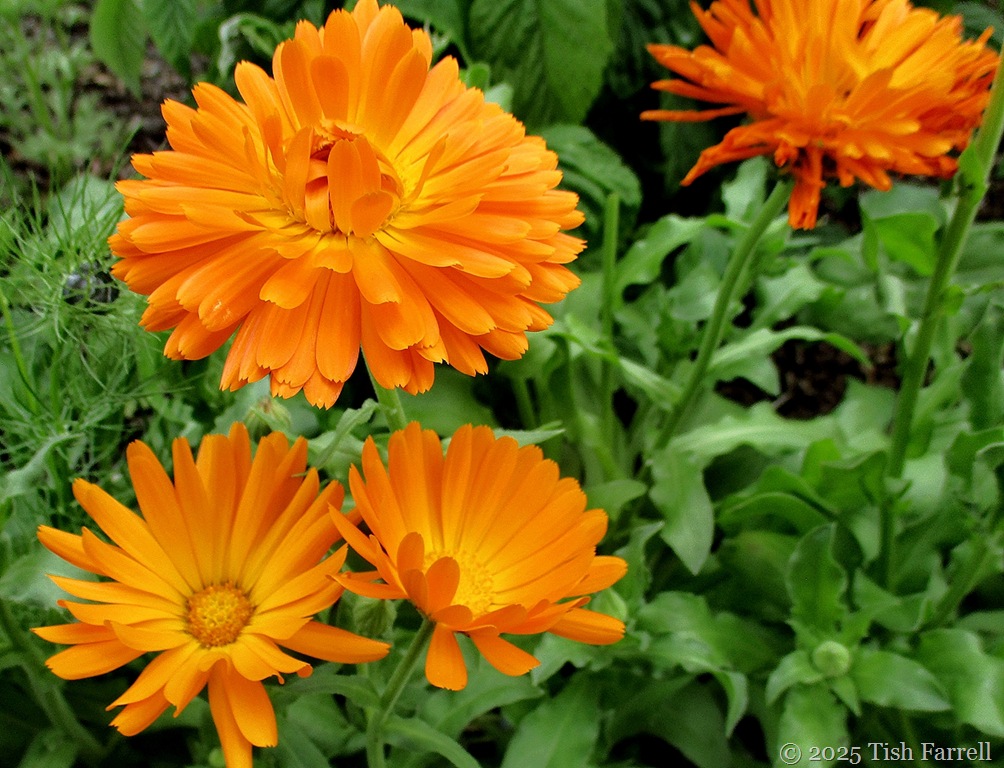
IMG_8007 marigold sherbet fizz

IMG_7961 marigolds

Six on Saturday: Please call on Jim. There’s always lots to look at and discover in his Cornish garden.

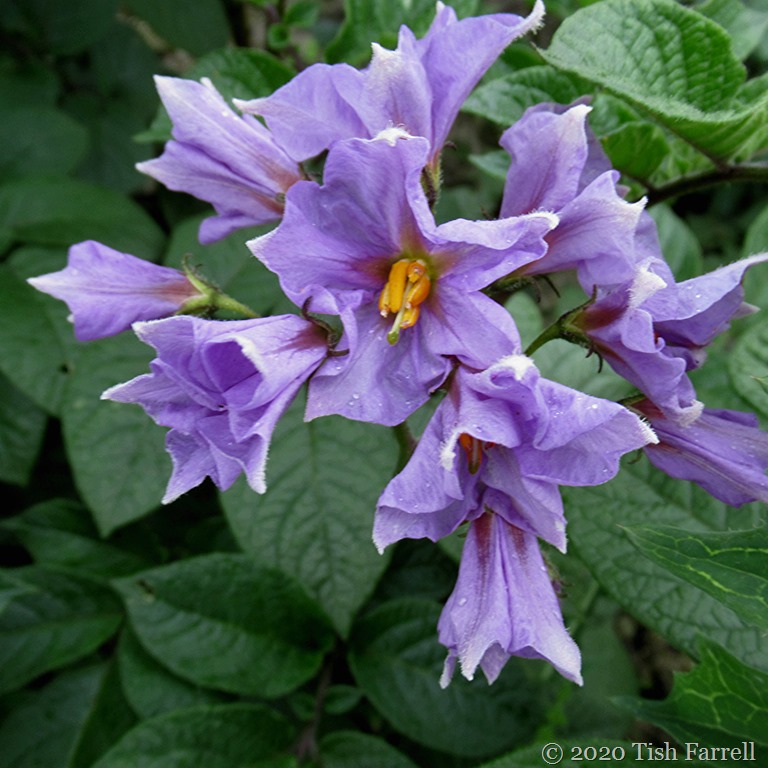
Hands Up! Who Knows What This Flower Is?

IMG_9070

A Novel Perspective?

Well it is rather spectacular, isn’t it – for a potato. The variety is Blue Danube and the spuds when I dig them up will be a deep purply-mauvy colour. I’ve not grown them for a few years, but I seem to remember the skins are quite robust (hopefully resistant to slugs) and that inside, the flesh is very white and dry and so they are great for roasting. Which also makes me think they will be just right for the Greek treatment:  the addition of water, olive oil (3 parts water to 1 part oil), lots of lemon juice, seasoning and oregano to the roasting tin and a good hour’s cooking.

Usually the potatoes are ready to harvest when the flowers have died down. I’m thinking I might not be able to wait that long.

Square Perspectives #28

Allotment News ~ Late June Edition

IMG_8433

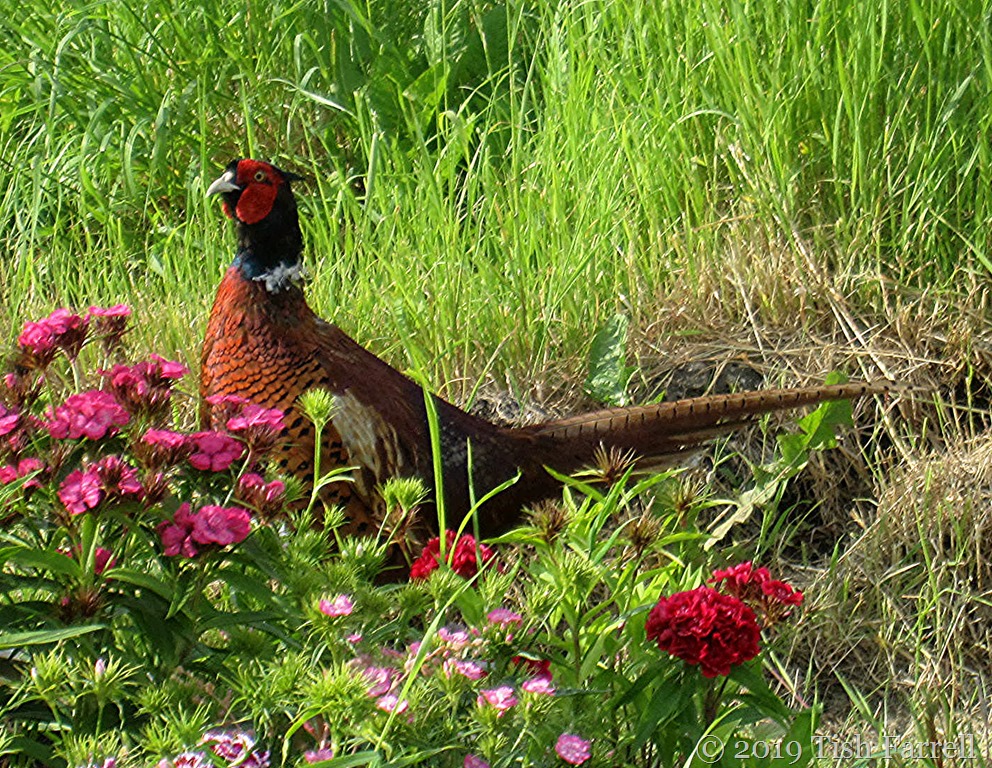
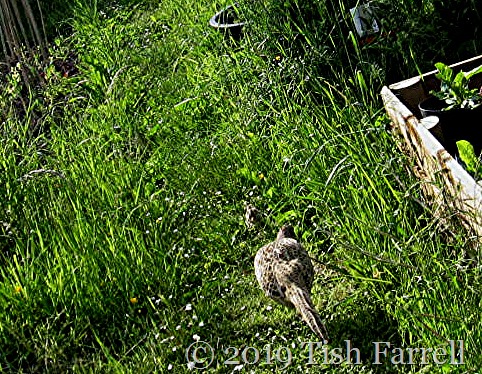
Lately, between showers, I’ve been enjoying the company of birds on my allotment plots. First there’s been the pheasant family – Mr and Mrs and a single puff-ball chick. The adults make soft puck-pucking calls to each other as they wander up and down the weedier areas beyond my borders. I suspect they may also have been nibbling the celeriac seedlings which I’m not so pleased about. More recently I’ve been pursued by robins and hungry blackbirds. They have been most excited by my turning of several compost heaps. One blackbird in particular is adept at filling her beak, five worms at a go, dangling down like a mouth full of ribbons. The robins just nag, moving in at ever closer quarters, and piping up whenever I look like flagging on the heap turning front.

And talking of heap turning, in my last update on plot doings I was feeling a bit despondent over plans to adopt no-dig gardening methods. I realised I would need a phenomenal amount of compost. I think I’m talking tonnes here.  (The main principle of no-dig being that you cover all the growing areas with several inches of compost every autumn so you don’t need to dig in spring and thereby upset the balance of soil micro-organisms which create fertility. It also cuts down on weeding and watering). Anyway, I can now report some success, at least in a small way.

Back in March I was inspired by TV gardener Monty Don to try growing new potatoes in a raised bed. I had one ready, with its autumn compost topcoat well applied, so I thought, why not? In went my twelve Pentland Javelin earlies, set out in a grid formation. I simply popped them into the compost layers, placing them around 40 cms/15 inches apart. I then buried the lot in several inches of compost, and covered the bed with horticultural fleece. Later, once they’d started sprouting, I earthed them up with more compost (which accounts for why I found myself short of the stuff later). A fortnight ago, once flowering was over, I pulled up the first plant to see what was going on. And here’s the result (cue fanfare):

IMG_8450

*

And coming up next is the raised bed where the rest of the plants are still going strong. I used 2 plastic raised beds (2 x 1 metres) bought from a departing neighbour a couple of seasons ago, each a hand’s span tall, and placed one on top of the other to create enough depth to contain the earthing up compost. The end result of this is: no weeds and no need for digging up. When it comes to harvesting I simply pull up the plants and have a quick scrabble around in the compost like a lucky dip. Also, I’d fully expected slug damage after all the wet weather, but so far there’s none to be seen. In fact these are the best first early spuds I’ve ever grown – in looks, taste, ease of extraction and quantity per plant. And, I repeat: no weeds!

Once the spuds are lifted, I’m planning to use the empty bed for winter sprouting broccoli and kale.IMG_8449

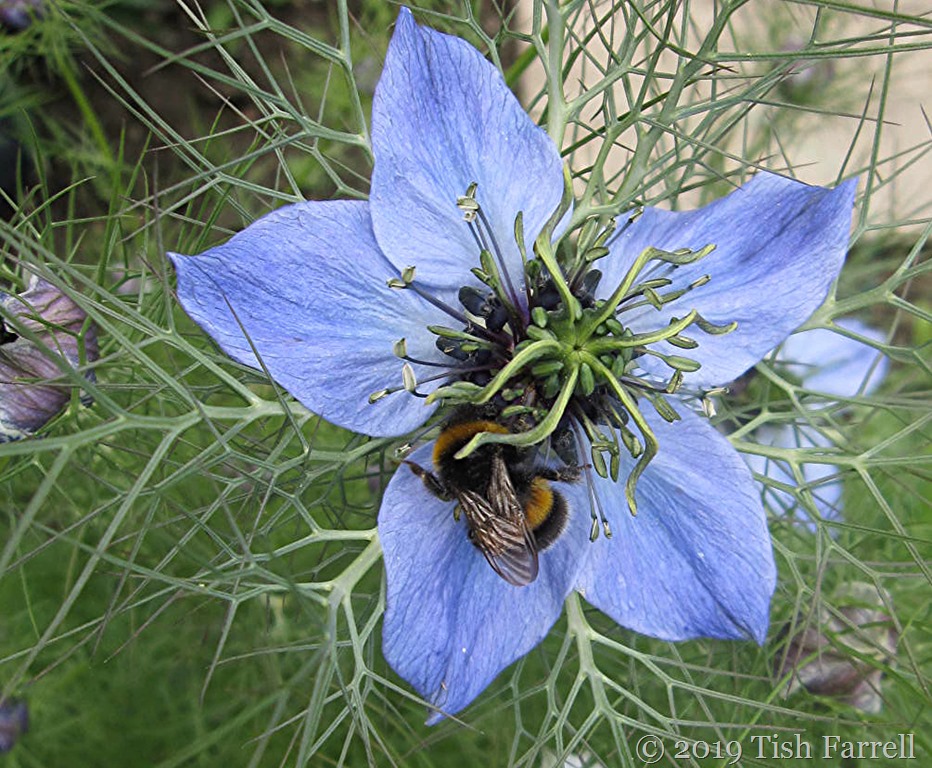
And so, with all this vegetable encouragement, and a break in the rainy season, it’s back to the compost bins and bays and my demanding avian companions. More waste gathering and turning are definitely required. I’m thinking now that no-dig can work, even on my claggy Silurian soil – albeit one raised bed at time and with mega quantities of compost. In the meantime, here’s Mrs Pheasant, a view of a scarcely visible chick, and a bee in the nigella:

IMG_8429

IMG_8430

IMG_8414

Love and voyeurism among the thistles, and then some freshly dug potatoes

100_6369

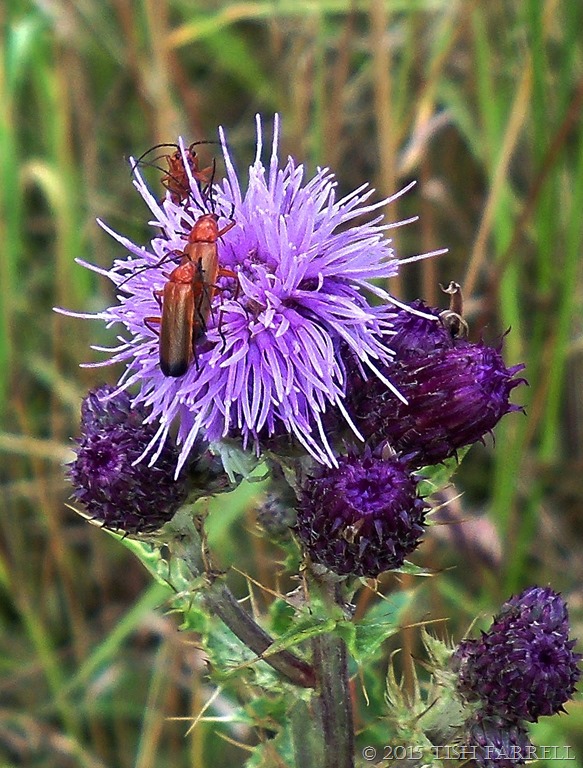
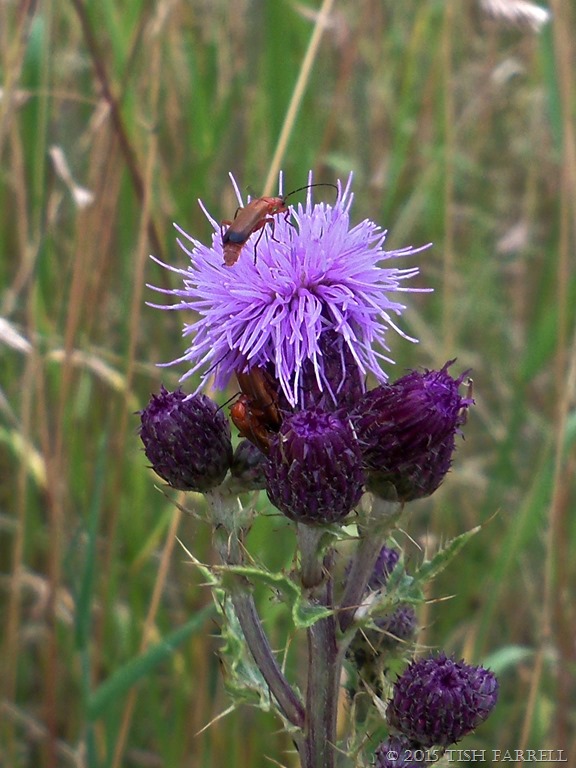
This snapping of bugs is all Ark’s fault at A Tale Unfolds. For some time now he’s been showing us insect life in his South African garden. Then on Friday he set me a challenge to beat his dandelion with four bugs. So here I give you a ménage à trois with some longhorn beetles, caught on my way to the allotment, and as I was actually trying to capture some bee shots. I reckon it trumps Ark’s dandelion, and indeed his jackal flies, on grounds of raciness.

100_6373

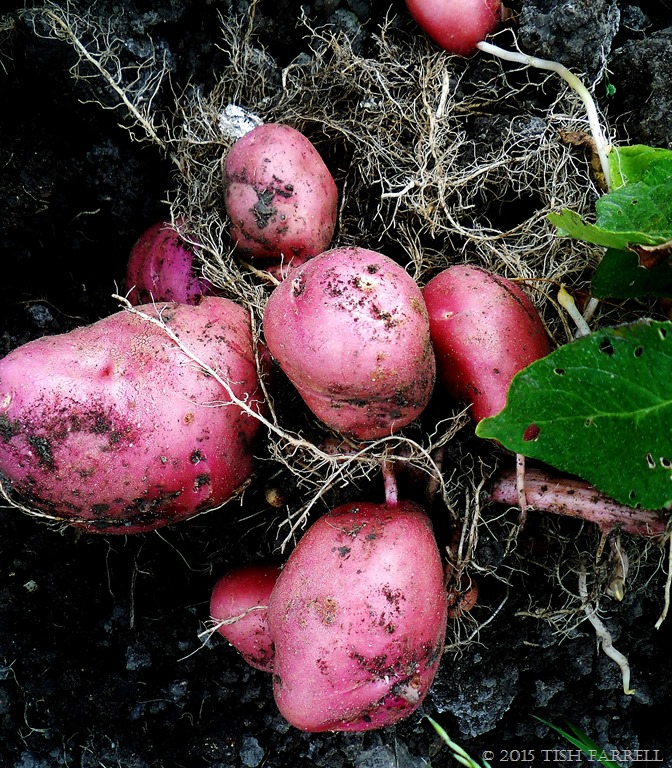
But now here is the close up shot I really wanted to show you, and the reason why I was headed  for the allotment: my first main crop potatoes just released from the earth. These are Desirée, organically grown and most desirable, not only for looks and flavour, but for general resistance to drought, bugs and slugs:

100_6378

Close Up