Yellowing Africa Memories And Shades Of Dark Safaris

PICT9928

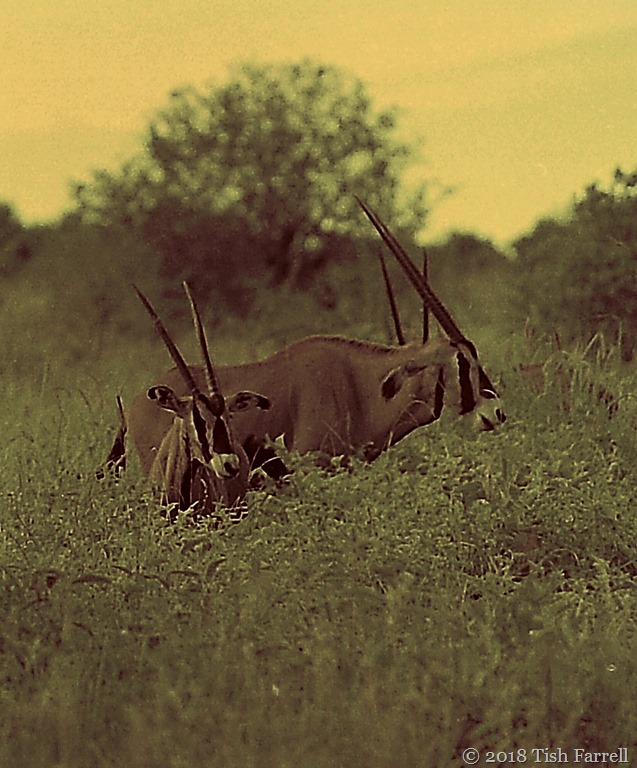
There are the experiences we had, and the ones we think we had: so many versions of the ‘truth’. And much like conscious memory, the Kodak negative from which this image comes, is much degraded; the colours distorted. I’ve had to do some de-saturating to reduce the negative’s livid cast. Not very successful, but the result, I think, is all my own  ‘Out-of-Africa-nostalgia’ effect.

Naturally my writer-self loves the romance of this and related yarns of the old safari era. And yet these are not the real story. They never were. That’s one of the problems with nostalgia, particularly the Anglo-African variety. It’s usually a longing for something that never was. It was the kind of longing that brought British settlers of the gentry class out to East Africa in the first place. Anything would grow there, they said. Fortunes would be made. And until the predicted riches rolled in – from ostrich feather farming, flax, wheat, coffee and tea –  the hunting potential for the sporting man (and sometimes woman) was limitless – herds of wild game from sky to sky, and a country full of cheap household servants and farm labourers. And all so handily available just when home supplies of both (animal and human) were on the wane.

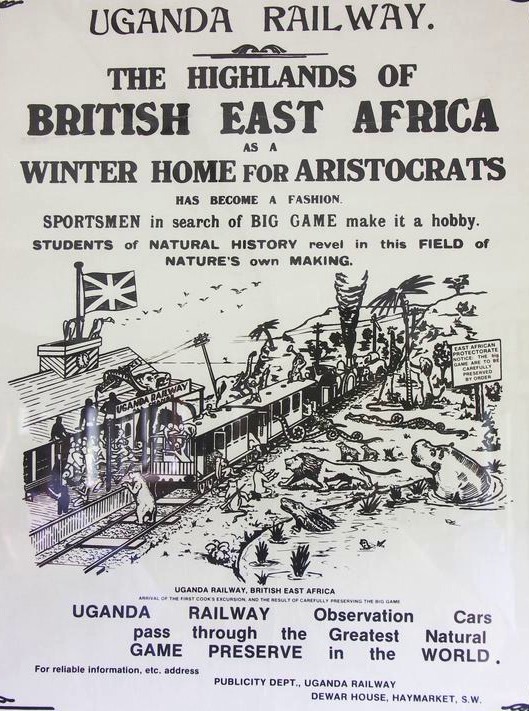
Here’s a poster of the time, pre-1920, summing things up. The similarity to a Punch Magazine cartoon was apparently deliberate.
Uganda Railway and aristratic game resort

As railway advertisements go, this one truly takes the biscuit, and on so many fronts. Please note the very small print towards the bottom: ‘Arrival of the first Cook’s excursion and the result of carefully preserving the big game’. Also I’m not sure what the bipedal beast behind the train is meant to be. It looks like a bear to me. Perhaps he came with the aristocrats, captured on one of their North American shooting expeditions – also popular at the time.

So: elite settlerdom in East Africa seemed a fine idea. And as long as the European lower classes were kept out, the incomer Indian labourers and traders kept in their place (these mostly the survivors of the 18,000 ‘coolies’ imported  from India in 1896 to build the Mombasa-Uganda Railway), and the local Africans did the field work for minimal pay while their own traditional hunting practices were outlawed, then, by Jove and St. George, it would be paradise on earth. The British East Africa Protectorate (Kenya Colony after 1920) was, and forever would be, a dedicated White Man’s Country. A lordly sporting estate writ large. The happy hunting ground of new white landowners who believed that only they, gentlemen (and under certain circumstances, gentlewomen) had the god-given right to hunt. All the game was theirs.
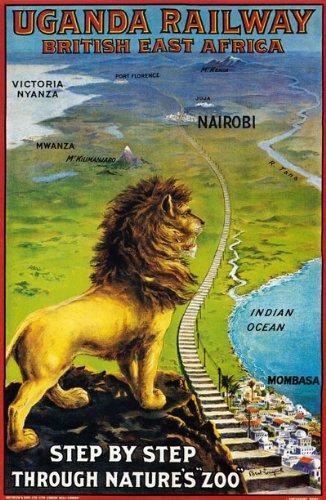
Uganda railway poster

But hang on a minute. In this safari story the real protagonists are invisible, or overlooked, deliberately excluded; these, the many African hunters and expert trackers who facilitated the pursuits of their white overlords on the imperial safaris of the early 20th century; they who risked arrest for the crime of poaching if they dared to hunt for their own pot as their people had done for countless generations before the British invaded.

It is not for nothing that the settlers referred to their African workers as boys, reducing them to beings of little or no account. From such aristocratic notions of superiority and entitlement – a mind-set that persisted among many until Independence in 1963 – does the modern state of Kenya derive. In some ways little has changed. Ever since Uhuru, the post-colonial rulers (and with a similar sense of dynastic entitlement) have been intent on commandeering all resources for themselves, and ignoring the needs of those they rule.

*

But back to the aging photo of magnificent beisa oryx. It  was taken nearly 20 years ago. The Farrells were, in the manner of Kenya’s  well-honed, post-colonial tourism model,  ‘on safari’; flown in a twenty-seater plane – out of Nairobi and into Lewa, winging left at Mount Kenya.  Touching down on the airstrip cut from bush you could spot elephant and the strangely foreshortened view of Mount Kenya’s summit.
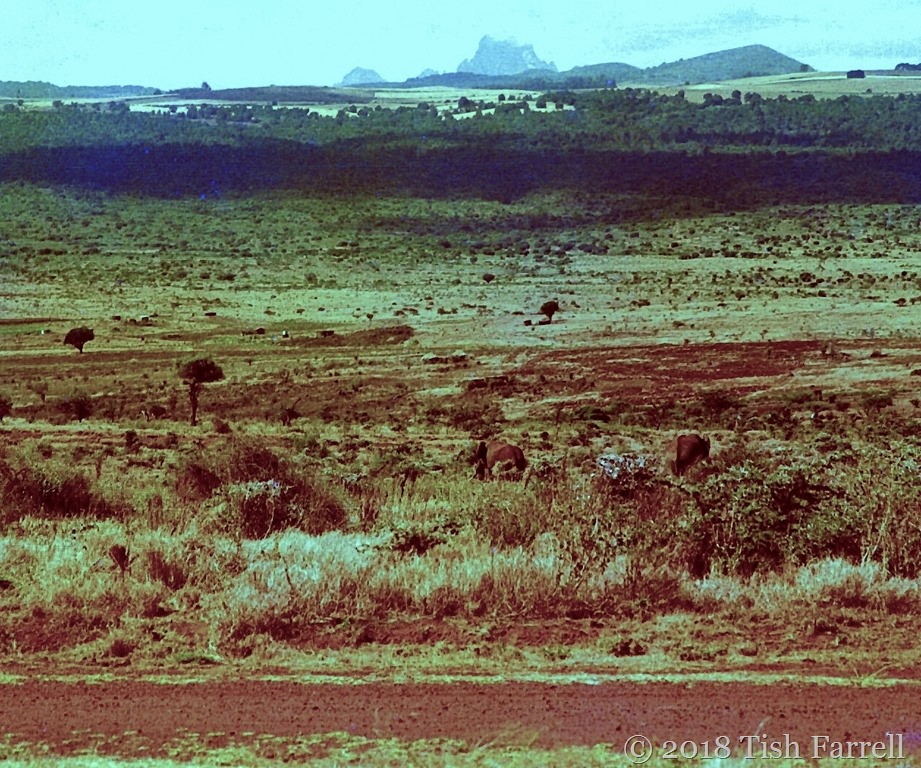
Scan-130608-0028 - Copy

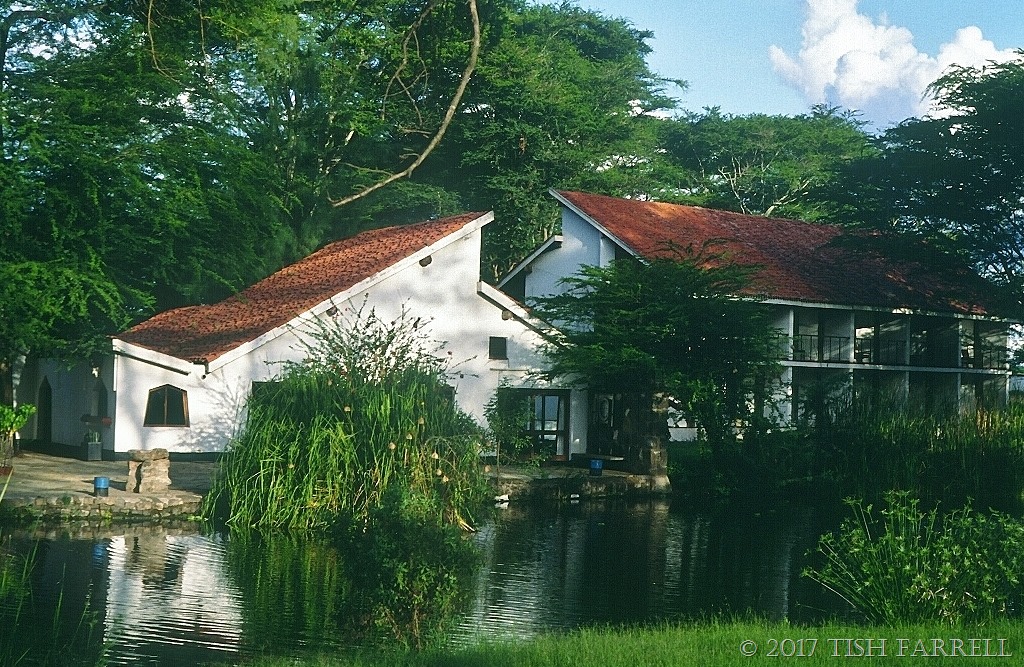
Our destination was a small tented camp in Laikipia, northern Kenya, a three night sojourn out in the wilds. I should say at once that when we stayed at the Lewa Downs safari camp it had not accrued the expensive, life-style look it has now, nor the uber-nouveau-colonial glamour of Lewa House and its secluded guest cottages. (Prince William apparently proposed to Kate Middleton while staying there as a family guest). In our day we had a big green tent, one of a dozen. There was a small shower room and WC attached, and the whole lot camouflaged by a thatched canopy. When the flaps were back we could lie in our bunks and gaze at miles and miles of Africa  and inhale the sweet aromatic scent of thorn brush. The accommodation was simple and functional although we naturally thought a tent with its own clean, running water and a flush loo was a great luxury. But then as many travellers in Africa before us, and in pursuit of our own pleasure, we chose to ignore any moral issue associated with this provision. The camp was otherwise low-key, mostly set up to attract birding photographers, and one of several similar small camps run by the East African Ornithological Society.
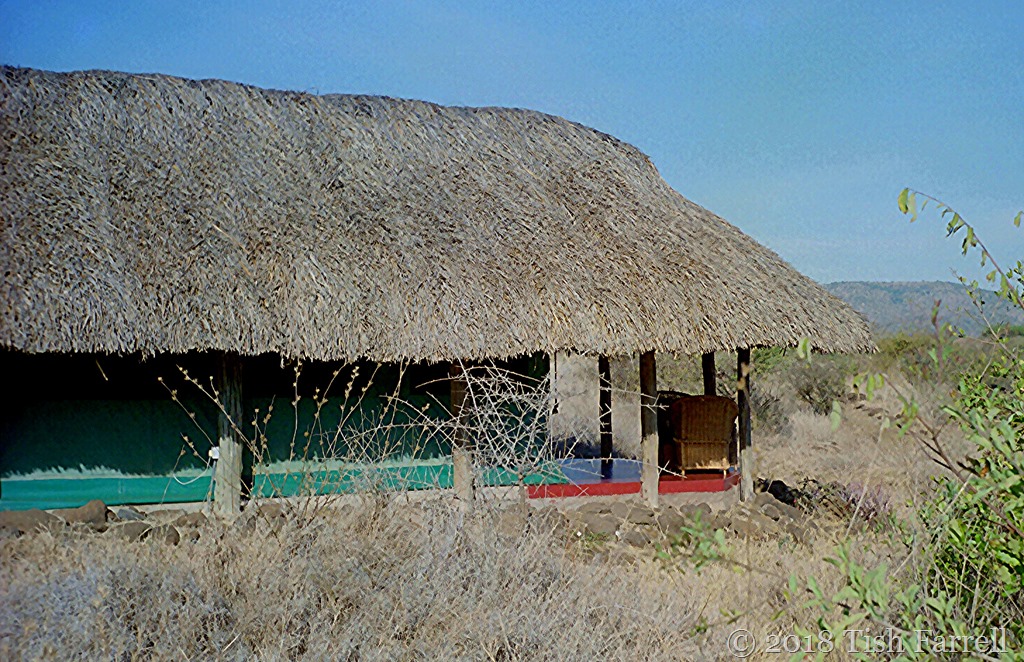
Scan-140809-0028

*

The camp we stayed in occupied a small corner of the Lewa Downs estate, once a colonial cattle ranch staked out from former Maasai grazing territory in 1922 under the British government’s post-war Soldier Settlement Scheme. The colonial administration’s plan at that time was to double the colony’s European population. Meanwhile the Africans’ side of the story was as follows. All Kenya’s indigenous peoples had to live on their allotted tribal reserves unless they were working for Europeans. They could not acquire land outside the reserves. All men over the age of sixteen had to wear the kipande pass book containing their work record. All Africans paid poll and hut taxes, which had just then been increased to recoup costs from the European war effort. Taxation also had the aim of impelling Africans into the labour market. Africans who had served in the Great War were not eligible for the new settlement land (10,000 soldiers, 195,000 porters of whom 50,000 had perished).

For Europeans, however, that it is to say for ‘men of the officer class’, there was on offer by lottery or at cheap rates, large blocks of land in the fertile Central Highlands and the Laikipia Plateau below Mount Kenya. Officials apparently believed that such men, newly returned to civilian life and most with little or no practical farming experience, would in an untried African environment,  produce export quantities of cash crops. This trade in turn would fund the upkeep of 600 miles of now largely purposeless, but very expensive Mombasa-Uganda railway that the colonial administration had built between 1896 and 1901. (Also known as the Lunatic Line).

The railway’s original purpose was to provide access to land-locked Uganda, then believed to be the future source of vast natural resources. There were strategic reasons too. In the last decades of the 19th century, during the big European land grab of Africa, relations with Germany had become increasingly scratchy, and especially over possession of Uganda. British paranoia raised the spectre of the Germans sabotaging the source of the Nile at Jinja in Uganda, thereby scuppering Britain’s major shipping lanes in the faraway Suez Canal which relied on Nile water. Once thought of, only a railway would serve to bring troops swiftly to the scene to defend the vulnerable head waters.
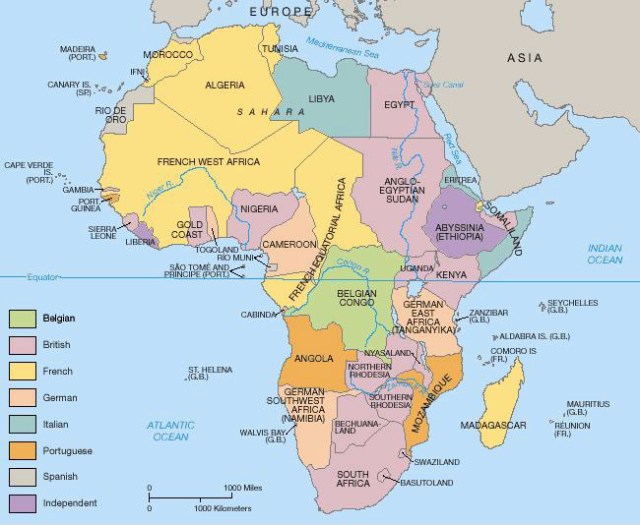
Africa 1914 (St. Francis High School website)

*

Twenty years later, these functions unrealised or redundant, only large-scale European settlement would make the best of a bad job. Along with this ‘House that Jack Built’ mode of thinking was the idea that veteran officers, used to handling men, would be well fixed to manage and ‘civilise’ (i.e. instil discipline in) African labourers, this despite knowing nothing of their employees’ traditions or way of life or their language. Also if things went wrong at some future time, an uprising for instance, the officer chaps would usefully know how to handle a gun and not be afraid to use it.

As I’m writing this, I’m thinking that it sounds like a very bad joke with a dollop of Wodehouse daftness thrown in. But this is how the British Empire did things in East Africa. They were not prepared to invest in indigenous Africans, but they were prepared to take a punt on the ‘right sort’ of Europeans of whose farming prowess they knew not one single thing.

*

Roll forward 96 years…

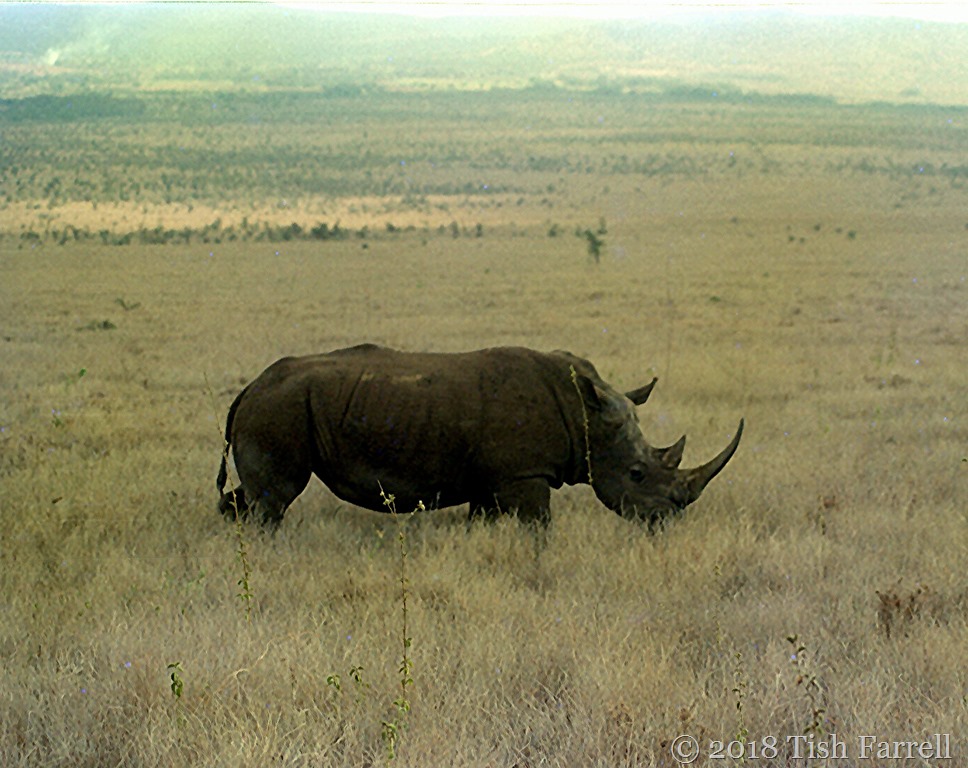
Today Lewa Downs is still owned by descendants of the Craig/Douglas families who began the ranch. But now, and in cooperation with local indigenous communities, and the Kenya government, the owners use their 62,000 acres not for farming, but to protect threatened wildlife. Among their wards are populations of black and white rhinos whose territory is watched over around the clock by vigilant rangers, and whose horns are defended from poachers by armed Kenya Police Reservists.
lewa a

It is an award-winning, avowedly non-profit-making enterprise that has set out to demonstrate that up-scale tourism can serve both wild life conservation and local community development. Other funding comes from donation and sponsorship, and a big proportion of the total income is spent on community projects including clinics, education,  water management schemes, and low-interest loans to kick-start women’s small businesses.

Anyone who stays at Lewa Conservancy can be guaranteed unforgettable experiences – the full-on African wilderness, magnificent game viewing in breath-taking country, the chance to see how some of the tourist dollars are being spent. There are bush breakfasts, night game drives, camel riding, and star bathing. It would seem to be the 21st century eco-socio-sensitive take on the self-serving champagne safaris  of the 1920s and ‘30s when white hunters – John Hunter, Bror Blixen and Denys Finch Hatton et al – ran commercial shooting expeditions for the elite of Europe, India and America.

And while the trophies these days are photos and memories, and not elephants’ feet, tusks and antelope heads, and while the safari guests’ presence may help to fund laudable causes, and not the free-booting life-styles of maverick aristocrats and misfit adventurers, still the packaging of today’s safaridom evokes something of the old elitist romance. If we don’t watch out it clings like a parasitic infection and blinds us to the many ironies.

But have a look for yourself at what the Lewa Conservancy is doing for people and wildlife. The model is not without its critics. Other settler descendants have pointed out that big landowners who stayed on in Kenya after Independence have been increasingly under pressure to start sharing their acres if they were not seen to be doing something very useful with them. The Craigs and their management team seem to have come up with quite a solution. The safari story continues…

copyright 2018 Tish Farrell
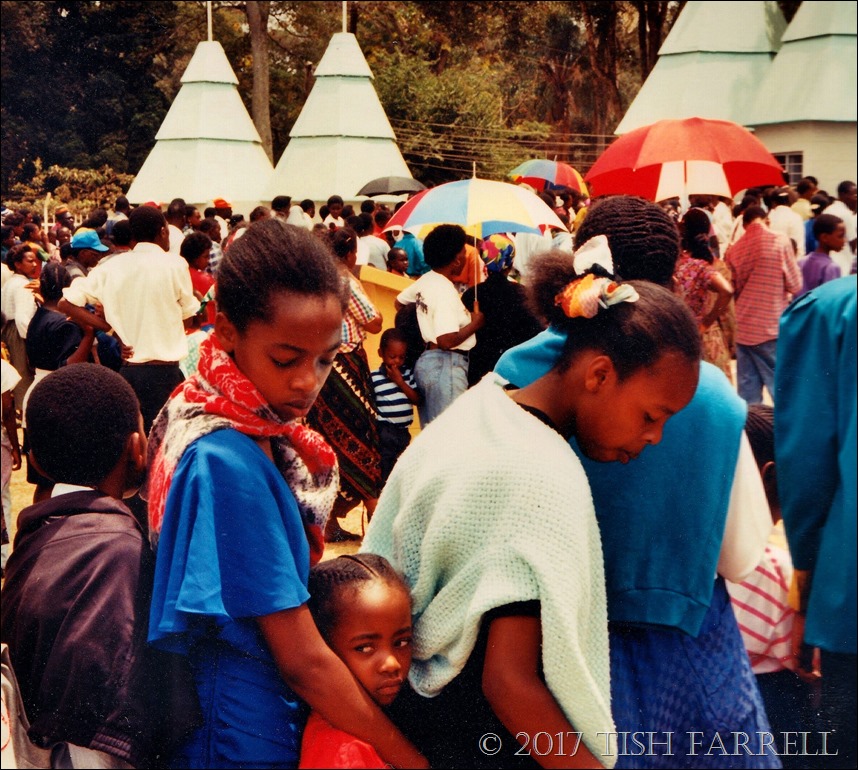


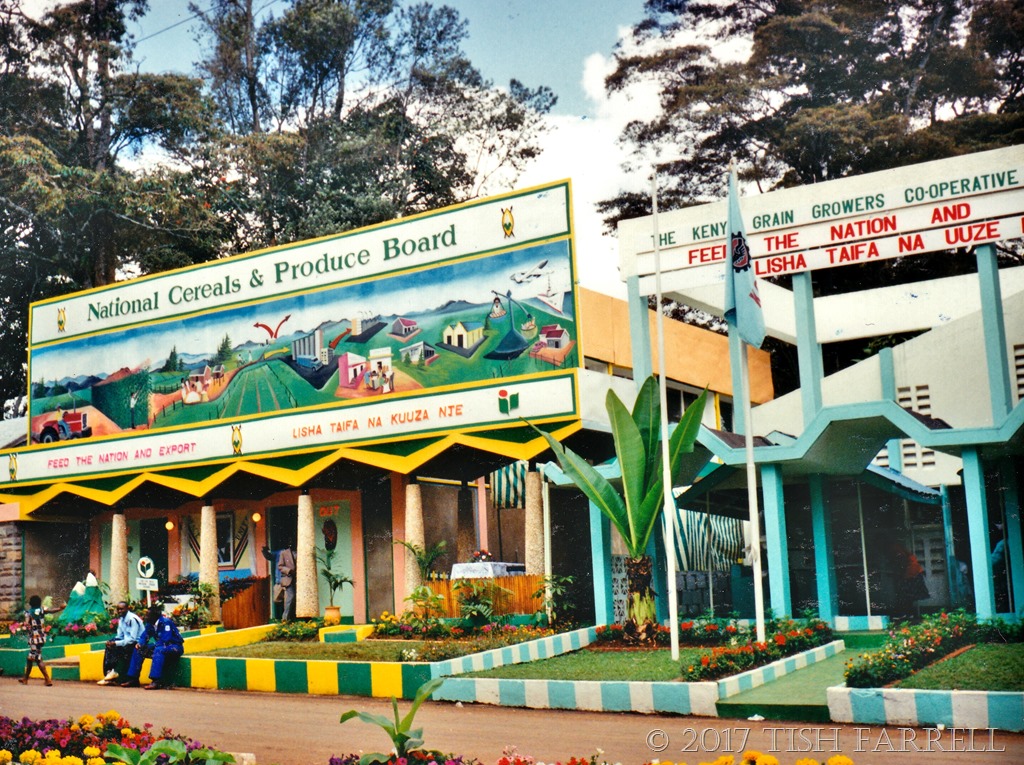
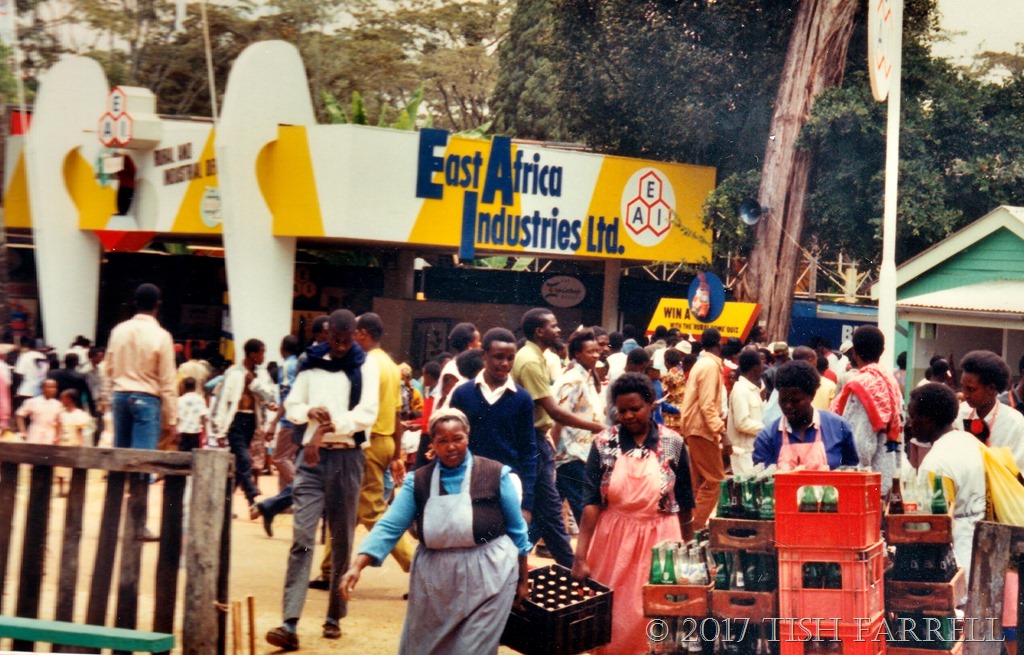
The 1995 Nairobi Agriculture Show ~ Waiting For Admission

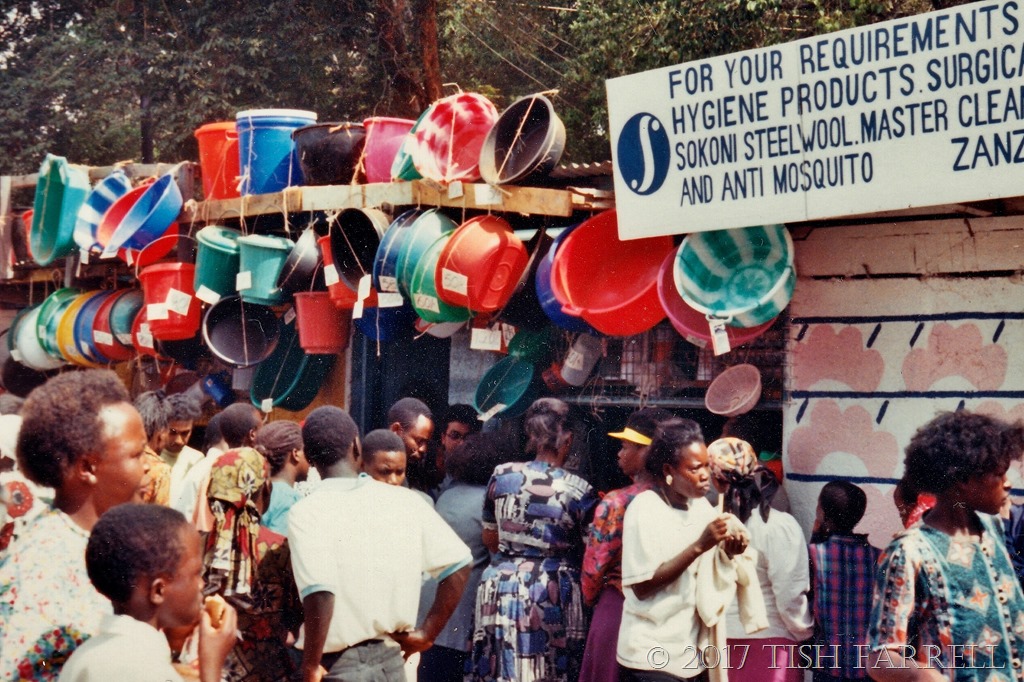
One of the truly useful institutions we Brits left behind in the African countries we invaded is the Annual Agricultural Show. We went to both Kenyan and Zambian versions, and found them hugely popular events, still held on their original dedicated show grounds. Nor are they simply about entertainment, shopping and crop and stock competitions, although there is plenty of all of these to be had. I remember one Kenyan smallholder being quoted in the national press. He had travelled many miles to attend the Nairobi show, and at some expense. ‘But,’ he said, ‘this show is my university. This is where I come to learn how to improve my farming skills.’

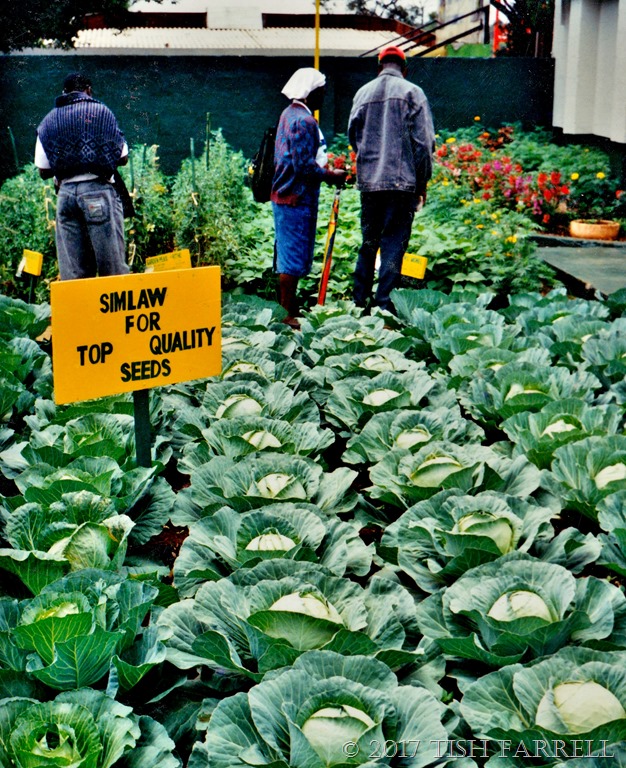
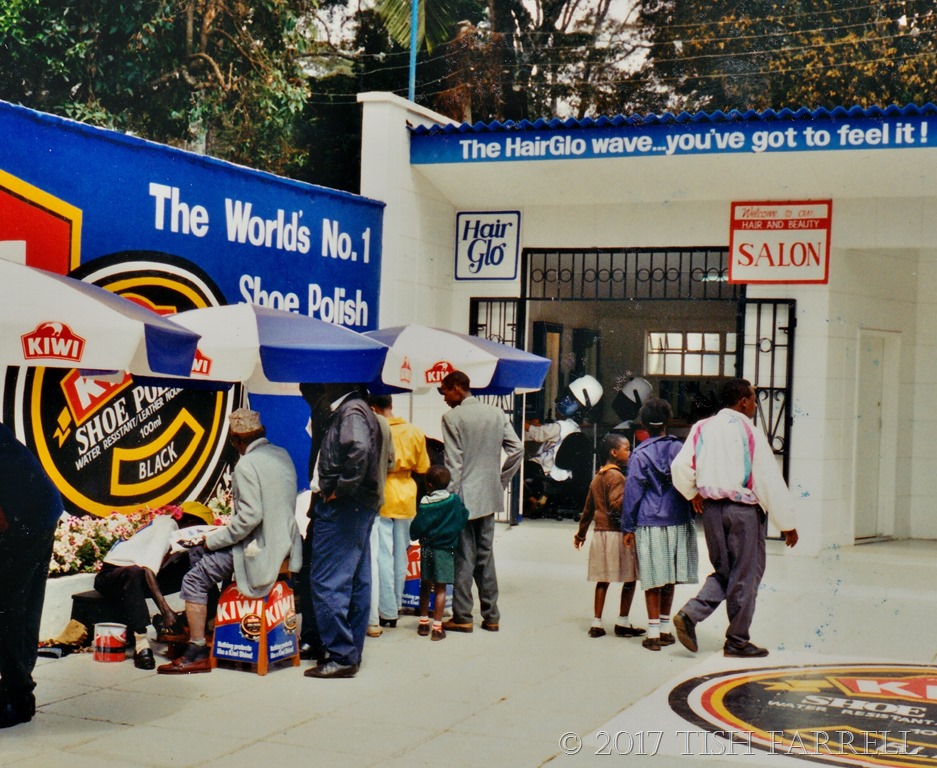
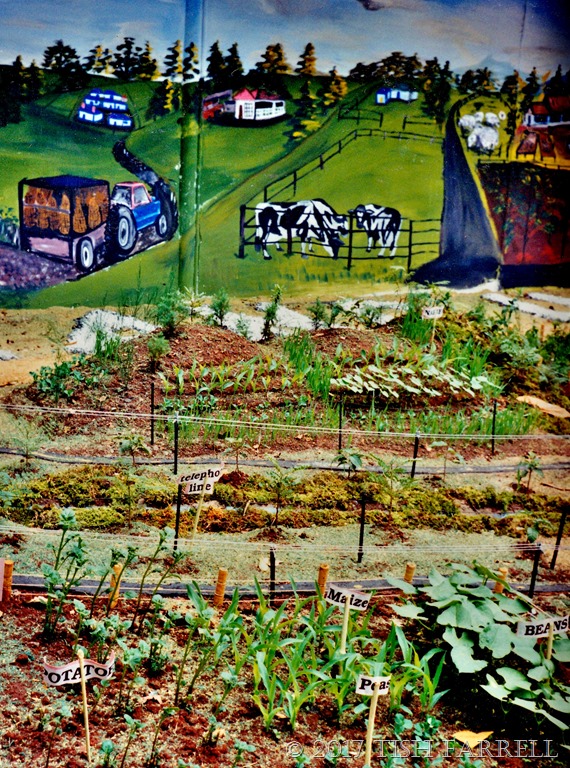
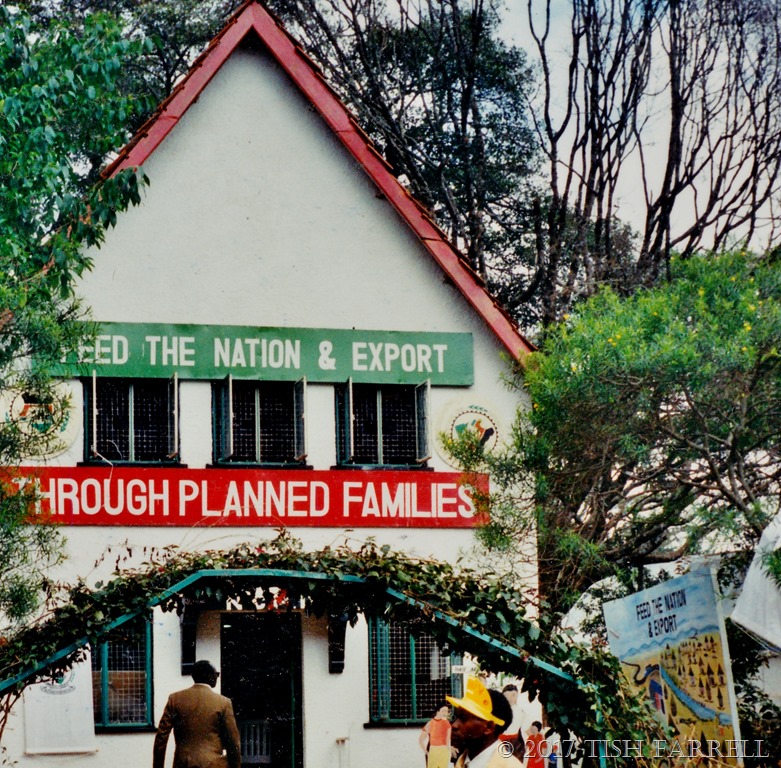
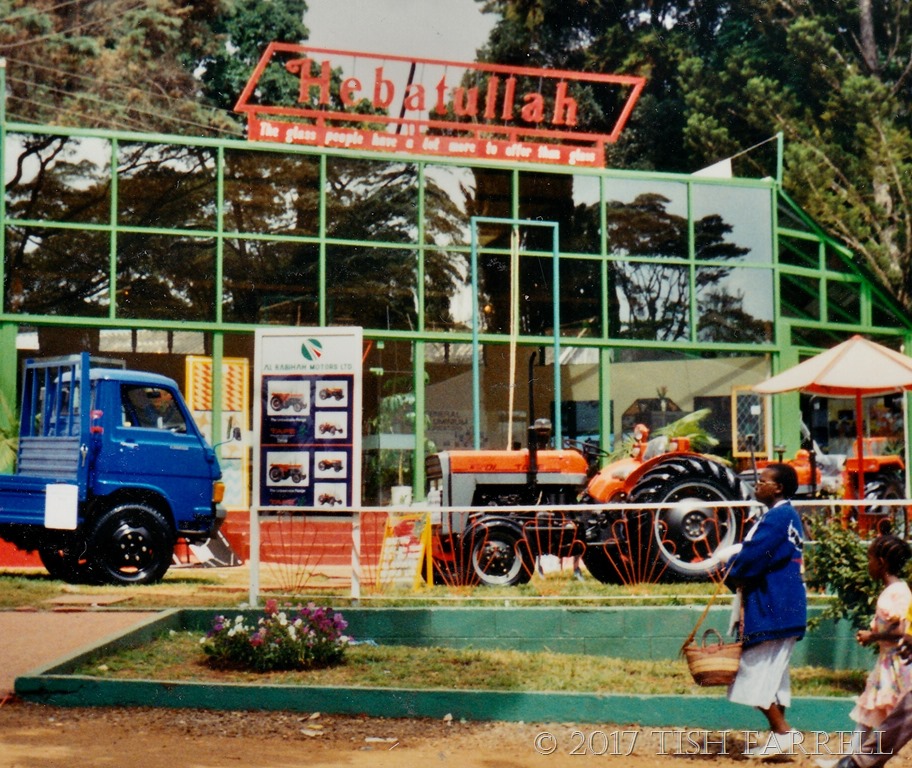
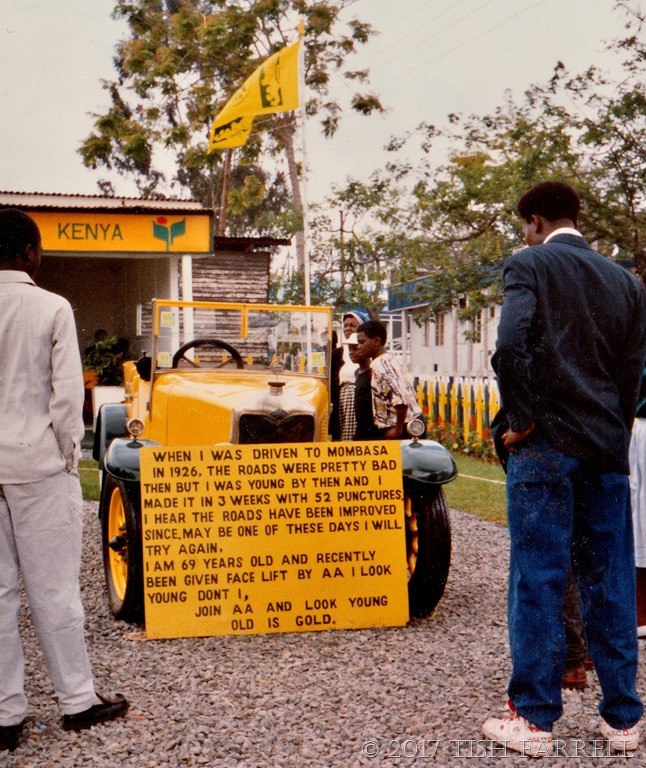
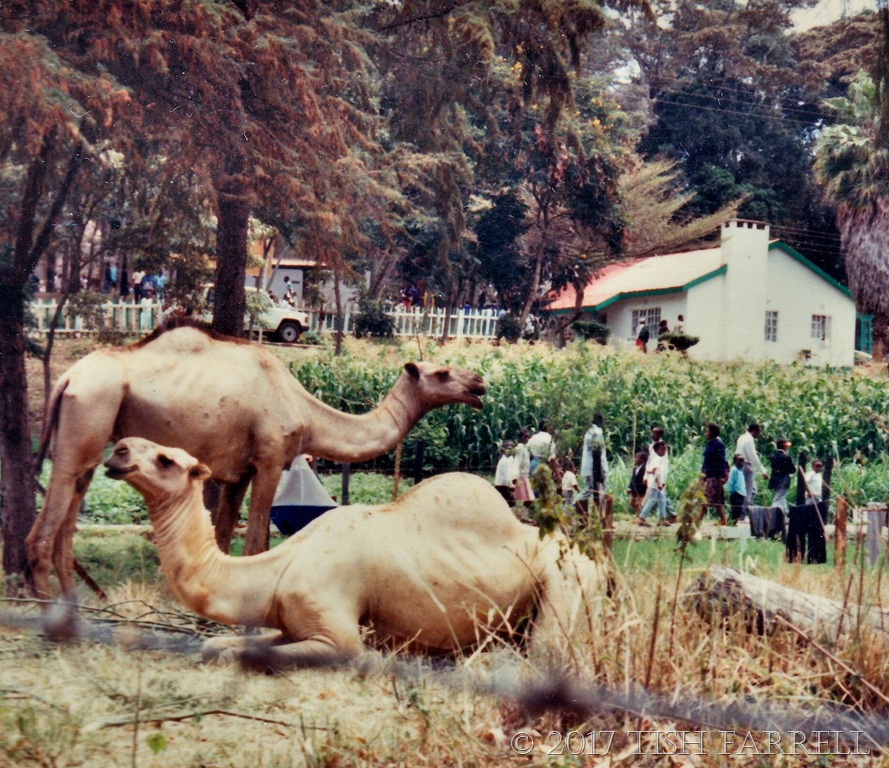
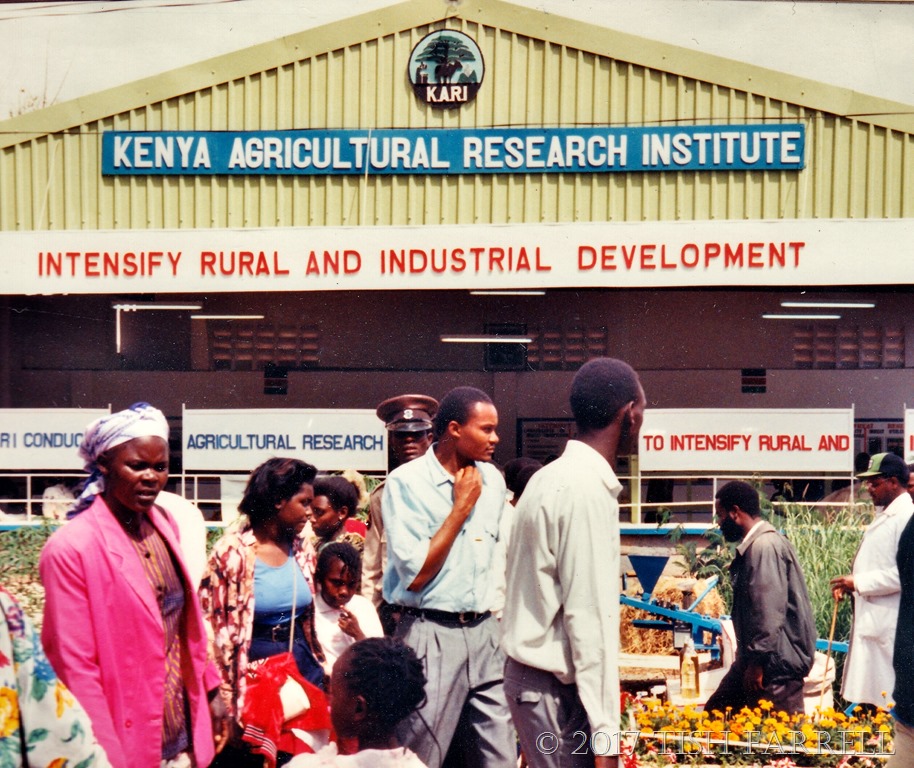
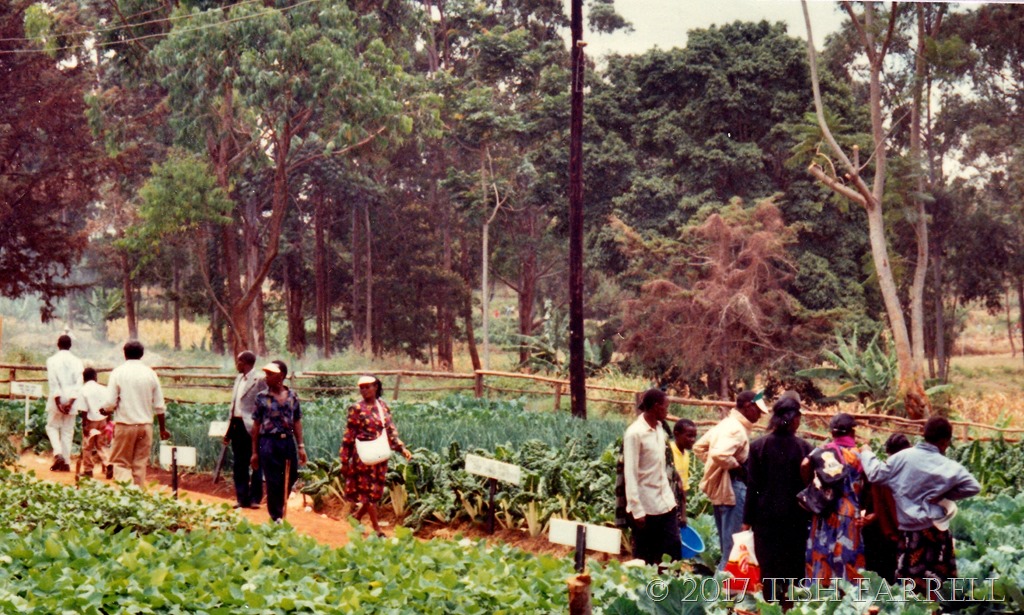
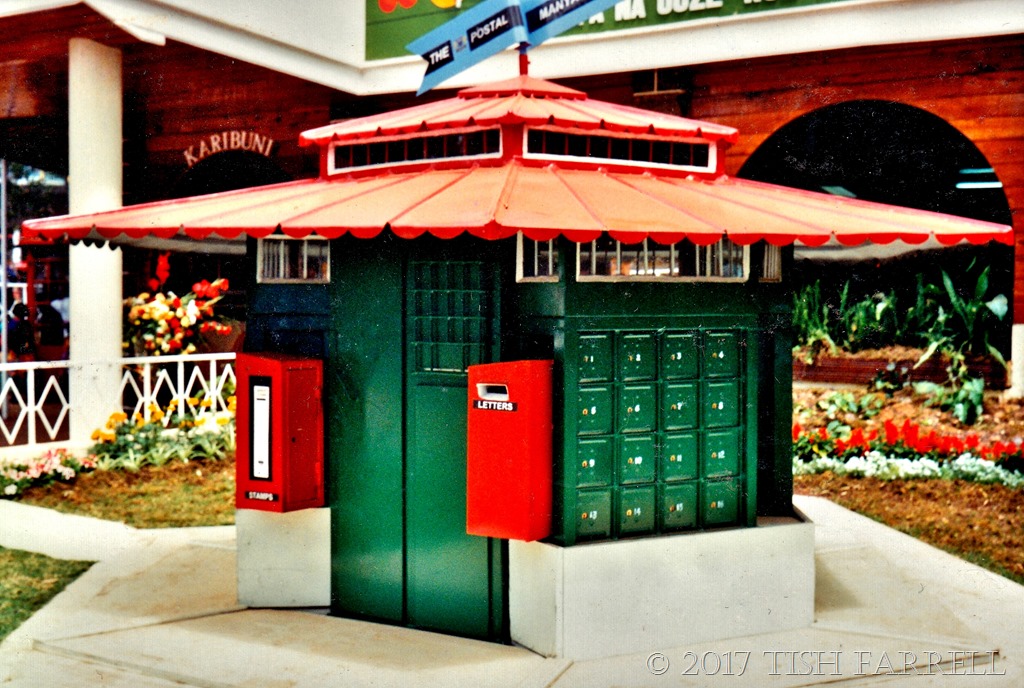
And as we wandered round we certainly found plenty of advice to hand, much of it rendered in model farm lay-outs. There was also that year’s exhortatory slogan to spur all  to action: “Feed The Nation And Export”. And there were promotional exhibits for small-scale battery chicken rearing, camel raising, the Post Office and family planning. Even the National Archives had a small pavilion in which they were showing 1950s film footage from the Land Freedom uprising aka Mau Mau. The Young Farmers were showing off their crop  growing and the Kenya Agricultural Research Institute (the place where Graham had his office) also had a big stand with plenty of experts to provide farmer guidance.

Welcome to Nairobi’s 1995 Agricultural Show:

Agri show 1995

Agri show 1995 b

Agri show 1995 c_0001

Agri show 1995 c_0006

Agri show 1995 c_0008

Agri show 1995 c_0009

Agri show 1995 c_0003

Agri show 1995 c_0013

Agri show 1995 c_0013 - Copy

Agri show 1995 c_0015

Agri show 1995 c_0015 - Copy (2)

Agri show 1995 c_0016 - Copy

Agri show 1995 c_0011

Agri show 1995 c_0010

Daily Post: waiting

This slideshow requires JavaScript.

A Forgotten Photo Found ~ Tsavo West

This wasn’t supposed to happen. I was on a mission to declutter the house, which led me inevitably to the old seaman’s chest – that personal cess pit of file dumps; the place where all the research notes, photocopies, story drafts that won’t fit in the three office filing cabinets end up. In truth, this excess stuff weighs heavily on my psyche – my mental albatross.

Many times I have lifted out the boxes of Kenyan newspaper cuttings with a view to swift despatch. They date from 1992 to 2000, and are sorted into topics such as ‘forced marriage’, ‘female genital mutilation’, ‘street children’, ‘colonial residue’, ‘wildlife conservation’. There are articles on politics, land grabbing, the Kakamega gold rush, Maasai customs, Akamba myths, shape-shifting and witch finding. The period covered is one of great political change in Kenya – the World Bank impositions of structural adjustment and international pressure on the single party Moi regime to adopt multi-party politics Western-style. And there’s the catch. I can tell myself this cuttings file is of some historical importance. Is this not reason enough to keep it?

And the other reason? Well, it’s my source material, isn’t it? All the stories I have yet to write or finish off. How can I possibly throw out all this valuable stuff?

But still there’s the secret doubt. Quite a big niggle actually. Haven’t I hung on to it all because I doubt my own capacity to remember, and if I don’t remember, isn’t it too late to go back and mine this doggedly accumulated reference collection. Might I not function better without it? Liberate myself from the psychic albatross?

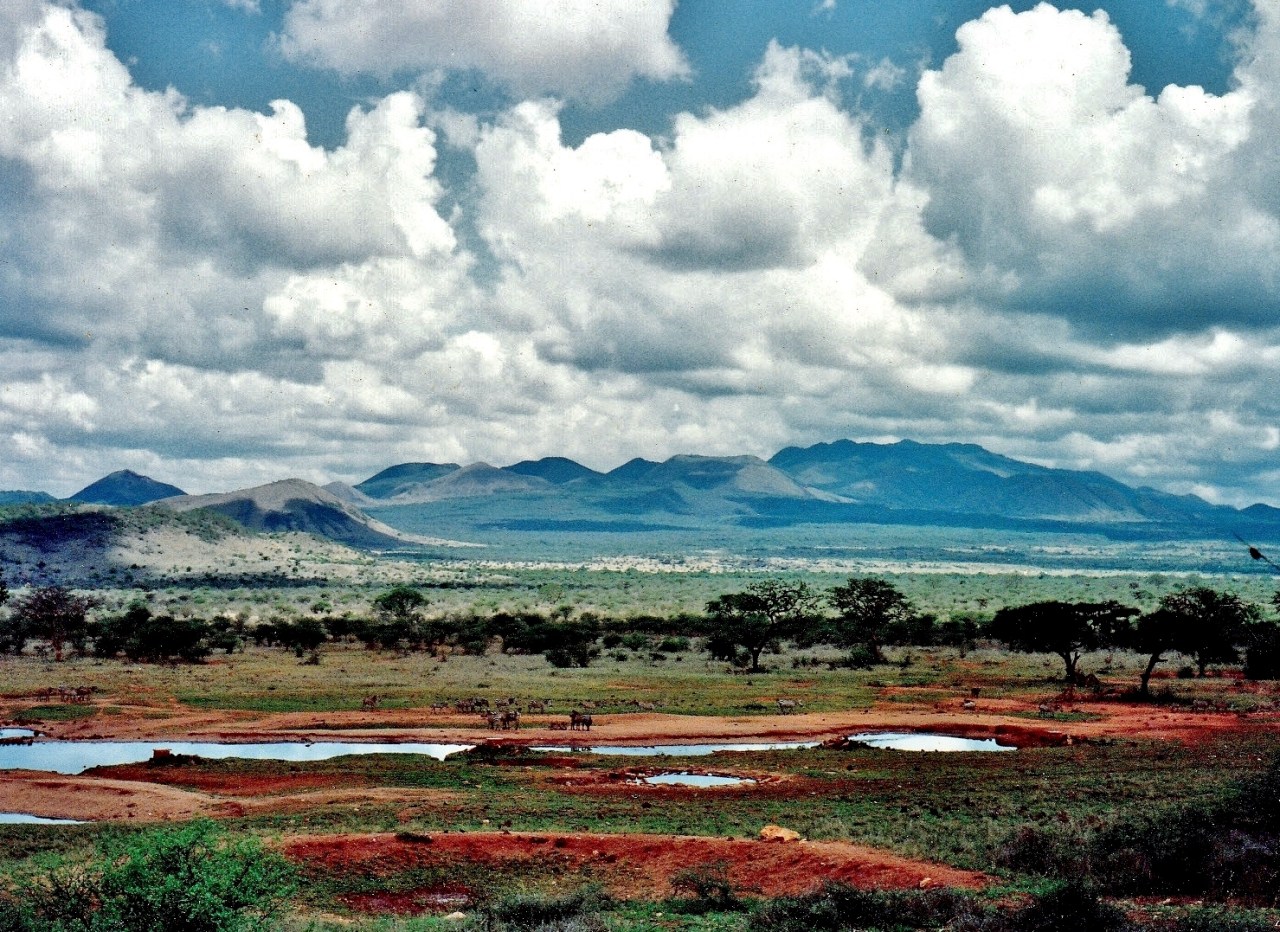
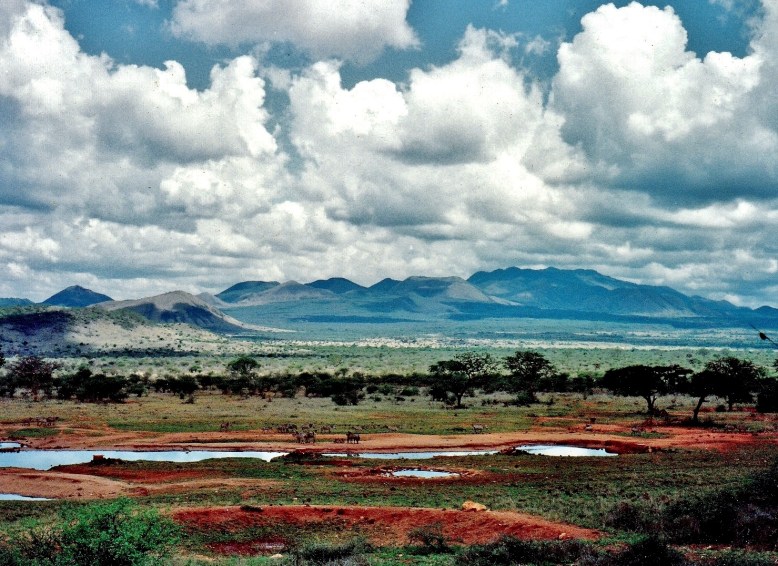
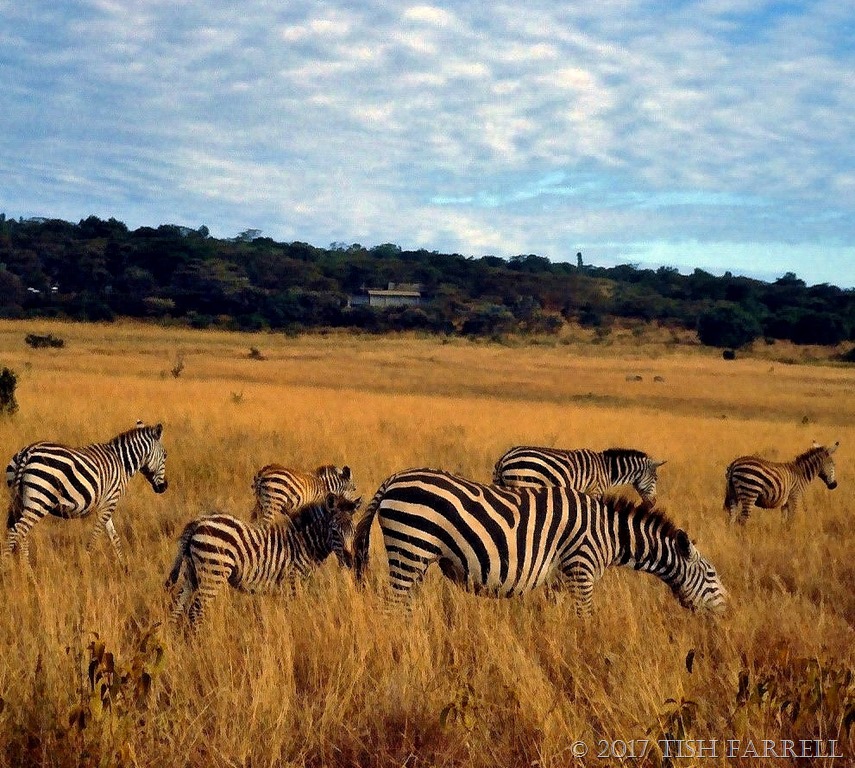
And so it was – in the midst of this endlessly circular argument, stacks of yellowing papers all over the floor that I opened a box and found this photograph. I don’t know how it missed being put in the album. It must have been taken in the mid-90s on a day’s safari to Tsavo West National Park. And now I see it, I remember taking the photograph. The waterholes are at the safari lodge, the red soil caught in the full flush of midday sunlight. You can just make out a herd of zebra. And in the background are the Chyulu Hills, still deemed volcanically active after a million and half years of eruptions.

However you look at it, this is a breathtaking vista – elemental Kenya. Priceless then?

The argument goes on. What is priceless, what is not. Doubtless the files will go back in the chest for another day of writerly self abuse. I’m glad I found the photo though.

copyright 2017 Tish Farrell
 

Daily Prompt: Priceless

Photos From The Old Africa Album

races_0001

After I had posted the Kenya diary excerpt yesterday (see previous post), I found I could do passable scans from one of our old albums. So here are the photos of ‘A Day At The Nairobi Races’  – two 6WordSaturday titles for one then.

races_0004 - Copy

Members of the Police Anti-Stock Theft Unit from Kenya’s Northern District – completing the race that never was.

*

races - Copy

The real racing begins which reminds of an even more historical account of the Nairobi races.

In 1931 Evelyn Waugh arrived in Kenya during Race Week which was by then a colonial institution. I gather it took place between Christmas and New Year when the smart-set settlers left their upcountry farms and headed for town. Every night was party night at the Muthaiga Club. Here are some excerpts from Waugh’s day out at the races from Remote People:

I found myself involved in a luncheon party. We went on together to the Races. Someone gave me a cardboard disc to wear in my button-hole; someone else, called Raymond, introduced me to a bookie and told me which horses to back. None of them won…

Someone took me to a marquee where we drank champagne. When I wanted to pay for a round the barman gave me a little piece of paper to sign and a cigar.

We went back to Muthaiga and drank champagne out of a silver cup which someone had won.

Someone said, ‘You mustn’t think Kenya is always like this.’

And some sixty years on to 1994 when these photos were taken…

races

races_0002 - Copy

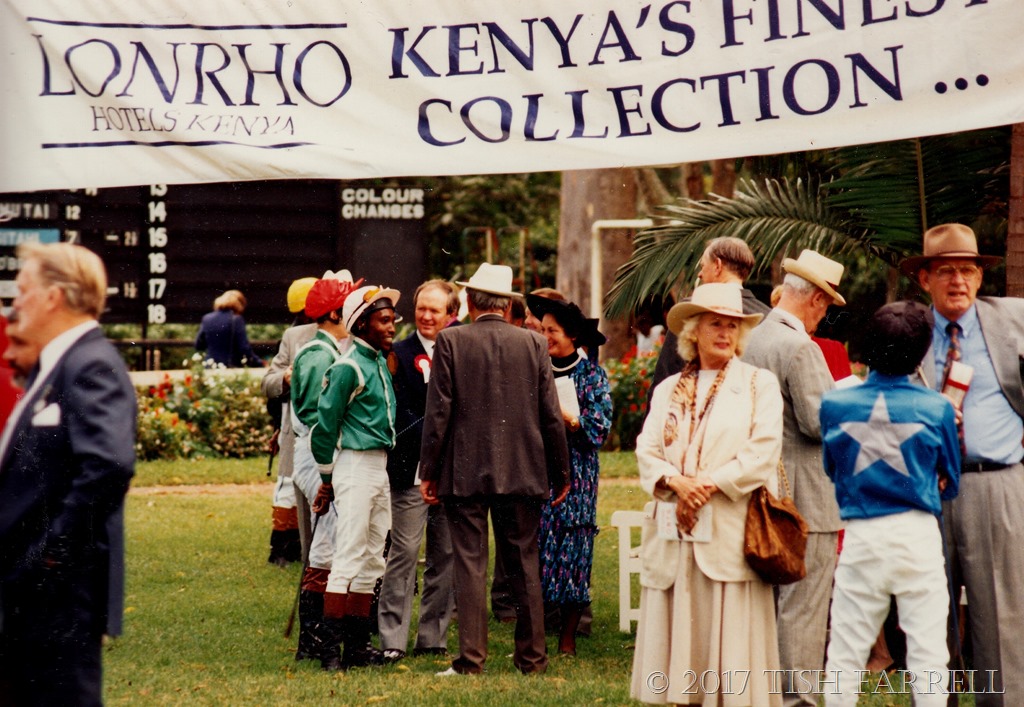
The Steward’s Enclosure. The colours of the day were red and white, and the lady in the red and white hat won ‘best outfit’.

races_0004 - Copy (2)

The Chief Steward

*

races_0002

*

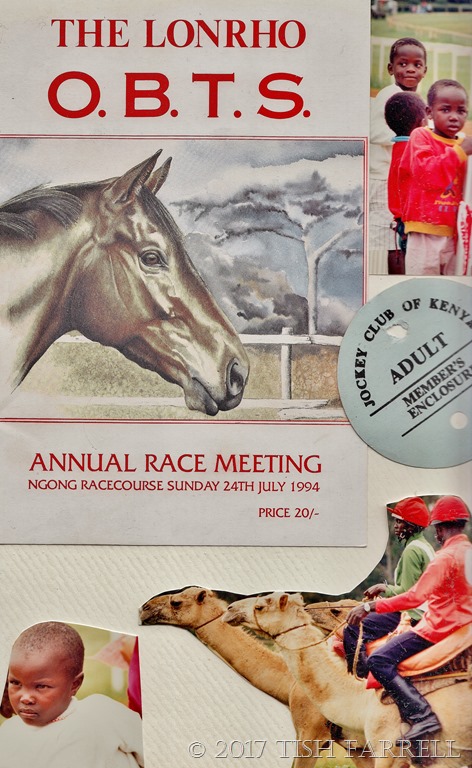
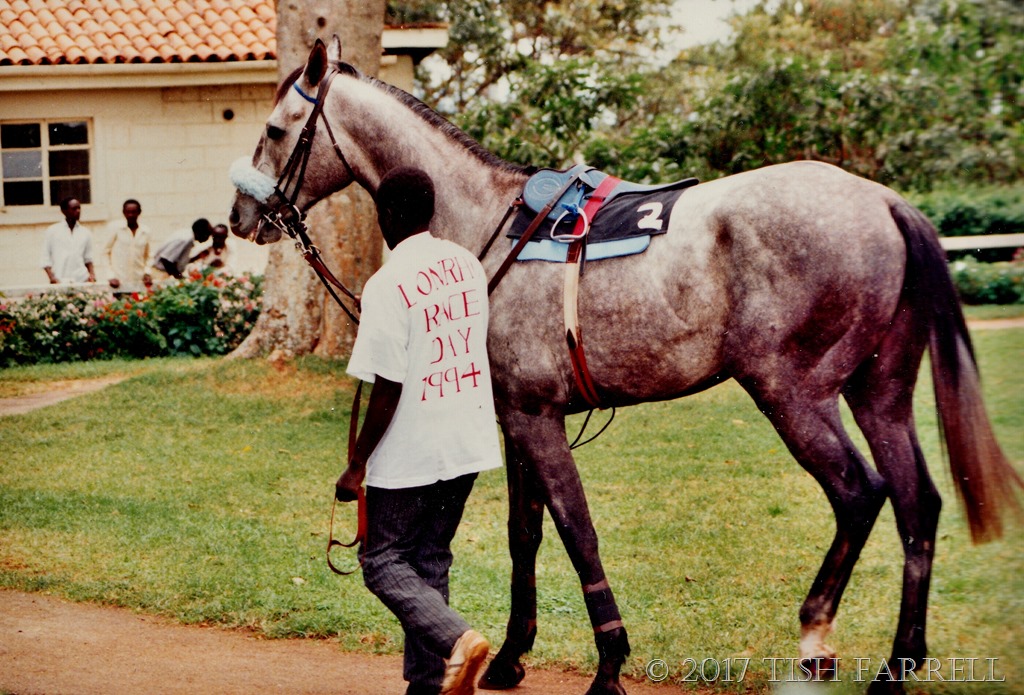
But when it comes to the old colonial residue, one key thing has  obviously changed. In 1963 Kenya won independence from Britain. But here’s the catch. As colonial private interest dwindled, so came the invasion of the multi-nationals. The American corporation Del Monte was one of the first. They took over Kenya Canners and the Thika pineapple plant. Another big investor was the Anglo-African giant Lonrho, here sponsoring the races.  This entity started out in 1909 as the London and Rhodesian Mining Company. During the ‘60s Lonrho bought up British firms throughout Kenya including the Standard newspaper, farms, distributors, wattle estates, and a large vehicle importer*. During the ‘90s Lonrho also owned some of the country’s most prestigious tourist hotels including The Ark, the Norfolk Hotel and the Mount Kenya Safari Club. There’s a postscript to this later.

Now back to the album:

races - Copy (2)

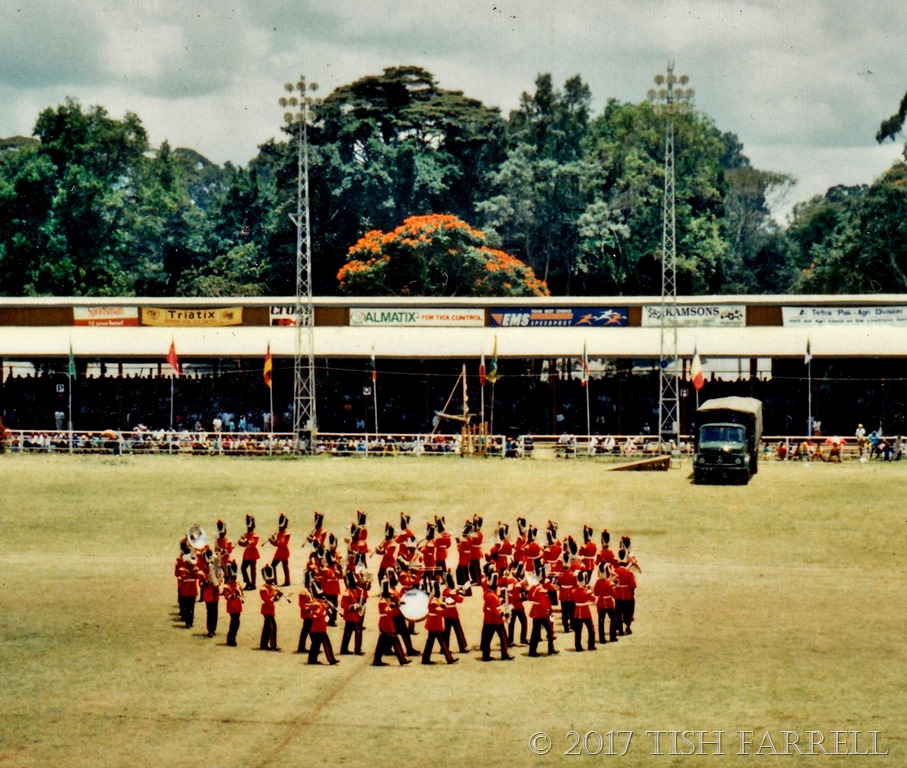
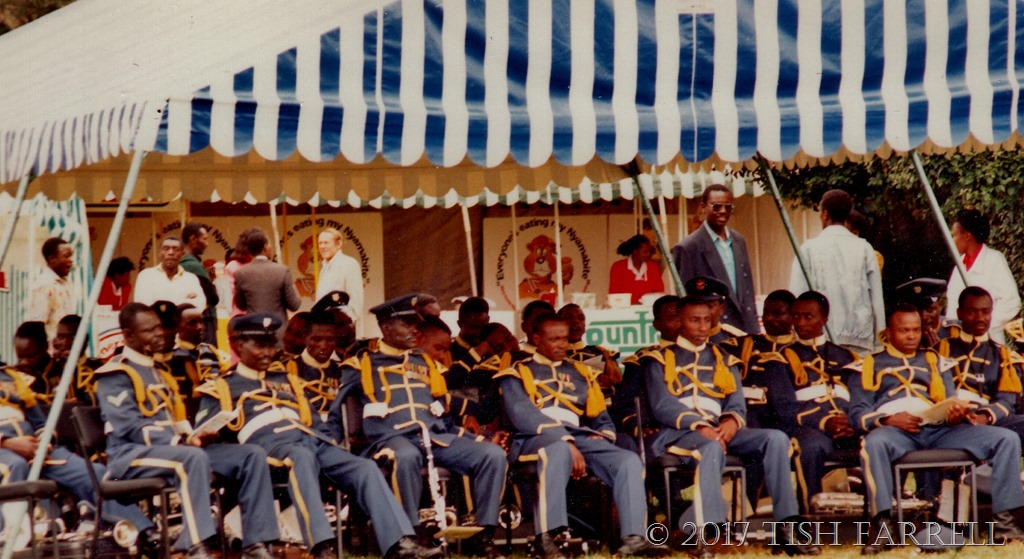
The Kenya Air Force Band waiting for their next stint between the races

*

races_0002 - Copy (2)

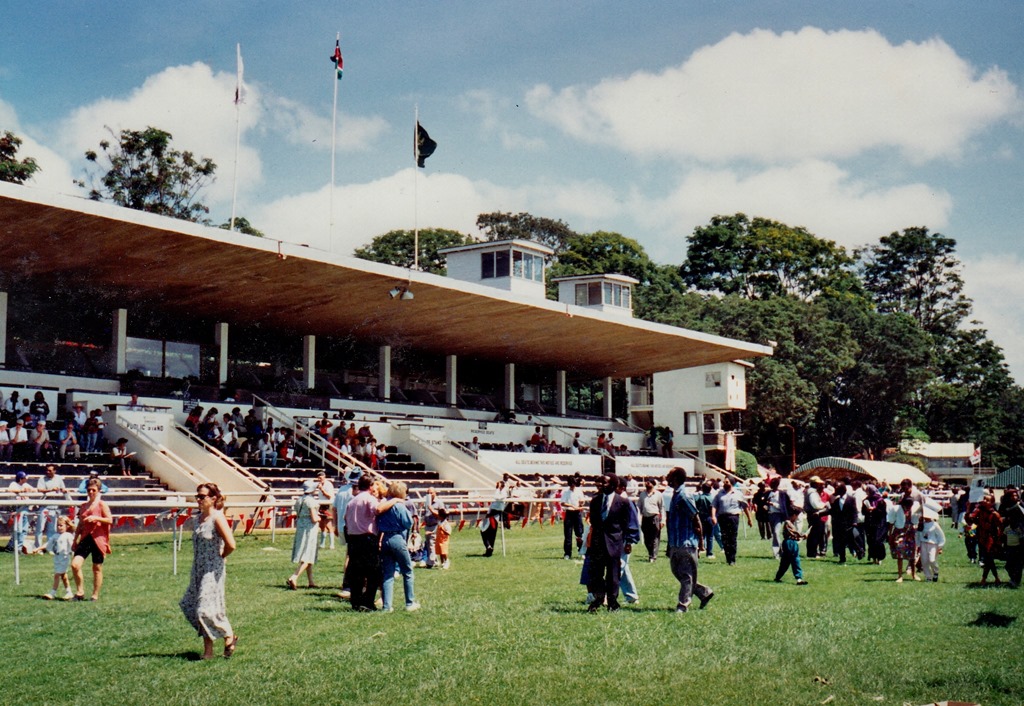
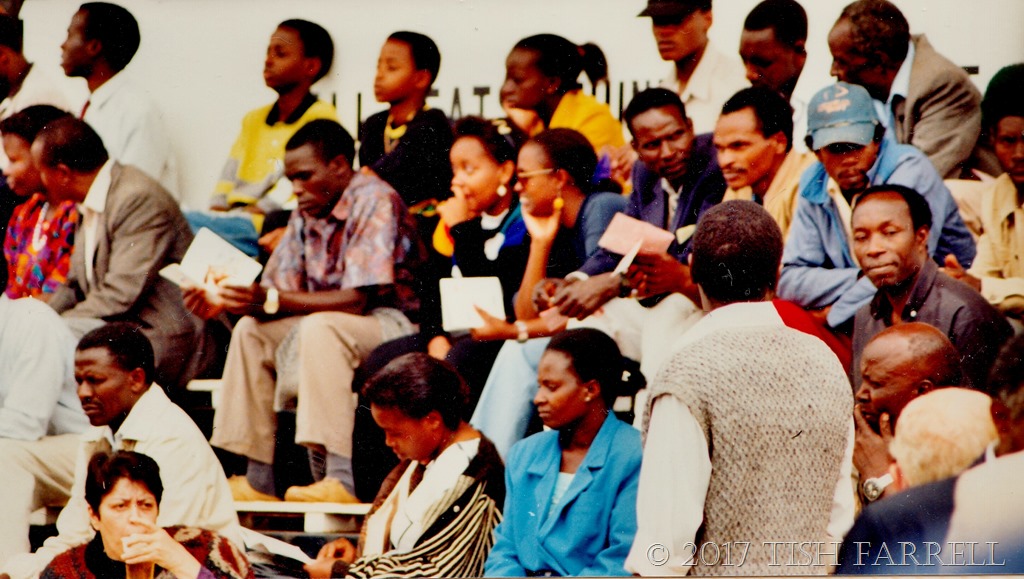
The main grandstand

*

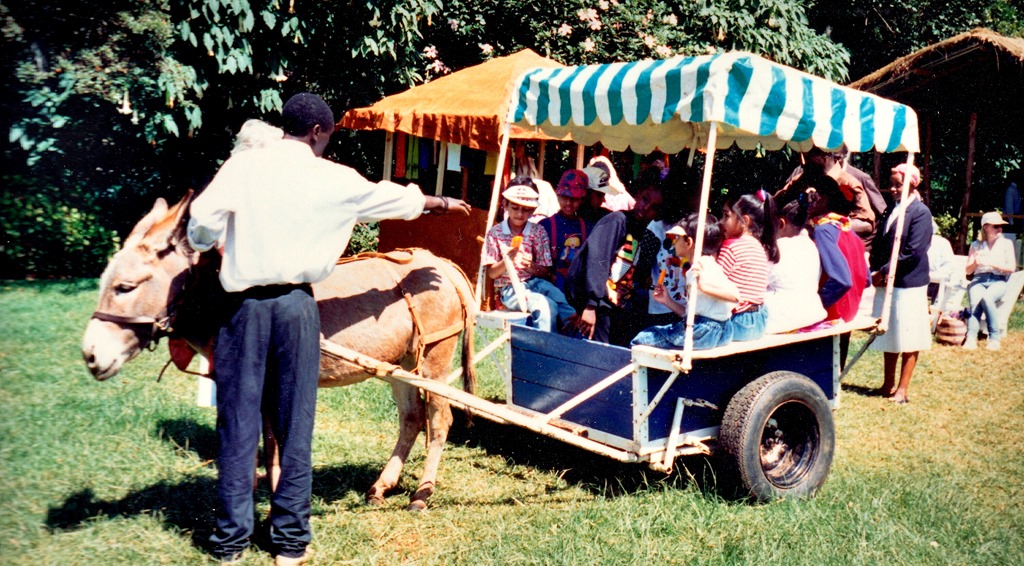
And for the children – donkey cart rides, face painting and Mr. Magic

races_0004

races_0004 - Copy (3)

Postscript: from the Standard newspaper 15 May 2005

John Kamau reports:

Nairobi — The once politically-connected Lonrho Plc has finally called it a day in Kenya after selling its last five prime properties to Saudi-billionaire, Prince Alwaleed bin Talal.

In what may be one of the largest take-overs in Kenya in recent history, Kingdom Hotel Investments, owned by Alwaleed, on Wednesday took over the historic Norfolk Hotel, Mount Kenya Safari Club, Aberdare Country Club, The Ark and Mara Safari Club. Alwaleed also owns the famous London Savoy.

All of which prompts me to ask who actually does own Kenya these days?

copyright 2017 Tish Farrell
Six Word Saturday  Please pop over to Debbie’s at Travel With Intent. She has posted some fabulous shots of the Forth Bridge – another example of how historical constructs can long endure, some far more useful than others.


*Charles Hornsby 2013 Kenya: A History Since Independence

The Way We Were ~ More From The Kenya Diary

Greater love hath no man than he who spent hours and days, and more hours and days transcribing this writer’s Kenya journal. Prior to transcription, and due to various computer glitches, it existed only on reams of faded, flimsy print-out paper. It was just about scannable, which was tiresome enough to complete, but the end result then required hours of copy editing. So thank you Graham.

And for those who don’t know the background to this, from January 1992 to January 2000, Graham aka the Farrell Team Leader, was working out in Africa on various British aid agricultural projects. The first year we were largely itinerant, travelling up and down the Mombasa highway between Nairobi, Kiboko, Taita and Mombasa.

Graham was working on a project to control Larger Grain Borer, a voracious grain-decimating beetle introduced to Africa in a consignment of US food aid. The actual home of this pest is Central America, and Graham had spent some time studying its behaviour in Mexico. He was then employed on a short-term consultancy project by the Natural Resources Institute in Kent, and thence despatched to Kenya.

His main base was the Kenya Agricultural Research Institute in Nairobi, but there was also a field station a hundred miles south at Kiboko, where the Kenyan project staff worked. When Graham had to make a visit, we stayed at Hunter’s Lodge, once the home of big white hunter, John Hunter, and later (in the ‘60s) developed into a small tourist hotel. The place had its heyday around this time, or until the horrendous dirt road to Mombasa was tarred, and coast- or city-bound travellers no longer broke their journeys at Hunter’s Lodge.

sundowner

In our day it was unusual to find any other overnight guests there, although there were plenty of staff, the waiters always smartly turned out in black trousers, white shirts and red bow ties, and ever in attendance in case anyone turned up.

Much of 1993 was then spent in Lusaka, Zambia. Graham was attached to the European Union Delegation, contracted there to organise the distribution of food aid during a period of prolonged drought. But at the end of that year we returned to Nairobi, in the first instance, to close down the Larger Grain Borer project at Kiboko, but later to run a crop protection project which involved British and Kenyan scientists working in partnership with smallholder farmers to overcome various crop and livestock problems. And here we stayed until the start of 2000 when the British Government closed the project down.

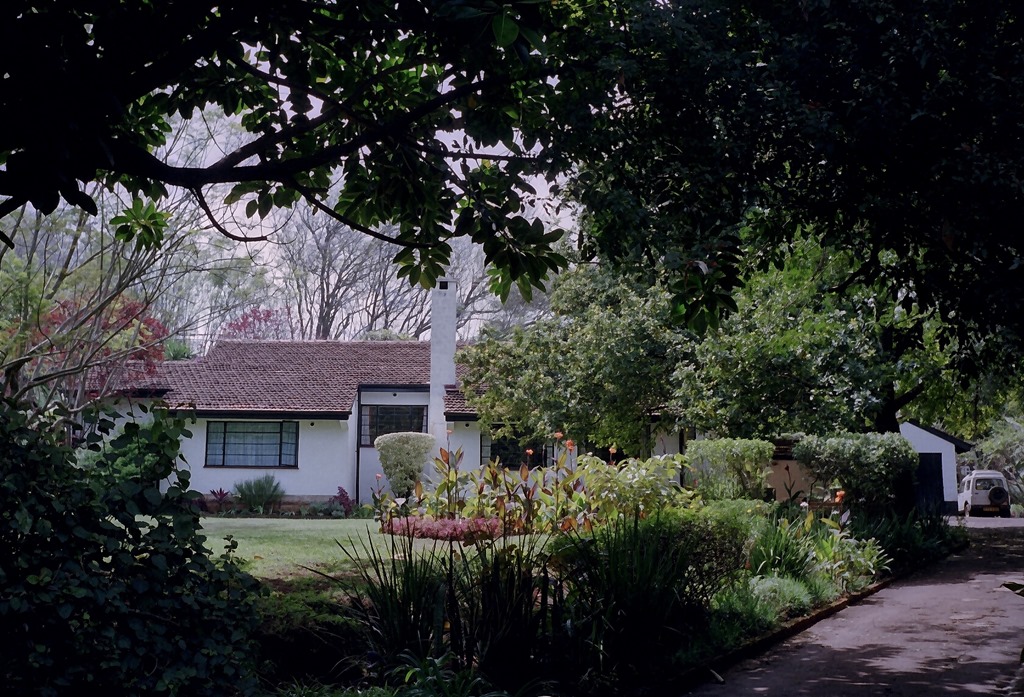
While we lived in Nairobi we were housed in a British High Commission house, which also came with Sam, our house steward. He lived with his family in a cottage at the bottom of the garden, but as we never had enough for him to do, he only worked mornings. His actual home was in Western Kenya where he owned three very small smallholdings in different places. Then there was Patrick, our day guard, also provided by the BHC. He never had much guarding to do either, so Graham paid him to look after the garden which he did with impeccable diligence. His home was also in Western Kenya, where his wife and children lived on his own smallholding. Sam told me Patrick had deployed his earnings from guarding and gardening on the building of a good stone house for his parents and was currently building one for himself. He was also paying for his children’s education. While he was working in Nairobi, which was 11 months of the year, he rented a room in one of Nairobi’s slums.

Scan-140809-0043

The following extract gives a few glimpses of expatriate Nairobi life and those cultural events that owe more than a little to the country’s British colonial past.

*

29 August 1994

Months have passed and no journal entries. In June we went home to England for three weeks. It was cold and windy and time was gobbled up visiting family and storming the shops. Then came the weeks of adjusting again to Nairobi living. It seemed very strange that, after all our days and miles of travelling, the only news Sam had when we got back was that the avocado tree had finished fruiting. Otherwise, everything was as we had left it.

And to root myself in once more, I took to gardening. Another effort to get the better of the over-shaded vegetable plot; flower beds cleared for tomatoes and herbs; a new plot excavated under my office window; seeds sown and the ever vigilant Patrick following up with the watering can at dawn and at dusk.

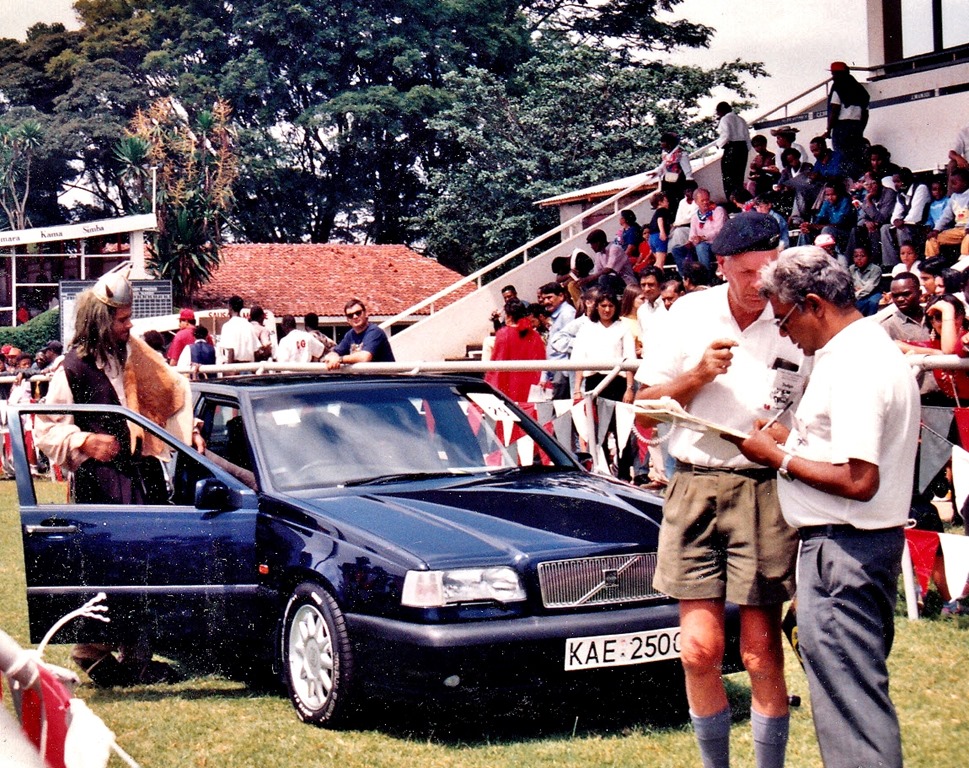
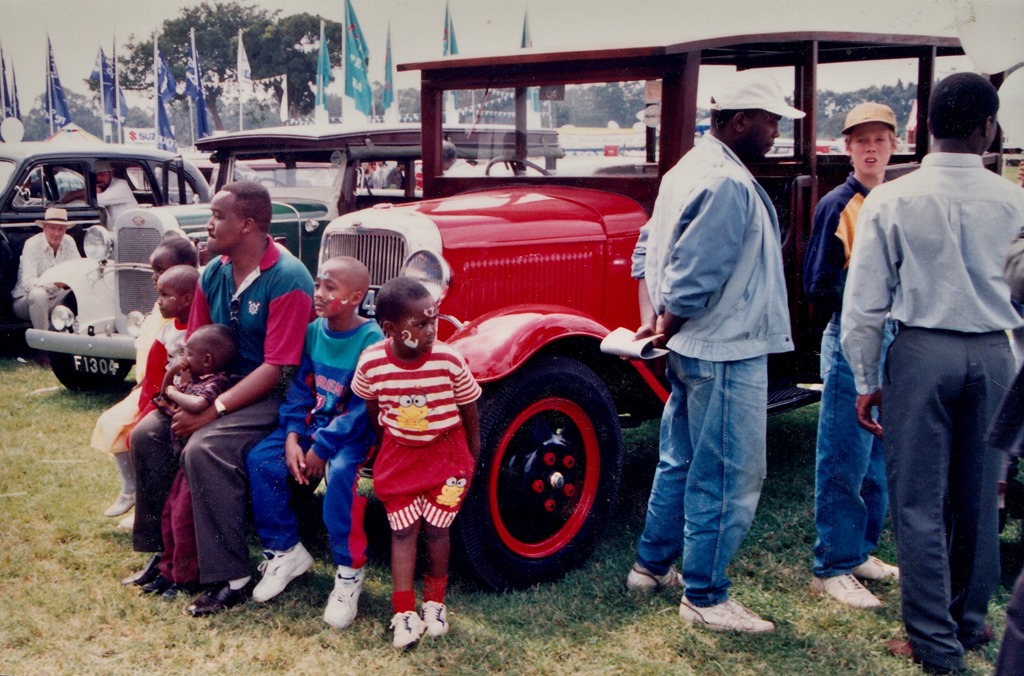
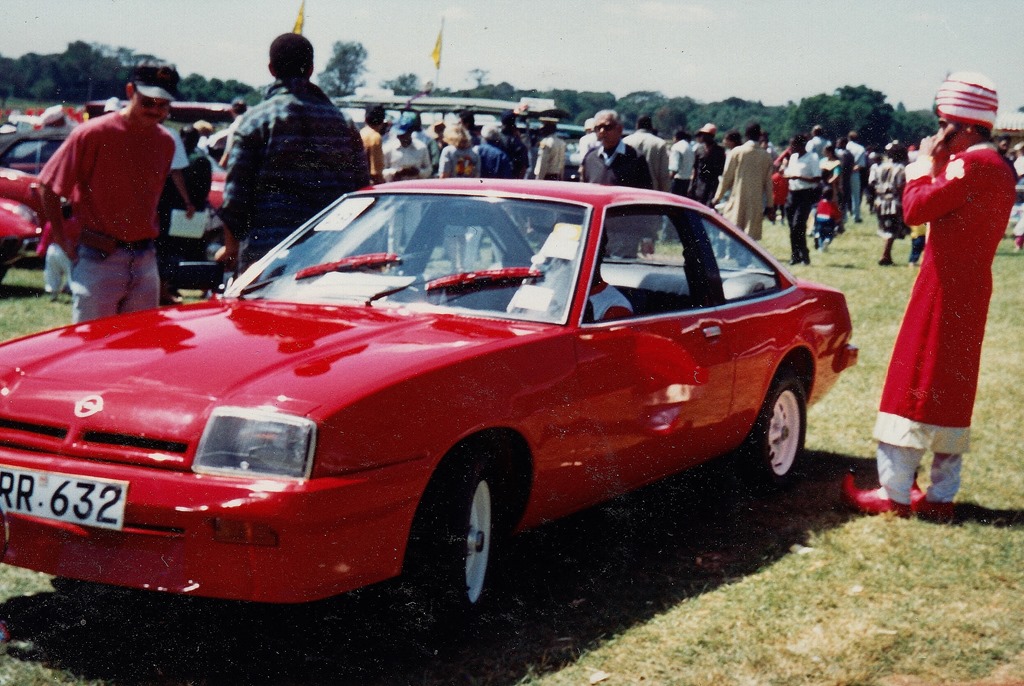
In July we went to the Ngong Racecourse for the Concourse d’ Elegance,  one of Nairobi’s annual multicultural events. It is a specialist car rally wherein owners show off their vintage vehicles including aged safari trucks (one of which had ‘starred ‘in  Out of Africa), wartime jeeps, a venerable Mini, period Peugeots, Alfa Romeos, Mercedes, Volvos and a red E-type Jaguar.

Nairobi car rally 4_0001

Nairobi car rally 3

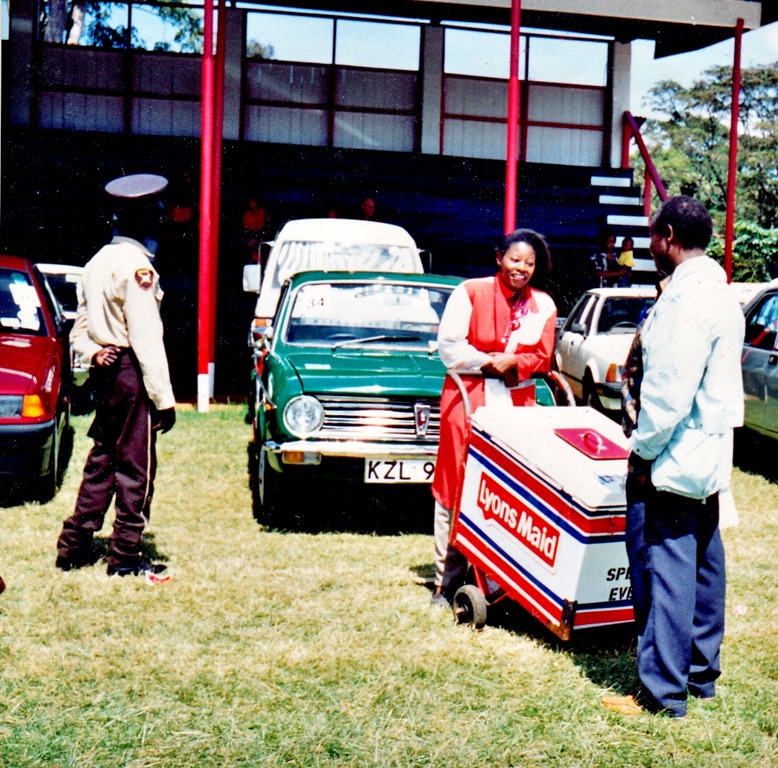
Car owners from the Asian community were dressed up as maharajahs and Arabian Nights grand viziers, the Europeans in more peculiar costumes – a woman dressed as a large black spider, one chap in full Viking gear. There was an overall atmosphere of the English Village Fete. The Kenya Society for the Protection of Animals laid on donkey cart rides around the race course grounds; Mr Magic was doing tricks for the children; the East African Ladies group had a charity cake stall. There were welly-wanging contests, face painting, remote control model car races, hotdog stands and Lyons ice-cream carts.

Nairobi car rally 2

Nairobi car rally 4

Nairobi car rally 4_0002

The racecourse itself is a picturesque colonial relic. Stands of gum trees, the tiered main grandstand creeper-covered and housing a shady restaurant, and nearby the race steward’s offices, the Jockey Club members’ precincts, the collecting ring sheltered by mature trees.

We thought we’d like to see what the place was like on race day, so a week  or so later we turned up for the Lonrho races. Kenyans take their racing seriously and the whole ground was humming with activity. The ‘old colonial’ set were very high profile, chaps in their grey plaid racing suits, members’ tickets dangling from lapels, their ‘good ladies’ in Ascot frocks and hats to match. In fact the woman who won the best outfit contest truly looked as if she was anticipating entry to the Royal Enclosure. At such times you can only blink: the British abroad – what are they thinking?

The first race was something of a novelty event being a camel race. The beasts and riders came from the anti-stock-theft police patrol in the remote north. There were four contestants, the riders in  bright racing colours. But the camels weren’t too lively and it took some time to cajole them to the starting line. And even after the gong  had been rung, it was hard to tell if the race had started. Every spectator head was craned, gazing across the course for signs of activity. Time passed. It was thus the biggest excitement when the first camel hove into view. He finally jogged  fast enough to reach the finish line, his rider waving not only arms but also legs to celebrate their mutual victory. It was hard to imagine that these camels ever caught up with any cattle-thieving bandits.

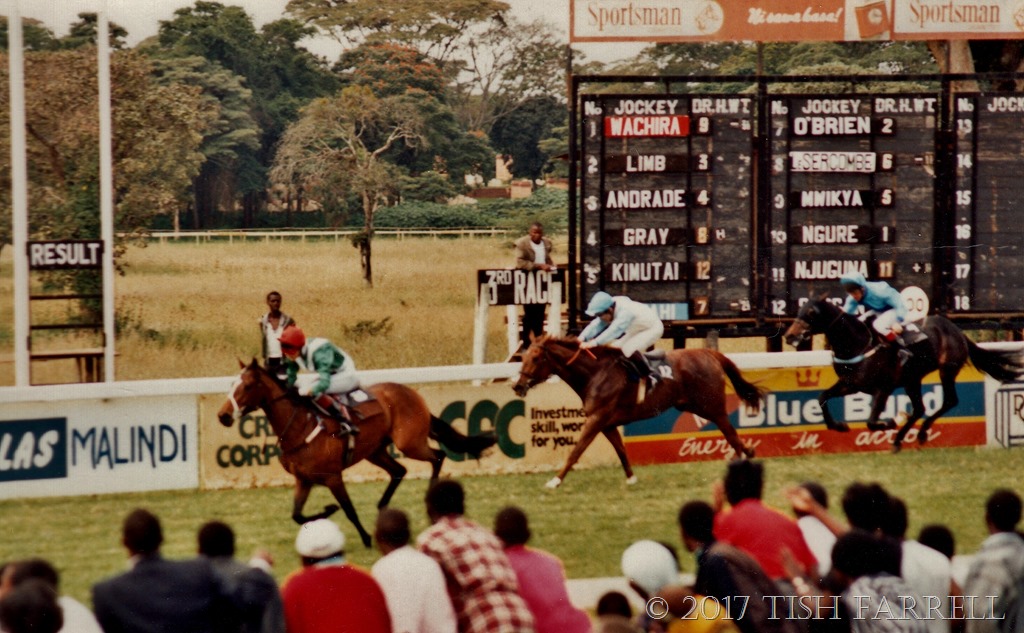
Then the serious racing began, most of the horses from wazungu stud farms up in the Rift Valley, and their riders so slender-limbed and tiny, I wondered if  the race horse owners employed their jockeys from the Okiek community,  the last of Kenya’s original indigenous inhabitants of slight-statured hunters. We sat in the grandstand for a while, watched the Kenyan Air Force band marching on the course between races, listened to the commentator who sounded to be the very same man who serves at every English agricultural show and sporting event wherever it is on the globe, looked at the Kenyan mamas in their elaborate kitenge costumes, had our ears blasted as two Air Force buglers dashed up into the grandstand to trumpet the start of the race,  admired the fine looking Kenyan rider, whose task it is to lead the mounted jockeys to the starting gate,  he sporting his  English hunting pink jacket and tight white breeches – yet another of Nairobi’s cross-cultural phenomena that challenge perceptions at every turn. It was all so absorbing that we didn’t even get round to placing any bets.

Our next trip to the racecourse was in early August, to another extraordinary multicultural event. This time to the Royal Ballet performing their specially created programme in aid of Kenyan conservation, Dances for Elephants. The week’s performances were aimed at raising funds for various Kenyan wildlife projects – rhino surveillance, Grevy’s zebra surveys, elephant monitoring, conservation education in Maasailand. It was the brainchild Royal Ballet Mistress, Rosalind Eyre and Oria Douglas-Hamilton, wife of Dr Ian Douglas-Hamilton, Kenya’s resident elephant expert.

Performances were laid on at several venues: at the racecourse, at the Lake Naivasha home of the Douglas-Hamiltons (complete with picnic hampers), at the Windsor Country Club and at the residence of the British High Commissioner, Sir Kieran Prendergast. Local businesses sponsored tickets so cohorts of Nairobi school children could go to the racecourse matinee and have their first ballet experience.  A congratulatory telegram also arrived from HRH The Prince of Wales, wherein he praised the sixteen dancers’ efforts and generosity in giving up their time. He also said he wished he could be with us, which we could not fail to doubt as we had recently read newspaper reports of another “Diana” scandal looming back in the UK.

We arrived in the racecourse at sundown, and again found the place was thronging.  It was a clear evening and I wondered if anyone had warned the dancers how chilly Nairobi was in August.

The audience was well catered for though. There was a tent serving hot drinks and hotdogs as well as a bar. We had come prepared with our own flask of cocoa, cushions and wraps. The grandstand was mostly filled with members of the diplomatic community and Kenyan professionals from the companies that had sponsored the event, but we could sit where we wanted among the concrete benches of the grandstand. The Jockey Club members’ padded seats comprised “The Circle” for which people had paid 3,000 shillings a ticket instead of our 700  bob. We settled down on Vitafoam sponge mats on the front row.

The stage was ingenious – two flatbed trucks parked tail to tail. Cranes rearing up behind each cab supported the roof and stage light tracking. Either side were the enormous speakers of the sound system that had been donated to the cause by Lufthansa. The racecourse and its stands of gum trees lay to their back and, as the sun disappeared behind them, black kites wheeled overhead,  mewing and on the lookout for abandoned hotdogs.

At dusk the dancing began – excerpts from the whimsical ballet ‘Still Life at the Penguin Cafe’, opening with the zebra dance, “White Mischief”. It could not have been more surreal, of itself and also because there was the stage backdrop of the African plains with the real African sky behind it, and real African ‘sound effects’  of cricket and frog call.

*

Here is a version of what we saw out on the Ngong Racecourse on a chilly Kenyan night (best viewed full screen):

https://www.youtube.com/watch?v=Jh0TPvus7r4

Cloud Shadows Over The Great Rift

IMG_0008

I have just come home from the allotment with very wet knees ( the grass on the field path has suddenly shot up half a metre). It is a gloomy, drizzling evening here in Shropshire, and has been raining now for two days. This is very good of course. We’ve hardly had any rain since mid-May, and it’s a big relief not to have to water the vegetable plots. The veggies are very happy too – all upstanding  and glistening in the rain. The only thing is I think we have water-resistant soil. When I went to sow some Florence fennel, the surface compost was damp enough, but an inch down the soil was dry as desert sand.

More rain required then.

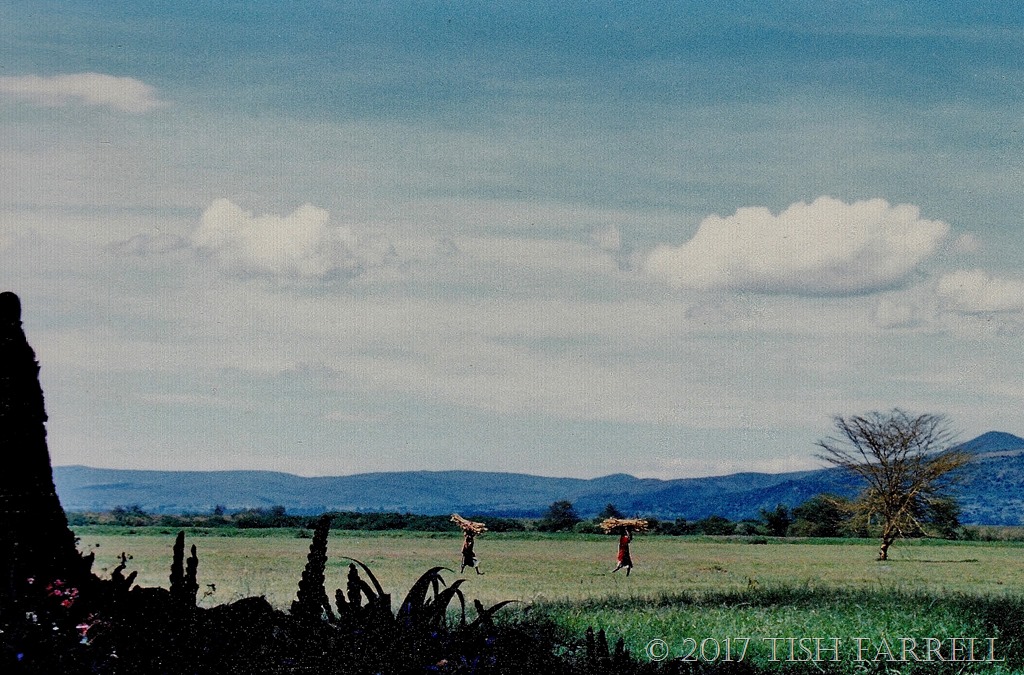
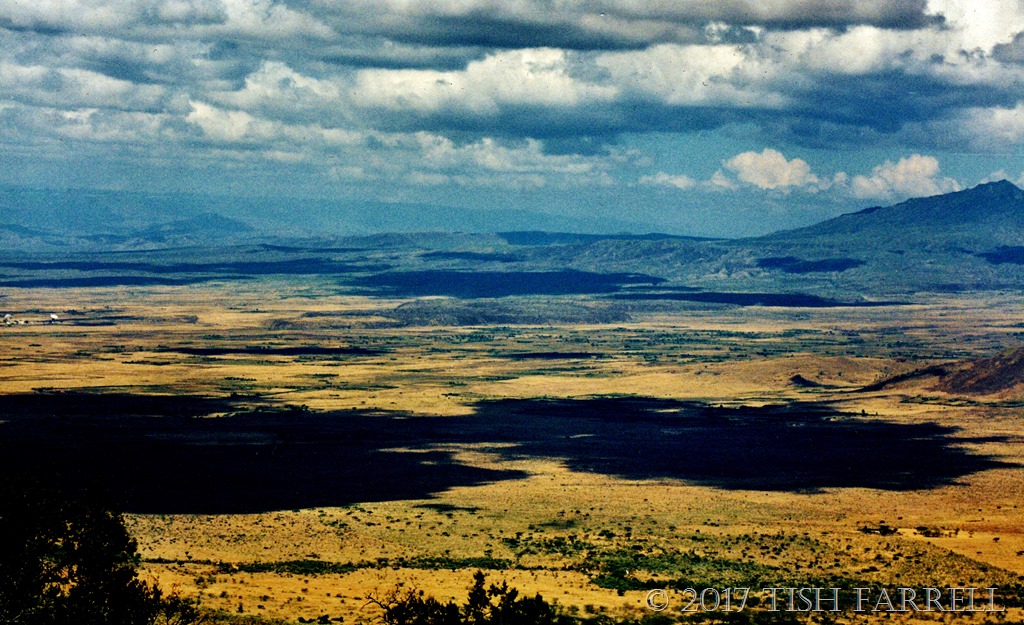
The advent of rain is of course a critical factor in the growing of smallholder crops over in Kenya where this photograph was taken during the July dry season. Very few rural farmers have ready access to piped water, reservoirs and water courses, and so irrigation systems are thus not feasible unless you are a very rich big landowner.   The monsoon seasons on the Indian Ocean are responsible for the country’s rainfall. It comes in two seasons: the short planting rains roughly October to December and the long rains in April-May. And so the clouds you see here, may be bringing shade, but they are not bringing rain.

And even in season, this is increasingly the case as Kenya’s forests dwindle. Without its tree-covered uplands, which invite the clouds to drop their moisture, the future will bring only increasing desertification. Or else when it does rain, there will be more flash flooding and landslides to carry off the fertile top soil.  Climate change, then, has both local and global origins, and we all need to think about this, and the part we may play,  wherever we live on the  planet.

copyright 2017 Tish Farrell
 

Thursday’s Special: over  Please visit Paula to see her totally stunning photo.

Early Morning Elephants In The Mara ~ All Very Much In Order

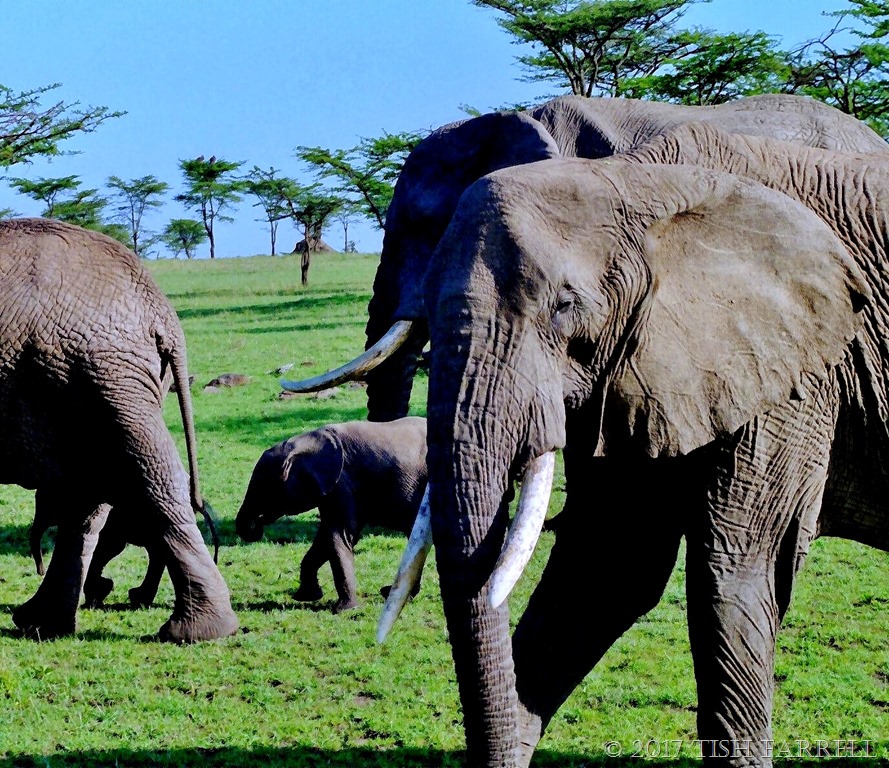
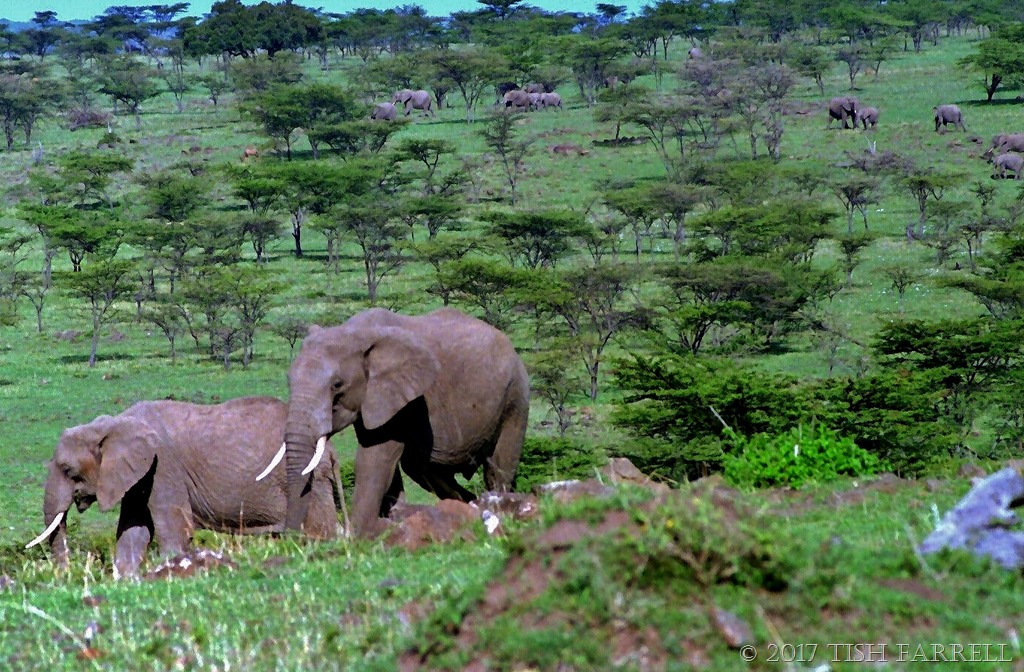
The thing is, they are noiseless as they move, their footfalls cushioned by pads of fat behind their toes. Of course there are the low frequency stomach rumbles that maintain lines of communication across the herd, but we weren’t close enough to hear those. Or maybe we were too intent on our own stomach rumbles. We had driven out of the Mara River Camp at first light, after only a 5.30 cup of tea. Breakfast was still a distant prospect when we found ourselves among this large, slow-moving herd.

They paid us no attention whatsoever. All we sensed was a wave of communal intention as they headed on through the thorn brush. In fact we were so beneath their notice, Daniel, our driver-guide, decided it would be fine to stop the truck and eat our picnic breakfast as the elephants moved on by.  I remember thinking how incongruous it was to be standing out on the Mara plains eating a hard boiled egg while these majestic creatures slowly passed me.

This is not to say that elephants cannot be dangerous; sometimes murderous if they bear a grudge for some harm done them; or if the bulls are in musth. But nothing was amiss this day. It was like one big family outing, the epitome of good elephantine order wherein mothers and children always come first.

Scan-131109-0004

Scan-131109-0026

copyright 2017 Tish Farrell

Daily Post: Order

All Friends At Nairobi’s Elephant Orphanage
When it comes to the survival of orphaned elephant infants, loving friendship is the only thing that works. Baby elephants need continuous loving, tactile affection as much as they need food. Without it they quickly die.
Kenya’s Dame Daphne Sheldrick, pioneer in elephant orphan rescue and rehabilitation, learned this the hard way. For years she strove to create a rich formula to substitute for mother’s milk. But in her efforts to keep orphans physically alive, she also learned that the emotional ties between baby and surrogate mother were crucial to the baby’s survival.

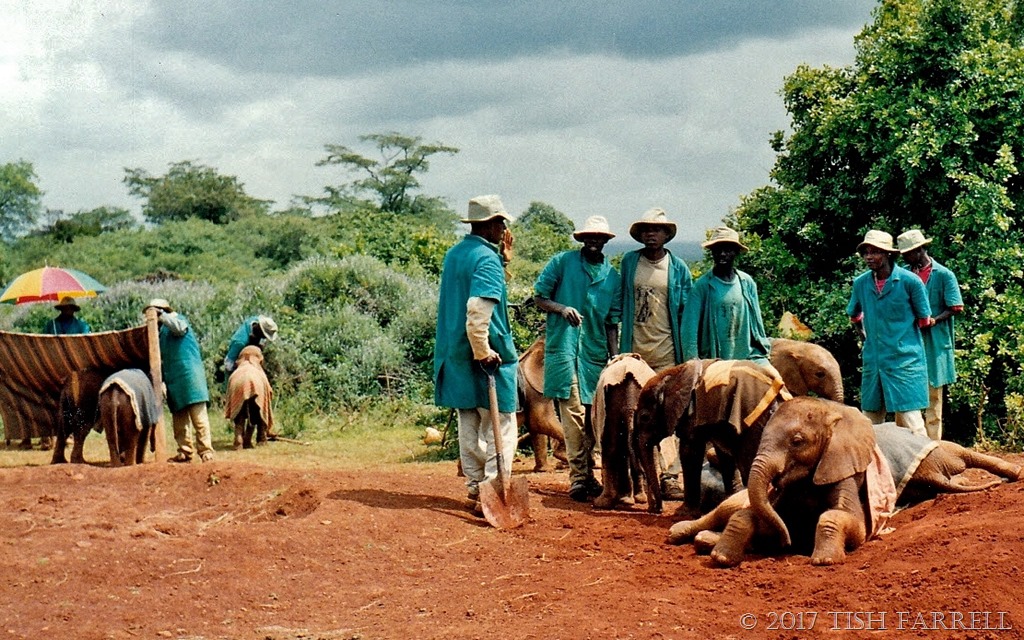
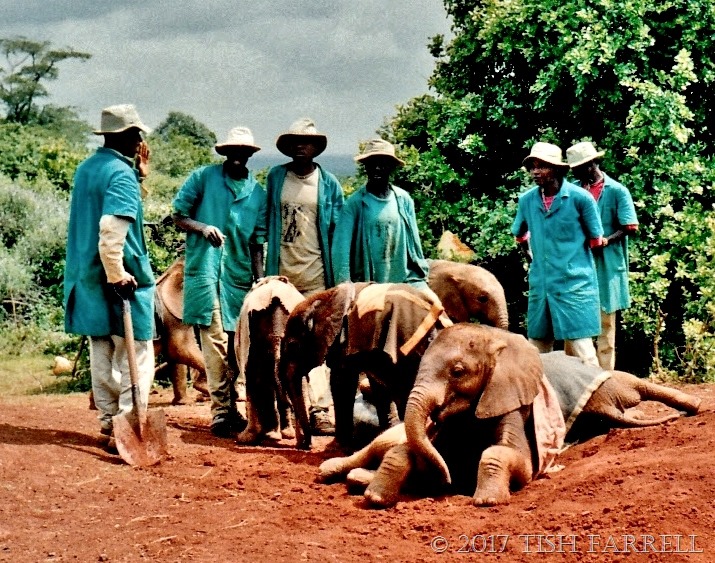
At her orphanage on the edge of Nairobi’s National Park she has developed an astonishing survival regime for all the young animals brought to her. Every orphan has its ‘mother’ i.e. one of the green-coated keepers seen in the photos. Every keeper is on full time duty with his charge, and this includes sleeping with the baby in its stall.

By day there is feeding, mud bathing and playing to be done. The blanket strung on a line in the top photo is there to simulate the overshadowing side of an elephant mother. The keeper feeds  his baby, holding the bottle down behind the blanket. The babies are also wearing blankets – at 5000 feet above sea level, Nairobi can be cool in July when this photo was taken, and in the wild small babies would anyway have the constant warmth and shelter of mother and aunts.

IMG_0029

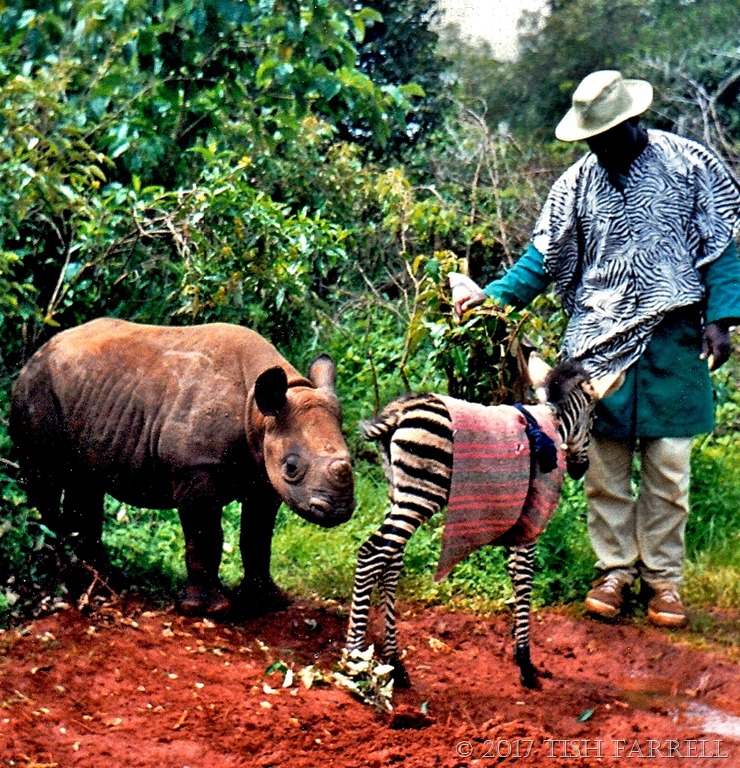
The ultimate objective of the Sheldrick Wildlife Trust is to re-introduce the orphans to the wild. This is a painstaking and precarious procedure, recreating communities in the absence of wild matriarchs who are the custodians of herd memory.

Tsavo East National Park is one of the main locations for the rehabilitation process. This is the park where Daphne Sheldrick’s husband, David, was warden until 1976. During their time together at Tsavo, the Sheldricks pioneered the rehabilitation of many wild animals that had been reared in captivity. On David’s early death in 1977, Daphne set up the Trust in his memory. Forty years on some 150 elephants have been saved, along with rhinos and other species.

If you want to read about the elephants in detail there are keepers’ daily diaries HERE. You can find out what is going on in the nursery with the youngest orphans, or discover how the adolescents are faring at various forest locations as they learn to live again in the wild. A study of dedicated friendship in action then.

IMG_0033

If you are ever in Nairobi, then the orphanage is open to visitors for an hour each day. You can also donate to the Trust or foster an orphan. There are more details HERE.

Daily Post: Friend