Swahili Geometry: Once In Lamu’s Stone Town

img479sq

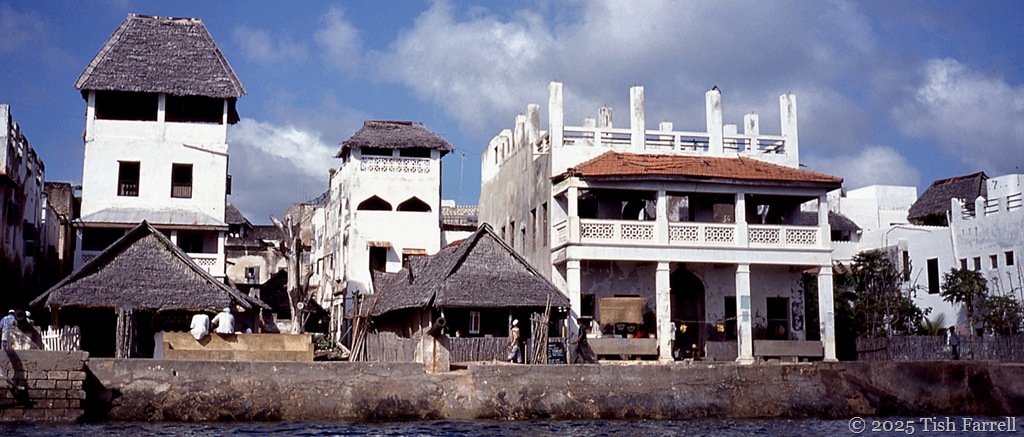
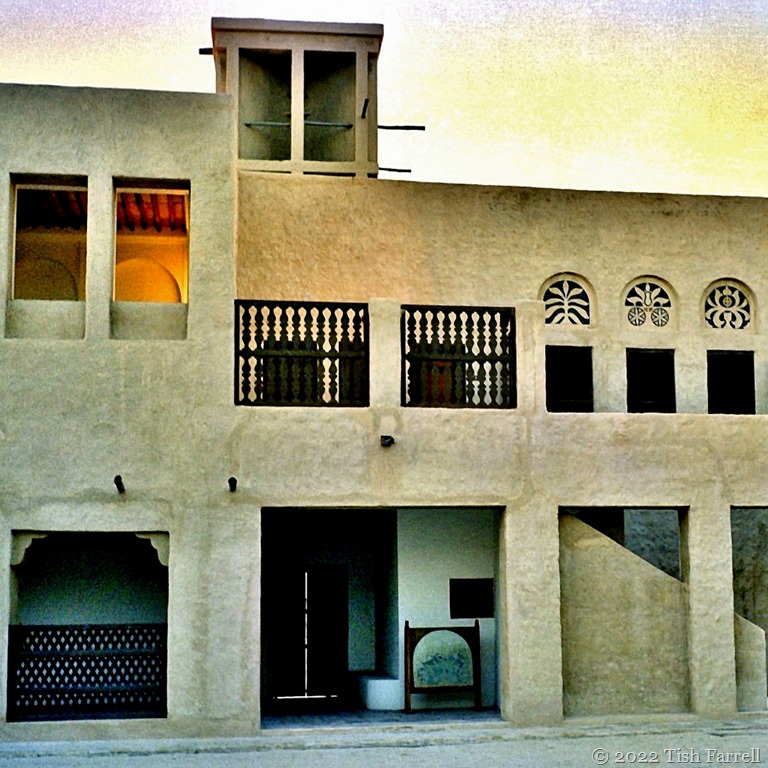
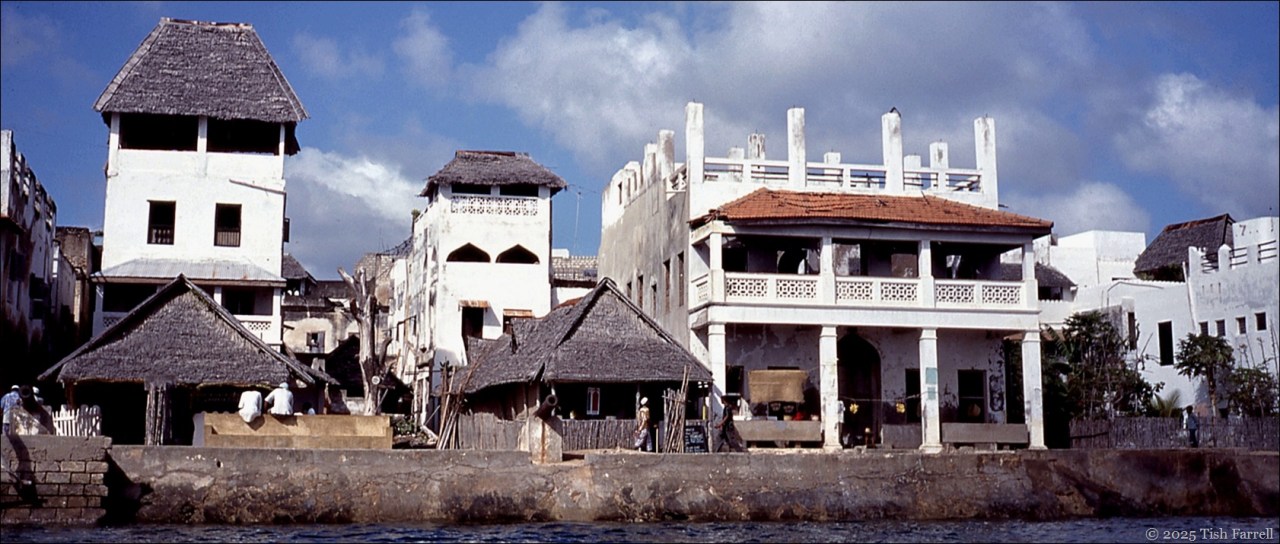
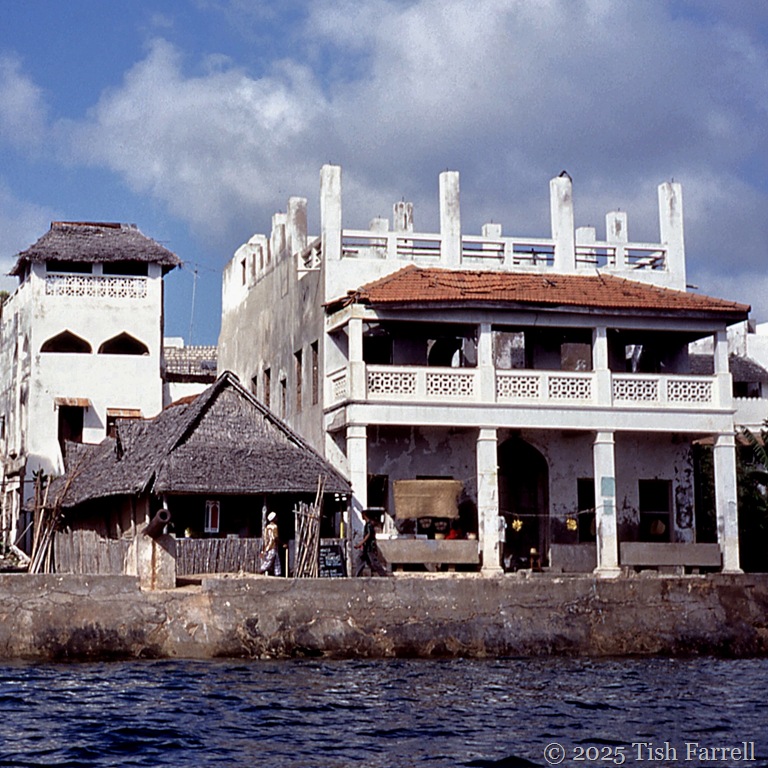
Long ago when we lived in Kenya, we spent one Christmas on the Indian Ocean island of Lamu – a never-to-be forgotten, all too brief safari.  We stayed in the roof-top quarters of an ancient merchant’s house in Shela Village, a thatched eyrie that, being open on three sides, allowed to us eavesdrop on all our neighbours. It was breezy too, the natural air conditioning more than welcome in December’s steamy heat.

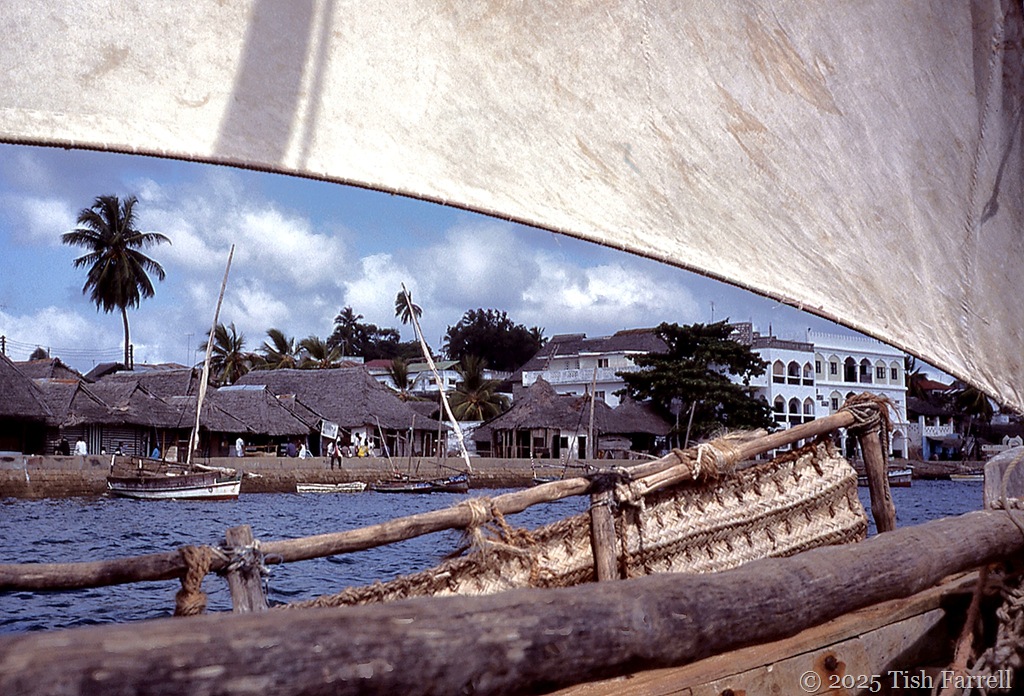
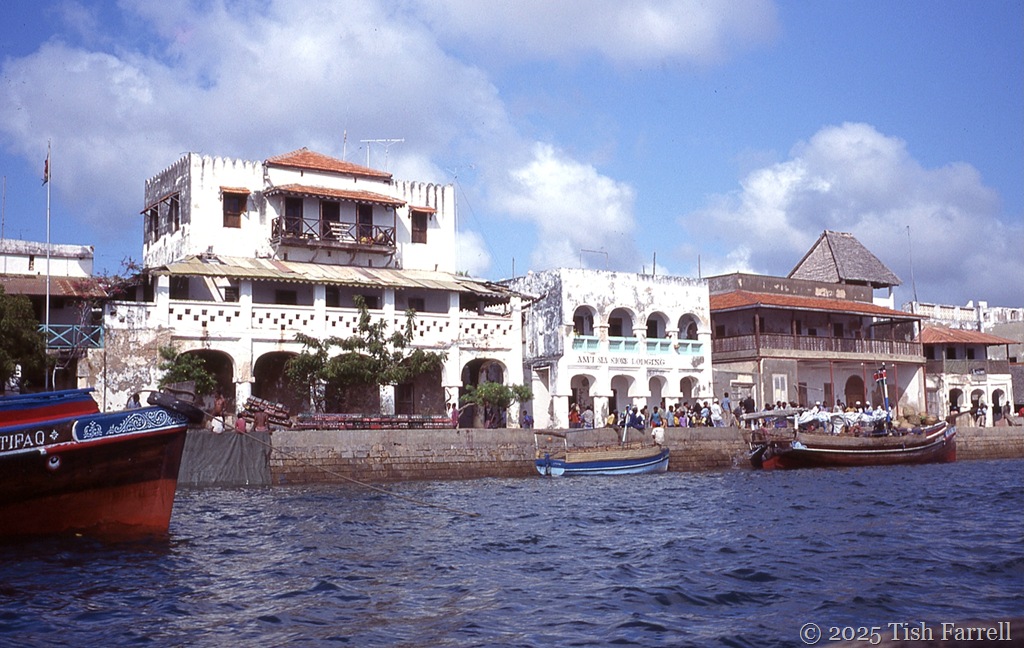
Our first view of Stone Town, Lamu’s main settlement, was on Boxing Day when we were taken on a dhow trip out to the reef. It was a good introduction, sailing along the entire quay, hints of Sinbad magic.
img483 ed

img469ed

Lamu’s Stone Town is one of the best preserved Swahili towns on the East African coast, lived in for over 700 years. It is not one of the earliest by any means, nor the finest, but it has its own particular history as a one-time city state, ruled by its own sultan. Its wealth back then was built on the seasonal dhow trade with Arab seafarers. Now its residents make their living from tourism, fishing, boat building and farming. It is also a place of pilgrimage. Lamu is devoutly Muslim, and each year holds a five-day Maulid festival, celebrating the birth of the prophet, Muhammad.

For more about the Swahili people here’s a segment from an earlier post:

“You could say that Swahili culture was born of the monsoon winds, from the human drive to trade and of prevailing weather. For two thousand years Arab merchants plied East Africa’s Indian Ocean shores, from Mogadishu (Somalia) to the mouth of the Limpopo River (Mozambique), arriving with the north easterly Kaskazi, departing on the south easterly Kusi. They came in great wooden cargo dhows, bringing dates, frankincense, wheat, dried fish, Persian chests, rugs, silks and jewels which they traded with Bantu farmers in exchange for the treasures of Africa: ivory, leopard skins, rhinoceros horn, ambergris, tortoise shell, mangrove poles and gold.

By 700 AD many Arab merchants  were beginning to settle permanently on the East African seaboard, and the earliest mosques so far discovered date from around this time. These new colonists would have married the daughters of their Bantu trading hosts and doubtless used these new local connections to expand their trading opportunities. Soon the African farming settlements were expanding into cosmopolitan port towns. Itinerant merchants and their crews would also have had plenty of chances to get to know the local girls. The weather served this purpose too. Between August and November the trade winds fail. Voyaging captains would thus put in to a known safe haven to wait for good winds. And while this was not a time to be idle, since boats had to be beached and the crew put to cleaning and sealing the underwater timbers with a paste of beef fat and lime, three months was a long time to be ashore and far from home… continues HERE
img595sq

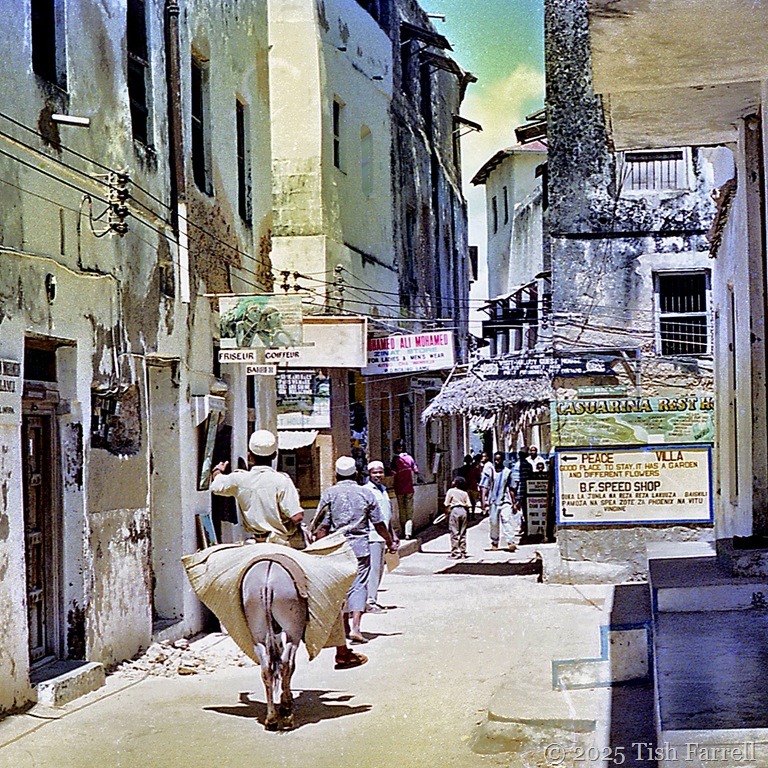
Main Street, Stone Town

*
#GeometricJanuary

img479 header

Gordon Russell Furniture Designer 1892-1980: Pioneering Geometry

IMG_4406sq

*
“I want to make decent furniture for ordinary people.”

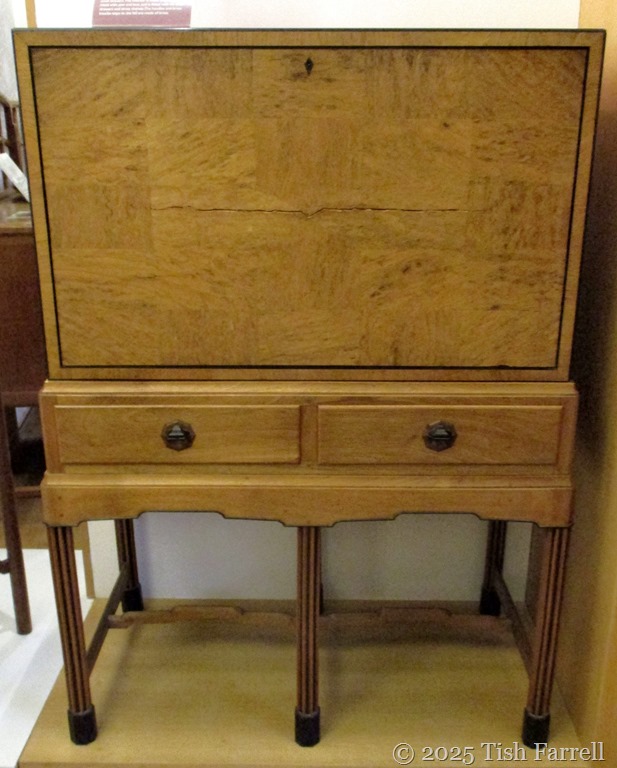
Gordon Russell was a design pioneer—a furniture designer, maker, calligrapher, entrepreneur, educator, and advocate of accessible, well-crafted design. Educated in the Arts and Crafts tradition of the Cotswolds, he believed that good design profoundly impacts people’s lives. His great skill lay in bridging the gap between hand and machine, craft and design, theory and practice, landscape and architecture.

Gordon Russell Design Museum

Most people visit Broadway, in the heart of England’s Cotswolds, to wander along its main street of old houses of amber coloured stone and peer in the windows of gift shops. It is very much a tourist trap. But if you happen to wander down a side street past the olde worlde fish ‘n chip shop and continue on to the CO-OP supermarket you will find a little a gem of a museum.

It’s a place that celebrates the work of a very extraordinary man, a man who believed that good design uplifted the spirits, and that everyone should have them uplifted by the everyday things in their homes.

IMG_4426ed

*
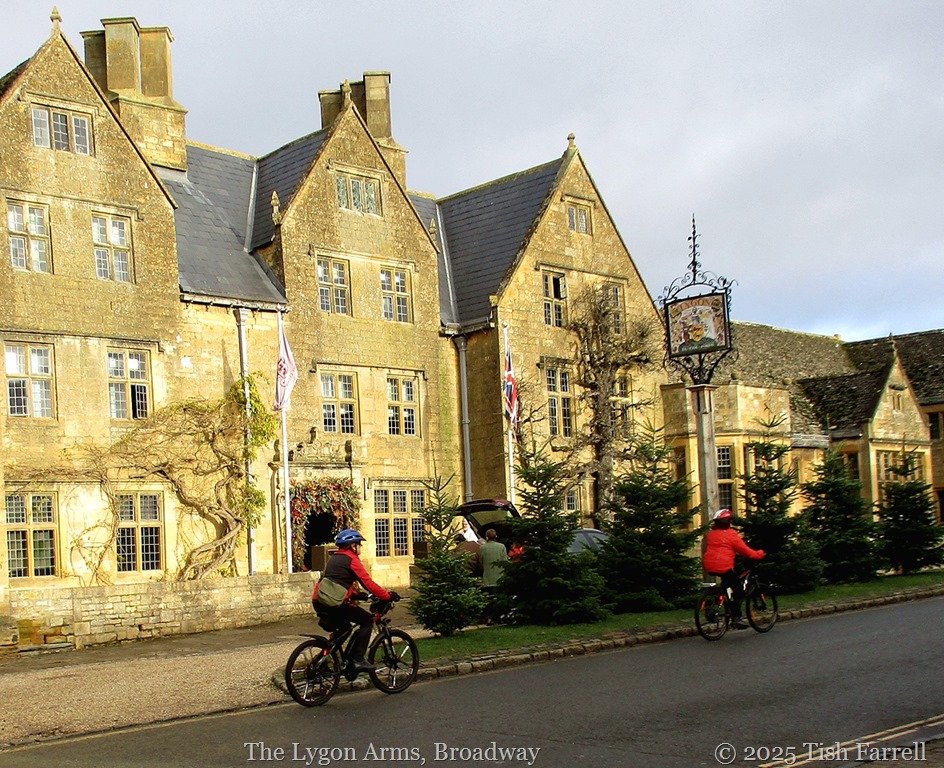
Gordon Russell’s connection with furniture making and, in particular with the traditional skills of Cotswold makers, began in 1904 when his father moved the family from London and bought The Lygon Arms. Sydney Russell was intent on creating a fine country hotel (which it still is today) and furnishing it with antique pieces restored or mended in his own workshop. At sixteen, Gordon left school and began to learn his own craft and create his own designs alongside skilled artisans in the family workshop.

IMG_4326

Then came the Great War. Gordon volunteered and served as an officer in the Worcestershire Regiment. Very remarkably, he survived Passchendaele, Ypres and the Somme and was awarded a military cross. Somehow, he translated the horror of all he must have witnessed into a driving determination to create beautiful work of enduring value.

You will have to forgive the not so good photos. The museum is so small, so filled with exhibits, and there were the inevitable spot lights.

IMG_4392ed

IMG_4398ed

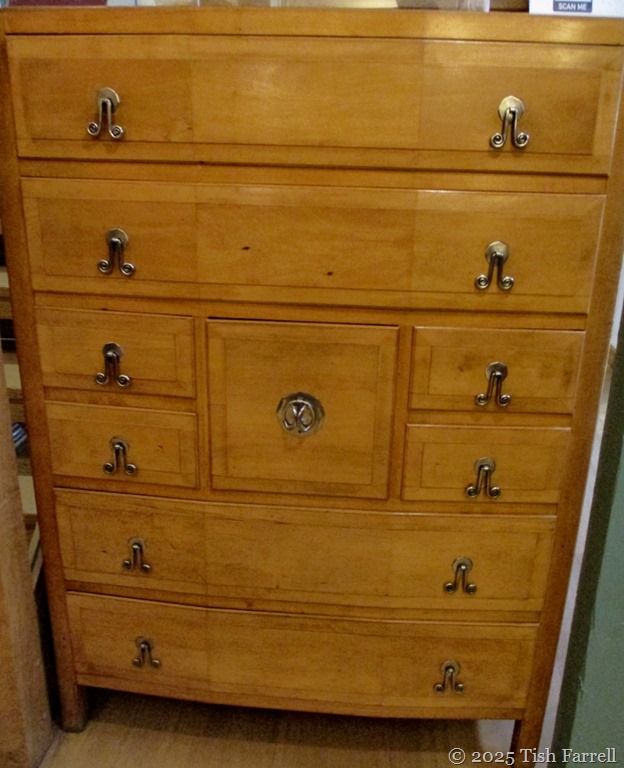
This chest of drawers was commissioned by erstwhile British prime minister, Lloyd George. It is made from a holly tree that had blown down in his garden. The carcase is lined with Honduras mahogany. The handles are made from forged non-rust iron. It was made in 1928.

*

Gordon Russell’s belief that everyone should be able to afford good furniture came to the fore during World War Two.

IMG_4408ed

Throughout the war, Gordon played a major public role. Appointed by the government to lead the design panel for manufacturing utility furniture, he faced the challenge of coordinating hundreds of small workshops to produce standard furniture for those who had lost homes to bombing or were newly married. Despite material shortages, Gordon ensured the furniture was well-designed and well-made, with much of it still in use today. For his contributions, Gordon was awarded a CBE. In 1944, he joined Board of Trade discussions to establish a national body promoting higher standards of industrial design, leading to a significant post-war role.

Gordon Russell Design Museum

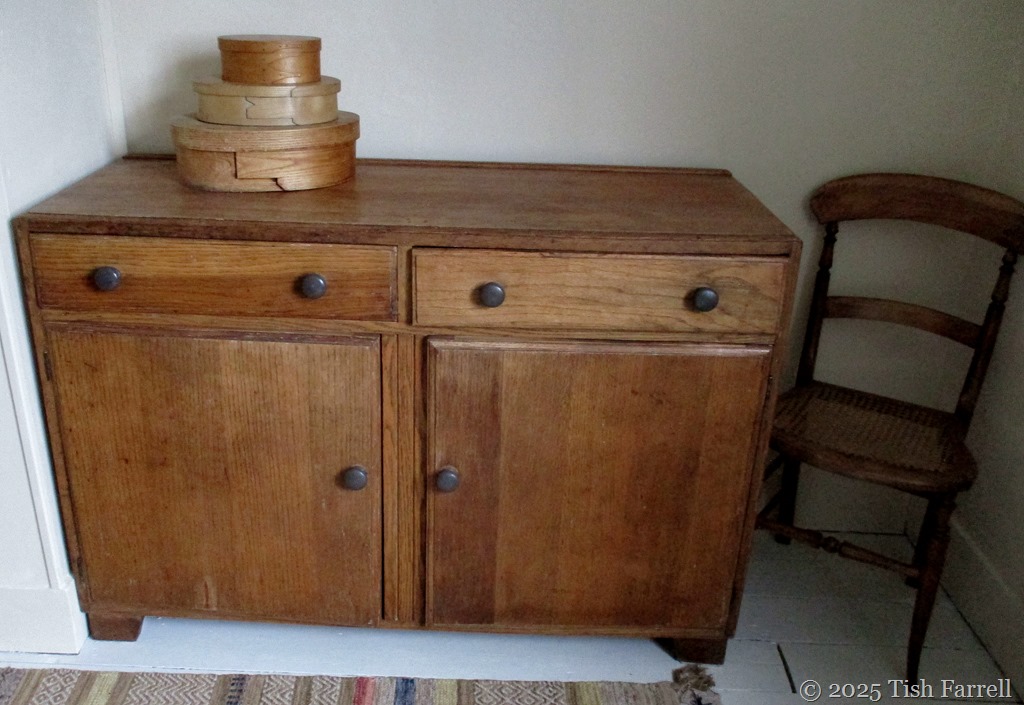
This is where some personal Farrell interest comes in.  We have a catalogue utility piece. Once given as a wedding gift to the Farrell parents when they married after the war, it much later lingered under many layers of green paint in their garage. Then Graham decided to give it an overhaul. It was in the Sheinton Street kitchen for years where I overlooked the fact that the drawers and doors no longer shut properly. Then, moving it to The Gables, we found it wouldn’t fit at all in the new kitchen. We started agonising over getting rid of it, (and yes, I know this might be surprising to some) and so I was very pleased when I found it would fit in the main bedroom, where it’s actually quite useful if unlikely. And I’m attached to it even more now that I know something about the man responsible for furnishing the homes of bombed out, impoverished post-war Britons.

If you want to know more about Gordon Russell and see far better photos of his designs, please go to the museum link above. It’s a very excellent website.

IMG_6770ed

*

There’s a rather smarter version of our sideboard in V & A collection. It was apparently first made by Heal & Son between 1942-1946. You can see the V & A example:

https://collections.vam.ac.uk/item/O123774/sideboard-heal-and-son/sideboard-heal–son/

#GeometricJanuary   Day 26

Evolutionary Geometry?

P1070061 Darwin

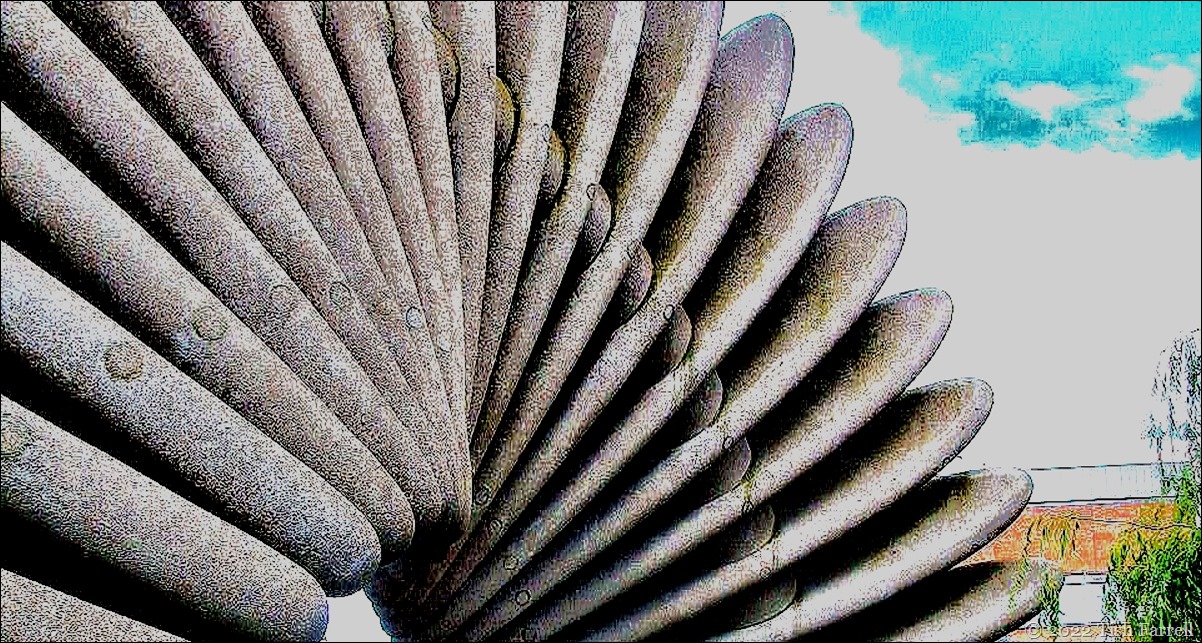
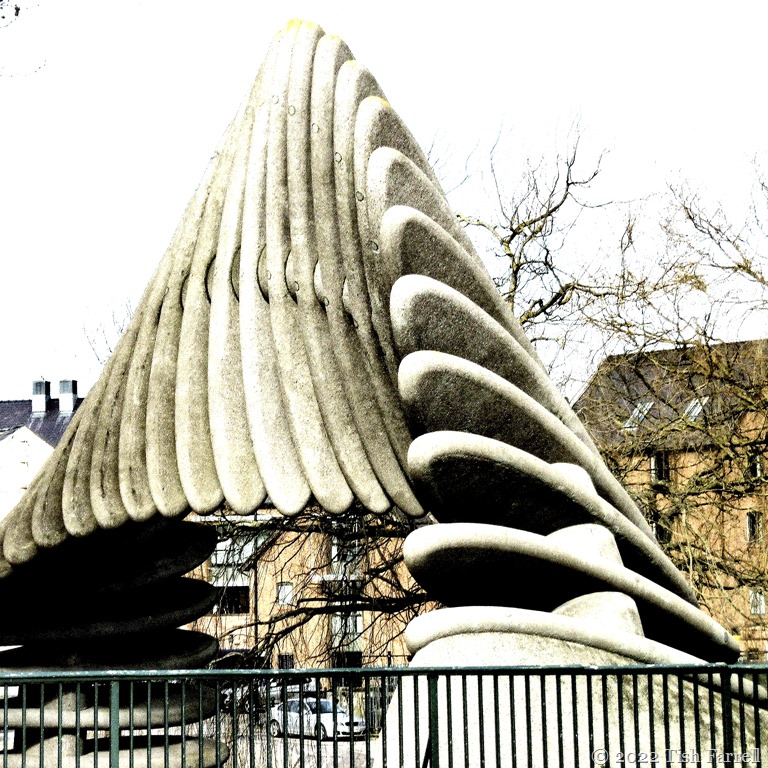
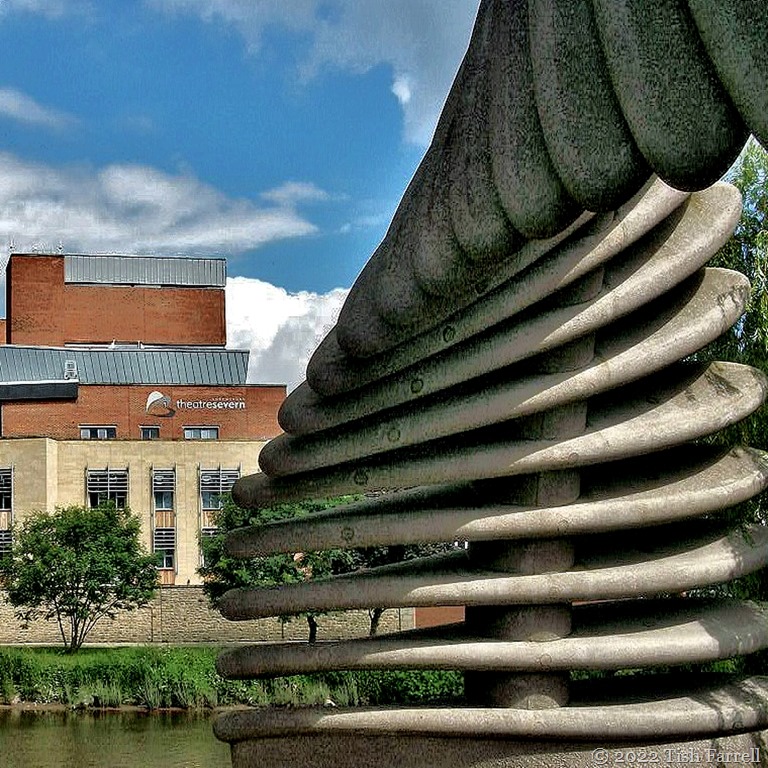
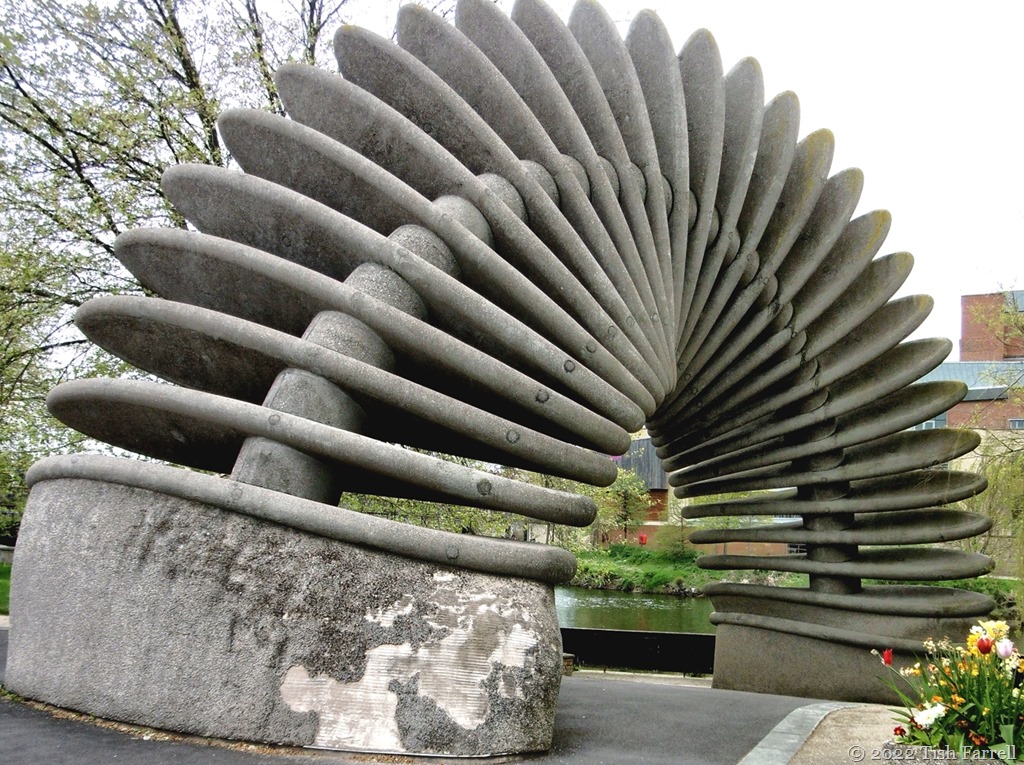
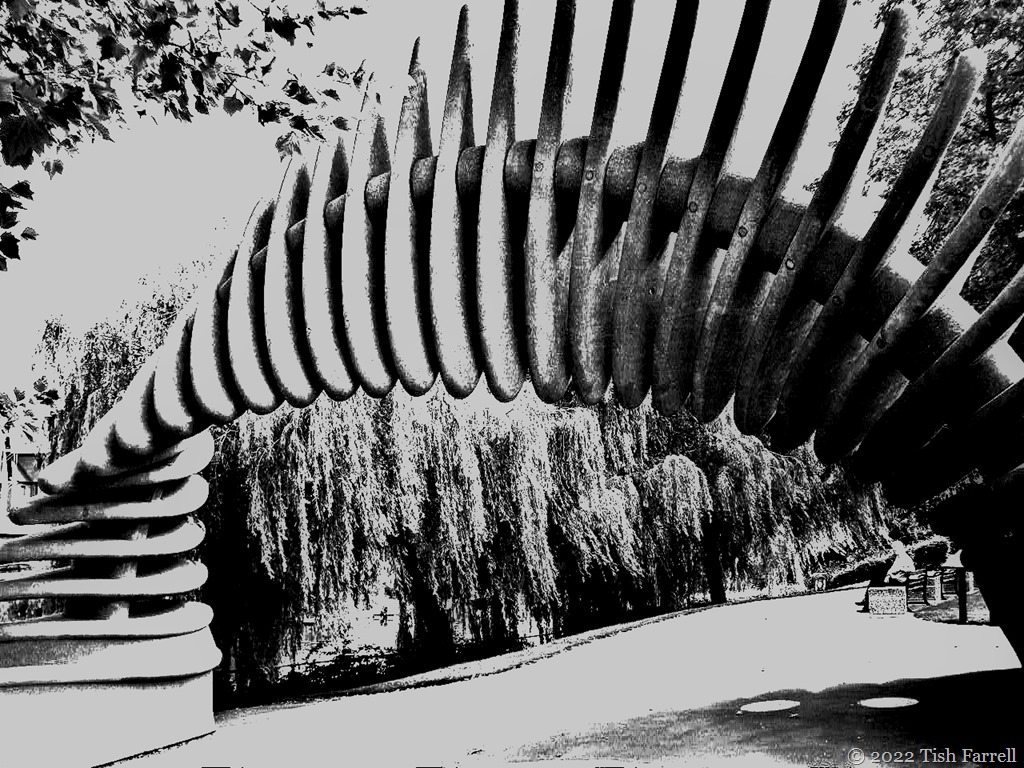
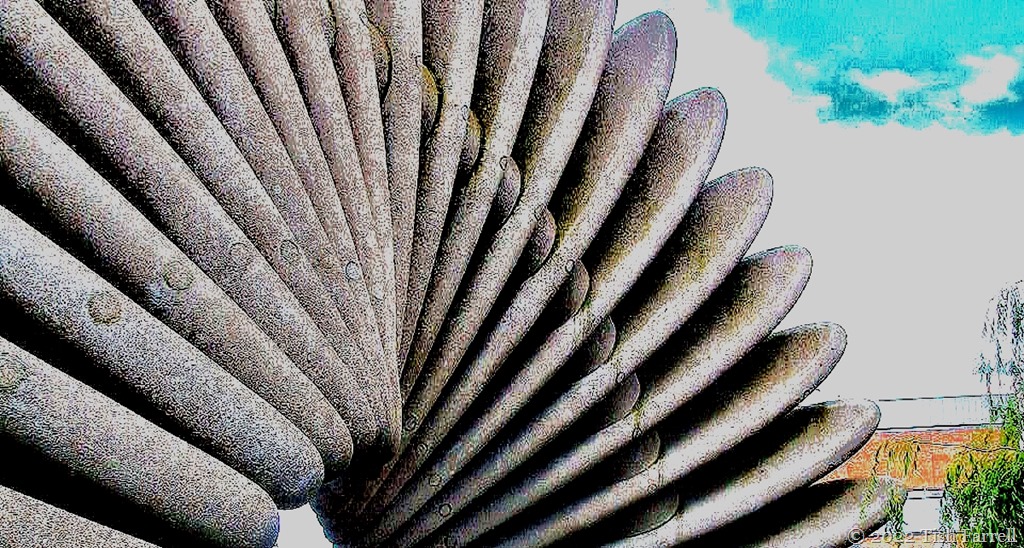
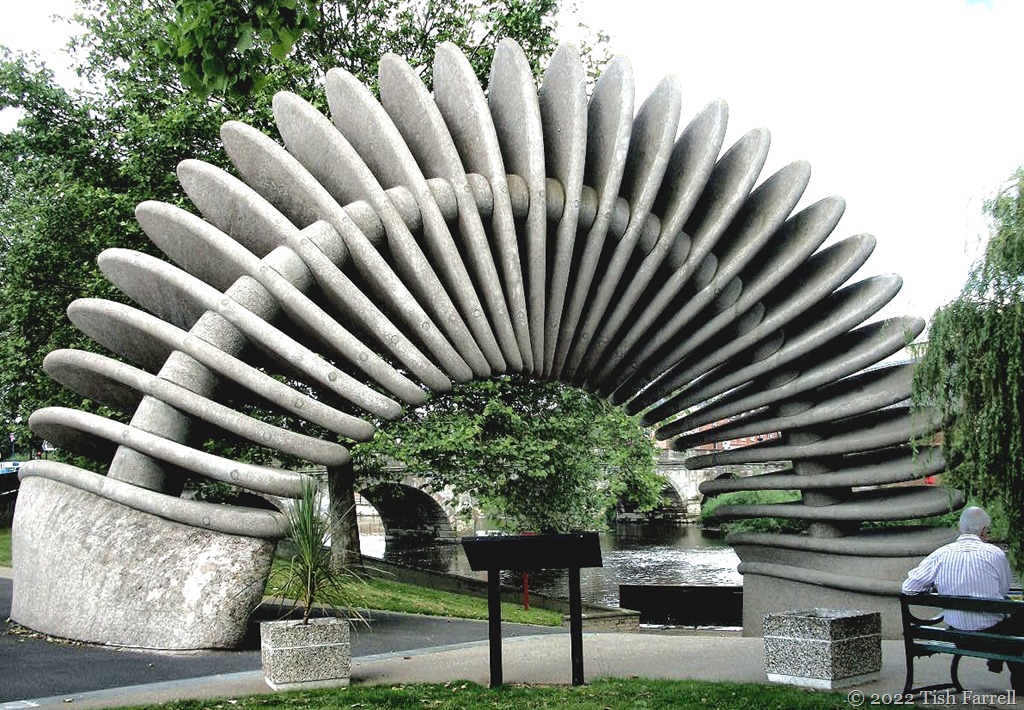
Some of you may have seen this sculpture here before, known variously as the Shrewsbury Slinky, or by its actual title The Quantum Leap. It sits between the River Severn and a busy traffic system, sited on a narrow slice of public space, not large enough to be called a park.

The architectural designers, Pearce and Lal, describe it as a piece of geo-tectonic sculpture, inspired through “the influence of objects and materials central to the development of Darwin’s thought: rock, fossils, zoology…” It was commissioned by the Shrewsbury and Atcham Borough Council to commemorate the 2009 bicentenary of Charles Darwin’s birth.

100_5782 Darwin

100_5791 Dawin

And the reason it’s here?

Charles Darwin was born and brought up in Shrewsbury. His father, Robert Darwin was a wealthy doctor and financier, son of physician and free-thinker Erasmus Darwin. His mother Susannah was the daughter of famous potter, Josiah Wedgwood. A family, then, much used to serious thinking, unafraid to challenge established boundaries and in many domains.

Charles lived at The Mount, a grand house built by his parents, across the Welsh Bridge (glimpsed in the photo above), and so not far from Quantum Leap. He spent his early years exploring the 7-acre family garden, as well as discovering plant and animal life in the countryside all around. He would later claim that he could not help but be a naturalist.

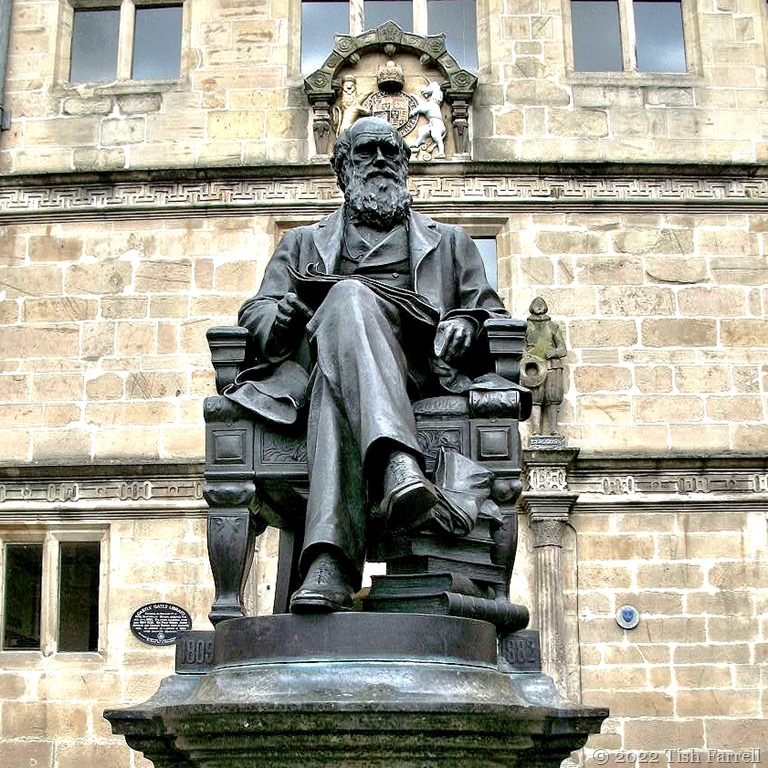
After attending the local Unitarian School, he transferred as a boarder to the prestigious Shrewsbury School (founded in 1552 by Edward VI), which in Charles’ day occupied the building that is now the town’s main library. Outside the entrance is the late Victorian tribute to the man who would go on to write On the Origin of Species, the astonishing (horrifying to some) work that addressed and consolidated his years of careful observations and research.

100_5382sq

At sixteen, Charles left Shrewsbury to follow his older brother, Erasmus, to Edinburgh Medical School, where he lingered for two years, largely disinterested in studying medicine. An angry father then sent him to Christ’s College, Cambridge where he was to study for an arts degree as a prelude to becoming a country parson. This plan did not work out either. The influences and contacts met with at Cambridge led to his taking up a self-funded position as naturalist aboard HMS Beagle on an expedition tasked with survey work across the southern hemisphere. He was 22 and the voyage lasted five years. When he returned he had tomes of notes and extensive collections of mammals, birds and plants. So began the concentrated work of study, classification and cataloguing.

*

But what about The Quantum Leap?

Like many others, I’m not really sure what to make of it. I see the connections with dinosaur fossils, the DNA double helix, but the concrete used to cast the blades is unappealing; the whole effect ‘heavy-handed’ somehow.  However, I do like the way it curves through different planes, although at the same time find myself wondering how the initial plan might have translated with more finesse into bronze or iron. Looking at the Anish Kapoor C-Curve posted earlier this week, I’m wondering what marvellously sympathetic creation he might have come up with, had he been given the brief.

One of the most obvious problems is the siting. It’s a piece of public art that has not only NOT been given enough space to speak for itself, but has been sited on the edge of the town centre where most people will not see it. A commemorative work left largely unseen and at the cost of one million pounds! At which point words fail me, so I’ll leave you with more photos and see what you think about it.

P1070810 darwin

100_5777

#GeometricJanuary  Day 24

100_5792Darwin header 2

Of Wind Towers: Geometry, Art & Science Combined

76 sq

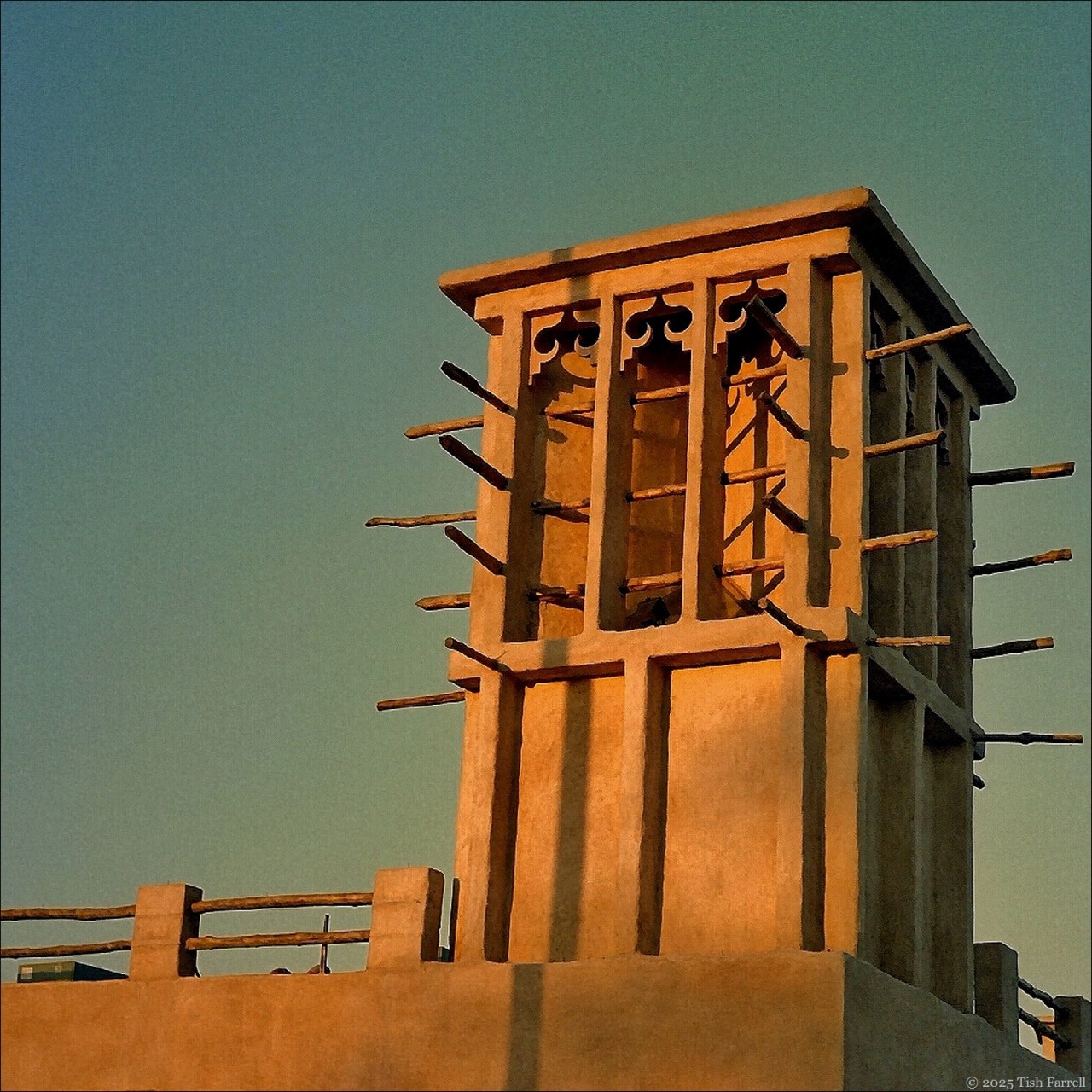
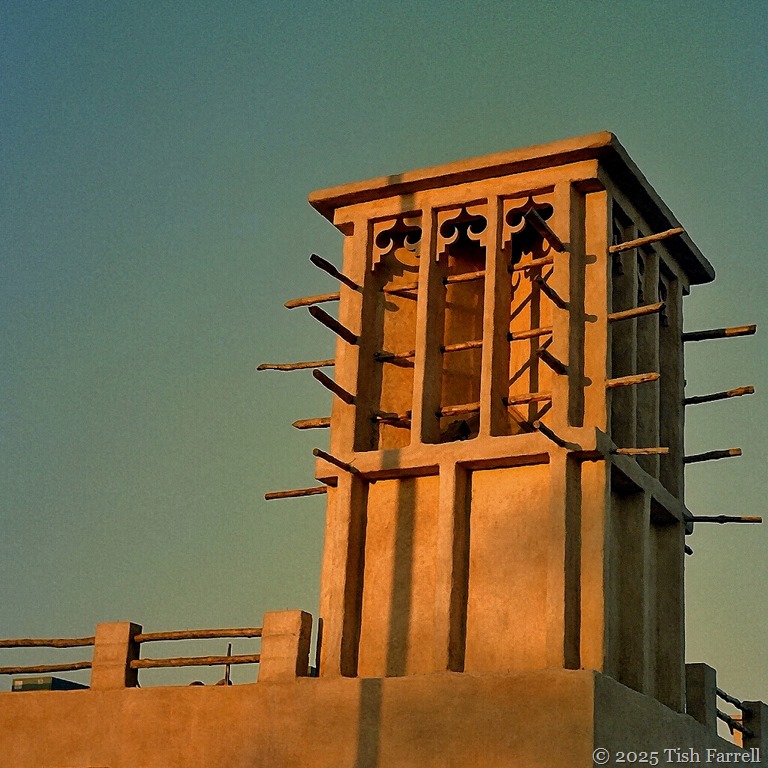
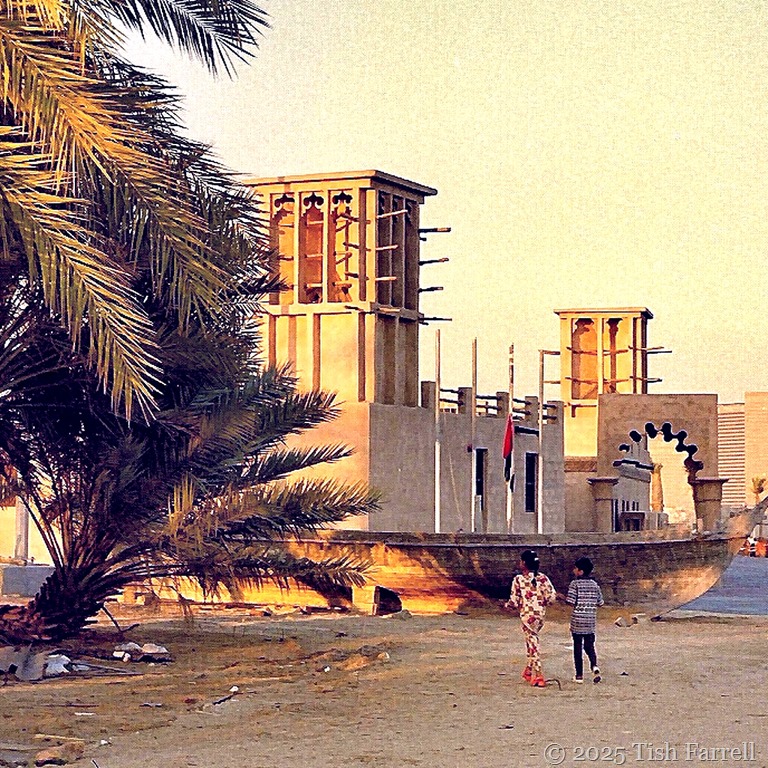
Wind towers – the low-tech means to bring relief from desert heat waves. This one belongs to the restored Sheik Saeed Al Maktoum House on Dubai Creek, built in 1894 by the ruling Al Maktoum family. It is now a museum and, if I remember rightly, the only surviving example of Dubai’s historic grand houses.

78 sq

*

A perfect fusion of aesthetics, science and simplicity of function: this is how they work.

The capped tower has a port that opens towards the prevailing wind. Some towers are multi-directional, their vents opened and closed as appropriate. Air is drawn into the living quarters below, its movement providing the cooling effect.

When there is no wind, the tower acts as a chimney, venting hot air from the interior.

Persian architect-engineers devised this elegant air-conditioning system two thousand years ago, although it is said the Ancient Egyptians had something similar. More sophisticated versions involved installing a canal, qanat, under the building. Where this method was used, the wind tower vents were opened away from the prevailing wind. The system then pulled cooling air up from the canal.

Persian architectural techniques arrived in Dubai in the 19th century along with the development of the pearl fishing industry which gave rise to the settlement along the Creek.

*

Astonishingly, this technology could be scaled down to a demountable, flat-pack desert nomad version.

80 ed

Here we have a reconstructed example of a portable Bedouin wind tower, made of cloth stretched on a wooden frame. (As seen in the courtyard of the Dubai Fort Museum).

But while it scores on movability, there were problems if it was erected too close to the cooking hearth. Once alight it turned into an actual chimney and became a serious fire hazard.

75 resized

Creek-side view of the Maktoum house, an un-rigged dhow beside it

*

#GeometricJanuary  Day 23

Reflective Geometry: C Curve By Anish Kapoor

Anish Kapoor sq

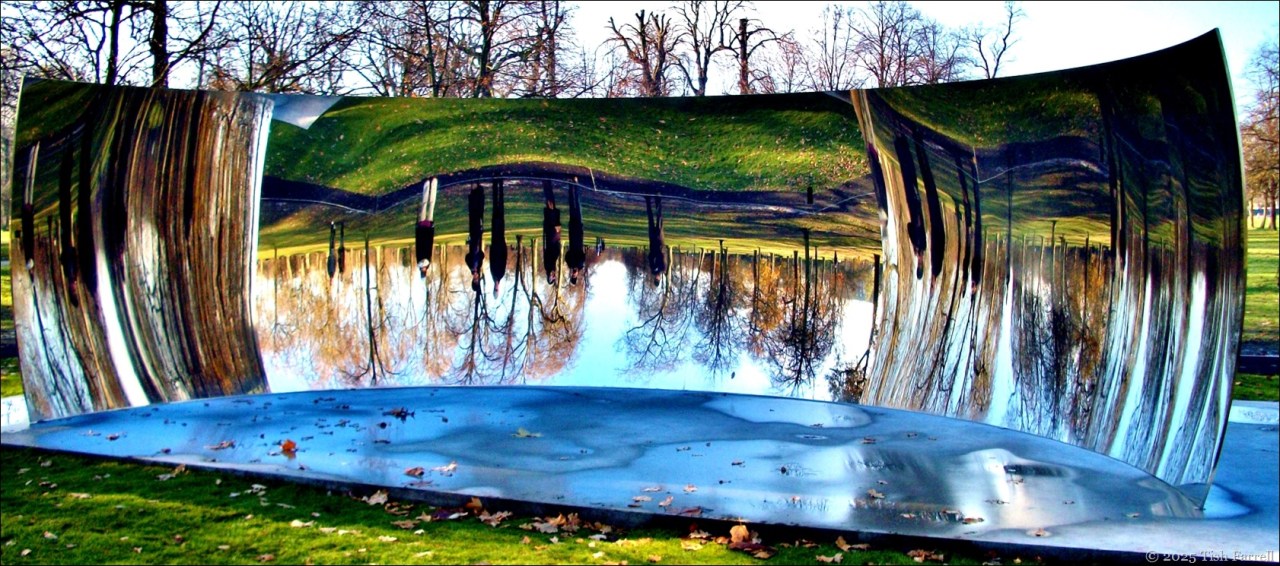
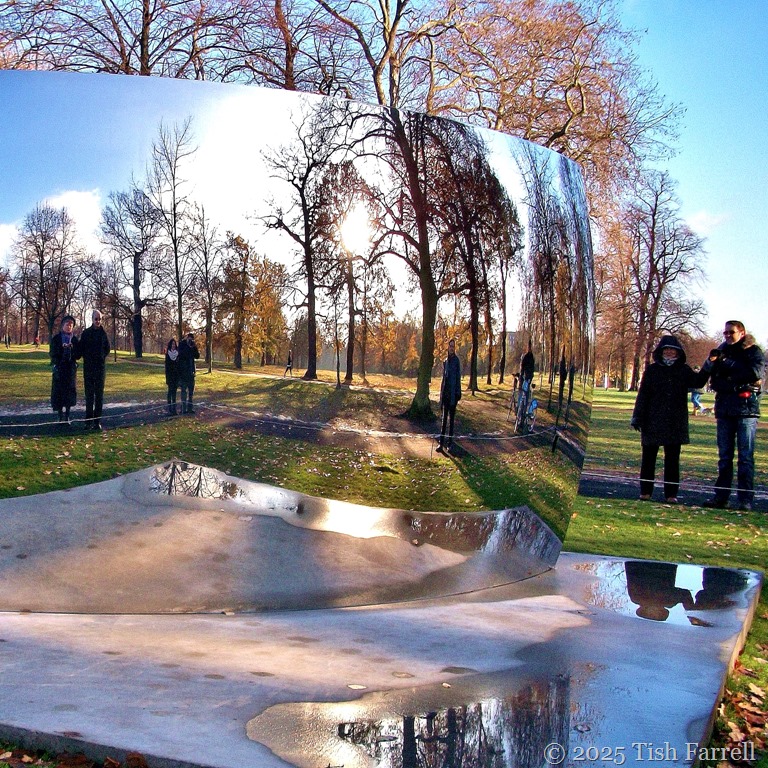
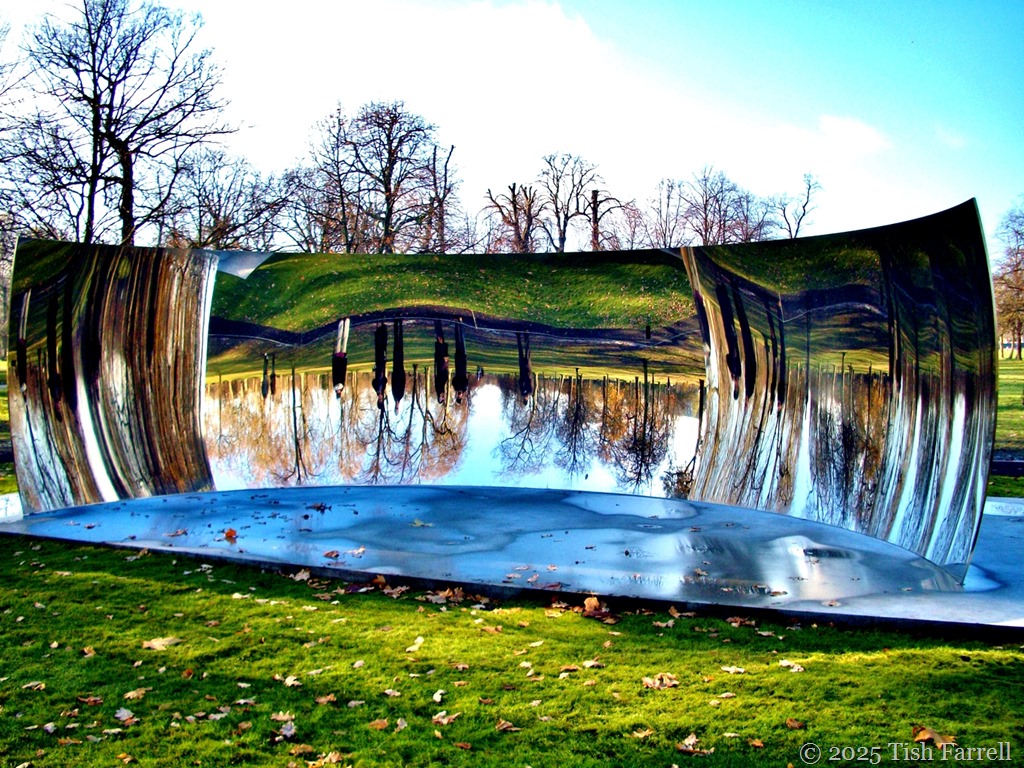
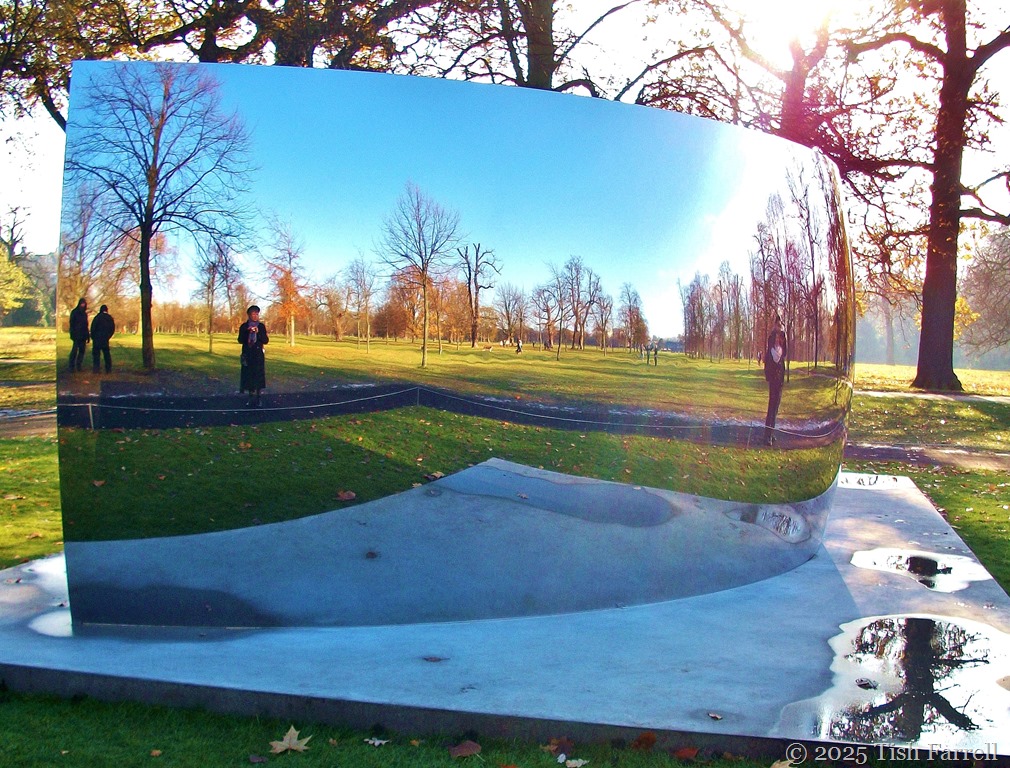
Here’s one from the photo archive. I was reminded of it by today’s very chilly sunshiny morning. It’s a work by Indian sculptor, Anish Kapoor, and called C-Curve. We came upon this fabulous creation by chance after a visit to Kensington Palace, a piece of happenstance that made it all the more wonderful: Looking Glass Land made manifest.

Not only were there the reflections to ponder on, but also the responses of other passersby to enjoy.

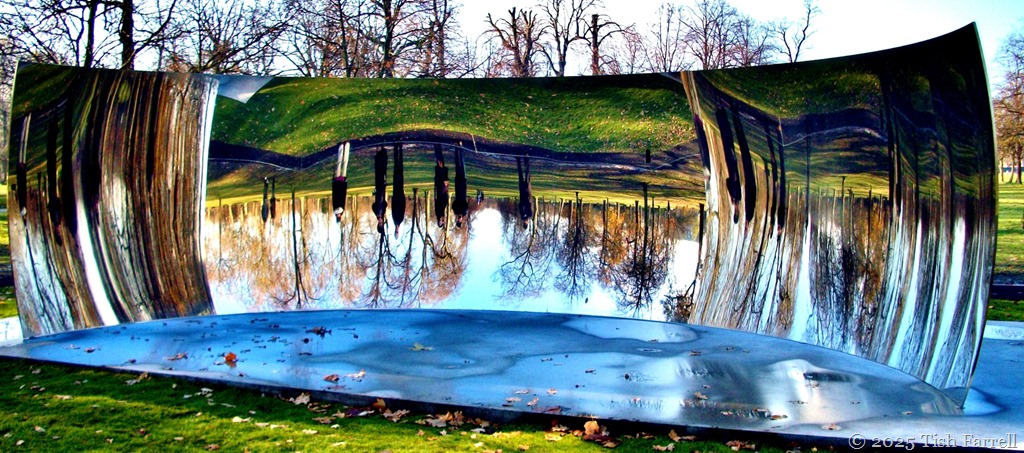
And yet to think the work itself was utterly engineered, the unforgiving edges and surfaces of highly polished steel. It’s stunningly paradoxical. And there was more. When you walked around to the concave face you could have your world turned upside down:

Anish Kapoor concave view

*

And then back again:

100_1453 - Copy

More about Anish Kapoor and lots more geometry HERE

#GeometricJanuary Day 22

Anish Kapoor header


This Morning’s Walk With Some Rural Geometry

IMG_6696sq

*

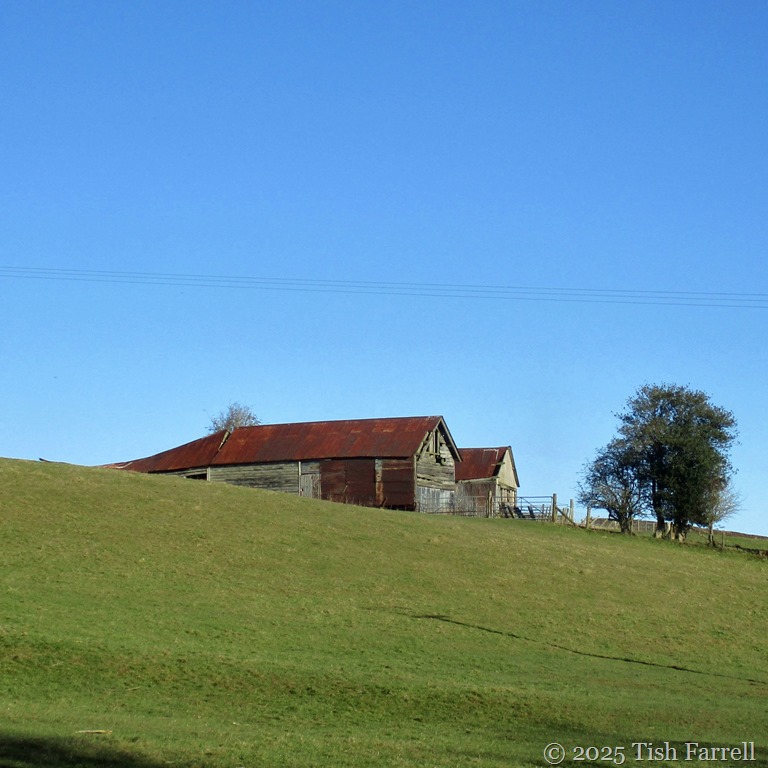
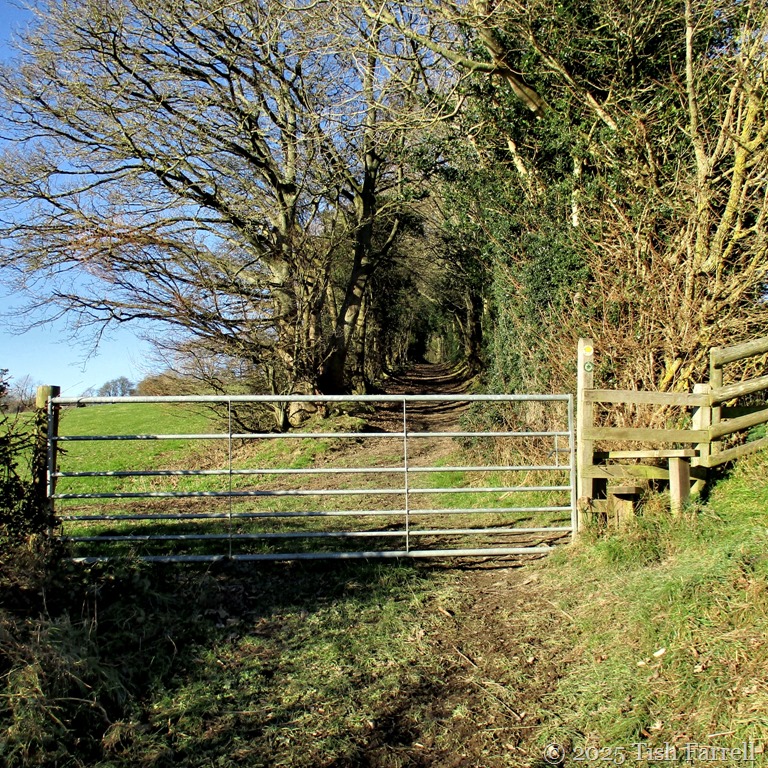
Barn roofs, gates, styles, fence- field- crop- and power-lines, pylons and pole shadows. Oh yes, and some bull rushes…

IMG_6693ed

A brilliant sun-frosty morning and, so we’re told, the last of the super-cold days. But just the morning for a hike up to the dew ponds above the town.

I love this green lane, perhaps the remains of an ancient thoroughfare between settlements, this before the creation of the modern road system, or maybe even part of the old drovers’ routes out of Wales, shepherds and cattlemen driving their flocks and herds to markets in the English Midlands.

Bishop’s Castle was anyway an important market centre at least as far back as the thirteenth century, when the Bishops of Hereford ruled it from their castle at the top of town. Charters were granted for weekly markets and seasonal fairs to be held outside the castle walls.

On market days this now quiet track might well have been bustling with carts, farmers’ wives with their produce: ducks, geese, hens, eggs, butter, cheeses; farm boys on foot, driving pigs, goats, cattle and sheep to sell. Other traders too might have come this way: basket, hat and chair makers, dealers in songs, fortune tellers, herbalists, and street musicians.

IMG_6697sq

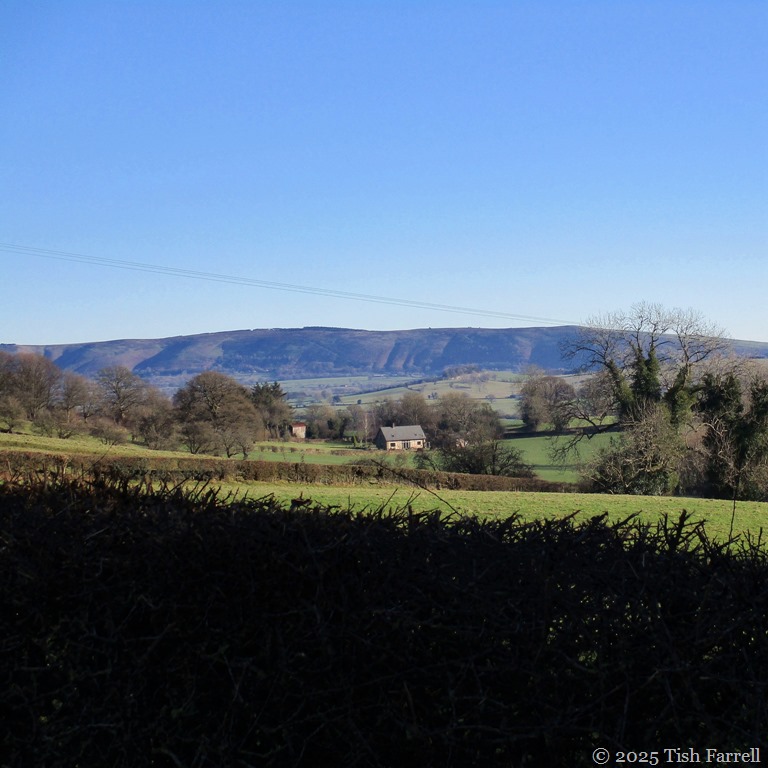
The Long Mynd

*

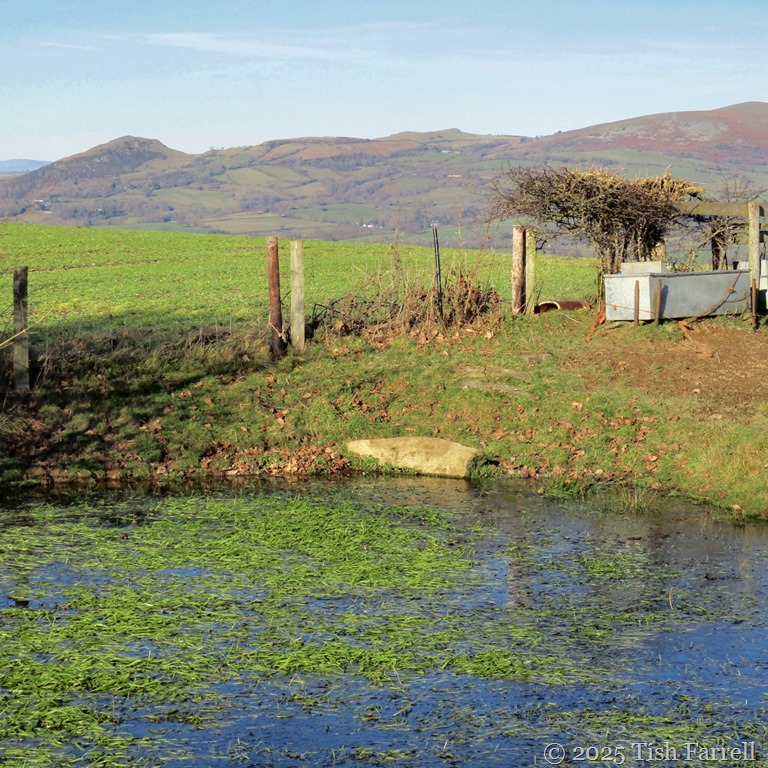
At the top of the hill are some dew ponds. These are man-made pools, created in upland areas without natural water sources, to provide for grazing stock. Water then collects in them, either rain or field run-off. Some may date from the Neolithic period, that is 6-7,000 thousand years ago. Others may date from the Middle Ages or more recently in the 18th/19th centuries when there was still a high demand for wool. Much skill was required to make them. They started out as a saucer-shaped excavation, about a metre (3 feet) deep, and anywhere between 3-15 metres in diameter. This was then lined with straw, followed by an impermeable layer of puddled clay.

IMG_6725sq

*

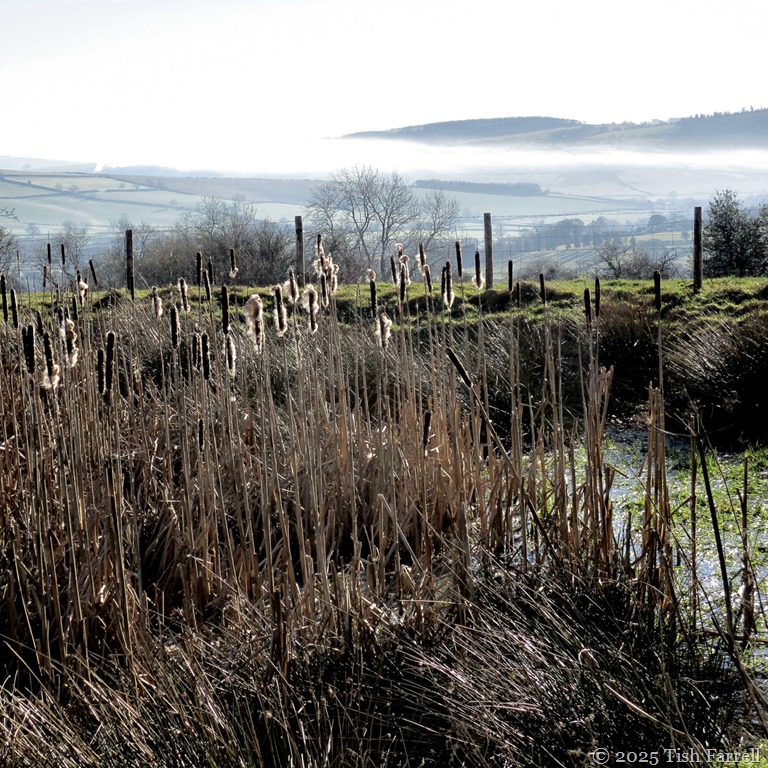
One of the dew ponds no longer in use for stock watering is in its own enclosed domain and filled with bull rushes.

IMG_6716sq

*

There are many fine views all round from this point on the footpath; also another dew pond, not presently in use:

IMG_6707sq

IMG_6709sq

*

And in the field with the operational dew pond, lots of ewes waiting to have their lambs:

IMG_6724sq

*

At this point we retrace our steps, although we could (if all of us were willing) follow the path for several more miles, taking a wide loop back into town. Instead, we head straight down the hill, watching the ribbon of fog flowing along the far valley from Clun towards Craven Arms. We’ve recently learned that this mist phenomenon, rather common in these parts, is also called brume.

IMG_6729sq

*

Finally at the foot of the hill by the Wintles, another favourite old barn:

IMG_6734sq

*

And by now it was lunchtime so we called in at Tahira’s Chai Shop  on the High Street for some delicious beef and vegetable samosas (also geometrical) plus lots of good chatting, topped off with (triangular) slices of Rose’s light-as-a-feather, and mouth-wateringly warm cardamom cake. None of which stayed on our plates long enough to think about taking photos. Sorry.

#GeometricJanuary Day 16

Geometrically Inventive: The World’s First Cast Iron Bridge 1779

Iron Bridge 4

*

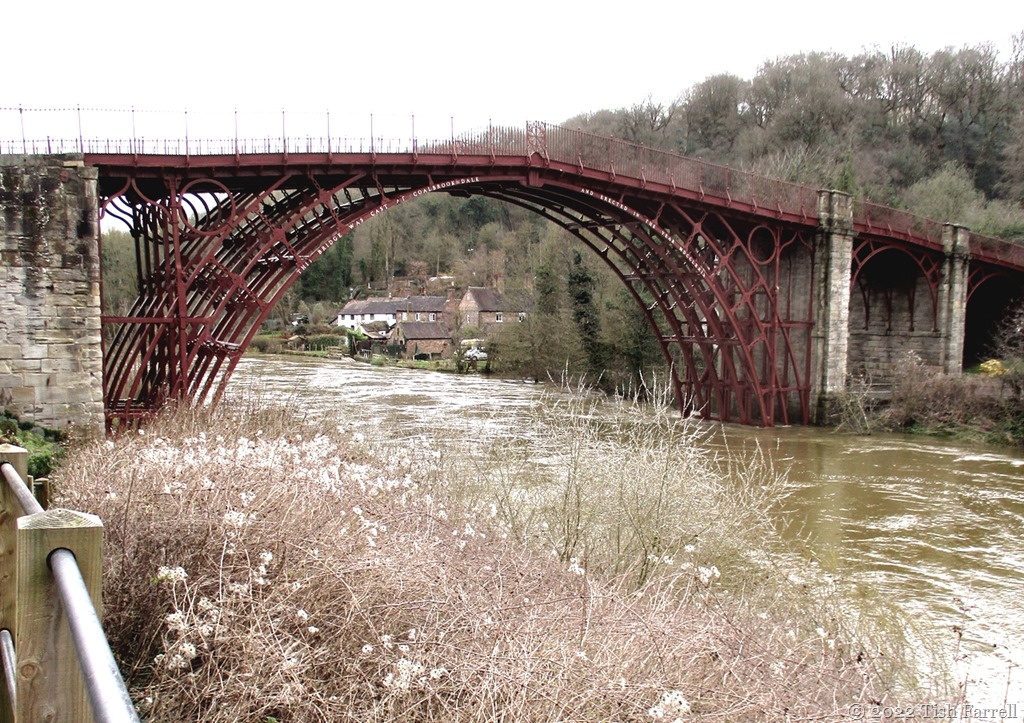
I rather miss having the Iron Bridge on our doorstep. It’s now a good hour’s drive across the county from our house in Bishop’s Castle.  We used to like wandering along the Wharfage beyond the bridge, gazing up at the hanging woodland along Benthall Edge. It’s a great place for promenading, or at least it is when the River Severn is safely in its bed.

IMG_2614ed

River Severn on the rise

*

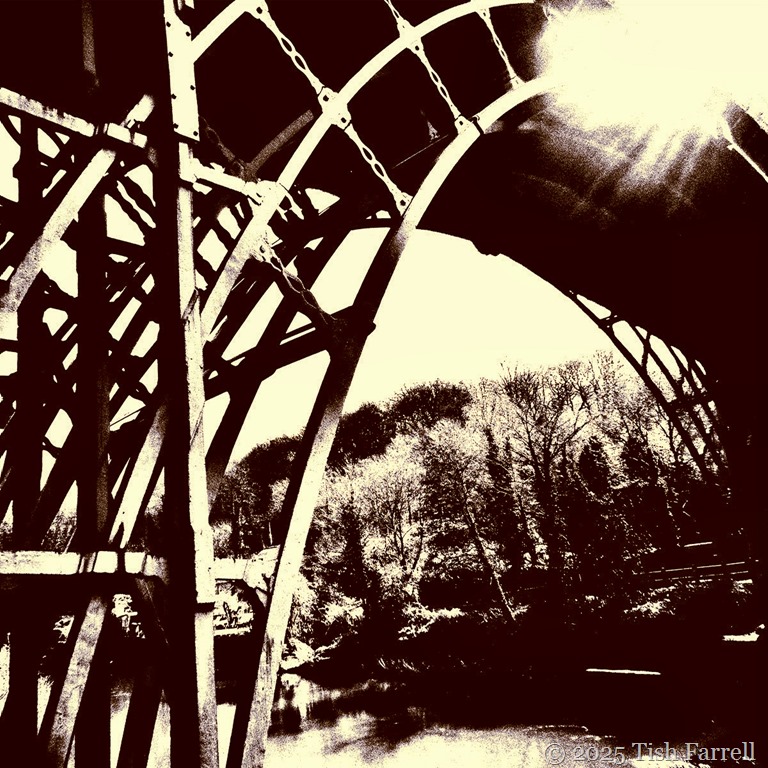
The Iron Bridge, though, has withstood the most tremendous deluges, including the great flood of 1795 that took out most of the old stone bridges from Shrewsbury to Worcester. It was a show of resilience that proved to anyone who had doubted the capacities of large cast iron structures, that its builder, Abraham Darby III, had been right all along: cast iron was the material of choice for the industrial age.

Nor did its adoption take long. Soon it would be used to build the frames of factories; seen as a boon for the owners of textile mills whose combustible raw materials made them prone to ruinous conflagration. The several-storeyed iron-framed buildings that ensued were forerunners for the skyscrapers of the modern age.

P1000842ed

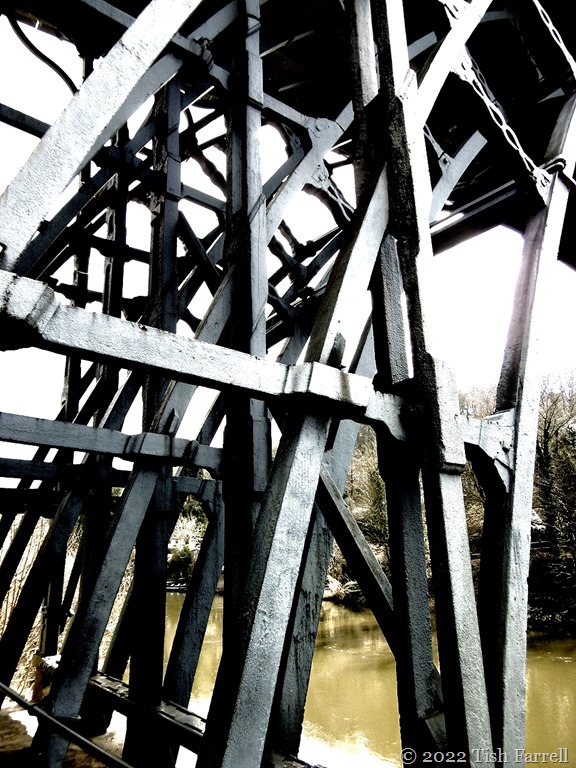
On closer inspection, though, Abraham Darby’s ‘world wonder’ innovation came with more than a hint of sticking to the tried and trusted. After all, the man was an ironmaster, from a dynasty of ironmasters, and thus a pragmatist, and while the use of cast iron for so big a project was breaking new ground, the hundred foot span was achieved by the jointing of over 1,700 castings, some weighing over 5 tons, and using centuries’ old woodworking techniques of dovetail, mortise and tenon joints.

Besides, there was something else he was wanting to prove: that a bridge with a single arch could be made to span a waterway, busy with large sailing barges. To achieve this meant another significant breakthrough: the Severn trows could pass beneath without the nuisance of lowering their masts.  It was all good for publicity.

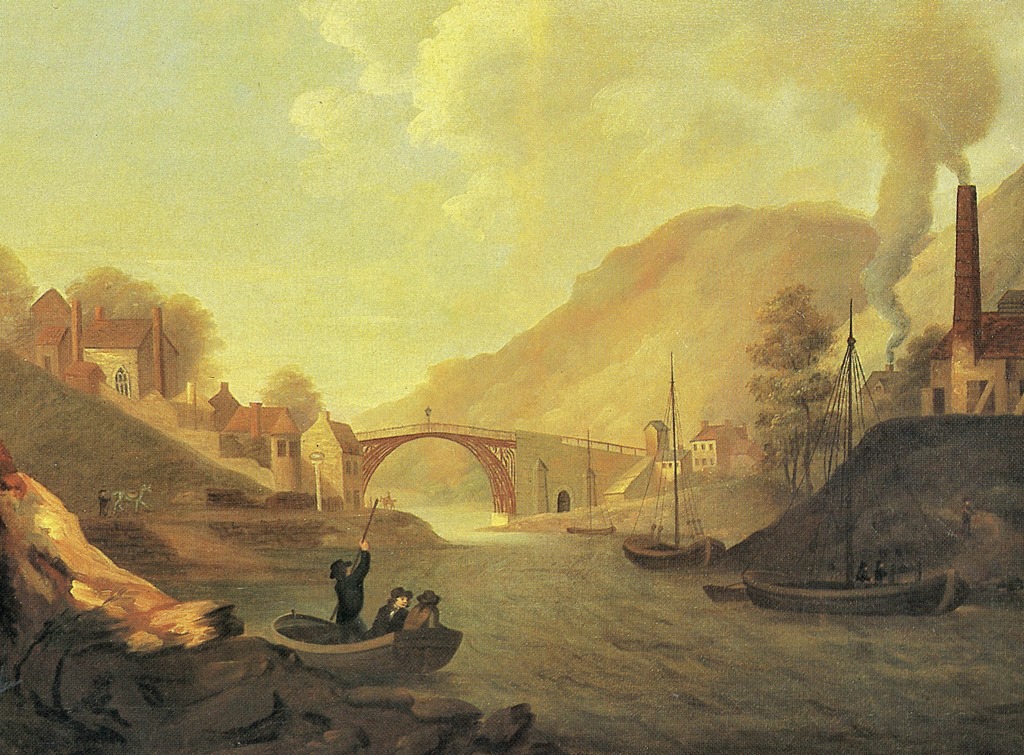
Iron Bridge The cast iron bridge near Coalbrookdale View of William Williams 1780

‘The Cast Iron Bridge near Coalbrookdale’  by William Williams 1780

*

The bridge and the foundries, furnaces and forges of Coalbrookdale became the tourist venue of the age. Engineers, ironmasters, industrial spies and scores of artists flocked to wonder at what many likened to a vision of hell. The William Williams image above was painted a year before the official opening of the bridge to the general public. You can see three trows moored along the right hand river bank.

*

IMG_3492ed

And of course, as a World Heritage site, the Iron Bridge is still a huge tourist attraction, seen here spanning a quiet and sluggish summer river.

GeometricJanuary Day 11

Conserving Geometrically ~ Sunshine In A Jar

IMG_6661

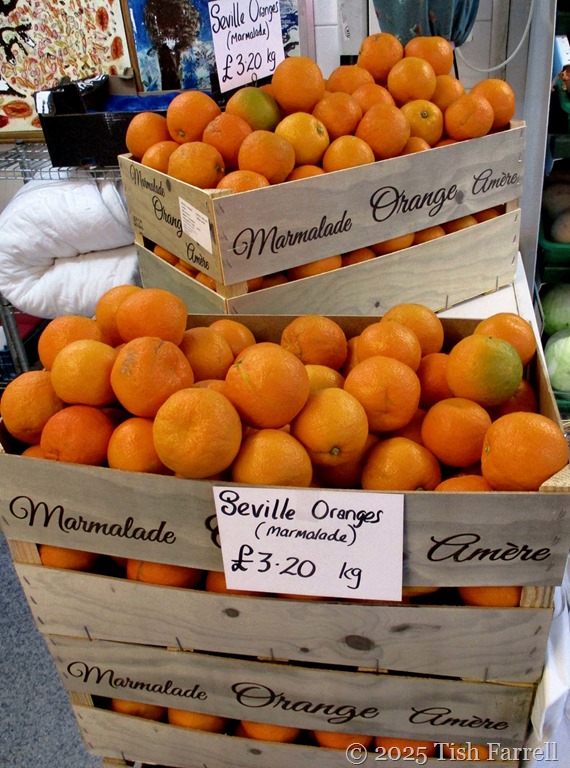
On Saturday we were in A.J. Pugh’s, our excellent Bishop’s Castle butchers. It was their first day of opening since Christmas, and so I was surprised to find the Seville oranges had already arrived. Sixteen crates of them, I think we were told.  To myself I marvelled at the crowds of marmalade makers that this prodigious quantity implied. Were there really so many in our small rural town? Clearly there must be. Andrew Pugh knows his stuff. He’s been serving the Castle since 1980.

This thought then induced an impulse purchase. Must get ahead of the marmalade makers’ stampede.

IMG_6677

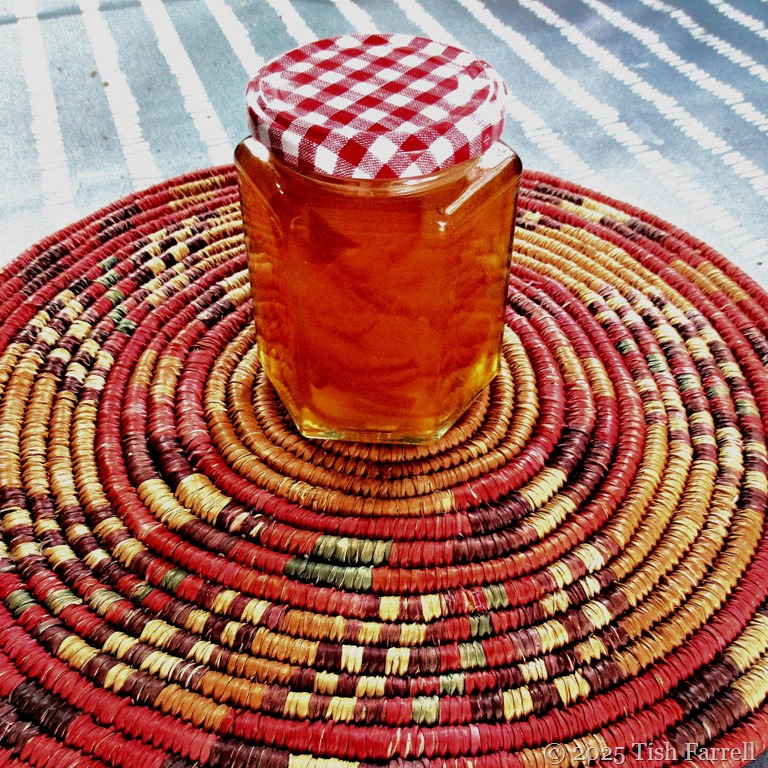
And so on Sunday afternoon, a day of gloom and wet snow (and after a quick consultation with Delia Smith HERE) I extracted pips and pithy innards, squeezed juice, and simmered the shredded peel till it filled the house with a heady orange fragrance. That alone lifted the spirits. And then, after a couple of hours, there was the pleasure of domestic produce: eight oranges, roughly a kilo, yielded eight assorted jars and a part jar, which should keep us going for at least a year, as well as providing a gift or two; this so long as Paddington Bear impulses don’t take over.

IMG_6675 header

*

#GeometricJanuary Day 7

Fruitily Geometrical: The Pink Pineapple Pavilion

IMG_1328ed pineapple 2

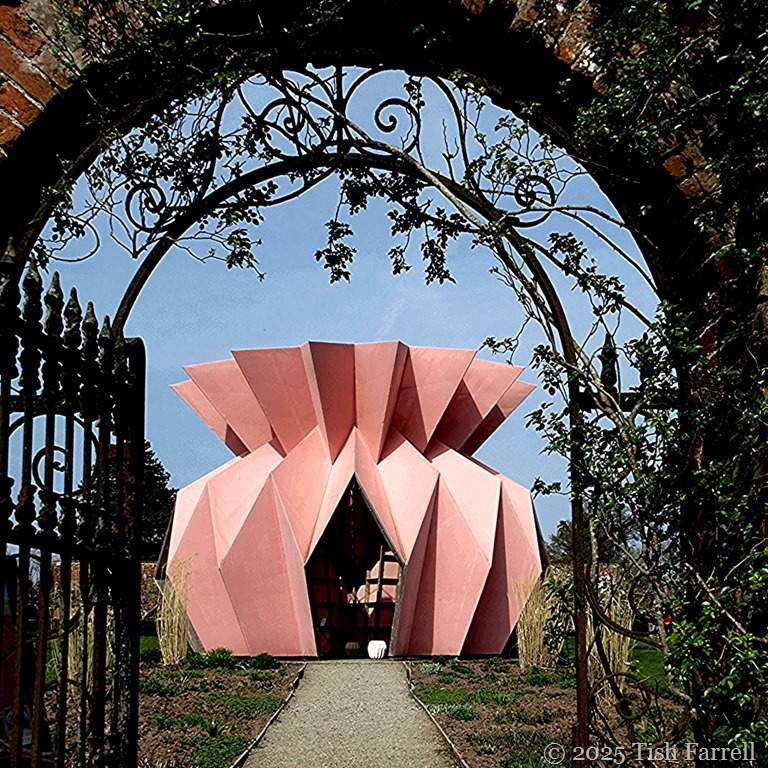
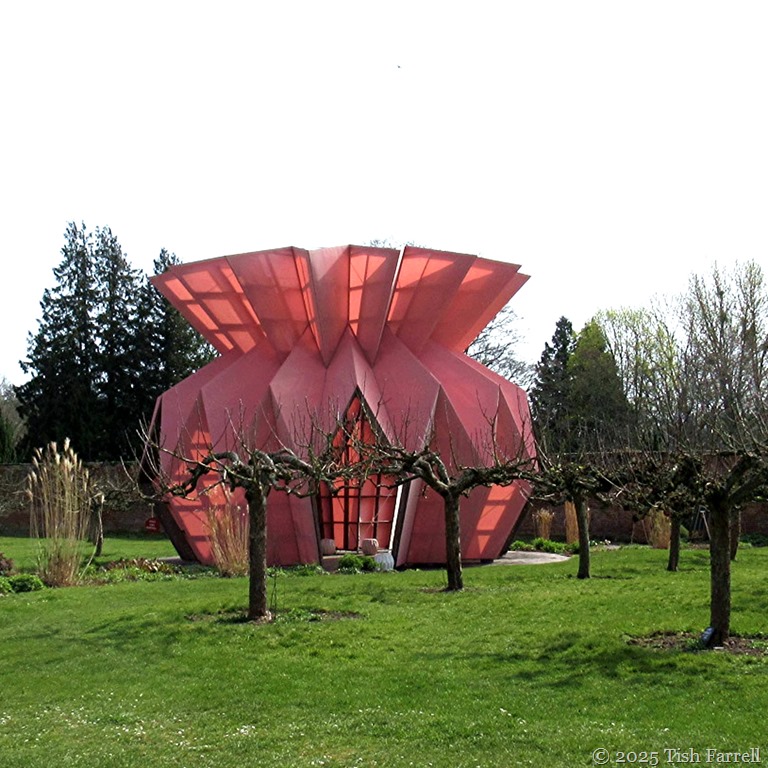
Some of you will have seen this before, but I thought it deserved another outing; ideal for Becky’s #GeometricJanuary.

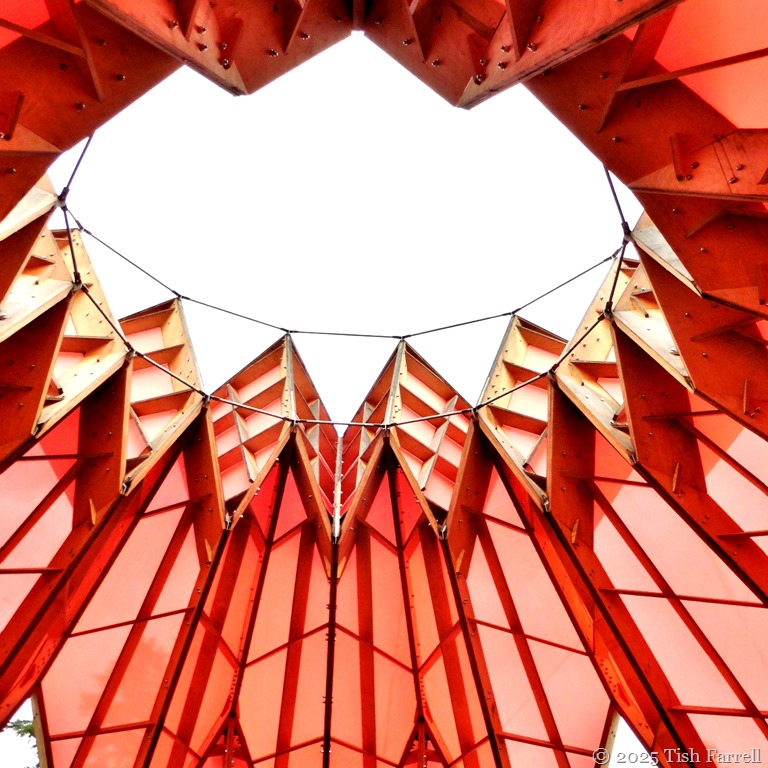
We came upon it a few years ago when visiting National Trust stately home, Berrington Hall, in Herefordshire. It is the work of installation artists Heather and Ivan Morison; their interpretation of the Georgian garden pleasure principle, which included all manner of temporary structures for dining, conducting assignations, or communing with the great outdoors. It’s called Look, Look, Look!

P1030075 sq pineapple 4

In the 18th century, Britain’s landed rich expended their often questionably-gotten gains in the creation of pleasure parks around their grand houses. These were places for promenading, a little sporting activity (fishing, sailing, archery), for re-enactments of famous naval battles (if you had your own lake); there were ‘eye-catcher’ summer houses, grottos, fake ruins, and classical temples. It was also the era of wholesale removal of villages from the sight-lines of the gentry in the ‘big house’. Garden tunnels were also dug so the horticultural workforce could go about their labours largely unseen. Above all, these gardens were ‘show off’ places, and if you wanted the best, you employed the likes of Lancelot ‘Capability’ Brown to design it.

IMG_1312 pineapple 3

Another show-off item was exotic fruit, especially the pineapple whose possession, in the flesh, produced in your own very expensive-to-run hot house, or as architectural motifs about the house, demonstrated your wealth and prestige. At Berrington Hall there are both pineapple allusions, and  the surviving landscape contrivances of Capability Brown. The park is magnificent, and Brown’s last endeavour as a garden designer. There is currently an extensive garden restoration project which aims to recover his original groundworks.

pineapple quite

Inspired by the pineapple, detail from a Berrington Hall bed quilt

*

N.B. You can find full details of the Pink Pineapple’s construction, with architectural plans HERE.

#GeometricJanuary Day 5

Elephantine Geometry: The Things One Sees In Bishop’s Castle

IMG_6641sq

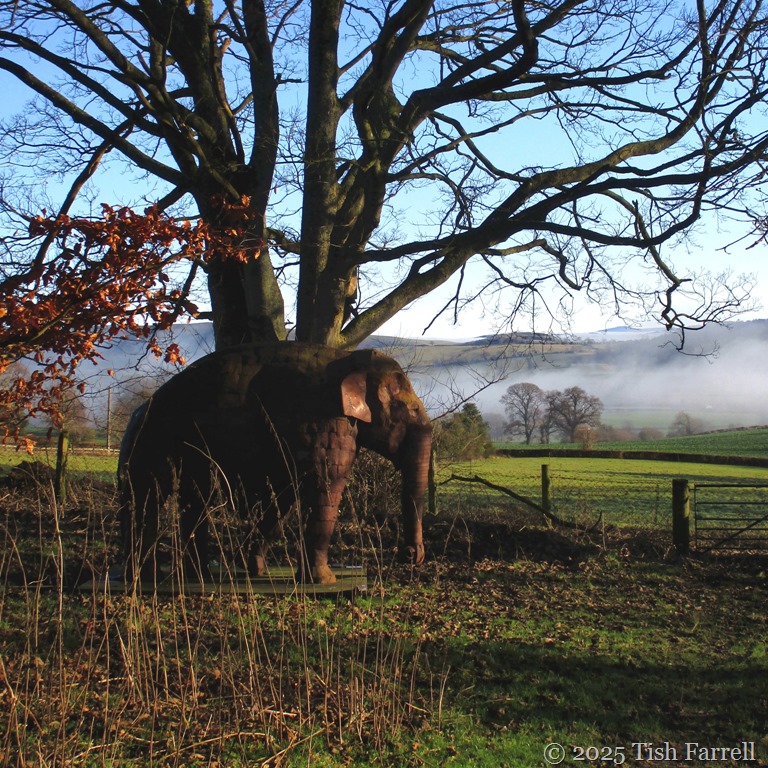
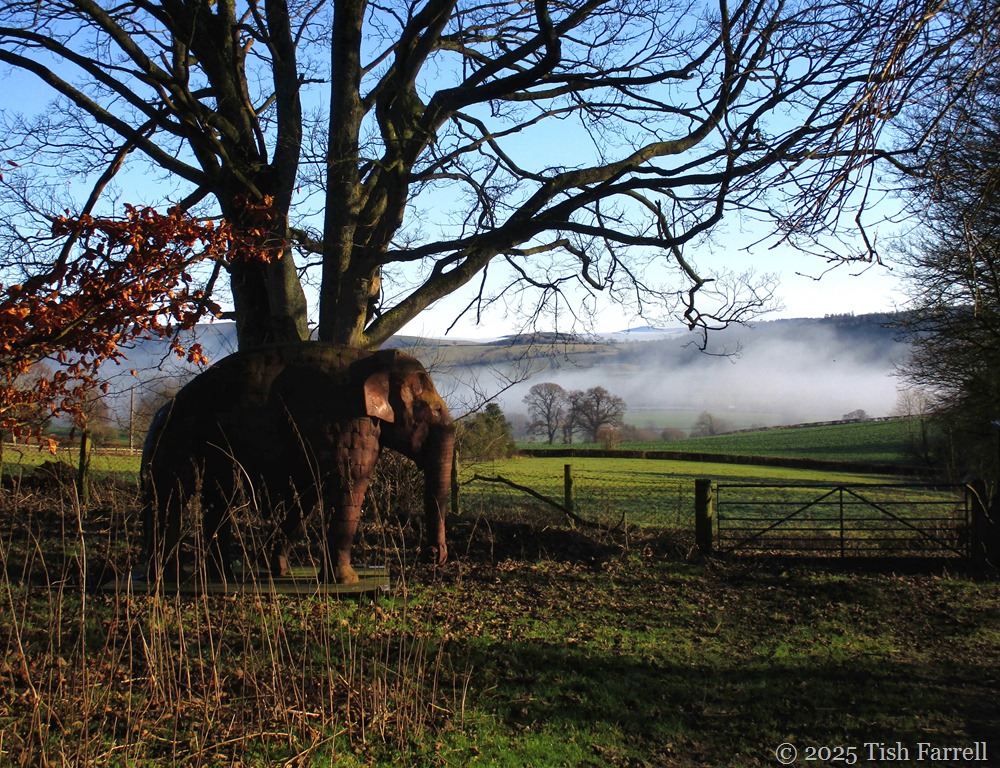
Well, at first sight, glimpsed through a December hedgerow, it truly did look like an actual elephant. Good heavens! What was it doing here in the Shropshire Hills?

We discovered it last week, by chance, as we explored the hillside paths above the town. There it was, beside the Shropshire Way, at Foxholes campsite, and with company too. The Buddha no less.

IMG_6638 sq

*

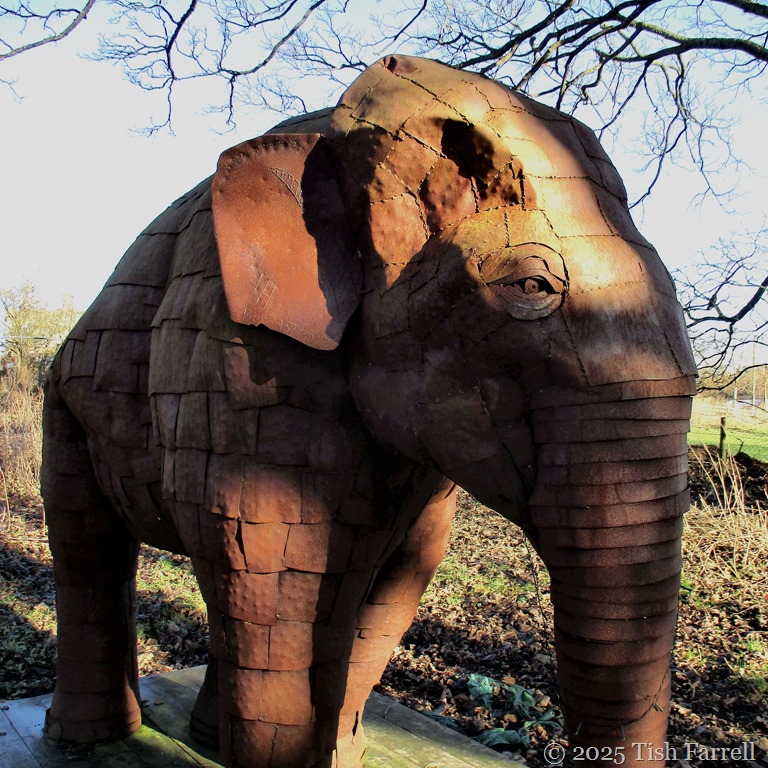
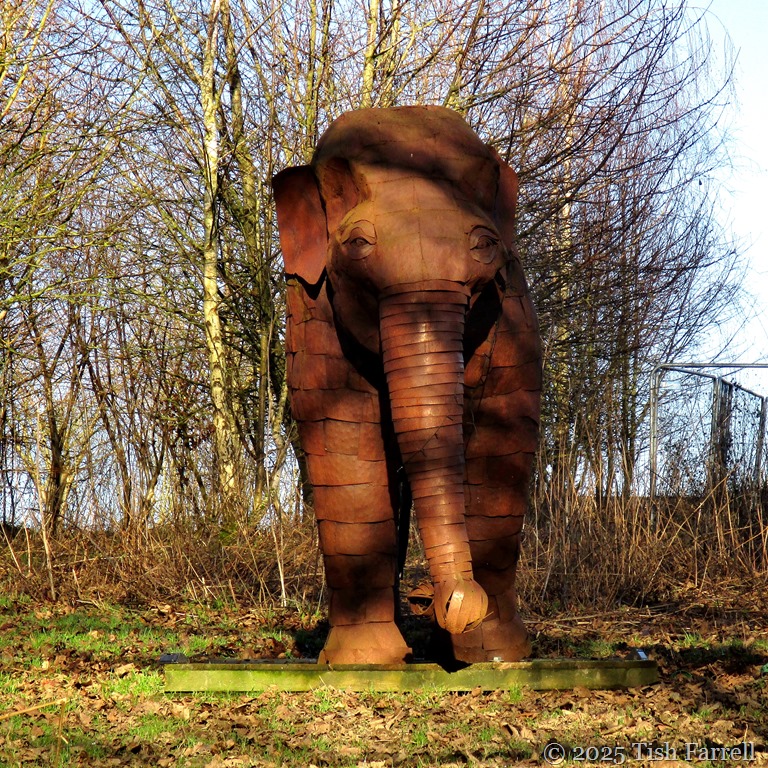
Closer inspection of course revealed that it was cunningly constructed of metal plates, now richly rusted.

IMG_6646 sq

IMG_6637 sq

*

We then realised that it was doubtless one of the exhibits in the Bishop’s Castle town trail, The March of Elephants. You can see the other artworks at that link. This particular work was created by local artist Ben Ashton, but I couldn’t find anything further about him.

By now you could well be wondering why there is an elephant art trail in a Shropshire market town wherein the trade in sheep and cattle has for centuries been the major enterprise.

There are two connections.

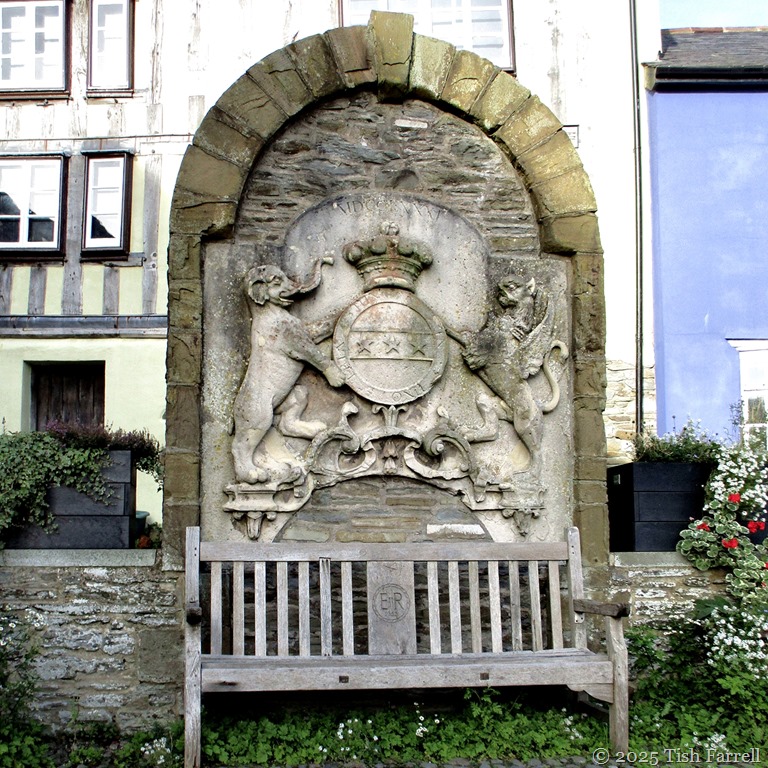
First there is Robert Clive aka Clive of India (1725-1774). After he had finished plundering Bengal (he had started out as a clerk of the East India Company), he returned to his native Shropshire with an eye-wateringly colossal fortune and lived at Walcot Hall just outside Bishop’s Castle. He was further rewarded for his India efforts with a seat in Parliament (MP for Shrewsbury) and an Irish peerage. His newly wrought family crest featured an Indian elephant, of which a carved stone version still survives in the town’s Market Square. It had once been prominently sited on the main window of the Market Hall (since demolished) built by Clive’s son Edward.

IMG_3973 sq

*

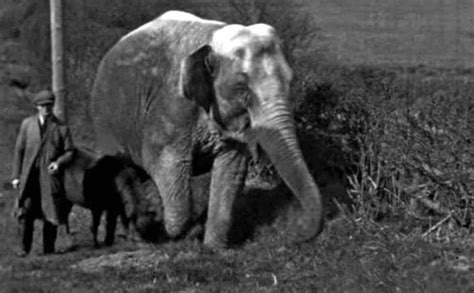
A rather more pleasing elephant association is the fact that during World War 2, one or more circus elephants were kept in Bishop’s Castle for safety’s sake. They lived in the stables of The Castle Hotel at the top of the town. At least one was to be seen exercising along the lanes. There’s a brief film clip of it here: https://www.youtube.com/watch?v=AnMu3l3Q0rE

Bishops Castle elephant

*

So there you are. Seeing elephants in Bishop’s Castle is not so outlandish after all.

 IMG_6641

*

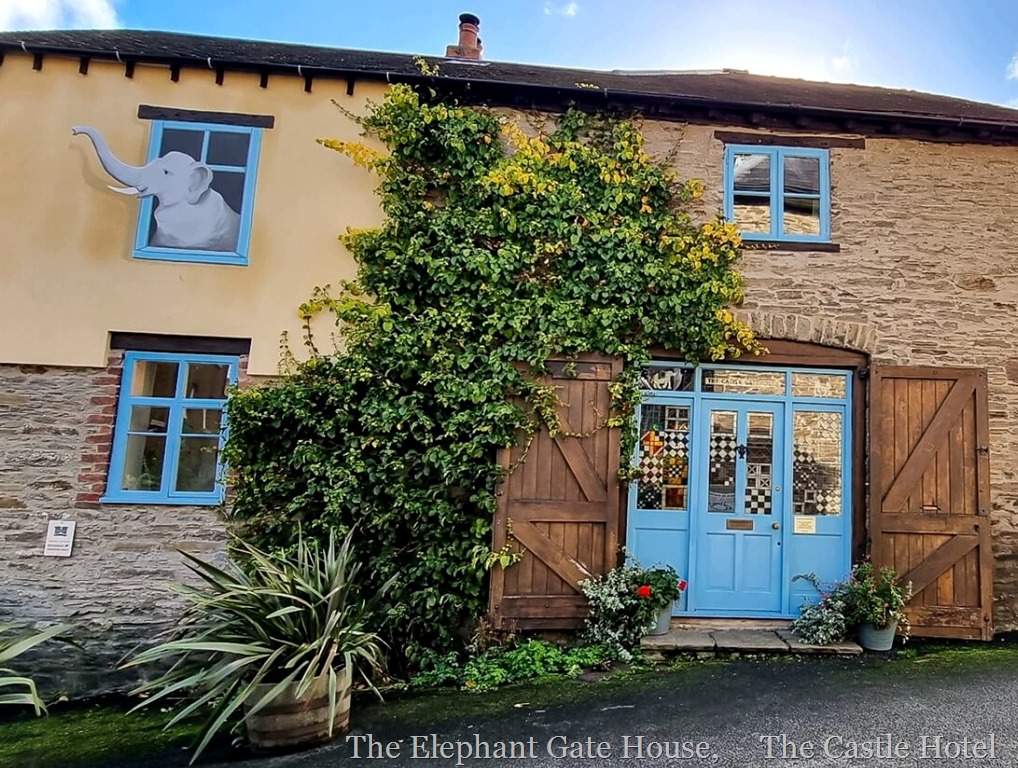
P.S. The war-time elephants’ quarters have been given a plush makeover and you can now stay in The Elephant Gate House.

Elephant Gate House

#GeometricJanuary Day 4   This month Becky is hosting square photos with a geometrical theme.