In Great Grandmother’s Footsteps

Callow and stepping stones sepia

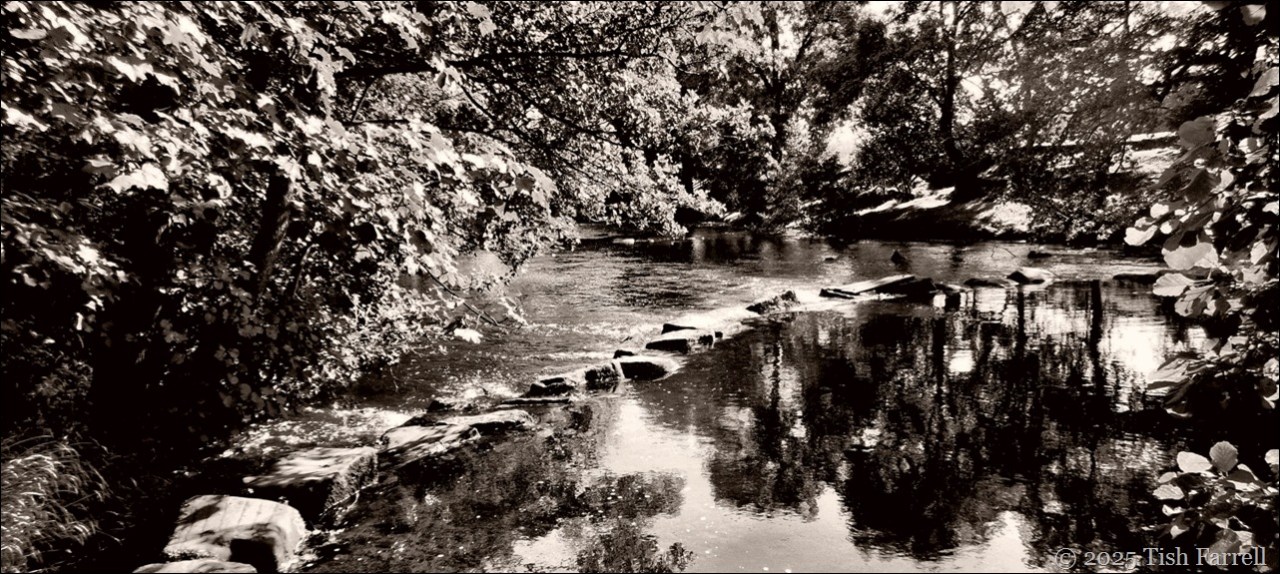
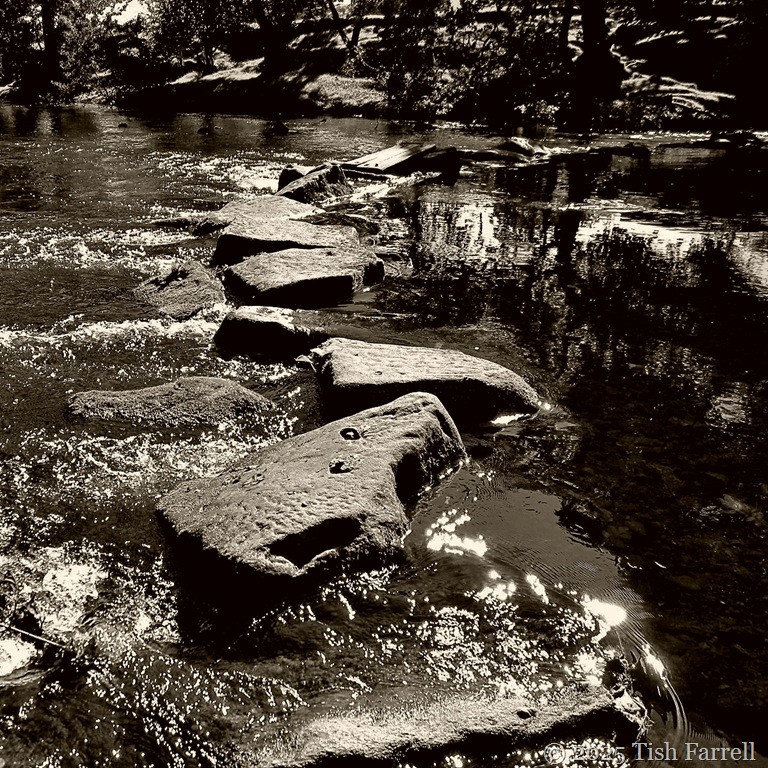
This is where my great grandmother used to cross the River Derwent to go shopping in Hathersage back in the 1880s. I know this because, much like stepping from stone to stone, she told my grandmother, who told her daughter, who then told me.

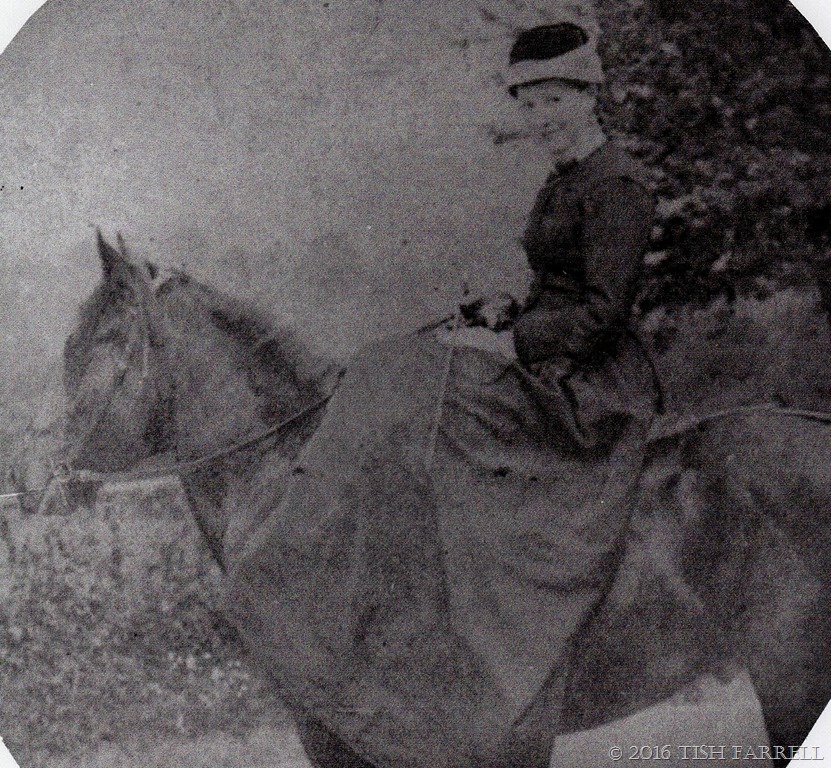
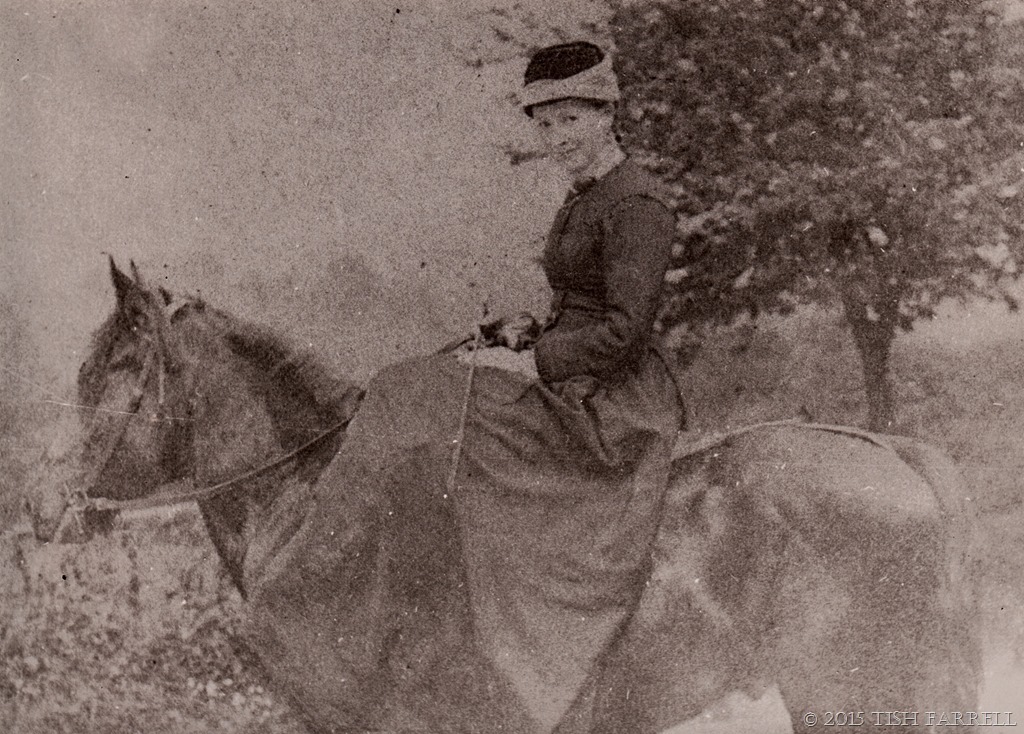
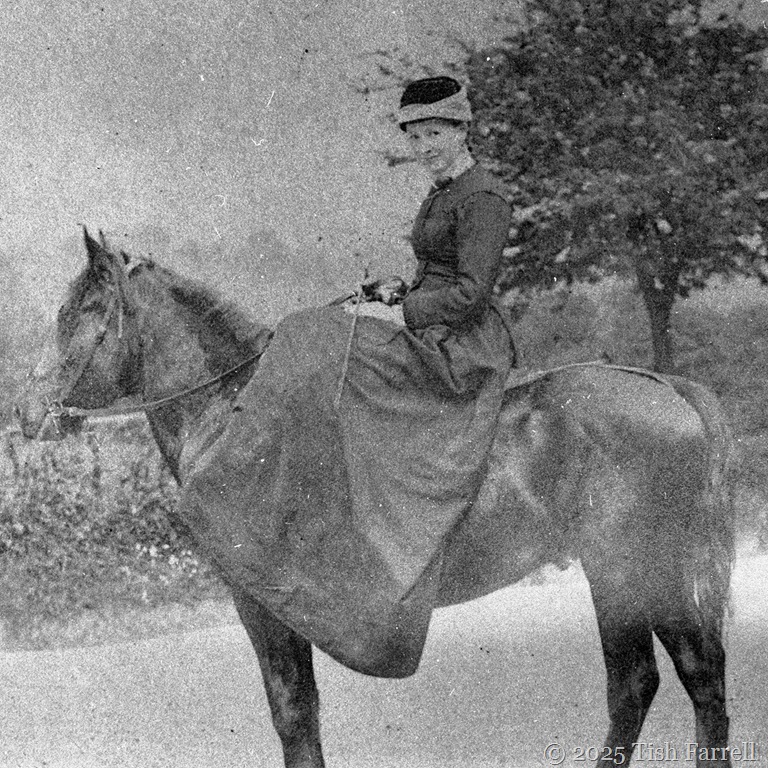
Here she is, Mary Ann Williamson Fox, in her late teens (she still has her hair in a long plait) before her father confiscated her pony. She disobeyed him too many times, jumping the farm gate (side-saddle) on the lane to Highlow Hall.
Mary Ann square

She was born in at Callow Farmhouse on the Highlow Estate in 1863. The house sits on the hillside above the river, the wilds of Offerton Moor above, the township of Hathersage below, the view across the valley to Higger Tor and Millstone Edge, and further off to Stanage Edge and Bamford (below).
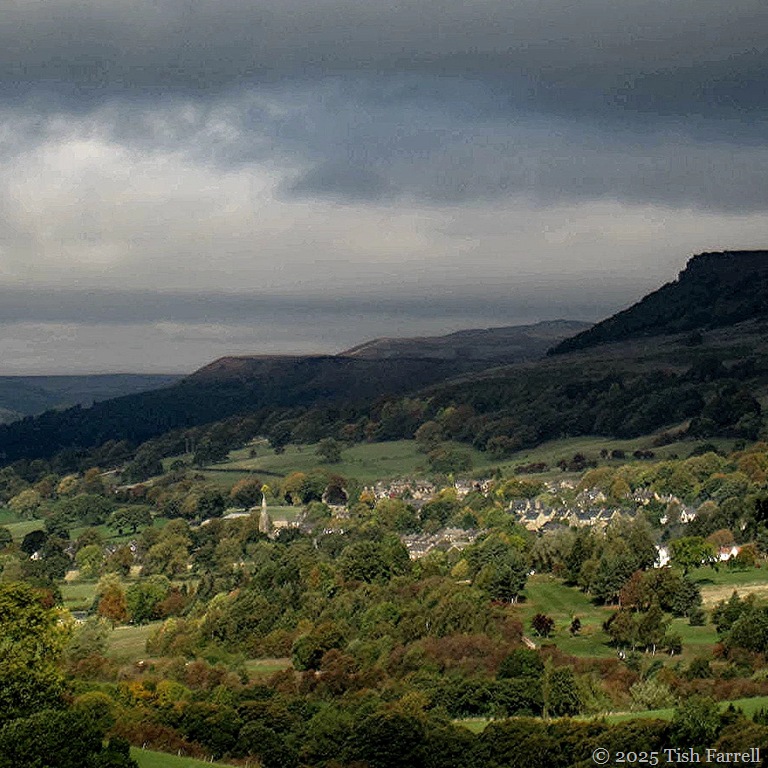
Hathersage, St Michaels, Callow view

Mary Ann’s father, George Brayley Fox (1820-1904) had been born at Callow too. He was a tenant of the Duke of Devonshire, as four generations of Foxes had been before him. They were middling folk, yeoman farmers who also owned land and property across the River Derwent at Newitts Field.  There were connections, too, with lead mining. Mary Ann’s mother, also Mary Ann (nee Bennet), inherited land with lead deposits over in Great Hucklow, a bequest from her grandfather, Robert Jackson, Smalldale hatter, farmer and lead miner.

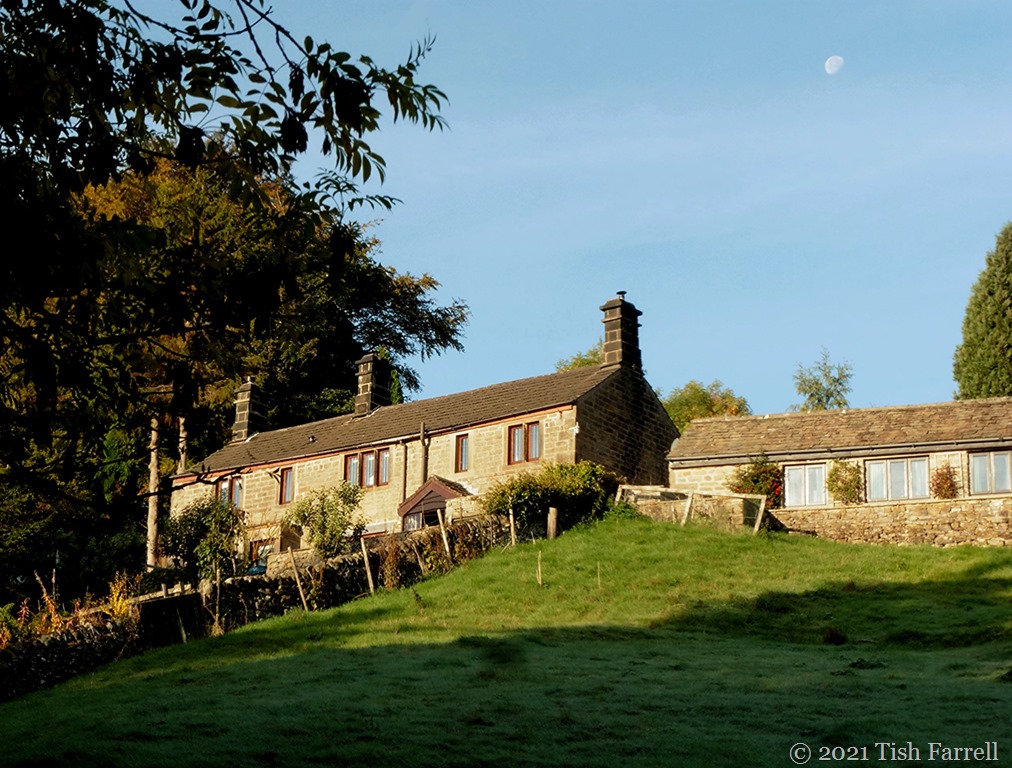
Callow farmhouse is still there, privately owned these days and presently up for sale, but this inter-war painting (found on the internet) is perhaps more the home that Mary Ann would recognise.
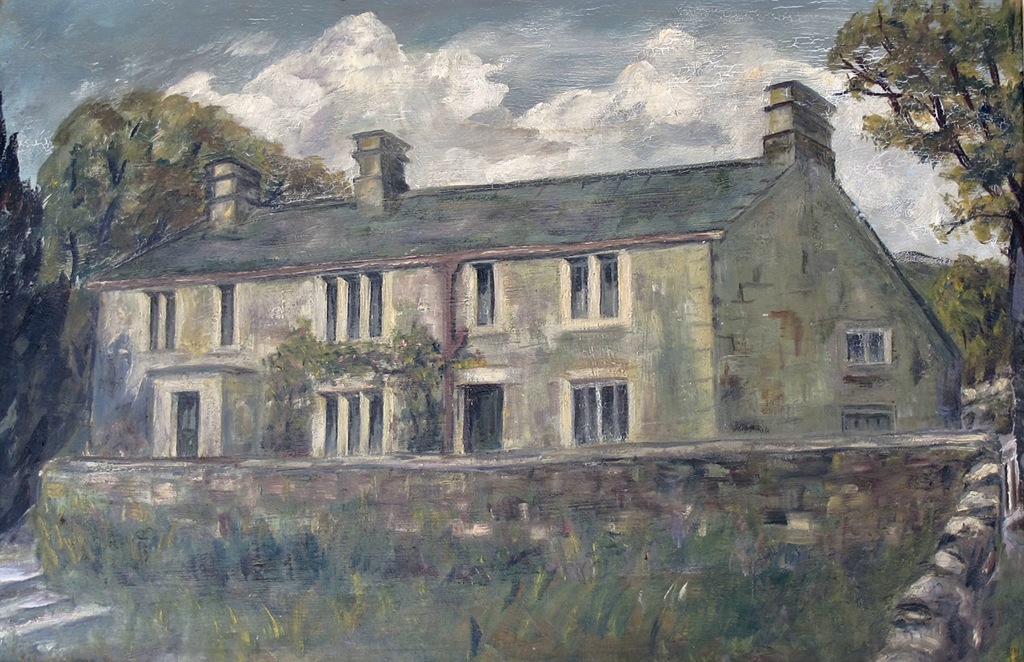
The painting is unsigned but apparently associated with a later 1920s tenant Lawrence Dungworth MM who served in the Derbyshire Yeomanry. (Hathersage Remembers site)
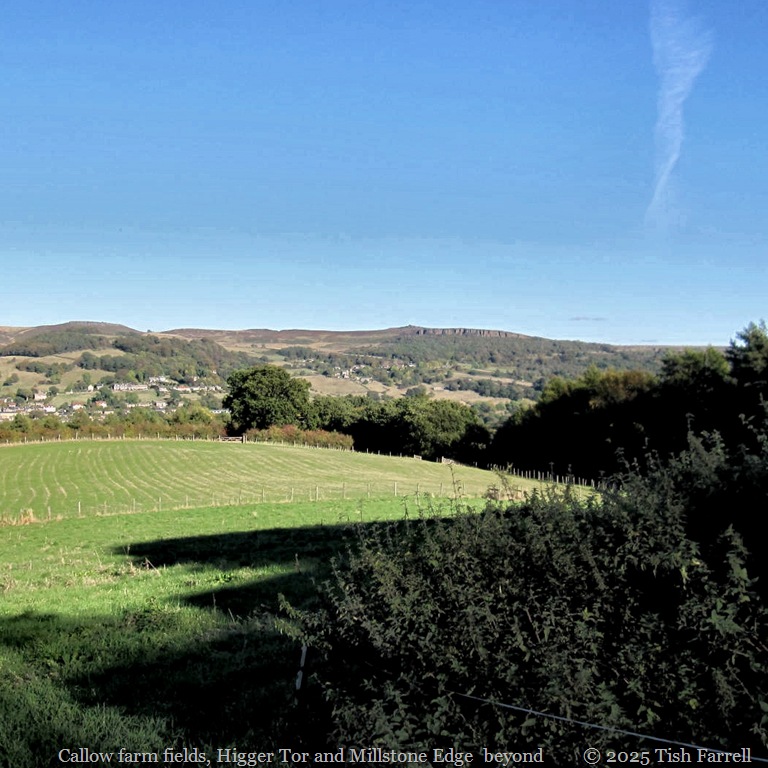
Hathersage, Callow farm, Millstone Edge

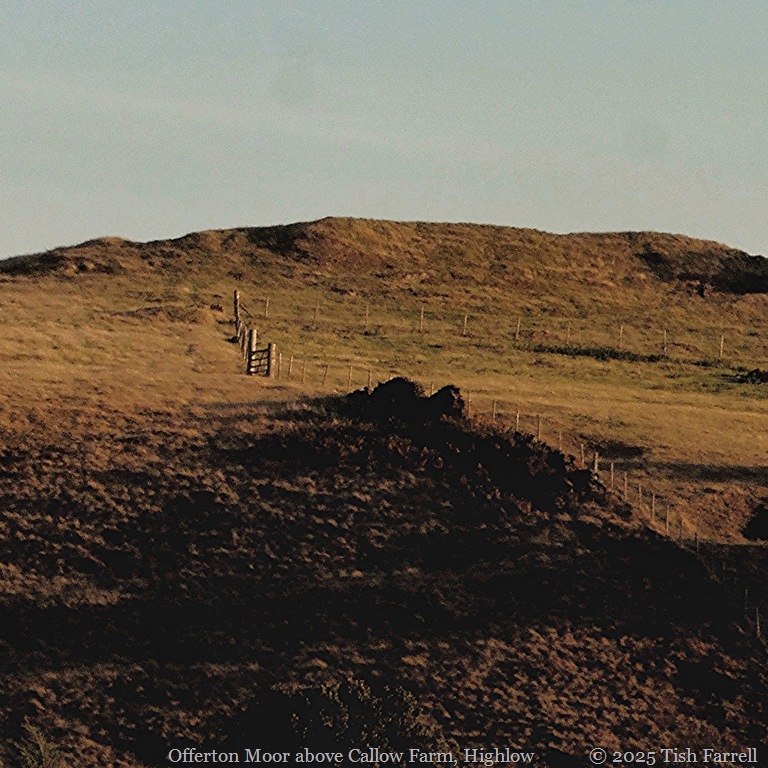
Offerton Moor above Callow

The Derbyshire High Peak is a rugged and exposed land. Living there, in times past, bred resilient, hardy folk. They grew their own oats (for the oat cakes that were a staple), kept cattle to produce their own cheese and butter, sheep for wool for weaving, reared hens and geese, kept bees and, doubtless, brewed their own ale.

Hathersage gossip back in the day had it that generations of Fox men were fist fighters, an illegal pursuit that, on account of the high stakes betting, had great support from the gentry. Mary Ann’s grandfather, Robert Fox (1779-1863), was known as ‘Bobbling Bob’. He apparently won a big fight against a likely champion after fifteen rounds, this despite a cracked shoulder blade in the first round. This yarn was told by Mary Ann’s older brother, Robert, to G B H Ward, walkers’ rights activist and editor of the Sheffield Clarion Ramblers’ Handbook. Ward included it in an article on the Foxes of Callow in the 1930/31 edition.

My own sense, though, from reading several generations of Fox wills, is that they strove to make the most of what they had, making strategic alliances, exploiting new opportunities, concerned always for their children’s future, seeing they received an education, putting them to trades and occupations that would ensure a decent living.

But by the 1890s, the shadows were gathering. In March 1893, George, in his seventies and recently bereaved, could no longer wrangle with falling crop prices and a rising farm rent. He sold up at Callow and went to live with his son, Robert, at Shepherd’s Flat farm at Foolow near Eyam. Meanwhile Mary Ann was facing her own tragedy far away in industrial Farnworth, Greater Manchester. In 1886 she had married Thomas Shorrocks, partner in a family firm of spindle-makers. But the decline in the local cotton industry led to the company’s collapse and bankruptcy, following several high profile court cases. Thomas died in December 1893, aged 38, leaving thirty-year old Mary Ann with baby Thomas, Lilian 5 years, Mary 7 years, and an 11 year old step-son Robert.

The Fox family rallied and came up with what seemed an ingenious plan to give Mary Ann both a home and a living. In 1894 Queen Victoria opened the Manchester Ship Canal, giving the newly created inland port of Manchester access to the River Mersey, Liverpool and the world beyond. There were high hopes it would boost the international cargo trade. And so that year, George Fox (probably Mary Ann’s younger brother rather than father, and stepping in to cover her expected period of mourning) secured the licence for the Old Red Lion Inn on the banks of the Mersey, Hollinfare, a small Cheshire village on the coach road to Manchester. Besides the view of the new Ship Canal and passing cargo boats, the buzz of new prosperity in the air, the inn came with its own farm fields and outbuildings. It must have seemed an excellent choice for a fresh start.

In 1895 Mary Ann took over the licence. She did so under her family name of Mary Ann Williamson, dropping the Shorrocks, perhaps to shed association with the bankruptcy (?) (Williamson was her mysterious grandmother’s maiden name). Younger sister Louisa, described by my grandmother as ‘simple’, came to live in as home help and child minder. And in that year too, Mary Ann married one Charles Rowles, a widower and retired sea captain, who was then employed as a pilot on the Manchester Ship Canal. Soon there was a child on the way, and for a time, it must have seemed, the shadows were in retreat.
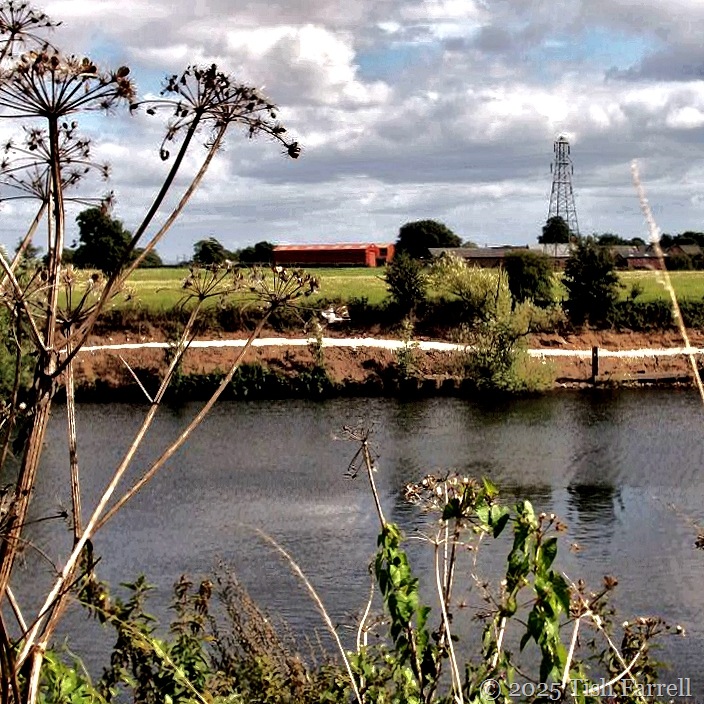
Mersey at Hollinfare

The Old Red Lion Inn still stands across the road from the River Mersey on the Manchester Ship Canal. No chance of stepping stones here; and the views of the lush dairy farmland of Cheshire across the water, a far cry from the challenging uplands of High Peak Derbyshire.
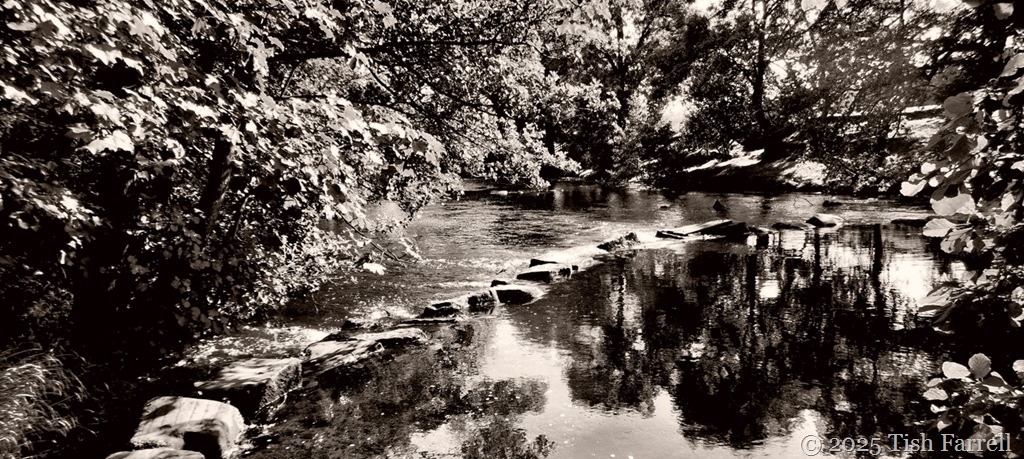
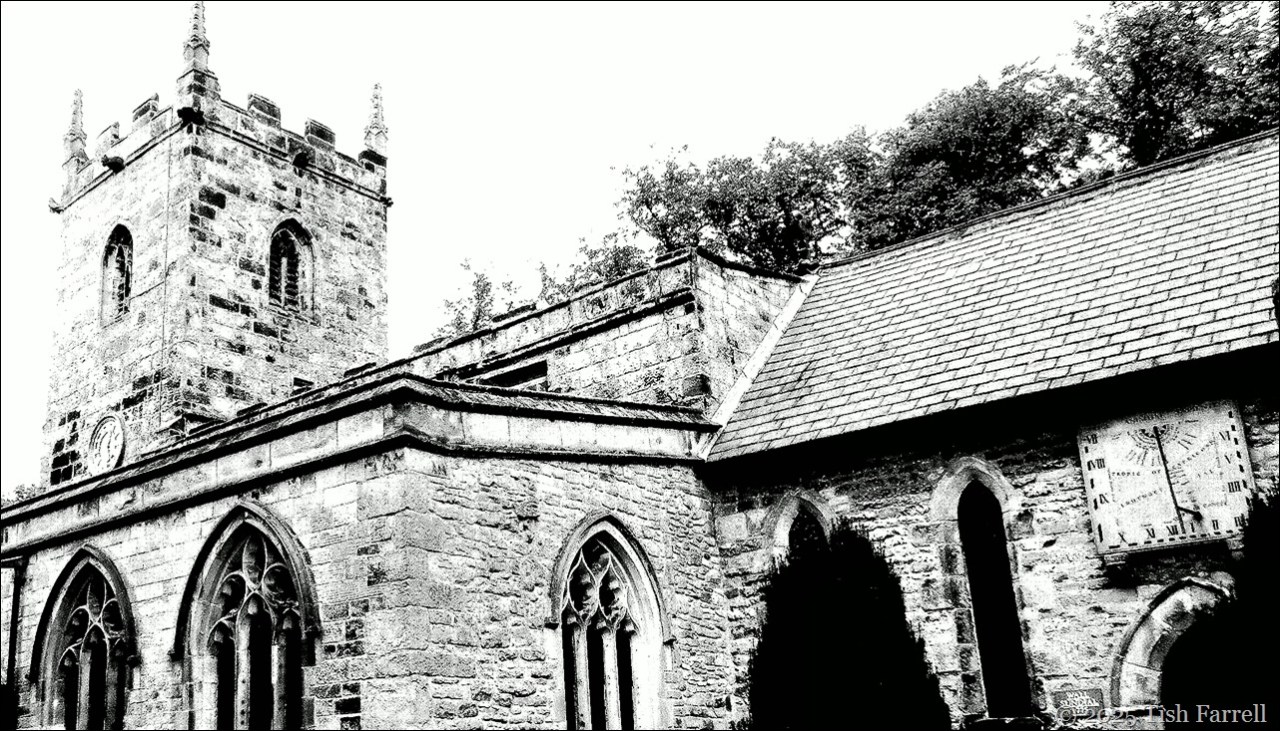
November Shadows #16

Stepping stones header

Shadow Time

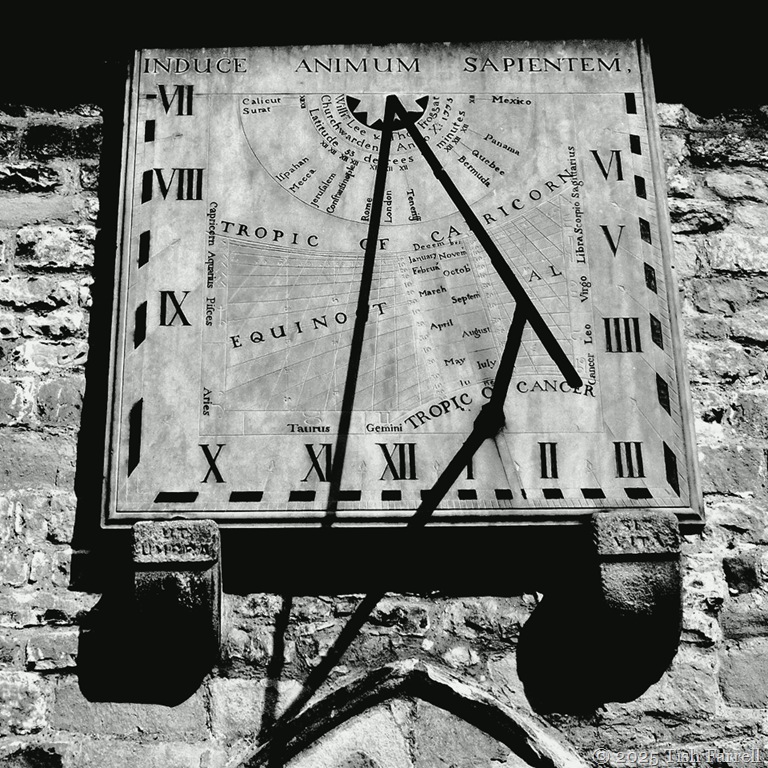
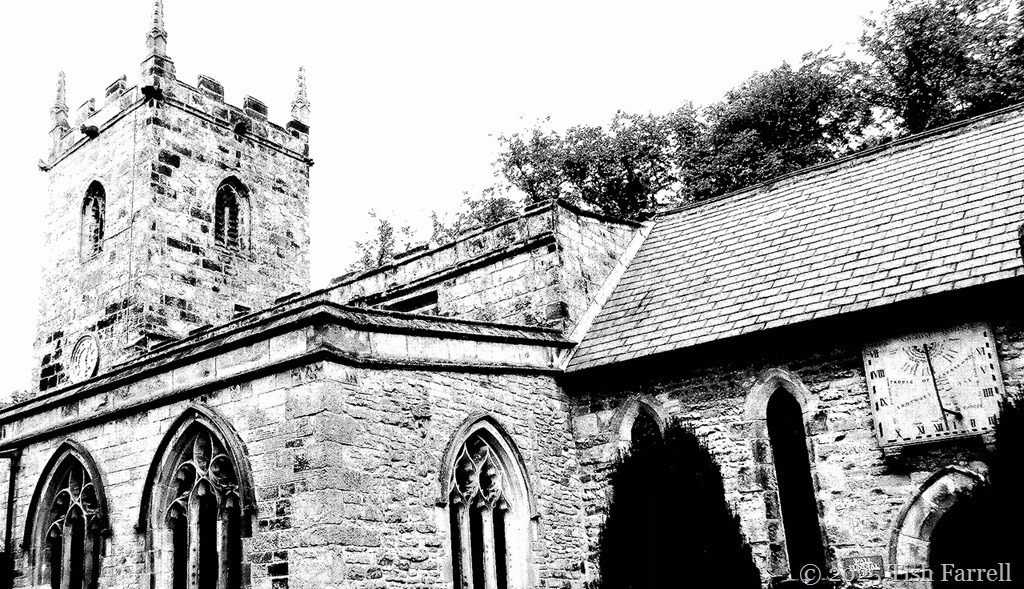
Eyam Church sundial 1775 sq

This magnificent sundial clock hangs on the wall of Eyam parish church in Derbyshire. It is extraordinarily intricate; something of a world-view 18th century style. It was installed in 1775 by a vicar with illustrious, wide-reaching connections, although the face itself was carved by local stonemason William Shore.

Eyam is probably best known as ‘the plague village’, the isolated High Peak community that chose to isolate itself completely during the 1665-1666 outbreak of the Black Death. A more recent discovery concerning the village is that the DNA analysis of living descendants of survivors shows a marker which indicates immunity to the disease. Amazing to think this can be detected.

Back in the 17th century, Eyam’s inhabitants made their living mostly from farming and lead-mining. The two pursuits went together, the mining carried out in the winter months in open-cast field seams called rakes. I have ancestral connections here. One Robert Fox, yeoman farmer and lead miner, who looks to have arrived in the area post-plague, married second wife Margaret Mower at Eyam church on the 4th June 1682.  They are probably 6th great grandparents, but at the very least 6th great uncle and aunt. There are also much earlier Bennet ancestors around Eyam. They intersect with Foxes in the 19th century, that link arriving via 4th great grandfather, hatter, farmer, lead miner and property owner, Robert Jackson. He married Hannah Eyre at Eyam in August 1826. They would have known this clock.

And about that clock. You have to wonder how far Eyam villagers would have been impressed to know the time difference between their spot on the globe and Calicut, Mecca, or Quebec. The single shadow also marks the solstice and equinox days and, for good measure, the months of zodiac are included too. All these intricate details apparently suggest to clock sundial specialists that the designer was the eminent Derby scientist and clockmaker John Whitehurst FRS.

Besides a time marking facility, the clock includes some thought-provoking inscriptions. On  the supporting corbels is says: Ut Umbra – Sic Vita  –  life is but a shadow. And across the top:  Induce Animum Sapientem  – cultivate a wise spirit.

This last should be a rallying call for our times. For all our, wizkiddery, wise minds seem sorely lacking. This 250 year old clock might be just the device for cultivating a little capacity for critical thinking. It certainly tests mine.

P1050540 header

November Shadows #12

Monochrome Madness: clocks and timepieces This week Margaret at From Pyrenees to Pennines is setting the theme at Leanne’s Monochrome Madness

Ancestral spaces

P1080417cr

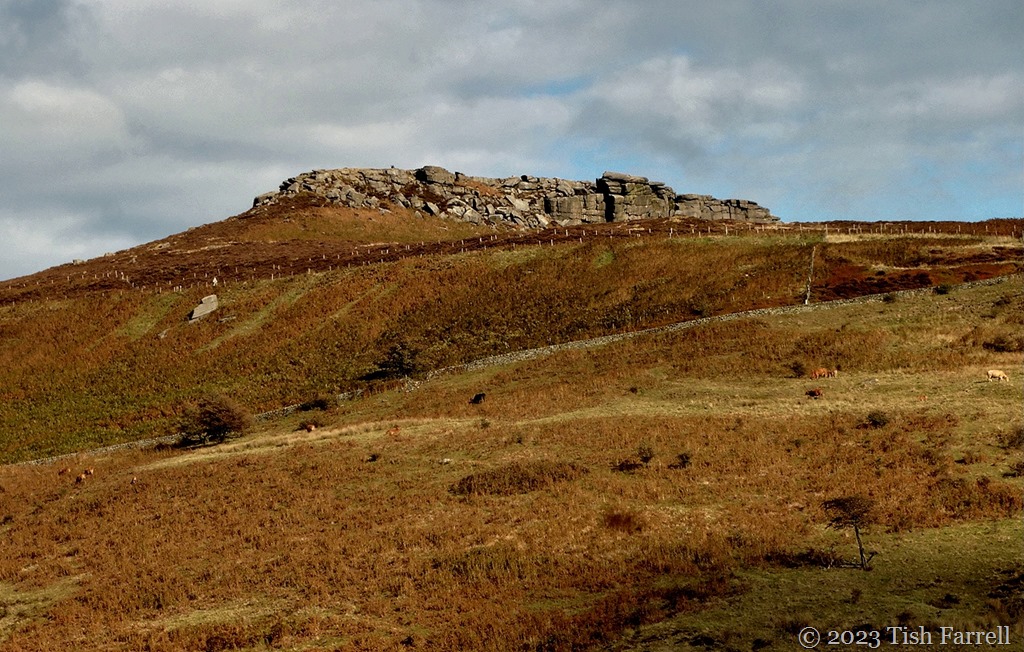
Offerton Moor viewed from Callow Farm, Highlow, Derbyshire

*

I’ve been posting views of South Shropshire lately, the green and wooded hill country of my home county. It is a terrain that, on the whole, seems more amiable than rugged, although in bad winter weather the tops of Stiperstones and Long Mynd  will ever prove challenging.

But today, on another hoar-frosted day in Bishops Castle, I’m thinking of the Derbyshire Peak District where my maternal Fox family ancestors farmed over many generations. What a tough life they must have led, running sheep on the high moors, struggling to raise essential oat crops in more sheltered enclaves, raising a few cattle to provide milk to make cheese and butter: the cheese a staple with ale and oatcakes, the butter to sell at market.

The header photo is the view from the former farmyard of Callow Farm, last occupied by 3x great grandfather George Brayley Fox in 1892.

Most of the High Peak farmers (even if they were yeomen owning some land and property) were also tenants of large estate owners – the Dukes of Rutland and Devonshire as well as lesser lords of manors. The farms provided food and shelter, but Derbyshire farmers were opportunists too. For centuries they mixed farming with other trades, butchery, hat making, grindstone making for milling and the Sheffield cutlery trade, weaving, haulage, and most dangerously of all, but potentially lucrative, lead mining; this last usually carried out in winter months when there was little farm work.

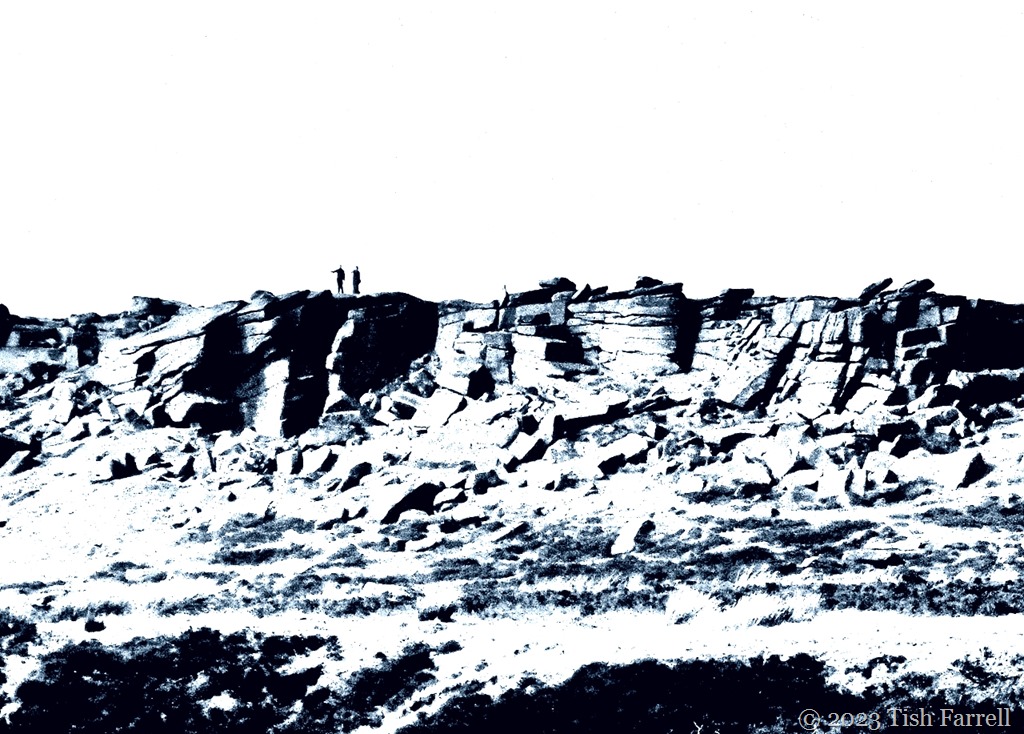
These next views are of Stanage Edge. This gritstone escarpment lies across the valley from Callow Farm. This is where millstones were once cut and hauled to nearby Sheffield. I know there were farmer Foxes who went in for this arduous trade, but none, as far as I know, in my immediate family tree.

P1000999ed

*

P1080864ed

*

This next photo is of Scraper Low Farm also known as Scraper Low Hall. It stands above Hathersage, and for a short time was the home of my 2x great aunt, Sophia Lister nee Fox who married Mr. Lister the silversmith while still attached to hill farmer, John Brocklehurst who himself had bigamously married a young next-door widow. You can read the story at the link.

When we first came upon Scraper Low, I was astonished that the Listers would choose to move to such a lonely place after living in a Sheffield city centre flat, to say nothing of taking on a farm in their sixties. But then when I walked up the long approach lane, I realised that whenever Sophia walked this way from her extraordinary castellated porch house, she would have been able to scan across the Derwent Valley and spot Callow Farm where she was born in 1814, the place where her brothers George and William still lived.

But then was she engaging in family feeling, or cocking a snook at the relatives now that she could pretend she’d finally made something of herself?

P1080976ed

*

This is the view from Scraper Low: Hathersage Moor – Higger Tor, Carl Wark hillfort and Burbage Rocks. It’s a landscape that already looks bleak in September. Imagine it in winter:

P1090030ed

P1080997ed

*

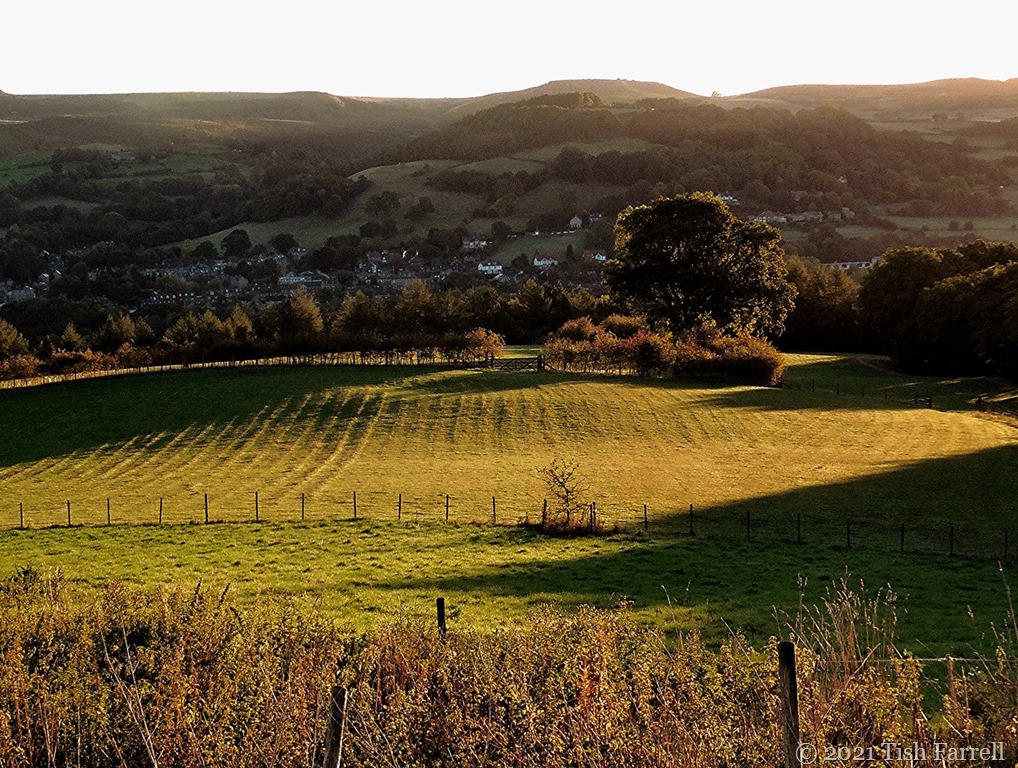
And finally back to Callow Farm, a more benign scene of the fields below the house, once worked by four generations of Foxes: George, Robert, George and William.

P1080325ed

*

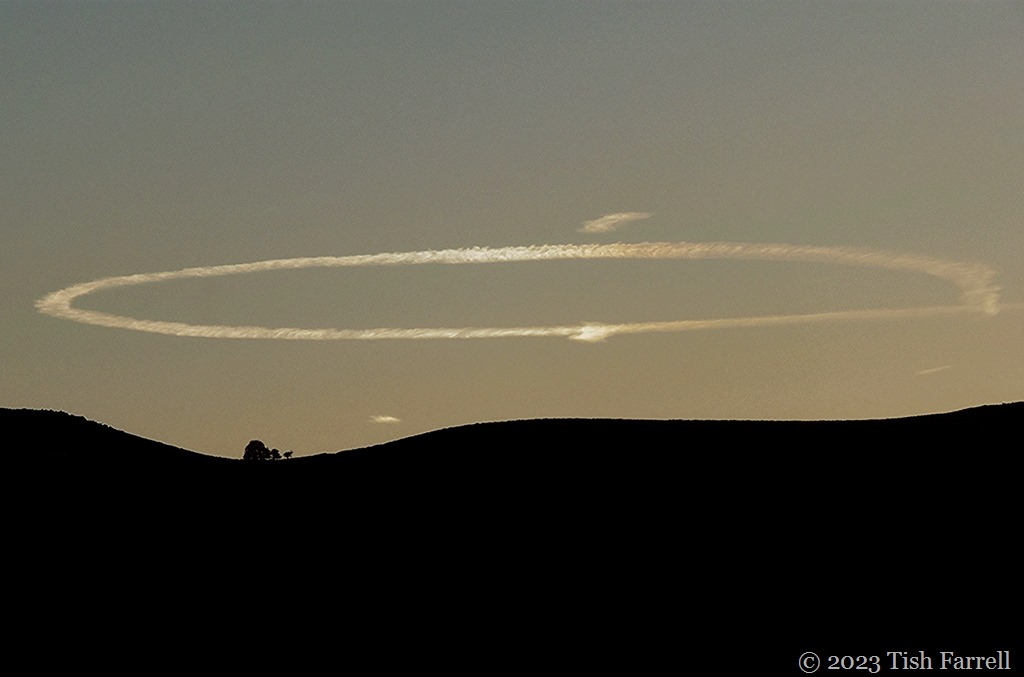
And an early morning flight trail across the valley. Not the sort of phenomenon the ancestors would have spotted, nor dreamed of seeing.

P1080444ed

Lens-Artists: Empty Spaces  Over this past week Patti has asked to show her empty spaces, however we chose to interpret the theme.

A Fountain Fit For A Tsar…?

P1080754 ed1

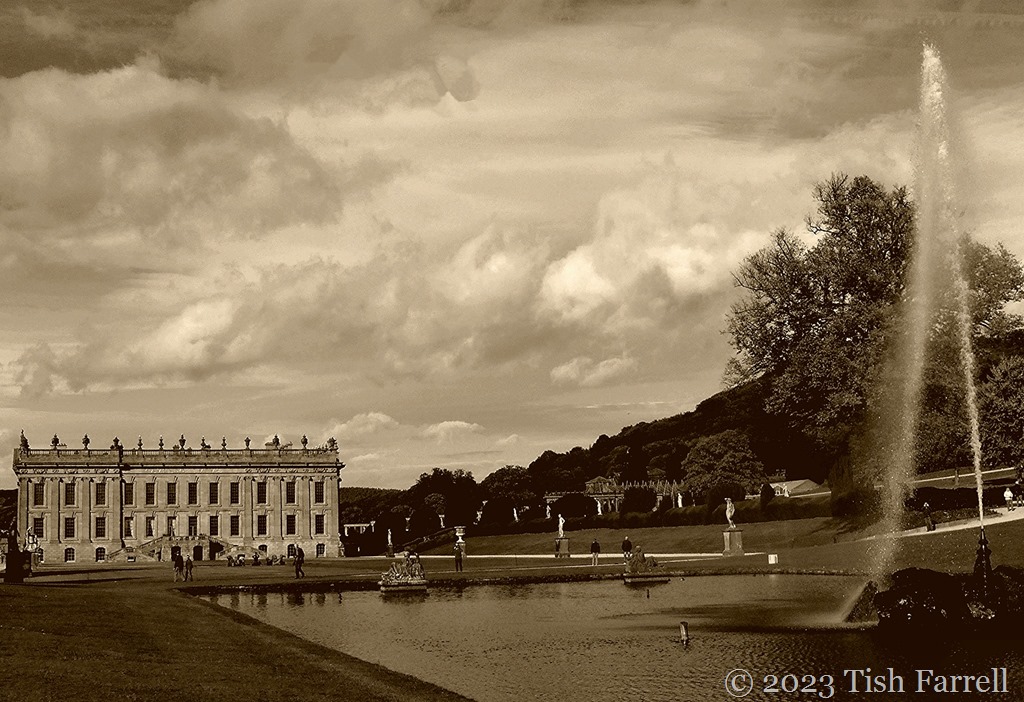
It might have been a protocol blunder of imperial proportions, but then it tells you much about the man almost responsible for it. And so it was that when the high-spending William Cavendish, 6th Duke of Devonshire, thought Tsar Nicholas would  visit his Chatsworth domain in 1844, he commissioned Joseph Paxton to build the world’s tallest fountain; this to outdo both Chatsworth’s existing Great Fountain (then the tallest in Britain) and the Tsar’s own grandest fountain at his Peterhof Palace in St. Petersburg. So: a back-handed sort of honouring, and I wonder how the Tsar would have taken this spectacle of extravagant one-upmanship: smiling through gritted teeth perhaps?

He anyway did not come, although the fountain was named ‘the Emperor’ to mark the non-occasion. The jet has been known to reach nearly 300 feet, although it was ‘turned down’ on the day I took this photo due to high wind.

For more about Chatsworth and a small family connection see my earlier post To Chatsworth and how Mary Ann went to the ball

Cee’s Black & White Photo Challenge: fountains and sprinklers

Flypast ~ Squaring The Circle

P1080445

I suppose it’s rather bizarre, but three Septembers ago I arranged a family gathering in the very buildings where my Derbyshire great, great grandfather  once kept his horses, oats store and cheese press along with all the usual 19th century small farm paraphernalia. Of course by 2018 the said buildings had been transformed into very smart holiday accommodation which we were renting for a week’s holiday, and by then too any actual family connection with the place and the nearby farmhouse had long been severed; back in 1892 in fact, when the Fox family left Callow Farm after nearly 200 years there.  

But then there are other kinds of connection, less tangible, but in some ways more visceral – the place, the landscape, the knowledge that past family members had lived and worked here, had been born and died here, their mortal comings and goings marked in the records and gravestones at St. Michael’s church down in the valley at Hathersage:

P1080349resize

*

The header photo was taken from the barns early one morning, looking across the Derwent Valley to the high moors above Hathersage. Here’s a daylit view:

Across Derwent Valley

And here are the barns:

P1080339 resized

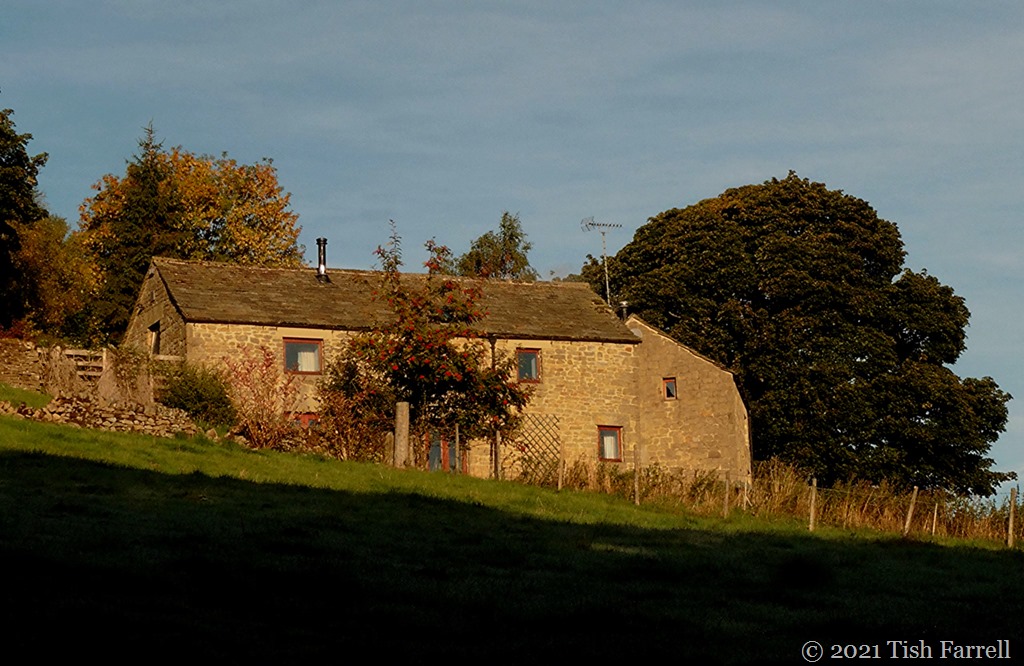
And Callow Farmhouse, now a private home quite separate from the barns, but once home to the Fox family c1700-1892:

P1080338resized

You can read more of this story at an earlier post:

So what did Great Great Grandfather George Brayley Fox keep in his barns in 1892

Past Square #17

P1080444

Clandestine Capture & Ancestor Sleuthing In Derbyshire: Thursday’s Special

P1050619

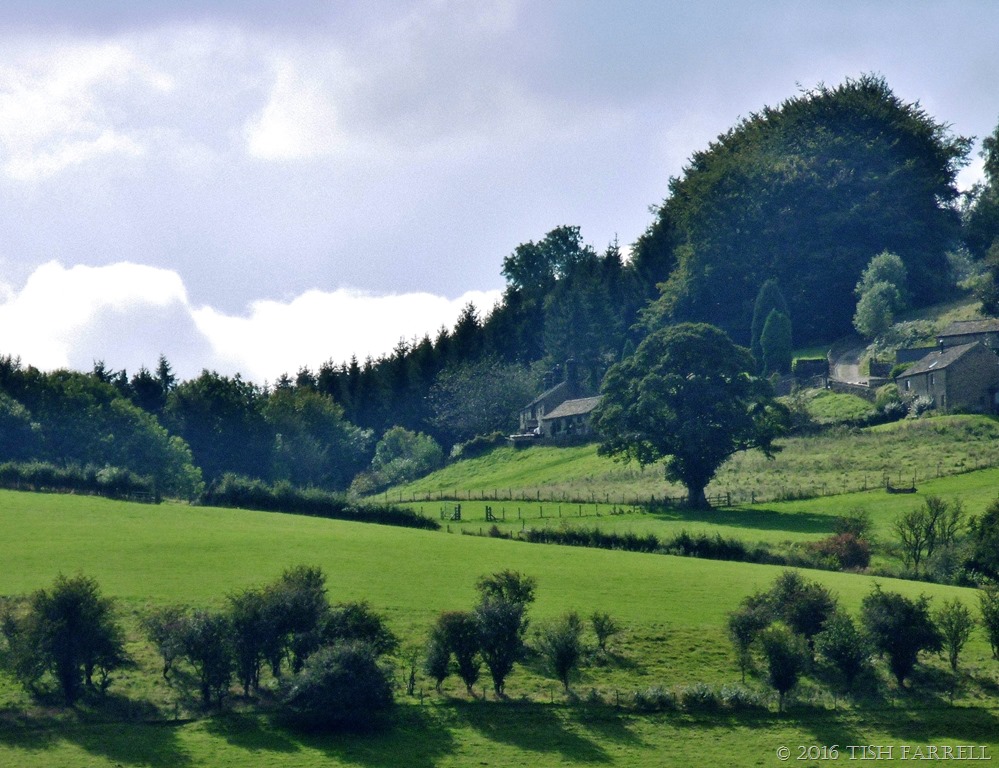
This was where I was last Thursday morning – not posting on Thursday’s Special, but trying to find a good spot on a field path outside Hathersage so I could photograph Callow Farm. This was the place where four generations of my Fox family ancestors were tenant farmers from around 1700 to 1892. Before that, during the late 1600s, they rented another Duke of Devonshire farm, The Oaks, up on the wilder heights of Offerton Moor, not far from Callow.

As you can see, the house (centre) is covertly situated, in the lee of the hill beside the wood. I had to use a lot of zoom, hence the hazy look, though such haziness is perhaps fitting for this piece of ancestral snooping. The more readily visible buildings on the right are the farm’s barns, now an upscale holiday let.

If you go to the previous post Stepping Stones Through Time you’ll find more of the story behind this photo. This was the reason why I  had hoped to cross the stepping stones, to achieve a closer view than this one. Ah well. Maybe next time.

*

There’s still time to take part in last week’s Thursday’s Special. Paula says ‘Pick a word in September’. Choose from: populated, time-sensitive, companionable, burgeoning, clandestine, but first go and see her gallery of photos and be inspired.

#thursdaysspecial


Stepping Stones Through Time

P1050609

This photo may serve better as an idea than an actuality. It’s the layers that attract me – not only of light and shadow, surface reflections and leafy river bed, but also of present and past: the stones that,for two and more centuries, my maternal ancestors used to cross the River Derwent.

Or at least so goes the family tale, the one my great grandmother, Mary Ann Fox, passed on to my grandmother, Lilian Hickling, who passed it on to her daughter, my aunt, Miriam Wilkinson, who passed it on to me. The photo, then, could be taken as a physical rendition of Chinese Whispers. Well, aren’t all family histories like this, word of mouth down the generations? There are bound to be omissions, distortions, total fabrications even.

But there are some certainties too.

Great grandmother Mary Ann was a Derbyshire lass, born and raised at Callow Farm, the child of tenant farmer George Brayley Fox and lead miner’s daugher Mary Ann Bennett. The land all around belonged, as it does still, to the Dukes of Devonshire. The stone-built farmhouse was (is) tucked high into the hillside below Highlow Hall and Offerton Moor. From Callow’s garden wall, the fields fall steeply down to the River Derwent. The stepping stones crossing was the quickest route from the farm into the Peak District village of Hathersage across the river, and the path there, across Callow’s meadows, still survives on OS maps. And so we have a scene, relayed to me by aunt via grandmother, of a young wife and mother living in the close and gloomy streets of industrial Farnworth. There she conjures her girlhood life, telling her four town-born children how, if she needed to buy the slightest thing she would have to traipse across many a field before reaching the stepping stones to Hathersage.

Other scraps have reached me. There is one that now lurks in my memory like a small haunting. For it seems my grandmother often told my aunt that Mary Ann was ‘a sad woman’. Nor is this surprising. She was widowed twice: at 30 and at 41. After the first loss, and with four young children to raise, she took up inn keeping beside the Manchester Ship Canal at Hollinfare. Grandmother said that as Mary Ann moved about the inn, she recalls the waft of her black silk dress always carried the scent of lily of the valley; a touching image until you learn the scent was dabbed on to cover the smell of gin.

But before the sorrow, I have a sense that, as a young woman, Mary Ann was headstrong and passionate. Though it may well be that those very characteristics were precisely  the source of some poor decision-making. In 1886, aged twenty two she went against family wishes and married Thomas Shorrocks, a spindle and flyer manufacturer, who worked with two brothers and a widowed mother in the family firm in Farnworth, Bolton, part of Greater Manchester. His first wife, Mary Ann Wright, had died around the time their first child was born, leaving Thomas with a young son. How Mary Ann Fox in Derbyshire met Thomas Shorrocks of Farnworth, Lancashire is still a mystery. Grandmother’s only surviving comment on the matter was that her mother fell for the first man she saw wearing a stove-pipe hat, that she was a country girl swept off her feet by a townie. Grandmother also said she scarcely knew her father. He had no time for children and kept away from home until they were asleep, staying on at the works or at his club. And then too, he died very young. Around 1891-2 the family firm of Robert Shorrocks & Co was in grave financial difficulties. The machinations to keep the business afloat involved a high profile court case, but then all was lost anyway. By 1893 Thomas Shorrocks was dead. He was only 39.

But how did Mary Ann adapt to life in industrial Farnworth?

Her first married home, 8 Kildare Street, Farnworth, was not far from the Shorrocks works on Bridgewater Street. It was a modest terraced villa with a small front garden and a back yard – a far cry from the sweeping high-moors vistas around Callow. And if she did not see much of Thomas during daylight hours, was she abandoned to her own devices? We know from the 1891 census that she did at least have the company of Lucy Stubbs, a young Derbyshire girl from Grindleford Bridge employed as a domestic servant. There were also other Shorrocks households along Kildare Street, including mother-in-law at number 23. Mary Ann also formed a close friendship with her husband’s younger sister Mary, though it was in every way subversive. Mary was being wooed by one John Hamer (later to become an wealthy mill owner), but Thomas and the Shorrocks family in general disapproved of him. It was Mary Ann who allowed the couple to meet in secret at Kildare Street, a kindness that was long remembered; for in the end John Hamer did marry Mary Shorrocks, and after Mary Ann died it seems they did much to support her children.

It also seems Mary Ann did not fall over herself to fit in with Farnworth mores either. There’s a clue in another of Grandmother’s snippets. She told my aunt that the traditionally dark clad women of Bolton and Farnworth looked askance when Mary Ann went abroad in her bright print country frocks. Did she ever back down, I wonder. Or did she flaunt? In my mind’s eye I see the flash of free-spirited obstinacy that brought her to that place. Much like the light flickering through the riverbank trees and onto the Derwent stepping stones.

The collapse of Shorrocks’ fortunes coincided in 1892 with Mary Ann’s father’s decision to leave Callow Farm where his family had been tenant farmers for four generations. Derbyshire farmers were having a hard time in the early 1890s: prices for crops were low, and rents were high, and landowners unwilling to compromise on the rents. It seems likely that some of the proceeds of the farm sale of stock, crops, horses and household belongings were used to secure the licence for the inn in Hollinfare, Cheshire, where Mary Ann began a new life as innkeeper.

My aunt said the Fox family had decided that taking the inn was the best means of securing a home and living for her with three young children and an adolescent stepson. It  stood on the south bank of the great Manchester Ship Canal, which linked the vast industrial heartland of northwest England with the port of Liverpool. It had only recently opened in 1895 when she took over the inn. In every way the Foxes must have thought it a shrewd decision, anticipating plenty of passing trade.

Mostly what it brought, and pretty rapidly too in January 1895, was another marriage to another widower – one Charles Rowles, a ship’s pilot on the canal and a former sea captain. My grandmother disliked him, although she adored her young stepbrother, Giles, born in 1896. She said it was only once her mother had married him, that Charles Rowles produced two teenage daughters from his first marriage. These young women apparently moved into the inn and tried to rule the roost which, I know for sure, would not have gone down well with my grandmother. If any roosts were to be ruled, she would be doing it.

When I tried to discover more about these interloping young women, I found a hint of scandal. It very much looks as if Mary Ann’s younger brother, George Fox, then aged 26, eloped with one of his sister’s new stepdaughters. Hannah Louisa Rowles was probably only 15 when she married George, although she claimed to be 18  on the marriage licence. At the time, November 1895, there were both living on York Street, Manchester. The following August their daughter Dorothy was baptised although she does not survive. In 1901 the census indicates that George was running ‘on his own account’ a large public house on Oldham Street, Manchester. By 1908 he had died, and in the 1911 census his young widow is listed as a servant, working in another Manchester pub. What happened to her remains to be discovered.

As for Mary Ann, in 1905 after ten years of marriage, Charles Rowles died. She survived him only by another four years, dying in the Manchester household of her stepson, Robert Shorrocks. She was 46. Her youngest child Giles was about 12 years old at the time. The 1911 has him living with a widowed Rowles aunt in Cardiff and employed as an apprentice shipping agent. He was to die at Gallipoli in 1915. Nineteen years old and buried at sea somewhere off Lemnos.

Now as I look at the stepping stones photograph, these are the thoughts that run through my mind. It is all too easy to look back to Mary Ann’s growing up at Callow Farm and see a rosy past. It’s how we tend to view things: the glamour of an imagined rural idyll – the stepping stones back to happier days. I had hoped to cross here too. I badly wanted a closer view of the farmhouse. But on the day of my visit there had been heavy rain, making the Derwent far too active to attempt to cross without rubber boots and a stout stick for support. A quest then, for another time? Perhaps.

Mary Ann Williamson Fox of Callow b.1863

Mary Ann Fox (1863-1909) sometime before her marriage, and before her father sold her pony. He had threatened to do this if she persisted in jumping the farm gate on horseback. She did not listen. You can tell that she would not just by looking at her.

Copyright 2016 Tish Farrell

Textures Of My Ancestral Landscape

P1000999

These are some of the landscape textures that my maternal ancestors, the Fox family of Derbyshire’s High Peak would have known well – windswept moors and weathered scarps of millstone grit. They were yeoman farmers and lead miners, and they made a living from this bleak and beautiful country for hundreds of years.

Family legend has it that the Foxes arrived in England with William the Conqueror, but Fox is a name with Germanic origins so they may well have been Saxons, belonging to the conquered rather than to the conquering forces. The earliest records for Foxes in the Hope Valley, and Offerton in particular – where my Foxes farmed until the end of the nineteenth century, are around the thirteenth century, although I and my fellow Fox researchers are yet to establish direct lineage from these times.

There were centuries of prosperity when various family members lived in large stone farmhouses, made ‘good’ marriages, and owned land and lead mining concessions, but by the early twentieth century there was only one member of my Fox line left in the area, and he was living modestly in Eyam. The family farm of Callow where he was born, and by then owned by the Duke of Devonshire had been relinquished with a farm sale in 1892.   High rents were besetting many Derbyshire farmers at this time. The Mr Fox mentioned in the sale advertisement is my great great grandfather, George Brayley Fox:


The Sheffield & Rotherham Independent

Saturday 29 October 1892

Callow Farm Sale

Important Sale of 23 cows, heifers, steers and calves, two horses and foal, 30 sheep, hays stack, three wheat stacks, seven oat stacks, farm implements etc.

Mr Hattersley has been honoured with instructions from Mr Fox who is give up the Farm, to sell by Auction on Wednesday, Nov 3, 1892, the very superior LIVE and DEAD FARM STOCK, as briefly enumerated below:

Black Mare, believed to be in foal, excellent worker;

Valuable Brown Horse, six years old, with splendid action, believed to be sound, and quiet in all work;

Roan foal by Bedford;

One Cow in calf for December 25th, four in-calf cows for April, two barren cows in milk, four very choice heifers in calf for April, two barren heifer stirks, five strong bullock stirks, five spring-reared calves, 11 superior stock ewes, six fat sheep, one two-shear ram, 12 strong lambs, two very fine ducks, one fine drake.

Samuelson’s 2-horse combined mower and reaper, nearly new with additional shafts; wood tippler, horse rake, Cooke’s wood plough, set of wood harrows, nearly new; set of three harrows, swingtrees, fallow drag on wheels, stone roller, with shafts, horse turnip hoe, sheep troughs, joiner’s bench and tools, quarry tools, hay rakes and forks, 2 1-horse carts, winnowing machine, wheel chopper, with rising mouth, in excellent condition; corn chest, cart gears, stone cheese press, lever ditto, cheese rack and boards, nearly new; vats, garths etc, cheese pan, two brewing tubs, two oak chests, and a portion of furniture.

One stack of very prime new hay, three stacks of wheat, five stacks of white oats, two ditto of black oats and a quantity of table and other turnips.

Sale to commence 12 noon.

*

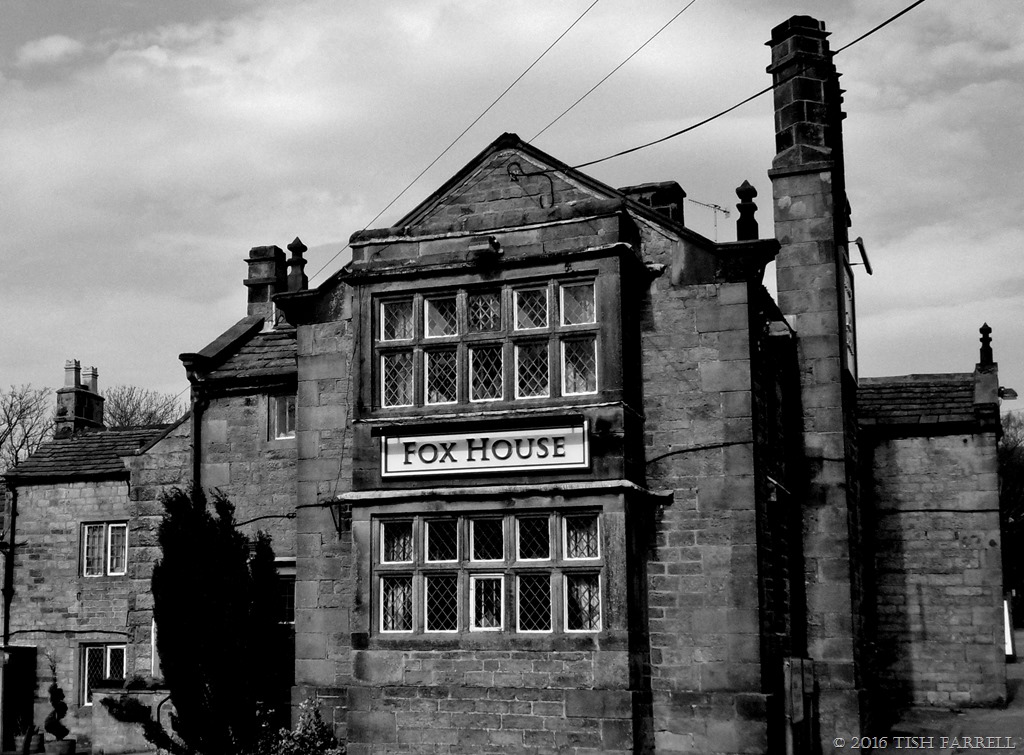
Every item here tells of great intimacy with the land. Just to read this notice gives me a painful sense of roots yanked up. I feel the touch and then the loss of the fine ducks, the strong lambs, the black mare in foal, the oats and the stone cheese press; even the turnips and the quarrying tools. But I would like to think, too, that somewhere in my bones are still traces of that High Peak millstone grit, the hardiness and courage that it took to carve a living from these uplands, and in my lungs the sharp, clean air of the moors of Longshaw where earlier generations of my family, so it is said, grazed four hundred sheep on their own run, and also owned the shepherd’s byre, that dating from 1399 was later sold and expanded into a handsome house for the Duke of Rutland’s agent, and is now the well known inn, Fox House, just outside Sheffield. Somewhere within this sturdy stone carapace is the earlier shepherd’s dwelling of quite another texture.

P1010003

copyright 2016 Tish Farrell


This week at Black & White Sunday, Paula has given us the theme of ‘texture’. She also included a quotation by novelist British Paul Scott, which is very much responsible for my take on the challenge:

“The past becomes a texture, an ambience to our present”

P.S. Paul Scott served in the Intelligence Corps of the British Army in India during the World War Two. He wrote the phenomenal Raj Quartet, set in India during these years, and which was made into a very excellent TV serial back in the 1980s. The TV version is available on DVD, and with its all star actors is well worth watching. But read the books too.

B & W Sunday ~ Stronghold ~ The Telling Of Family Tales

P1000972

Most families tell tales about their origins: legends of high-born connections, of inheritances lost or missed-out on, of forebears famous or notorious somewhere in the family tree. These stories, the ideas of who we are become strongholds of sorts; a defence against times when others make us feel ‘not good enough’, or just plain dull.

I seem to remember when I was eight or nine telling one very competitive school friend, and as a piece of deliberate one-upmanship on my part, that one of my ancestors was a well known poet and buried in Poets’ Corner in Westminster Abbey. Mother had told me so.

Indeed, Mother told me lots of family stories about her Derbyshire Fox and Bennett antecedents, and because a) she still had her own childhood interpretation of what her own mother had said, and b) was framing them in a way she thought I would also understand, the ensuing narrative, much like Chinese Whispers, came out more than a little garbled. In other words, our family connection to the poet ancestor is probably so much tosh.

From time to time I have little delving sessions on the internet in a bid to clear up the maternal myths, and last year came across two fellow searchers into the Fox family of Derbyshire’s High Peak. It turned out we were each descended from three siblings William, Robert and Deborah Fox, all born at Callow Farm in the manor of Highlow, in the 1770s. And it’s odd, but I find I treasure this present-day, albeit tenuous blood connection, almost more than anything I might find out about our mutual family past. I mean, well, who would have thought it; without the internet, we never would have found each other.

The Fox siblings’ father, George Fox, came from many generations of farmers. Over the years the family appears to have owned several pieces of land in the parishes of Hathersage, Longshaw, Eyam and Abney (one was a sheep run, others were possibly both farms and lead mine workings), but the Foxes, certainly in recent centuries, were mostly the tenants, first of the Eyres at Highlow Hall (pictured above), and later of the Dukes of Devonshire who came to rule much of Derbyshire from their own dynastic stronghold of Chatsworth.

If the Eyre name rings bells, well it is true (just to add another story thread) that Charlotte Bronte was staying with her friend Ellen Nussey in Hathersage in 1845, around the time she was writing Jane Eyre. Mr. Rochester’s Thornfield Hall is said to be drawn from another Eyre family stronghold, North Lees Hall. She and Ellen went visiting there. Other local features are also present in the book, including Hathersage itself, which was apparently the model for Morton, the village where Jane Eyre ends up after running away from Edward Rochester.

My Fox ancestors, it seems, were also good storytellers – fact mixed seamlessly with fiction. When Robert Fox’s son, my great, great grandfather George Brayley Fox was forced to sell up his possessions at Callow Farm in 1892, this piece appeared in the Derbyshire Courier:

Derbyshire Courier 25 March 1893

My own feeling about this ancestral yarn is that it was a bit of a face-saving exercise for a family that had indeed been part of the local scene for generations. Some of the details may well be based on some misremembered version of reality. Early medieval charters of the 12th and 13th centuries certainly have Foxes farming in pretty much the same location. Now, I and my two fellow Fox hunters are trying to tease the facts from the myths.

But one thing I do know (because I have the photo), my great grandmother, Mary Ann Fox, rode her pony along the winding lane from Callow Farm. She would have ridden past Highlow Hall on one of her regular missions. Grandmother said she went to Chatsworth Hall to deliver the farm tithe in eggs to the Duke of Devonshire. Here she is c1880s in her late teens, before she was silly enough to run off with a Manchester spindle manufacturer and, at thirty, end up the widow of a bankrupt with three young children and a stepson to support:

IMG

And here is Callow farmhouse, the photo taken by a family researcher in the 1970s. It sits on a hillside below Highlow Hall, and looks down on the River Derwent and the small town of Hathersage. If there is a house of 1391 here, as the newspaper article suggests, then it is very well hidden inside a very much later exterior:

Callow Farm, Hathersage c 1970s

But if I said that these images and family tales have not affected how I see myself, then this would not be true, although it is only recently that I have seen this. For some reason, too, in my later years, these particular maternal ancestors seem to mean more to me.

The thing that speaks most loudly is not so much the gentry connections – real or imagined – but the sense of landscape, of the bleak uplands, the rugged scarps of millstone grit, the arcane, but tough world of lead-mining in which all classes toiled from the Eyres downwards; the fact that men and women worked so hard in this land, lived on oat cakes and homemade butter, cheese and ale, reared often very large families, and (in a surprising number of cases) lived into their eighties and nineties.

Somehow the more I uncover of my ancestors’ world, the more it becomes my stronghold, the mental hinterland wherein I am truly rooted.  I stand up more strongly, look out across those moors with their prehistoric stone circles, and ancient burial cairns, the stone walls, and the sheep fields. The wind is in my face. My gaze broadens and lengthens. It is like standing on top of the world, looking down the endless spiral of time of which I am a part, and forever will be.

copyright 2015 Tish Farrell

Reference: For more about the Peak District

Black & White Sunday: Stronghold  Go here to Paula’s to her and others’ strongholds