Stinking Nanny Anyone?

100_9741

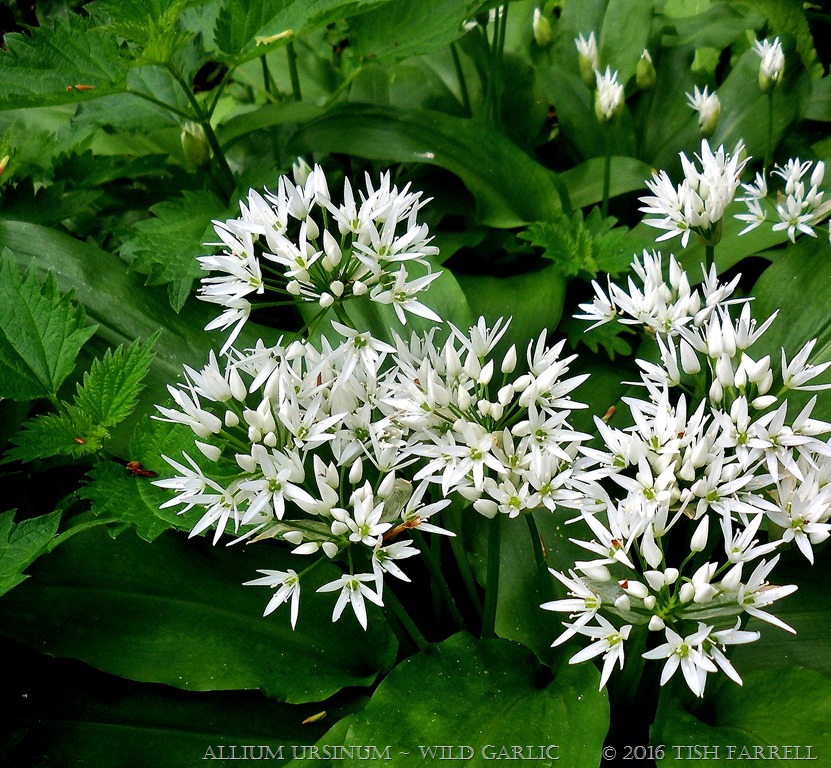
The shadowy margins of the Linden Walk near my house and the old railway line that runs alongside are presently lit by  white-star carpets. Ramsons. Stink Bombs. Stinking Nanny. Londoner’s Lilies. Thank you, Richard Mabey and your Flora Britannica for all these country names for wild garlic.

I know many people loathe the smell of this plant, and it can indeed be overpowering on warm days, but whenever I catch a whiff, it simply inspires me to cook. You can eat the leaves and flowers. On Friday I used them to make a pesto sauce to go with steamed carrots, assorted allotment greens and braised salmon.

This is what I did to make it:

  • Took a good handful of broken walnuts and lightly toasted them in a little olive oil
  • Roughly chopped a dozen flower heads and a small bunch of garlic leaves
  • Tipped all with the walnuts into a food processer
  • Added more olive oil to cover, salt, black pepper and squeeze of fresh lemon juice and blitzed. More oil can be added according to taste and requirements.

This is good with pasta, or spooned on the top of fresh-made soup, especially broad bean, or the classic pistou. In his Food for Free book Richard Mabey also quotes the sixteenth century writer, John Gerard, who writing in The Herbal (1597) says that in Europe the leaves are used to make a sauce to go with fish, and adds that these may:

very well be eaten in April and May with butter, of such as are of strong constitution, and labouring men.

And what about labouring women, good sir? This particular one has great liking for ramsons. In fact I’m thinking now of using them to lace a homemade tomato sauce. Bon Appétit , and happy foraging.

And please pop over to Jude’s Garden Challenge. This month she wants to see our wild flower photos.

100_9742

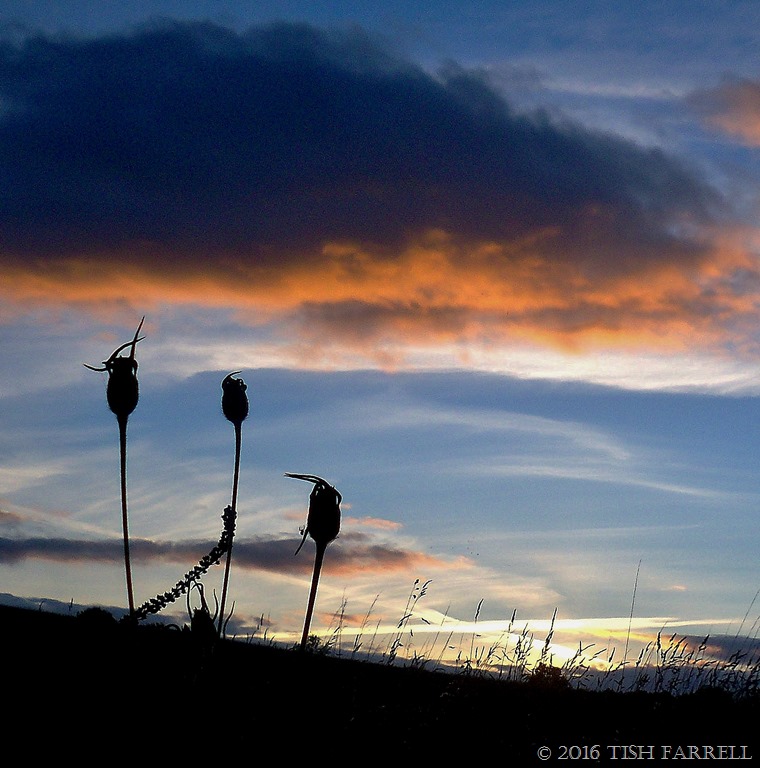
Corncockle Sunset ~ Nature Photo 6

100_7393

These are the seed heads of a lovely plant that was once to be seen in English  corn- fields, but is now almost extinct in the wild. And here it is in its full flowering glory…

100_6047

…the Corncockle aka Agrostemma githago aka Kiss-me-quick.

This stately annual plant was also the target of shock-horror media hysteria a couple of years ago.

And why? You may well wonder.

It apparently all began with a well-meaning gesture by the BBC’s Countryfile programme. Courtesy of the Royal Botanic Gardens at Kew, they were giving away packets of wild-flower seeds that contained corncockle. There was huge demand. Suddenly everyone was sowing wild flower gardens.

Next some individual in Royal Wootton Bassett, a small market town in Wiltshire, noticed that the plant had appeared in a garden created by the Brownies in the local park. He, having ‘googled’ it, raised the alarm, pronouncing the plant deadly. The Town Council then had the plant fenced off and eliminated, and it all became a matter for the national press as more and more sightings of the plant were made across the land.

The Telegraph’s headline positively screamed with indignation:

BBC spreads poisonous wild flowers across Britain

And from the Daily Mail we have:

The plant that can kill

In an eminently sensible press account Patrick Barkham of the Guardian  tried to bring  perspective and rationality to the panic:

This kerfuffle is a huge overreaction, given that many of our most popular garden plants are poisonous, including daffodils, laurel, ivy, yew, hellebores, lupins and particularly foxgloves. In fact, we have lived alongside poisonous plants for centuries, and many toxic species are particularly useful to medicine and are used in life-saving drugs. Even parts of plants we eat, such as potatoes, are toxic.

And the real story?

Corncockle, it seems, arrived in Britain back in the Iron Age over two thousand years ago. Its seeds were present in imports of rye grain from Europe, and it soon became established on the lighter soils of southern England. Thereafter, and into the 20th century the plant could be found among the nation’s arable and cereal crops. Then improved methods of seed cleaning were introduced, and together with extensive herbicide use, this led to the plant’s virtual extinction in the wild.

The plant does  have toxic properties. This is what  Monique Simmonds, Head of Royal Botanic Gardens Kew’s Sustainable Uses of Plants Group has to say:

This plant, like many we have in our gardens, does contain compounds that can be toxic if eaten in large amounts or eaten frequently over a period of time. The toxic compounds are in higher concentrations in the seeds, which are hard and very bitter. If eaten by a child, the child would most likely be sick or complain of a stomach ache. There is no evidence that eating a few seeds would cause acute toxicity.

In the past, problems associated with toxicity occurred in Europe when flour contaminated by corn cockle seeds was consumed in bread, and this contaminated bread was eaten over a period of time. The fact that there are very few reports about any form of toxicity to humans in other parts of Europe, where the plants are more common, indicates that although toxic, the plant is not considered a high risk.

Plants for the Future website explains further:

The seed and leaves are poisonous, containing saponin-like substances. Although poisonous, saponins are poorly absorbed by the human body and so most pass through without harm. Saponins are quite bitter and can be found in many common foods such as some beans.

What concerns me about this story is how easily people can be stirred into panic and demonizing tactics by manipulative and exaggerated press coverage. And over a flower that has absolutely no appetizing qualities whatsoever. Of course that doesn’t mean we should not be aware of the toxic qualities of plants. We definitely should be. People sadly do die from eating poisonous plants. But we don’t need to feel afraid of their very existence. The problem is when we lose connection with our natural environment, it leaves room for the kind of scare-mongering that seeks to make us feel like victims – and all, and only to sell newspapers. Obviously this goes for many more serious issues and situations too.

But then you never do know. Maybe the denizens of the plant kingdom have it in for us. Maybe they are just biding their time, thinking up cunning ways to lure us into eating their poisonous parts.

Quick! Surround the lupins and hellebores! Cut them off at the roots before we’re driven to eat them and DIE!

copyright 2016 Tish Farrell

 NB. For well-informed details about poisonous plants see The Poison Garden website.

 #7-daynaturephotochallenge Day 6

Nature Photo ~ Day 3

100_9214

The Wood Anemone (Anemone nemorosa)  is one of the loveliest of Britain’s wild flowers. The delicate white blooms have bell-like heads that open to the sun as this one is doing. It’s about 3 cm across. They are also among the earliest spring flowers, carpeting ancient woodlands before the trees come into leaf and make too much shade. The flowers nod in the April breeze, which distinctive habit doubtless inspired their country names of Wind-flower and Grandmother’s Nightcap.

As ever, I am indebted to Richard Mabey and his magnificent (and very large) book Flora Britannica for further intriguing details about this plant.

I found this particular anemone yesterday. It was growing below Windmill Hill, on the edge of the Linden Field. I’d not noticed anemones there before, and the sparse little colony hardly made a carpet. They were also growing  under trees that I know have been planted in the last hundred years to commemorate various events associated with the Much Wenlock Olympian Games. Before that, in Victorian times anyway, the field was, well, a field. This, then, presents a bit of mystery.

Mabey says that in Britain the Wood Anemone only very rarely produces viable seed. Instead it spreads by means of its root system, six feet for every hundred years, which is pretty slow going. When you find them, they are thus a pretty good indicator of ancient woodland since they rarely extend beyond these age-old sites. All of which makes me wonder how the little group of Wind-Flowers found its way to the Linden Field. Perhaps they are relic rootstock from times when the ground in question did host ancient tree cover. Mabey suggests that this could be a explanation for the more open-growing colonies now to be found on the limestone pavements of the Yorkshire Dales.

Anyway, however they got there, I was very pleased to see them. More power to their root systems is all I can say. Faster. Faster. We can’t have too many Wind-Flowers.

*

Anna nominated me for this challenge, so please take a look at her cloud scenes at Una Vista di San Fermo. Also Meg has posted some magnificent Warsaw tree-scapes; Ark at A Tale Unfolds gives us stunning bee and other flying insect shots; while Sylvia at Another Day In Paradise takes the absolute biscuit with parting shots of her erstwhile (too close for comfort) neighbour, alligator Mr. A.


#7daynaturephotochallenge

The Monochrome Garden: Dandelion Delight?

100_5540

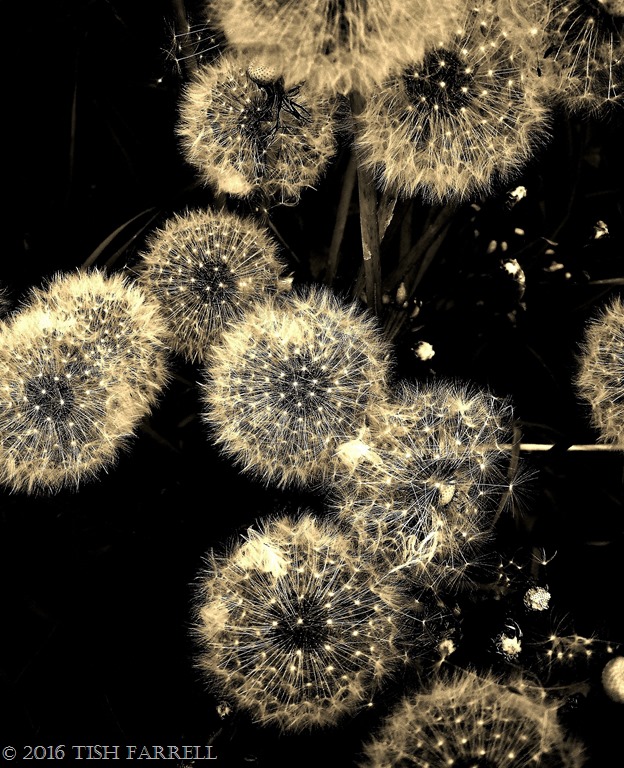
I know most of us gardeners curse dandelions, but don’t they look lovely in sepia? Little constellations. Firework bursts. Spreading those all too viable seed parachutes here, there and everywhere. You can’t keep a good weed down.

But these plants do have their uses too. Young leaves are excellent in salads. Dandelion leaf tea has long been used by herbalists to cleanse the kidneys and lower blood pressure, while the root is mainly a liver remedy, helping to boost the immune system. I do quite like dandelion coffee, perverse as this may sound, although it has to be the real roasted roots, and not the instant stuff, and it’s definitely improved with a sprinkle of raw cacao powder, and a pinch of cinnamon.

The plants of course can develop prodigious root systems. The main tap root drills down into the depths of poor soil, and so helps bring up trapped nutrients. This is one of the reasons why they are so darned difficult to dig up – they are so very busy nourishing the ground. Well that’s their story anyway. I have tried roasting the roots to make my own coffee. Very fiddly. A lot of scrubbing. And then I ate the crunchy roasted bits and didn’t have any left to make coffee. They tasted like root vegetable crisps – weird but vaguely compelling.

And I suppose I have to say  too (somewhat grudgingly) that the flowers’ bright yellow faces are very cheering, although I was a bit cross to find them already grinning at me up at the allotment. In February, for goodness sake? Please give us a break, dandelions. How about a September blooming instead?

Anyway this is my entry for the last week of Jude’s monochrome garden photo challenge. With this particular composition, I’m also thinking a little of Sue Judd’s negative space challenge over at  Paula’s. But please drop in at Jude’s The Earth Laughs In Flowers to see what she and others have been doing with their monochrome compositions. Next Sunday there will be a new  theme: garden wild life, and a chance to show off visiting my reptiles. Yay!

It’s a wonderful world…

100_7819

Earlier in the week, and in between leaf gathering for the allotment leaf mould project, finishing off a short story about Swahili spirit possession, I took myself on a wander around Wenlock’s byways to see what was what. We are very lucky in that respect. Our town is compact, having grown up around the medieval Wenlock Priory. One minute you’re on the High Street, the next you’re out in the Shropshire countryside. And there’s just so much to see out there.

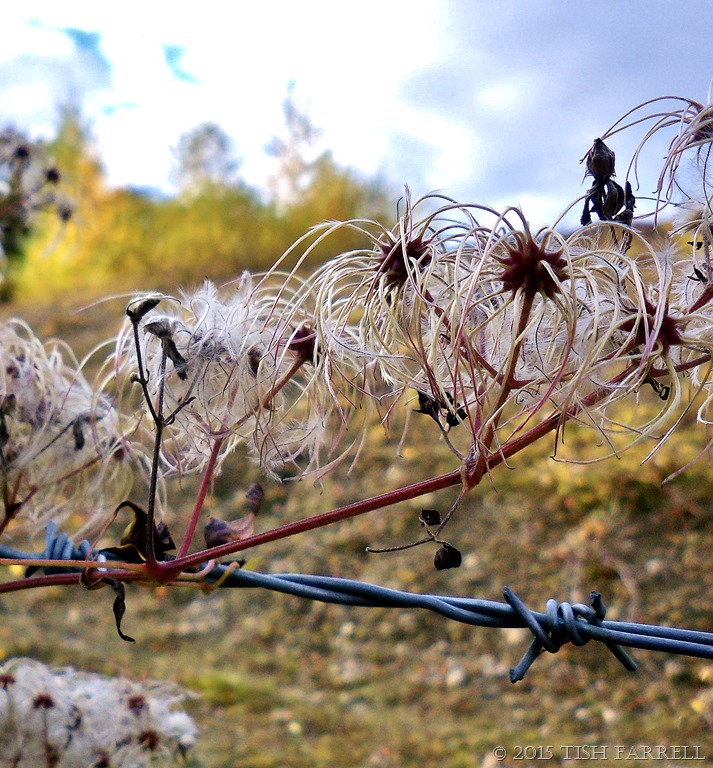
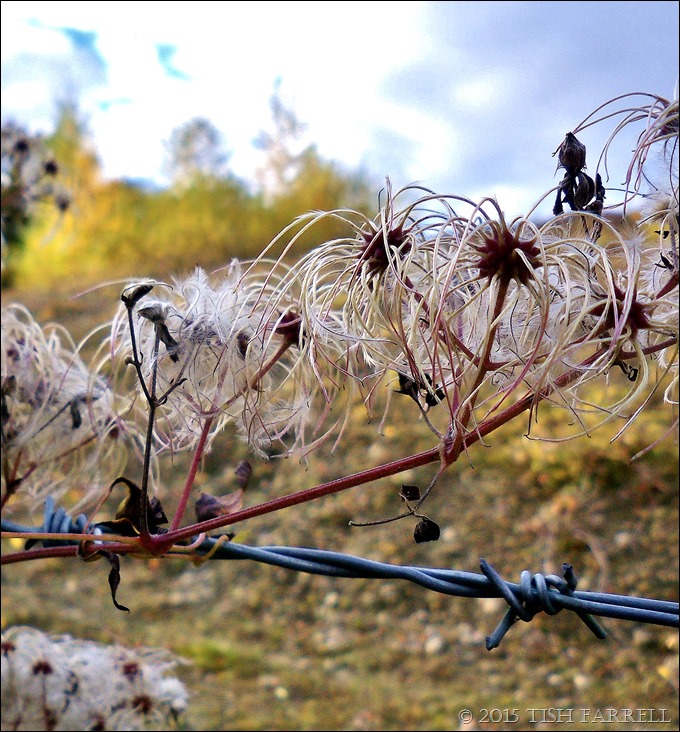
This wild clematis, aka Old Man’s Beard, caught my eye (above and below). It was arching over the path beside the abandoned Shadwell Quarry, and had then anchored itself on the fence. I like the congruity of the barbed wire and the twining plant stem.

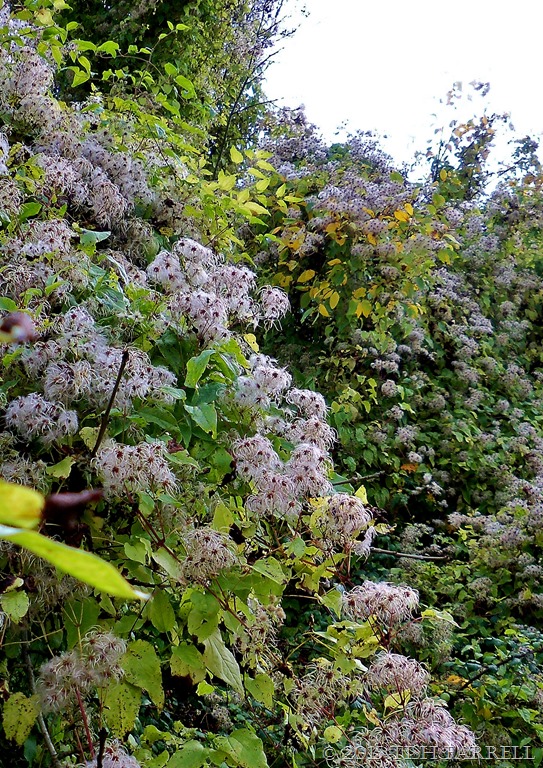
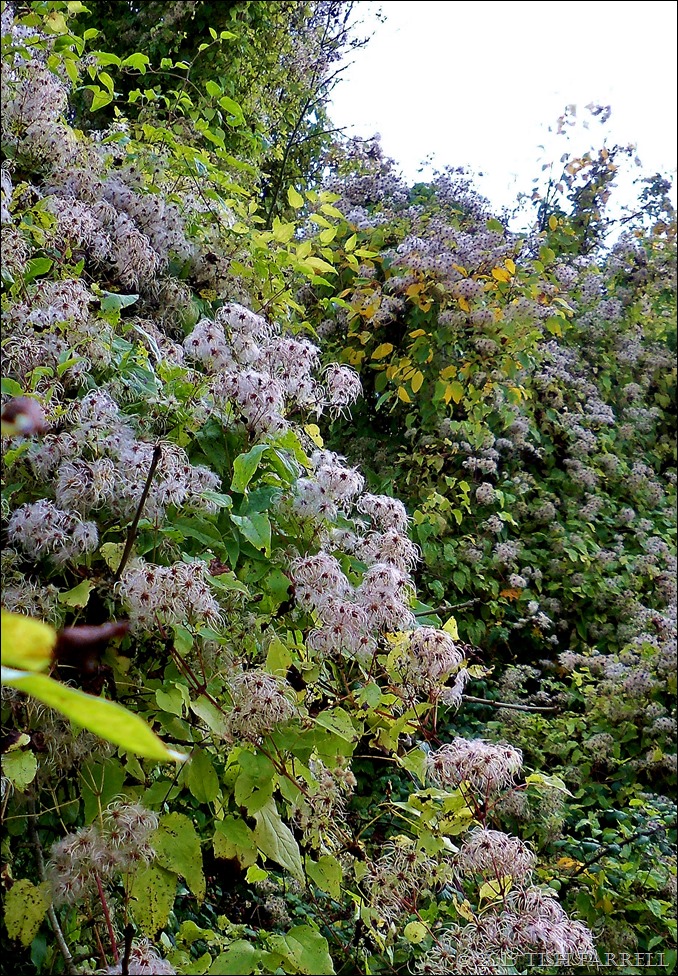
It comes into its own in the autumn with its feathery seed heads, and as you will see in a moment, it is an impressive climber.

During the summer it mostly creeps greenly through the trees and you tend not to notice it. I’m also grateful to Richard Mabey’s treasure book Flora Britannica for reminding me that another country name for this plant is Traveller’s Joy.  Mabey tells us that the plant was christened by 16th century botanist and herbalist, John Gerard who named it  thus because of its habit of ‘decking and adorning waies and hedges, where people travell’. He sounds like a sound chap, to pay tribute to the joy-making qualities of plant life.
100_7818

Like many varieties of clematis, this one does have medicinal properties – for kidneys and skin complaints – but as the whole plant is very acrid, it requires careful preparation. The most common traditional use is to roll the dried stems and smoke them as cigarettes, hence the plant’s other names of boy’s bacca and smokewood.

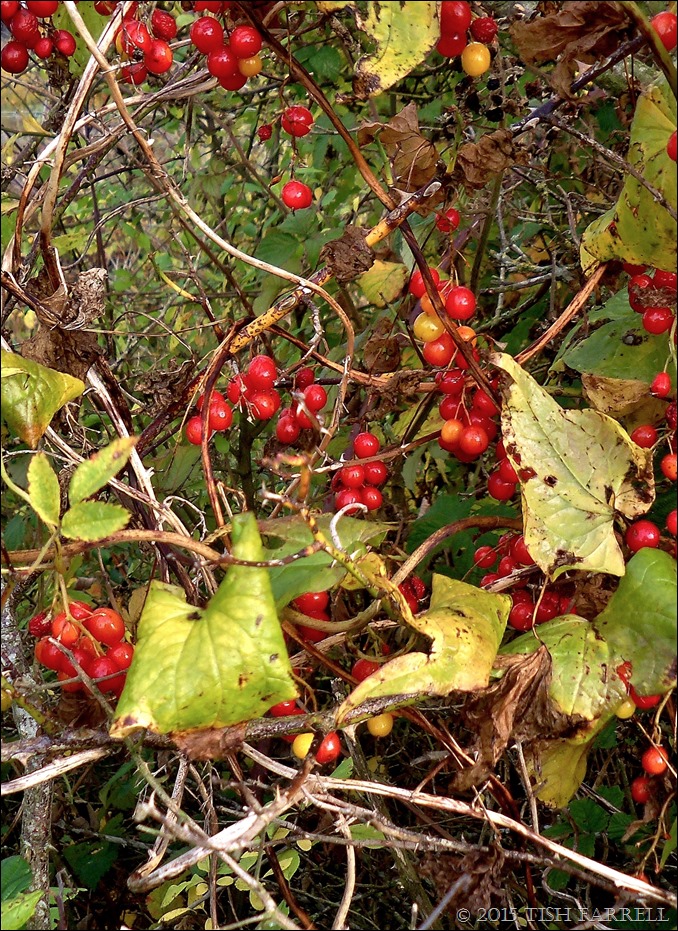
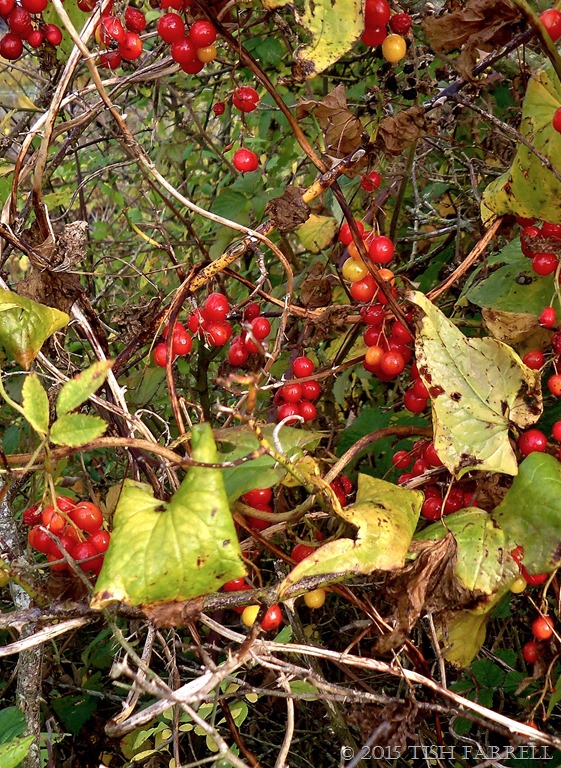
But this next plant is definitely one you do NOT want to consume in any form, despite its being related to cucumbers. All parts of White Bryony are poisonous and cattle deaths from eating it have been well recorded. But in autumn it is so very beautiful, and twines through hedgerows like strings of red and gold amber beads.
100_7828

The roots, though, are particularly toxic and grow very large. In 18th century Britain they featured in the mandrake root scam. Mandrake is a Mediterranean plant with a root that looks pretty much like a naked man or woman. It was in great demand as an aphrodisiac and narcotic. (If you know your Harry Potter, you will know that mandrake shrieks when it is being uprooted.) Unprincipled persons of the rabbit-catching variety thus began to fashion bryony roots into the highly desirable mandrake root. It was by no means an easy process either, and involved several phases to complete the subterfuge. Presumably the recipients did not live to tell any tales.
100_7815

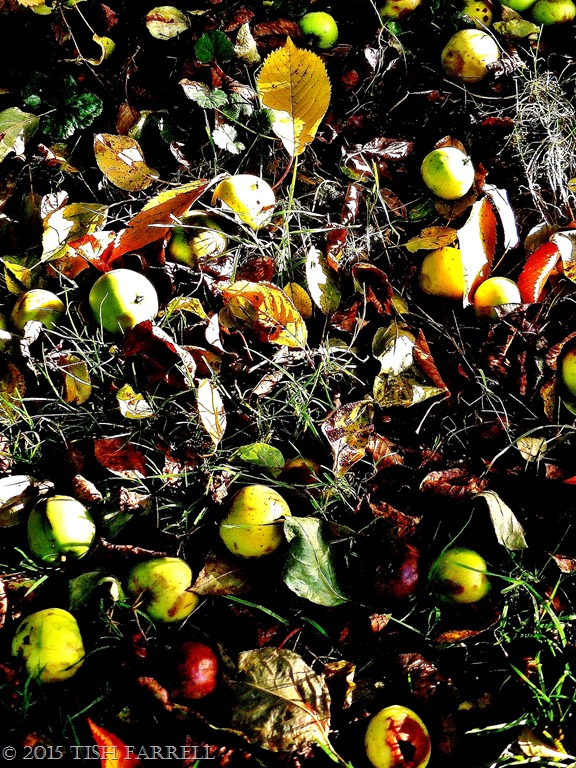
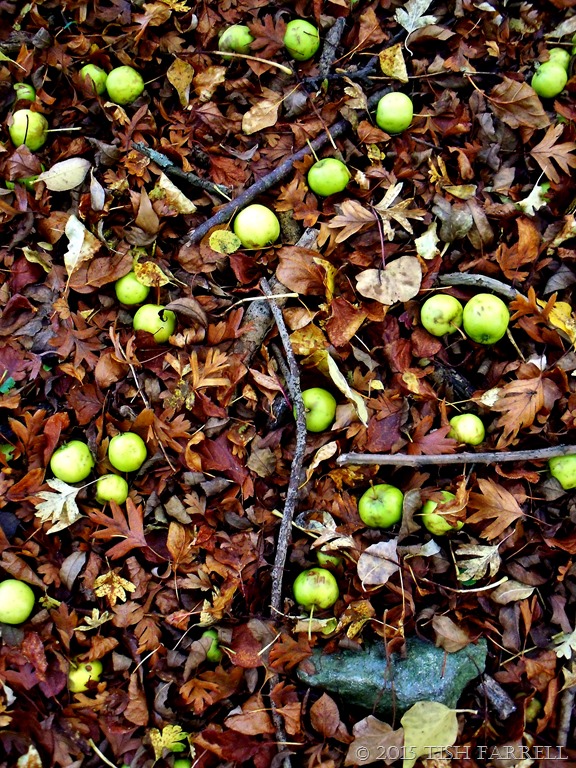
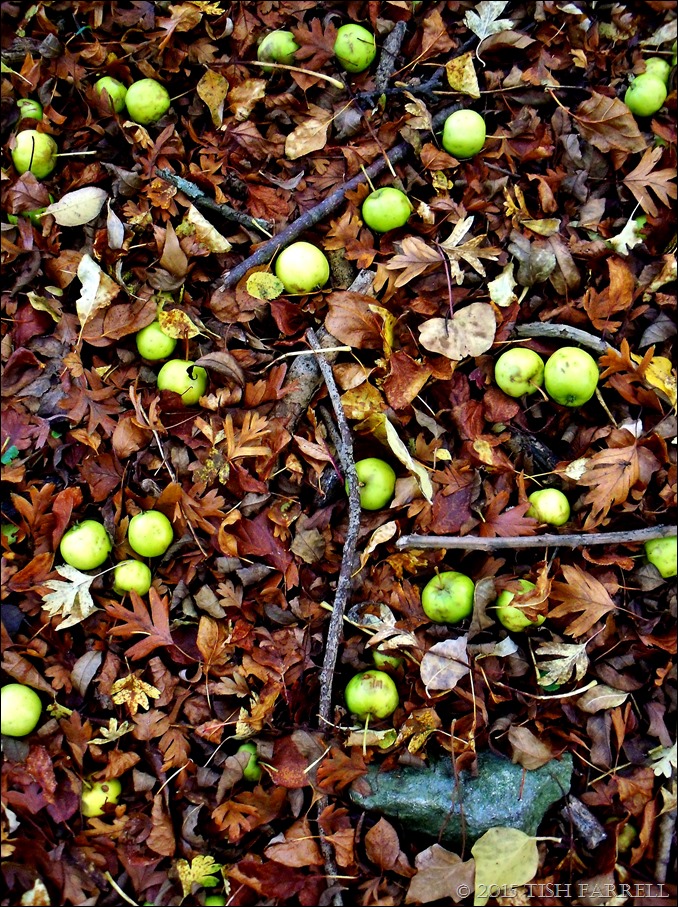
And here are some crab apples, Malus sylvestris  in Latin, woodland apples. They make brilliant, jewel like jelly which is good on toast or with roasts. Mabey says they are the ‘most important ancestor of the cultivated apple, M. domestica. More than 6,000 named varieties have been bred over the centuries, of which probably only a third still survive.’

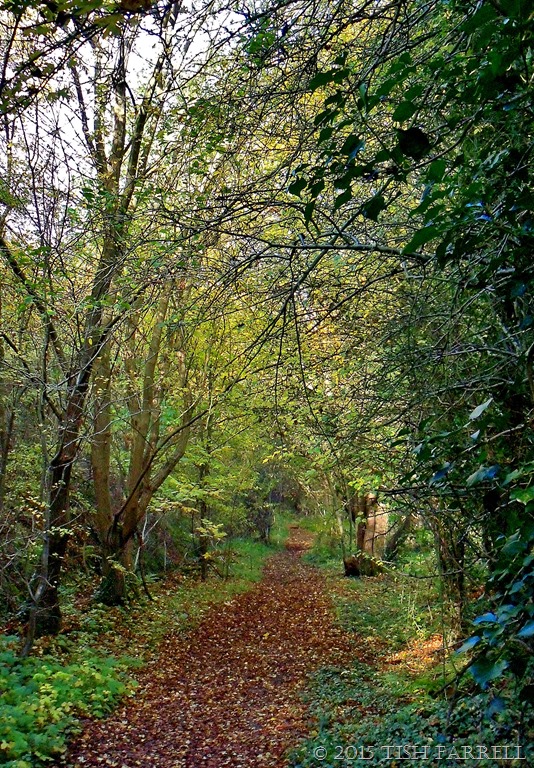
I found these, a little bruised, beside the old railway line that once served Shadwell Quarry. Now a footpath, this is one of the town’s most attractive places to walk. Ash trees and ivy overhang the track these days, and it has an other-worldly feel, far removed from industrial quarrying, trucking and smelting .
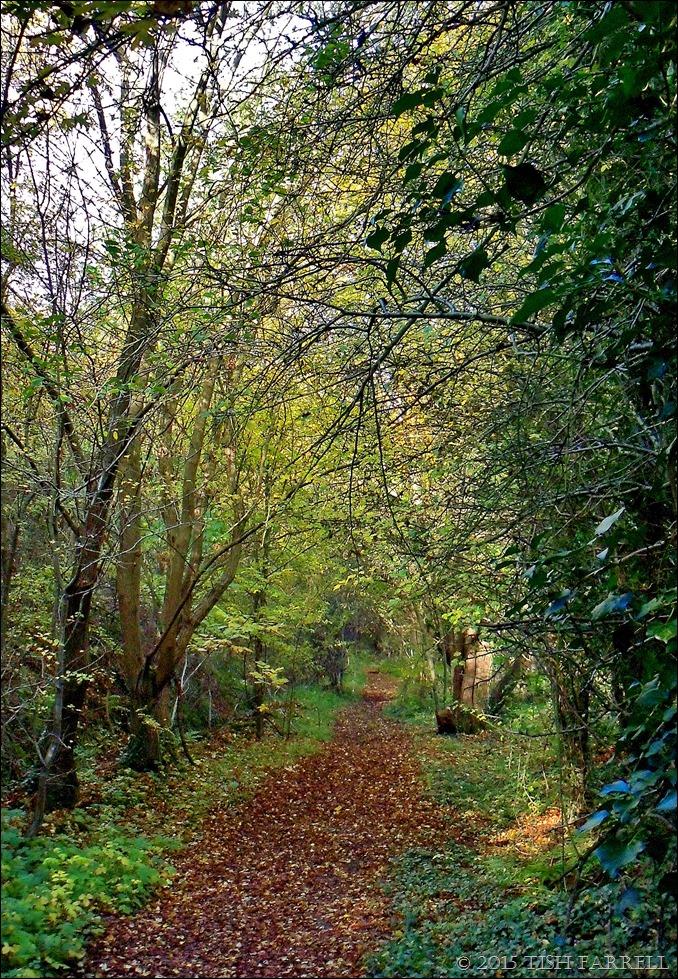
100_7809

It is hard to imagine that steam trains once came chugging down this track. The branch was built specifically to haul away Shadwell limestone to use as fluxing stone in the iron-smelting industry. In 1873, alone, 22,500 tons was shipped out of Wenlock.

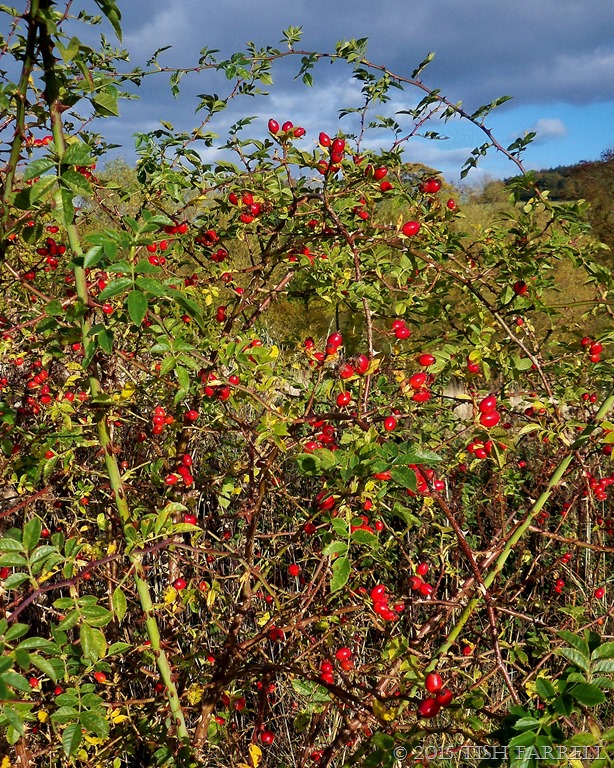
You can walk ‘there and back’ along the path, or there’s a longer circular route that takes you across fields, and down the lane to the Priory and into town. Out in the fields I found that the rose-hips, fruits of wild roses,  were doing pretty good jewel impressions too. They are also known as heps or itchy-coos.
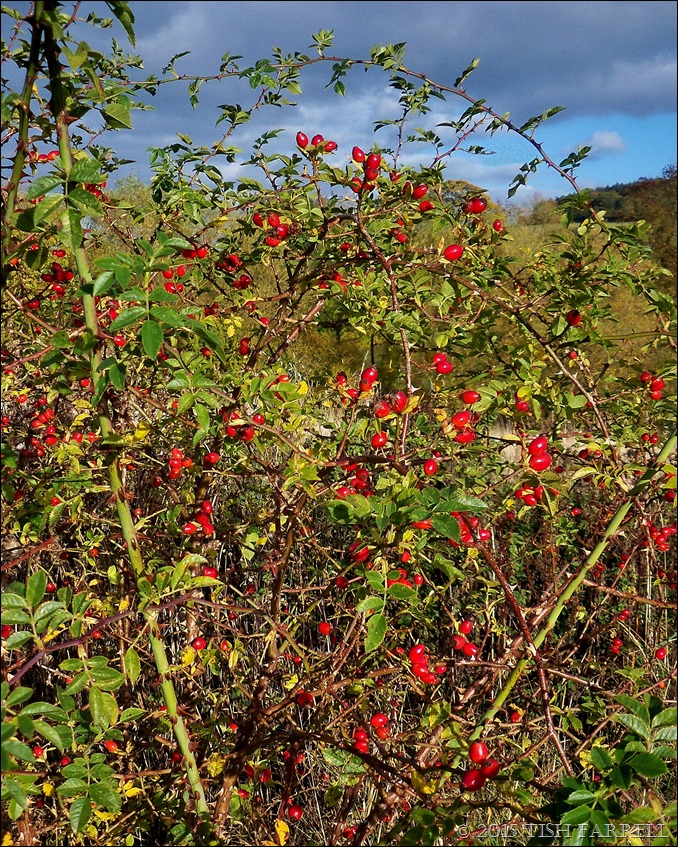
100_7806

The fruit have hairy insides which are a powerful irritant (and presumably much known to aggravate the coos or cows), but once removed, the hips have highest vitamin C content of any common native British fruit. During World War 2 and into the 1950s there was a national campaign to collect hips to make syrup according to Ministry of Food guidelines. It involved much mincing, stewing and straining, and a lot of sugar which I think was possibly counterproductive health benefit-wise. Nonetheless, caring mothers spooned it into their children.  Some of us will still remember the taste.

*

Finally a note about this post. Apart from celebrating the Shropshire countryside, it’s also inspired by 1) Lucile Godoy at Photo Rehab and Perelincolors who in Tech of the Month have been urging us to ‘fill the whole picture’ in our compositions. See their blogs for some useful guidance. (Photos here taken with a Kodak EasyShare 380).

And 2) by Jo’s Monday Walk.

Happy composing and walking everyone.

copyright 2015 Tish Farrell

Catching the wave: learning to shoot lying down

100_5992

Photography-wise, you could say this is a case of learning from one’s subject.

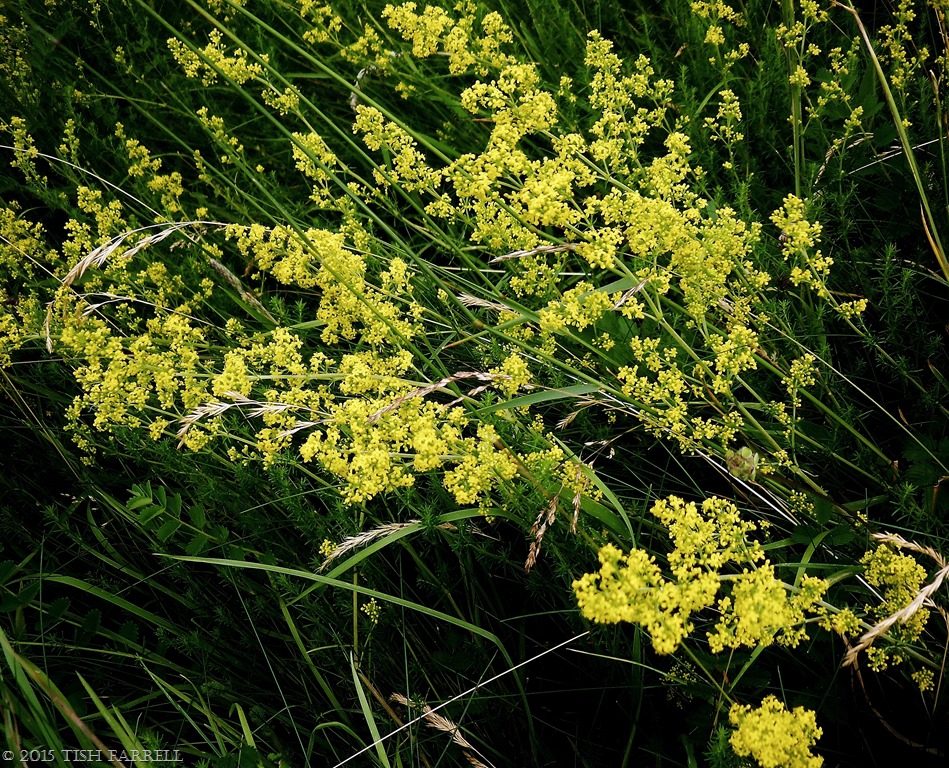
Anyone who joined me on last week’s walk around Windmill Hill, will probably know  that this drift of yellow is commonly known as Lady’s bedstraw or Lady’s tresses (Galium verum). When dried it smells of freshly mown hay, and so was once added to mattresses. Given these supine associations it seemed fitting that the only way to capture its essence was to lie down with it in the grass.

And lying down certainly reduces operator wobble, although there wasn’t much I could do about the summer breeze.  So I caught that too. And since I have yet to devise a ‘scratch and sniff’ widget, you must now use your imagination to summon a fragrance with subtle notes of gardenia plus a dash of fresh acacia honey. Mmmm. I don’t know about you, but I’m feeling a snooze coming on, borne away on a tsunami of sweet, golden, flowers. Happy dreams.

copyright 2015 Tish Farrell
Inspired by Jennifer Nichole Wells One Word Photo Challenge: tsunami  Go here to see Jennifer’s fascinating miniature world, and other bloggers’ interpretations for OWPC.

I’m also linking this to Lucile de Godoy’s Photo Rehab at Bridging Lacunas. Please visit her and her community of photo bloggers for a great boost to your creativity.

Return to Windmill Hill: Of Grasshopper Stalking, Lady’s Bedstraw And Other Random Discoveries

100_6008

Today I thought it was time to check on the floral happenings in our remnant of limestone meadow up on Windmill Hill. It’s a few weeks since I was last up there, and the spring flowers are giving way to summer species. Perhaps one of  the most pleasing finds were these drifts of Lady’s Bedstraw,  seen here below the windmill.

It is also called Lady’s Tresses, and  it smells of honeyed summer pasture. Once it would be gathered and dried and included with the straw that was used to fill mattresses. It was often chosen for the beds of pregnant women, so surrounding those in their confinement with soothing wafts of sweet hay scents.

I think this is a practice we could revive, not that we are allowed to harvest wild flowers. I’m envisaging now a pillow filled  with golden stems. Surely it would be just the thing to send us sleep-fractured souls back to dreamland. And even if it didn’t, it would make being wakeful a pleasure.

100_5898

The spotted orchids  I first found last month for Meg are nearly over (by the way, you should see Meg’s sundews found in Australia’s  Stanthorpe granite country over at Snippetsandsnaps). But following on from the common spotted are the pyramidal orchids, which range in colour from lipstick pink to purple. I also discover from plantlife.org.uk that these, like many orchids, require the presence of a particular fungus in the soil in order to flower.

100_5892

I also discover from Richard Mabey’s treasure of a book, Flora Britannica,  that when the Victorian art critic, John Ruskin, learned that the name orchid derived from the Greek word orkhis  meaning testicle, he urged that the flower’s name be changed to wreathewort. Personally, I don’t think this any sort of improvement. The man was a prude. Besides, the reason that orchids are named after testicles is because their roots’ appearance do a pretty good impersonation of same. Doubtless this was why they were long considered a useful remedy for a lapsed libido – a herbal fancy and fallacy I imagine, so do  not try this at home.

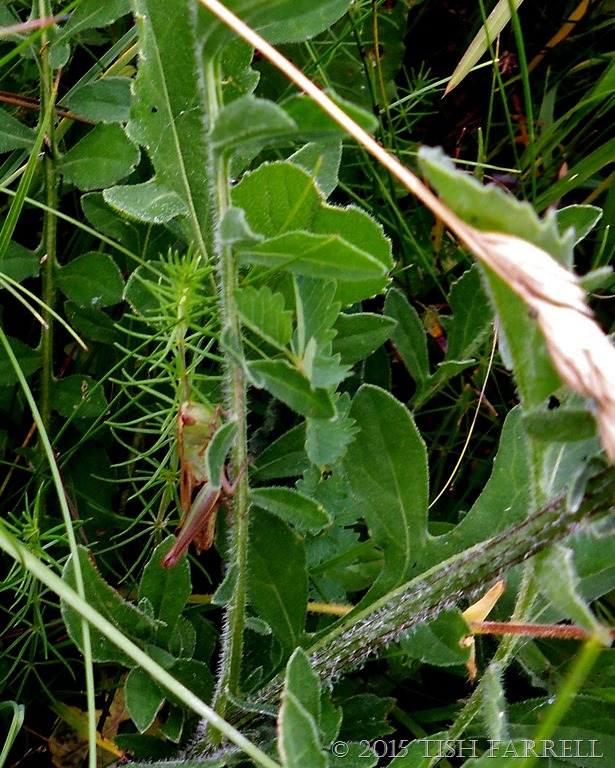
While I was scrabbling around on my knees in the grass, thinking what strange things I have started doing since joining WordPress, I became distracted by a grasshopper. This is not the greatest shot. He is lurking on the leaves of greater knapweed, Centaurea scabiosa. Very well camouflaged I thought.

100_5972

100_5968

While I was down there, because believe me, once you get down on your knees you need to make the most of it, I also discovered some Lady’s Bedstraw caught inside a web. It looks like a shroud. You can just see the tiny spider due south of the flower:

100_5993

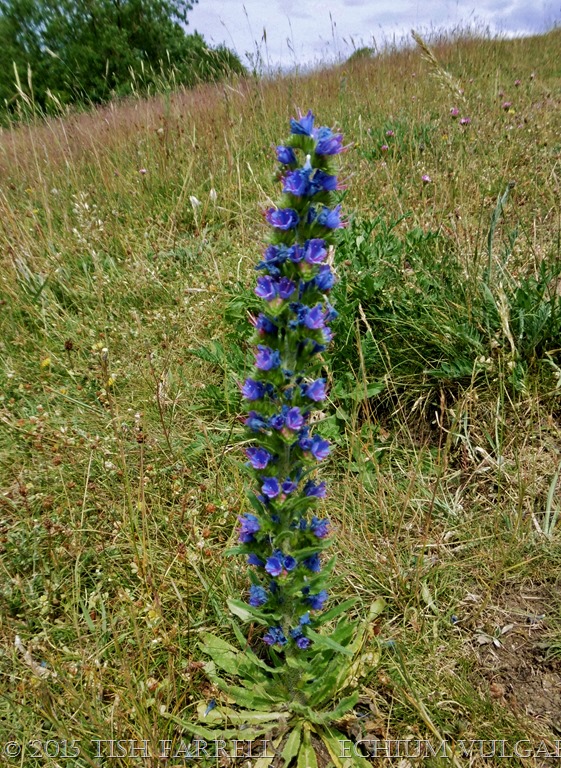
And now here is one of Windmill Hill’s  more sinister-looking plant specimens, – the very upright prickly spires of Viper’s bugloss. Apparently the flower’s fruits resemble adders’ heads, and other names include adderwort and snake flower. As well as colonising limestone areas, you will also find it growing on chalky and industrially contaminated soils. Like other members of the Echium family, which includes borage and comfrey, it is attractive to bees.

P1010611

And here’s another bee favourite – Wild Thyme:

100_5950

Thyme is of course a must in the kitchen. It is also a common medicinal herb. All forms of the plant contain the volatile oil thymol, a powerful antiseptic, which is often included in cough mixtures. I use thyme (fresh or dried) steeped in hot water with honey and fresh lemon juice when I have a cold or cough.

And talking of thyme, it’s time to head for home. So I’ll leave you with one last view of the windmill and some more flowers named after testicles. Not that it’s in any way connected, but I had to lie down in the grass to take this shot – a fine way for the minuting secretary of Much Wenlock Civic Society to conduct herself. It was just as well there were none of the usual walkers and their dogs around for me to frighten:

100_5981

This excursion, but naturally not the bit about the orchid’s etymology, was inspired by Jo’s Monday Walk. Please join her there for some fascinating rambles.

copyright 2105 Tish Farrell