As We Walked Out One August Evening

IMG_8622ed

So why don’t we have supper with the elephant? says I. We can take a picnic.

It was Sunday evening, and he-who-builds-sheds had been toiling all day on a new construction. (We call it ‘the car port’, but it’s not for the car.) The response was not altogether encouraging. I knew he was thinking of the hill climb in the heat. I thought of it too, but the notional destination outweighed resistance. I packed a couple of small cool bags with spicy cooked chicken, bulgar wheat salad, apples and some elderflower kombucha.

We set off a little after six. The sun beamed hotly. (What a summer we’ve had).

The walk I had in mind is a climb of two parts, the first being the short sharp yomp up our street to the top of the town. This haul can be alleviated half way up from our house by deviating into Laburnum Alley, a shady ginnel of ancient walls and overhanging greenery, that wends more gently around garden perimeters, and brings you, breathing easily, into Welsh Street.

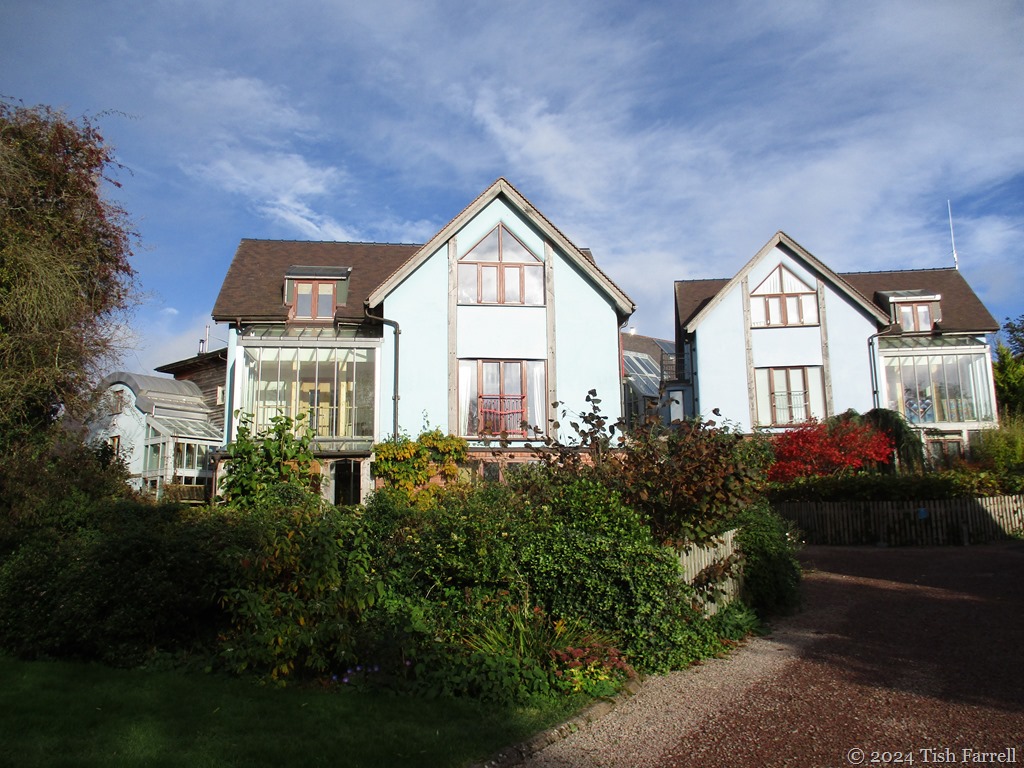
Next there’s an even stretch along the road around the Wintles mini eco-village before we head into the shade of this settlement’s privately owned (but freely accessible) woodland enclave of vineyard, allotments, and bosky meanderings. The Shropshire Way also bisects it. We pass through the gate into the field behind the gardens, and start the main climb. We’re headed towards Wales now, the Long Mynd our right.

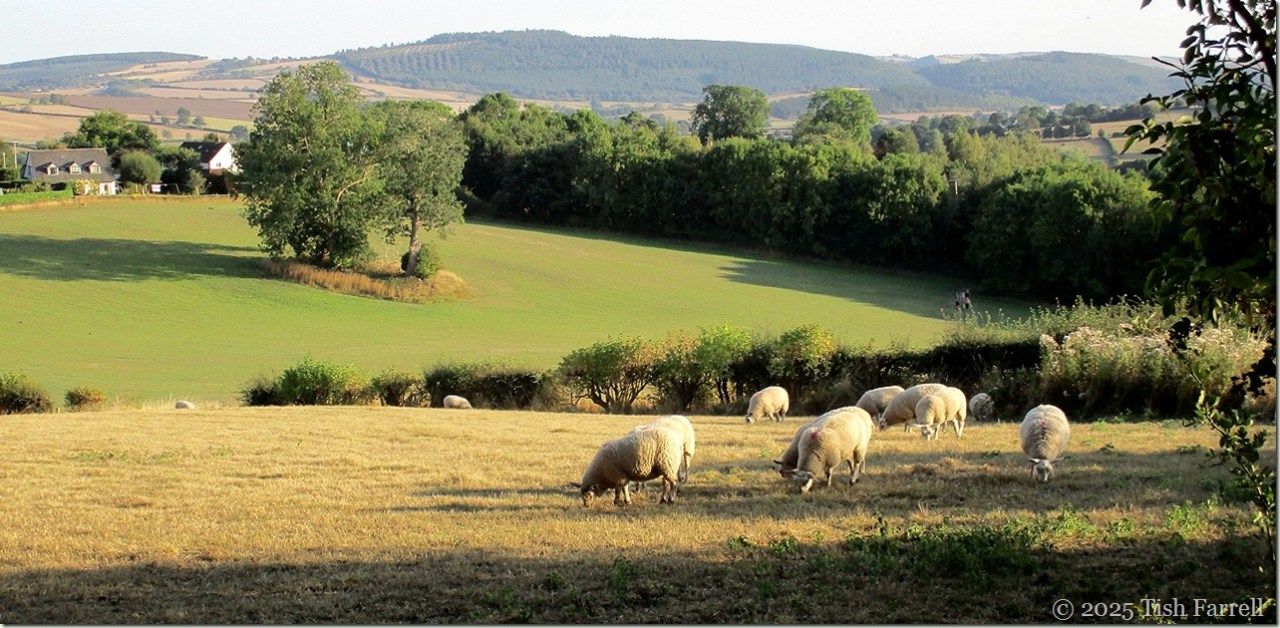
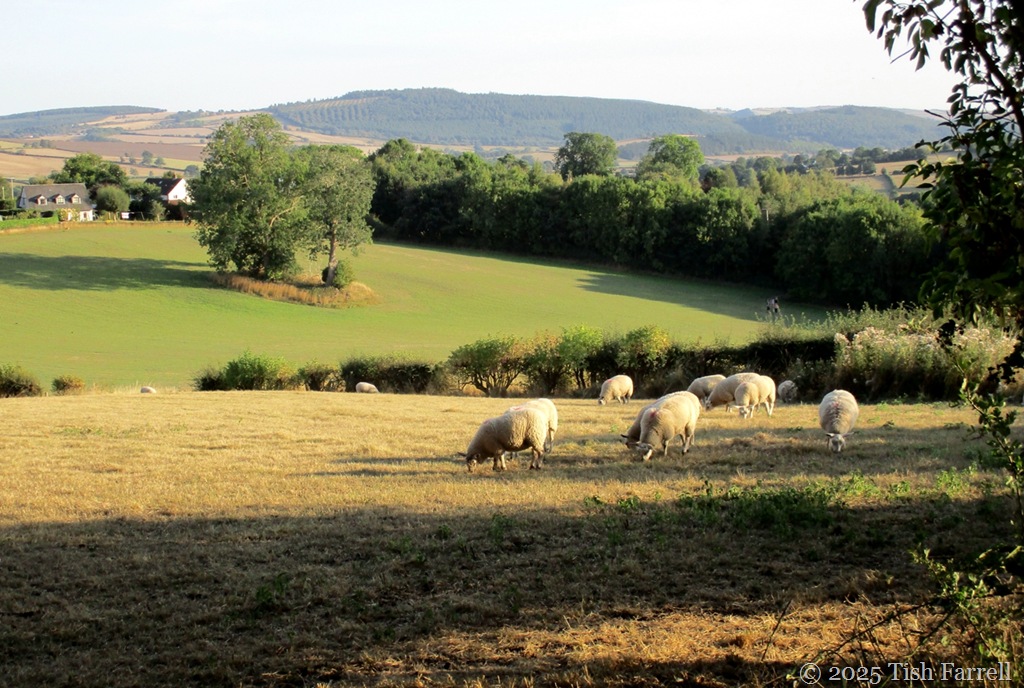
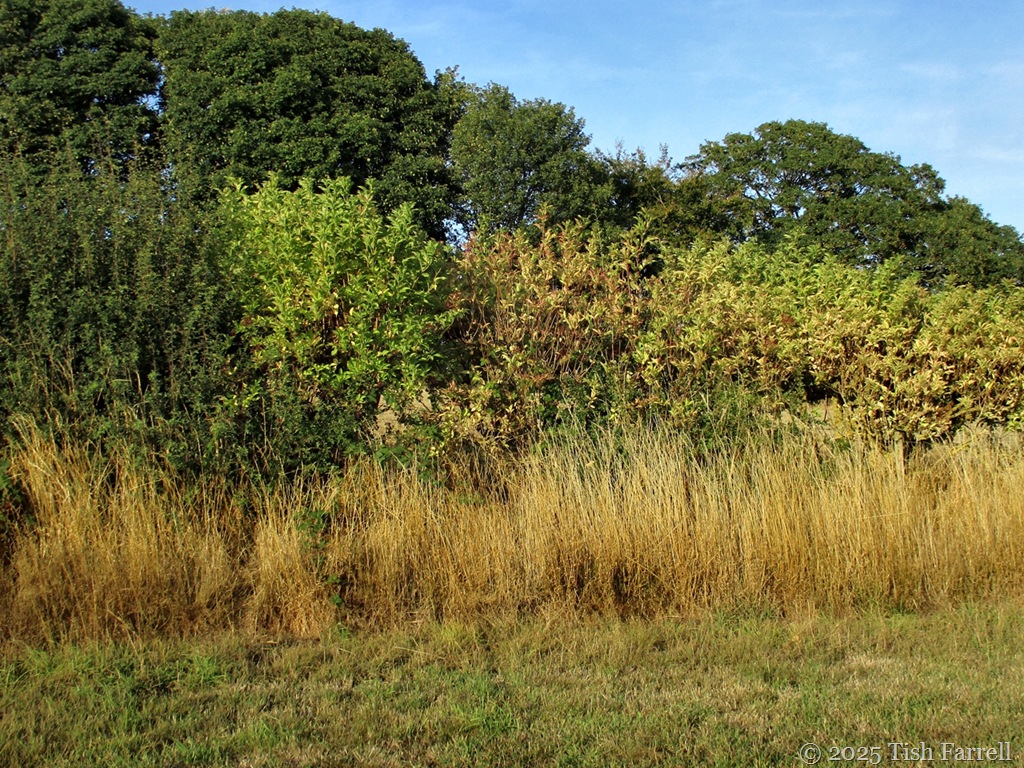
The field behind the Wintles woodland still looks remarkably green, this despite the months of drought. But above us, the fields are pale ochre, shorn of pasture or wheat, the hedgerows tousled, fringed with dead grasses and thistles bursting with down.
IMG_8613 ed

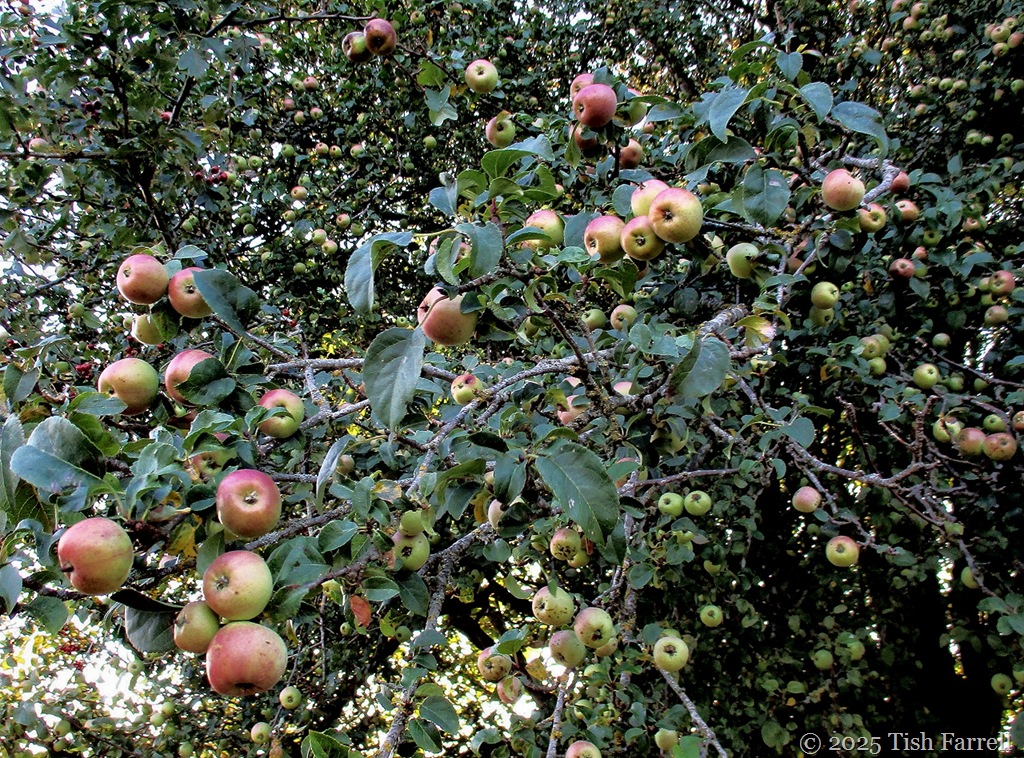
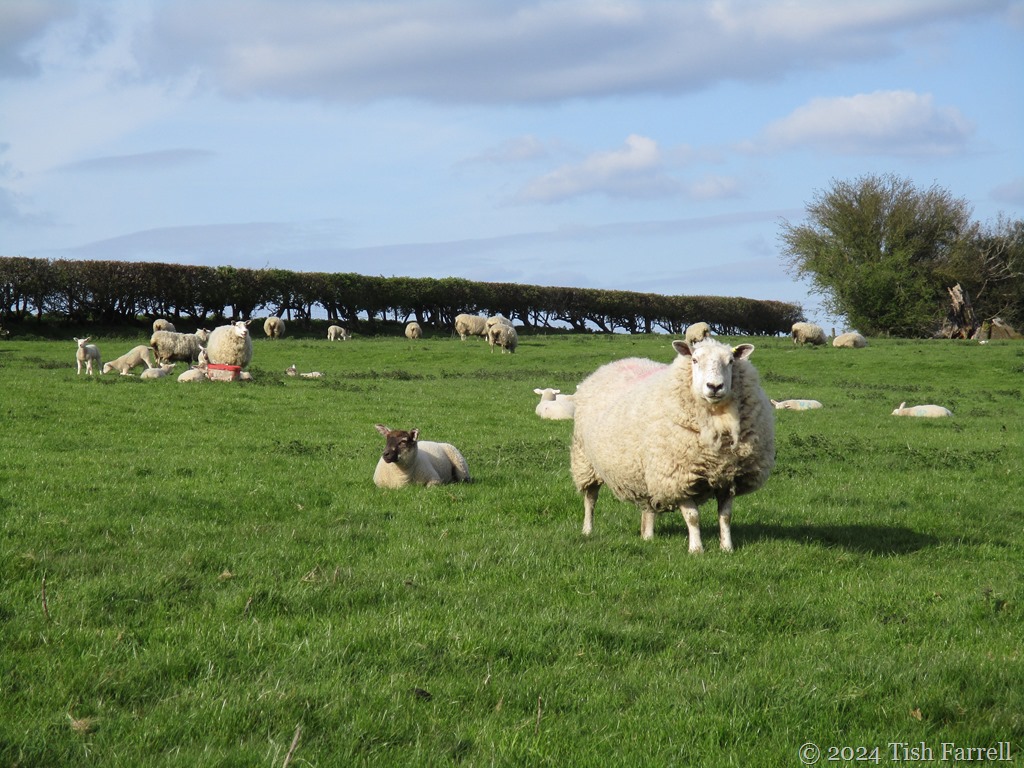
The few sheep we pass seem happy enough, and we begin to see that not everything has suffered from the lack of rain. The red clouds of the berry-laden hawthorns are astonishing, so copious is this year’s crop. The elders, too, are weighed down with ripe black berries, and later we see bushes of fat blue sloes (think passingly of making sloe gin), and then come upon a crab apple tree so crammed with fruit it is almost too good to be true. Excitement mounts. Crab apple jelly will definitely happen – if not yet, then very soon, and feasibly in quantities for all of Bishop’s Castle.

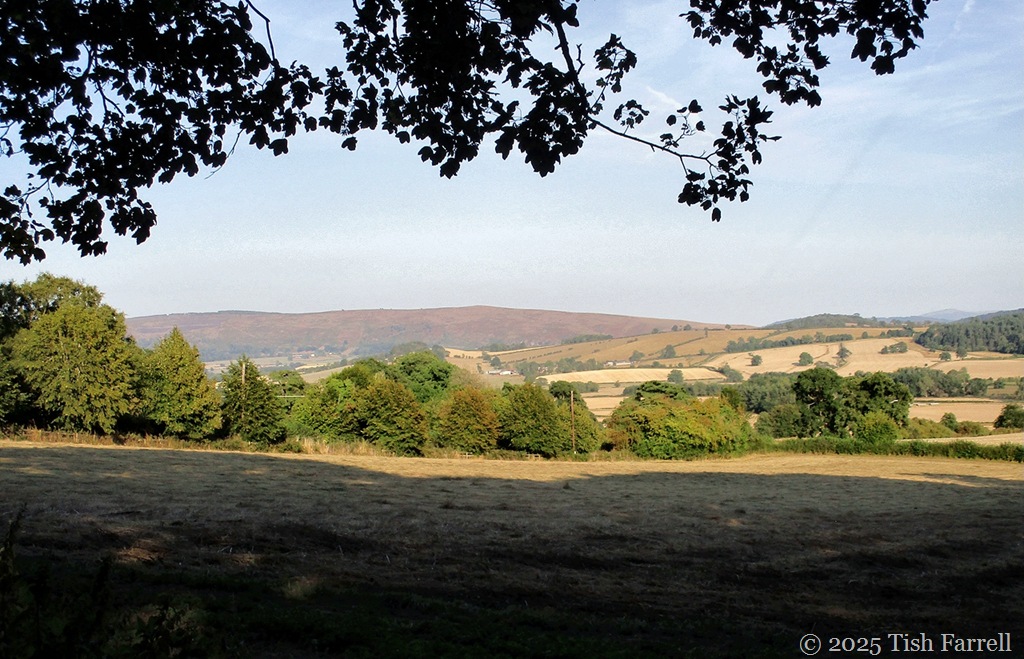
But first the picnic. We follow the footpath markers through two gates and into the trees below Foxholes Campsite. There’s a good view of the Longmynd now…
Longmynd

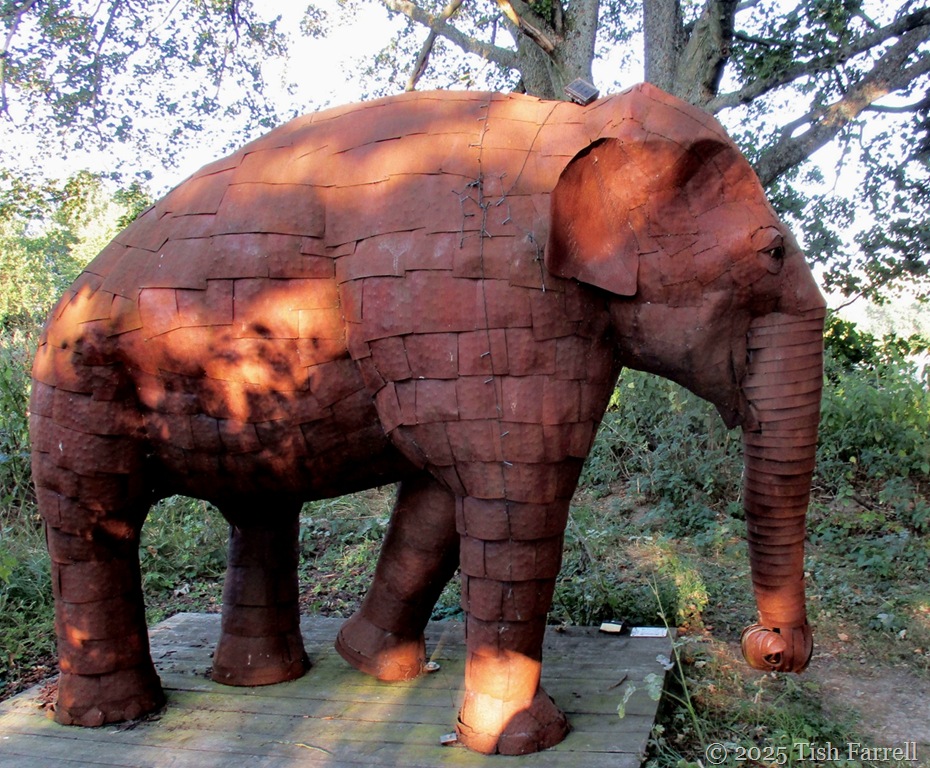
…and there is also an elephant…an Asian elephant…
elephant 2

*

Some of you will have seen this before, and I’m sorry to say that I’ve still not tracked down who made her or why she is here in this particular spot.

*
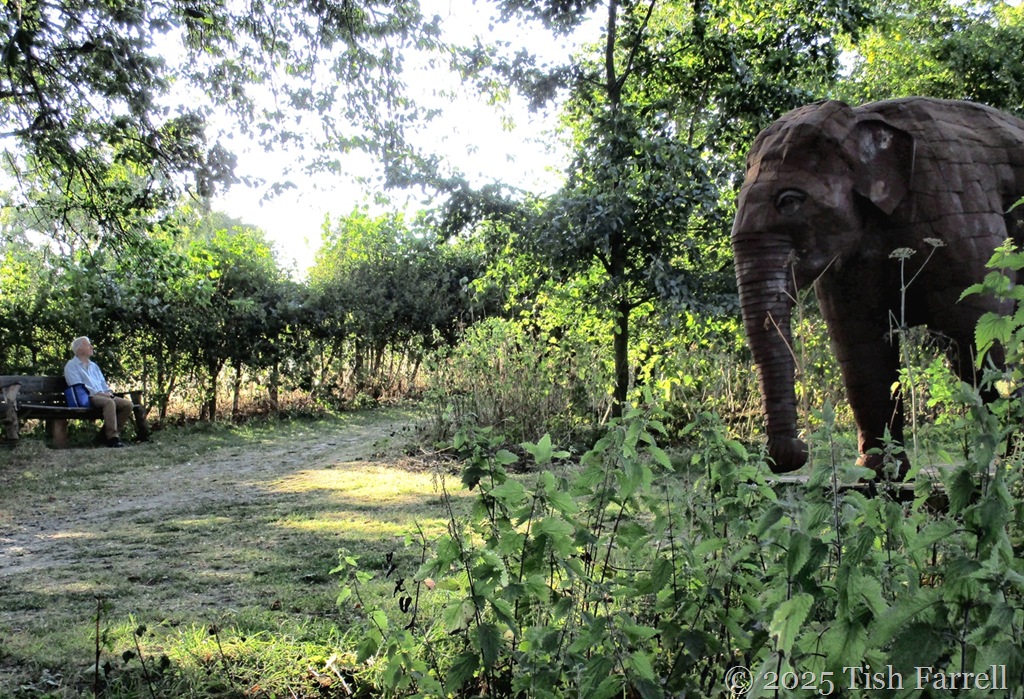
IMG_8627ed

But here, then, was the envisioned picnic spot.

We ate our supper, sitting on a fine seat commemorating a lost love, greeting camping folk as they passed by, listening to the breeze in the trees. The elephant did not have much to say. Nor did Buddha who was sitting near us:
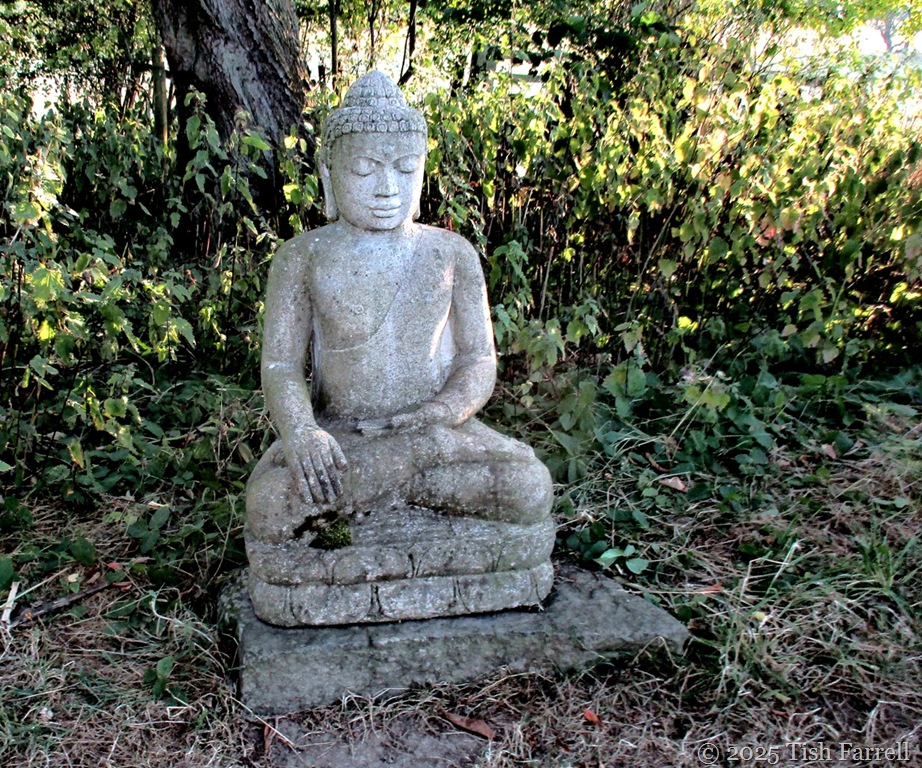
Buddha

Just some quiet communing.

Once we’d eaten, I thought I could risk suggesting a little more climbing. This time to the top of the hill to see the views towards Montgomery.

It was here we found the crab apple tree.
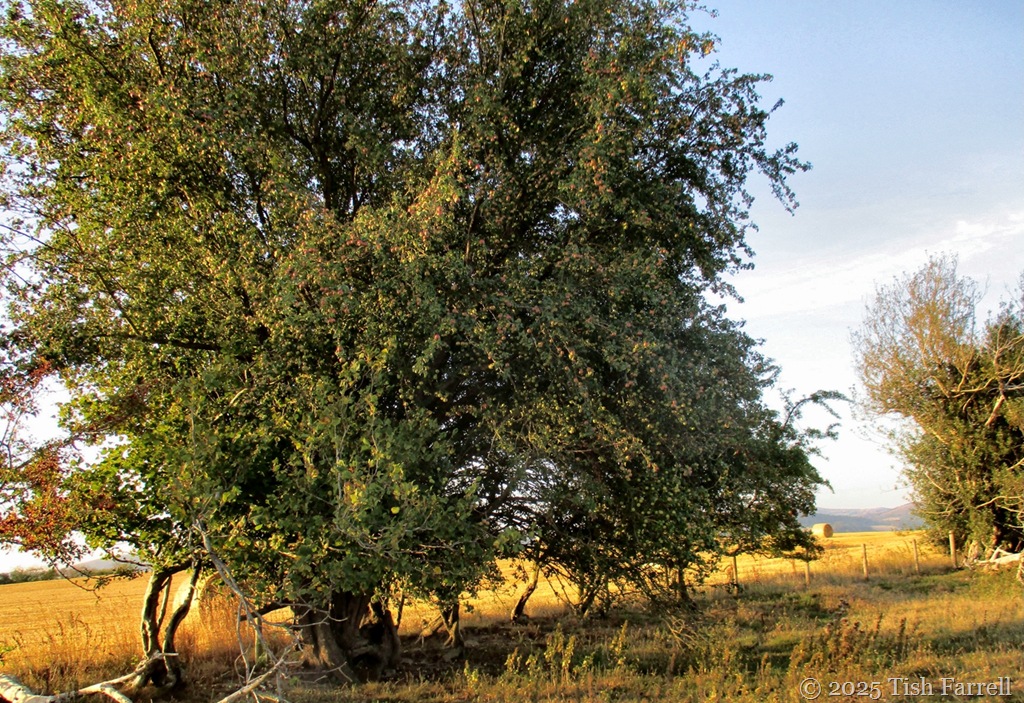
crab apple and haw accessories

crab apple tree

*

And next to it a fallen giant with its own elephantine qualities. It looks to have been struck by lightning many moons ago:
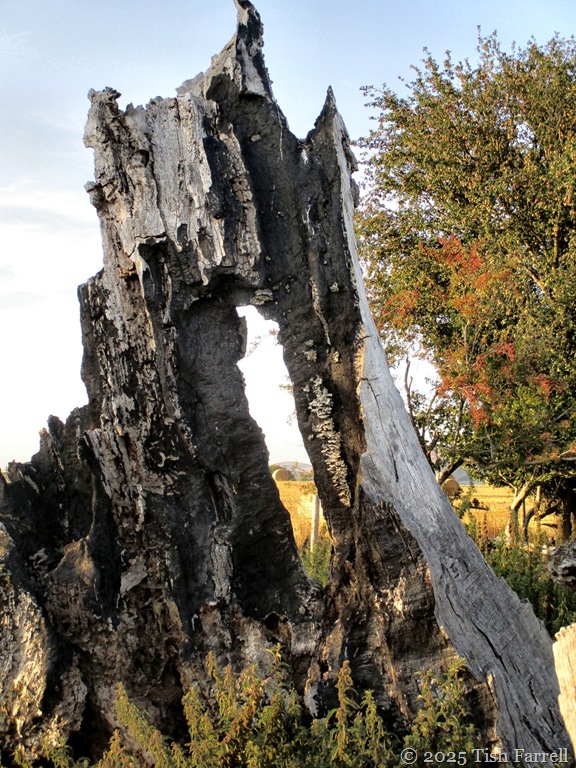
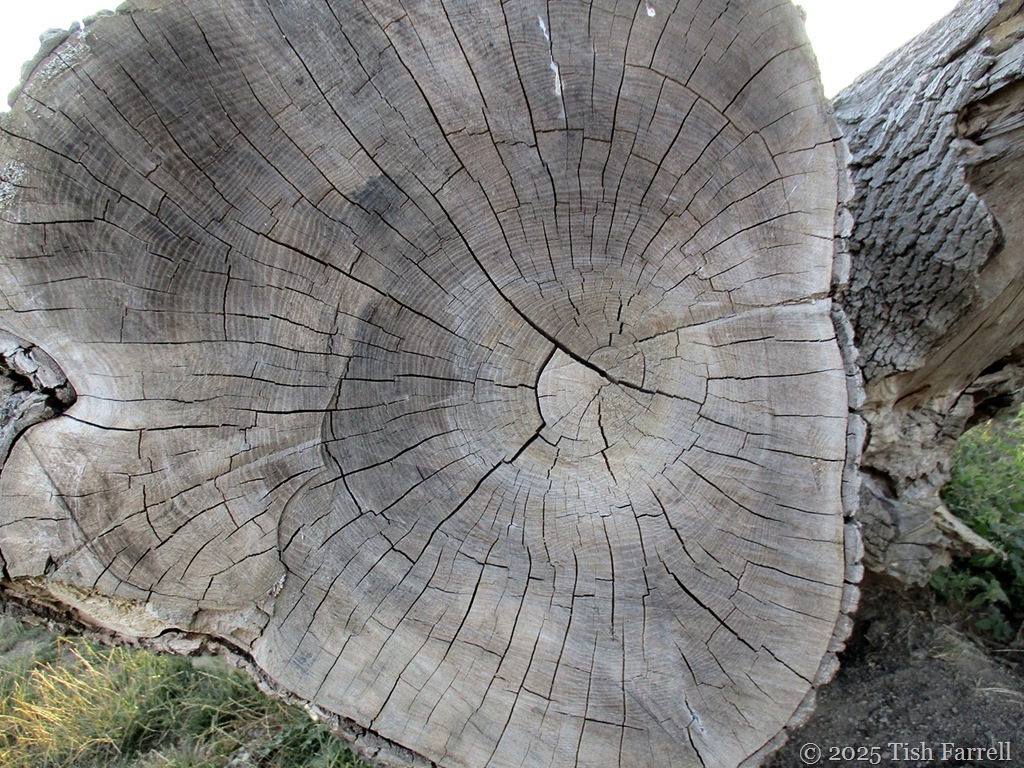
tree window

tree rings

*

And beyond it the wheat field, the crop harvested and the straw bound in roundels, which for some reason are always appealing:
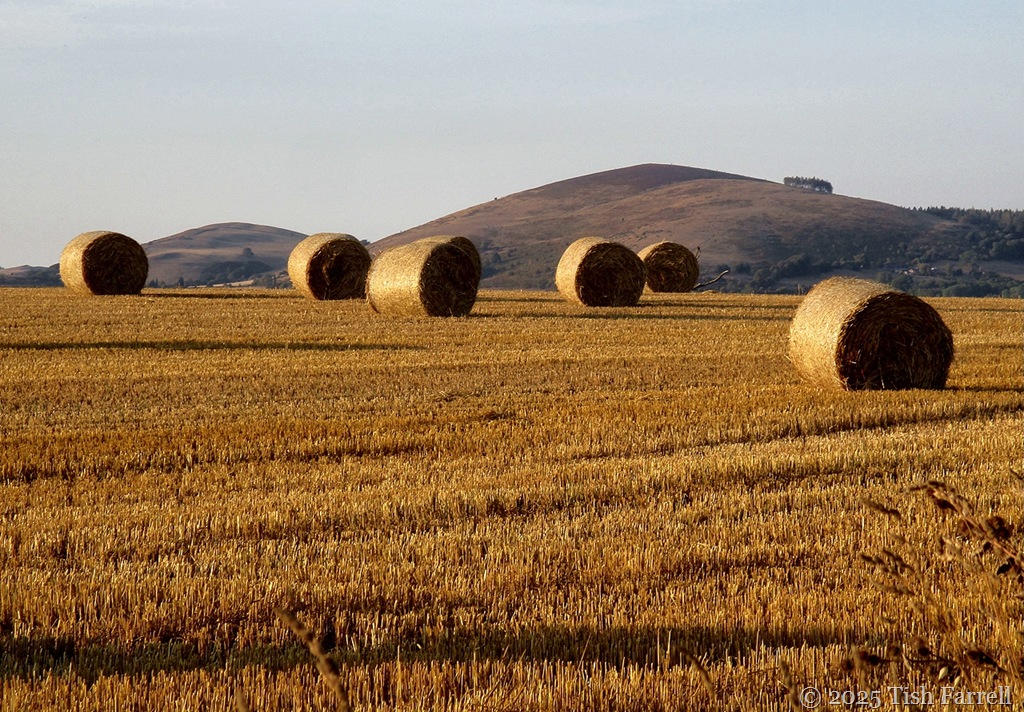
stubble

*

Then it was time to turn for home, slithering down the hill on sun baked ground…IMG_8666ed
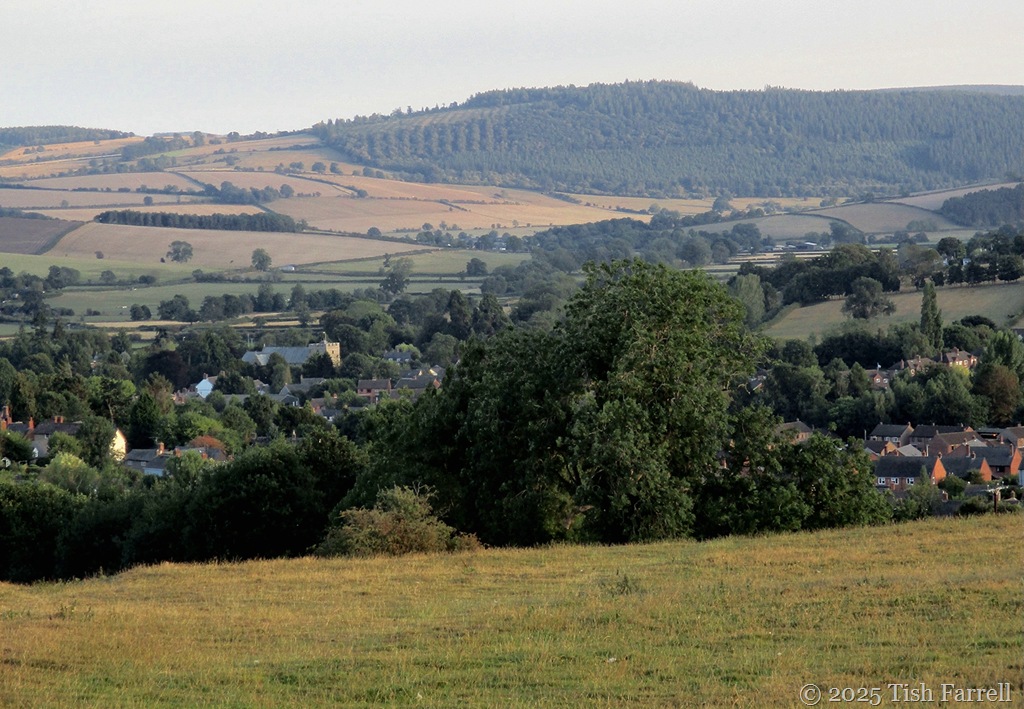
*

…and on down the hollow way, back to the Wintles.
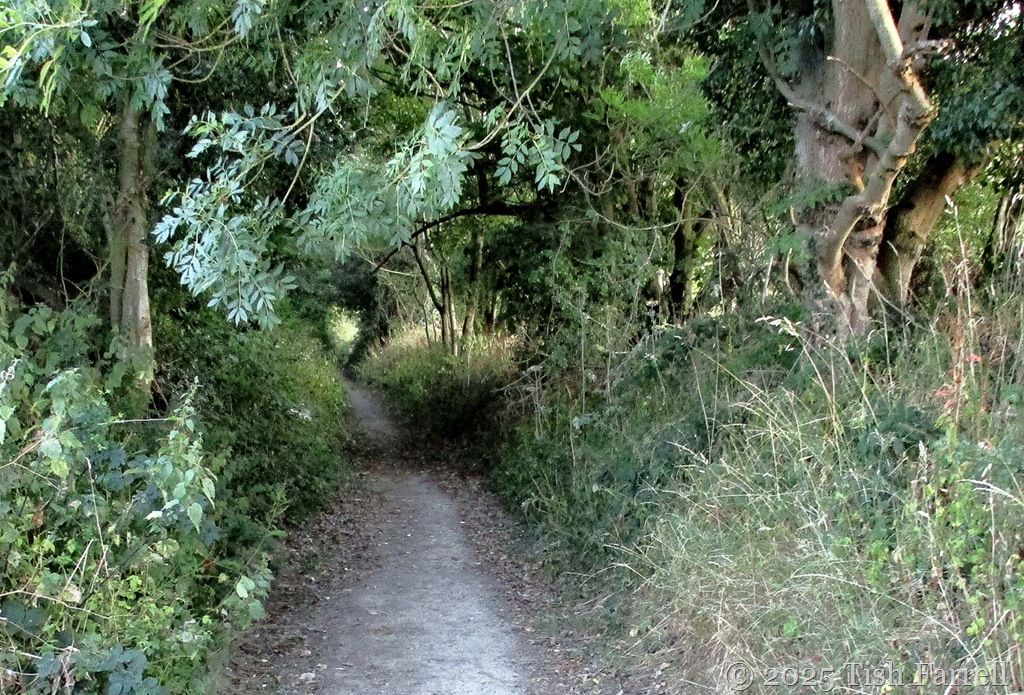
hollow way

*

We should do this more often, we said when we arrived back at the Gables.

copyright 2025 Tish Farrell
Ructions At The Roost

IMG_7897 jackdaw header

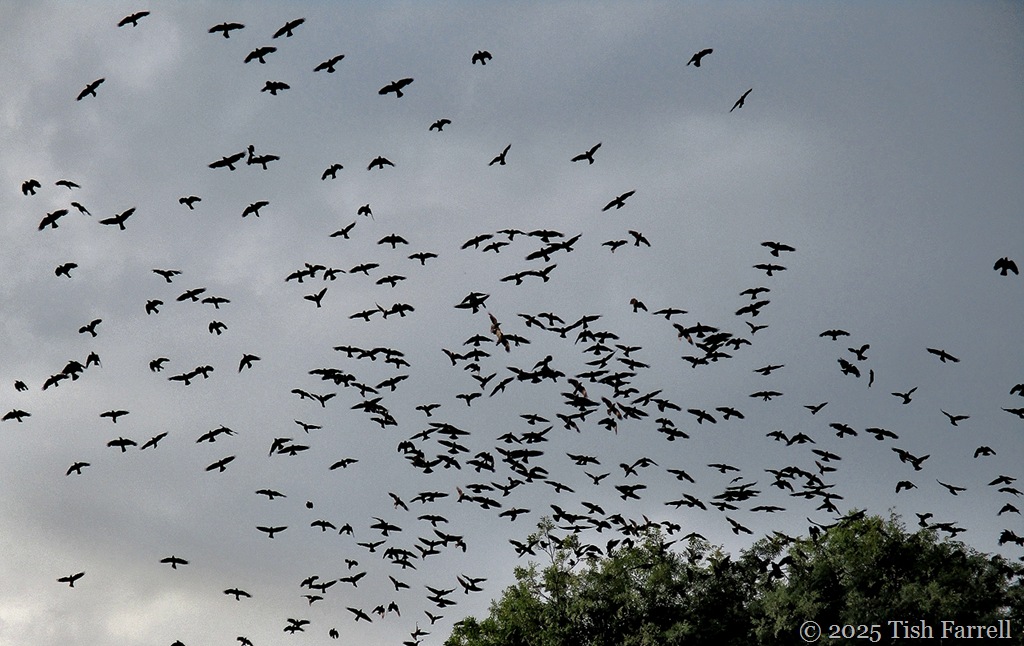
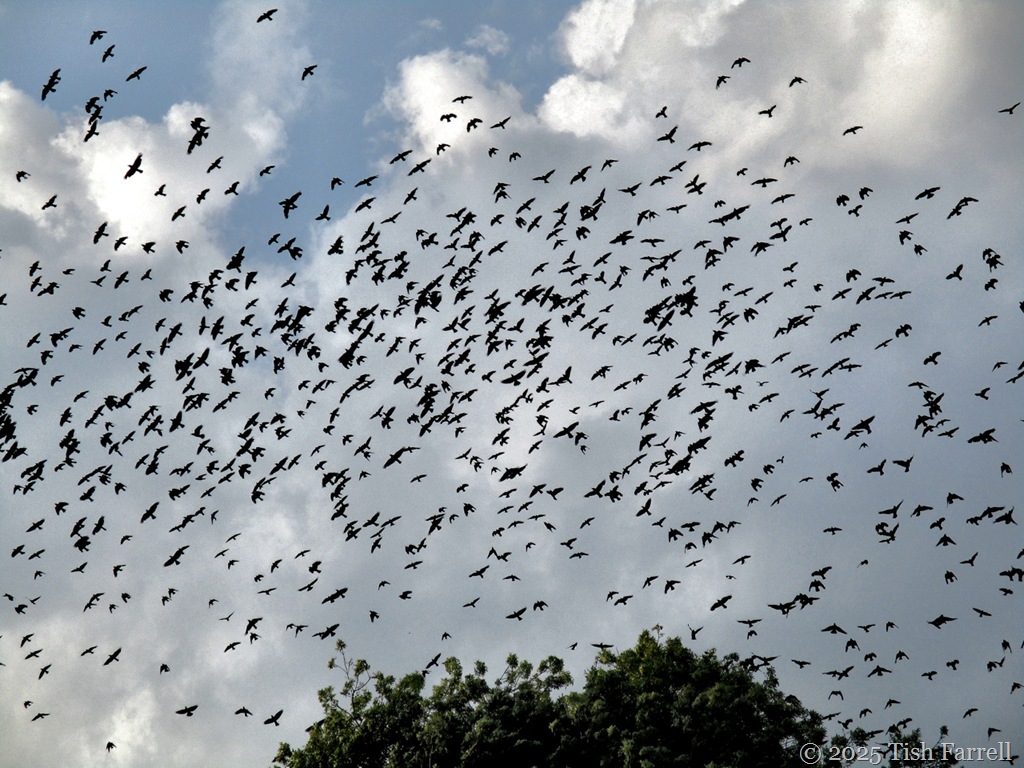
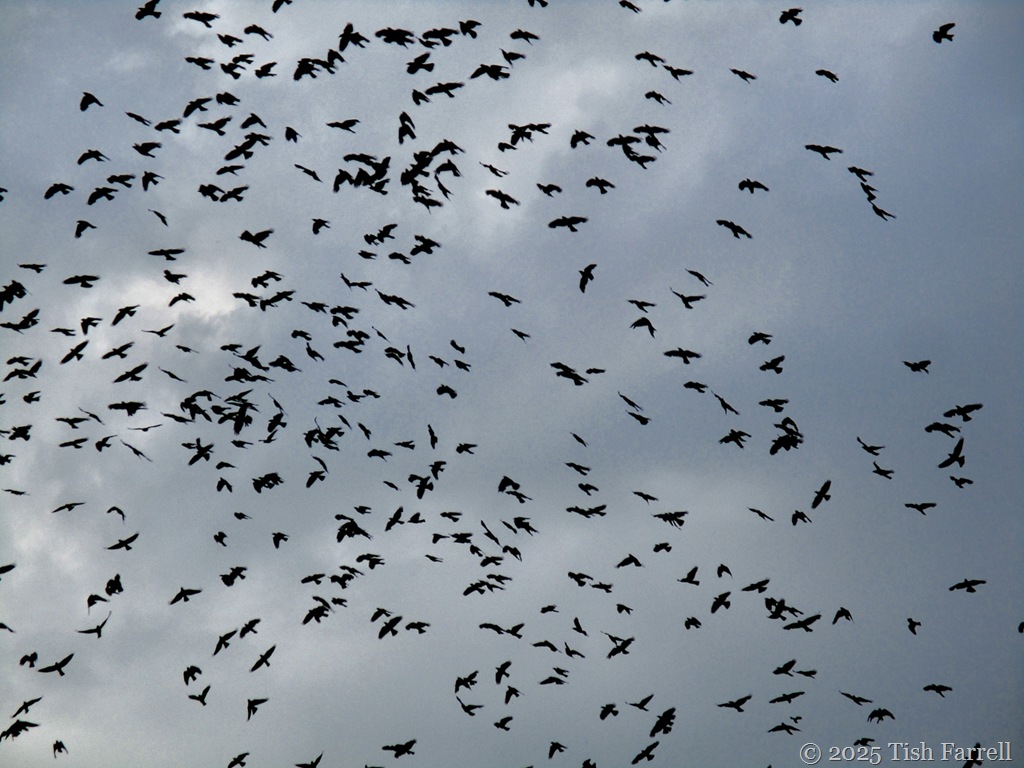
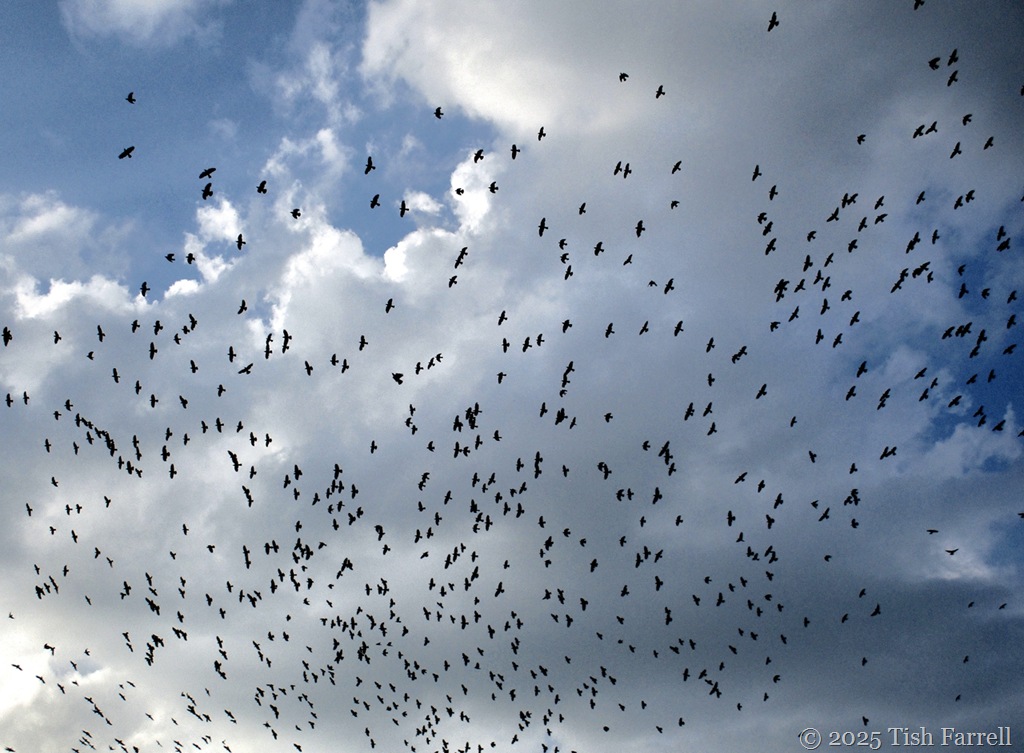
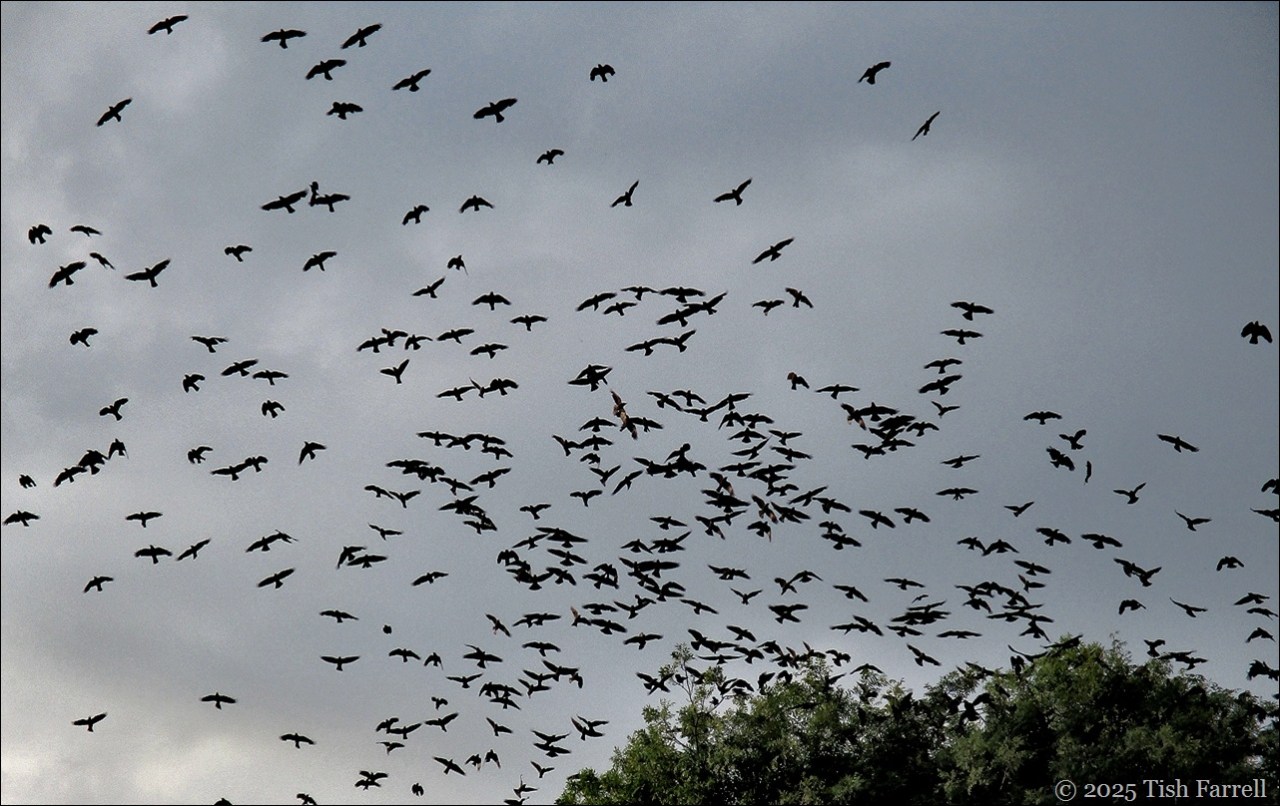
I don’t know what’s going on with the jackdaws who roost in the big ash tree on the hill above our house. Lately they’ve been bursting over the garden with much clamour and commotion. The eruptions can happen at any time, which is very disturbing when one is hanging out the washing.

Usually big aerial displays of corvids take place at dusk. This seems different though. A bit of a fracas perhaps: the newly fledged offspring coming to terms with their established community, and vice versa. Anyway it strikes this human onlooker as one big family row. Well, just imagine having to live in one tree with this crowd.

IMG_7905 jackdaws 5

IMG_7898 jackdaws 4

IMG_7894 jackdaws 2

Welcome To My World ~ A Late-Day Walk Above Bishop’s Castle

IMG_4567a

On Sunday I did a lot of complaining about the cold and lack of sunshine. Perhaps the weather gods took pity. At five o’ clock the clouds lifted and the sun came out, and although it was still chilly, we thought a walk was called for. There was a path I had my eye on back in the winter when it was too muddy underfoot to attempt it. But after a couple of downpour-free days and lots of drying wind, I thought it should be passable.

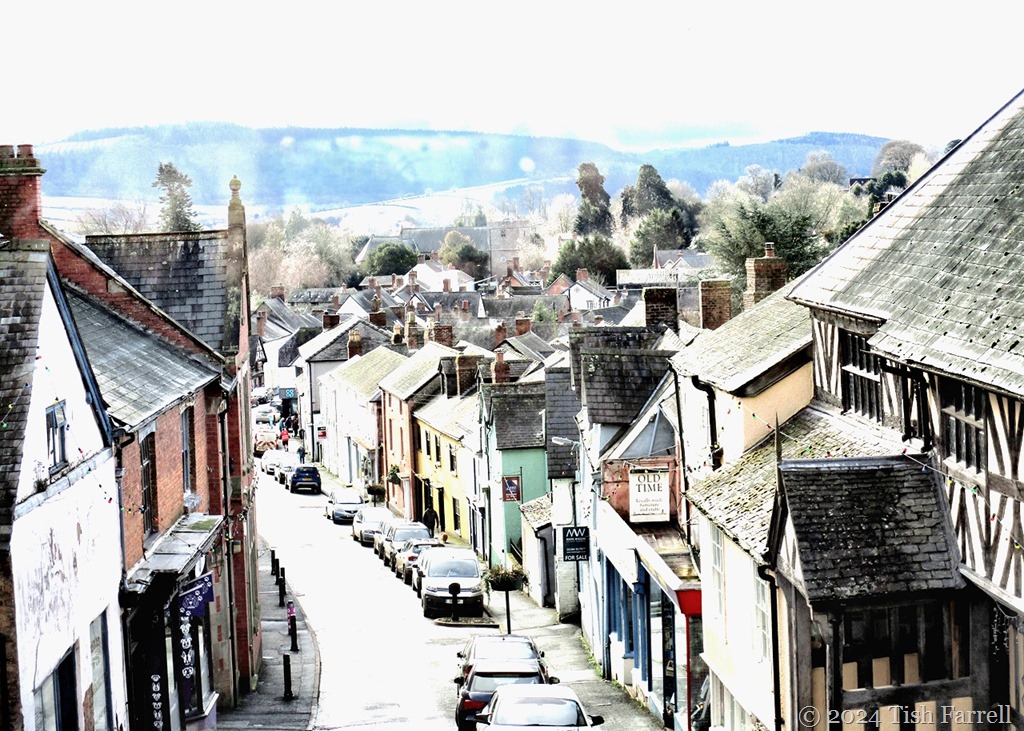
First, though, a spot of orientation by way of some archive photos. Above is Bishop’s Castle High Street as viewed from the Town Hall window. Our street runs parallel to it, behind the ancient timber-framed house in the right hand foreground (the Porch House).

Next is an autumnal view of said street, named Union Street after the Clun Union Workhouse that once occupied the site next door to us, now a care home with a community hospital behind.

IMG_3995

Our walk took us uphill, and left between cottages into Laburnum Alley, a shadowy path that runs between old stone walls and gardens. I imagine much of the stonework along this ginnel came from the demolished castle.

IMG_4077

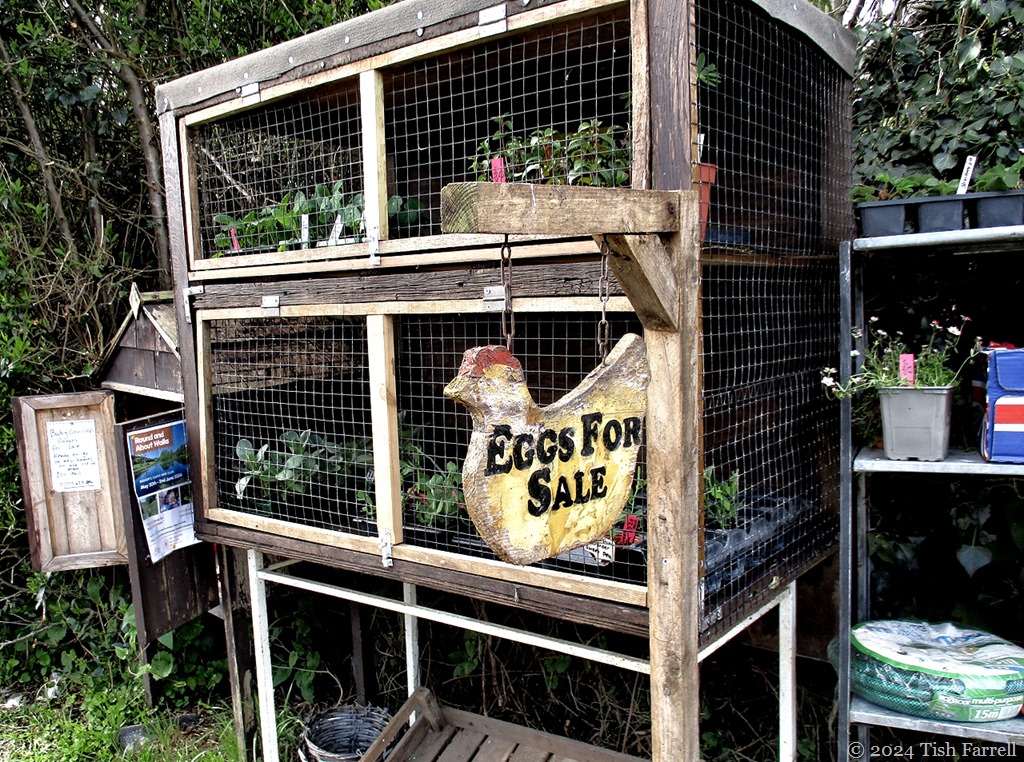
The path exits onto Welsh Street near the top of the town. There’s a handy kiosk here selling eggs and garden plants and sundry items that need a good home. I noted the tray of chunky broad bean seedlings, and pots of strawberry plants. There was also a notice advertising baby rabbits for sale.

IMG_5031

Just beyond the kiosk are a couple of striking looking  barns – a case of scenic dilapidation…

IMG_5033

And across the road is The Wintles, an upmarket community of eco-homes, built in the days before eco-homes were quite invented:

IMG_4154

*

We’re on the edge of town now, and this is the green lane path that had caught my eye. It borders The Wintles’ communal ground of allotment and vineyard.

IMG_5045a

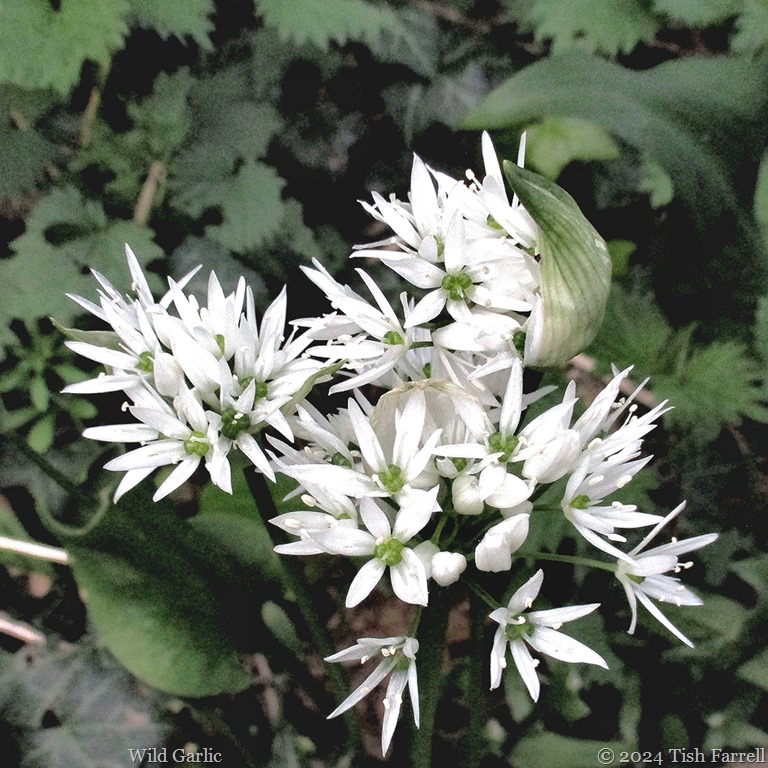
The verges were bright with stitchwort, wild garlic flowers, cuckoo pint, violets, cranesbill, unfurling ferns and cow parsley just opening, Jack by the Hedge aka Garlic Mustard. The lane was sheltered, but even so, I wished I’d put a hat on. It was easy, then, to promise Graham that this was not a major expedition; simply a brief foray to see where the path led.

IMG_5090

IMG_5042

IMG_5044

*

It led us to a gate and wobbly stile into a sheep field. We struggled over. Ahead the pasture rose steeply, and I could tell G’s enthusiasm was waning. Just as far as the horizon, I said, in winning tones.

IMG_5082a

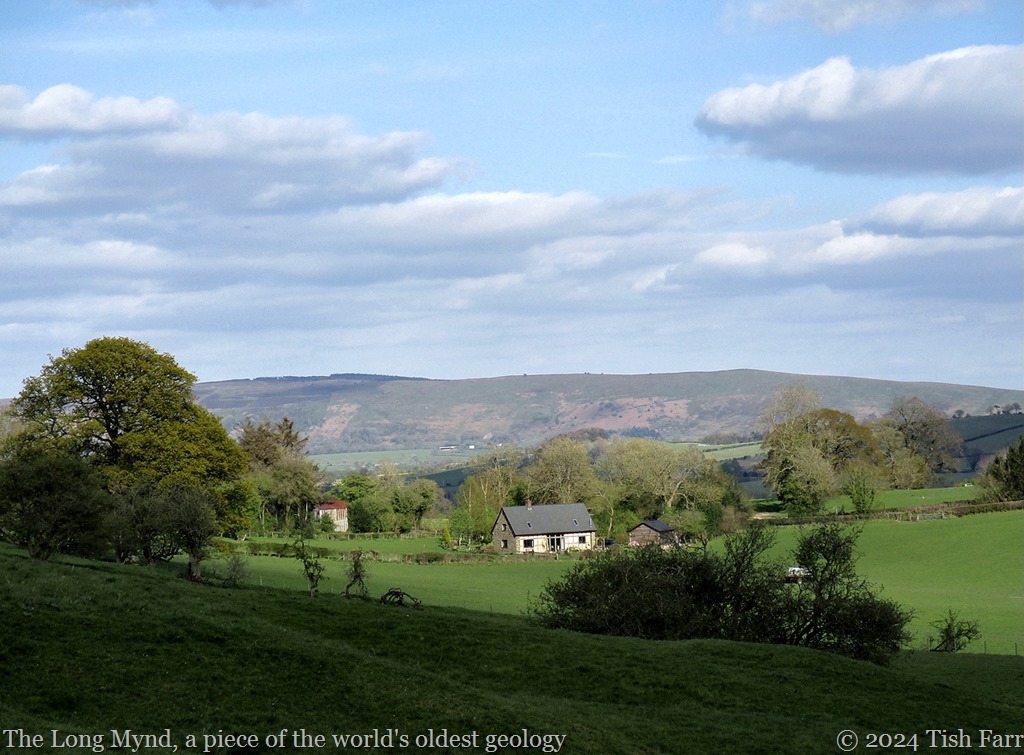
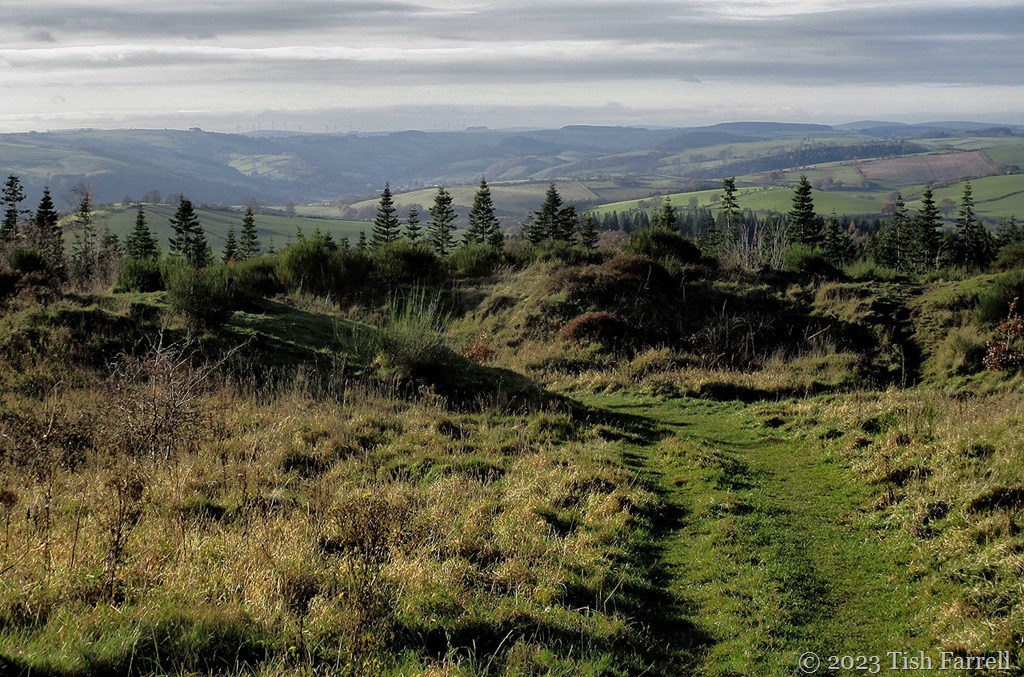
But once we were in the field, we found ourselves looking at marvellous hill country. On our right stretched the Long Mynd, its westerly flanks bathed in sunshine…
IMG_5052a

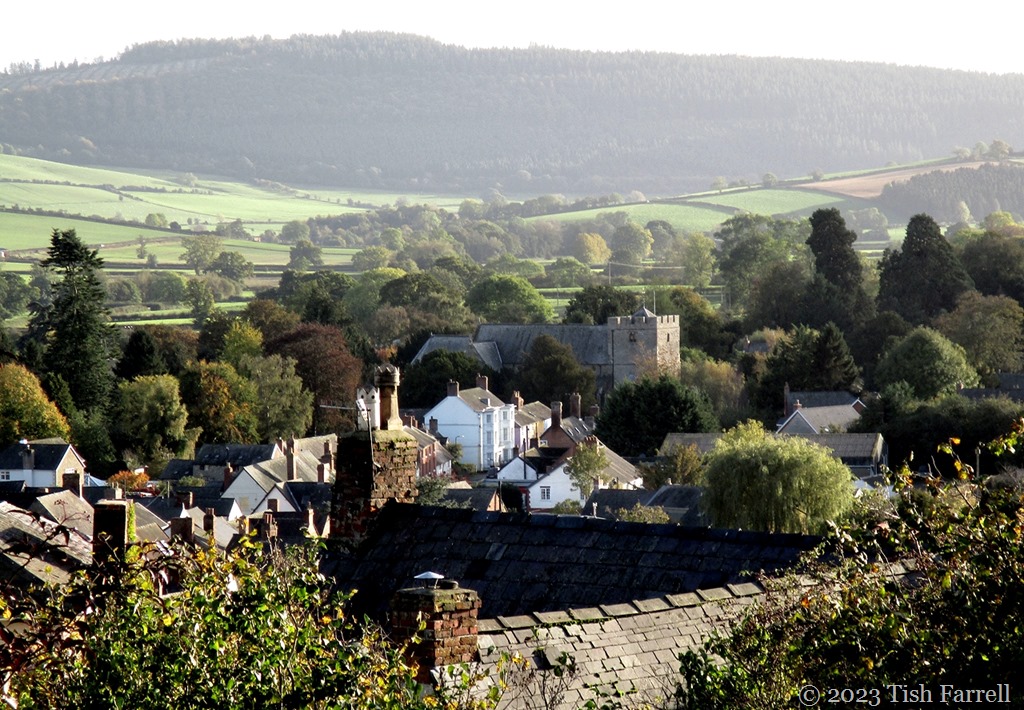
The sight of the hills all around had us striding on and up, now and then stopping to look back on the town. You can see the parish church of St. John the Baptist, dating from the late 1200s, in the second photo. It stands at the foot of the town.

IMG_5054a

IMG_5055a

*

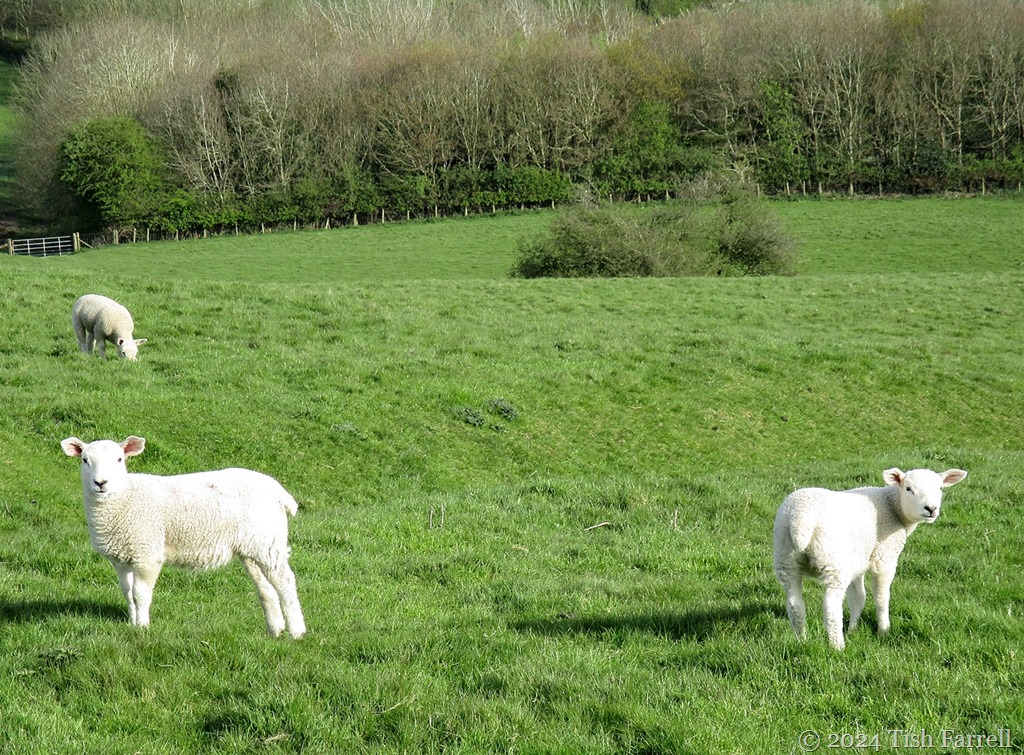
We were watched of course…

IMG_5078a

IMG_5056

*

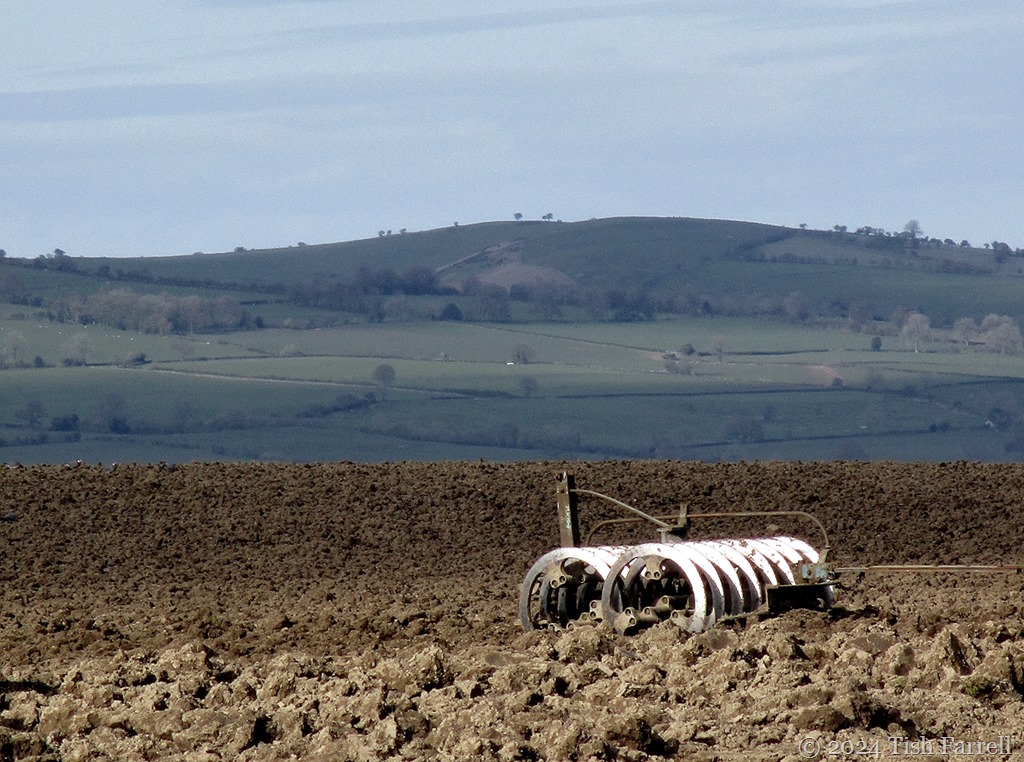
At the top of the sheep pasture there was another stile and beyond it an increasingly uncommon sight – a ploughed field (no-till farming becoming the norm these days).

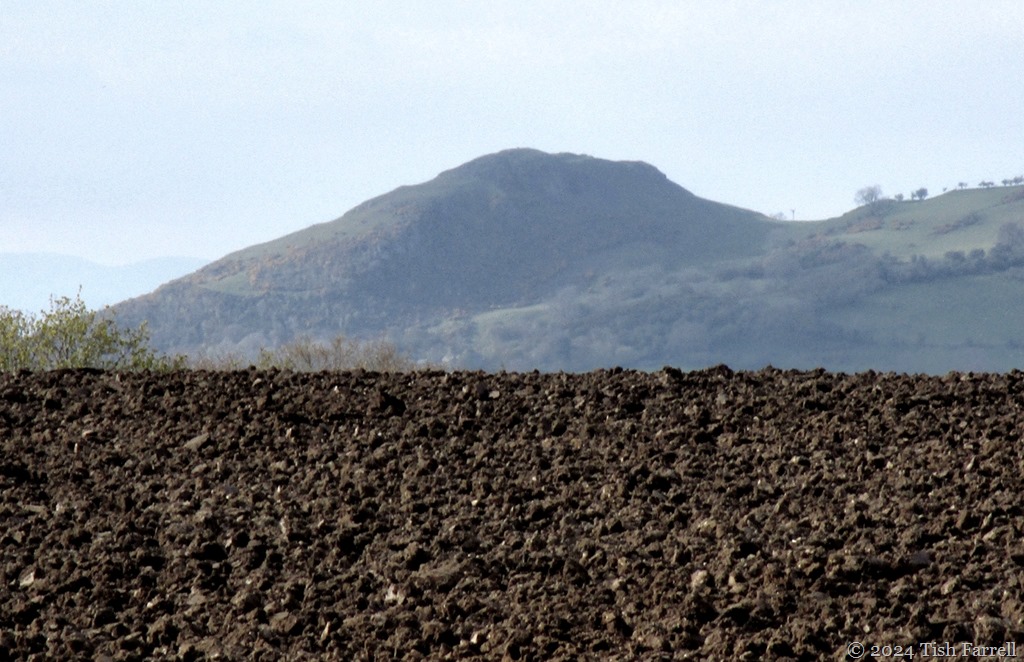
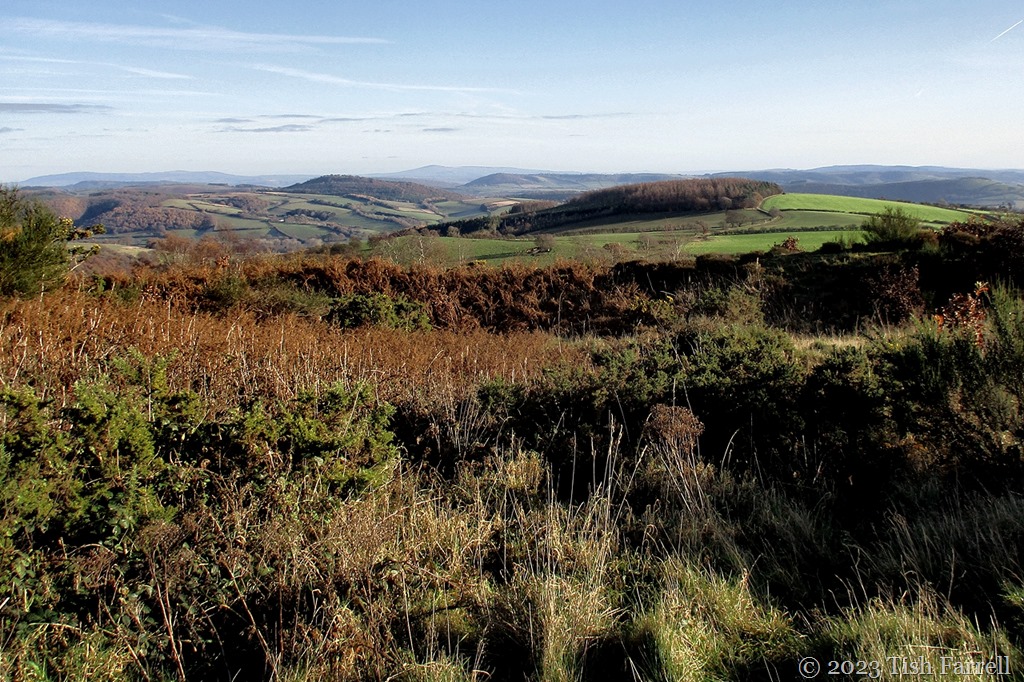
But beyond the plough, what a fabulous scene, the hills of the Shropshire-Wales borderland. A hint of The Lost Continent somehow miraculously manifested on our almost doorstep? It was too exciting. And anyway it was at this point we lost sight of where the path actually went. The way marker arrow suggested straight ahead, but tramping on wind-dried plough is v. bad for the ankles.

IMG_5068a

IMG_5069a

IMG_5072a

A retreat was declared. But we’ll be back to discover more.

*

IMG_5087

IMG_5106

Heading for home down Union Street.

*

IMG_5073header

Jo’s Monday Walk Go here for some stunning Portuguese walking.

Bishops Castle Days

IMG_4645ed

At last. Three days of fine weather, days that feel like spring. Days for sowing seeds – Tuscan kale, Swiss chard, spinach, carrots, cauliflowers, leeks…

…for digging up the lawn and mowing what’s left of it…

…for tackling the ‘hedge of iniquity’ that runs the length of the back garden, extracting the tangle of ivy, holly, privet, hawthorn, sycamore and ash from the chicken wire that some erstwhile inhabitant has laid along the entire inner perimeter so creating an interweaving thicket of manic vegetable intensity that is impossible to cut properly. Meanwhile, inside the hedge the ivy has grown stems as thick as mooring ropes, looping and leaning, causing the holly to loop and lean too and think it is a creeper…

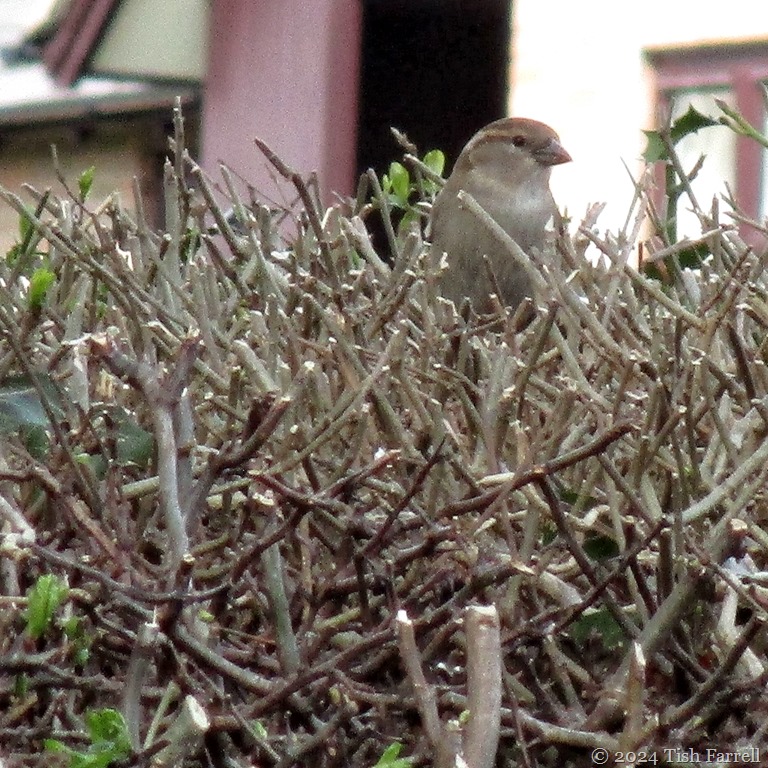
But I’m dealing with it calmly – one snip at a time. The only problem is my presence hedge-side keeps the sparrows away from their feeding station, and at the moment they are ravenous. I’m giving them a break while I write this post.

*

IMG_4696

*

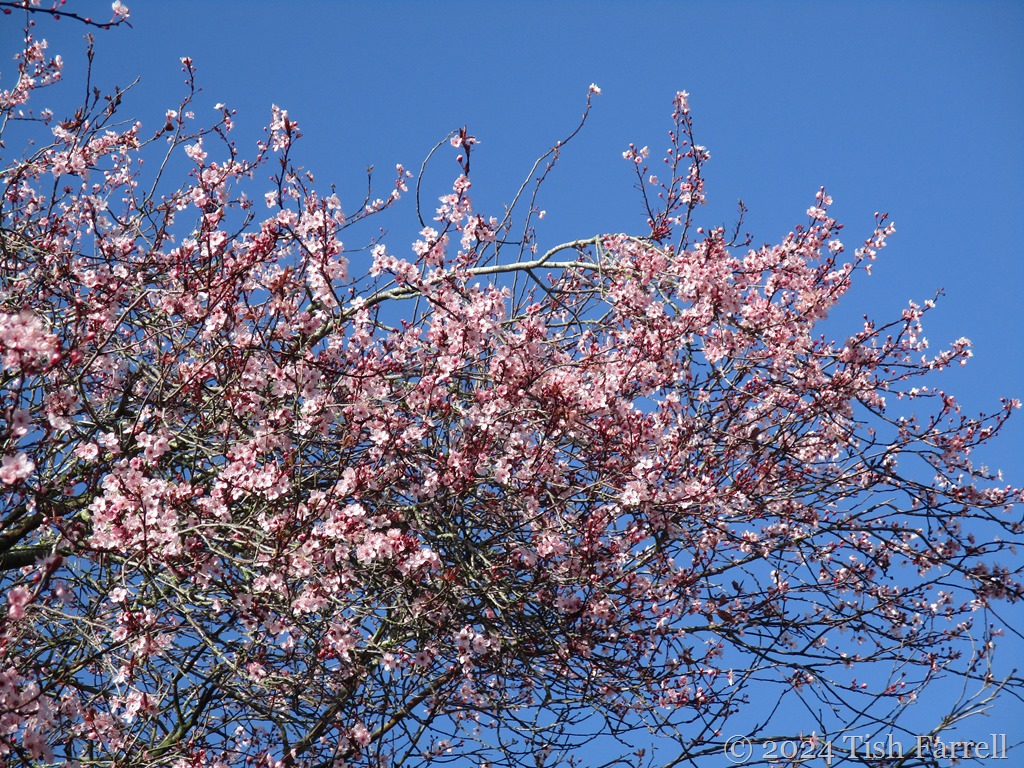
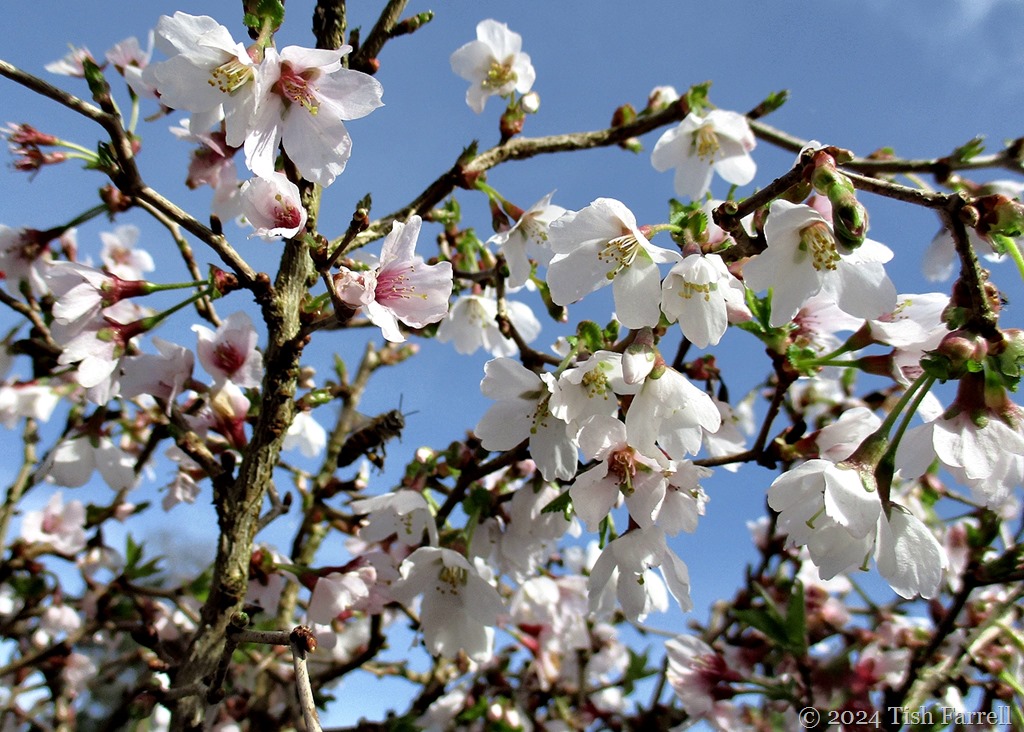
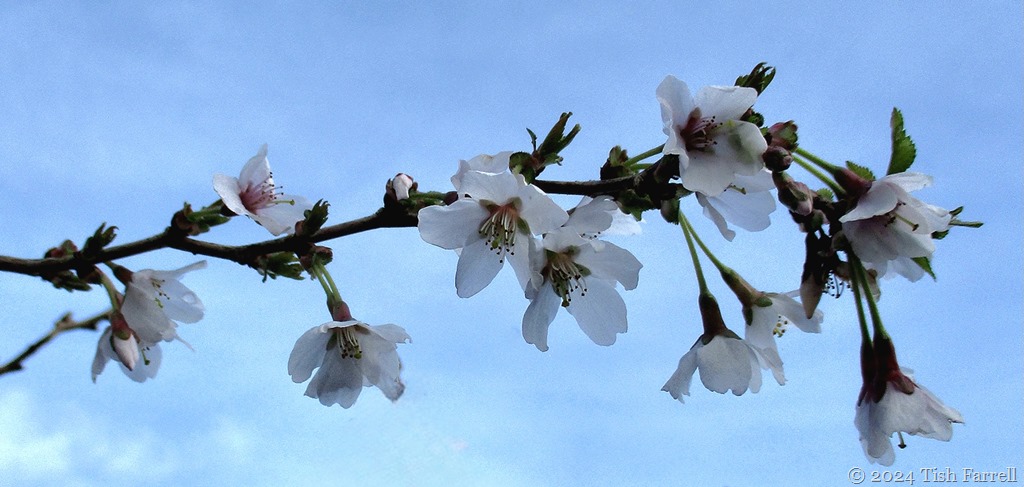
For the last few weeks, through chilling winds, frost, rain and rare bursts of sunshine, we’ve been blessed with cherry blossom. Not our tree, but one growing just over the hedge near the back door. Now, the flowers are fading and falling and when we go outside, we’re sifted with tiny petals. The terrace flagstones too. It looks like confetti.

*

cherry

IMG_4741ed

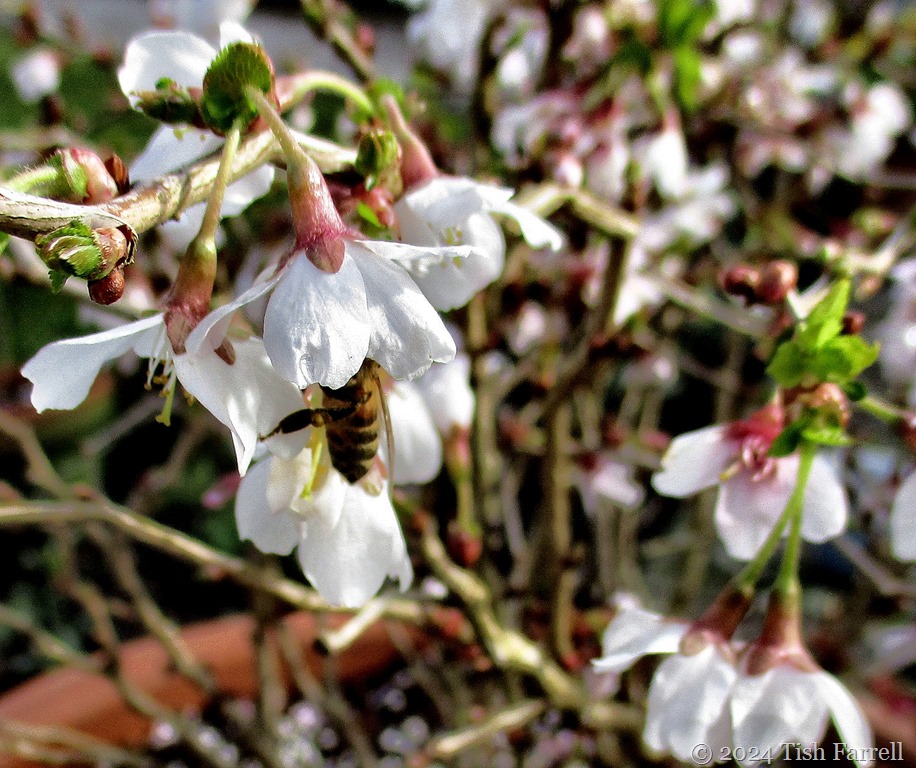
But our own small cherry tree has begun to flower. It’s a Japanese variety, Kojo-no-mai, more of a shrub than a tree, and in time growing to around seven feet high and wide. It will be fine in a pot until the garden is finally ready for it. (Which won’t be soon). And while it’s so small, it can best show itself off on the terrace wall, where the honey bees have already found it. In fact as I was busy transplanting a Dame’s Violet (brought from the Wenlock garden) in the bed behind it, I suddenly realised my head was filled with bee-hum. Happy bees.

*

bee

bee2

*

As I work in the garden I lose track of time. This is a special Bishops Castle feature, the locals tell us. I hear the Town Hall clock strike the quarters between the hours: one chime for a quarter past, two for half past, three for quarter to. You can see the dilemma.
Sometimes a red kite drifts up and up over the garden. I feel myself lift and drift a little too.

*

sparrow

*

We’ve become avid sparrow watchers since we set up the bird feeding station. This was created from an existing tall post (of no obvious purpose) that rises from the hedge of iniquity, and seems to belong to the era of the dreaded chicken wire application. Anyway, it’s good for suspending feeders, and we can covertly watch the birds from the kitchen window. I like the way they pop in and out of the hedge.

Mostly, they’re good at taking turns.

*

IMG_4747

*

Lately, with the drier weather, dust bathing is the thing. The sunny front garden is a favourite spot. We’ve lifted all the ugly paving slabs that covered the two borders, leaving a skim of loose mortar on the soil. Ideal for synchronous avine plunging and dousing. On Monday, over lunch, we watched four go at once: essence of sparrow-joy as they worked the dirt through all their feathers. Later, as I go out to the shop,  I spot the four neat little hollows left behind. There’s an inclination to cup my hands and gather one up. Yes. Sparrow-joy. There’s much to be said for it.

Happy Spring , North-dwellers


P.S. As I write this, scaffolding is going up around the house, a two-day job apparently. Next week the roof is coming off. Heavens!

IMG_4743crop

The Weather In The Garden

IMG_4585

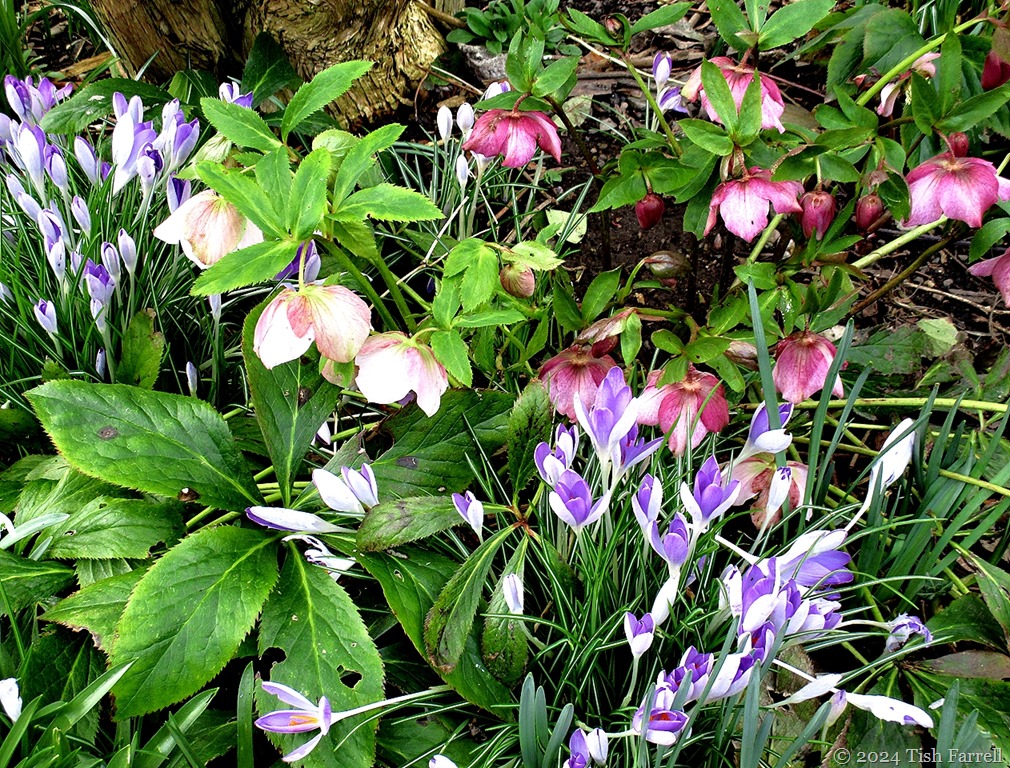
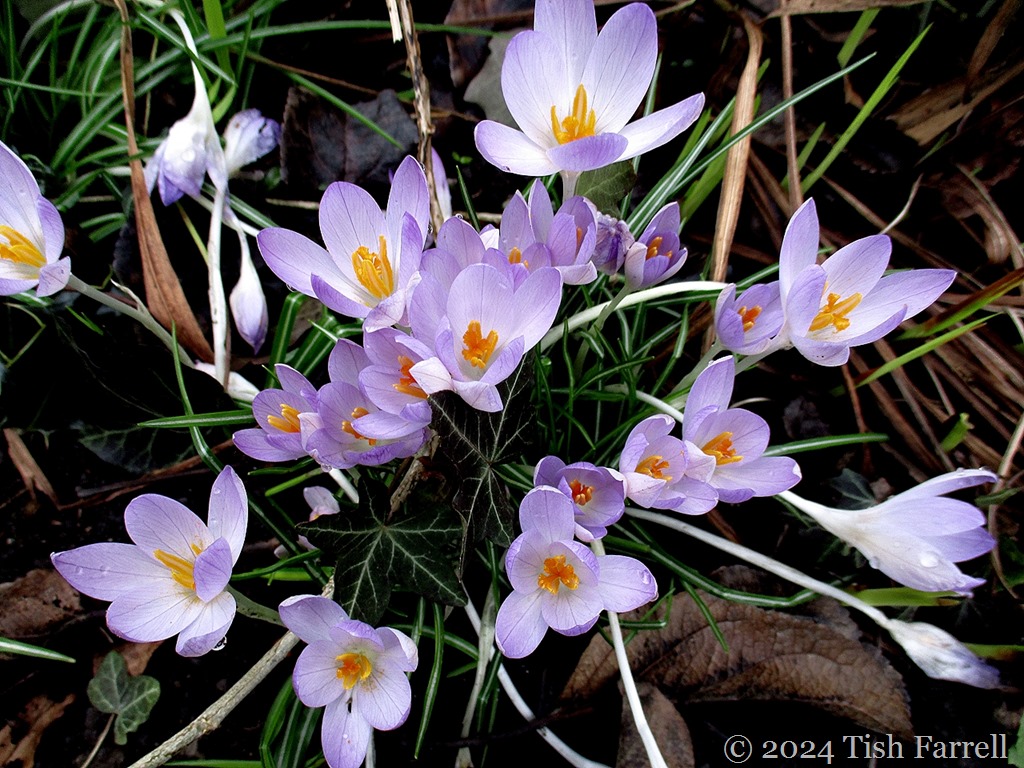
So far this week at The Gables we’ve had frost, biting wind, and yesterday an all-day deluge with wall to wall gloom. But today, St. Valentine’s, the rain has held off. In fact it’s been almost warm, with a glimmering of sunshine, and up in the top garden this clump of seedling crocus was in full fanfare.

IMG_4590

*

And not only that,  Mr. Whippy, the ice-cream man, was back in town. Jangling rendition of O Sole Mio up and down streets. And then while I was snapping the crocus, along buzzed a honey bee, the first I’ve seen and heard this year.

Anyone would think it was spring.

But then February can be a tricksy month in England, ambushing us with a day of sudden warmth, only to whip up more icy blasts just when we’ve been daft enough to cast off our thickest winter woolly.

So: best not to count one’s spring chickens too soon.

This bee, though, is definitely seizing the moment, making the most of fine weather, and a rich pollen harvest. (Note the gathering sac on the rear leg; full pollen facial thrown in). What’s not to love.

IMG_4624ed

IMG_4605ed2

IMG_4622ed

Happy Valentine’s Day!

Lens-Artists: Weather This week Anne at Slow Shutter Speed  has us weather watching. Plenty to inspire us in her lively photo essay.

A Spot Of Kite-Flying In Bishops Castle

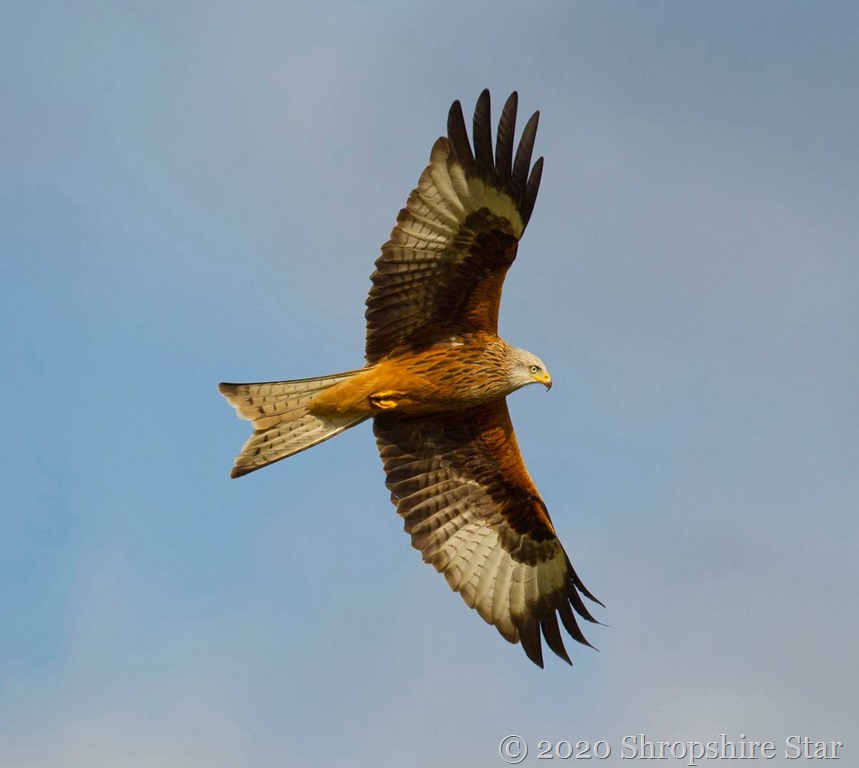
red kite

Now that we’ve moved our dining table to its winter position – i.e. from the conservatory at the back of the house to the front sitting room window – we can eat breakfast while watching a red kite scanning the town. It comes most days, drifting over the High Street, circling high above nearby gardens.  With a wing span of around six feet (180 cm) it is one of Britain’s largest birds of prey (i.e. bigger than a buzzard and easily distinguished from that particular raptor by the forked tail.)

A few years ago the species was believed to be near extinction. In the early 20th century the birds were targeted by gamekeepers who thought they were eating their pheasants. Not so, it seems. The birds’ main menu comprises carrion and worms and sometimes small mammals. In fact, back in Tudor times, kites also frequented towns in large numbers, filling an essential function as street refuse cleaners.

When we lived in Kenya, their cousins, the black kites, performed similar duties. Less welcome, we discovered there, was the cousins’ tendency to ‘gate-crash’ Nairobi’s ambassadorial garden parties. They had learned to spot the distracted guest, one with wine glass and plate politely poised and as they hung on the words of some ministerial bigwig. In the birds swooped, snatching up the undefended sailfish canape or piri piri chicken wing. Whoosh and away.

That scene jogs another black kite memory. An indelible brain cell recording. One used to roost in our front garden on Mbabane Road. It would perch in the jacaranda tree and mew all night long. A mournful cry.

red kite

But back to the red kite. Here in Shropshire and Wales, and some illegal shooting incidents apart, they are mostly thriving. This thanks to a re-introduction programme late last century which helped boost remnant populations. And while of course we are more than happy to see them, we can only hope they do not recover the habits of their distant ancestors.

The Wildlife Trusts website explains (also see a nice video clip of a kite in flight):

Red kites were common in Shakespearean London, where they fed on scraps in the streets and collected rags or stole hung-out washing for nest-building materials. Shakespeare even referred to this habit in ‘The Winter’s Tale’ when he wrote: ‘When the kite builds, look to lesser linen’. The nest of a red kite is an untidy affair, often built on top of an old crow’s nest. It is lined with sheep’s wool and decorated with all kinds of objects like paper, plastic and cloth.

I will let you know how my washing fares when drying weather resumes.

2023 Began Beside The Sea

IMG_2372ed

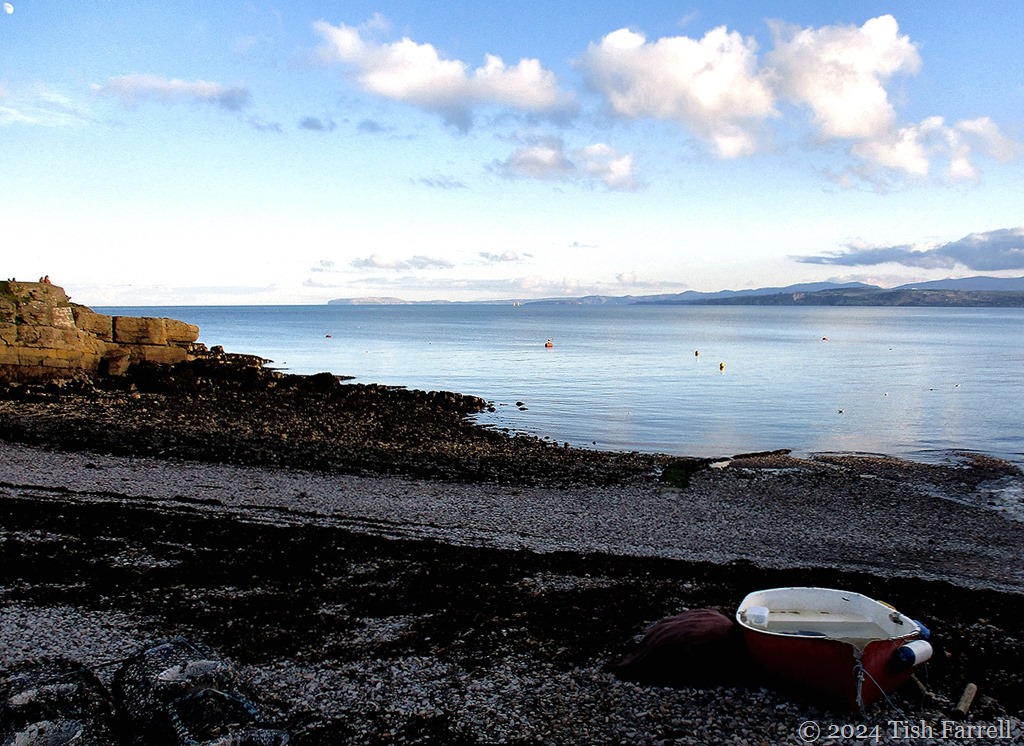
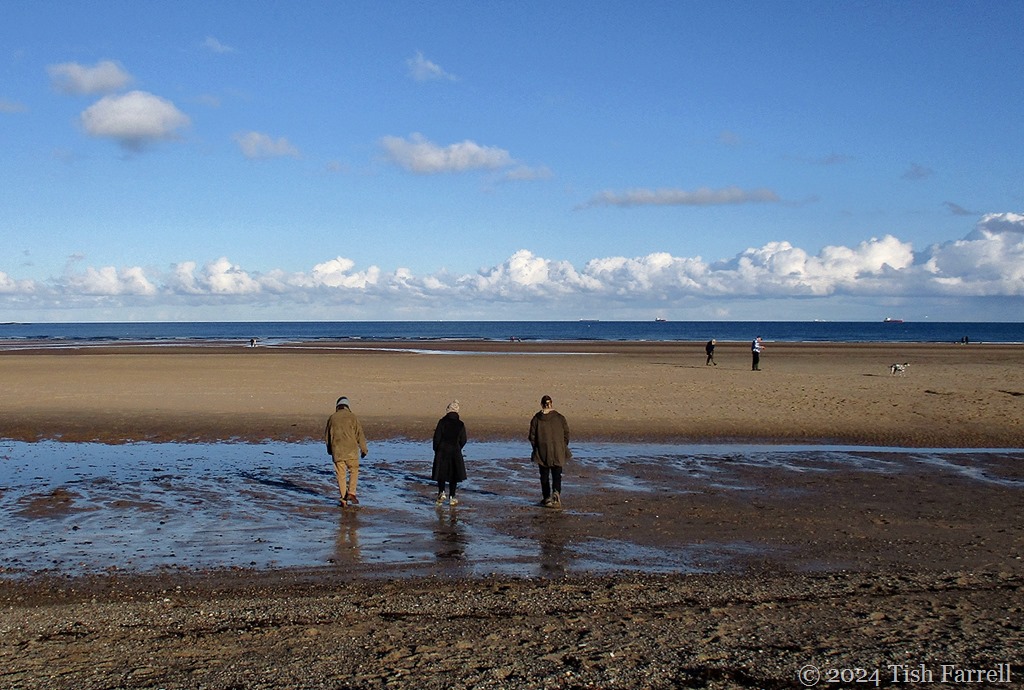
When last year began we were on the island of Anglesey in North Wales – gathering with family for a belated Christmas celebration. It was good to soak up some blue tranquillity. At the time, we were fretting over the sale of our cottage, plus trying to find a bolt-hole to rent while we looked for a new home to buy. All unnerving in all sorts of ways; nothing straight forward.

winter beach

*

Finding a house to rent proved almost as hair-raising as selling the cottage (Huge demand, few available properties). Only by the skin of our teeth did we secure a place in time for moving day in early March. And then it snowed – for two days, an unexpected blanketing that closed most of the roads. Snow – of all things. The Farrells had not factored that in. Still, a day later than planned, and by devious routes, the removal lads came through. We were re-homed.

Then more unforeseen happenings.

IMG_2716ed

View from one of Broseley’s many country paths: bright and cold in March

*

By the time we moved to Broseley (East Shropshire), we had already set our house-buying sights on Bishops Castle or points well south-west of the county. For one thing, we wanted to be nearer to my sister, and I’d anyway dismissed Broseley as a final destination. I’d known it from an earlier chapter in my life and always thought it a plain and unalluring town.

Just shows what I know. I didn’t expect to fall in love with the place. It began with finding a maypole at the end of our street; and from it a sweepingly magnificent view above the Ironbridge Gorge. And it began with finding beguiling footpaths that meandered in and out of town and took us to some wild, wild places that seemed slipped out of time. And most of all it began when I discovered the network of thoroughfares and alleyways that belonged to Broseley’s ancient industrial past, the wonderfully named jitties, that to my mind suggested jetties, or things that jutted like prows of ships. Exploring them on our cool summer days felt like voyaging – through time, space, the imagination.

Go HERE for the jitties posts.

IMG_3105

Here is one of many favourite finds: some historic re-purposing of discarded artefacts in an old wall on Gough’s Jitty. It’s been built from saggars. These earthenware boxes were once used for the packing of clay pipes, then stacked in a bottle kiln for firing. There were several factories in the town from the 17th century onwards. They exported their wares around the world. In fact clay pipes were often referred to as ‘Broseleys’.

*

IMG_2703ed

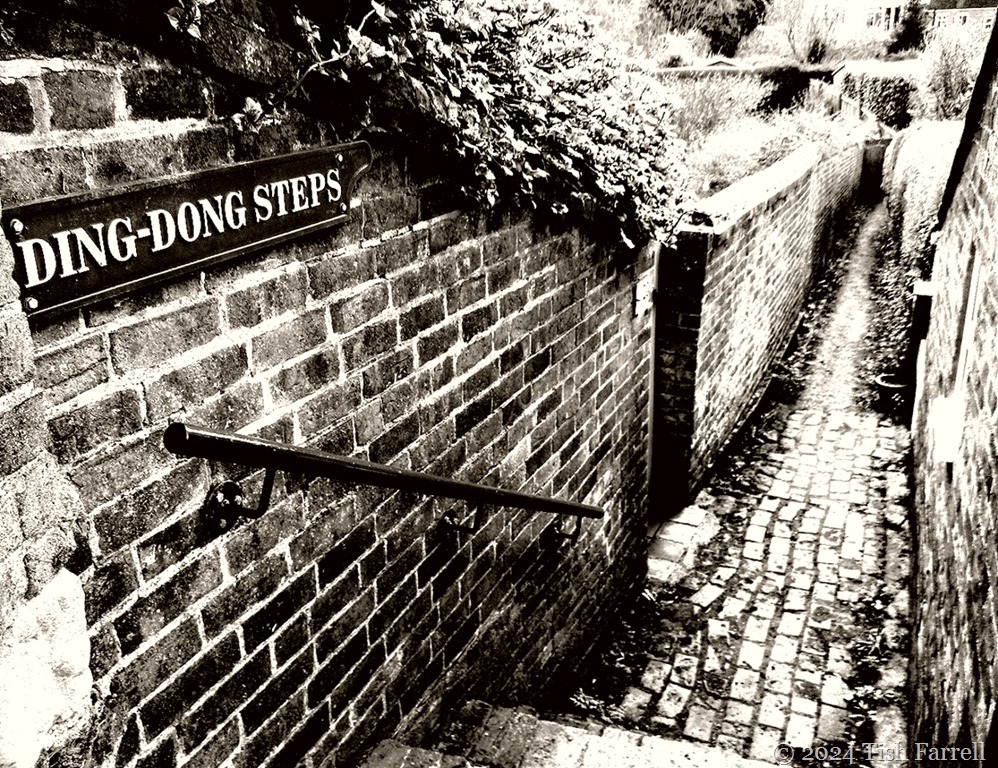
Ding Dong steps 2

Apparently the spot for some illicit fist-fighting back in the day.

*

IMG_3415

Lodge Lane became a favourite walk. Once there would have been the heavy rumble of trucks hauling coal from Broseley’s mines, an area still called the Fiery Fields due to the old coal pits’ erstwhile tendency for spontaneous combustion.

*

IMG_3314

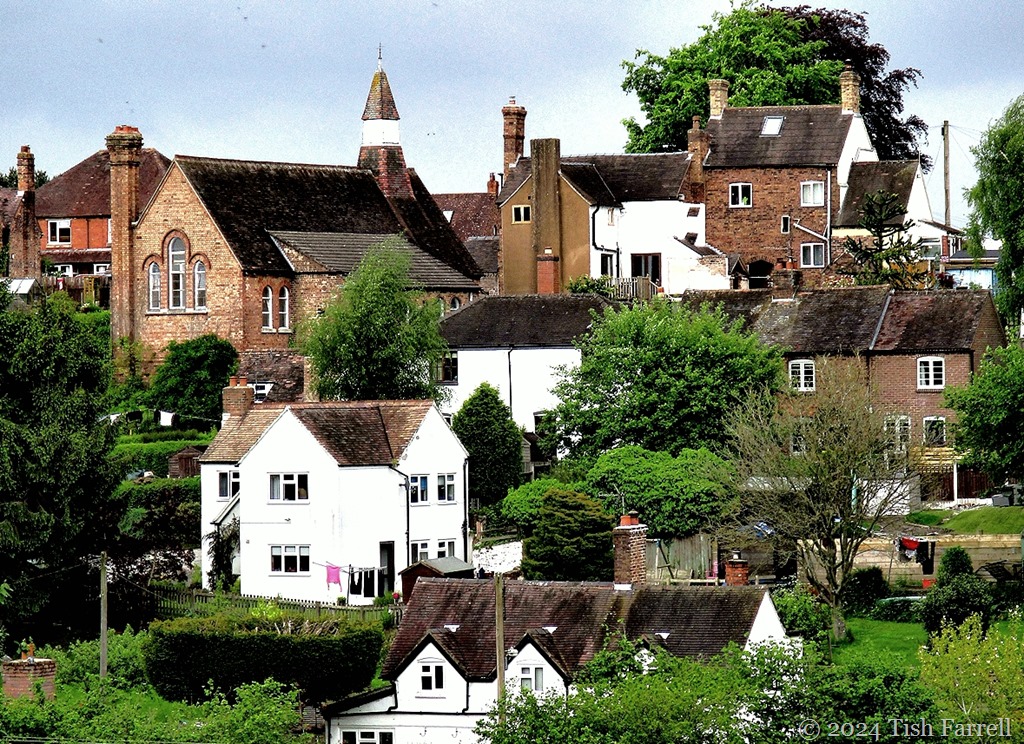
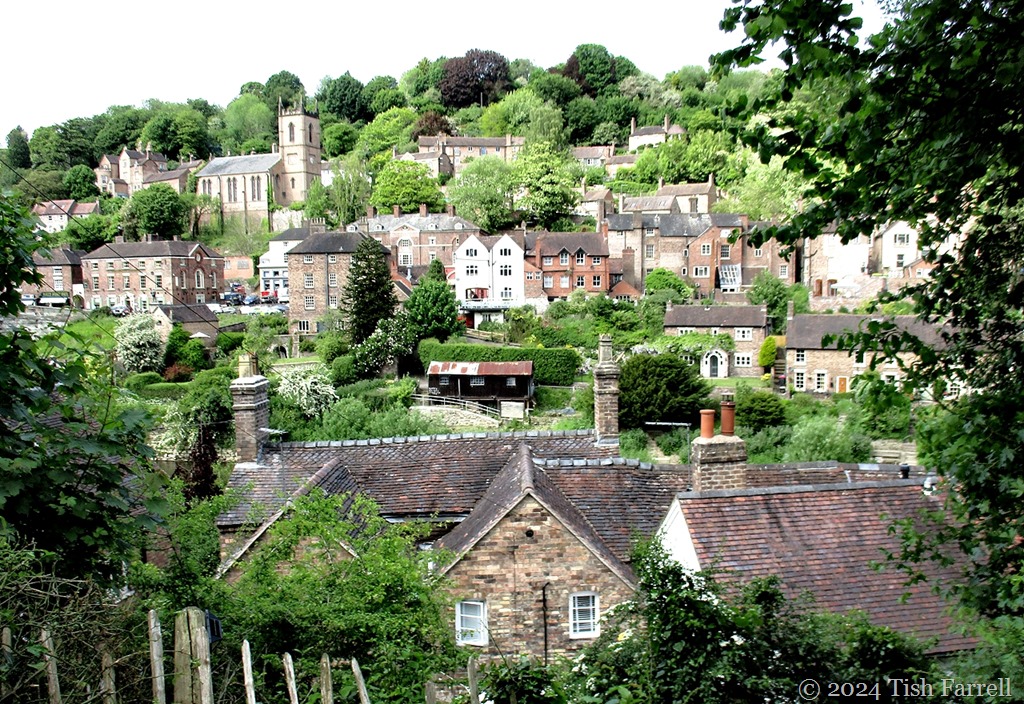
Broseley sits above the Severn Gorge, directly across the river from Ironbridge and Coalbrookdale, so-called birthplace of the Industrial Revolution. The town evolved from an early 17th century squatter community of immigrant miners. Coal, clay, ironstone and limestone were plentiful. There was timber for construction and for the making of charcoal for fuelling furnaces and forges. And there was the river for transport down to Bristol. The wealth of local resources attracted the likes of ironmaster-pioneer, John ‘Iron Mad’ Wilkinson, who lived here from 1757 in a very fine mansion opposite the parish church.

I loved these views of multi-period, multi-layered habitation.

And likewise across the River Severn on the opposite side of the Gorge:

IMG_3333

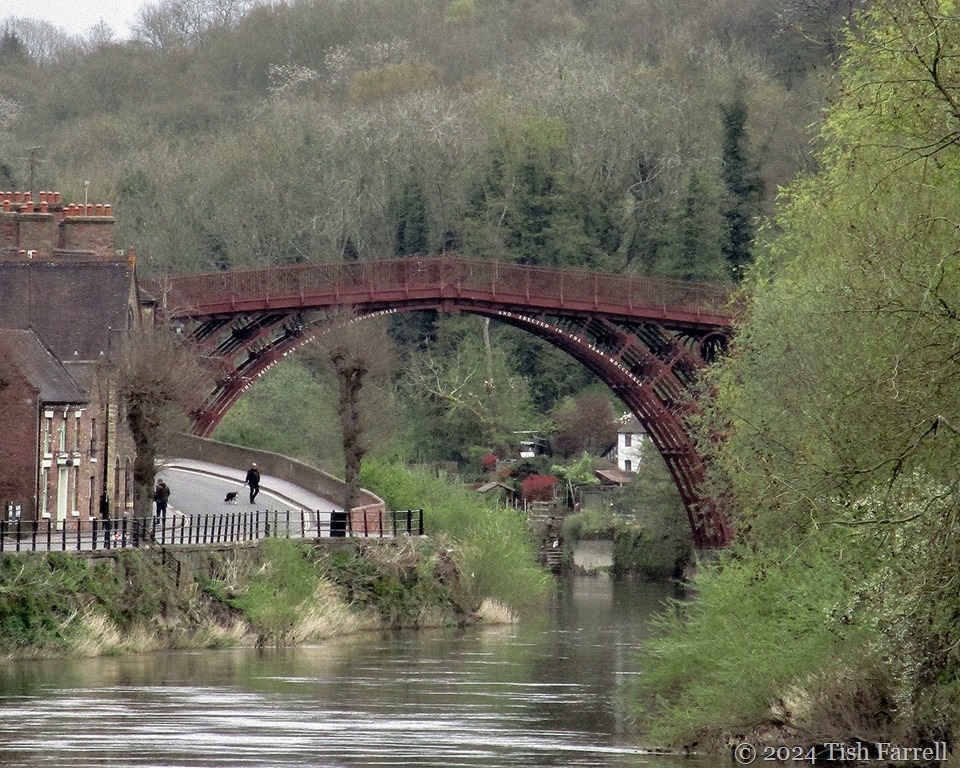
Broseley’s neighbours – Ironbridge and the Iron Bridge (1779)

IMG_3015ed

*

I suppose if the little house in Bishops Castle hadn’t cropped up, we might well have stayed in Broseley. The folks were so friendly there.  As it is, it’s good to think of our brief sojourn, even with the little pang of loss. Strange, how things turn out.

But now we’re here in an ancient agricultural town, where the folks are also very friendly. Clearly there’s many a tale to unravel here, or will be, once we’ve sorted out the house. This may take a while. For one thing, come spring there’s a new extension in the offing: this to remove an old conservatory and transform the space into a bright new kitchen with doors onto the garden. Apart from this, every room needs some serious attention, plus two chimneys to rebuild, and maybe the roof to replace. And then there’s the garden…

So all is in flux and not a little confused. But even so, with the turn in the year, it’s beginning to feel like home.

IMG_3641

IMG_3693cr

Lens-Artists: Favourite photos of 2023

November Gold At Our Iron Age Hillfort

IMG_4250ed

Yesterday we woke to the first hard frost of the year. When I looked out of the bathroom window to the top of the town, there was a cascade of white cottage roofs instead of the usual grey slate. And all glistening too…

Because best of all, there was also sun. SUN by god – and the weather people’s promise it would stay all day. What a gift. After weeks of rain between gloom and deluge, plus a stint of accompanying coughs and sneezes, I knew we should go out and make the most of it in one of Shropshire’s most majestic spots.

To Bury Ditches, says I. We can take a packed lunch. And so we did.

It’s only a five minute drive from our house, but up a very steep hill. For us unseasoned walkers, it’s too far to go on foot. The hillfort lies in Forestry Commission land, which means there is a car park, but the path to it rises further still above ‘monolithic’ stands of conifer, lit up here and there by the odd bright oak, or the orange haze of wintering larch.

IMG_4202ed

*

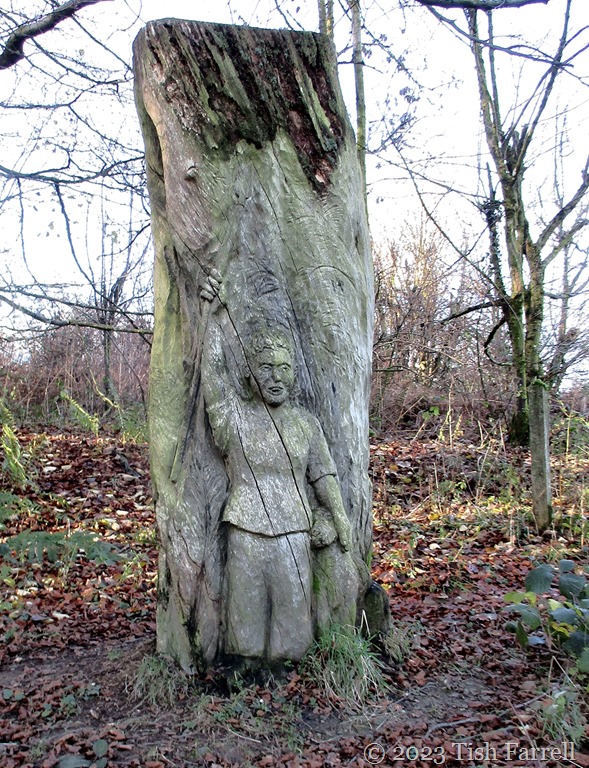
The morning sun had melted much of the frost, though it lingered in the verge shadows and in the valley bottoms. The air was absolutely still. So still, and so utterly silent, it seemed the world had stopped. It was a fine moment to come upon an ancestor, albeit one, turned to wood. What kind of magic was this?

IMG_4204ed

*

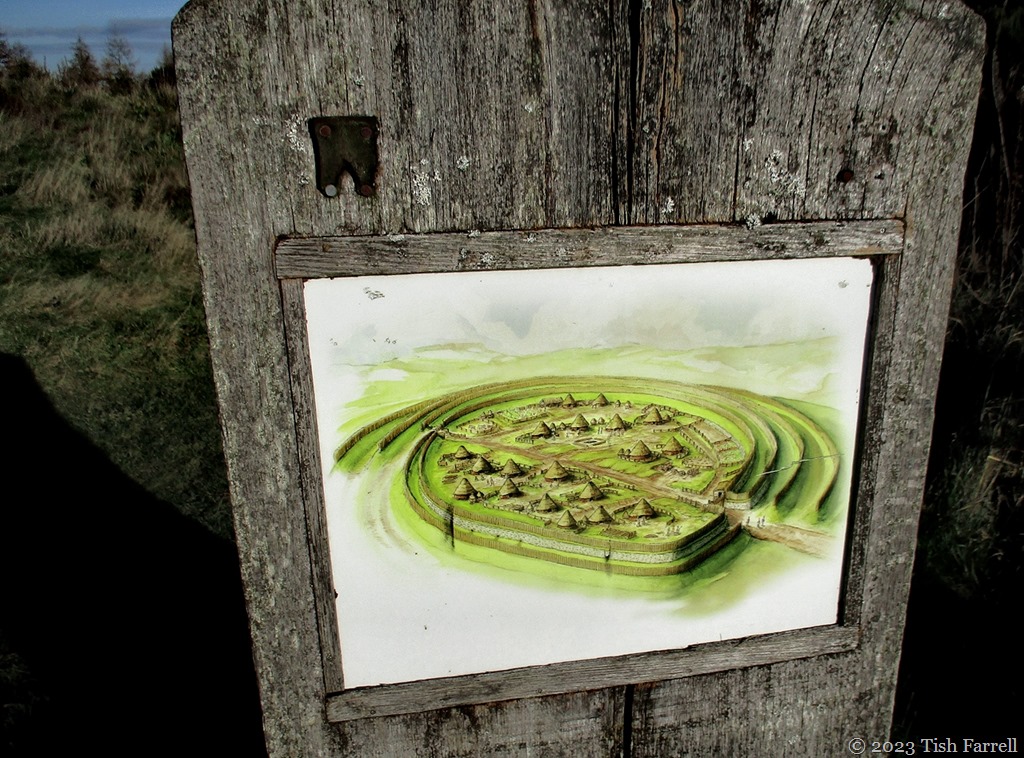
When we reached the hillfort, I tried to capture some idea of how it looks on the landscape, the scale of the ramparts – huge but nonetheless much diminished after 2,000 years of weathering. But it’s always impossible – the light not right, the site too overgrown, the earthworks ill-defined. And then there is the problem of  the enclosed ground: all quite featureless; a great expanse of rough pasture, with nothing to fix on, or frame.

Here’s an artist’s reconstruction of the site, then a couple of my rampart shots.

IMG_4210

IMG_4208

IMG_4215ed

*

For some better hillfort views than I could manage, please have a look at Virtual Shropshire’s page on Bury Ditches.

And so what are we left with? A sense of place, of space, the commanding views, the resonating mystery of who exactly built these monumental structures over 2 millennia ago. They are found across the uplands of Great Britain and yet we know so little about them. Some of course have been excavated and yield signs of village settlement inside (Castell Henllys). Some also revealed evidence of siege (e.g. Maiden Castle). Others seemed to have been simply places of refuge in times of war. Or perhaps also gathering places for festivals and markets. But the big disadvantage of hilltop refuges is they usually lack easy access to fresh water.

One thing we can say: these places were hugely important to the ruling hierarchies of the Iron Age people who built them. Imagine the man and woman hours involved, digging into bedrock with bone and antler picks and mattocks (for at this time iron, a scarce and valuable commodity, was reserved for the making of prestige weaponry not tools), heaving loads of earth in precipitous locations where horses and carts could scarcely serve the purpose. Yet…And yet…when freshly excavated in limestone country, or better still on chalk, the ramparts of these forts would have looked marvellous, glistening white on the skyline; visible for miles.

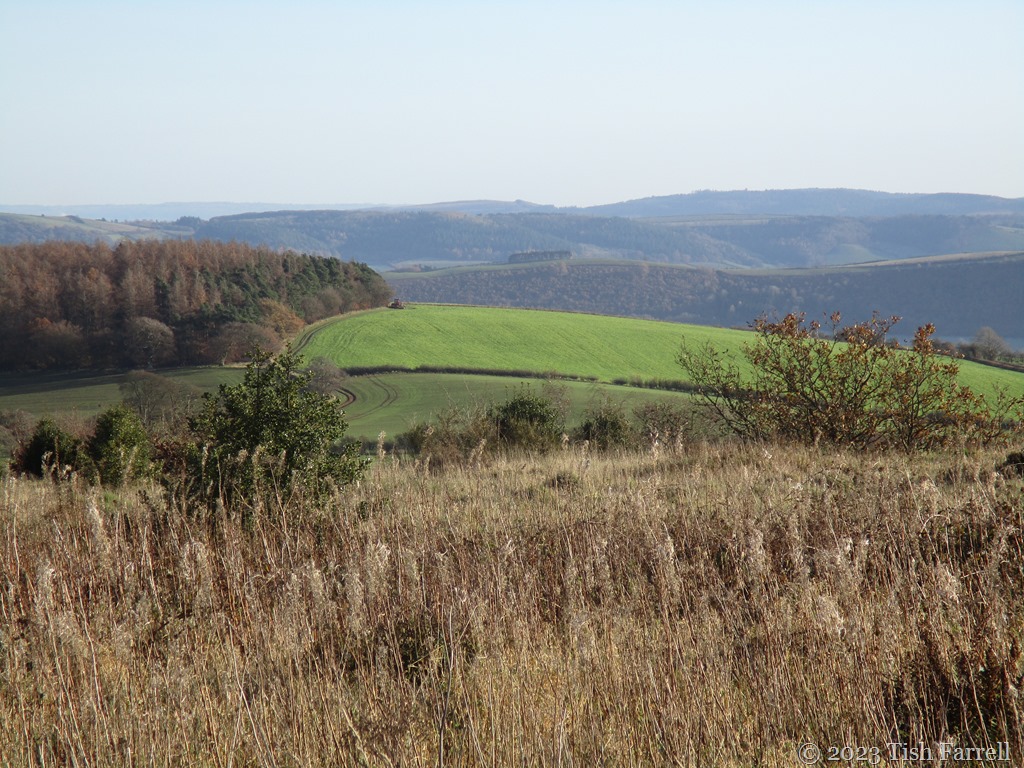
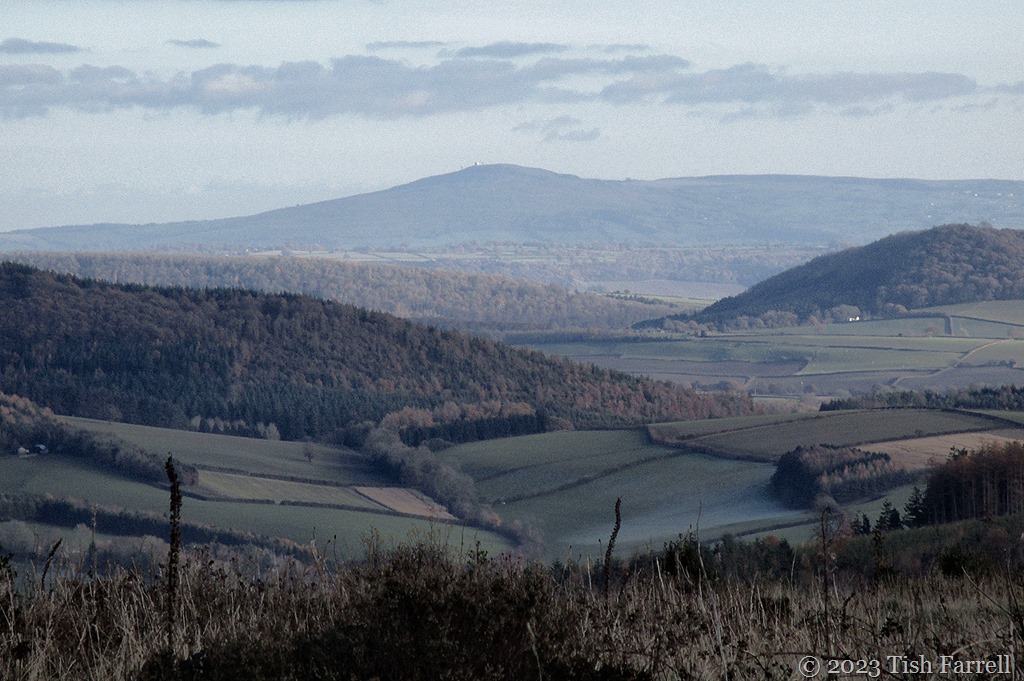
So if I couldn’t quite bring you a hillfort, here are the vistas we enjoyed, looking out, this after perching in a heather clump to eat our packed lunch. Herewith  Shropshire and the Welsh borderland:

IMG_4211ed

IMG_4213

IMG_4232ed

*

By 2 o’clock the sun’s warmth was gone, the remnant frost creeping back, fingering parts not properly wrapped up. We were glad to stride back to the car. A five minute drive home and we were by the log fire with a cup of tea. Such a little journey and yet we had been transported to another world and time. Passports not needed. Only willing hearts and minds and a small car.

IMG_4240ed

IMG_4243ed

So Where Is The Castle In Bishop’s Castle?

IMG_4090ed

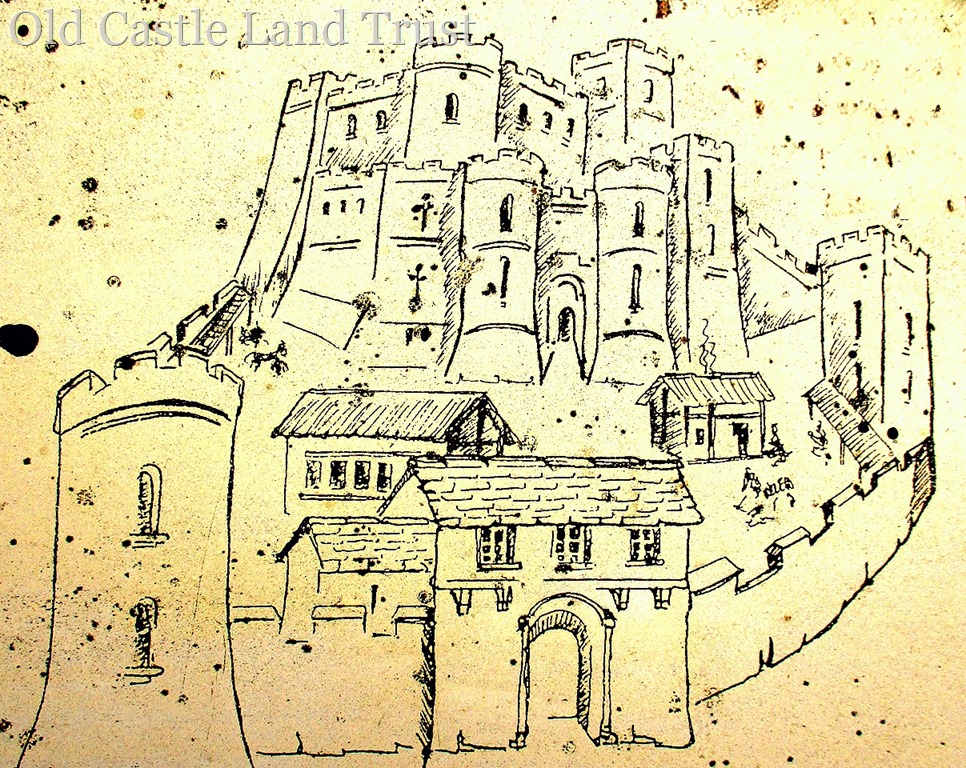
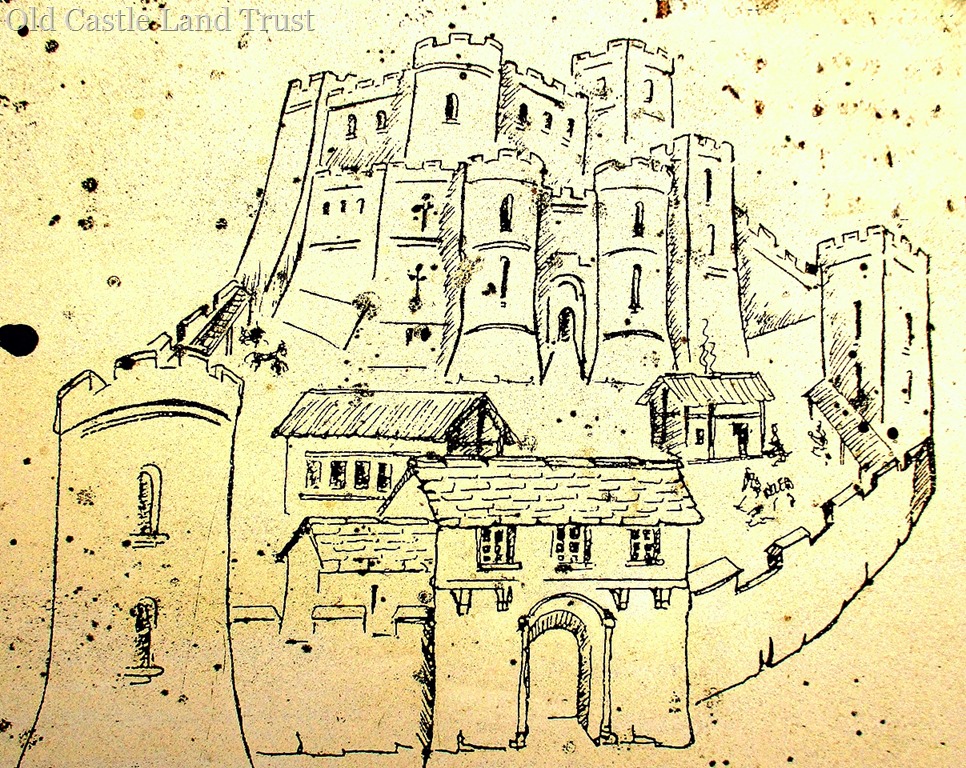
This is a very good question. Where indeed is Bishop’s Castle’s castle? In its last years (during the early 1600s) the stone towers of keep and bailey would have loomed high above the town. Given the steepness of the hillside approach, it could not be a more dramatic setting. It must have looked very much like our vision of a fairy tale castle from a children’s picture book.

The outer bailey walls extended to the top of today’sHigh Street. See the next photo. If you home in on the on-coming red car below the brown building facing downhill, you’ll be in roughly the right spot.

IMG_3642

*

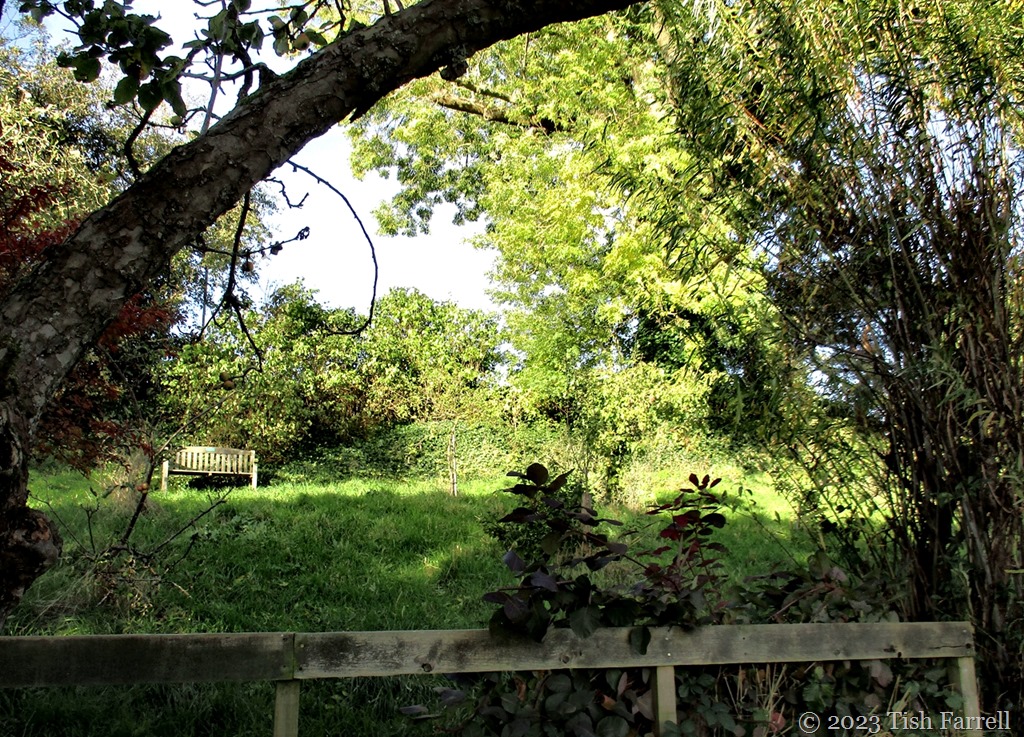
Of the actual castle, there is little left to see. The Old Castle Land Trust has secured a portion ground that lay outside the inner bailey, and here you can see a surviving portion of bailey wall. It’s also a pleasing place to sit and stare at the top of the town.

IMG_4017ed

IMG_4021ed

*

The original castle keep would have been much further back and up, on the hill’s summit in fact. The site is now occupied by the town’s bowling green which was created over the keep’s footprint some time in the 18th century. A pleasing feature here is the octagonal pavilion, presumably built when the green was constructed. It is oak framed and, during restoration, the centre post was found to be octagonal in section. No expense spared then.

IMG_4028

*

So why was there a castle here at all?

The answer is law enforcement and taxes.

The earliest version was constructed not long after the Norman Conquest, put up between 1085 and 1154, at the behest of the Bishops of Hereford, they who ruled the local roost – spiritual and temporal. As with most early Norman castles, it would have comprised an earth mound or motte, topped by a wood framed keep, and the surrounding inner and outer baileys defended by timber palisades. The lower flanks were then surrounded by a defensive ditch or moat, complete with drawbridge.

IMG_4093

*

The stone-built phase began around 1167 – including stone keep, curtain walls with towers and gatehouses to both bailey perimeters. Further fortifications and likely refurbishment of living quarters took place around a century later, following on the brutal attack by a bellicose neighbour, the Earl of Arundel, Lord of Clun in 1281.

The castle premises at this time were equipped to provide accommodation for the visiting Bishops of Hereford plus their retinues of some 30 horses and men. The outer bailey would have included stables, stores, smithy and brewhouse.

The bishop came at regular intervals to hold court, impose fines on wrong doers and infringers of local laws and regulations, and to exact taxes from the local populace. By this time, there was a well-established town on the hillside between castle at the top and parish church at the bottom.

The bishops’ authority was finally overruled by Elizabeth 1, who simply took Bishop’s Castle for the Crown and then in 1573 issued a royal charter  (see earlier post HERE) that handed executive control of the town’s affairs to an elected bailiff and 15 burgesses.

From this time on it seems the castle was left to its own devices, apparently ruinous by the 1600s. And so it is obvious what happened next: there was a general repurposing of the castle fabric as the market town grew in scale and prosperity.

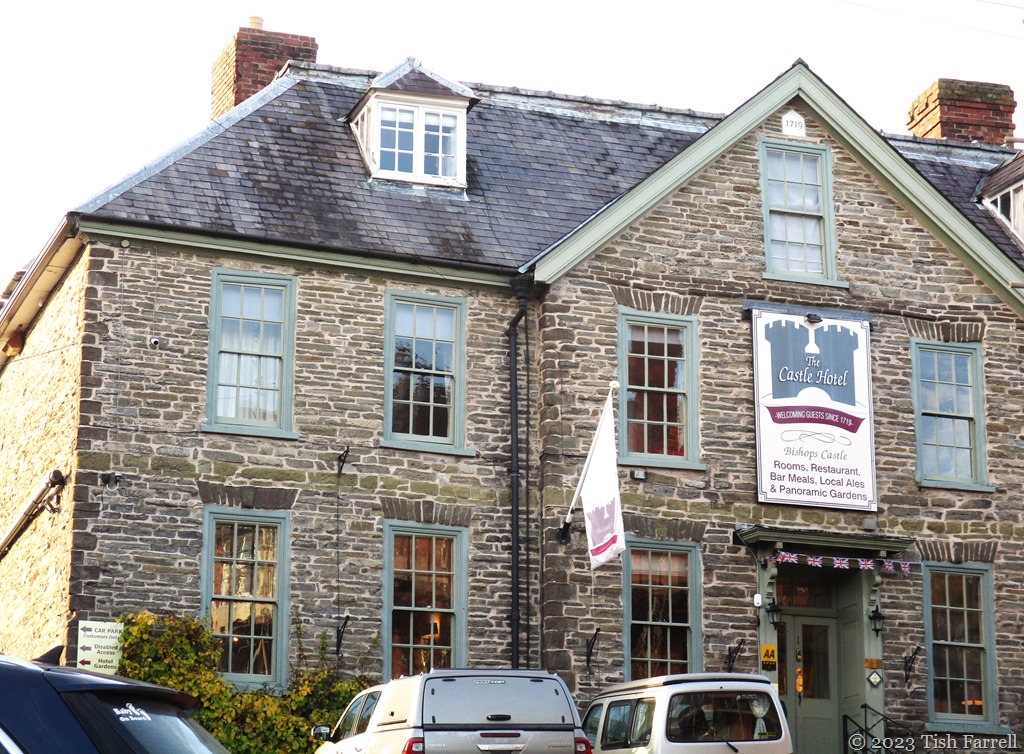
One beneficiary was the Castle Hotel, built in the 18th century inside the former outer bailey:

IMG_4035

*

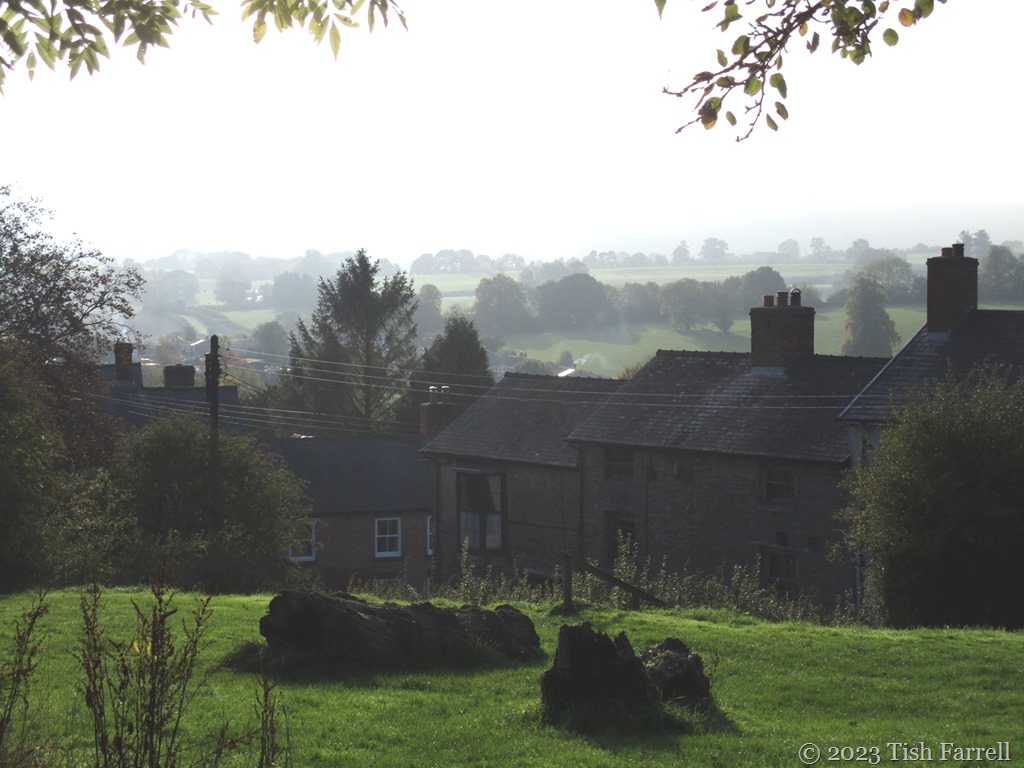
If you stand in the hotel gardens, as I did in sunny interval this week, you are treated to the kind of sweeping vista that castle-dwellers-past might have enjoyed from their bastions, though I’m guessing there would have been rather more forest than the wide-open fields of this next photo.

IMG_4067ed

IMG_4066ed

*

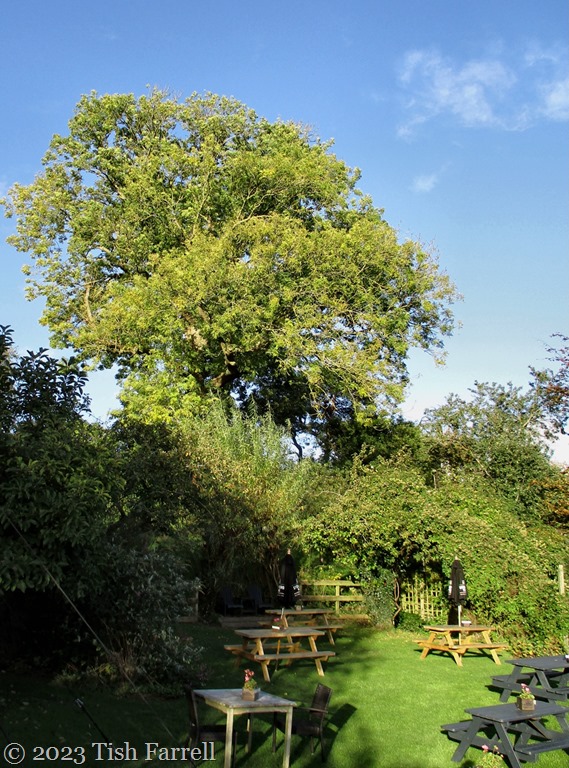
If you then turn through 180 degrees and look up the garden, you are now facing the spot where the inner bailey gatehouse would have stood. I’m thinking the huge ash tree makes a handy simulacrum for a castle tower:IMG_4070ed

*

The bowling green is just beyond the tree. It used to belong to the hotel, and there’s a path through the garden to reach it. (Closed now for the winter season).

The late 17th and 18th centuries were a time when many townscapes had their ancient timber-framed houses clad and/or replaced in stone or brick. This certainly happened in Bishop’s Castle. Many of the 1700s and 1800s stone and rendered frontages will contain remnants of earlier wattle and daub dwellings. It was all part of growing urban show and gentrification.

IMG_3649

*

And so the castle fabric has doubtless found its way into many a house and garden wall.  The Moat House on Welsh Street seems a particularly obvious candidate, both by name and siting on the original castle defences.

IMG_4008

A plaque on the wall also names it as no.41 of Bishop’s Castle’s town trail of lost inns, having been known variously as The George or The White Swan from around 1700. (Surprising to note that the town has hosted some 46 public houses over the last 400 years, but that’s a story for another day.)

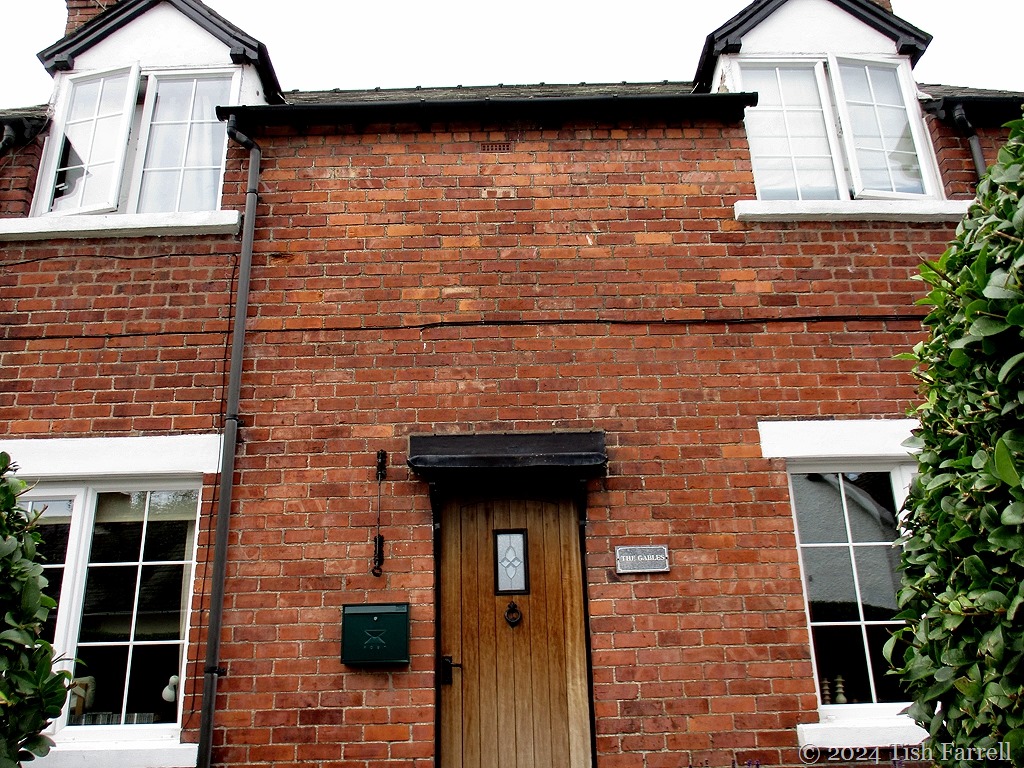
I do know for certain that our house wasn’t built from castle remains. It’s all red brick, locally made, I think, and put up around 1922 by local builder George Nicholas. It stands in a corner of land formerly owned by the smithy and then by the Hit or Miss public house, which is three doors up from us. What a great name for a tavern. Now a private house, its plaque lists it as no. 38 in the lost pub trail, 1832-1915. These days it’s rather nicely ‘draped’ in laburnum fronds since it stands next to Laburnum Alley, one of the town’s intriguing shuts and pathways. Again, more of these in a future post.

IMG_4056

For now, a view of our street and the former Hit or Miss  public house. (You can just glimpse our red brick side elevation and chimneys furthest left).

And another view from the Castle Hotel garden, this time looking up motte, across the inner bailey, to where the castle keep would have once dominated the entire background. Interesting how things change:

IMG_4062

IMG_4090ed

Bunting, Banners, A Zip-Up House…?

IMG_3860ed1

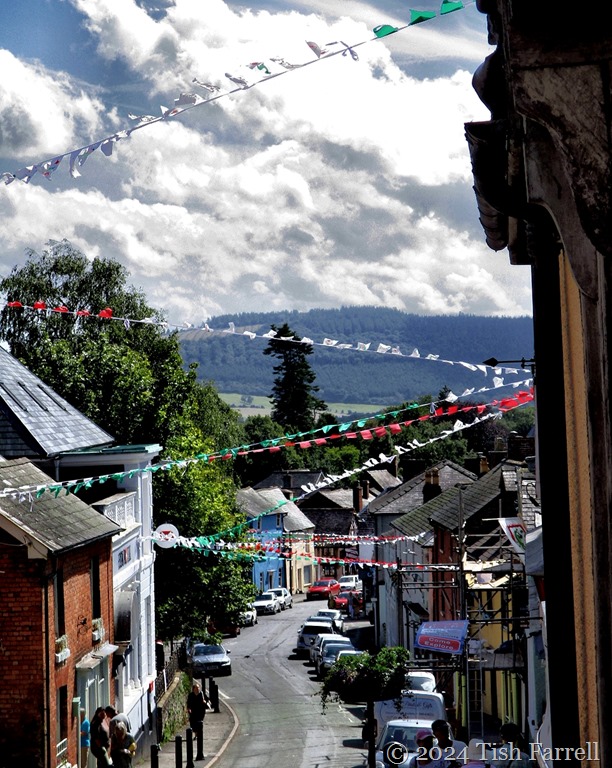
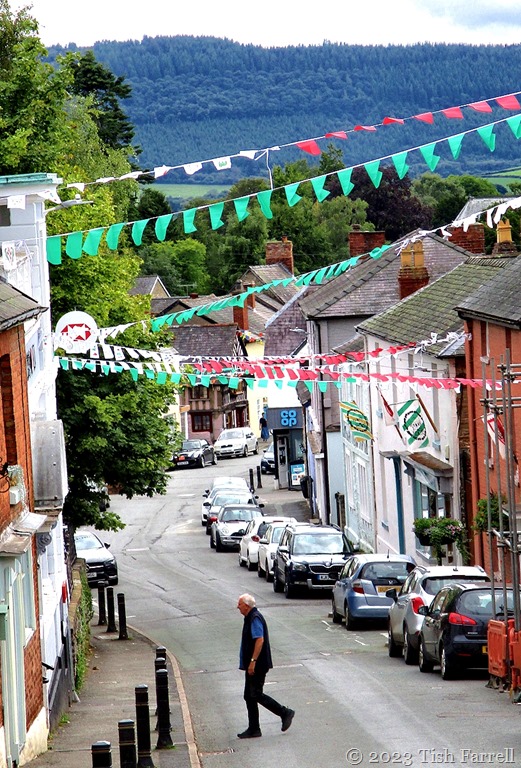
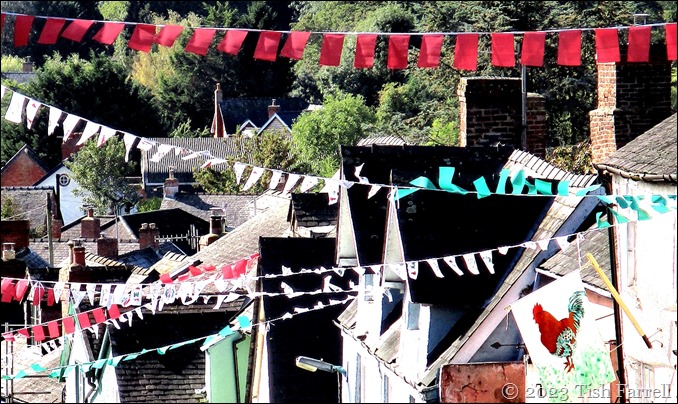
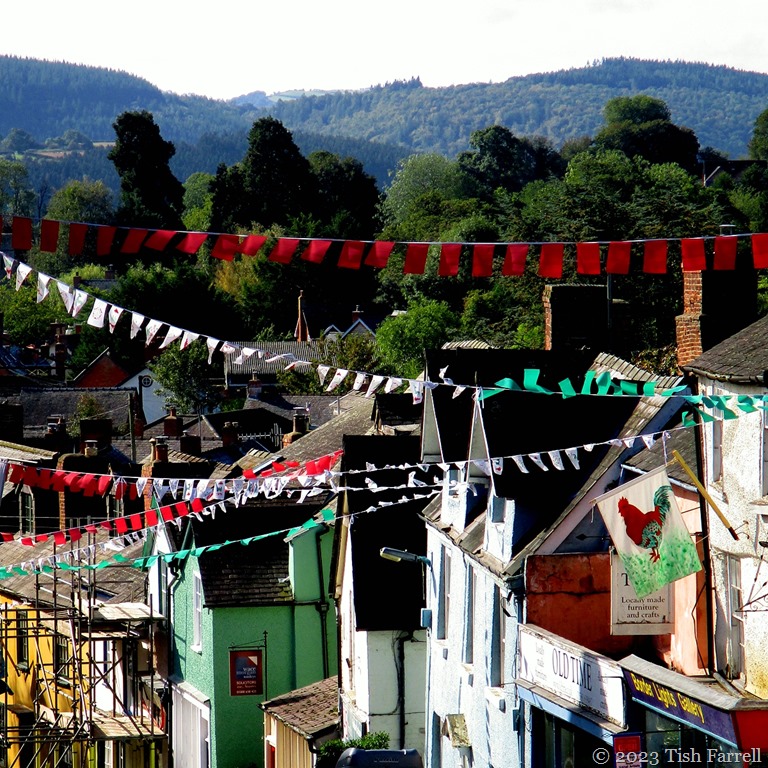
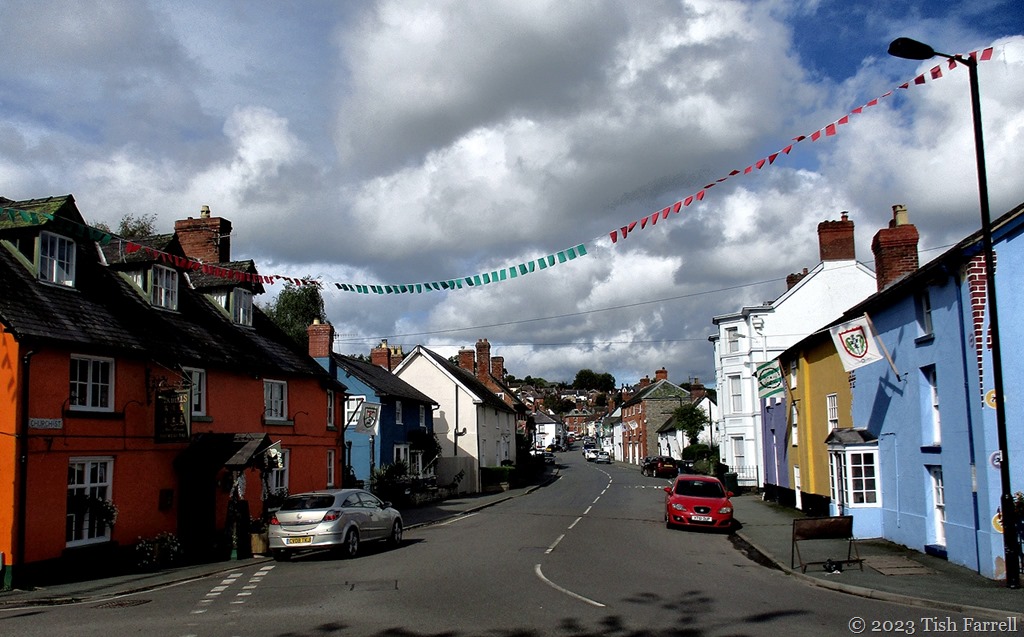
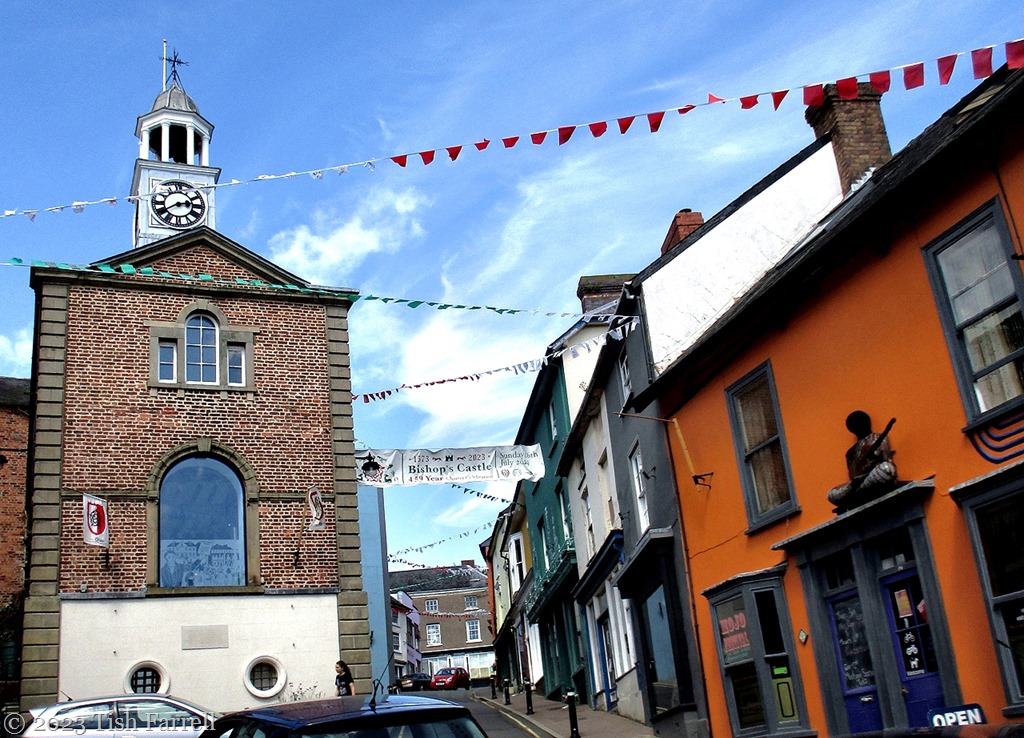
Display is this week’s theme from Ann-Christine at Lens-Artists, so I thought I’d show you a few more views of Bishop’s Castle. It seems like a town that wants to party, or it might do, if it could stop feeling so sleepy. But then somnalent or not, it puts on a bright face.

IMG_3841ed

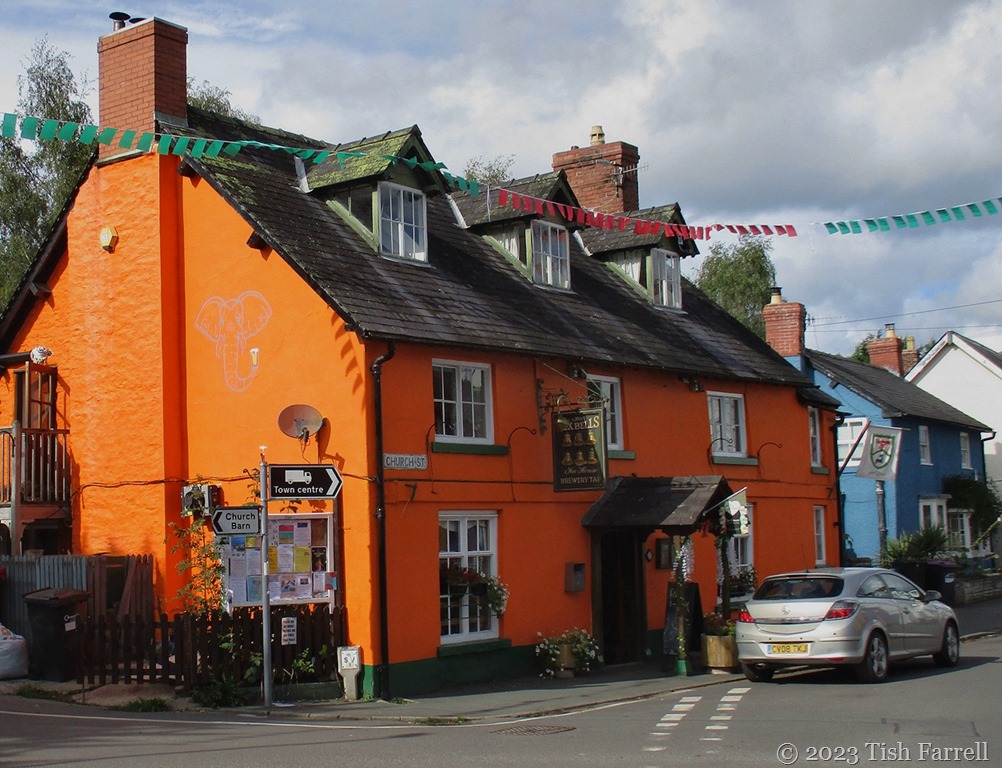
And yes, the Six Bells inn truly is that vibrant shade of coral. It’s the first building you see as you enter the town.

IMG_3842ed

*

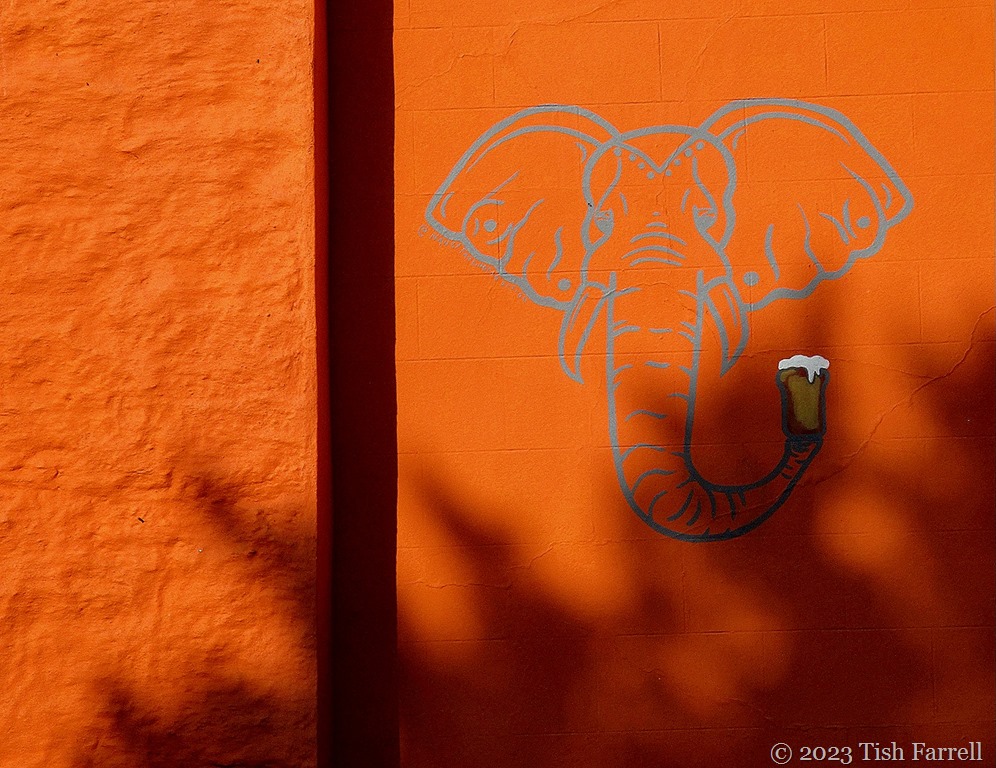
There’s also a welcoming sign on the wall to any passing elephant who might fancy a pint of this hostelry’s best brew:

IMG_3907ed

*

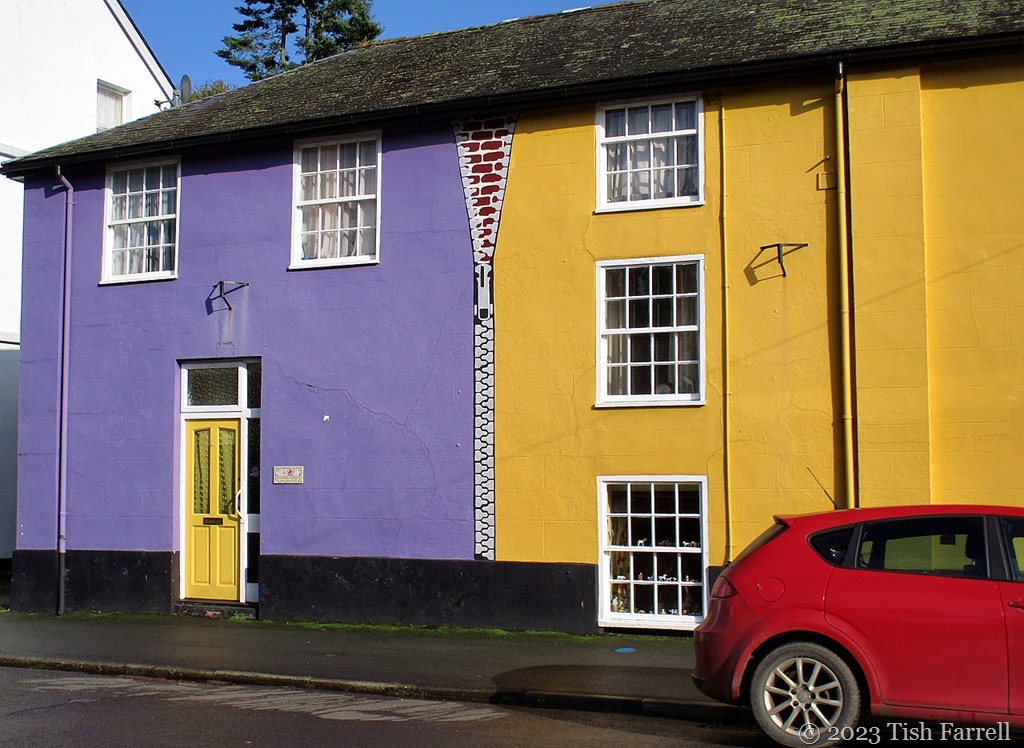
Across the street the houses cut quite a dash, colour-wise. This pair comes joined at the zip, so to speak:

IMG_3910ed

*

And then next door is a bit of a puzzle:

IMG_3839

*

IMG_3642

Back up the hill into town there’s another coral-fronted tavern…

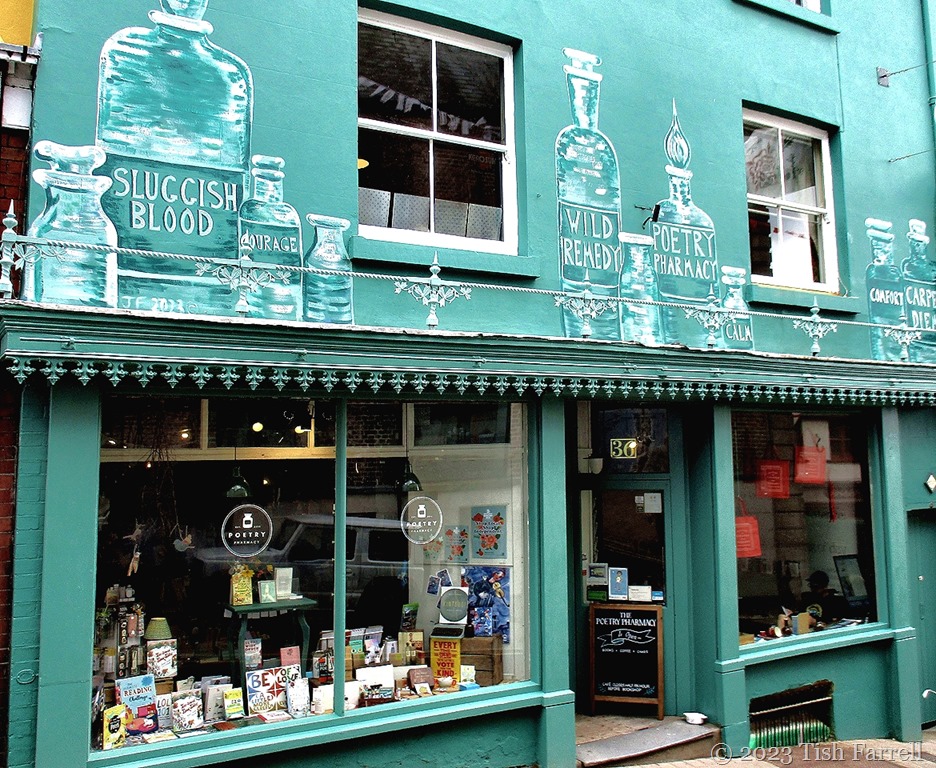
And three doors up, opposite the Town Hall, is Bishop’s Castle’s very own Poetry Pharmacy, an independent bookshop emporium wherein a carefully curated selection of poetry and fine prose works are on sale to heal whatever ails. It has a cafe too, and a physic garden with a writing cabin that may be reserved at no cost. The poetry pharmacist also offers personal consultations, with suitable verses prescribed. I’m sure I’ll be writing more about this nourishing alternative health service.

IMG_3644

*

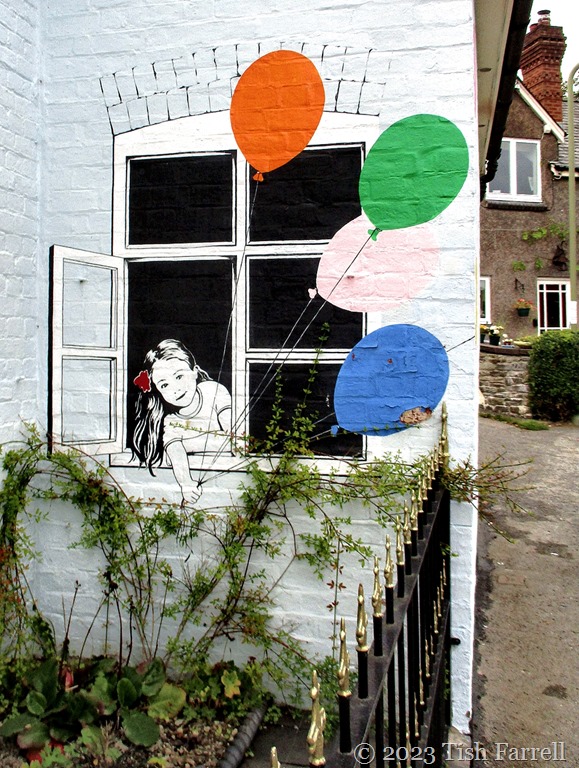
And one last image: this from a cottage at the bottom of our street. I’ve posted it before, but it gives me a lift whenever I pass it. Up, up and away…

IMG_3670

Lens-Artists: On display  Please go and view Ann-Christine’s lovely images for this challenge. They’re a real treat.