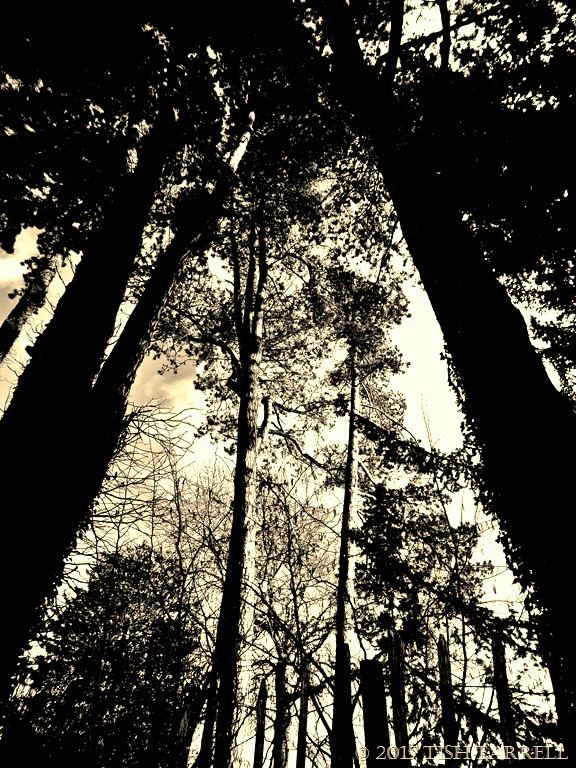
Wenlock Priory through the pines ~ an enduring landmark

P1000492

P1000494


How impressive then must the beautiful church have been in the days of its prosperity, when the pilgrim came down to it from the grassy hillside and its bells made the stillness sensible.

Henry James on Wenlock Priory Portraits of Places

Much Wenlock has many historic landmarks, but its Priory is the one with the oldest roots, dating back to the seventh century when  the Saxon princess, Abbess Milburga, presided over a dual house of monks and nuns.  In medieval times, under Norman rule, it was expanded to become one of the most imposing (male only) religious houses in Europe.

Then along came Henry VIII with his marriage problems, and in 1540, as part of his Dissolution of the Monasteries campaign, (i.e.the  liberation of monastic wealth), the lead was stripped off the roofs. The Priory has been ruinous ever since. Meanwhile the Corsican pines have grown up along the boundary wall.  I don’t know when they were planted, or by whom, but spiring above the ruins, they somehow give a sense of lost architectural glory.

There is of course much romance in dilapidation as Henry James’ description in the quote above betrays. He was certainly taken with the place, and came here two or three times as guest of the Milnes Gaskells  who lived in the Prior’s House abutting the ruins. The Priory was at that time the Milnes Gaskells’ own private garden feature, and part of the tour for all their many house guests.  I particularly like this next, perhaps unlikely image of a recumbent Henry James gazing up at the remains:

You may lie upon the grass at the base of an ivied fragment, measure the girth of the great stumps of the central columns, half smothered in soft creepers, and think how strange it is that in this quiet hollow, in the midst of lonely hills, so exquisite and so elaborate a work of art  should have arisen.

You can read more about Henry James in Wenlock HERE.

Now please visit Paula at Lost In Translation for more Black & White Sunday  landmarks.

Creative Intervention Rescues A Ruin

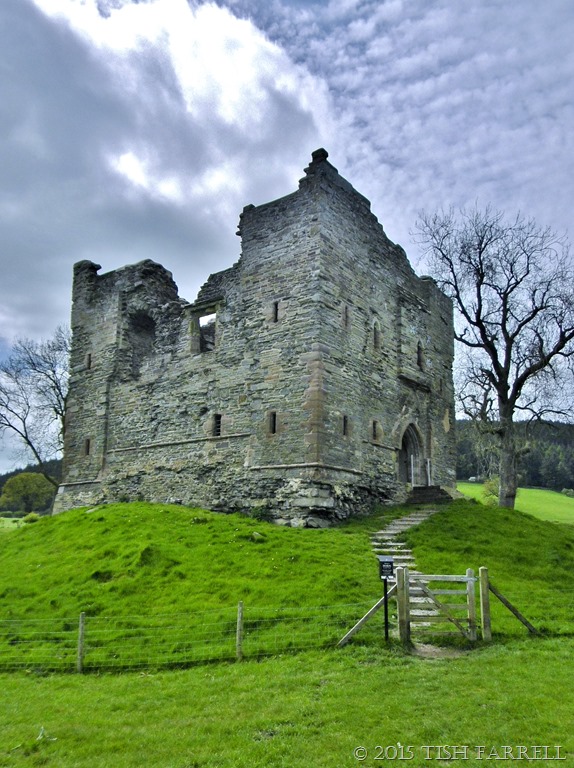
P1010246

Here we have the remains of Hopton Castle, an enigmatic ruin in the Shropshire borderland, eleven miles northwest of of Ludlow. It is called a castle, but it might be better described as an upscale medieval tower-house. That it survives at all, in this accessible state, is down to the creative efforts of the Hopton Castle Preservation Trust whose members toiled for 11 years to raise funds to consolidate the main structure, and then spent a further five years overseeing the work.

The ruin is full of puzzles. The preservation work revealed hints of 11th, 12th, 13th, and 14th century construction, but with no clear evidence for the date of the main surviving structure. It’s been suggested that the Hopton family, who owned it between the 11th and 15th centuries, at some stage deliberately set out to create a faux antique country residence much as the Victorians did with their  mock Tudor ‘cottages’. In other words, the Hoptons went in for some creative intervention of their own.

One theory is that it was a hunting lodge. The interior work of all  three floors appears to have been very grand, and definitely of ‘lordly’ quality.

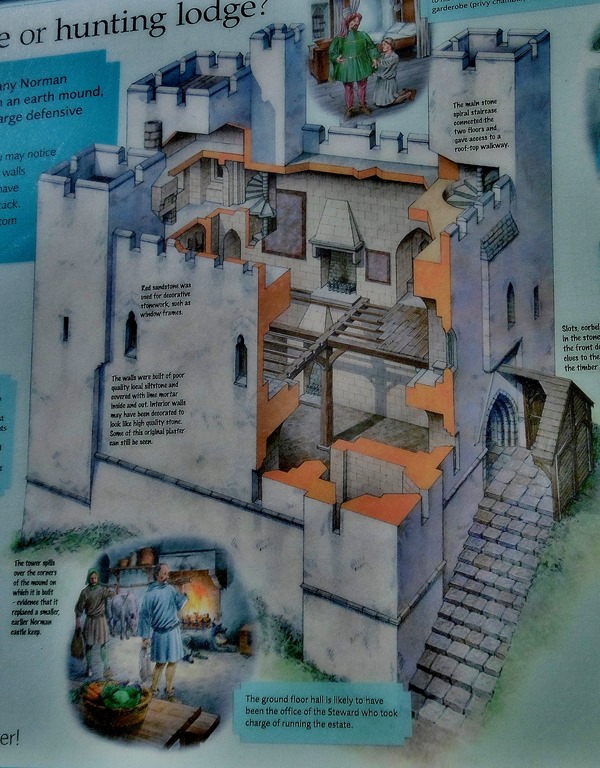
P1010211

photo: Hopton Castle Preservation Trust

*

Also, the tower was clearly not intended as a defensive structure. As you can see from the photo and the reconstruction, any besieger could simply walk up to the front door. Yet the building it replaced, the first ‘castle’ on the mound was indeed a functioning fortification – a motte and bailey castle typical of the Normans’ early conquest of Britain after 1066. Made of timber, they could be constructed swiftly, and as the need arose, later re-built and expanded into domineering stone fortresses.

But this did not happen at Hopton. The stone walls that replaced the 11th century motte and bailey appear to have been built of poor quality stone, unsuited to withstanding a siege. Meanwhile, the interior fittings and design suggest considerable expense.

So it’s a pretend castle then? A place for Sir Walter Hopton, Sheriff of Shropshire and Staffordshire, to display his wealth and status while entertaining well chosen guests for a spot of deer hunting?

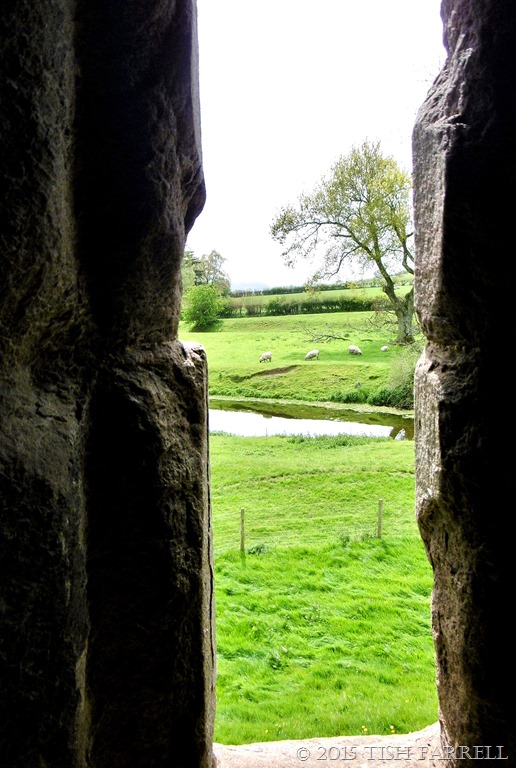
P1010230

Perhaps some of the answers lie in Shropshire Council’s five miles of archives that include shelves and shelves of unread medieval documents. In which case, they are likely to stay hidden. Probably forever. The on going local authority cuts mean there is little chance that the necessary scholarly research will ever be done. The archivist was one of the first people to be dispensed with, and for years before the cuts the archives were always under-resourced.

But if we don’t know much about the castle’s medieval history, we do know quite a lot about the bloody siege of Hopton in 1644, wherein Royalist forces attacked the staunch Parliamentarian Wallop family, who then owned the castle. It’s a swashbuckling tale, and you can read more about it HERE.  Some years ago Time Team carried out an excavation in an attempt to verify the circumstances of the battle. You can find the full episode on YouTube:  https://www.youtube.com/watch?v=MIiYOgmO-Cs


copyright 2015 Tish Farrell


My treat – today in Ludlow

100_7924

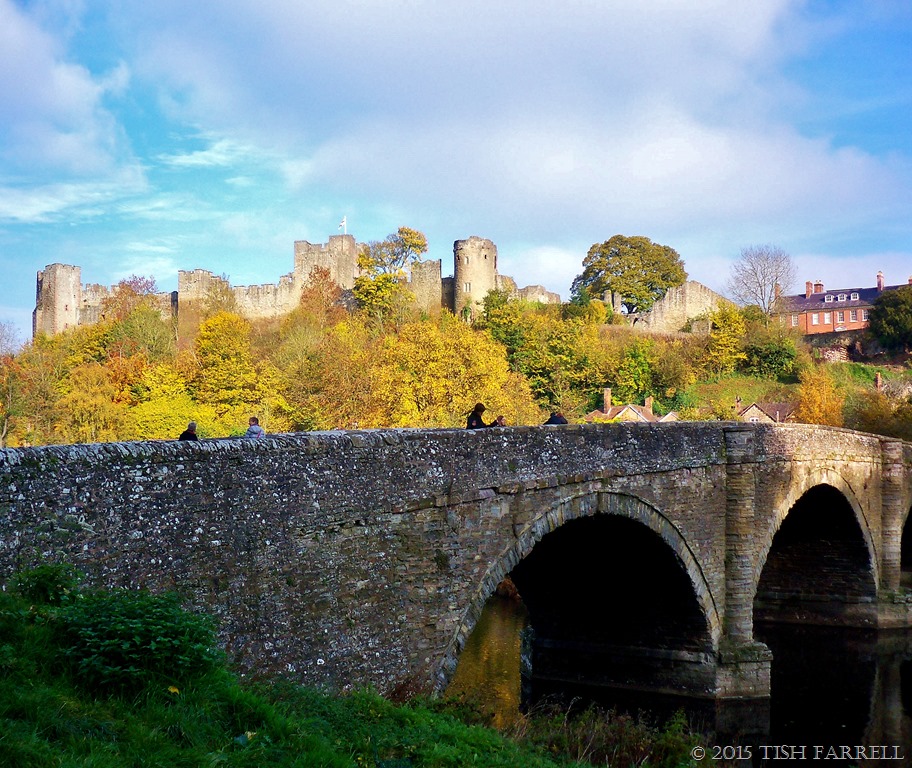
It could have been summer today – warm enough to sit outside without a coat. Well for heavens’ sake, just look at that sky. And what better place for a meander on a dreamy autumn day than Ludlow. It is one of Shropshire’s loveliest towns, and has more antiquity than you can shake a stick at.

The castle, whose ruins dominate the skyline, was begun over a thousand years ago during the Norman Conquest of Britain. It was built to secure the border with Wales, and was one of the first stone castles in the country. Over ensuing centuries it figured in all manner of political machinations including the York v Lancaster Wars of the Roses.  When the Lancastrian side won, the victor, Henry Tudor, shortly to become Henry VII claimed Ludlow Castle. He later gave it to his eldest son, Prince Arthur. In 1501 Arthur and his bride, a fifteen-year-old Katherine of Aragon, came here for their honeymoon.  A year later Arthur was dead. Katherine was then betrothed to Prince Henry, Arthur’s brother, but it wasn’t until 1509 that they were married. By then Henry was king. Their marriage endured for 24 years before things went horribly wrong. And we all know what happened next – Anne Boleyn and some serial beheadings.

So enough history. Here are some more views – my treat to you:

100_7936

100_7940

100_7941

100_7945

100_7949

100_7956
100_7958
100_7963
100_7946

Treat

Summer came back on Saturday and took us to the fair…


100_7330

…to the Bishop’s Castle Michaelmas Fair, to be precise. And not only did summer come back to us after a week of dreary coldness, it was warm, and bright and stayed ALL day.

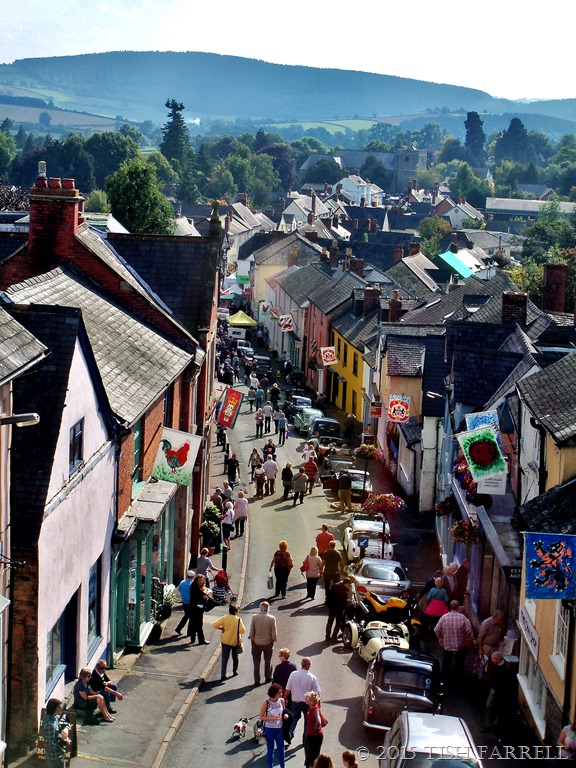
The fair was to be found in every quarter of the town, from St John the Baptist Church at the bottom of the hill to the Three Tuns Inn at the top of the hill, and with here-and-there enclaves in between.

100_7291

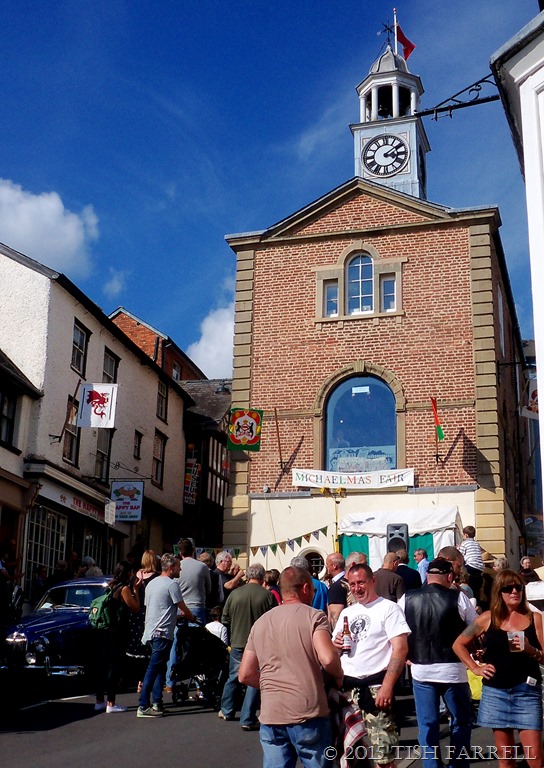
This shot of the High Street looking towards the church was taken from the window from the Town Hall. This handsome civic building (coming up next) has recently been refurbished and doubles up as the town’s market. This year it is celebrating its 250th  birthday…

100_7311

Wending on upwards past the Town Hall, and bearing to the right, you come to the Three Tuns Inn. It is one of Shropshire’s real ale treasures. They’ve been brewing beer there since 1642, so they must be doing something right. It’s apparently the oldest licensed brewery in Britain, but…

100_7274

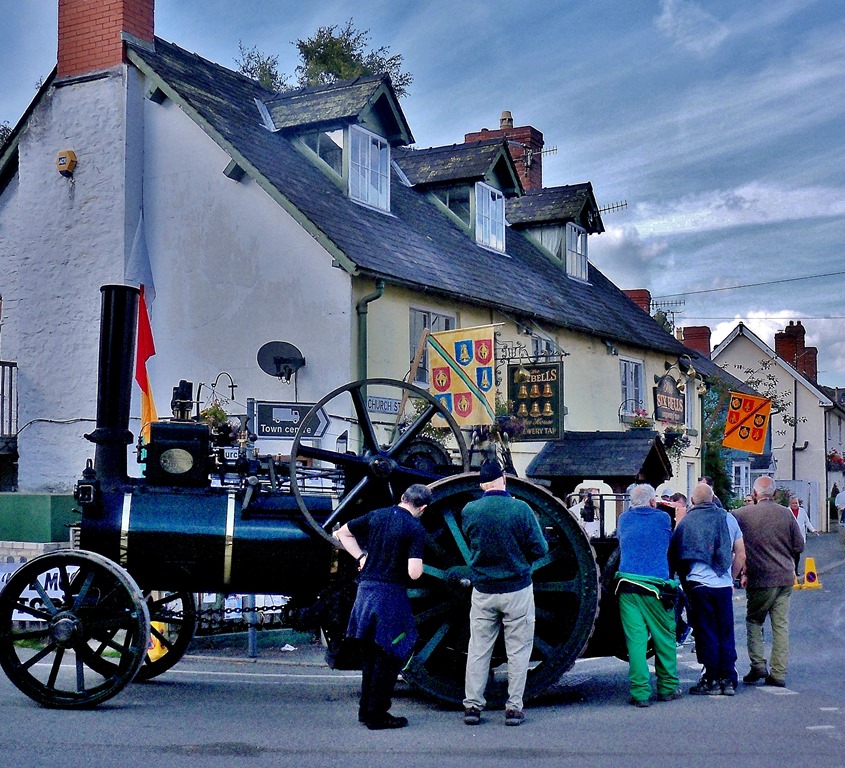
…it is not the only  micro-brewery in this small town. For those who don’t care to climb hills for a pint, you can sample the Six Bells’ Cloud Nine, a piece of real ale heaven, down on the corner of Church Street.

100_7351

A nice set of wheels, chaps?

Which brings me to another big excitement of the day – the Michaelmas Fair Parade. Not only did we have beer, bubbles, folk songs, indie rock, ballads and wall to wall bonhomie, there were also classic cars, tractors, and steam powered vehicles. But before all that we had…

Oh ye, oh ye. Make way for the Bishop’s Castle Elephant…

100_7179

100_7181

He’s called Clive, and was created by local maker, Bamber Hawes, with help from the town’s Community College students. Bishop’s Castle artist, Esther Thorpe designed Clive’s ‘skin’, and the primary school children did the printing. And if you want to know why Bishop’s Castle has an elephant on parade, I’ll explain later.

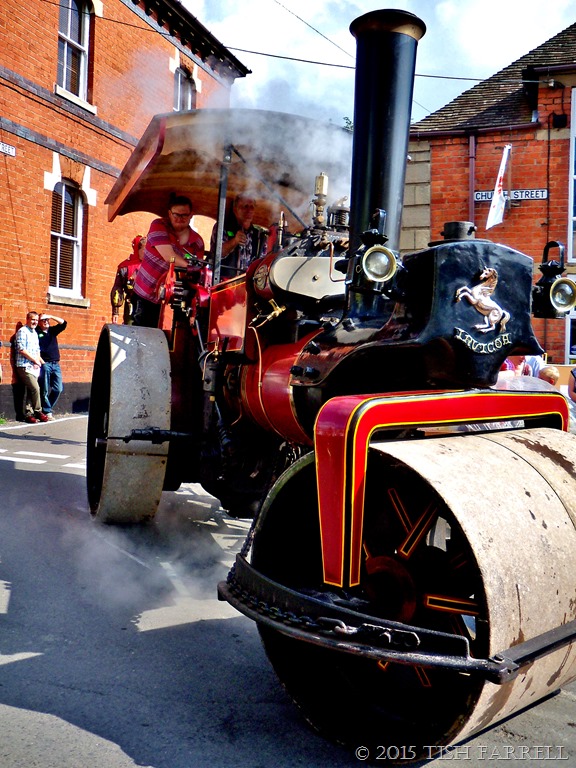
For now, watch your toes, here comes a huge steam roller…

100_7217

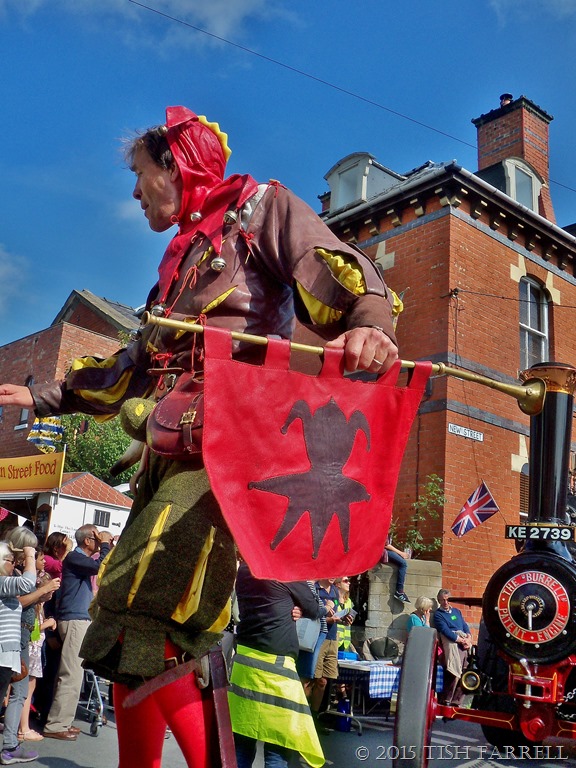
…and Peterkin the Fool on his stilts. He nearly trod on me…

100_7204

100_7205

…and then there were tractors (I remember when farmers had these)…

100_7190

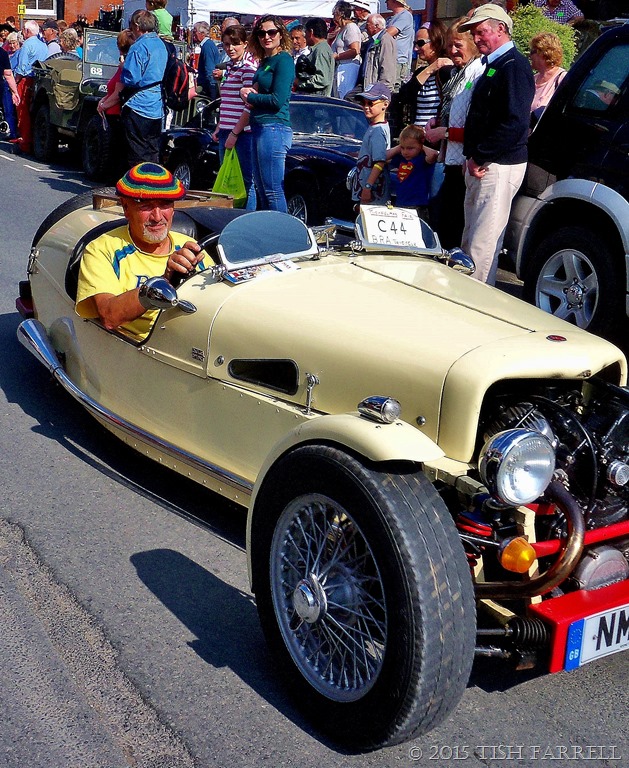
…and cool types in classic cars…

100_7195

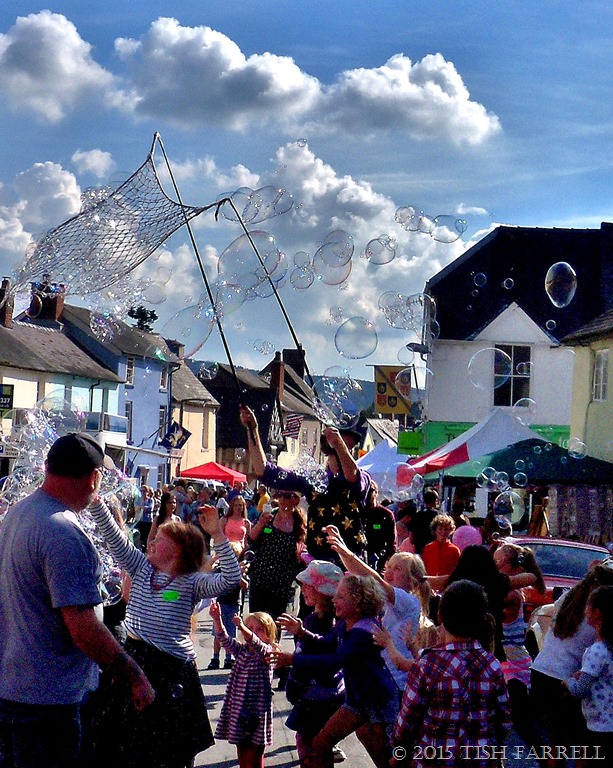
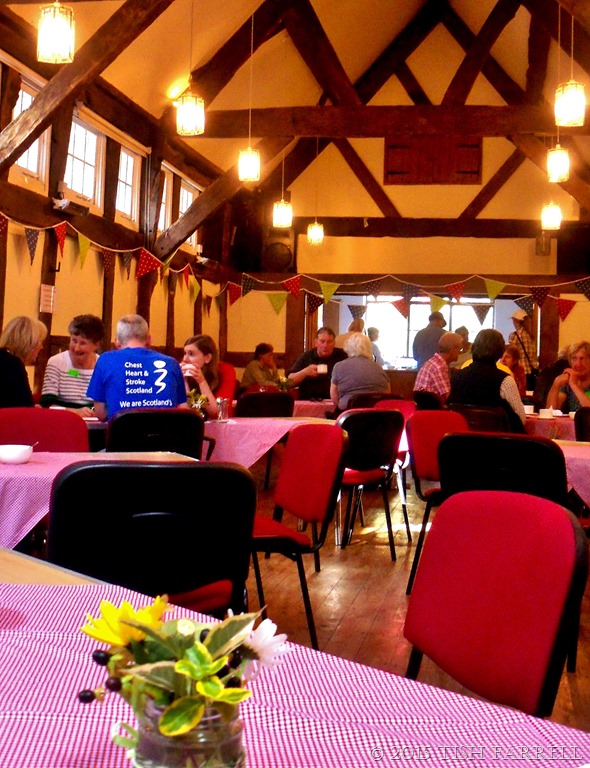
Then there were owls to hold, alpacas with socks to sample, more bubbles from the world’s tallest bubbleologist. We were so excited we had to resort to the Church Barn for soothing tea and brownies. After all, no good English ‘do’ is complete without afternoon tea…

100_7358

And now as promised, a bit of a yarn about Clive the Elephant. It’s a tale of dirty dogs and political shenanigans of 250 years ago. These were the days when Bishop’s Castle was a notorious Rotten Borough. There were two Members of Parliament, and only 150 people with the right to vote. How people cast their vote was a matter of public record, and this meant voters could be intimidated into supporting particular candidates.

Enter Shropshire-born Robert Clive, aka First Baron Clive aka Clive of India.  He was on a mission to build political power, and had the money to buy it. He had used his position in the (also notorious) British East India Company not only to found the British Empire in India, but also to return from the Sub-Continent with shiploads of loot. He then set about buying votes for the  men he wished to have as MPs. As part of his scheme of self-aggrandizement he added an elephant to his coat arms. It symbolized India, and his personal power. Today, a stone carved version may still be seen in Bishop’s Castle’s old market place…

100_7269

The reason Clive wanted power was so he could set about reforming the East India Company, and get rid of corruption in the administration. This did not come to much. Pots and kettles come to mind here. He died at the age of 49. All sorts of allegations were made as to cause of death – that he stabbed himself, cut his throat with a penknife, died of an opium overdose. It seems he suffered from gallstones, and was using the drug to deaden the pain. A more recent interpretation of events concludes he died of a heart attack due to the over-use of opium.

However you look at it, this is not a good elephant story. Far more heartening is the fact that during World War 2, a circus elephant was looked after in the town, and  lived quietly in the stable of the Castle Hotel.

Finally a few more scenes of fun and jollification. I should also say that if I didn’t live in Much Wenlock, Bishop’s Castle would be the place I would most like to live – no longer a rotten borough, but a place bursting with community good spirits…

copyright 2015 Tish Farrell

Even though it was a Saturday, I’m linking this to Jo’s Monday Walk

Please visit her blog. There is no better place to be inspired to get out and about with your camera.

Connected, on and off the rails: a passion for steam

IMG_1835 - Copy

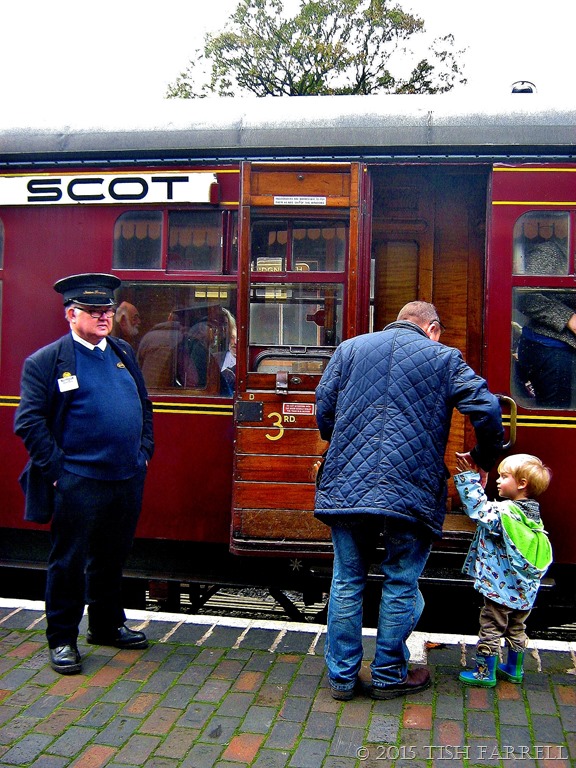
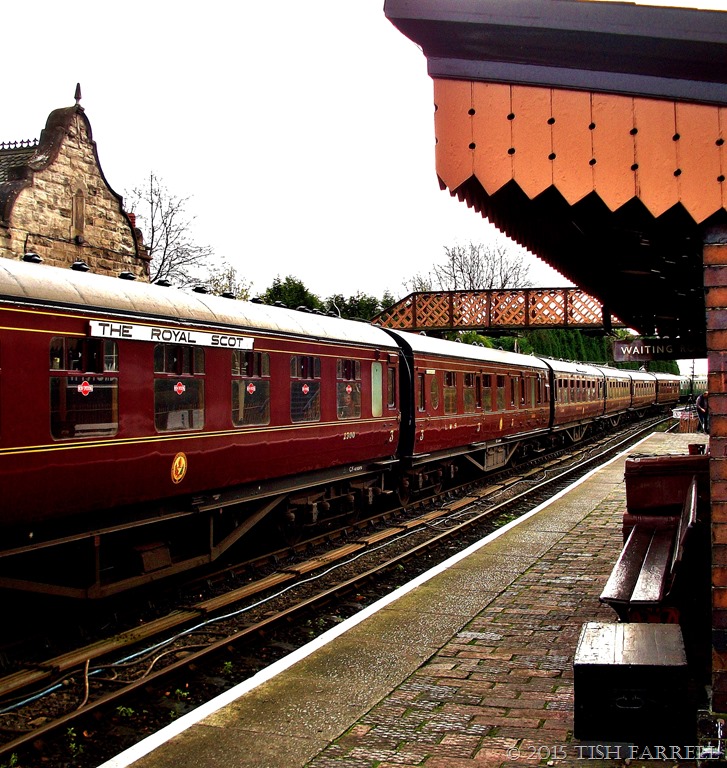
This year Shropshire’s Severn Valley Railway celebrates 50 years as a tourist attraction. That this 16-mile remnant of an 1862 main line railway is still up and running is due to the efforts of several generations of steam engine enthusiasts who lobbied, fund-raised, rescued and restored old rolling stock, and then threw the lot open to a willing public that now loves to spend its spare time watching and riding on steam trains. I mean who wouldn’t want to catch the Santa Special? If you’re up for it, I should tell you that advance booking opens on September 14th.

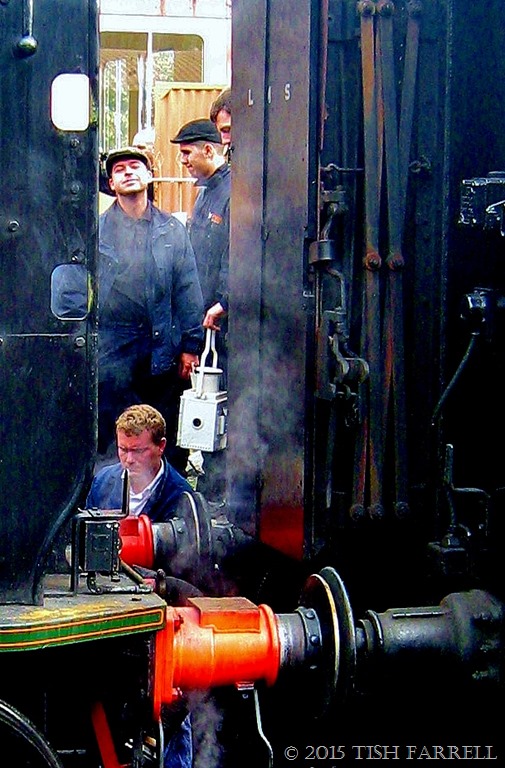
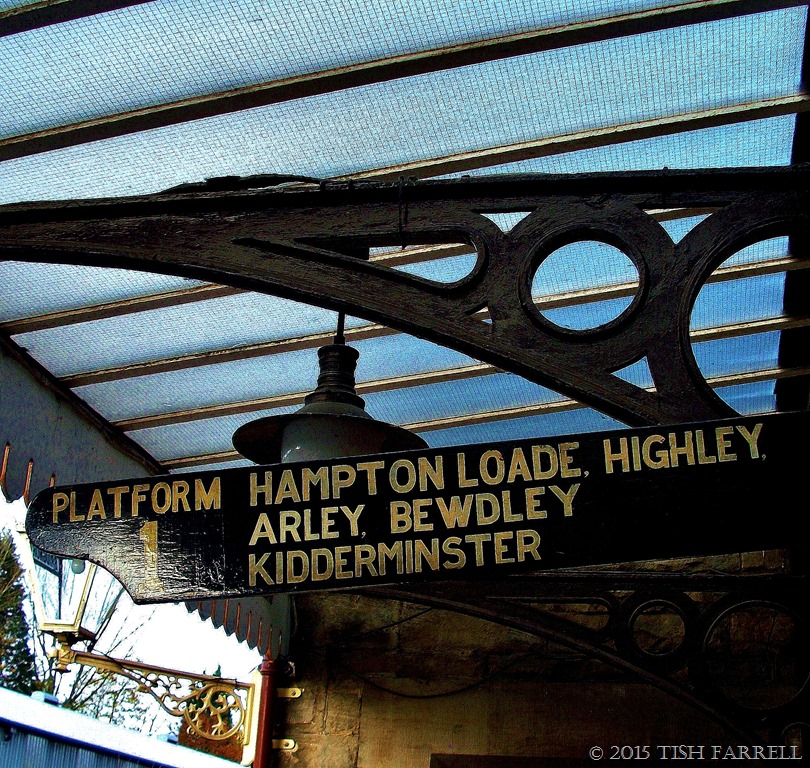
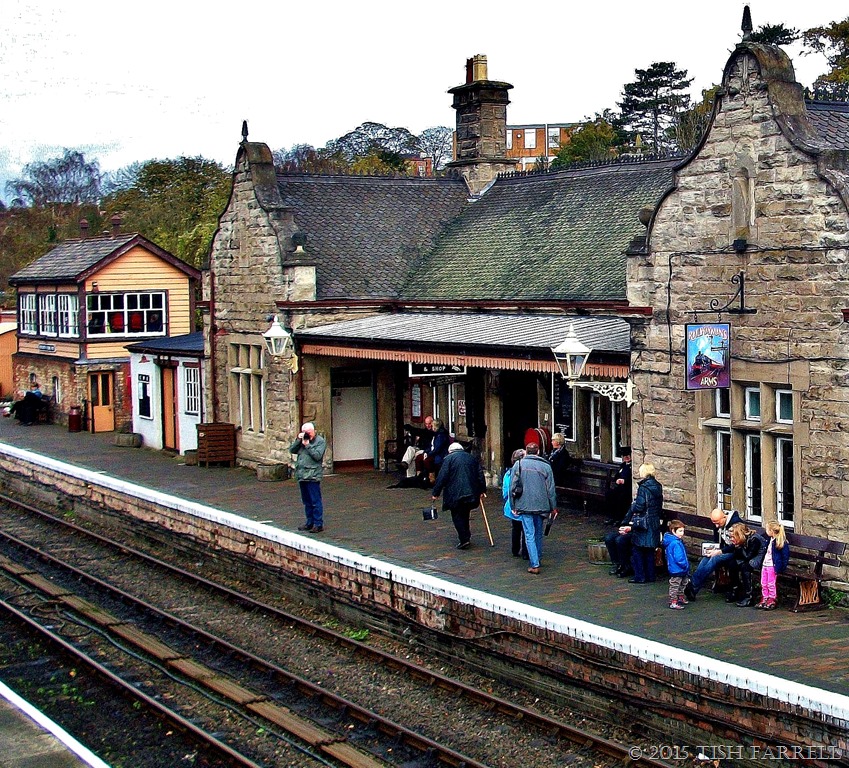
These photos were all taken back in the winter at Bridgnorth Station, our nearest market town, and the railway’s terminus. Graham was there on a mission – to look at rivets. I was just there to savour the steam. Aaaaah. Oh yes, and to take snaps. But perhaps I’d better explain about the rivets.

100_6762

First a little back story. Rewind 153 years…

In 1862 a branch from the original Severn Valley line was built through Much Wenlock. Mainly it served the limestone quarries, but at Whitsuntide, the Great Western Railway put on special trains to bring thousands of spectators to see William Penny Brookes Wenlock Olympian Games. Conveniently, the station was right beside the Linden Field where the games were, and are still held every year.

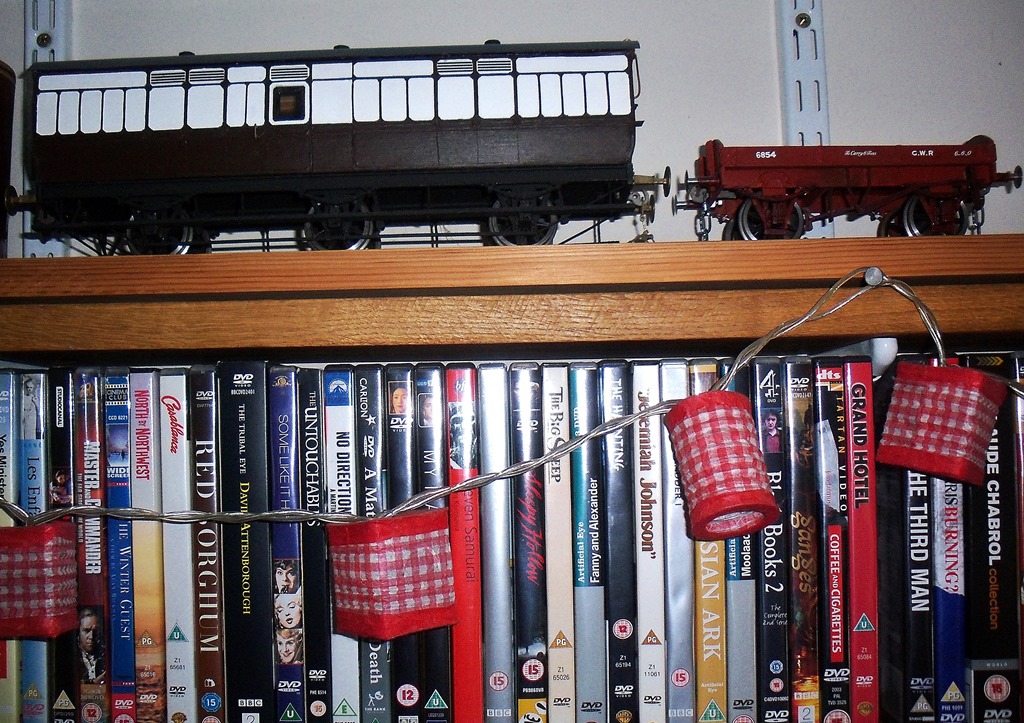
And because it was Wenlock’s William Penny Brookes who inspired the notion of the modern Olympic Games, and because we are proud Wenlock residents, some time in 2011 Graham had the idea, as a de-stressing pursuit, and as his own celebration of our town’s connection to the 2012 Olympics, to make a gauge 1 model of the  ‘Olympic Special’.

This resulted in the creation of very pleasing passenger carriage, and a goods waggon that was the original practice piece for the enterprise. The superstructures of both were  made from scratch, following some 1860s plans that Graham had unearthed. I don’t remember where he found them. But then came the stumbling block – the locomotive itself.

For this, he would need equipment he did not own, and skills he did not think he possessed. Ever since he has been pondering on how to set about it, egged on by our good neighbour, Roger, who does have handy engineering skills. Part of the on-going pondering included first-hand experience of GWR engine rivets so that Graham could judge the scale of them. And who am I to throw cold water on a chap’s enthusiasm.

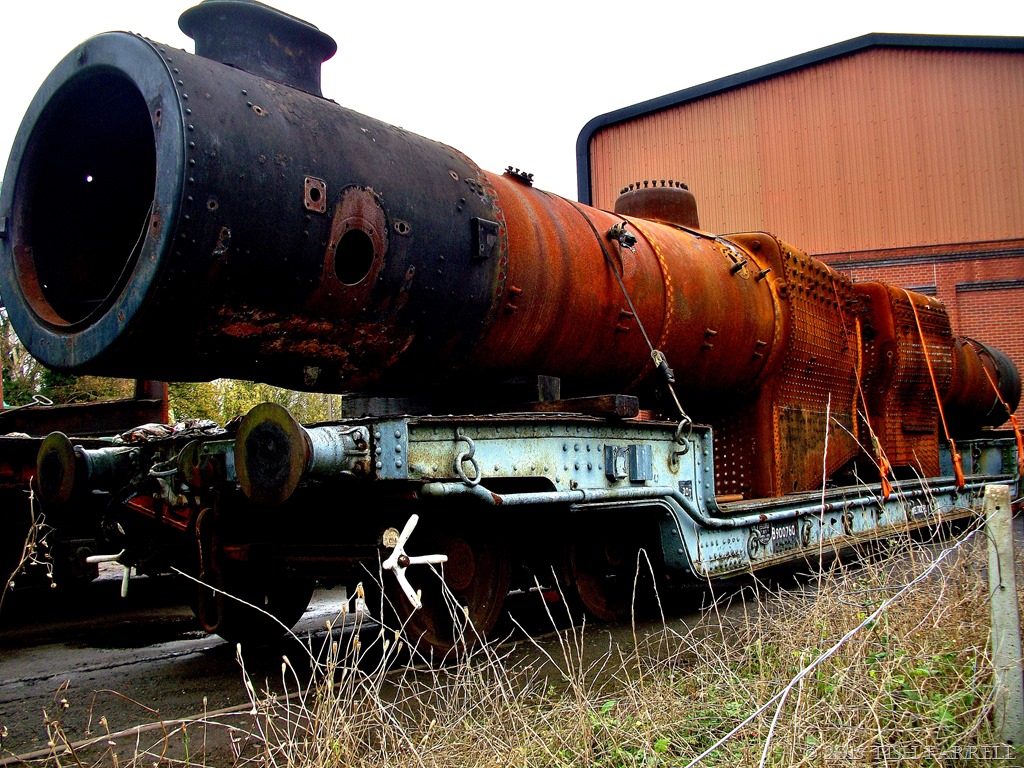
Besides, as a child, I spent a lot of time on steam trains, and more specifically waiting to catch one on Crewe Station. And anyone who knows their railway history will know that Crewe Station, built in 1837, is one of the world’s oldest stations, and that its junction was once a thing of railway wonder. So, all in all, I was glad to tag along on the boiler rivet hunt, and thereby have the chance sniff hot coal and engine oil, and look at rust on old locomotive hulks. Graham always claims I was born on the foot plate. And no. My father was not an engine driver.100_6822

100_6813

*

Also it was good to watch the happy voyagers waiting to embark on The Royal Scot…

100_6779

IMG_1846

100_6791

*

And finally that brings me to the work in progress. It’s sitting over the DVD/CD shelves in the kitchen, waiting for an 1860s vintage locomotive to take it away.  Passengers please take note. This train may not be leaving until the advent of the next Olympic Games. Graham says it’s good to have a deadline…

100_6961

copyright 2015 Tish Farrell

Severn Valley Railway Go here to find out more about the SVR

#SVR #SevernValleyRailway #steamrailways


Connected

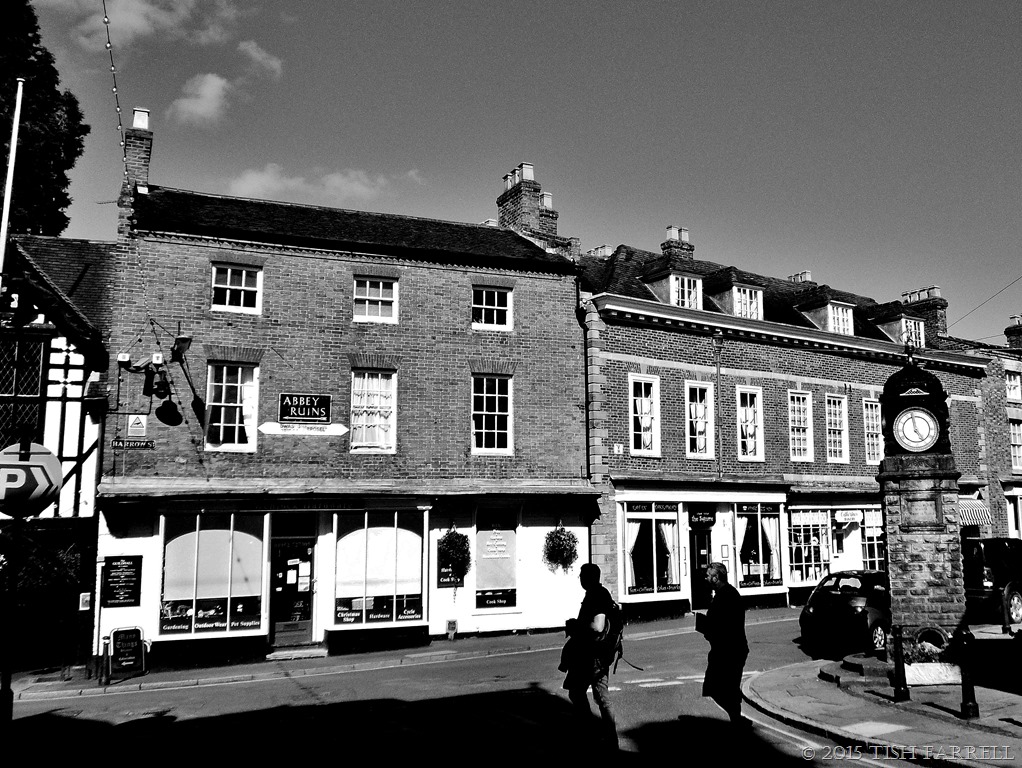
Seeing my town in Black & White: 2

P1010699 - Copy

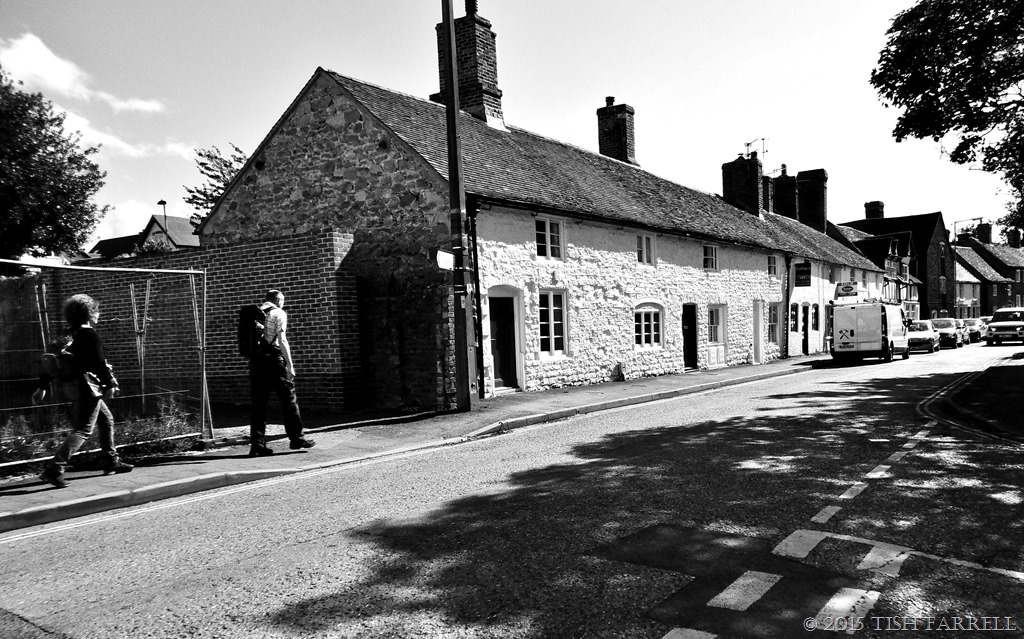
In the second part of my black & white tour of Much Wenlock (part 1 here), I was further inspired by Marilyn’s Wednesday photo prompt at Serendipity. This week she chose ‘small town summer’. I thought it would be interesting to see if I could capture that sense without using colour.

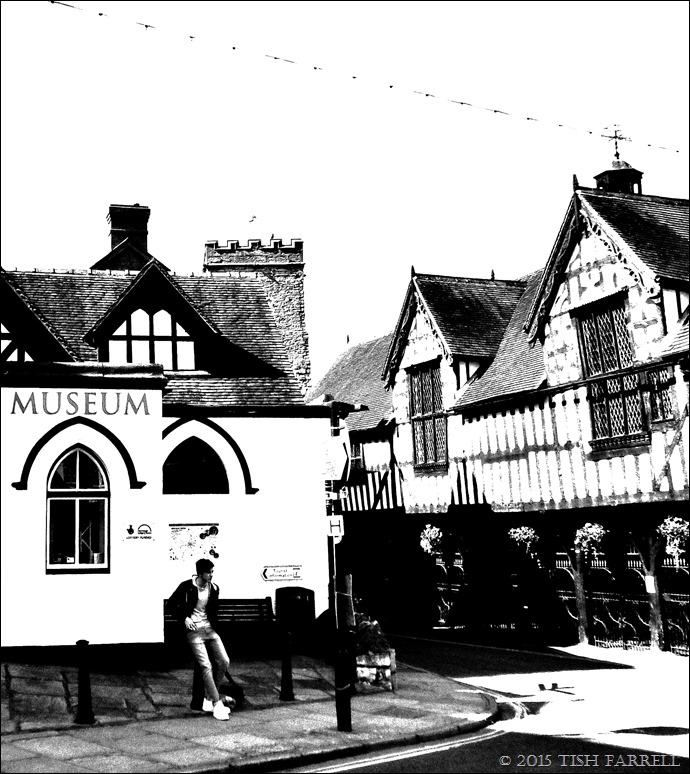
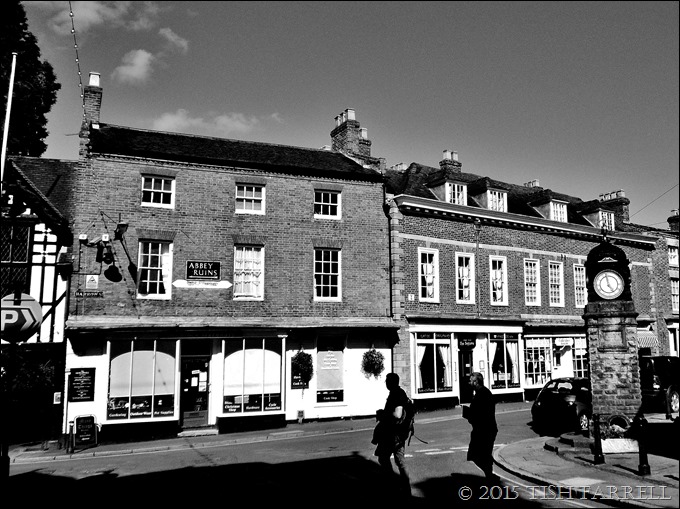
So it is Wednesday, half-day closing. A warm July afternoon. Wenlock is drowsing, although there are some visitors wandering here and there. In the heart of the town, where the High Street meets Barrow Street, a young man is waiting – for his girl? For his best mate? On the right is the sixteenth century Guildhall described in part 1, behind him, the former Victorian Market Hall with its added World War 1 Memorial frontage. This building was also the local cinema in the 1950s. Now it is our museum and tourist information centre, but due to council cuts, it is not open much.

Here, then, is the town centre from the boy’s point of view. There is little of interest for young people. His  posture, the high-lit ‘not-much-happening-here’ of the following street scene triggers my own response – that long-ago sense of adolescent ennui: that permanent sinking feeling of alienation.
P1010741

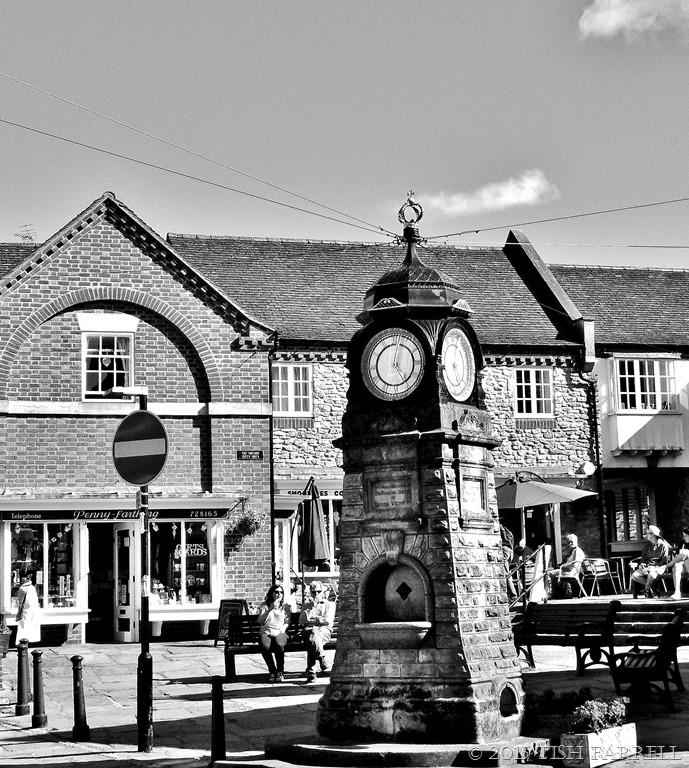
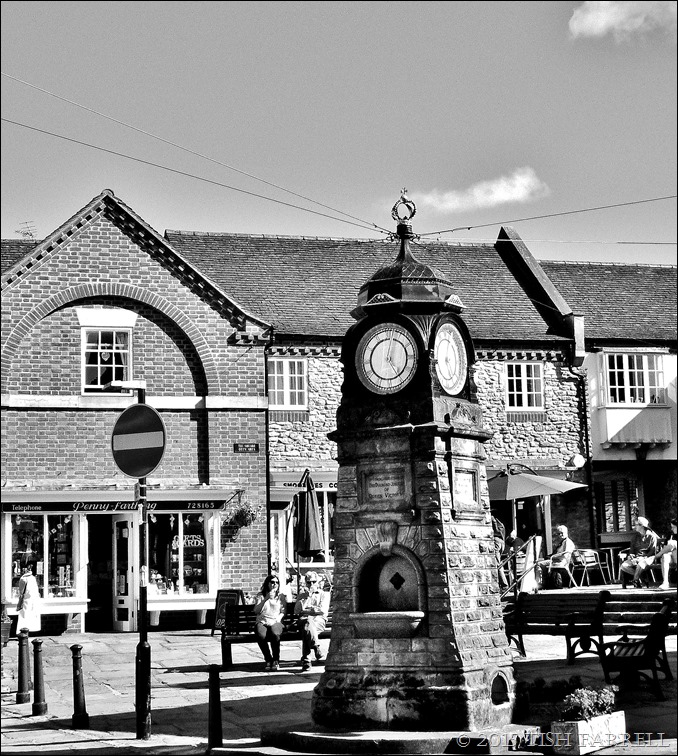
In the five o’ clock shadows past and present coalesce. It could be oppressive. In the Square the Jubilee Clock is a local landmark. Its several faces used to tell different times, but it has recently been overhauled and given a new electronic movement. It was donated in 1897 by a town worthy, erstwhile emporium owner and august alderman, Thomas Cooke. It celebrates Queen Victoria’s diamond jubilee, and would have been in sight of Mr. Cooke’s shop that stood next to the Museum and is currently occupied by the open-all-hours Spar Supermarket.
P1010747

The buildings around the Square are modern – a pastiche of local architectural idioms. But the open space is pleasing. For years it was occupied by a derelict stone barn. These days it is a gathering point for locals and visitors alike, and a good place to sit and watch the world go by, albeit a rather small and slowly moving world.
P1010739 - Copy (2)

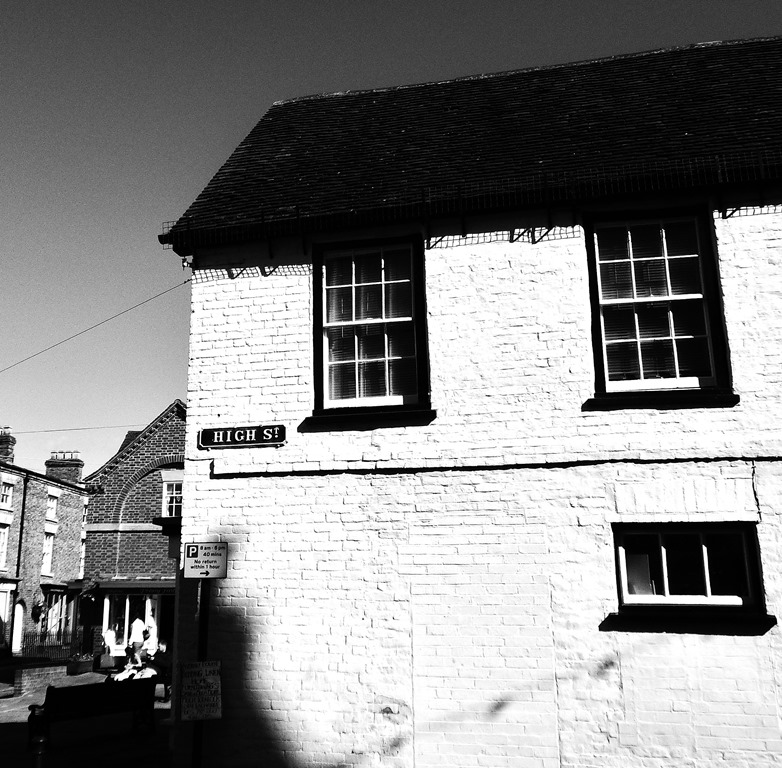
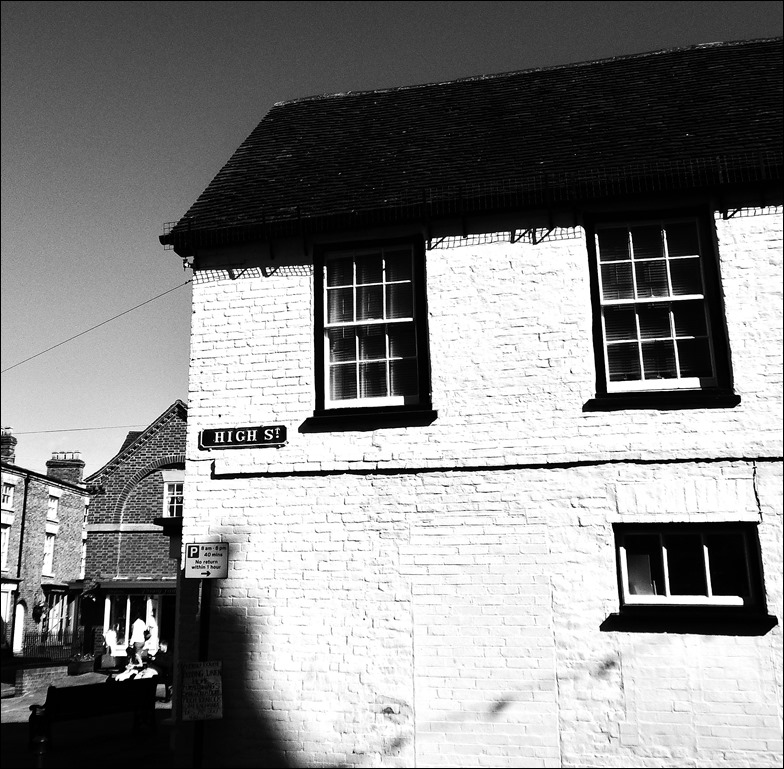
The High Street is difficult to capture. It is narrow, and its east-west alignment means that one side or the other is always in shadow. Then there are the cars in the way, either parking or manoeuvring through. Surprisingly, there is fervent trader resistance to pedestrianizing the street. They think they will lose custom. I think they should at least try it for six months. They might be agreeably surprised at how many more visitors would come to enjoy this little street in peace. It can offer so much hospitality and interest along the way.

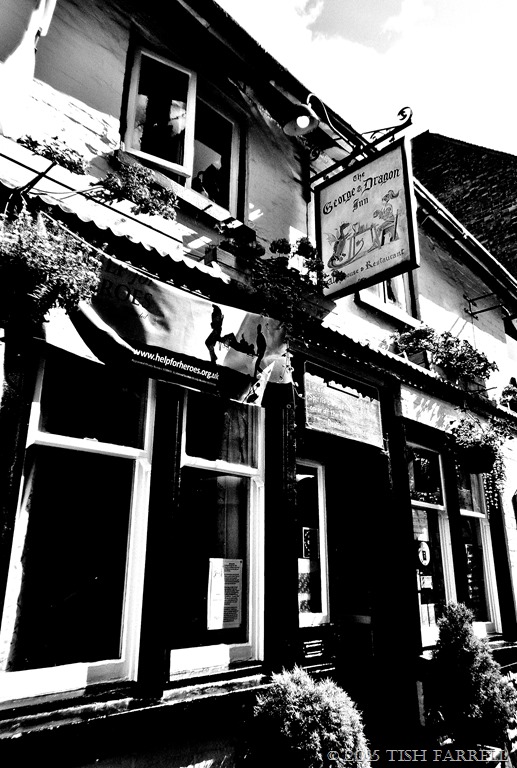
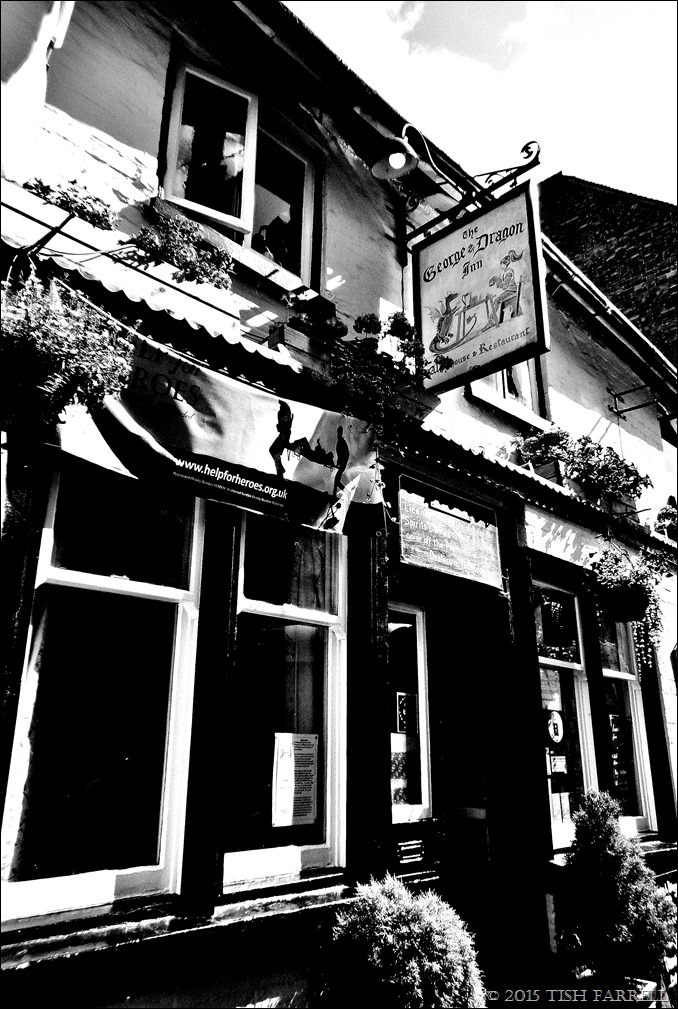
For a start we have two ancient inns whose origins go back to monastic times. The George & Dragon is probably everyone’s idea of an unadorned old English pub – all beams and quarry tiled floors.
P1010702

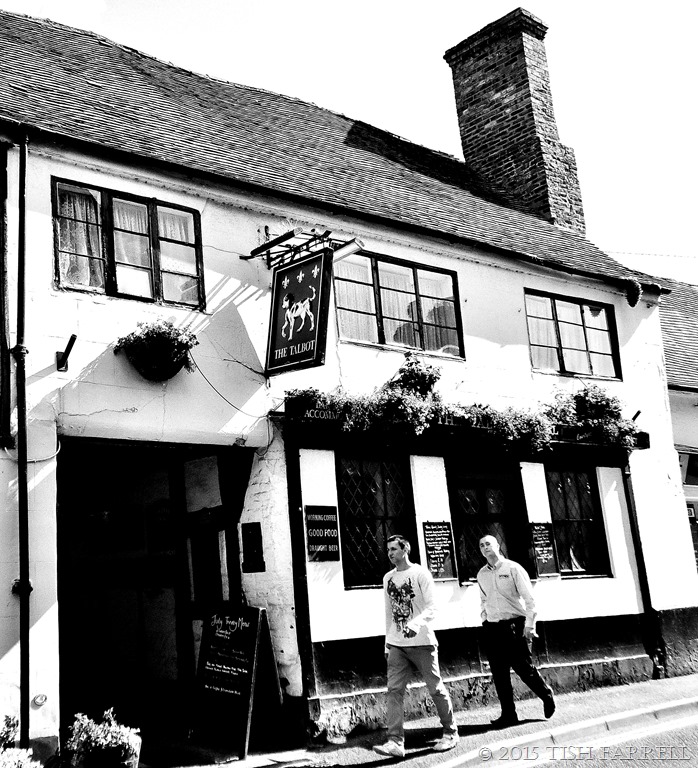
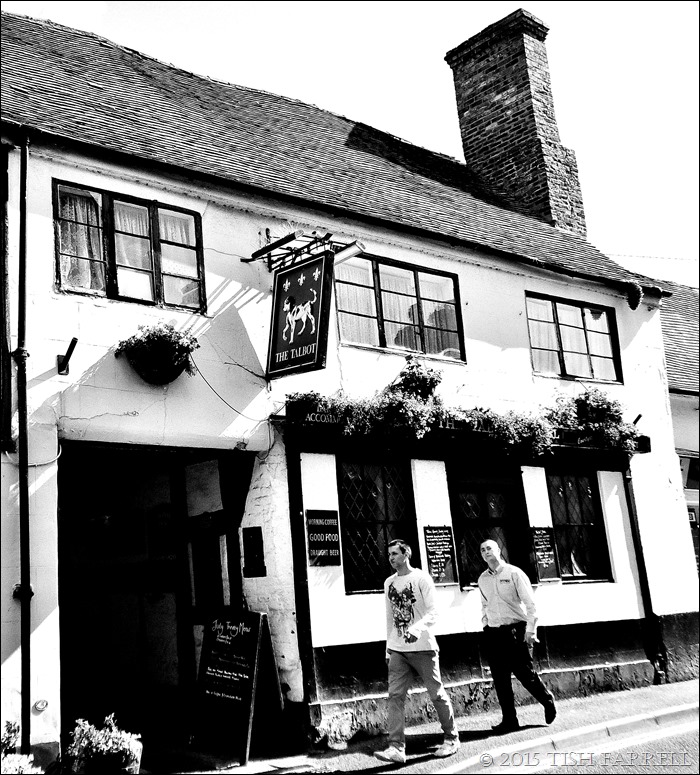
The Talbot on the other hand has a 1970s ‘olde worlde’ interior, though it dates back to 1360, and was thought to be the Almoner’s House, a hostel for pilgrims come to worship at the shrine of St Milburga, and also a centre for alms giving. The white rendered facade hides its timber-framed antiquity, but if you step under the arch you will find a pretty courtyard, where there are also nice B & B rooms in a converted malt house should you want to stay longer.
P1010711

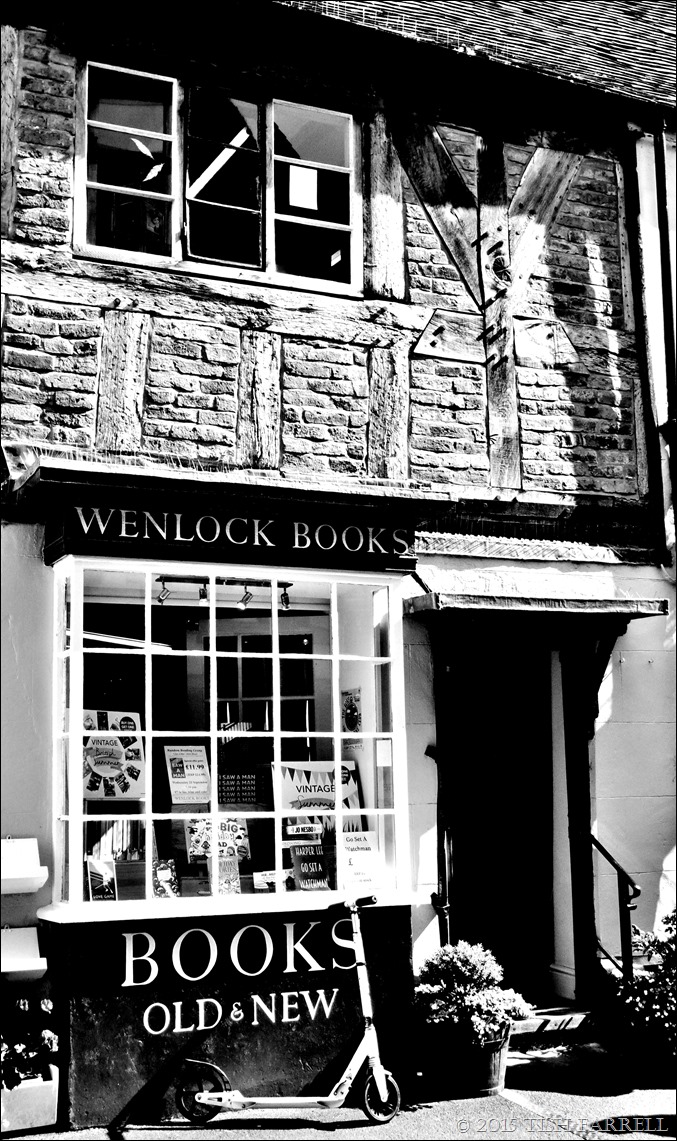
There are also two cafes, one with a deli, an Indian restaurant and two hotels. And amazingly for a small town, we have two bookshops – one dealing in second-hand books, and the other an inspirational survivor among the country’s dwindling number of independent book shops. Its owner, Anna Dreda, not only sells new and old books, but she also hosts reading groups for infants and adults, puts on author talks and book launches, and she is the founder of the Much Wenlock Poetry Festival. Browsers may further find themselves offered a cup of coffee or tea, and invited to pass away the hours in one of the cosy corners upstairs. In short, the shop and its owner are among the town’s treasures, and have won national notice to prove it.
P1010709

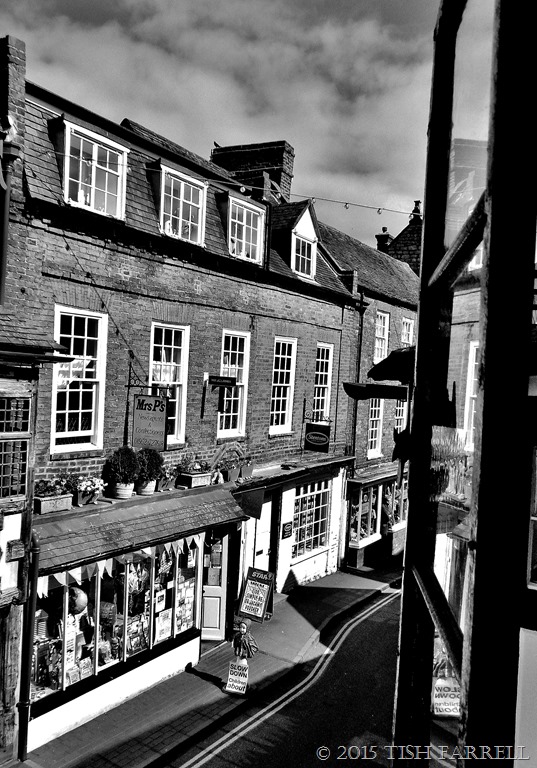
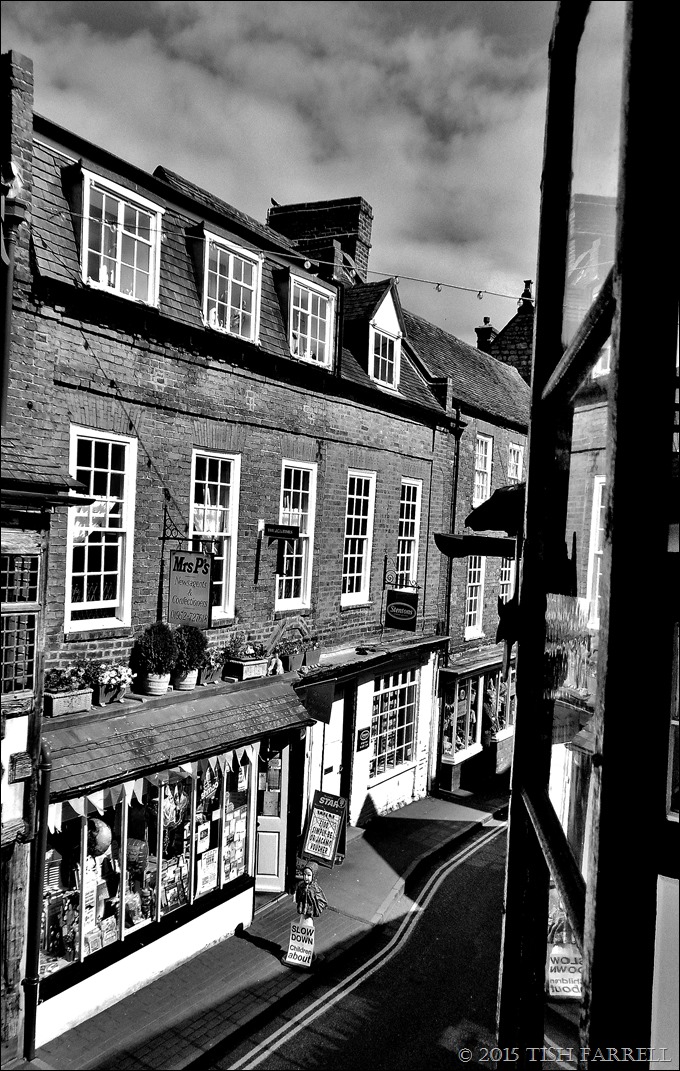
And it is from upstairs in Wenlock Books that you can sneak a good view of the High Street’s mid-section: Mrs P’s newsagents and sweet shop, the estate agents, and Ippikin, a shop that is its own art installation and is our very special haven for knitters and crafters. These next two photos were taken earlier in the day.
P1010145

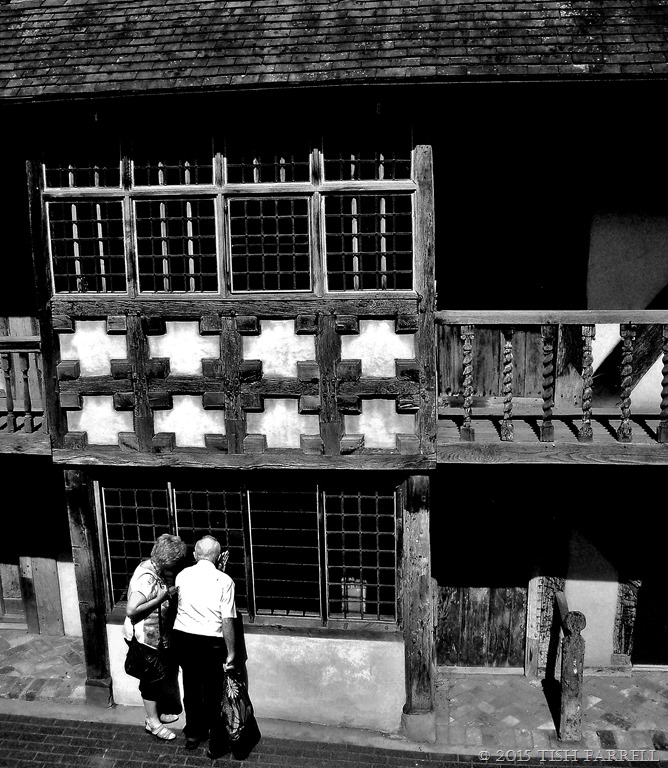
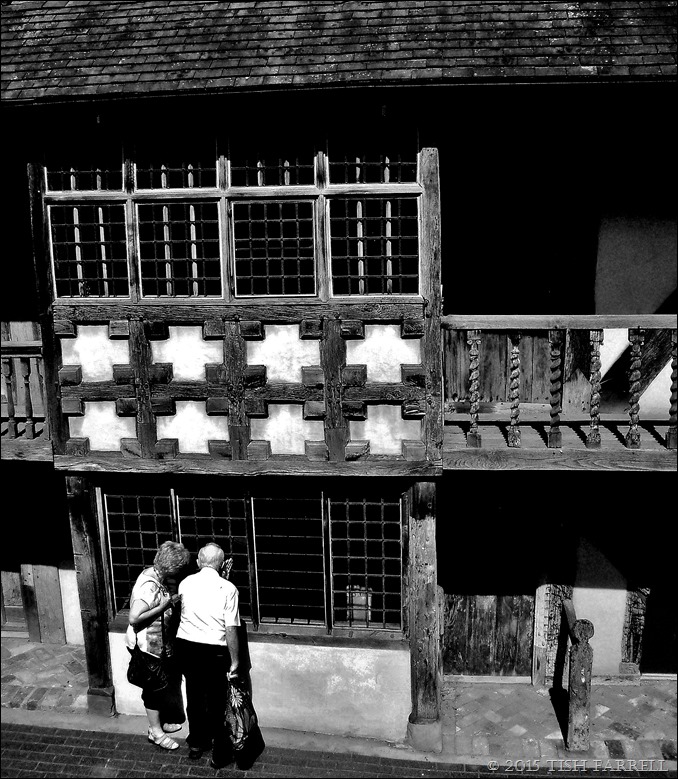
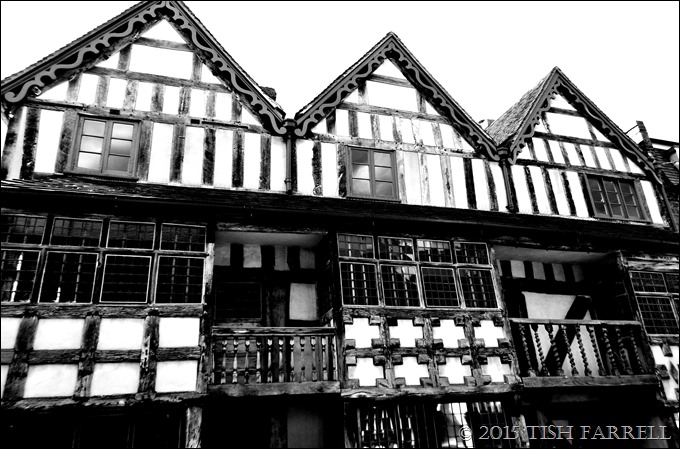
Opposite the book shop is the street’s most impressive historic house, Raynald’s Mansion. Here we have a medieval hall clad first in a flat-fronted building of 1600, and then extended by the addition of three timbered bays in 1680. The property remained in the Raynald family until the late 20th century, and is still a private house. In the nineteenth century it was actually a butcher’s shop, and the rail beside the right hand doorway was an aid to tradesmen lifting heavy loads.
100_6264

P1010714

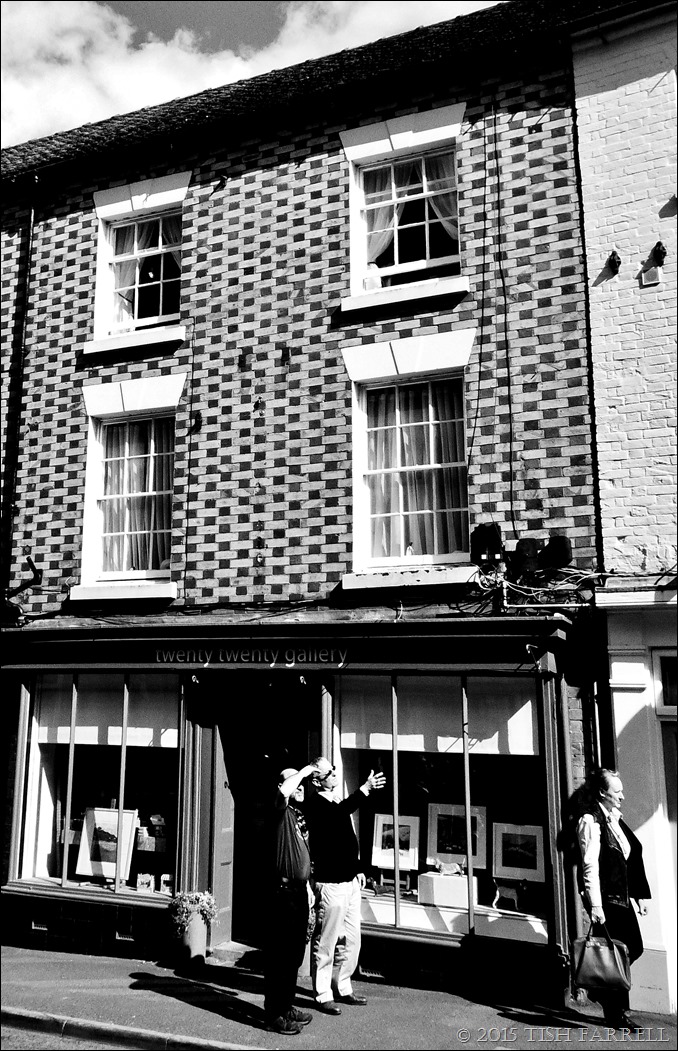
And next is another town treasure, Twenty Twenty Gallery. I missed it out. It is further back down the street towards The George & Dragon, and every month has a new exhibition of contemporary art, ceramics and jewellery for sale. The owner, Mary, likes to feature the work of local artists and makers.
P1010703


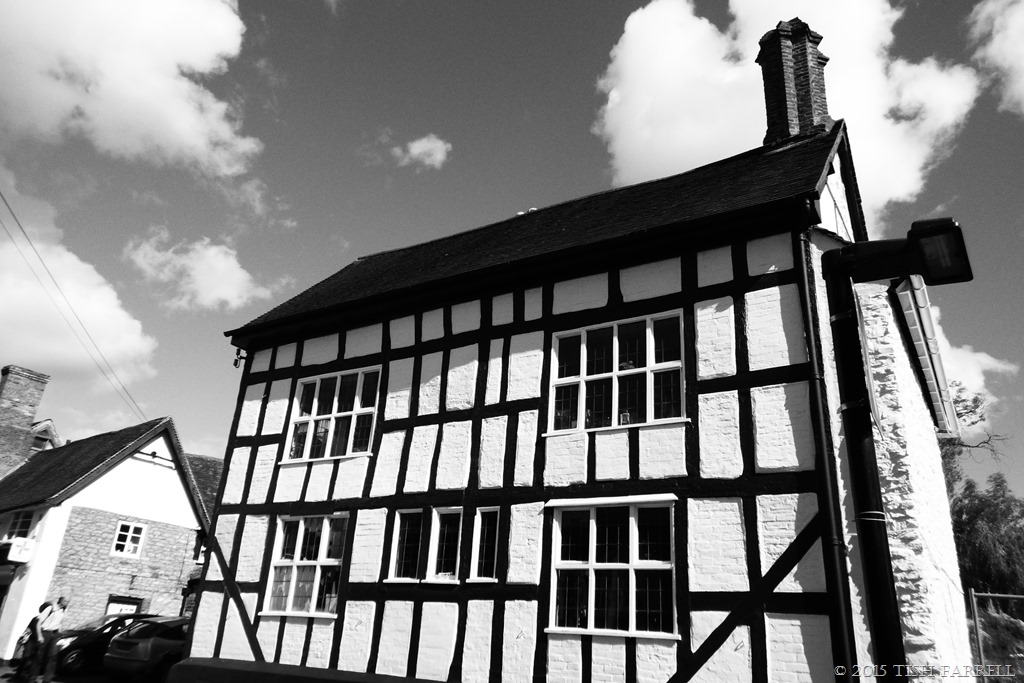
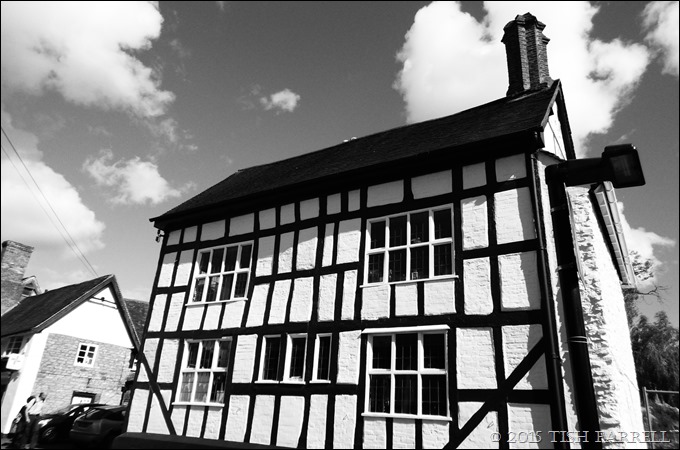
Back again down the street beyond Raynald’s Mansion and The Talbot Inn we have another imposing house, also early 17th century. Up to the 1920s it was the Swan and Falcon Inn. Later it housed our local branch of Barclays Bank until it moved to smaller, less frequently open premises next to the Post Office. The current new owner has development plans for it and its ancient  medieval barns out back, but in the meantime our local wildlife rescue charity has it shop there.
P1010719

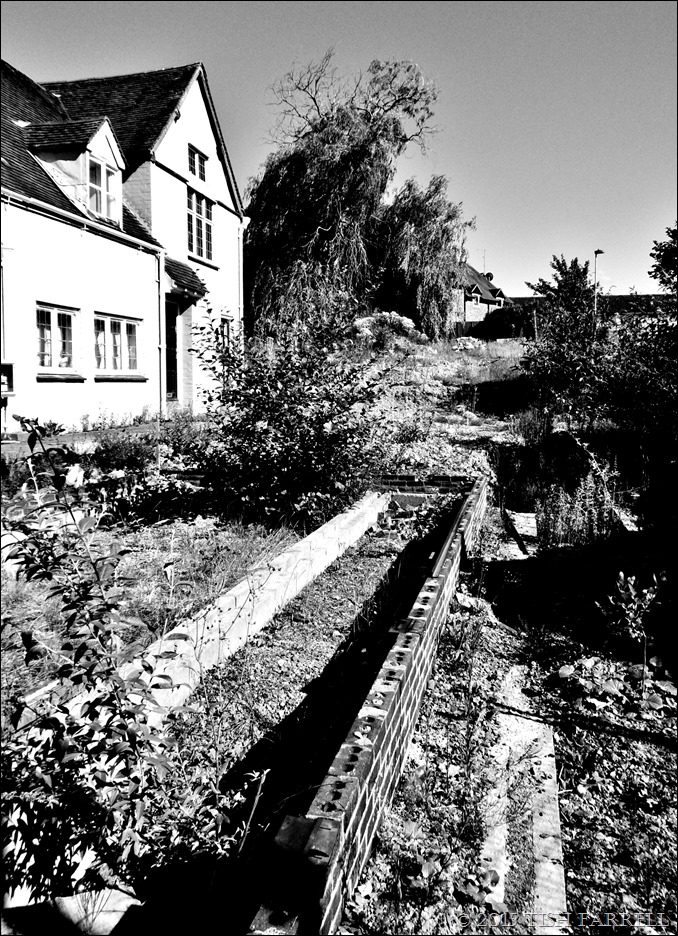
And just in case you think all is perfection along our High Street, we do have our eyesore. In 2009 or thereabouts the space next to the old Swan and Falcon was the scene of a general town uprising. A local developer, who had put up an unpopular housing enclave behind the High Street, then erected a house on the street frontage that did not conform to the approved plans. So after considerable agitation, down it had to come, although only after we Wenlockians had frightened the visiting local authority planning committee by our vociferous objecting. It was rather like a similar revolt back in Wenlock’s 1300s, when the serfs, fed up with the domineering Bishop who ruled both Priory and the town, threw down their ploughshares in general protest.

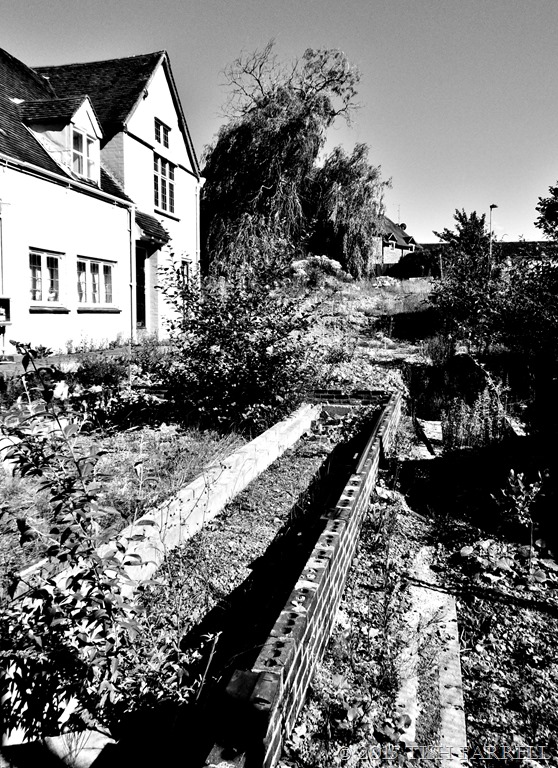
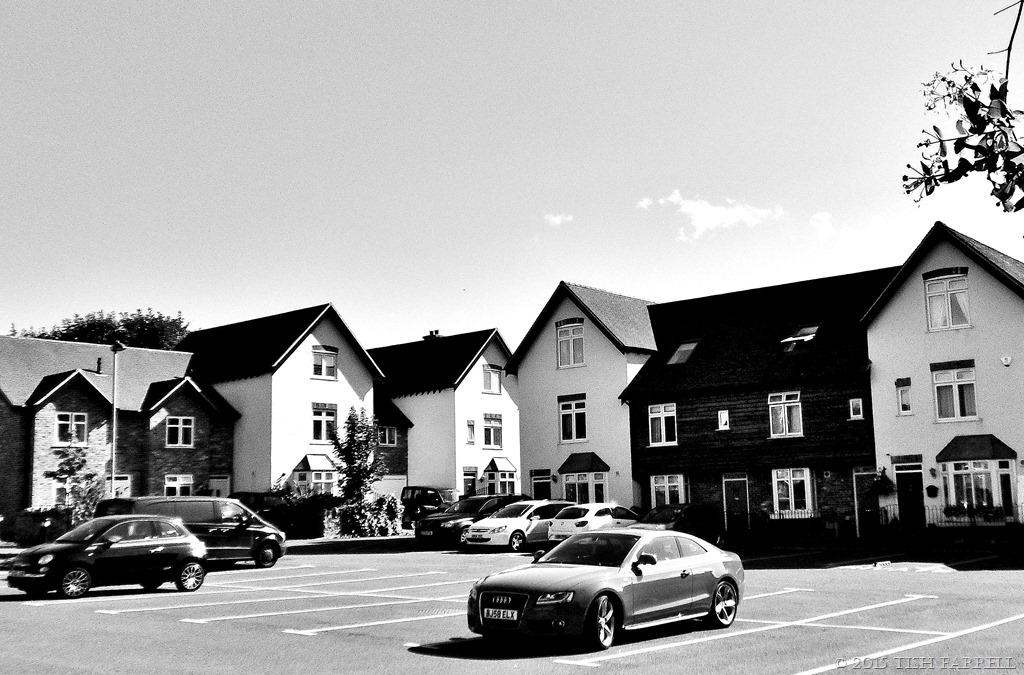
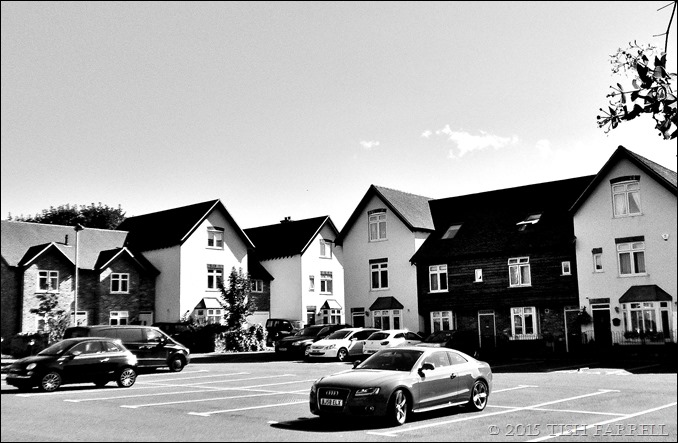
The site itself was once a seventeenth century clay tobacco pipe works, and in more recent years had become overgrown, and thus a well treed wildlife area that helped mitigate the town’s flooding risk. The only problem is that ever since, the space between the Swan and Falcon, and High Street’s terrace of Tudor cruck cottages, has looked like this, one of our less than successful visitor attractions:
P1010732

P1010720

Somewhat surprisingly, the original planning permission for the housing development, both on the street, and behind it, had been given without any reference to, or consultation with the local authority’s Conservation Officers.  Apparently it was not deemed necessary with a new development, despite the site being in the middle of an ancient town. Anyway, the houses were expensive, cramped inside, and so took a lot of selling, even with offers of free cars. In the end a housing association bought many of them, so at least some families on the local social housing list have benefitted.
P1010730


P1010721

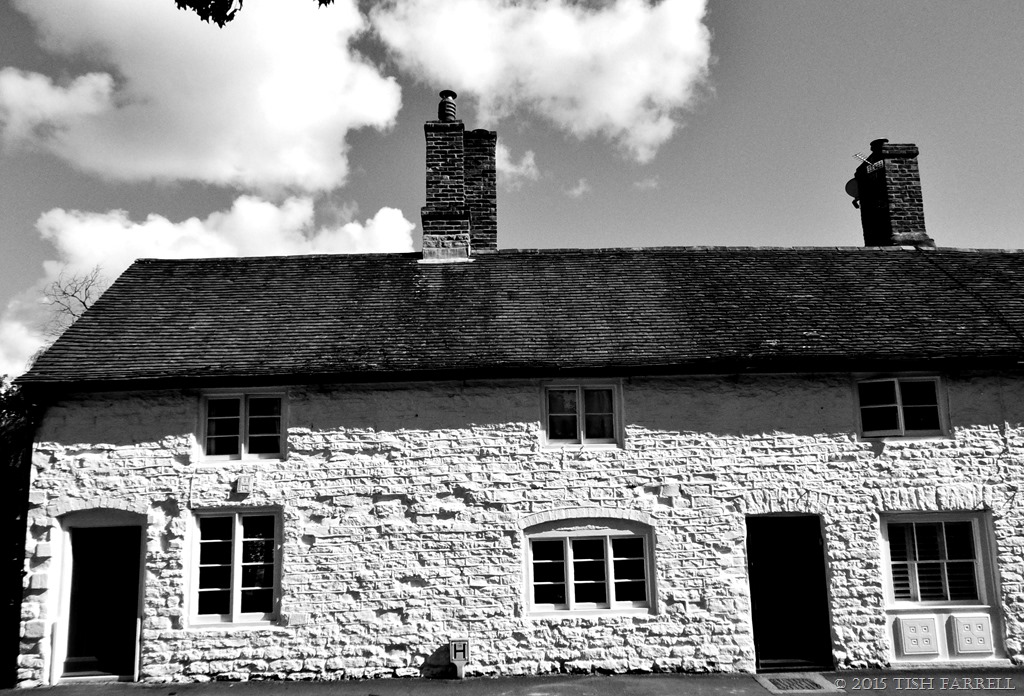
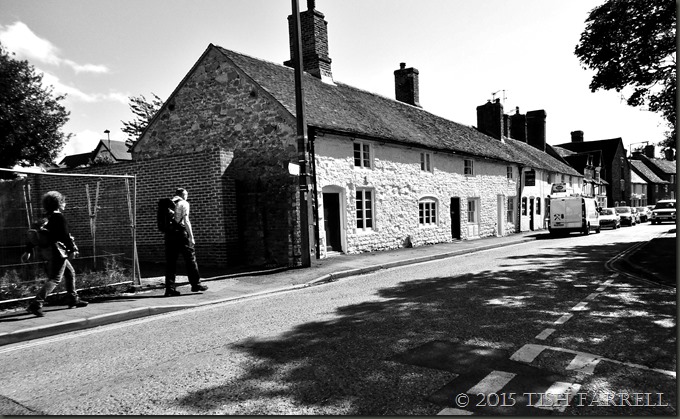
By contrast, this row of cruck cottages some 400 years old, and the new development’s nearest neighbours, are solidly built, remarkably spacious inside, and have very pretty gardens behind them. Lacking the paper thin walls of new houses, there is doubtless little noise leakage between the cottages, although they do lack multiple en suite shower rooms that seem to be a feature of all English new-builds these days. Anyone would think water grew on trees, or that our drainage systems were robust enough to cater for all the washing we think we need to do.
P1010729

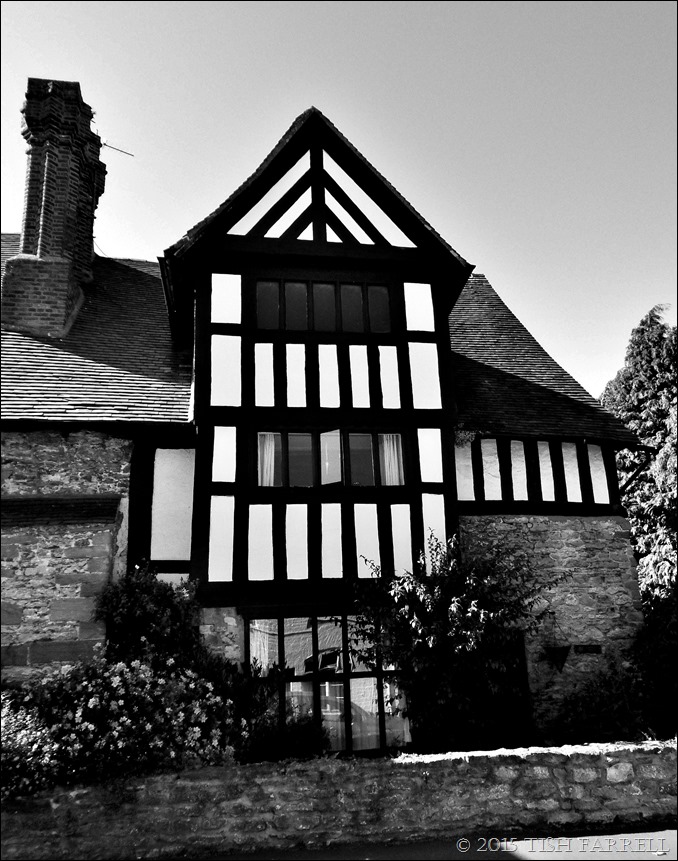
Finally, here is one of the town’s loveliest ancient houses Ashfield Hall. I’ve mentioned its history in an earlier post. It was built by one Richard Ashfield who lived in Wenlock in 1396. It is probably on or near the site of the earlier St. John’s Hospital which was a hostel for poor itinerants.

And there you have it: some of Wenlock’ High Street highlights. It is well worth a visit.

copyright 2015 Tish Farrell



5 photos 5 Stories: Hidden Wenlock #1

IMG_1212

Pauline at Memories are made of this tagged me for this challenge: a photo and a story for five consecutive days. On her blog she took us to some of the world’s most resonant places, including the Taj Mahal, so please do visit her.

I thought I’d stay at home for five days, and reveal some local secrets. In fact in this first photo I want to show you something you cannot see at all. I’ll call it a ghost -more of which in a moment.

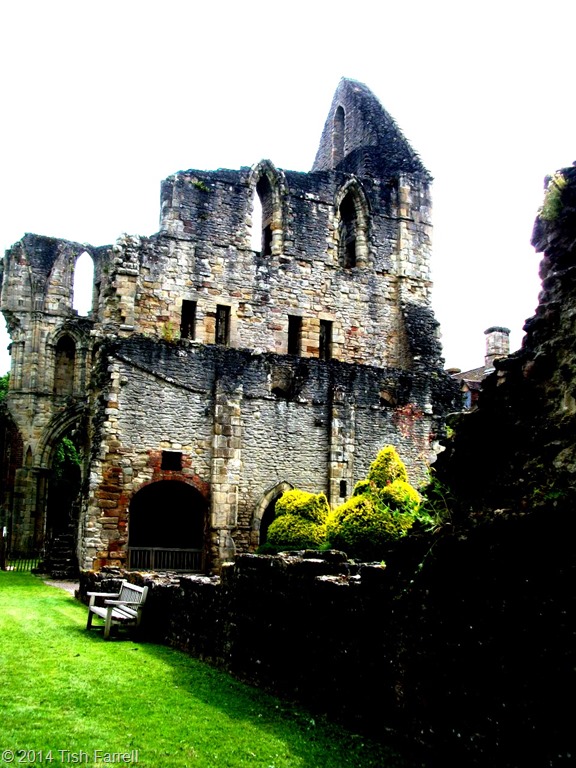
The things you can see are the ruins of Wenlock Priory. Before Henry VIII dissolved it in 1540, it was one of the biggest monastic houses in Europe, and a sister house to the abbey of Cluny in France. The monks in Wenlock would thus have all spoken French as well as Latin. I suppose they must have had some resident interpreter to manage all the Shropshire serfs who would have been needed to tend the Prior’s extensive domain.

The Priory itself was a place of great pilgrimage, which in turn caused the small town of Much Wenlock, with its hostelries and traders, to grow up around it. Two of the towns surviving pubs, The George and Dragon and The Talbot  date from these pilgrim days. The big draw was St. Milburga and her healing miracles. She was the Saxon princess who was abbess of the town’s first religious house back in the 7th century. When her four hundred year old bones were conveniently rediscovered in 1101, they were said to glow, and smell sweetly as saints’ bones were wont to do.

Much Wenlock, then, has a long-established pedigree on the odour of sanctity front.

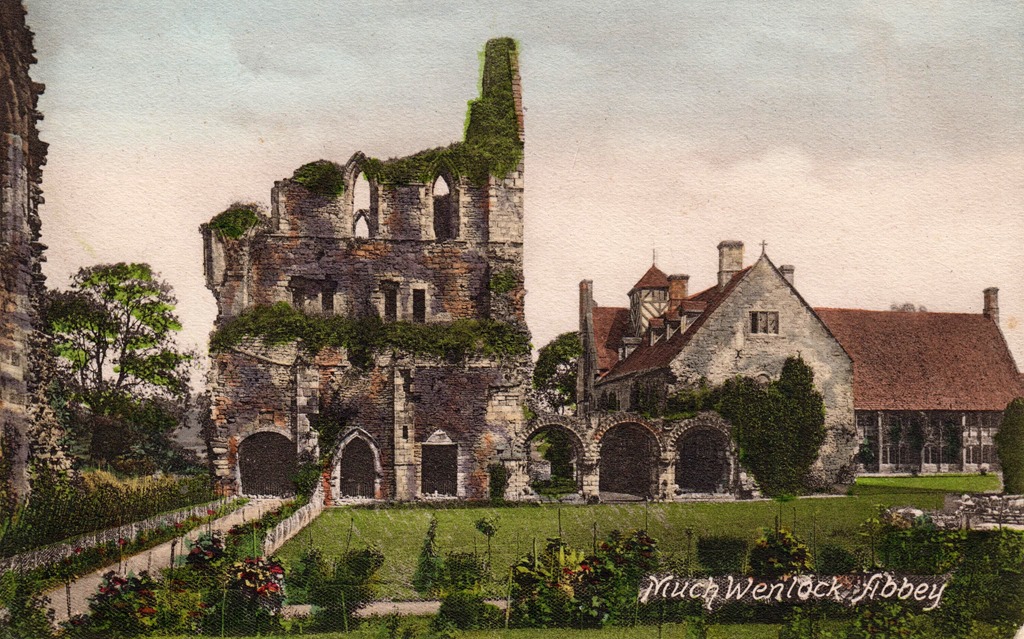
But now for that ghost – more a spirit of place really.  And it belongs to writer Henry James. In the days when the Priory comprised the personal ruins of the Milnes Gaskells who lived next door in the Prior’s House, Henry James was one of their many eminent house guests. In fact he came three times. There is more about his visit  in an earlier post  When Henry James Came To Wenlock, but first a postcard view of how the ruins might have looked back in his day, in the late 1870s:

001 (8)

And now you have the setting, both past and present, you can conjure Mr. Henry James from his own words. As I have said elsewhere, during one of his times here he was apparently working on his own ghost story The Turn of the Screw: Here is his description of the Priory, these days in the care of English Heritage:

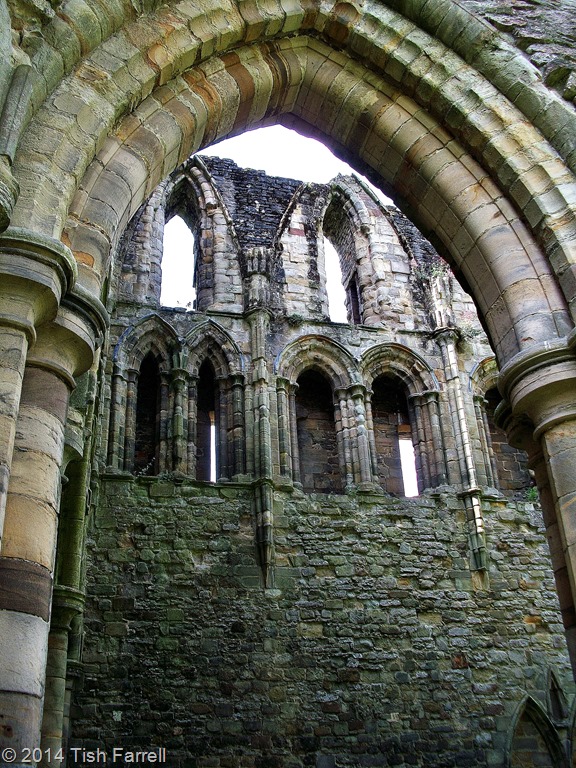
Adjoining the house is a beautiful ruin, part of the walls and windows and bases of the piers of the magnificent church administered by the predecessor of your host, the abbot. These relics are very desultory, but they are still abundant and testify to the great scale and the stately beauty of the abbey. You may lie upon the grass at the base of an ivied fragment and measure the great girth of the great stumps of the central columns, half smothered in soft creepers, and think how strange it is in that in this quiet hollow, in the midst of lonely hills, so exquisite and so elaborate a work of art should have arisen.

Henry James Portraits of Places

*


Related posts:

In Much Wenlock An Inspector Calls

When Henry James Came To Wenlock

#5photos5stories

Charles Darwin, holy bones and wild orchids at Wenlock Priory


IMG_1261.jpg


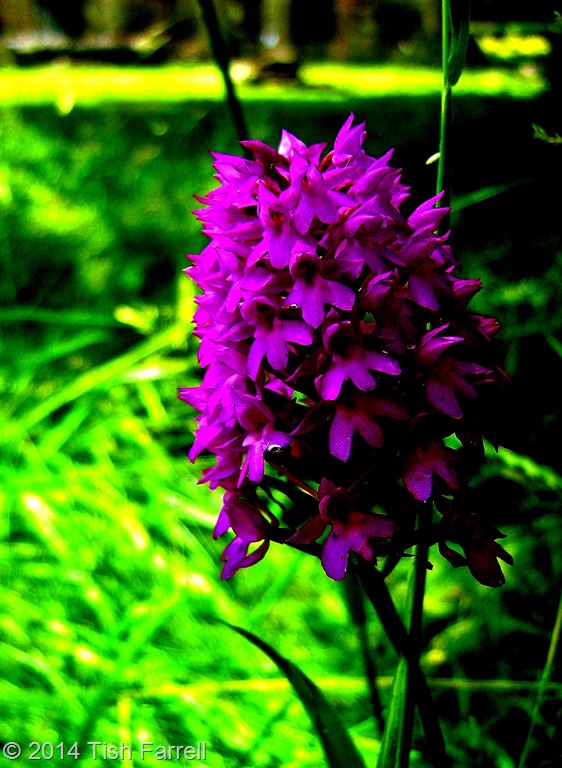
I came upon this wild orchid last week: a single small spike, flowering in the un-mown margins of Wenlock Priory. The Priory is my hometown ancient ruin. In fact the town of Much Wenlock both grew up around, and then later out of the monastery. This latter occurrence was due to some opportunistic recycling on the part of the local populace. After Henry VIII dissolved the monasteries in 1540 (this in a bid to take control of the English church, marry Anne Boleyn and free up some  much needed monastic capital), the lead was ripped from the roofs, and over the years, the stones from the ensuing ruins used to build many of the town’s houses.

100_5898.jpg

*


IMG_1260

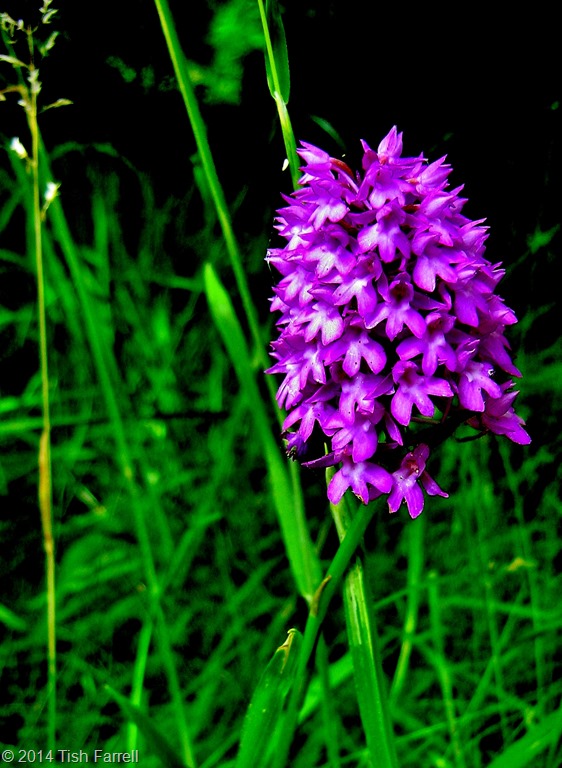
The orchid is Anacamptis pyramidalis, a pyramidal orchid, and fairly common in Shropshire. This particular specimen was only a hand’s span in height, but the plant will grow taller. I did not get down to sniff it, and am sorry now, because I have since read that the flowers have a vanilla scent by day to attract pollinating butterflies. But then at night, when wet with dew, they give off a goaty smell that offends moths, or indeed anyone rash enough to get down on their knees for a quick nocturnal whiff. Their roots have medicinal properties when dried and ground into a sweet, nutritious powder called salep. It was once used to soothe upset stomachs. Perhaps the monks in the priory’s infirmary used it too, but please do not try this at home.

Incidentally, it was Charles Darwin who discovered that the structure of orchid flowers was designed specifically to be pollinated by either butterflies or moths with their long probosces. He wrote about it in Fertilisation of Orchids. Darwin also has a local connection. He was a Shropshire lad, born  in the nearby county town of Shrewsbury in 1809. Shropshire has a lot to answer for, and indeed be proud of.

It is also interesting to think of Darwin within these Priory confines. Just as his book On the Origin Species shook the foundations of Christian orthodoxy, so these ruins mark England’s break from the Church in Rome and a complete shake-up in religious belief that rebounded down the centuries. For years, Darwin put off publishing his theory of natural selection – “like confessing a murder”. Even his wife was concerned about the state of his soul. Only the realization that out in the Malay Archipelago, one Alfred Russel Wallace was arriving at similar conclusions to his own, prompted him to finish his book. In the first public airing that described Darwin’s work, Wallace was also given credit.

100_5957-2.jpg


But back to the orchid. I found it growing not far from the place where the Priory’s high altar would have stood, beneath the great east window. Behind that altar was said to be the shrine of St. Milburga. She was a Saxon princess famous for all manner of miracles, and who long after her death, became a big draw on the medieval pilgrim circuit.

For thirty years she had been abbess of the first monastic house in Much Wenlock. This predates the existing 12th – 15th century monastic remains by hundreds of  years, and was founded as a mixed house for both monks and nuns in 680 AD by her father King Merewahl of Mercia. Her grandfather had been the great King Penda, who, it is said,  personally abhorred Christianity, while nonetheless tolerating those with Christian beliefs.

All three of Merewahl’s daughters, and also his queen (after she forsook the marriage) headed religious houses. And I gather it was common in Saxon times both to have mixed-sex religious houses, although with separate places of worship and accommodation, and for them to be ruled by women. Milburga had been well educated at Chelles in Paris before she took up her office. She also controlled extensive estates, which later became part of the Cluniac monastery of Norman times, and yielded large revenues in agricultural produce.  It is clear that in Saxon times, princesses were deemed to have both political and spiritual power to wield. There was apparently no incentive for kings to marry them off in useful dynastic marriages.

The re-discovery of Milburga’s remains in 1101 during the rebuilding of her, by then, ruinous church greatly added to the Priory’s revenue and prosperity as pilgrims flocked to the newly established shrine.  The opulence of the Prior’s lodging, expanded in 1425 , gives an indication of the wealth and power enjoyed by its then Prior, Richard Singer.

IMG_1265.jpg

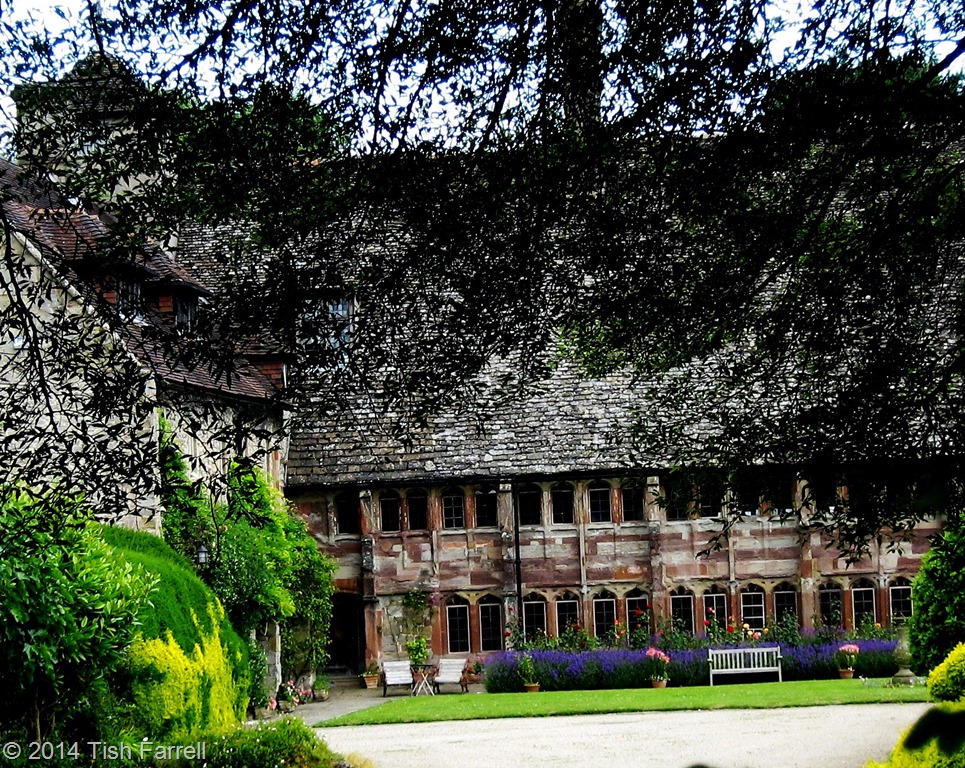
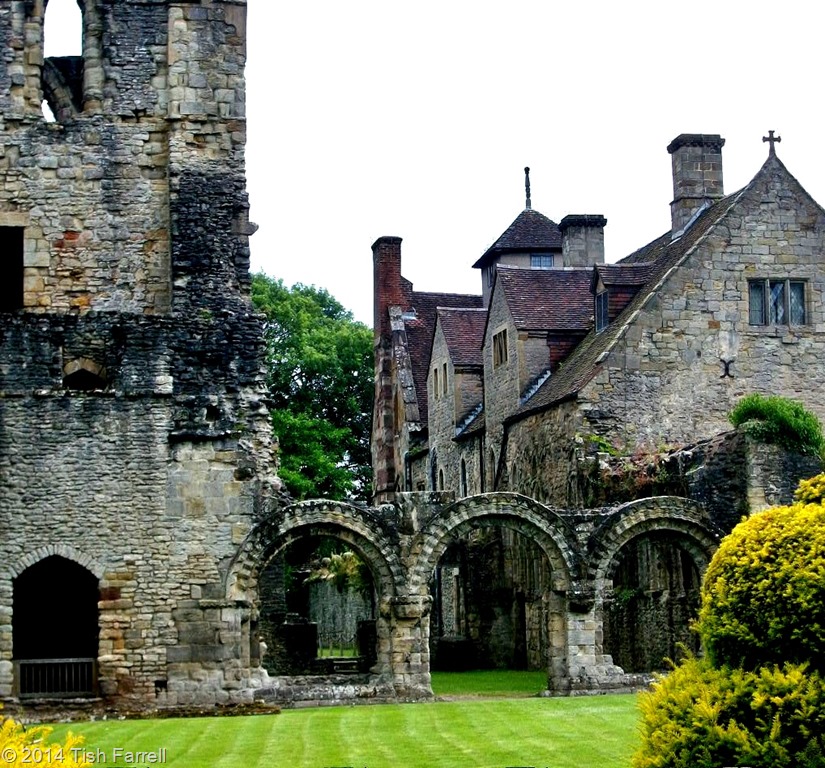
There are many historical accounts of grim goings on in Wenlock Priory – everything from monks counterfeiting coinage to plotting to murder their prior. But these will have to wait for another post. For now more views of the priory ruins and its other plants – wild and cultivated.

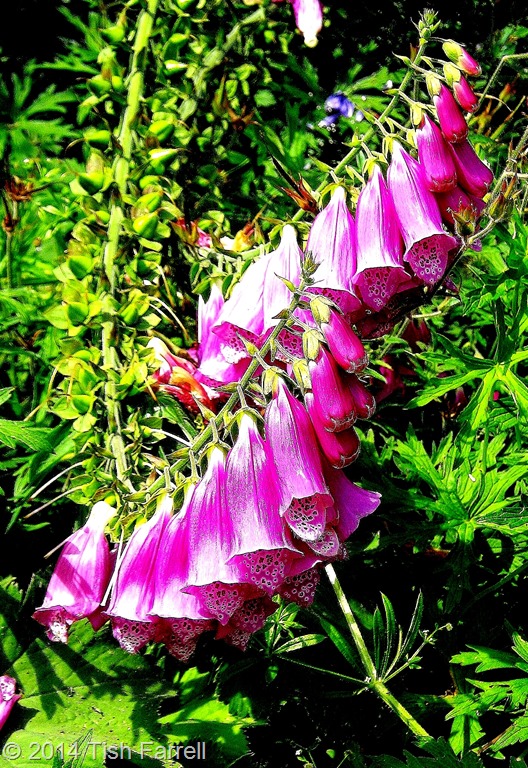
IMG_1230.jpgFoxglove in the cloister garden. Digitalis purpurea was used by monastic herbalists from the early Middle Ages to cure dropsy (oedema or swelling caused by fluid). It has also  long been used for heart conditions, although an overdose can prove fatal. Something else not to try at home.

*

100_5923_thumb.jpg

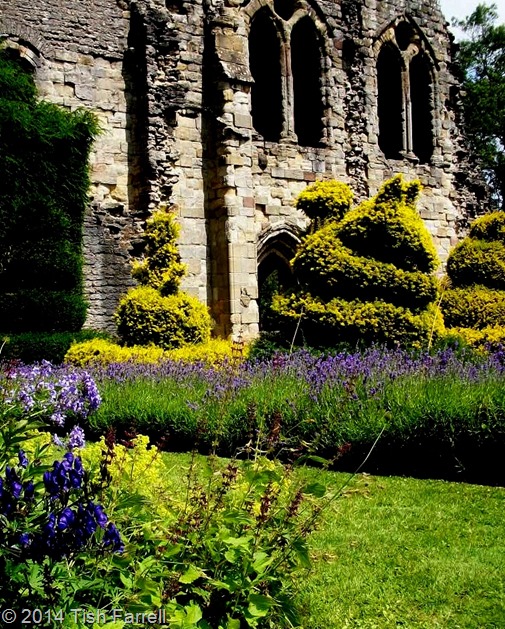
More mauve than purple – the lavender border (and topiary) in the cloister. Lavender has many soothing medicinal uses – for headaches in particular. I have no idea why the topiary hedges are there – a much more recent non-monastic addition it seems.

100_5907.jpg

copyright 2014 Tish Farrell


For more shades of purple go to Ailsa’s Travel Challenge HERE 

For more ‘C’ stories go to Flickr Comments HERE

Container Mania: Maine Make-do and Memories


IMG_1273 (2)

The Farrell domain is full of containers of the rural and artisanal variety – too full, says the Team Leader. He murmurs the word ‘cluttered’. I close my ears. These are artefacts to think by.  They resonate with story.  (See  also Basket Case, the story behind my Nubian mats.)

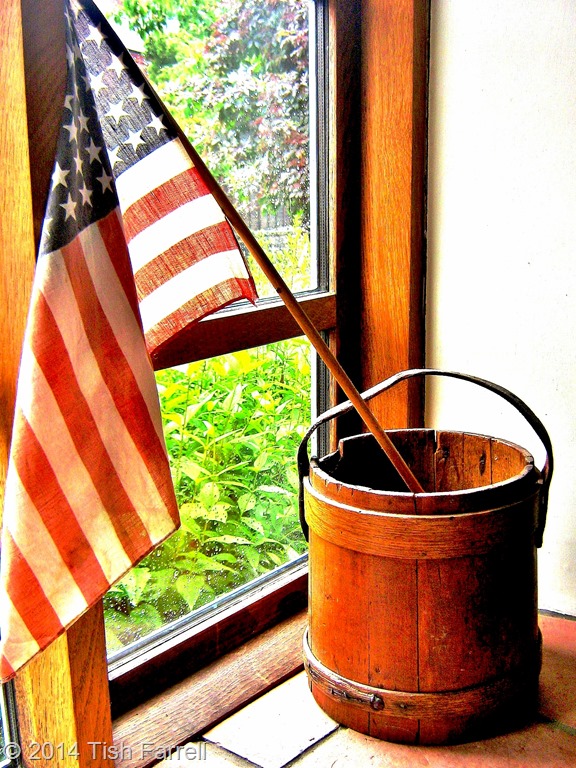
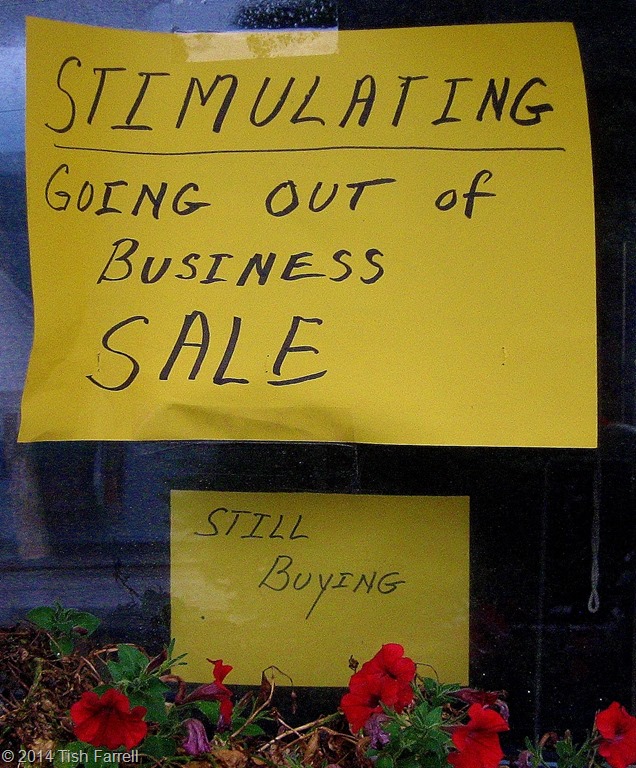
Yet even G was beguiled  by this American sugar bucket or firkin, once used for collecting sap from maple trees.  Not that we knew this when we first spotted it in the Ocean Park antique store in Southern Maine. The elderly owner of this  ‘going-out-of-business’ curio emporium was having a sale. He did not mention the maple syrup, but called the bucket  a farm ‘make-do’, pointing out that the replacement handle was a length of horse harness, and that in its latter days it was probably used for doling out animal feed.

I instantly pictured my own rural upbringing in Cheshire (England). When I was small my parents rented a house on a large farm. I often used to help the farmer’s wife feed the hens, carrying a bucket round the orchard chicken run, and tossing out handfuls of corn to  happy, healthy hens. So you can guess what happened next.

Sold. One ‘make-do’.

IMG_0096

 IMG_0097

 The ‘make-do’ now sits on the kitchen window sill, and further reminds us of the kindness of Cousin Jan who was the reason we went to Maine in the first place. She let us stay in her magical Ocean Park cottage.  (Thank you, Jan and Craig, and happy anniversary to you both).

The bucket makes me smile for other reasons too. The Stars and Stripes came free when we bought it – a give-away  on account of the flag’s deficit of stars. It only has 48, and thus pre-dates 1959 and the admission of Alaska and Hawaii to the USA. I recall the brittle humour of the dealer who gave it to me. It turned out he was married to an English woman, who coincidentally just happened to come from G’s home town of Wolverhampton. He said he met her during ww2 when he was stationed  nearby. He was thus a bit of an antique himself, although you wouldn’t have known it to look at him. He said he was giving up the shop to concentrate on doing shows instead.

So there you have it. My justification for container mania (and I haven’t even mentioned the Polish potato basket which I use to store my onions, or the Zambian gourd that holds my cooking salt). This plain, rustic bucket simply goes on accruing meaning, a bit like Rumpelstiltskin weaving gold from farmyard straw. Which of course makes me wonder about the craftsman who made it, and the generations of family members who used it, and the circumstances by which one individual decided that, despite the broken handle, there was still good and useful life left in it, and so applied a length of harness strap to keep it going for another generation or two.

But for G, who would ever de-clutter if I gave him the chance, he has own reasons to be well-disposed towards the make-do.  Now that he knows it was probably once used for collecting sugar sap, he recalls the bright winter days of his Ontario childhood, the crisp air filled with the scent of hot maple syrup. For every year, at the winter maple syrup festival, freshly gathered sap would be boiled up outside in a big vat, and then thrown, sizzling, onto the snow-covered ground for some taffy pulling, and then much delicious eating. He speaks of this memory so vividly that I almost believe it to be my own…

copyright 2014 Tish Farrell
Go HERE for more wordpress bloggers’ containers