Going Mazy-Eyed In A Sea Of Grasses ~ Thursday’s Special

P1070008

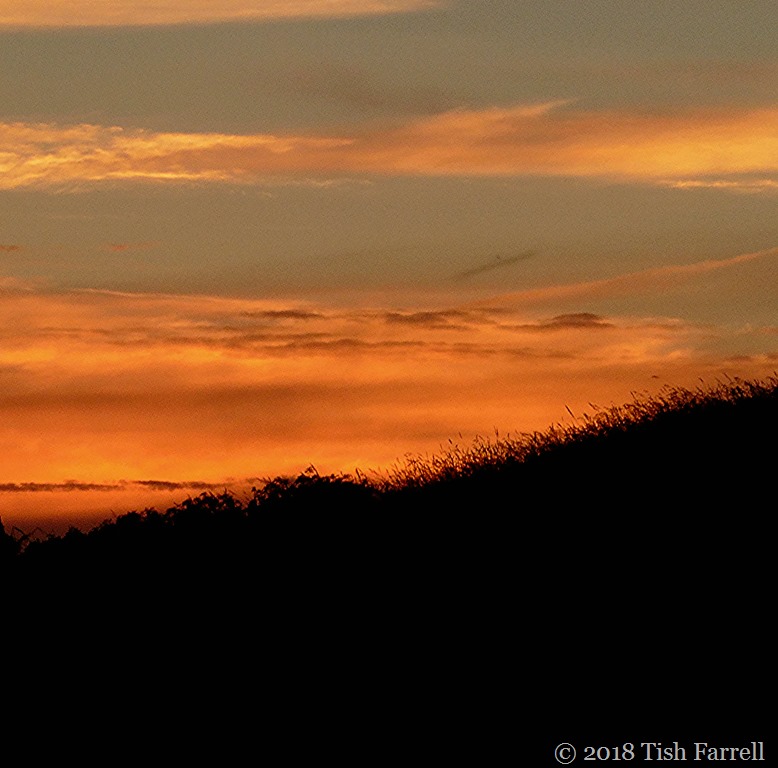
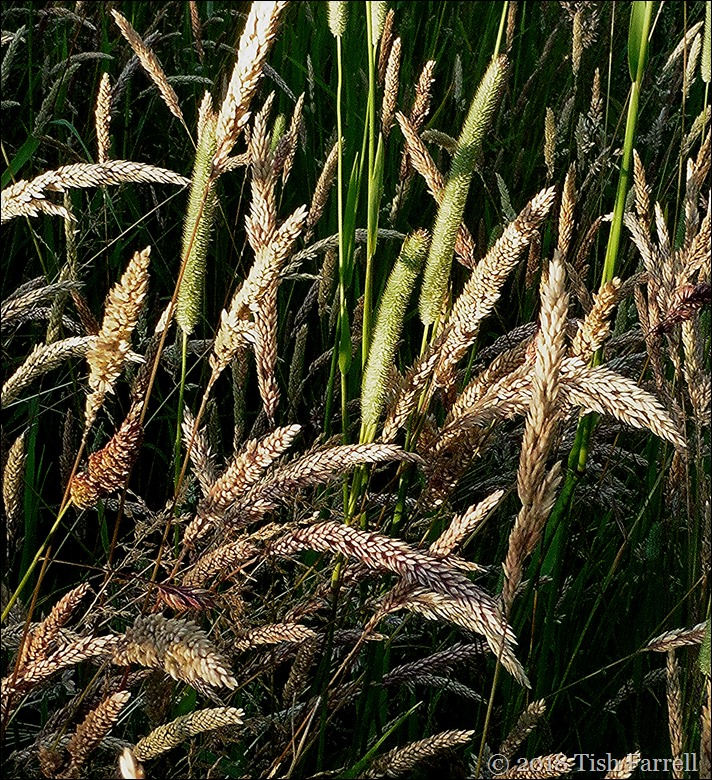
I took this photo last night as I was coming home from the allotment. The sun was setting over the rapeseed field and illuminating the grasses along the headland. This is a broad strip of land on the town side of Townsend Meadow, left uncultivated as a defence against flash floods. The variety of grasses that grow here is bewildering, and I’m sorry to say I have never tried to learn which is which. They are very beautiful though in the evening light.

Grasses (Gramineae) are among the most successful plants on the planet and, excluding the polar zones, cover 40% of the earth’s surface. They of course include cereal crops, rice, bamboos, and pasture grasses and so are of immense importance to humanity. Grass is also an elephant’s food of choice, making up a substantial part of its 300-400 lb daily vegetable intake. I mention that fact here because our headland grasses have so benefitted from the agrichemical feeding of the rape plants uphill from them that they are now doing a pretty good impression of elephant grass (Pennisetum purpureum) also known as Napier Grass. This particular grass featured in he-who-builds-sheds’ doctoral research on grass smut in the Kenya highlands, and so is a species close to our hearts, and we both know how to identify it.

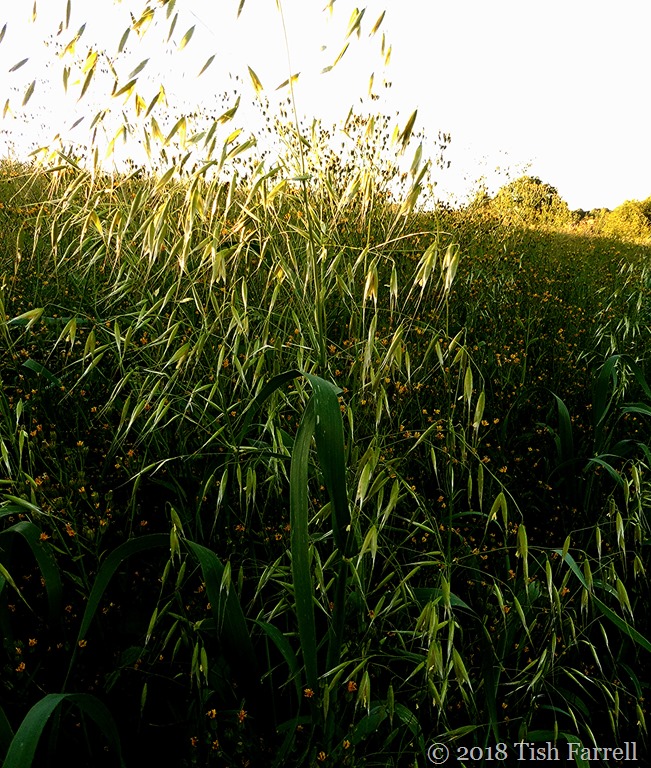
Coming up is another grass I know: wild oats. The sun was reflecting off its spikelets, which was all rather mesmerizing.
P1060985

Thursday’s Special: Lost in details  This week Paula has given us an intriguing challenge and photo to match. I’m interpreting it here both in words and images Who me?

Last Night On Windmill Hill

P1060965cr

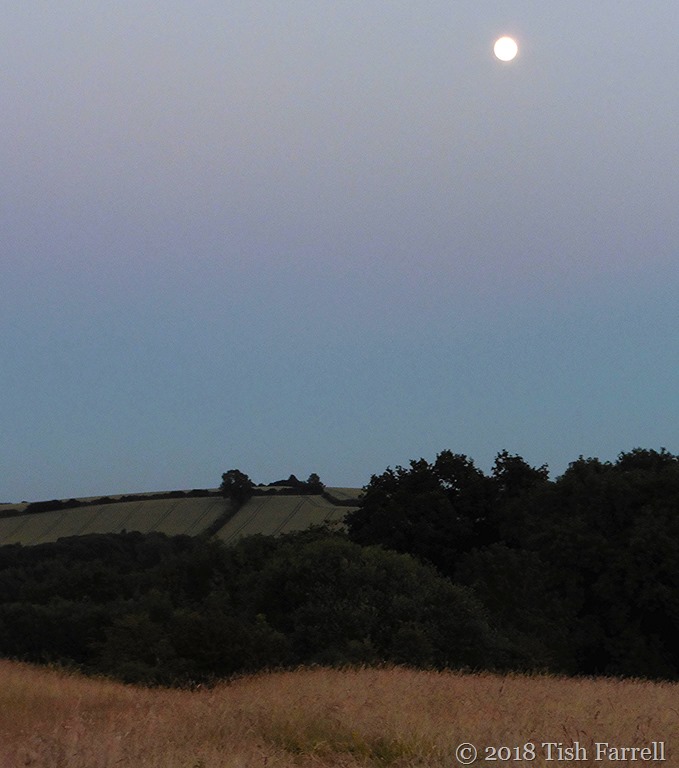
A full moon to the south, sunset in the west, and a shady man on a bench being moonstruck.

P1060955

*

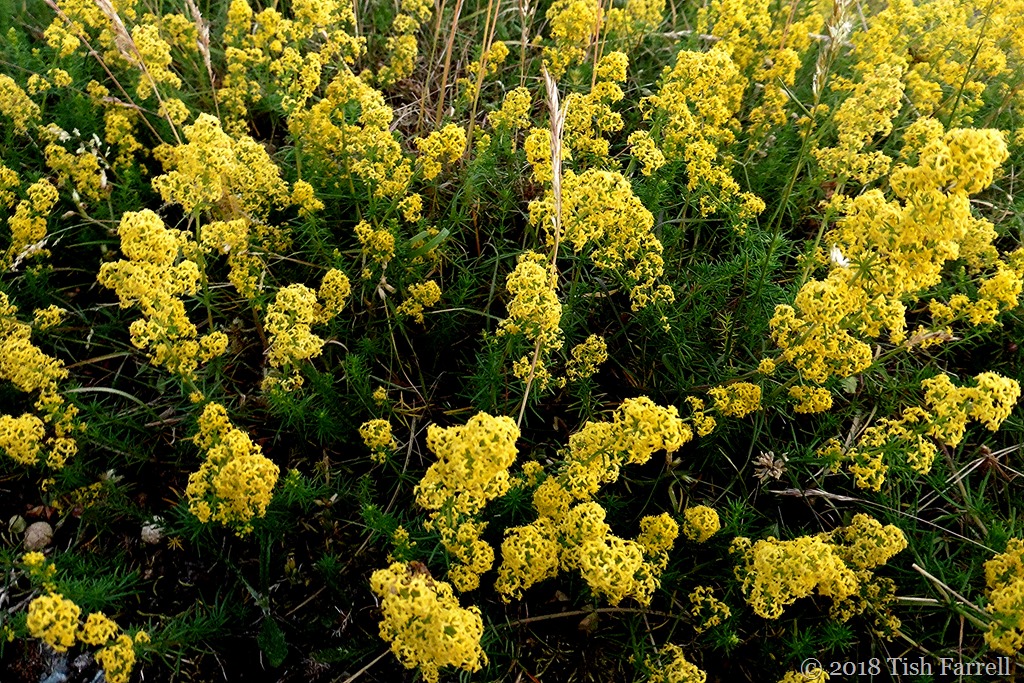
And then the sweet scent of Lady’s Bedstraw which this year has colonized much of the hill, pushing out the orchids…

P1060968

*

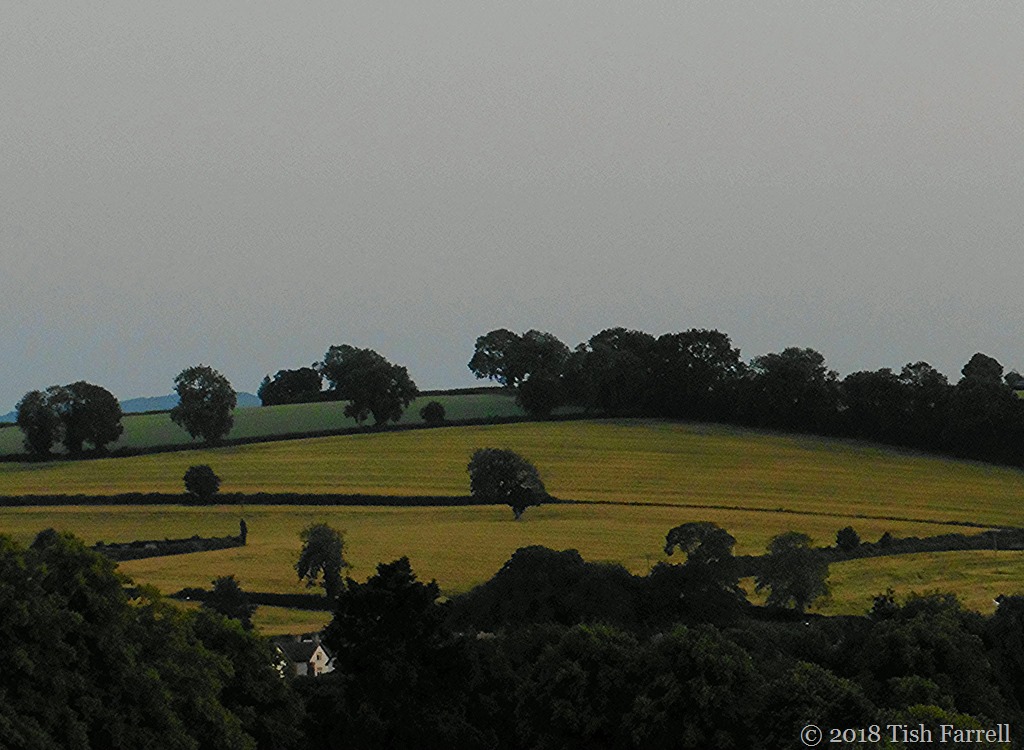
And then some  views of Wenlock’s hay-cut fields between the moonrise and the sunset…

P1060959

P1060970

Flight From Lusaka To Seychelles

We were living in Lusaka, Zambia in 1993. Multiparty democracy had not long arrived, and the long-outstayed-his-welcome president, Kenneth Kaunda been sent into retirement. The future might have looked bright but for the fact that the rains had failed in 1992 and many Zambians were starving. On top of this, the price of the national staple, maize, had anyway been going through the roof, courtesy of the International Monetary Fund, who had decided, under the new regime, that the time was ripe for the country to be structurally readjusted. The object of course was some much needed fiscal cleansing, which looks fine on paper, but somehow overlooked the effect on actual human beings. It also neglected to deal with the fact that the rich resource-grabbing nations of North America, UK et al had been robbing Zambians blind for decades, making off with cheap copper and somehow neglecting to pay their taxes. These are the same nations that call African regimes corrupt. It’s all a case of copper pots and kettles.

In the city there were people dying from AIDS, the endless funeral corteges to Leopard’s Hill cemetery. Then there was an epidemic of cholera due to polluted bore holes. Even the nation’s pigs were sick with swine fever. The Zairean Army over the border in the Copper Belt (now Democratic Republic of Congo) had not been paid, and so had taken to conducting armed raiding sprees down the Great North Road and into Lusaka. We were told if driving in the city at night never to stop when the traffic lights (robots) were on red since we were likely to be ambushed. To the east, the civil war in Mozambique was also spilling into Zambia, the fighters predating on already impoverished farmers.

Then Son of Kaunda started a campaign of national unrest ending in an attempted coup, the national football squad was tragically killed in an air crash, which depressed everyone, and I had amoebic dysentery which wouldn’t quite go away. Meanwhile Graham was based in the European Union Delegation, organising the distribution of food aid to the worst famine-stricken areas. His immediate boss was French and communication was conducted in fragmented French on Graham’s part, and confused English on Bernard’s part, and over all, they were subjected to the dogmatic rule of an envoy of volatile Mediterranean disposition who thought he spoke better English than Graham and would alter his reports. And so when the chance came to take a break in the Seychelles, we were more than ready for it.

There is more about our Zambia life at Letters from Lusaka I and II and Once in Zambia: in memoriam.  And before you join our much needed Indian Ocean getaway, I should say that I really loved Zambia – this despite the catalogue of human misery. The people we met, from immigration officials onwards, were so very gracious. It is also a very beautiful land with some of the world’s best places for wildlife viewing.

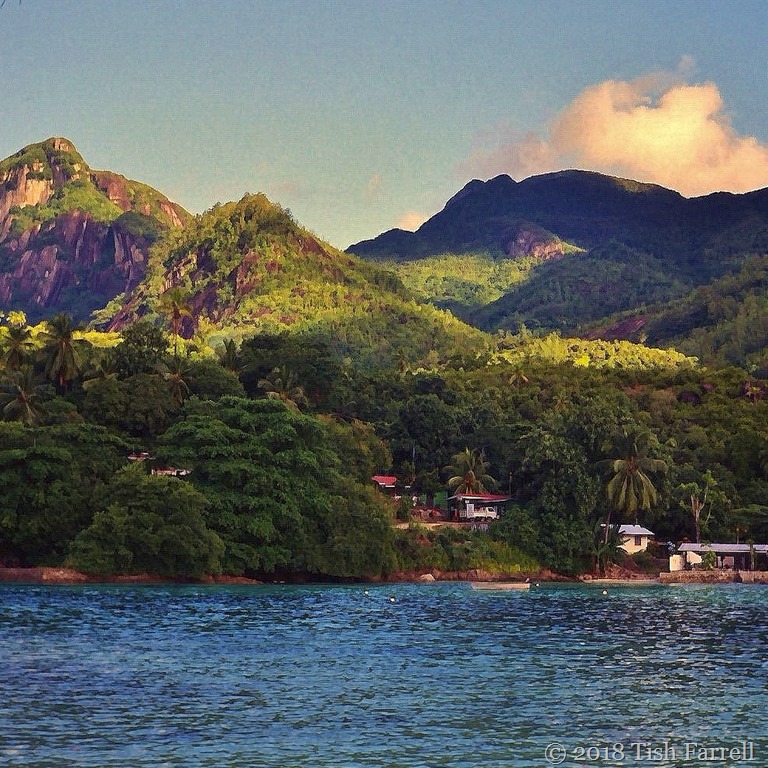
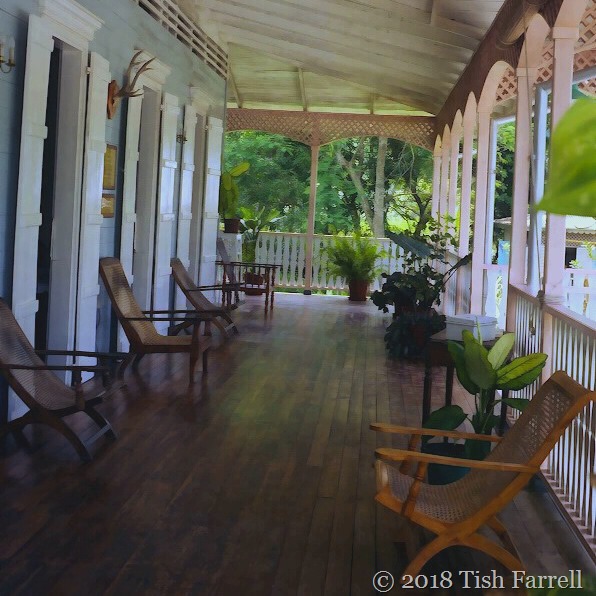
Now for some Seychelles rooftops for Becky. We were staying on the main island Mahé:

copyright 2018 Tish Farrell

Roof Squares 26


This slideshow requires JavaScript.

Misty Morning Sailing Into New York

Sunday 8 June 3.15 a.m.

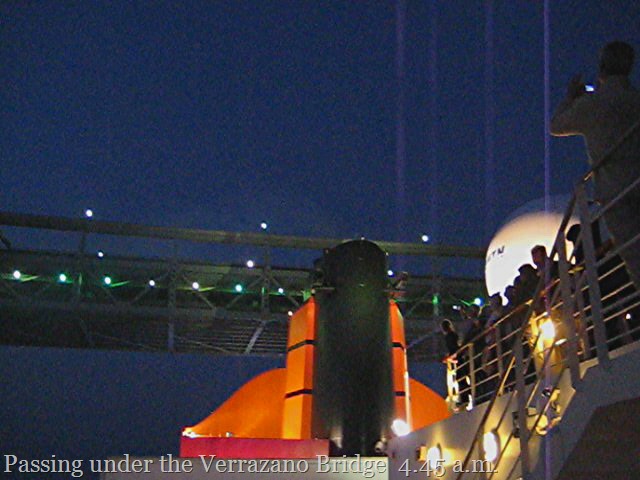
I had woken early, anxious not to miss our passing under the Verrazano-Narrows Bridge (that connects Staten Island to Brooklyn), a feat that had to be timed precisely to occur at 4.45 am to accommodate the soaring height of Queen Mary II. We had been at sea a week – for that’s how long the Queen Mary’s Trans-Atlantic Crossing takes – even now – and as the song goes – there had been nothing to see but sea. I was growing used to the meditative sameness of the view, and thinking I might just like to go on sailing forever. But then it was chilly too, and much of the time overcast; we saw not one sunset or sunrise, though one day I saw four dolphins. We spent our days and evenings after dinner roving the ship. You could walk miles, and often, despite the presence of 2,000 passengers and as many staff, we would find ourselves in utterly deserted quarters; silent but for the hum of ship’s engines. It was often very eerie, the more so after attending one of John Maxtone-Graham’s lectures on Titanic. He was Cunard’s resident historian, and his morning talks in the grand auditorium were one of the few activities we took part in.

On some days there were strong winds that put the top decks out of bounds – the doors firmly roped to prevent access. This was where the tennis courts, swimming pools and golf range were sited; also the pound for all those sea dogs who were accompanying their owners on the voyage. I spotted a labrador, dalmation, terrier and cocker spaniel, all under the care of the dog stewards. It made me think of the Trans-Atlantic Walking the Dog sequence in the 1937 Astaire-Rogers film Shall We Dance. (You can see a clip at the link.)

MVI_0144_Moment m

MVI_0146_Moment s cr

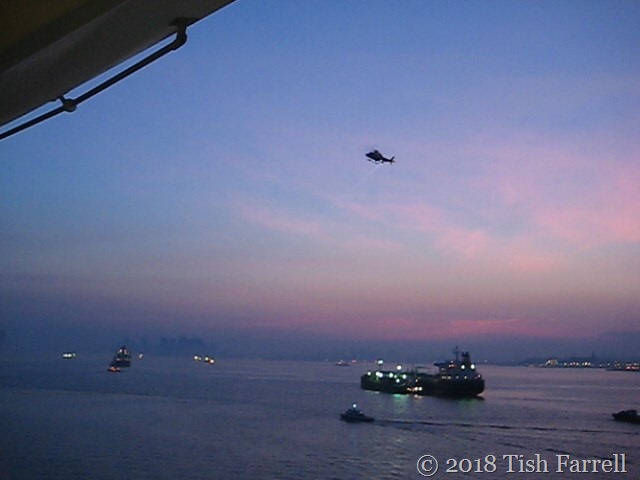
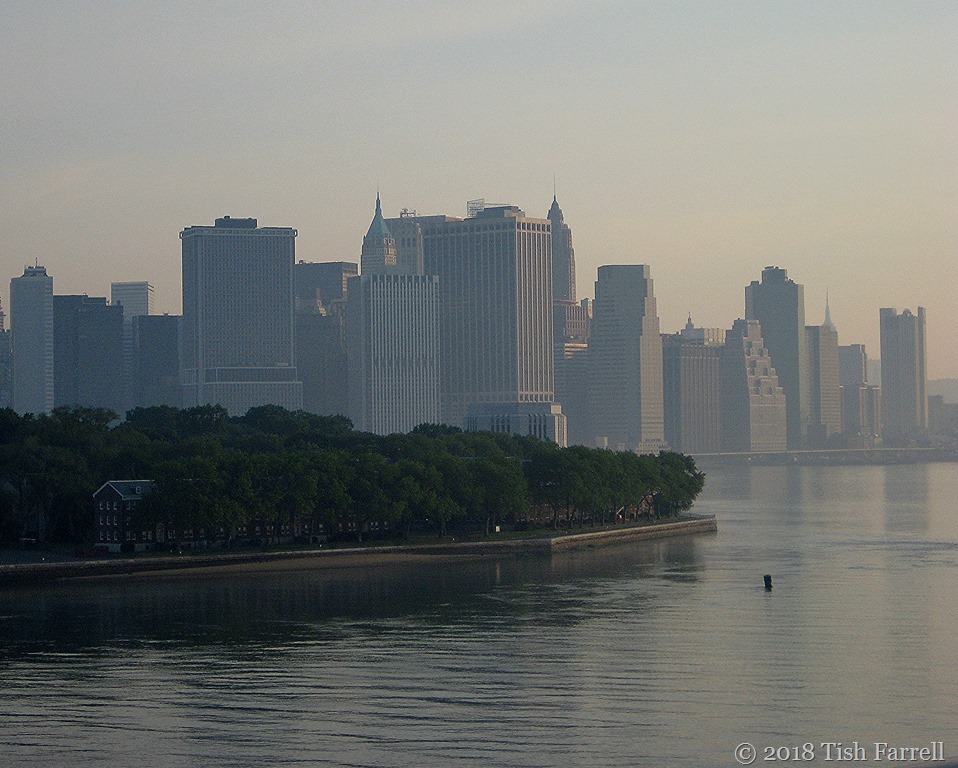
At 3.15 when I opened our veranda door it was like stepping into a steam bath. Somehow in the few hours between going to bed and making landfall there had been a complete climate change. All around were small craft, distant shore lights, sea birds flitting by like bats. It was a shock to see so many signs of life out there. Soon the little Sandy Hook Pilot boat was heading our way, disappearing astern to deliver the pilot. A little while later I saw the boat veering off again, lights flashing. It seems that not only the pilot had come aboard. Later still, I came across two hugely scary flak-jacketed security men, one wielding a very large weapon. Overhead a chopper dogged our slow progress. The passage under the Verrazano Bridge went smoothly, complete with accompanying loud-speaker commentary from John Maxtone-Graham. It was all immensely theatrical like much else on Queen Mary II.

MVI_0148_Moment b

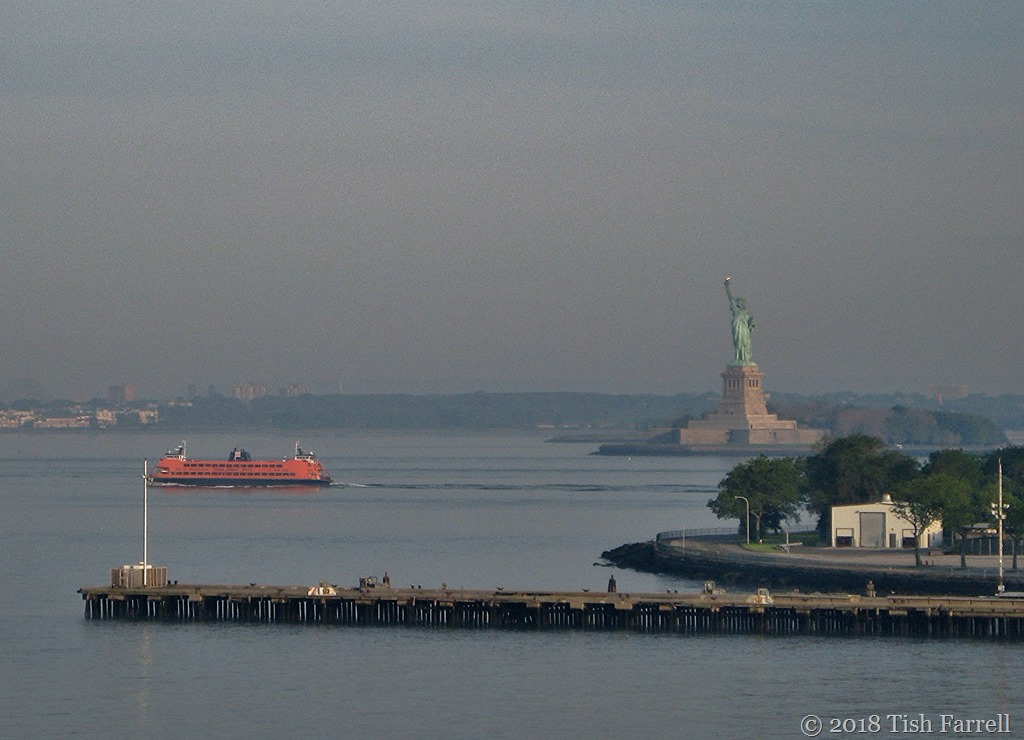
The regal arrival next involved a stately three-point turn in front of the Statue of Liberty, this in order to dock stern-first at Red Hook, Brooklyn. We put in at 6.a.m, right on schedule, a blood-red sunrise over the new IKEA building. We’re here. New York. The last time Graham made this crossing he was three years old. They had sailed on Cunard’s much smaller Medea, a civilised first class only ship. He and his parents were set to start a new life in London, Ontario, where his father was project managing engineering works in a new power station. This new life would begin with a few days in Manhattan and a visit to the Empire State Building before heading to Canada. There was another connection too. We were carrying with us a copy of a letter written by one of Graham’s ancestral family members, Robert Baxter, a Northamptonshire farmer’s son who made the crossing to New York in 1852, and described the appalling conditions he witnessed in steerage when he had to go below to fetch water for his own cabin. At that time the voyage took 21 days and passengers had to do their own cooking, although Robert said he felt so sick for two of those three weeks that he could mostly only manage to eat the home-made cake he had brought with him. There would have been no Statue of Liberty to greet their arrival. She did not sail in until 1885.

Here is the last paragraph from Robert’s letter home.  He had gone to America to make his fortune. There is no doubting his sense of excitement:

New York is a dirty place but a wonderful place for business. It is very large. It appeared rather curious to see the telegraph posts and wires in all the principle streets and the railroad carriages running every quarter of an hour drawn by horses. They are beautiful carriages lined with silk plush. You can ride 3 miles for 5c. It is beautiful travelling. It is a splendid sight to see the fire engines and that is nothing new. I have seen them out 6 times in one day.
Arrival in a new country is often fraught with anxieties, and US immigration is particularly fraught-making. We began our own adventure with mixed emotions, but then thoughts of Robert Baxter’s enthusiasm proved infectious. A week in Manhattan and old friends to catch up with. It was bound to be good.

IMG_0168

IMG_0163

IMG_0158cr

IMG_0171

Six Word Saturday

Please visit Debbie to see her stunning views of St Pancras Station. She kindly allows some of us to overstep the 6-word mark – just so long as we have a 6-word title.

copyright 2018 Tish Farrell

Looking Down On Lamu

Scan-140802-0010sq

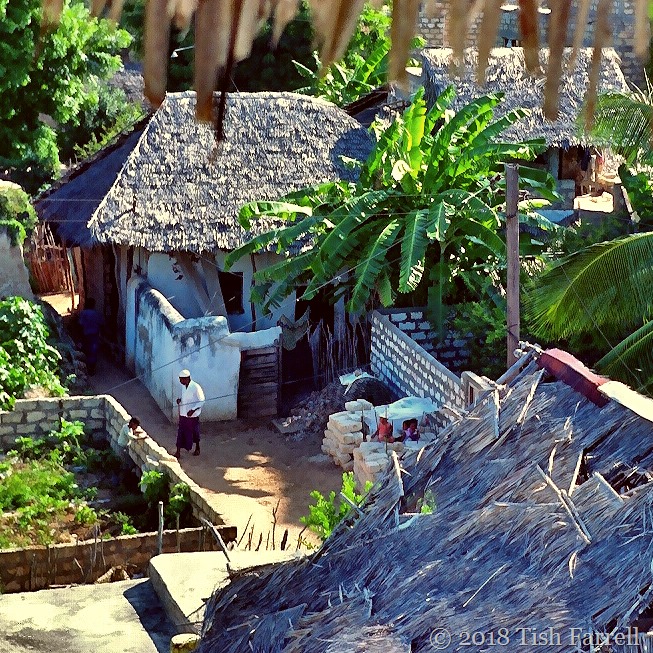
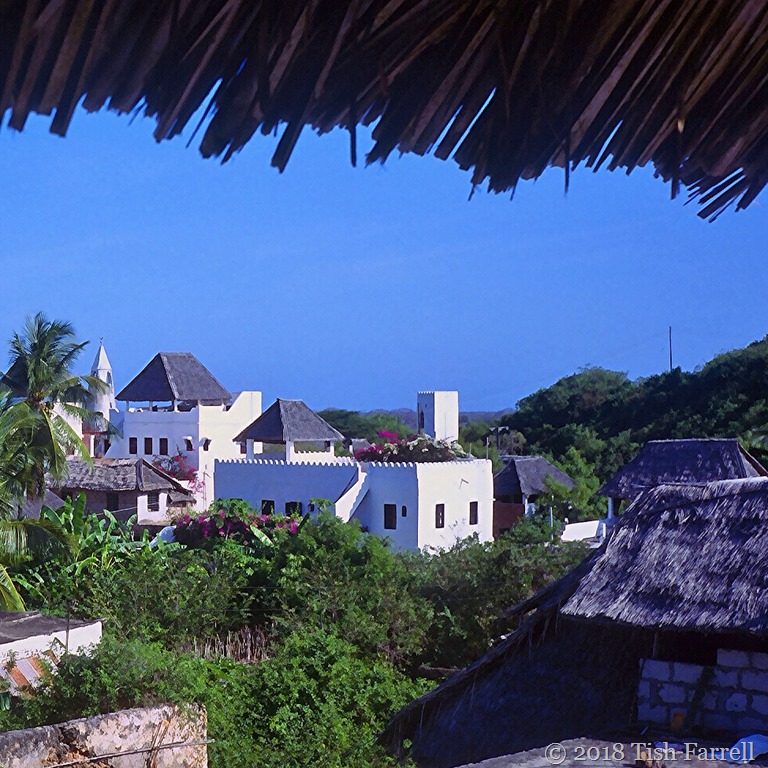
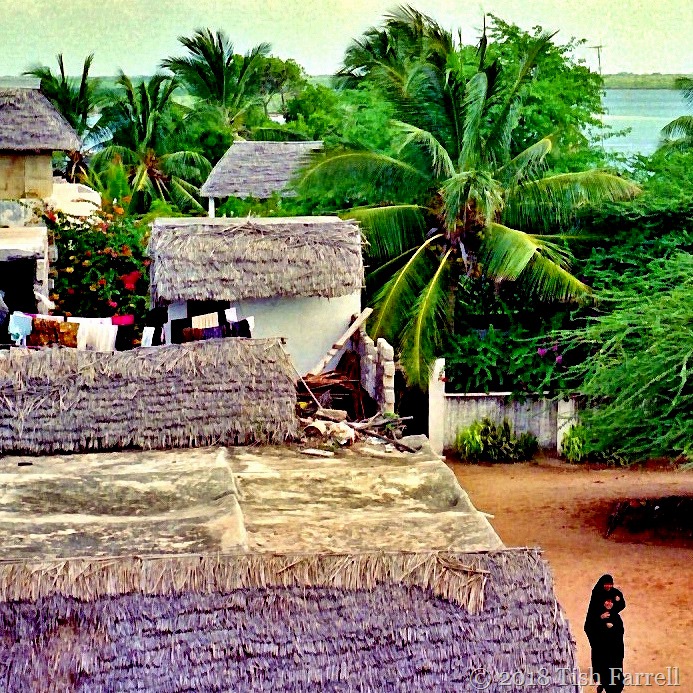
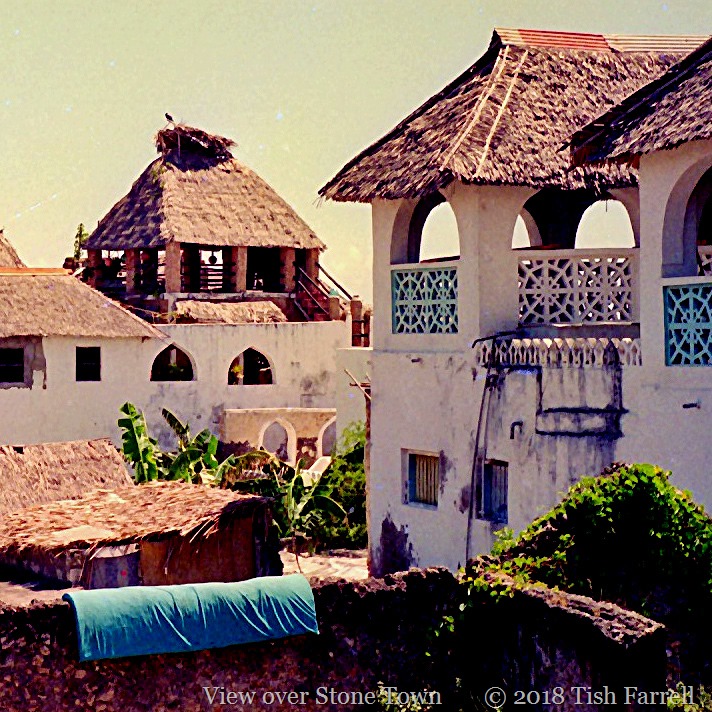
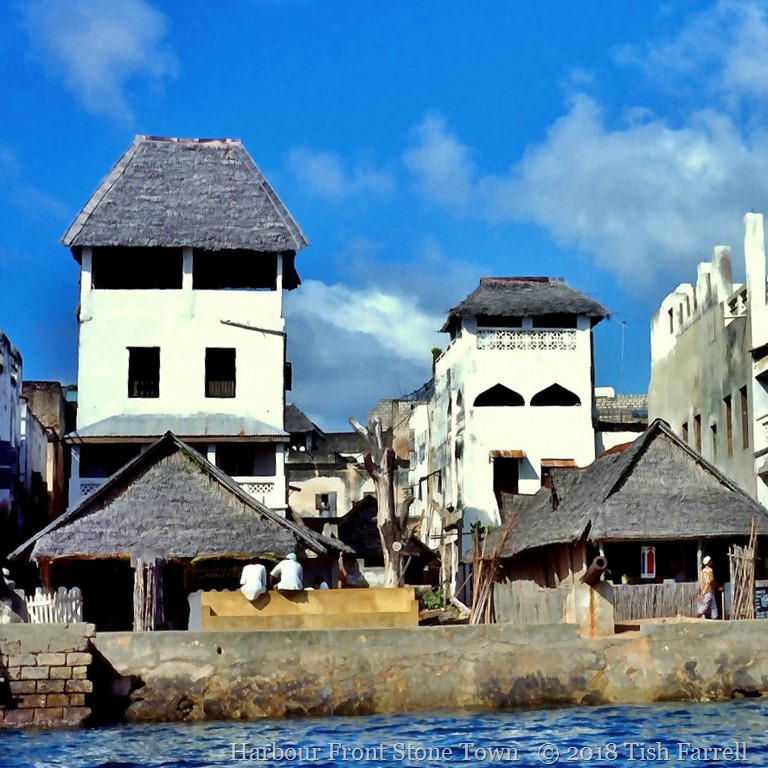
I’ve written of our long ago Christmas stay on Lamu Island HERE. We stayed in Shela village, an ancient Swahili settlement, two miles along the beach from the more ancient Stone Town, now a World Heritage Site. Our rooftop room in the Island Hotel gave me wall to wall views of surrounding village rooftops. The smartly made-over ones tend to belong to Europeans who have come to the island to lotus eat or to run small hotels.

Scan-140802-0015sq

Lamu lies just off the Kenya mainland near the Somali border. It was once one of a chain of Swahili city states situated along East Africa’s Indian Ocean seaboard from Kismayu in the north, to Kilwa down in Mozambique, and including the islands of Zanzibar. These Bantu-Arab settlements had their origins around 800-900 CE, and their growing wealth and prestige during the Middle Ages depended on the Arab dhow trade – the exchange of African slaves, ivory, leopard skins, mangrove poles for oriental silks and rugs, porcelain, dates, treasure chests. Kilwa was also the nexus for the export of African gold from the Shona city of Great Zimbabwe.

The ocean trade depended on the cycle of monsoon winds to carry the dhows to and from the Persian Gulf. If winds were missed then, crews were stranded for months along Africa’s shores, though this gave the captains a chance to repair storm-ravaged boats, and crews the spare time to do some concentrated liaising with the locals. This, then, was the world of Sinbad (Sendebada in KiSwahili), the Basra merchant-adventurer who made many such voyages in a bid to restore his fortunes. His stories, too, have their origins in the 9th century, around the time many of the city states were making their first appearance as permanent harbour-settlements built of quarried coral rag.

Scan-130428-0136sq

Now that the Arab dhow trade is long gone, and the prosperity of the Swahili city states pretty much forgotten, Lamu islanders’ main income tends to be tourism related. The recent trend, then, of private European investment in small, perfectly formed guest houses, involving the thoughtful restoration of the many of the old merchant houses, is probably no bad thing. In recent years, too, there has also been great community enthusiasm to find new ways to promote and share the island’s unique cultural heritage with visitors.

Lamu’s Stone Town has long and famously hosted the religious Maulid Festival, celebrating the birth of Mohammed, but there are many secular events through the year, including the famous New Year’s Day dhow race; donkey racing; sport fishing contests, and cultural, art, yoga and food festivals. In many ways it may remain a deeply conservative community but, by all accounts, still very much a welcoming one. And apart from anything else, in over twenty years I have not forgotten the absolute deliciousness of Lamu’s fish samosas and mango smoothies.

Scan-130428-0084sq

Scan-140802-0011sq

Roof Squares 20

copyright 2018 Tish Farrell

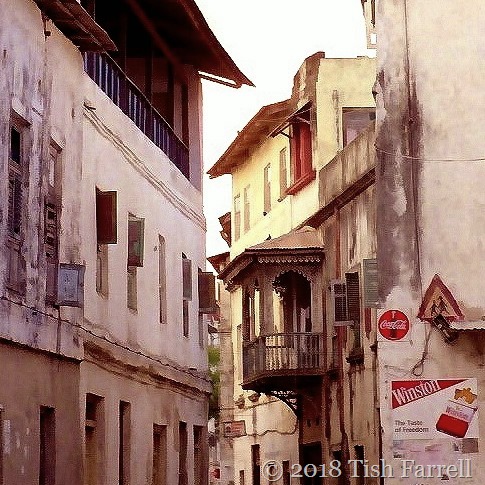
Looking Up In Zanzibar ~ From The Old Africa Album

Scan-130429-0130sq


…a gateway to Africa. Through its portals passed not only slaves, spices and ivory, but also missionaries, explorers and conquerors.

Abdul Sheriff, Professor of History, Dar es Salaam University


In the last of our eight years in East Africa I was taken to Zanzibar as a birthday treat. I can’t imagine a more wonderful gift.  It was the end of October, the beginning of the hot season on the Indian Ocean. But there was an air of quietness too. Julius Nyerere, Tanzania’s revered first president had just died. He had done his best by his nation while being shunned by western powers. This was because he said things like:

“No nation has the right to make decisions for another nation; no people for another people.”

And: “We, in Africa, have no more need of being ‘converted’ to socialism than we have of being ‘taught’ democracy. Both are rooted in our past – in the traditional society which produced us.”

And: “You cannot develop people. You must allow people to develop themselves.”

And also: “Democracy is not a bottle of Coca-Cola which you can import. Democracy should develop according to that particular country”.

In the days before independence he also told his British rulers: “In Tanganyika we believe that only evil, godless men would make the colour of a man’s skin the criteria for granting him civil rights.”

A man who got right to the point then.

We arrived mid way through the thirty days of national mourning, but even so, and despite being the descendant citizens of the former colonial power in question, we were treated with gracious hospitality as we wandered the shadowy alleys of Stone Town.

Here’s more about the island and Swahili culture from an earlier post:

Zanzibar  – it’s all in the name – the Indian Ocean shores where Arab merchants met with African farmers and created a new people: the Swahili. In the Arabic Kilwa chronicles of the Middle Ages, the word Zanj denotes non-Muslim black people, and the word bar means coast, and the term back then referred to much of the East African seaboard – to wherever the dhow traders seasonally put in to haggle with Bantu farmers for ivory, leopard skins, rhino horn, iron, ambergris and mangrove poles.  These, then,  are the shores of the Sindbad (Sendebada) tales, but today the term ‘coast of the blacks’ survives only in the name of the Zanzibar archipelago (Unguja and Pemba Islands), now part of Tanzania.

These days too, Zanzibar Island, more properly known as Unguja, is seen as the heartland of Swahili culture, and the place where the purest form of KiSwahili is spoken. Once, though, there were many other powerful Swahili centres – independent city states that included Manda, Lamu, Malindi and Mombasa in Kenya, and Sofala far to the south in Mozambique. Such states, with stone towns built of coral rag, began evolving from at least the early 800s CE (Manda),  by which time KiSwahili was already a fully developed language, albeit with many regional forms.

You can see the rest of this post HERE


Roof Squares 19

Old Allotment Shed And Artichoke

cr

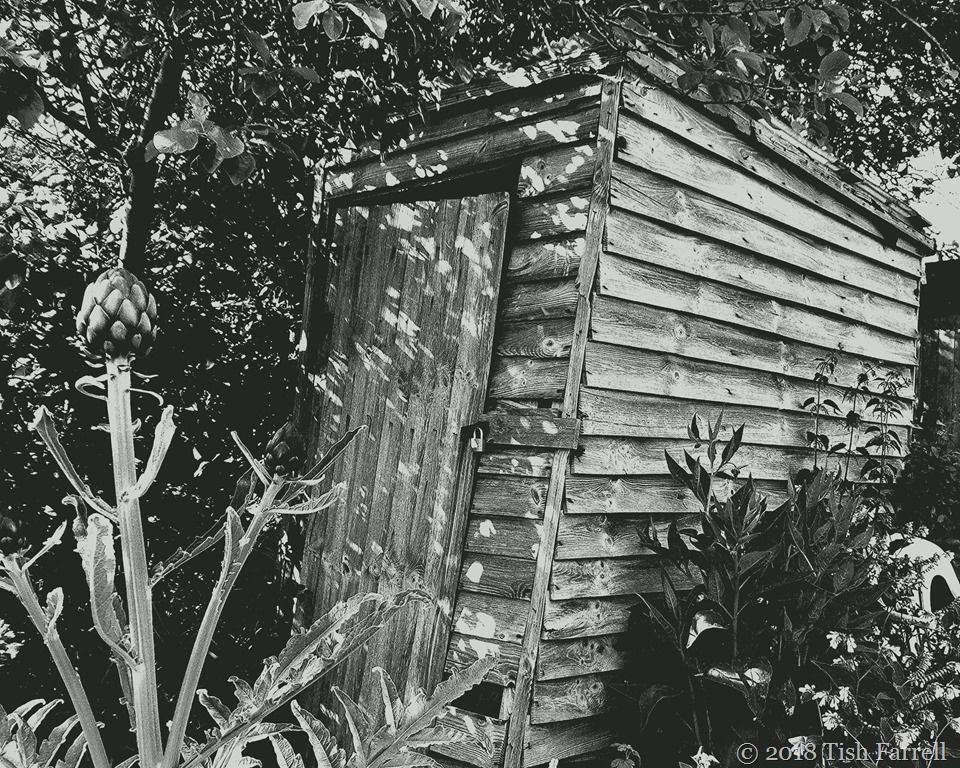
This was my shed when I took up allotmenting eleven years ago. He who builds sheds stopped it leaking and leaning into a complete state of collapse, and I and the snails and mice were very glad of it for several years. But then two years ago I left behind the plot it stands on to concentrate on my polytunnel plot. No one has taken it over, and this year it is doing a good imitation of the prairie with elephant’s eye high grass and thistles. Rather sad after all the hours of digging I did there. But at least the shed is still standing, and this year,  the greengage tree that stands over it has quite a bit of fruit in the making. The artichoke, though, was eaten long ago.

Traces of the Past: Black & White Sunday  Please visit Paula to see her dramatic seascape

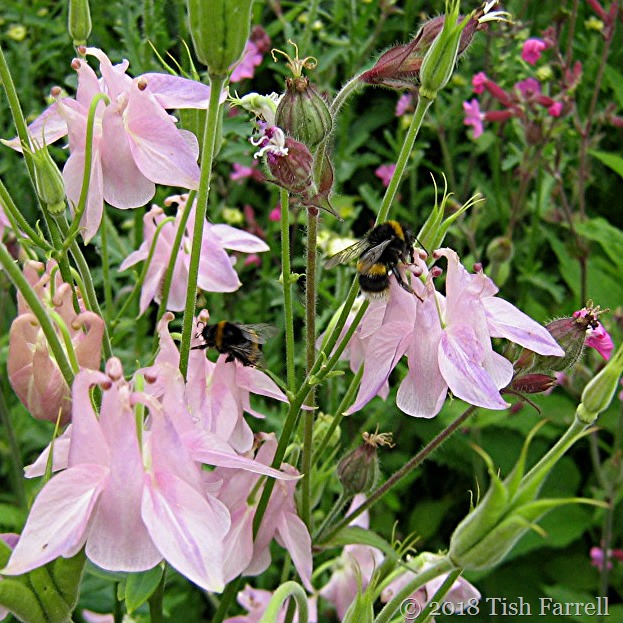
Columbine Roofs?

sunset sq 8

Well they look like pagoda roofs to me. But the other interesting thing is that these bumble bees are breaking into the flowers through the rooftops, drilling into the nectar stores at the end of the flower tubes. This, I learn, is a habit of short-tongued bees, stealing the stash from the long-tongued bumbles (Bombus hortorum) who usually visit columbine flowers more politely, using the front door.

sunset sq9

sunset sq6

Roof Squares 17  Please drop in on Becky – for a very novel roof, and a brilliant round-up of everyone’s roof offerings

The Linden Walk ~ A Leafy Arcade

P1060659

P1060754

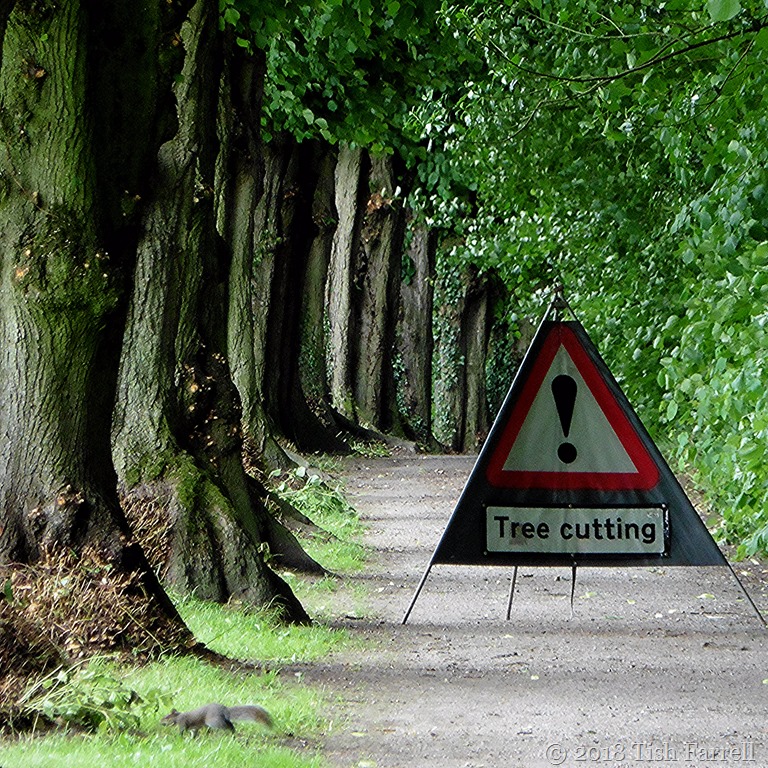
This is my absolutely favourite Much Wenlock place (apart from home and the allotment), and it’s just across the road from the house. The Linden Walk borders the Gaskell (Linden) Field, and until the 1960s, steam trains would have been chuffing past just a few metres to the right of the tree cutting sign. In Victorian times there used to be an Olympic Special that every year brought in hundreds of spectators to watch the July Olympian Games masterminded by the town’s doctor, William Penny Brookes. The handsome station was only a hundred yards behind the point where I’m standing to take this photo.

Dr Brookes was also responsible for bringing the railway to Wenlock and for nagging his friends into helping him plant this double row of lime trees (Tilia x europaea). This was done in the 1860s, and I wonder if he foresaw then how lovely it would be. I’m guessing he would. He was a man of  vision and a great believer in devising means to cultivate both the physical and mental well being of the townsfolk.

Apart from being a physician, he was also a keen botanist and, before taking over the town’s medical practice from his father, he had studied herbalism at the University of Padua. Doubtless he would have known that preparations of lime flowers have strong sedative and pain relieving properties, a remedy to be treated with some caution.

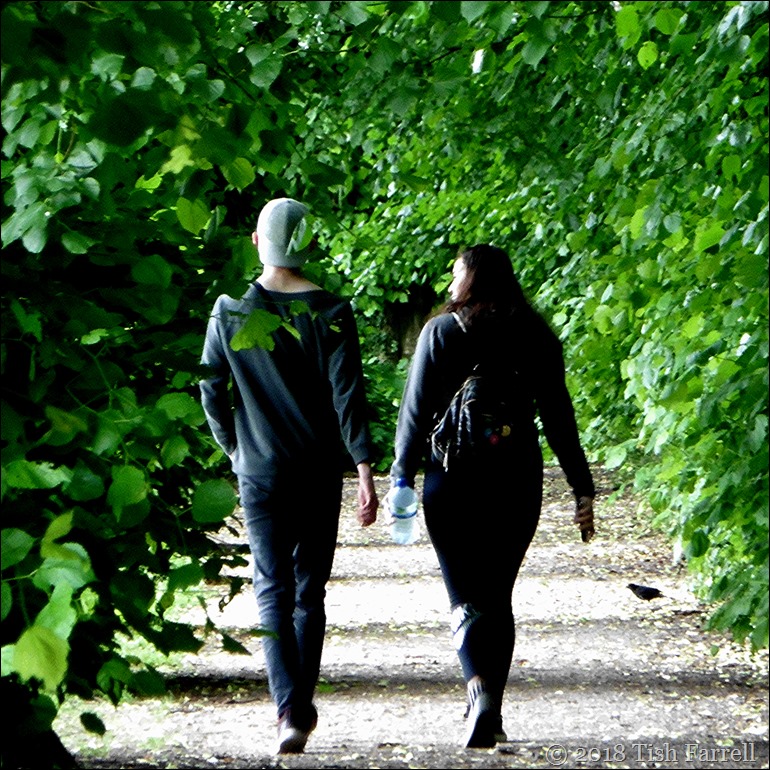
I’m also sure he had in mind the blissful effect of simply wandering beneath an avenue of limes on a hot June day, absorbing the soothing green shade and breathing in the delicious fragrance of the trees’ inconspicuous cascades of blossom. Now the trees are at peak leafiness they create a continuous arcaded canopy. The small hermaphroditic flowers also produce nectar which means there are bees. Blackbirds and squirrels forage round the roots. There is birdcall in the treetops, and even though the tree cutting sign suggests the barking of chainsaws, there was only quietness when I took the photo.  The trimmers of the lime trees’ epicormic growth must have gone to lunch. You can see the effect they have had if you compare the trees with those in the second photo taken the day before. While the overgrowth is boskily attractive it can get out of hand; limes are prone to fungal diseases, and so are probably best protected by improving ventilation.

In fact the continued good health of the Linden Walk it taken very seriously. Cricket club supporters and bowling club members are no longer allowed to drive their cars along the avenue as they were wont to do, an activity that threatened to compact the tree roots. In fact we’ve been told by a Professor of Lime Trees that the trees could live another 150 years if we look after them. What a treasure Dr Brookes left behind – for us and a few more generations yet.

P1060765

Six Word Saturday

Roof Squares 16