Mara Sundowner: Plains’ Shadows

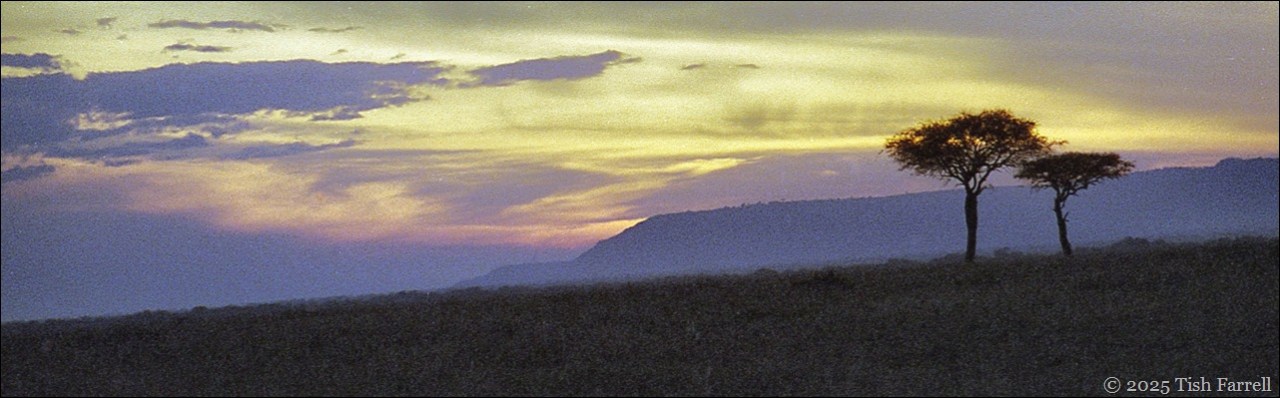
Maasai Mara sunset

Back to the Farrell ‘once in Africa’ archives for this final ‘shadows’ post.

Here we have the Maasai Mara in December, a desert date tree, a shadowy glimpse of the Oloololo Escarpment, lots of stunning memories invoked, plus a few pangs for Kenya days long gone.

And talking of gone, where did this month go? Now as ‘November Shadows’ draw to a close, a big round of applause for Becky who has kept so many of us so well occupied.

Cheers, my dear!

November Shadows #30

Desert date sunset header

Shadows of Summer Past at Wildegoose Nursery

wildegoose 1

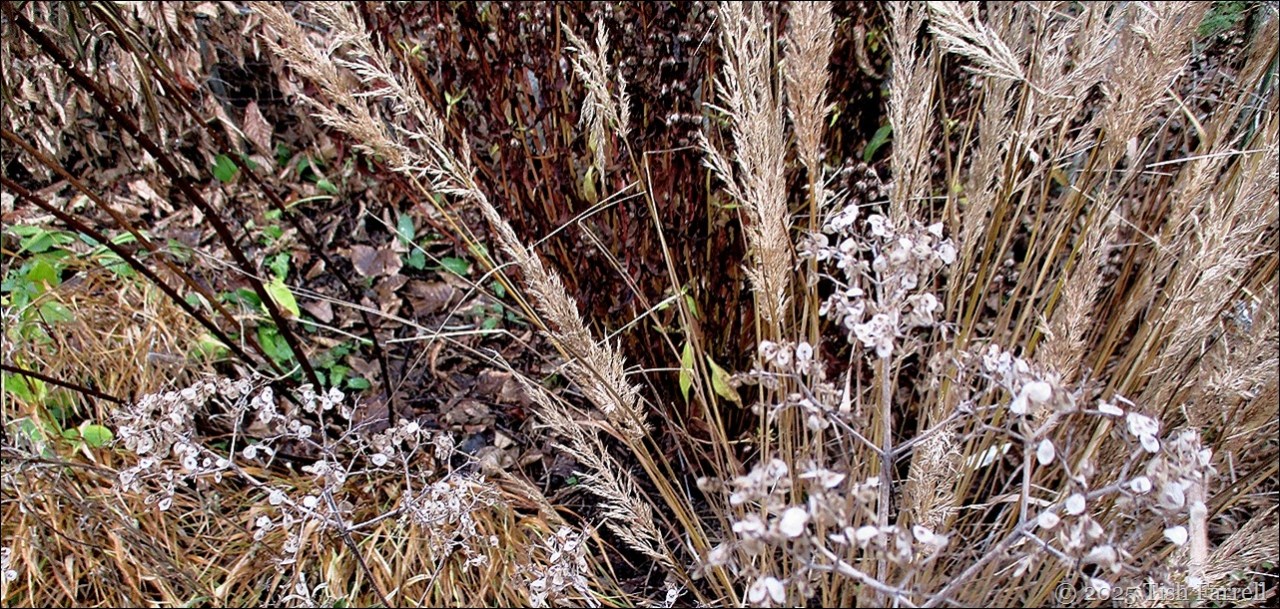
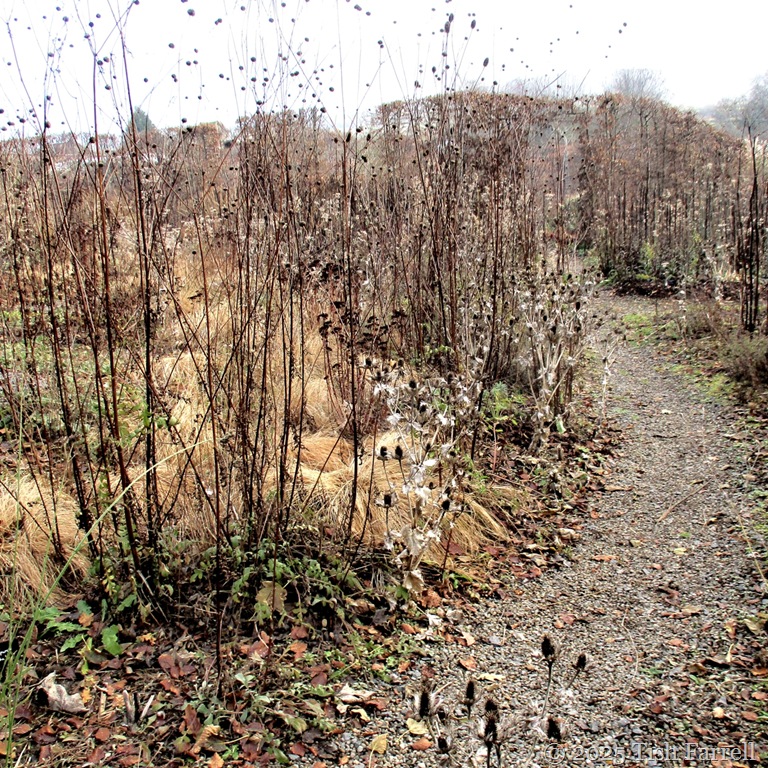
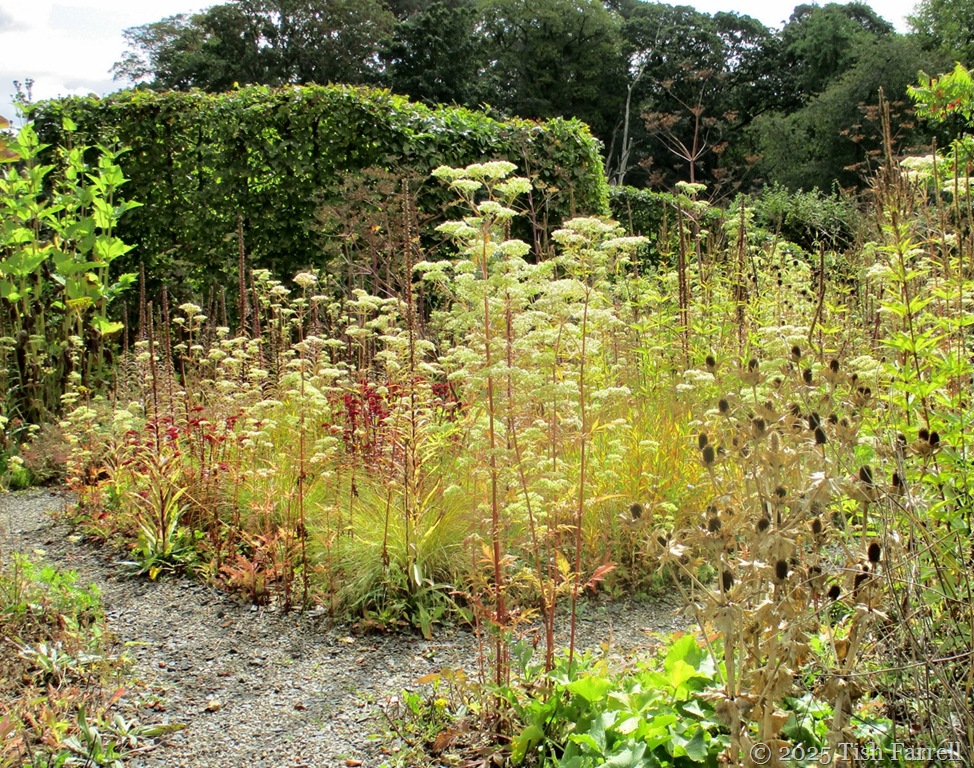
Wildegoose Nursery in the Corve Valley has been hosting a special winter opening this week (Thursday – Sunday) – giving us a chance to see the walled garden in its late season colours. Not the brightest of days yesterday, and with rain on the air.

Here’s a reminder of how it looked when we visited in September, this after weeks without rain:

Wildegoose 1

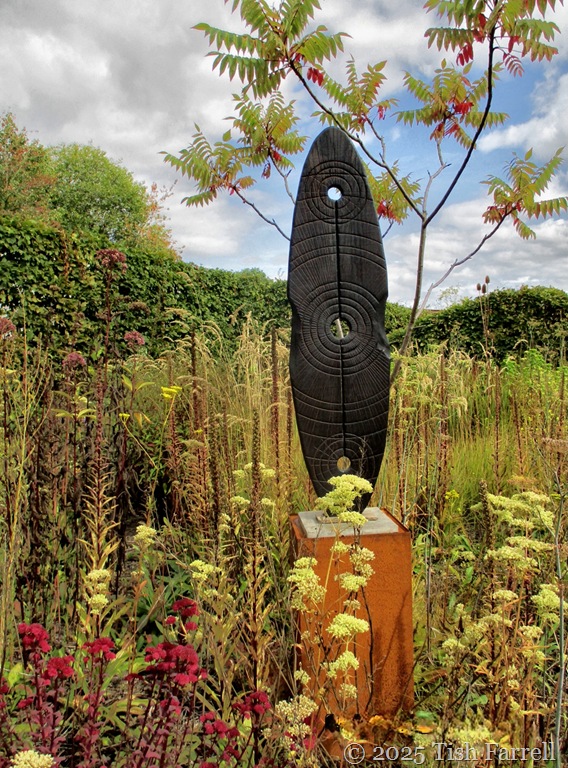
Art 4a

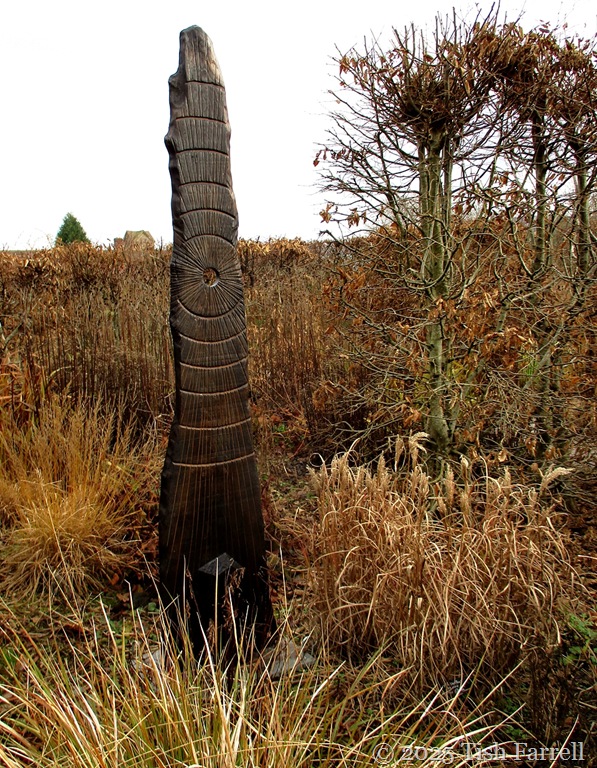
Then and now…

wildegoose 6

wildegoose 4

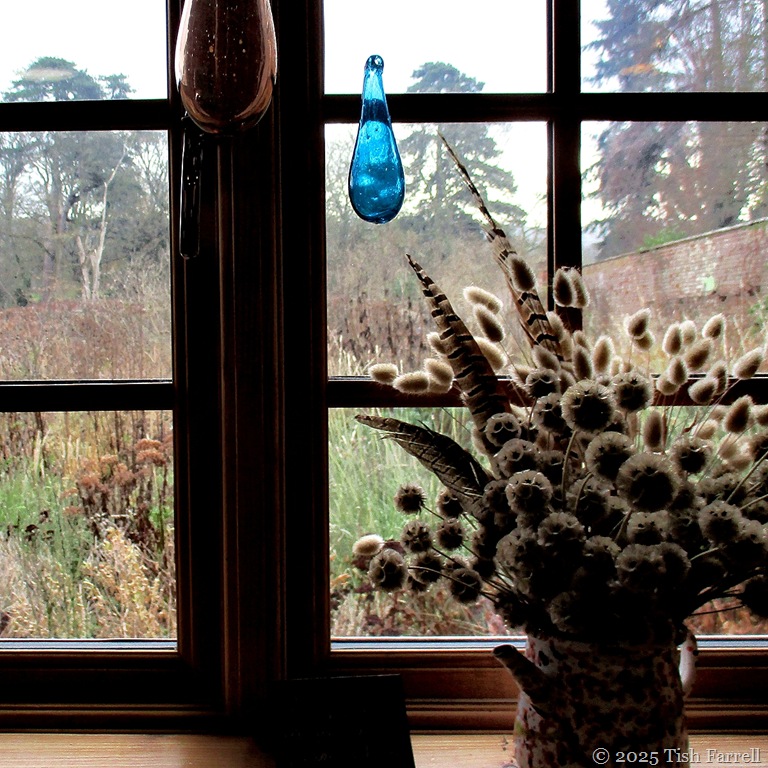
From the tea room window

November Shadows #29

wildegoose header

A Shadowy Past

Clive coat of arms

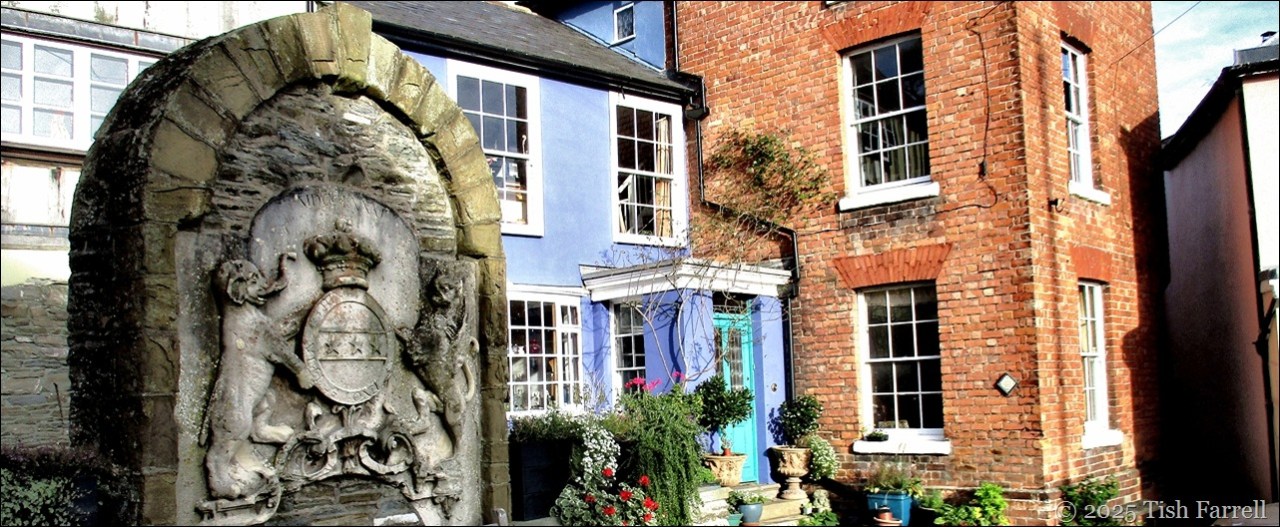
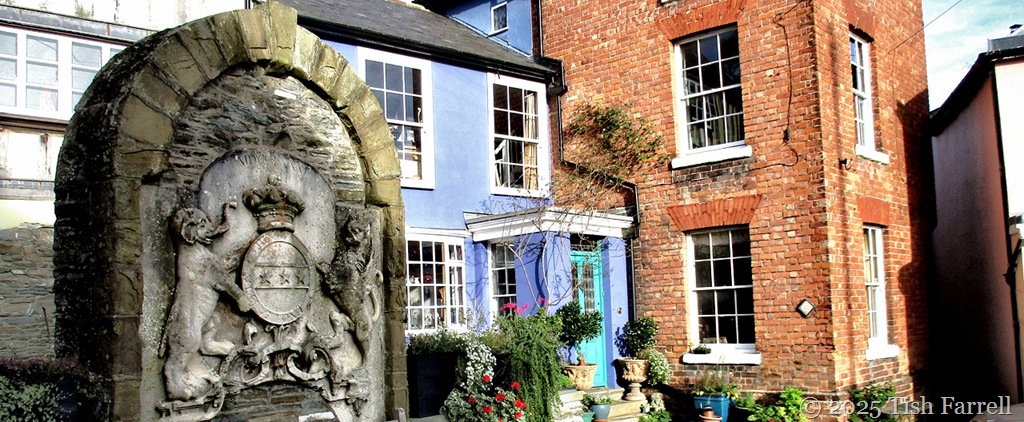
This is a fine spot for catching one’s breath after climbing Bishop’s Castle’s steep High Street. The bench sits on the footprint of a long gone market hall, built for the town by Edward, eldest son of Robert Clive (as in Clive of India) in 1781. At this time (and until 1926) the manor of Bishop’s Castle was owned by the Clive family, and above the bench is some surviving evidence. This is the Clive family’s (acquired) coat of arms: an Indian elephant and a griffin that once adorned the market hall, and so stood above the town, proclaiming the Clive wealth and power.

top4

This, then,  is the view from the bench in the Market Square. (I included it the other day on our walk around the town). All very picturesque. Except, even on a bright autumn afternoon, that Clive coat of arms sheds dark shadows that still linger.

Robert Clive (1725-1774), was the pugnacious offspring of a Shropshire land-owning family. He began his meteoric career as a clerk in the East India Company Madras in 1744. Once in India, he proved an able administrator and ruthless military commander, so efficient in fact, he is credited with securing the power of the East India Company and thus the establishment of British Rule in India.

He returned to England with a vast fortune, equivalent to some 30 million pounds by today’s values. That he was the subject of a parliamentary enquiry for corruption (including examination of his punitive policies while running the East India Company) did not stop him from securing an Irish barony and buying his way into government.

He lived in Mayfair, London and owned estates in Surrey and Ireland, but bought the Shrewsbury  seat in 1761 and remained the town’s M.P. until 1774. (Shrewsbury is Shropshire’s county town and nowhere near London). He also deployed his wealth to secure the votes of Bishop’s Castle’s 150 burgesses, so ensuring that this town’s M.P. was also always a member of the Clive family fiefdom.  The town already had the reputation as a ‘rotten borough’ i.e. votes for whoever could best bribe the burgesses. Now it became a ‘Pocket Borough’ ruled by Clive friends and relations, a situation that continued until 1832 when The Electoral Reform Act ended direct representation for the town and other ‘rotten boroughs.’

It’s astonishing perhaps to think how one man’s shadow can reach so far – through time and across the world. But then what about those among us today whose material ambitions and global reach affect the lives of millions; I wonder what future historians will have to say of them.


November Squares #23

Jude’s Bench Challenge Anniversary

clive coat of arms header

Sun And Shadow At The Top Of The Town

top3

Yesterday we had sun. We did! And a fine afternoon it was for a short tramp up and round the town.

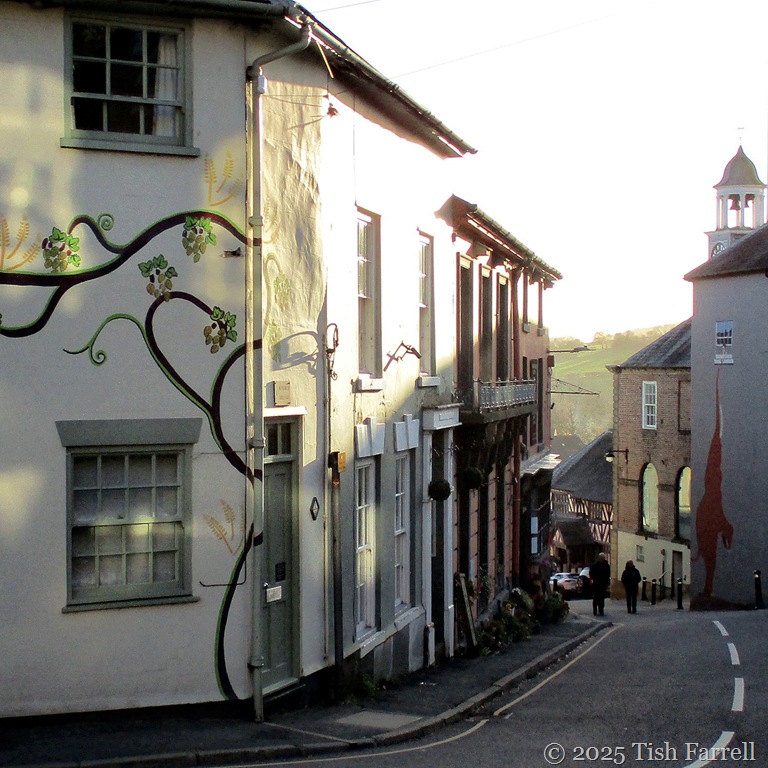
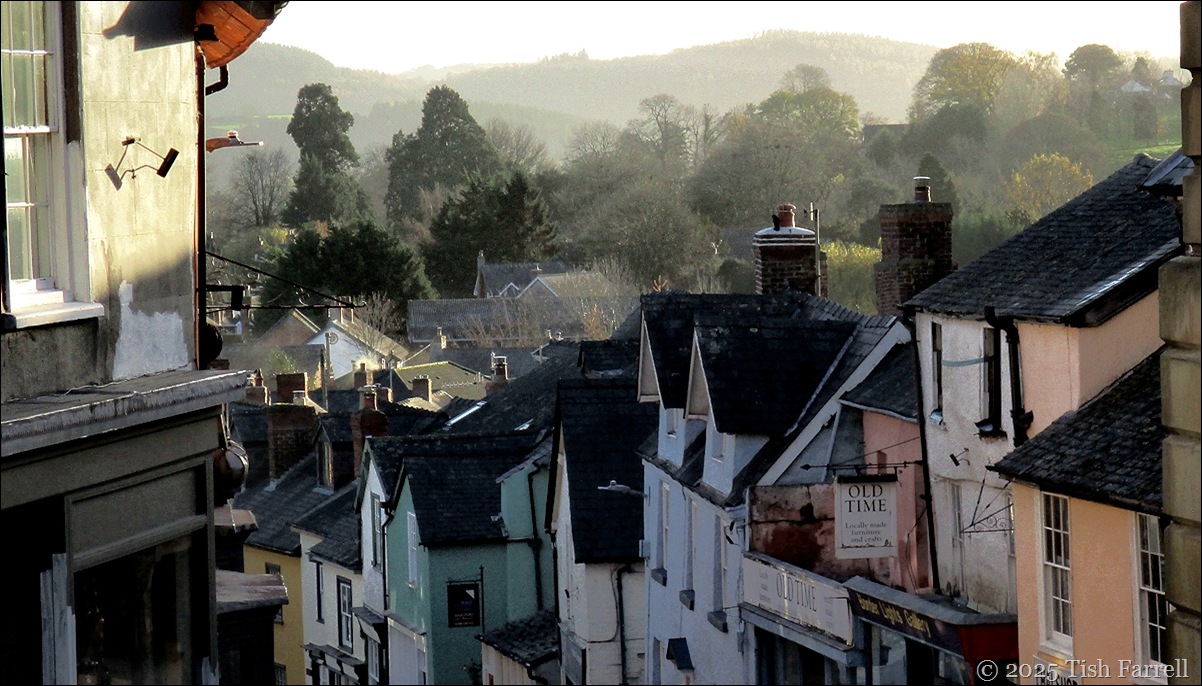
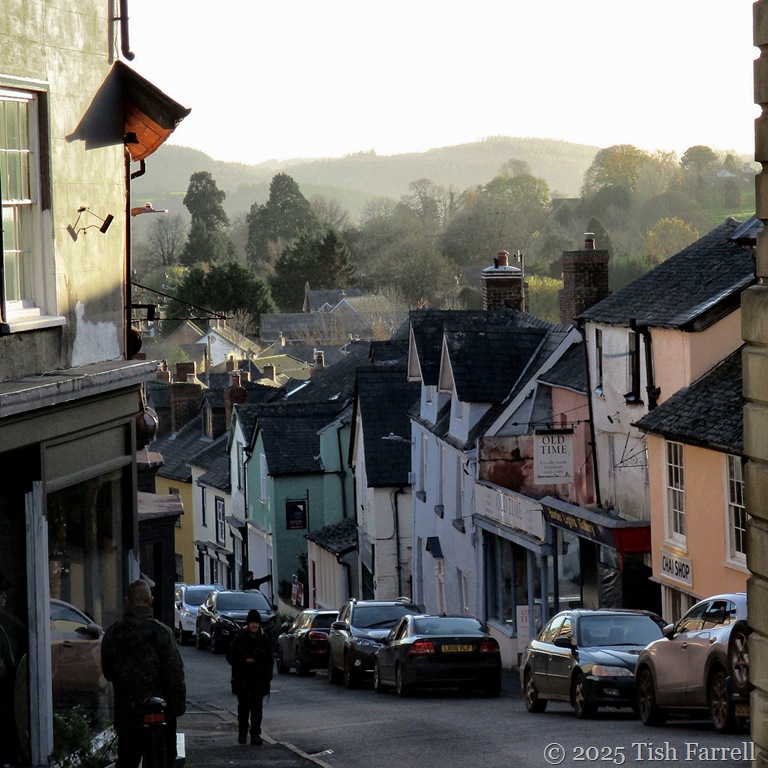
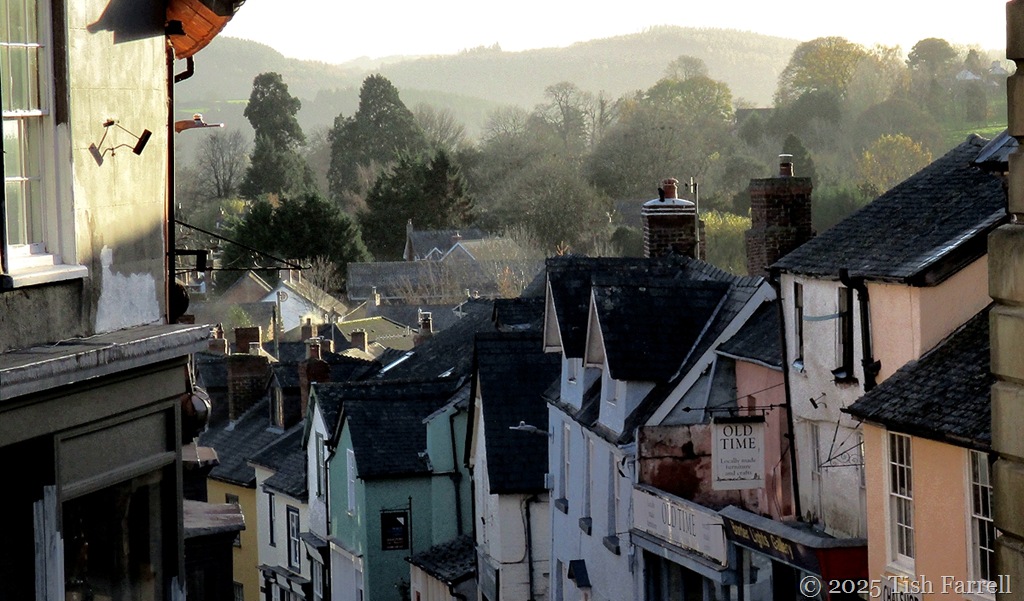
As you can see, Bishop’s Castle is on a steep hill. The header view shows the High Street below the Town Hall. We’re around half way up the hill.

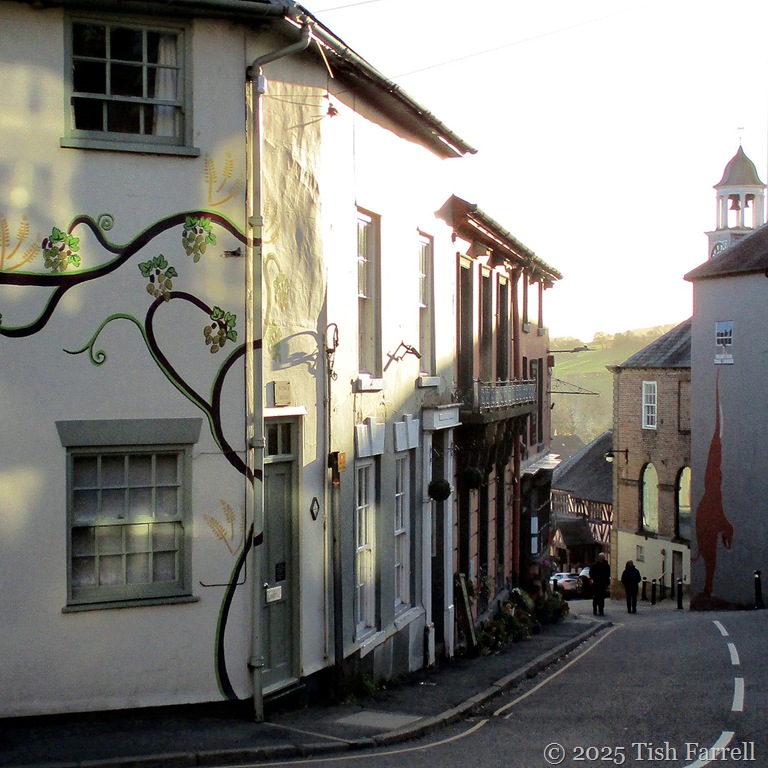
Now I’m walking you backwards, past the Town Hall, past Bamber’s elephant mural into the Market Square, and crossing Salop Street.

top4

*

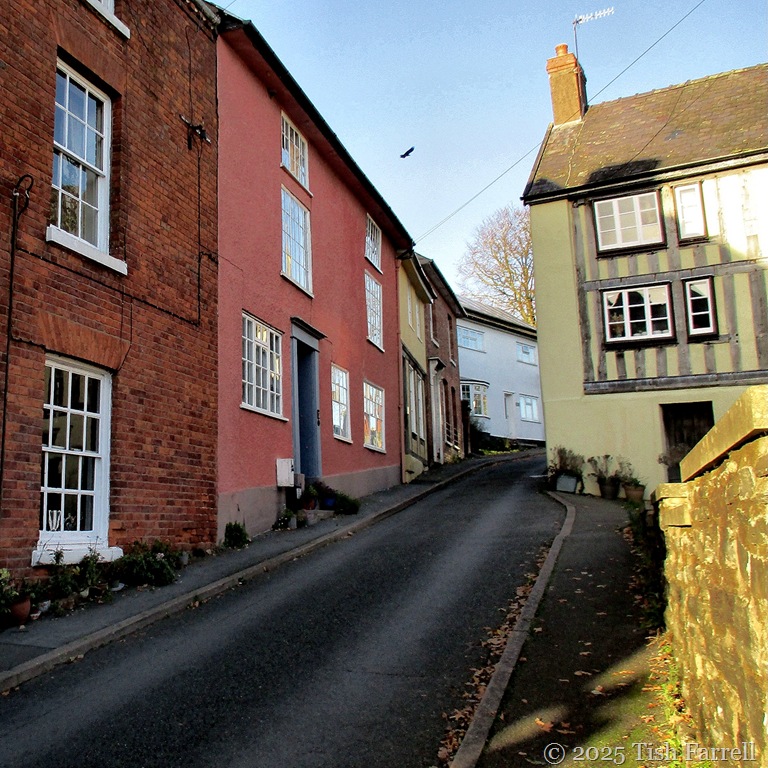
And now I’m turning  you right around to look up Bull Street:

top5

And we’re still not at the top.

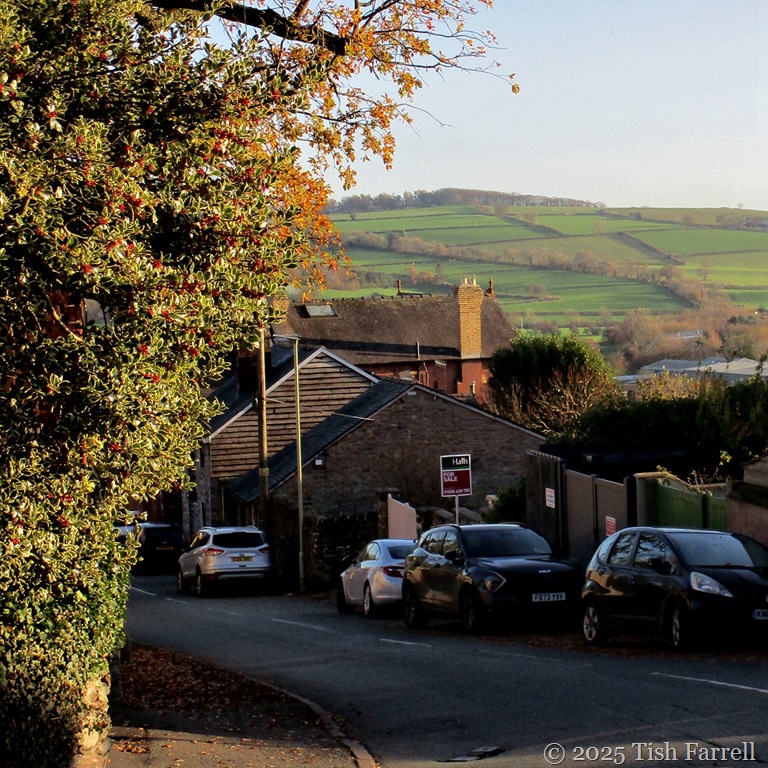
Bull Street leads to Bull Lane. If we look right and downhill, there’s a fine view of farm fields, doubtless winter wheat and oil seed rape.

top 6

But we’re not going down, but left and up to the crossroads where Bull Lane meets Castle Street, Wintles Lane and Montgomery Road.

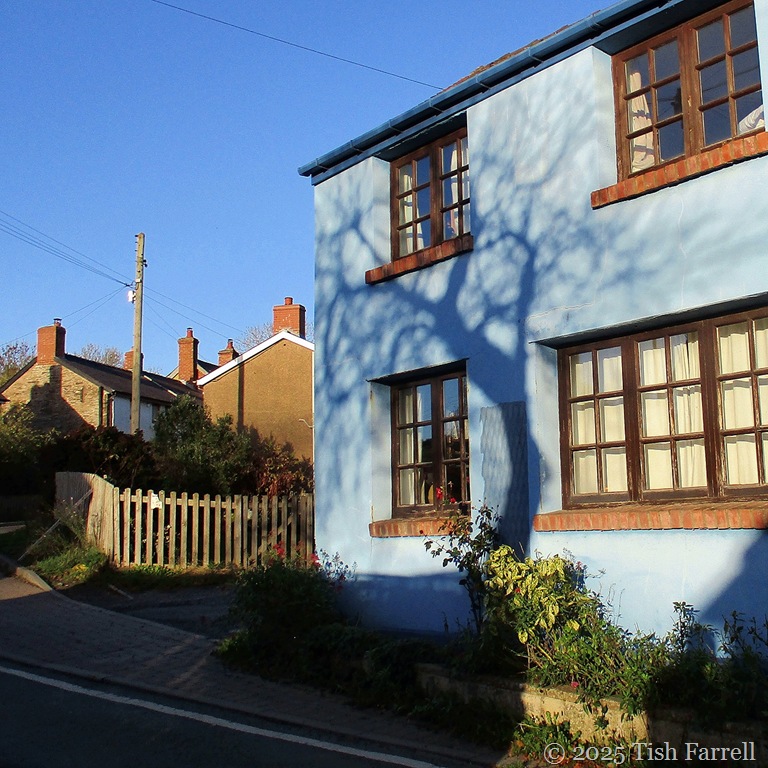
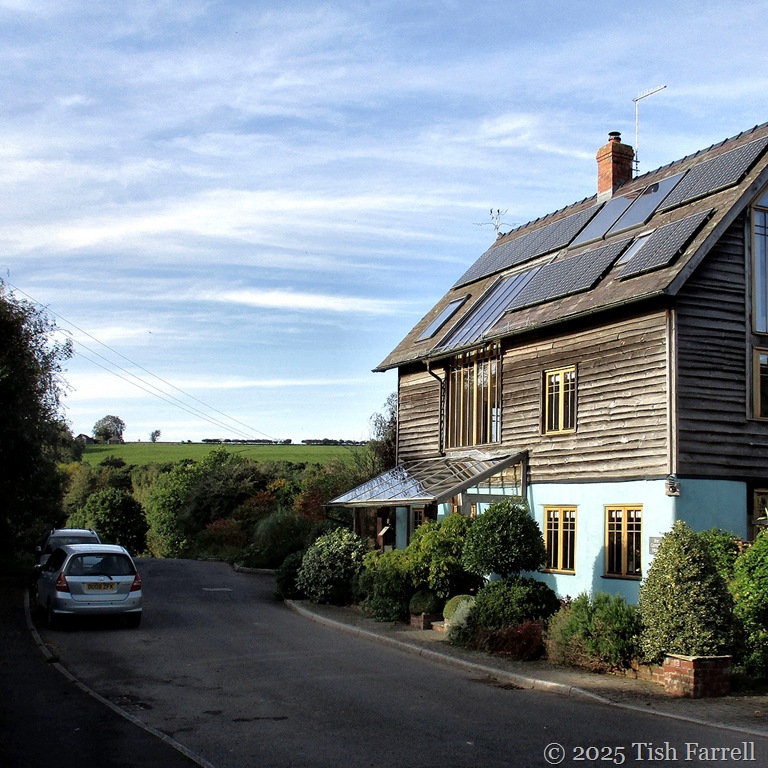
Now we’re at the top of the town, by the blue house that is growing a fine shadow tree:

top8

*

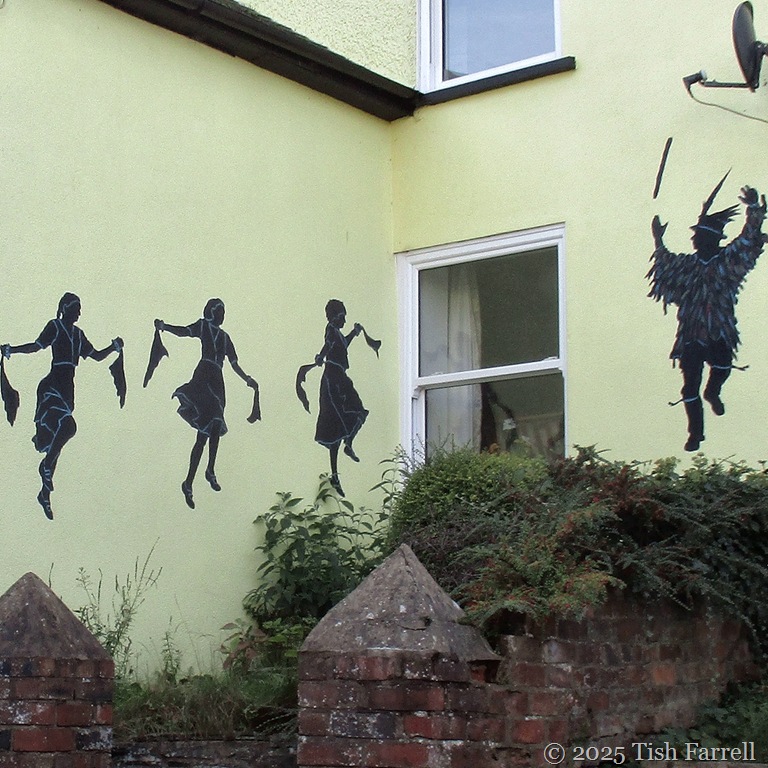
And in the shade, on the house wall opposite, a tribute to our two local Morris dance teams, the Shropshire Bedlams and Martha Rhoden’s Tuppenny Dish

top9

*

At the crossroads it’s decision time – to go left and back into town via Castle Street (where there is no castle, only some ground it once sat on and some more good views):

top10 castle st

*

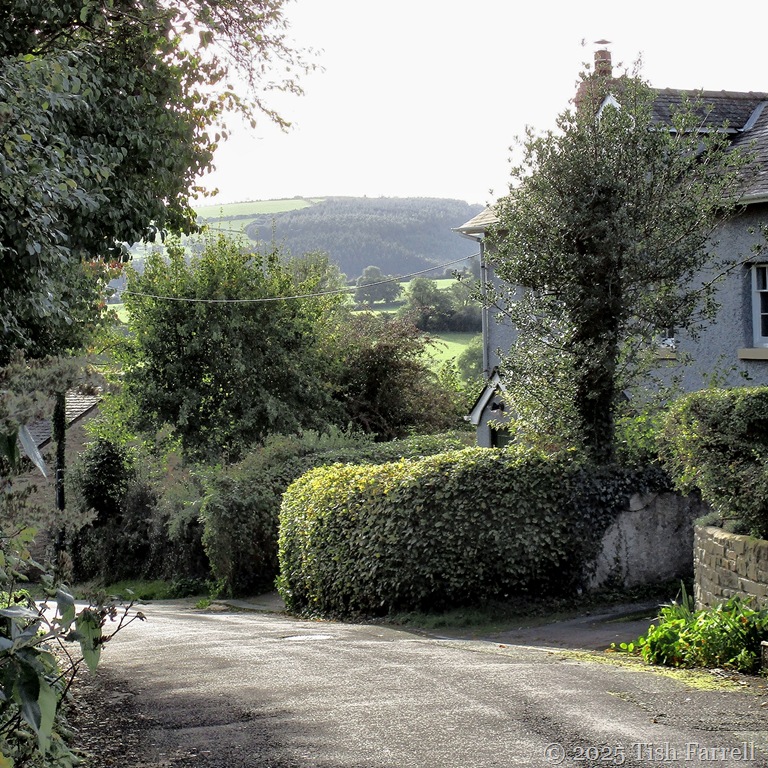
Or cross the road into Wintles Lane:

top 11 wintles lane

*

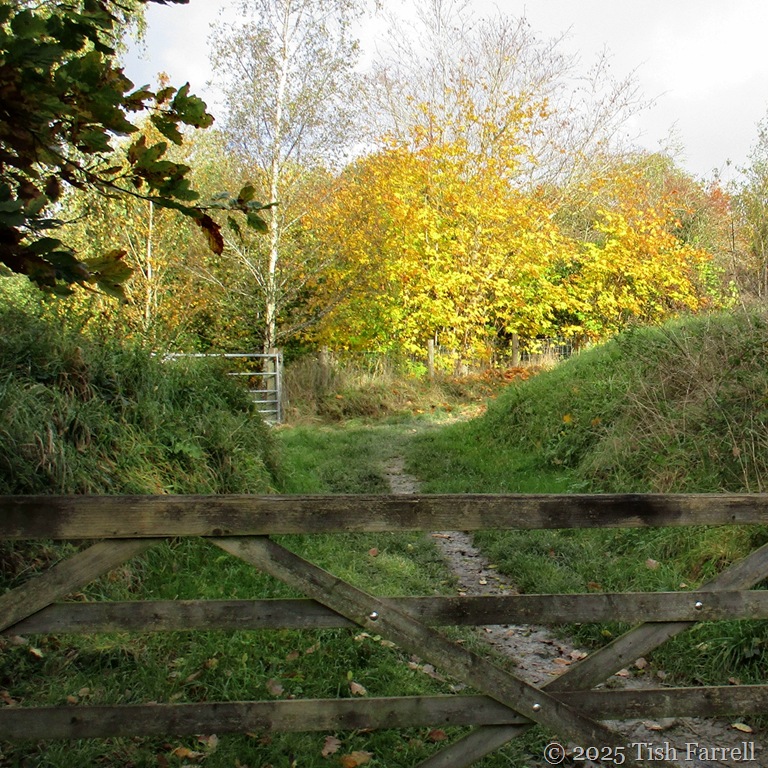
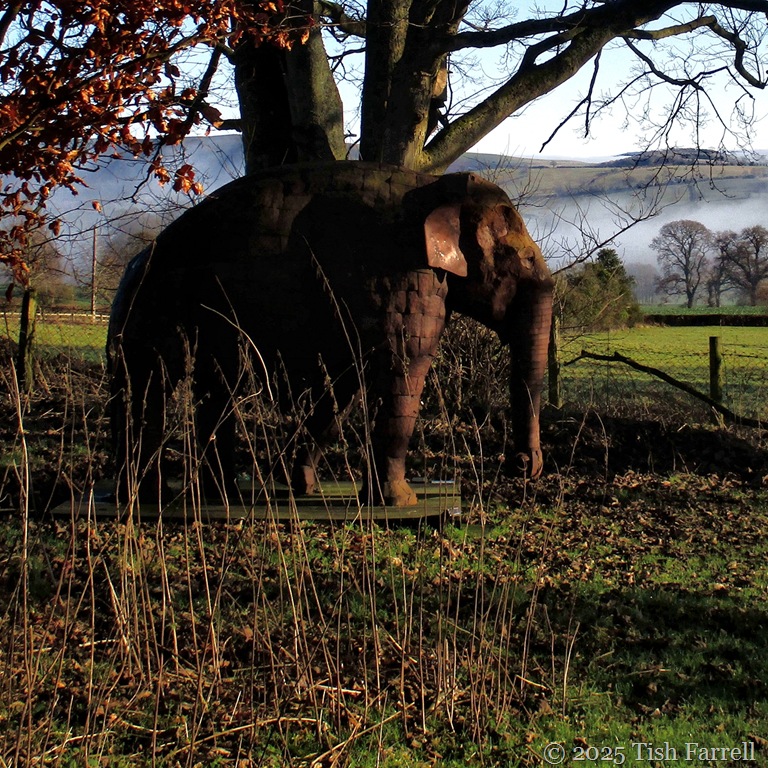
If you want to see the elephant sculpture, then you need to take the Wintles Lane option and follow the footpaths on the right. And climb another hill:

top12

top 13 wintles hill

Elephant

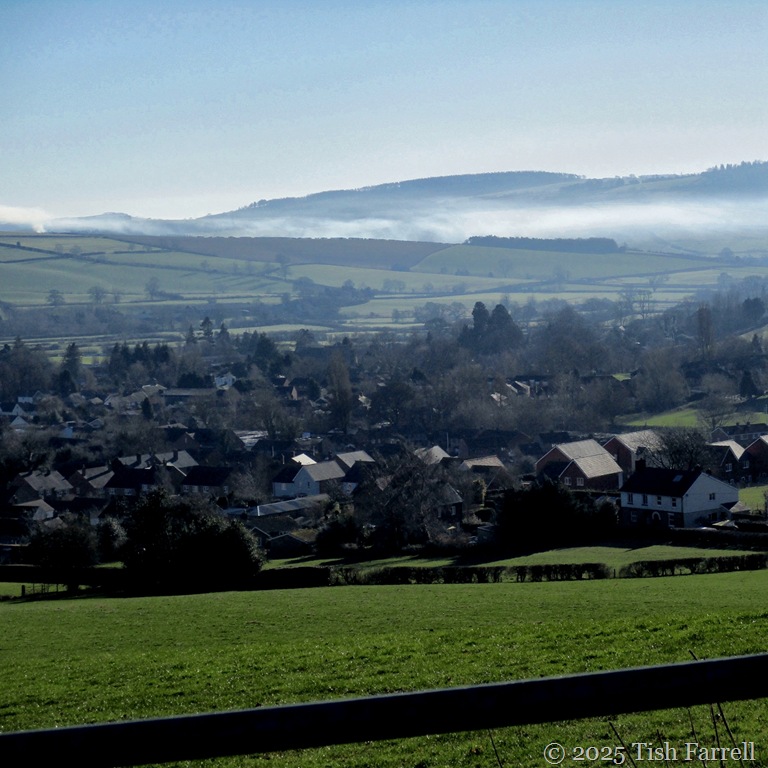
It’s also worth clambering up here for the view of the Long Mynd.

And from here, too,  you can turn about and look down on the town. A fine spot on Planet Earth:

IMG_6729sq

November Shadows #18

top3 header

In Great Grandmother’s Footsteps

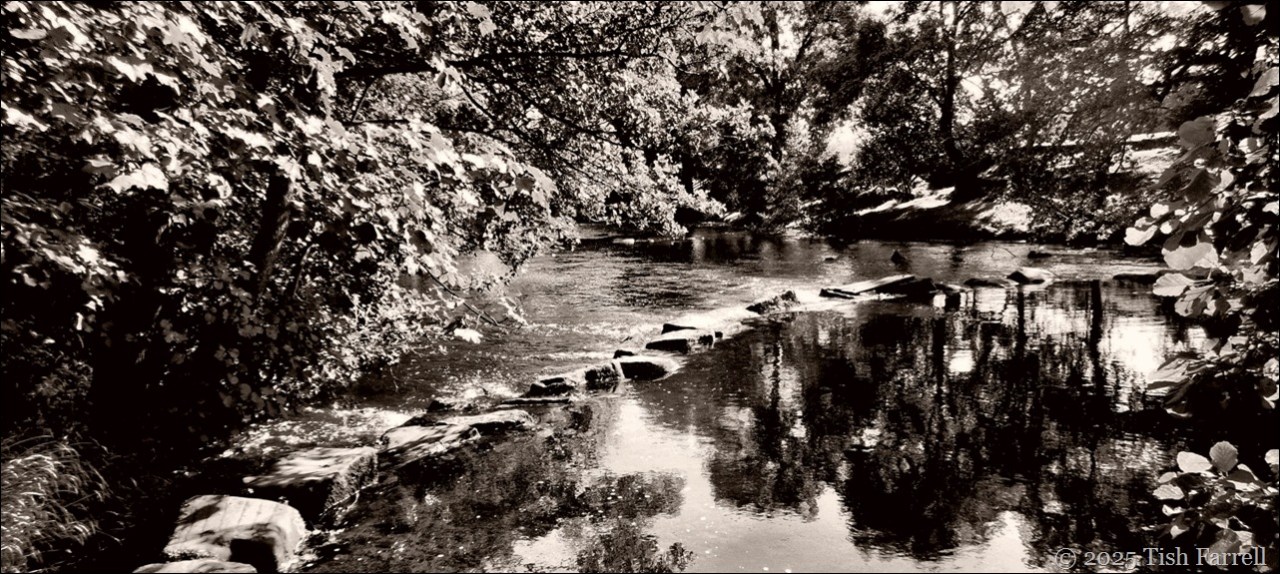
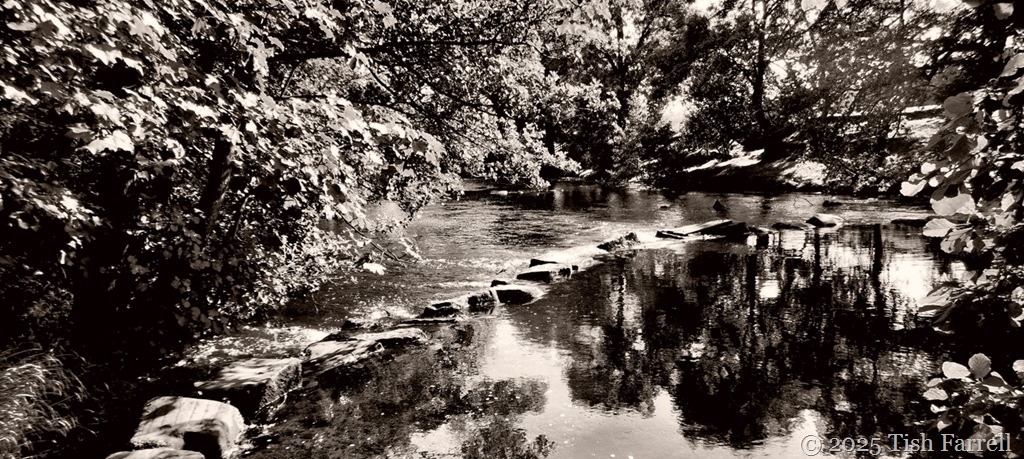
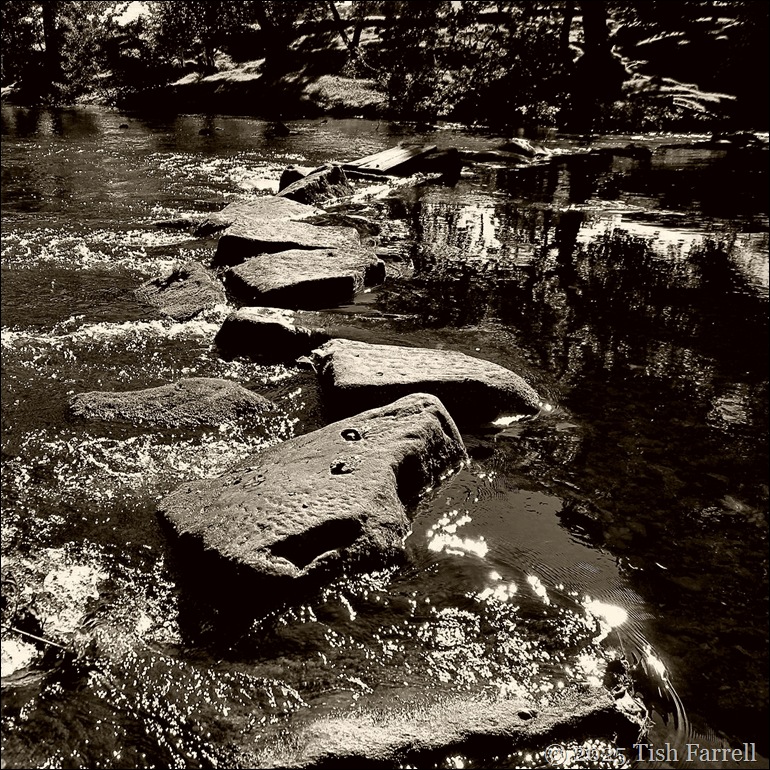
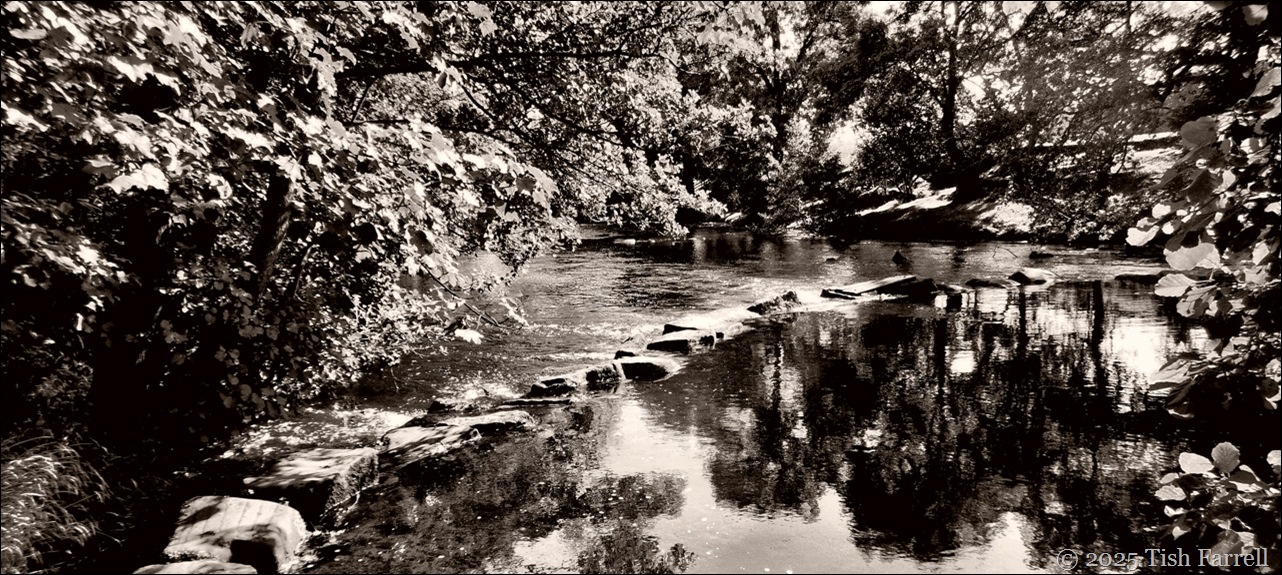
Callow and stepping stones sepia

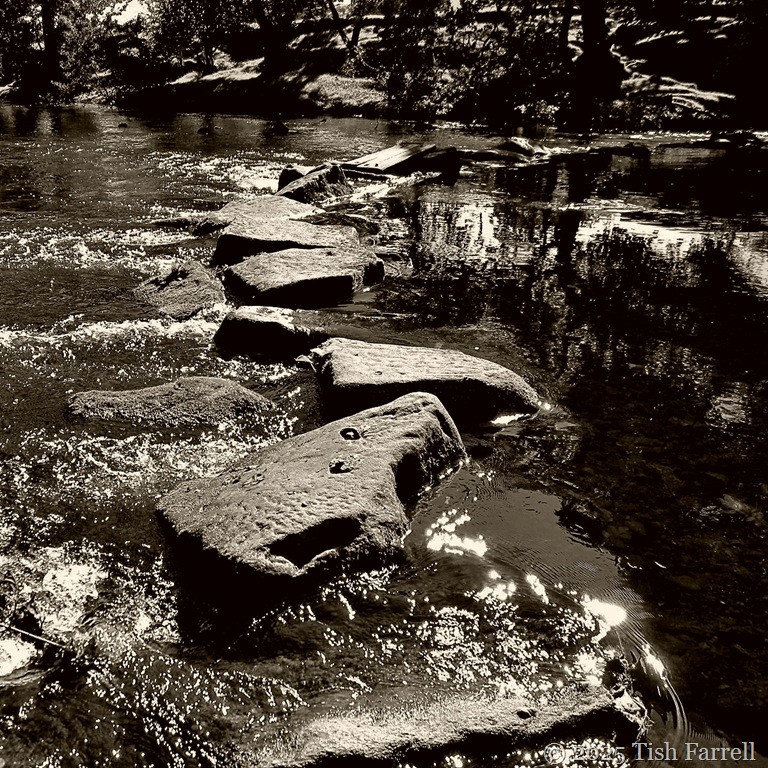
This is where my great grandmother used to cross the River Derwent to go shopping in Hathersage back in the 1880s. I know this because, much like stepping from stone to stone, she told my grandmother, who told her daughter, who then told me.

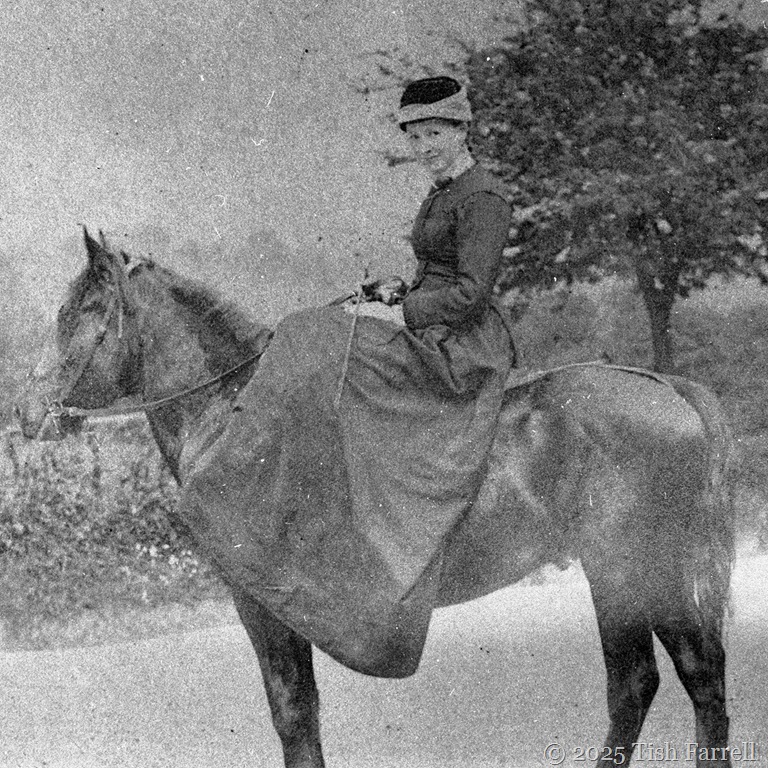
Here she is, Mary Ann Williamson Fox, in her late teens (she still has her hair in a long plait) before her father confiscated her pony. She disobeyed him too many times, jumping the farm gate (side-saddle) on the lane to Highlow Hall.
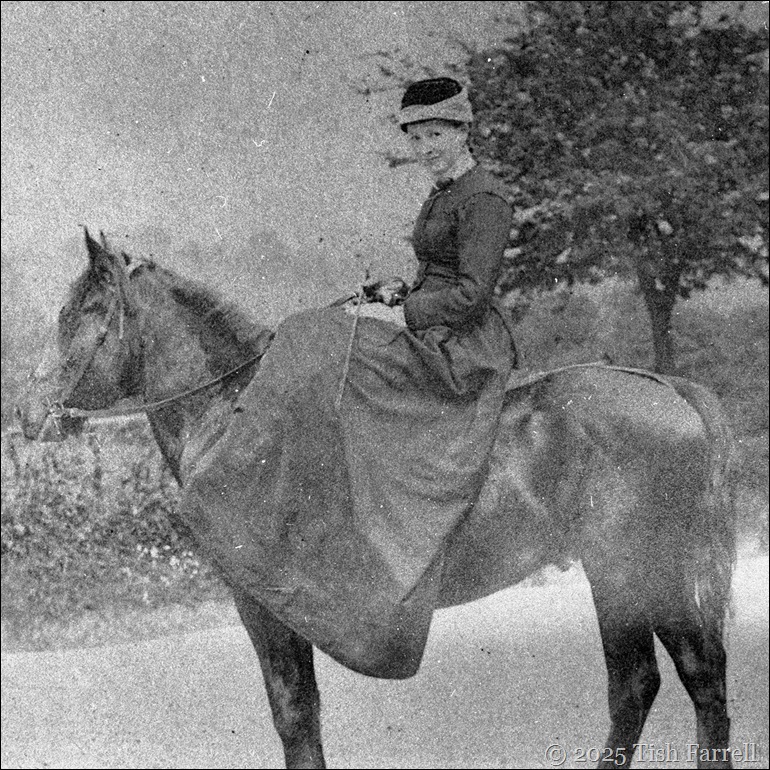
Mary Ann square

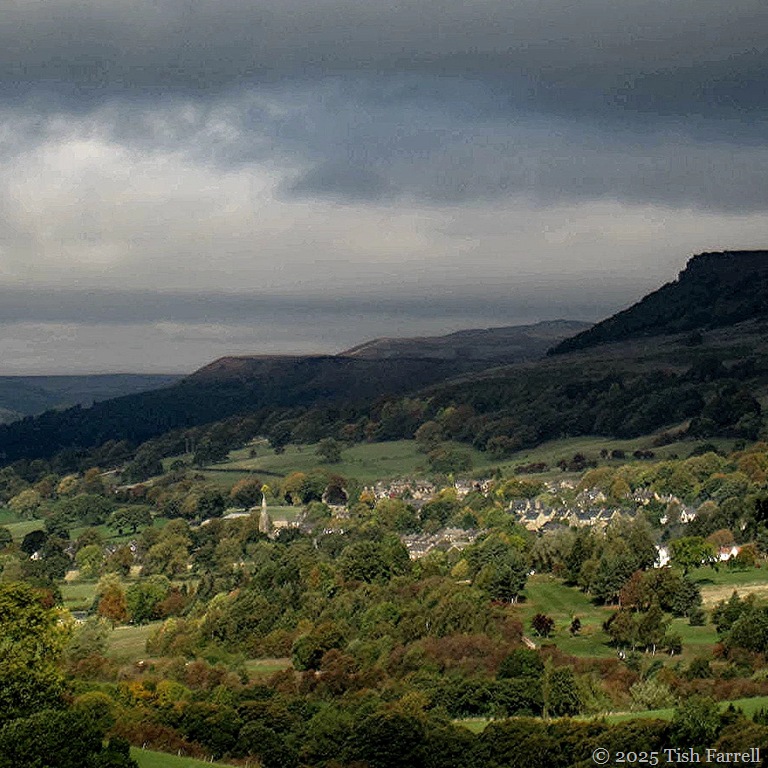
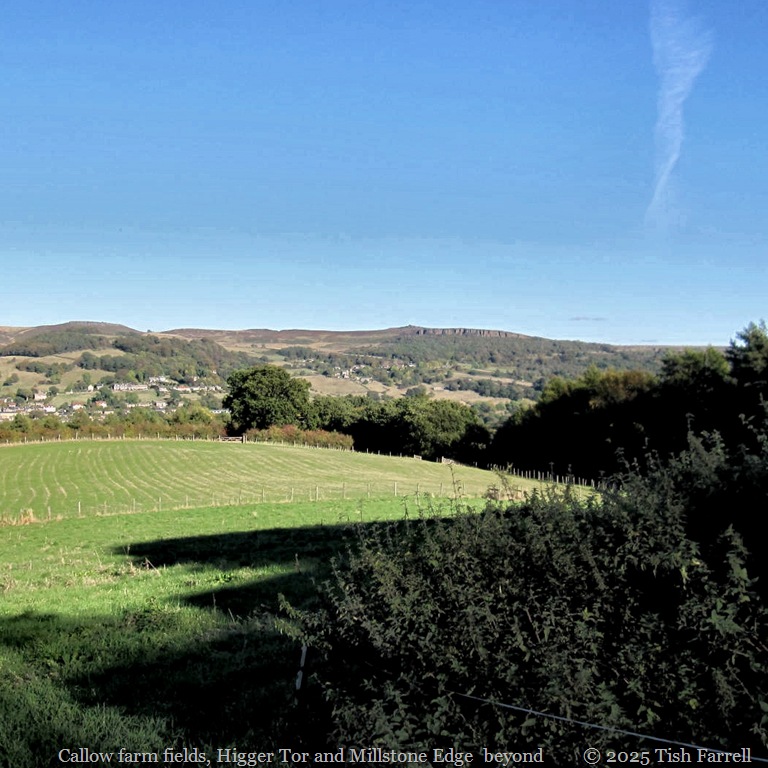
She was born in at Callow Farmhouse on the Highlow Estate in 1863. The house sits on the hillside above the river, the wilds of Offerton Moor above, the township of Hathersage below, the view across the valley to Higger Tor and Millstone Edge, and further off to Stanage Edge and Bamford (below).
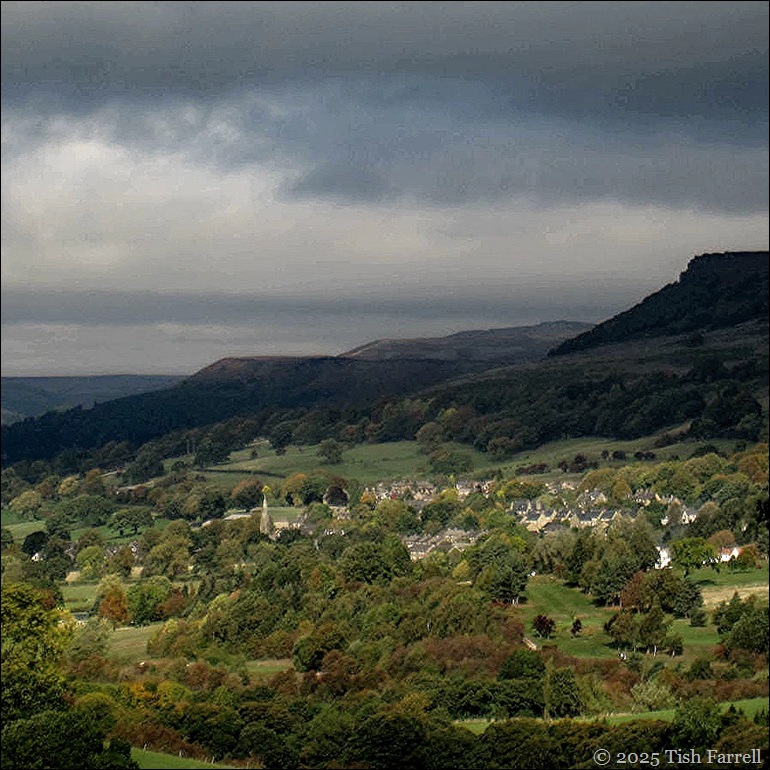
Hathersage, St Michaels, Callow view

Mary Ann’s father, George Brayley Fox (1820-1904) had been born at Callow too. He was a tenant of the Duke of Devonshire, as four generations of Foxes had been before him. They were middling folk, yeoman farmers who also owned land and property across the River Derwent at Newitts Field.  There were connections, too, with lead mining. Mary Ann’s mother, also Mary Ann (nee Bennet), inherited land with lead deposits over in Great Hucklow, a bequest from her grandfather, Robert Jackson, Smalldale hatter, farmer and lead miner.

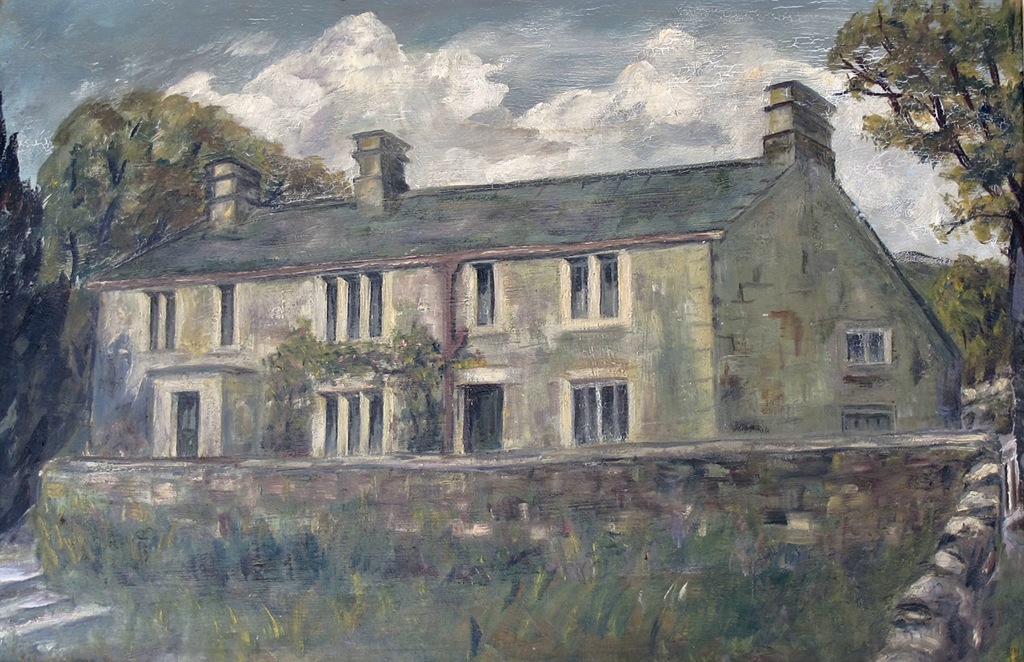
Callow farmhouse is still there, privately owned these days and presently up for sale, but this inter-war painting (found on the internet) is perhaps more the home that Mary Ann would recognise.
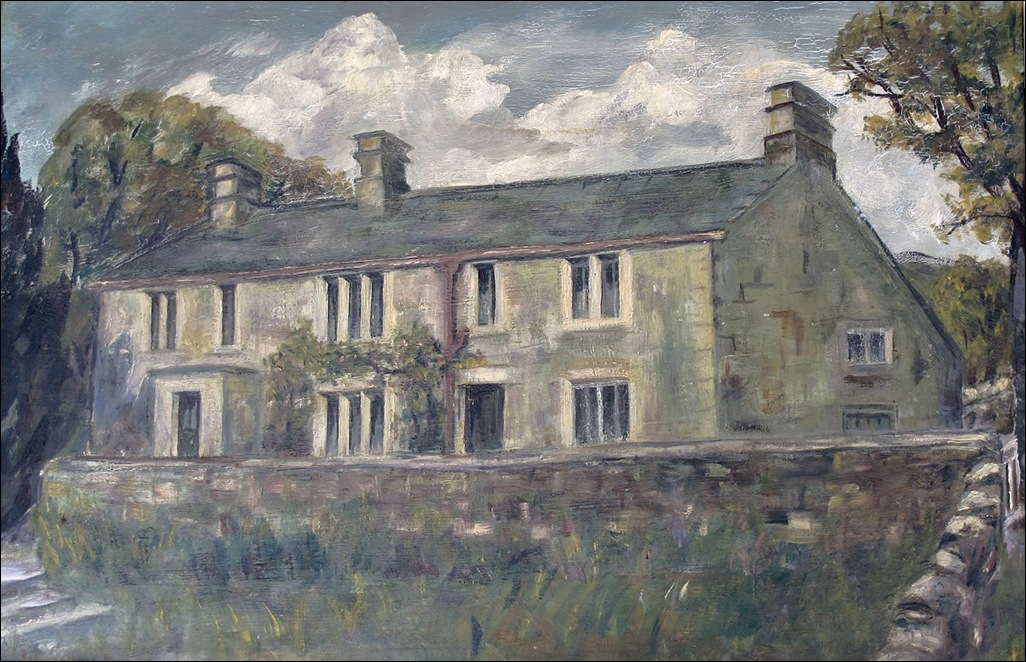
The painting is unsigned but apparently associated with a later 1920s tenant Lawrence Dungworth MM who served in the Derbyshire Yeomanry. (Hathersage Remembers site)
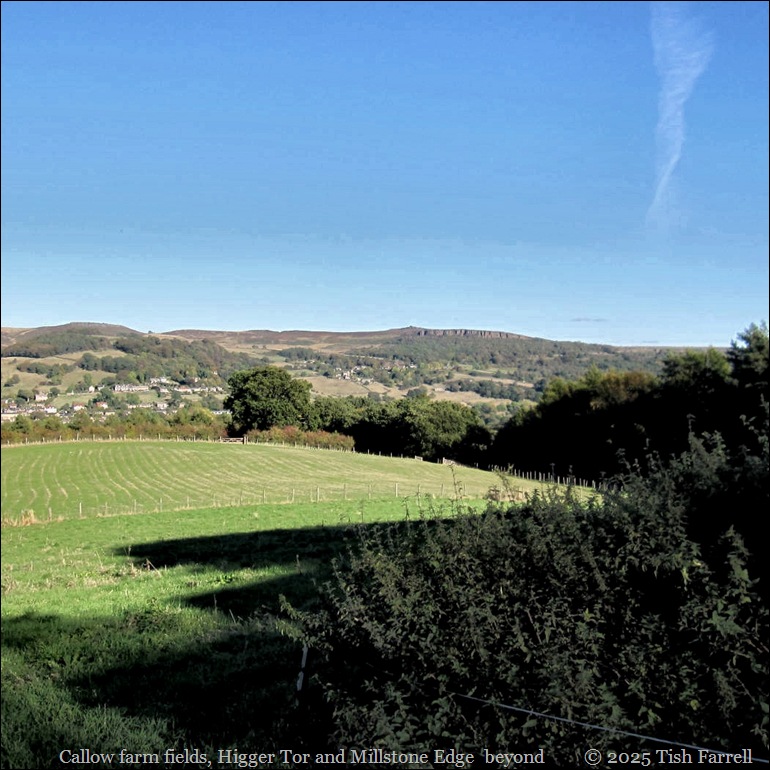
Hathersage, Callow farm, Millstone Edge

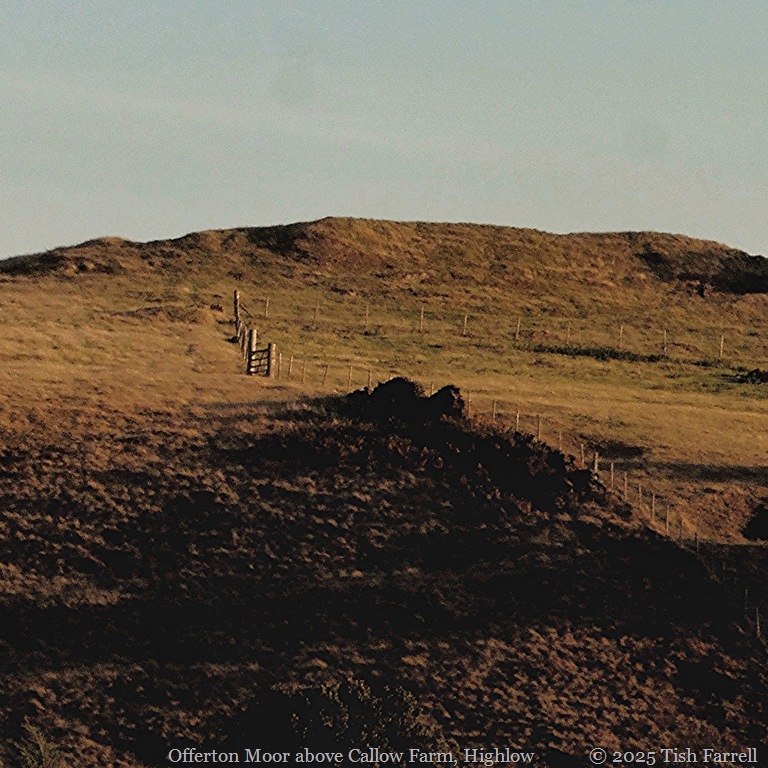
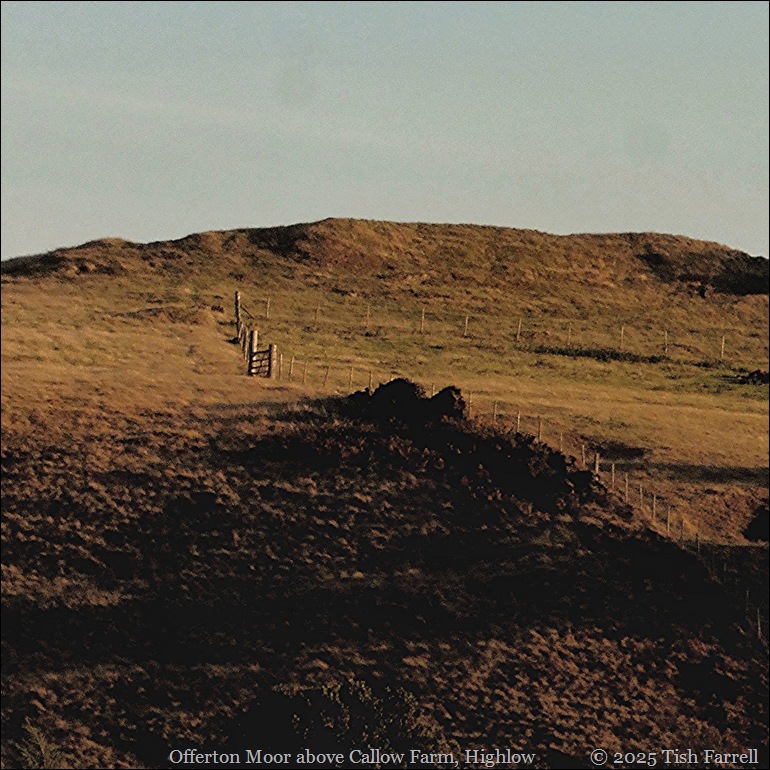
Offerton Moor above Callow

The Derbyshire High Peak is a rugged and exposed land. Living there, in times past, bred resilient, hardy folk. They grew their own oats (for the oat cakes that were a staple), kept cattle to produce their own cheese and butter, sheep for wool for weaving, reared hens and geese, kept bees and, doubtless, brewed their own ale.

Hathersage gossip back in the day had it that generations of Fox men were fist fighters, an illegal pursuit that, on account of the high stakes betting, had great support from the gentry. Mary Ann’s grandfather, Robert Fox (1779-1863), was known as ‘Bobbling Bob’. He apparently won a big fight against a likely champion after fifteen rounds, this despite a cracked shoulder blade in the first round. This yarn was told by Mary Ann’s older brother, Robert, to G B H Ward, walkers’ rights activist and editor of the Sheffield Clarion Ramblers’ Handbook. Ward included it in an article on the Foxes of Callow in the 1930/31 edition.

My own sense, though, from reading several generations of Fox wills, is that they strove to make the most of what they had, making strategic alliances, exploiting new opportunities, concerned always for their children’s future, seeing they received an education, putting them to trades and occupations that would ensure a decent living.

But by the 1890s, the shadows were gathering. In March 1893, George, in his seventies and recently bereaved, could no longer wrangle with falling crop prices and a rising farm rent. He sold up at Callow and went to live with his son, Robert, at Shepherd’s Flat farm at Foolow near Eyam. Meanwhile Mary Ann was facing her own tragedy far away in industrial Farnworth, Greater Manchester. In 1886 she had married Thomas Shorrocks, partner in a family firm of spindle-makers. But the decline in the local cotton industry led to the company’s collapse and bankruptcy, following several high profile court cases. Thomas died in December 1893, aged 38, leaving thirty-year old Mary Ann with baby Thomas, Lilian 5 years, Mary 7 years, and an 11 year old step-son Robert.

The Fox family rallied and came up with what seemed an ingenious plan to give Mary Ann both a home and a living. In 1894 Queen Victoria opened the Manchester Ship Canal, giving the newly created inland port of Manchester access to the River Mersey, Liverpool and the world beyond. There were high hopes it would boost the international cargo trade. And so that year, George Fox (probably Mary Ann’s younger brother rather than father, and stepping in to cover her expected period of mourning) secured the licence for the Old Red Lion Inn on the banks of the Mersey, Hollinfare, a small Cheshire village on the coach road to Manchester. Besides the view of the new Ship Canal and passing cargo boats, the buzz of new prosperity in the air, the inn came with its own farm fields and outbuildings. It must have seemed an excellent choice for a fresh start.

In 1895 Mary Ann took over the licence. She did so under her family name of Mary Ann Williamson, dropping the Shorrocks, perhaps to shed association with the bankruptcy (?) (Williamson was her mysterious grandmother’s maiden name). Younger sister Louisa, described by my grandmother as ‘simple’, came to live in as home help and child minder. And in that year too, Mary Ann married one Charles Rowles, a widower and retired sea captain, who was then employed as a pilot on the Manchester Ship Canal. Soon there was a child on the way, and for a time, it must have seemed, the shadows were in retreat.
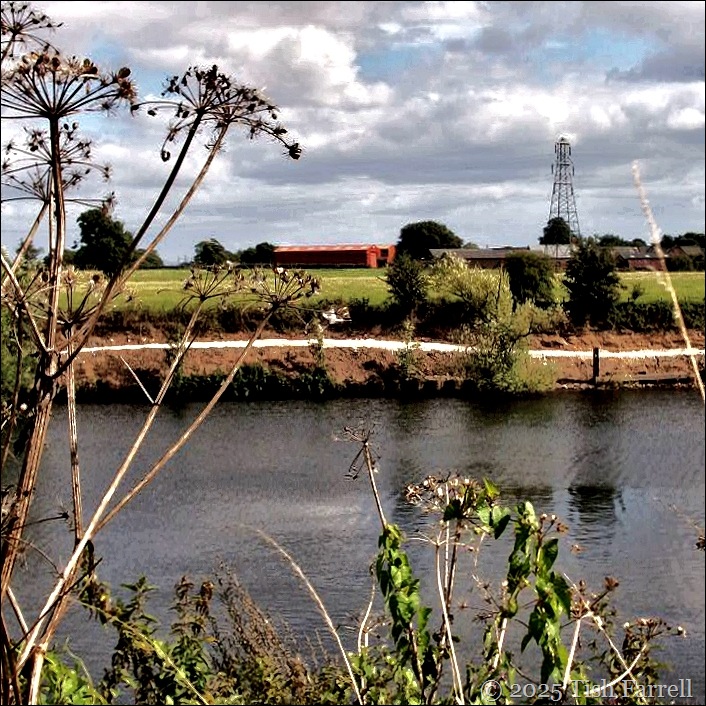
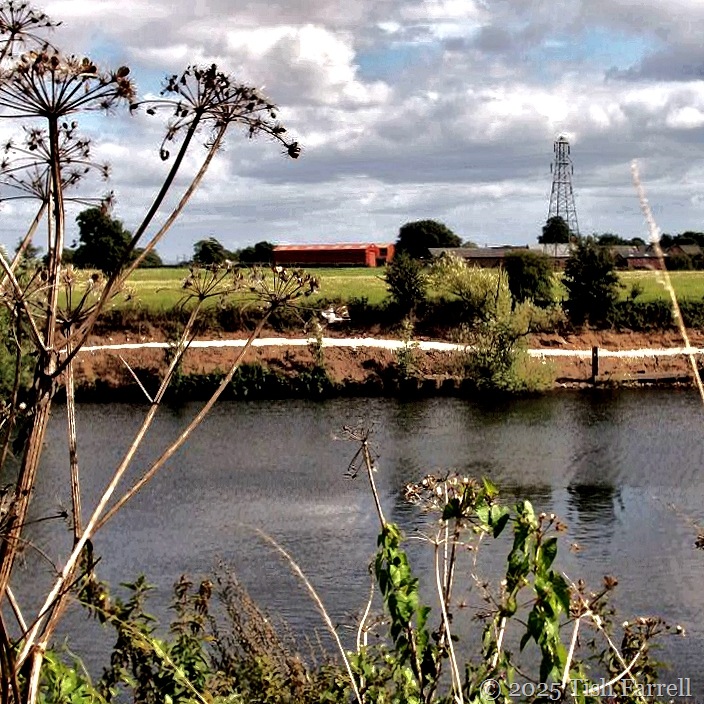
Mersey at Hollinfare

The Old Red Lion Inn still stands across the road from the River Mersey on the Manchester Ship Canal. No chance of stepping stones here; and the views of the lush dairy farmland of Cheshire across the water, a far cry from the challenging uplands of High Peak Derbyshire.

November Shadows #16
Stepping stones header

Shadow Time

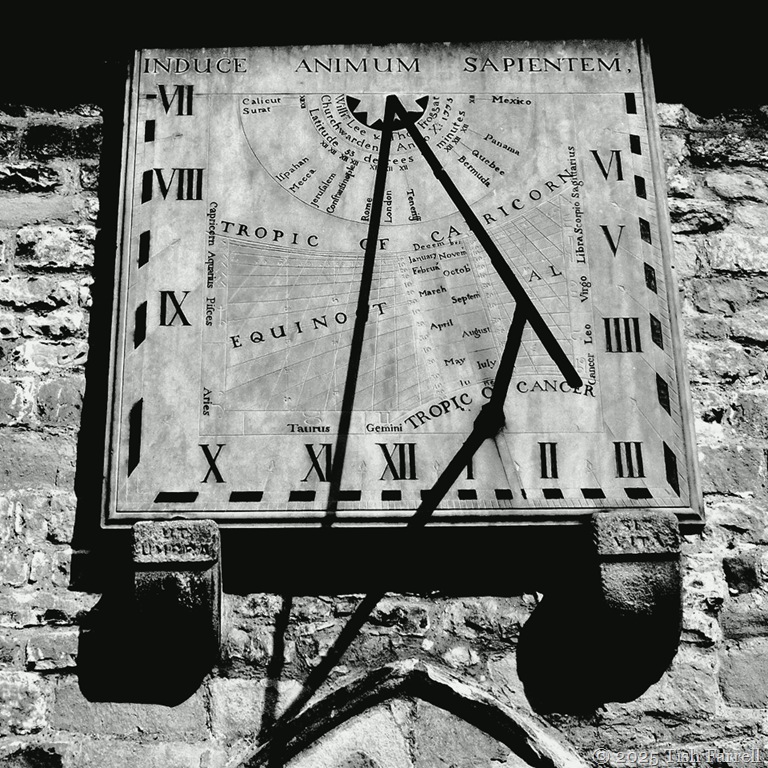
Eyam Church sundial 1775 sq

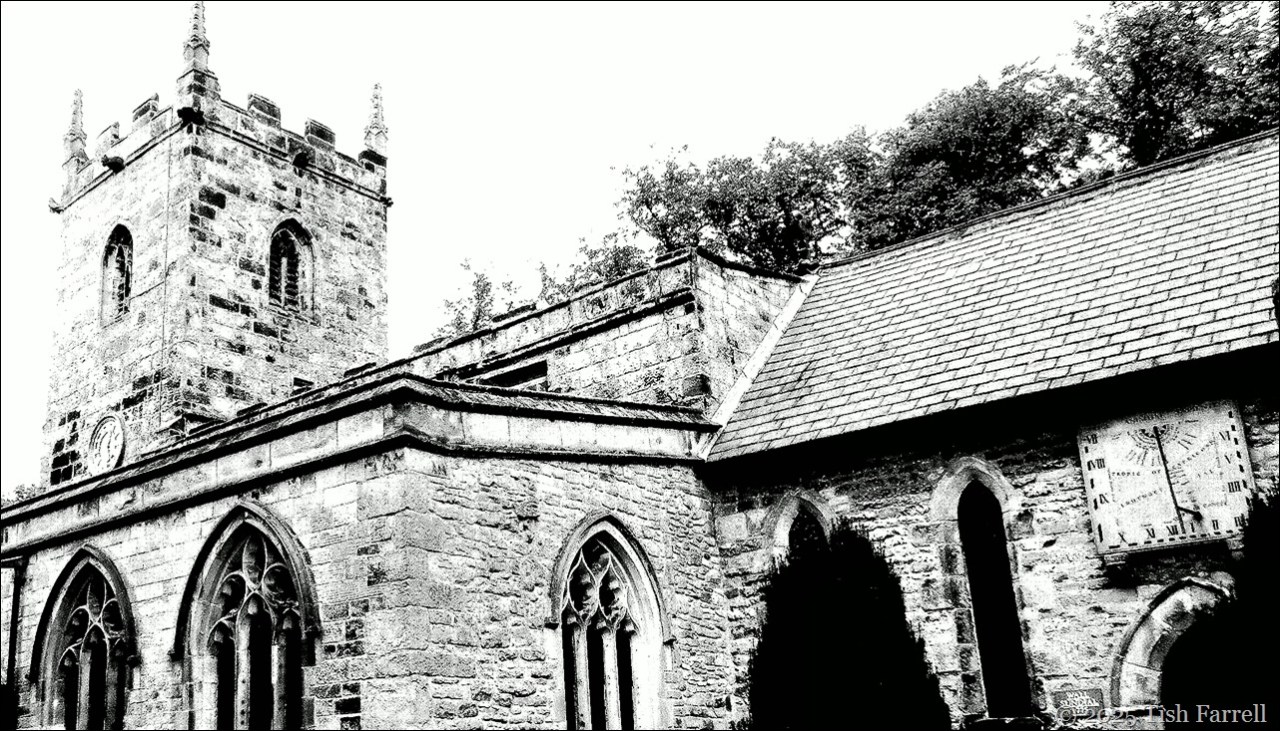
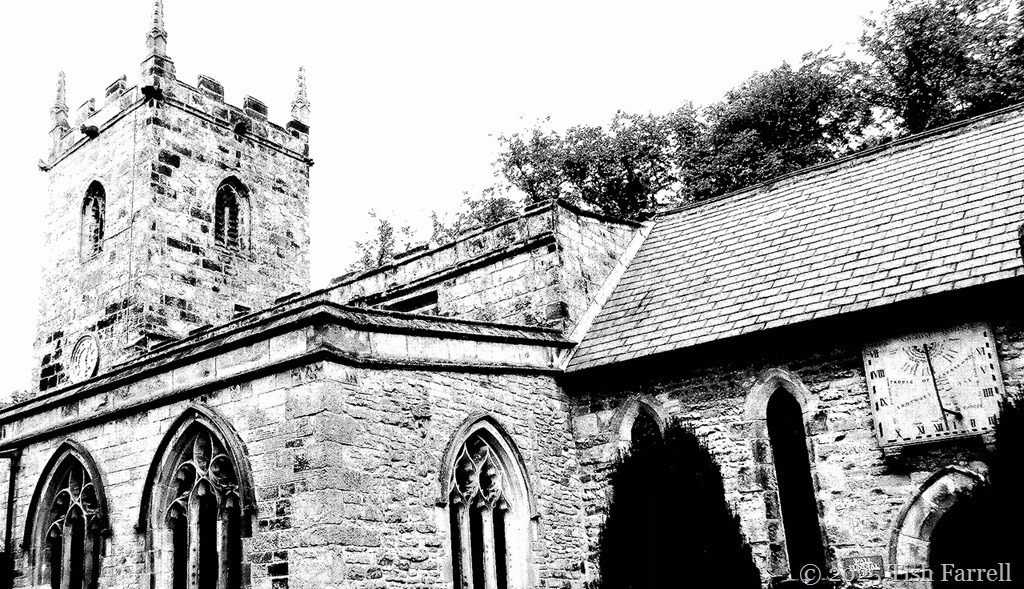
This magnificent sundial clock hangs on the wall of Eyam parish church in Derbyshire. It is extraordinarily intricate; something of a world-view 18th century style. It was installed in 1775 by a vicar with illustrious, wide-reaching connections, although the face itself was carved by local stonemason William Shore.

Eyam is probably best known as ‘the plague village’, the isolated High Peak community that chose to isolate itself completely during the 1665-1666 outbreak of the Black Death. A more recent discovery concerning the village is that the DNA analysis of living descendants of survivors shows a marker which indicates immunity to the disease. Amazing to think this can be detected.
Back in the 17th century, Eyam’s inhabitants made their living mostly from farming and lead-mining. The two pursuits went together, the mining carried out in the winter months in open-cast field seams called rakes. I have ancestral connections here. One Robert Fox, yeoman farmer and lead miner, who looks to have arrived in the area post-plague, married second wife Margaret Mower at Eyam church on the 4th June 1682.  They are probably 6th great grandparents, but at the very least 6th great uncle and aunt. There are also much earlier Bennet ancestors around Eyam. They intersect with Foxes in the 19th century, that link arriving via 4th great grandfather, hatter, farmer, lead miner and property owner, Robert Jackson. He married Hannah Eyre at Eyam in August 1826. They would have known this clock.

And about that clock. You have to wonder how far Eyam villagers would have been impressed to know the time difference between their spot on the globe and Calicut, Mecca, or Quebec. The single shadow also marks the solstice and equinox days and, for good measure, the months of zodiac are included too. All these intricate details apparently suggest to clock sundial specialists that the designer was the eminent Derby scientist and clockmaker John Whitehurst FRS.

Besides a time marking facility, the clock includes some thought-provoking inscriptions. On  the supporting corbels is says: Ut Umbra – Sic Vita  –  life is but a shadow. And across the top:  Induce Animum Sapientem  – cultivate a wise spirit.

This last should be a rallying call for our times. For all our, wizkiddery, wise minds seem sorely lacking. This 250 year old clock might be just the device for cultivating a little capacity for critical thinking. It certainly tests mine.

P1050540 header

November Shadows #12

Monochrome Madness: clocks and timepieces This week Margaret at From Pyrenees to Pennines is setting the theme at Leanne’s Monochrome Madness

Six On Saturday: Showing Their Colours

Evereste

Back at the end of October the garden was alive with drifts of cosmos, Michaelmas daisies and rudbeckia. And then the downpours began, plus some big winds. The cosmos is still hanging on, but the Michaelmas daisies are no more and rudbeckia down to the final few stems.

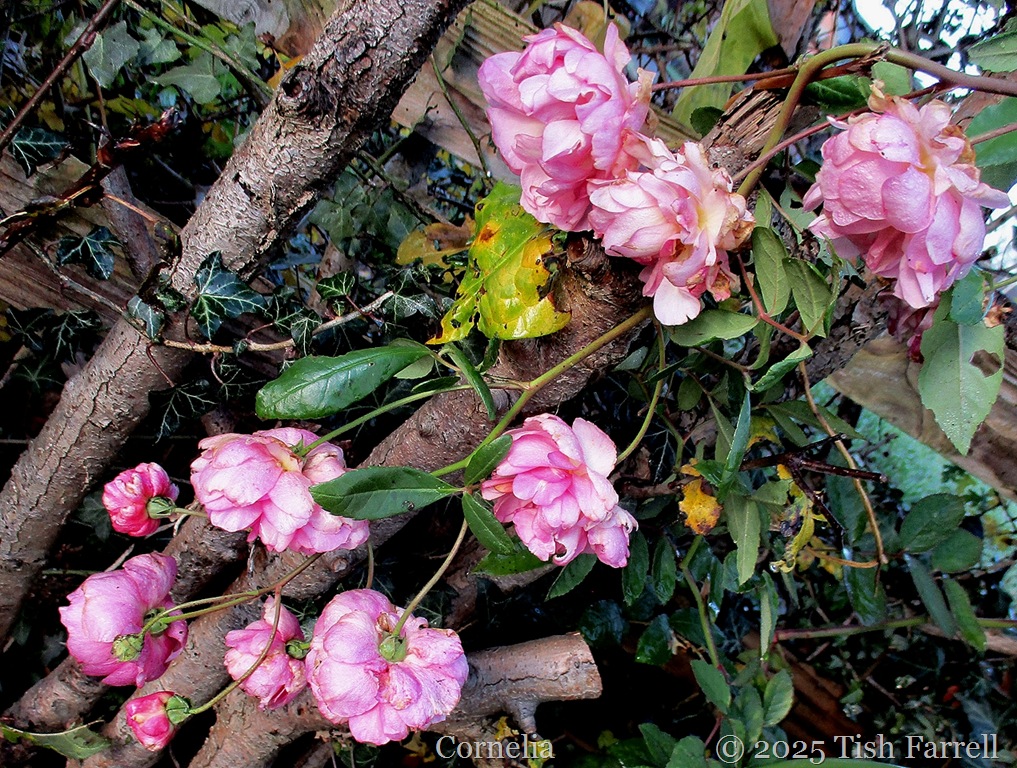
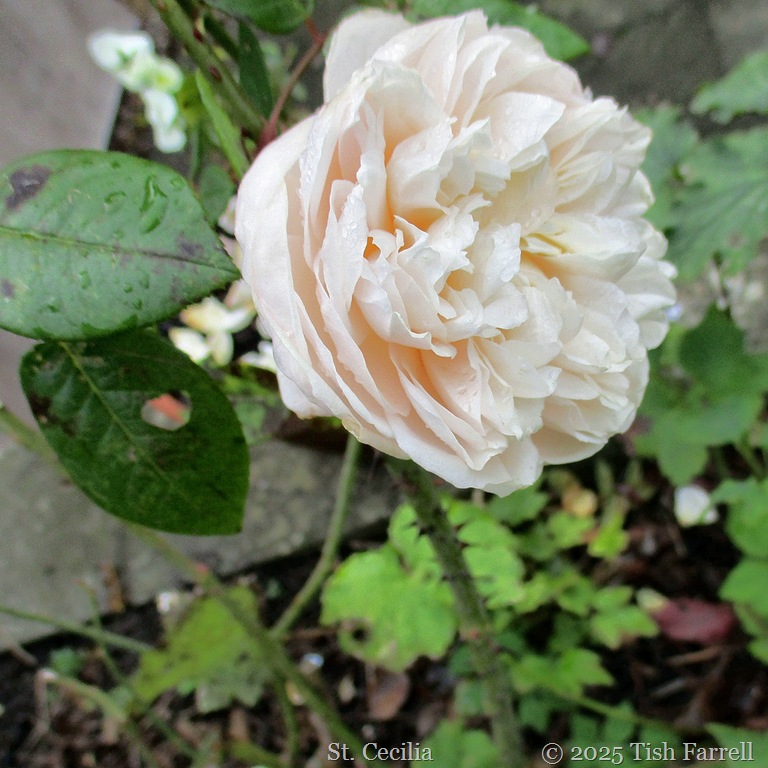
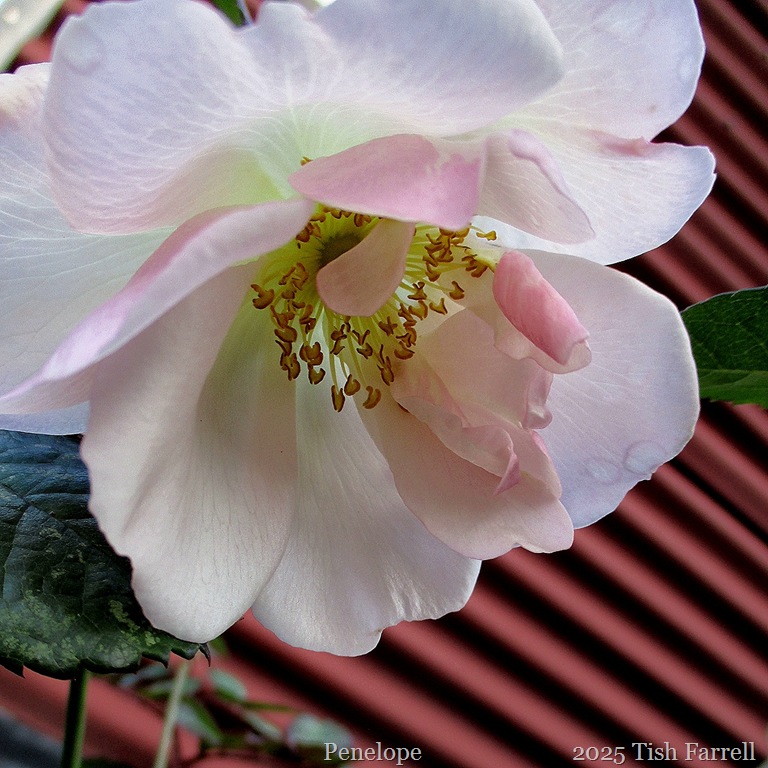
1) The rose trio, though, is hanging on, still doing their bit. Cornelia by the greenhouse is looking a little rain battered, but still very pretty. St. Cecilia on the terrace wall has been flowering sporadically for some weeks. But her neighbour, Penelope, has only started flowering this week, beautiful, but unexpected…IMG_9404

IMG_9373

Penelope

*

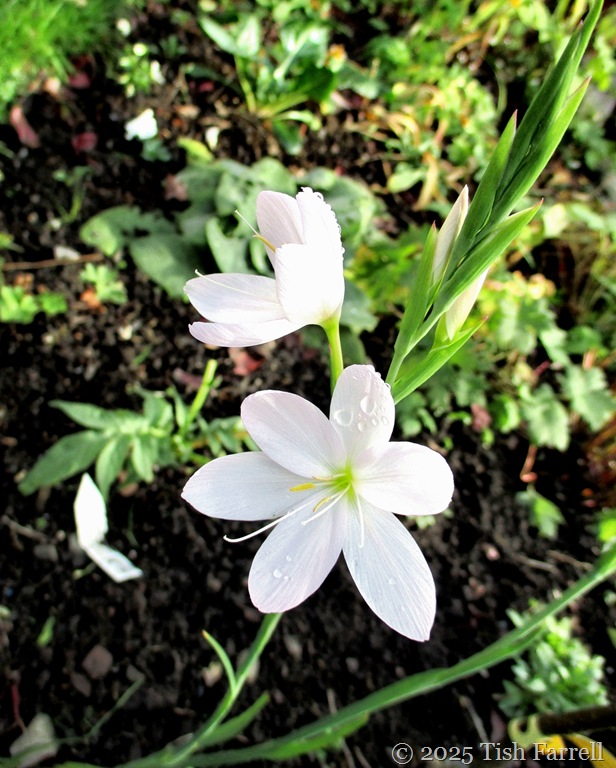
2) There have been other surprise openings this week, including the newly planted young Hesperanthus Wilfred H. Bryant…

Hesperanthus

Other curious (unseasonal?) discoveries this week include buds and flowers on two Vanilla Ice sunflower plants which I grew from seed in the spring. They’re multi-headed plants with medium,  in sunflower terms, sized flowers. Heaven knows why they’ve waited till November.

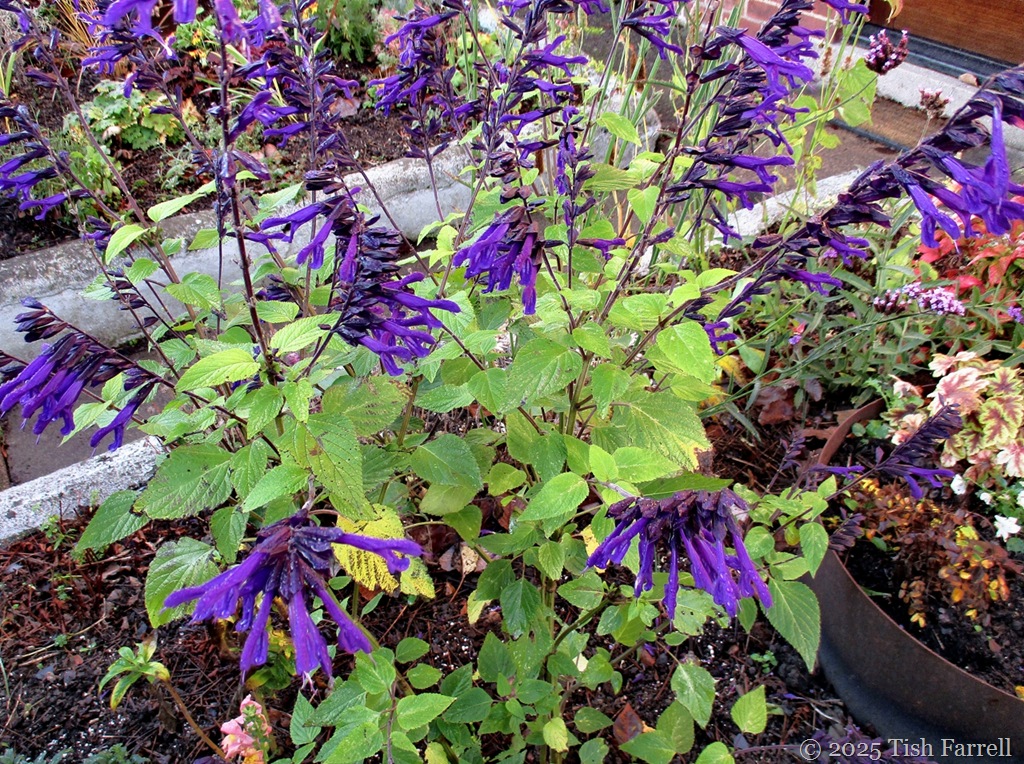
3) In the still going strong since the summer category, Salvia Amistad wins first prize. Actually, this is the best its looked since it was planted in the spring…

IMG_9425

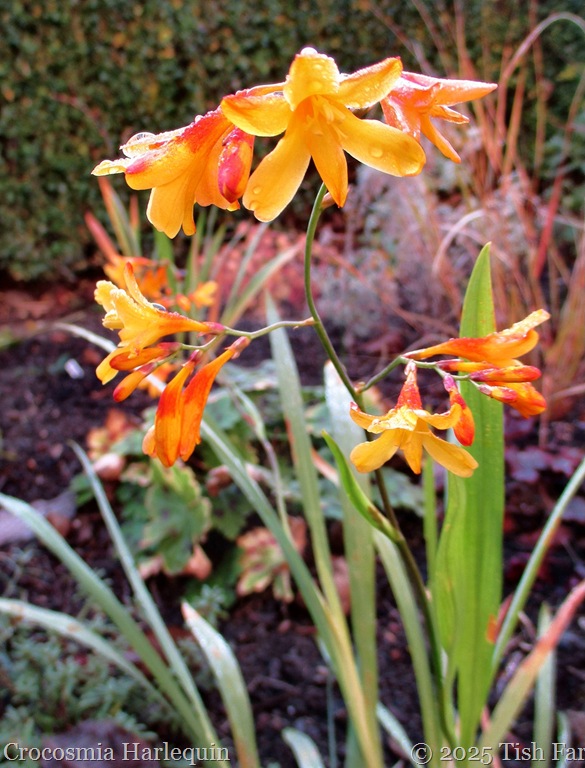
4) And in the front garden, a new favourite Crocosmia Harlequin, as seen this morning. Isn’t this a lovely plant…

Harlequin

*

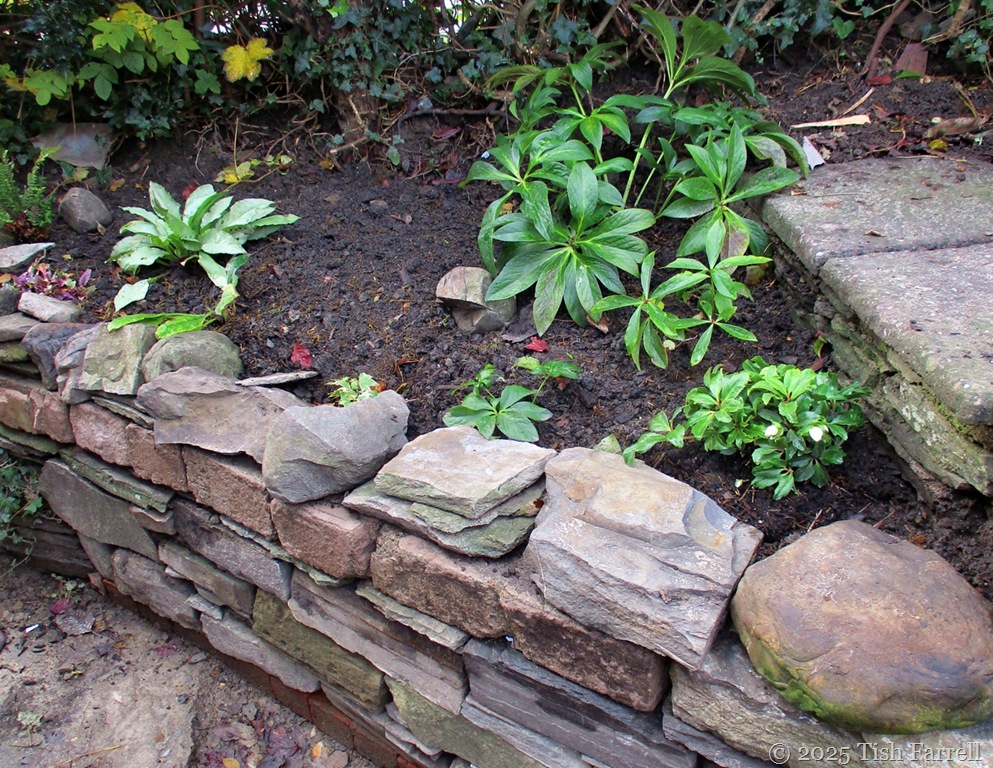
5) In between torrential rain and misty drizzle, garden tidying, and the usual plant shifting has begun. Our builder and son also came and removed an annoying (literally) stumbling block outside the back door. Last year we had the garden steps reconfigured, but the job wasn’t quite finished and the old bottom steps survived the exercise, were a real eye-sore and general all-round nuisance. But now transformation. They have been demolished and a brand new, semi-shade bed created. I’ve planted it up with assorted hellebores, (Christmas Carol in the right hand corner just in bud), dwarf daffodils, snowdrops under the hedge, pulmonaria Blue Ensign and Diana Clare (silvery leaves), and in the far left, a neat fern, Polystichum setiferum congestum. As the leaves go from the hedge end behind the house, it will get more light. A spring garden then.

new bed

*

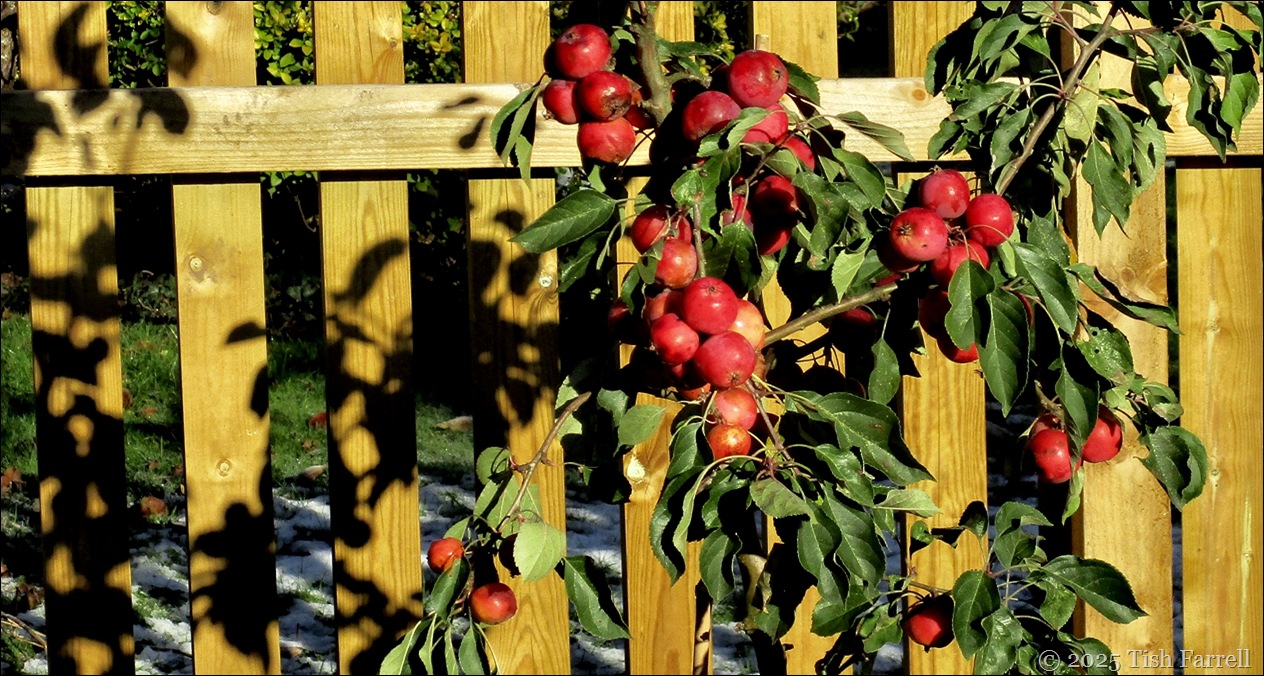
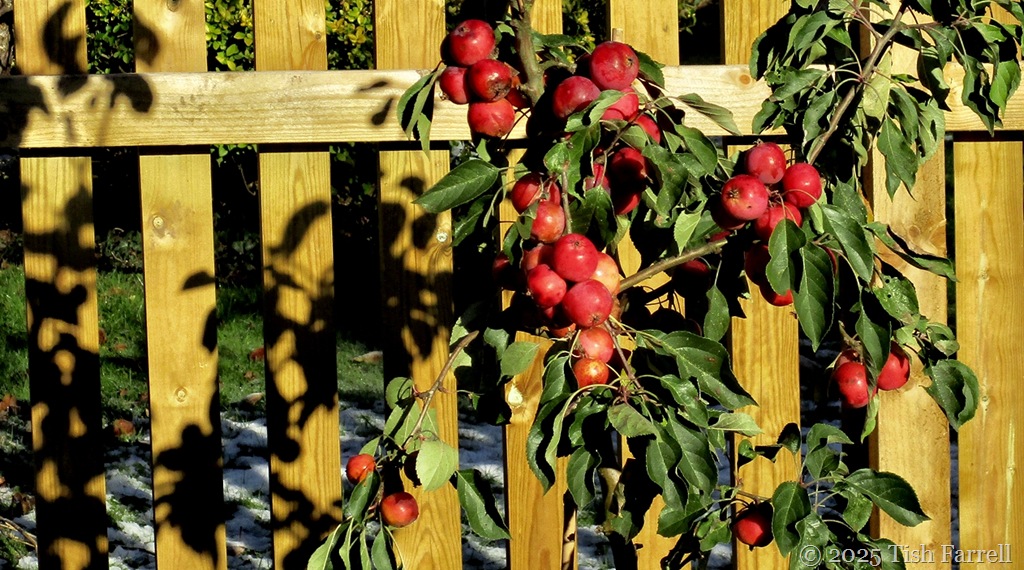
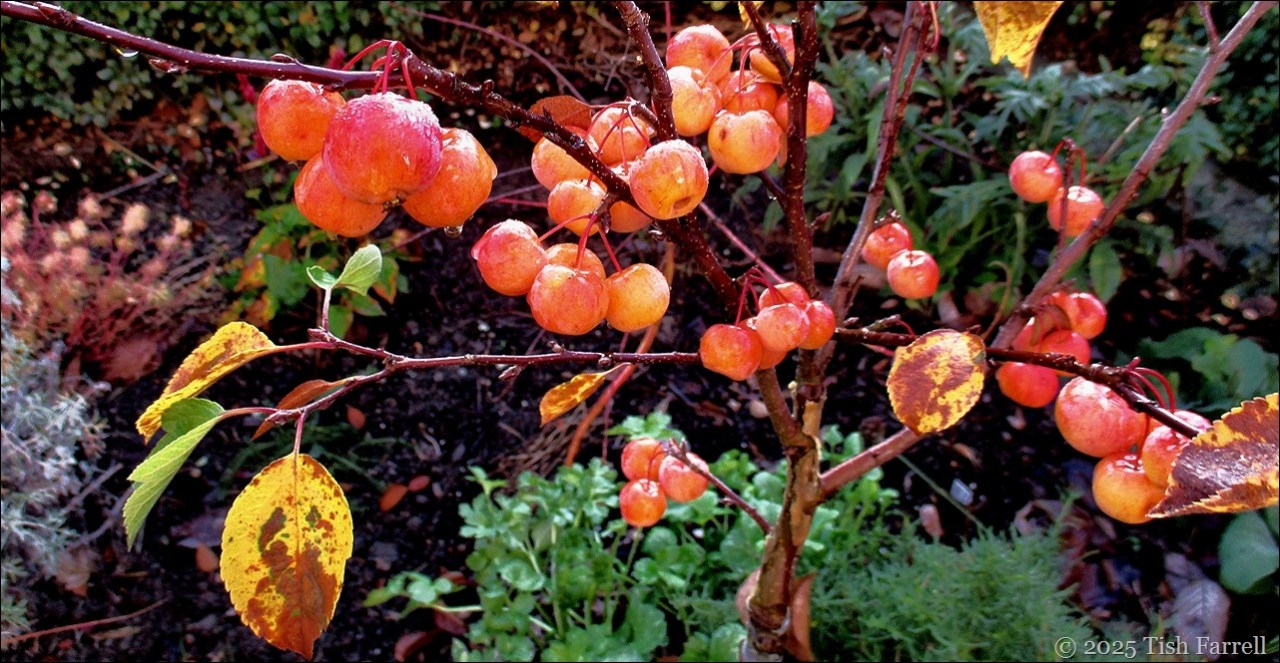
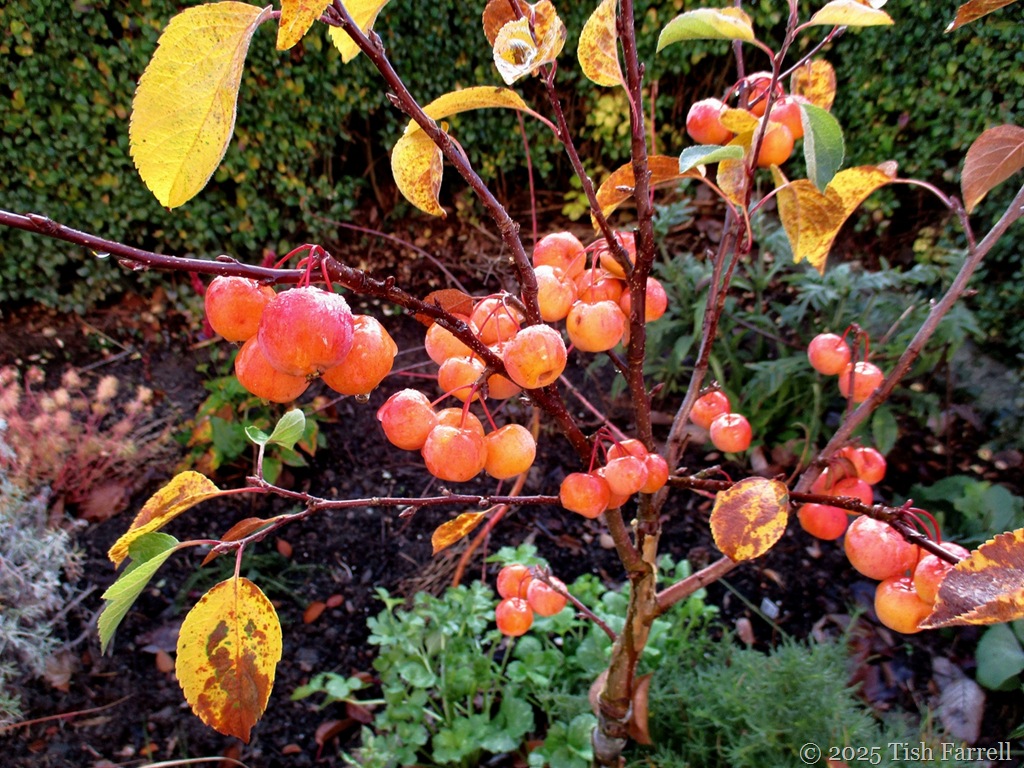
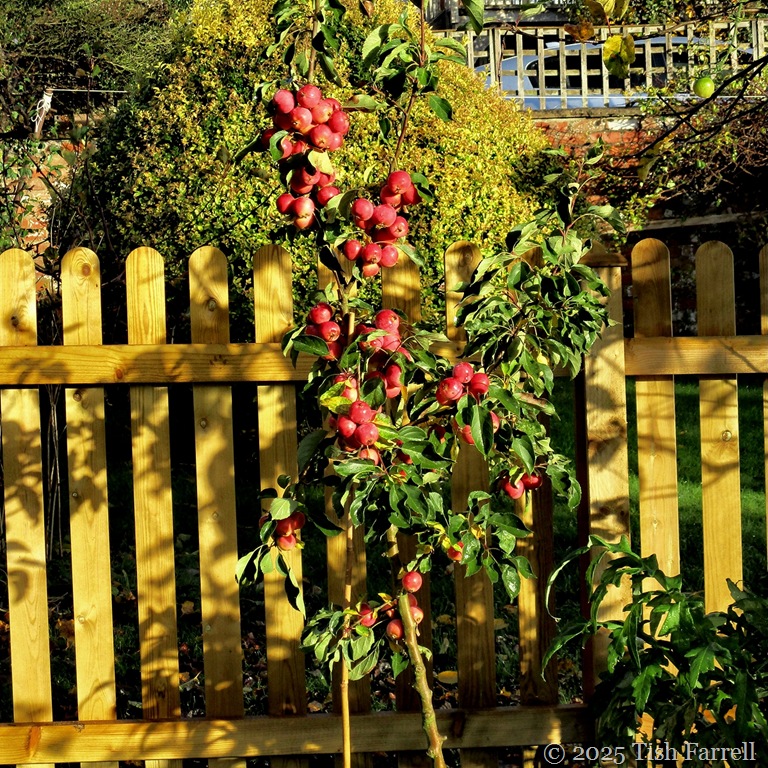
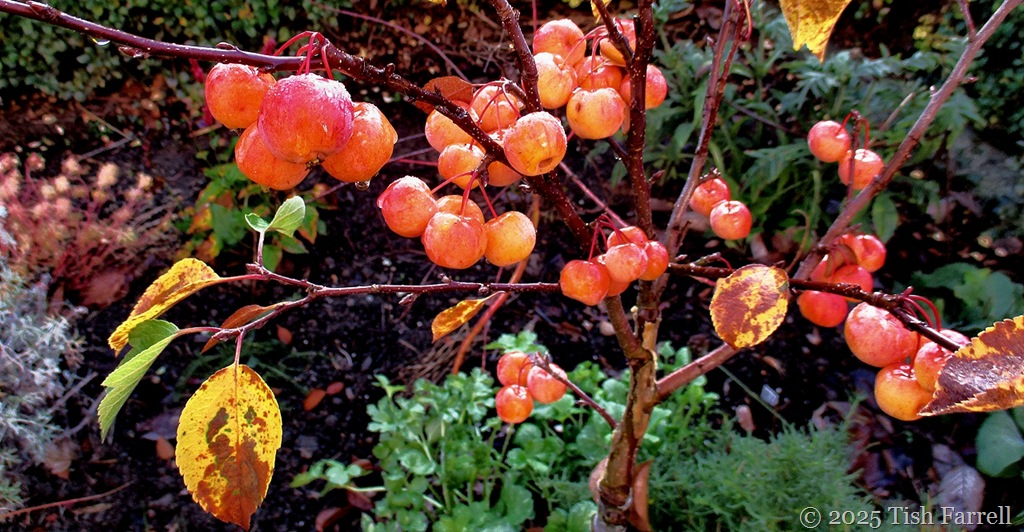
6) Last but not least, when it comes to providing long-lasting colour and cheerfulness, to say nothing of eventually feeding the birds, it has to be the crab apple trees: a miniature Evereste in the front garden (header photo) which we can see from the sitting room, and Jelly King at the bottom of the garden, but visible from the kitchen. Even on the gloomiest days, they do their best to glow. Today, though, we have wall to wall sunshine and Wedgewood Blue sky, so here they are looking their brightest…

Jelly King

Evereste header


Six on Saturday Please call in on our host, Jim. He still has some fabulous plants still flowering in his garden

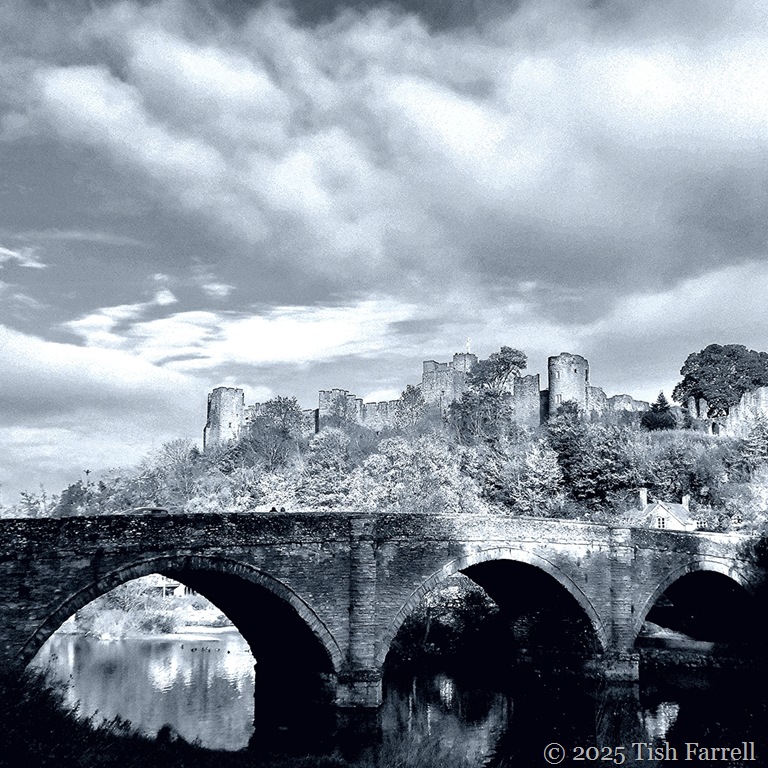
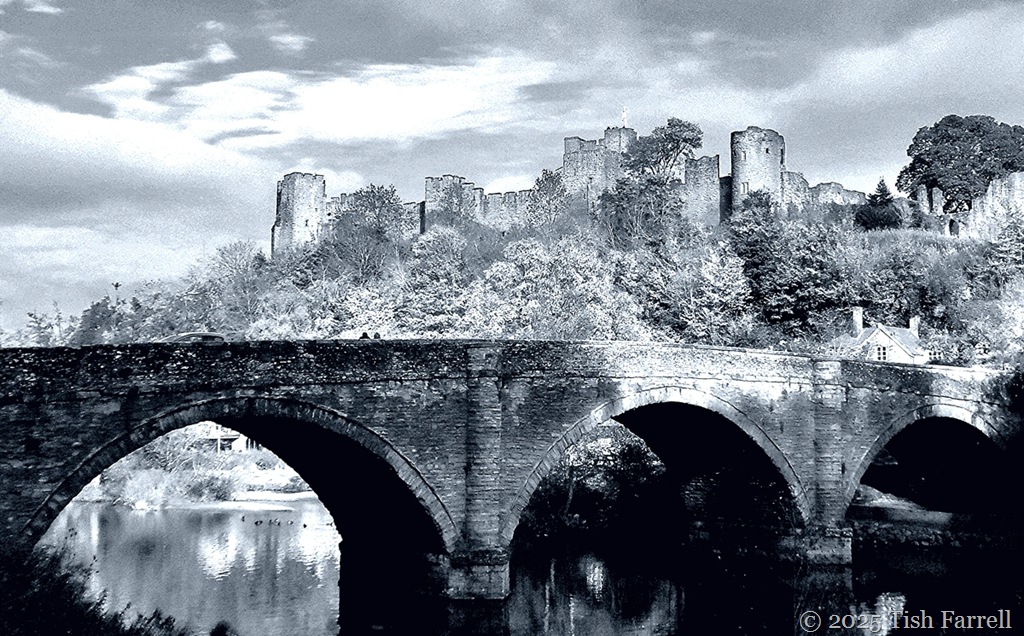
Antique Shadows at Dinham Bridge

bridge 2

A bridge for Cee who loved bridges and featured them in some fabulous monochrome shots. Like so many others, I loved taking part in her regular Black & White photo challenge.

*

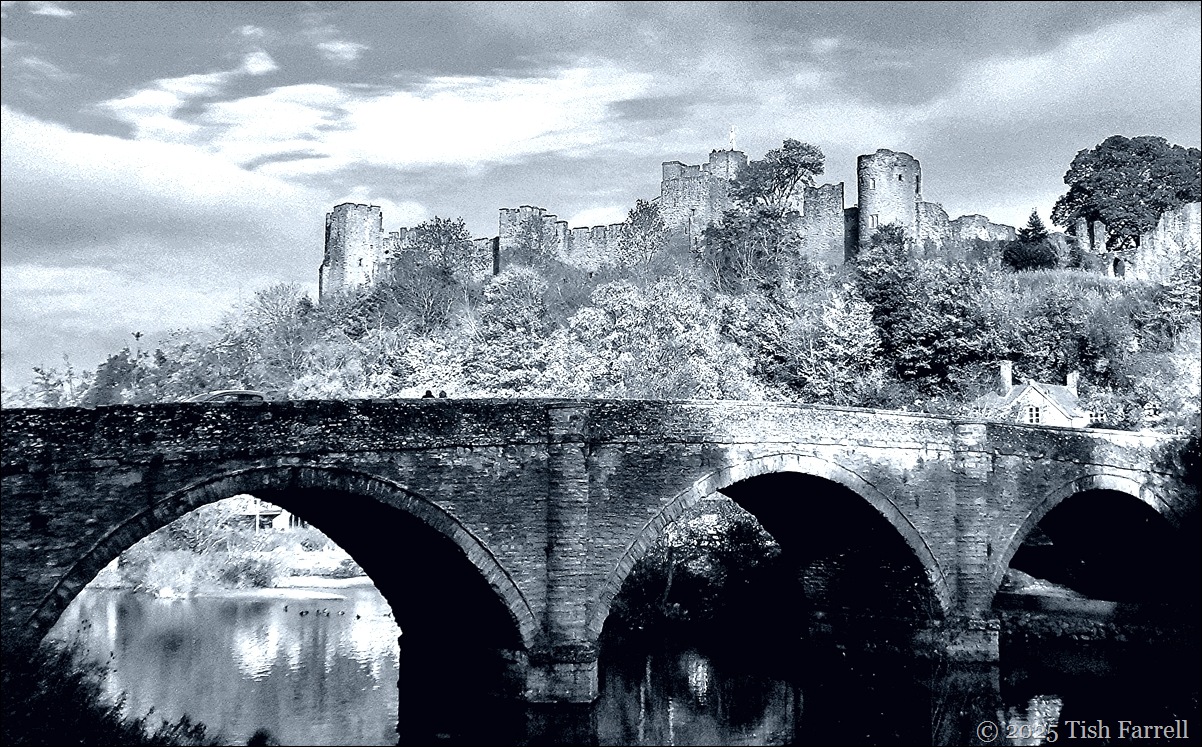
Dinham Bridge over the River Teme in the Shropshire market town of Ludlow was built in the early 1800s. The castle above it had its origins nearly 800 years earlier, soon after the Norman invasion of 1066. It was one of the first stone-built castles under the new regime, sited there to keep the Welsh at bay. Over succeeding centuries it was expanded to the fortress scale whose remains we see today. As with all castles, there were doubtless many shadowy doings, conspiracies and counter-conspiracies within its walls; but its towers caught here in autumn sunshine almost have fairytale looks; so many stories those stones could tell.

*

November Shadows #7 Today Becky pays tribute to Cee who meant so much to so many. There are further blogger tributes at links below.

Remembering Cee 7th November  Marsha Ingrao at Always Write and Dan Antion at No Facilities are hosting a day to remember Cee; Cee who inspired us with her weekly photo challenges, and was so generous with her knowledge. She embraced so many of us and is sorely missed in the blogging community she so steadfastly embraced and encouraged.

bridge 2 header