
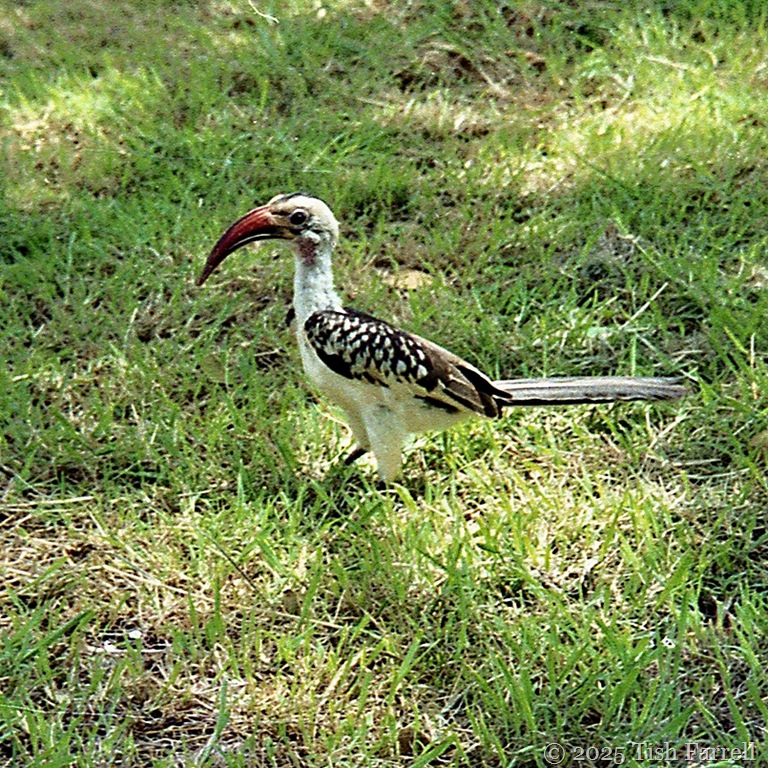
The hornbill in the photo is not the one I’m going to talk about – for reasons that will shortly become clear.
*
It was a quiet afternoon at the Taita Hills Hilton. The lunch-time safari vans had come and gone. I’d been writing letters, sitting in the shade by the teardrop pool (see previous post). Its heavenly blue, the shimmer of it, was mesmerizing, as were Robert’s passes with the pool net. The lack of guests meant he could take his time sifting out the tiny acacia leaves and assorted bugs. He moved quietly and with ease. My attention drifted.
And then Robert was at my side. Would madam like to see something very interesting. I must have looked doubtful because he assured me I did not need to go far. I then noticed he was holding a moth between thumb and forefinger. It looked dead. But this wasn’t it. He led me to the largest of the poolside flame trees, had me stand directly in front of the trunk. Look, he said, holding the moth towards the tree. In a trice it was gone. Something had moved, but I could not see what.
Robert pointed to a slit in the bark. I leaned forward and saw that behind the slit was a hollow. A very dark hollow. Except for two bright, beady eyes looking straight back at me. It was a very odd experience – to be watched from inside a tree. It was then I noticed how close my nose was to a shadowy scimitar bill. I stepped back.
Robert found another bug and held it near the slit. Another twitch of the air. And that’s when he told me about the remarkable nesting habits of the hornbill family. The mating pair find a suitably hollow tree, he said. The female then allows herself to be imprisoned, the male building up a mud and dung walled nest around her. A small opening is left so he can deliver food. And there the female stays until the eggs are laid and hatched. When all becomes too crowded in the nest, the female breaks out, and the parents then rebuild the mud wall and continue to feed the chicks through the slit until they are ready to fledge.
Well!
Robert then alerted me to the fact that the male was hovering nearby, waiting with the food delivery. We quietly withdrew. And then my new wildlife guide wanted to know what I was doing in Kenya. I told him how Graham was working on a project to control the Larger Grain Borer (LGB), an imported pest of grain stores, and that there were plans to introduce a predator beetle to reduce its numbers. Robert then said he hoped the predator would not cause harm to Taita’s butterflies. I assured him that it had been meticulously screened to have no impact on anything but LGB.
It was some eighteen months later when I talked to him again. In the interim Graham and I had been in Zambia, and when we returned to Taita Hills I found that the hornbill tree had been felled, was nothing but a stump. I was so surprised I remarked on it to the pool attendant, at which point we recognised each other. Robert then recounted all I had told him about the LGB project in the Taita Hills. I was very touched. It was as if he had thought often about our one previous conversation, as day in and day out he gracefully sieved bugs and leaves from the teardrop pool that shimmered like a mirage.
*
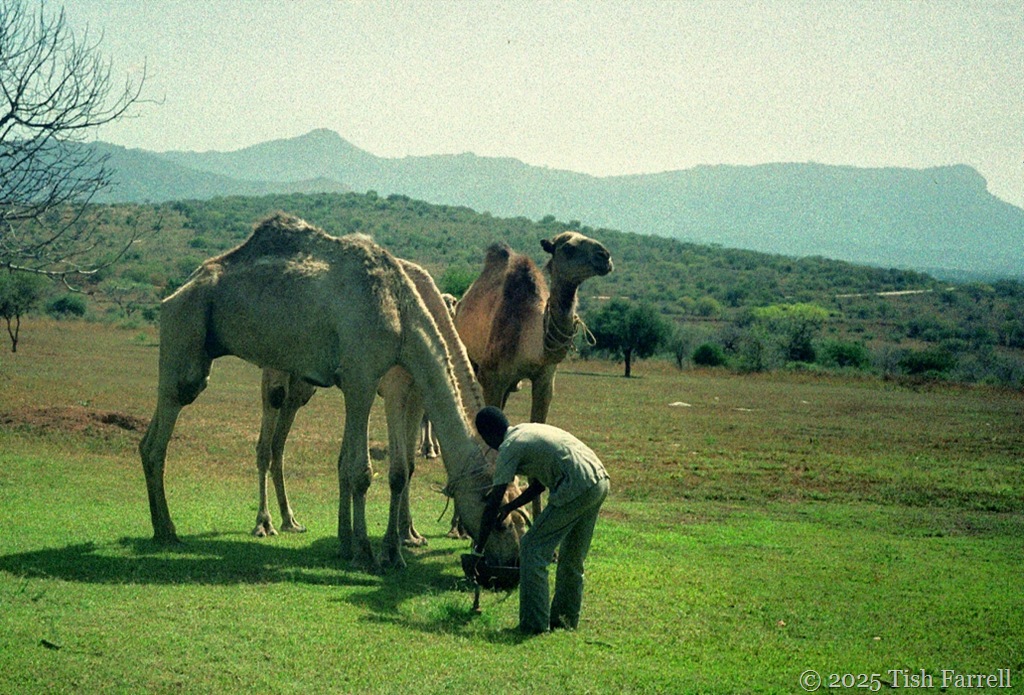
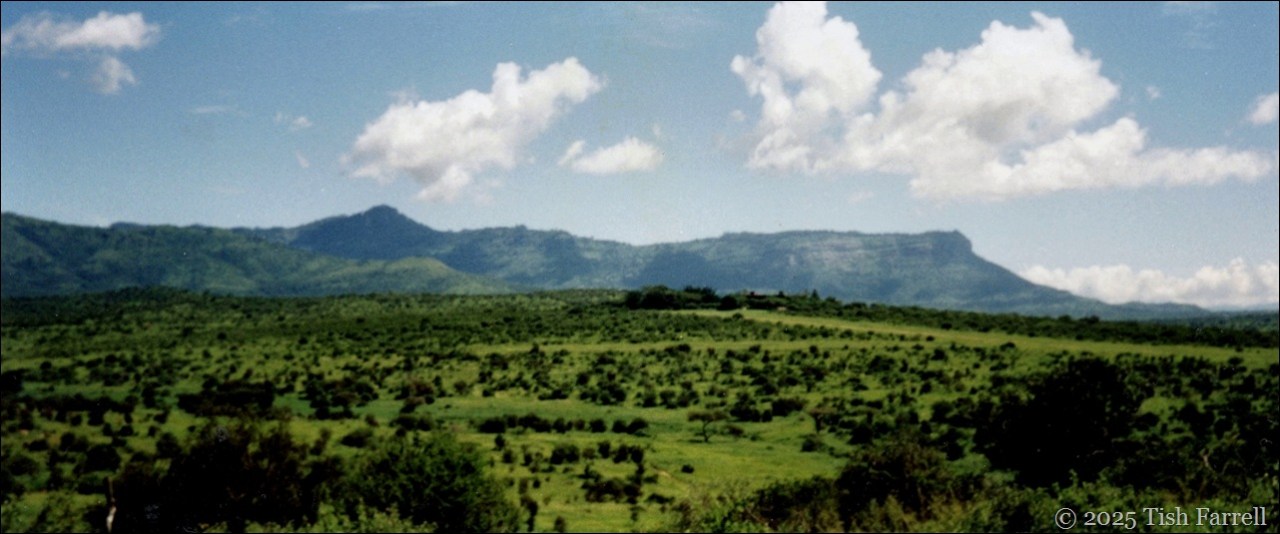
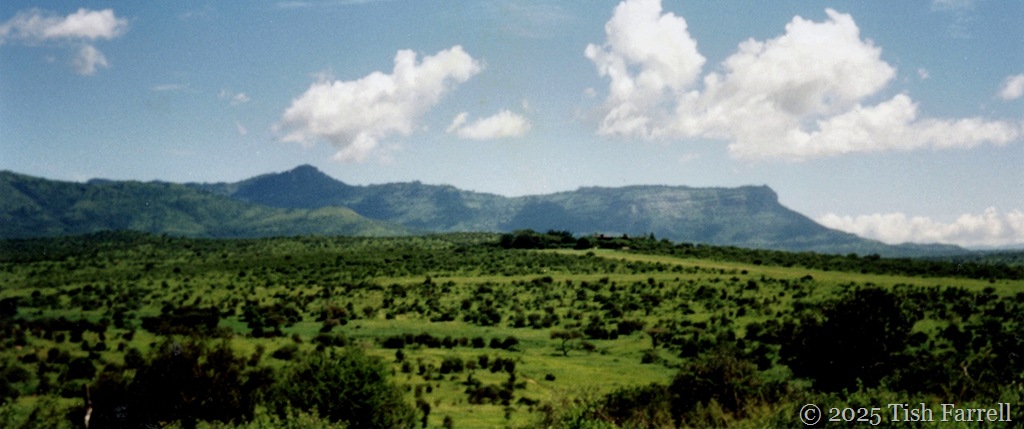
P.S. On later visits we found Robert had been promoted to camel handler; at least one assumes it was a promotion. The camels in question were ever surly creatures. Here he is in the hotel garden; the Taita Hills during the short rains.
*

What a magical experience! But I don’t think I’d want to come back as a female hornbill …
An exacting motherhood, certainly.
That’s a truly lovely introduction to nesting hornbills. We had a hornbill tree near our flat and year after year would watch fascinated at the process. Eventually the tree fell down in a storm and the hornbills found another tree a little further on.
Do consider adding your post to Birds of the Week.
How very wonderful that you had your personal hornbill viewing point. Many thanks, I.J.
I absolutely love your story. Amazing… both the hornbills and your own adventures. So well told.
Many thanks for reading, Judy.
I loved your story so much that I reblogged it, Tish.
And thanks for the re-blog. Tx
And the story continues! I’m just loving this series. Did you feel lonely when Graham was off working. And you are helping expand my vocabulary: trice. Had to look it up!
That’s a good question, Anne. I did, on the rare occasion when he wasn’t home by nightfall, feel a tad anxious. But I never really felt lonely, not even when I stayed in places completely by myself. Kenyans are so very hospitable and considerate.
😍😍😍
wonderful experience, but I am with Margaret I don’t want to come back as one of these hornbills!
Mama hornbill must be a very stalwart character 🙂
she really must be, or enjoy retreats!
She certainly gave me a very hard look. Most unnerving.
What a lovely lad! And an evil beak! xx
Yes, that beak!
❤️. On things African, I just finished Invictus, the book. We’d seen the movie years ago, as my husband used to play rugby. We just watched it again and then I realized that it was based on a book, I was happy to find it at our library. What a story, the story of Mandela, South Africa, and how he used rugby to unite a nation. Naturally, there was so much more in the book, things I never knew despite being alive during those times. How easily that country could have been destroyed!
I’ve not read the book, but I’ll look it out. Mandela’s story was extraordinary. It’s a shame that no-one of his stature seems to be around to carry on the good work.
So true.
I saw the movie, though I haven’t read the book. Yet. Did you find out what brought the tree down? That is one big bill and a really stunning bird.
The hotel management had cut down the trees by the pool. The one the hornbills used was probably diseased if it had a hole in the middle of it. They were ornamental (albeit tropical) species and probably weren’t suitable for the terrain/had a short shelf-life.
That’s what I suspected. We’ve been losing some of our older trees. The oaks can live a very long time. Ditto maple. Everything else does not live nearly as long, often as little and 20 to 30 years. That doesn’t seem nearly enough time.
I love these stories Tish and the hornbill bird is so unusual and what a remarkable encounter.
They’re a very intriguing family – the hornbills. The biggest kind, ground hornbills, are black and as big as turkeys with bright red wattles and associated with doomy superstition.
I love reading your stories about your Africa experiences. What an amazing story about the hornbill. I’m supposing the mud enclosure was to protect the family. Sad that the tree was cut down
Yes, the mud walling was to keep everyone safe. I think the tree must have been diseased, hence the suitable hollow for the hornbills to remodel.
A quite amazing looking bird and nesting habit. A great experience. Pity the tree had been felled. My bird of the week also has a rather large beak
I’m guessing the tree was a danger to guests.
I hope so as well. I had a friend whose new neighbours cut down all the trees as they didn’t like leaves in their pool then complained how hot it was 🙄
What a wonderful experience! And how kind of Robert to have introduced you to it. I’ve seen hornbills several times on our travels but never heard about this nesting habit which sounds fascinating 😀
I read a paper ages ago which had yellow-billed hornbills cooperating with mongooses, watching each others’ backs so each could forage in safety.
Nature is amazing, isn’t it?!
Absolutely it is.