
It seemed the greatest gift for this nosy writer when Graham said I could go with him to survey the Kikuyu farms just north of Nairobi. Yes, yes and yes. I would be delighted to look for smutted Napier Grass. And hold the clipboard. And manage one end of the tape measure.
We were all set then, along with Njonjo, senior driver for the Kenya Agricultural Research Institute, where Graham’s crop protection project was based.
It was the time just after the late 90’s El Nino rains. The Rift escarpment roads were terrible, many of them washed away. In other places great chasms had opened up, or the roads were strewn with boulders brought down the hills by flash floods. But this was also home territory for Njonjo. He had ancestral land there. A farmer then, when he was not employed as a driver. He anyway handled the Land Rover with great skill, and astonished us, too, by simultaneously negotiating giant pot holes and spotting plots of smutted grass growing many metres from the roadside behind kei apple and winter jasmine hedges.
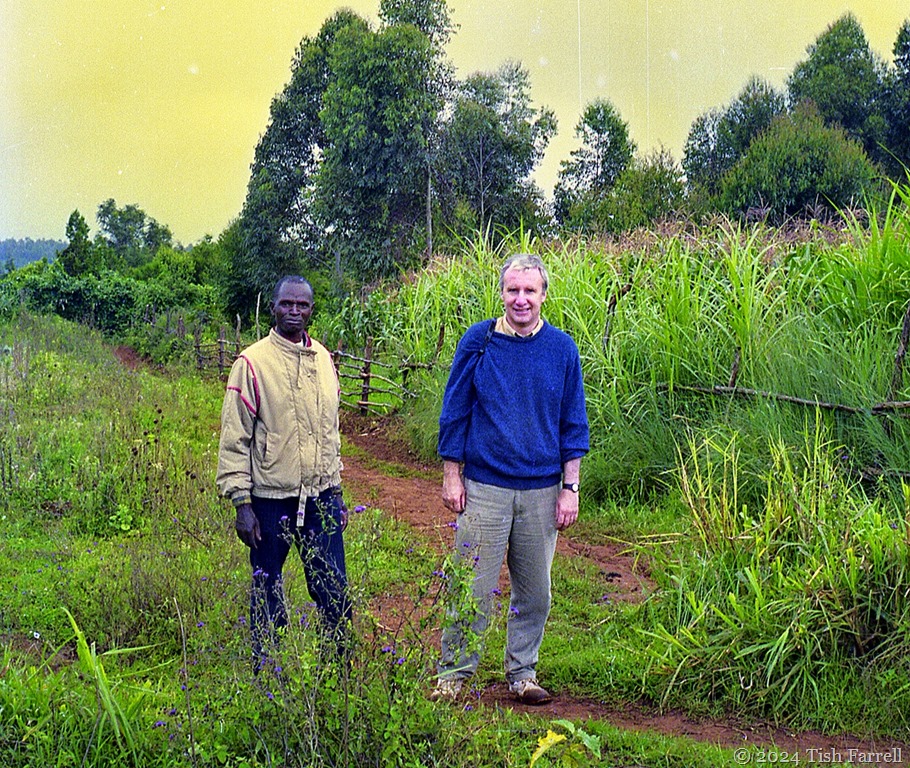
Njonjo and Graham
*
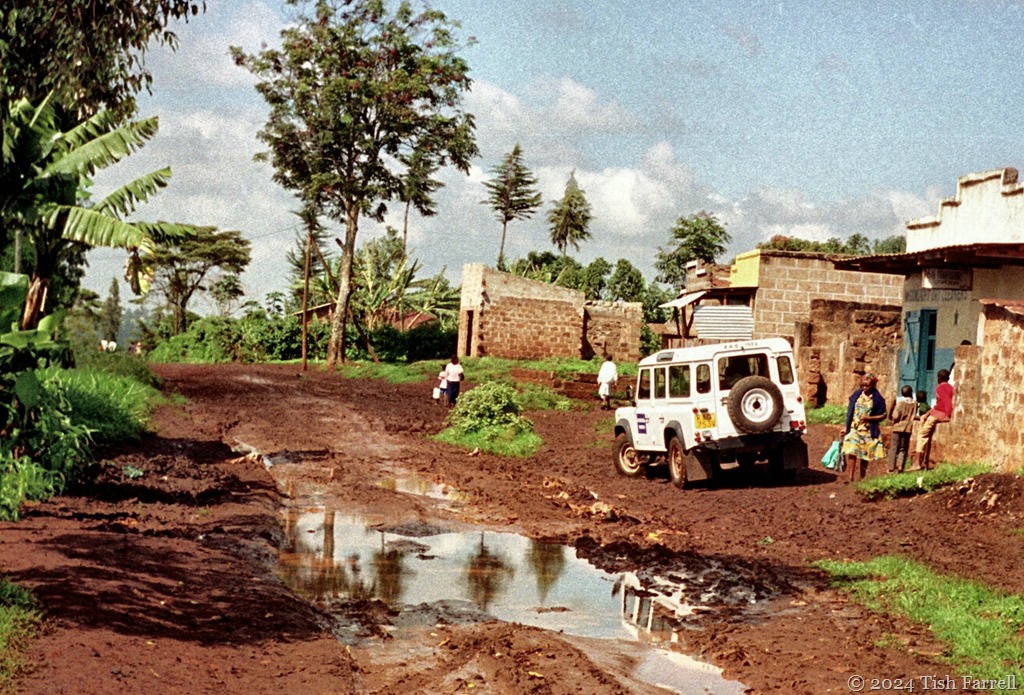
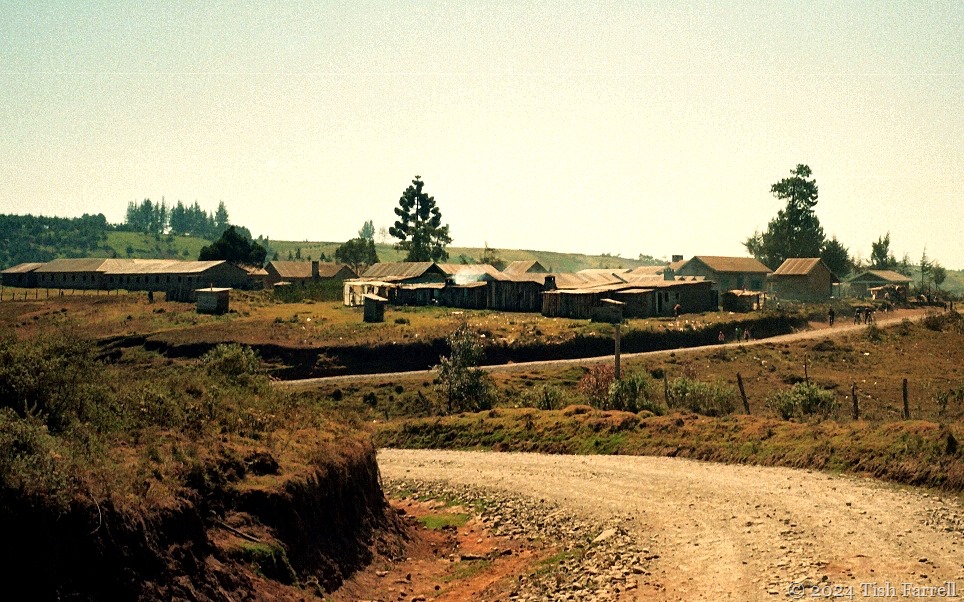
Trading centre after El Nino rains
*
*
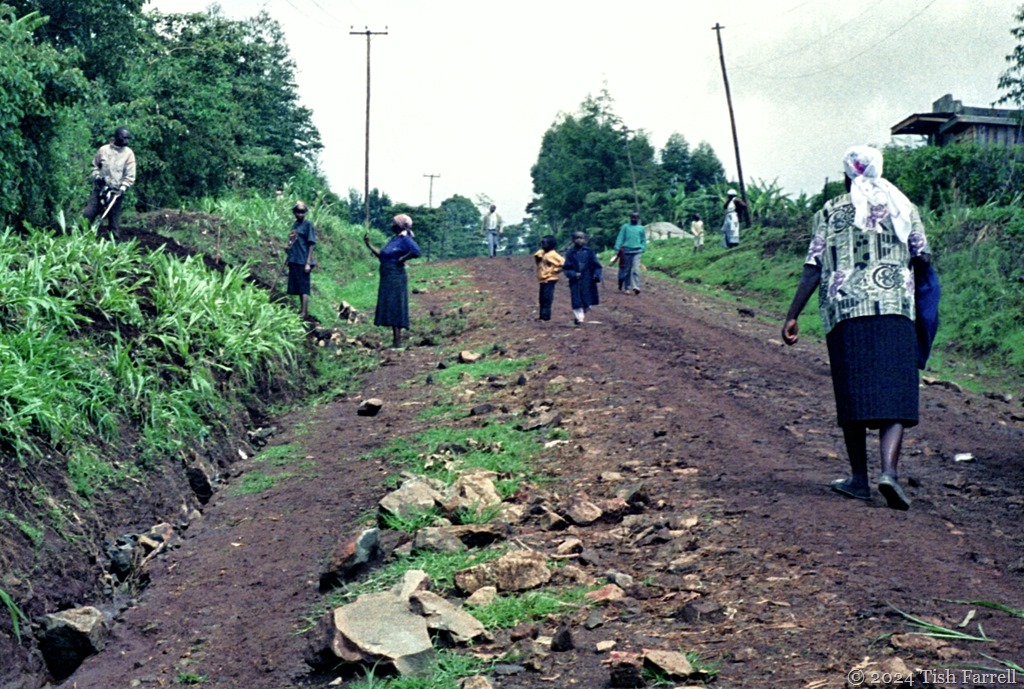
Of course, after a fine spell, the roads baked hard into gullies and corrugations. This next photo shows one of the Rift Valley lanes on the edge of the escarpment. You can just make out the valley bottom through the far haze:

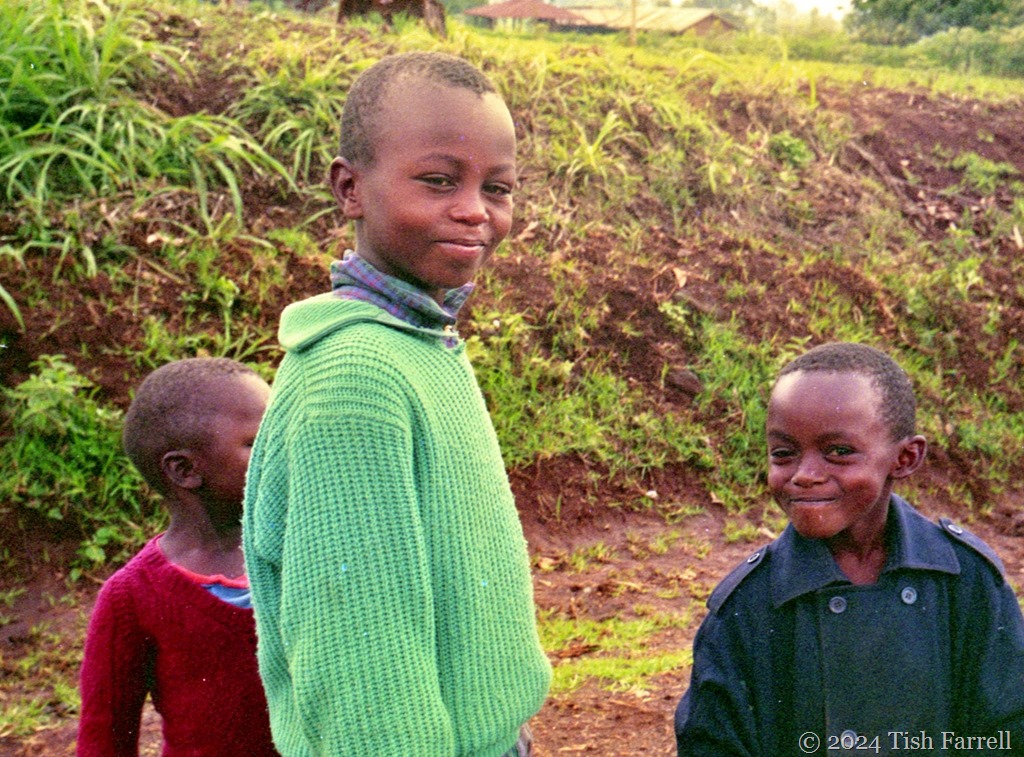
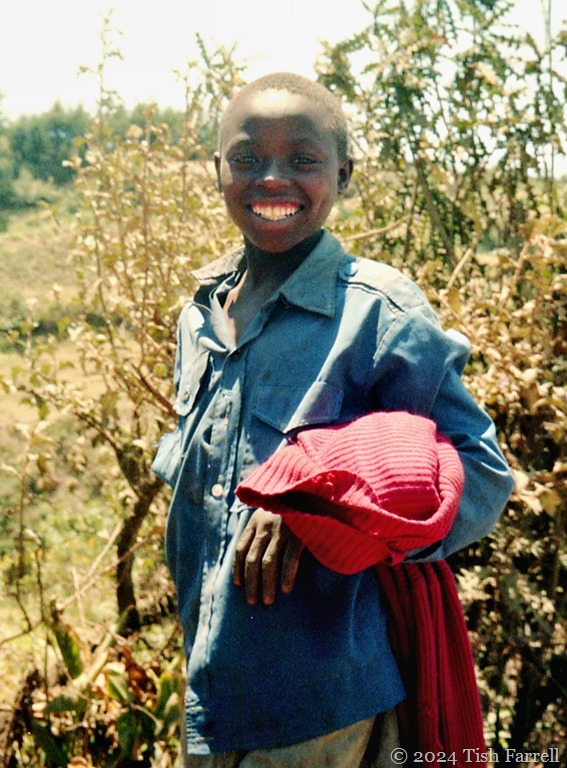
I don’t recall why we were all out of the Land Rover at this point. Probably Njonjo was asking directions. Even locals have problems finding their way across the ridges. Anyway, this was the moment I met this lovely young man:
*
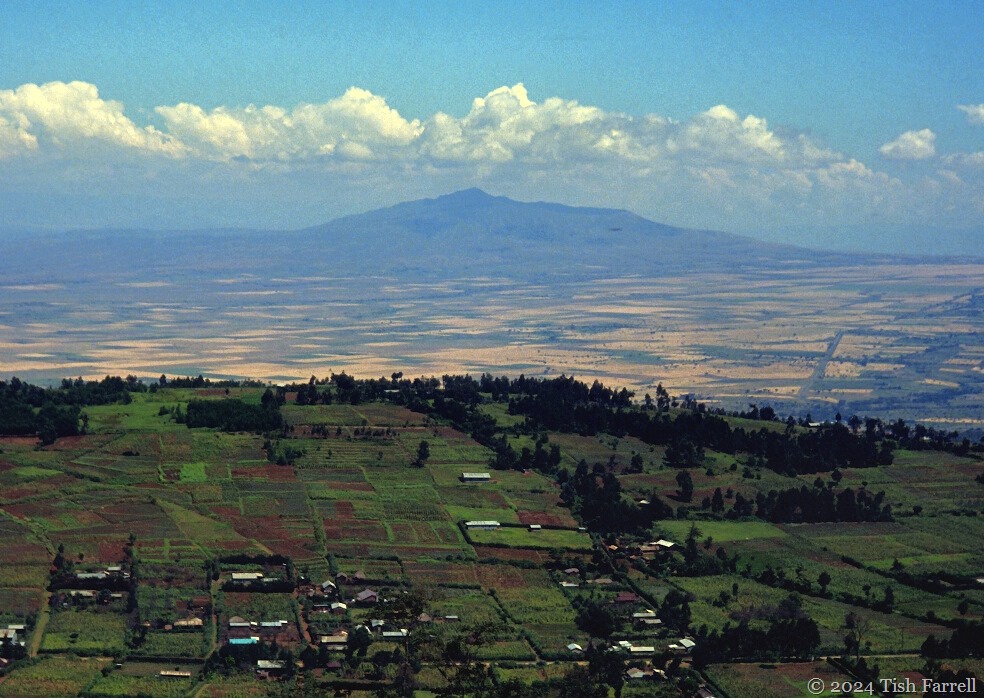
Small-holder farms at Escarpment, in the Rift’s shadow, Mount Longonot in the background
*
As we jolted and slid along the country lanes, Graham was using a GPS to select farms at random. When a location was chosen, Njonjo then took further charge of operations and went to find the owner of the farm, and talk them into admitting a couple of wazungu , who would like to look at their Napier Grass.
Over the weeks of the survey it became a matter of pride that no one turned us away. In fact the opposite was often overwhelmingly true. Wherever we went, we were met with great courtesy, mugs of tea and presents of farm produce: plums, pears, sugar cane, a cockerel. We had brought useful information that must be reciprocated. Njonjo was particularly adept at fending off serial invitations to lunch, and did so without us seeming too rude. Otherwise the job would never had been done.
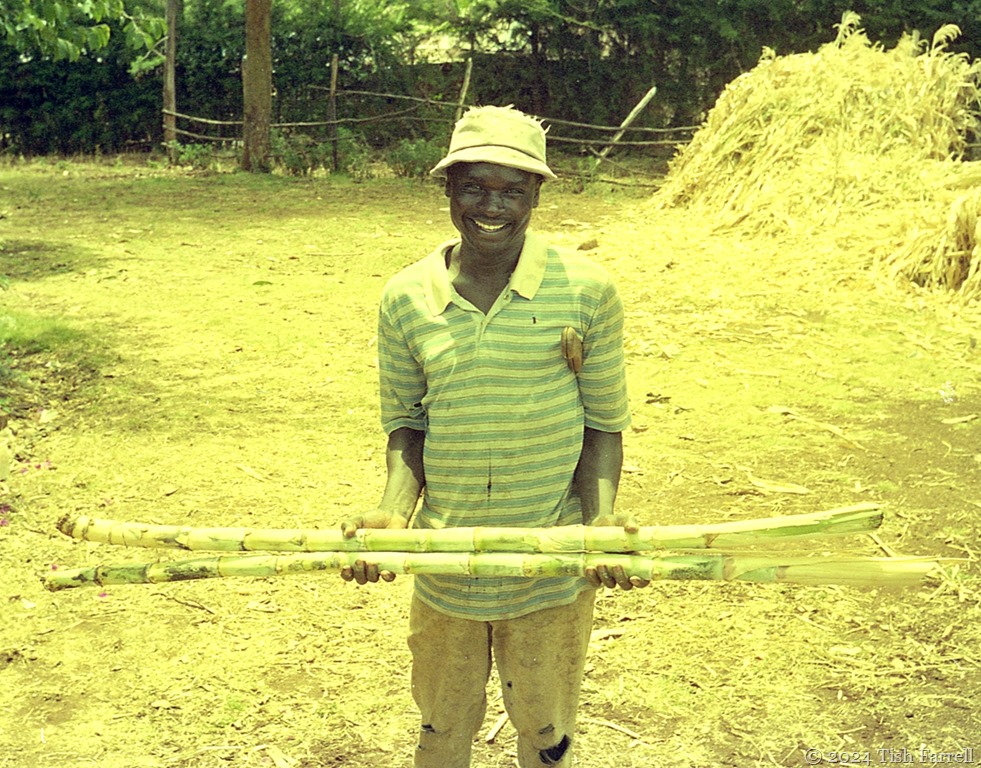
This farmer gave us sugar cane
*

One chilly morning Mrs. Njuguna served up mugs of hot chocolate before we went to examine her napier grass plot
*
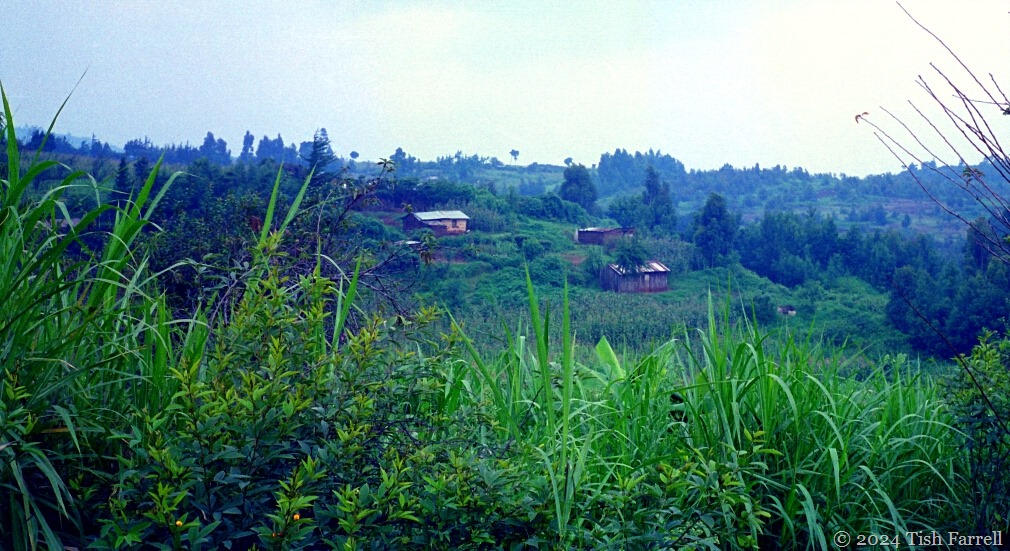
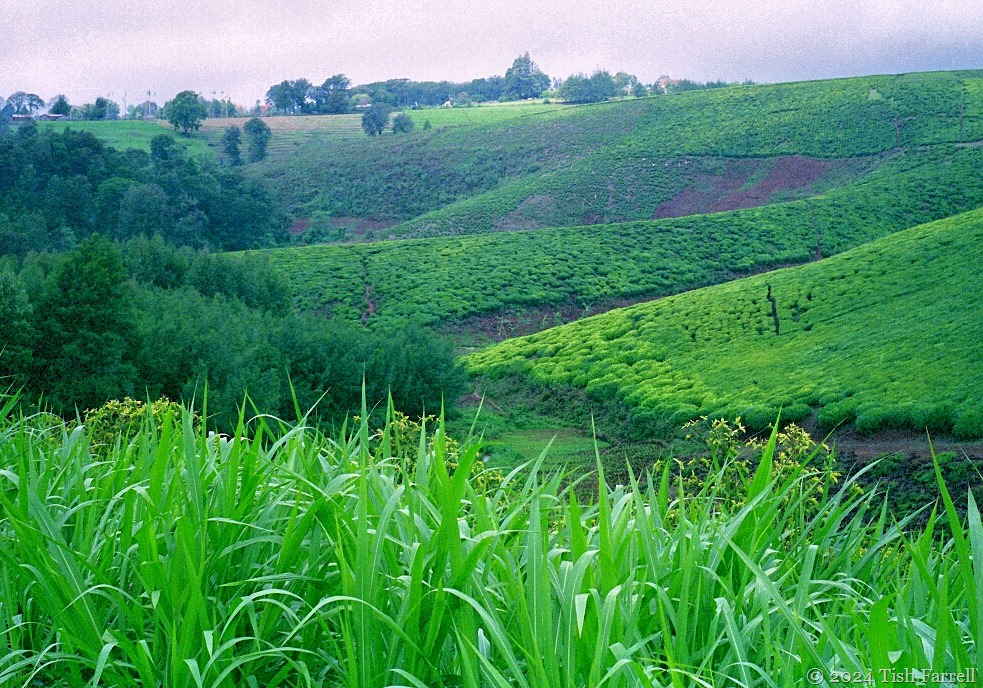
Napier Grass (foreground in both photos) is an essential animal food crop for small-holder farmers who zero graze their stock. Zero graze means they have no access to pasture, but grow plots of grass wherever they have space, including on roadside verges, and then crop and deliver the grass to their animal pens. (Commercial tea gardens in the background). Most farms (shambas) are on ancestral land that has been subdivided down the generations and may be only a few acres or less.
*
By now you’re probably wondering what Napier Grass smut looks like. You will also have gathered that in this context, smut has nothing to do with off-colour jokes or questionable practices. (That said, everyone found it hugely amusing that Graham was doing a part-time doctoral thesis on smut). It is in fact a fungal disease that attacks grasses, including maize and sugar cane. On Napier Grass it becomes visible when the plant begins to flower; the florescent parts look as if they have been dipped in soot.
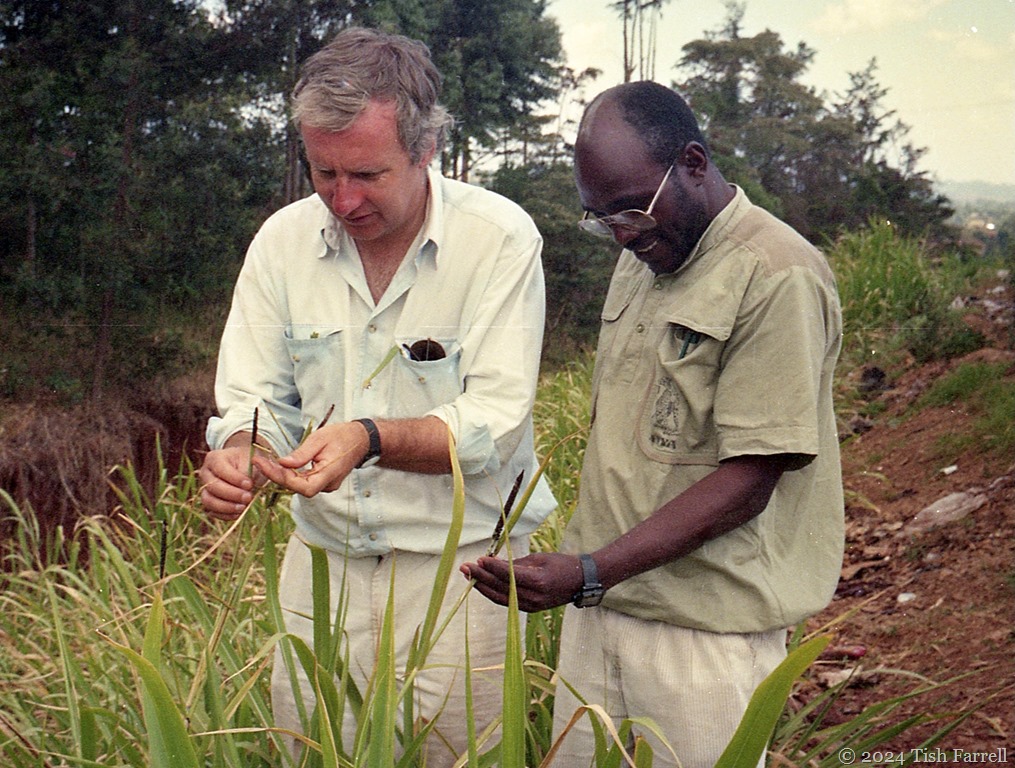
Two happy plant pathologists: Graham with Dr Jackson Kung’u admiring smutted grass growing on a road reserve in Nairobi, as spotted across a busy dual carriageway by Njonjo.
*
The diseased grass isn’t apparently harmful to the animals that eat it, but there are serious implications for farmers who rely on it for zero grazing. In time, smut weakens the plant and so less and less leaf mass is produced. The spores spread on the wind, although Graham thought the most likely source of infection was due to farmers unknowingly giving cuttings of infected plants to their neighbours. The only solution is to dig up the plant and burn it.
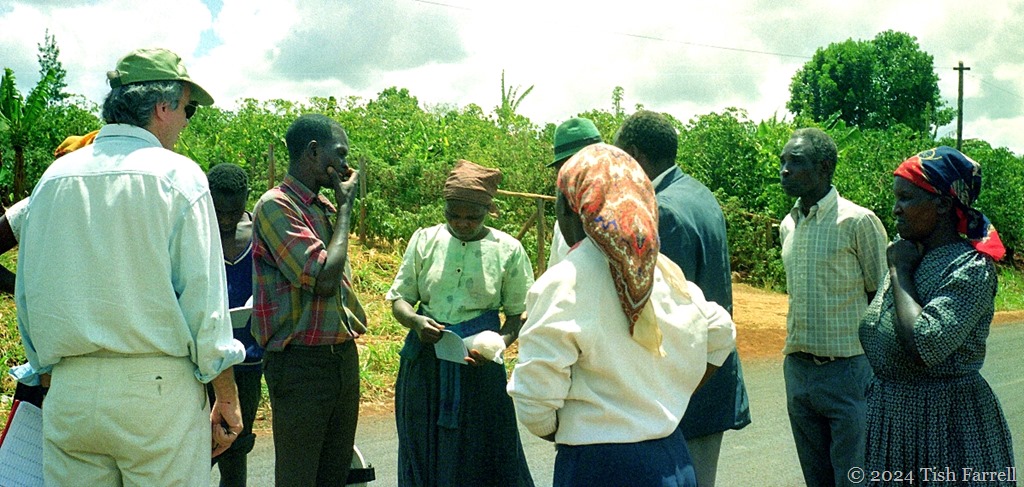
Farmers, predominantly women, were keen to hear anything and everything Graham could tell them. Impromptu roadside smut seminars became a feature, Njonjo providing lectures in Kikuyu or Swahili for those who did not speak English. Graham also distributed information sheets. We never seemed to have enough!
*
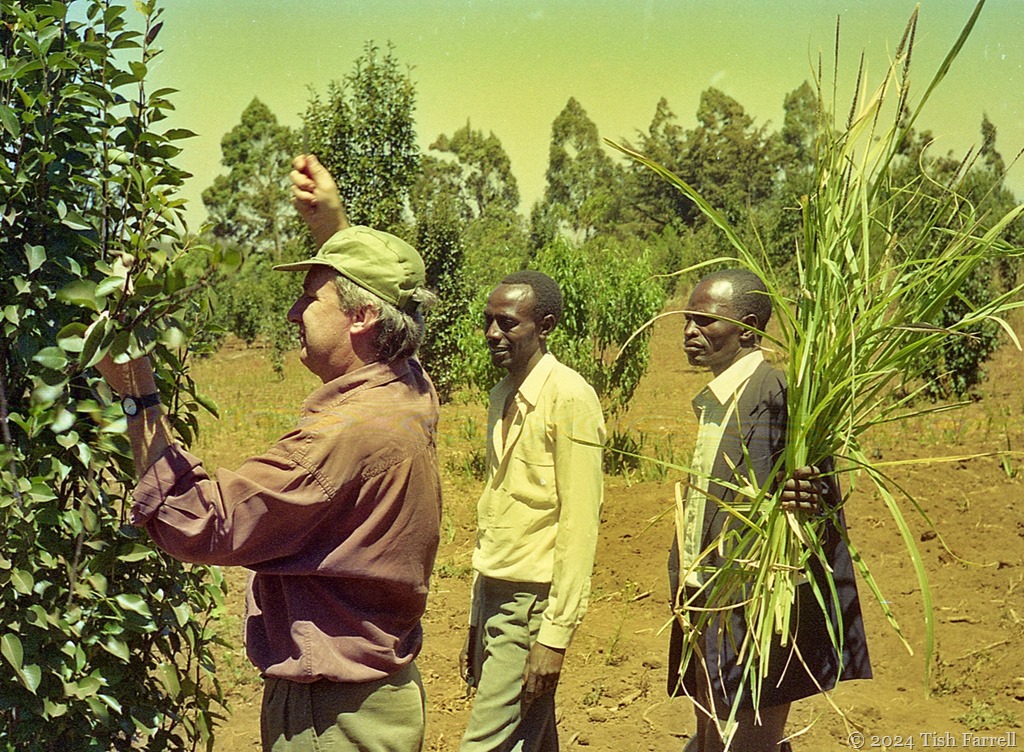
On some of the farm visits, it was inevitable that Graham would be consulted about other plant diseases that farmers had noticed. Here there’s some problem with the fruit trees.
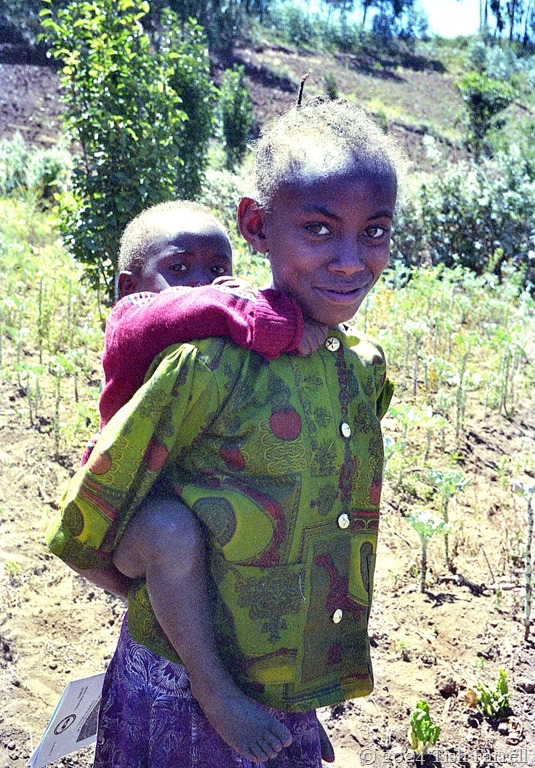
The farmer’s daughter watches us. Her father had handed her one of Graham’s smut information sheets: the school girl in the family…
*
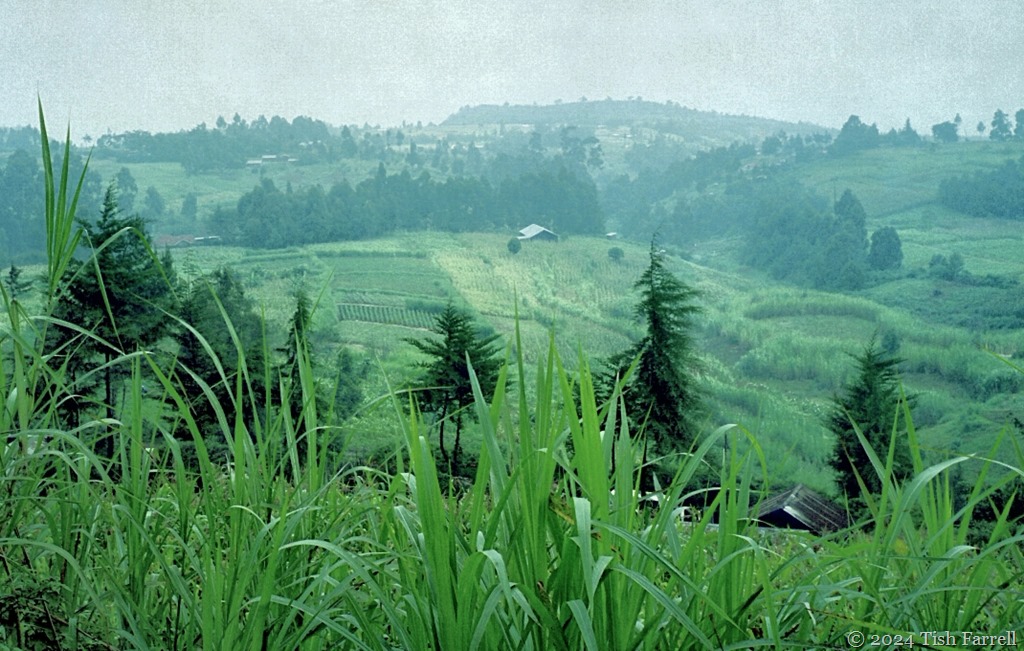
The Kikuyu uplands are mostly 5-6,500 feet above sea level, the settlements strung out along ridges. Although at the tropics, early mornings and evenings can be cool, and especially in June and July, when there may also be fine rain and fog. Some of the highest settlements at around 7,000 ft are in the frost zone, the landscape’s bleakness, with bracken growing along the roadside, reminding me of Scottish uplands.
*
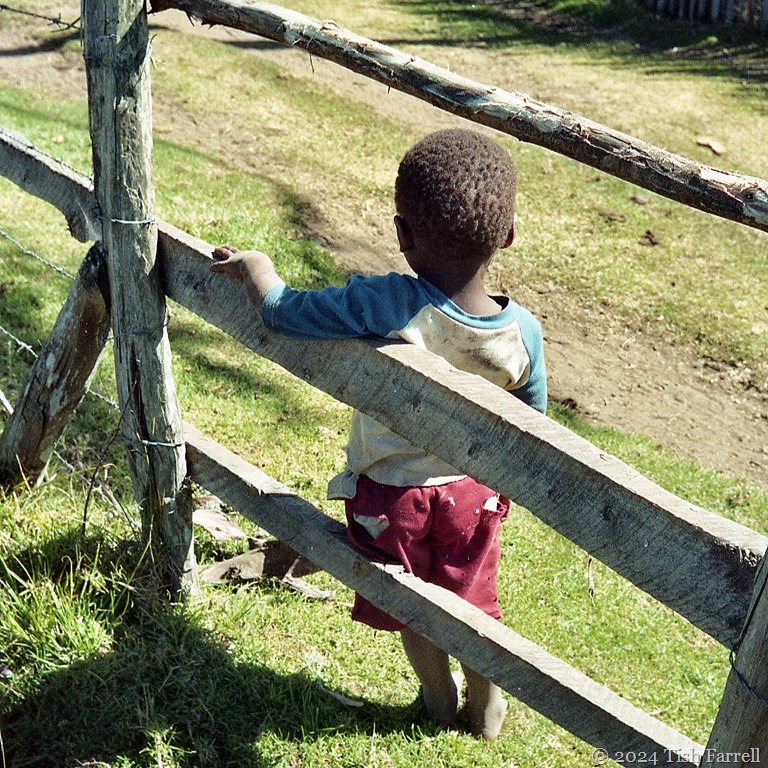
All in all, Graham’s smut survey was among the highest highlights of our seven year stay in Kenya. Although not everyone was always keen to speak to us:
copyright 2024 Tish Farrell
Lens-Artists: This made me smile Ann-Christine is making us all smile with this week’s theme.

What a photo story, Tish! I especially love the portraits of the young ones!
Many thanks, John. The children were so sweet – ever keen to practice their English.
Such a different world Tish. I find myself wondering what the area would be like today. It must have been such an amazing time for you and Graham. And of course the children definitely made me smile, especially the last!
That’s an interesting thought, Tina – the how things might have changed question? Quite a lot I would think.
Children always make me smile. This is the first post I read today, it was at the top of my reader, What a way to start the day! Gracias, Tish.
Oh, now that’s also made me smile, Thom. So glad to have given you a good start to the day 🙂
A beautiful photo story from your time in Africa! I always love the stories from there, and the warmth in your voice. The youngsters look so sweet and their smiles are contagious enough to still go through the screen!
So well put, A-C. Their smiles are still going after all these years 🙂
♥
Tish, thanks for sharing the stories and beautiful photos here. The children’s smiles were truly contagious. I also loved the little boy who turned his back to the camera in the end. A great post!
Many thanks, Egídio.
Engaging smiles all round Tish. Another lovely wander through your African journey. I am wondering what you did with a (live) cockerel…
I seem to remember it travelled quite quietly in the back of the Land Rover, and when we got home we gave it to Sam who looked after our house. He then kept it at the bottom of the garden by his house until its crowing annoyed the neighbours. At which point he duly despatched it, and his family ate it.
😂
What a wonderful story. The first time I visited Kenya, I was 19 years old and vowed to return, which I did just 5 years later. A wonderful country.
Yes, it certainly is a wonderful country, Judy. Just been seeing on YouTube how the younger, well educated generation, especially young women it seems, are taking up farming, (there’s long been high graduate unemployment) but now applying all their intellect and ingenuity to producing food, especially dairy farming. I’m guessing they’re developing ancestral family land, (i.e. probably worked by grandparents who have passed on). Family members are by custom buried on the shambas, so there’s a disincentive to sell off the land. It’s so inspiring to see what these young people are doing.
What a fabulous experience. You seem to have been met with such friendship and generosity. No wonder you were smiling.
It’s something we’ve long missed. Those Kenyan smiles.
Those days always raise smiles, Tish, and the kids are beautiful.
Great smiles.
Love these photos. Friendly smiles, I always smile back. Lol
Lovely that you smile back 🙂
😊😊
I smiled all the way through reading this post Tish! How can you not smile when looking at the children!
So happy the smiles worked for you too, Anne 🙂
😍
Such a special story and those wonderful smiles.
Thanks for reading, Flavia.
Photojournalism at its best, Tish. The smiles are arresting.
Many thanks for that very lovely comment, Sofia.
How absolutely fascinating! I had never heard of Napier Grass, smut (in this context!) or zero grazing, and loved learning about them all from you but especially the latter. I always love to learn more about how people live in different places – that makes me smile 🙂 And I loved your photos, especially of the people but also these captivating landscapes. You make me want to plan another trip to sub-Saharan Africa!
So pleased you found this post interesting, Sarah 🙂
Such happy photos for this week. 😀 😀
So lovely to hear from you, Cee. Sending love and hugs. Tx
Oh I totally understand why that trip would have been a highlight! Wonderful story Tish. I do so enjoy your Africa tales.
Alison
Many thanks, Alison. It was such a good experience. Learned so much over the weeks I took part in the survey.
Beautiful photographs and a beautiful story to go with it. I would have love being there too. I am so glad I did manage to spend time outside the U.S. I would have felt cheated if I’d never left.
Living in another country certainly teaches you a whole lot more than you expected to learn. And you can’t unknow it either when back on home territory.
Americans tend to think the world is “just like here.” Which it absolutely isn’t. I could see where some Americanisms might be useful other places, but many things elsewhere could improve life here — including a better government and real health care.
Personally? I think government as we know it is outmoded. We are run by giant transnational conglomerates whose interest in humans is purely financial. On a personal level, I think capitalism IS colonialism. Different tools, but every bit as effective as armies. In many ways, MORE effective.
I couldn’t agree more “I think government as we know it is outmoded. We are run by giant transnational conglomerates whose interest in humans is purely financial.” We certainly do need a different governance model.
Before Libya got bombed to hell by the west, (at which time the UN had proclaimed it the most progressive nation in Africa) I gather it had a system where every member of the public had a right attend the People’s Congress and speak; the intention being the people governing themselves.
Not sure how this would work out in reality, but it’s very much the traditional African way when it comes to dealing with problems and grievances – a bit long-winded too, letting everyone make their own case.
The other fascinating detail of the Gadaffi system was that the oil revenue was shared with everybody, paid into their bank accounts – you can see why this would not be popular with western politicians.
What a weird time this is. I hope I live through it!
Wonderful photo journal, Tish.
Many thanks, Mitch. Thanks for reading 🙂
Those smiles!
Linda 🙂
🙂 🙂 🙂
Such lovely smiles… If only governments let people smile and get business done…
The farmer’s daughter -carrying her little brother- had something in her hair? (Or was ot the light?) A sign of malnutrition maybe?
Happy holidays, Memsahib mkubwa. To you and yours.
🙏🏻
And all the best to you and yours, Brieuc. And yes, I wondered about the girl’s hair, or lack of. One of the things we found going around the farms was a tendency to sell all their high value/best nutrition produce for cash – this to pay for school fees and medical bills. A vicious circle of not-quite poverty.
Thank you Tish.
I hadn’t thought of that, but it makes -sad- sense. The only bright side, is that if it’s for education it might break the vicious circle.
Kwaheir sassa