
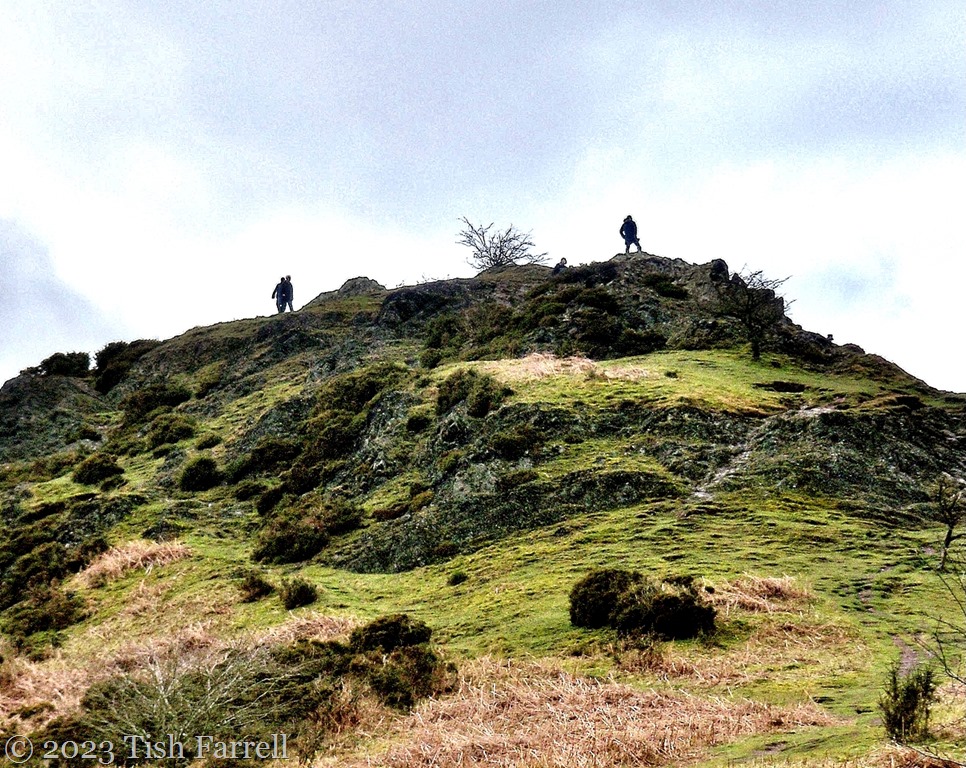
I recall being told by my geography teacher (aeons ago) that the Shropshire uplands comprised some of the world’s most venerable rocks i.e from the Precambrian era. The hills in question lie either side the Church Stretton fault, just across the Long Mynd from where we live now in Bishop’s Castle. On the east of the Stretton Valley are Lawley, Caer Caradoc and Ragleth, all formed from volcanic lava and ash around 570 million years ago. The Long Mynd lies to the west and began forming a little later with the build up of mud- and sandstone sediments in shallow seas.
Most astonishing of all, this whole process began when the earth’s crust beneath the land on which I now live was sited south of the Antarctic Circle. I’ll say that again: South Shropshire once lay south of the Antarctic Circle. Which obviously means this part of the British Isles has travelled from one end of the globe to the other.
On that journey, over millions of years, sea levels rose and fell; tectonic plates collided as continents shifted and shunted; uplifted landmasses were compressed, folded, tilted.
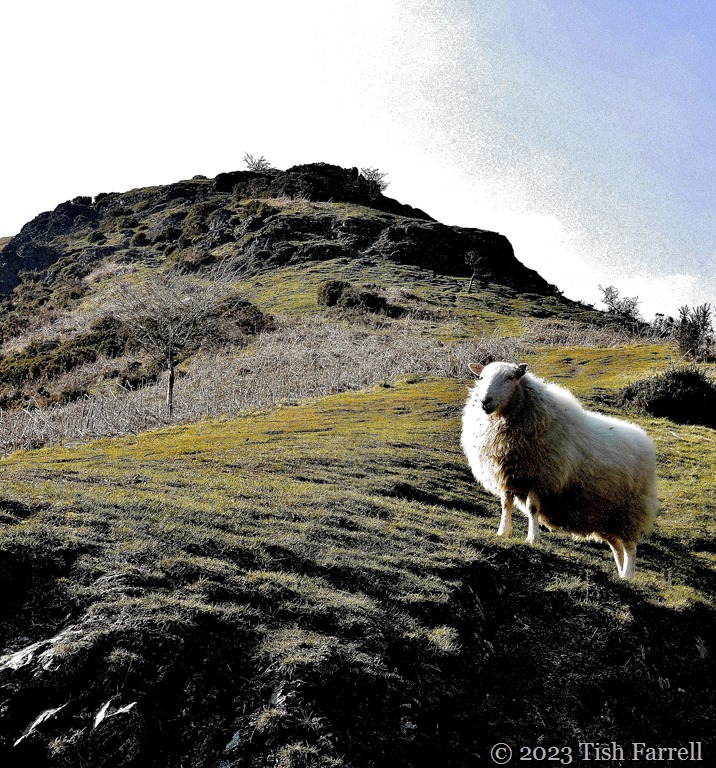
Then a succession of Ice Ages knocked the hills into shape. The Long Mynd is probably the most dramatic example – seen here in the the next photos taken in Carding Mill Valley, near Church Stretton. From 2.4 million years ago to 20,000 years ago glaciers shifted around the Mynd. When the ice sheets melted during interglacial periods, streams fed by melt water and rain carved out deep valleys, locally known as ‘batches’.
How mind-bogglingly amazing is this for a piece of landscape sculpting: water power plus the passage of time.

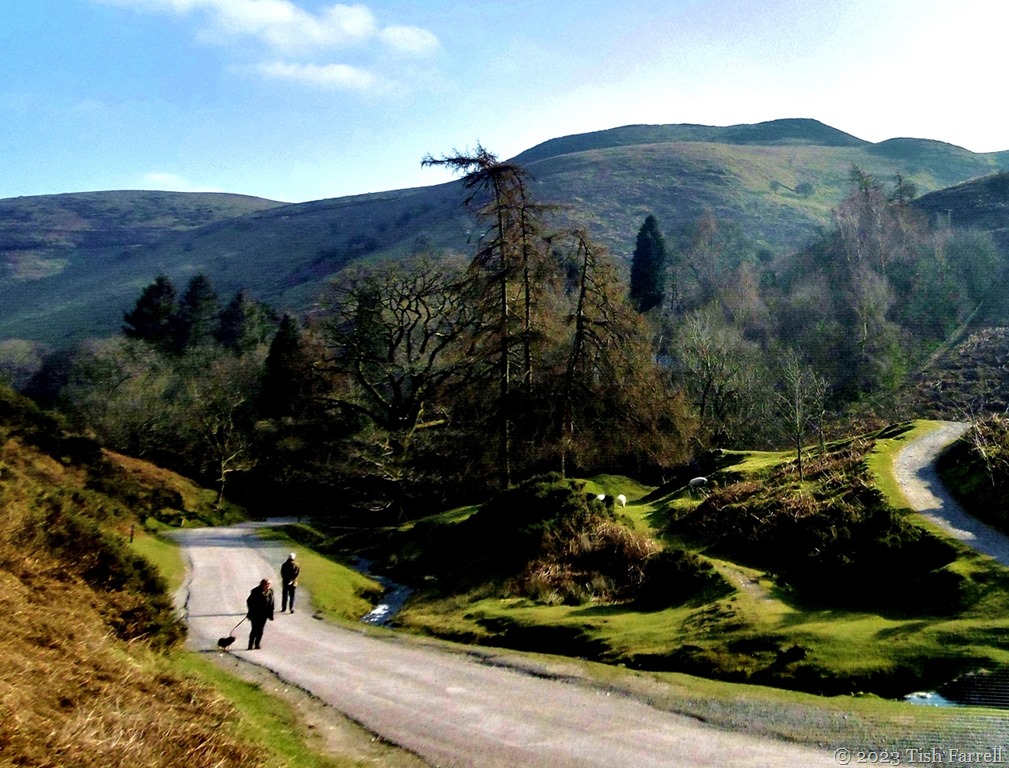
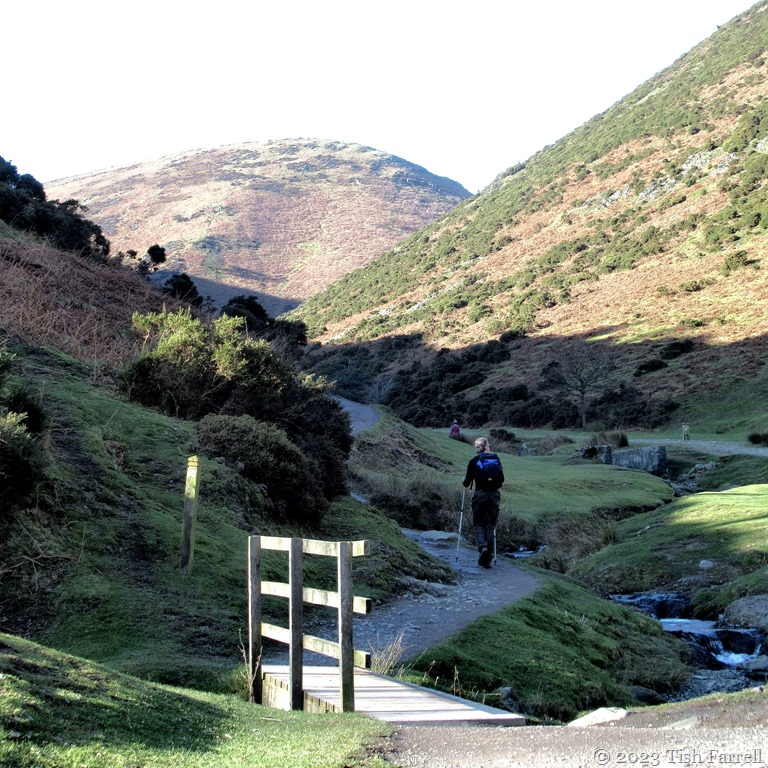
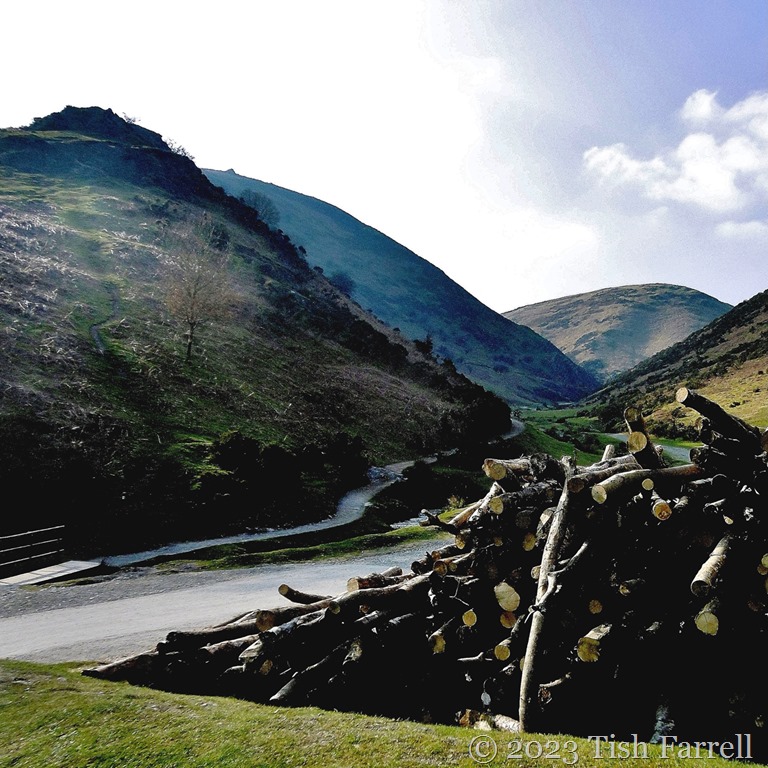

Absolutely Beautiful!
Thank you, Emma.
Another enthralling lesson.
I don’t suppose Ken Ham and his Ark Encounter share the same sentiments.
😉
Thanks, Ark. I think the story the earth has to tell of itself is altogether more enthralling. Most of us don’t even have the smallest grasp of its geophysical capacity. Probably a bit too scary.
So the British have been seafaring for a lot longer than we thought! 😀
Like it, Dries, though I think we might have been small-celled little entities at the time we set off 🙂
Making it even more remarkable! 😀
An absolutely perfect choice for the challenge Tish. An amazing set of facts about which I had no idea. Loved the images, especially those with the paths through the hills. It does make one wonder about all of the climate change warnings. While I understand the impact humans have had on our poor earth, I find myself wondering if nature would be taking its own course anyway.
That’s my thinking too, Tina. The earth forces are so inordinately powerful and chaotic. And we still do not understand the half of how those systems work, or the relationship with clouds and solar activity.
There’s no doubting that humans can change regional and local climates by poor land management: deforestation causing erosion, soil loss and changes in rain patterns, loss of cooling shade, soil, desertification etc. And actually I’ve just watched a Norwegian emeritus professor discuss his 3 decades of research on solar minima, and how he believes we are heading into a cool phase, the last ones being in the 19th and 17th centuries (Little Ice Age), and before that around 1000 AD. And before that the end of the Bronze Age, when there is certainly evidence of civilisation collapse in the Mediterranean. I suppose the thing we forget to realise: the climate has always changed over the millennia. There are some repeat phases like solar minima and glacial periods, but in between all sorts of chaotic activity including volcanic events which can have huge impact on regional and global environments.
I’d love to walk along that path, Tish. What absolute beauty!
It is one of Shropshire’s treasures, Janet.
Wow!
OK, now my mind is totally boggled! ‘South Shropshire once lay south of the Antarctic Circle’ Wow 😮 Oh, and great photos of lovely Cardingmill Valley!
It is pretty mind-boggling – the way the world has shaped itself 🙂
Love the Long Mynd though not been since the up and downers became more challenging (confess though that I recall a lot of lazy afternoon layabouting rather than treks) Magical time warp whether geological or carved by giants – take your pick!
I think we can give the giants a look-in too. Nice to think of you laying about in the Shropshire hills. Blue remembered ones and all that 🙂
Beautiful landscape
Thanks, Rebecca.
Thank you for the geological and history lesson Tish accompanied by beautiful photos. When we visit the Grand Canyon here in the States, I stand in wonder of Nature and the years it took to carve this beauty. Your story shows that Nature will continue to rule and maybe undo what we have carelessly done to our lands.
Fabulous post. Although it (disgracefully!) doesn’t encompass Shropshire, you might find Christopher Somerville’s ‘Walking the Bones of Britain’ interesting. He does just that, focussing on the underlying geology.
Thanks for another excellent sounding reading tip, Margaret. It’s a great title for starters.
A great book too. But not an easy bed time story.
Geology is a challenging discipline. Had to do a module as part of my prehistory degree. I think I grasped sedimentation and accretion, and that was about it.
You’re ahead of most of us then. As a non-geologist (AL Geog. was as far as I got), I find the book accessible, but it’s even better when describing territory I know.
Ma Nature doesn’t do a bad job when left to her own devices, hey, Tish? Not always to human advantage but there’s no reason why it should be. Mick has been a climate change denier forever and in some respects I agree with him. Lovely photos, darlin 🤗🩷
Cheers, Jo. Things have got a little warmer over the last 400 years (according to scientist Steve Koonin), but then we were having some pretty cold phases of the Little Ice Age back then. We also had a pretty warm phase in the 1930s, followed by a cooling in the 60s-70s when scientists were predicting on-set Ice Age. And I remember being pretty cold in Sheffield back then (student days living in my Afghan coat, even in bed) so I thought they could be right 😉 The gardener me reckons there’s something going on with the sun. The last few growing seasons here have not been that brilliant.
I love the fact that we were once down under! Makes you think that in spite of what humankind throws at this planet nature will have its way in the end. I am so glad I won’t be around to experience another ice age! And thanks for taking me back to Cardingmill Valley, a place firmly planted in my heart.
I agree, Jude. Planet Nature will have its way. Also v. happy to give you some Carding Mill Valley views.
Fascinating read, Tish. The Antarctic Circle? And the stories of millions of years continue, don’t they? Mother Nature certainly schools us more often than we want sometimes. “How mind-bogglingly amazing is this for a piece of landscape sculpting: water power plus the passage of time.” I love that your photos reflect that statement. Rivers, waterways, and oceans do sculpt the land everyday. As someone who lives in the desert, I too, love to see how the rivers meander through the hills and valleys, that they made. PS. Sweet sheep. Time for a shear? Thanks for joining this week.
Wow, Tish! What fascinating stories and beautiful photos you shared. It must be quite a feeling to stand on those grounds.
Thank you, Egidio. It is a wonderful landscape to live in/near. We are very lucky.
I remember the day I learned that the northern last glacier had stopped at Hillside Avenue. It was where the flat part of the area ended and the hills began. Apparently they knew this because of the rocks they found and the artifacts the glacier had pushed to that spot. I lived just a quarter of a mile away — in the hilly area above the glacier stopping point.
Your area is beautiful and somehow suggest the weight of the ages of earth, but the area in which I grew up was part of New York city — Queens County — and wasn’t beautiful. It probably looked better before getting paved and becoming a major city roadway.
I am greatly comforted that no matter how much we torture the earth, IT will survive us. Who knows what or who will take our place in future worlds?
No doubting there’s been a lot of earth maltreatment by humanity, but there’s a hugmungous amount of the planet that is still itself. Much of the human damage can be restored. We do know how to do it.
That’s one of the things I find so aggravating. We DO know how to fix it, but we aren’t making any effort at all. Whether you think doomsday is upon us or much further down the road, it makes sense to at least get started doing some repairs and NOT waiting until it’s very close to too late or oops, too late. We are so capable when we want to be — but it has to begin somewhere and now is a very good time.
Wonderful photos. Old hills are slumpy.
Love that, Flower, SLUMPY old hills. Actually also applies to this blogger on slow days 🙂
Me too Tish. I am trying to keep vertical and sharp. Feeling eroded
Eroded: that’s an insightful descriptor too.
Wonderful photos, and a landscape that makes me want to hike there.
I googled mynd and here’s what I got: Welsh for to go; a slur against non-cisgender people; an image or picture – from the Old Norse meaning shape or form; a real estate platform; an abbreviation for Manitoba Young New Democrats 😂 I still don’t know what you mean by it. But it definitely is gorgeous countryside.
Alison
Hello, Alison. I think ‘mynd’ is Welsh for mountain/hill, so rather prosaic after all your intriguing finds. And yes it certainly is country for hikers.
I learned something new today. Thank you.
Thanks, Kurt.
Yes, this is mind boggling. Your photos are outstanding and help to grasp a bit of ancient history.
Thank you, Jennie.
You’re welcome, Tish.
Yup. That’s old! Excellent.
Thanks, John.
absolutely beautiful! history is mind-boggling 🙂
Many thanks, Lola. And mind-boggling – yes, indeed.