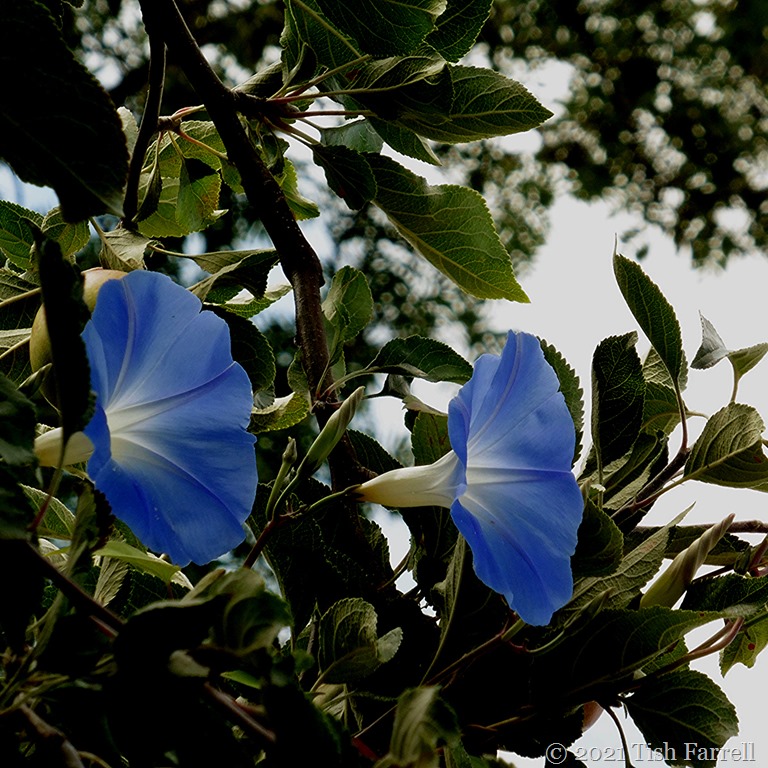
We’ve been having a brilliant show of morning glories this year, but the sudden switch from summer to autumn is now dampening their spirits – more dreariness than glory. Still, their portraits from sunnier days make a cheery show.
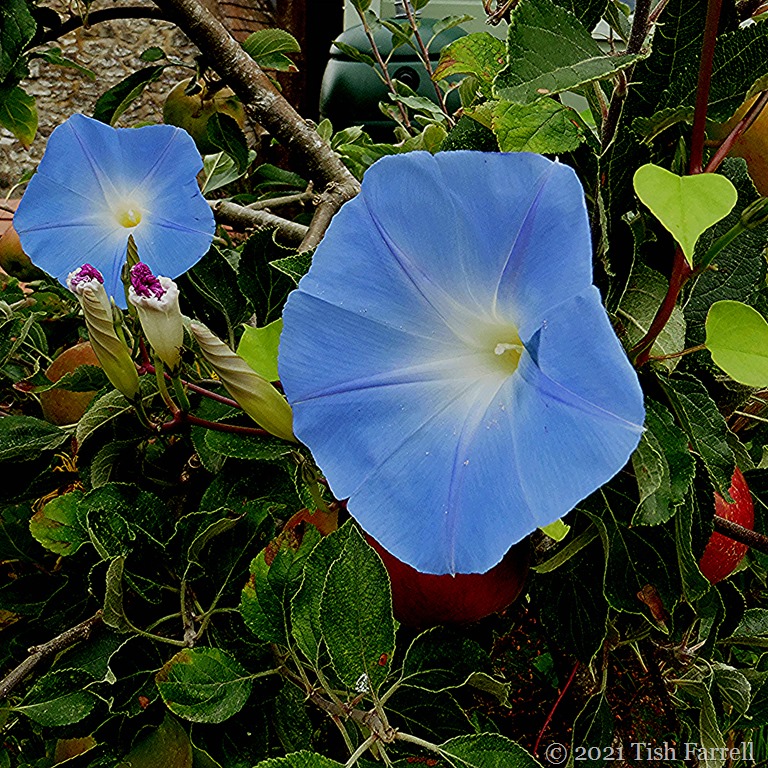

We’ve been having a brilliant show of morning glories this year, but the sudden switch from summer to autumn is now dampening their spirits – more dreariness than glory. Still, their portraits from sunnier days make a cheery show.
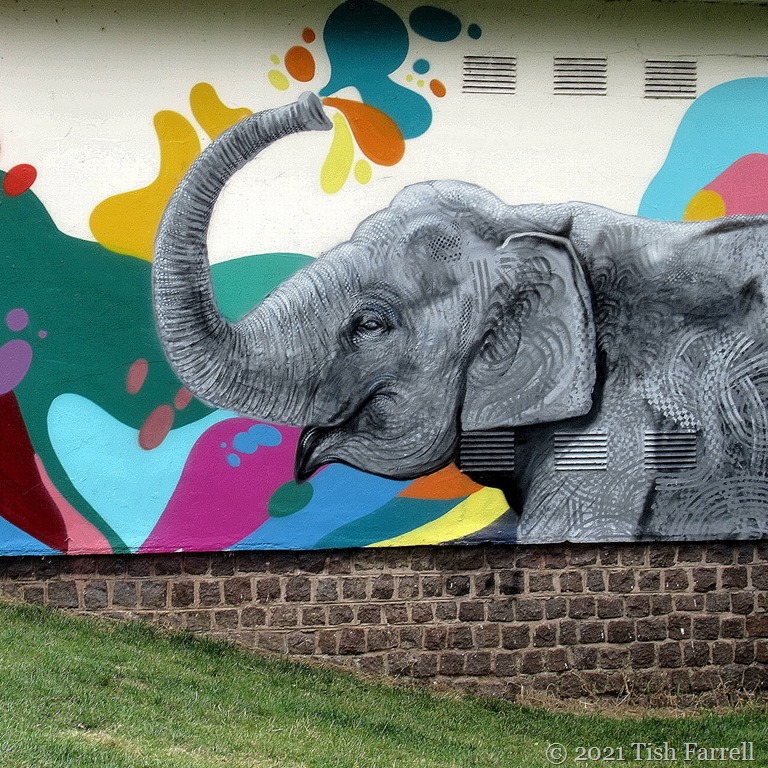
This jolly piece of street art is on the side of a Leamington Spa electricity sub-station just across the river from Jephson Gardens. It commemorates not only the regular presence of elephants in the town in the late 19th – early 20th century, but also celebrates the local yarn that said eles were regularly marched through the genteel centre to a dedicated slipway on the River Leam so they could bathe.
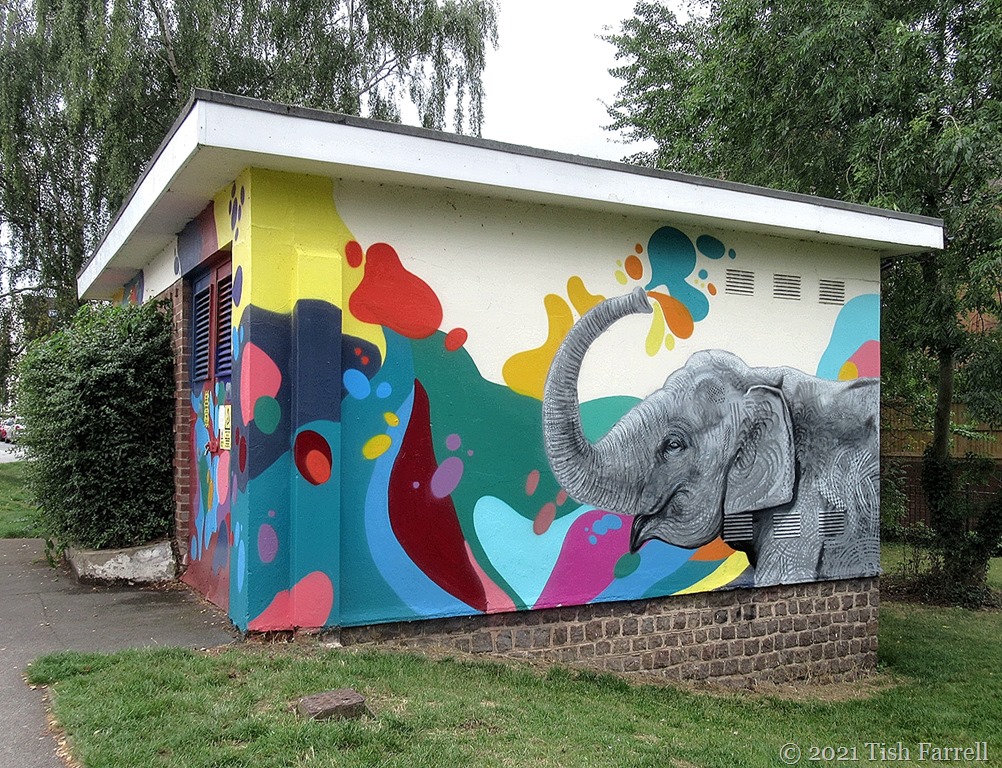
The slipway is still there – its retaining wall barely visible behind the sub-station. There is also an Edwardian house next door with an apparently telling address:

But is it true? Were elephants brought here for a good wallow?
A little bit of internet digging revealed that the presence of elephants in town is not in question, only the river bathing bit; this on the grounds that no contemporary evidence, particulary newspaper reports, has so far surfaced.
The elephants’ owner was a trapeze artist cum renowned elephant trainer Samuel Lockhart (1850-1933), member of a famous circus family. He travelled the world with his elephants, and in between engagements returned to Leamington Spa, his wife’s home town. His last documented show was 1910/11 when he was on the bill at the Theatre Royal in Leamington with four elephants Mustard, Salt, Vinegar and Little Saucy.
I’m certainly no fan of performing elephants, but the notion of a dedicated elephant wash in a Warwickshire river does appeal. And it’s not so very strange either – depending on the depth of your chronological perspective.
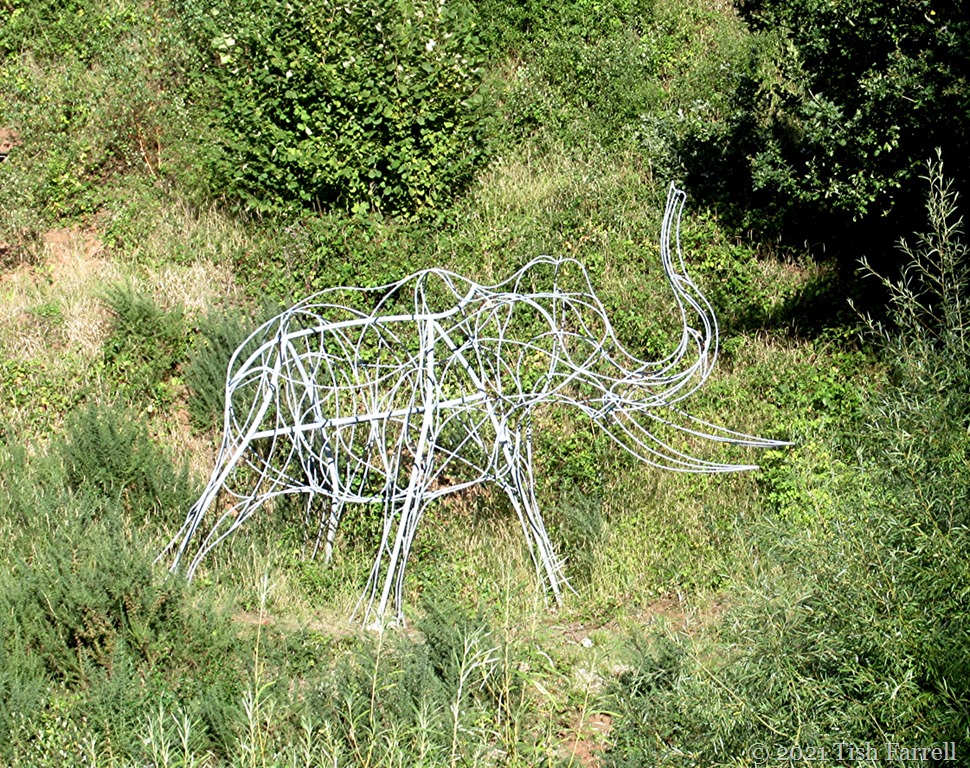
On a visit to Ryton Pools Country Park between Leamington and Warwick I discovered that in one of England’s many warmer eras there had indeed been indigenous elephant herds in the locality, though much larger and tuskier versions than their Asian cousins. ‘They became extinct c.115,000 years ago when the climate became colder,’ says the graphics panel.

They was also an interesting ‘artist’s impression’ of past elephant kind at Ryton Pools.
*
You can find out more about Sam Lockhart and his elephants HERE
And now for some fabulous old photos of Royal Leamington Spa. Slide 40 has elephants parading along a main shopping street. If the embedded code doesn’t work the original link is HERE
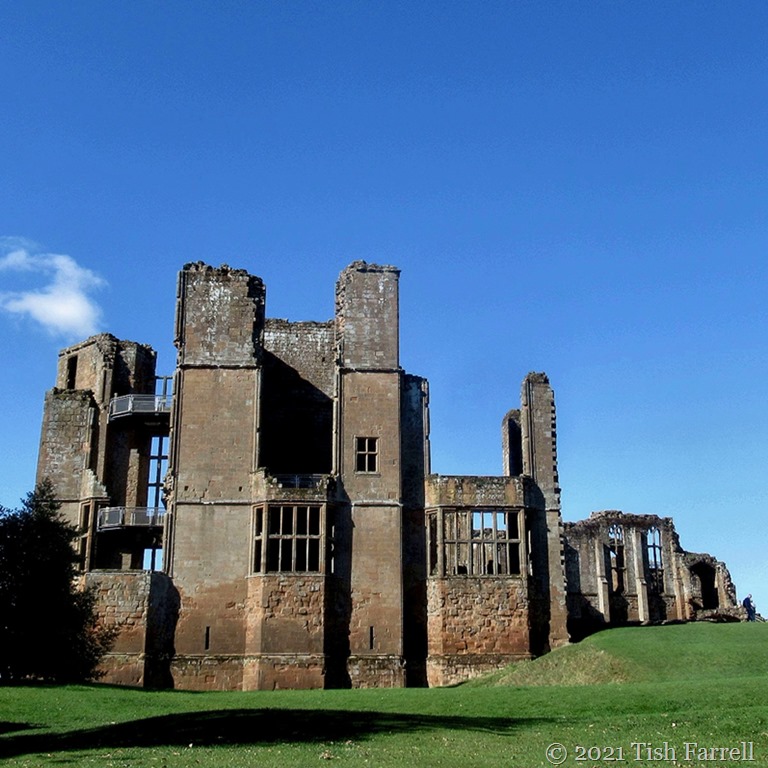
…that he built a grand palace to please his queen.
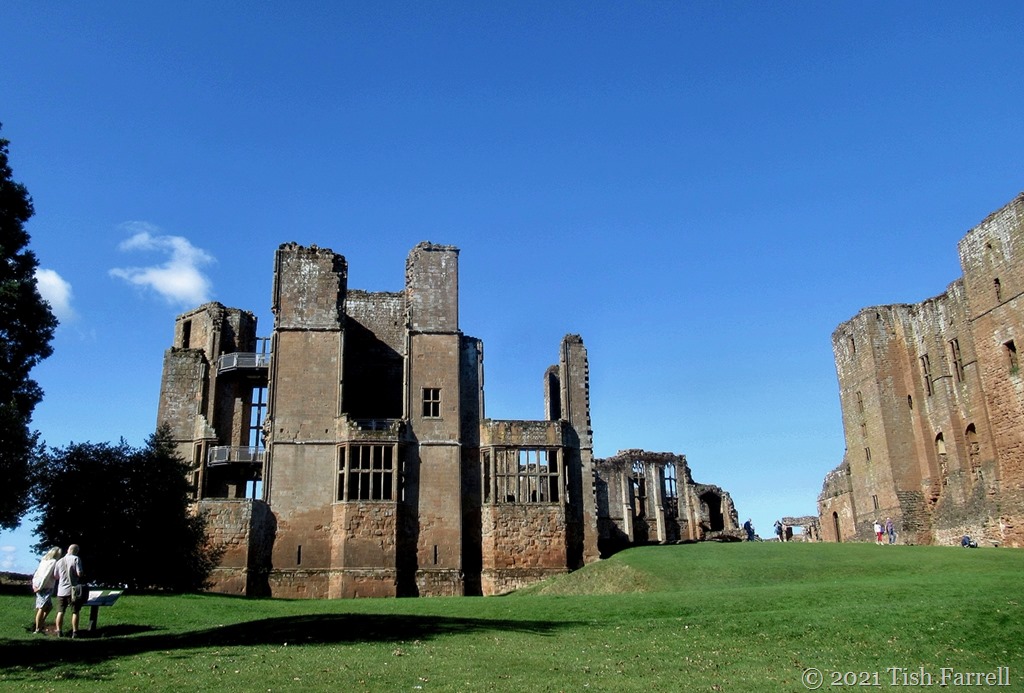
And that man would be Robert Dudley, first earl of Leicester (1532-1588), and his queen, Elizabeth Tudor (1533-1603). The royal apartment in question is known as the Leicester Building, part of Kenilworth Castle in Warwickshire. Dudley’s own private chambers apparently adjoined the queen’s, so providing further substance to rumours that began on Elizabeth’s succession in 1558 (and have endured for more than 400 years), that she and Dudley were lovers.
Dudley was without doubt a royal favourite, and queenly predilection did indeed confer on him great wealth and courtly status. But he was also a man of considerable ability as well as good looks. In fact the Spanish ambassador reported home that he was among the three men who ruled the country.
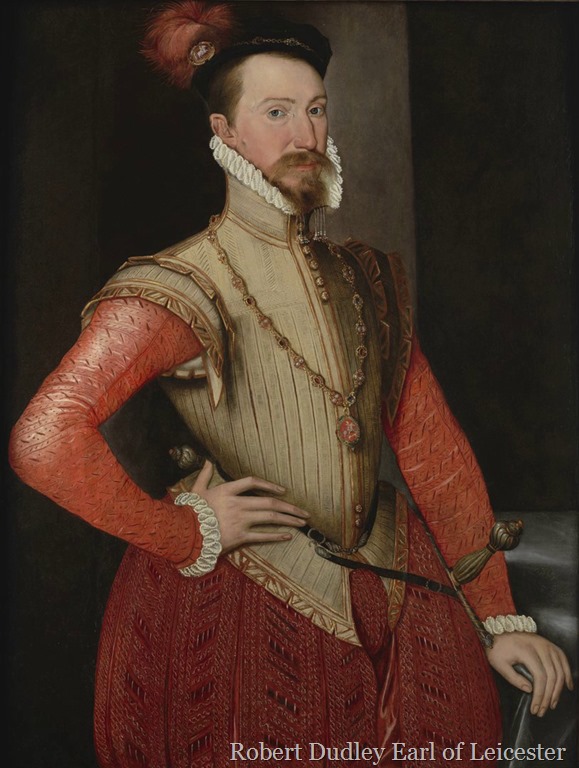
He was already married when Elizabeth came to the throne. He had married Amy Robsart in 1550 when they were both seventeen years old and in what was said to be a love match. But by 1558, with Robert appointed Master of the Horse, a position that dictated almost constant attendance on the queen, Amy was reduced to a nomadic existence, living with friends and rarely seeing her husband. Finally she settled at Cumnor Place near Oxford, living in a private apartment in the home of the Forster family. But by September 1560 she was dead, having apparently fallen down some steps. Her neck was broken.
There was a colossal scandal, much enjoyed by Robert Dudley’s rivals and enemies. And although Dudley was cleared of any wrong doing (he was attending on the queen at the time), the whispers of an ‘arranged death’ never went away.
So now Dudley was free, but gravely compromised. Did he really think there was ever a chance to marry Elizabeth?
The new Kenilworth apartments were built in time for the queen’s third visit there in 1572, constructed in the latest elegant Tudor style. They were further improved for a fourth visit in 1575, so much so that Elizabeth extended her sojourn for an unprecedented 19 days, being marvellously entertained with fireworks, masques, hunts and a brand new pleasure garden created especially for her.
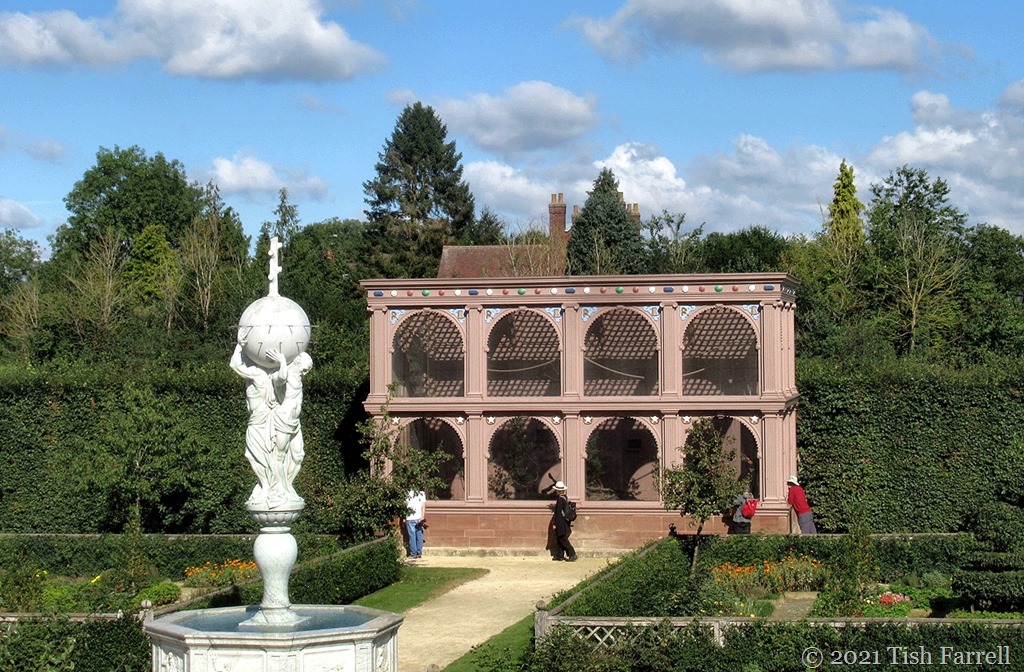
It is usually suggested that all this vast investment on Dudley’s part was his last ditch attempt to win the queen’s hand.
Yet from 1568 to at least 1574 he was actually having an affair with a young widow, Lady Douglas Sheffield. She bore him a child, whom he acknowledged as his ‘base son’ Robert Dudley, and thereafter took good care of him, although he was careful, too, to inform Douglas Sheffield that he could not marry her, fearing the loss of the queen’s favour.
Yet as time went on, he grew ever more anxious about the lack of a legitimate heir. And so in 1578 he secretly married Lettice Knollys, Countess of Essex, another widow with whom he was rumoured to have been having an affair before her husband’s death in 1576. The queen was furious when informed of the deed by Dudley’s enemies, and she banished Lettice from court. But it was around this time, with Elizabeth in her mid-to-late forties, that the so-called Phoenix Portrait was commissioned. (My photo was confounded by the gallery lights at Compton Verney where the picture now hangs, but you get the drift):
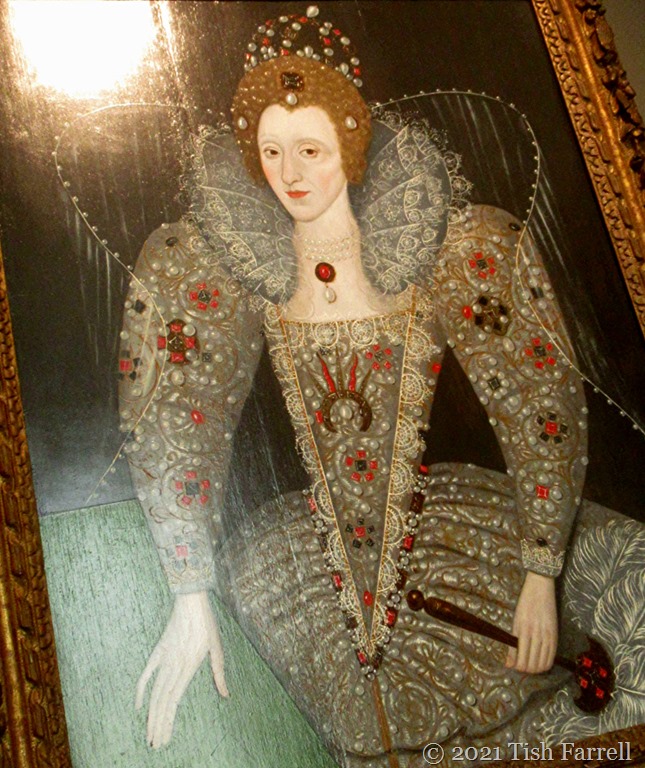
Such portraits were always intended as PR exercises. Quite apart from the phoenix rising from the ashes symbolism, the proliferation of pearls is also said to convey a particular message, i.e. confirming Elizabeth’s well cultivated image as Virgin Queen. No marriage for her then. Even so, spite ruled, and seven years into Dudley’s marriage he said she was still being insulting about his wife and taking every opportunity to ‘withdraw any good from me.’
Nonetheless he went on to play considerable roles in affairs of state. Most notably in July 1588 as the Spanish Armada approached, he was appointed Lieutenant and Captain-General of the Queen’s Armies and Companies. When Elizabeth went to address the troops at Tilbury, and made that now most famous speech, he was walking at her side.
After the victory he was feted, spending the last weeks of his life dining with Elizabeth. But by then he was already ill. He died suddenly in September 1588, on his way to Buxton in Derbyshire, to take the baths. When Elizabeth heard, she locked herself in her apartment and Lord Burghley was forced to have the door broken down. At her own death in 1603 Dudley’s last letter to her, written before his departure for Buxton, was found in her beside treasure box.
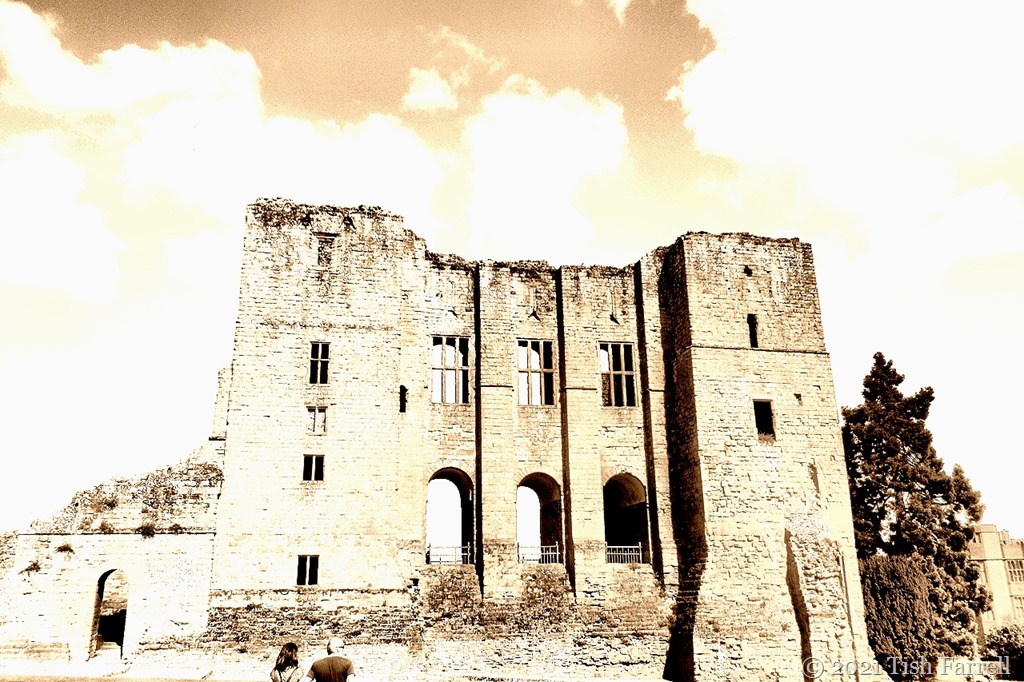
Hurrah! Becky’s squares are back for the month of October – our favourite past squares reprised, or squares about the past.
