Iron in the Soul ~ Warrior of Llyn

100_4526 - Copy

I have been a multitude of shapes
Before I assumed a consistent form.
I have been a sword, narrow, variegated,
I have been a tear in the air,
I have been in the dullest of stars.
I have been a word among letters,
I have been a book in the origin.
From a translation of the Welsh medieval text of The Book of Taliesin, a sixth century Welsh bard and courtly singer.

 *


It is said that the Iron Man of Mynydd Tir y Cwmwd sings in the wind. I can believe it too: bold laments of long ago battles, a proud Celtic warrior fending off invading Roman governors and power-hungry English kings. Sadly, the cause was lost on both fronts, although at least these days Cymru,* Wales, has its own Welsh Parliament, and Cymraeg, the Welsh language, is nurtured, learned in schools and spoken widely with great pride. And so it should be. It is one of the world’s wonderful languages, the words formed from the rush of sea on rocks, the wind whistling down from the heights of Yr Wyddfa** (Snowdon, Wales’ highest mountain). Under past times of English domination much was done to stamp out the Welsh culture altogether. It is what invaders do – belittle, ban, override  heartfelt expressions of a conquered people’s culture.

{*roughly pronounced Kumree and **Ur Oithva}

You can read the rest of this earlier post about the Iron Man of Llanbedrog at Warrior Wind-Singer of Llyn

copyright 2015 Tish Farrell

This Sunday at Lost in Translation, Paula’s ‘Black & White’ word is ‘winding’. Please follow the link to take part her challenge and see more winding renditions.

In the background on Zanzibar’s farms

Scan-130429-0006 - Copy (2)

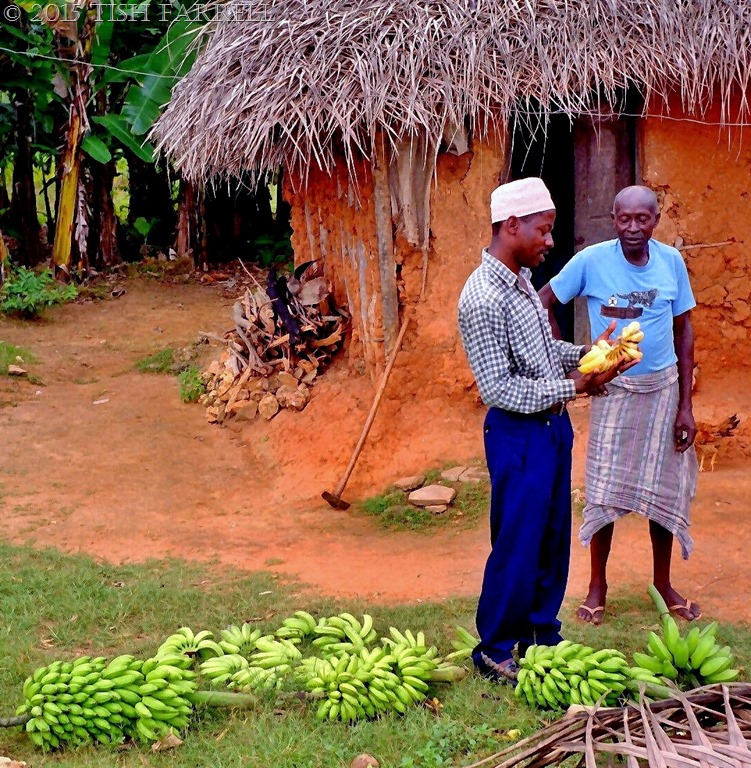
One of the must-do tours if you visit Zanzibar is a trip around the island’s spice and fruit farms. Hari our guide was intent that we should taste everything we saw growing, so here he is bargaining with a farmer for a ready-to-eat bunch of bananas. You can see the banana grove in the top left corner. Banana branches are usually harvested when the fruit is still green. There’s a knack of knowing just when to cut them.

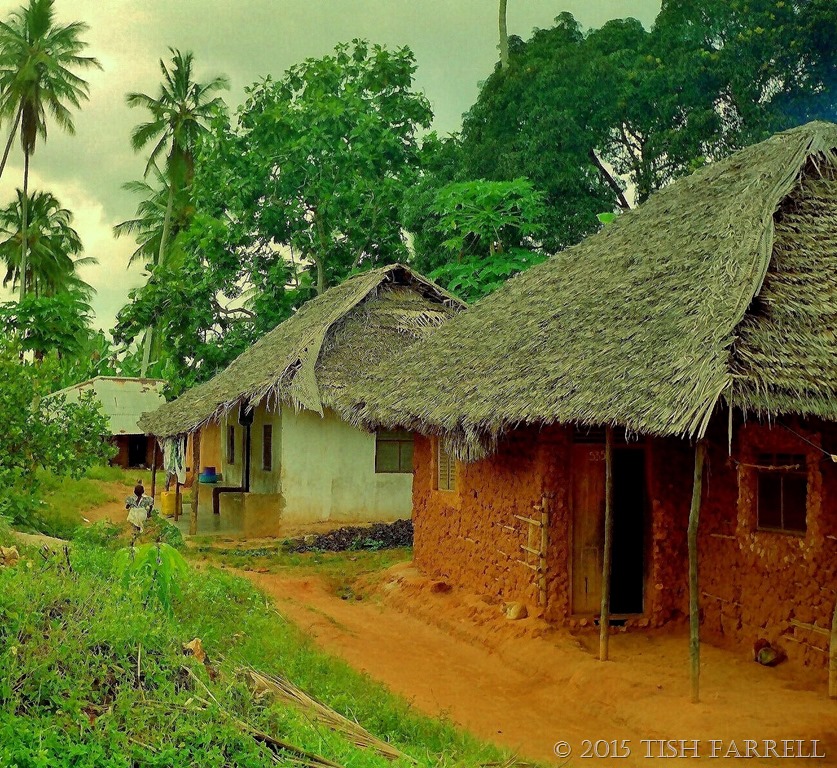
Being a nosy writer who is always in need of background detail, and also a one-time student of cultural anthropology, I try to capture slice-of-life moments whenever I can. They’re usually not the best quality photos, but I hope to make up for technical shortcomings with content interest. (And yes it would be nice to have both). So here is my take on this week’s Thursday’s Special challenge from Paula – ‘in the background’. My choice of subject, however, did mean I had to switch my blog snow off. There’s enough climate change going on without having icy precipitation on Zanzibar.

Scan-130429-0007

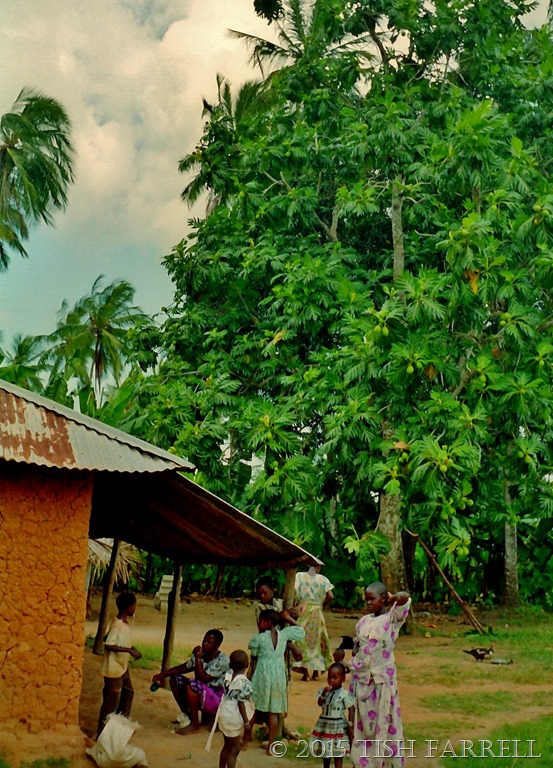
This farming family has a jackfruit orchard, as well as coconut palms. The jackfruit apparently weren’t ready for tasting, but I was anyway more distracted by the presence of the domesticated Muscovy duck. Now how did that arrive in the tropics? The mabati iron sheets on the farm house roof  (i.e. instead of traditional palm thatch) are a sign of  prosperity, and therefore of status.

*

Scan-130429-0010

Scan-130429-0010 - Copy (2)

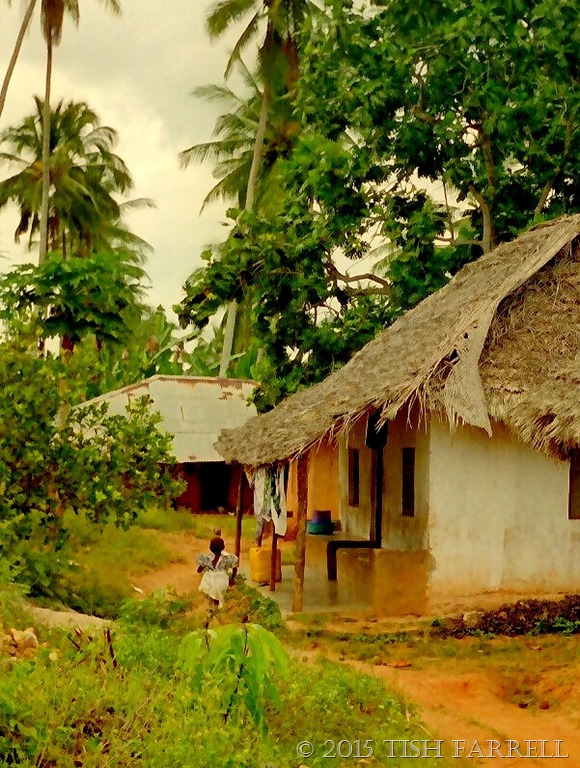
I’m wondering where this little girl is off to in such a hurry. Also one of the reasons why I’m showing off the tall trees in the background is that if you intend to make a living from them, then someone has to climb up them to pick the fruit…

Scan-130429-0074 - Copy

Thursday’s  Special: In the background

Wenlock Priory through the pines ~ an enduring landmark

P1000492

P1000494


How impressive then must the beautiful church have been in the days of its prosperity, when the pilgrim came down to it from the grassy hillside and its bells made the stillness sensible.

Henry James on Wenlock Priory Portraits of Places

Much Wenlock has many historic landmarks, but its Priory is the one with the oldest roots, dating back to the seventh century when  the Saxon princess, Abbess Milburga, presided over a dual house of monks and nuns.  In medieval times, under Norman rule, it was expanded to become one of the most imposing (male only) religious houses in Europe.

Then along came Henry VIII with his marriage problems, and in 1540, as part of his Dissolution of the Monasteries campaign, (i.e.the  liberation of monastic wealth), the lead was stripped off the roofs. The Priory has been ruinous ever since. Meanwhile the Corsican pines have grown up along the boundary wall.  I don’t know when they were planted, or by whom, but spiring above the ruins, they somehow give a sense of lost architectural glory.

There is of course much romance in dilapidation as Henry James’ description in the quote above betrays. He was certainly taken with the place, and came here two or three times as guest of the Milnes Gaskells  who lived in the Prior’s House abutting the ruins. The Priory was at that time the Milnes Gaskells’ own private garden feature, and part of the tour for all their many house guests.  I particularly like this next, perhaps unlikely image of a recumbent Henry James gazing up at the remains:

You may lie upon the grass at the base of an ivied fragment, measure the girth of the great stumps of the central columns, half smothered in soft creepers, and think how strange it is that in this quiet hollow, in the midst of lonely hills, so exquisite and so elaborate a work of art  should have arisen.

You can read more about Henry James in Wenlock HERE.

Now please visit Paula at Lost In Translation for more Black & White Sunday  landmarks.

World Soil Day & December at the allotment

100_8168

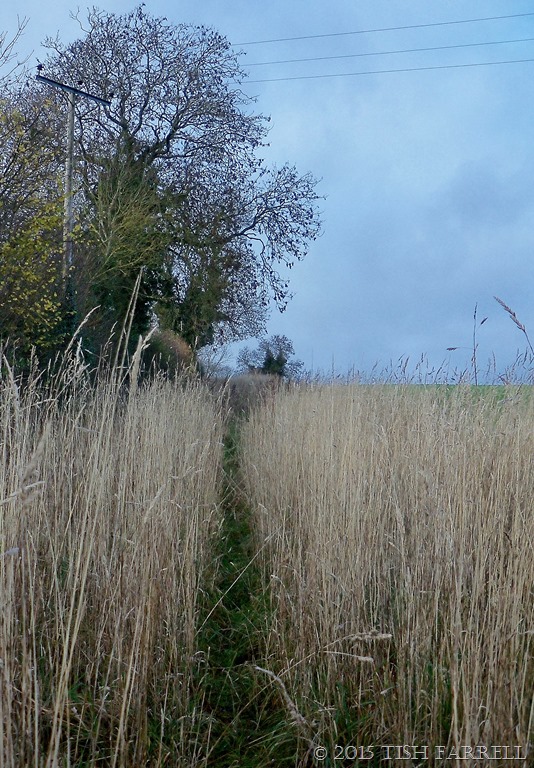
Here is my path to the allotment. I’m a bit fixated on it, and have been snapping it at different seasons. I like the way colour has leached from the grasses.

The allotment looks bleak at this time of year, not improved by the fact that many of us are untidy allotmenteers. There’s all sorts of unsightly takataka lying about – things that might come in handy for something, sometime. I’m guilty of it myself, and of course when you take on a plot, you inherit your predecessor’s junk. I’m gradually whittling mine down.

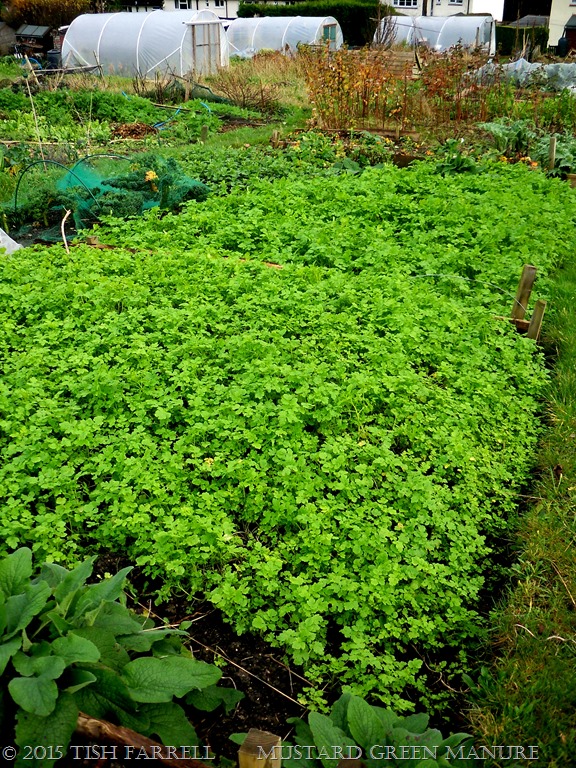
There are also jobs I haven’t done – edging the beds, giving the paths a final mow while I had the chance. But I did sow my mustard at just the right time and now have an impressive crop.

100_8136

I’m growing it both as a cover crop and a green manure. If we have a hard winter it will probably be frosted and die down by itself. For now it’s still growing, and if it survives till spring I’ll cut it down and probably just let it rot on the  soil surface. With green manures it is usual to dig them in before they flower. But I’m beginning to have second thoughts about digging, much as I enjoy wielding my grandfather’s sharp bladed spade.

For years I’ve known (vaguely) about No Dig Organic Gardening, just as I’ve long known that mulching crops produces sturdier, tastier produce that needs little watering. But it has taken a while for the penny to completely drop.

No dig cultivation is not simply about saving labour. It’s about protecting and nourishing the soil. And since today is World Soil Day, there can be no better moment to think about this totally essential, life protecting, life enhancing substance. If our soil is degraded and low in nutrients, then our food is not giving us the nutrition we need to stay strong and healthy. M.S. Swaminathan, India’s ‘Father of Green Revolution’ calls this ‘hidden hunger’.  Paradoxically, we suffer from it even in rich countries where we eat all day, and it contributes to (and some would say lies at the root of) much chronic disease.

Soil anaemia also breeds human anaemia. Micronutrient deficiency in the soil results in micronutrient malnutrition in people, since crops grown on such soils tend to be deficient in the nutrients needed to fight hidden hunger…Managing our soil and water resources in a sustainable and equitable manner needs a new political vision.

M.S. Swaminathan

100_7997

All my gardening life I have tended towards the traditional notion that digging the soil well, weeding, and adding plentiful compost is a ‘good thing’. Yet after 8 years of digging, weeding and forking in compost on my allotment plot, I’m seeing only marginal improvements in the soil: i.e. it’s a little better than it was.

In dry weather the soil surface still turns brick-hard,  which in turn constricts plant growth, (and in some cases  ‘bonsais’ the plants) making then weak and susceptible to pests. I then have to do a massive amount of watering which is not ideal either; it discourages the plants from rooting deeply.

Also every time you slice through the soil with a spade you disturb the complex community of bacteria, fungi, protozoa, and nematodes that support vibrant plant growth.

Better, then, to thickly pile shredded garden waste over the entire soil surface, and allow a microenvironment to establish underneath. The mulch gradually breaks down as all the matter is digested and re-digested, creating a nutrient rich, moisture retaining medium.

I now realize I need to cultivate a cohort of  jobbing domestic gardeners who will let me have their shredded garden waste rather than taking it to the recycling centre. In the meantime I decided on a little experiment.

Lacking the necessary quantities of gardeners and their shreddings, I spent three hours hours yesterday digging out my partially rotted compost bin, and spreading it several inches deep over four square metres of exposed soil. It was a messy process after days of downpours. But it’s amazing what lengths this writer will go to to avoid writing the novel.

The trouble is, rooting around in one’s compost heaps, turning stuff over, redistributing it, tends to be rather more satisfying than staring at the computer screen and straining one’s brain to dig out the right words.

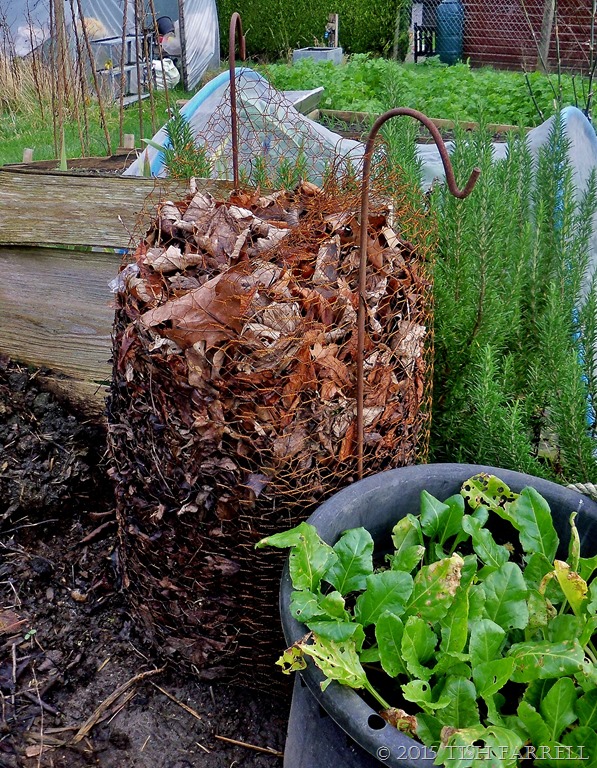
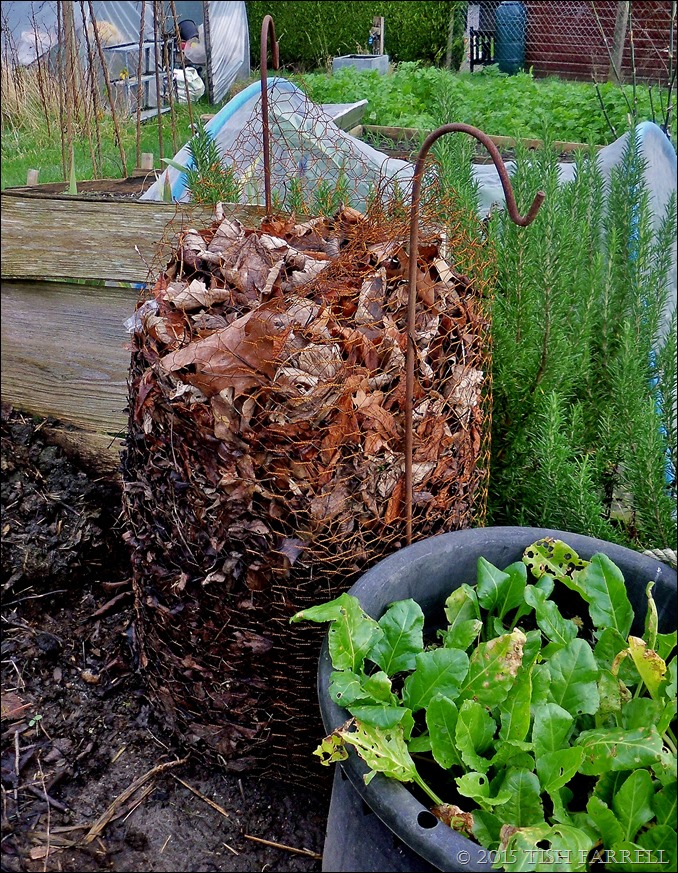
I’ve also been making simple ‘silos’ out of chicken wire, to collect the leaves and so make leaf mould. This will take a year or two, but I might try and speed the process up next year by adding in some grass mowings. The resulting dark compost is just the stuff for seed sowing, so hopefully there will be some in  spring 2017.
100_8138

And I’ve been busy in the polytunnel. The summer’s ludicrous tomato forest is long gone and the last of the fruit turned into soup, sauce and chilli tomato jam. Now all has been raked over and planted with winter salad stuff – Chinese mustard, chard, pak choi, purslane, perennial rocket, lamb’s lettuce, Russian kale. I also have some parsley in there, onions, garlic, leeks and a bucket each of carrots and Florence fennel. The fennel probably won’t grow much, but we can eat the feathery leaves.

And just in case we do have the promised hard winter, I already have the fleece ready to lay over the young plants. Last year was pretty mild, and I found that once I put fleece over everything, the plants continued to grow, if only a little. I also have two small water butts filled to the brim and stationed inside. Their presence is supposed to provide a slight increase in temperature within the polytunnel. They are also handy when the allotment water supply is switched off for the winter.

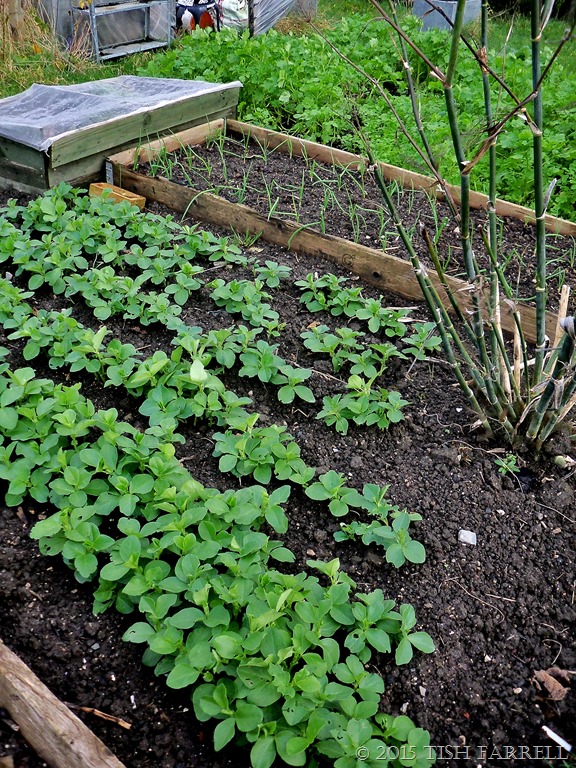
Meanwhile, out on the plot, there are still lots of crops to harvest – carrots, leeks, kale, small amounts of  perennial spinach, and cauliflowers. The Brussels sprouts, cabbages, purple sprouting and Romanesco broccoli are all coming along. The field beans have sprouted, likewise the overwintering Radar onions.
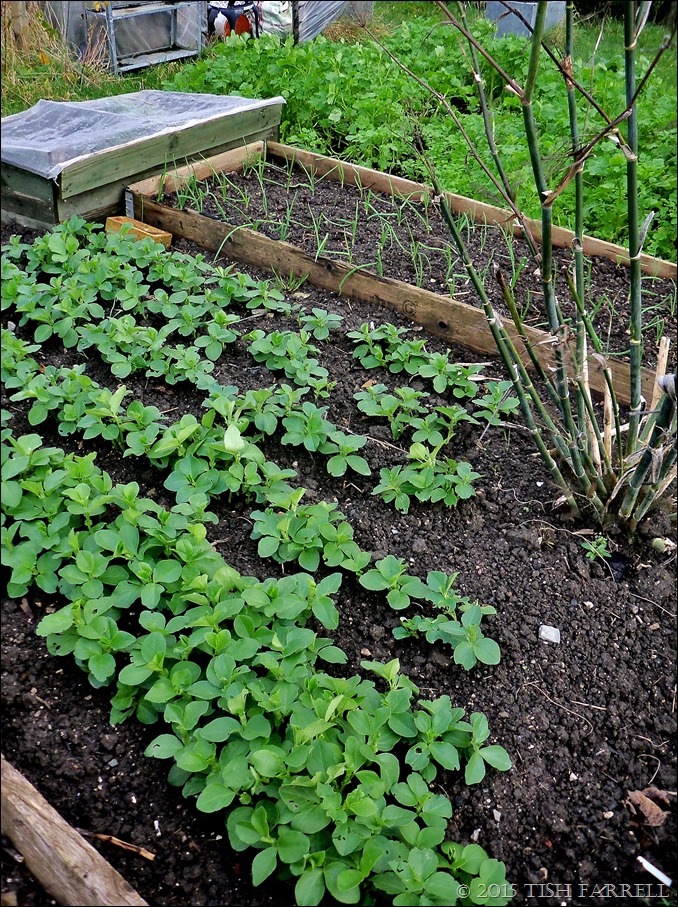
100_8139

I know I am very lucky to have my allotment. But everyone can do some gardening, even if you only have a bucket. In fact a bucket is great for growing carrots. Lack of space need not be an obstacle. A single raised bed of one square metre, topped with layers of mulch can be intensively cultivated with leafy crops. And remember, there’s no need to dig it. Also mucking around close to soil is good for lifting the spirits. Scientists have discovered it gives off some kind of anti-depressant molecules.

All of which is to say:

SOIL – WE CAN’T LIVE WITHOUT IT. HEAL IT, AND WE HEAL OURSELVES AND THE GENERATIONS TO COME.

HAPPY WORLD SOIL DAY!


copyright 2015 Tish Farrell

Creative Intervention Rescues A Ruin

P1010246

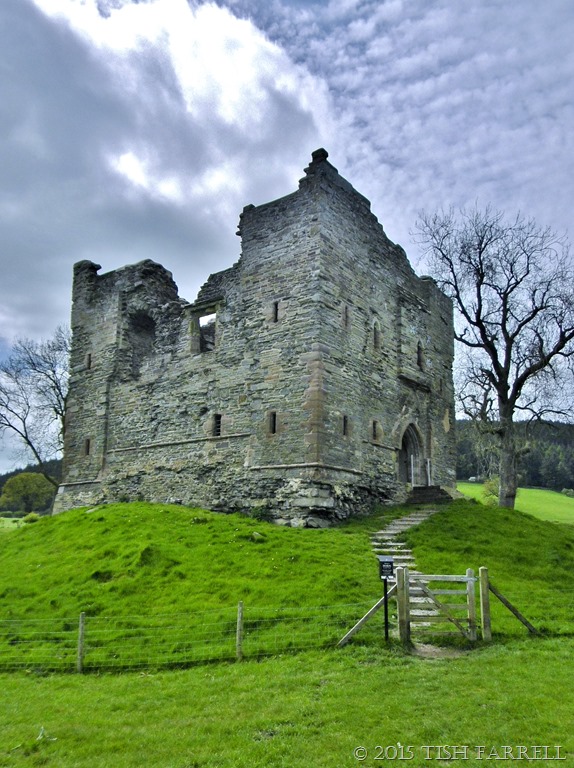
Here we have the remains of Hopton Castle, an enigmatic ruin in the Shropshire borderland, eleven miles northwest of of Ludlow. It is called a castle, but it might be better described as an upscale medieval tower-house. That it survives at all, in this accessible state, is down to the creative efforts of the Hopton Castle Preservation Trust whose members toiled for 11 years to raise funds to consolidate the main structure, and then spent a further five years overseeing the work.

The ruin is full of puzzles. The preservation work revealed hints of 11th, 12th, 13th, and 14th century construction, but with no clear evidence for the date of the main surviving structure. It’s been suggested that the Hopton family, who owned it between the 11th and 15th centuries, at some stage deliberately set out to create a faux antique country residence much as the Victorians did with their  mock Tudor ‘cottages’. In other words, the Hoptons went in for some creative intervention of their own.

One theory is that it was a hunting lodge. The interior work of all  three floors appears to have been very grand, and definitely of ‘lordly’ quality.

P1010211

photo: Hopton Castle Preservation Trust

*

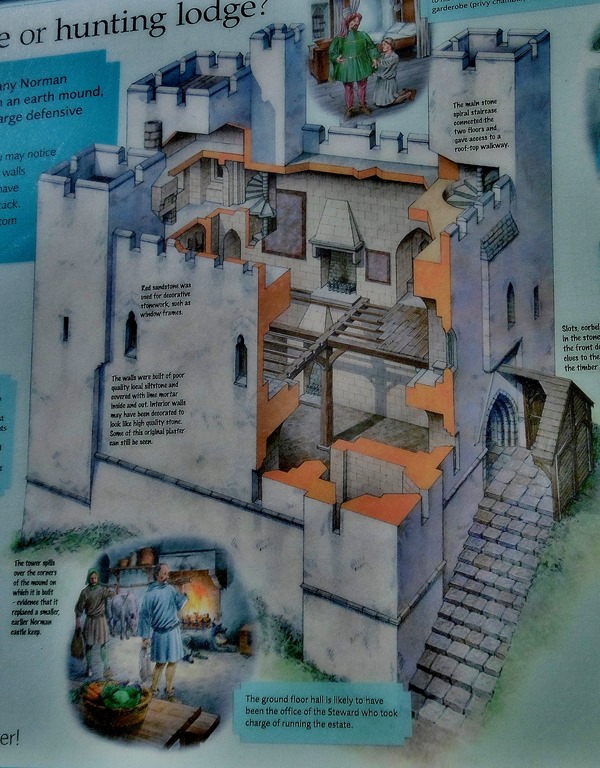
Also, the tower was clearly not intended as a defensive structure. As you can see from the photo and the reconstruction, any besieger could simply walk up to the front door. Yet the building it replaced, the first ‘castle’ on the mound was indeed a functioning fortification – a motte and bailey castle typical of the Normans’ early conquest of Britain after 1066. Made of timber, they could be constructed swiftly, and as the need arose, later re-built and expanded into domineering stone fortresses.

But this did not happen at Hopton. The stone walls that replaced the 11th century motte and bailey appear to have been built of poor quality stone, unsuited to withstanding a siege. Meanwhile, the interior fittings and design suggest considerable expense.

So it’s a pretend castle then? A place for Sir Walter Hopton, Sheriff of Shropshire and Staffordshire, to display his wealth and status while entertaining well chosen guests for a spot of deer hunting?

P1010230

Perhaps some of the answers lie in Shropshire Council’s five miles of archives that include shelves and shelves of unread medieval documents. In which case, they are likely to stay hidden. Probably forever. The on going local authority cuts mean there is little chance that the necessary scholarly research will ever be done. The archivist was one of the first people to be dispensed with, and for years before the cuts the archives were always under-resourced.

But if we don’t know much about the castle’s medieval history, we do know quite a lot about the bloody siege of Hopton in 1644, wherein Royalist forces attacked the staunch Parliamentarian Wallop family, who then owned the castle. It’s a swashbuckling tale, and you can read more about it HERE.  Some years ago Time Team carried out an excavation in an attempt to verify the circumstances of the battle. You can find the full episode on YouTube:  https://www.youtube.com/watch?v=MIiYOgmO-Cs


copyright 2015 Tish Farrell