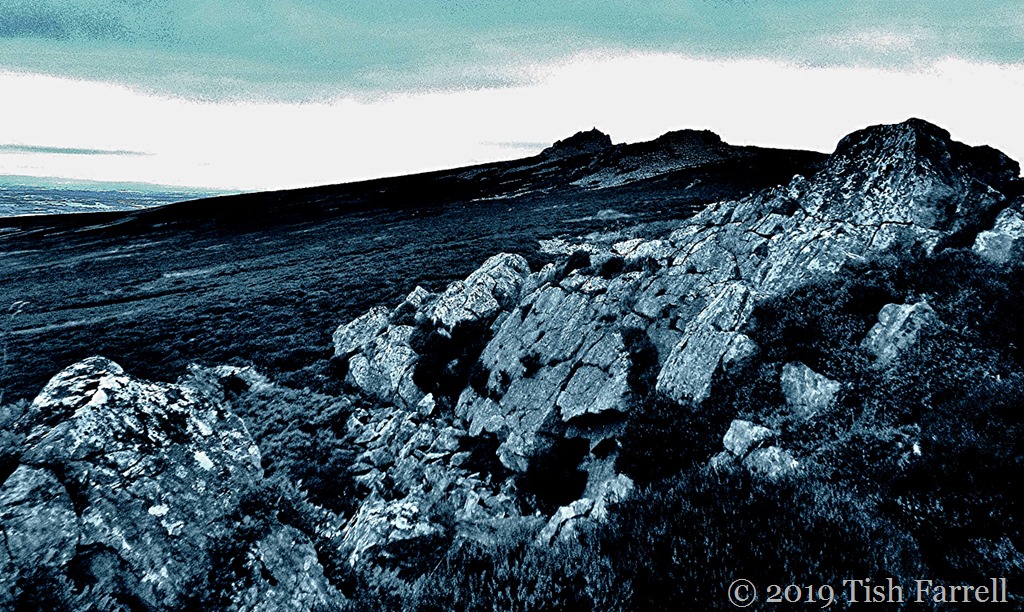
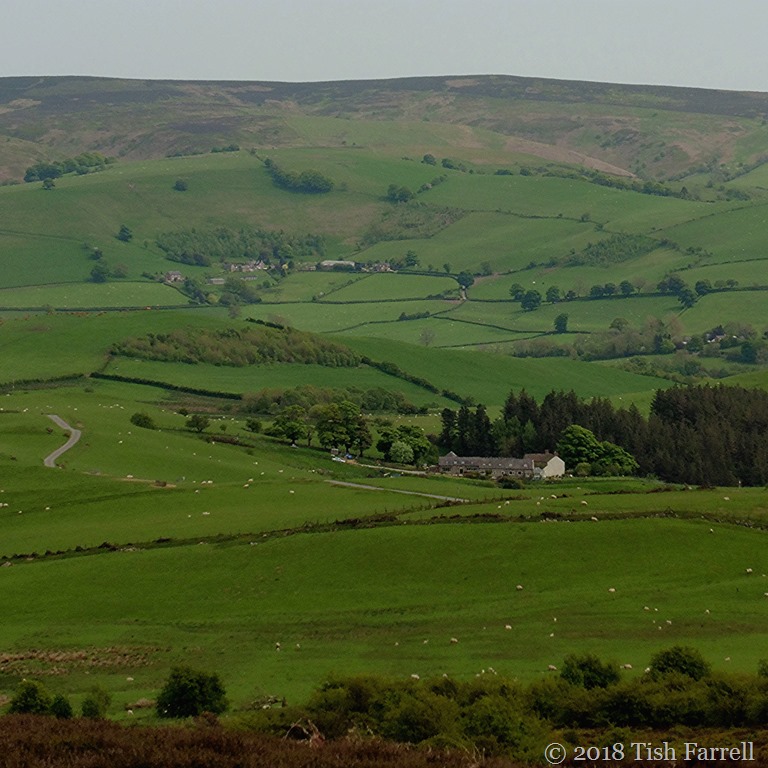
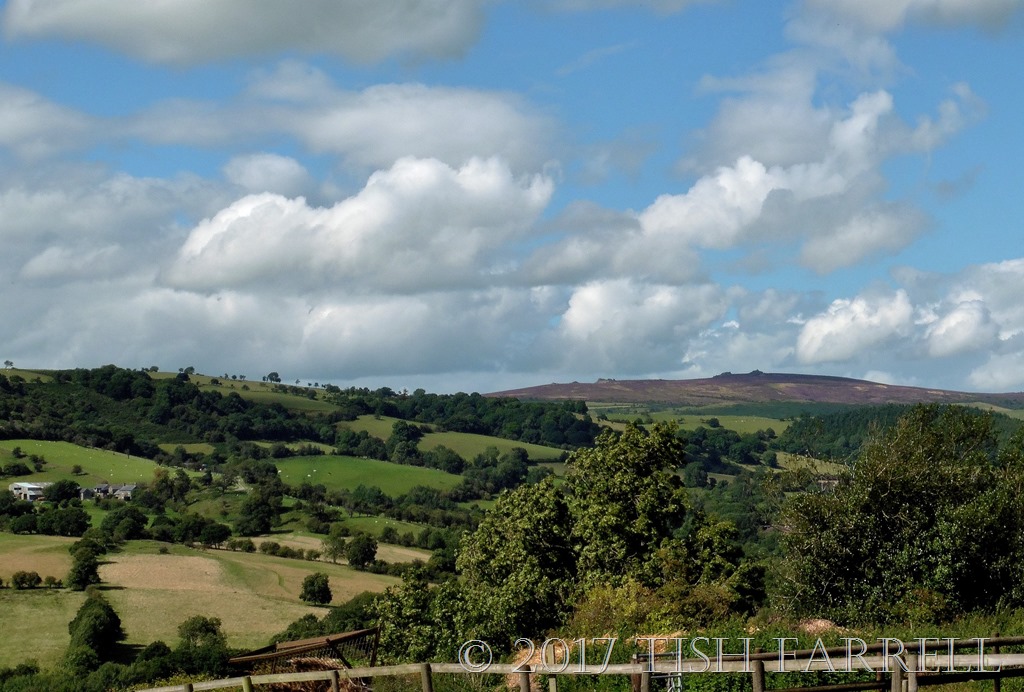
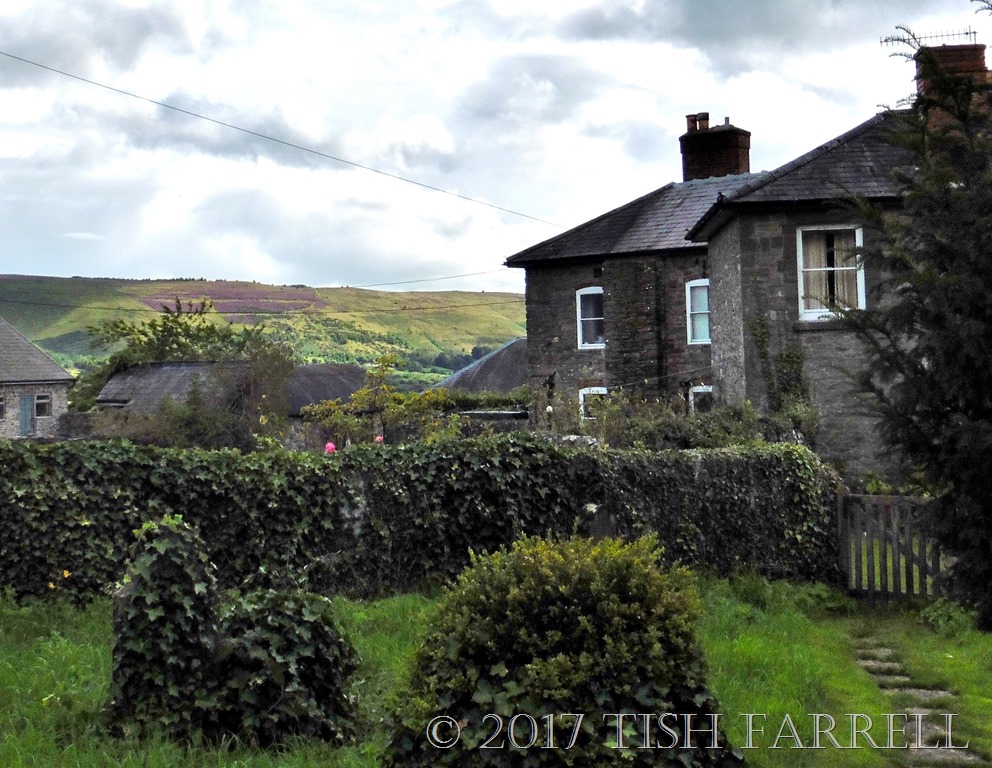
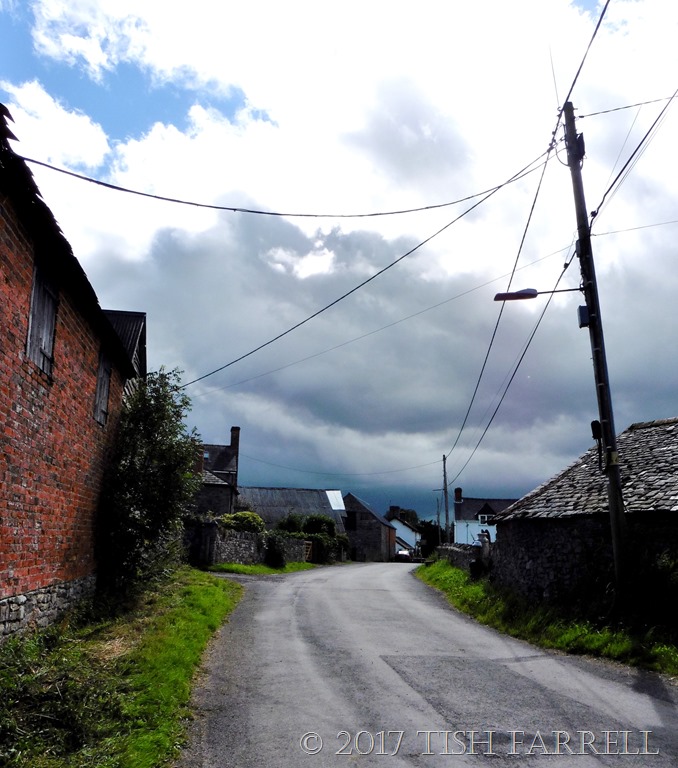
Anyone who saw July’s To The Mysterious Stiperstones post might just recognise those distant heather-covered hills. Last month they were captured under looming skies, but this was how they looked yesterday when we went to Wentnor.
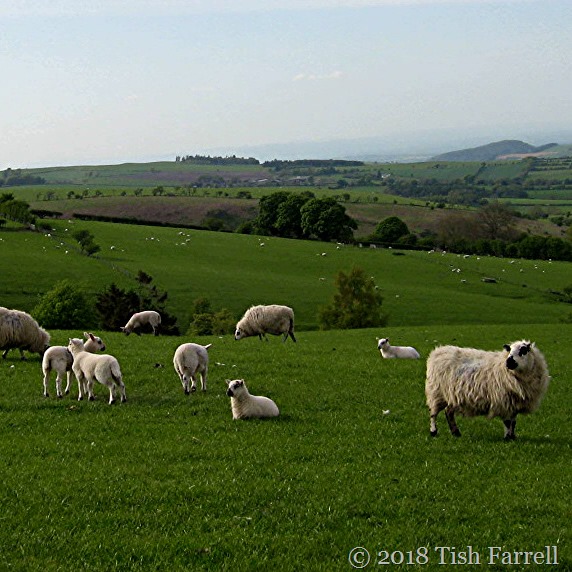
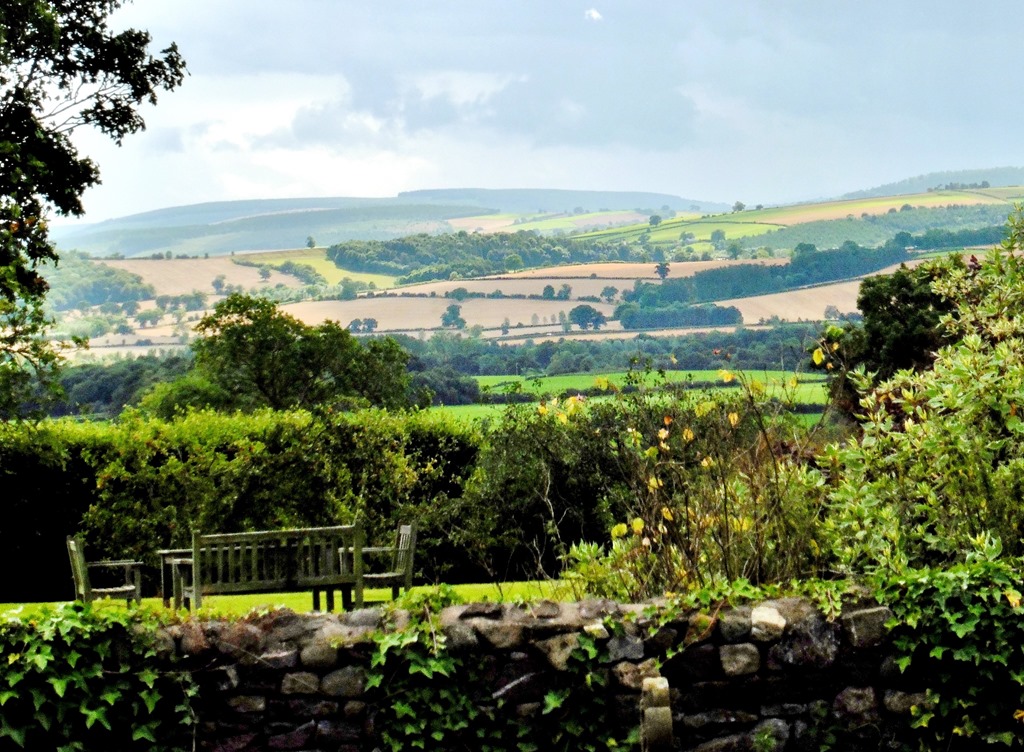
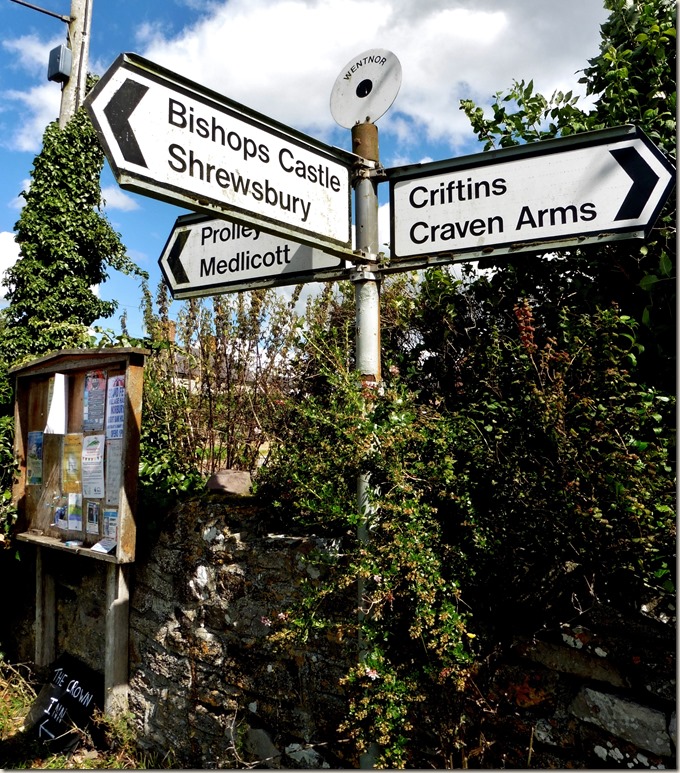
This off-the-beaten-track South Shropshire village must have some of the best views in the county – the Stiperstones to the west, and the Long Mynd to the east, and nothing but rolling farmland in between. The nearest towns are Church Stretton and Bishops Castle (6 and 5 miles respectively) but take note: Wentnor miles are at least twice as long as other people’s miles. It is a world all its own.
*
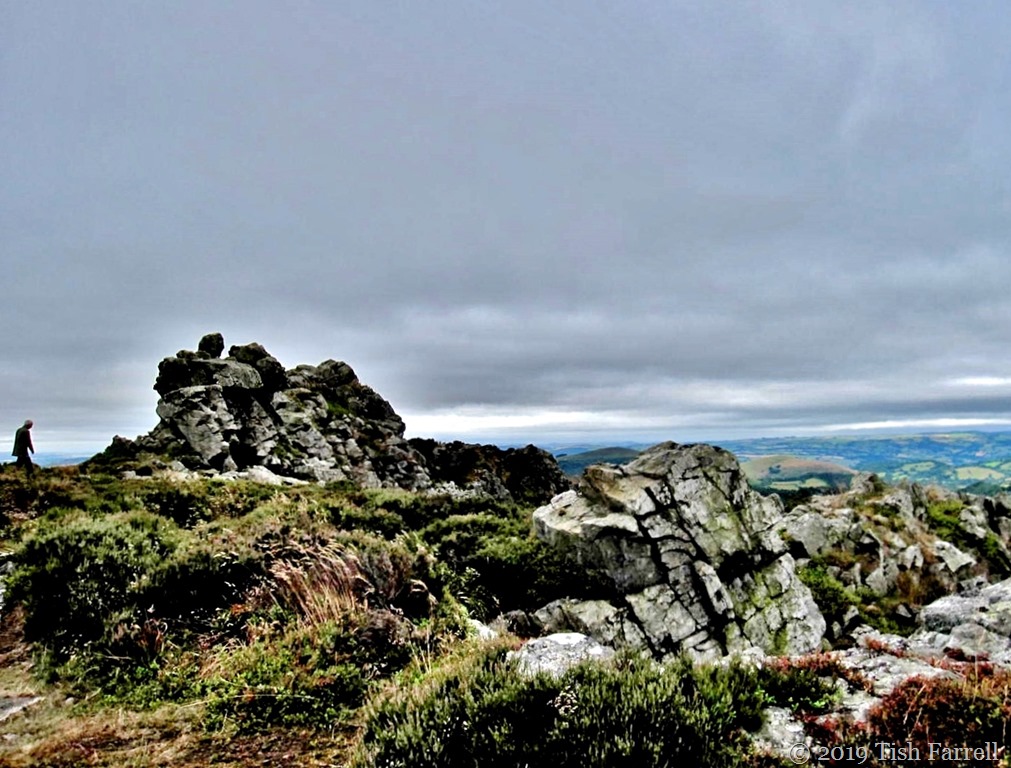
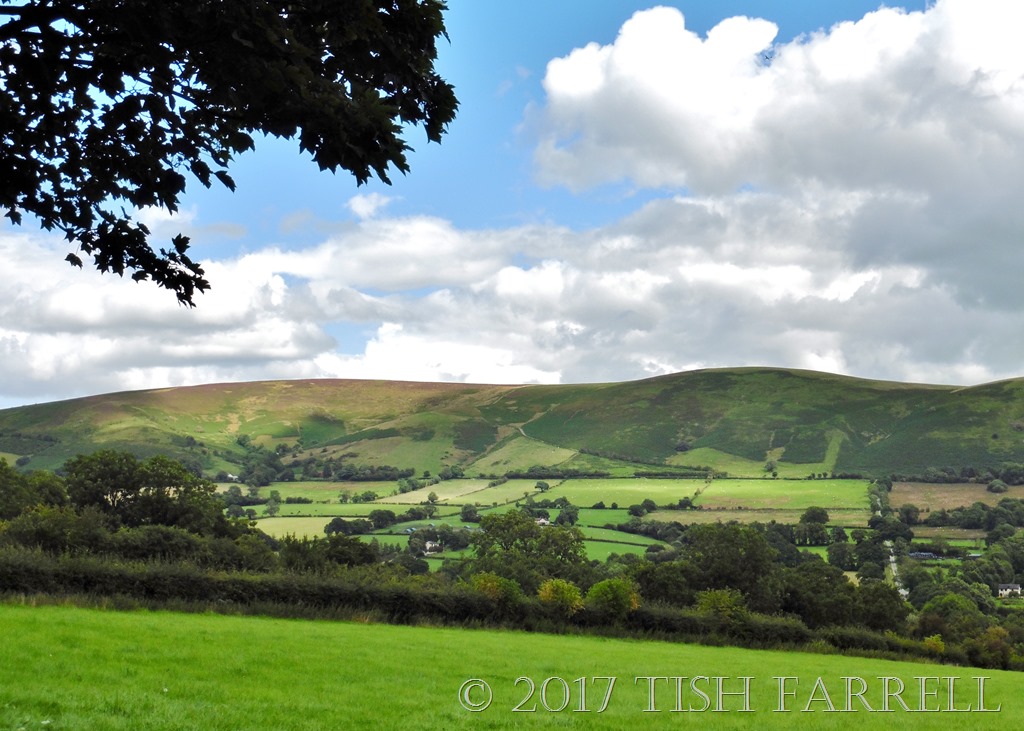
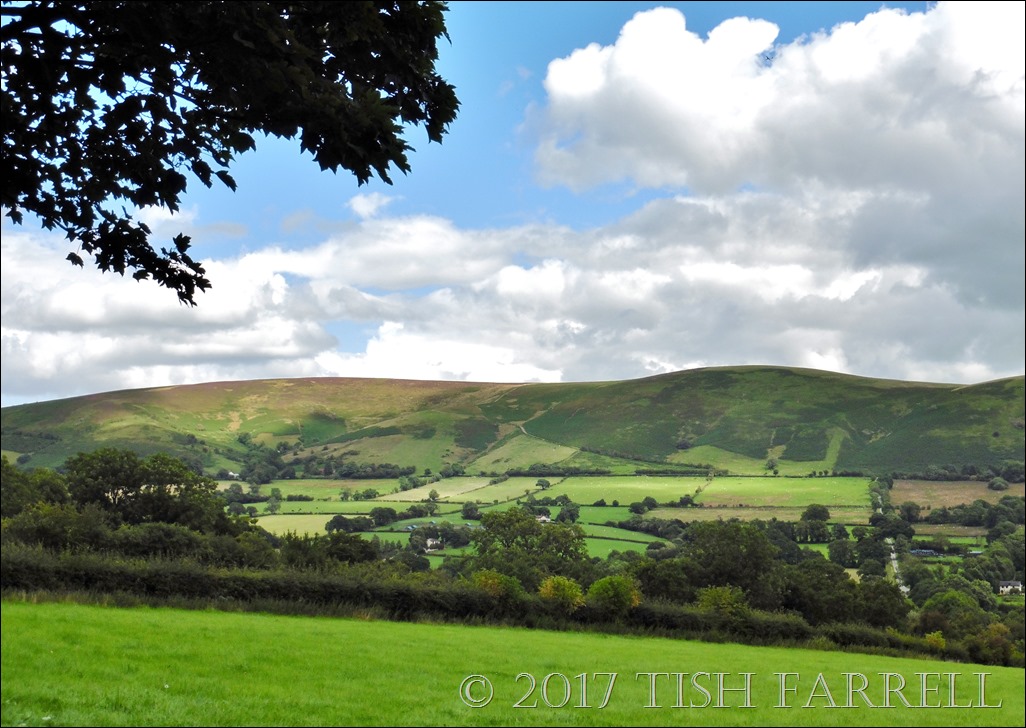
Coming up next is a glimpse of the Long Mynd looking east from the village. The name, unsurprisingly, means long mountain. It does not allow itself to be photographed in one shot.
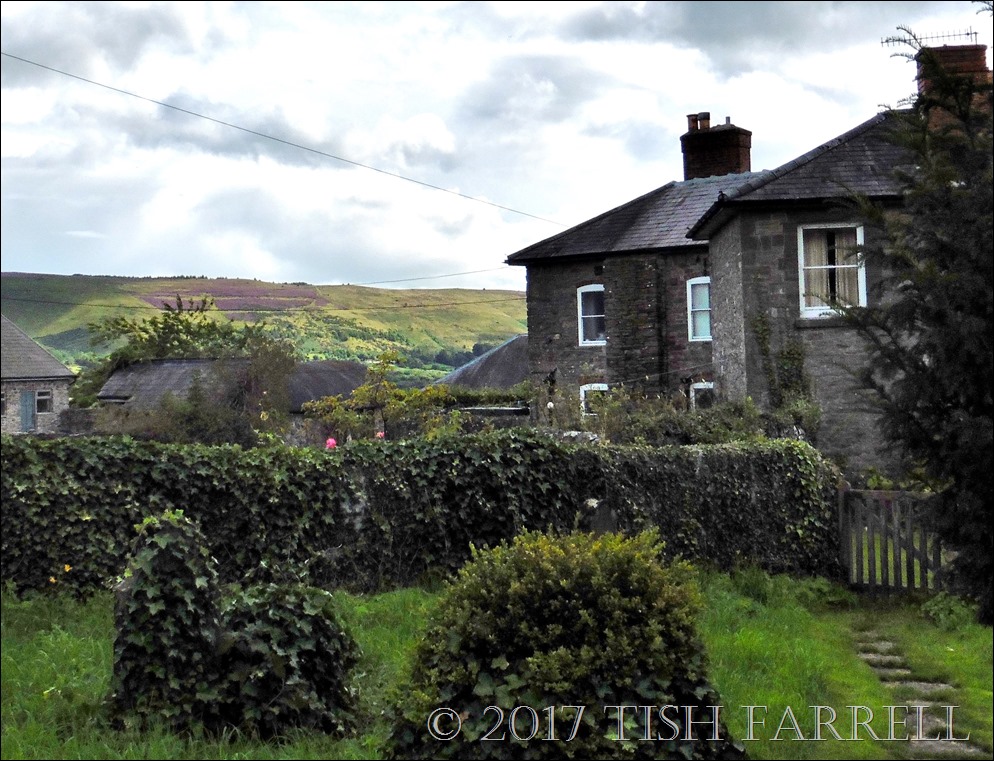
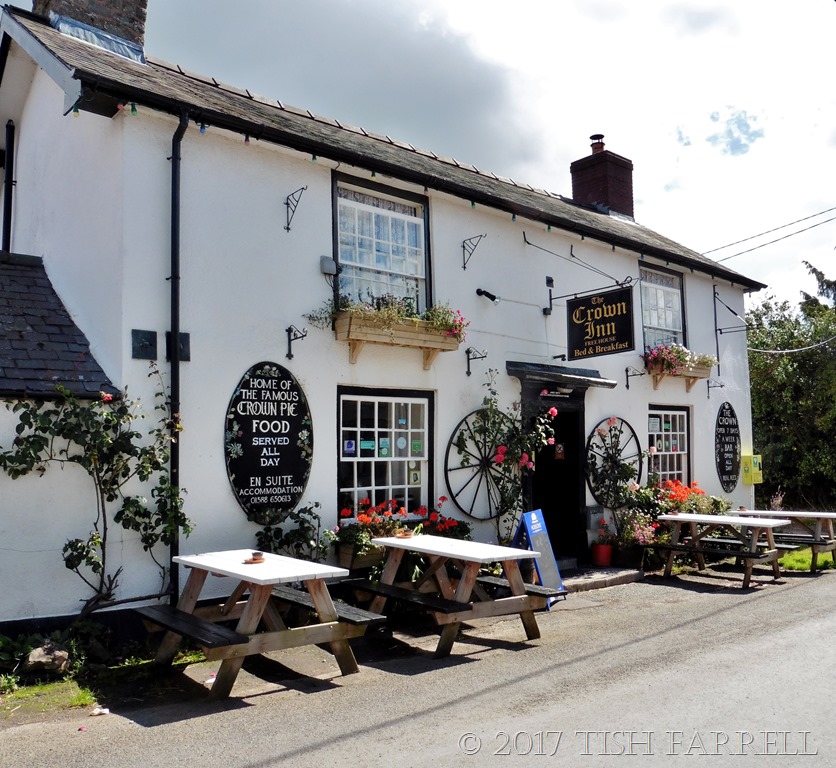
And here’s the northerly end, taken from the car park of the village pub:
Talking of which, this was the objective for the outing – lunch at The Crown at Wentnor along with our best Buffalo chums, Jack and Kathy. The last time we four had been there, Graham and I were still living in Kenya, and only briefly in the UK on annual leave. We decided it had to be a good twenty years ago. How time flies.

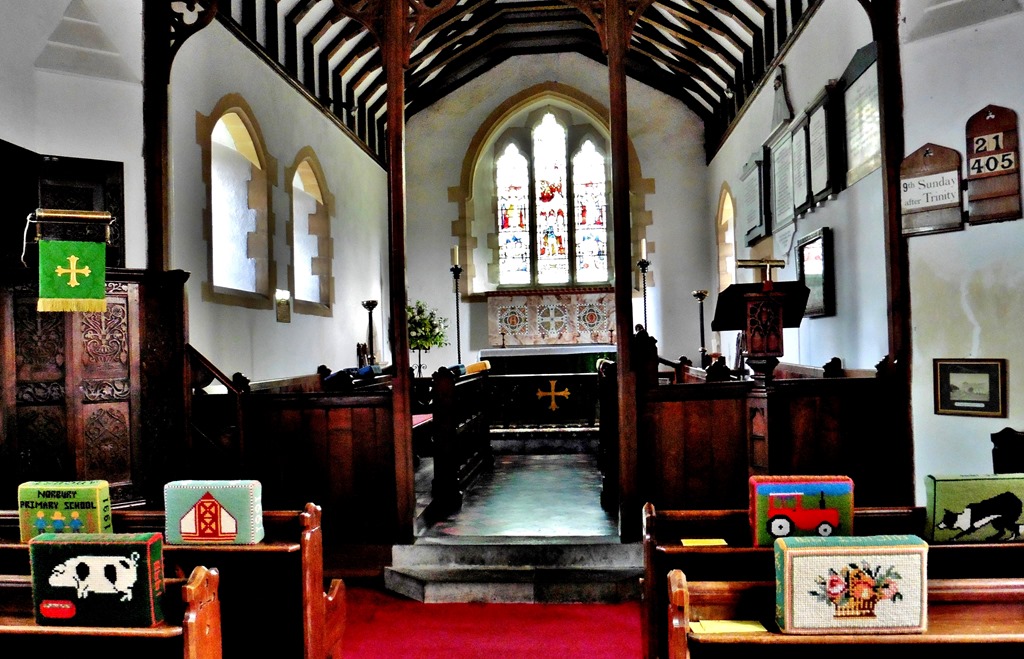
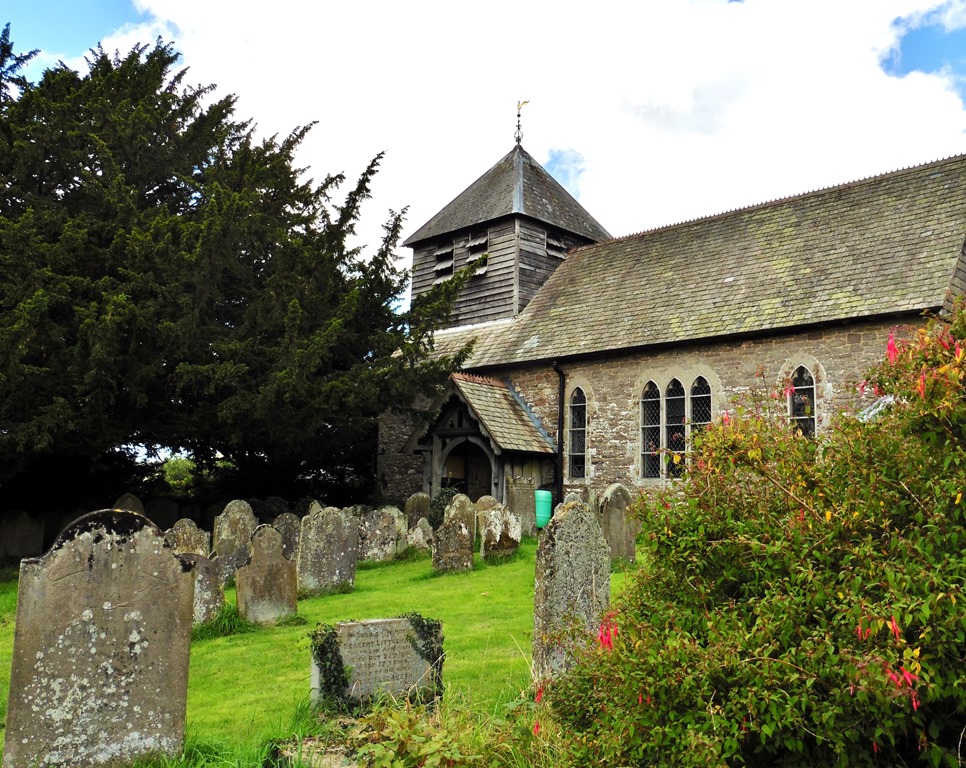
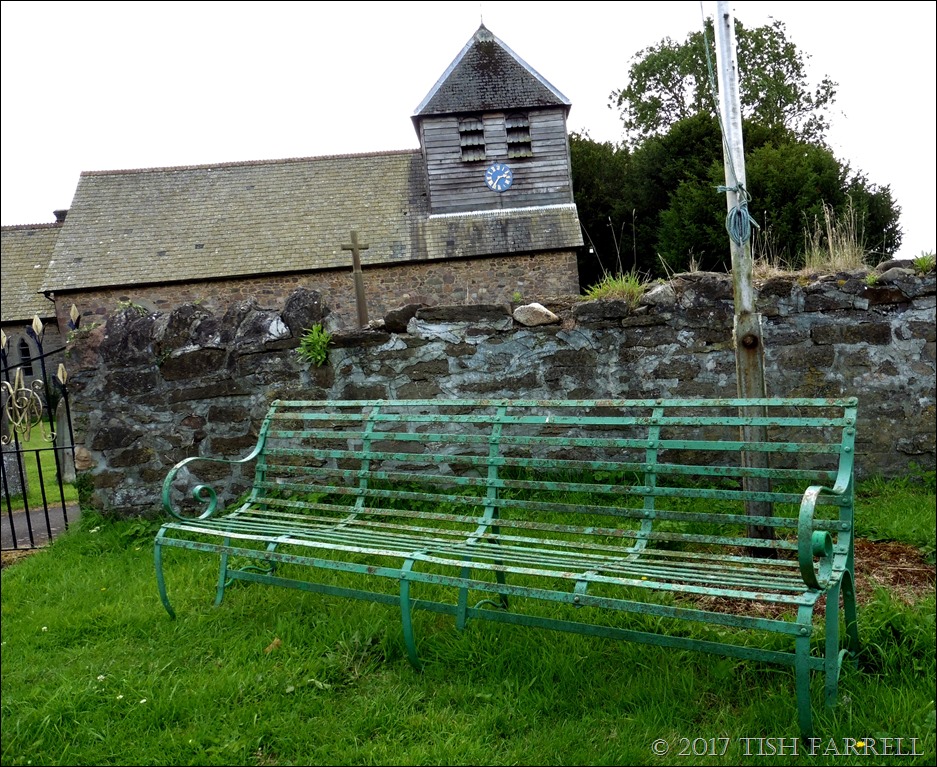
After lunch we wandered about the village, and paid a visit to the parish church of St. Michael. None of us are subscribers, but when out together we often seem to find ourselves in country churchyards. Besides, Wentnor church is welcoming, and vistas within and without most picturesque. In fact I was so taken with the charm of the kneelers along the pews, I thought I might even like to join the people who had made them in a spot of hymn-singing – All things bright and beautiful of course; nothing like some tuneful gratitude as harvest festival time approaches.
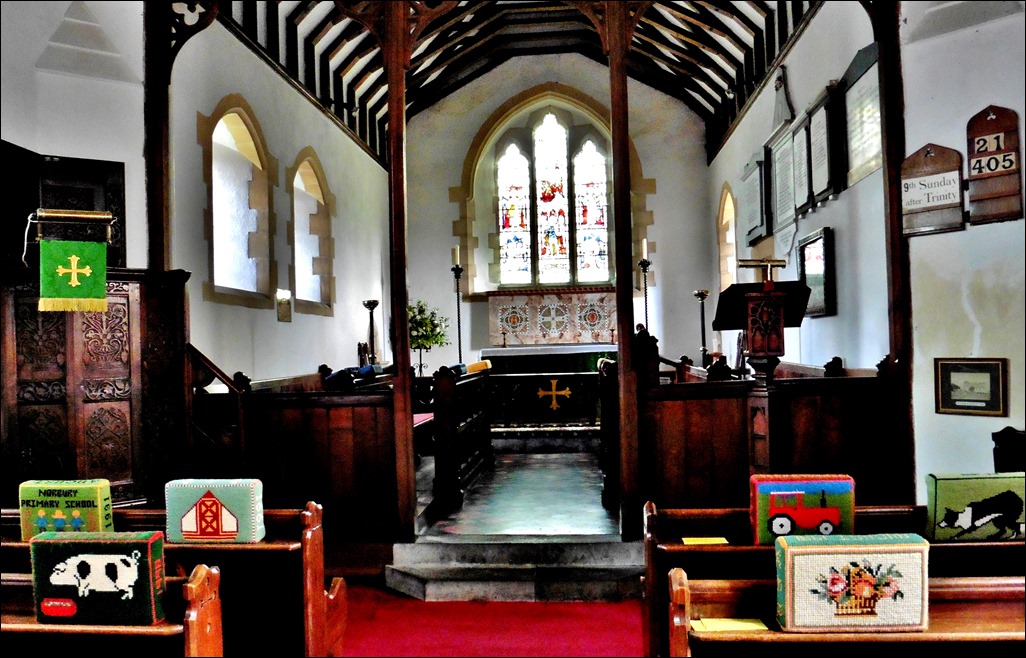
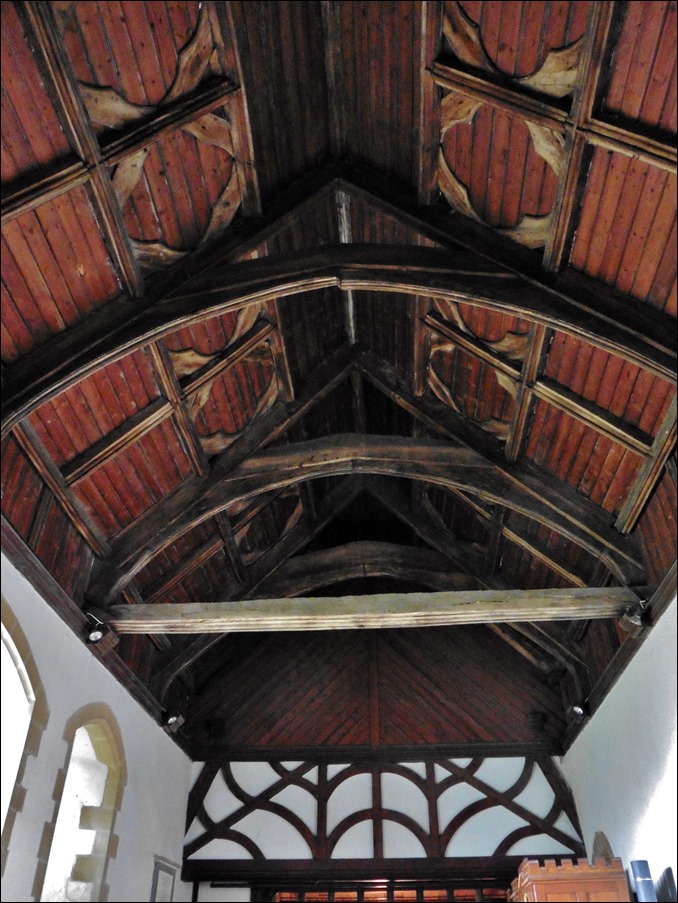

The church was rebuilt in the 19th century, although parts date from the 12th century. I was particularly struck by the craftsmanship of the ceiling, and have never seen anything quite like it before. It made me think of the ornate wooden Viking churches of Norway.
Out in the churchyard with its ancient spreading yew, there were views of the Long Mynd and the hills towards Clun and Radnorshire:
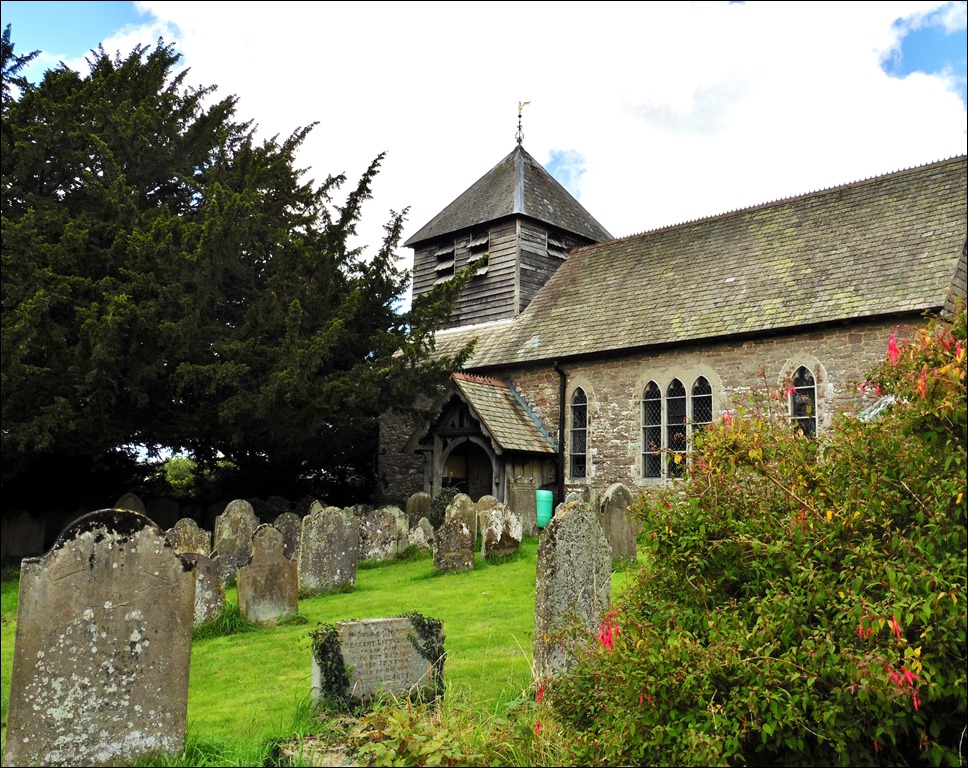

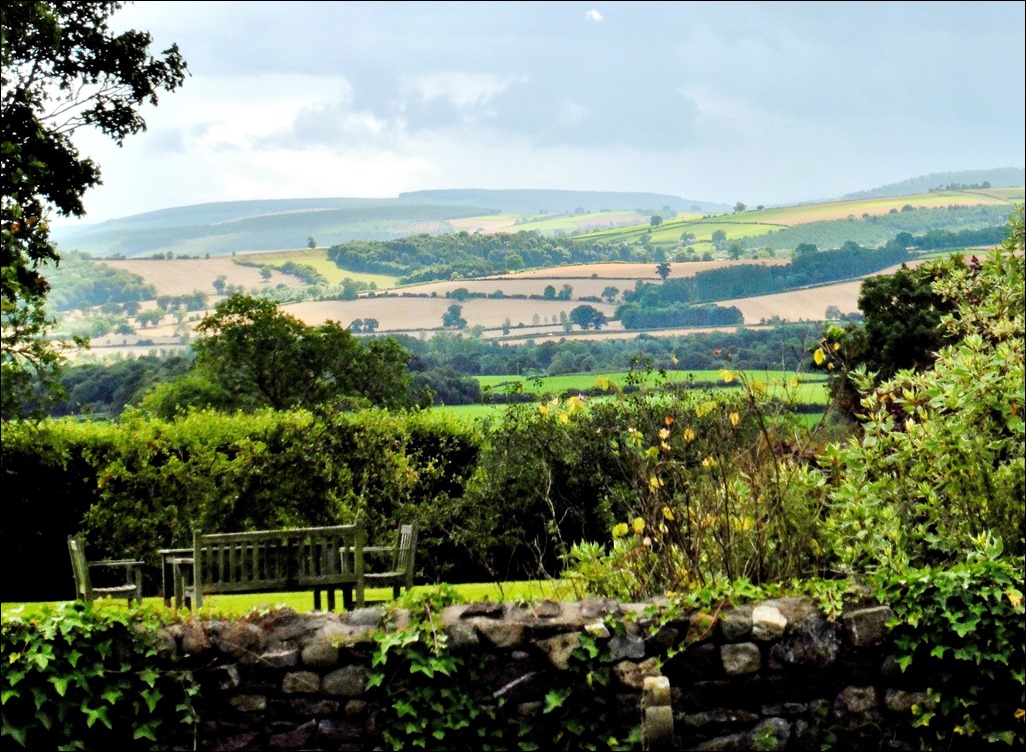
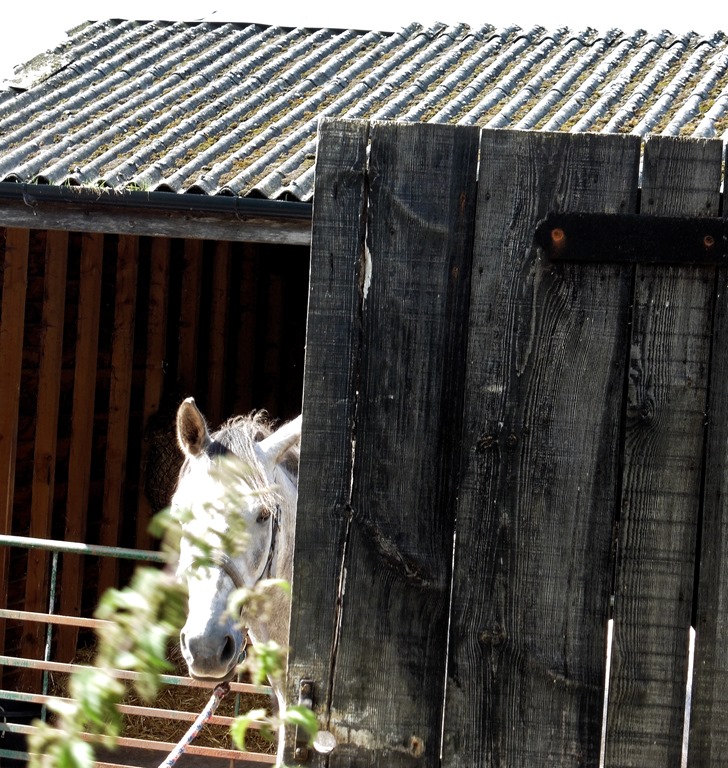
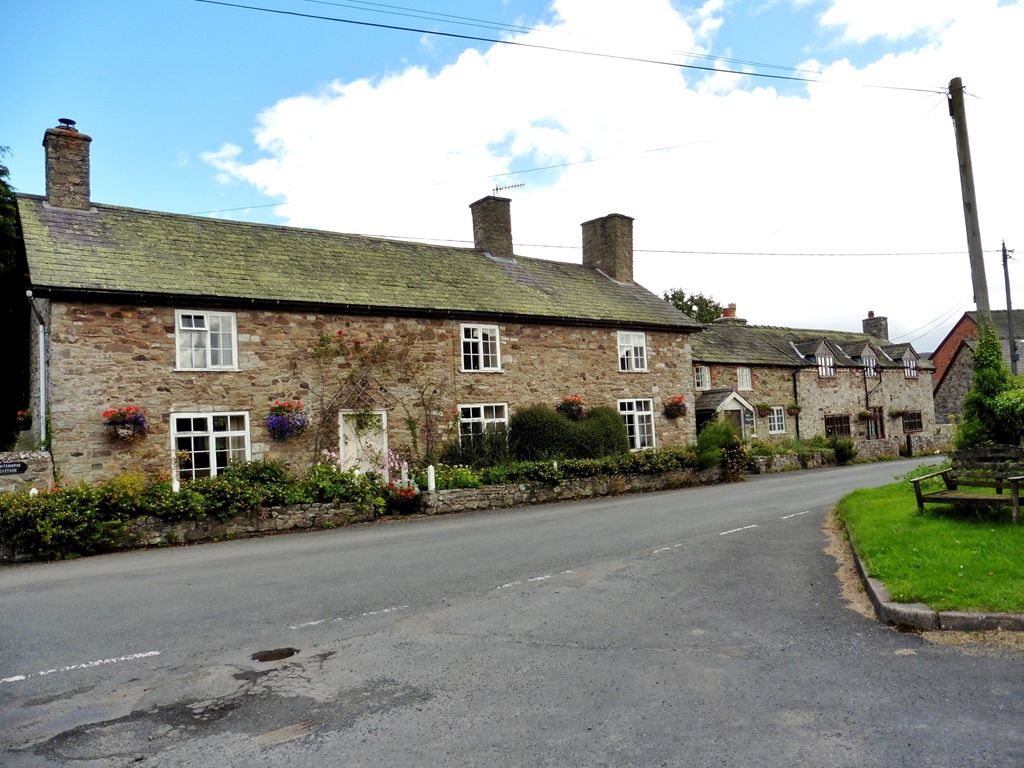
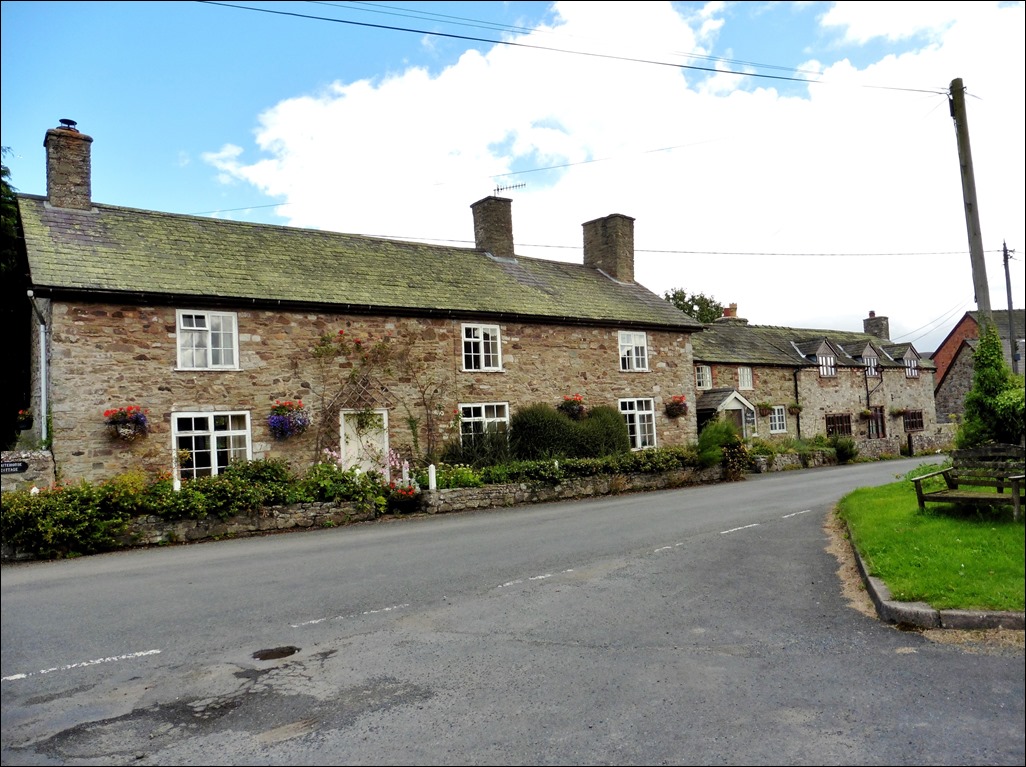
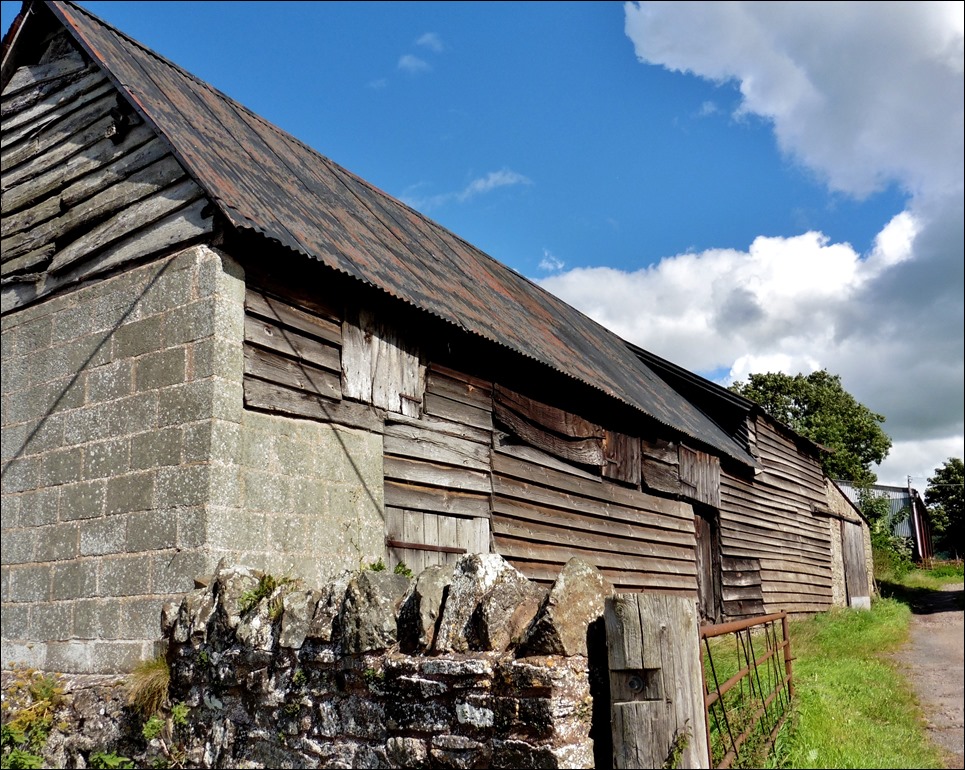
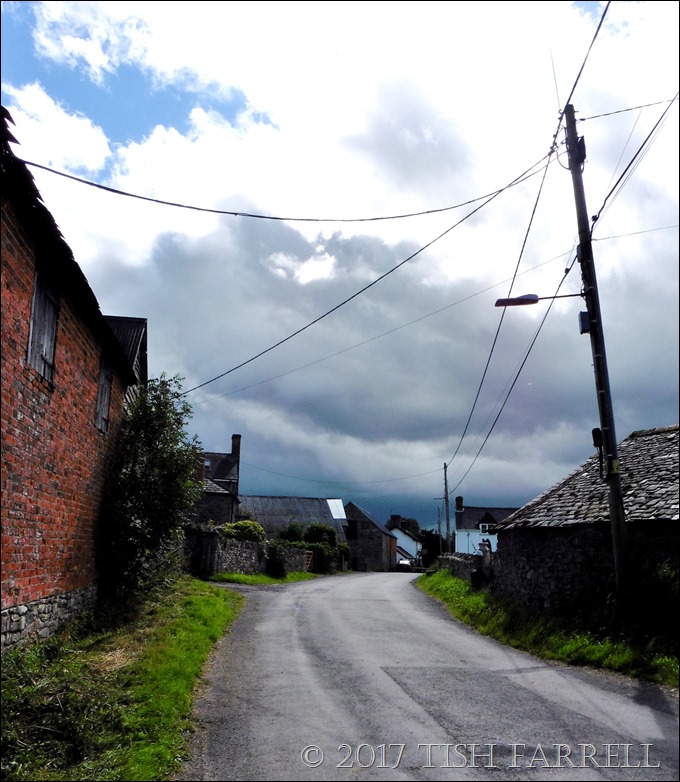
And it was all so very quiet with few signs of the locals as we wandered up and down the lane; only a couple of horses waiting for new shoes from the travelling blacksmith, the village noticeboard, old barns and cottages. And then the skies turned threatening and it was time to leave, back to the real world beyond the Mynd.


N.B. The title quote is from A E Housman’s A Shropshire Lad no. XL
Into my heart an air that kills
From yon far country blows:
What are those blue remembered hills,
What spires, what farms are those?
That is the land of lost content,
I see it shining plain,
The happy highways where I went
And cannot come again.
Six Word Saturday