Elephantine Geometry: The Things One Sees In Bishop’s Castle

IMG_6641sq

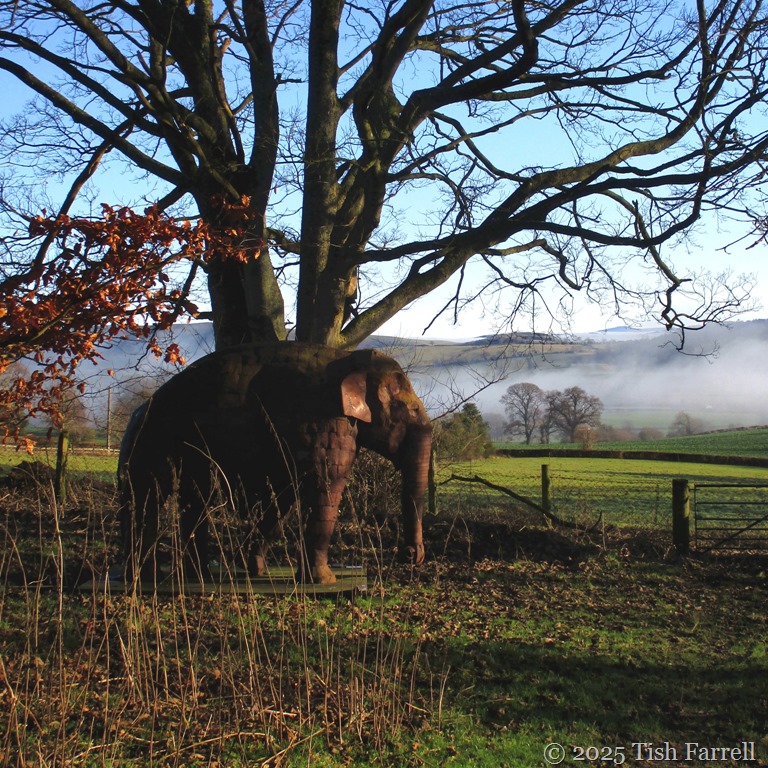
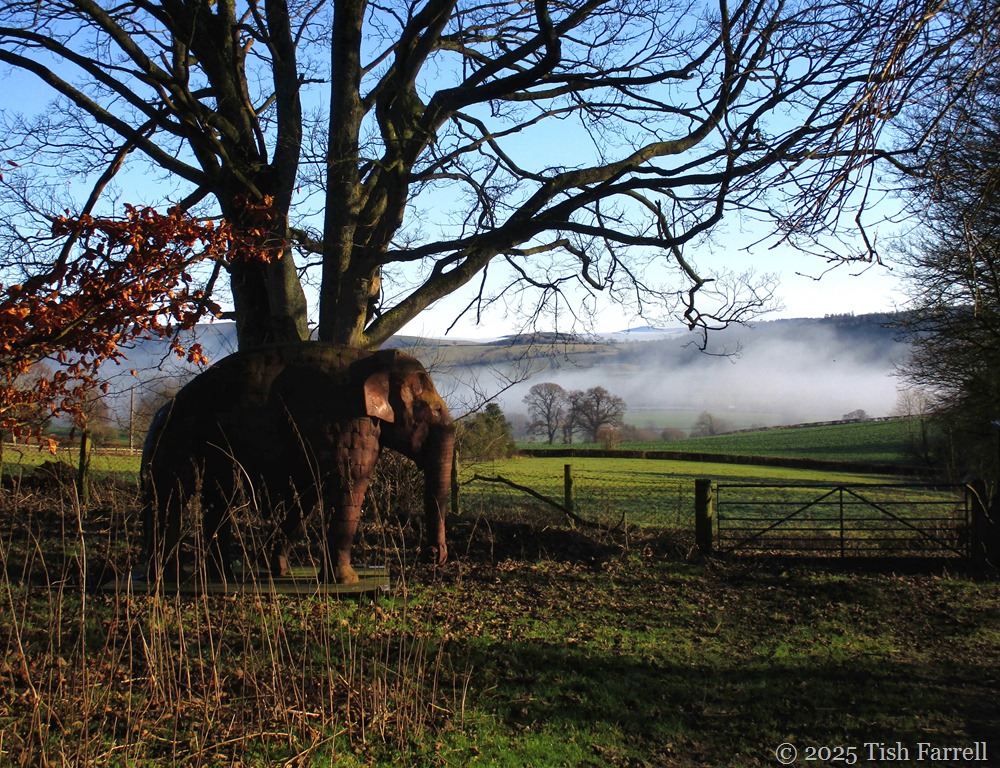
Well, at first sight, glimpsed through a December hedgerow, it truly did look like an actual elephant. Good heavens! What was it doing here in the Shropshire Hills?

We discovered it last week, by chance, as we explored the hillside paths above the town. There it was, beside the Shropshire Way, at Foxholes campsite, and with company too. The Buddha no less.

IMG_6638 sq

*

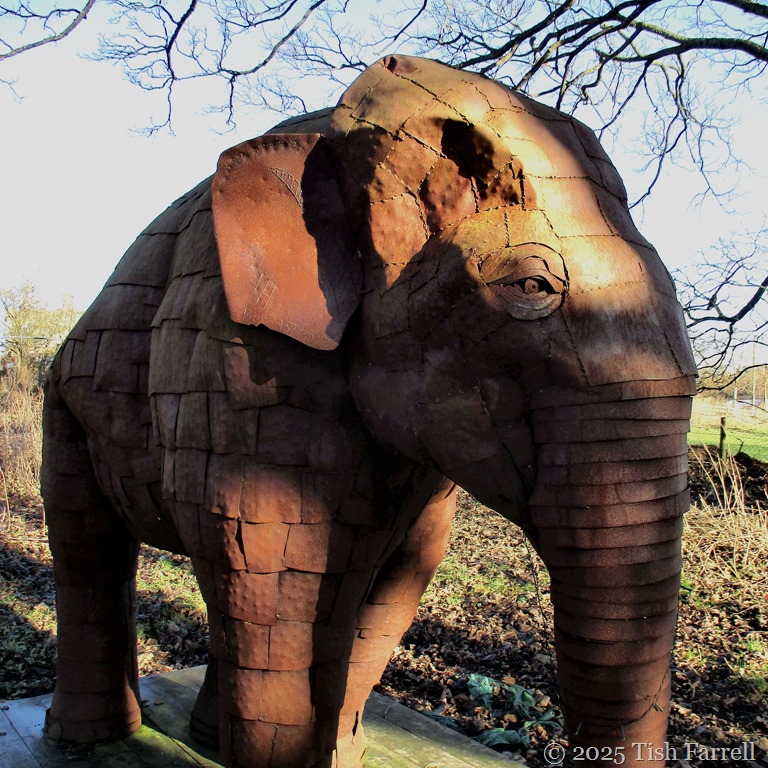
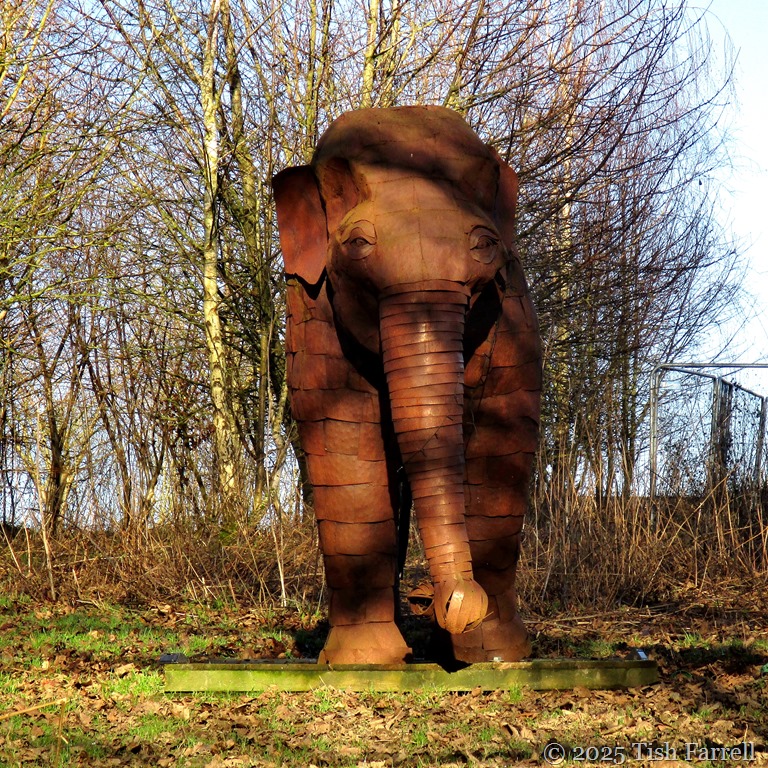
Closer inspection of course revealed that it was cunningly constructed of metal plates, now richly rusted.
IMG_6646 sq

IMG_6637 sq

*

We then realised that it was doubtless one of the exhibits in the Bishop’s Castle town trail, The March of Elephants. You can see the other artworks at that link. This particular work was created by local artist Ben Ashton, but I couldn’t find anything further about him.

By now you could well be wondering why there is an elephant art trail in a Shropshire market town wherein the trade in sheep and cattle has for centuries been the major enterprise.

There are two connections.

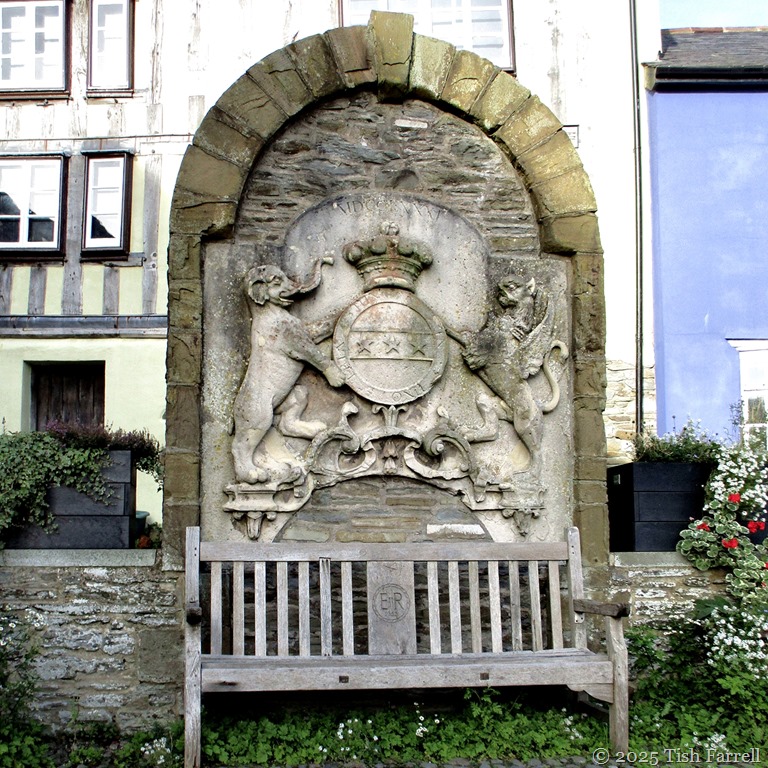
First there is Robert Clive aka Clive of India (1725-1774). After he had finished plundering Bengal (he had started out as a clerk of the East India Company), he returned to his native Shropshire with an eye-wateringly colossal fortune and lived at Walcot Hall just outside Bishop’s Castle. He was further rewarded for his India efforts with a seat in Parliament (MP for Shrewsbury) and an Irish peerage. His newly wrought family crest featured an Indian elephant, of which a carved stone version still survives in the town’s Market Square. It had once been prominently sited on the main window of the Market Hall (since demolished) built by Clive’s son Edward.
IMG_3973 sq

*

A rather more pleasing elephant association is the fact that during World War 2, one or more circus elephants were kept in Bishop’s Castle for safety’s sake. They lived in the stables of The Castle Hotel at the top of the town. At least one was to be seen exercising along the lanes. There’s a brief film clip of it here: https://www.youtube.com/watch?v=AnMu3l3Q0rE
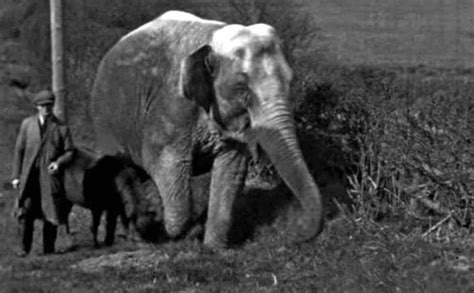
Bishops Castle elephant

*

So there you are. Seeing elephants in Bishop’s Castle is not so outlandish after all.
 IMG_6641

*

P.S. The war-time elephants’ quarters have been given a plush makeover and you can now stay in The Elephant Gate House.
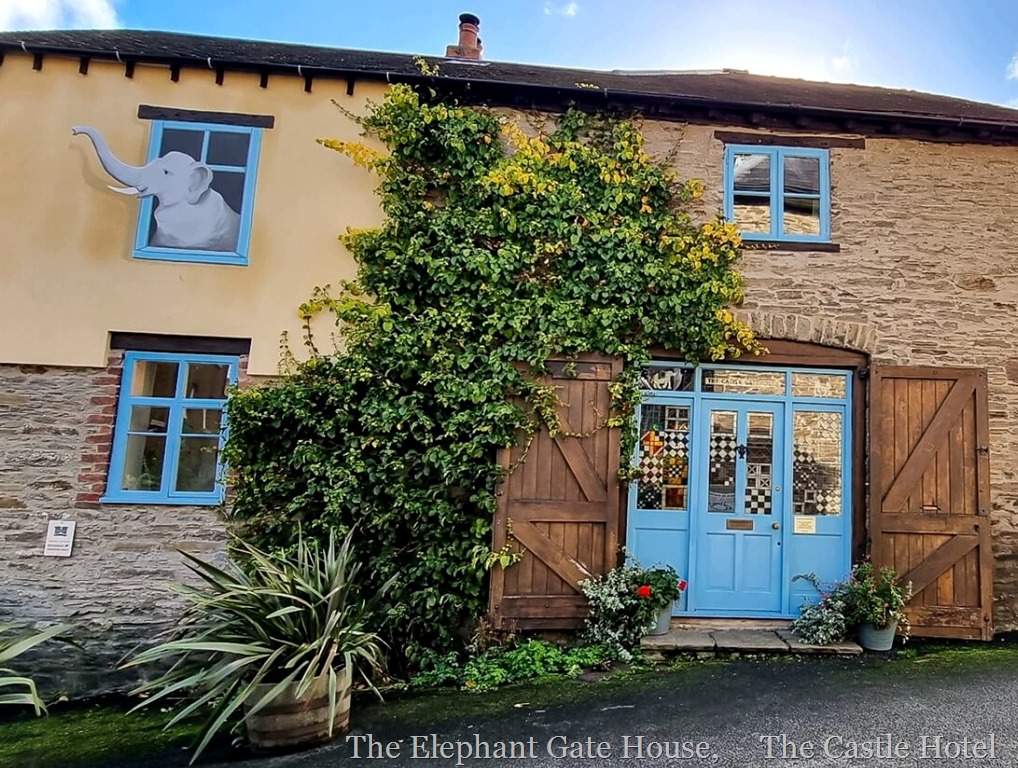
Elephant Gate House

#GeometricJanuary Day 4   This month Becky is hosting square photos with a geometrical theme.
So what’s this all about?

100_5788

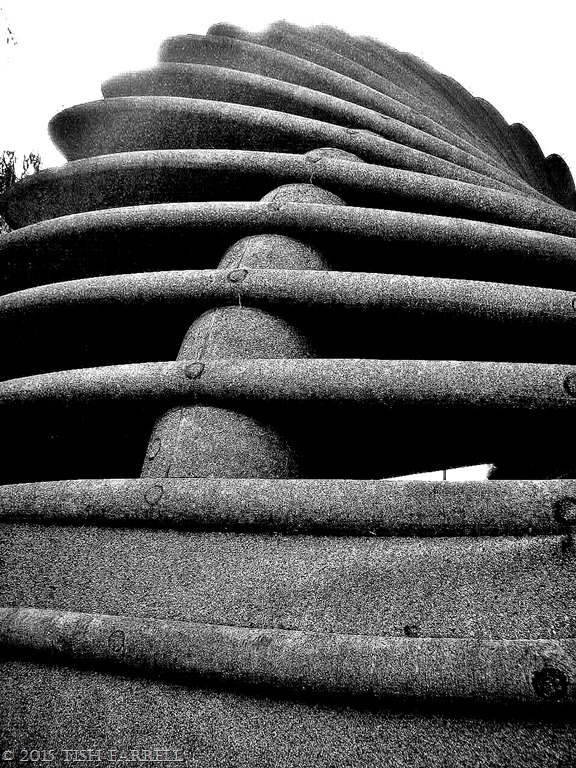
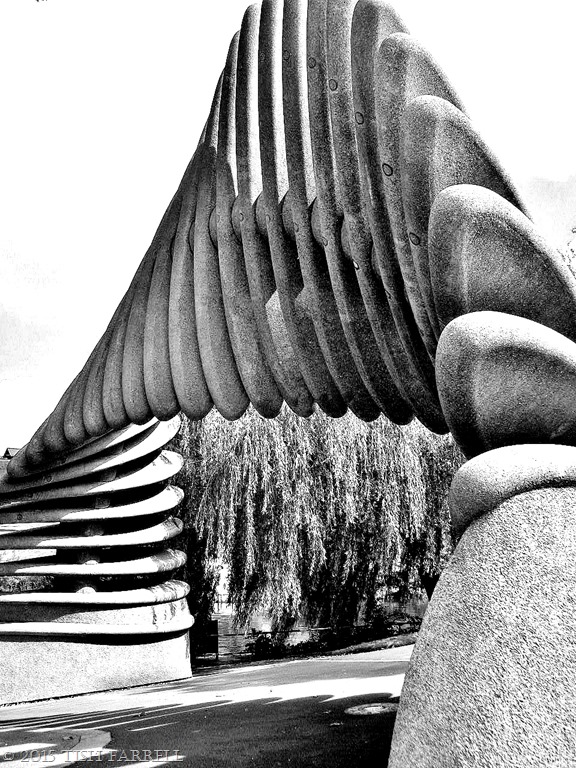
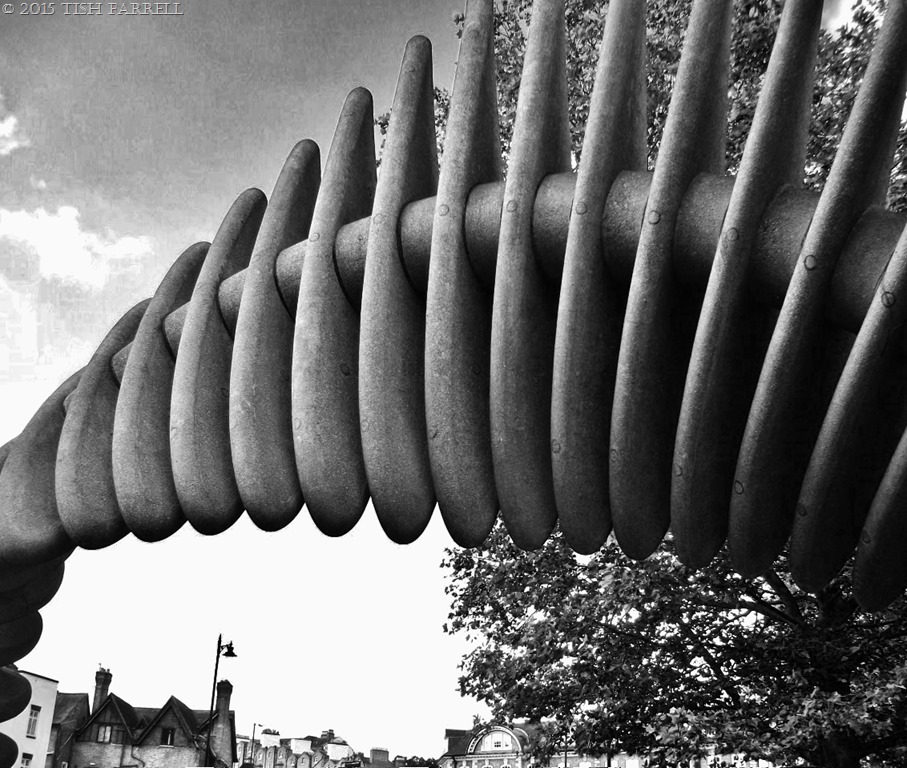
I truly would like to feel more enthusiastic about this monumental piece of public art. I mean I can see it is interesting – in its way – and the more so with the application of some photo editing. This has at least relieved us of the sickly mud-brown colour. Also the cast concrete takes on a little more texture than seems apparent in the original. But perhaps the most serious problem with this sculpture is its setting – squeezed into a little triangle of municipal garden between Shrewsbury town’s inner ring road and the River Severn.

And so given that its siting was down to town councillors, and not to the artist whom they commissioned to do the work at great public expense, I tried approaching the work from different angles. As you can see, it is incredibly well made:

100_5786

100_5779 (2)

100_5775

*

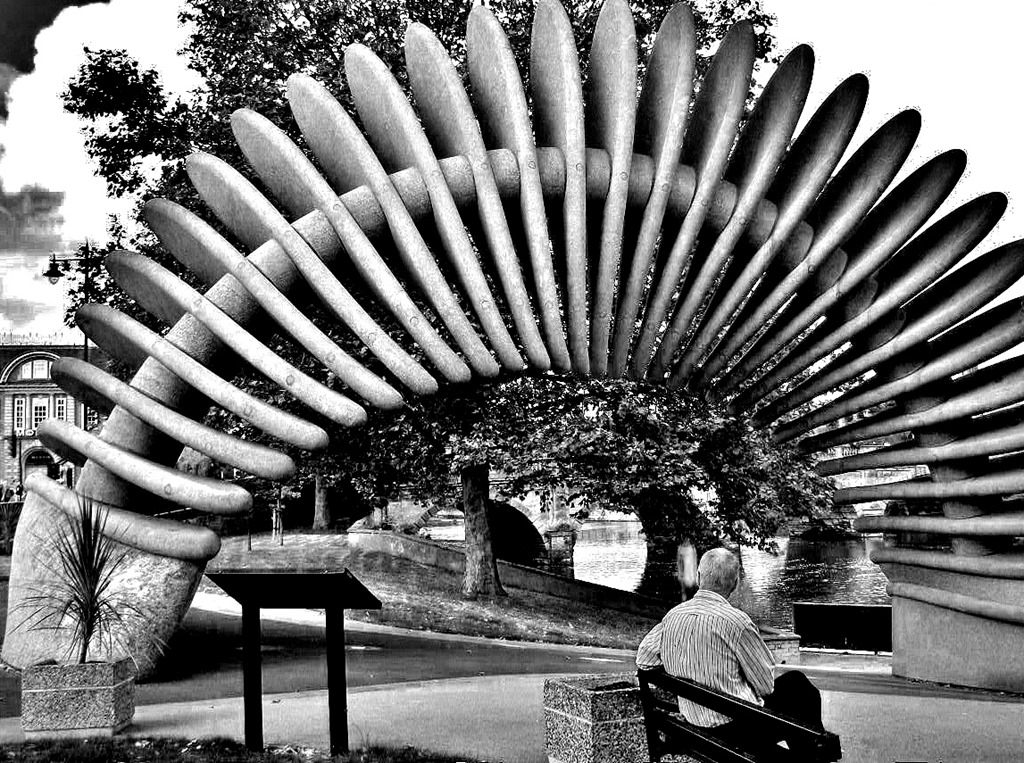
I even tried including some human interest, but this next shot only added to the sense of crammed in-ness, with too many planters, and a poorly situated  explanatory panel:

100_5790

And so what do you think this work is commemorating? (I know that at least one person who reads this blog knows it person). Otherwise, all answers on a postcard to the secret WordPress post box.

Before I go, I will at least tell you that it is something very important, and relates to all of life on this planet, and that all may well be revealed in an upcoming post.

 copyright 2015 Tish Farrell

Please also drop in on Black & White Sunday, where this week Paula’s theme is sculpture.

Life Entwined at Ogunquit

111


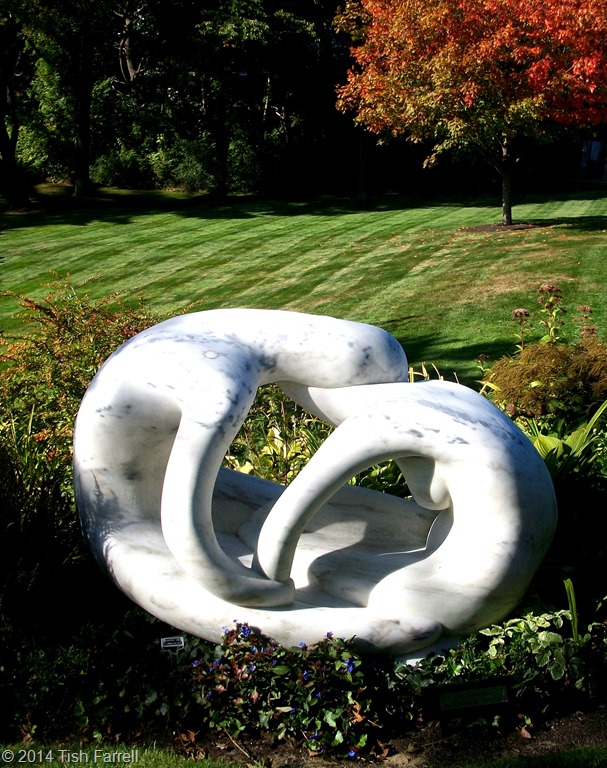
Cee’s ‘Circles and Curves’ challenge is giving me the chance to  show again this work by New England sculptor Antoinette Prien Schultze. ‘Life Entwined’ is circular in every way – suggesting not only the cycle of human life and love, but also the turn of the seasons, the circle of time itself.

It is made from Vermont Danby marble and weighs 4 tons. You can see it in the beautiful shore-side garden of the Ogunquit Museum of American Art in southern Maine. I have written more about the Museum HERE. It is one of the most beautifully situated galleries in the world, and well worth a visit for the setting alone.

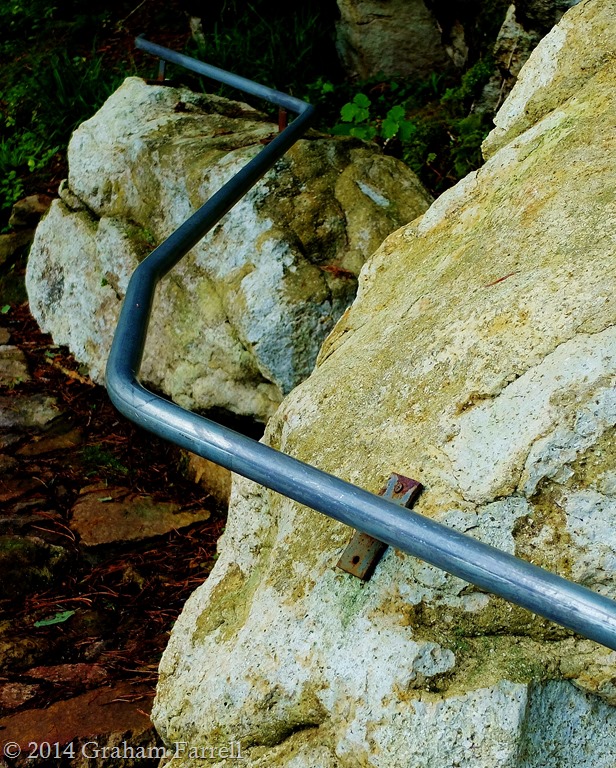
Another fine thing about Ogunquit is the Marginal Way, a cliff top path along the rugged shore. It was here I found this natural sculpture which also fits the challenge.

100E3309

copyright 2014 Tish Farrell

*

For more about Ogunquit Museum of American Art see my earlier post:

Only One Ogunquit: the little gallery by the sea

*


Click on the image for more bloggers’ circles and curves

Last Warrior Standing?


holiday 027 - Copy


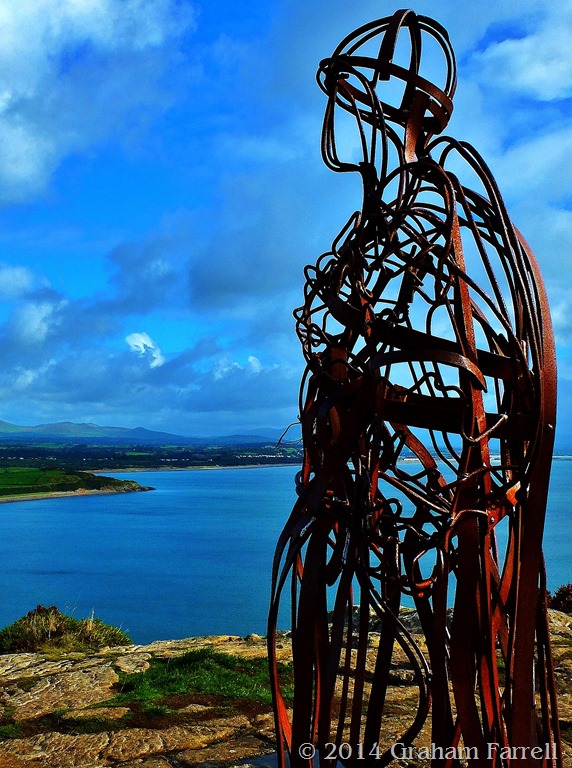
I have written about this magnificent  Welsh sculpture in more detail in an earlier post, Warrior Wind-Singer of Llyn, but I thought he/she deserved another viewing. This brave Celtic guardian surveys Cardigan Bay from the cliff top above Plas Glyn-y-Weddw, Llanbedrog, on the Llyn Peninsula. It is the work of local craftsmen Berwyn Jones and Huw Jones and replaces two earlier figureheads that met there doom there by fire and corrosion. It is known as the Iron Man of Mynydd Tir y Cwmwd, but as I say, I think it could also be a woman. After all, the Celts had fierce women like Buddug, known more widely today as Boudicca. She was  the warrior queen of the Iceni,  who took on the invading Romans.


I find the  figure very moving, the remnant twist of sinew and ligament after bone and flesh have been weathered away. In the spaces between, the steel armature gathers the sea winds and sings. A metaphor, perhaps, for Welsh culture – the bardic verses and sea-sounds of the language that outsiders find so hard to get their tongues round. And for those of you want to hear some Welsh being spoken and see some superlative Welsh drama produced by BBC Cymru Wales, then look out for Hinterland, (Y Gwyll in Welsh), the so-called Celtic Noir detective series. It is currently showing on the UK’s BBC, but it deserves to go world-wide.

holiday 015

The winding cliff path to the Iron Man

© 2014 Tish Farrell


For more twist and metal follow the links:

Daily Post Weekly Photo Challenge: Twist

Ailsa’s Travel Challenge: Metal

Object, subject, object? Who cares when it’s this much fun…


100_1454


It was a brilliantly cold December day and we heading for the Serpentine Gallery in London’s Kensington Gardens when when we happened on this marvellous magic mirror. We were already in fantasy-mode too. We had just been questing in Kensington’s Enchanted Palace exhibition, wherein the State Apartments had been filled with mysterious installations that told serial tales of seven princesses who had once lived in Kensington Palace. Many of the stories were hauntingly sad, and the last of these, Princess Diana’s, very much skated over. And so, despite the grandeur of the place, and the wonder of the installations, we were left with disturbing cobwebby feelings that made me think of finding wicked fairies in the attic. It was good to step out into the icy air and  regain some sense of reality.

But then look what happened…?

100_1451

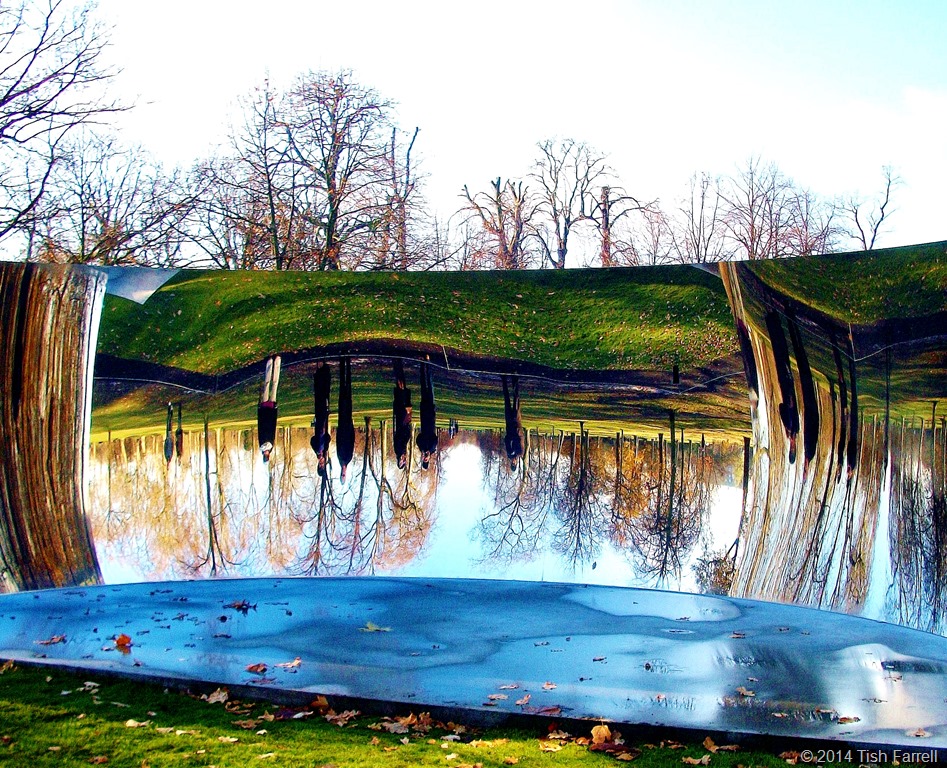
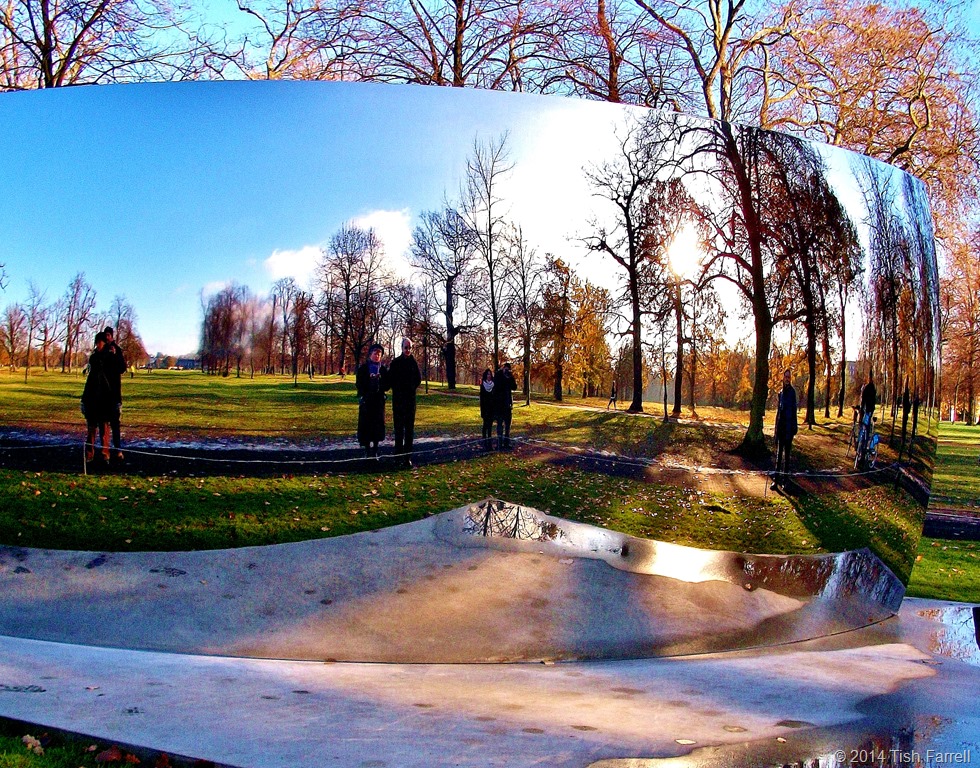
Wandering through the wintery park, we collided with this piece of optical wizardry – sculptor Anish Kapoor’s C-Curve – a highly polished steel convex-concave mirror. It turned out to be one of four magnificent pieces making up the six-month 2010-11 exhibition put on by the Serpentine Gallery in conjunction with the Royal Parks. Sadly, the exhibition is over, but you can have a retrospective view and see a short video at this link:

Anish Kapoor: Turning the World Upside Down


100_1452

But the great thing about the C-Curve was the huge enjoyment it was giving to all the passers-by. Public art at its very best. You could walk right up to it. You could watch yourself do silly walks and upside-down too. You could hug your partner and grin inanely at your reflections. It made you, the viewer, the subject of the work. It inspired you to explore the landscape with fresh eyes as reality became a multi-layered spectacle and wonder. It was thus a resplendent antidote to palace fantasies and wicked fairies in the attic. What an artist is Anish Kapoor.


And finally for a different interpretation of OBJECT. Here is Anish Kapoor and friends in the official Amnesty International’s video objecting to human rights abuses. Gangnam for Freedom. Go for it…


Weekly Photo Challenge: Object