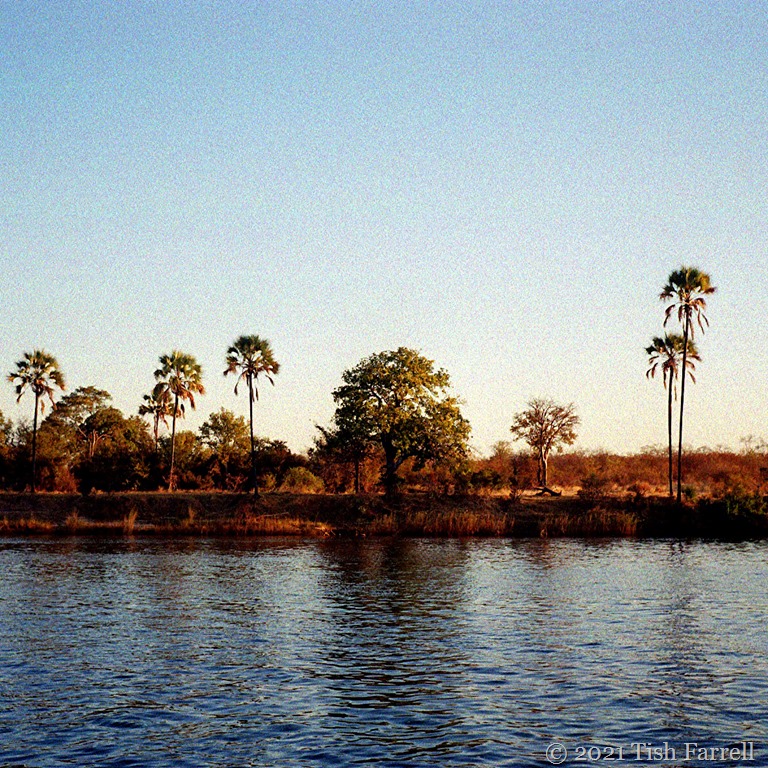
Dreaming Upstream Zambezi

Zambezi sundowner trip

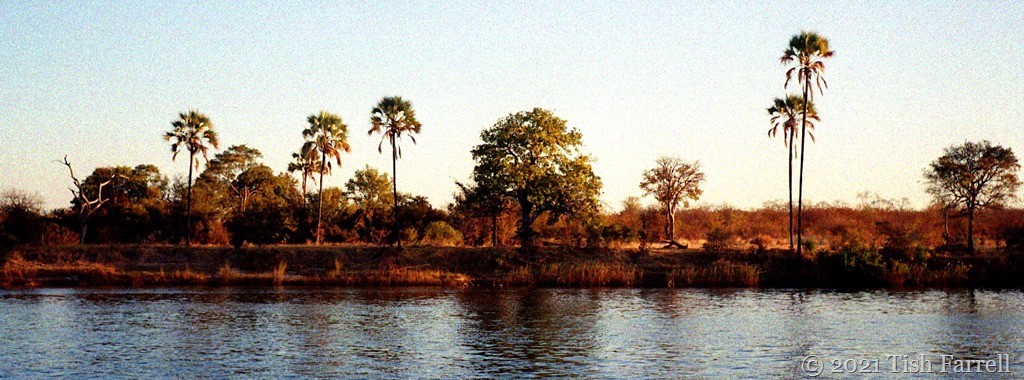
There were many things we saw and did while living in Zambia and Kenya that were hard to process – even head on; even when fully present. It was as if the actuality dial in one’s brain kept sliding out of tune, sparking dissonance: am I here or am I simply observing myself here, courtesy of an imagined translocation from the pages of some hyper-real travelogue. I mean to say, how could I possibly be taking a sundowner boat ride up the Zambezi. How had I come to this place where I never expected to be?

We were living in Lusaka, Zambia, at the time. That posting had been unexpected too, notice given only on the day we exited Kenya after ten months there. Suddenly Graham was on another short-term attachment, this time to the EU Delegation, managing the distribution of food aid to drought-stricken villages. Then one day an old school friend, en route from the UK to New Zealand, wrote suggesting he and partner make a visit, but he could only get incoming flights to Harare. OK said G. We’ll drive down and pick you up.

And so began a fantastic make-shift safari – out of Zambia into Zimbabwe – crossing the border (and downstream Zambezi) at Chirundu then heading south for Harare. Then on further south through Masvingo to Great Zimbabwe. After that a loop west and north through Bulawayo, the Matopos and Hwange National Parks and back to the Zambezi and the Zambian border at Victoria Falls. And so one evening we found ourselves on a sundowner cruise, ambling upstream between Zimbabwe and Zambia. But then again perhaps that wasn’t really me.
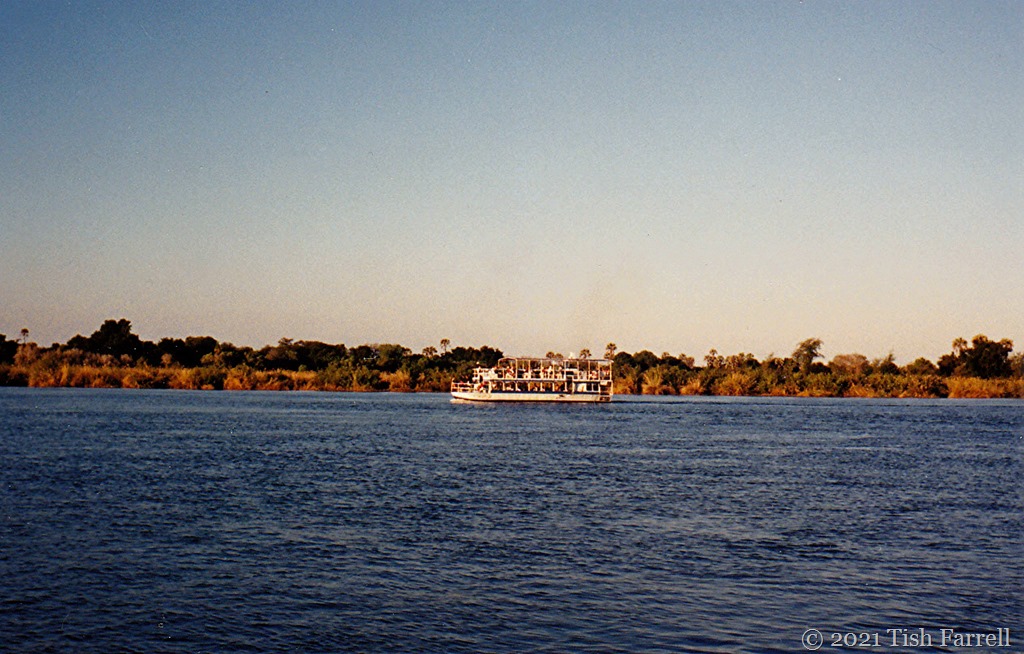
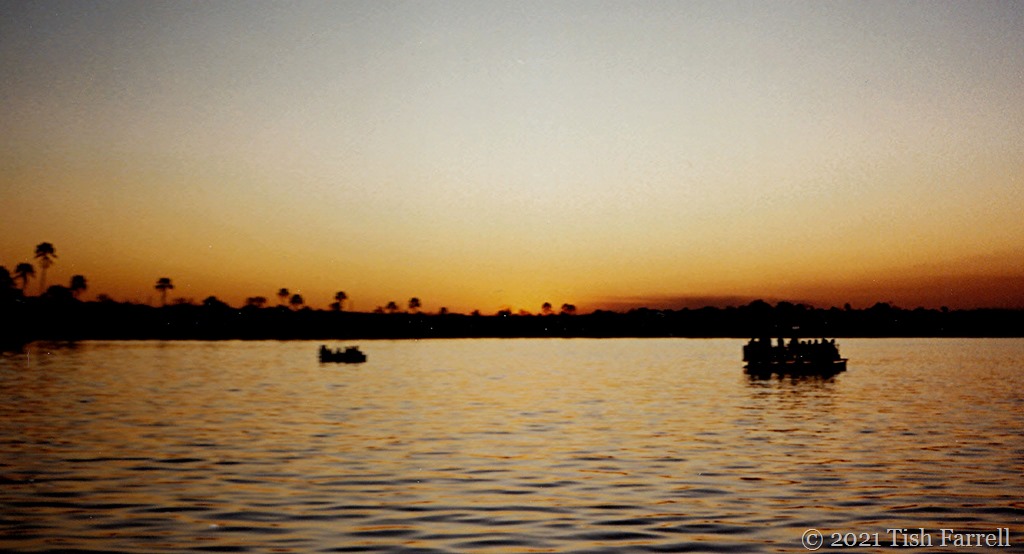
IMG_0004_NEW

IMG_0003_NEW_0001

*

I couldn’t end this final ‘up’ post in Becky’s inspiring month-long challenge without a downstream view too. Look out! Here we go – up and over the knife edge – Victoria Falls – Mosi-oa-Tunya – The Smoke That Thunders. Way-haaaaay…
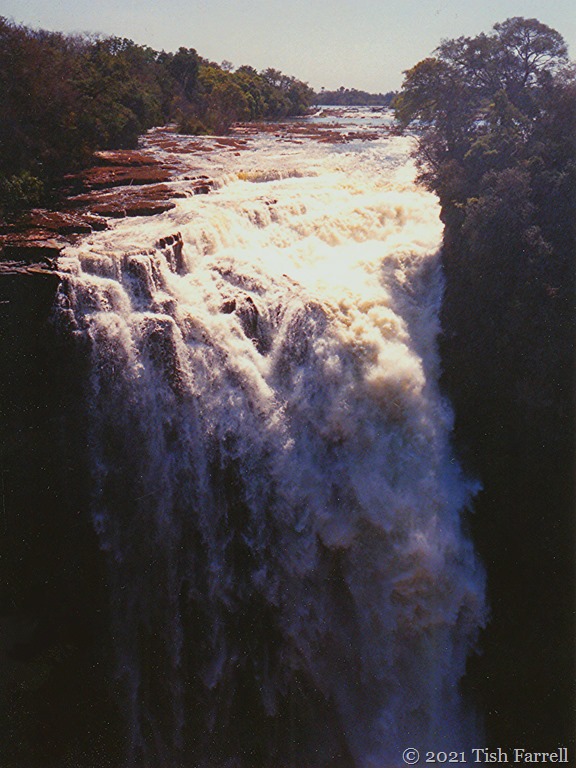
IMG_0001vic falls

zambezi header


Square Up #31  A big big thank you to Becky for helping to keep our spirits up all through January
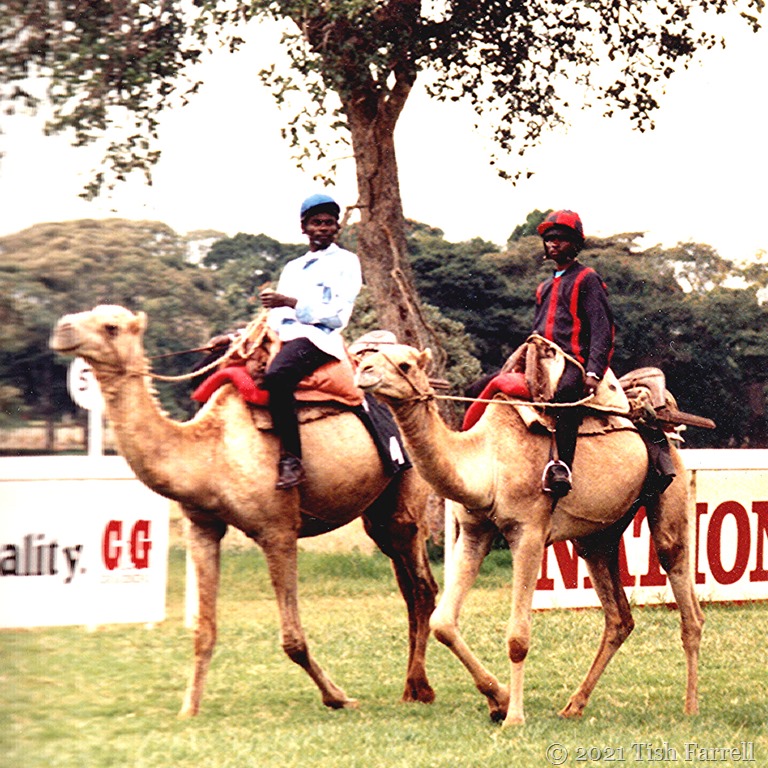
Giddy Up, You Slow Coach Camels!

races_0004 - Copy (4)sq

It was meant to be a diverting event between the horse racing at Nairobi’s Ngong Racecourse. Officers from Kenya’s Police Anti-Stock Theft Unit were demonstrating their mounted expertise by racing their camels. The camel units usually operate far away in the arid zones of the Northern District, patrolling the border with Somalia, so perhaps the genteel and leafy ambiance of the Jockey Club enclave did not enthuse the camels.They certainly took much urging to leave the starting line and then, having started, there was little inclination to finish. An underwhelming contest then, though it added to the many and varied goings on of a Nairobi racing weekend.

The Ngong races are a hangover (pun retrospectively intended) from British colonial settler days when, for a week around Christmas, farmers left their lonely farms and ranches and gathered in town to let their hair down. For many it was a drunken spree, at least if you are to believe Evelyn Waugh’s 1931 account in Remote People. I’ve quoted from it before but it’s worth a second go:

I found myself involved in a luncheon party. We went on together to the Races. Someone gave me a cardboard disc to wear in my button-hole; someone else, called Raymond, introduced me to a bookie and told me which horses to back. None of them won…

Someone took me to a marquee where we drank champagne. When I wanted to pay for a round the barman gave me a little piece of paper to sign and a cigar.

We went back to Muthaiga and drank champagne out of a silver cup which someone had won.

Someone said, ‘You mustn’t think Kenya is always like this.

*

I see from the internet there has been plenty of racing at the Ngong Racecourse during January. These days it is a well ordered multi-cultural affair. I’ve also just had a quick trawl through the Kenya Jockey Club’s Facebook photos but found no sign of camels. Obviously lacking in appropriate competitive attitude.


Square Up #30

Six Word Saturday

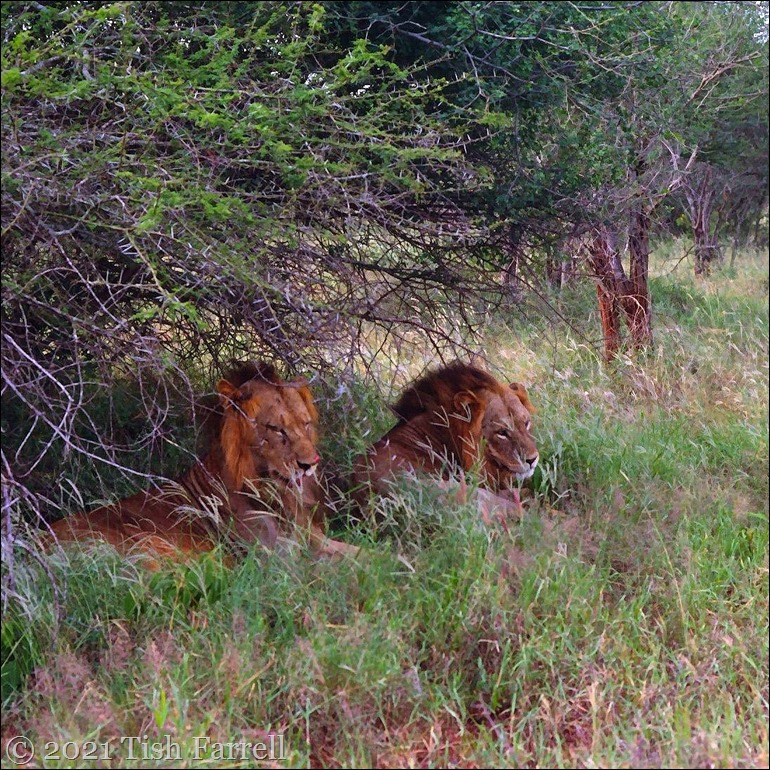
Lions Resting Up

201sq

This photo records my first close encounter with lion-kind. I still find it hard to believe I was there.  I’d not long arrived in Kenya, not so much tourist as camp-follower to Graham who was out there on a short-term consultancy. He had recently returned from Mexico where he’d been studying the habits of the Larger Grain Borer (LGB), a tiny maize-devouring beetle which had been imported into Africa from the Americas in a cargo of food aid. The alien beastie had by the 1990s spread across the continent along the lines of rail and road and was busy infesting grain stores in Taita near the Tanzanian border and also in Ukambani in southern Kenya.

Graham was there to provide technical support to a British funded project that was planning to introduce a predator-specific beetle to control the LGB spread. For several months we had no home base. Instead there was an endless back and forth along the Mombasa highway between Nairobi and the coast, Graham spending two or three days at a time at research sites in Kiboko, Taita Hills and Mombasa. I went along for the ride.

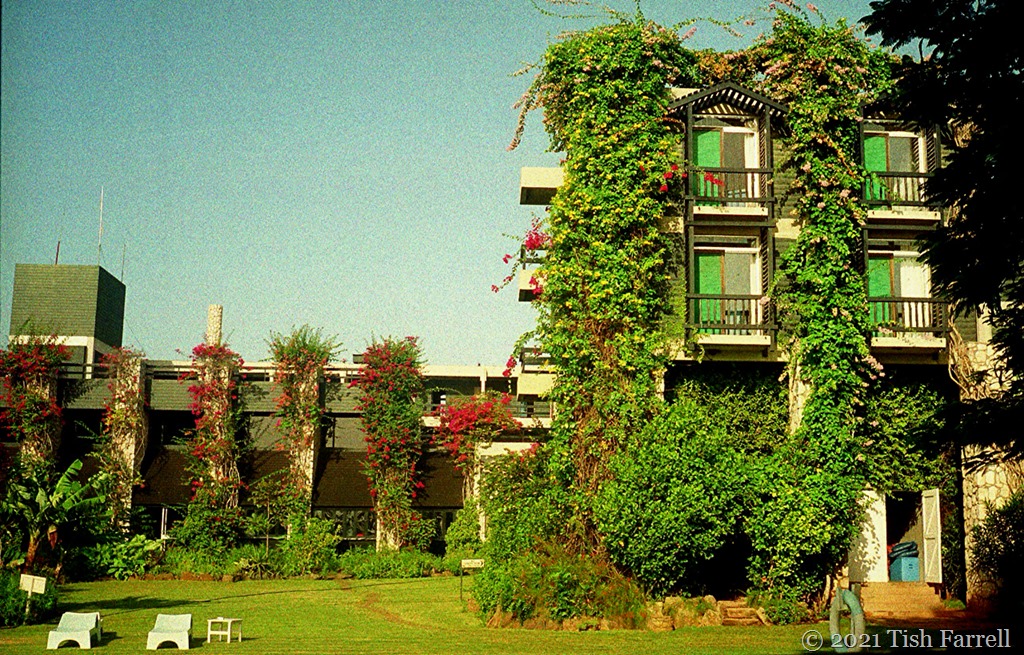
At the coast we stayed in beach cottages. At Taita there was a rest house in the hills, but when it was booked up, we stayed at the extraordinary Taita Hills Hilton, a four-star safari lodge in the middle of nowhere. It came with its own private small game reserve, a former colonial sisal plantation run back to bush. (For anyone who’s read William Boyd’s An Ice cream War  this was the territory – between the Mombasa railway and the Taveta border).

Taita Hilton pool terrace

And so, one Saturday afternoon when Graham had finished working, we took ourselves for a game viewing drive around the Taita reserve. Left to our own devices we would not have seen the lions. But some rangers on patrol stopped us. ‘Have you seen the lions,’ they said. No? ‘Come. Follow us.’ They hived off into the bush in their sturdy truck. We followed (carefully) in the works’ Peugeot 307 saloon (!) And there they were, two lions under a thorn bush. Who’d have thought it!

Square Up #17

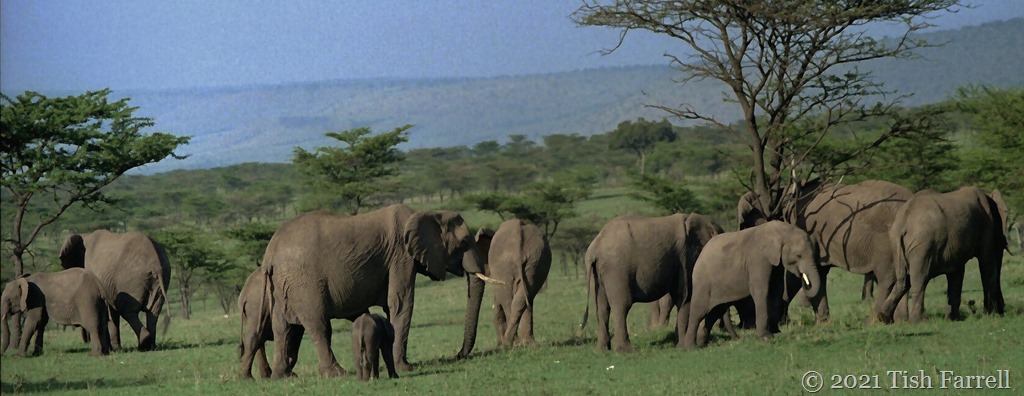
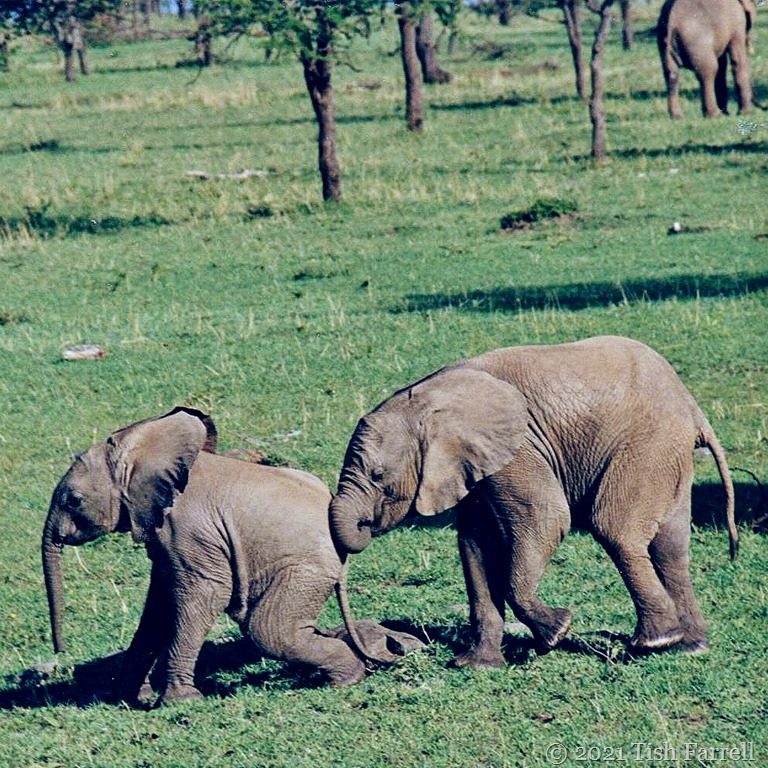
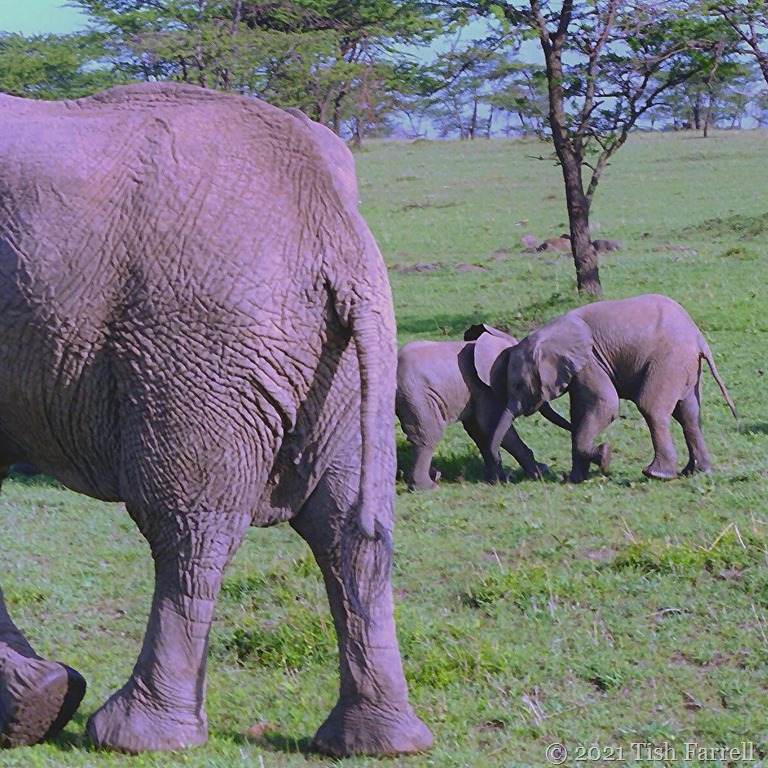
Elephant Totos Playing Up

001 (2) sq

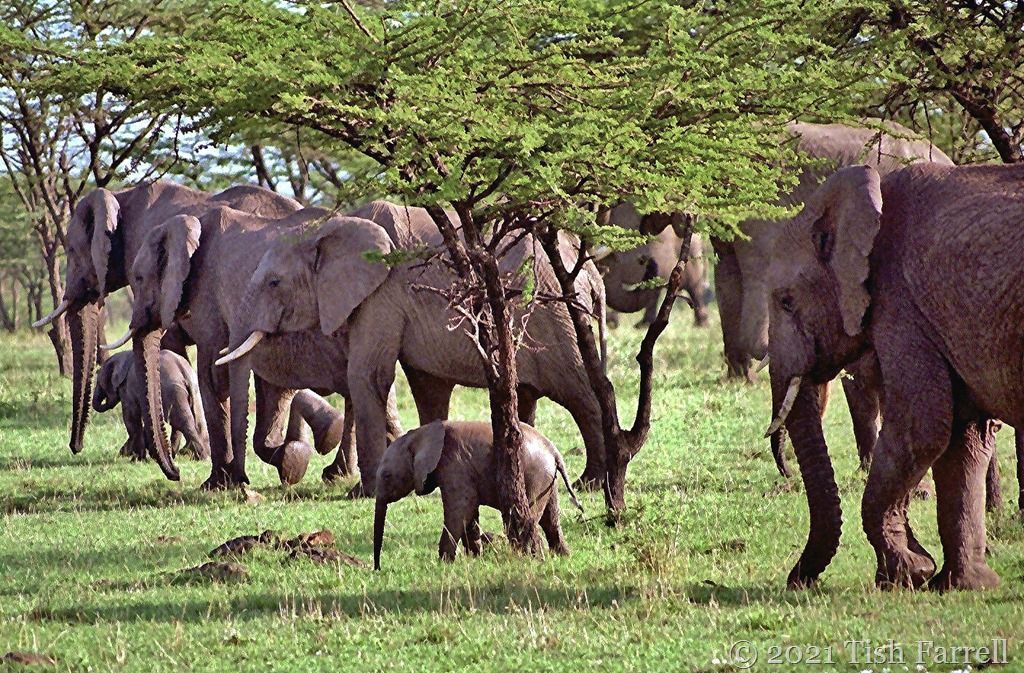
These photos are from our last trip to the Maasai Mara before we left Kenya – this after nearly eight years as ‘displaced persons’. It was late December and our family from the UK had come out to join us in millennium celebrations. Everywhere there was talk of the ‘dreaded bug’ – mass panic of how on the stroke of midnight New Year’s Eve 1999 all world intercommunications and computer functions would be scuppered. At such times one definitely knew there was more common sense to found among animal kind than with humanity.

We had left camp on an early morning game drive. Dan our driver-guide had brought a picnic breakfast of mammoth proportions and it was he who decided to stop the truck and break into the hard boiled eggs and pastries just as a large herd of elephants was passing by.  They came so softly, footfalls ever muffled by the large cushions of fat that elephants have in their heels. You could smell them though – the musky, muddy smell that is like nothing else. The adults seemed to be moving as one, a measured ambling pace with no deviation. Only the children weren’t quite coming to heel.

sq

For most of the year female elephants and young live in small matriarchal groups while the adult males pursue a separate existence in their own loose-knit herds. But come the rainy season, all these small groups may gather into a single large herd as they set out looking for fresh vegetation.

They couldn’t have cared less about us; gave not one sign that they had even registered our presence. Later, as it was going dark and we were returning to camp, we met the herd again. Dan stopped the truck and the herd moved around us, close enough to touch. They moved like shadow-ships through the Mara twilight. At such moments you tend to find that you’ve forgotten to breathe.

Scan-130510-0019


Square Up #14

Gave Up Flying, Took Up Running

ostrich sq

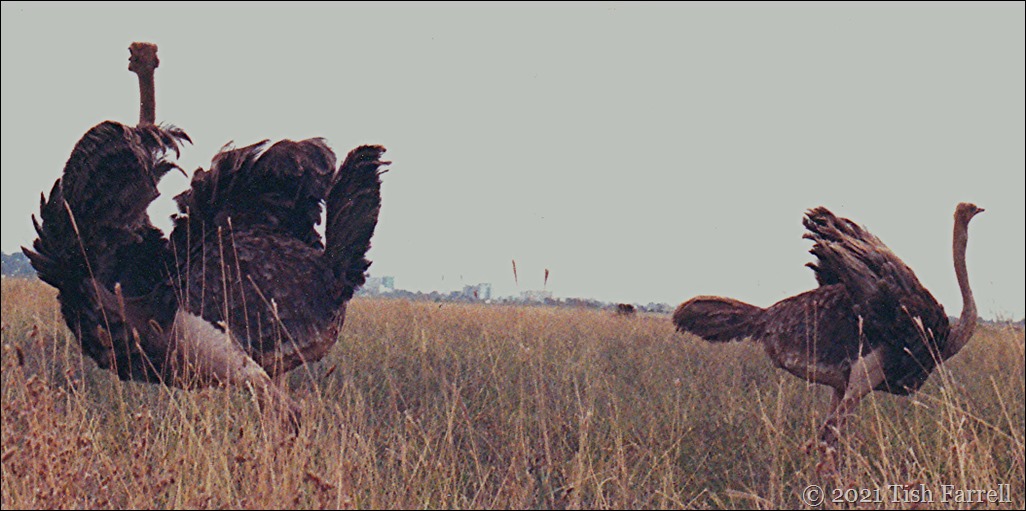
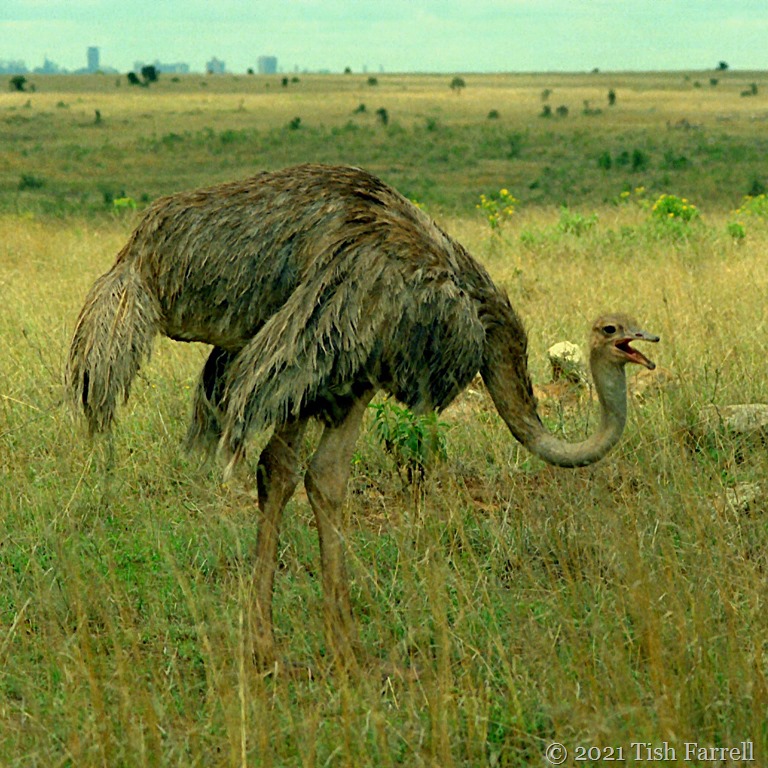
You can see the city high rises in the top left behind the hen ostrich. She is standing in Nairobi National Park (some 40 square miles) which nudges up against the perimeter of Kenya’s capital, including the industrial zone and the main airport highway. In our time, the park still had an open wildlife corridor to the south, though even then there were problems of settlement encroachment. These days too, there is another kind of incursion – in the form of a super-duper elevated Chinese railway that cuts across the park on tall concrete pillars. This line replaces the old Uganda railway built right across Kenya by the British administration between 1895-1901, also known in its day as the Lunatic Line.

The colonial railway cost British taxpayers a lot of money, and was built entirely to satisfy UK strategic interests (i.e. not at all for the benefit of local populations). In order to recoup the cost, settlement by British gentlemen and especially members the ‘officer class’ was actively encouraged. It was envisaged they would engage in large-scale ranching and planting along the line of rail and produce valuable cash crops for export.

In the early 1900s the chaps who came out to British East Africa all had notions of making big fortunes. One of those notions involved ostrich farming, or rather ostrich feather farming, since those airy plumes were just then in high demand for ladies’ hats. These same chaps also knew that some other chaps down in South Africa had made it rich from feather production.

Unfortunately the  ostriches of British East did not prove especially accommodating within what turned out to be a very small window of opportunity. One way to set up business was to collect eggs from the wild (a single nest might have twenty or more eggs) and then incubate and rear the chicks. But then robbing a nest could be hazardous; ostrich parents are fierce guardians, taking it in turns to protect their offspring. (N.B. a kick from an ostrich can break a man-leg).

Early settler Lord Delamere thought to speed up operations by recruiting a cohort of mounted Somalis to organise an ostrich drive across the open plains of his Rift Valley estate, thereby separating flocks of part-reared chicks from the hens and driving them towards the farm dairy where farmhands, stationed behind thorn trees, had been charged to grab any passing chick and imprison them. It did not go well. Even ostrich chicks can wrestle.

And then the captured adult cock bird proved most unbiddable, even with a sock over his head (an approach that was supposed to calm him down). He was last seen sprinting across the plains, still be-socked, having broken from his pen. And by the time all this had been gone through, the bottom had dropped out of the hat feather market because some idiot had invented the motor car wherein ladies’ plumed headgear proved most unsuitable and was apt to blow clean away.

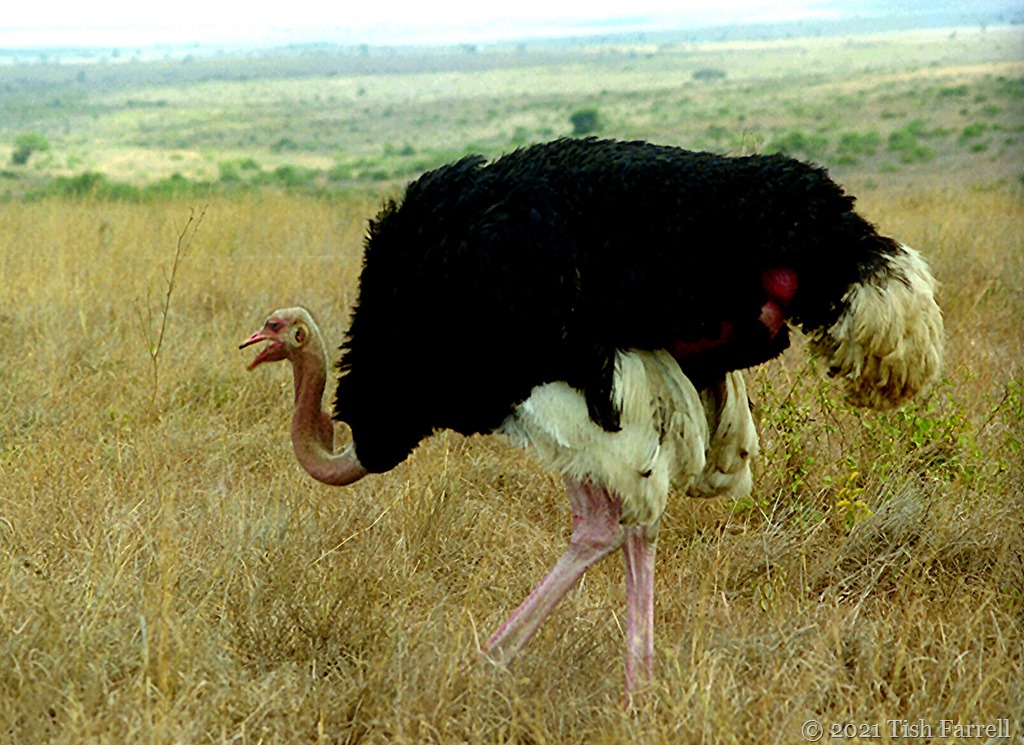
All of which is a bit of a deviation from the point I intended to make. Ostriches may not fly, but they can certainly run: over 40 mph (70kph). The fastest birds on the planet. Just look at those legs in the next photo. They also come with huge, clawed feet attached.

park 21


Square Up #13

Up And Away ~ Flamingos Take Flight

flam1 new scan sq1

It is distinctly shivery in Shropshire just now, the wintery weather set to stay for a couple of weeks at least. And so as ever when the parts are chillier than is altogether comfortable, thoughts turn to the old Africa album and days when we lived in warmer climes. Christmas and New Year are the hot season in Kenya, following on the short rains (a term that these days belies their frequent flooding capacities).

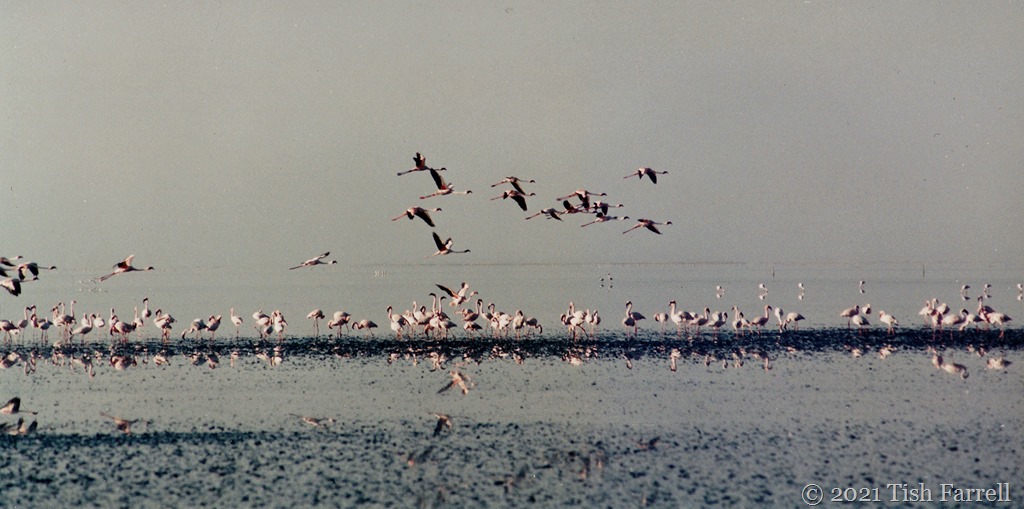
Lake Elmenteita in the Great Rift Valley was one of our favourite getaway spots, only an hour or so’s drive north of Nairobi. The shallow soda lake is the breeding and feeding ground for  both greater and lesser flamingos (it’s mostly the former you see in this shot).

The small tented camp where we stayed nestled among fever trees at the foot of the East Rift escarpment, below the Aberdares range. I took the photo just as the early morning sun rose above the heights and lit up the flamingos. Of course this scan from an original photo doesn’t quite do the scene justice, the crispness lost in translation. But you get the gist. It’s still very lovely. Though come to think of it, this part of the Rift was very chilly at dawn: jumper and jacket and wellies required, so not so different from my usual Shropshire outdoor garb.

For those who want to know more about this extraordinary place plus a spot of Kenya’s colonial history see my earlier post:

On watch at Elmenteita: the lake that blows away

flam1 new scan


Today I’m  doing a two-in-one post for Becky’s January Square Ups, and Lisa’s Bird Weekly. Please pay them a visit.


Square Up #3

Bird Weekly This week Lisa at Our Eyes Open wants to see birds with long wing spans.

Feeling Kinda Growly

sq Marsh Pride male 1

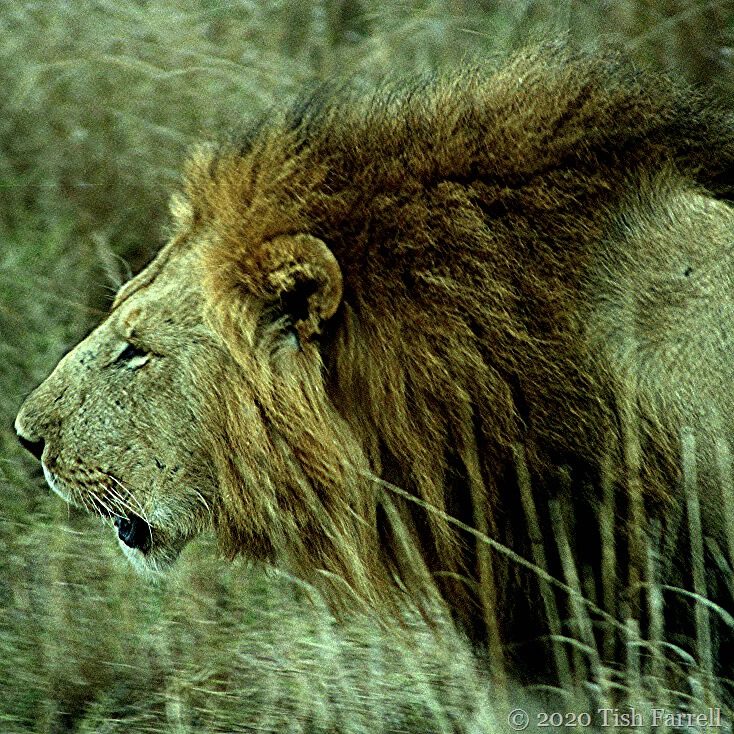
We found ourselves driving through the midst of the Mara’s Marsh Pride at high noon, its members surprisingly active given the usual lion habit of spending the day lying around. They had made a kill, an antelope of some kind, and the ‘under-lions’ were still eating: one very elderly male and three females – while the dominant male prowled the perimeter, exchanging grunt-like roars with another male who was lying in the grass. They seemed quite unconcerned as we stopped to watch, no interruption to the grunt exchange caught here in the photo. Rather puts one in one’s place in the animal scheme of things.


KindaSquare #24

Exemplars Of The Stripy Kind

sq Grevy's zebra 2 - Copy (2)

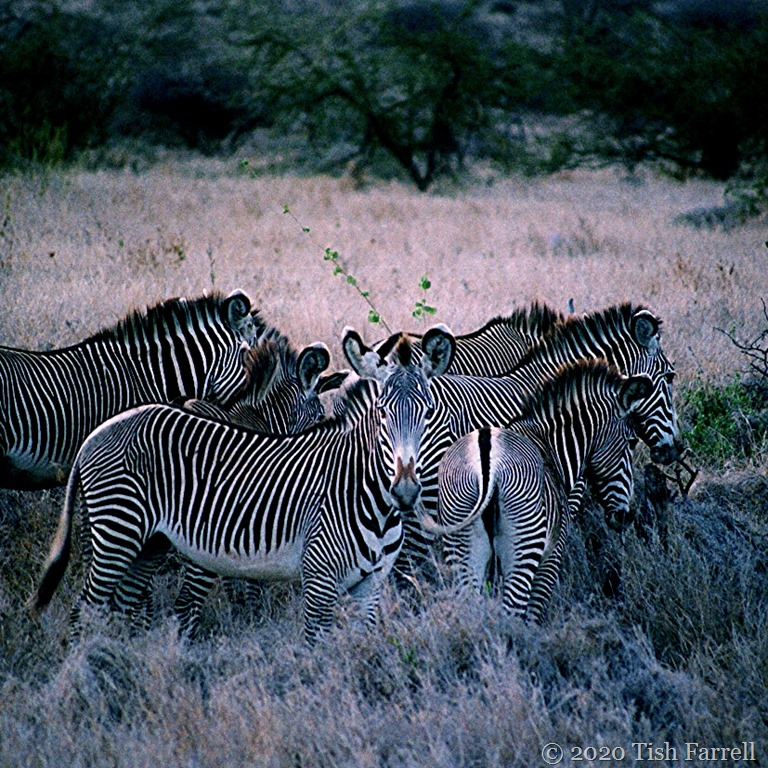
The light was almost gone when we came upon this gathering of Grevy’s zebras. They are the largest and most northerly members of the zebra family, distinguished by their large round ears, close-set stripes, and plain white undercarriages. They inhabit the dry savannah and bush of northern Kenya and southern Ethiopia.

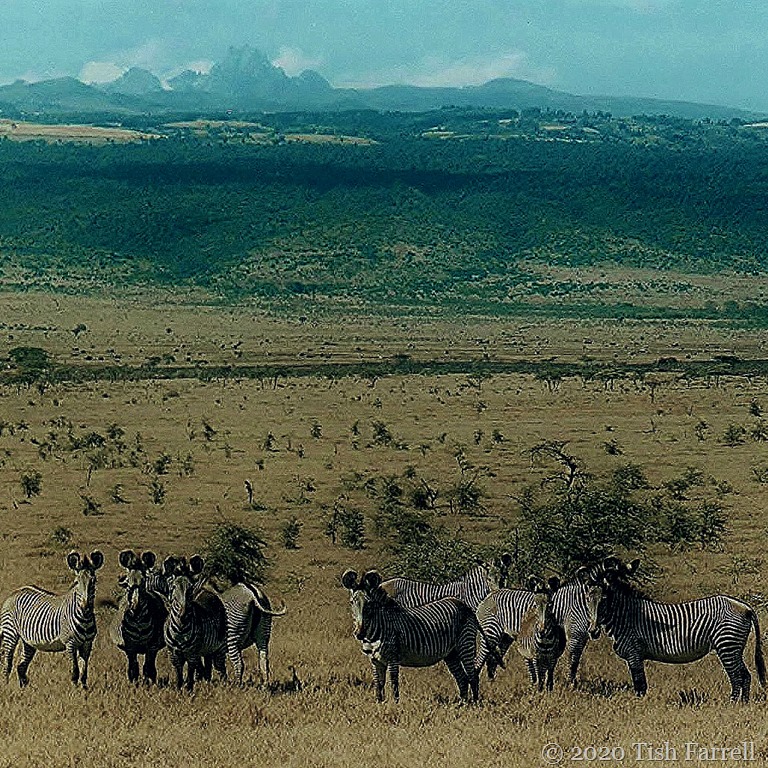
When we spotted them again there was too much light – full on midday sun. But you can see the tip of Mount Kenya in the background. Astonishing to know it is 17,000 feet tall and that this is all you see of it from Lewa Downs.

002sq

KindaSquare #23

Kindness To Rhinos

sq Scan-140827-0009jpeg

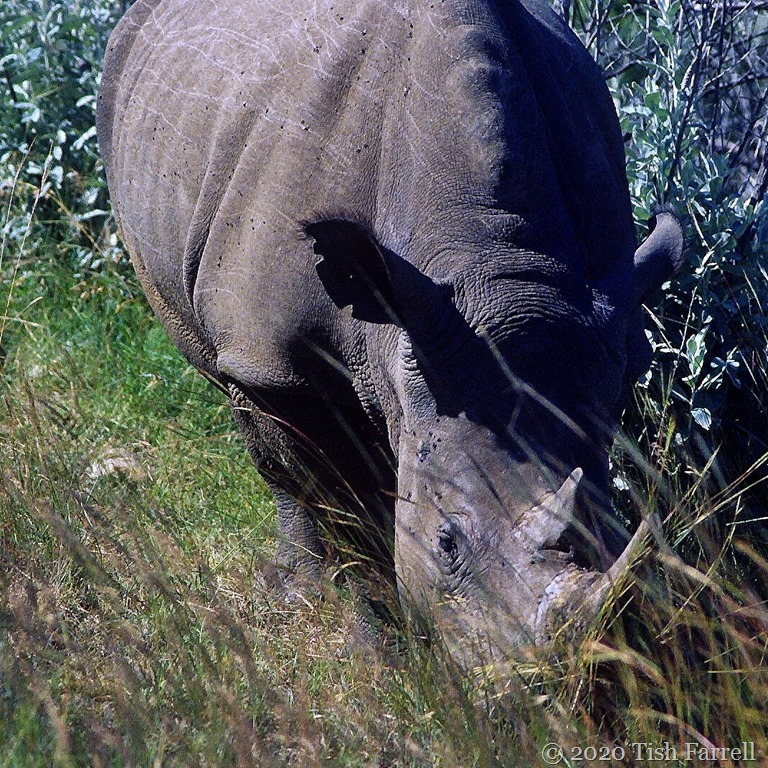
Read any huntin’ shootin’ travellers’ accounts from Kenya’s colonial days and you’ll have rhinos charging from every bush. A single day’s trek through the wilderness could yield half a dozen such hair-raising encounters. Rhinos can be very dangerous, and exceedingly unpredictable, but it makes me think. In times before British aristocrats turned the plains of Tsavo into their private hunting grounds, or game control officers decreed rhino clearance a matter of  necessity, rhino numbers must have amounted to tens of thousands. Big Game Hunter, John Hunter, claimed he’d dispatched over one thousand in the course of his shooting career, this mostly to free up settlement land. A single man and one who loved wildlife!

In the 1970s there were said to be 20,000 rhinos in Kenya. Then came poaching. Numbers plummeted to three hundred. Finally enlightened conservation initiatives were begun in the 1980s and numbers are now above 700, with protected populations in several of the national parks. One thriving private initiative is Lewa Downs in Northern Kenya – a former colonial ranch transformed into a wildlife conservancy. It’s an enterprise of breath-taking scale – not only securing vast rangelands for animals (including 169 black rhinos), but also working with local communities to improve livelihoods, health care and education.

Watch the video and be amazed.

https://youtu.be/b8YGoV5obhk


KindaSquare #22

So Hard To Like Hyena-Kind, But…

sq Scan-140826-0027jpeg

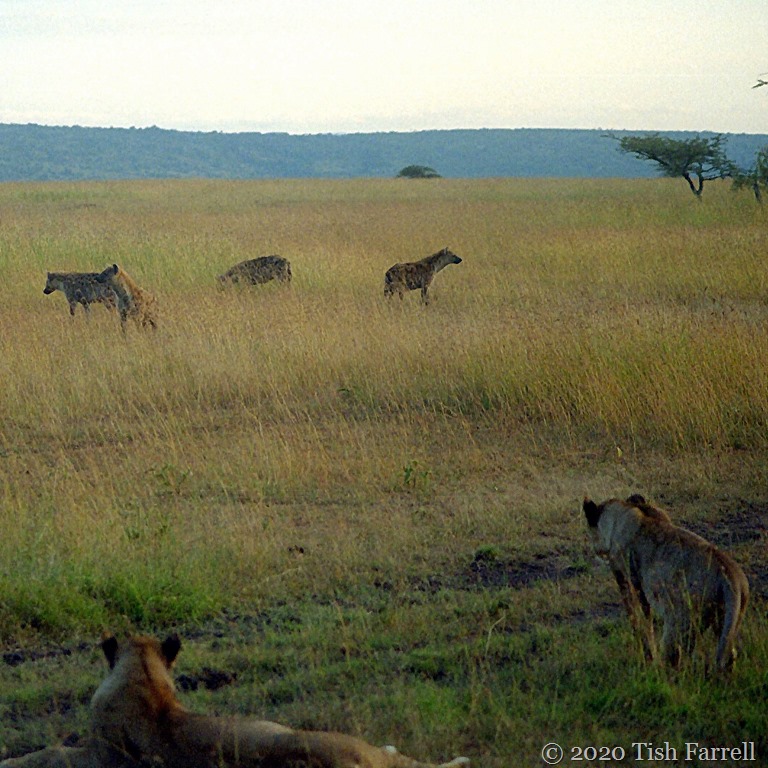
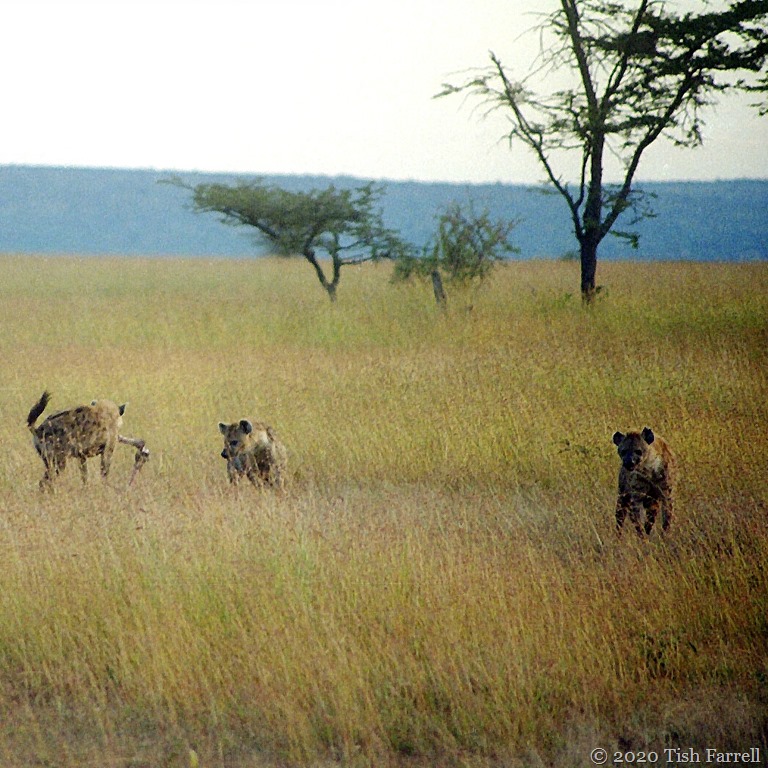
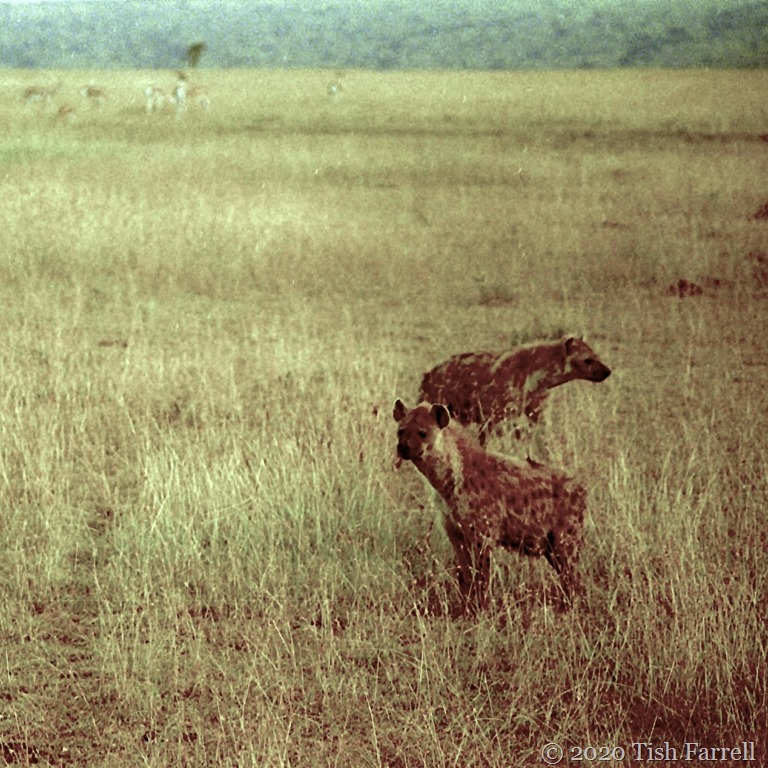
…they are interesting animals, though you certainly would not want to meet one at close quarters. That they are purely scavengers is a myth. They are powerful killers too, and don’t mind the odd human. The spotted hyenas in the photo (taken early one Mara morning) are the largest of the three hyena species, and come with the strongest bone-grinding jaws of any land predator. They live in clans of 5 – 30 individuals and recognise one another by scent.

sq Scan-140826-0026jpeg

Further interesting features include the facts that females are larger than males. They remain in their natal clan for life, are dominant over the males while the largest, most aggressive of them rules over all hunting and territorial defence tactics. The dominant female’s sons outrank all other clan members, and remain in the clan longer than their male age-mates. In the end, though, all the males born from clan females eventually leave to live in nomadic male groups until they can join a new unrelated clan, though this only happens after a trial period wherein they must demonstrate appropriate submissiveness to the new female boss.

sq Scan-140826-0005jpeg

They look ungainly creatures, so low-slung-short-legged in the rear, but this shambling appearance is deceptive too. They can break into a gallop, and sustain speeds of up to 30 miles per hour (48 kph) over distances of  a mile and more. They will chase down adult wildebeest and zebra until the prey is exhausted, and then duly disembowel them. Many pounds and kilos of meat will be gobbled at one go, and every bone crushed and consumed to extract the marrow. I remember once in Zambia, on a pre-dawn drive seeing a hyena so well fed, it could barely drag its stomach home to its den. I’ve read too, that these contents will be turned around within 24 hours, giant meat-grinder style, and the end product droppings quite white from all the processed bone.

Hm. I’m not winning over friends for hyenas, am I?  Still, they do clear up the place when in scavenging mode, as they are in these photos, though the lions were not keen to share their leftovers. But then hyenas, along with other predators, doubtless also help to keep herd animals healthy by recycling the weakest members, and the pursuit itself, predators on the hooves of herbivores, may have a key role to play in the maintaining  the Serengeti-Mara eco-systems.

These grasslands of 10,000 square miles support a million and a half wildebeest, which every year, along with large herds of zebra, migrate between wet- and dry-season pastures. Zimbabwean ecologist, Alan Savory, contends that a key role of predators is to keep herbivores bunched and moving, and that this in turn ensures the continuous sustenance and recovery of the grasslands that in turn support the herds. A virtuous circle then.

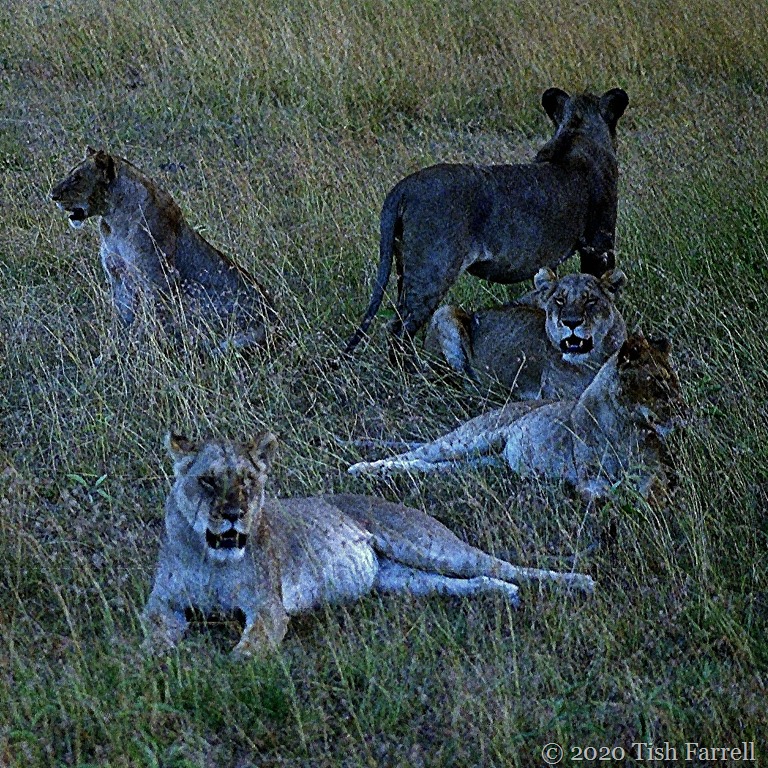
So: hyenas do have their place in the natural order of things. All the same, I think I’ll end this post with a photo of the lions who were most determined not to share even though they had  clearly had a very good breakfast:

sq Scan-140826-0008jpeg - Copy


KindaSquare #21