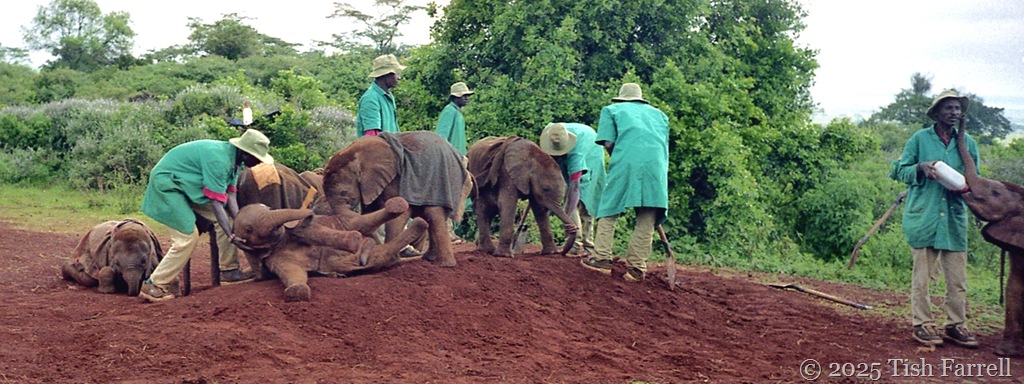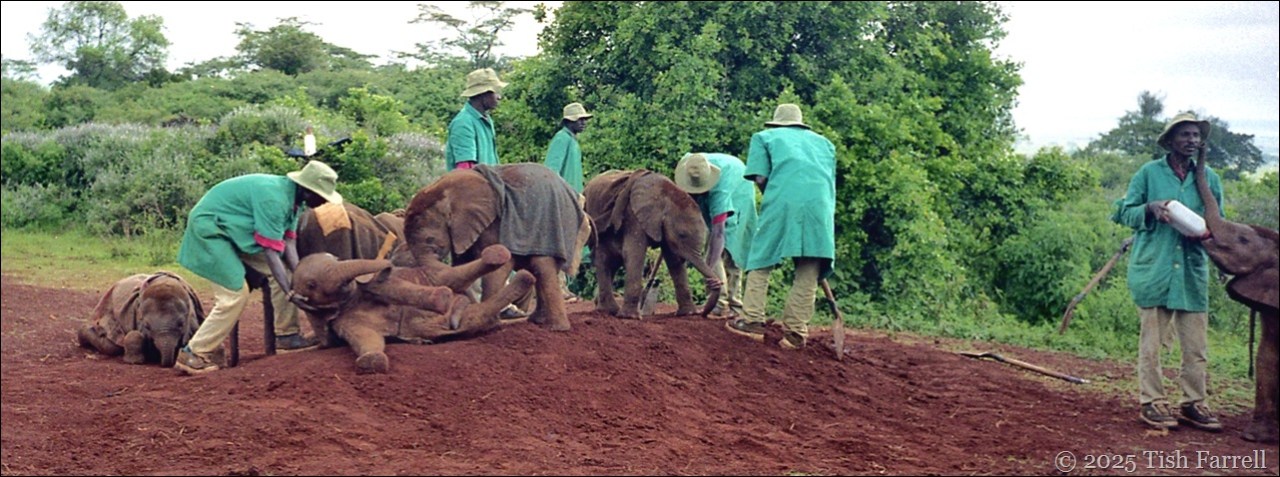
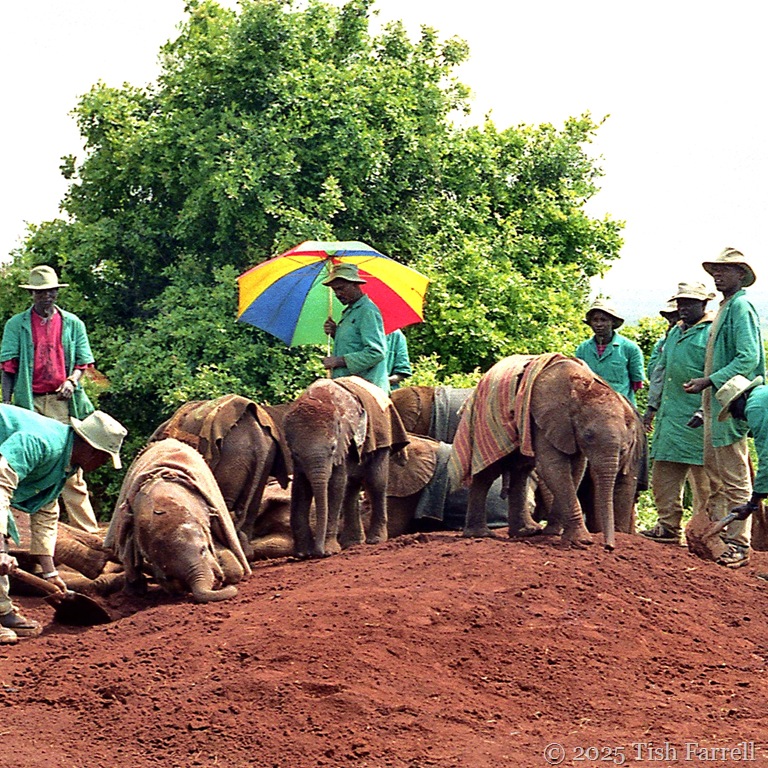
Undoubtedly an ‘aaaah’ moment, but don’t be misled. Nairobi’s elephant orphanage is not about elephant pets. It’s about rearing orphaned infants so they can be returned to the wild. This is a painstaking process, using techniques derived from years of experience by Daphne Sheldrick. She established the orphanage in 1977 in memory of her husband, David Sheldrick. He was the founding warden of Tsavo East National Park (see previous post), appointed to the task of creating the park out of the Taru Desert thornscrub in 1948. For the next 25 years he, with Daphne alongside, laboured there to create access to the 5,000 square miles of wilderness reserve that visitors can enjoy today.
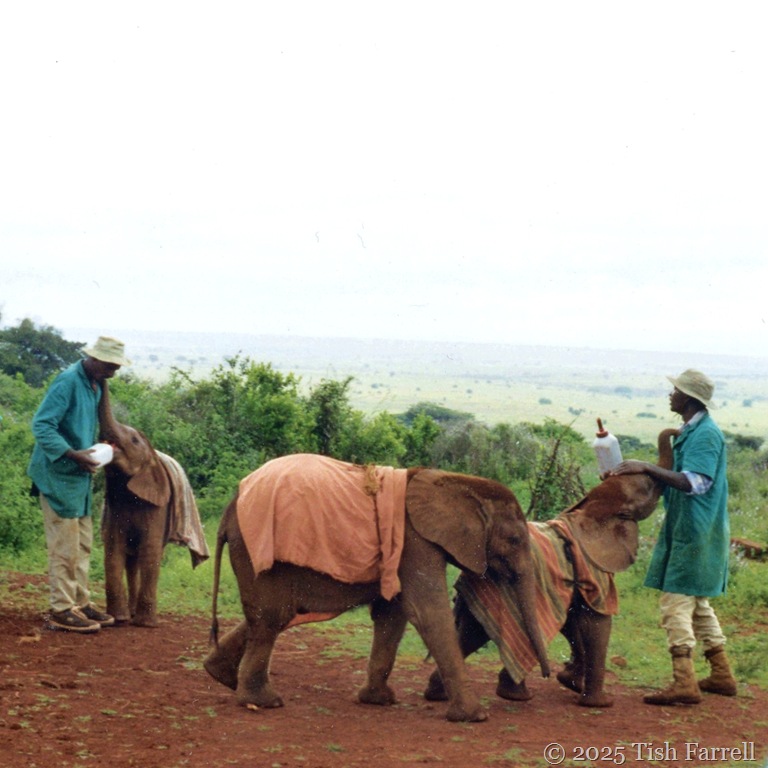
Part of the Sheldricks’ day to day living at Tsavo involved rescuing orphaned and injured animals. There were losses as well as successes but this work sowed the seeds of the orphanage to come. Daphne had learned that elephant infants die without constant emotional support. She also struggled to make an appropriate milk formula. Finally she evolved the system that provided each infant with its own keeper who, as surrogate mother, would be with it at all times, including sleeping with it.
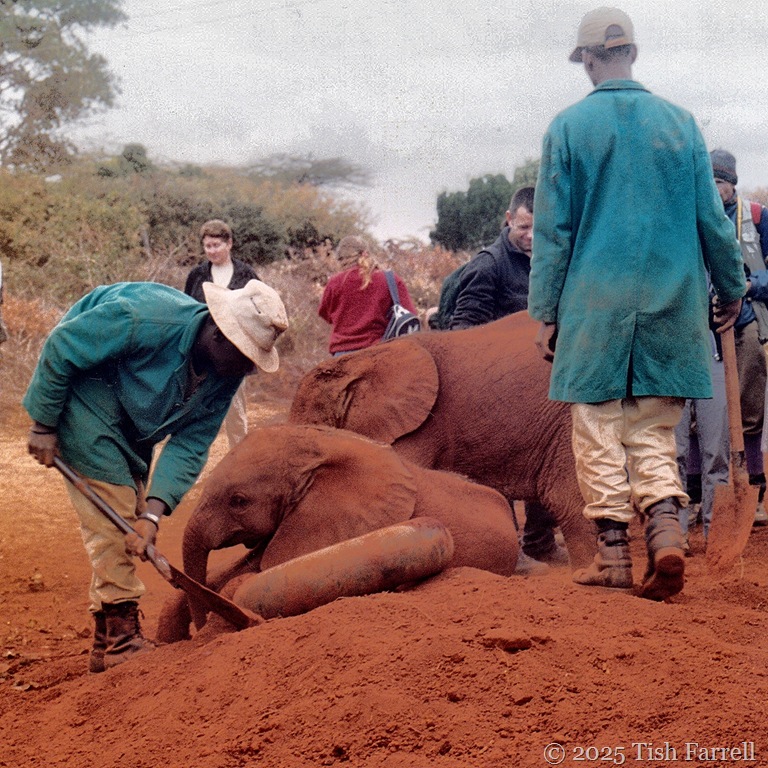
Once the infants begin to thrive and grow, they are taken out for walks in nearby Nairobi National Park to begin their bush education. Later, when they grow too big for the orphanage, they are transferred to Tsavo East to continue their education. So far over 300 elephants have been returned to the wild.
Daphne died in 2018 and the enterprise, which extends to conservation initiatives beyond the orphanage, is now run as the Sheldrick Wildlife Trust by her daughter Angela Sheldrick. The website is well worth browsing.
*
But for the process of raising an infant and re-establishing it in the wild go HERE
For more about the pioneering work of David Sheldrick go HERE.