I wrote this piece around 2000 after several visits to the Maasai Mara. It was long-listed in the Brandt Travel Guide travel writing competition.
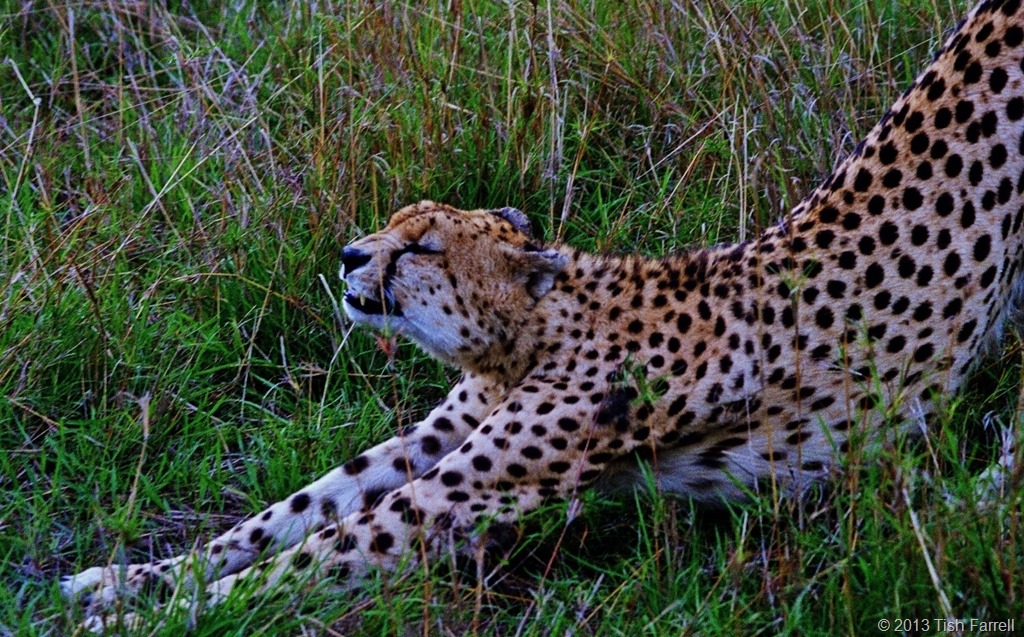
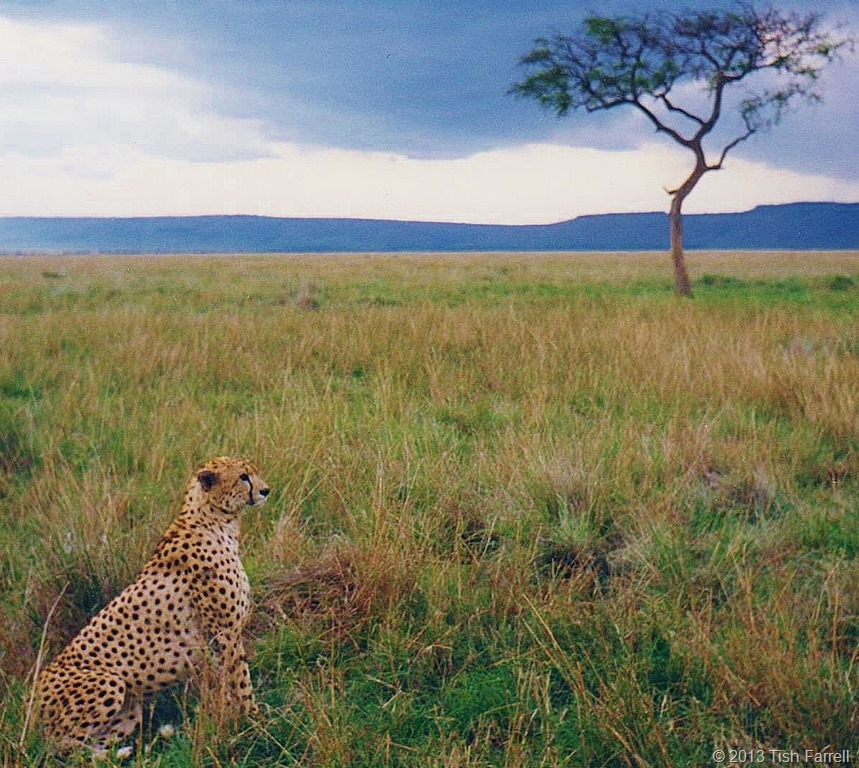
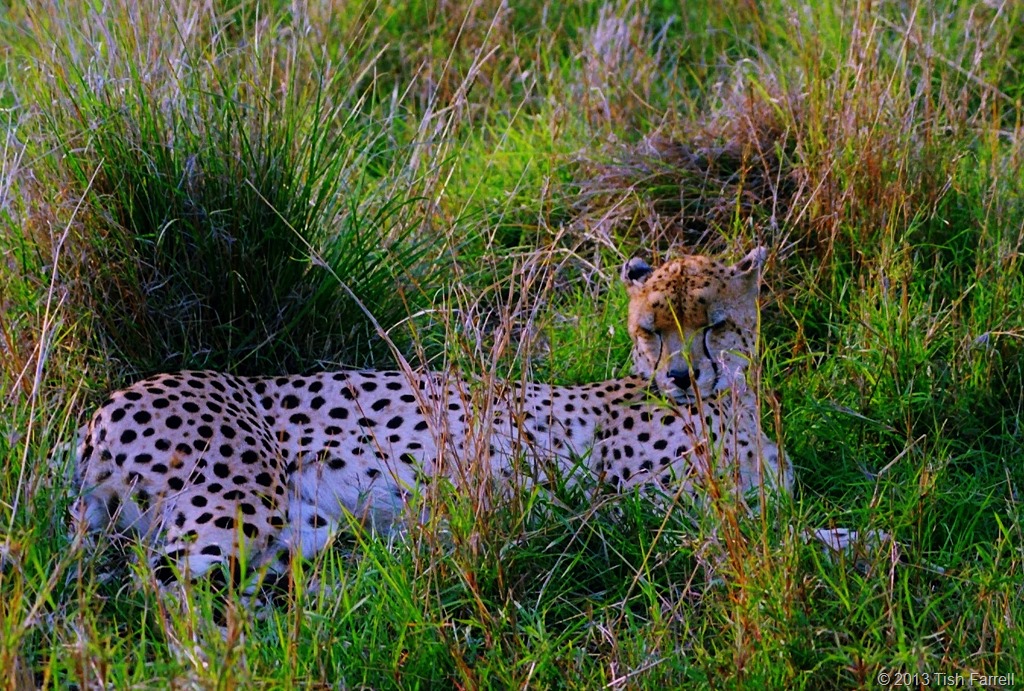
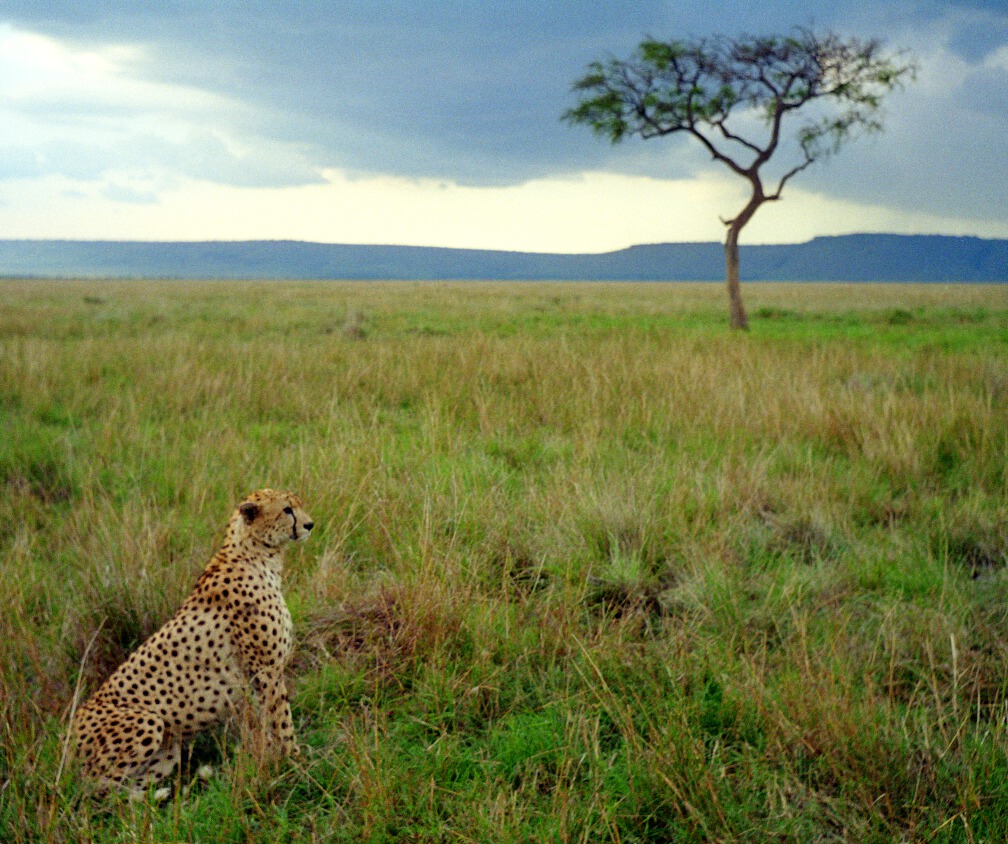
Cheetah
Dances with warriors
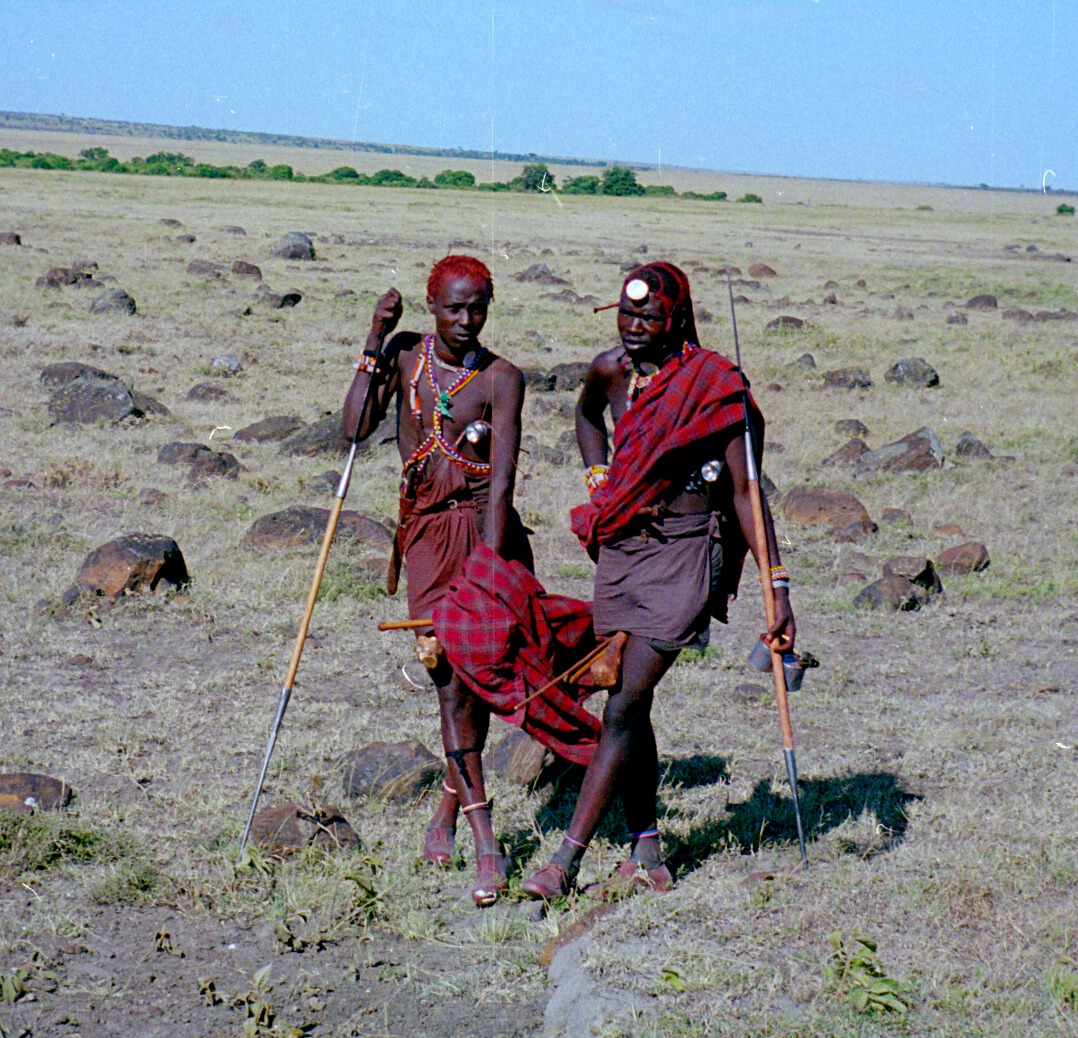
Night on the Mara River – darkness wraps round, close as a Maasai’s blanket. It is cold, too, on the river’s bend. We press closer the campfire, our white faces soon roasting red. No one speaks. There’s too much to listen for. A hyena whoops across the water? It sounds close. It sounds unearthly, sending shock waves through vulnerable bones – mine, conjuring packs of predators, out there, circling our ring of light. And even as I think it the Maasai are on us. Six warriors, spears in hand and naked to the waist. Their leader tosses his ostrich-feather head-dress that looks like a lion’s mane. He is fearless. He is lion.
Then the singing starts, a nasal falsetto that resonates through time and space – the winds’ whine through Mara grasses. The Maasai girls trip lightly into the firelight, their wraps like flames – yellow, red; close-cropped heads hung with beads; chins jutting forward as the crescent necklets – tiny beads so patiently strung – rise and fall on skinny chests. The moran start to leap – higher, faster.
Their dance fires the blood as it was once meant to in the days when the young morani proved their courage by killing a lion; but we see the collecting box left discreetly in the grass. These kids are from the nearby settlements, but before I unravel the question of exploitation – theirs or ours – the dancers pounce, dragging us into a conga, pastoralist-style. I let the Maasai girl take my hand. She’s about fourteen years old and she is boss. After all, this is her land – the big skies and the rippling oat grass, and our small camp in the outer reserve remains there only on her clansmen’s say-so. The hand that grips mine is small and hard.
So I follow her, graceless in the rhythms I cannot fathom, wend with the snake of dancers on and round the camp. The dancers know we’re squeamish and should not be put at risk, so we stray no further than the firelight’s edge, never crossing the bounds of the vast out there.
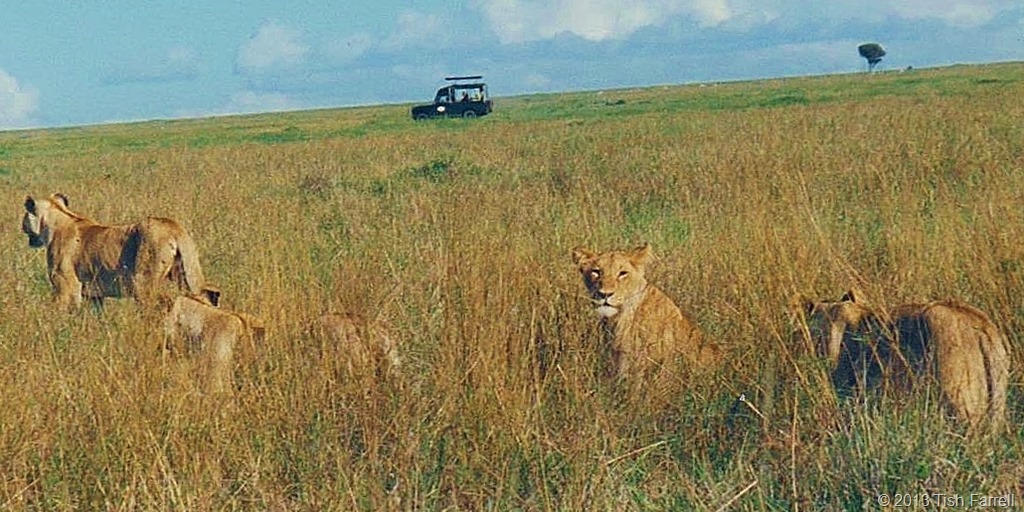
And of course, being on safari, and staying at a luxury, tented camp, we have been taken to visit the vast out there. We went earlier that day and naturally, being tender wazungu, we ventured only in daylight, with the rising sun at our back, and we went, not on foot, but in the Land Rover whose solid sides we were sure would protect us from too much closeness with the wilderness.
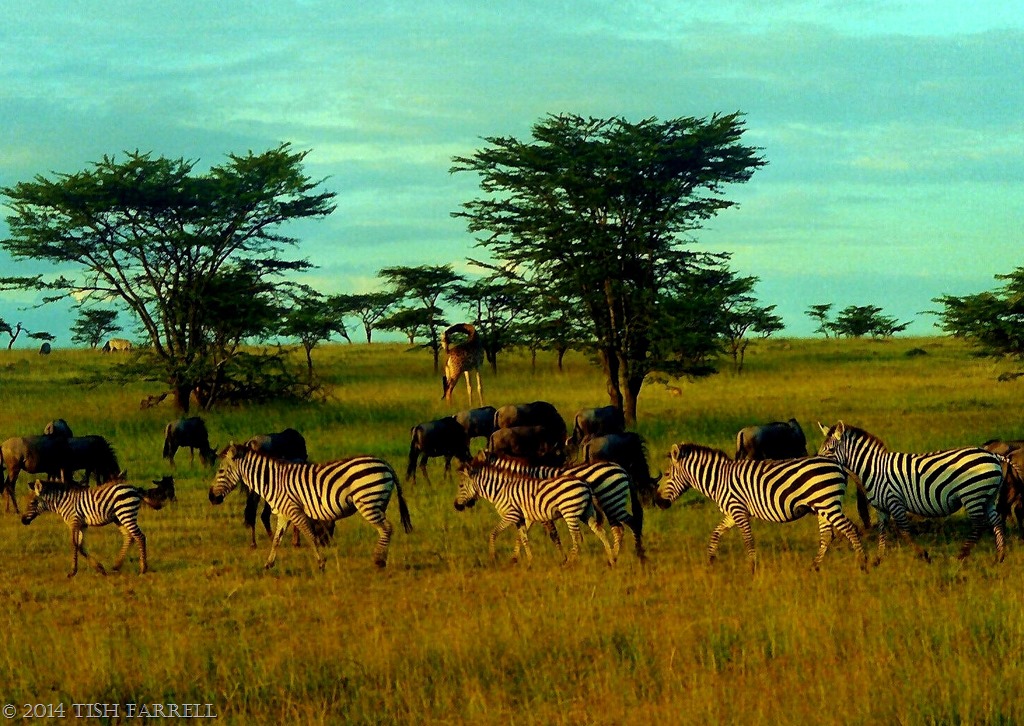
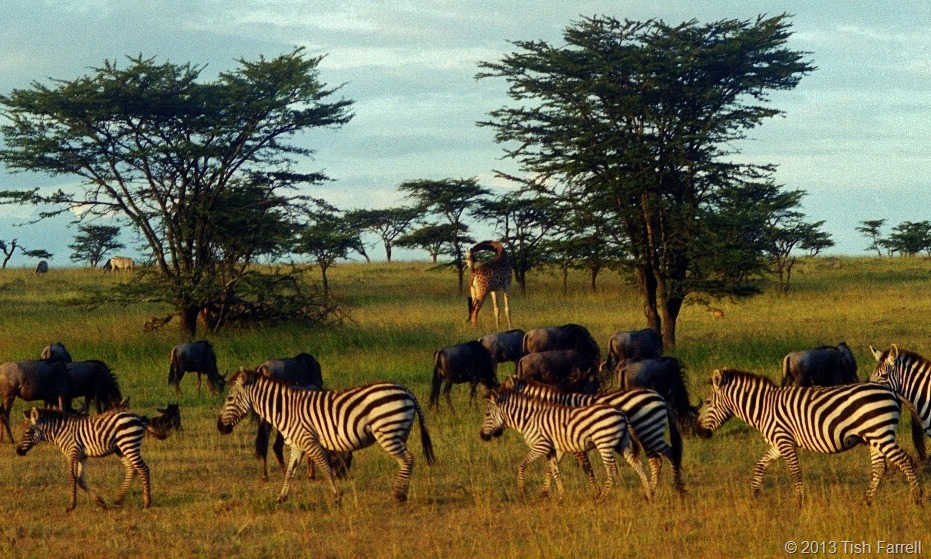
Mara country
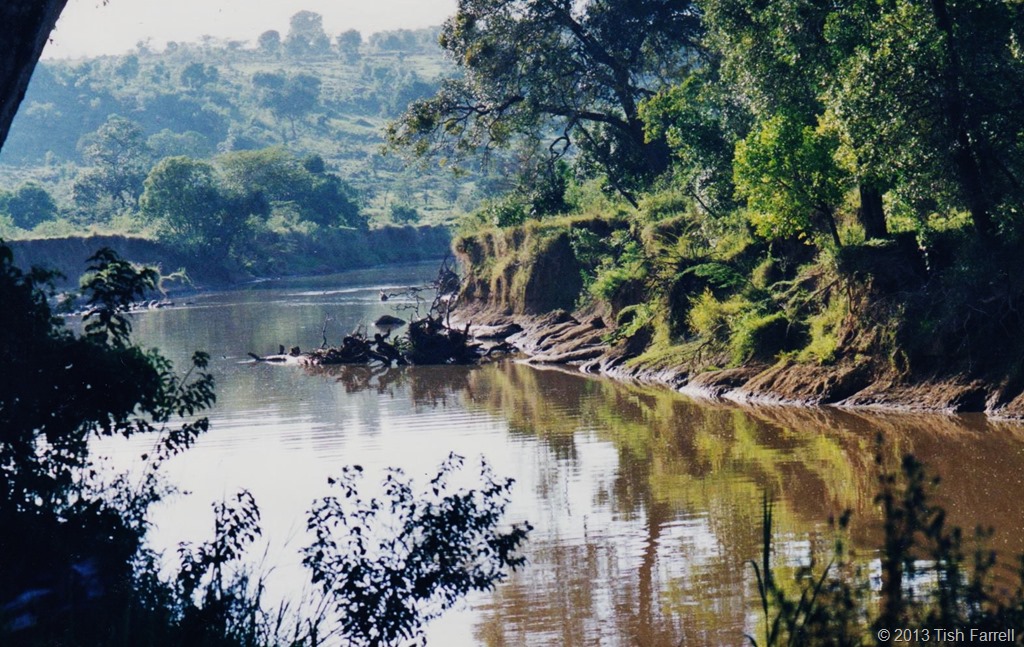
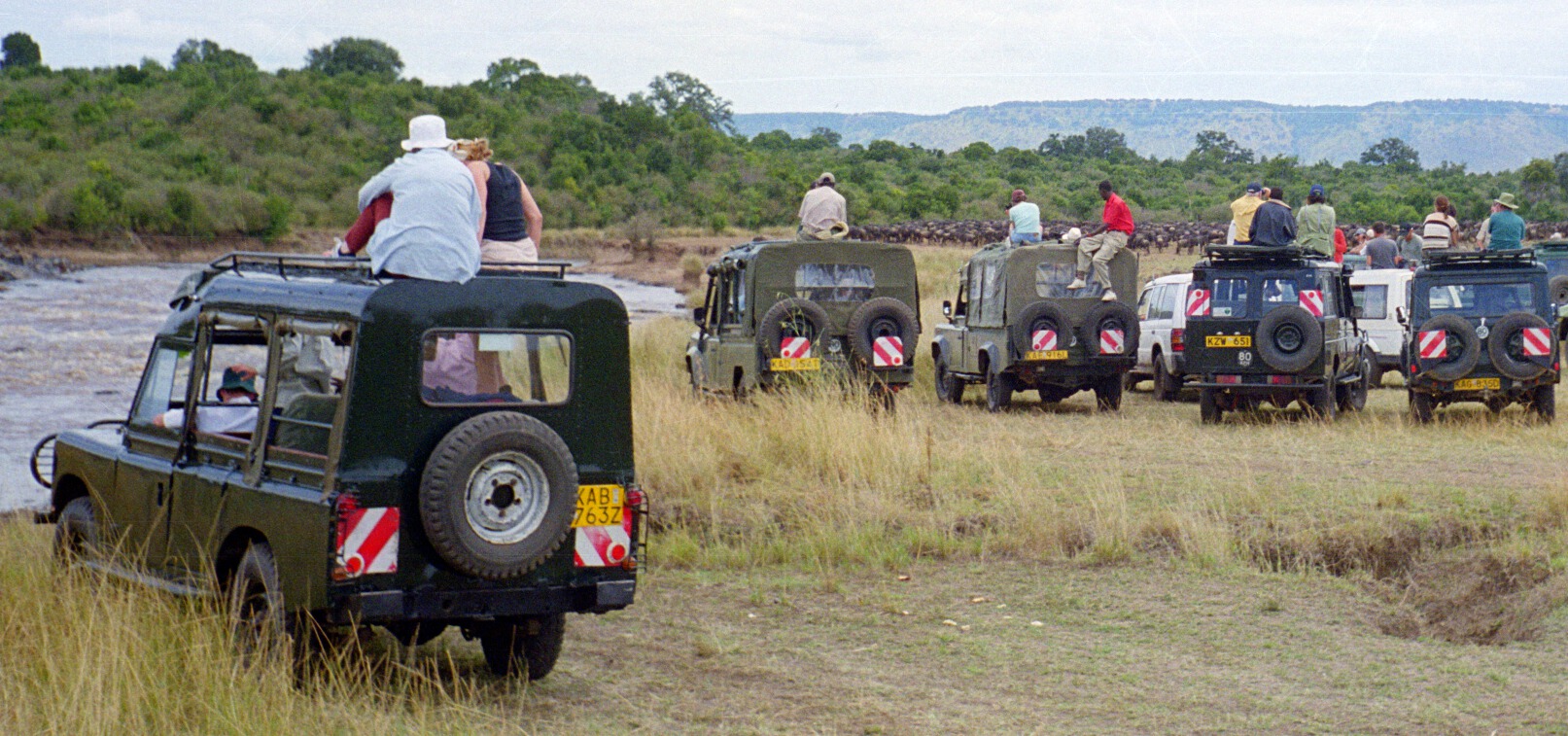
Our driver-guide, Sammy, had decided to take us to the famous river crossing where, over several days, tens of thousands of migrating wildebeest had been piling up, snorting and stamping on the dusty bank. For days they had been steeling themselves to make the seasonal Russian roulette dash that would take them over the river to much needed grazing.

Waiting for the wildebeest to cross the Mara River
“Perhaps they will cross today,” Sammy said as he found a good vantage point and stopped the Land Rover. At first, infected with the drama of the thing, we scrambled up through the viewing hatch with binoculars and cameras. The beasts unlucky enough to find themselves pushed to the head of the queue, teetered nervously on the brink. Eventually the sheer weight of numbers behind would force the vanguard to cross. It was a case of stand your ground and starve, or risk the gaping reptilian jaws of the massive crocodiles that were watching and waiting in the water. Even leopard, we were told, would dare some daylight hunting and crouch in the brush across the river and wait for lunch to arrive. We did not see one.
But we did see the remnant corpses of earlier wildebeest meals snagged on riverside branches and we did see the flocks of ever-watchful vultures. We also realised that a dozen tourist trucks from other safari camps had now joined ours, their occupants craning with camcorders primed, willing the show to start. In the end we could not look. It was time to leave.
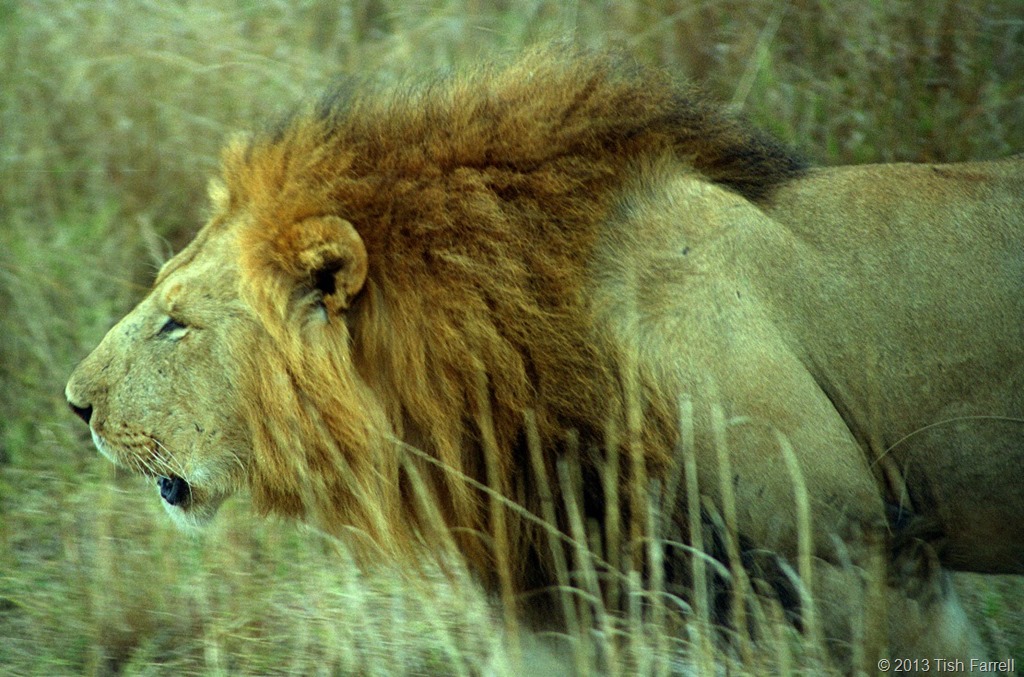
As we drove off our mood was swiftly lightened by a close encounter with the famous wildlife photographer, Jonathan Scott. We could add him instead to the morning’s, ‘seen’ list. He pulled alongside in his jeep to talk Marsh Pride movements with Sammy. After that we headed back to camp for our own feeding time, a large lunch that promised outrageous gluttony compared with the Maasai’s simple milk-based diet.
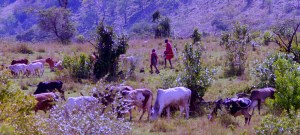
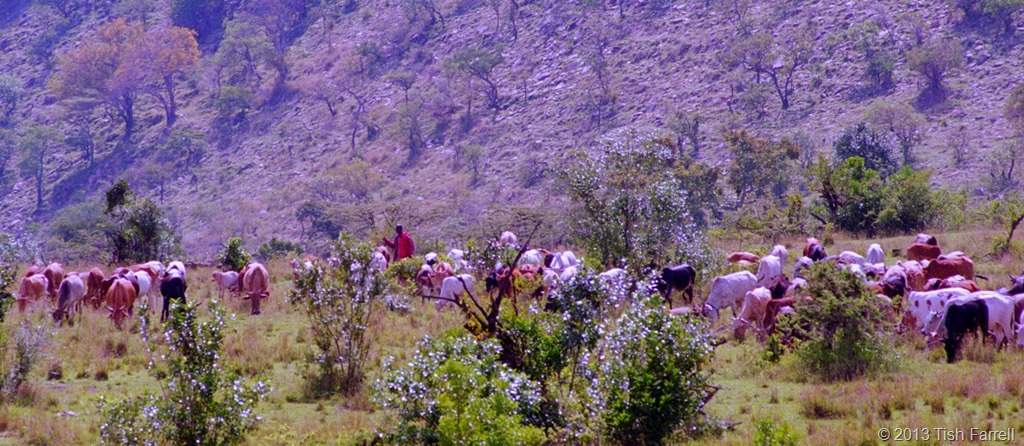
Maasai boys mind the clan's herds on the Olololo Escarpment
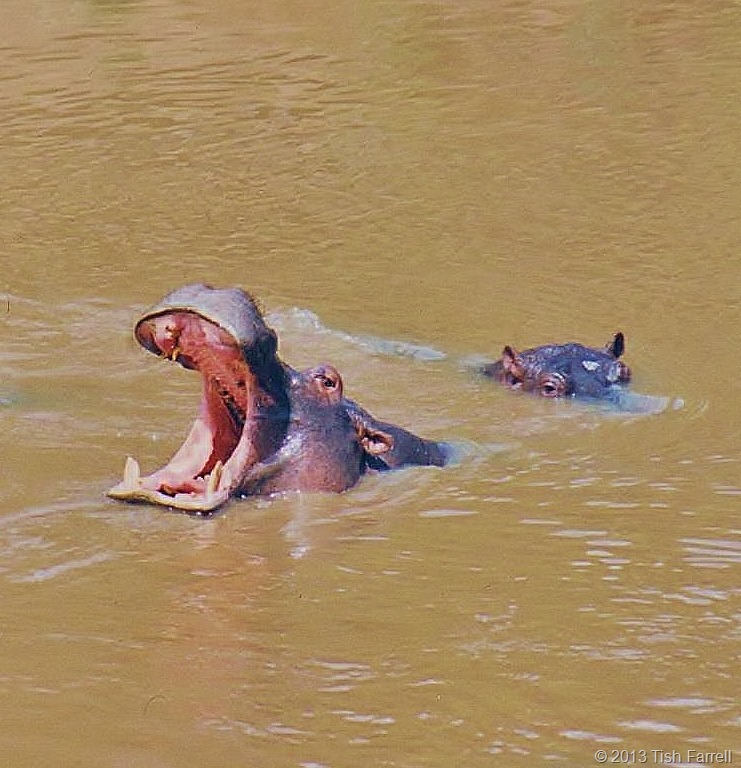
As we jolted back across the Mara grasslands we marked the pastoralists’ bleak brushwood corrals with their dung-plastered hump-backed huts; saw the distant red dots of herds boys’ shukas; heard the tinkling bells of shifting herds; watched the shaven-headed, much beaded women setting off on their long daily trek for water. And all of them seemingly at ease in the vast out there, walking each day where lion and leopard walk, fetching water, doing washing amongst crocodiles and hippos, sharing the grassland with elephants, buffalo and wildebeest. And all we could wonder was, how? How can they live here, so unchanging, while our world presses round and people like us come in droves on our own seasonal migrations?
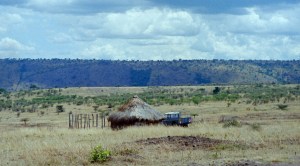
But then, when we look more carefully, we can see changes. There’s a big thatched house that is not at all traditional and with an old jeep parked outside. There is talk of the womenfolk settling in one place (while their husbands move the cattle herds) so the children can go to the schools and clinics that tourist dollars fund. Near our camp is a new stone-built trading centre where the Maasai sell chickens and beer.
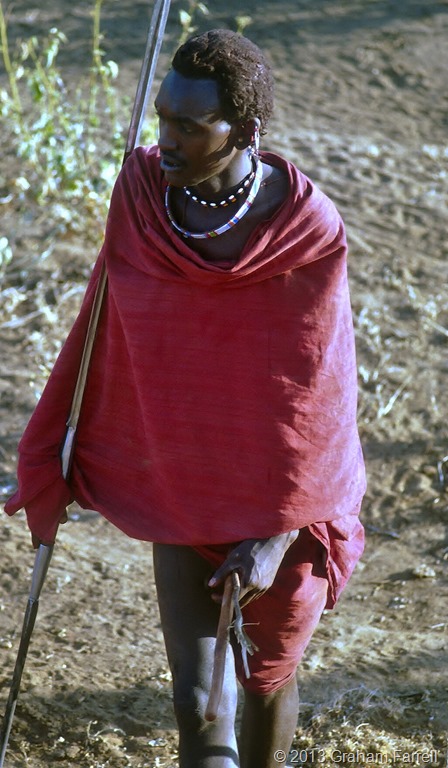
For a people so long resistant to change even these small innovations seem remarkable. Ever since1883 when Scottish explorer, Joseph Thomson, introduced red blankets and coloured glass beads to the Maasai, in return for safe conduct across their territory, outsiders have tried to “develop” the Maasai. Now, it seems, they are doing it for themselves and in their own way. And so it is fitting that, before we leave Maasailand, we visit the Mara curio shop and, in a bid to hang on to the spirit of place we are drawn to buy red ‘Maasai’ blankets (polyester, made in China) and locally beaded jewellery. As I hug the tacky blanket and put on the beaded bracelet, I begin to smile deep down. The absurdity of my transactions is pleasing: somehow the dance has come full circle.
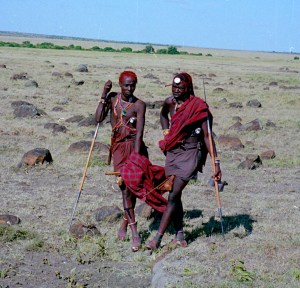
Maasai moran
© Tish Farrell 2011