
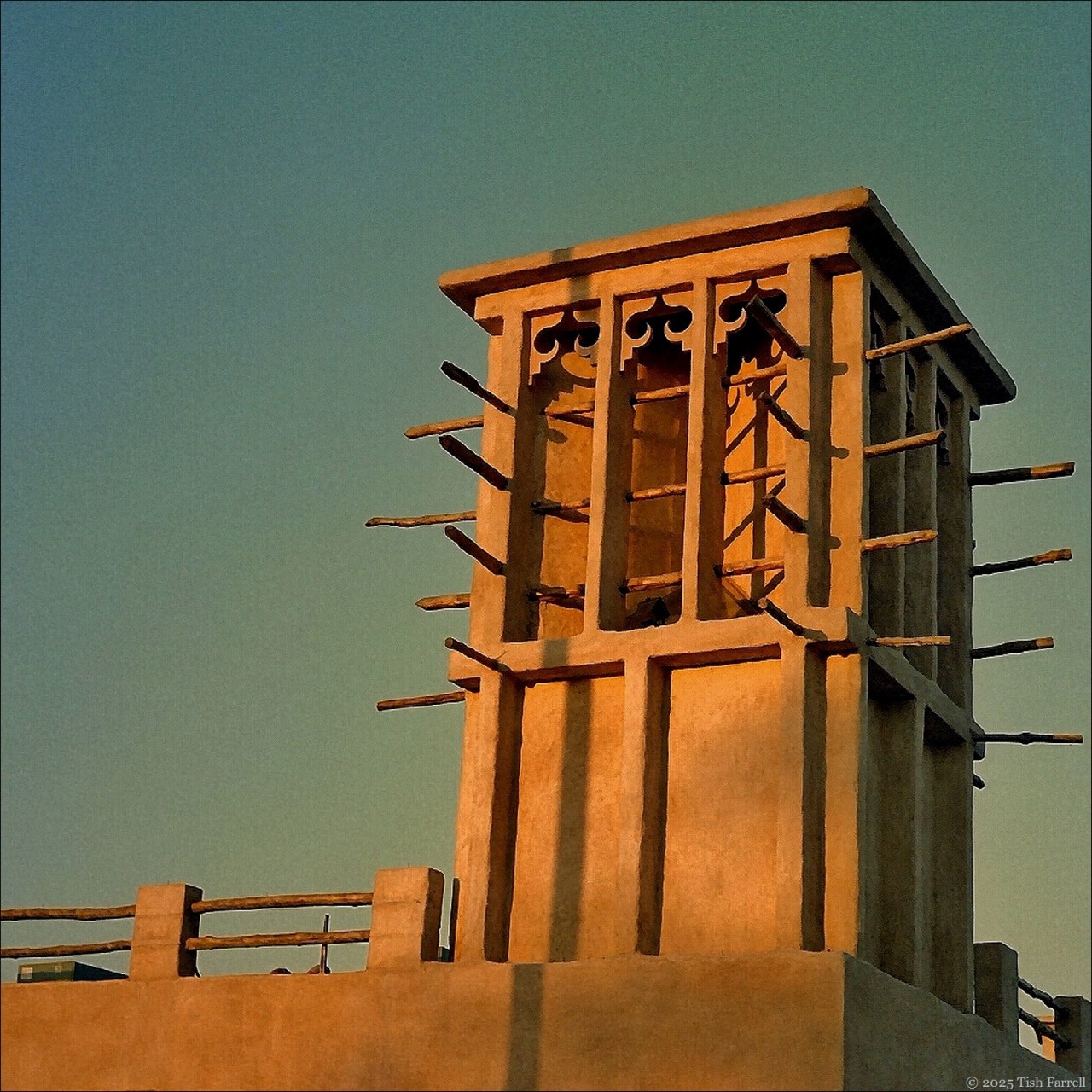
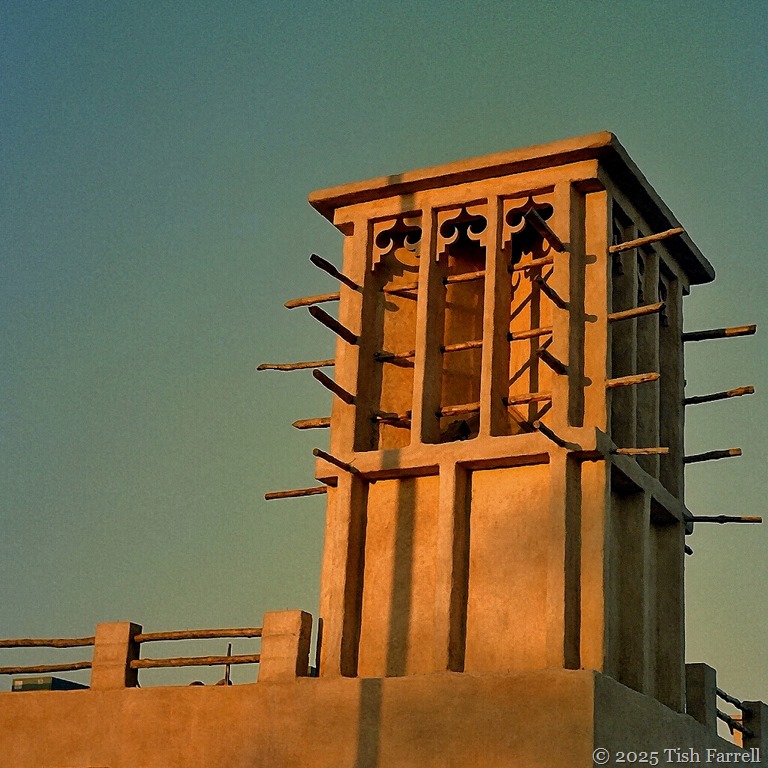
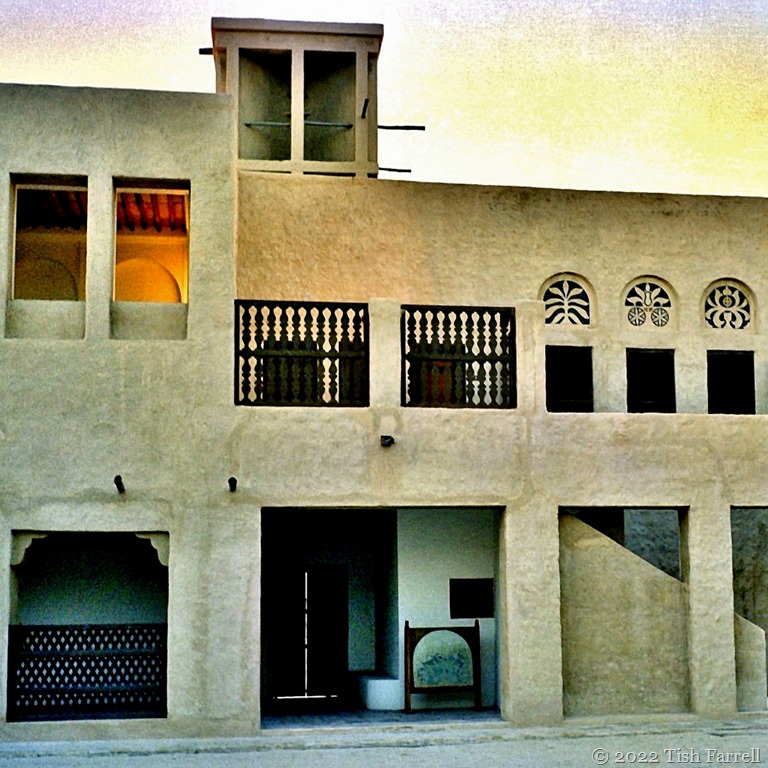
Wind towers – the low-tech means to bring relief from desert heat waves. This one belongs to the restored Sheik Saeed Al Maktoum House on Dubai Creek, built in 1894 by the ruling Al Maktoum family. It is now a museum and, if I remember rightly, the only surviving example of Dubai’s historic grand houses.
*
A perfect fusion of aesthetics, science and simplicity of function: this is how they work.
The capped tower has a port that opens towards the prevailing wind. Some towers are multi-directional, their vents opened and closed as appropriate. Air is drawn into the living quarters below, its movement providing the cooling effect.
When there is no wind, the tower acts as a chimney, venting hot air from the interior.
Persian architect-engineers devised this elegant air-conditioning system two thousand years ago, although it is said the Ancient Egyptians had something similar. More sophisticated versions involved installing a canal, qanat, under the building. Where this method was used, the wind tower vents were opened away from the prevailing wind. The system then pulled cooling air up from the canal.
Persian architectural techniques arrived in Dubai in the 19th century along with the development of the pearl fishing industry which gave rise to the settlement along the Creek.
*
Astonishingly, this technology could be scaled down to a demountable, flat-pack desert nomad version.

Here we have a reconstructed example of a portable Bedouin wind tower, made of cloth stretched on a wooden frame. (As seen in the courtyard of the Dubai Fort Museum).
But while it scores on movability, there were problems if it was erected too close to the cooking hearth. Once alight it turned into an actual chimney and became a serious fire hazard.
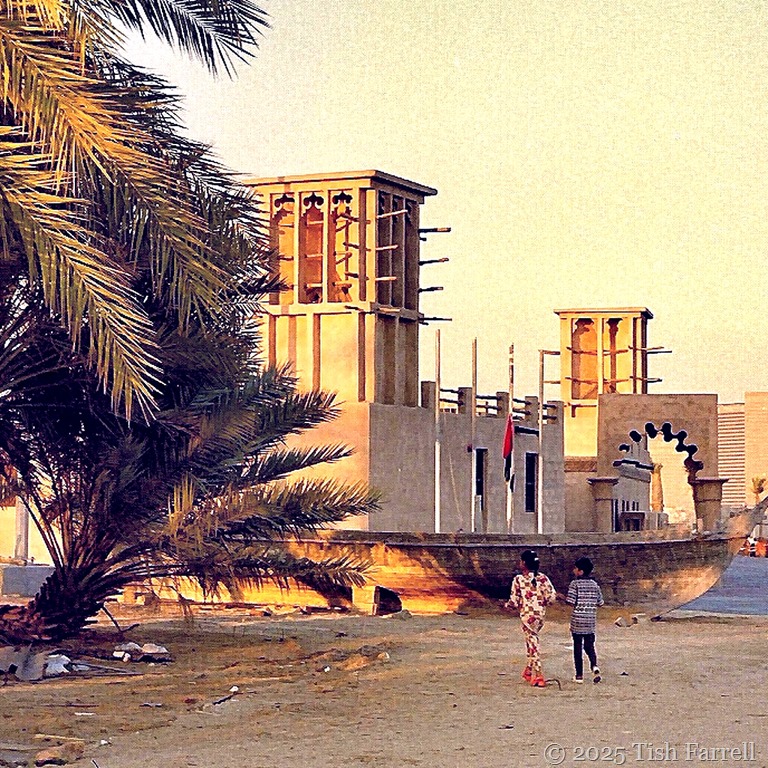
Creek-side view of the Maktoum house, an un-rigged dhow beside it
*
#GeometricJanuary Day 23
