
This week at Lens-Artists Sofia calls for a cinematic approach to our photography.
This is what she says:
“There are a few things that give a photo that cinematic feel: camera angles, bold and high-contrast colours, light, locations, just to name a few. The main objective is to take a shot that is part of a story, there’s mood and a sense of location; our image is but a snapshot of a much wider situation.”
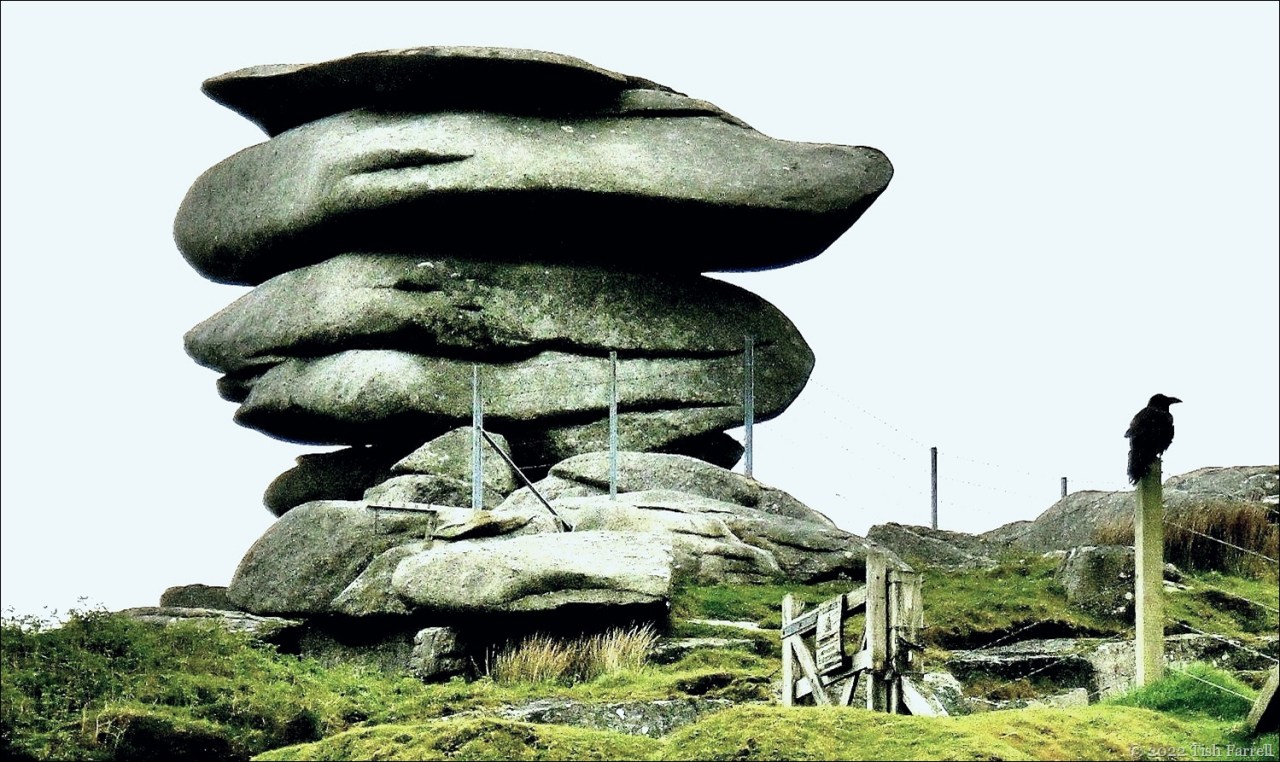
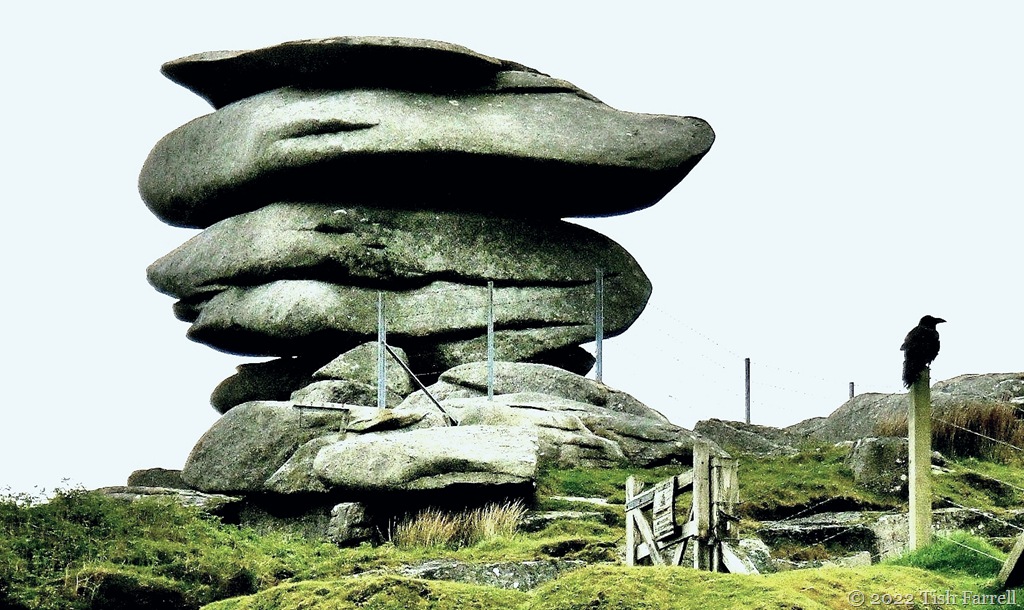
The first four photos here were taken one bleak spring day on the edge of Bodmin Moor near Minions in Cornwall. This, Great Britain’s most south-westerly county is a land of dramatic vistas: of high moors and rugged shore-lines. There are stories everywhere, layered through time like the ‘pillows’ of this granite tor, known locally as the Cheesewring.
The tor has its own stories of course. The first is one of weathering over millions of years, wind and rain driving into its crevices. Then there is the Dark Ages tale, from the post-Roman times when Christian missionaries were beginning to make their presence felt. The proponents of new faith were not always welcomed, and so the formation of the Cheesewring is explained as the result a quoit-throwing contest between Uther the giant and a saintly missionary named Tue. If Uther won, then the Christian must go. Th giant lost of course.
The Cheesewring name itself has different derivations – either a straining device for making cheese, or else relating to cider brewing wherein the press of apples to a pulp is referred to as cheese.
There also some mystical notions, for it’s said that if you come to the Cheesewring as day dawns you will see the top ring turn three times. Which makes me wonder if that crow might have something to say on the matter.
*
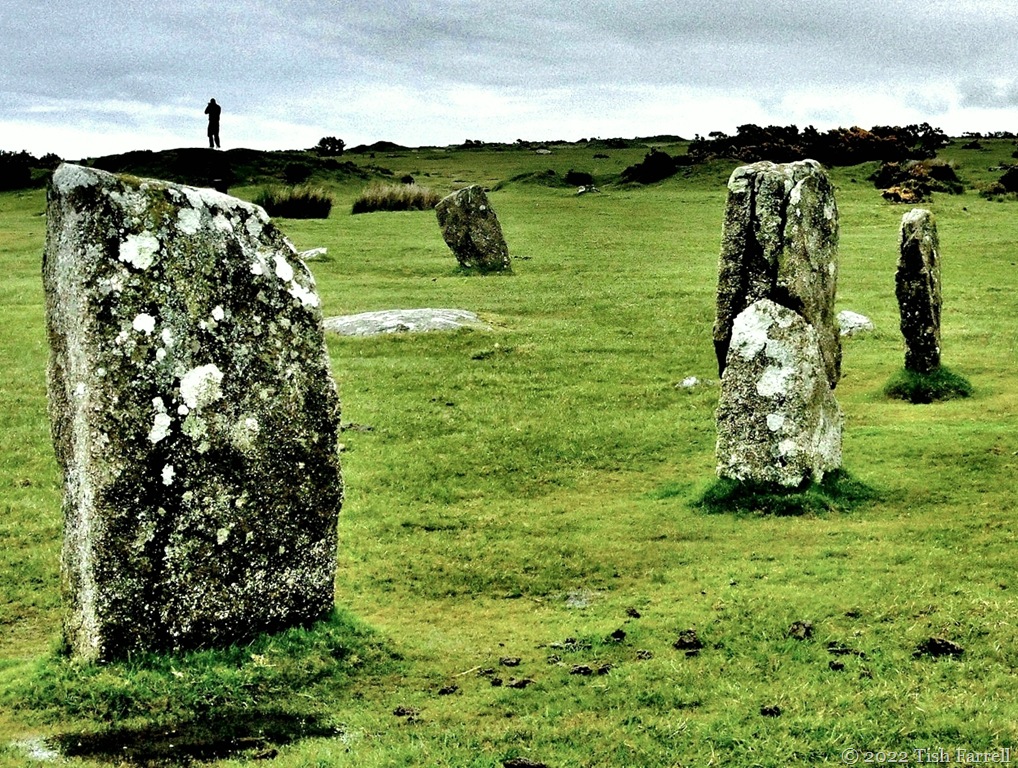
Below the Cheesewring we step back into the remnants of a prehistoric landscape: three Neolithic stone circles called the Hurlers. But as to that figure apparently hovering on the horizon – who knows what time stratum he belongs to.
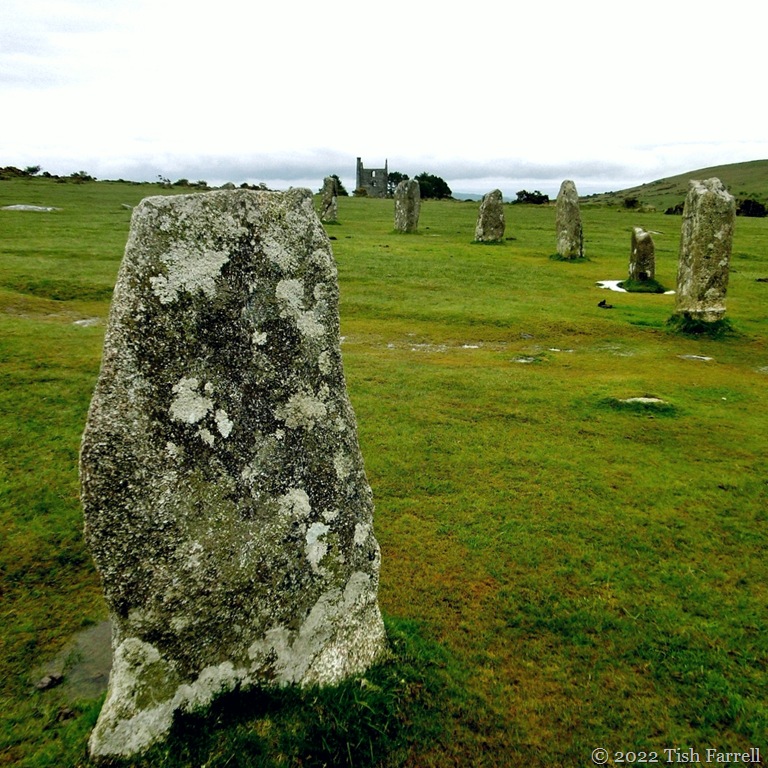
Looking through the Neolithic circle we come to another narrative: one belonging to the 1850s – 1890s when the South Phoenix Mine was churning out train loads of copper, a time when over 3,000 people were employed here – women and children included.
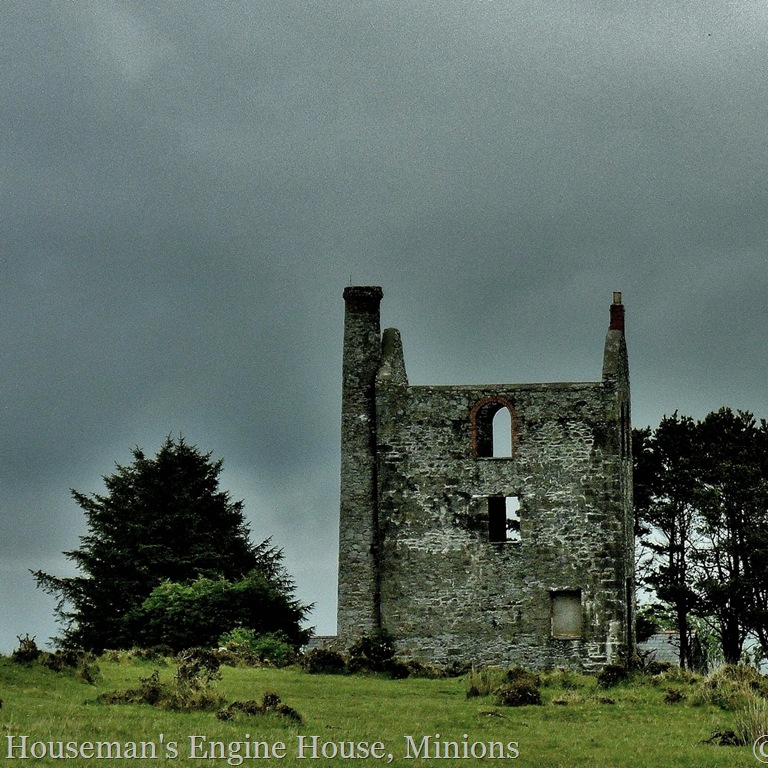
There is more about these stories at an earlier post: ‘Hurlers and Miners: 6,000 years of heritage on Bodmin Moor’ HERE.
*
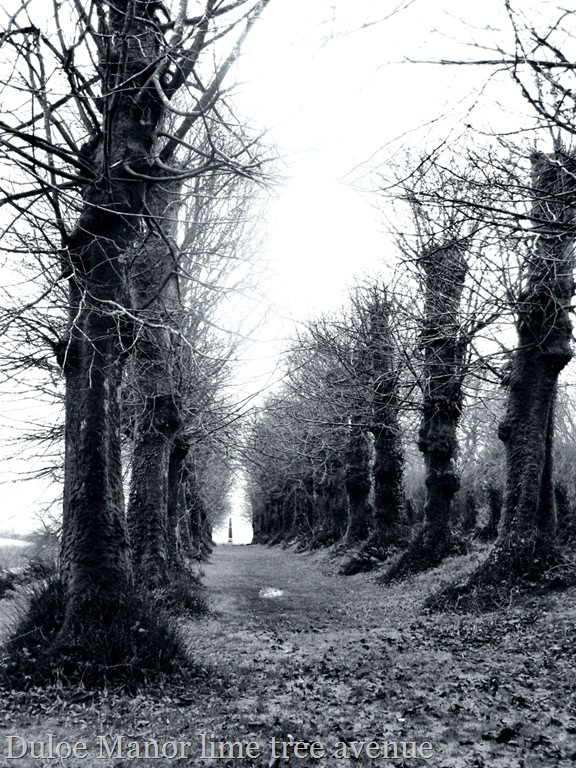
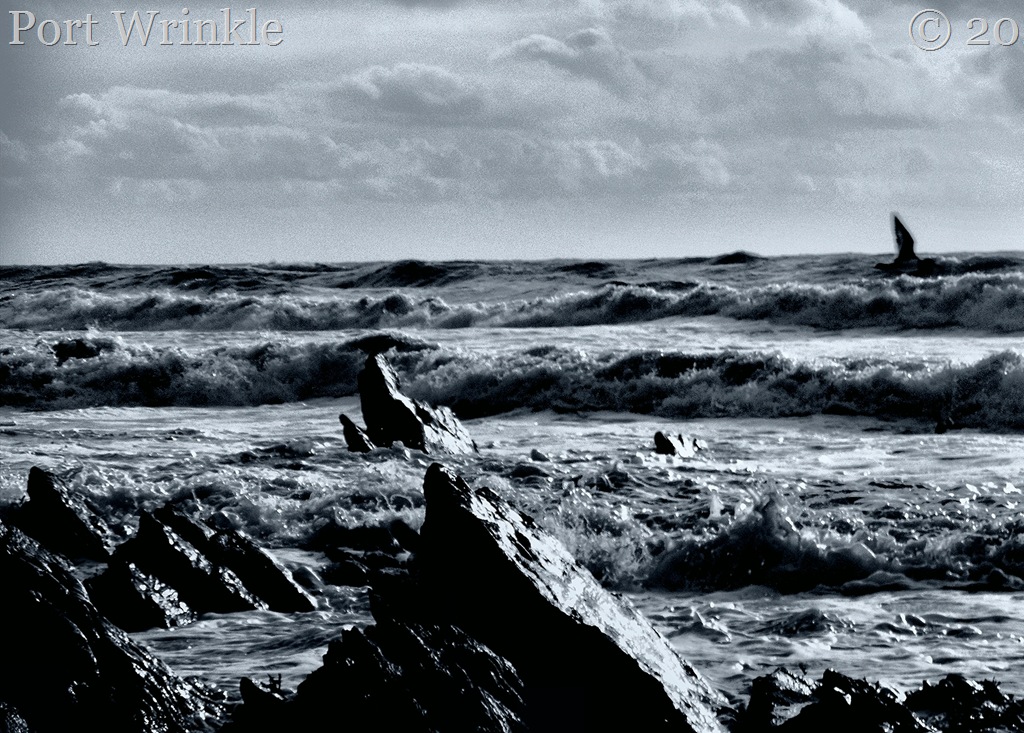
Cornwall does have its own cinematic history. Several Cornish based novels by Daphne du Maurier have made it to the big screen, some in duplicate versions – Rebecca, Frenchman’s Creek, Jamaica Inn, My Cousin Rachel. Her deeply disturbing short story,The Birds, is also set in Cornwall, although Hitchcock chose to transpose it to San Francisco. Du Maurier’s works are usually classed as romances, but they also have dark undercurrents, sometimes touching on the paranormal, their settings the wilds of Bodmin Moor, brooding mansions, sheer-drop sea cliffs, rocky coves and crashing surf.
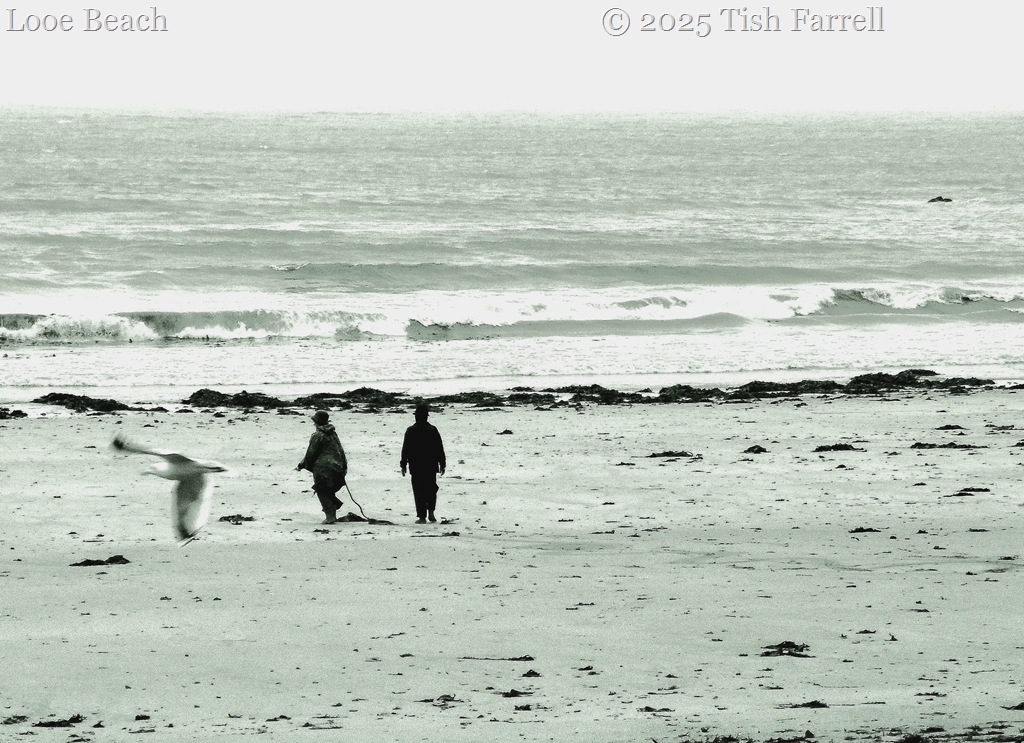
So here are some more Cornish photos, taken one gloomy December, and with a little nod to Daphne du Maurier’s sensibilities.
*
*
Lens-Artists: Cinematic This week Sofia at Photographias sets the theme.
