The Railway Men: Black & White Sunday

P1040808 - Copy

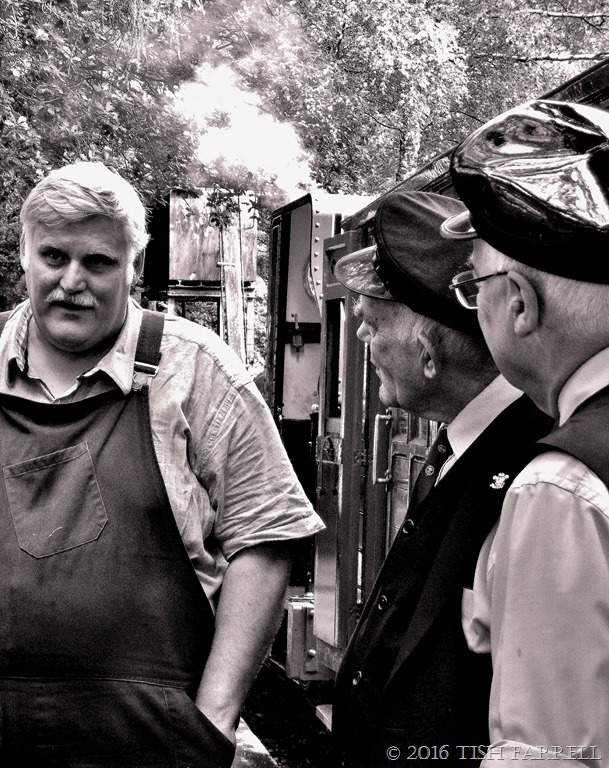
The Talyllyn Railway in mid Wales is the oldest preserved steam railway in Britain. Over the past half century it has inspired many other such ventures and there are now some 500 miles of restored lines across the country.

That they are there at all and can offer us steamingly enjoyable train rides is mostly down to armies of enthusiastic volunteers like these chaps in the photo. It’s an enterprise fraught with responsibilities too; the health and safety implications are momentous: track, rolling stock and passengers all to be kept in good order.

And in case you missed it back in June, you can read more about Tish and Graham’s big train day out at:

Partners in steam on the Talyllyn Railway – Woo-hooooo

*

This week at Black & White Sunday Paula’s challenge is COMPOSITION. Please visit to see her own very fine composition, and the other entries it inspired.

My own photo was composed in Dynamic Monochrome.

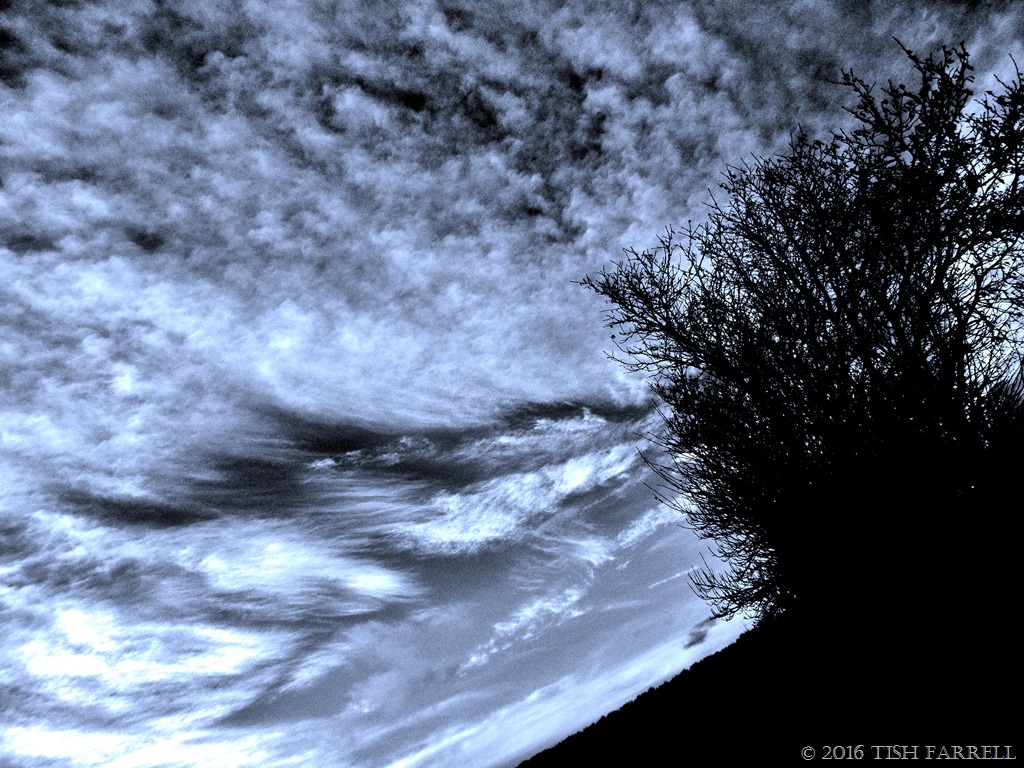
Big Sky Over Wenlock Edge

P1000424

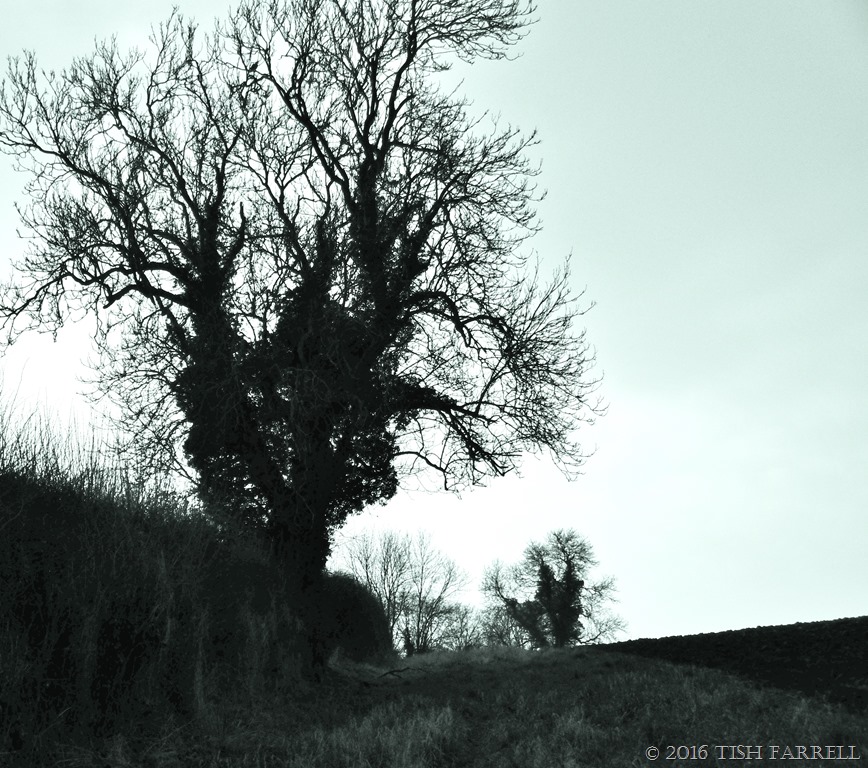
I am always fascinated by silhouettes. I also seem to do a lot of sky watching these days. This shot of a farm hedge in one of the fields behind the house was taken late one winter’s afternoon using the Dynamic Monochrome setting on my Lumix compact camera. There was just enough light left. I added the blue-ish tint in Microsoft Picture Gallery.

This week for Black & White Sunday Paula asks us to post a favourite b & w photo, so this is one of mine. You have the rest of the week if you want to join in, but please visit Paula’s blog where you will find more ‘favourites’.

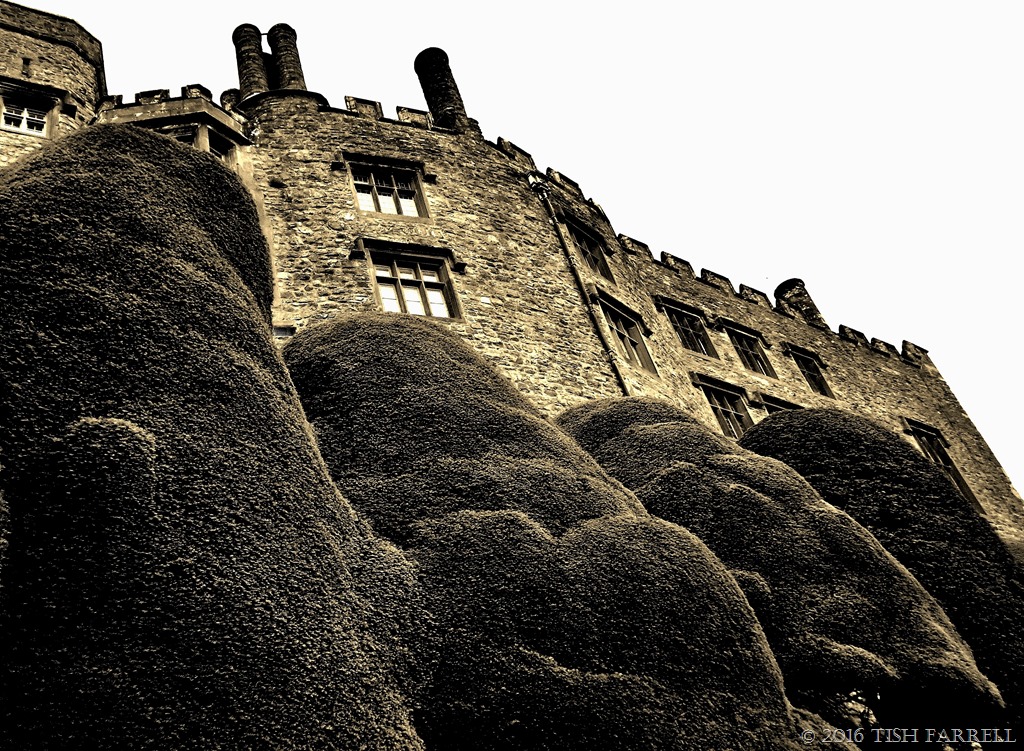
Traces Of The Past ~ The 330-Year-Old Hedge

P1040963

It’s hard to imagine that this gigantic bastion of ancient yew trees began three centuries ago as a formal terrace row, each tree cut into a neat, small cone or obelisk. Back then in the 1680s, when these trees were first planted, the taste in grand garden design was for the linear and geometric, following the French notion of strict plant control.

A hundred years later it was all change.  In keeping with the new romantic landscape style of English gardening, the yews were allowed to grow as they pleased. The aim was to create vistas of idealized nature.

But this more liberal attitude did not last either. Around the time of the yews’ two-hundredth birthdays, Victorian garden men armed with sickles and step ladders intervened, and began creating this  arboreal rampart of free-form topiary. Both fascinating and overbearing, I feel. The gardeners apparently hung onto to their ladders with one hand, while pruning and shaping with the other.

Today, the effect is still maintained by National Trust gardeners, now using electric hedge trimmers. Every year four of them start work in late August, and keep on trimming until mid-November – three months’ toil.

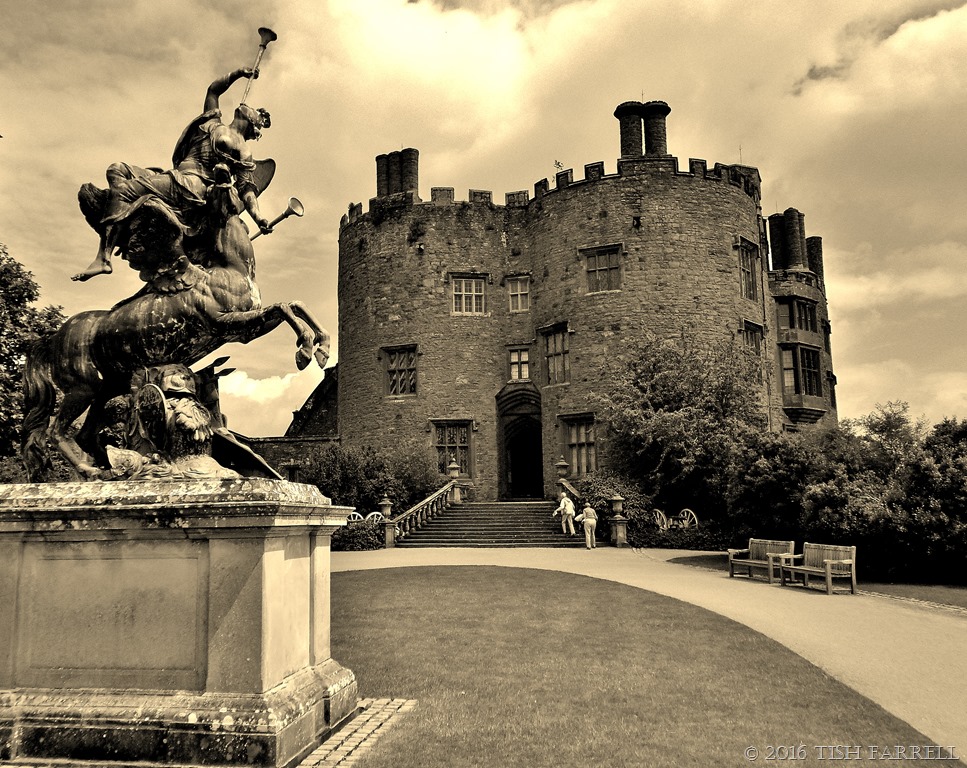
The yews are to be seen at one of the National Trust’s outstanding properties – Powis Castle, near Welshpool in Powys, just over the border from Shropshire. We called in there on our way home from our recent stay on the Mawddach Estuary in mid Wales. I’m afraid that on this occasion it was more for a good cup of coffee than for culture.

P1040976

P1040932

The castle dates from around 1200 when it was the stronghold of the last Welsh princes of Powys. In the sixteenth century ownership passed to the English Herbert family who acquired the title Earl of Powis. Indeed, they appeared to have acquired it on three separate occasions through history until the title eventually stuck fast to the family.

One of the Herbert daughters married the son of Clive of India (Robert Clive 1725-1774) – he who plundered the subcontinent under the auspices of the British East India Company. The Clive fortune paid for repair and development of the castle, and Robert Clive’s collection of valuable arts works gathered during his India days are on display there. You can tell I have very mixed feelings about this. But scruples aside, the house is well worth seeing and it contains many treasures.

The garden, though, is the best part. The setting is magnificent, with stunning views of the Welsh borderland. A whole day (and indeed several days at different seasons) could be spent exploring the many layered terraces, the lawns and woodland walks. The planting is on an epic scale with many unusual herbaceous varieties deployed. Specialist garden history talks are also available, and when energy flags (and as intimated earlier) there’s a good restaurant-tea room for re-charging purposes. Although to be on the safe, take your own picnic as well. It’s a long way from the grand lawn to the courtyard refreshment station.

copyright 2016 Tish Farrell

Please visit Paula at Lost in Translation for more traces of the past. This theme is going to be regular every-other-month challenge on her blog, which is good news. Thank you, Paula. I have lots more traces in my archive.

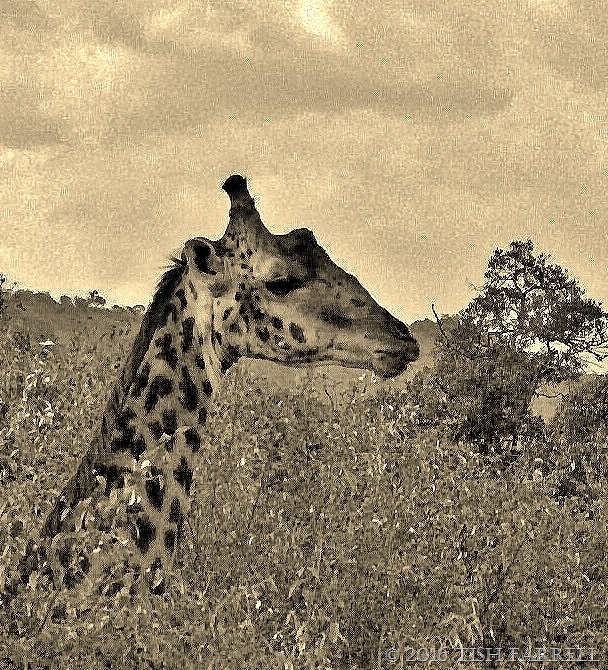
Always There? Don’t Bank On It

Scan-130521-0001

I had no idea until this week when the BBC aired Giraffes: Africa’s Gentle Giants  in their Natural World series. But in the twenty years since this photograph was taken in the Maasai Mara the continent’s giraffe population has fallen by 40 %. That’s roughly 36,000 fewer wild giraffes on the planet, out of a total remaining population of 90,000.

I’ll say that again: there are only 90,000 giraffes left in all Africa.  Some populations comprise less than 400 individuals. Seven countries have lost their populations altogether.

In his voice-over, David Attenborough calls it a ‘silent extinction’; it has happened without anyone much noticing. We have been too busy worrying, and quite rightly so, about elephant numbers. But then Africa still has half a million elephants, albeit a fraction of those slaughtered for piano keys, billiard balls, and objets d’art.

One man who has been noticing the giraffe depletion is Australian scientist Dr. Julian Fennessy. From their home in Namibia, he and his wife have been studying the resident Angolan giraffes for twenty years, learning things about giraffes that no one else has bothered so far to discover. It seems that we all have thought that giraffes will always be there. If Fennessy has his way, they will be. But it’s a big call.

In many regions of Africa they have been poached for meat, or their habitats destroyed. There appears to be a further problem. It has long been known that there are several ‘races’ of giraffe across Africa – Maasai, Rothschild, Reticulated amongst others. Now Fennessy is coming to the conclusion that some of these regional variants are actually separate species. He is carrying out genetic sampling across the continent in order to find out. If his theory proves correct, then this knowledge will be crucial when it comes to maintaining viable breeding populations.

To fund operations, he and his wife run the Giraffe Conservation Foundation, the only conservation charity devoted exclusively to giraffes.  The BBC film also documents the Fennessy family’s part in the extraordinary effort by the Uganda wildlife authority to translocate 20 giraffe across the Nile in order to establish a new population outside an area earmarked for oil exploration, and one already predated on by poachers. For anyone in the UK, the programme is still on BBC iPlayer.

And why should we worry about loss of giraffes. Well, like elephants, they are the natural world’s gardeners. They help to pollinate trees, so ensuring fruits and seeds for a range of other wildlife. They also spread ready-to-grow seeds in their dung, so propagating tree cover which benefits the planet. And utility aside, just the thought of them makes people happy. Perhaps happy enough to help to support the Giraffe Conservation Foundation? Follow the link to see the kind of work they do.

*

Post inspired by Paula’s theme at Black & White Sunday: Always there

copyright 2016 Tish Farrell

#GiraffeConservationFoundation

Unexpected: Monochrome Mawddach Sunset

P1040714

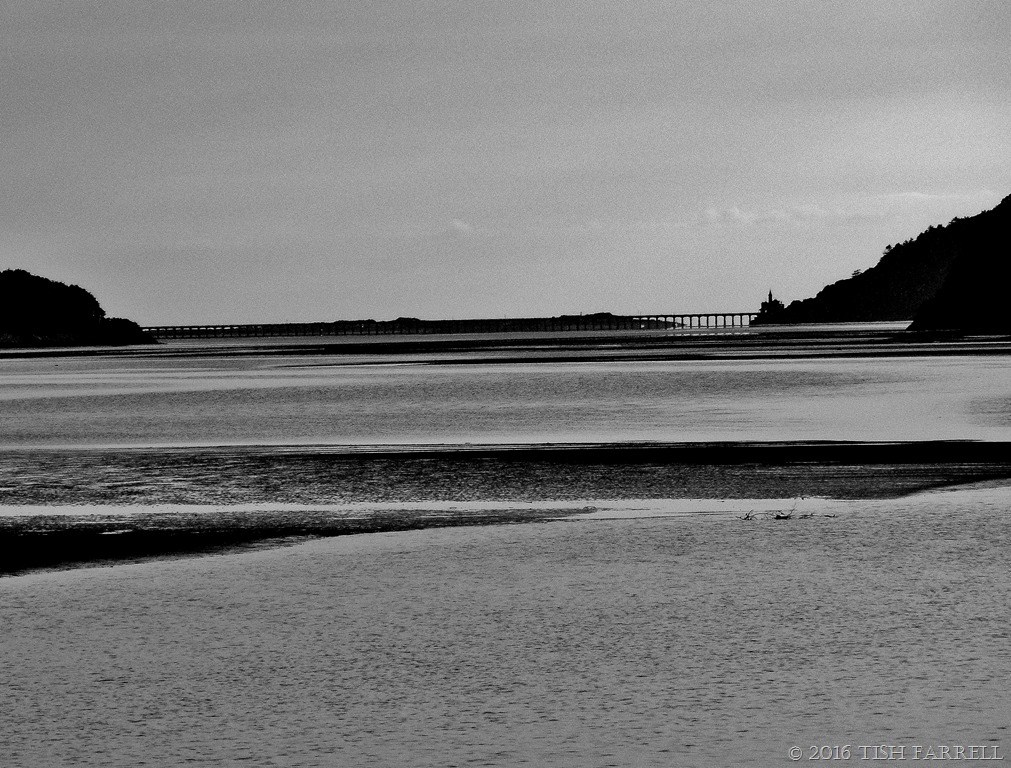
The most unexpected thing about this shot is that it came out at all in such low light conditions. I do love the Dynamic Monochrome setting on my Lumix. It creates all kinds of unforeseen magic, even with much added zoom.

I suppose the other piece of unexpectedness here is the perversity of shooting a limpidly pastel sunset in monochrome. But I like the way it silhouettes the old railway viaduct across the estuary mouth. In Welsh it is called Pont Abermaw, and in English, Barmouth Bridge. It was constructed mostly from wood during the 1860s, and included a drawbridge section that would open allow tall masted ships to pass through, sadly not a facility much needed these days.  It would be fine sight though, so please add your own sailing ship to this vista.

*

Black & White Sunday  This week Paula requests we show her the unexpected. Please drop in there for more creative renditions of the theme.


#MagesticMagicalMawddach

On The Diagonal ~ Around Wenlock In Winter And Summer

P1000582


P1010927


P1010920

P1000562 - Copy

This week’s diagonals theme at Black & White Sunday is right up my street, or at least in my neighbourhood.  Looking through my file of Lumix monochrome images, it seems that the diagonal often features. I think it’s because it appeals to both my visual and my writing mind. Things on the slant; one thing leading to another that’s not quite in view; unexpected angles; the monochrome subliminally suggestive of the written word and printed pages: storytelling then.

The first photo was taken on my well-worn path to the allotment. It’s a scene I photograph in all seasons, but I especially like the ash tree silhouettes in winter, their boughs cloaked in ivy which always reminds me of Tolkein’s Ents. I think this is where the lost Ent Women ended up, guarding our Wenlock Edge field boundaries.

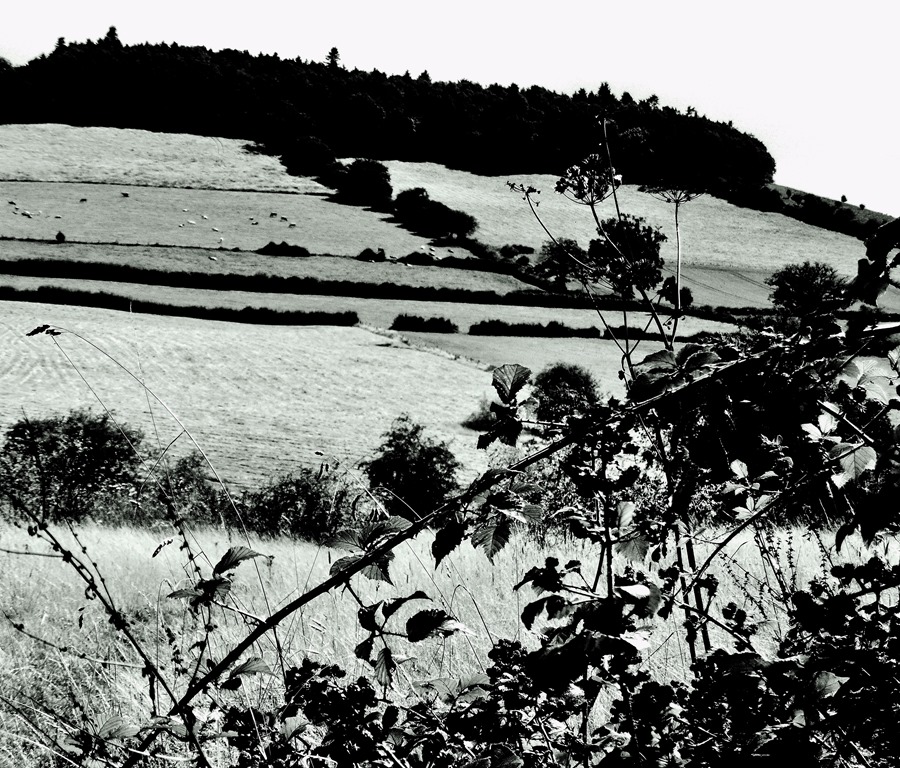
Photo 2 was taken from the old railway line, leaning over the fence and shooting from deep shade into bright sunlight and with some zoom – not quite the best thing to do, though it gives the hilltop wood a touch of dark mystery.

Photo 3 is the field path from Wenlock to Bradley Farm, once the site of a medieval settlement.

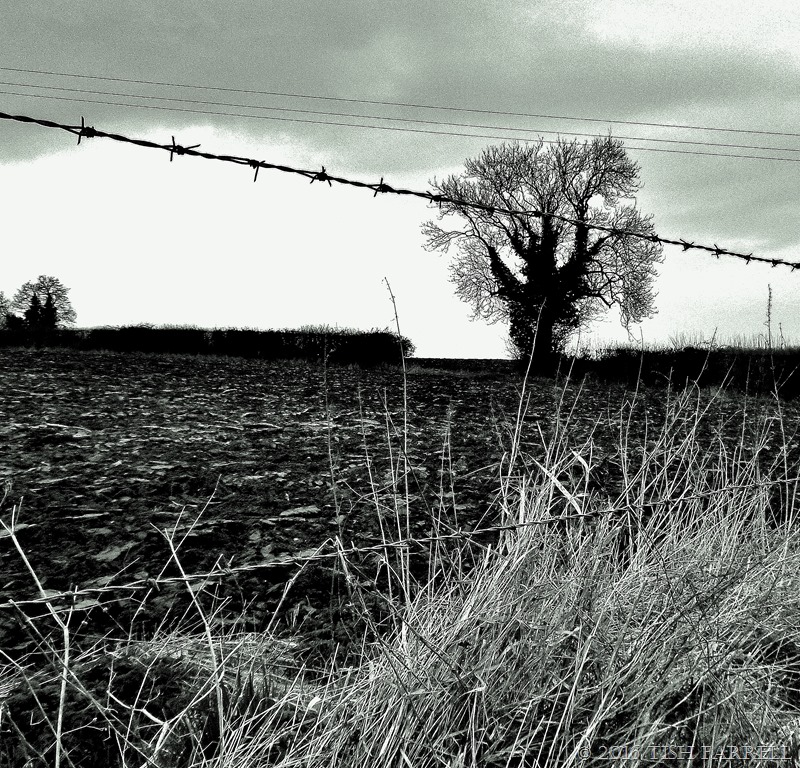
Photo 4 – we are back at the allotment, the field behind our plots looking at the ash trees from another angle. I like the way the barbed wire adds a bleak and faintly sinister air.

Now please visit Paula at the link above for more photo essays on the slant.

copyright 2016 Tish Farrell

A Five Hundred-Year-Old C.V. ~ And All Kinds Of Timeless Connections…

P1030901

THIS TOMB

IS TO THE MEMORY OF

SIR RICHARD CROFT . KNT .

SHERIFF OF HEREFORDSHIRE

1471-72-77-86

FOUGHT AT MORTIMER’S CROSS 1461

TEWKSBURY 1471

M.P. FOR HEREFORDSHIRE 1477

GOVERNOR OF LUDLOW CASTLE

CREATED KNIGHT-BANNERET

AFTER THE BATTLE OF STOKE 1487

DIED JULY 29 1509

ALSO OF ELEANOR HIS WIFE

DAUGHTER OF SIR EDMUND CORNWALL BARON

OF BURFORD SALOP

WIDOW OF SIR HUGH MORTIMER OF KYRE

P1030883

Sir Richard Croft (born 1429) lord of the manor of Croft Castle in Hereforshire was advisor to Edward Duke of York during the Battle of Mortimer’s Cross in 1461. The Duke was eighteen years old and had recently succeeded his father, Richard third Duke of York, to the title. Richard had been killed in the previous year at the Battle of Wakefield. Lady Eleanor Croft’s first husband had also also killed in that battle. These were Wars of the Roses times wherein the Houses of York and Lancaster vied bloodily for the British crown. The Battle of Mortimer’s Cross was fought on Croft land not far from the castle (and in the English Midlands nowhere near either York or Lancaster) and was a turning point in the conflict for reasons I’ll get to in a moment.

First I should say that this week’s theme at Paula’s Black & White Sunday is TIMELESS. And the reason I’ve chosen these photos is because there is quite another timeless connection – i.e. the words of William Shakespeare whose 400th memorial anniversary is being celebrated this year. In Henry VI pt 3  Act II scene i,  he makes reference to a strange meteorological event that occurred before the Battle of Mortimer’s Cross, although the actual battle does not feature in the play.

This is Shakespeare’s version of what was seen, expressed in an exchange between brothers, Edward 4th Duke of York the soon-to-be Edward IV, and Richard, Duke of Gloucester, the future Richard III:

Edward: Dazzle mine eyes, or do I see three suns?

Richard: Three glorious suns, each one a perfect sun; Not separated with the racking clouds/But severed in a pale clear-shining sky. /See, see: they join, embrace, and seem to kiss,  /As if they vowed some league inviolable./Now are they but one lamp, one light, one sun.  /In this the heaven figures some event.

*
The phenomenon described here was a parhelion or sun dog, a refraction of the sun’s rays through ice that created the impression of three separate suns rising simultaneously. According to historical accounts Edward decided that this extraordinary vision was a great portent promising victory, while his opponents were filled with terror. Thus inspired with holy certainty, Edward’s army won the day. A few weeks later Edward was crowned king. The sun thereafter featured as part of his personal emblem.
I’m afraid I have only one sun in my photo of Croft Castle and the chapel where Sir Richard and Lady Eleanor have their magnificent tomb, but then there are other interesting signs in the sky. Incidentally, Sir Richard served in his various official capacities (quoted in the memorial plaque above) under four successive monarchs, including Richard III.

Also to coincide with this year’s Shakespeare celebrations, the BBC is currently airing its own ‘Game of Thrones’ version of Shakespeare’s War of the Roses history plays, The Hollow Crown; proof of the timeless quality of good yarns, even if a few liberties have been taken with the playwright’s text. But then ‘the bard’ was nothing if not a past master at recycling other people’s tales and historical accounts, and giving them his own particular gloss; even during his own time players of his works apparently changed the words. It was ever thus with the art of good storytelling…

copyright 2016 Tish Farrell

Textures Of My Ancestral Landscape

P1000999

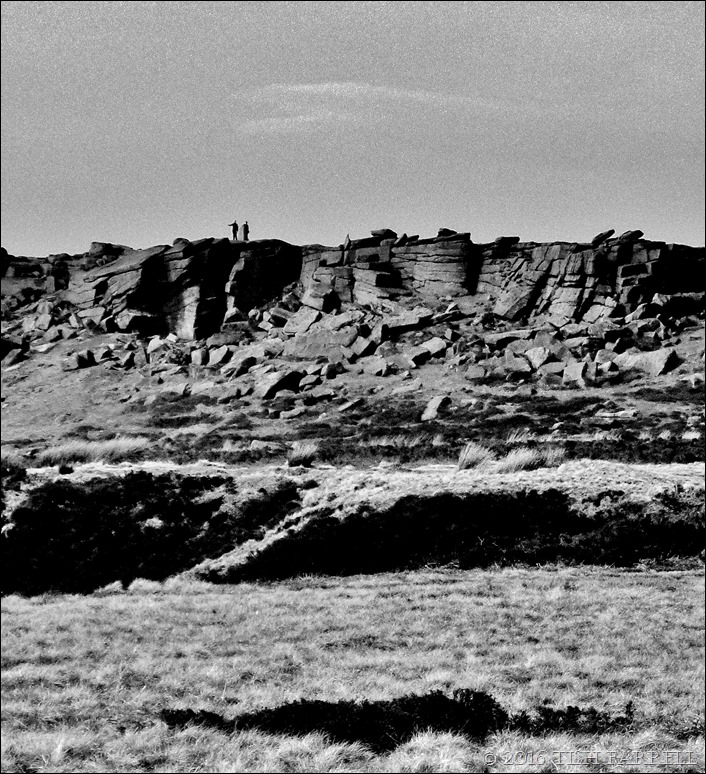
These are some of the landscape textures that my maternal ancestors, the Fox family of Derbyshire’s High Peak would have known well – windswept moors and weathered scarps of millstone grit. They were yeoman farmers and lead miners, and they made a living from this bleak and beautiful country for hundreds of years.

Family legend has it that the Foxes arrived in England with William the Conqueror, but Fox is a name with Germanic origins so they may well have been Saxons, belonging to the conquered rather than to the conquering forces. The earliest records for Foxes in the Hope Valley, and Offerton in particular – where my Foxes farmed until the end of the nineteenth century, are around the thirteenth century, although I and my fellow Fox researchers are yet to establish direct lineage from these times.

There were centuries of prosperity when various family members lived in large stone farmhouses, made ‘good’ marriages, and owned land and lead mining concessions, but by the early twentieth century there was only one member of my Fox line left in the area, and he was living modestly in Eyam. The family farm of Callow where he was born, and by then owned by the Duke of Devonshire had been relinquished with a farm sale in 1892.   High rents were besetting many Derbyshire farmers at this time. The Mr Fox mentioned in the sale advertisement is my great great grandfather, George Brayley Fox:


The Sheffield & Rotherham Independent

Saturday 29 October 1892

Callow Farm Sale

Important Sale of 23 cows, heifers, steers and calves, two horses and foal, 30 sheep, hays stack, three wheat stacks, seven oat stacks, farm implements etc.

Mr Hattersley has been honoured with instructions from Mr Fox who is give up the Farm, to sell by Auction on Wednesday, Nov 3, 1892, the very superior LIVE and DEAD FARM STOCK, as briefly enumerated below:

Black Mare, believed to be in foal, excellent worker;

Valuable Brown Horse, six years old, with splendid action, believed to be sound, and quiet in all work;

Roan foal by Bedford;

One Cow in calf for December 25th, four in-calf cows for April, two barren cows in milk, four very choice heifers in calf for April, two barren heifer stirks, five strong bullock stirks, five spring-reared calves, 11 superior stock ewes, six fat sheep, one two-shear ram, 12 strong lambs, two very fine ducks, one fine drake.

Samuelson’s 2-horse combined mower and reaper, nearly new with additional shafts; wood tippler, horse rake, Cooke’s wood plough, set of wood harrows, nearly new; set of three harrows, swingtrees, fallow drag on wheels, stone roller, with shafts, horse turnip hoe, sheep troughs, joiner’s bench and tools, quarry tools, hay rakes and forks, 2 1-horse carts, winnowing machine, wheel chopper, with rising mouth, in excellent condition; corn chest, cart gears, stone cheese press, lever ditto, cheese rack and boards, nearly new; vats, garths etc, cheese pan, two brewing tubs, two oak chests, and a portion of furniture.

One stack of very prime new hay, three stacks of wheat, five stacks of white oats, two ditto of black oats and a quantity of table and other turnips.

Sale to commence 12 noon.

*

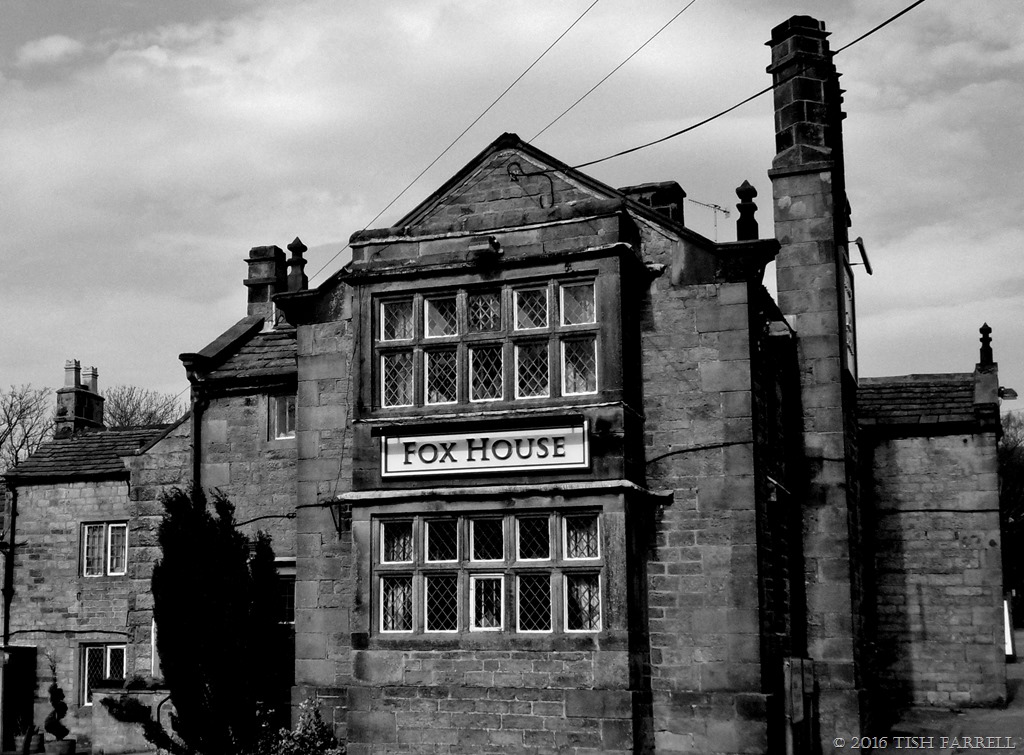
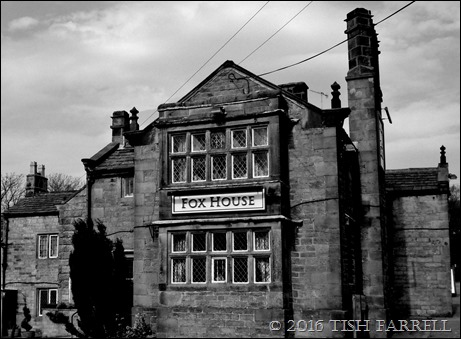
Every item here tells of great intimacy with the land. Just to read this notice gives me a painful sense of roots yanked up. I feel the touch and then the loss of the fine ducks, the strong lambs, the black mare in foal, the oats and the stone cheese press; even the turnips and the quarrying tools. But I would like to think, too, that somewhere in my bones are still traces of that High Peak millstone grit, the hardiness and courage that it took to carve a living from these uplands, and in my lungs the sharp, clean air of the moors of Longshaw where earlier generations of my family, so it is said, grazed four hundred sheep on their own run, and also owned the shepherd’s byre, that dating from 1399 was later sold and expanded into a handsome house for the Duke of Rutland’s agent, and is now the well known inn, Fox House, just outside Sheffield. Somewhere within this sturdy stone carapace is the earlier shepherd’s dwelling of quite another texture.
P1010003

copyright 2016 Tish Farrell


This week at Black & White Sunday, Paula has given us the theme of ‘texture’. She also included a quotation by novelist British Paul Scott, which is very much responsible for my take on the challenge:

“The past becomes a texture, an ambience to our present”

P.S. Paul Scott served in the Intelligence Corps of the British Army in India during the World War Two. He wrote the phenomenal Raj Quartet, set in India during these years, and which was made into a very excellent TV serial back in the 1980s. The TV version is available on DVD, and with its all star actors is well worth watching. But read the books too.
Winter’s Afternoon–A Shropshire Rhapsody

P1000347

This week Paula’s theme at Black & White Sunday is rhapsody. This instantly made me think of George Butterworth whose promising career as a composer ended with a sniper’s bullet on the Somme in 1916.

He is best known for his arrangements of English folk songs, and in 1911 and 1912 he set to music eleven of A E Housman’s A Shropshire Lad poems. In the recording at the link below you can hear a ten-minute melodic evocation of my home county. It begins with one of the songs,  Loveliest of Trees. This leads into the full orchestral Rhapsody which widens our gaze to embrace wide blue vistas – music of landscape, and of love and loss.

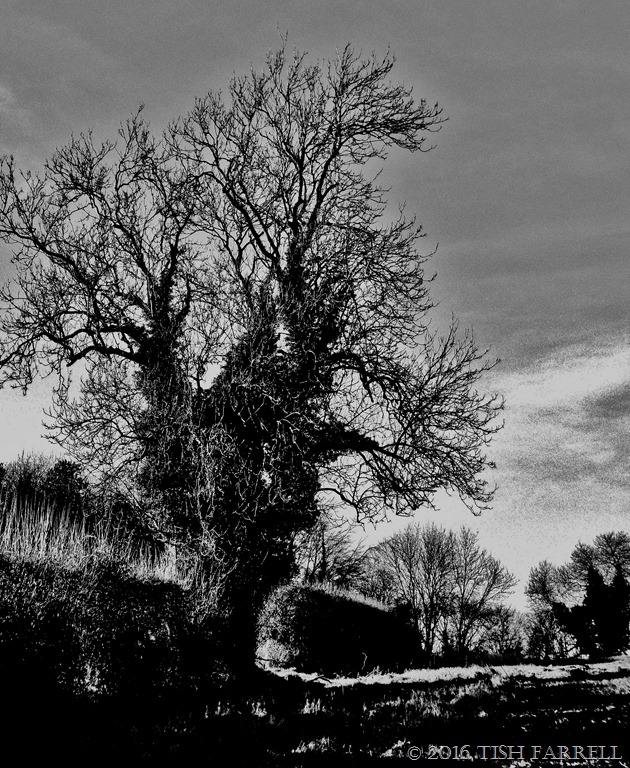
The photo was taken in the field behind our house. The tree is not a cherry as in the Butterworth-Housman song, but an ivy-clad ash. They thrive along Wenlock’s limestone Edge.

https://www.youtube.com/watch?v=1xMPichAUrM

Black & White Sunday: Rhapsody

#ShropshireHillsAONB