Winging It ~ Chance Encounters With Aerial Kind

townsend meadow resized

In the old tales birds are often messengers, bearers of foreknowledge – for good or ill. They overhear things that humans don’t, come unbidden to help the hero in their quest, although their warnings are not always understood or welcomed.

In Kenya (and other parts of Africa) the Red-Chested Cuckoo is the bearer of good news. Its three note call says the rains are coming – ‘time to dig’, ‘time to dig’. On the other hand, in some interpretive versions, much depends on the geo-location of the call. If you are setting out on a journey and the call comes on the right of the path, then it signifies that all will be well. But if it comes from the left, then there’s danger ahead; better go home and wait for a more propitious day.

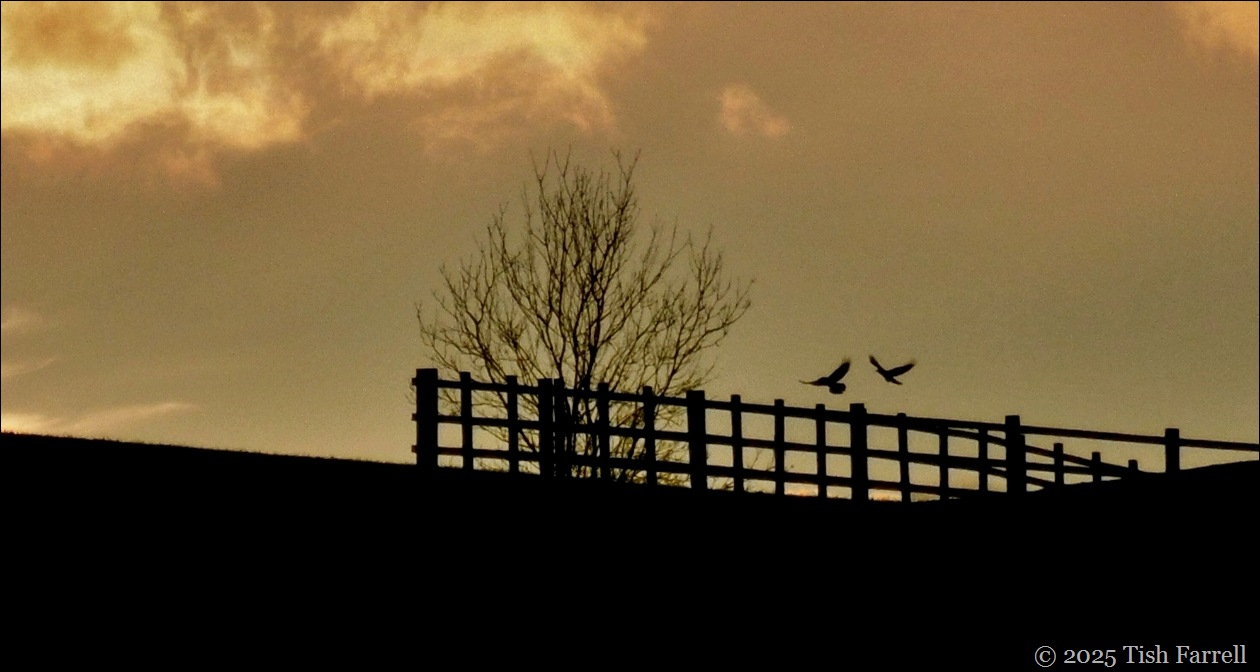
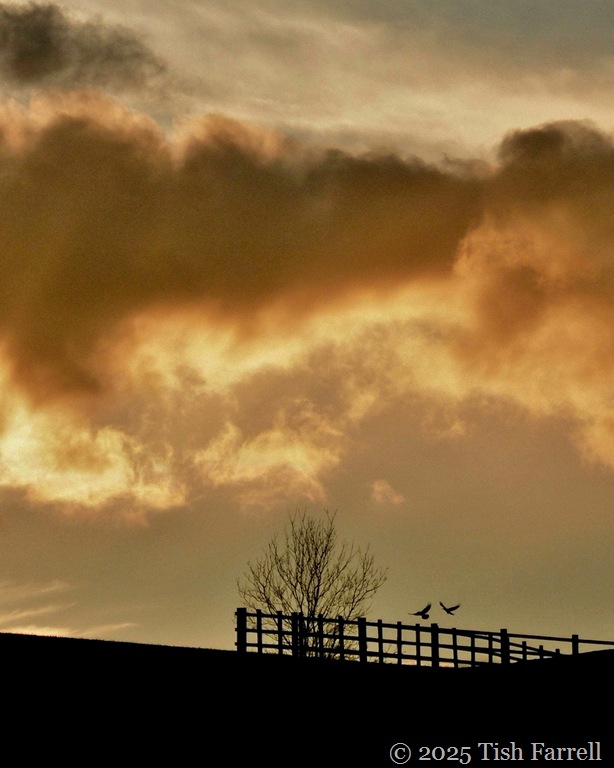
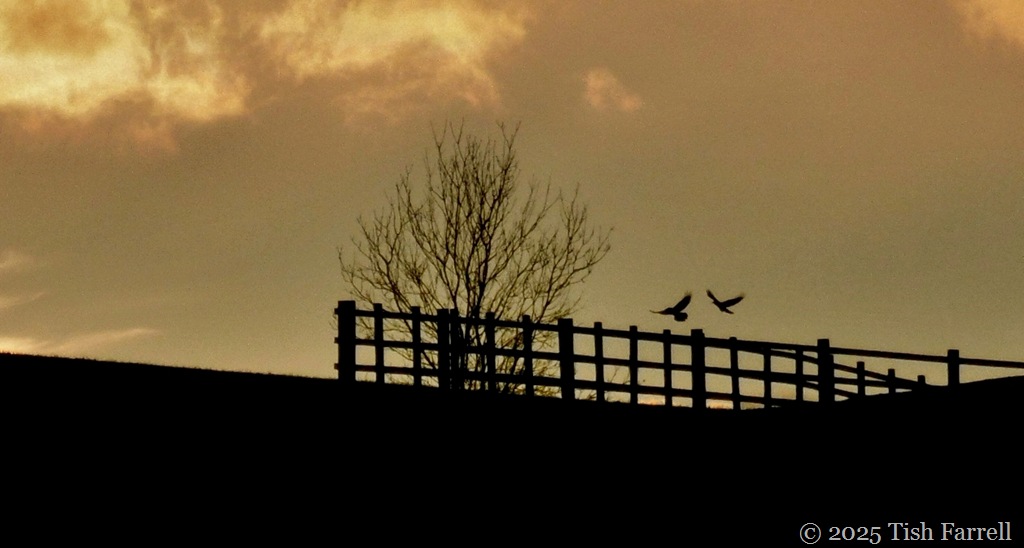
I think the two birds in the first photo are rooks. All members of the corvid family (rooks, crows, ravens, choughs, magpies, jays) tend to have a poor reputation on the bad omen front, but since I have a twosome here, I’m choosing to see them as beneficent. I’m also reminded of the magpie sighting rhyme: one for sorrow, two for joy.

***
common blue

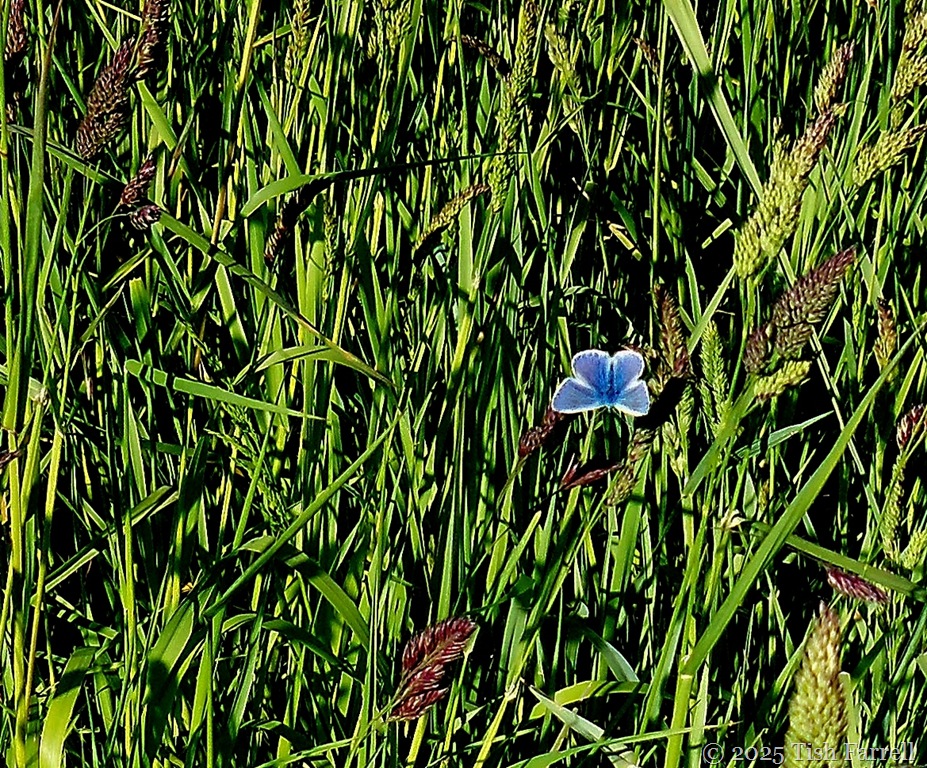
Butterflies also have spirit world connotations. In cultures across the globe they represent transformation and rebirth, joy and happiness. A butterfly may also be seen as the embodiment of a human soul, although a crowd of them might be thought an evil portent. I’m happy, then, to come upon this single tiny Common Blue butterfly, sipping at grasses on a summer’s evening.

***
bee and marigold

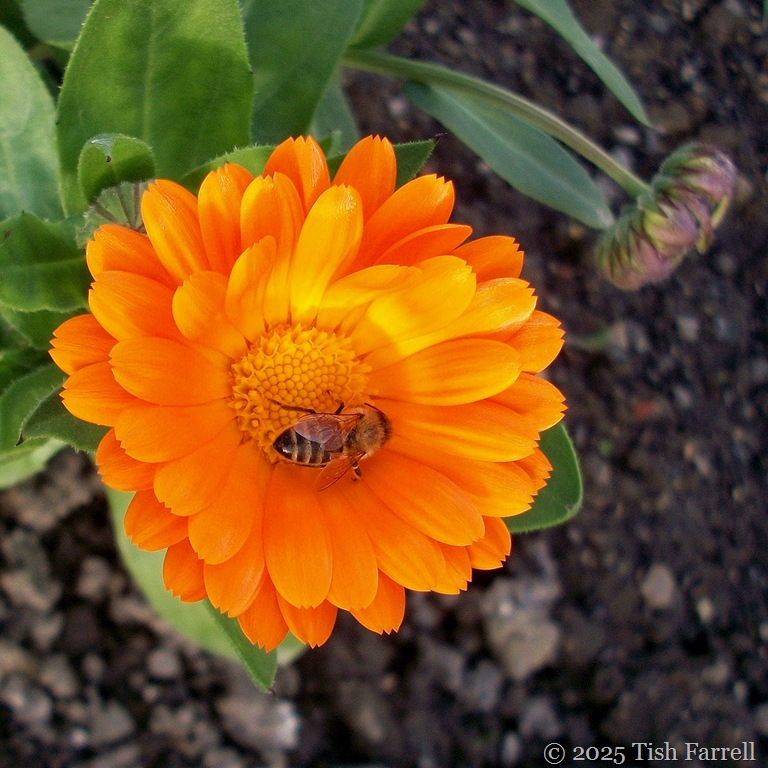
And as for the bees, most of us know that, as pollinators alone, they are absolutely indispensable. The value of their produce too is inestimable. They are admired for their busyness and sound work ethic; the therapeutic hum in spring orchards.

It’s not surprising, then, that in many ancient cultures they were revered. They conferred blessings even on the gods. For instance, Apollo’s gift of prophecy was bestowed on him by three bee maidens, or in older pre-Hellenic versions of the tale by a trio of bee goddesses. Other texts see the bee’s origin as dramatically supernatural. One Ancient Egyptian version has it that they arose from Sun God Ra’s tears as they fell on desert sand. What an image. I think I believe it.

***

Lens-Artists: Wings  This week Beth at Wandering Dawgs gives us a fabulous theme to work with.
header

Coming Home To Roost

IMG_5480

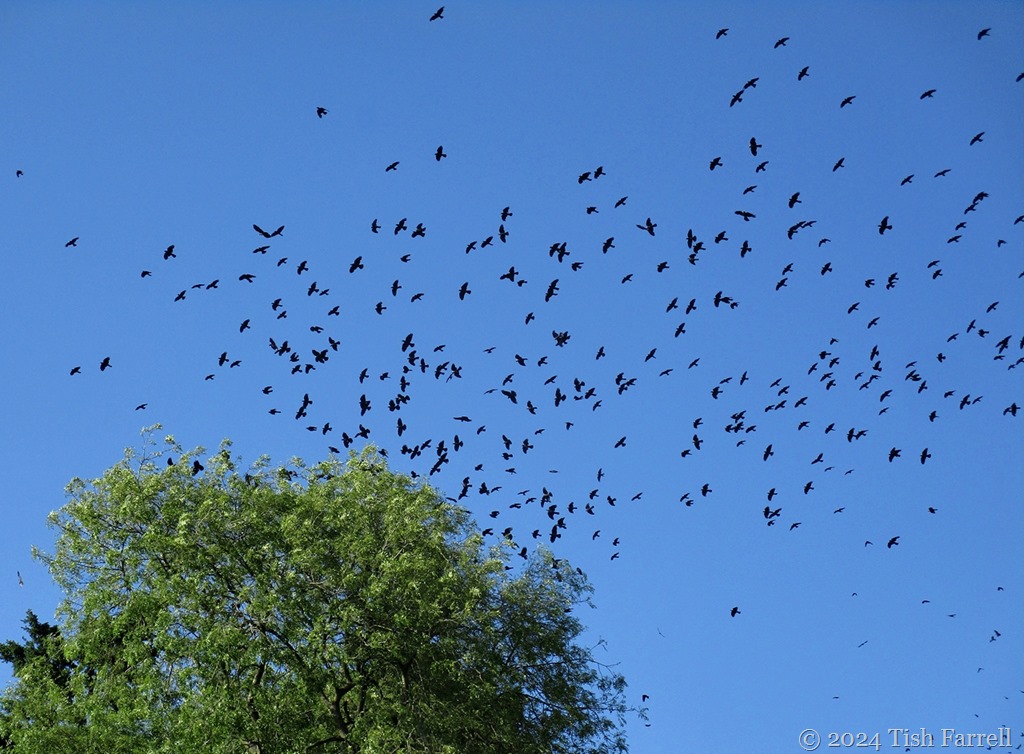
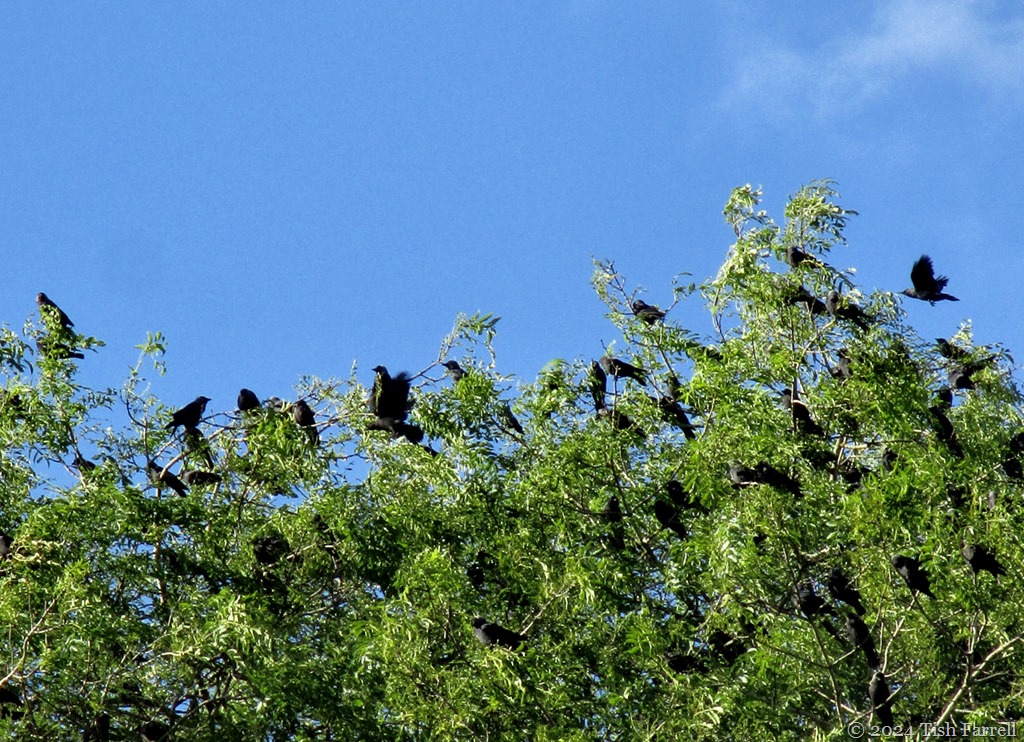
I’ve never lived in a place where there is so much bird busyness in our airspace. Recently, the hundreds of jackdaws that roost in the old ash trees of Bishops Castle’s gardens have started putting on dramatic aerial displays. It usually begins in the treetops with a burst of raucous chaka-chak-chaking and then a huge whoosh that disturbs the air, and all for no reason that this human can discern.

The flocks stream out from their roosts, billowing and swarming over the town. Then there is swirling, dividing, and swarming once more. Not quite the mesmerizing dance of starling murmurations, but almost.

And then, at last, when whatever needed to be sorted out, is, they return to settle once more in the treetops.

jackdaws 3

jackdaws 5

*

This particular tree is on the hillside above our house.

And then, in between the jackdaw shows, there are the red kites to spot – sometimes in pairs, sometimes singly. Again, they cruise above the town and we often have a good view of them while we’re eating lunch. This is one advantage of having our dining table in the sitting room while the new kitchen is being built. There’s a nice big window for sky viewing. And that view of course presently includes the swooping and diving of swifts, swallows and martins.

Meanwhile in the garden we have a regular mob of sparrows who treat the place as their own, dust bathing, trawling the hedges and borders for seeds, doing a spot of aphid grazing on the hollyhocks. There are also blackbird fledglings who appear as soon as I go out to the vegetable patch. They are so hungry they’ve given up being afraid of me, and flutter around my feet as I’m digging, piping loudly for grubs and worms.

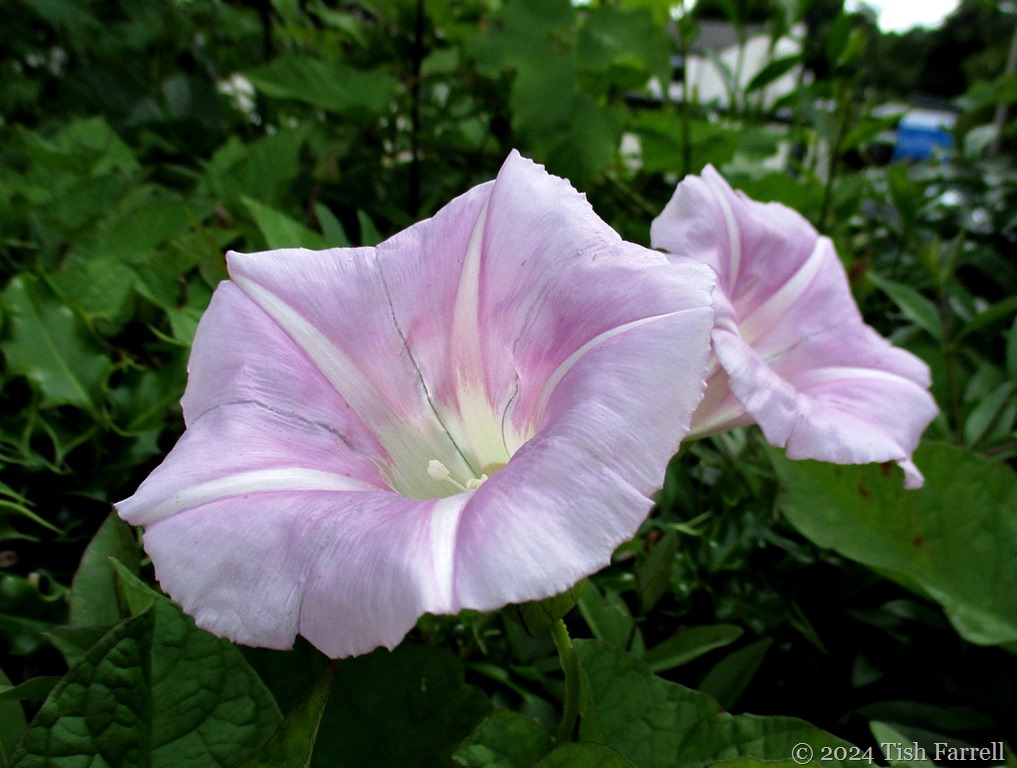
All of which is to say the local birds are presently providing a happy diversion from the mega-disruption in the Farrell roost. The building work goes on and on, but I think we’re over the biggest hump. More of which in the next post. For now a soothing view of a less common sort of bindweed – a perennial weed that in the large flowered version is usually plain white and mostly regarded by this gardener as a flipping nuisance.

IMG_5611

Here in Bishops Castle the hedges, including ours, have been colonised by this pretty pink and white  variety. In fact it’s the one asset in our hedge of horrors, and there’s a lesson here of course. Cue Monty Python’s Always look on the bright side of life and so never mind the hedge that thinks it’s a forest and can’t be tamed till August, or the house that’s full of building debris and occupied by two fuddled humans who no longer know where anything is.

jackdaws header 2

The Carrion Crow

100_7827

A large black bird that feeds on the carcasses of beasts

Dr Samuel Johnson


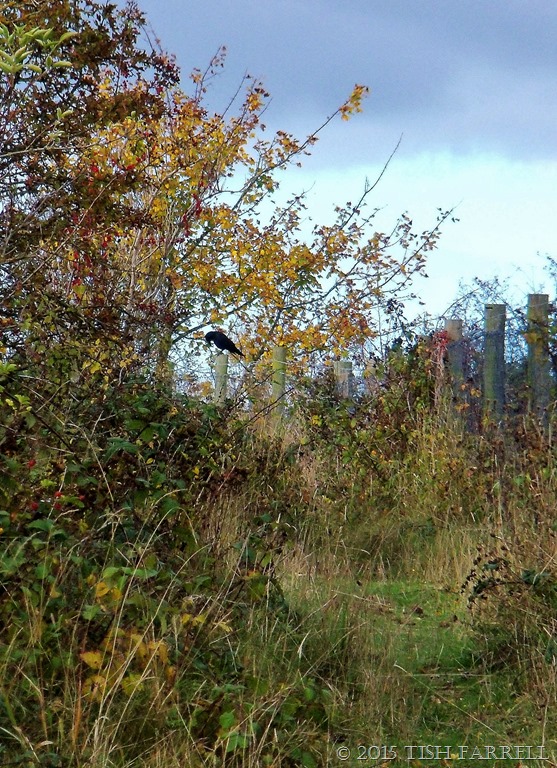
I didn’t think this shot would work. My little Kodak EasyShare was on maximum 5x zoom. But when I looked at the image on screen, I decided it was worth posting. It anyway illustrates an important fact about carrion crows. They are very hard to sneak up on, which is why I couldn’t get any closer and take a better shot.

The next second it was gone, flying off with its guttural ‘kraaar’ call.

Carrion crows are solitary birds unless, that is, they have a mate. This one does have a consort. The pair’s territory includes Windmill Hill, the Linden Field and Townsend Field behind our house; at least this is where I see them foraging together. They are usually a little way apart, rooting  through the grass. They are also notorious egg thieves and snatchers of poultry and pheasant poults, and so are much despised by country folk in general, and game keepers in particular.

When separated, the crows call one to the other. The single ‘kraaar’ that echoes through the trees, or across the fields. It is  a melancholy sound, but also a wake-up call. I find myself instantly responding, scanning the landscape, tuning in to its resonance. What’s going on out there?  Perhaps I have crows in my ancestry.

These birds are very clever. In nest-building season they perch in the tops of trees and watch where the other birds are building their nests.  They also, as their name and Dr Johnson suggests, eat dead animals. Well somebody has to clean up the environment.

You can tell them apart from rooks by their longer, sleeker profile. Rooks are altogether shaggier with a long, greyish bill and a face-patch. Rooks of course hang out in crowds, some of their rookeries being known to have several thousand nests.

But all in all, I like the crows best. They teach me to be watchful.

copyright 2015 Tish Farrell