Heritage
Our Council Chamber ~ Not Frozen In Time But Five Hundred Years Of Continuing Tradition
This is Much Wenlock’s Guildhall, standing in the heart of the town next to the parish church. It was built in 1540 after the dissolution of Wenlock Priory, so marking the end of monastic rule and the growth of secular, civic administration. The ground floor was originally a corn market, and several weekly markets are still held there. The upper floor has a court room, now a museum and gallery, and a council chamber, where our Town Council continues to meet every month.
Surprisingly Much Wenlock has a prestigious civic history for what today seems a small and sleepy town. It was first granted borough status by a Charter from Edward IV in 1468. This was to mark his acknowledgement of the “’laudable and acceptable services’ of his ‘liege men and residents of the town of Wenlock’ in his gaining of the crown.” Under the Charter the townspeople acquired a certain autonomy and could organise markets and fairs, and have their own officers – a Bailiff and Burgesses to oversee secular matters. The Prior still held sway though, effectively acting as lord of the manor. But after the Dissolution it was down to the Bailiff and Burgesses to run the town.
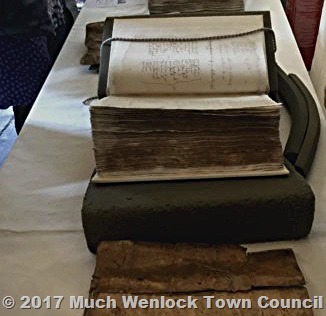
We will soon all know what these pillars of the community got up to – at least from 1495 to 1810. Extraordinarily, the Borough Minute Book covering 300 years of civic pronouncements and records has survived, and this year the Town Council raised funds to have it conserved and digitised. Now there are teams of volunteers working on the transcription of the entries. There are 800 pages, since the Burgesses who had the book made in 1495 were looking ahead. They were also using a newfangled material – paper. It was expensive stuff too, for during the conservation process it was discovered from the water marks that they had commissioned only the best from a maker in Italy.
The whole thing is quite breath-taking. Almost too much to imagine in our little town of two and half thousand souls; even when we were looking at the newly conserved Minute Book back in September when it was given its first public airing. Our very own half-millennium time machine of bureaucratic declarations and decisions. It will not be a pretty story either, not all of it anyway. There will be hangings, and the poor will be shoved from pillar to post, but within these pages we might also perceive the seeds of English democracy beginning to swell and take root.
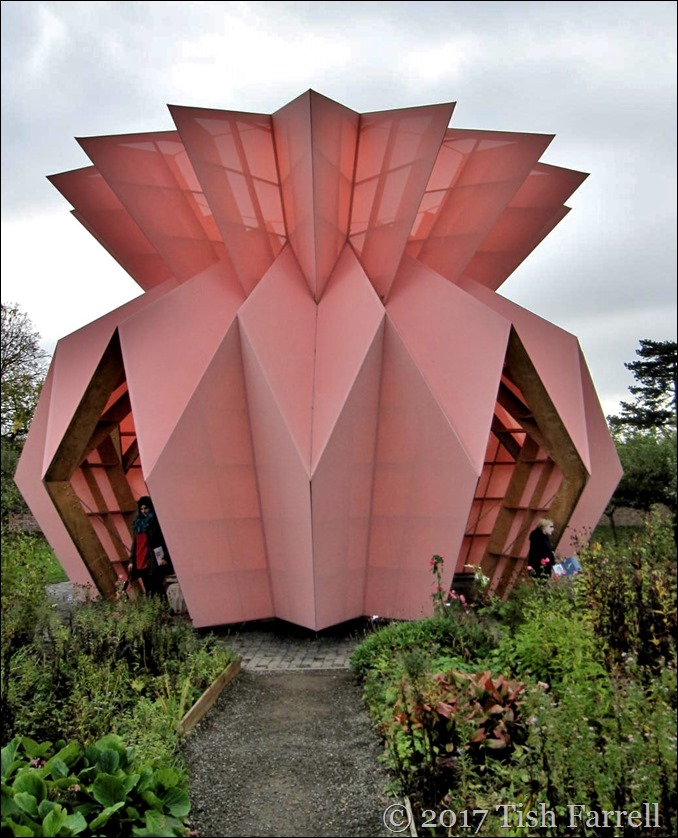
A Giant Pineapple In The Garden?
In the 18th century Britain’s landed rich expended their often questionably-gotten gains in the creation of pleasure parks around their grand houses. These were places for promenading, a little sporting activity (fishing, sailing, archery), for re-enactments of famous naval battles (if you had your own lake); there were ‘eye-catcher’ summer houses, grottos, fake ruins, and classical temples. It was also the era of wholesale removal of villages from the sight-lines of the gentry in the ‘big house’. Garden tunnels were also dug so the horticultural workforce could go about their labours largely unseen. Above all, these gardens were ‘show off’ places, and if you wanted the best, you employed the likes of Lancelot ‘Capability’ Brown to design it.
Another show-off item was exotic fruit, especially the pineapple whose possession, in the flesh or as architectural motifs about the house, demonstrated your wealth and prestige. Here at Berrington Hall in Herefordshire there are both pineapples and the surviving landscape contrivances of Capability Brown. The park is magnificent, and Brown’s last stand as a garden designer. The National Trust owners encourage visitors to explore all of it, the Brown vistas currently being celebrated in 21st century style by a series of sculptural works by environmental artists Red Earth.
The Trust is also busy restoring the hall’s extensive walled gardens, and this is where you will find the extraordinary Giant Pink Pineapple Pavilion. It is the work of installation artists Heather and Ivan Morison; their own interpretation of the Georgian garden pleasure principle which included all manner of temporary structures for dining, conducting assignations, or communing with the great outdoors. I think the Georgians would have been suitably impressed, don’t you?
copyright 2017 Tish Farrell
Six Word Saturday – with apologies, Debbie, for lots of extra words.
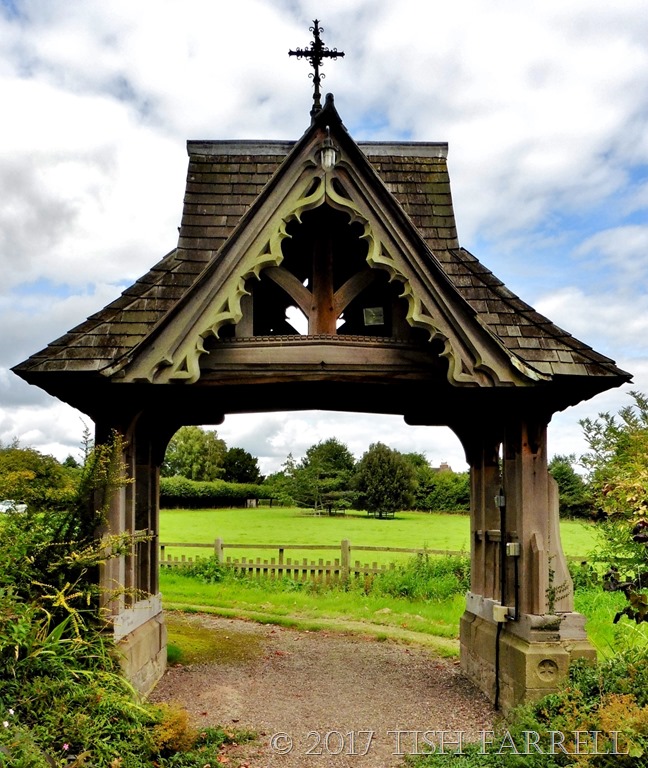
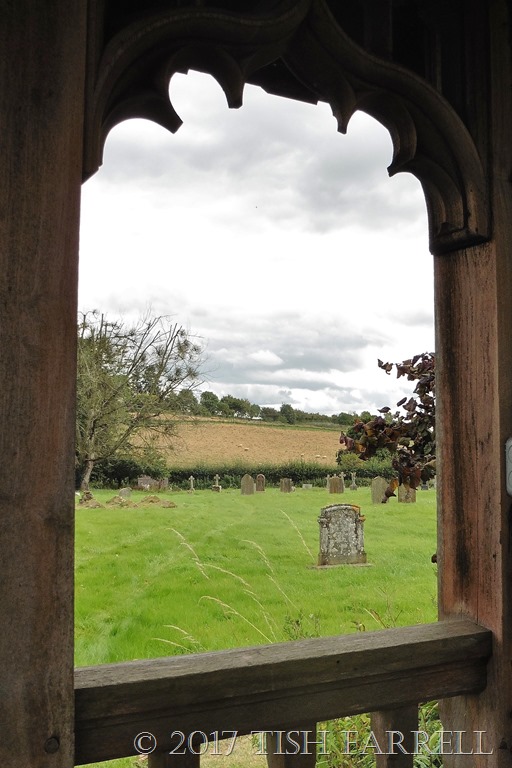
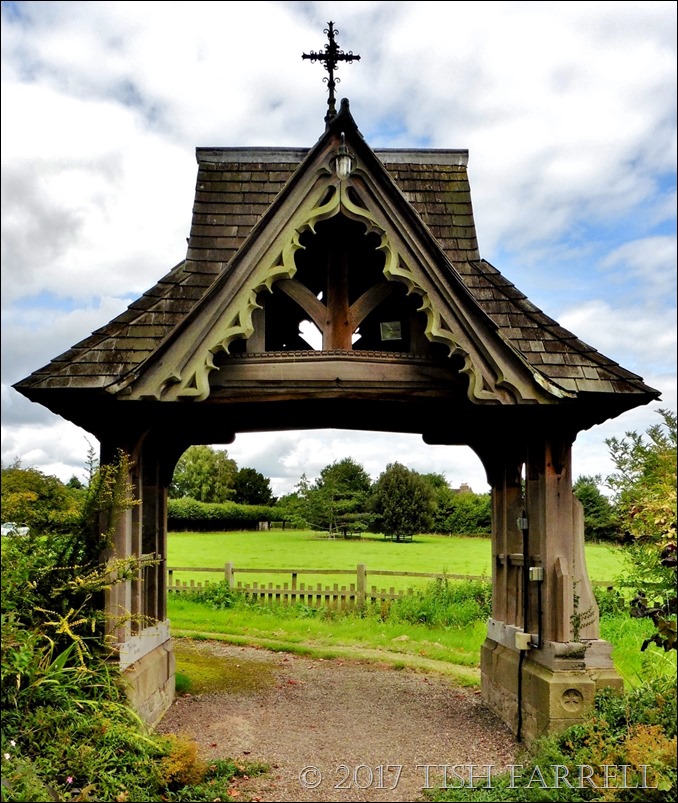
Views From the Morville Lych Gate
The lych gate is of course the corpse gate, the covered entrance wherein the dead might be laid until a funeral could take place in the parish church. In the past there was often a several day wait for this essential ceremony, during which time the deceased must be shielded from bad weather, robbers and worse.
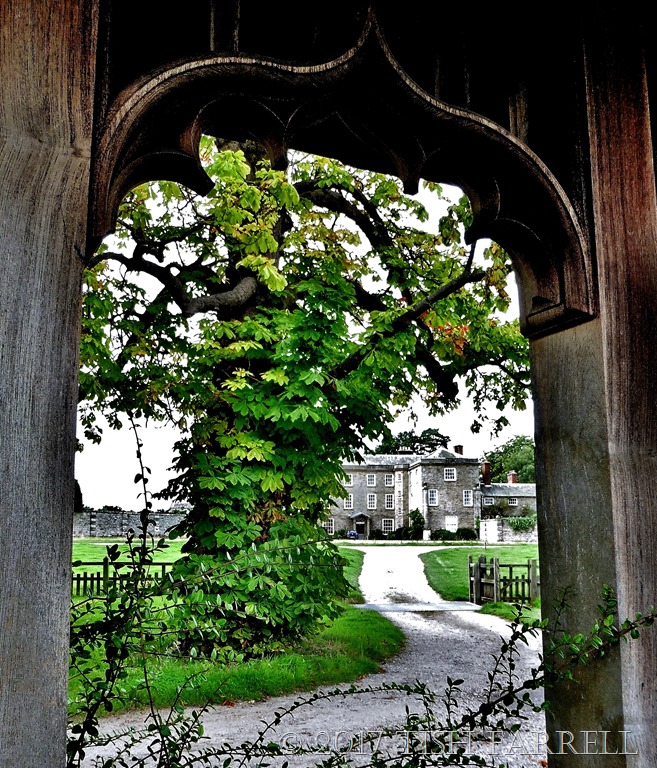
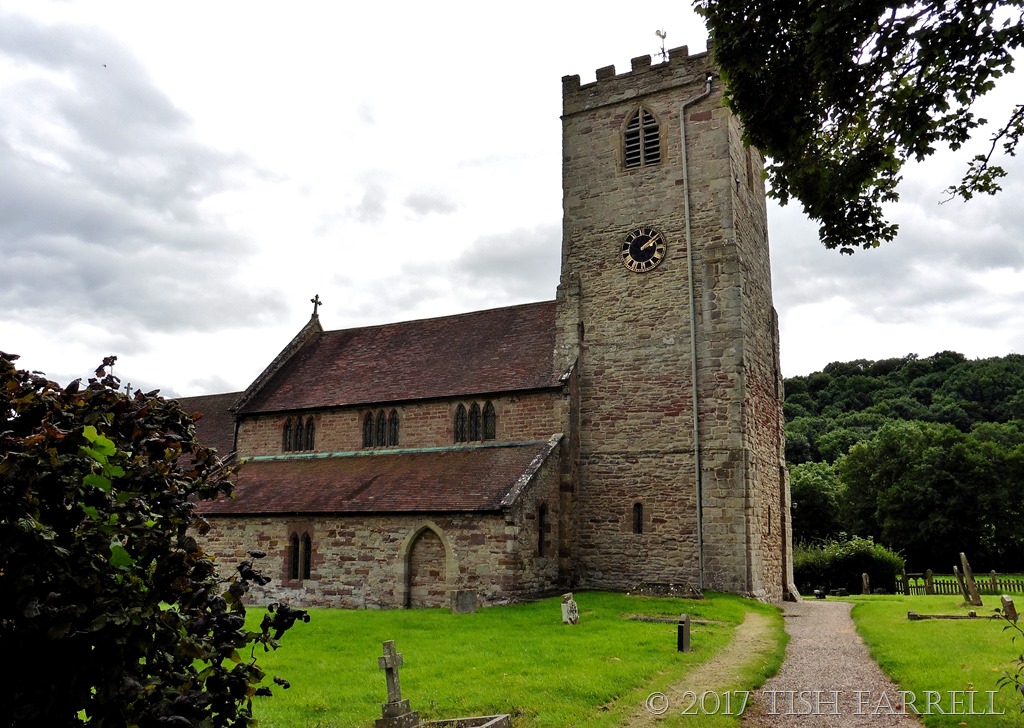
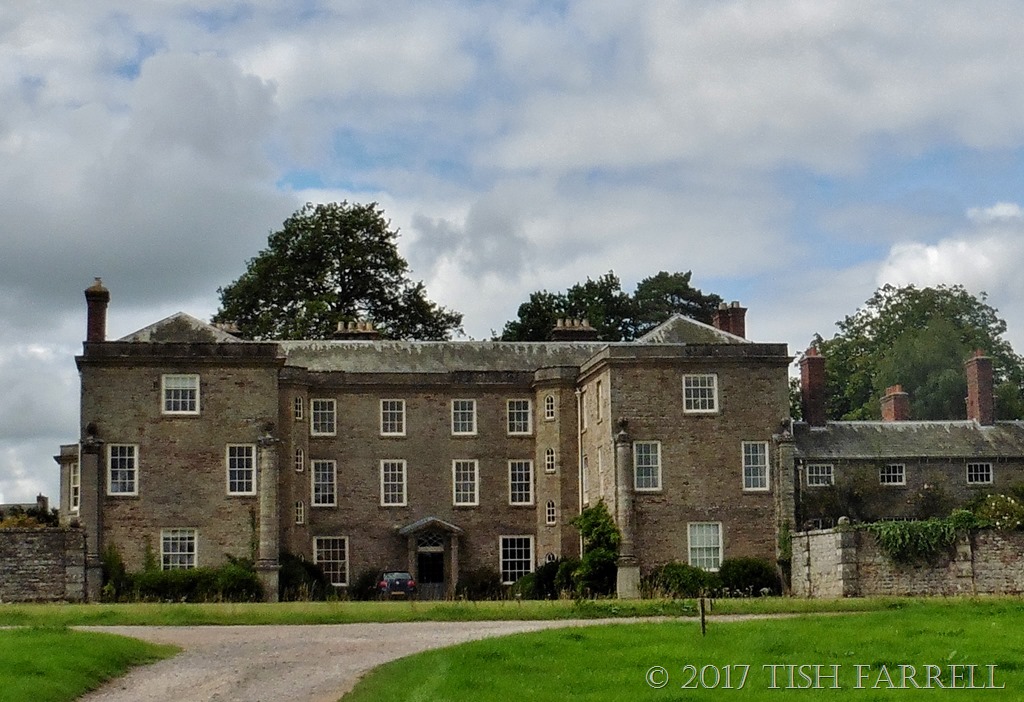
This particular lych gate stands on the path to Morville’s parish church of St. Gregory. Morville, itself, is a small hamlet on the main road between Much Wenlock and Bridgnorth, and like Wenlock has a monastic past, although the church is all that remains of this period. I suspect that the fabric of the actual monastery may well have been re-purposed in the building of the next-door Morville Hall, which began hot on the heels of Henry VIII’s Dissolution of the Monasteries in the 1540s.
In Saxon times the place was a thriving manor, and after the Norman invasion of 1066, continued to be so, its existing church and associated lands bandied about as pieces of valuable real estate in deals between kings, earls and churchmen, its native inhabitants bound by fetters of superstitious dread and the obligation to provide wealth and labour for their overlords.
The Norman earl Roger de Montgomery took over Morville (along with most of Shropshire) in 1086. Here he had built a Benedictine monastery, an outpost for his more prestigious Shrewsbury Abbey some twenty miles away. He also had Wenlock’s Saxon priory remodelled on a monumental scale, and ordered the building of numerous other religious houses in every adjacent small community across the county.
I do not think this extensive building programme had much to do with piety. This was first and foremost about stamping Norman authority over the land. It was also an overlord’s means to control people, the wealth they created, and by the ordering of good works from the wealth accrued, so ensure his own place in heaven. It was his insurance policy in an era when everyone lived with a mortal terror of hell and the devil. As Baldrick in Black Adder might say it was a very cunning plan – political, physical and psychic control all of a piece – a top-down wealth management strategy.
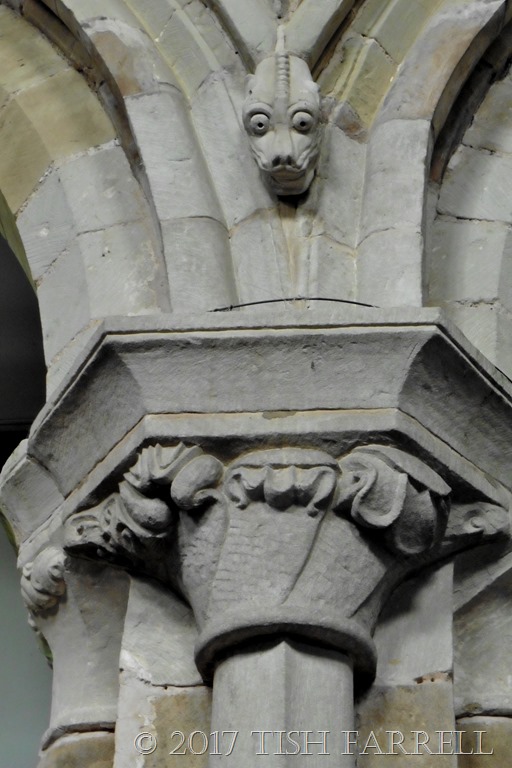
If you go inside the church you may see, as you will in many old churches, the evidence of the psychic tyranny. The present building dates from the 1100s. Between the column arches on both sides of the nave, serpents slither down – an early medieval manifestation of ‘fake news’ perhaps? Imagine having them breathing down your neck every Sunday from infancy to grave. There was no opting out of the experience. Your very soul was in peril should you try to, and anyway this and the other snakes are endlessly hissing at the horrendous cost of becoming an outcast.
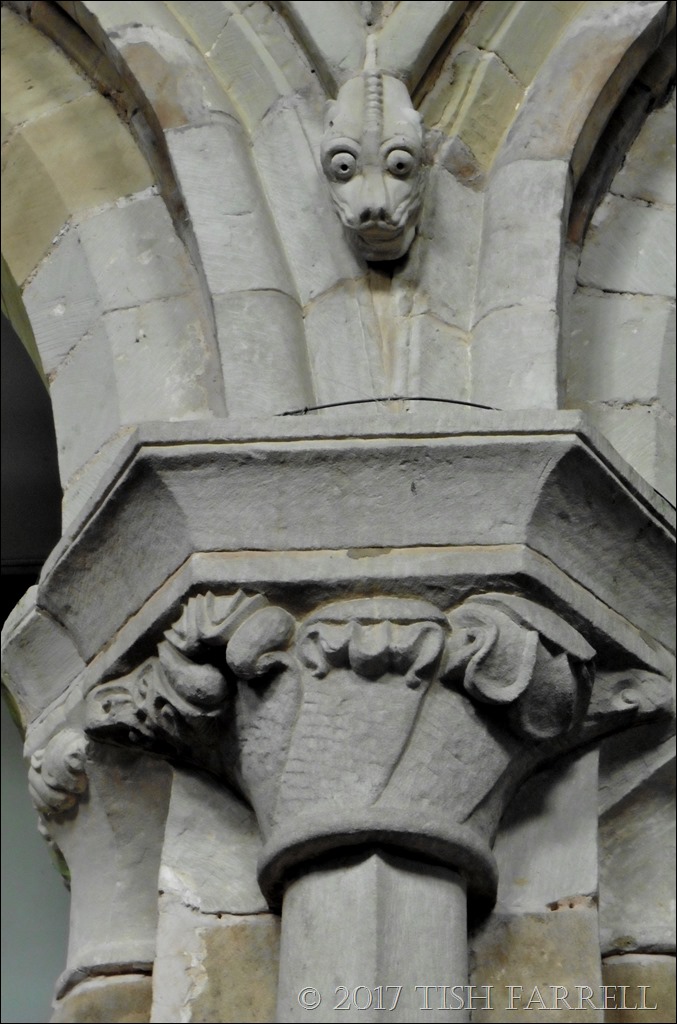
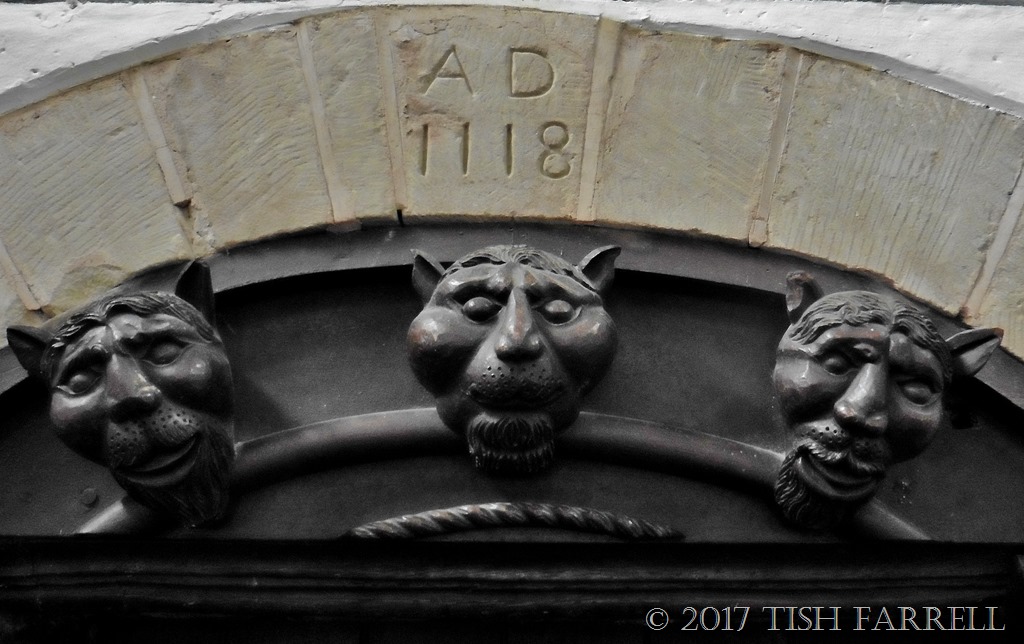
Even when the service is over – the mysteries of it conducted in a language you do not know, you are sent on your way by this jolly trio, just to reinforce the sense of threat for the rest of the week:
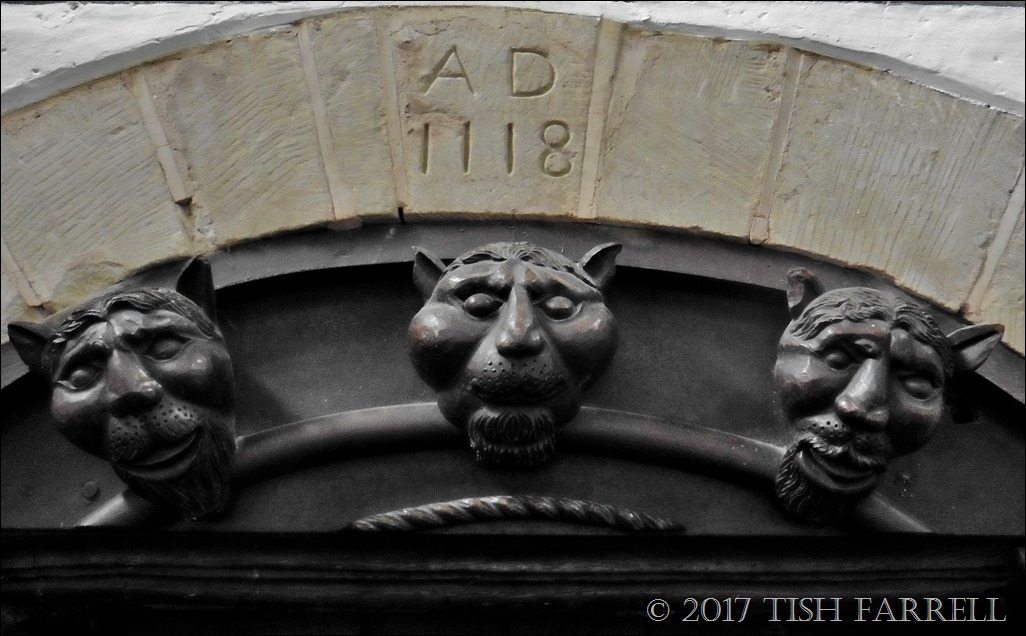
*
Today, the church in its country churchyard and the nearby hall are quintessentially scenic. My senses tell me that this is a lovely spot. But I confess, too, that increasingly I struggle with the rustically picturesque and the meaning I take from it.
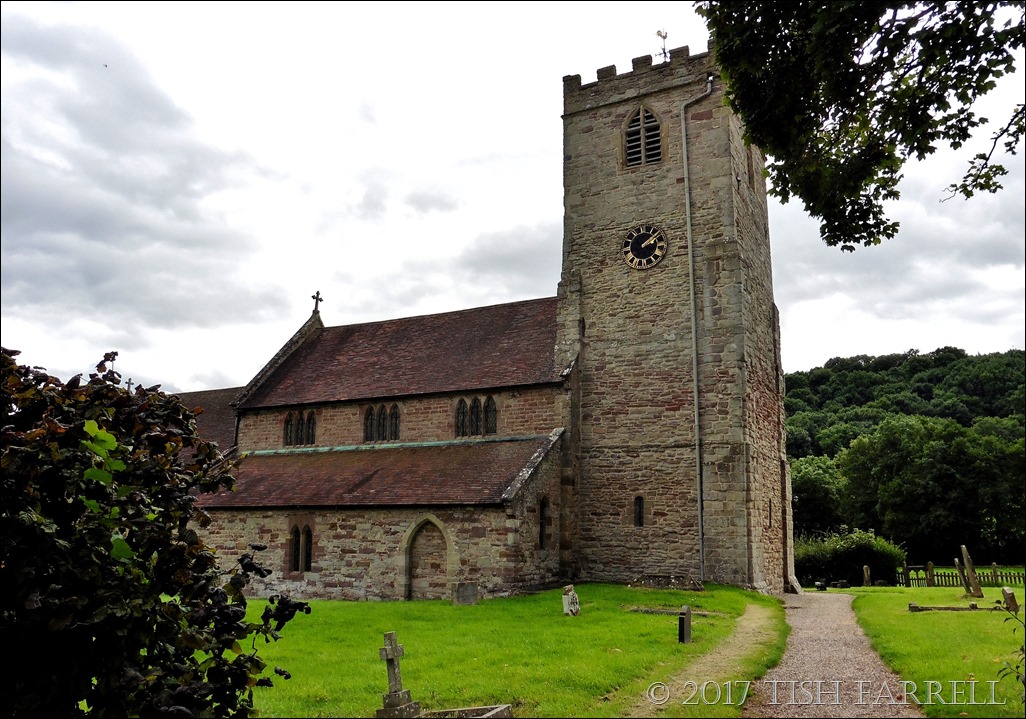
*
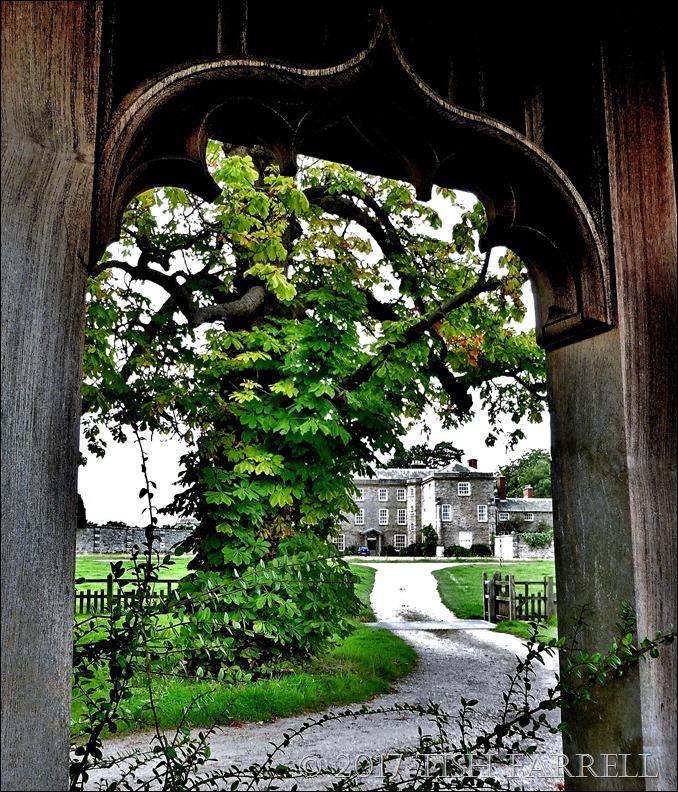
For one thing, I still detect traces of susceptibility. The view of the hall, though presently owned by the National Trust, is still likely to induce a fit of the Downton Abbeys…![]()
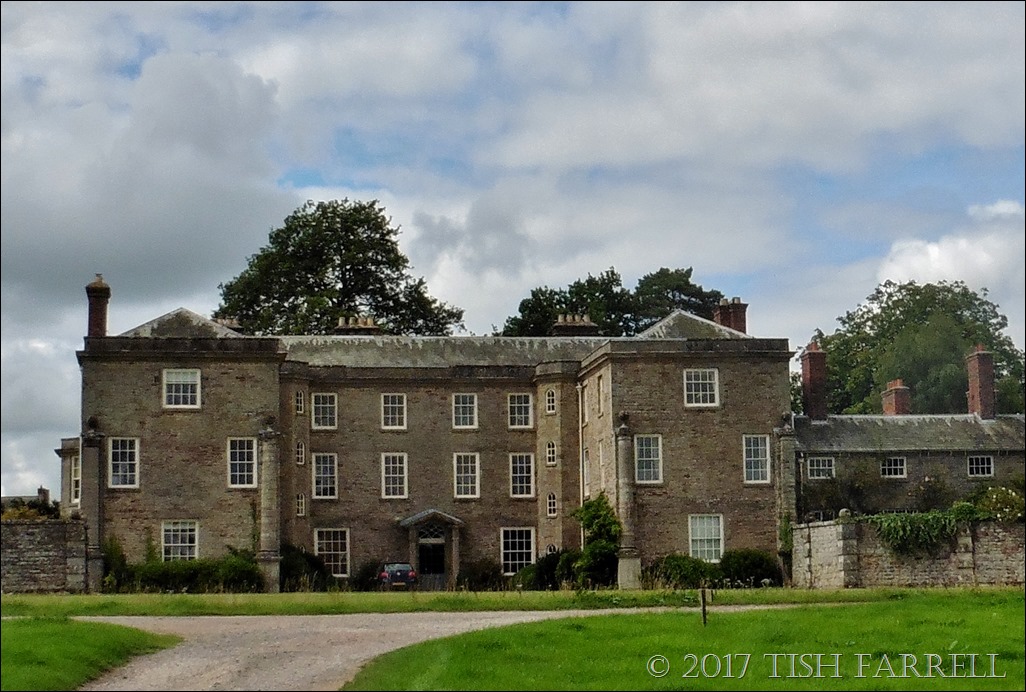
…that ultimately distasteful sense of nostalgia for a fake past of benign lords and grateful retainers. We may have Henry VIII to thank for loosening a little the stranglehold of the ruling elite, and broadening the class of major players to include merchants and professional men, but nearly five hundred years on, most of the country is still owned by small and powerful factions including the monarchy.
The fascinating thing is most of us don’t seem to notice, or realize how the way land continues to be controlled affects our lives in critically fundamental ways – the cost of a home – to buy or to rent – and the acceptance of ever-rising property ‘values’, the acceptance of mortgages for life. It is not for nothing that these holdings are referred to as ‘land banks’, or that any release of land for development is minutely managed to ensure maximum return from high priced, often poorly built, overcrowded properties.
We no longer have to plough milord’s fields, or give him our tithes in wheat and eggs, or bow to his whims, and tug forelocks, but the vestiges of feudalism are alive and well and residing in Britain, and more particularly, idling in its well-worn seats in the House of Lords, currently the focus of ‘a bit of a scandal’ as reported by the Electoral Reform Society. Of course we could do something about all this – if we really wanted to – if we stopped romancing about the past and started planning for a present that embraces everyone’s needs. It’s an interesting thought anyway.
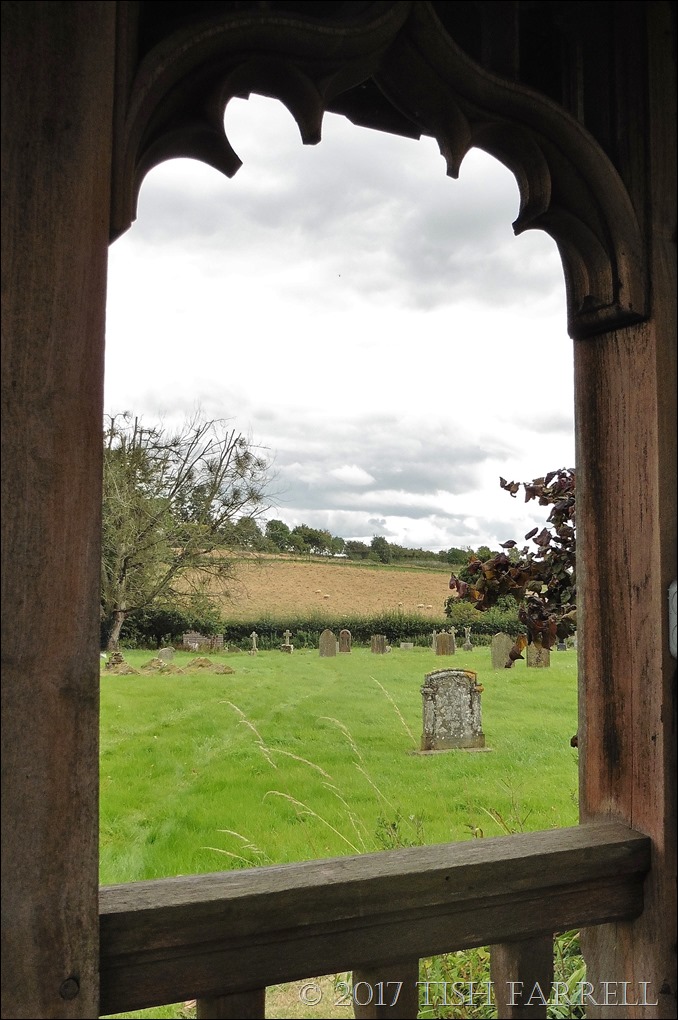
Thursday’s Special: Traces of the Past
copyright 2017 Tish Farrell

Our Very Own Treasure ~ Wenlock Books
Aren’t we lucky to still have our own independent bookshop when across Britain such places are sadly becoming a thing of the past. So here it is, Wenlock Books, a landmark on the High Street, and housed in a wonderfully restored 14th century building. Its owner, Anna Dreda, is passionate about book selling, and has nurtured it and us for over twenty years, creating a haven for book lovers of all ages, from infants upwards. Downstairs the shelves are brimming with crisply published new books, while upstairs you can sit in cosy corners surrounded by ancient timbers and read the pre-owned and antiquarian books. Or if you are nosy like me, you can look out of the window on to the street below and surreptitiously see what Wenlock’s citizens are getting up to.
Also when you pop into Wenlock Books for a good browse, don’t be surprised if you are offered a cup of tea, or invited to join one of the reading groups that meet around the big upstairs table. The most recent book on the go in the Slow Reading Group has been George Eliot’s Middlemarch wherein those taking part, week by week discuss a single chapter over coffee and biscuits. The next slow read starts in September with Graham Greene’s The Power and the Glory. That month too there will be the Children’s Book Launch, starting with local writer, Sarah Griffiths, who will be reading her book Douglas’s Trousers to 2-8 year olds.
It will not surprise you, then, to learn that the bookshop has won national awards. Anna was also the founding force behind the hugely successful Wenlock Poetry Festival which over several years has hosted poets of international standing, and has Britain’s former Poet Laureate, Carol Ann Duffy as its patron. (You can what poetry lovers get up to in the town HERE.)
This year the festival has taken a break. Anna also has been very unwell, but I’m glad to say, she tells us that she is feeling very much better.
So all best wishes, Anna, for your continuing good recovery.
In the meantime, if you go to the Wenlock Books link, you can meet Anna in a splendid 3 minute video. You can also have a snoop inside the bookshop and see just why it and its owner are so very much loved and appreciated by all of us.
Window On The Past ~ Looking In, Looking Out At Much Wenlock Priory
Our small town of Much Wenlock has been continuously inhabited for a thousand years. It grew up around the Priory and, until the Dissolution in 1540, its citizens’ lives were ruled by the Prior who held his own court. Of course many worked for the Priory directly, while others were farm tenants, the Prior being the preeminent landowner in the area, so fulfilling the role of Lord of the Manor.
In exchange for their tenancies of up to 20 acres, the farmers were expected to do work for the Prior. Sometimes his demands were greatly resented. So much so that in 1163 Wenlock’s peasant farmers rose up, making suit to the King to remove the overbearing prelate. It is recorded that they ‘threw down their ploughshares.’ In return, the Prior excommunicated them, the worst punishment imaginable short of execution. But still the farmers did not back down. They besieged the church and fought off the knights who had been despatched to restore order. The Prior was forced to hold an enquiry, and abide by the decision of a committee whose members were chosen by the farmers themselves – four knights and six monks whose judgement they must have trusted. And so justice was done – people power medieval style.
For more about Wenlock Priory see an earlier post HERE
And at Thursday’s Special the theme this week is WINDOWS.
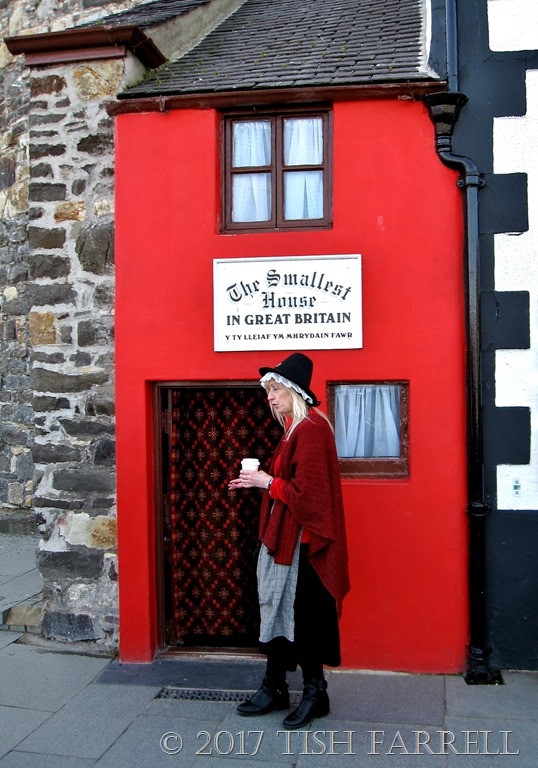
“The Smallest House In Great Britain”?
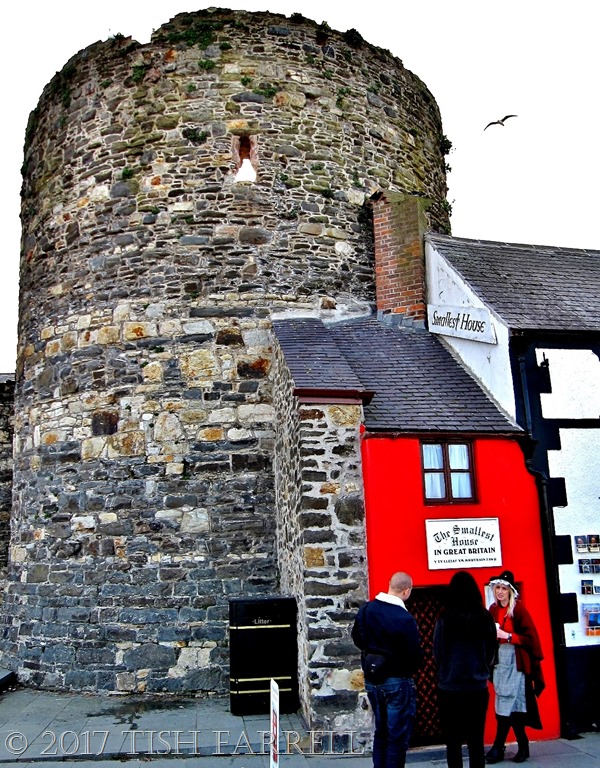
Doubtless there are poor souls, objects of London landlord avarice, who are currently forced to live in smaller premises, but for many a year Quay House in the Welsh castle town of Conwy has claimed the title of Great Britain’s smallest house.
Local tales say it was built in the 16th century, but the official heritage listing says it was built as a fisherman’s cottage around the late 18th century or early 1800s. It nestles in a crevice beside Conwy’s Castle’s outer walls (they were built 1283-89 by Edward I). One room up, one room down, the vital statistics are 3 metres ( 10 feet) high, 2.5 metres (8 feet) deep, and 1.8 metres (5 feet 9 inches) wide. The last occupant was one Robert Jones – a fisherman, and since he was 6 feet 3” tall (190 cm), he was unable to stand upright in either of his two rooms. He lived there until 1900 when the council condemned the place as unfit for habitation.
The little house, though, is still owned by Robert Jones’ descendants, the property inherited down the female line, and the present owner continuing to run it as a tourist attraction. Inside, on the ground floor there is only room for an open range and a bench with storage space along one wall. A ladder provides access to the upstairs single bed and tiny fireplace. The guide wears what passes for the traditional dress of Welsh womenfolk sans styrofoam accessory.
You can read more about the sights of Conwy and surrounding area here.
Wandering Around Cotehele House In The Rain ~ Traces Of The Past
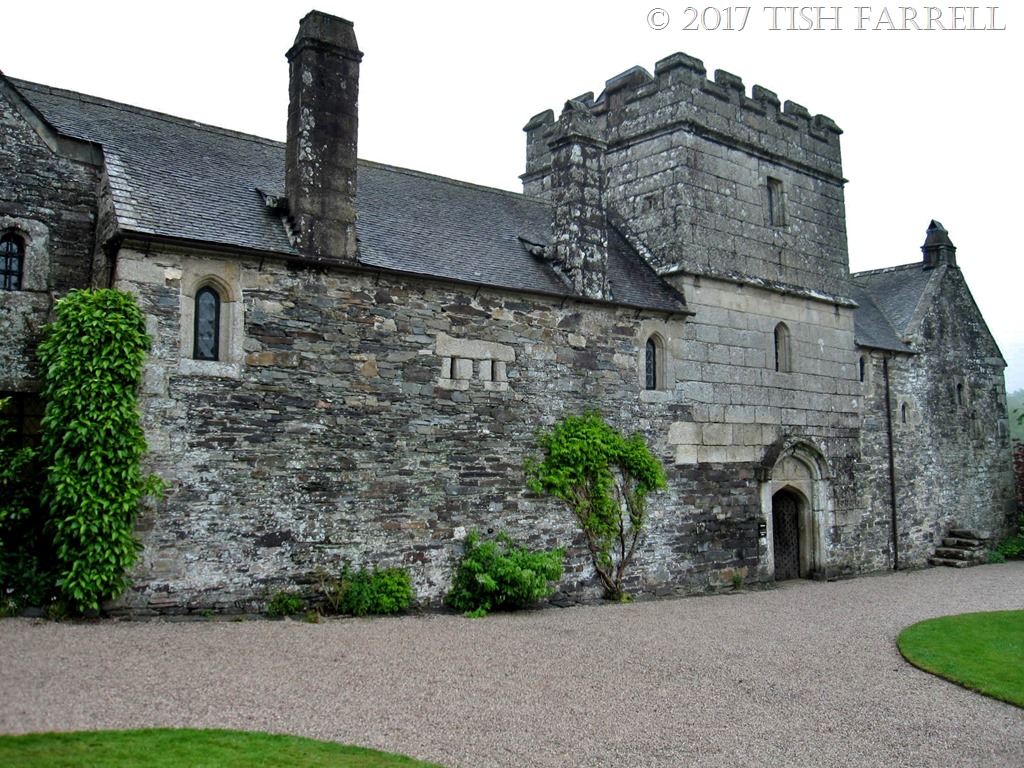
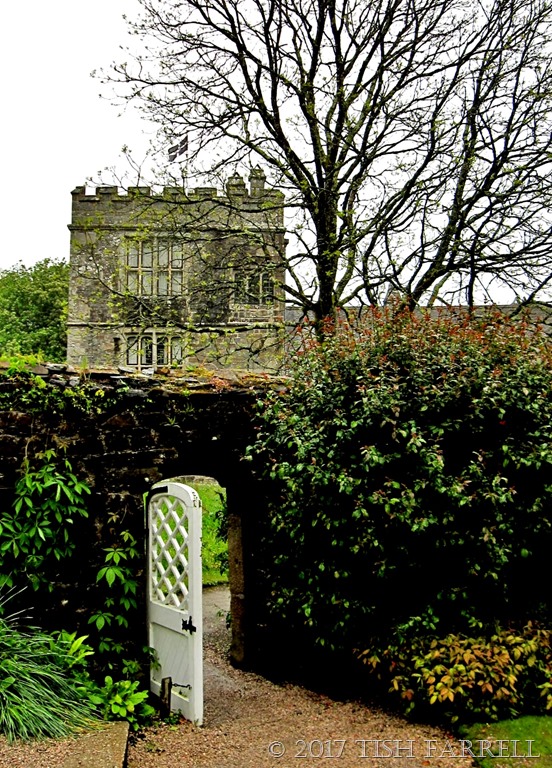
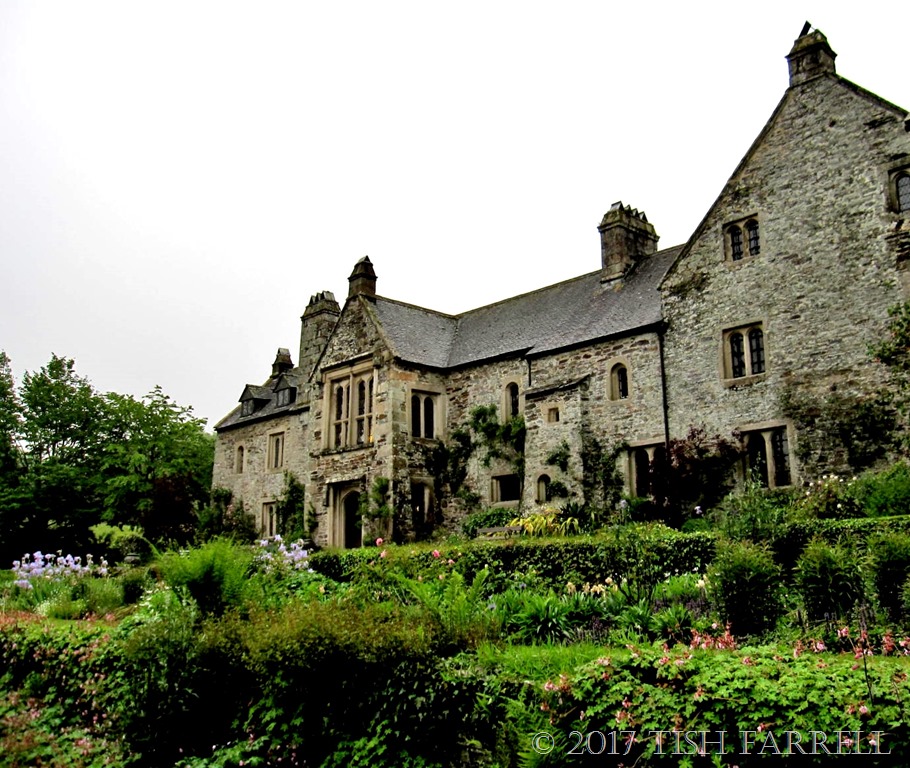
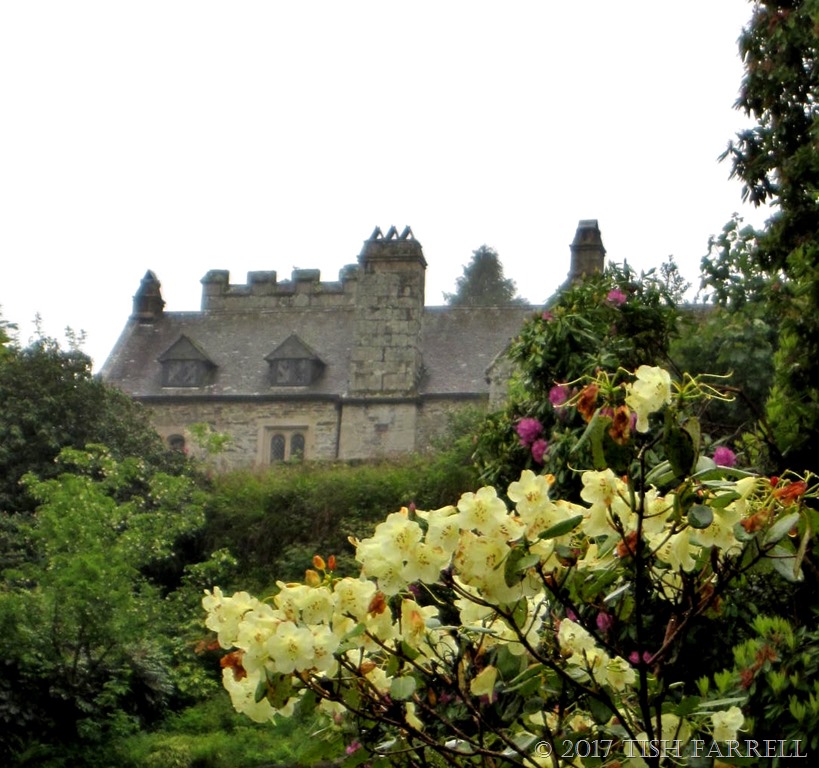
Cotehele House in the Tamar Valley in Cornwall began life around 1300 when it was owned by a family of the same name. Fifty years on, a marriage delivered it into the Edgcumbe family who owned it for the next (almost) 600 years. These new owners remodelled the house in the 15th, 16th, and 19th centuries, as well as building themselves another (their principal) house further down the Tamar River at Mount Edgecumbe.
In 1947 the 6th Earl gave the house to the nation in lieu of death duties, and it is now owned by the National Trust, one of their more atmospheric properties. It was particularly atmospheric on the rainy May day when we were last there, and also on the rainy December day when we went there to see the famous Christmas garland.
15th century Gatehouse
*
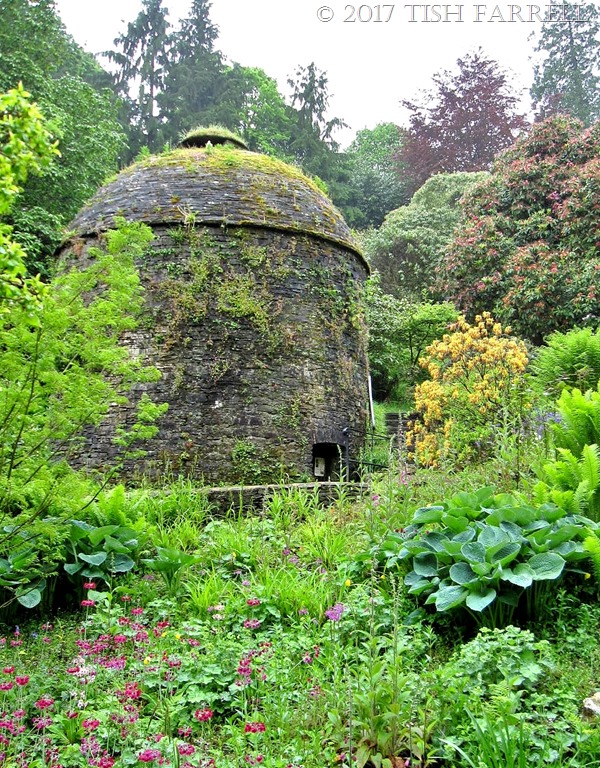
The house has extensive grounds. In the 16th century there were two parks and orchards. The 1730s estate map also shows a bowling green, and the dovecote of the first photo. This dates from around the end of 16th century. The lantern top provided access for the birds, which were of course cropped for meat.
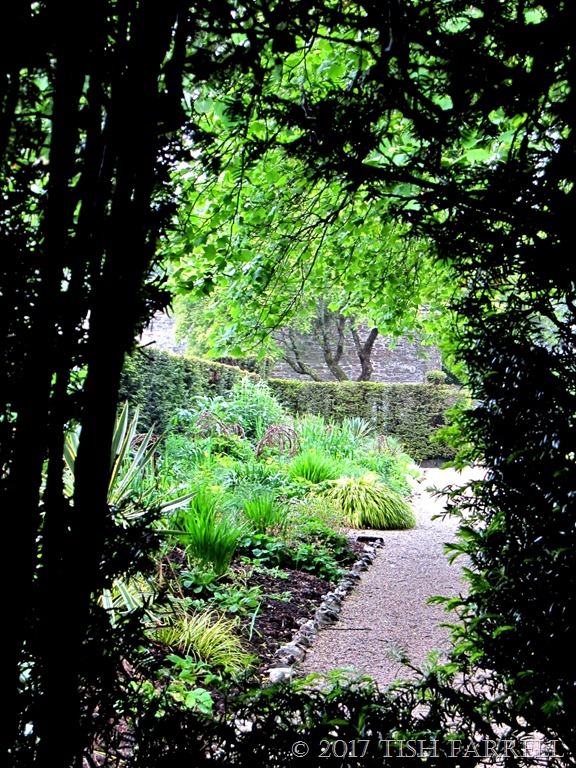
The gardens we see to today were most shaped in the late 19th and early 20th centuries and extend to around 6 acres: lovely even on a wet, and gloomy Cornish day.
Traces Of The Past ~ Monuments To Cornwall’s Tin Miners
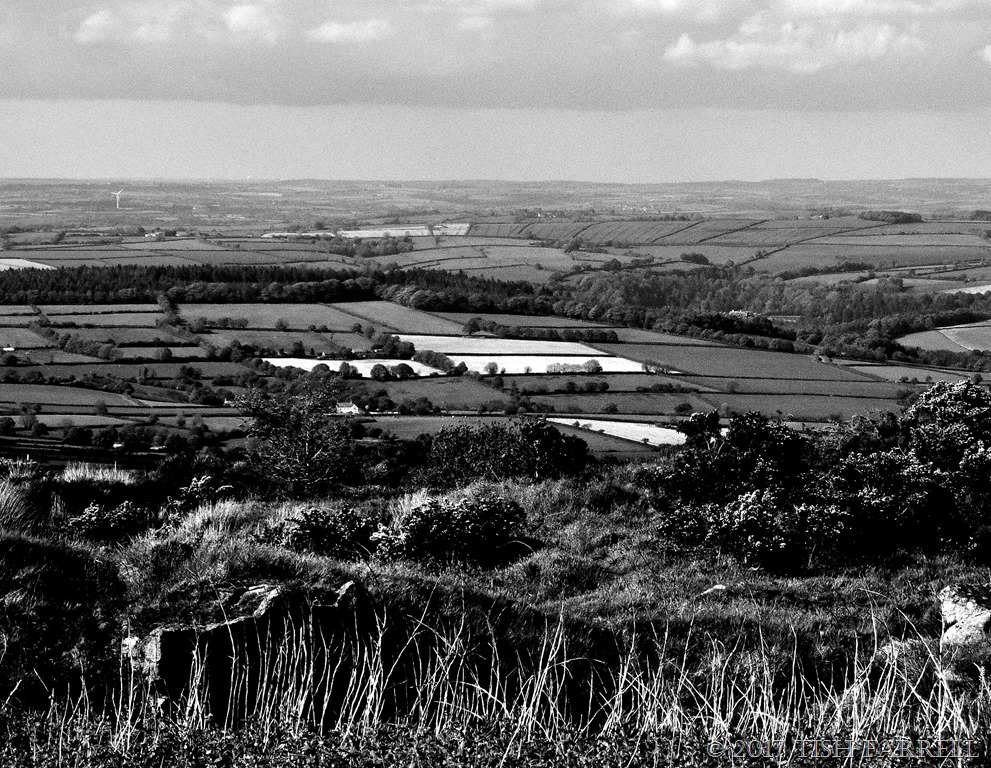
My very good chum Lesley, took me to Kit Hill for a sun-downer walk back in May. It is an amazing spot, the highest point in Cornwall’s Tamar Valley. From the summit you can see for miles and miles – south across Cornwall, north to Bodmin Moor and Dartmoor.
The hill itself is an outcrop of the Cornubian batholith, a mass of granite rock formed 280 million years ago, and covering much of the Cornwall-Devon peninsula. The granite is formed from crystalized and solidified magma that has boiled up from deep within the earth’s crust. The resulting rock is mineral rich: principally the tin ore cassiterite, but also copper, lead, zinc and tungsten.
There are signs of mining dating back to medieval times, although this involved only surface quarrying of weathered out tin stones, or ‘shodes’. It was not until the eighteenth century that men were working in deep-shaft mines, drained by adits (horizontal shafts driven into the hillside.) However you look at it, tin mining was a tough way to make a living.
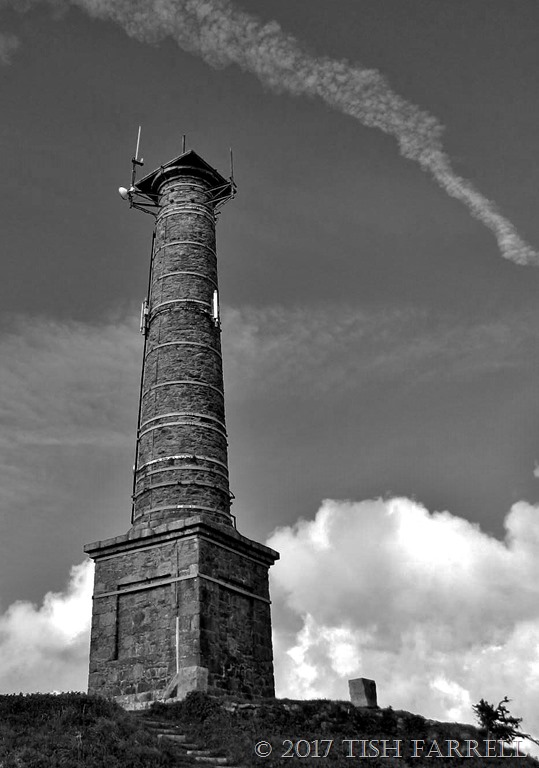
The ornate chimney in the first photo dates from 1858. Now it is used to house various masts. Back then, and until 1885, it was part of the pumping arrangements for several mining concerns on the hill. Further down is the the chimney of the South Kit Hill Mine (Bal Soth Bre Skowl in Cornish), and the town of Callington below it.
The shaft of this mine reaches a depth of over 90 metres (300 feet). The chimney served the steam engine house which operated machinery to crush and sort the ore. The mine was worked between 1856 and 1882, but foundered as the quality of accessible tin declined and the business became mired in legal actions for fraud.
Now these chimneys serve only as mysterious and dramatic landmarks within a 400-acre countryside park. It is a wilderness place rich in wildlife: deer, badgers, skylarks, buzzards, stonechats and sparrow hawks. There are signs of ancient humankind too – a 5,000 year old Neolithic long barrow, and some 18 burial mounds, dating from the Bronze Age, including one beneath that ornate chimney stack.
When Lesley and I were there we were treated to some marvellous views of a cuckoo – a bird more usually heard than seen, it having well known tendencies to sneakiness and stealth. There was also a rapid fly-past by two small raptors – too swift for identification but probably sparrow hawks since this is their well-known milieu. Stone chats and pipits bobbed about in the gorse, and around us the land stretched out as far as the eye could see, its fields and boundaries, in their own way, a document of human activity and endeavour over many centuries. And a very special place. Thank you, Lesley.
copyright 2017 Tish Farrell
Through A Glass Darkly ~ Looking Out With Henry James’ Eyes?
Faithful followers of this blog will know that my home town of Much Wenlock was host to writer Henry James on three occasions. He came as guest of local worthies, the Milnes Gaskells who owned both the Prior’s House (which they called The Abbey) and Wenlock Priory ruins.
Adjoining the house is a beautiful ruin, part of the walls and windows and bases of the piers of the magnificent church administered by the predecessor of your host, the abbot. These relics are very desultory, but they are still abundant and testify to the great scale and the stately beauty of the abbey. You may lie upon the grass at the base of an ivied fragment and measure the great girth of the great stumps of the central columns, half smothered in soft creepers, and think how strange it is in that in this quiet hollow, in the midst of lonely hills, so exquisite and so elaborate a work of art should have arisen.
Henry James Portraits of Places
I imagine the Priory remains were more romantically ruinous in James’s time, lacking the custodial tidiness of English Heritage, whose property it now is. Those lofty Corsican pines in the background would have been saplings back in his day. All the same, at least once during his visits, the writer must have stood where I was standing when I took this photo – gazing through the old glass panes of The Abbey’s Great Hall, where, in the 1500s, the Prior of Wenlock did his most lavish entertaining.
Local legend has it that James was working on his novella The Turn of the Screw during one of his visits. We know from his accounts in Portraits of Places that he was struck by the antiquity of the place, and much interested in its ghost and tales of haunting that drove the household staff to spend the night in their homes. and not under The Abbey roof.
There’s more about Henry James and Wenlock in my earlier post When Henry James Came To Wenlock
By now you may be wondering how come I’m looking out of the Prior’s window. The Abbey is still privately owned, now the home of artist Louis de Wet. Last summer we were treated to a private tour by Gabriella de Wet : Going Behind The Scenes in Wenlock Abbey. There are more of Henry James’ descriptions in that post.
And now please head over to Lost in Translation where this week’s theme is windows. As you can see, my interpretation is somewhat oblique. Paula, though, presents us with some very unusual windows.
The Abbey, Much Wenlock, once the Prior’s Lodging. It boasts a host of windows: