
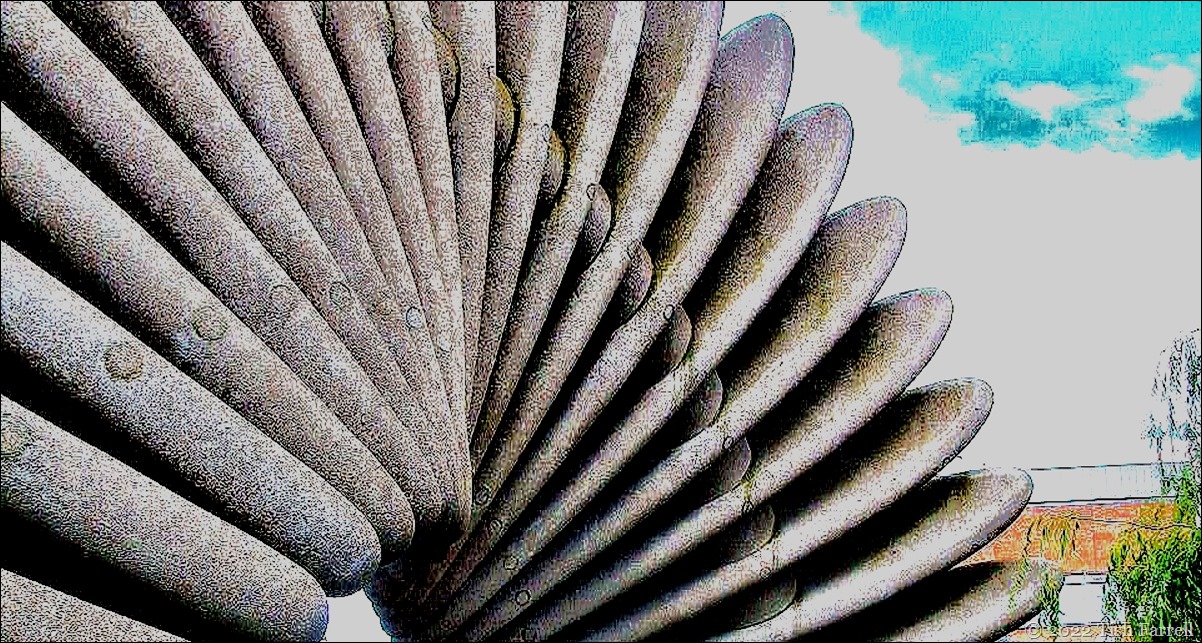
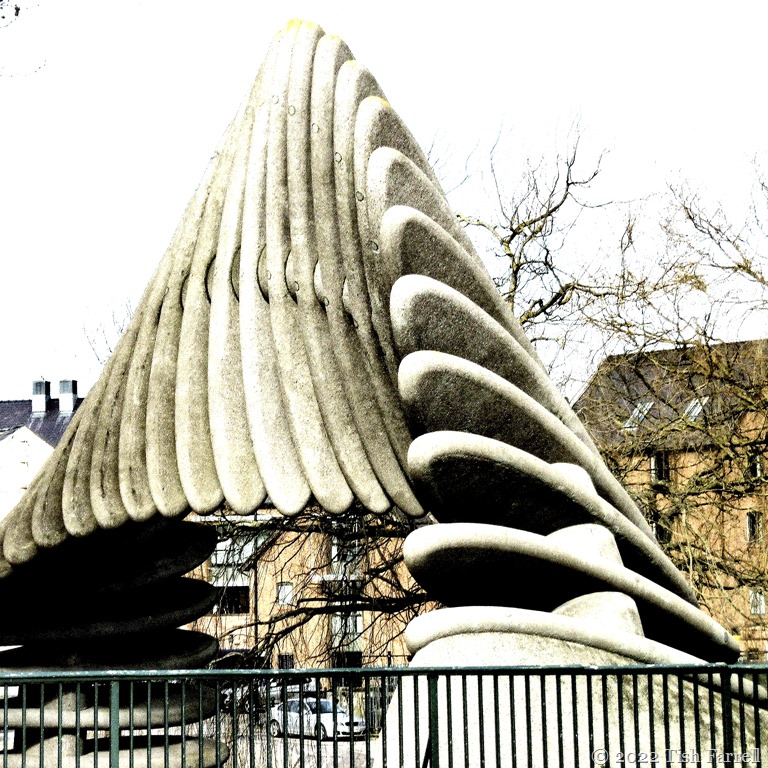
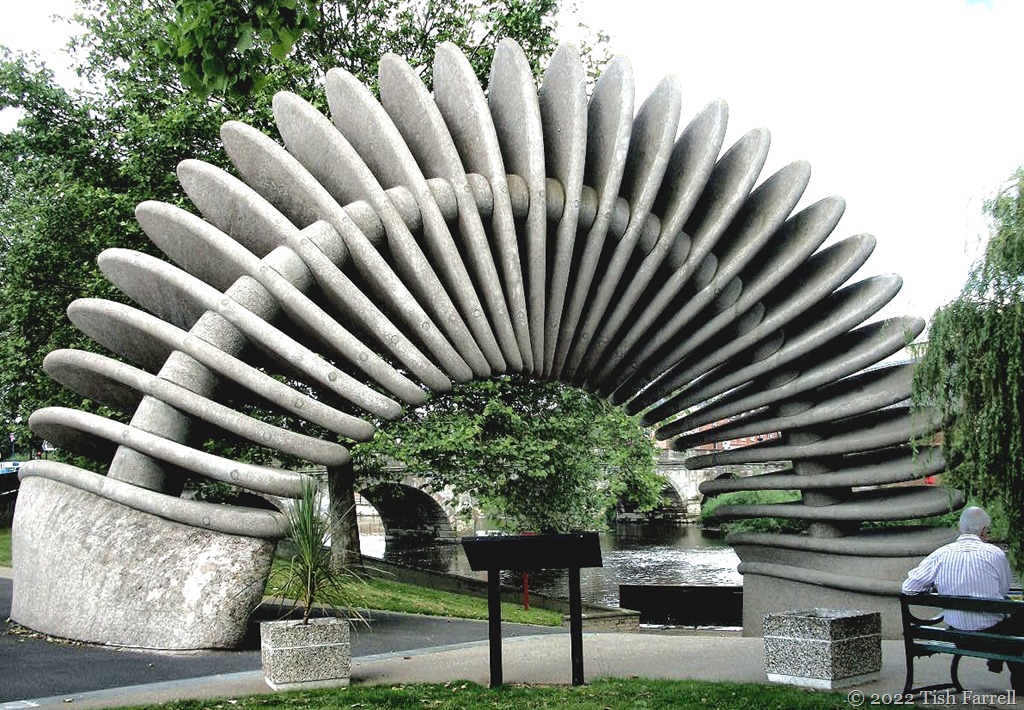
Some of you may have seen this sculpture here before, known variously as the Shrewsbury Slinky, or by its actual title The Quantum Leap. It sits between the River Severn and a busy traffic system, sited on a narrow slice of public space, not large enough to be called a park.
The architectural designers, Pearce and Lal, describe it as a piece of geo-tectonic sculpture, inspired through “the influence of objects and materials central to the development of Darwin’s thought: rock, fossils, zoology…” It was commissioned by the Shrewsbury and Atcham Borough Council to commemorate the 2009 bicentenary of Charles Darwin’s birth.
And the reason it’s here?
Charles Darwin was born and brought up in Shrewsbury. His father, Robert Darwin was a wealthy doctor and financier, son of physician and free-thinker Erasmus Darwin. His mother Susannah was the daughter of famous potter, Josiah Wedgwood. A family, then, much used to serious thinking, unafraid to challenge established boundaries and in many domains.
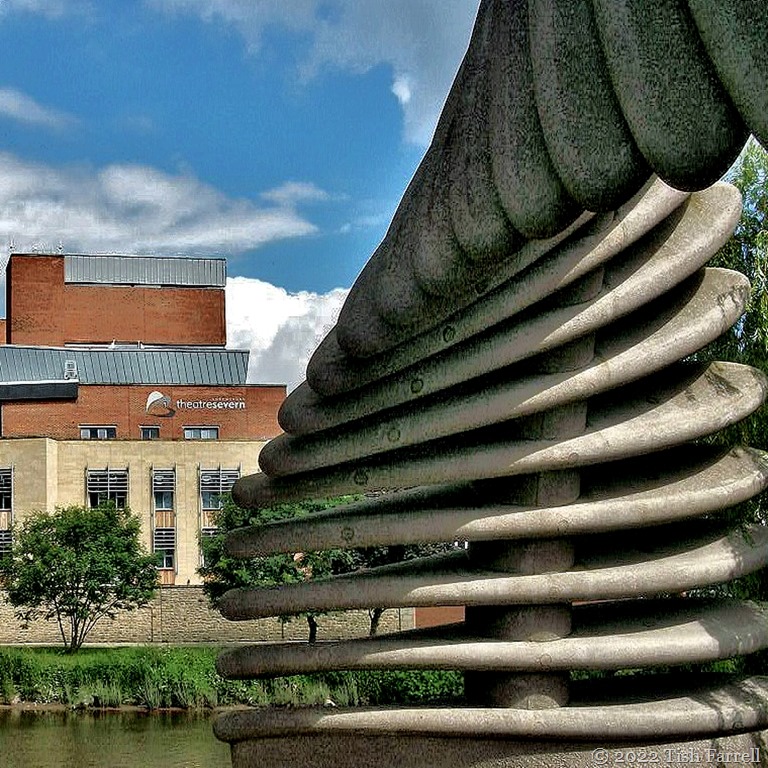
Charles lived at The Mount, a grand house built by his parents, across the Welsh Bridge (glimpsed in the photo above), and so not far from Quantum Leap. He spent his early years exploring the 7-acre family garden, as well as discovering plant and animal life in the countryside all around. He would later claim that he could not help but be a naturalist.
After attending the local Unitarian School, he transferred as a boarder to the prestigious Shrewsbury School (founded in 1552 by Edward VI), which in Charles’ day occupied the building that is now the town’s main library. Outside the entrance is the late Victorian tribute to the man who would go on to write On the Origin of Species, the astonishing (horrifying to some) work that addressed and consolidated his years of careful observations and research.
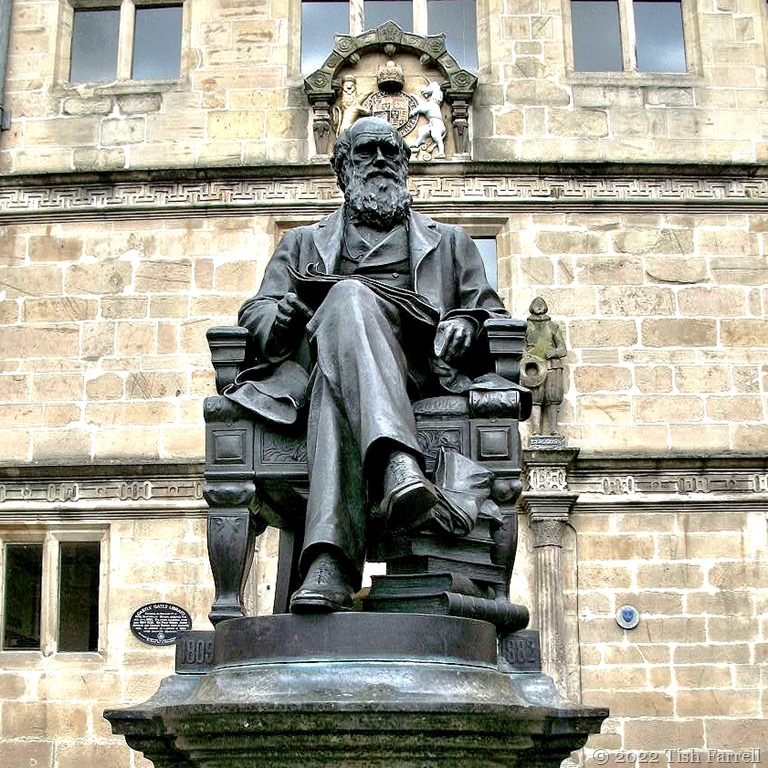
At sixteen, Charles left Shrewsbury to follow his older brother, Erasmus, to Edinburgh Medical School, where he lingered for two years, largely disinterested in studying medicine. An angry father then sent him to Christ’s College, Cambridge where he was to study for an arts degree as a prelude to becoming a country parson. This plan did not work out either. The influences and contacts met with at Cambridge led to his taking up a self-funded position as naturalist aboard HMS Beagle on an expedition tasked with survey work across the southern hemisphere. He was 22 and the voyage lasted five years. When he returned he had tomes of notes and extensive collections of mammals, birds and plants. So began the concentrated work of study, classification and cataloguing.
*
But what about The Quantum Leap?
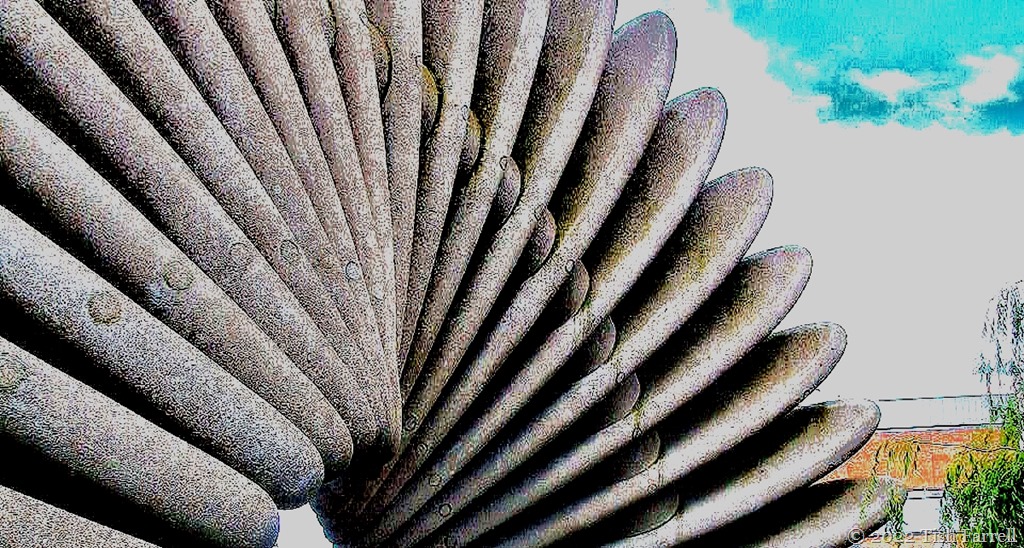
Like many others, I’m not really sure what to make of it. I see the connections with dinosaur fossils, the DNA double helix, but the concrete used to cast the blades is unappealing; the whole effect ‘heavy-handed’ somehow. However, I do like the way it curves through different planes, although at the same time find myself wondering how the initial plan might have translated with more finesse into bronze or iron. Looking at the Anish Kapoor C-Curve posted earlier this week, I’m wondering what marvellously sympathetic creation he might have come up with, had he been given the brief.
One of the most obvious problems is the siting. It’s a piece of public art that has not only NOT been given enough space to speak for itself, but has been sited on the edge of the town centre where most people will not see it. A commemorative work left largely unseen and at the cost of one million pounds! At which point words fail me, so I’ll leave you with more photos and see what you think about it.
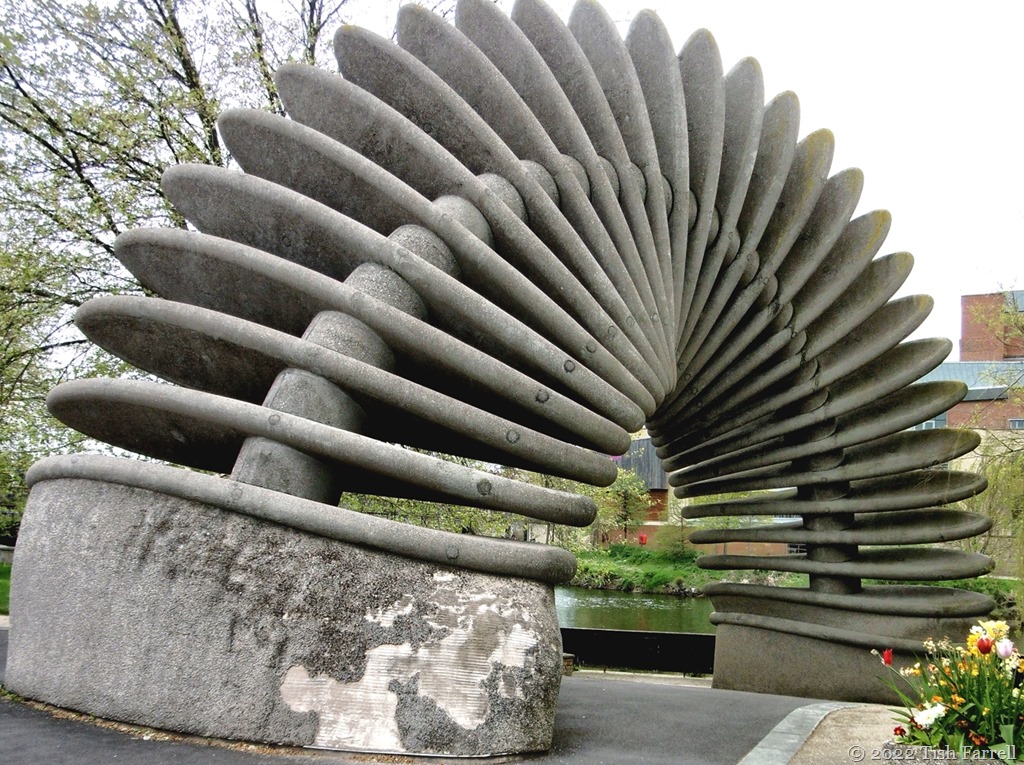
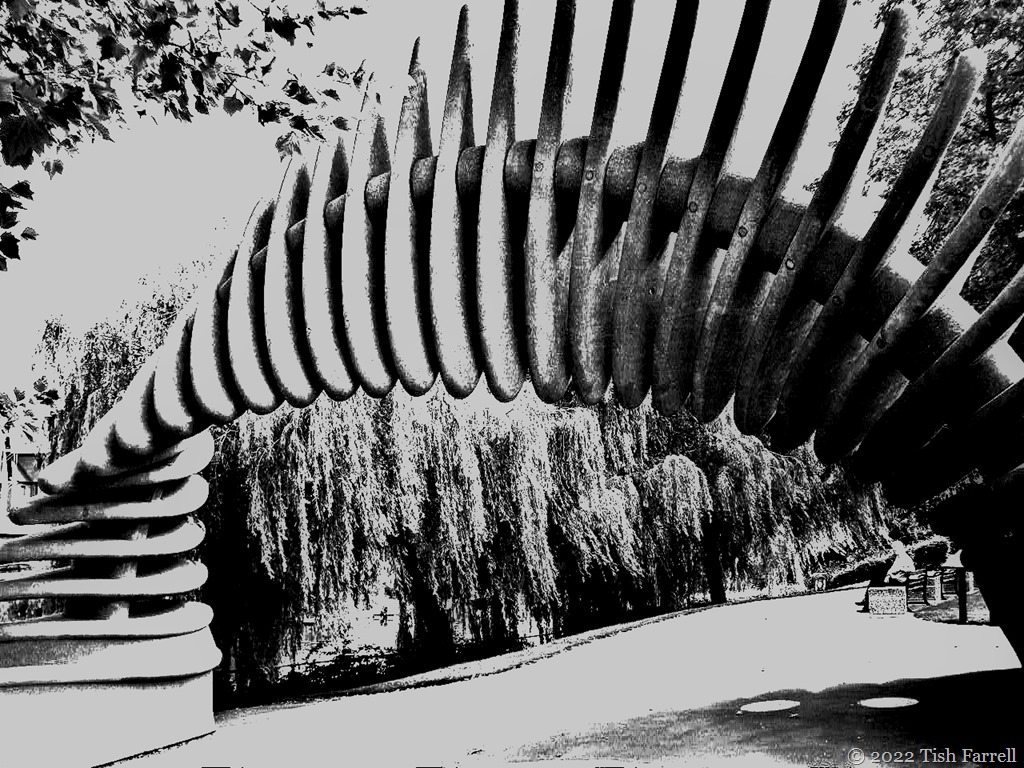
#GeometricJanuary Day 24

Thank you for the interesting history lesson about Darwin. I’m trying to think whether I have seen the Quantum Leap. We often walked by the Welsh bridge as we liked to visit the Boathouse over the river.
I do like your black and white photo, and agree that maybe a different material would have been better.
It does seem to work better in photo-edits 😉
well I managed to miss it when I spent a long weekend in Shrewsbury, and we walked loads. So I’d agree
It’s sited back from the pavement, but at a point where pedestrians are likely to be more concerned about not getting run over when crossing to or from the town centre.
what a shame more thought wasn’t given to it
It looks ugly to me and a complete waste of money, but it won’t be on its own, Tish? Darwin deserves better.
Yes, I think you are right, Jo. On all fronts.
My mind keeps wondering..”How did he do this”?
I like the sculpture, but agree that it would work better in metal. It seems to take a different form when photographed from different angles.
Yes, the ‘takes’ from different angles are interesting. But again, it would be better if there more space around it. i.e. there seems to be a river in the way 😉
😊
This is so very interesting as is the connection between Darwin and the Wedgwood family.
Thanks, Flavia.
Well, we managed to miss seeing this which proves your point! We did see the Darwin statue of course and I knew he was born and went to school in Shrewsbury (although not that Josiah Wedgwood was his grandfather!) As for what it looks like, I can see how it fits the brief and the curves are very appealing in some of your images but I’m inclined to agree that the concrete looks rather heavy. It would be interesting to see a similar form created in shiny metal, but perhaps concrete was chosen as it looks more like bones?
Yes, I thought bone allusions might have been a reason for using cement, but it doesn’t look like it’s weathering too well.
Remarkable.