wild shopping in Kenya

Scan-130602-0001

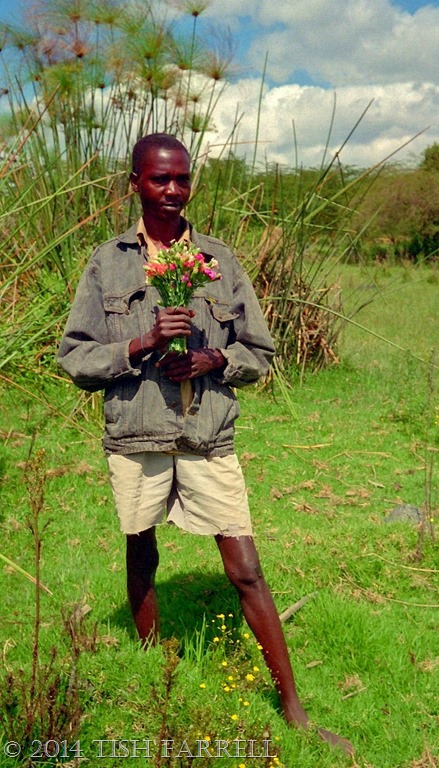
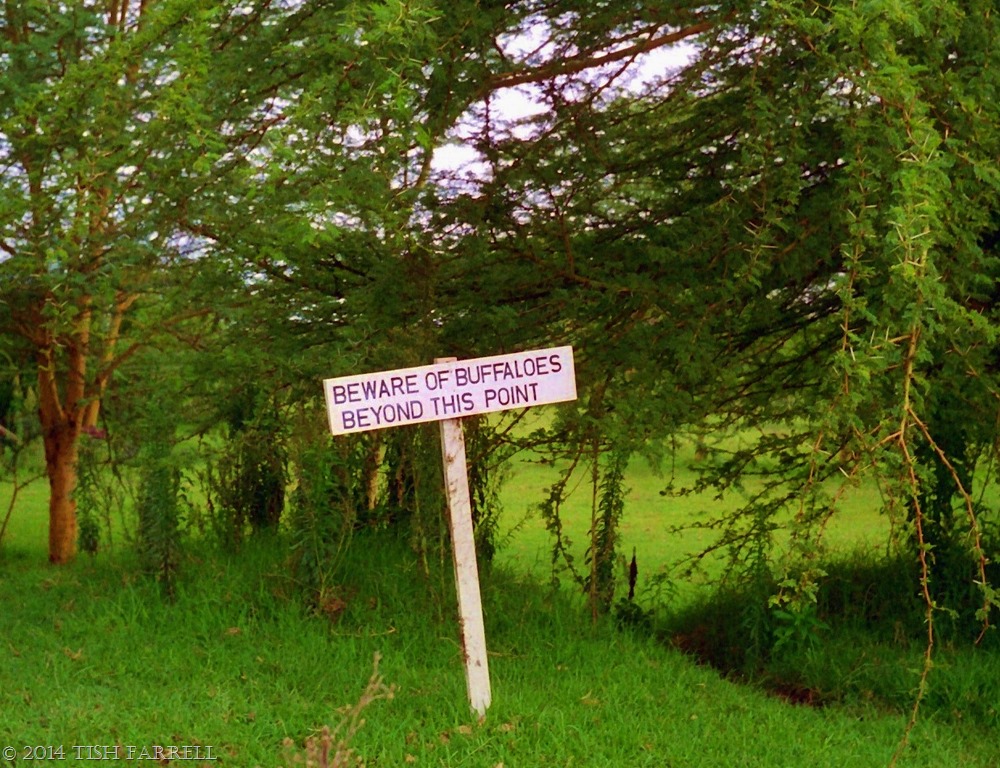
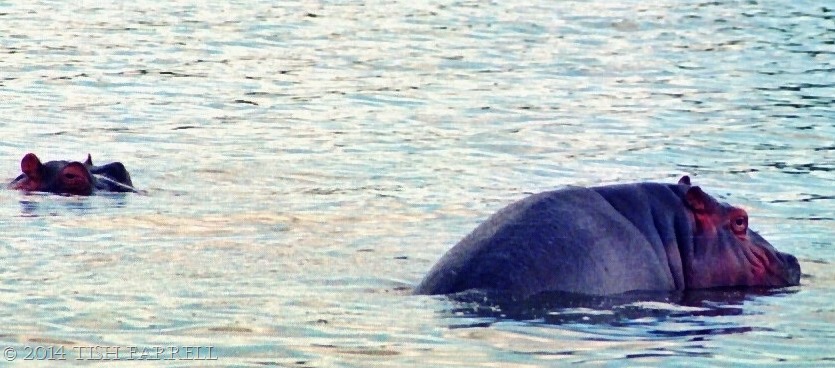
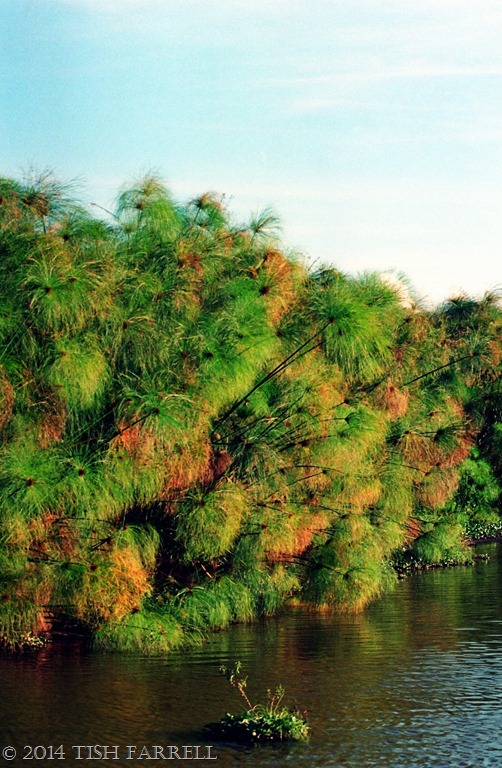
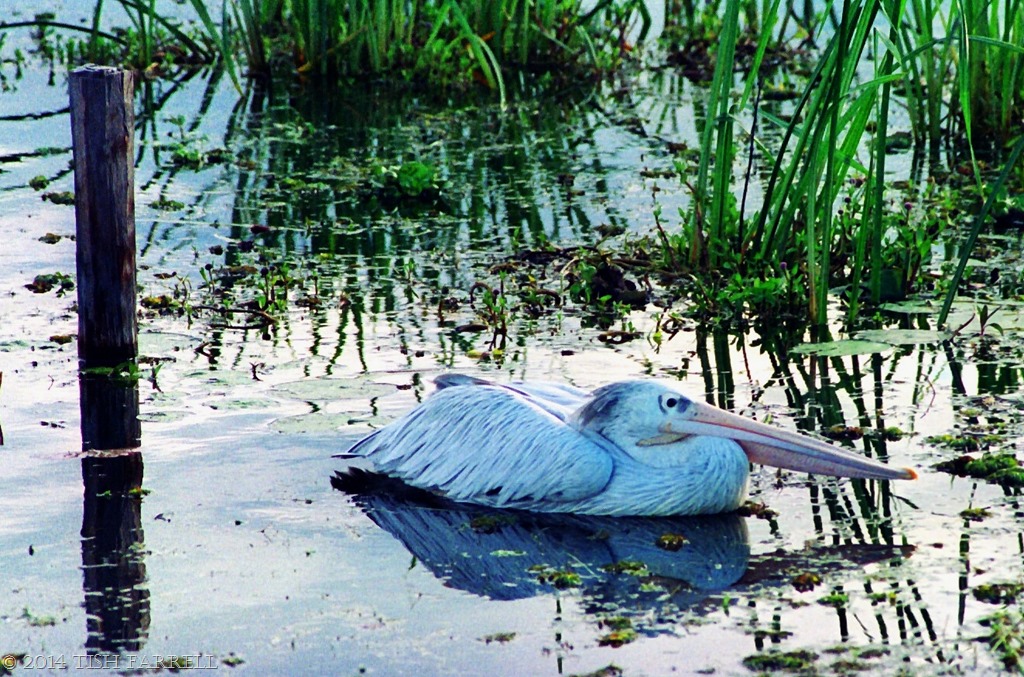
In Africa shopping is often an adventure. Well, who needs the thrill of the mall when you can strike a deal in a hippo-infested papyrus swamp? And for carnations too. I was most impressed by this young man’s opportunism, though puzzled too. Flower-buying customers seemed in short supply in this particular location. I was in the wilderness grounds attached to the Safariland Hotel on the shores of Lake Naivasha when he popped out of the papyrus. I had been wandering alone there (as I did over several days), not on the look out for retail therapy, but for Cape Buffalo (as indeed the sign warned me), and also for hippo whose very loud grunting was resounding off the lake. Both creatures can be deadly if you catch them, or they you, in circumstances not to their liking. 

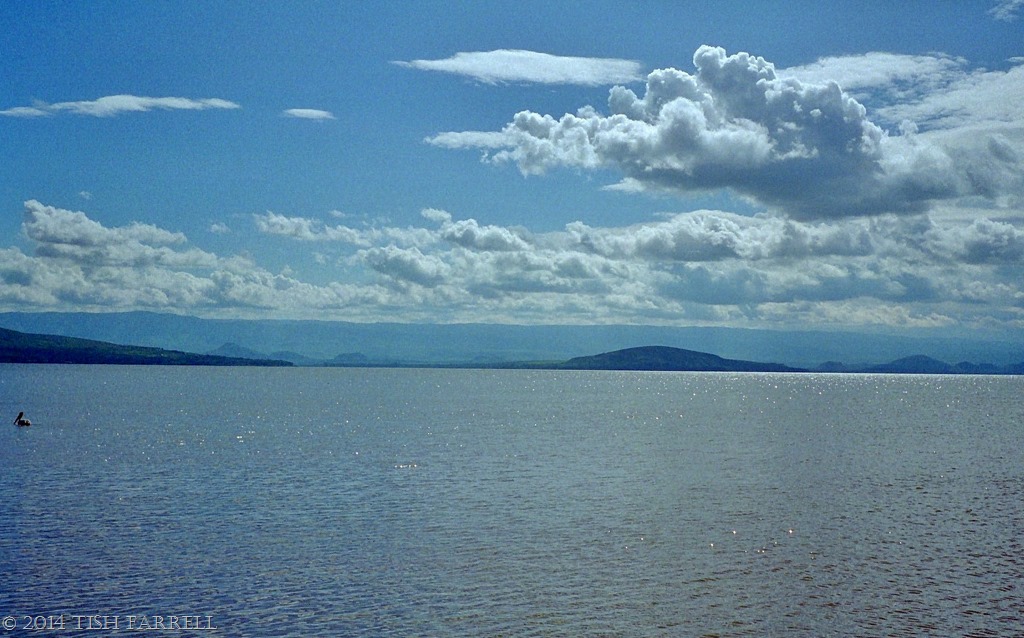
In short then, I was engaged in my own form of adventure bird-watching, while the Team Leader, aka Graham, was back at the hotel, involved in workshop brain-storming with fellow scientists from across Africa. The other surprising factor is that I had some money on me so was able to buy a bunch. The flower seller kept his stock hidden from view in a swamp puddle. It seemed he was recycling the discarded side-shoots from one of the local flower factories. There are several of these huge horticulture enterprises along Lake Naivasha’s shore, all abstracting and polluting the only freshwater lake within Kenya’s Rift in order to export perfect metre-long stems of roses and carnations to Europe. The seller was thus making an opportunity out of stock control squeamishness over European “standards”. But as you can see, his little posy is very pretty. The flowers lasted ages, even surviving a hot drive back to Nairobi. A good buy all round.

You can read more of this story at CARNATIONS, CROOKS AND COLOBUS AT LAKE NAIVASHA  For now, here are more views of this unique wildlife outlet store:

Scan-130602-0003

Scan-130716-0012

Scan-130602-0006Scan-130716-0010Scan-130716-0013


DP weekly photo challenge: adventure

Ailsa’s Travel Challenge: merchandise

Jennifer Jones comes to Wenlock

51CM9EJQ5QL[1]

It’s hard to imagine, but in 1949 Hollywood descended on my little home town of Much Wenlock. Both its locations and inhabitants featured in David O. Selznick’s screen version of Mary Webb’s 1917 novel, Gone to Earth. The film’s star, Oscar-winner Jennifer Jones, certainly looks the part, and in this respect she well conjures the book’s central character, the untamed but doomed spirit that is Shropshire lass, Hazel Woodus.

As an American, Jones of course had to receive specialist drilling in the Shropshire dialect, a form of speech which these days is scarcely heard, but would have been the norm during Webb’s childhood. She writes it very clearly in the book’s dialogue, and Jones makes a good stab at it, but it perhaps sounds overdone to modern ears. People in England do not speak like this any more.

gonetoearth17[1]

Mary Webb herself spent her adolescence in Much Wenlock, and for the rest of her too-short life lived in various parts of rural Shropshire. She knew country ways intimately. Her writing is rooted always in the landscapes of her own growing up – the upland wilds and rugged long-gone lead-mining and peasant farming communities, the small market towns. But although she observes the hardship and poverty with a keen eye, she has tended to be dismissed as a writer of the romantic and rustic, her work parodied in Stella Gibbons’ Cold Comfort Farm.

In her day, though, she had some very well known literary admirers  including Rebecca West  and John Buchan (Thirty-Nine Steps). I think her novels deserve a rediscovery. Her themes are still relevant today: male attitudes to women being one of them; human cruelty and wilful destructiveness for another.

In Gone to Earth, the central character, Hazel Woodus, is eighteen, motherless, and living in an isolated cottage with her coffin-making, bee-keeping father, Abel. Her only companion is a tame fox, Foxy, and her only guidance in life is dubiously received from her dead mother’s book of gypsy spells.

Two men want her: the Baptist Minister who marries her and tries to protect what he sees as her innocent spirit, and the fox-hunting landowner who wants only bodily possession. Hazel herself is torn between respectable conformity and her growing sexual awareness. And if I tell you that the term ‘gone to earth’ is the huntsman’s cry when a fox goes underground to escape the hounds, you will know that the story does not end well.

In other senses the book’s plot may be purely allegorical. Above all, it is about the pointless destruction of natural beauty and freedom. Webb was writing it at a time when three of her younger brothers were fighting in the World War 1 trenches.

MuchWenlock05[1]

MuchWenlock10[1]

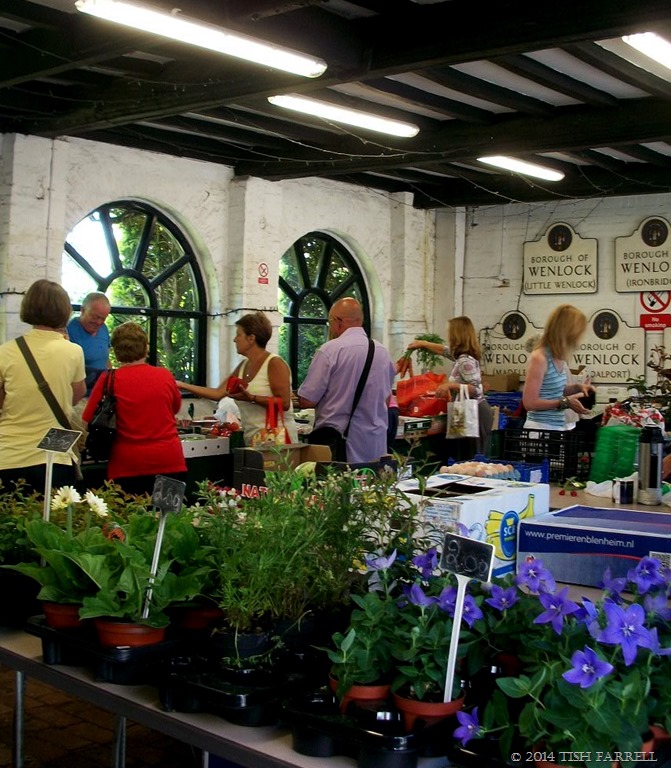
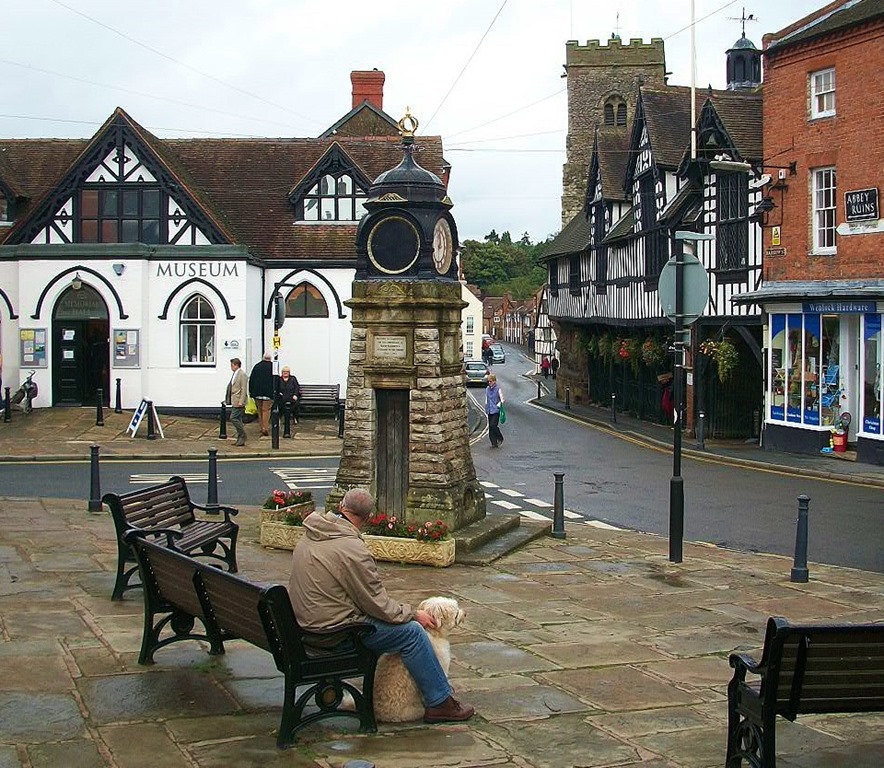
Much Wenlock 1949 in outside and inside the medieval Guildhall: scenes from Gone to Earth, director Michael Powell

*

100_6020

The making of the film did not run altogether smoothly, and there are perhaps some parallels between Hazel as an object of male possession and control , and the position of the film’s star, Jennifer Jones. She had had an affair with the executive producer, David O. Selznik, and by 1949 they were married. He wanted Gone to Earth to be solely a showcase for her, and he did not think the film’s makers, the fabulous storytelling team of director Michael Powell, and screenwriter, Emeric Pressburger, (The Red Shoes, The Life and Death of Colonel Blimp) had done her justice. He even took them to court for not producing what was in the script. He lost the case, but he still had the right to make an alternative version.

feat1[1]100_4926

The upshot was that for the 1952 American release, renamed The Wild Heart , he chopped all the scenes that did not make the most of Jones, had new scenes shot, and to make sense of the makeover added a commentary by Joseph Cotton. The film was not well received, and so did not serve his purpose.  Only recently has the original Powell and Pressburger version been fully restored.

feat4[1]

In the film clip below you will see, not Much Wenlock, but a location some miles across Wenlock Edge. Here are the beautiful hills of South Shropshire, in particular the Stiperstones with its bleak outcrop known as the Devil’s Chair. This is where Hazel goes at night in expectation of guidance from one of her mother’s superstitious rites. This silly, girlish act, and mistaken reading of events will have tragic consequences.


Hazel goes to the Devil’s Chair


For more on Mary Webb:

images-3[1]

“This year’s discovery has been Mary Webb, author of Gone to Earth. She is a genius, and I shouldn’t mind wagering that she is going to be the most distinguished writer of our generation.”

— Rebecca West, review of Gone to Earth in the Times Literary Supplement, August 30, 1917


Mary Webb: neglected genius for the synopsis of Gone to Earth and also for details of her other works.


Flickr Comments for more J-words stories

on a knife edge at victoria falls

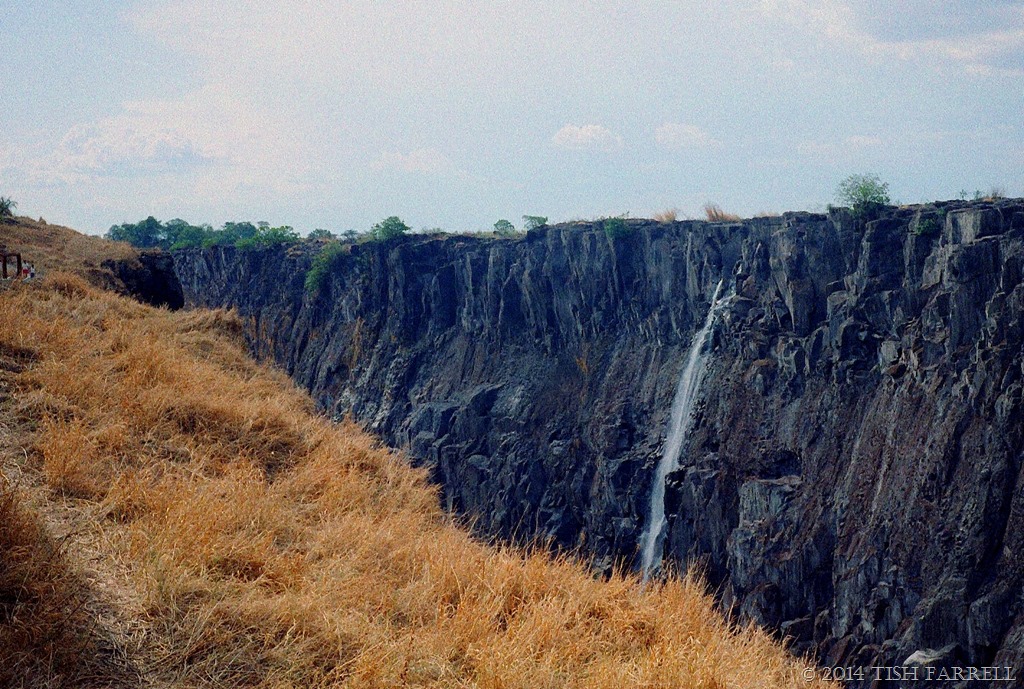
Zambia's Victoria Falls looking along knife-edge to Zimbabwe's falls

Hang-gliding over the hundred metre precipice at Victoria Falls is not to be recommended. Nor had I intended to take the plunge, my ‘sail’ being nothing more than a wet kanga-wrap, held up to fend off a tropical deluge. Somehow, though, circumstances (and a lack of sensible forward planning) had led us to the Falls’ knife-edge just as Zambia’s 18-month drought was ending, and the rains beginning. Even without  the hang-gliding it was a heart-stopping moment.

The prolonged drought across Southern Africa was of course the reason for Team Farrell’s presence in Zambia in late 1992. The Team Leader, Graham, had been seconded to the European Union Delegation to manage maize flour and cooking oil distribution to foodless villages across the nation. We had only been in the country a couple of weeks when G was directed to go down to Livingstone on the southern border to inspect a newly arrived consignment of maize. His boss suggested he should drive down on a Saturday and take me too. Naturally Nosy Writer (that’s me) was only too pleased to head off on a several hundred mile safari.

Looking back, the diplomat’s suggestion that I should go was possibly a kindness in disguise. Nothing was spelled out, since we were newly arrived, and Bernard (aka the boss) did not wish to scare us before we had found our bearings. But security in the capital Lusaka was not good. President Chiluba, the newly democratically elected leader, had been in office for barely a year, this after ousting the incumbent of decades, Kenneth Kaunda.

Later it transpired that Kaunda’s army officer son, Rezi, had been intent on destabilizing the country, and was apparently behind the city’s upsurge in violent crime. On top of that, in neighbouring Zaire (now DR Congo) President Mobutu had not been paying the army, and so gangs of gun-toting soldiers would drive down to Lusaka for a spot of night-time car-jacking and house-breaking. In a nation of impoverished people, the diplomatic quarter was the obvious target. Better, then,  that I should not be left alone. Not that I knew this then. Nor had G’s company thought to mention any of this before offering his services to the EU. As they say, ignorance is bliss.
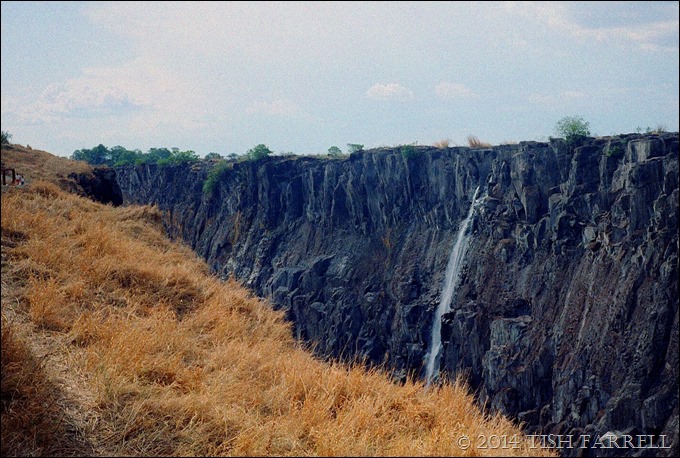
Zambia's Victoria Falls in the dry season

And so one Saturday morning under a wide blue, and seemingly ever rainless sky we set off south. The road, once clear of the city, ran on mile after mile after mile with hardly another vehicle in sight. We passed through landscapes of rolling woodland, the tall-tree miombo which, at first glance seemed more like Europe than Africa. After nine months in Kenya the vistas, too, seemed curiously lacking in drama –until, that is, we reached Livingstone.

Our hotel stood beside the Zambezi, and after tea on the lawn in the English manner it was off to the nearby Falls. The photo above was my first view of them. I wasn’t sure whether to laugh, cry or simply stare open-mouthed. Where was the water?

The drought had much to do with it of course. But the other reason was that Zambia abstracts large volumes of water to run its hydroelectric plant.
004 (2)

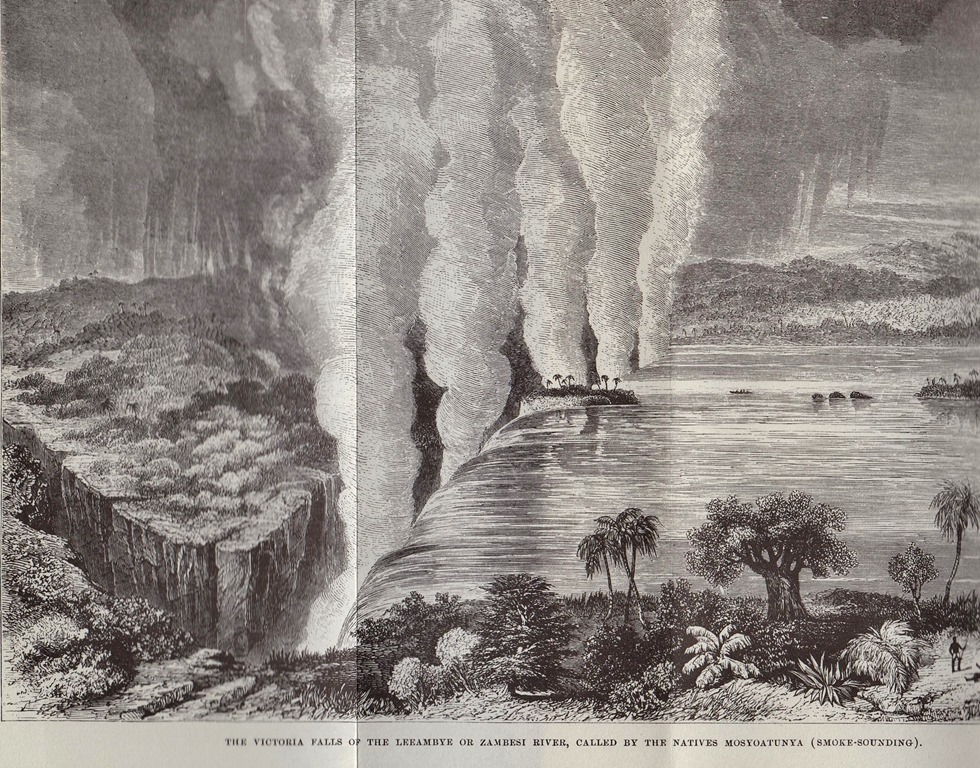
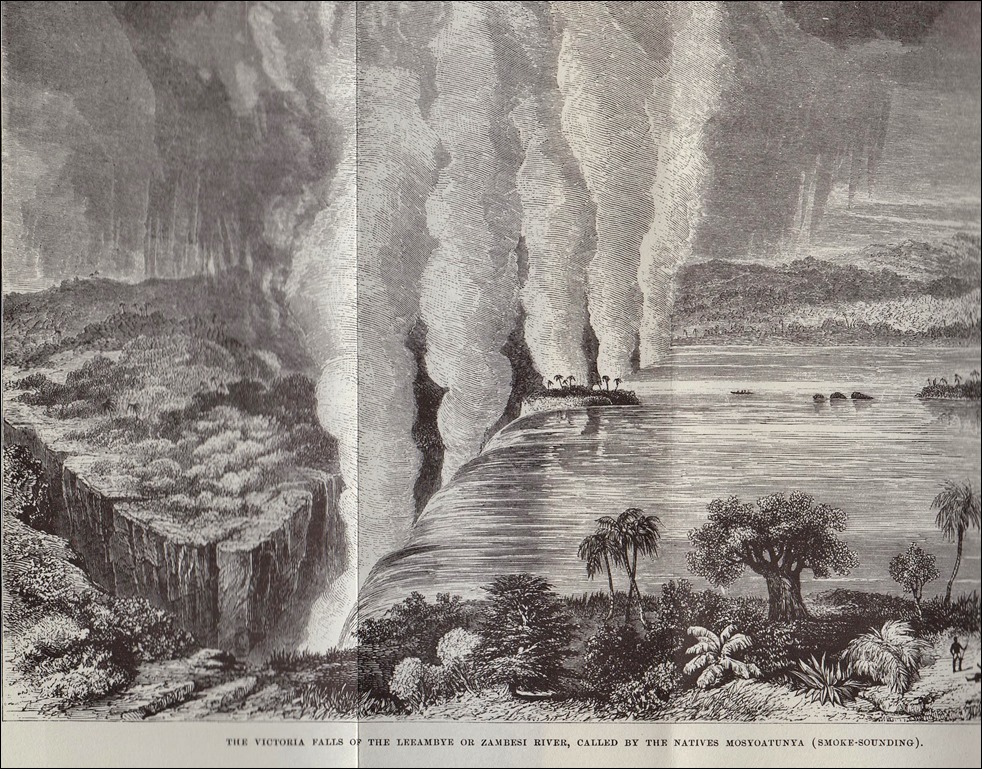
The Falls as seen (and ‘discovered’) by  David Livingstone.

Engraving from Missionary Travels and Researches in South Africa 1857

*

G told me the best view of the falls was across the border in Zimbabwe, and that if we had remembered to bring my passport we could have walked across. Most frustrating.

Instead, we walked along the path beside Zambia’s waterless gorge.  But trailing through dead vegetation while staring at the stark basalt cliff face felt more and more oppressive. It made me think of Tolkein’s Mordor. We gave it up and went back to the hotel.

Our room theoretically had a river view. In reality all we could see was its empty bed, with huge boulders and clumps of palms here and there. But on Sunday afternoon I noticed that people walking across it. “Let’s go,” I said.

The sun was shining when we set off, and soon we were joined by a boy who appeared from nowhere and offered to guide us to the best Falls’ viewpoint. We duly followed, picking our way round oily looking rock-pools, mammoth sized boulders, and piles of fresh elephant dung.

We must have scrambled on for nearly a kilometre when the sky started to turn grey. I began to feel nervous, glancing upstream and expecting a wall of water to come rolling down. Or to walk round a boulder and into an elephant.

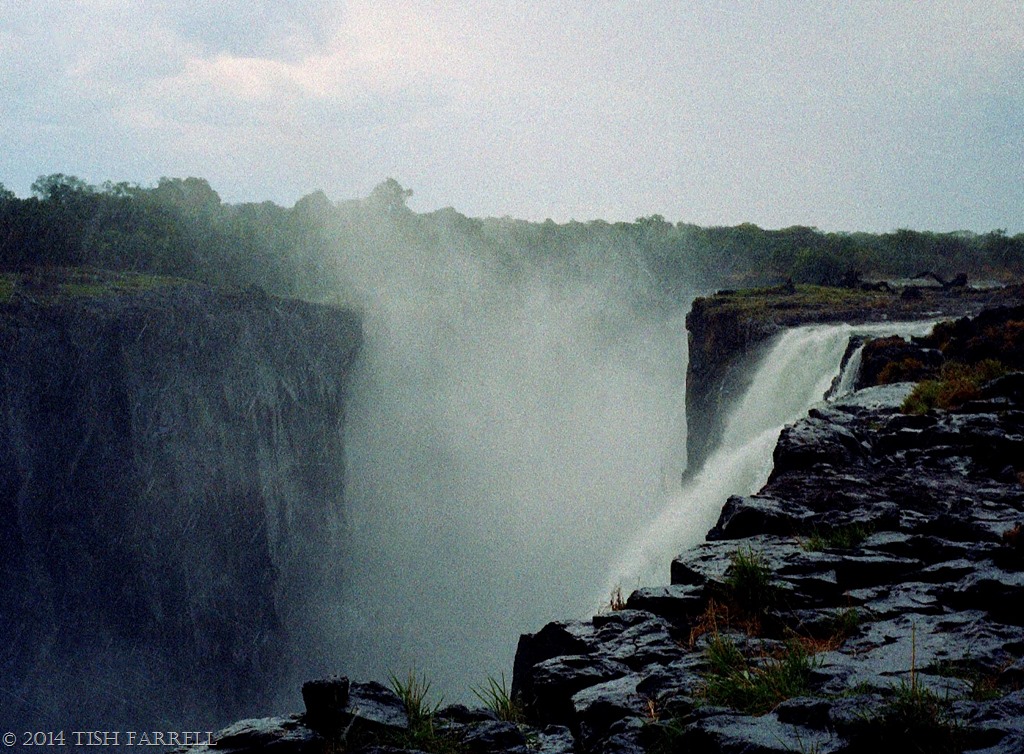
And then the rain came down. Fat freezing drops. We made a dash for cover, which happened to be some trees on Livingstone Island, the very spot from where the explorer had first viewed the Falls in 1855. We crouched for ages under dripping trees until at last, thoroughly soaked, G asked the boy if the ‘good view’ was much further. On discovering that it wasn’t we made a final dash. And here it is. The view:
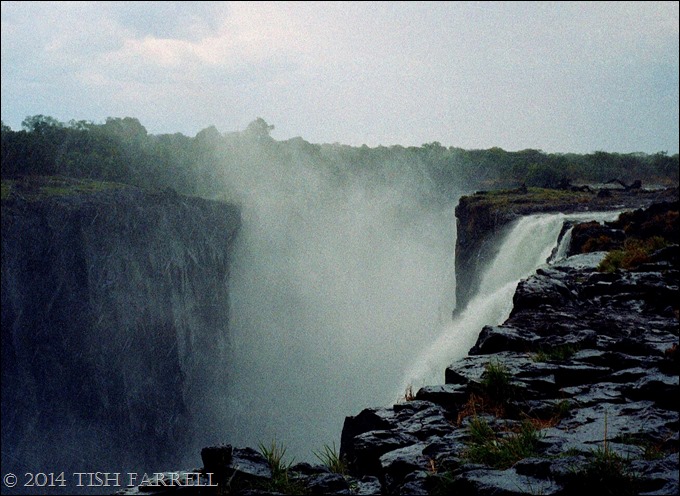
Victoria Falls, looking over the knife edge in a rainstorm

Not much to be seen for the spray coming up, and rain coming down. I took this quick snap, and then held up the sodden cotton wrap that I had been wearing earlier to fend off the sun. As I stood on the knife-edge the sudden gust of wind that filled the wrap was enough to lift me towards the abyss. I stepped back in shock. I’d had more than enough of Mosi-oa-Tunya (the smoke that thunders). So had the boy.  Soon he was sprinting away without even waiting for a tip, and that really had me worried. What did he know that we didn’t? We slipped and slid, back the way we had come. More phantom elephants. More imaginary flash floods. More getting lost in outcrops of giant boulders. It seemed a long, long way back to the hotel.

It was not until several months later that we finally got to see the Falls, this time from the Zimbabwe side. On this occasion we only got drenched from the spray, while I took yet another wet and misty photograph, but thankfully avoided all inclination to hang-glide.
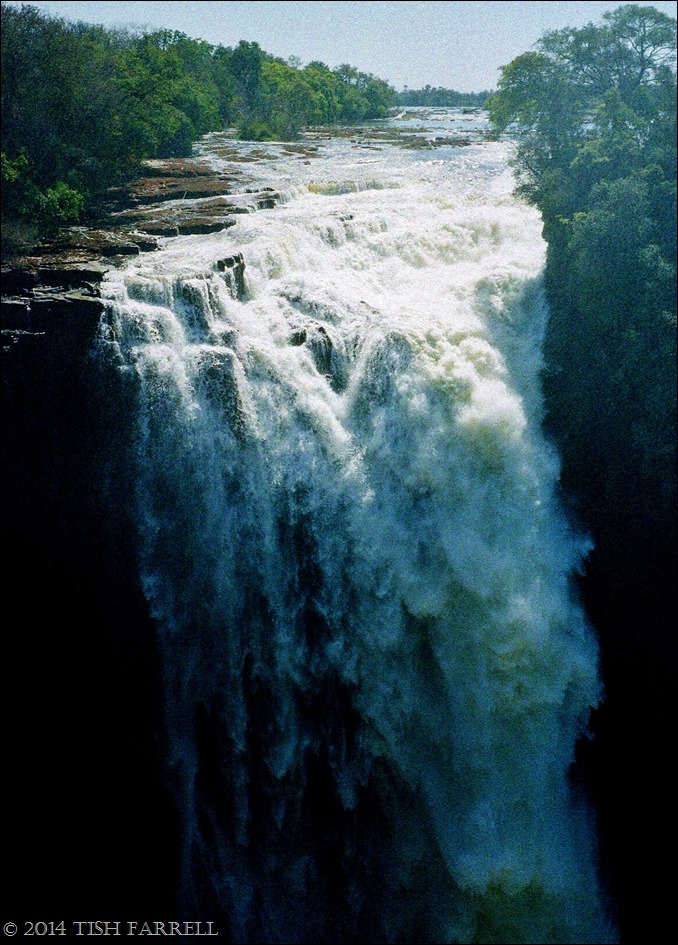
Victoria Falls and Zambezi

copyright 2014 Tish Farrell


Related:

The Smoke that Thunders

Letters from Lusaka I

Letters from Lusaka II

Once in Zambia – in memoriam


Daily Post Photo Challenge: adventure for more bloggers’ photo-adventures

ILLUMINATING INGENUITY AFRICA-STYLE

“production from local resources for local needs is the most rational way of economic life.”    E F Schumacher


100_6355

You could call this the mother of all light bulb moments: a piece of African technology transfer that would have been right up E.F. Schumacher’s street (Small is beautiful: a study of economics as if people mattered). Of course light bulbs aren’t much use to people whose politicians have failed to connect their villages to the national grid.  One might also assume that a blown light bulb isn’t of use to anyone anywhere. But well,  think again. Here we have the proof of it: some very natty Tanzanian recycling. And in case it is not entirely obvious from this photo, here we have a used light bulb, and a remodelled tin can made into a very handy carrying lamp. The cap that holds the wick in place, can be removed to refill the bulb with oil as needed.

200px-SmallIsBeautiful1973[1]

And talking of E F Schumacher, his book Small is beautiful  has been rated one of the 100 most influential books written since World War 2. It has inspired highly inventive  Intermediate Technology Development projects around the world, low tech solutions that use the kinds of materials and spare parts that can be maintained, replaced  and replicated locally. Adeyemi’s floating school in Lagos (see earlier post Floating not flooding) is a good example of such principles in action.

This particular light bulb lamp was bought in the market in Tabora in central Tanzania. Graham lived there two years in a house beside the old Arab slave route, while working as an agricultural extension officer for V.S.O  (Voluntary Service Overseas). These were in the days TBT – Time Before Tish. 

But then much later there was another light bulb moment. When we were in Kenya doing fieldwork on the Central Province farms ( Looking for smut: work on Kenya’s highland farms ) I came across quite another use for a cast off bulbs. We had been invited into a Kikuyu farmer’s home for tea and cake, and there it was hanging on the sitting room wall. Our hosts had already told us the sad tale of how they and their neighbours had made financial contributions to  a political candidate who promised to bring electricity to their community, but then conveniently ‘forgot’ once he had been elected. I wrote a poem about it.


Power-play

Joe Maina, small-time farmer, says

before the polls he paid

some local boss three thousand bob

to bring the power lines down the Rift.

The big man won the vote,

but now, as ever,

Faith Waithera Maina cooks githeri,

bending at her hearth,

three rocks to hold the pot,

sleek skin cured hide in smoke-house fug.

Next, slogs like an ox on cow-track paths

to fetch more wood  to feed the fire.

“Our days’ career,” she shrugs.

Till dusk she lights her

sofa room with fumy lamps,

where, hanging on the wall with

keep-safe snaps and family memorabilia,

a cast-off city sixty-watt has second lease;

recharged of course,

a perfect vase

for garden sprays of purple

Tradescantia.


Flickr Comments ‘I’ words

A Word A Week: technology