Looking for Giles aka Private Victor Rowles 1896-1915

IMG_0568

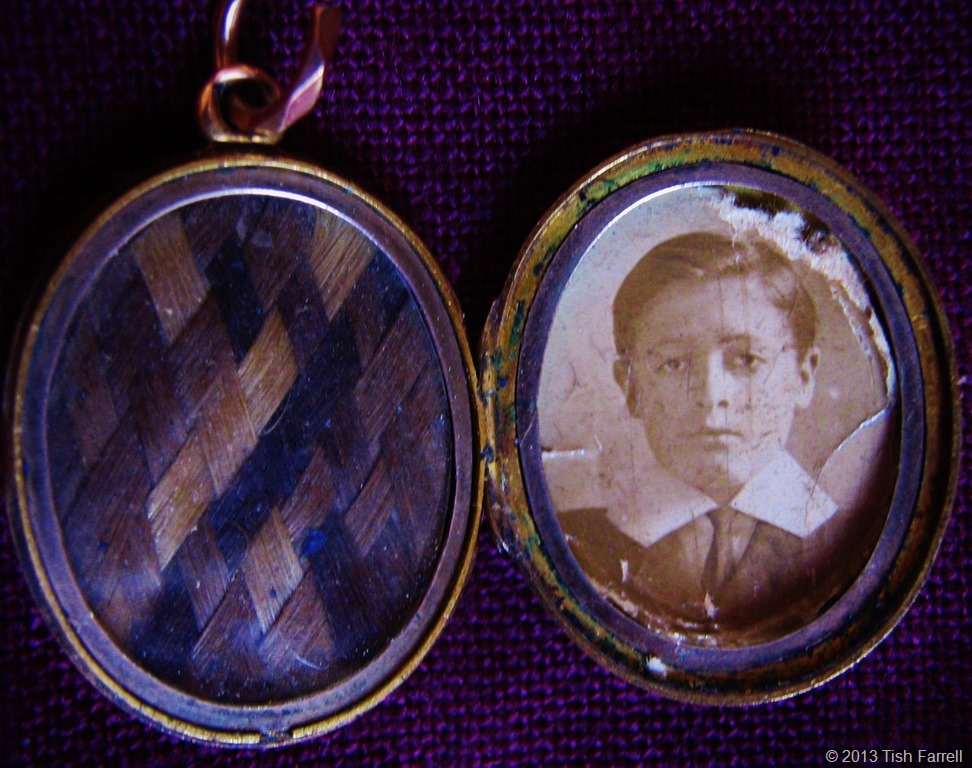
It began with a locket owned by my great grandmother, Mary Ann Williamson Rowles, nee Fox. And it began with a long ago memory of her daughter, my grandmother, Lilian Shorrocks, telling me of a much loved younger step-brother. She said that he had died during the Great War, that he was shot while getting off a boat.

I was seven or eight at the time and did not understand what she was talking about, but I registered the sorrow at a young man pointlessly lost. I pictured him walking down a gang-plank from an ocean-going liner. For some reason I imagined he was wearing a brown suit as someone shot him. Perhaps grandmother had said the word Gallipoli. I can’t be sure, but all my life its utterance has somehow resonated, though without my knowing why.

Recently, I did find out why, and still find myself astonished that I can discover more of this forgotten ancestor’s too brief life by simply trawling the internet. Of course, as Su Leslie so often shows on her excellent family history blog, Shaking the Tree, discovering one nugget of information often raises a dozen other mysteries. But then that only makes the search all the more beguiling.
DSCF9333

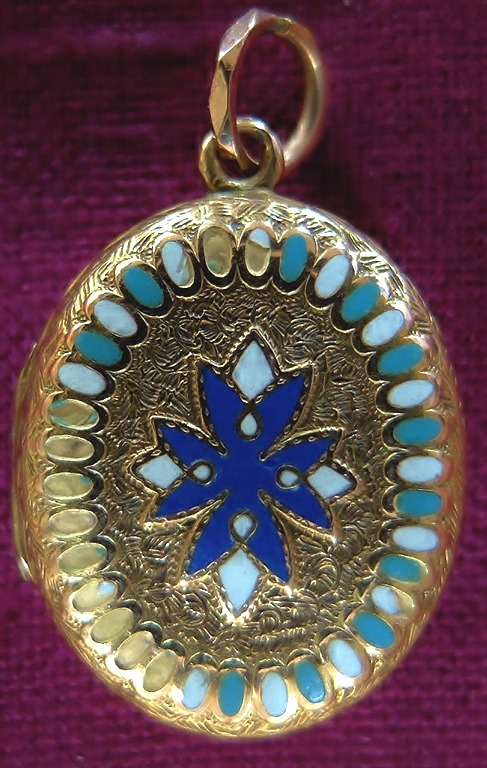
The locket is now mine and it contains the plaited hair of all Mary Ann’s five children, including her step-son, Robert Shorrocks. The other children are my grandmother and her two siblings, Mary and Tom, born from great grandmother’s first marriage to Thomas Shorrocks of Farnworth, Manchester. And finally there is Giles, the youngest. He was born in 1896, a year after Mary Ann married widower, Charles Rowles, a master mariner and captain of a pilot boat on the Manchester Ship Canal.

It is Giles’ photograph in the locket. He is an impressive looking boy. The direct gaze, yet self-contained. I find myself wondering if he looked like his father, for we have no photo of Charles Rowles. My grandmother did not care for him, keeping only his big seaman’s chest which I also have. Otherwise, she threw out most of the family memorabilia that came down to her. She kept the locket though, and Mary Ann’s fine collection of miniature Shakespeare’s plays and poets. There is also a single faded photograph of my great grandmother, taken some time before she was married. My own mother always said that she had eloped.

Mary Ann Williamson Fox was a farmer’s daughter, her family having been yeoman farmers for generations. In fact they claimed to have lived on the farm called Callow since the 11th century. Family  mythology  also had it that a Fox ancestor was employed by the Eyre family as steward, the Eyres having been given land in Derbyshire for services rendered to William the Conqueror. Later the Duke of Devonshire from his grand house at Chatsworth became the landlord, and Mary Ann, at seventeen, is said to have opened the Chatsworth tenants’ ball with the Duke, she being the daughter of the oldest tenant-family  on the estate. For a long time the buttons of the dress she wore were fondly kept. Blue silk-covered ones, I was told.  I don’t know what happened to them.
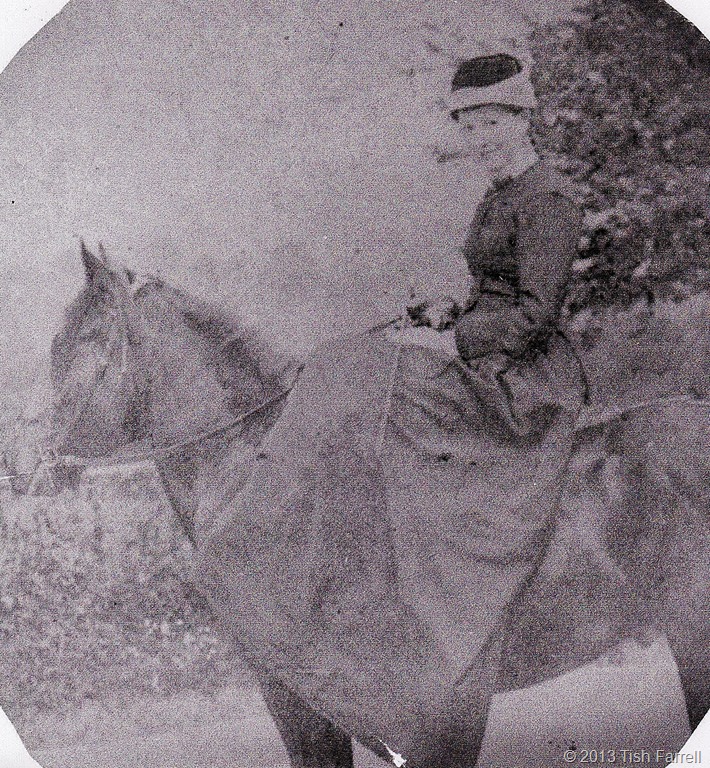
IMG_0007

Mary Ann Williamson Fox in her late teens c. 1880

*

IMG_0005

Callow Farm, Hathersage, Derbyshire where the Fox family lived from at least the 1700s, and where Mary Ann was born. This photo was taken in the 1970s.

*

How it was that country girl Mary Ann came to fall for a spindle manufacturer from Bolton, Manchester is the first of many mysteries. My grandmother said that her mother fell for the first townie she saw in a stove-pipe hat. Maybe he was in the area on business. In any event, Thomas Shorrocks was a widower, ten years older than Mary Ann, and with a young son, Robert. Mary Ann was 22 and they were married by special license at St Michael’s church, Hathersage, with her elder brother, Robert and his wife, Edith, as witnesses.

Thomas took his young wife from the wilds of the Derbyshire peaks where she was used to riding at will, and jumping farm-gates on her pony, to live in the gloomy streets of Farnworth. There, the ever darkly clad mill women regarded  Mary Ann’s country print dresses with deep suspicion.

The Shorrocks lived in a modest terraced house on Kildare Street, although Mary Ann did have a servant, a girl she had brought from Hathersage. Soon there were three more young children, offspring whom Thomas Shorrocks apparently made a point of avoiding, staying out of the house until they had gone to bed. My grandmother said she did not know him. Then disaster struck. In 1893, only seven years into the marriage, Mary Ann was left a widow. Not only that, in the same year, the Shorrocks family company that, in 1861 had employed 32 men and 22 boys, was declared bankrupt. Perhaps it was this that finished off poor Thomas at the age of 39.

It is not clear where Mary Ann was for the next year or so, but in 1895, Warrington licensing records show that she had taken over the running of the Old Red Lion inn in Hollinfare, (also called Hollins Green) a farming village near the Manchester Ship Canal. The inn, as was common in rural areas, had also once been run as a farm. It thus came with pasture, cow sheds and stabling.
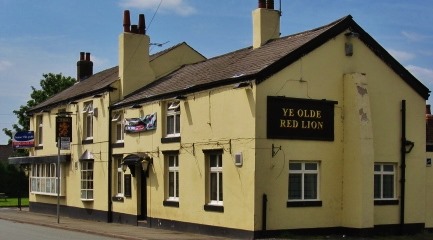
1338650_1cb923401.jpg

The Old Red Lion today has seen extensive alterations in the 1960s and 1980s. It was one of the oldest inns in the village, and already in existence by the 1670s. Although Giles was born there in 1896, I’m not sure he would quite recognize it today.

*

Family legend says that the Fox family arranged for Mary Ann to take over the inn so she would have a roof over her head and an income to support her family. In fact it seems she took over the license from one George Fox who had been landlord there since 1894. This could have been either her father, George Brayley Fox, or her younger brother, George. Her father had sold up the farm stock in 1892 due to a depression in agriculture, and then given up the tenancy on Callow Farm.  After 1893 there were no more Foxes at Callow, a circumstance that made the local and regional press in that year.
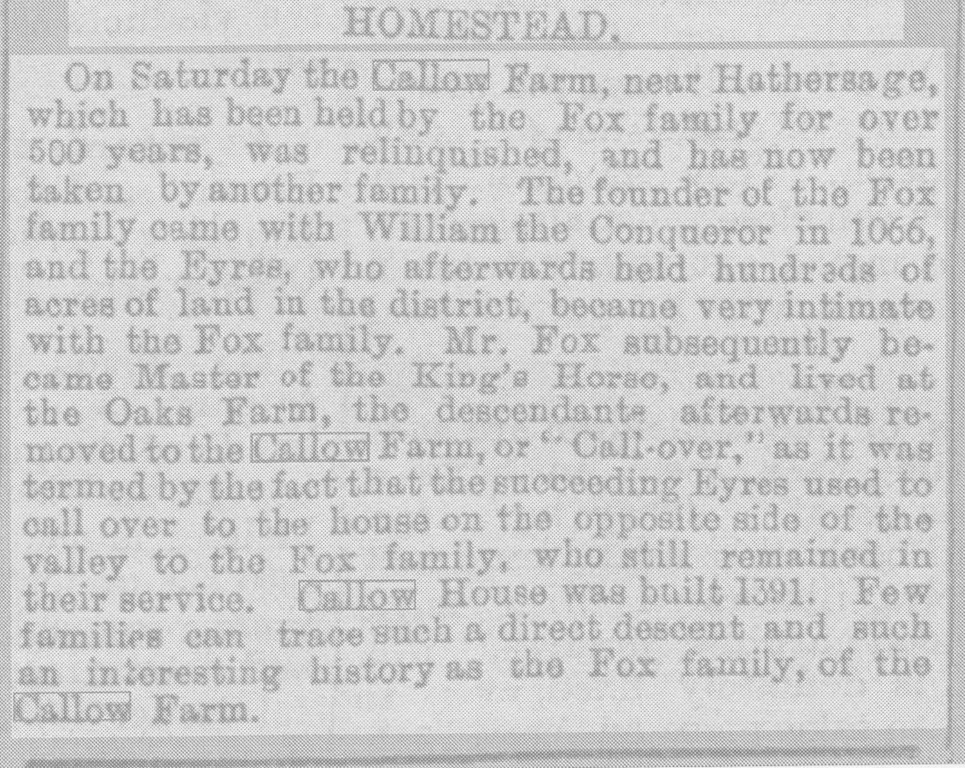
001

Derbyshire Times & Chesterfield Herald 25 March 1893

*

When Mary Ann took over the inn in Hollinfare she called herself Mary Ann Williamson using her Christian names, and dropping the Shorrocks. Perhaps she wanted to escape the taint of bankruptcy. A year later she was getting married to Charles Rowles. Perhaps, when he was not piloting cargo ships into Manchester, he visited the inn. Again, he was considerably older, this time a widower with two grown-up daughters. According to my grandmother, the existence of these two young women was a surprise to everyone. They apparently came and ruled the roost for a time.

In 1901, Mary Ann exchanged inns with another woman licensee, and moved to the Bowling Green Inn at the top of the village. The inn no longer exists, and Hollinfare’s community centre now occupies the site. The reason for such a move is unclear, but perhaps the premises had more living accommodation. By now Mary Ann’s rather simple-minded younger sister, Louisa, was living with her and helping with household duties. It is likely,too, that their father also came to live there at some point, since he is buried in Hollinfare’s little cemetery, along with Mary Ann.

And so we come to Giles. In 1903, when he was seven, his father died. In 1909, when he was thirteen, Mary Ann died. Her death certificate suggests she was by then living with her step-son, Robert Shorrocks in Moss Side, Manchester. He witnessed her death from heart disease. She was 46.

What happened to Giles at this point is another mystery. The 1911 census shows the four Shorrocks siblings living in Moss Side. Robert is head of household and Aunt Louisa is still taking care of household duties. By now Robert is 28 and an insurance agent. My great aunt Mary and grandmother Lilian are in their early twenties and listed as ‘blouse finishers’. The youngest brother, Tom, was 19 and a railway clerk. Giles, though, is not with them. He is now 15 years old and trainee clerk with a shipping broker far away in Cardiff. He is living with his father’s widowed sister-in-law, Louisa Rowles and her two adult children. In 1912 there’s the possibility that he took passage to Halifax, Canada on the SS Hesperian, but there is no conclusive evidence.

When he appears again it is 15 October 1914. He is 18 and 7 months and enlisting in the Australian Imperial Force in Melbourne, Australia. He calls himself a sailor (all the Rowles men had sea-faring connections). AND he has changed his name to Victor. The enlistment papers give Louisa Rowles of Cardiff as his next of kin. He specifically denies ever having served an apprenticeship. (Did he run away to sea to escape being a clerk?)

But why the change of name? My own guess is that Giles seemed too soft a name for mariner. His military papers show he was 5 feet 5 inches. Perhaps a little on the short side too, so may be he felt he had something to prove. We’ll never know. There is no one left to ask.

He joined the 14th Battalion AIF and would then have gone to Broadmeadows for training, before embarking for Egypt on the Berrima in December 1914. After further training in Egypt, the 14th took part in the April landing at Gallipoli. So began the gruesome, fruitless, bloody siege. All we know is that he survived to take part in the August Offensive. This involved the Australian and New Zealand Army Corps moving up the coast to attack two peaks of the Sari Bair range while the British and French forces defended Helles.

Giles was presumably wounded while trying to land for the second time in 5 months on this torturous, wretched shore. The next record is 8 August 1915 when Private Victor Rowles no. 1402 is admitted to the hospital ship Devanha with gunshot wounds. He died at 10pm on 10 August and was buried at sea, 2 miles east of Mudros Harbour, Lemnos.

An inventory of his effects was made in 1916. It comprises “one brown paper parcel” which includes a cigarette case, pipe, letters, photos and a handkerchief. These were apparently sent to Aunt Louisa Rowles. Later, in 1919, official records say she received a memorial plaque and scroll. It is not clear what happened to his medals: 1914-15 Star, British War medal and Victory Medal.

Giles is commemorated in his ill-fated name of Victor at Lone Pine Memorial, Turkey and on the Australian War Memorial at Canberra. In the quiet little cemetery at Hollinfare, his passing is marked under his given name of Giles. Perhaps his step-siblings added the inscription to his parents’ and grandfather’s stone.  It commemorates “Pte Giles son of the above Charles and Mary A Rowles, who died of wounds received at the Dardanelles on August 1oth 1915 aged 19. He hath done what he could.”
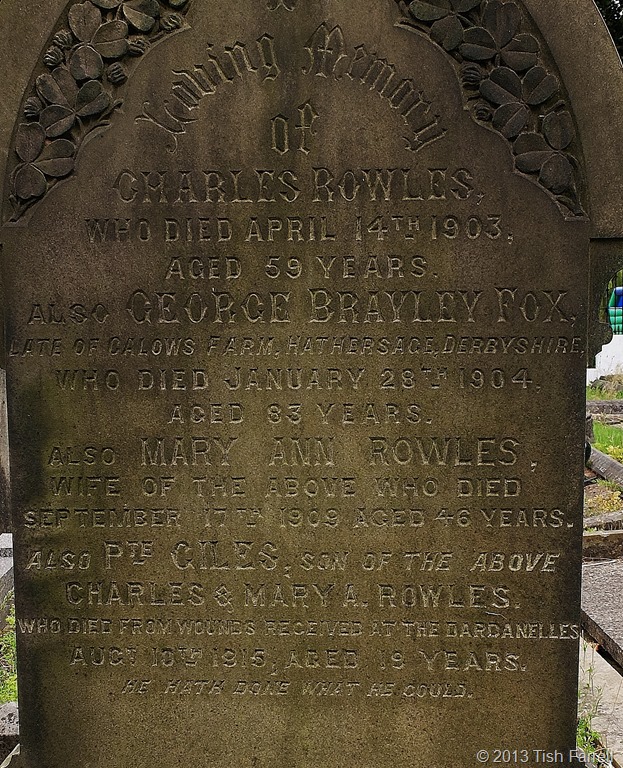
DSCF9350

But in the end, and despite all the family tragedies, I would like to think that Giles had some happiness in his short life: when he went to sea; or in his early days in Hollinfare. My grandmother adored him, and her older sister Mary was said the kindest soul. I feel sure they would have ‘mothered’ him, probably beyond a boy’s endurance. Step-brother, Robert Shorrocks also appears  to have been everyone’s rock, including his step-mother’s. Certainly in old age he was still very close to my grandmother and grandfather.

Of her childhood days, grandmother told of how they used to raid the inn pantry for tinned fruit, and eat it secretly out in the garden. Then  they would slide down the steep banks of the Manchester Ship Canal, getting their knickers green. There were annual visits by the dancing bear and his man whom Mary Ann allowed to stay in the inn stables.

27338[1] - Copy

I would like to think that this photo of Hollinfare boys around the Coronation Tree included Giles. In the background is St. Helen’s chapel where Mary Ann could well have married Charles Rowles in 1895. These propositions, along with many others, remain to be verified. The search for Giles/Victor Rowles continues…

#nogloryinwar

© 2013 Tish Farrell
Letters from Lusaka: Part II

100_4437

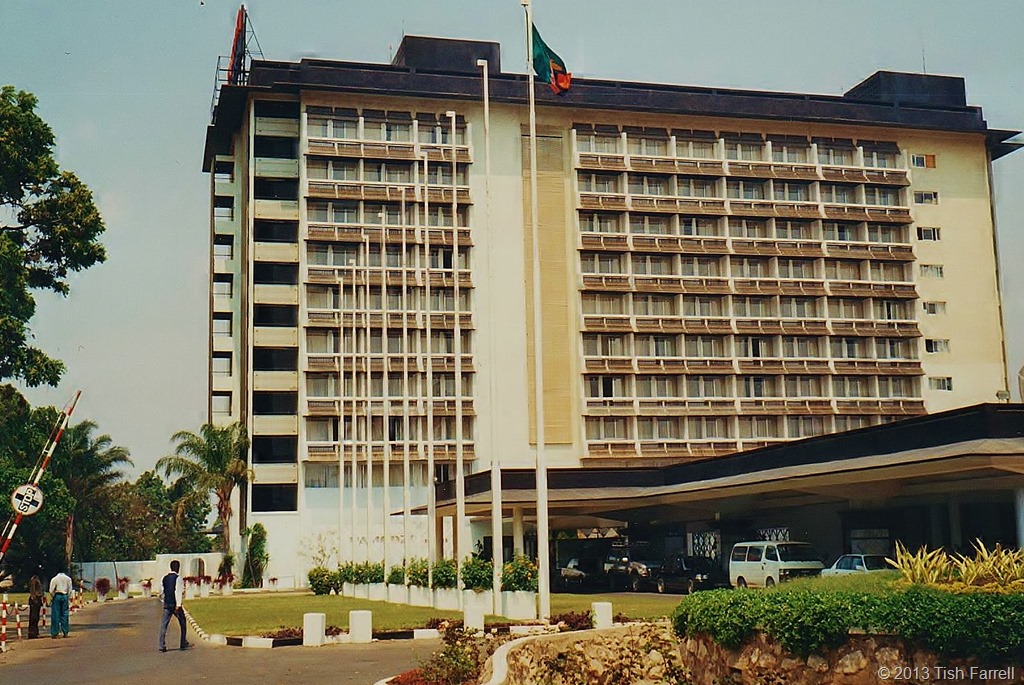
In 1992-1993, during the first years of Zambia’s multi-party democracy, we were posted to Lusaka, Zambia’s capital.  The Team Leader was charged with distributing European Union food aid to drought-stricken Zambians. (Part I is HERE). For the first couple of weeks, and the irony was not lost on us, we lived in the 4-star Pomodzi Hotel, in air-conditioned luxury.

*

Notes from an aid nomad’s life in Zambia

While we are still at the Pomodzi I do the unthinkable as far as white locals are concerned. I walk out of the hotel grounds and down a couple of avenues to the Ridgeway Hotel. One of the visiting NRI chaps has told me that it has a good gift shop, and there may be the possibility of finding some local books.

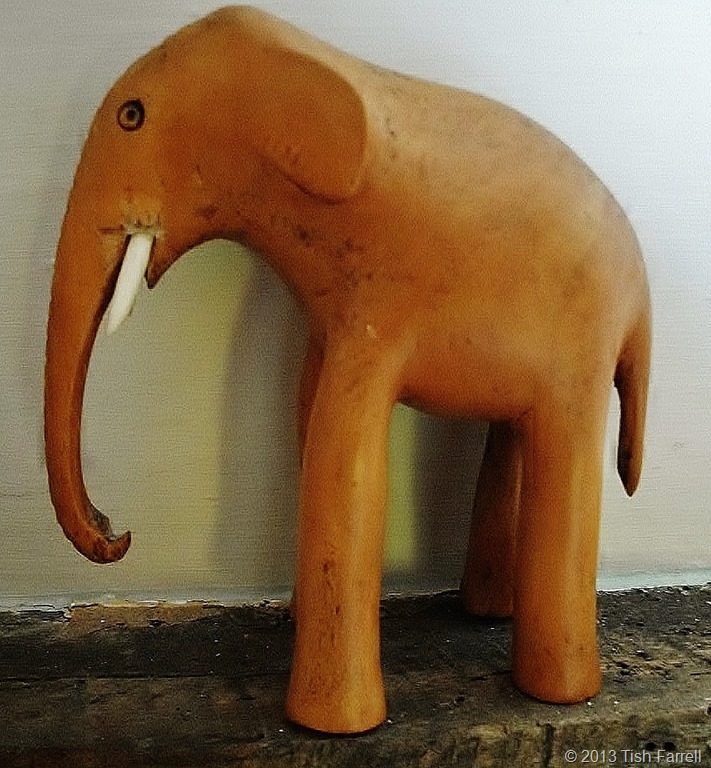
I set off on the basis that as I am not travelling by car, I will not be car-jacked. I am not. I buy a wonderful Tonga basket and a small olive-wood elephant for luck, but there are no books. I do find a map though – Lusaka one side, Zambia on the other. I study the country’s boundaries, trying to make sense of colonial cobbling that created a nation whose North Province lies to the east of its Central Province.

The country nestles in the heart of southern Africa between eight countries. In outline it resembles a foetal chick curled on its back within a protecting shell. In reality, though, I soon learn that Zambia has no such protection. It simply has too many borders and not enough military personnel. There are only some 300, 000 taxpayers in a population of eight million, which is not enough to pay for more soldiers. The north-west border with Zaire is lethally porous. Members of President Mobutu’s own unpaid armed forces regularly drive into Zambia’s Copper Belt and conduct armed pillaging campaigns against innocent drivers and householders. Sometimes they come as far south as Lusaka.

*

002

Pomodizi Hotel

*

We are told that when driving at night we must never stop at red traffic lights (locally known as robots), since this is the moment that car-jackers will choose to pounce. Over in Eastern Province the threat comes from the conflict in Mozambique as RENAMO guerrillas cross the border to shoot up Zambian buses and steal food. In Western Province UNITA fighters from Angola’s war terrorize Zambian villagers. Famine, then, is only one cause of death; there are many others, and the mineral resources that Cecil Rhodes sought so hard to control through his dark-hearted dealings with local chiefs are high on the list.

100_2135

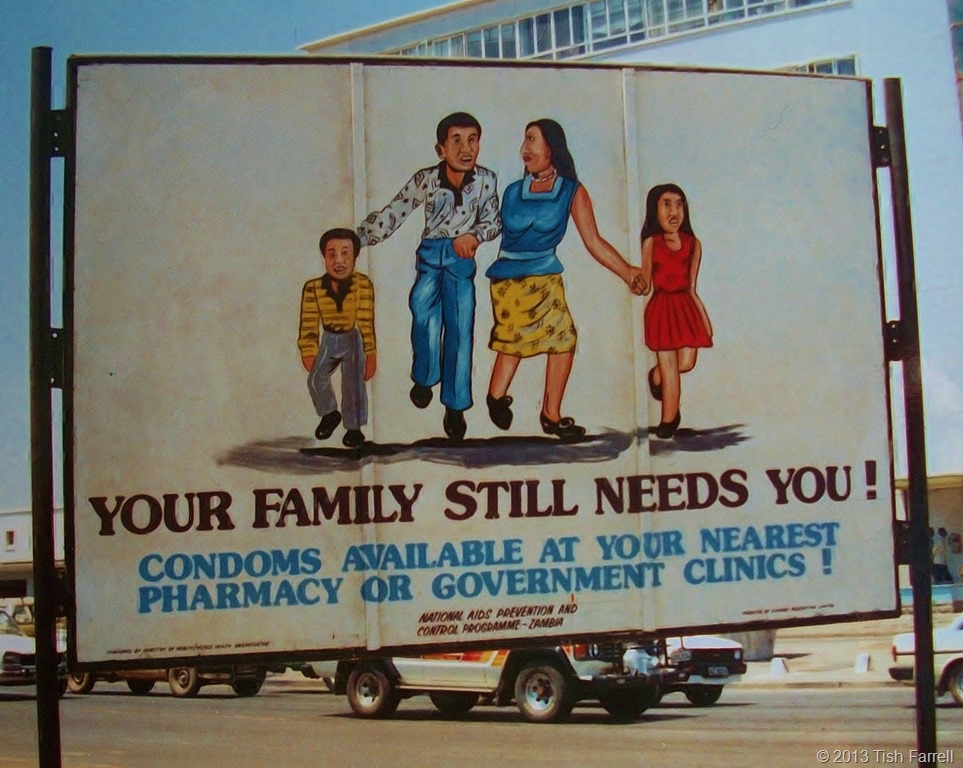
AIDS awareness down on Cairo Road.

*

Then there is malaria and tuberculosis, and as the rains bucket down through December, the cholera season begins. Overflowing septic tanks and pit latrines are polluting the city’s boreholes. At first, oblivious of such dangers, we eat out at downtown restaurants. We are down in Livingstone, near the Zimbabwe border, G checking out the contents of grain stores, when I am stricken with amoebic dysentery. Again it is the Delegation secretary who comes to the rescue and directs us to the mining companies’ private clinic, downtown on Cairo Road. The diagnostic facilities there are impressive, the British-born doctor patronizing. But after a three-day course of very large pills, I recover. I am lucky. Of course I am.

*

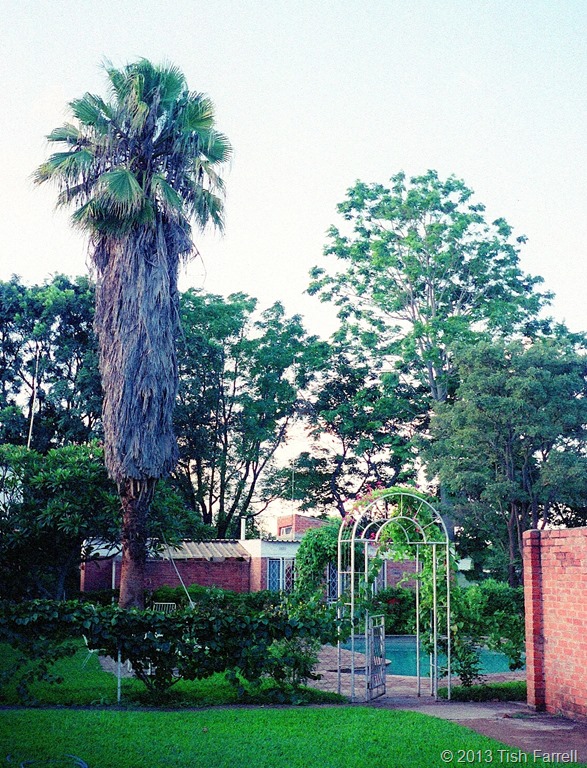
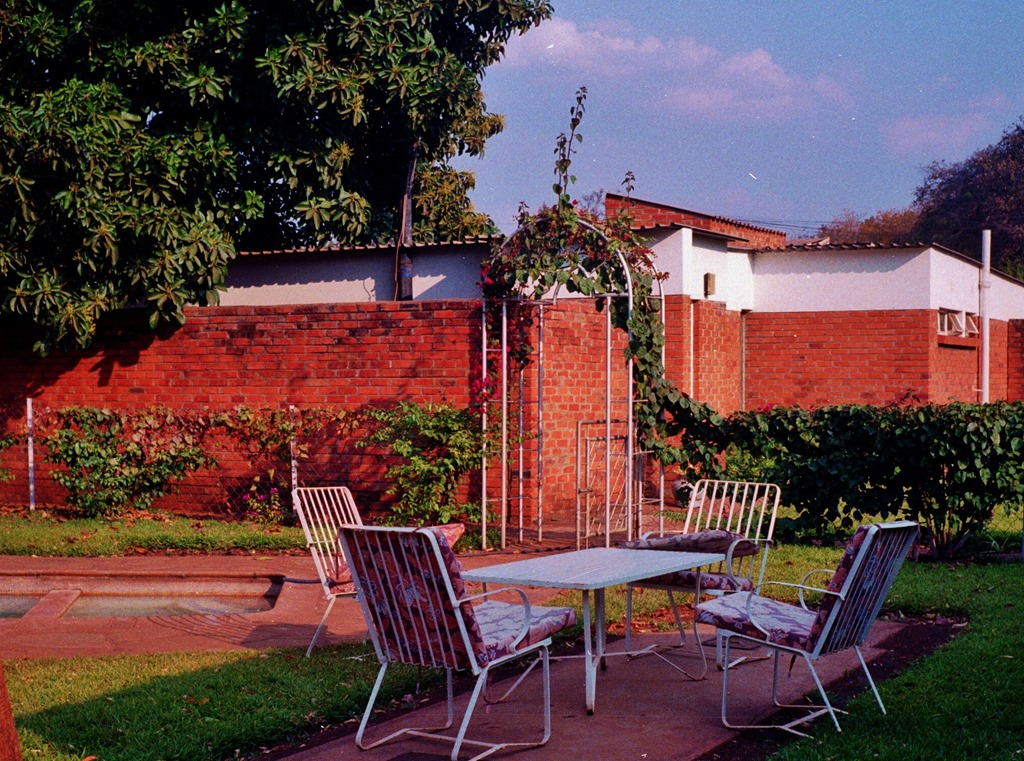
Sable Road - compound pool

Six or so houses share the gardens, including a very small pool.

*

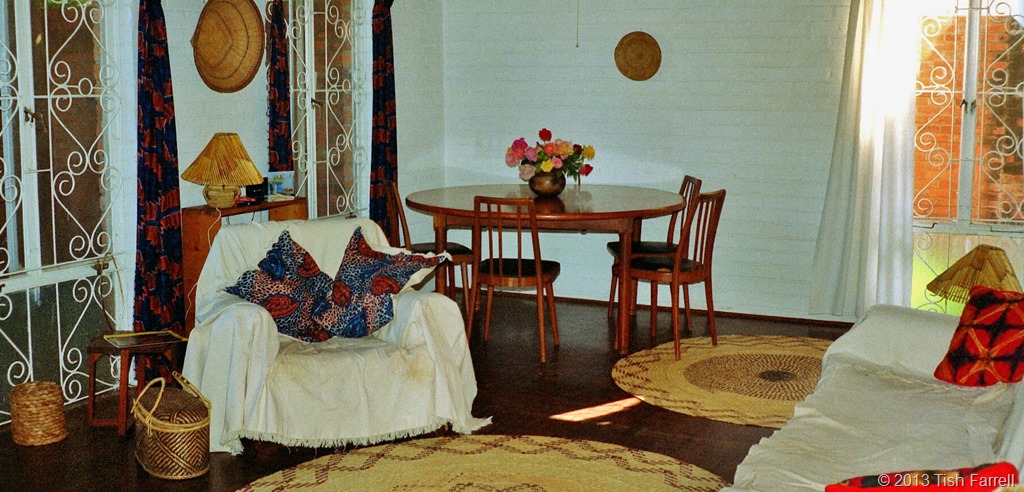
We like our little house. It is red brick, single storey with a sheet iron roof that, during the rains, resounds as if someone is firing bullets into a host of upturned buckets. The living room has French doors opening onto a tiny high-walled garden. There is a big avocado tree in the corner where African sparrows come twittering in to roost in late afternoon. Above the wall, when it is not raining, arcs the blue Zambian sky. To the rear, a small kitchen gives onto a walled back yard and a patch of grass. There are two bedrooms, a tiny study and a bathroom. Outside the front door is a communal garden and terrace – garden seats set by a small swimming pool, a tall palm that rustles endlessly in the high plateau breezes, a sweet scented frangipani tree. No house overlooks any other and there are shady walk ways in between each property.

Sable Road our sitting room

Home in Sable Road

*

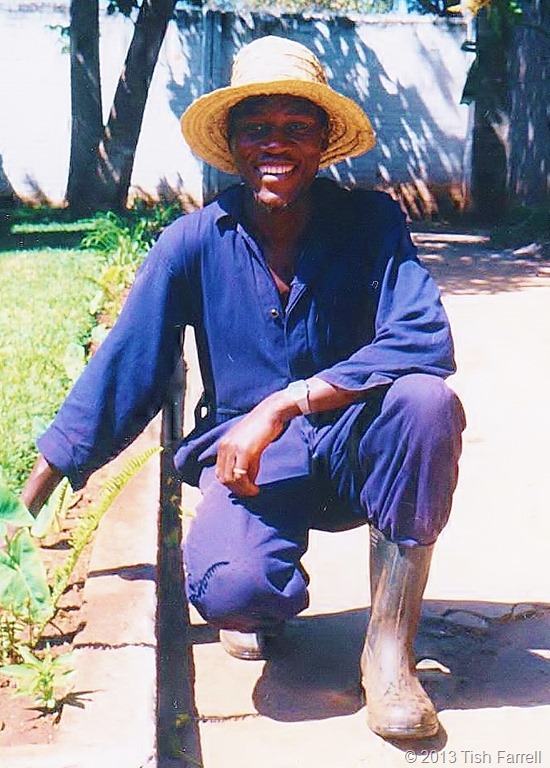
The gardens are tended by a gentle young man called Stephen Nyangu. His name suggests erstwhile connections with the Nyanja royal clan. But Stephen’s situation is a far cry from tribal pre-eminence. He sweeps, mows, weeds, plants, prunes and waters six days a week, from seven in the morning to five in the afternoon. Then he cycles the couple of miles to his compound home in Leopard’s Hill Road where he lives with his wife and four children. The gardens he cares for bloom strangely under sub-tropical skies with tea roses, violets, pansies, Sweet William and Madonna lilies. He also washes all the cars and hefts all the dustbins to the big compound gate to be emptied once a week. For this he earns twelve thousand kwacha a month, about eighteen pounds. He has no leave beyond national holidays, and after work he runs a cigarette stall.

014

Stephen Nyangu works day and night to keep his family.

*

On my first day in our new home, it is Stephen who knocks on my door. “Good morning, madam. My name is Stephen. If there is anything you want me to do, I am just out there.” He gestures in the general vicinity of the pool. “Call me.” He is the only person on the compound who bothers to introduce himself. In ten months we scarcely see any of the other tenants beyond the Sikh couple who live next door. They nod to us. They have two much pampered, miniature Pomeranians and a maid called Isa. Isa looks a good-hearted soul and she works in several of the other households on the compound once she has done her daily tasks for the Sikhs. These include much furious chopping at seven a.m. Perhaps she is chopping for the Pomeranians. When she is left in charge of them for three months while their owners go on leave, she grows so fed up with their insistent yapping that one day she yells SHUT UP. And so shocked are the indulged little canines, that they do just that. I want to hug Isa.

I further decide that my house is scarcely big enough to justify even a once-a-week cleaner, this despite the constant slick of red dust that blows in every day. I thus do my own housework.

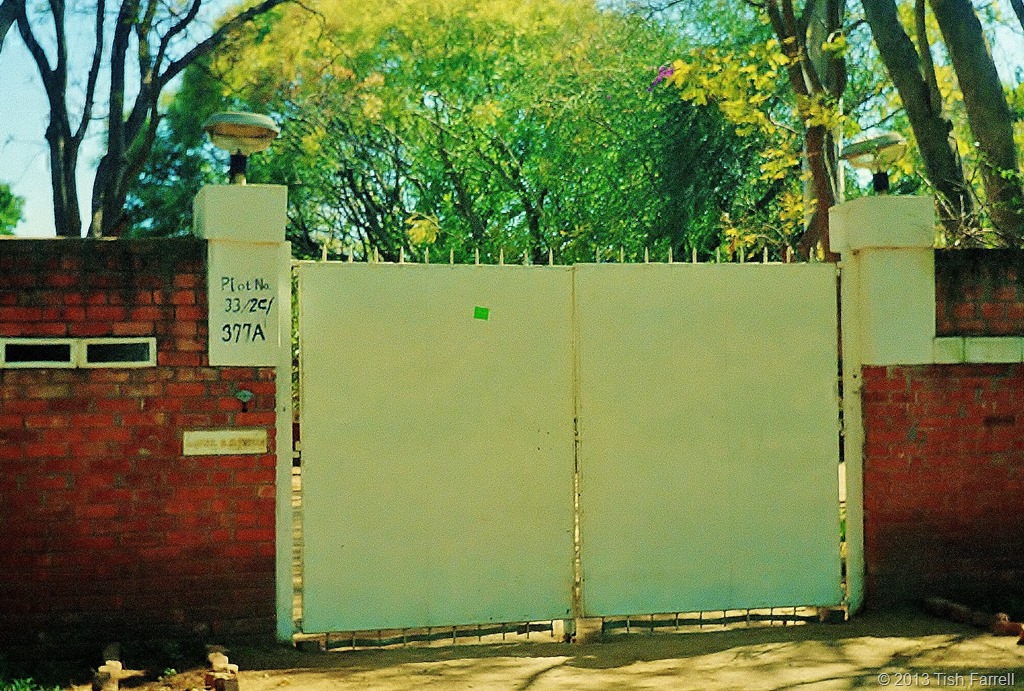
Our compound is on Sable Road in Kabulonga, the heart of the diplomatic quarter. Our next door neighbour is the Egyptian Embassy. At night the guards fire off rifles. We never do know what is going on there, and sometimes it sounds like a siege. Our compound is one of the least fortified on the road. The iron gate has open railings instead of sheet metal armour plating, and our day guard, Sammy, always leaves it unlocked  anyway during the day, while he plays draughts with a neighbouring house-guard. He’s a bit  nonplussed by my habit of going out on foot, and at first dashes from his game to open the gate as if I were a passing vehicle. We soon come to a silent arrangement whereby we greet each other, I open the gate for myself and he keeps on with his game. 

We soon discover that our household security provision falls short of official standards. European Union and British High Commission employees are advised to have internal security gates installed, external security lights, roof siren, alarm buttons, window bars, a pack of Dobermans and ridgebacks, a two-way radio and armed twenty-four-hour guards. The fortification of a property may cost around £5,000. Somehow we survive without most of these devices, although the top of our garden wall, which also forms the rear of the compound, is quite high and is further cemented with shards of broken glass.

015

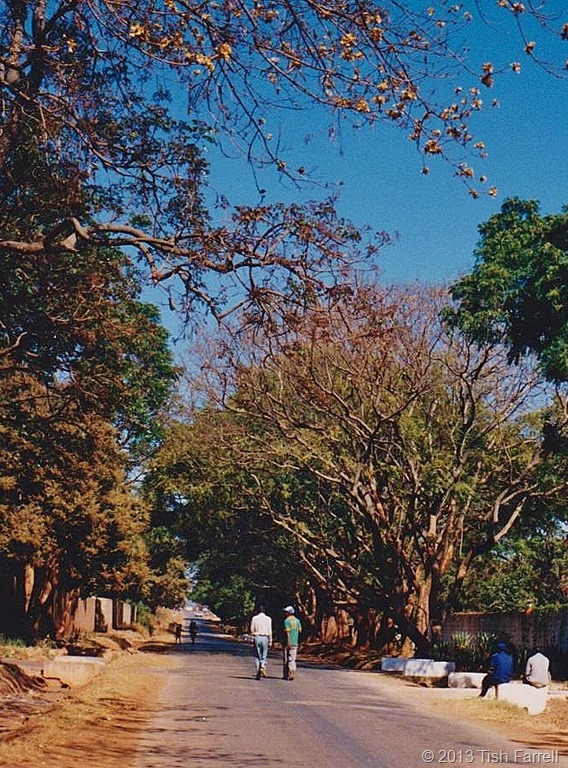
Sable Road in the dry season.

*

The nights, though, can be nerve-wracking. Rounds of automatic gunfire are common after dark. Some European locals, we hear, have made a ritual of standing on their front lawn at 9 pm every night and shooting off their sporting rifles – just to let “the thieving bastards” know what’s what. These are the same people who will tell you that, when they are not trying to relieve you of all your worldly goods, the Africans are really very charming. But gunfire aside, it is anyway hard to sleep in the perpetual gloaming of the security lights dotted around our compound. The insects, too, grow louder as the night draws on, and then the dogs wake us.

Elite suburban living

Expatriate living: guard house and armoured gates.

*

I call it the Kabulonga Howling. It begins with a solitary keening which swells into a relayed dog lament that spreads from compound to compound until a monstrous crescendo resounds across the suburbs. Once reached, it quickly subsides, to be replaced by the insistent beat of Zambian disco music, thrumming away beyond our perimeter wall. We have no idea who lives behind our glass-spiked rampart. I have tried standing on the brick barbeque in the back yard, but I still cannot see over the wall. Instead, I often hear a Zambian boy badgering his little sister whose name is Lorna. Lorna is always being ordered to do something or other. There is meek compliance in her little voice. It is the lot of many Zambian women to defer to men, and my heart aches for her. One day I find an arrow in the back garden – a stiff plant stem tipped with a bent Mosi beer bottle cap. For a moment I examine it like Robinson Crusoe finding unsettling signs of life on his confining island shore.

By day G. drives off early to the EU Delegation. It is only five minutes’ drive away. I begin to tend the back garden, sowing beans, courgettes, carrots. Things quickly sprout, but the land snails are as big as my fist. I write and read, although finding books is a challenge. We can find no bookshops in Zambia since the nation can no longer support a publishing industry. Once a week we drive down to the British Council on Cairo Road to borrow books from their library. We do this, ignoring white Zambians’ warnings that our Suburu will be car-jacked if we park anywhere downtown. Whenever we go to the library, most of Zambia’s students seem to be studying hard, filling every seat. It is hard to gain qualifications in a land without books.

Newsprint , too, is hard to come by. Newspapers sell out quickly each day and I have to rely on G. bringing the Delegation copy home at lunch-time for quick scan through. Soon we hear that four Zambian Daily Mail accountants have been arrested for ripping off their own company’s limited newsprint stock and selling it to a rival newspaper.

Then there is the challenge of household shopping. Our local shop is Kabulonga supermarket where I frequently search the shelves to the strains of  Michael Bolton’s The Lady in Red. A beautiful girl in cobalt blue chitenge and matching head-cloth that is  tied with great flourishes, is often on the till. She has the poise of a princess.

When it comes to shopping, it is a matter of buying whatever is in stock and then thinking of something to do with it. Treats include cartons of delicious and imported Ceres grape juice, and jars of sweet pickled beetroot. The local yoghourt comes in big tubs, plain or strawberry. Other staples include corned beef and South African wine. The supermarket smells of countless forms of perfumed cleaning products that at Christmas time are parcelled up into gift packs to make the ideal gift, along with small bales of second hand clothing.

Kamwala roadside furniture market

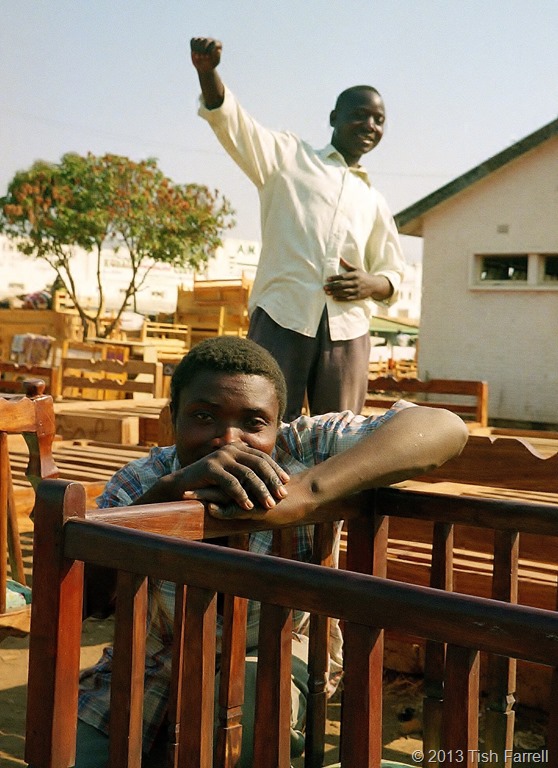
There are plenty of roadside artisans. We bought our bed from traders in  Kamwala Market

*

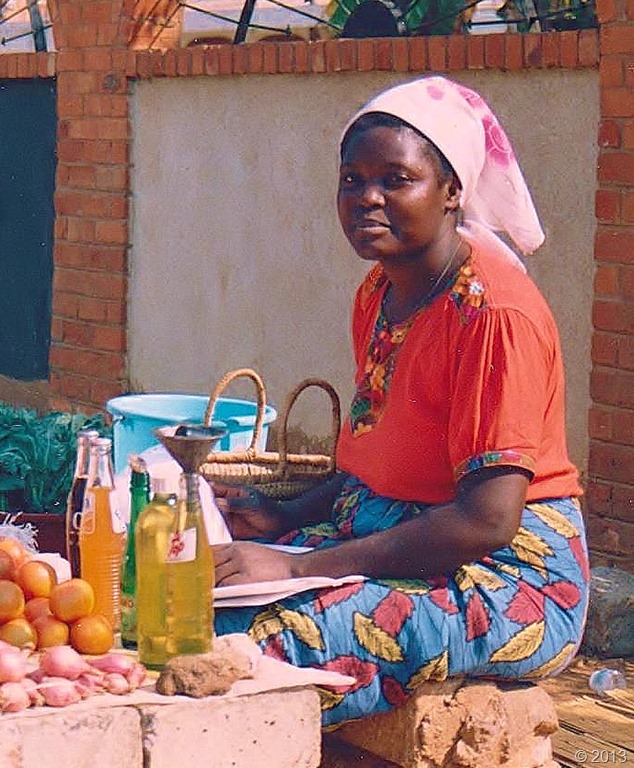
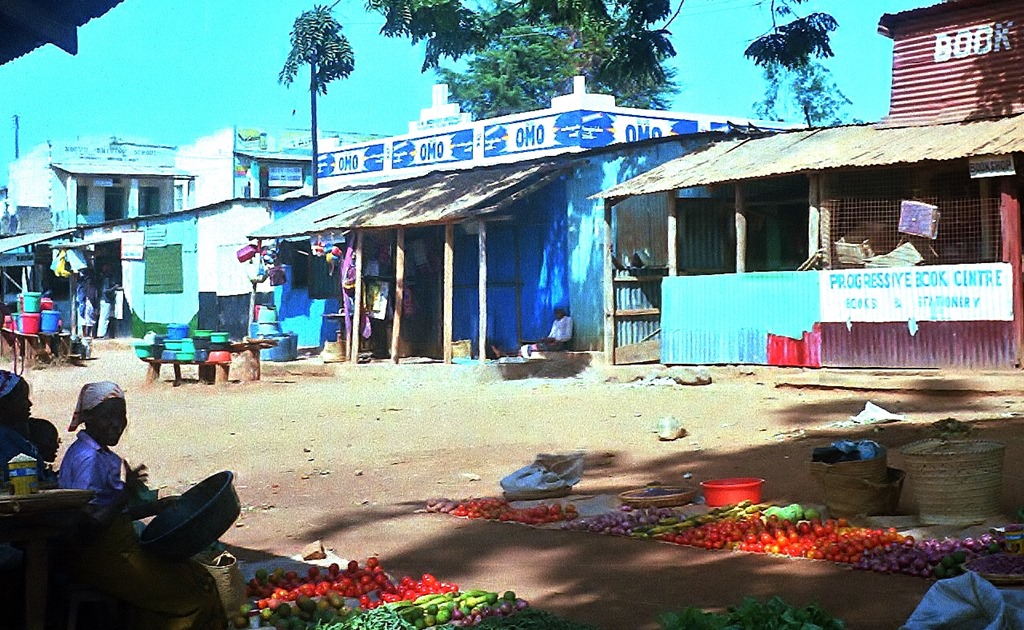
There are of course shopping opportunities everywhere along Lusaka’s streets – cigarette and second hand clothes stalls, a man selling bread, another with his scrawny hens, fish from a freezer connected to nothing, caterpillars dried or roasted, large woodland mushrooms the colour of cygnet down, little pyramids of tomatoes. If I buy two piles of tomatoes from the young woman in the photo, she gives me an extra tomato as a “special gift”, and then wraps the lot in computer print-out.

001

I also walk down to the Maluwa Cooperative in the hopes of something more interesting than beetroot and corned beef. Again I never know what I will find there: perhaps, if I’m lucky, a good mission-reared chicken in the cold cabinet, or button mushrooms, some Gouda cheese, broccoli, new potatoes, French beans, bunches of roses. If he catches me walking, an elderly white Zambian in a pick-up, (his ‘boys’ in the back), always insists on giving me a lift. He means well, and it is easier to comply with his desire to save me from imagined predations of Zambians than to argue.

But I like it out on the road. There is so much life there outside the high walled, razor-wired residences of the elite. People greet me. A taxi driver trying to mend his broken-down car offers me a lift, presumably in hopes that if I agree, his vehicle will conveniently right itself. I grin and say no thanks. I like his style though. As I step out again on the dirt road that has lost its asphalt, my footprints are impressed in the dust among the countless prints of others.

*

G. spends his days rushing round to meetings with aid agencies. There are fears that donations of free maize will dissuade farmers from planting their own crops, despite the good rains. Too much free maize is also likely to depress the economy, and this must be avoided. Much is given out as payment for working on public enterprises such as road building or making bricks for the building of clinics. Unemployed women, in particular, are keen to do such work. Receiving a sack of mealie meal, sugar, beans and cooking oil in return for their labour gives them independence from menfolk who might otherwise take any cash earnings. G. also has to travel down south to Choma and Kalomo to oversee the distribution of EU maize by the Red Cross. There are more trips out east and to the Copper Belt.

011

Villagers coming to collect cooking oil and maize meal from Red Cross food aid distributers.

*

012

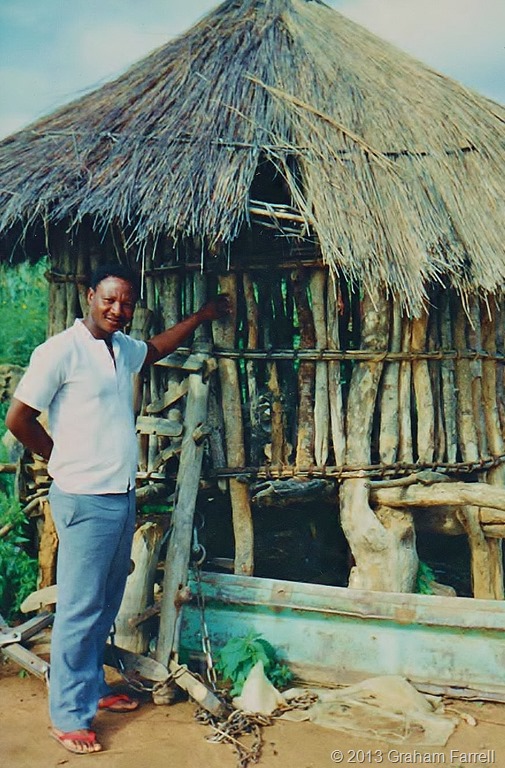
A farmer shows Graham his empty granary.

*

In March G. comes home saying there is a bit of flap on. Brussels has phoned the E.U. Delegation saying that the BBC has reported a coup in Zambia: is everything all right there, they ask. The diplomats scratch their heads. No coup has been observed, but a few days later it is clear that something has happened. Major Rezi Kaunda, son of the long-serving and recently supplanted, ex-president, Kenneth Kaunda, has been arrested. He is reported as being under armed guard. Further details explain, somewhat bizarrely, that he is sitting in the yard of Woodlands police station with his flask of tea and a radio. Fourteen plotters in all have been arrested both in Lusaka and the Copper Best. These include the editor-in-chief of the Zambia Times.

Later we hear that an incriminating document, The Zero Option, has been seized. It gives detailed plans of how members of the UNIP opposition old guard, led by Rezi, intend to make Zambia ungovernable by fuelling a crime wave, infiltrating the unions and government departments. It is mooted that this campaign of destabilisation has already been instigated and is responsible for the alarming crime wave.

President Chiluba has only been in office for a little over a year. His Movement for Multi-Party Democracy defeated Kenneth Kaunda in the first democratically held elections since Independence in 1964. Kaunda Senior had been in power all that time, but on defeat, chose to bow out gracefully. Meanwhile Frederick Chiluba claims that he is on a clean-up mission of this potentially rich, but now run-down state. He declares a limited State of Emergency while order is restored.

We all breathe a sigh of relief. No need for the emergency evacuation that the High Commission is so unlikely to provide for us. Besides, G. still has much work to do, and there’s so much I still want to discover. One thing I am itching to know is how this copper-rich nation, with its deposits of sapphires and amethysts and airy upland mopane forests is one of the poorest on earth. Why are its impoverished, beleaguered but hard-working peoples being so ruthlessly structurally adjusted by the World Bank? I am beginning to suspect that the spirit of Cecil Rhodes is restless and abroad once more, but that, as they say is another story.

Eastern Province

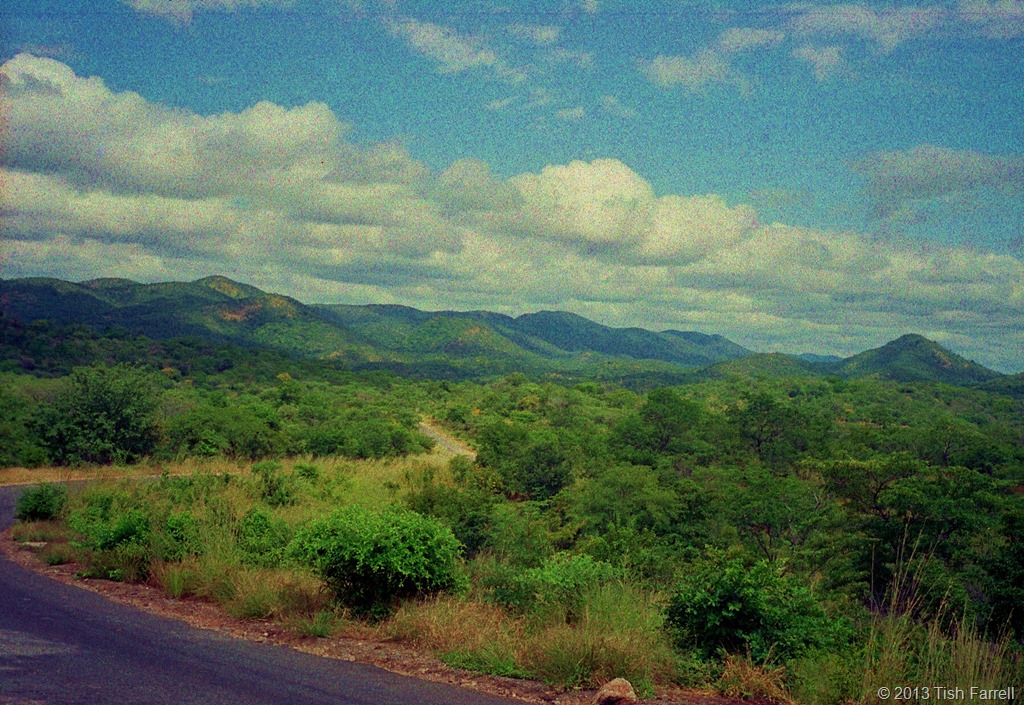
Zambia is often called ‘the air-conditioned state’. It comprises an upthrust, tilted plateau some 5,000 feet above seal level. The natural vegetation is mopane woodland. This view was taken along the Great East Road.

Lusaka agricultural show - miniature railway

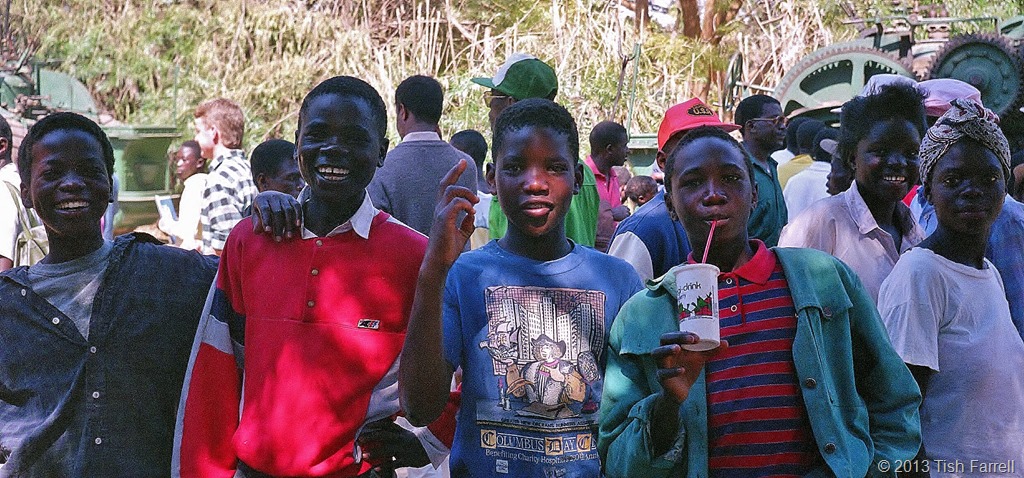
Lusaka agricultural show - kids

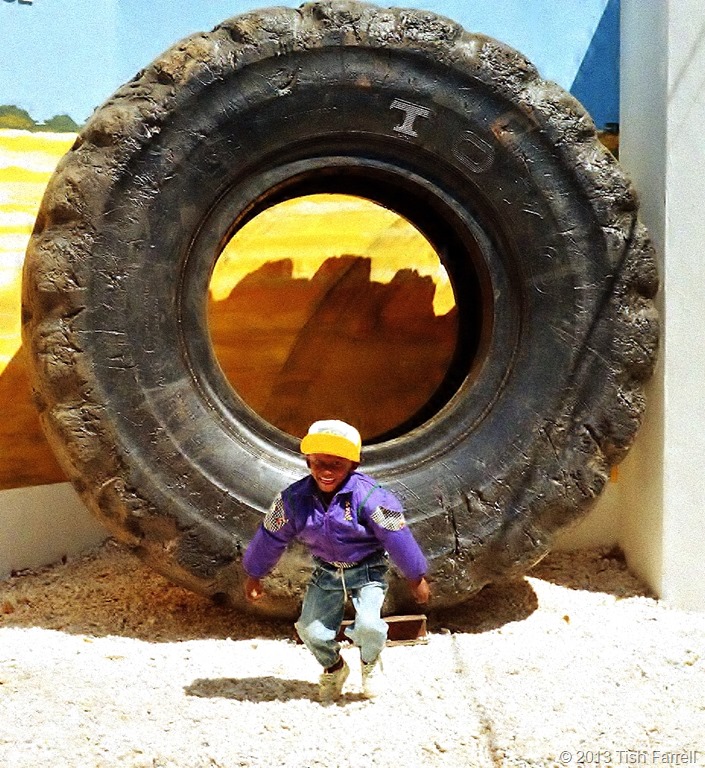
Lusaka agricultural show - Boy and copper belt truck tyre

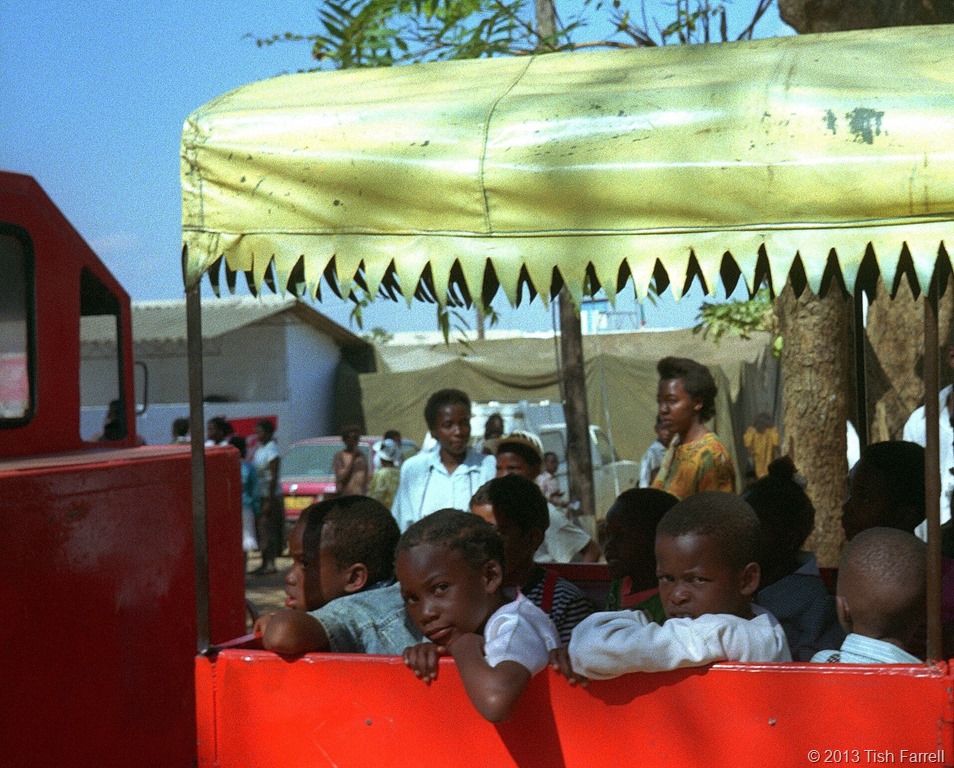
Kids at the Annual Lusaka Agricultural Show. 1993’s slogan is ‘Produce to Prosper’. Produce and get a fair price  from multi-nationals would be my preferred slogan.

*

© 2013 Tish Farrell
In the Rift: in and out of focus

WP Photo Challenge: Focus

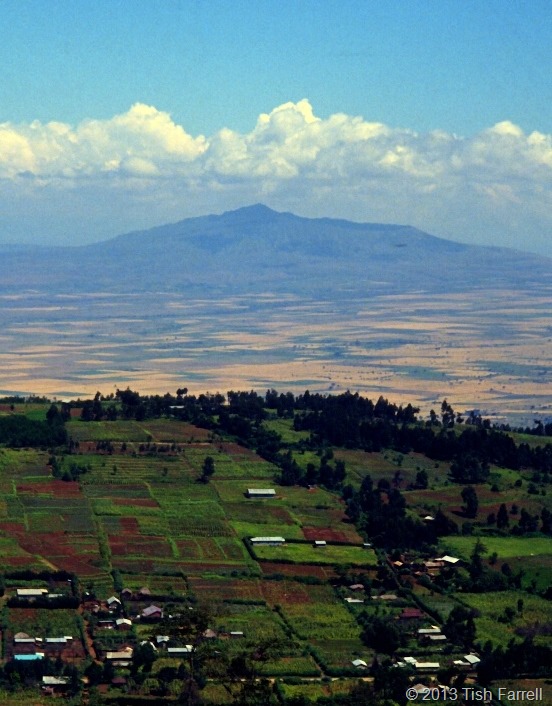
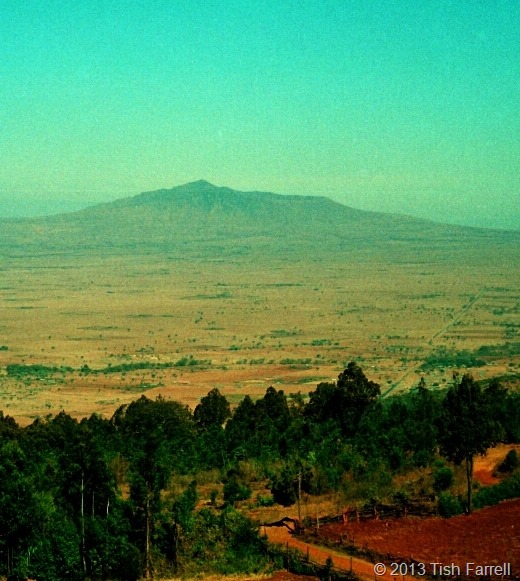
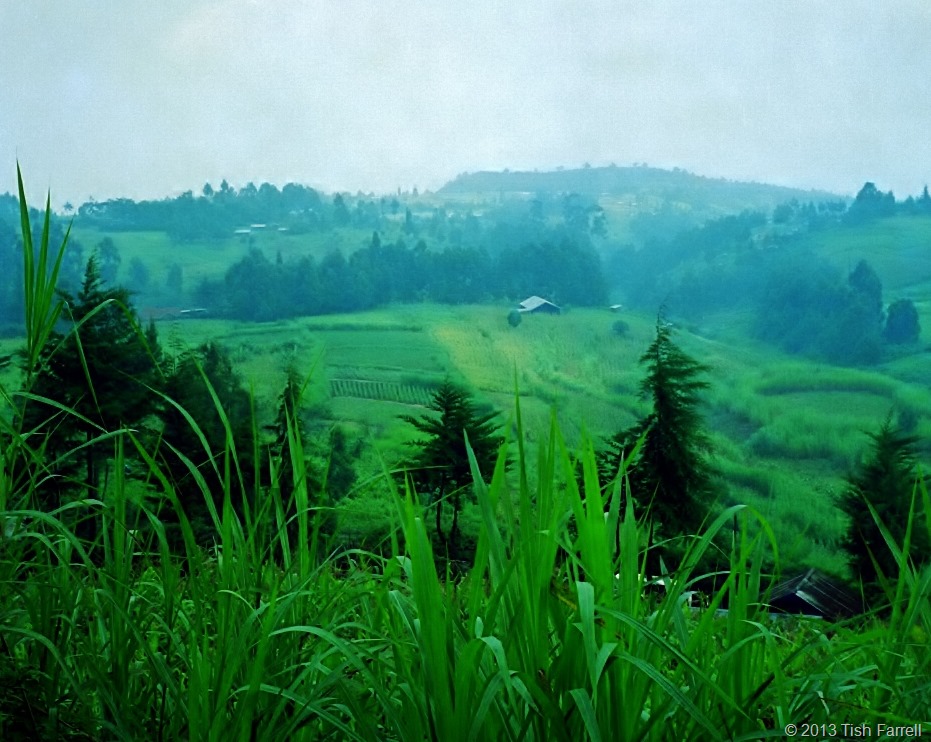
Rift Valley from Escarpment

You may have seen a version of this photo in an earlier post, but it’s worth another look for various reasons – all of them to do with FOCUS. This shot was probably taken late morning. The farmsteads of Escarpment are shadowed by the Eastern Rift behind. Out under the sun, the old volcano Longonot flattens and drifts into mistiness. Your brain tells you that your are witnessing a mirage.

You can climb up Longonot if you want to, and walk around the rim. (We never did.) Inside the crater, Rider Haggard-style, there is a wonderful hidden forest filled with wildlife. In the middle distance, but not quite visible, runs the old road from Nairobi to Naivasha, built by Italian prisoners of war in WW2.

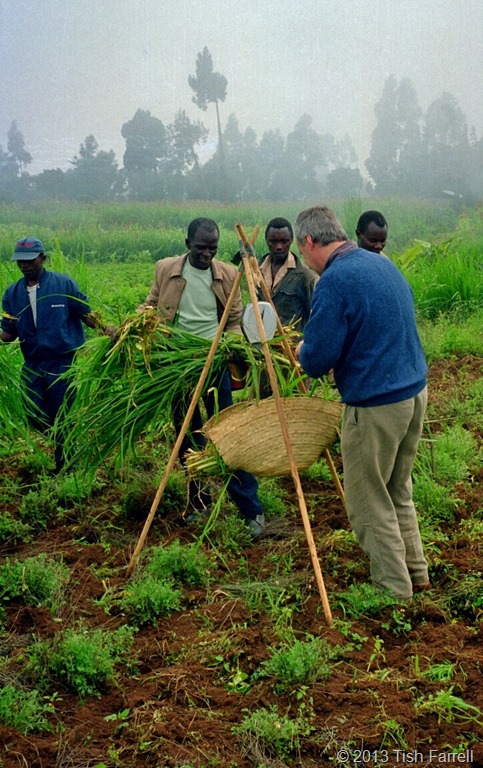
But to come back to the foreground, and the largely Kikuyu community of Escarpment, this is one of the places where, in 1997-8, Team Leader and Nosy Writer carried out some of the Team Leader’s doctoral fieldwork on SMUT. Smut is a fungal disease that attacks Napier Grass, an important animal fodder crop. If you didn’t read the smutting post, coming up is a photo of the smut team in action, complete with some Rift Valley fog which usually happens during Kenya’s cold season in June and July.  Here it provides  the soft-focus-background-look without need of any technical jiggery-pokery.

napier grass sampling 3

Team Leaders Njonjo and Graham weighing clumps of Napier Grass. The object to establish a disease assessment scale for estimating the food loss of a smut-infected field.

*

Actually, the real leader in Operation Smut was Njonjo. He’s the one holding the bundle of Napier Grass. His family’s land is in Escarpment, much sub-divided between himself and his brothers. When we visited his home he told us that his own holding was about a quarter of an acre. This was one reason why he worked as a driver for the Kenya Agricultural Research Institute and was not as a full-time farmer. He had children to educate, and his land alone could not support them all.

*

napier grass on the Rift

Napier Grass in the foreground with Escarpment farms beyond. This important crop is grown on road verges and field terrace boundaries to feed ‘zero-grazed’ stock. The small size of most farms  (some less than an acre) means there is insufficient ground for both pasture and cultivation.

napier grass and farms

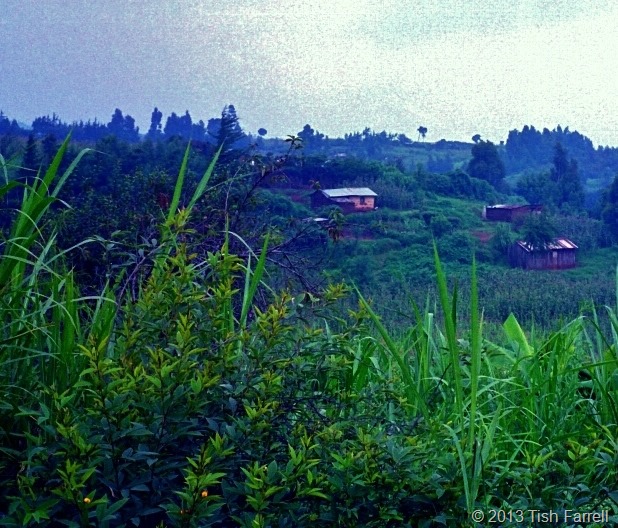
Kikuyu farmstead on a drizzly El Nino day.

*

And if you are wondering why Kenyan farms are so very small (several acres in the fertile Central Highlands would be considered quite large for many families) then that’s old colonial constructs for you. Kenya may have been an independent nation state for fifty odd years, but the colonial concept of land management and ownership, along with many other inappropriate British institutions, is alive and well.

Because that’s the thing about British institutions – they are sneakily feudal and thus very hard to unpick. Even in Britain, most of the population is generally unaware that most of the nation’s land is owned by a small number of people who are fully committed to keeping it that way. Ownership in the form of title deeds coupled with an elitist sense of superiority and personal entitlement based on heredity fortify their position. Increased urbanisation is in their interest; it keeps hoi polloi out of the deer parks and off the grouse moors (unless of course they are paying high fees to be there.)

In Kenya much of the population still occupies plots that were part of the designated Native Reserves back in the 1900s.  Since those days the population has increased many-fold, and family farms have been subdivided to point where they cannot easily support one family. This situation underpins much of the creeping poverty that you will see in Kenya today. It is the reason why at least 75% of the nation’s food is grown by women smallholders.

*

Wundanyi market 2

Women selling their excess garden produce at Wundanyi market, Taita Hills.

*

These essential growers are the rural wives who stay on what remains of family land to grow what they can, while their husbands  migrate to the towns to work in shops, hotels, and as drivers,security guards and house servants. These men will return home maybe once or twice a year when they have their annual leave. At such times they will help with the harvest and undertake house repairs. This is also the reason why most parents struggle so hard to educate at least some of their children – so they do not have to live this way.

*

When the British occupied British East Africa at the end of the 19th century, they treated the territory in much the way a British landowner would manage his inherited estates. There was the presumption of absolute ownership. All indigenous people who hunted for a living were labelled poachers and treated accordingly. Land was divided into Native Reserves and Forest Reserves and latterly there were also Game Reserves. All the land that had not been alienated for European settlement was Crown Land unless it was Native Reserve land. By 1914, five million acres had been allotted for European settlement. The Maasai had also been removed from their fertile grazing lands on the Laikipia Plateau and relegated to the poor land that is now known as the Maasai Mara.

001

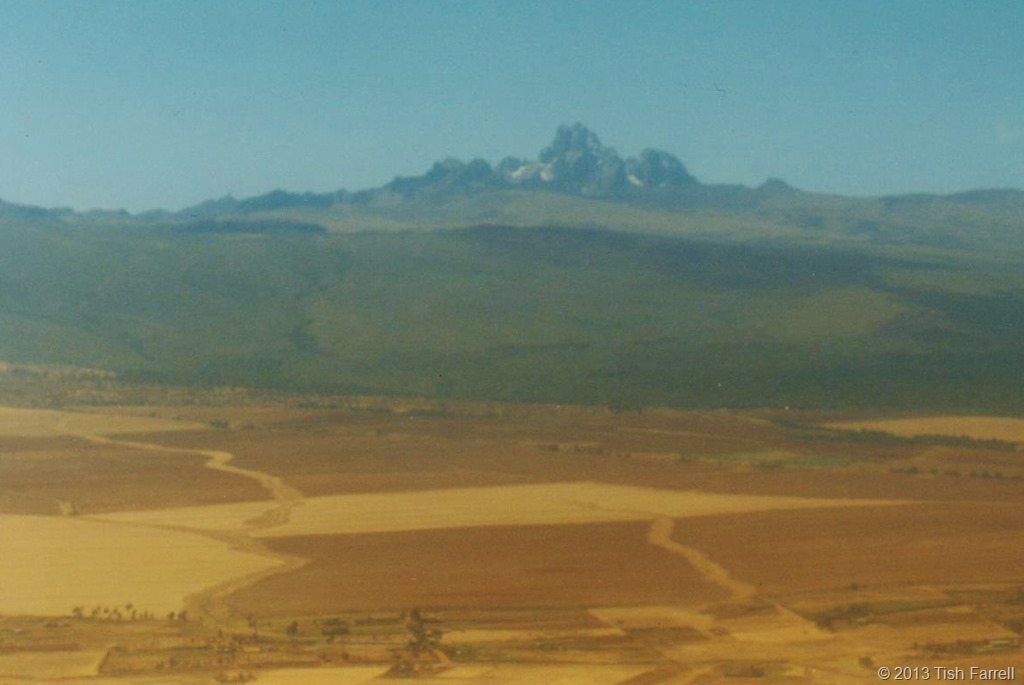
European owned wheat fields, Laikipia, below Mount Kenya. Taken from a plane window hence the haze.

*

Under colonial rule, Africans could not leave their Reserves unless it was to work for Europeans. Hut and poll taxes were imposed to force them to do so. When overgrazing and land erosion became evident in overcrowded Reserves, well-meaning British Agriculture Officers informed the locals that they were doing everything wrong. Farmers were urged to plant in a European way, to grow strains and varieties of crops to suit British markets. In particular, the growing of nutrient-, water-guzzling maize over traditional, more nourishing crops such as millet was promoted. There was the enforced terracing of land and the confiscation of stock animals without compensation if deemed to be in excess.

Meanwhile, large blocks of the best settlement land were taken  up by British settlers, including a number of British aristocrats whose descendants still live on large estates in Kenya. After the 1st and 2nd World War, British veterans of the officer class were actively encouraged to settle the so-called ‘White Highlands’ around the Rift and grow cash crops. When many sold up at Independence, their tea and coffee estates were taken over by European corporations. Other settlers who wished to leave at that time were bought out by the British Government who then apparently handed over the bill to the new Kenyan government. The new nation state thus started out in debt, having paid to get its own land back. It was not a good beginning.

Scan-130601-0006.jpg

A beautiful corner of Lord Delamere’s estate of Soysambu at Elmenteita in the Rift Valley. The pink dots on the soda lake are flamingos.

*

the-castle2.jpg

Egerton Castle, built in Njoro in the Rift Valley between 1930-40. Its owner was the Fourth Baron Egerton of Tatton, Cheshire. It is now part of Egerton University and used as a wedding venue.

*

However you look at it,then, the land situation in Kenya does not present a pretty picture, and this is only a brief, soft-focus version. After the British left in 1963, Kenyans might have been able to leave their Reserves without passes, and walk on whichever side of the street they chose, but the Crown Lands concept of absolute possession has dogged the country ever since. Crown Land became state owned land; colonial institutions became state institutions. And as I said, such constructs are hard to unpick. Nor would the Kenyan elite wish to unpick them, any more than the British nobility would wish to surrender their hereditary land rights to the masses. As the fourth President, Uhuru Kenyatta (and son of the first President Jomo Kenyatta) takes office, so the thorny issues of land grabbing and wrangles over title deeds continue.

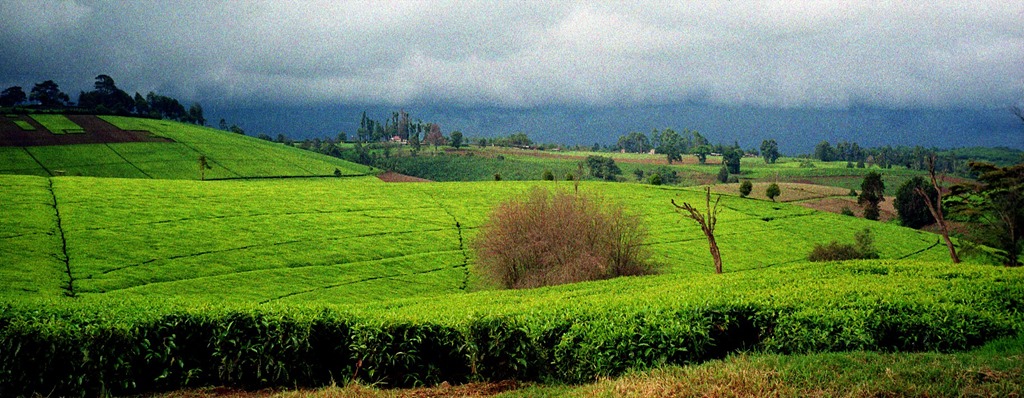
tea fields and workers' houses_thumb[140]_thumb

A  tea estate with workers’ quarters near Nairobi.

Limuru tea fields in the long rains

*

Today, ordinary land-poor Kenyans must look out on the large farms and estates still owned by the descendants of European settlers, or the ranches and flower factories of the Kenyan elite, or at the plantations of the multinationals whose profits go to foreign shareholders, or even at the great wildernesses set aside exclusively for wildlife, and wonder what Independence has brought them. Under colonialism most people were excluded from the wealth creating process except to provide manual labour. Today it seems that not much has changed.

*

Rift Valley and Longonot from Escarpment (2)

http://flickrcomments.wordpress.com/2013/08/27/iii-challenge/

© 2013 Tish Farrell
Grand girl, great prospects…?

Eve trig 1

Pitch Hill, Cranleigh, Surrey

*

Don’t you feel the rush of energy as you look at this photograph? An impulse captured, hopefulness personified. The gaze is so sure, the balance perfect with no hint of a wobble. It makes you ask: what is this young woman surveying? How does she see her future? And with a stance like that, isn’t it bound to be glowingly brilliant?

If I tell you that the year when this snap was taken was 1937, whatever  image you have just conjured will fragment into uncertainty. With hindsight we can see what her young eyes cannot: soon there will be war, some six years of it.

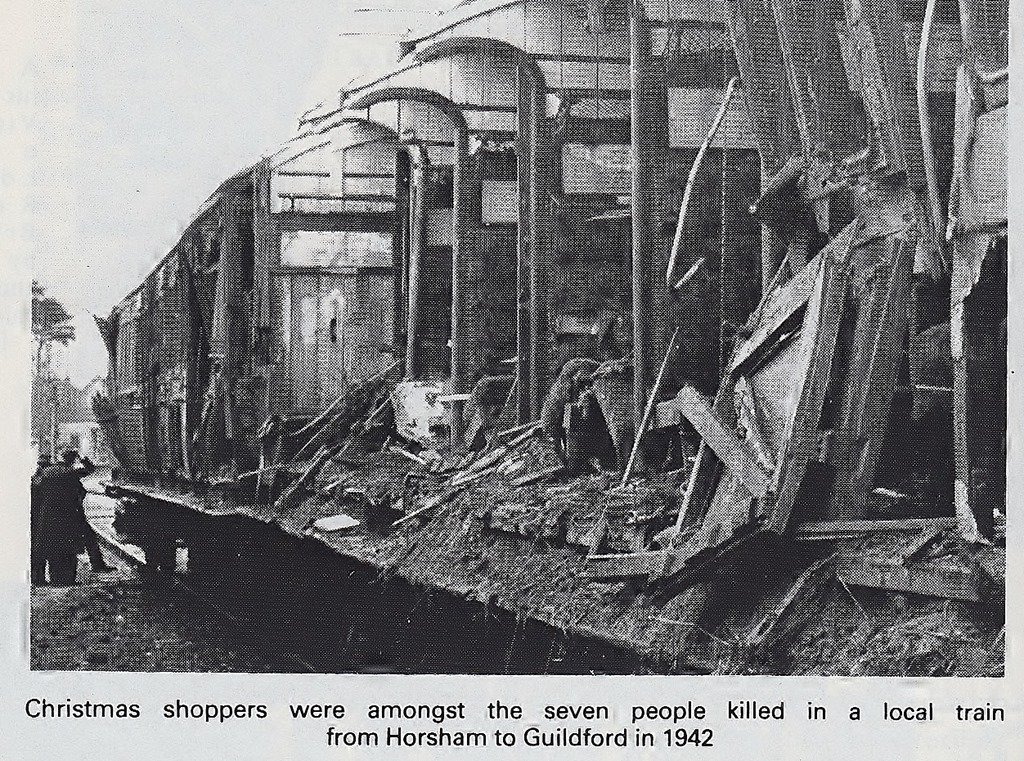
This, then, is my aunt, Evelyn Mary Ashford, who was ninety in June 2013. I have told the story of the 1942  train bombing that she miraculously survived here.  But since I wrote that post I have found an aftermath photo of the actual incident.

IMG_0001

Photo from War on the Line by Bernard Darwin, Middleton Press

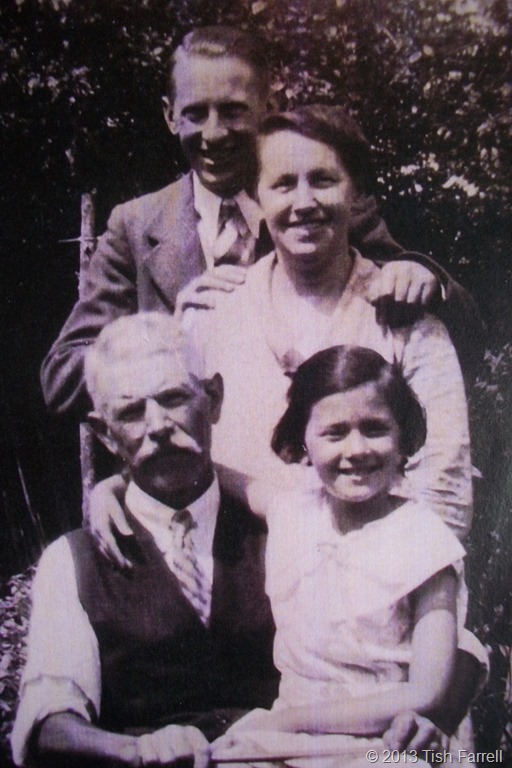
Evelyn, then, was the daughter of the Head Gardener at Redhurst Manor, Cranleigh, one Charles Ashford of Twyford Wiltshire, and Alice Gertrude Eaton, a former accounts cashier from Streatham, London. My father, Alex, was born nearly thirteen years earlier than Evelyn, and by the time she was born, her parents were middle-aged, and my grandfather’s hair already white. This is how I remember him too, for he was long-lived, although a Victorian through and through – a passionate gardener and meticulous horticulturalist typical of that era.

100_3764.jpg

The Ashford Family c. 1930

Grandpa Ashford 1952

Charles Ashford c1952 in his late 70s going rough shooting with Smudger.

Evelyn was around fourteen years old when the Pitch Hill photo was taken. I imagine it was my father who captured her on the trig point. The week before her fourteenth birthday she wrote an essay for her English homework. It is called “I had sixpence…” and gives a surprising insight into this particular village girl’s mind.  Seventy six years on, it still has resonance.

“Money! What a lot that word means today. Everyone is out for as much as they can get, the businessman in the City goads his employees on to fight for supremacy and money.

What would I do if were a millionairess? How should I plan my life?

First of all I would find a home, not just anywhere, but where I should be happiest. Preferably I should live in Devonshire. To be out on the open friendly moors, with the tang of sea in my nostrils, warm streams of pure air fanning my cheeks and the sound of the sea breaking upon the rugged rocks.

Another thing that I would delight in, is travel. To see the great places of the world renowned for mighty deeds and people. Rome, Venice, Athens, those beauty spots of the world. The ruined Coliseum, the forum, the mighty arena once thronged with sturdy, carefree Romans, with swinging togas. The gondolas, moonlit canals and gay masques of Venice, that city of song and laughter…

To return to England and my Devonshire home. One of my favourite pastimes would be reading. A large shady room with deep armchairs, soft long piled carpet that deadened all sound and a baize door, with shelves packed full with books on all sides, a veritable sea of books. Kipling, Stevenson, Edgar Wallace, Horler, ‘Sapper’, Dickens and all those famed authors. That would be the domain of my heart. What strange people would flock down from the shelves to meet me: Sam Weller, Drummond, Pickwick, Jim Hawkins, Kim, Tommy Tradles, Madam Defarge and lord of them all, Sidney Carton.

Oh! But I am thinking only of myself. My money would not be spent on myself along. There are millions of others who would know none of the joy I have experienced. I mean to make myself prominent in government affairs; to get into Parliament if I possibly can. The working class must have more freedom for they are hemmed in on all sides by government officials. What do we pay taxes for but to keep fat officials in the lap of luxury? That is what I would be all out against…”

She concludes by saying that on her death all her wealth would be shared equally between her chief friends and interests.

 And of course she is not dead yet, although she is very poorly, and she no longer communicates on this plane of existence. All her young and adult life, she did whatever she could to help other people, this despite feeling sorely thwarted by a lack of education. My grandfather made her leave school before she could sit for her Primary School Certificate, and anyway would not have been able to afford for her to go on to high school. Instead, she looked after my grandmother, and then was apprenticed to Gammon’s Drapers in Cranleigh, working a twelve-hour day. 

100_3758

Evelyn with my grandmother in the 1940s.

Like so many bright women of her generation, her true talents were never fully nurtured or allowed expression. She married a man, a war-time sweetheart, whom she once described as “a good man”, but who was in no way a kindred spirit. Their married life was also blighted for the first fifteen years by having my grandfather living with them. This was  a terrible trial by any standards, for he allowed them no privacy, and Evelyn found herself endlessly torn between father and husband.

But for all her domestic ups and downs, she never stopped learning, any way she could, or passing on the things she had learned. Now, though, her gaze looks inward rather than out into the world. Perhaps she is back in the walled garden at Redhurst, watching her father in the big glass houses, propagating primulas or grafting peaches, or getting her knickers green, sliding on the velvet lawns that were cut by garden boys leading the  big horse-drawn mower. Or perhaps she is thinking of the young American bomber pilot whom she did not marry, but to whose family she wrote breathlessly chatty letters about doodle bugs and food shortages during the last years of the war. “Dear Momma and Pop” those letters begin…

100_3759

Evelyn around 4 years old in the Redhurst kitchen garden where her father ruled.

*

The legal profession talks of ‘lack of capacity’ when it comes to consider the fitness of people like Evelyn to participate in the man-made fiscal world. She lacks capacity. She does not talk. She cannot read or write anymore. A couple of years ago when we first went to see her in the Welsh nursing home where she lives, and before her so-called capacity had totally shipped out, she was able to tell us that she was happy enough there because she had “so much to think about.” So I’ll second that, Evelyn Mary Ashford Gibbings. In my mind’s eye I stand on a trig point too, and I salute you for a life well lived. For although you never realised your entire capacity, at least  in the sense that I understand it, as a creative person exploring their full potential, you are  still a hero. Hurrah! Hurrah! Hurrah!

100_2835.jpg

Evelyn feeding the gulls, unknown date and location, possibly 1940s.

http://flickrcomments.wordpress.com/2013/08/13/ggg-challenge/#comment-44669

copyright 2013 Tish Farrell
Elephants, E-books and Enticing Reluctant Readers

Two at once challenge – DP : Reel Talk and Frizztext’s  EEE

Everyone who comes to this page is a reader. Bloggers love to read as well as write: poems, flash-fiction, memoir, novel excerpts, reportage, long pieces, short pieces; it’s how the blogweb works: exchanges to entertain, enchant, enthuse, encourage and elucidate.

Some of my stalwart followers and followees boldly read and create in second and third languages, which for me who only has proficiency in English is a great source of admiration and envy. And if that’s not enough ‘Es’ already, I have some more. But first a question: what about those (old and young) who find reading a struggle? What about those who find a page loaded with text a total turn-off, or the average sized paperback too daunting in scale to broach?

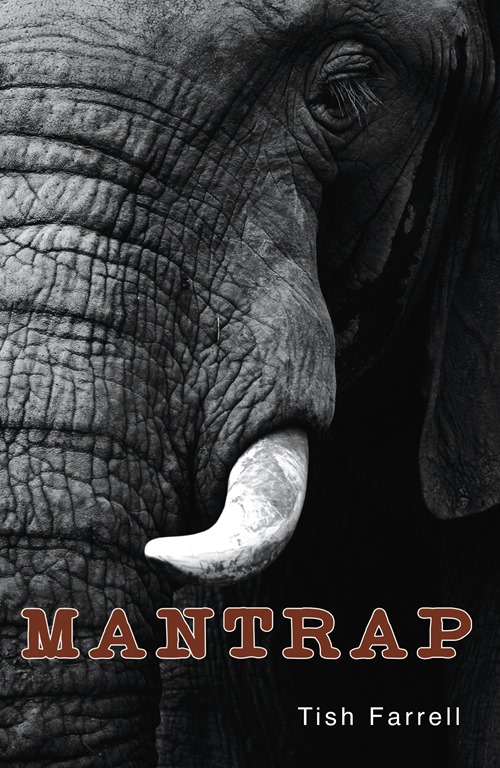
And to answer my own questions, this is where the book cover below comes in, because one of the things I do besides loitering in cyberspace is to write good stories for unkeen teen readers, (or for anyone else I can corner for that matter).

Shades covers for REPRO Batch 2_Layout 1

Cover: copyright 2013 Ransom Publishing.

The title of this new edition of my very short book Mantrap clearly begins with ‘M’ ( which means you can look forward to more mentions further down Frizz’s alphabet.) So what is it doing here now? The elephant is of course the excuse I needed to write this piece, also the fact that Ransom Publishing will shortly be bringing out  an e-book version for Amazon Kindle and Apple, as well as a paperback edition. It is part of their Shades series. Full details of this and other books in the series can be found HERE. The series is being printed as I write this and will be launched in August.

Interest-wise, the stories are aimed at readers of twelve years and upwards, but whose reading ability is deemed to be a few years younger. The text is a piece of short fiction but presented in a novel format i.e. 6,000 words divided into several chapters, and over 64 pages. There is plenty of white space on the page.

Banner 

Ransom publishes a wide range of fiction and non-fiction for all ages. Personally, I think the Shades’ quick-read formats are ideal for just about anyone who wants a good story, but has limited time to read it. You can slip these nice little books into your pocket. However, this is not so much a sales pitch as an explanation: the why, where and how this story about ivory poaching came into being. There’ll be an excerpt at the end.

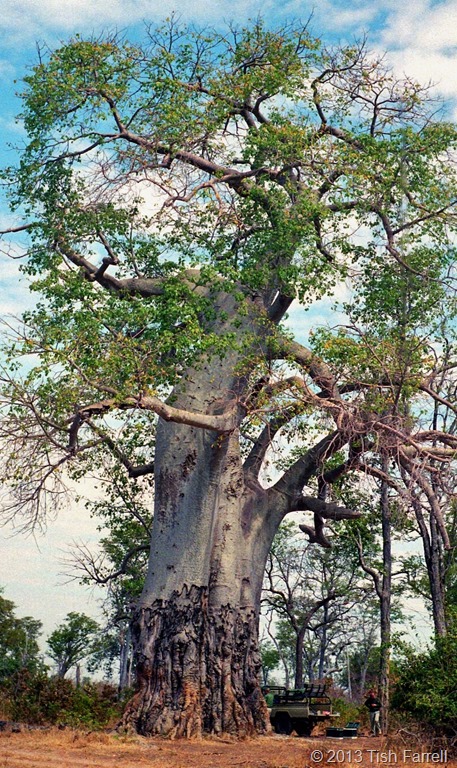
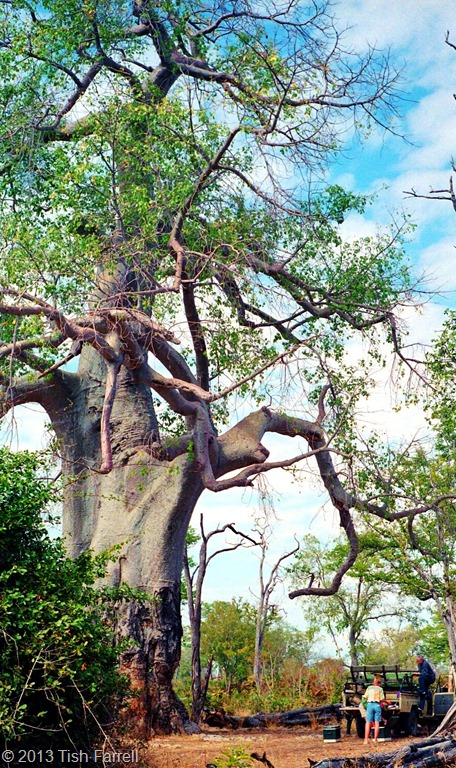
I can also tell you precisely where the Mantrap story began – under a baobab tree. And here it is, the very one:

South Luangwa - mighty poachers' baobab

The fact that it was in leaf at the time was perhaps auspicious. Baobabs are usually bare. This one could be a thousand years old. We stopped under it for a noonday picnic after a get-up-while-still-asleep and go on a dawn game drive. The location is South Luangwa National Park in Zambia. It is a glorious place with parkland vistas, much shaped by the local elephants who knock down the thorn trees, but rarely the baobabs, to encourage the growth of their favourite food – grass. 

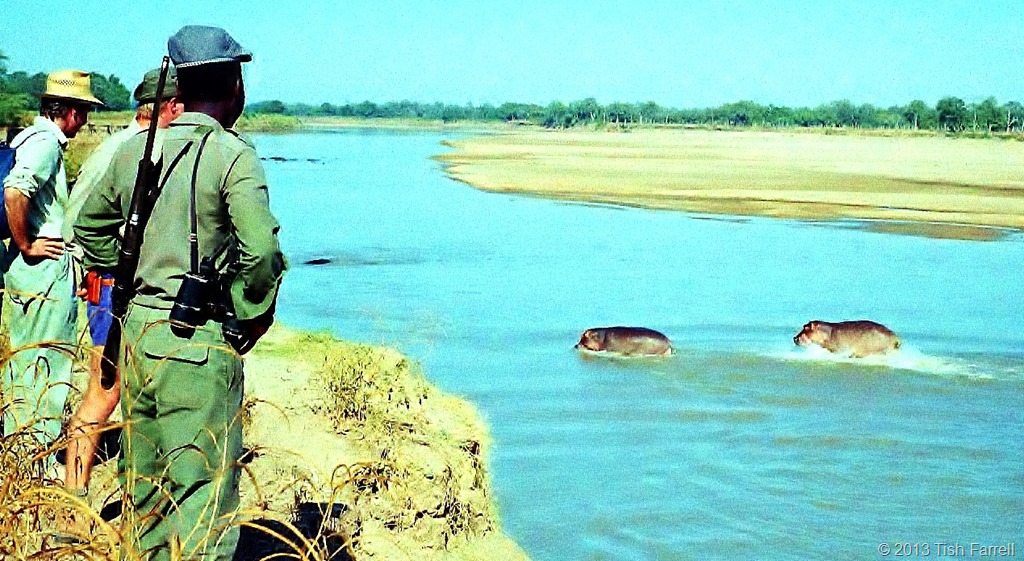
The other great shaper of the territory is the mighty Luangwa River as it endlessly carves new meanders through the bush country.

South Luangwa - dawn walk and hippos

*

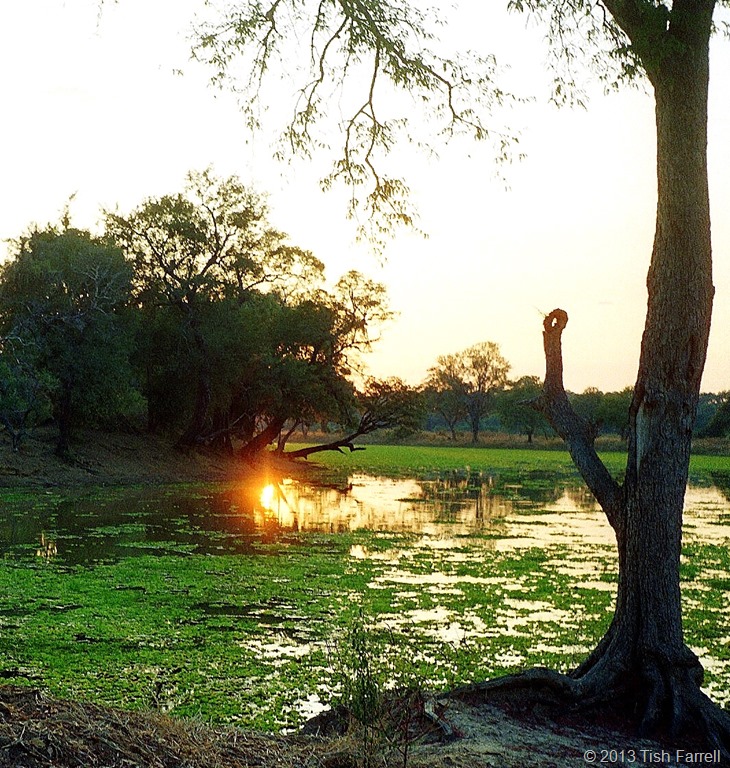
As the river shapes a new channel, so the old meanders are left behind, some becoming stagnant lagoons where hippos wallow amongst the cabbage weed. The local people call such places Luangwa waffa or Dead Luangwa.

South Luangwa - lagoon with cabbage weed 2

But back to Mantrap. It was while I was standing under the baobab, and peeling a very English hard-boiled egg, that our guide happened to point out the narrow strips of wood that had been driven unobtrusively  into the tree’s hard, smooth trunk. 

South Luangwa - mighty poachers' baobab 2

“It’s a poachers’ ladder,” the guide told me. “Ivory poachers. This tree has been a look-out post for years.” He went on to tell me how earlier that week an elephant had been killed nearby. The tusks had been taken, but then later, when the coast was clear of poachers, the local villagers had come to grab the meat.

My spine tingled:  horror and pity, and not only for the elephant. I knew that rural Zambians were  in a poor state. This was the reason why we had come to Zambia. Team Leader Graham was responsible for the logistics of delivering EU food aid to drought-stricken villagers. (See Letters from Lusaka.) Also, elephants and other game can destroy a farmer’s whole crop in a single night. The conservation of wild game, then, and the protection of neighbouring people’s livelihoods are matters  not easily resolved.  Game parks across Africa generally do not have fences. Animals move about at will, and many farmers are maimed or killed by buffalo, crocodiles, hyenas and elephants. Their families rarely receive compensation.

South-Luangwa-Zambian-homestead.jpg

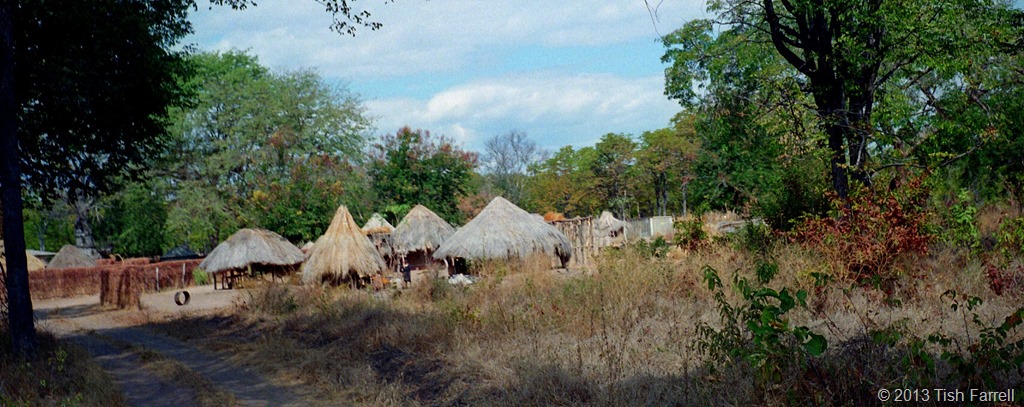
We, however, belonged to the fortunate segment of the world’s population that had no shortage of food and also the leisure to take a few days holiday, staying in a small tented camp run by Robin Pope Safaris. On the way to our campsite from Mufuwe airstrip we crossed a dried up river where a girl was digging deep into the sandy bed in hopes of scooping out some water. In the gardens of a nearby farmstead, the maize was blown to dust. It was hardly surprising that there was a poaching problem in the district. People were starving.

But then to my  mind, there’s a big difference between hunting antelope and small game for the pot, and particularly when the park and surrounding licensed hunting blocks occupy the local people’s former hunting territory, and the obscene and pointless slaughter of elephants solely for their ivory.

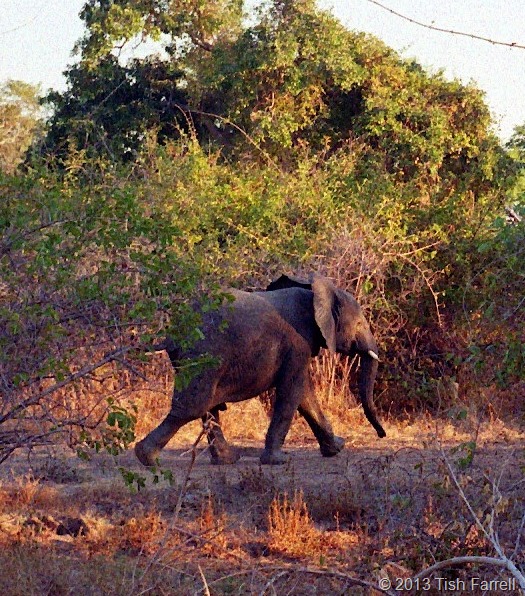
South Luangwa - young elephant

Yet the temptation to some locals must be enormous. They have families to support, children to send to school, medicine to buy. Big business cartels, especially in the Far East, are apparently more than glad to arm and fund local hunters in the pursuit of ivory and rhino horn. This means that park rangers are at great peril. Many are murdered in their attempts to protect wildlife so tourists like us may come and stare, and snap away.

One way to combat poaching is to give people good reasons to protect the game. Robin Pope’s Safaris have pioneered schemes to involve local communities in conservation.

Helping communities to gain from tourism

*

So these, then, were some of the things I wanted to explore in my story. What emerged was a life-and-death adventure that had its beginning the moment my fingers touched the rungs of the poachers’ ladder.

Here then is an excerpt – the opening scene. It is dawn in Luangwa. Hunger has finally driven Danny and his father, Jacob, into the National Park to hunt antelope. But Danny is a schoolboy, not a hunter; it is not surprising that, in his panic, he makes a mistake – a mistake that lands them in the clutches of a corrupt ranger who has a far more dangerous quarry in mind.

Chapter One: The Kill

Impala. A small herd among the sausage trees. Jacob stopped dead and held up a warning hand. Danny froze on the spot and this time, without a sound, dropped behind a potato bush. He peered through the leaves, fixing on a big ram. He was about twenty paces away, grazing the yellow grasses, his harem of females all round. Danny’s eyes stung with longing. There was that beautiful ram. So near, and yet so far. The smallest sound might send him bolting. Out of reach!

Danny willed Jacob to shoot. Now, Dadda, now. Then nearly howled when the ram raised his lyre-shaped horns and sniffed the breeze nervously. The ram had scented them. He had. Danny prayed and prayed. Please let our luck change. Please let Dadda shoot. Then we can get out of here. Before the sun comes up. Before the park rangers start their patrol. Before we’re caught and sent to jail…

And finally, here’s a short clip that shows Luangwa in all its rain-soaked glory. One of the earth’s most beautiful places, and over four hundred species of birds.

© 2013 Tish Farrell

Links:

http://dailypost.wordpress.com/2013/07/29/reel-talk-writing-challenge/

http://flickrcomments.wordpress.com/2013/07/30/eee-challenge/

Carnations, crooks and colobus at Lake Naivasha

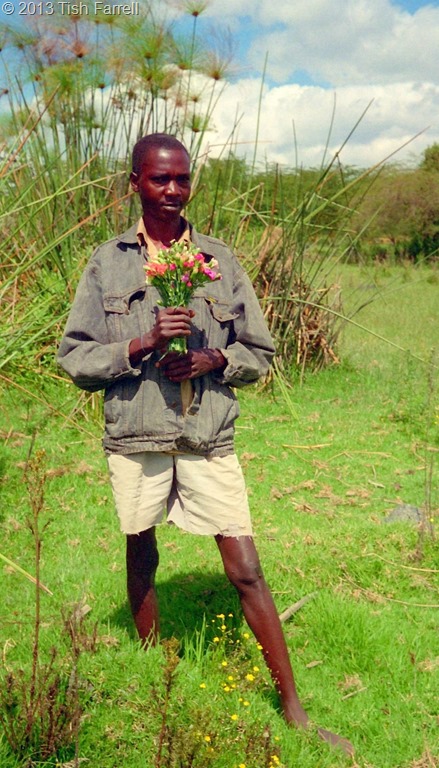
Even locals told us that  anything could happen in Kenya.  And  so one Lake Naivasha morning, when I thought I was  alone in the grounds of an old safari lodge, I was both surprised and unsuprised when a young man suddenly stepped out from the papyrus swamp clutching two bunches of carnations. Fifty bob, madame, he said after the customary greeting. He seemed nonplussed  when I started to laugh.

“Do you always keep your carnations in the papyrus,” I asked.

“Yes,” he said.

“What, waiting for people like me?”

“Yes,” he said.

Scan-130602-0001

This exchange seemed to seal the deal. I didn’t even bother to haggle. And although I have no idea why I would have 50 bob on me in such a place, I bought a bunch. Given the general lack of wazungu humanity in that particular location, I also wondered  how long he had been waiting for the likes of me to come along; or how long he would have been prepared to wait for a customer. Or if I was just the unexpected thing that happened to him, rather than he to me. (You could tie yourself in knots second guessing). The rest of the lodge guests, I knew, were male entomologists, engaged all day in seminars and workshops; only I was free to wander about the hotel’s straggling  grounds buying flowers for which I had no particular need.

*

Scan-130716-0012 (3)

*

We had driven up the Rift from Nairobi the day before. Team Leader Graham was to attend a four-day international conference on the Larger Grain Borer. Along with his Kenyan colleagues there were some forty delegates from such places as Honduras, Mozambique, Italy, UK, Benin, Zimbabwe.  Anyone who has read my post, Letters from Lusaka Part 1,will know that this small maize-grinding beetle, aka LGB, was introduced into Africa in a consignment of US food aid in the 1980s. Its natural habitat is in South and Middle America where it also has natural predators to keep it in check. In Africa it has no natural enemies and can thus eat itself silly while villagers, deprived of their staple crop, starve.  Seventeen years on from this conference, it is still a problem.

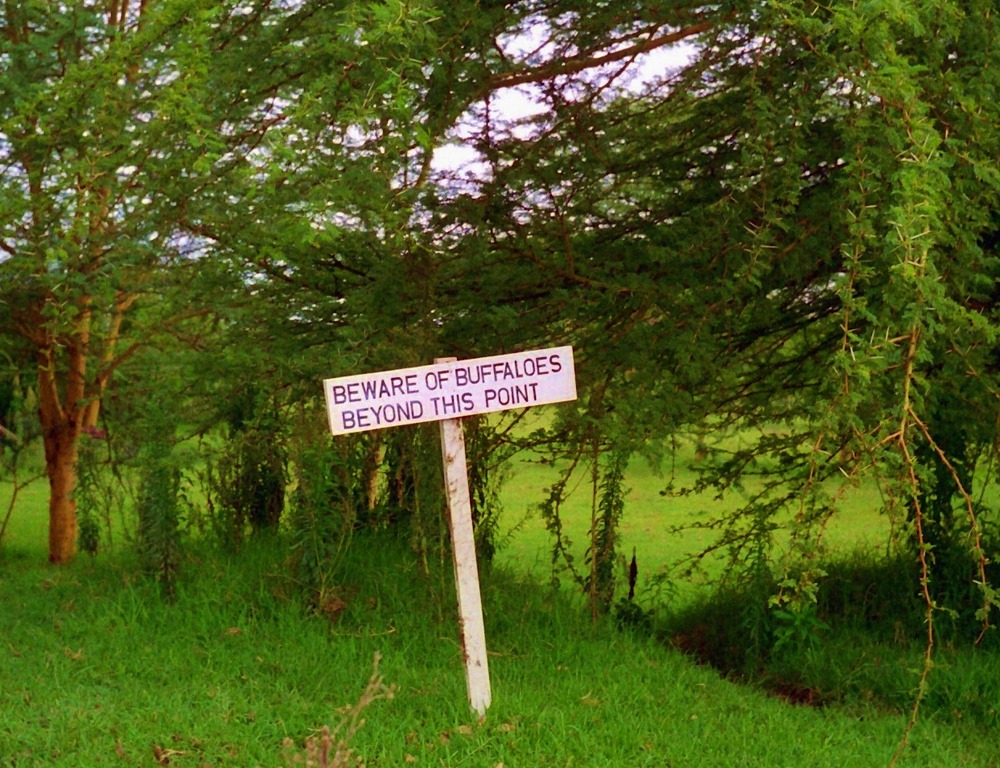
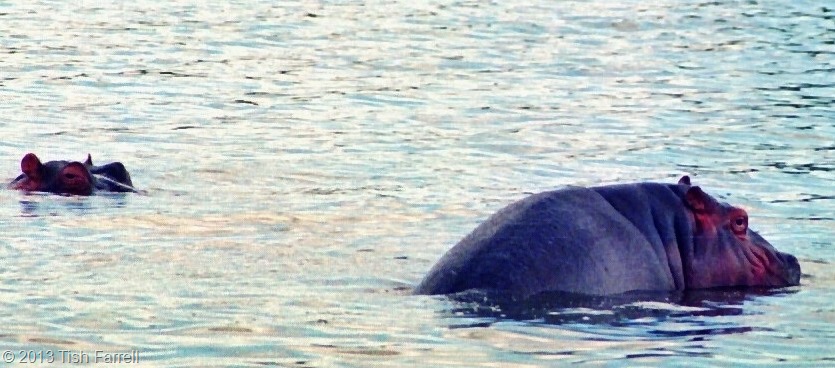
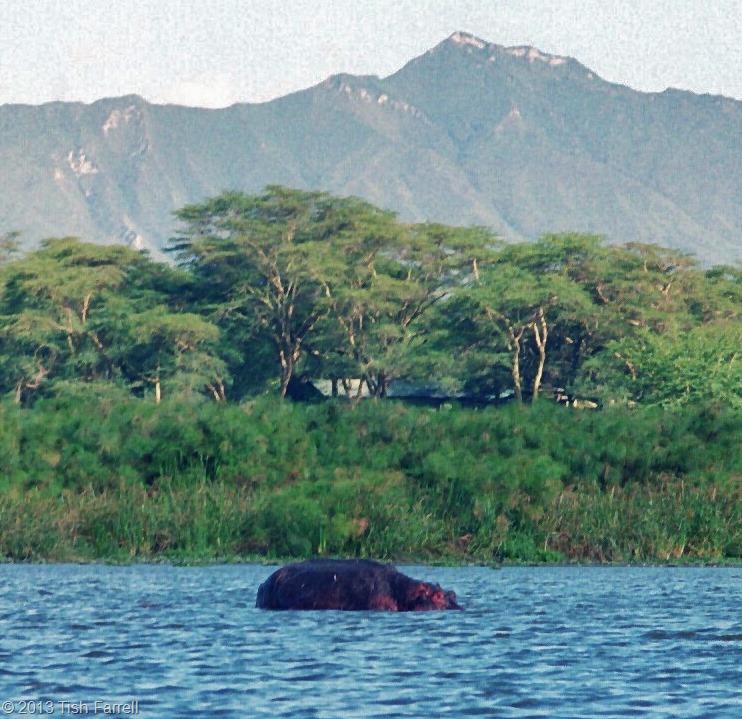
So: while delegates debated what might be done about the ravages of this particular storage pest, Nosy Writer, like some latter-day colonial ‘mem’, dilly-dallied about the lake shore and its hinterland. At the time I was recovering from some strange digestive malady, so wandering and bird watching were all I could cope with. When the young man popped out of the papyrus I was still weighing up whether or not I should be deterred by the sign I had just read amongst the fever trees.  I could anyway hear the hippo grunting, and having once been charged by a big angry bull in Zambia was already a little wary. The appearance of a boy with a bouquet, then, seemed like a piece of magic.

Scan-130602-0003

When I asked him where he got the flowers, he told me there was a flower factory ‘next door’. (Many international growers have their flower factories around the lake. There are strawberry and asparagus growers there too). At the factory (think acres of pink poly-tunnels under the tropical sun) he gathered the discarded side stems and inferior blooms from the refuse heap and made them up into bunches. Later, when I told this to Graham’s Kenyan boss, Gilbert, he told me that export stems had to be between 70-100 cm long, which meant there were probably plenty of rejects.

He also told me that the factory ‘next door’ was reputed to be owned by one of Kenya’s top crooks, a notorious Kenyan-Asian wheeler-dealer. Gilbert then added that he also owned the safari lodge where we were all staying. I could only blink in response. It seemed like another of those ‘anything can happen in Kenya’ moments; another of the endless moral conflicts. Here were a bunch of diligent, respectable scientists all funded by international development money patronizing the establishment of a member of the criminal elite who, from behind a front of untouchable respectability, was bleeding the nation on breathtakingly colossal proportions.

It’s the moment when you say, oh, bloody hell, I can’t cope with this, and go back to reading a book or bird watching, or listening to the plaintive call of a pair of fish eagles resounding off the water, or to the companionable  grunting of hippos.

Scan-130716-0012.jpg

Scan-130716-0010-2.jpg

I also tried to distract myself from thoughts of the flower factories around the lake. There was talk of them abstracting too much water, and polluting the only freshwater lake in Kenya’s Rift with pesticide residue  – all so the citizens of London, Paris, Amsterdam can buy the perfect, but scentless, long-stemmed rose, or metre-long carnations. Of course these places provide work for scores of labourers, and increasingly there are well qualified Africans in managerial positions.

The companies probably provide clinics and primary schools too, but the bulk of the profits from these huge concerns go to Europe and to their shareholders, not to Kenya whose human and natural resources are being exploited in the meantime. Then there’s the row about multi-nationals not paying local taxes. It’s the same old story – colonialism in a new form – the need for cheap labour to justify the cost of the daily absurdity of flying fresh-cut flowers out of Africa.

How do you begin to unpick all this. I can’t. It is easier to bird watch, and there are hundreds of species around the lake to look out for.

Scan-130716-0013

Scan-130716-0008.jpg

Scan-130716-0014-2.jpg

Scan-130716-0011 (11)

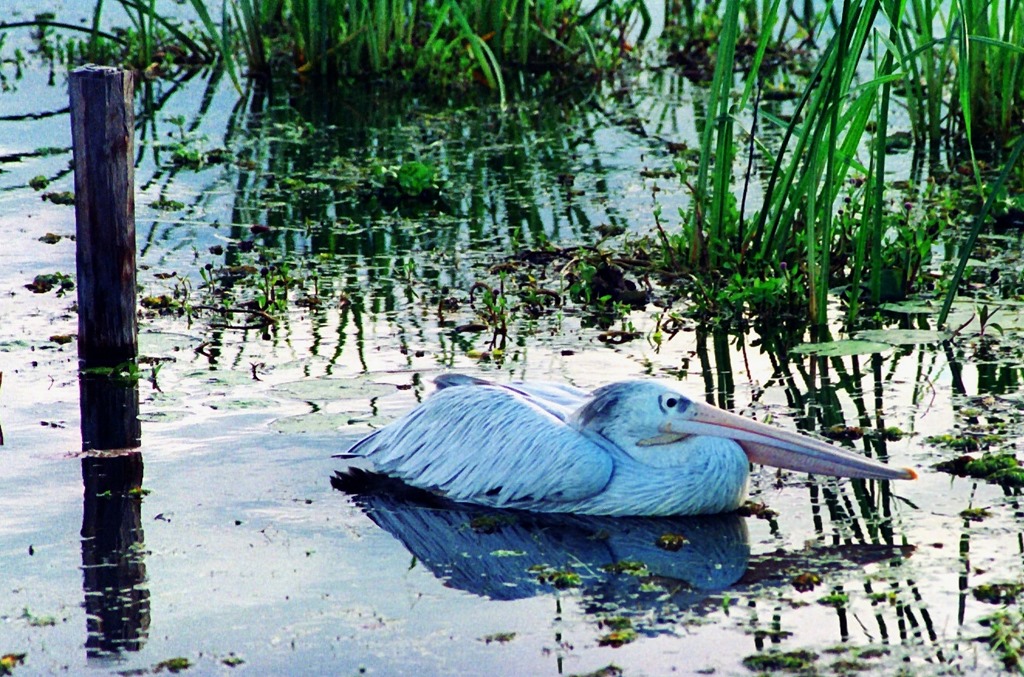
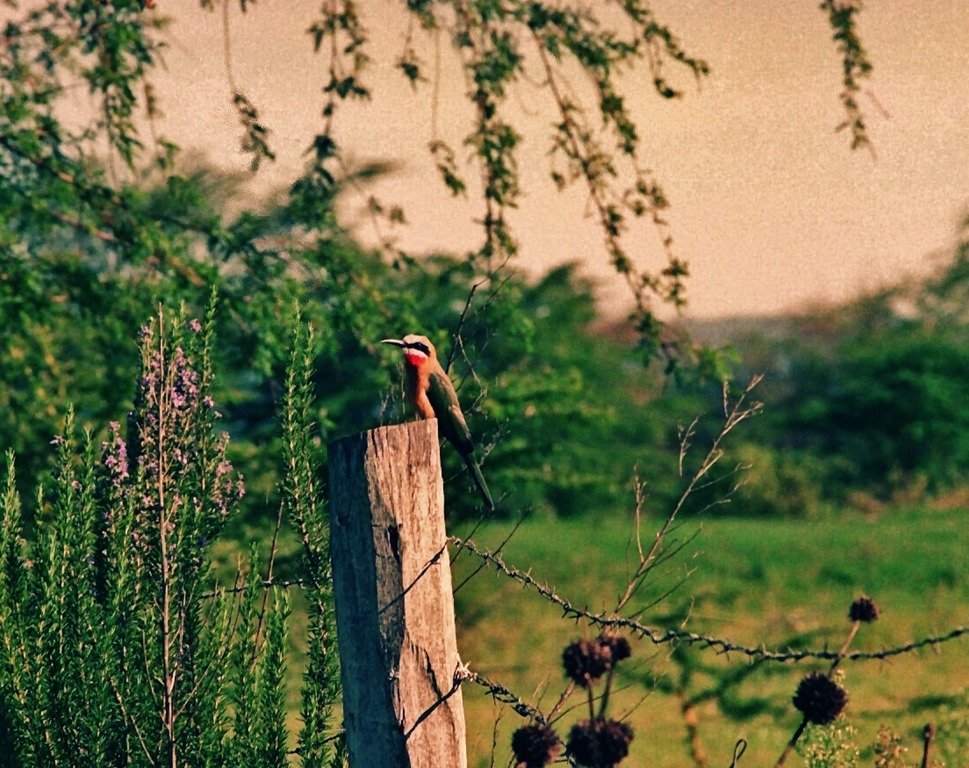
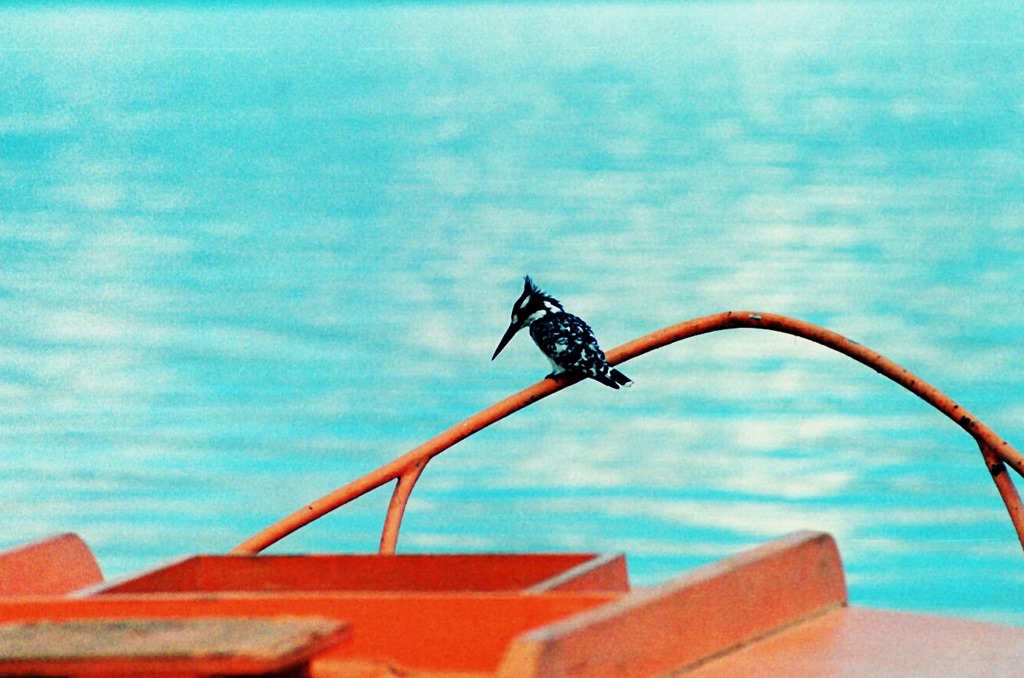
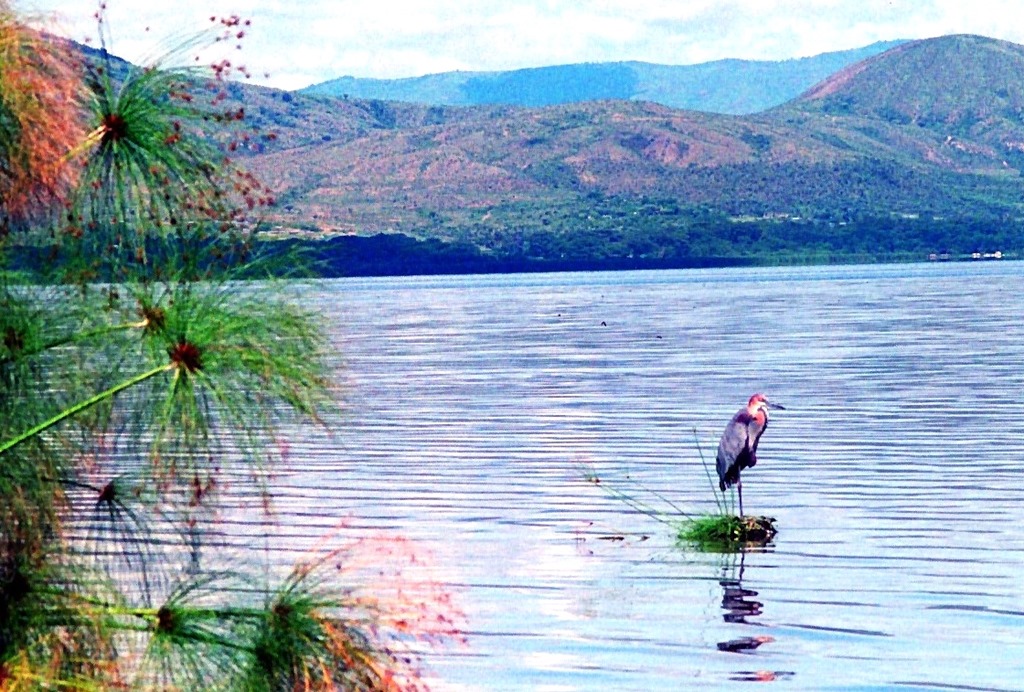
From the top down: pelican, bee eater, pied kingfisher, goliath heron – just a few of the 400 bird species around the lake.

*

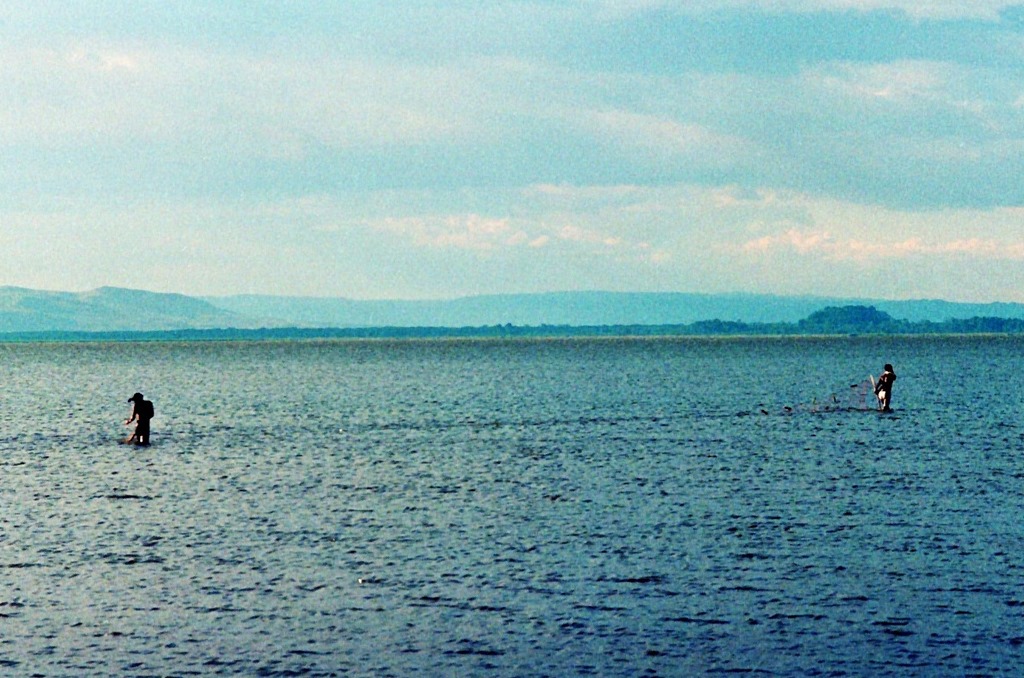
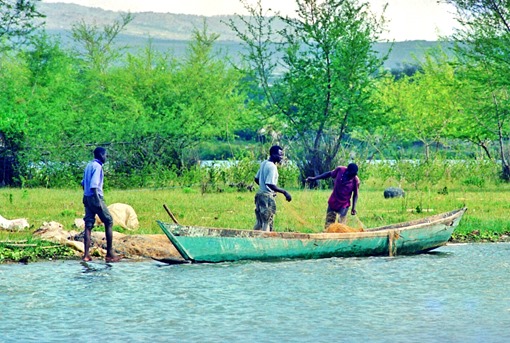
There are the fishermen too, seine netting and scooping up buckets of freshwater crayfish, although accidentally introduced carp is now the dominant fish species.

Scan-130716-0011.jpg

Scan-130716-0011-6_thumb.jpg

*

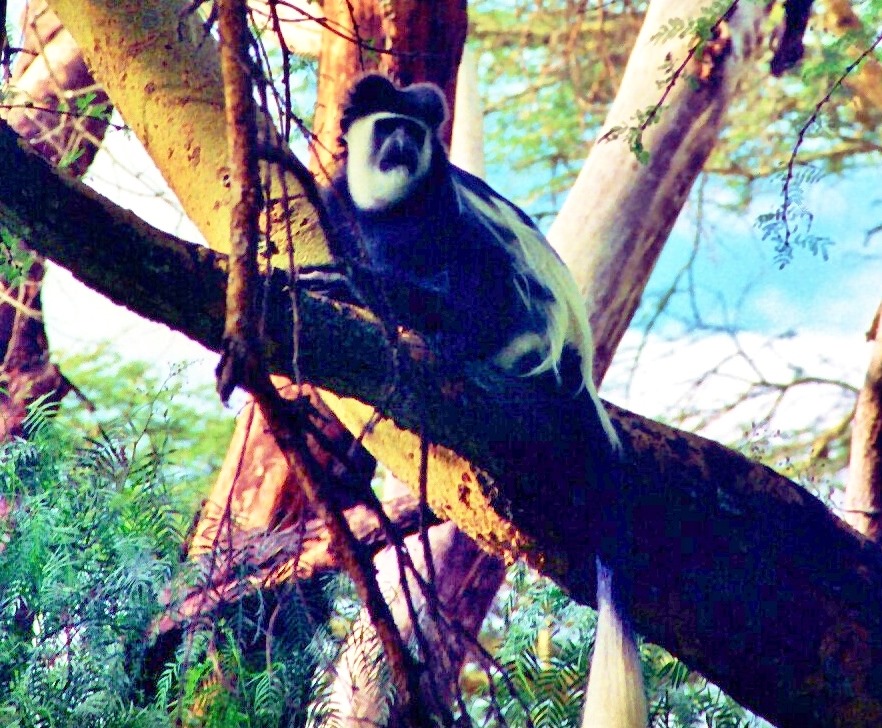
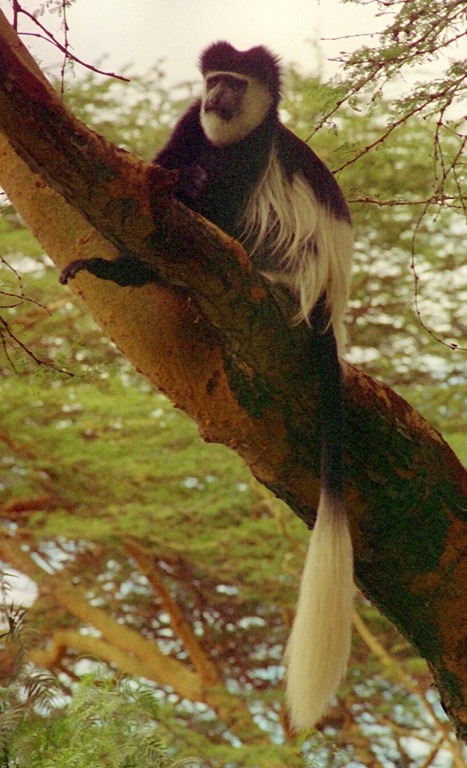
And finally every afternoon around four, a family of colobus monkeys come to the lodge garden and play on the guest cottage roofs. It’s easy to tell yourself that this is paradise.

Scan-130716-0012 (2)Scan-130601-0007.jpg

Refs:

Urban society and the fishery of Lake Naivasha, Kenya – Balancing ecosystem and stakeholder demands by Phil Hickley, Mucai Muchiri & Ros Boar

Kenya Birds Lake Naivasha

Flower power keeps Kenya’s Lake Naivasha blossoming – video Guardian 2012

Kenyan flower industry’s taxing question Guardian 2011

P.S. I took the carnations home to Nairobi where they lasted a further ten days. Excellent rejects.

© 2013 Tish FarrellScan-130602-0002Scan-130602-0004

Letters from Lusaka Part 1

Notes from an aid nomad’s life in Zambia

Cairo Road - looking north

October 1992 and I’m expecting to start a new life in Medway, Kent, but instead I find we are off to Lusaka. It is hard to take in. I am barely back in England after nine months in Kenya where we lived out of a Land Rover, plying the Mombasa Highway. My heart is still in the Ngong Hills, the knuckle-shaped peaks that were my last view of East Africa before the plane rose through the clouds and headed for London via Bahrain. In that moment I find myself weeping for the loss of the Ngongs, recognising, with a twinge of shame, I would never weep like this for my homeland.  

Due to ticket problems I have to travel back to the UK alone. G will follow the day after. When we say goodbye at Nairobi airport there is no inkling of another overseas contract. Yet two days later when we meet up in England, the first thing G says is: how would you like to go to Zambia?

Zambia, I echo blankly. How would I know if I want to go there? But with barely a pause, I say yes; I’m up for it. I’ll find out later if I’m going to like the place. Besides, whatever happens, it’s bound to be interesting.

When we tell friends and family where we are going, they also look blank. Zambia, they say. What did it used to be? It is only months afterwards that I see how loaded is this seemingly simple question, how unfathomable the answer. What indeed did Zambia used to be – before it was Northern Rhodesia – before David Livingstone passed through it in search of lost souls and the Nile’s source, and claimed the falls known as Mosi oa Tunya (The Smoke that Thunders) for Queen Victoria; before the south’s Zulu Wars that pushed many displaced communities across the Zambezi?

We’re expected to leave within the month, but due to various administrative foul-ups, this stretches to two. It gives us time to unpack our Kenya life, catch up on dental work, have the jabs we have not already had, say hello and goodbye to relatives, and to get married. This last event takes place briefly before a handful of guests in a Bridgnorth building society office where the registrar has occasional premises. Our little marriage party finds itself queuing for attention alongside Friday morning withdrawers and depositors. It all seems fittingly bizarre for a life that no longer fits the norm.

At this point I am still no wiser about our destination. In these pre-Google days there is little time for research. To my annoyance, too, I find there are no handy books on Zambia, not in the public library, nor in the bookshops. By the time we come to leave, we have only the sparse Foreign Office briefing notes to go on. They speak of the climate and the kind of clothing we will need, and of the possibility of having to take a driving test if we want to drive in Zambia. No clear picture of the country emerges. I am becoming increasingly irritated at the lack of information, as well as at my own ignorance. How can I, an English woman, not know a thing about a land that Britain ruled and exploited for over sixty years, a land we only quitted in 1964 while I was in still at school? Why wasn’t it on the curriculum along with Cicero and Chekhov? How can the existence of a former protectorate pass so swiftly from the protecting nation’s consciousness? How can it become so very unimportant?

Then suddenly it’s too late for righteous indignation; it’s all down to family farewells, and wondering if the right things have been packed, when there is no way of knowing what the right things should be. Of necessity, it becomes a matter of travelling hopefully and telling ourselves that the contract is for ten months only. And ten months isn’t long, is it?

*

So, November 1992 and we fly into Lusaka with the rains. It seems like a good omen – to arrive with rain. There has been severe drought over southern Africa for at least a year. Crops have blown to dust, rivers run to sand, and the granaries lie empty. In remote districts, we later learn, villagers have been surviving on a diet of wild mangoes. To add to their misery, the wildlife is hungry too. In one district villagers have been barricading themselves into their homes. The local lions have developed a taste for canine flesh and are breaking down house doors at night in order to snatch the dogs from the midst of their terrified human families.

And of course, this is why we are going to Zambia; famine is taking us there. G has been seconded from the Natural Resources Institute in Kent to the E. U. Delegation in Lusaka to supervise the distribution of European Union food aid to starving Zambians. The country’s then new President, Frederick Chiluba, tells the Head of Delegation that he does not trust his ministers to do the job. The consignments of maize meal and cooking oil must therefore be distributed through church missions and the Red Cross. Zambia is a big country, the size of France and the Low Countries combined. G will be in charge of logistics: checking the contents of grain stores, getting trucks on the road and ensuring that loads reach their intended destination. His boss at NRI is sure he is fitted for the task, although he has never done anything like it before.

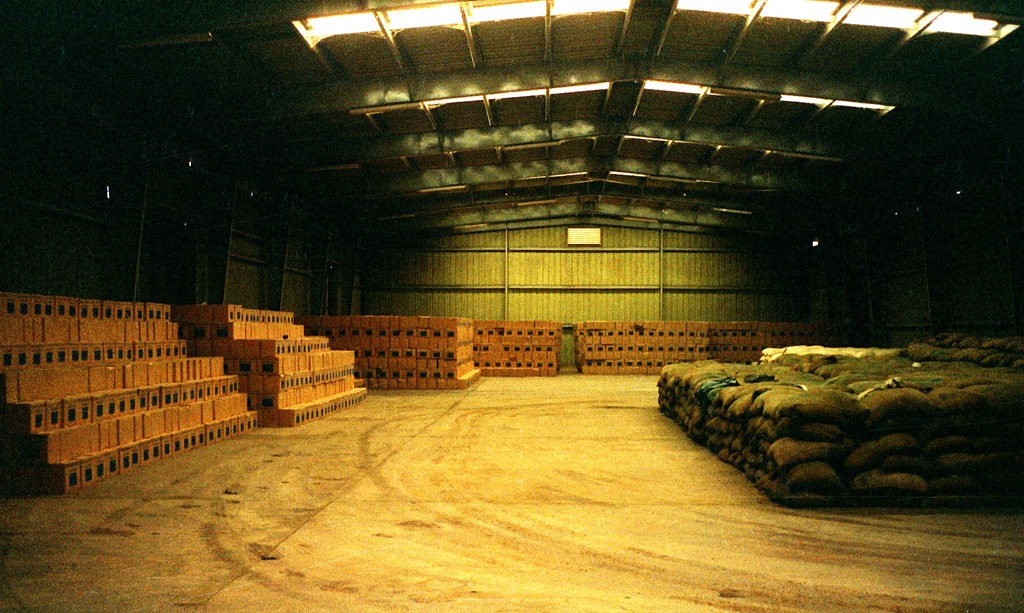
Food aid consignment 4

Food aid awaiting distribution in a Zambian warehouse.

*

In Kenya, as a crop storage specialist, he had been dealing with another kind of food crisis – the spread of a voracious pest that gobbles up maize – the Larger Grain Borer. This beetle is a native of South and Central America, and (ironically) came to Africa in the 1980s in a food aid consignment from the United States. It has no natural predators in its new homeland and, across a continent where maize is many peoples’ staple crop, it also has all the food it can eat. If a grain store is infested you can hear the jaws of these tiny creatures gnawing the cobs to dust. In Zambia we find the beetles are already there too, spreading out into villages along the line of the Tazara Railway that links land-locked Zambia to the port of Dar es Salaam. The Chinese built the line in the 1970s to provide Zambia with an external trade route through Tanzania after Ian Smith’s Unilateral Declaration of Independence in Southern Rhodesia cut the country off from all points south. Now the Tanzam is a handy vector for crop pests and thus, through such unintended consequences, is the frequent folly of donor good intention compounded. It is the sort of thing that happens in African countries all the time. It makes us question then (as we will do many times over the next few years) the ethics of our presence on the continent.

*

That November morning, then, as we make our descent through grey skies into Lusaka International Airport, I note only how flat and tamed the landscape looks: large square fields of European-owned ranches (Lonrho, for one, is a big player here); service roads and farm buildings laid out in orderly grid patterns. It is also very green and looks more like France than the Africa I have come to know. I suppose I feel a little disappointed. It is bush country that I have fallen in love with, the smell of it triggering some ancient genetic memory that tells me that such landscapes mean home.

Once down on the tarmac, and as a matter of courtesy so we will not get wet in this welcome downpour, a bus arrives to ferry us the short distance to the low white terminal building. Our fellow travellers are European businessmen, each shouldering his laptop bag. By contrast, a tall African in a well-cut suit emerges from the First Class cabin wielding only a shiny new golf club. It seems utterly incongruous, as if he has just stepped out of a London taxi after visiting a golfing shop rather than flying half way across the world. It crosses my mind that I like his style.

By now I am both jet-lagged and deeply anxious about the forthcoming immigration process. Still fresh in my mind is the stony-faced inscrutability of Kenyan officialdom when I twice visited the notorious Nyayo House immigration department to extend my three-month travel visa; I recall the hours left in limbo, sitting amongst distressed Somalis and Ethiopians, all trying to secure sanctuary away from troubled homelands. But suddenly I see it’s not going to be like this. The officers, as they take their seats at the immigration desks are all smart young women. They are laughing and chatting and, when we hand them our passports and paperwork, they are still smiling, and at us.

Next we have our first, but fleeting taste of the diplomatic life, as G’s new boss steps up and introduces himself. His name is Bernard. He is French, frenetic and instantly engaging. He whisks away our paperwork and deals with it in minutes. There is then a worrying delay before we can claim our bags. Bernard tells us that British Airways on this route are well known for leaving cases behind in London. Finally, though, we have our luggage and are propelled into Bernard’s Peugeot, Bernard talking non-stop. He apologises for his poor English, saying that this is his first posting to an English-speaking country. Mauretania and Madagascar were his previous postings. Worryingly, he adds that he hopes we will speak some French. Beside me, looking wan, G winces; he does not fly well. He can barely speak. When he does, it is to utter a customary response in KiSwahili. I’m beginning to feel hysterical.

Soon, though, all smooths out as we cruise along the Great East Road into Lusaka. There is little traffic (not like Nairobi), and the place has a small-town provincial air – wide streets lined with jacarandas shedding mauve petals and acacias with russet coloured flowers, red-roofed villas. We pass the turn to the University of Zambia, the entrance to Lusaka’s agricultural show ground. The side walks are filled with people walking – young men in loose shirts and smart front-pleated pants striding out, country women in ankle-length chitenge wraps, city girls in high heels and sleekly cut frocks, and who seem to flow along the street. There are roadside stalls selling garden surplus – mangoes, tomatoes, okra, spinach.

E C Delegation

EU Delegation, Lusaka

*

And I am just thinking that I can cope with this when we swing into the grounds of the five-star Pomodzi Hotel, and Bernard’s car is instantly lassoed in chains whose ends the hotel porter quickly padlocks to an adjacent post. I have never seen nor imagined anything like this. Bernard explains that this is a necessary procedure even though it will only take a few minutes to escort us to reception. I see that other guests’ cars are similarly chained. It is then that my one sure piece of Zambia information surfaces. All along we have been ignoring it, that in that year of 1992 the country has a big security problem. Some months later the reasons for this become clear, but for now I am struggling to absorb this apparent evidence of an expected car-jacking – in broad daylight, and in such orderly and upmarket surroundings. I gaze, bemused, at the tail-coated porter who is now ushering us into the hotel foyer. After the humid warmth of outside, the hotel is frigid with air conditioning. The reception area is cavernous, all grey-white marble. A trolley appears and our cases are stacked upon it. They look shamefully shabby in these austerely smart surroundings. The porter politely motions me towards a comfortable armchair while G registers. This always takes ages, and by now it is lunchtime and I am hungry and yet too tired to want to eat. Then suddenly there are Englishmen everywhere. They seem to issue as one from the lift.

“Hello. I’m David…Peter…Tim…Paul…Alan. We’ve not been introduced but…”

As welcoming committees go, it is well meant but too much, and I wonder if I’m responding sensibly. They turn out to be G’s fellow consultants from the Natural Resources Institute, out on short-term missions relating to crop storage and food security. They include G’s head of section, the man who seconded him to the E.U. Delegation. He’s just off to Zimbabwe, and hardly have we reached our room than the phone rings, and G is summoned to an impromptu meeting and a trip round a Lusaka grain store that has flooded, none of which has anything to do with his present posting. He goes off looking terrible while I collapse on the bed, trying to come to terms with my new surroundings.

Here we are back in Africa, back in the so-called developing world, here to help deal with a food crisis. Yet now I find myself in a room that has more of comfort and opulence than I’m used to in England. There is a huge colour television that shows American and British world service programmes. There is a telephone by the bed and another beside the lavatory. The ivory tiled bathroom has abundant hot, clean water and piles of soft white towels. The flask of drinking water is chilled. We have our own veranda. The room service menu offers club sandwiches, burgers and steaks. A polite notice on the writing desk requests guests not to tempt the staff by leaving their valuables unattended.

This is a hotel designed not so much for travellers and tourists, but to cater for the expectations of international entrepreneurs. Its luxury is hard to reconcile with the hardship that G has been brought here to relieve. This is only the first of the multiple contradictions that we will encounter over the next ten months. We learn not to dwell on them, and so become part of the contradictions.

*

Now in Lusaka, we find ourselves dropped into a diplomatic no-man’s-land. Although G works for a British government institution and has been deployed by them on official business, neither the EU nor the British High Commission want to altogether acknowledge our presence in the country. We gather that the BHC has some bee in its bonnet about the cost of air-lifting us back to the UK in the event of some great ill befalling us. This is a puzzling response when all G asks for is some anti-malarial pills. They are not keen to give us any, since this establishes responsibility.

There is also a problem about finding us somewhere to live, this despite the fact that both missions have their own staff accommodation. We have been sent out with a stash of travellers’ cheques to pay for ten months’ rent and to buy a car, but house rents in Lusaka are twice the allowance we have been given. A Delegation secretary, a white Zambian, takes pity on us and directs us to a small company compound of eight houses where local Zambian Europeans and Asians live.

There is one house vacant, and we can just about afford it. The accommodation is very lowly by diplomatic standards, and full of dog-haired furniture, but we still manage to upset BHC consular etiquette because the compound has a swimming pool. Only officials of the higher orders may be allocated houses with pools. BHC staff kindly let us know of our gaff at social functions, although we wonder what it has to do with them since they were so unwilling to acknowledge our existence. Clearly the swimming pool has got under somebody’s skin.

Sable Road - our house by the pool 2

Home on the Sable Road compound.

*

Then, when we are among EU Delegation officials and their white Zambian staff, we are constantly regaled with tales of car-jackings, house break-ins, muggings and murder. At his house, Bernard has been newly issued with a gun and a short-wave radio to summon security in case of attacks by the locals. We presume that we are not important enough to warrant this scale of protection. When, after some weeks, I return to Zambian Immigration to renew my passport, and once more am treated with only good-hearted African courtesy, I consider switching my nationality to Zambian.

To be continued…

http://dailypost.wordpress.com/2013/07/07/daily-prompt-travel/ Daily Prompt: Rolling Stone

© 2013 Tish Farrell
A Word A Week: Boat (Up the Congo)

http://suellewellyn2011.wordpress.com/2013/07/02/a-word-a-week-challenge-boat/

Scan-130703-0003 (3)

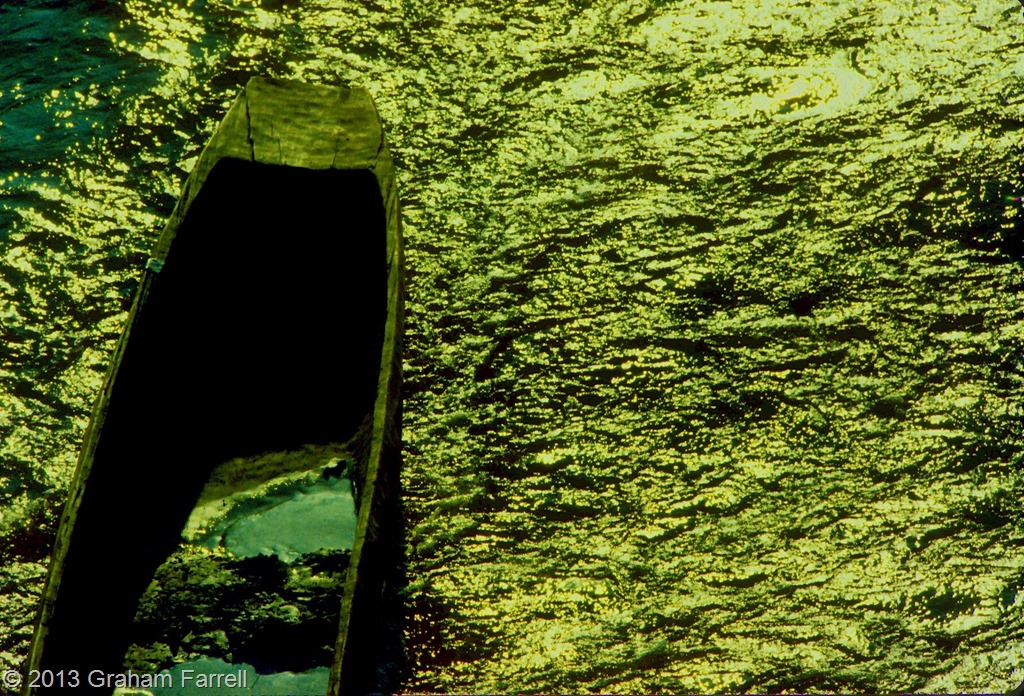
Pirogue on the Congo River

Long ago before Team Farrell was an entity, Team Leader Graham went on an overland trip. This six-month journey across Africa included a voyage on the Kinshasa-Kisangani ferry, which ever since has been a big source of envy for Nosy Writer. Out of sheer spite then, I have stolen some of Graham’s photographs for this post.

Scan-130703-0003 (2)

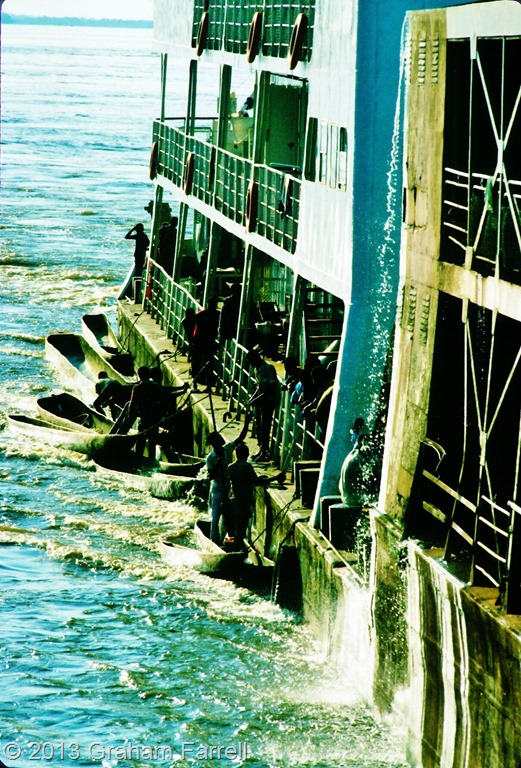
The slab-sided ferries that ply the thousand miles along this, the Democratic Republic of Congo’s super highway, provides motive power for all manner of other vessels which hitch a ride, lashing themselves alongside. The ferries have often been described as a floating cities or, more rudely, as floating slums. Along the route, traders from riverside villages paddle out to sell passengers their produce: monkey meat, crocodiles, fish and fruit, soap and palm oil.

Scan-130703-0004-3_thumb.jpg

Scan-130703-0004-2.jpg

Scan-130703-0006-2.jpg

But I’m afraid I have a more serious motive for posting these photos. Say the word Congo, and it  inevitably invokes the overdone journalistic cliché that is used to “explain” every crisis on the African continent. Yes, hear it comes – the Heart of Darkness. Of course I would hope that when Joseph Conrad gave his novella this title in 1902, he was not meaning to cause further injury to the peoples of this afflicted region. Because the fact is, this trotted out phrase does injure them. It injures because it gives non-Africans a quick and dirty explanation for everything that goes wrong in African countries. It also casts the blame firmly on the inhabitants, and so distracts us from the grave assaults that outsiders inflict, and have inflicted, on Central Africa for the past four hundred years.

The problems in the Congo have always been about resources, the longstanding assumption held by the get-rich nations that the whole African continent is there purely for the purposes of pillage. Better still, what has been, and is still perpetrated there, largely goes unseen by citizens of the outside world. All is wrapped up in company names that have some very serious investors, people whose names you would not expect to see there.

So first, from the 16th century, there were the Atlantic slavers, in order of importance – the Portuguese, British, French, Spanish, Dutch, and Americans. Their human cargo was snatched from hearth and home in millions – and all so traders and plantation owners might grow rich from their captives’ labour.

Added to this was the elephant slaughter – the tusks hacked out for piano keys and billiard balls, or for some exotic display by the rich. Then there was the added advantage that slaves captured for sale could also be used to carry ivory out of the forest.

By the 1870s the Congo had become the private colony of King Leopold II of Belgium, this act of unbridled piracy courtesy of Welsh-born Henry Morton Stanley, whom the King then commissioned to secure the region for his sole exploitation and rapine. During Leopold’s rule, the world demand for rubber rocketed. Leopold’s private police forceForce Publique – was used to create terror among the Congo villages, beating, killing, cutting off limbs if the locals did not keep up their deliveries of wild rubber. (There are  photographs). In an essay called Geography and Some Explorers, Conrad comments on what he himself saw in 1890 when he captained a company steamship; on what went on under the royal patronage of the so-called International Association for the Exploration and Civilisation of the Congo. He calls it

“the vilest scramble for loot that ever disfigured the history of human conscience and geographical exploration.”

In his book King Leopold’s Ghost, Adam Hochschild discusses evidence that suggests that around half the Congo Free State’s population died during Leopold’s rule, that is around 10 million people. Also it should be remembered that while the Atlantic Slave Trade had ended, the Congo was still being plundered from the east by the notorious Swahili-Omani slaver,  Tippu Tib (see my post on the Swahili here). Slavery did not end in East Africa until the beginning of the 20th century.

Finally, though, the barbarity of Leopold’s regime was exposed. The campaign begun by American Civil War veteran, historian and minister, George Washington Williams in 1889 was taken up later by Irish born, British diplomat, Roger Casement and E.D. Morel, an activist and journalist who had first learned of the atrocities while working as a shipping clerk for a Liverpool company. In 1908, Leopold was forced to relinquish his money-making empire, and the Congo Free State became a Belgian colony.

That period of colonial history does not have a specially elevating history either. In 1961 it drew to a close with the assassination of the first Prime Minister of the newly independent state, Patrice Lumumba, this apparently with CIA support. There then followed the decades of unchecked resource looting, by the army officer who had captured Lumumba, and who was surprisingly promoted to President, a position that was backed thereafter by the US and Britain.

Today, the plunder for Congo’s resources goes on. Throughout Eastern Congo there has been fighting ever since the Rwanda’s Hutu massacres of the Tutsi in 1994. Several million Congolese have died during this last decade. The aftermath of the genocide that spilled over into DR Congo has simply gone from bad to worse, as one war lord succeeds another.

And it is still all about controlling country’s resources. The CIA fact book lists the following:

cobalt, copper, niobium, tantalum, petroleum, industrial and gem diamonds, gold, silver, zinc, manganese, tin, uranium, coal, hydropower, timber.

In its D R Congo profile, the BBC blandly observes alongside a photo of toiling Congolese miners:

“A contest for DR Congo’s vast mineral wealth has fuelled the fighting in the country.”

It does not observe that these resources are fuelling conflict solely because they are in huge demand outside Africa. Nor does it mention that the weapons and aircraft used in these conflicts are made outside Africa, and have been peddled  in there by European arms dealers, for example, apparently by one Viktor Bout. This particular purveyor of death was convicted in the US in 2011, although not for the havoc he has probably wrought in DRC, but for endangering US citizens by arming Columbian fighters who might injure or kill US military.

It is also interesting that the CIA list of Congo’s resources does not include coltan (columbite-tantalite), the major conflict resource after diamonds. This is used to make capacitors, the essential components of mobile phones, laptop computers and play stations. Currently there is  a ‘No blood in my cell phone’ campaign in the Democratic Republic of Congo, to persuade consumers to put pressure on cell phone manufacturers not to use resources from conflict zones. That is one approach, but also what the Congo needs is fair pay for all its resources, from international conglomerates downwards. In recent times, farmers in the Eastern Congo war zones have not been able to farm because of marauding militias. Their one way to make a living is to grub up coltan and sell it to middle men who then sell to western markets. The proceeds are used to buy more western arms.

And so when it comes down to it, whether we know it or not, we all risk being complicit in the Congo mayhem. You could argue that independent nation states should take responsibility for their own problems, but then the Congo has never, ever been independent – at least not from outside vested interests. Much of the country is still hugely impenetrable, with the capital Kinshasa a long way from most of it. So it is that the potentially richest state on earth, has the poorest people struggling there to make a living. And where there is endemic poverty, there will always be gross exploitation. It is also impossible to assess the traumatizing effects of centuries of people-theft, or of the atrocities wrought by other agencies on those left behind. It is also impossible to comprehend the full extent of the brutality that ordinary men, women and children have had to endure.

As the Congolese priest-activist, Abbé Jean Bosco, says in the Blood Coltan film cited at the end, it’s as if the Congo has  been trapped by God’s gift of natural resources. Other people come and take them, and so instead of improving Congolese lives, the resources bring only unhappiness. He says stop the piracy, and let the world AND the Congo benefit from this mineral wealth.

So where then is the Heart of Darkness? I let you decide.

© 2013 Tish Farrell

For more on the Congo:

Tim Butcher Blood River

Adam Hochschild King Leopold’s Ghost

Lieve Joris Back to the Congo

Henry Morton Stanley In Darkest Africa

Michela Wrong In the Footsteps of Mr Kurtz

Fiction:

Barbara Kingsolver The Poisonwood Bible

Film:

Blood Coltan http://youtu.be/in0A8SFL3XM

Thierry Michel Congo River (in French and English)

Frank Piasecki Poulsen Blood in the Mobile


The Great Earthly Curves Mystery: what, when and why?

100_2257

I could also throw in a ‘who ’ and ‘where’? So what’s your best guess on the identity of this marvellously curvaceous earthwork? No forward peeking. Here’s another shot.

100_2254

While you’re pondering, I should say that in a former life, in a long ago era that my knees think could well be the Lower Paleolithic, I studied Prehistory and Archaeology. That’s a clue.

Okay. Here’s the whole thing.

Aerial_photograph_of_Maiden_Castle_19351_thumb.jpg

1935 and 1937 aerial photographs taken by Major George Allen and  in the possession of the Ashmolean Museum.

Both images are in the public domain.

Aerial_photograph_of_Maiden_Castle_from_the_west_19371.jpg

These, then, are the ramparts of Maiden Castle, one of  Britain’s most famous Late Bronze Age – Iron Age hill forts.  After two thousand years of wear and tear, the whole structure seems to have simply grown from the natural contours of  the Dorset uplands. Of course when they were first excavated, with simple picks, incalculable people-hours, and much project management, the banks would have been higher still, and the ditches more sharply ankle-breaking; in their pristine state of freshly exposed chalk, they would have glistened white across the land and been visible for miles. 

And so in the past this place would have looked utterly magnificent, and other-worldly too, perhaps the equivalent of seeing a shimmering giant spaceship looming over the countryside; and perhaps that was the point. Or at least one of the reasons for its existence. This place was not only defensive, a signifier of tribal authority, but probably also the place of seasonal sacred gatherings, a place of pilgrimage in some sense.

In fact a metaphysical aspect for this location is indicated across four millennia. The first human activity dates from around 4,000 BC when people of the Neolithic or New Stone Age built a prominently sited enclosure. The banks were low and hardly banks at all. Nor were they continuous, so it seems unlikely that it was made for defence. It appears to have been a place where people gathered for social and sacred reasons rather than in times of enemy attack. The burials of two children that were found there date from this time.

Then around 3000 BC, after the enclosure was no longer used, a large ditched barrow was built. It apparently contained no burial, but may still have been a meeting place and important ritual landmark. Again, both the enclosure and the later barrow would have been bright white when newly made.  Over three thousand years later, in late Roman times when Roman beliefs had fused somewhat with local beliefs, a small Romano-British temple was built there.

In between, the site was used by Bronze Age farmers who left behind traces of their fields, then around 600 BC the first hill fort was constructed. At first it was much like the many other hill forts that were being built at this time across Britain. It was not especially impressive, and enclosed around 6.4 hectares (16 acres). But around 450 BC it underwent a massive expansion, involving the enclosure of two hill tops. The defended area increased to 19 hectares (47 acres) which, the English Heritage guide tells visitors, is equivalent to 50 football pitches. Also at this time the defences became very complex, and the banks were raised to a height of 8.4 metres (28 feet). In other words, it was an extraordinary feat of engineering and manual labour. It was a statement of power, capacity and authority. It was a place that people looked up to in every sense.

Maiden Castle is also unusual is that, unlike many other hill forts, there is evidence that people lived there. These people were the Celtic Durotriges. Excavations have revealed that they  lived in thatched round houses, grew wheat and barley which they stored in granaries and kept sheep, pigs and cattle. Doubtless they would have had horses for transport and oxen for ploughing. Iron was worked on the site. Then there were the piles of round stones, strategically placed around the fort. These were probably used for slingshot, and suggest that  an attack was expected.

File:Celtic-roundhouse-1994.jpgReconstruction of an Iron Age round house. Photo: Creative Commons, WyrdLight.com

*

It appears, too, that  the expected siege did take place. During the 1930s excavations of Maiden Castle, Sir Mortimer Wheeler uncovered part of a cemetery. Of the 52 bodies excavated, a number showed signs of a violent death. This, Sir Mortimer concluded, was evidence of an attack by Vespasian’s legionaries during the Roman invasion of AD 43. In 2009, a burial site with 50 decapitated bodies was discovered not far from Maiden Castle during road building, and according to Roman historical accounts, Vespasian conquered some 20 hill forts across the Durotriges’ territory.

By the time the Romans arrived, Britain had long been a prosperous country inhabited by a number of different Celtic tribal groups. It was not a backwater as we might imagine. The Romans, after all, were coming for a reason, not out of idle curiosity. For two hundred years before the invasion, Celtic traders had well-established markets in Europe.

File:Scuto Battersea BritMu252a.jpg

Iron Age Shield found in the River Thames at Battersea Bridge, London. Photo: Creative Commons, Wikipedia.

Their inlaid gold-, silver- and ironwork was exquisite (and endlessly curvy)  – torcs, brooches, shields, swords. They made fantastic weather-proof felted capes. They exported surplus grain from the numerous farmsteads whose traces still remain across Britain’s landscape. They sold slaves, and hunting dogs. In return, they imported amphorae of olive oil and wine, amber and ivory jewellery. It was a moneyed economy.

File:Britishmuseumsnettishamgreattorc.jpg

Gold torc from the Snettisham Hoard, Norfolk. Photo; Creative Commons, (Wikipedia).

Below is an example of a Durotriges gold stater. Coin experts point out that it shows an abstracted Celtic version of the head of Apollo (left) and a dismembered horse (right).  The finds of such coins have been used to plot the extent of Durotriges territory – that is, from East Devon, across Dorset, and including southern Wiltshire. By AD 70 they had become Romanized, and were part of the Roman Province of Britannia. The process of urbanizing the Durotriges occurred, then, not at Maiden Castle, but down on the banks of the River Frome at what is now Dorchester. During this time the hill fort was apparently abandoned, and not apparently used again  until the building of the 4th century temple.

 Celtic_gold_stater_Durotriges_tribe[1]

Photo: Creative Commons:  Numisantica (http://www.numisantica.com/)

But to come back to the curvy earthworks and their purpose. Many archaeologists have argued that hill forts of Maiden Castle’s scale and impressiveness belong to the category of defensive tribal strongholds known as oppida. These are found across Europe – from Spain to the Hungarian plain.  In other words, they could be described as proto-towns.

Yet this notion of incipient urban development does not fit the the hundreds of British hill forts that show absolutely no sign of permanent occupation, nor of warfare for that matter. Because there is one BIG disadvantage to occupying a hill fort for any length of time, and that is access to fresh water. The need to bring it in makes the occupants highly vulnerable in all sorts of ways.

All that can be said with certainty is that these structures were of huge importance to the people who built them. The effort that went into their construction, the periods of rebuilding over several centuries tells us this. We can also surmise that the cultures who produced them were prosperous and highly organised. Building these hill top structures required people-power, and from a population who mostly lived elsewhere in defended farmsteads. The building of them could only happen when there was no demanding farm work, probably between planting and harvest time, when digging conditions were favourable. But then if the Celts were known to trade in slaves, then presumably they also had their own.  Perhaps these impressive monuments were built by slaves?

Another thing that we often make mistakes over, is that non-industrialised people do not, and probably never did, divide up their reality into strict divisions of sacred and profane as we do. All reality is sacred in some sense. From our position of self-appointed technologised loftiness we often refer to such belief systems as ‘superstition’, while engaging with our own spirits of consumption in shopping malls and coffee shops. But if people did not occupy these hill forts permanently, then for practical purposes, whether as defensive retreats or the meeting place for the seasonal ceremonies of scattered Celtic clans – the need for a striking location that everyone could find would be paramount. A place where beacons could be lit and seen for miles, where raw rock ramparts would float in the sky like a mirage.

Perhaps there was indeed a need to feel secure from enemies and wildlife while serious rituals were being conducted. But then high banks may also be used to contain sound as an amphitheatre does – the chanting of storytellers, the pronouncements of seers and leaders. Also a hilltop is closer to the spirit world, to God, the Creator, to Heaven; it is a place half way between the mundane and the sublime. And just because a sacred thanksgiving is going on, it does not exclude the possibility for horse trading and dowry negotiation, or for storytelling contests and trials of warrior strength, or displays of obedience from hunting dogs.

So: the great earthwork mystery remains largely unsolved. Perhaps it does not matter. When we visit such places we know they are special; if we allow ourselves to respond, that is enough. With that thought in mind, it is fitting to end with a literary connection. Maiden Castle of course loomed large on the creative landscape of Thomas Hardy, famous son of Dorchester. In the Mayor of Casterbridge, the hill fort provides a dramatic setting where would-be lovers seemingly meet by chance.

“Elizabeth, as has been said, often took her walks on the Budmouth Road, and Farfrae as often made it convenient to create an accidental meeting with her there. Two miles out, a quarter of a mile from the highway, was the prehistoric fort called Mai Dun, of huge dimensions and many ramparts, within or upon whose enclosures a human being as seen from the road, was but an insignificant speck. Hitherward Henchard often resorted, glass in hand, and scanned the hedgeless Via — for it was the original track laid out by the legions of the Empire — to a distance of two or three miles, his object being to read the progress of affairs between Farfrae and his charmer.”

iron_age_bury_ditches_cpat_470_470x300[1]

Bury Ditches, Shropshire

Once in Zambia: in memoriam

Mara boys 2

On the Road in Africa

You could say that both this image and the survival of its medium (old film)  is fleeting. The original photo was taken from a passing Land Rover on a dirt road. As you can see, I’ve been playing about with it. But it struck me, too, that there is a deeper meaning here. Life can be all too fleeting in the non-industrial world, and especially on bad roads. See for instance Jujufilms , a blog that shows both the dark side and wondrous vivacity of Nigerian life.

But this reminds me of another kind of disaster. When Team Farrell was living in Zambia in 1992-3 there was too much dying going on  – from famine, TB, malaria and cholera. And then there was one especially tragic event that touched all Zambians. Our passing connection with it began when we did something that we have never done since – we went to a football match. On 30th January 1993 Zambia was playing Namibia in the World Cup qualifying round at Lusaka’s Independence Stadium.

The reason we were in Zambia was because  in November 1992  Team Leader, Graham, had been seconded from the Natural Resources Institute, Kent, to the EU Delegation in Lusaka to manage the distribution of European food aid to upcountry Zambians. There had been a bad drought in southern Africa during that year, and President Chiluba, who had recently succeeded Kenneth Kaunda in the first multi-party elections since Independence in 1964, did not trust his ministers to distribute the maize flour and cooking oil fairly, or even at all. Instead, he said, international donors were to use Missions and NGOs to reach the starving villagers.  And so this was Graham’s own mission – organising food deliveries to far flung corners of the Zambia.

Famine, though, was not the only problem at that time. There were guerrillas from Mozambique spilling over Zambia’s remote eastern borders to predate on poor villagers. Then from the north came the unpaid members of Mobuto’s Zairian Army. To make up for a lack of salaries, they would drive down into the Copper Belt, or even as far as Lusaka, for a spot of night-time looting and pillaging. (It will be remembered that Mobutu was another dismal world leader put into power by Western governments). Last but not least, Son of Kaunda, doubtless suffering the loss of the family power-base, was plotting a military coup.  All seemed precarious, then, a situation made much of by British-born locals and EU diplomats who never tired of telling us of their hair-raising confrontations with rapacious gunmen stealing even their curtains, or how our Suburu would surely be car-jacked if we were silly enough to drive into the city.

Going to a football match, then, suddenly took on an element of foolhardiness. It was one of Graham’s colleagues, David Walker, visiting Zambia for a short stint of crop storage consultancy, who said we must go. And since his enthusiasm was so infectious, go we did, although it took much persistence to get tickets; none of the European Zambians had any idea how we might buy them; nor could they imagine why we would want to. It was Wilfred, the EU Delegation’s driver who told us when and where to go for them.

And so, come match day, on a hot Saturday afternoon, we set off in the Suburu that was ‘bound to be car-jacked’. Independence Stadium is a little way from the city, out on the Great North Road. There were no signs, only two brick gateposts in the middle of nowhere. We simply followed the trucks and pick-ups jammed with excited fans, and the thousands and thousands of pedestrians. It was a real family outing – mothers, fathers, children, alert but placid babies tied to their mamas’ backs.

When it came to parking, Graham soon struck a deal with two boys to ‘guard’ the car. A young police woman politely asked if, Madam, could she see what I had in my basket, and briefly explored our picnic. Soldiers checked our tickets. And as the ugly concrete stadium filled, the Namibian team entertained the crowd with a synchronized warm-up to rhumba rhythms.  The only dint in the general good humour came  when a Zambian team official began to announce line up changes over the PA system. The whole stadium groaned.  “Now just listen!” said the official in the manner of a thwarted school teacher. And everyone did, while he spelled out the reasons for the substitutions.

At five minutes to kick off, the presidential motorcade swept round the ground, releasing the diminutive President Frederick Chiluba in front of the grandstand to greet the teams. The military band struck up the national anthems, the President was installed in his executive armchair, and the TV camera woman atop her scaffold was ready to roll. Zambia needed four goals to qualify. There was a general air of speculative optimism: was it too much to ask? But fifteen minutes in, with the first goal scored, everyone was certain. Their heroes would not fail. This was the team that had thrashed Italy 4 –0 at the 1988 Seoul Olympics. This was the team set on winning the first Africa Cup of Nations trophy. They were going places, taking with them, Zambians’ highest hopes.

It was not the greatest match.  There were groans, then laughter at many missed chances. Being no football expert I would have to say that the Namibian team’s best moment had probably been during the rhumba warm-up. But when the fourth Zambian goal was scored the stadium exploded with cheers of delight – everyone on their feet, babies held above the crowd so that their infant eyes might witness the scene of victory. A man in front of us  then threw up his arms and began to dance. And when that was not joyful expression enough, he turned, shaking our hands as he moved along the row. “My own young brother,” he said in disbelieving tones. “It was my own young brother who scored the fourth goal.”

The match won, the fans left quietly. We returned to the Suburu that had not been car-jacked, and paid the boys their kwacha. Leaving by car, though, was not so easy. We found ourselves locked in a vast sea of humanity. As we slowly edged forward, people rested their arms on the car window sills in a companionable way, exchanged a few words with us. Finally, a kind policeman waved us out onto the Great North Road where we joined the dash of fan-filled trucks, the smelly old bus that was transporting the military band back to barracks, and finally the Zambian team bus, that pulled alongside before overtaking. “My God!” Graham cried. “We’re in the procession.” We gave the team a cheer. It had been a thoroughly good-hearted afternoon.

Three months later the entire Zambian team was dead. On 27th April they were on the way to play Senegal when their plane crashed off Gabon. We had been out of the country when it happened, and returned to a nation that had had the stuffing knocked out of it. President Chiluba declared a week of national mourning. The radio played only funereal music and, on the 3rd May 1993, Zambia’s team and Zambia’s hopes were buried in state on ground near Independence Stadium. The tens of thousands of people who attended wept. The President wept – real tears, not like the ones his predecessor was wont to weep. 

“Today we inter our heroes,” he said, “but we do not bury their dreams and aspirations.”

And so the building of a new team became a touchstone for the greater struggle of building a new nation. I thought of the man who had danced his joy and shaken our hands, and wondered how he was. Cool Britons that we were, we had not asked his brother’s name.

Now, twenty years on, Zambia is a nation on the up, and when the Zambian people finally receive the full value of the mineral wealth extracted from their land by international companies, they will surely do a lot better. But when it comes to the 1993 disaster, the families of the dead team and air crew still do not know why the crash happened. The aviation report is yet to be released. Somehow it means the grieving just keeps on going.

© 2013 Tish Farrell
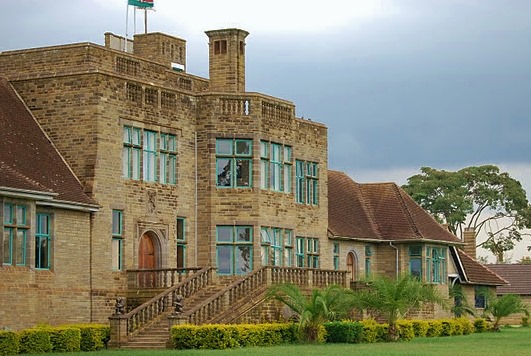
File:Lusaka Heroes Acre - memorial.jpg

Heroes Acre Memorial, Lusaka

Francis Alisheke / zambianfootball.net  Wikipedia Commons gabon+pyra.jpg

Memorial to the 1993 Zambian team. Both photos: Lusaka Times

Footballers
Efford Chabala (goalkeeper)
John Soko (defender)
Whiteson Changwe (defender)
Robert Watiyakeni (defender)
Eston Mulenga (midfielder)
Derby Makinka (midfielder)
Moses Chikwalakwala (midfielder)
Wisdom Mumba Chansa (midfielder)
Kelvin “Malaza” Mutale (striker)
Timothy Mwitwa (striker)
Numba Mwila (midfielder)
Richard Mwanza (goalkeeper)
Samuel Chomba (defender)
Moses Masuwa (striker)
Kenan Simambe (defender)
Godfrey Kangwa (midfielder)
Winter Mumba (defender)
Patrick “Bomber” Banda (striker)

Coaching staff
Godfrey “Ucar” Chitalu
Alex Chola
Wilson Mtonga (doctor)
Wilson Sakala

Others
Michael Mwape (FAZ Chairman)
Nelson Zimba (public servant)
Joseph Bwalya Salim (journalist)

Crew
Colonel Fenton Mhone (pilot)
Lt Colonel Victor Mubanga (pilot)
Lt Colonel James Sachika (pilot)
Warrant Officer Edward Nambote (fitter)
Corporal Tomson Sakala (steward)