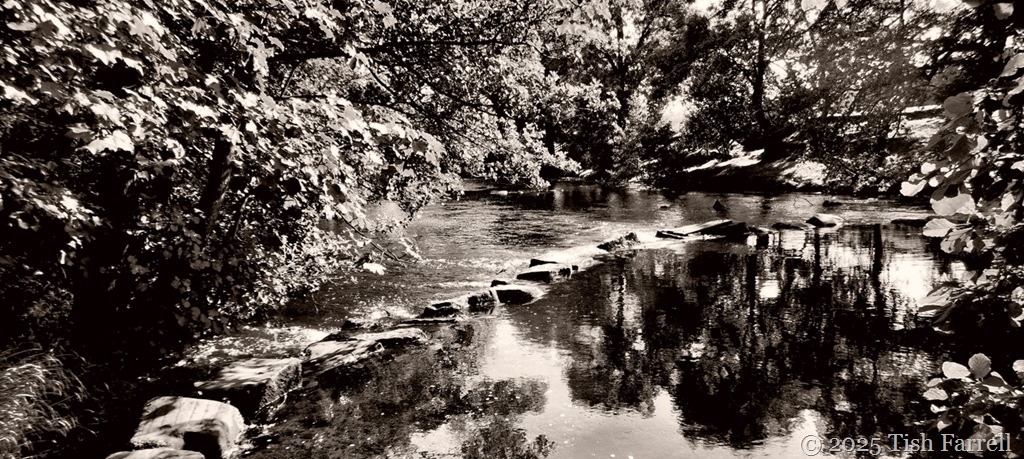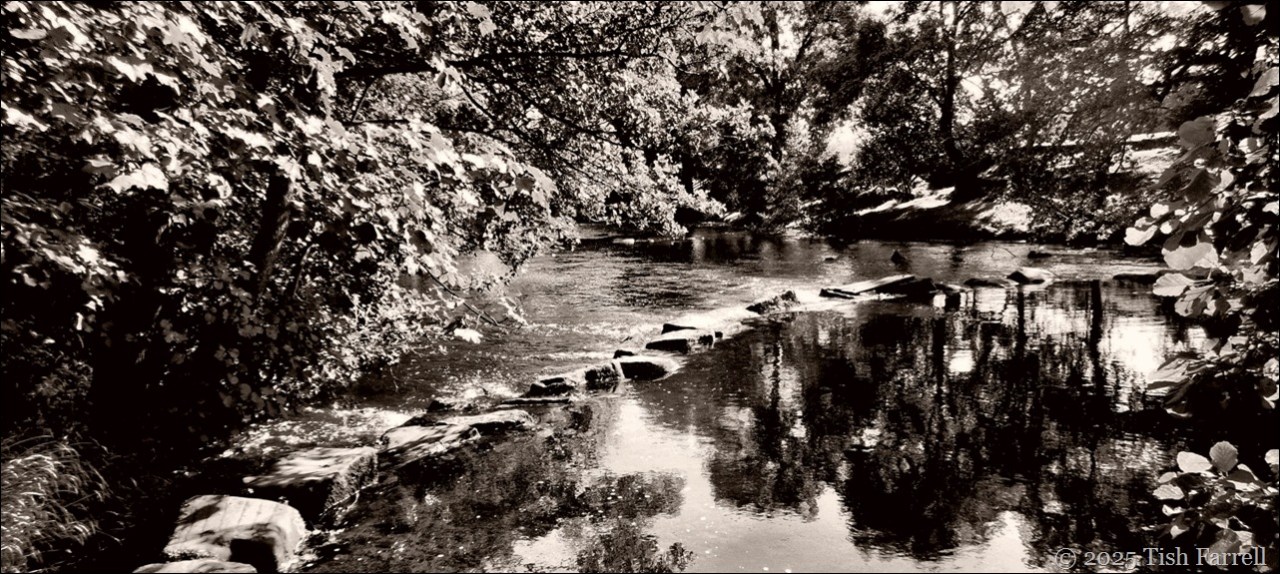
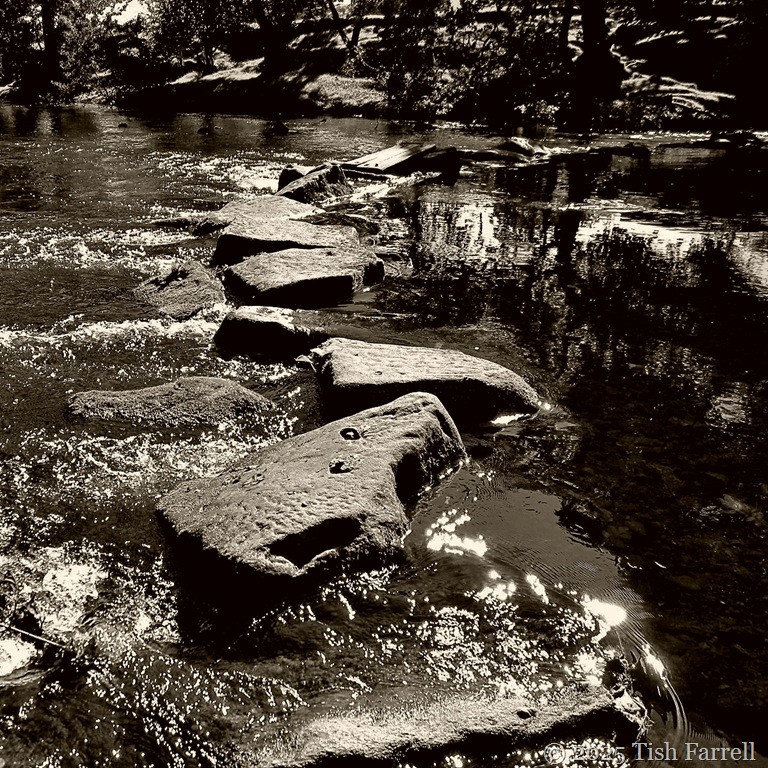
This is where my great grandmother used to cross the River Derwent to go shopping in Hathersage back in the 1880s. I know this because, much like stepping from stone to stone, she told my grandmother, who told her daughter, who then told me.
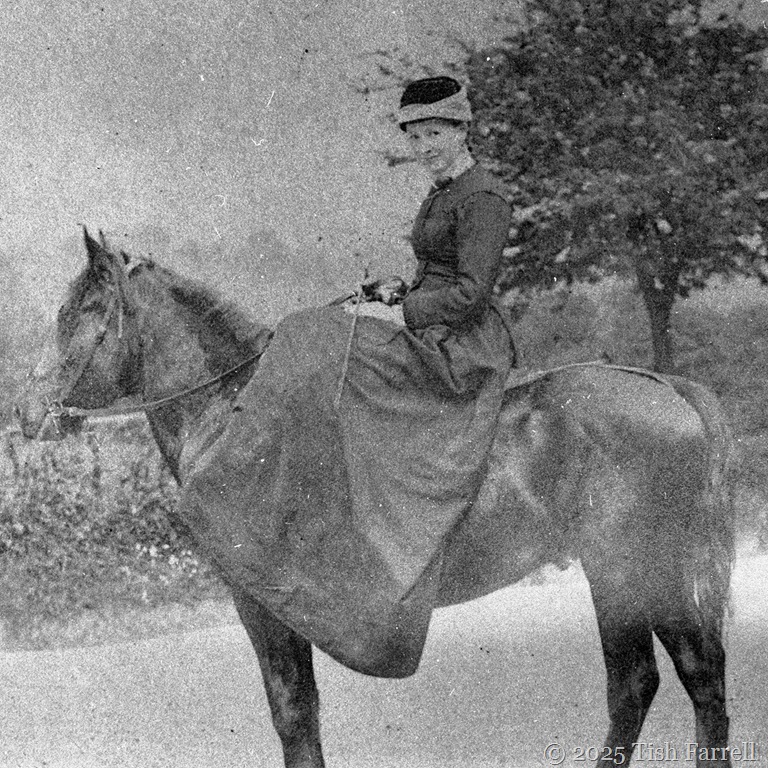
Here she is, Mary Ann Williamson Fox, in her late teens (she still has her hair in a long plait) before her father confiscated her pony. She disobeyed him too many times, jumping the farm gate (side-saddle) on the lane to Highlow Hall.
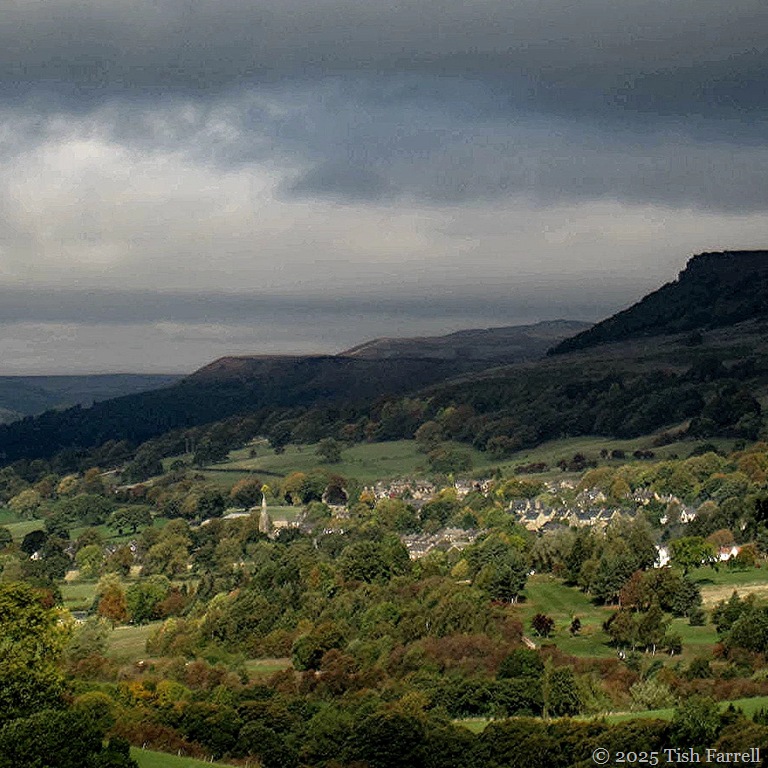
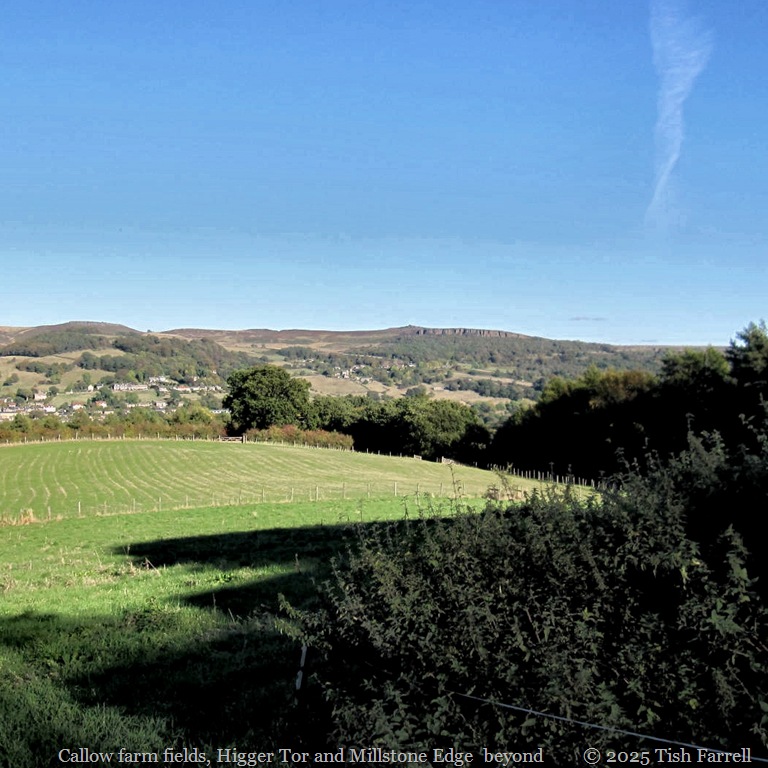
She was born in at Callow Farmhouse on the Highlow Estate in 1863. The house sits on the hillside above the river, the wilds of Offerton Moor above, the township of Hathersage below, the view across the valley to Higger Tor and Millstone Edge, and further off to Stanage Edge and Bamford (below).
Mary Ann’s father, George Brayley Fox (1820-1904) had been born at Callow too. He was a tenant of the Duke of Devonshire, as four generations of Foxes had been before him. They were middling folk, yeoman farmers who also owned land and property across the River Derwent at Newitts Field. There were connections, too, with lead mining. Mary Ann’s mother, also Mary Ann (nee Bennet), inherited land with lead deposits over in Great Hucklow, a bequest from her grandfather, Robert Jackson, Smalldale hatter, farmer and lead miner.
Callow farmhouse is still there, privately owned these days and presently up for sale, but this inter-war painting (found on the internet) is perhaps more the home that Mary Ann would recognise.
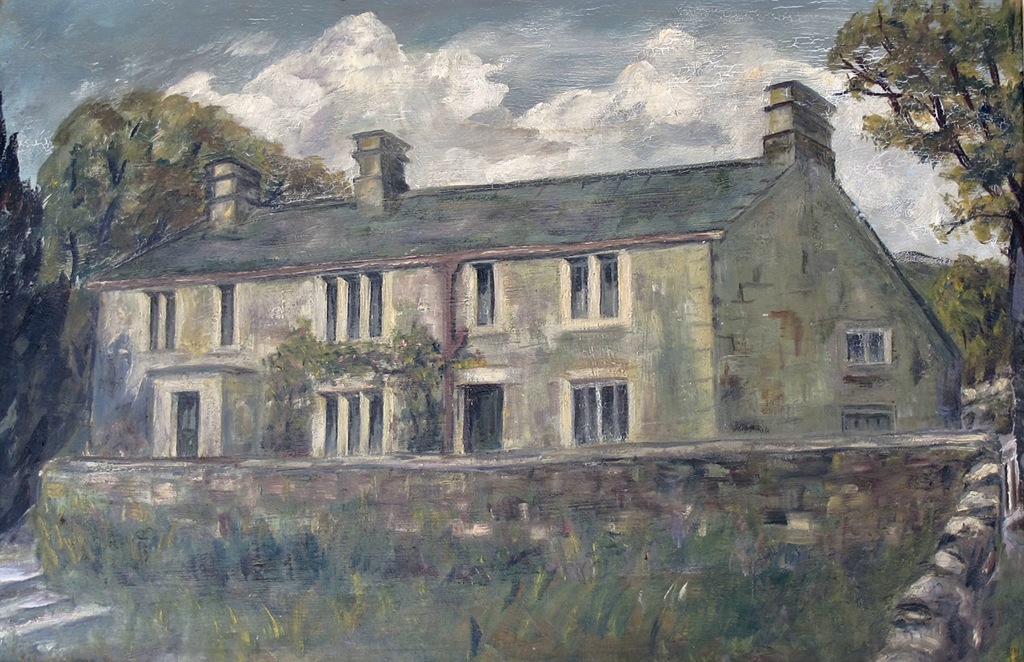
The painting is unsigned but apparently associated with a later 1920s tenant Lawrence Dungworth MM who served in the Derbyshire Yeomanry. (Hathersage Remembers site)
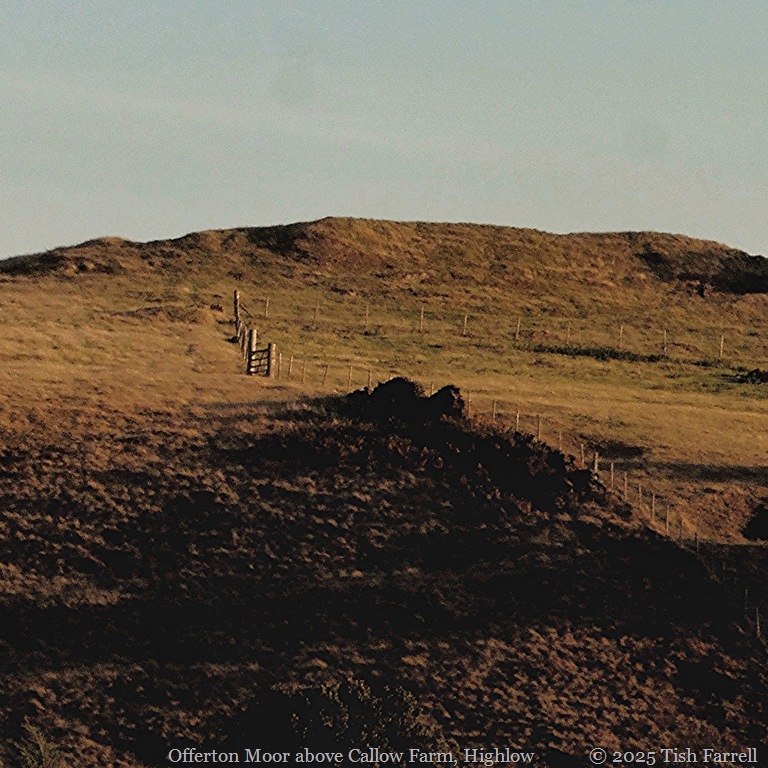
The Derbyshire High Peak is a rugged and exposed land. Living there, in times past, bred resilient, hardy folk. They grew their own oats (for the oat cakes that were a staple), kept cattle to produce their own cheese and butter, sheep for wool for weaving, reared hens and geese, kept bees and, doubtless, brewed their own ale.
Hathersage gossip back in the day had it that generations of Fox men were fist fighters, an illegal pursuit that, on account of the high stakes betting, had great support from the gentry. Mary Ann’s grandfather, Robert Fox (1779-1863), was known as ‘Bobbling Bob’. He apparently won a big fight against a likely champion after fifteen rounds, this despite a cracked shoulder blade in the first round. This yarn was told by Mary Ann’s older brother, Robert, to G B H Ward, walkers’ rights activist and editor of the Sheffield Clarion Ramblers’ Handbook. Ward included it in an article on the Foxes of Callow in the 1930/31 edition.
My own sense, though, from reading several generations of Fox wills, is that they strove to make the most of what they had, making strategic alliances, exploiting new opportunities, concerned always for their children’s future, seeing they received an education, putting them to trades and occupations that would ensure a decent living.
But by the 1890s, the shadows were gathering. In March 1893, George, in his seventies and recently bereaved, could no longer wrangle with falling crop prices and a rising farm rent. He sold up at Callow and went to live with his son, Robert, at Shepherd’s Flat farm at Foolow near Eyam. Meanwhile Mary Ann was facing her own tragedy far away in industrial Farnworth, Greater Manchester. In 1886 she had married Thomas Shorrocks, partner in a family firm of spindle-makers. But the decline in the local cotton industry led to the company’s collapse and bankruptcy, following several high profile court cases. Thomas died in December 1893, aged 38, leaving thirty-year old Mary Ann with baby Thomas, Lilian 5 years, Mary 7 years, and an 11 year old step-son Robert.
The Fox family rallied and came up with what seemed an ingenious plan to give Mary Ann both a home and a living. In 1894 Queen Victoria opened the Manchester Ship Canal, giving the newly created inland port of Manchester access to the River Mersey, Liverpool and the world beyond. There were high hopes it would boost the international cargo trade. And so that year, George Fox (probably Mary Ann’s younger brother rather than father, and stepping in to cover her expected period of mourning) secured the licence for the Old Red Lion Inn on the banks of the Mersey, Hollinfare, a small Cheshire village on the coach road to Manchester. Besides the view of the new Ship Canal and passing cargo boats, the buzz of new prosperity in the air, the inn came with its own farm fields and outbuildings. It must have seemed an excellent choice for a fresh start.
In 1895 Mary Ann took over the licence. She did so under her family name of Mary Ann Williamson, dropping the Shorrocks, perhaps to shed association with the bankruptcy (?) (Williamson was her mysterious grandmother’s maiden name). Younger sister Louisa, described by my grandmother as ‘simple’, came to live in as home help and child minder. And in that year too, Mary Ann married one Charles Rowles, a widower and retired sea captain, who was then employed as a pilot on the Manchester Ship Canal. Soon there was a child on the way, and for a time, it must have seemed, the shadows were in retreat.
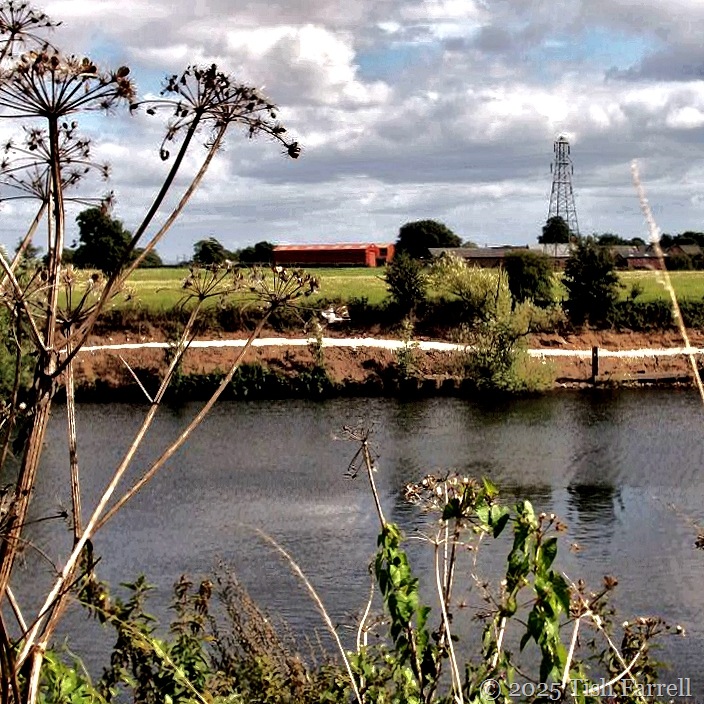
The Old Red Lion Inn still stands across the road from the River Mersey on the Manchester Ship Canal. No chance of stepping stones here; and the views of the lush dairy farmland of Cheshire across the water, a far cry from the challenging uplands of High Peak Derbyshire.