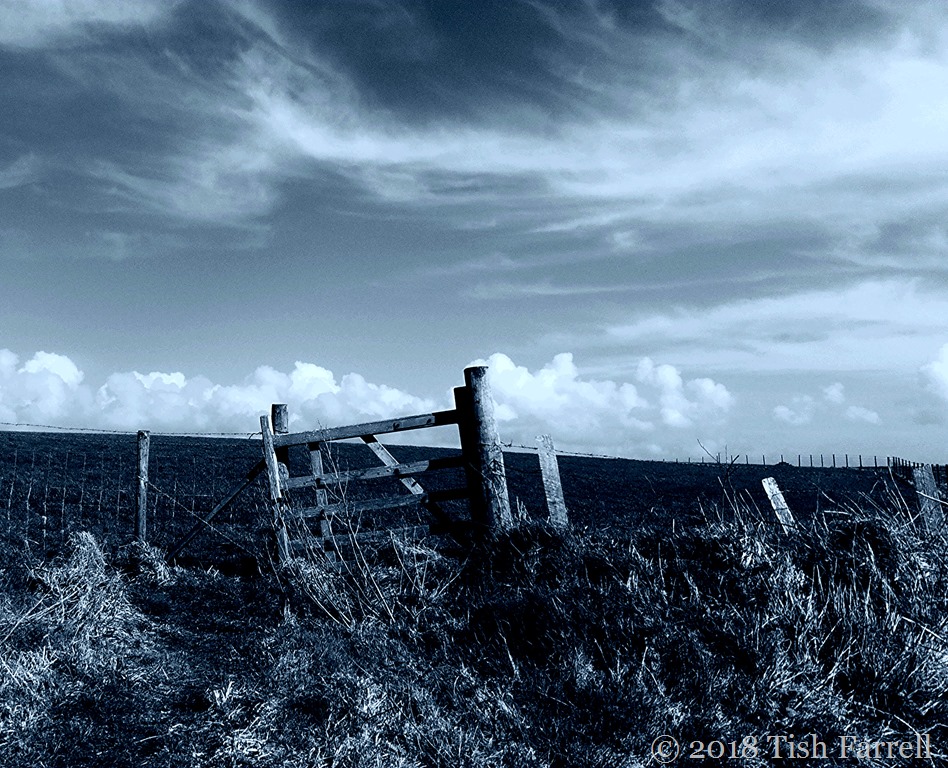
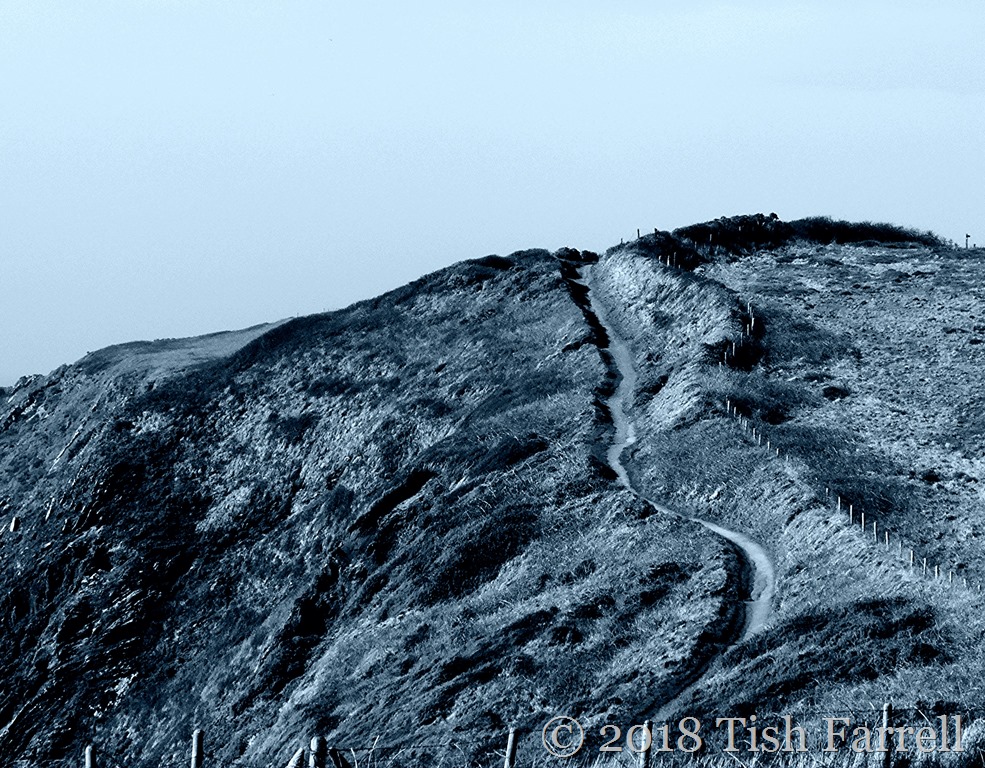
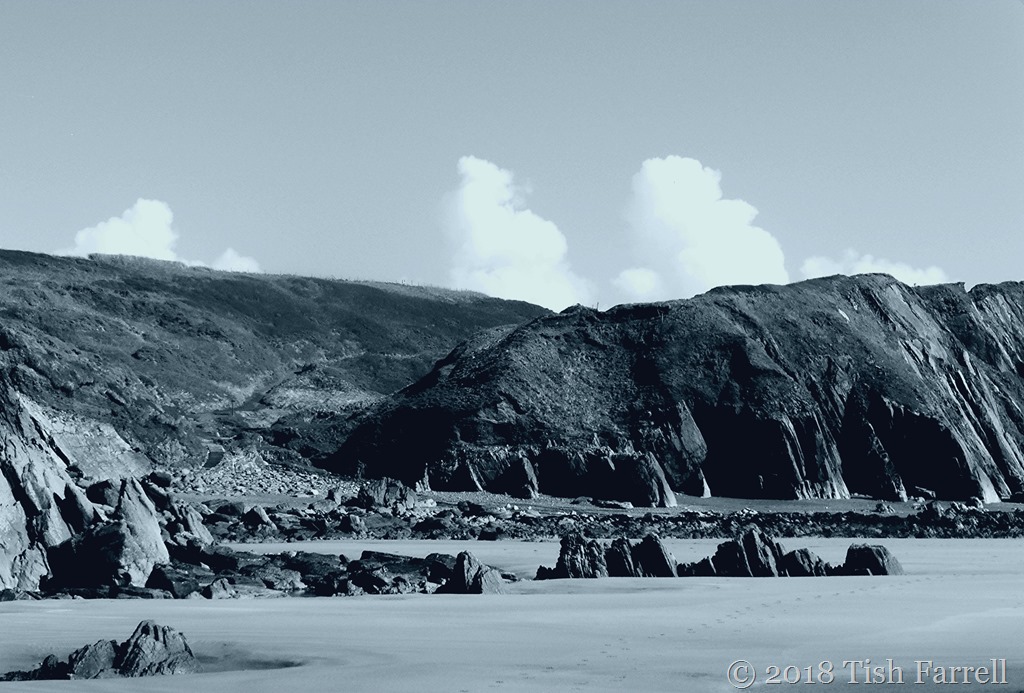
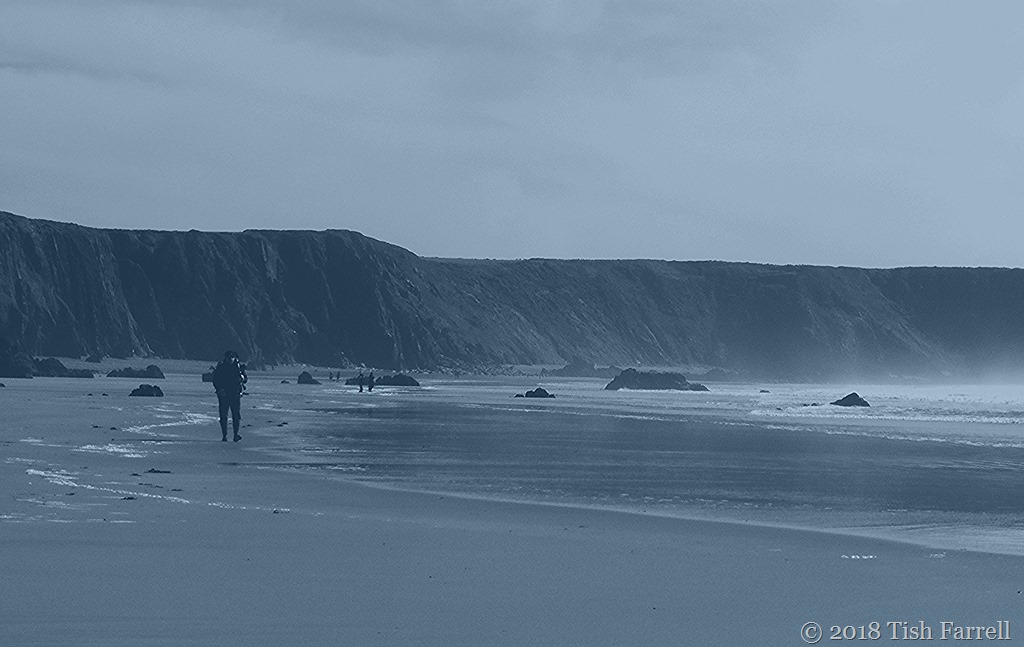
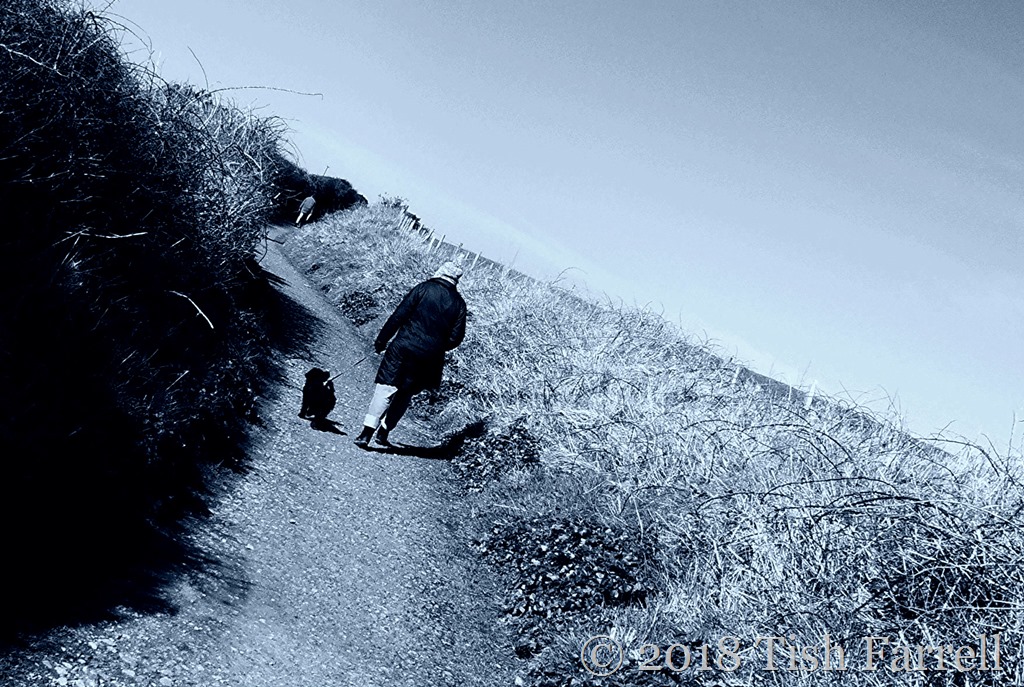
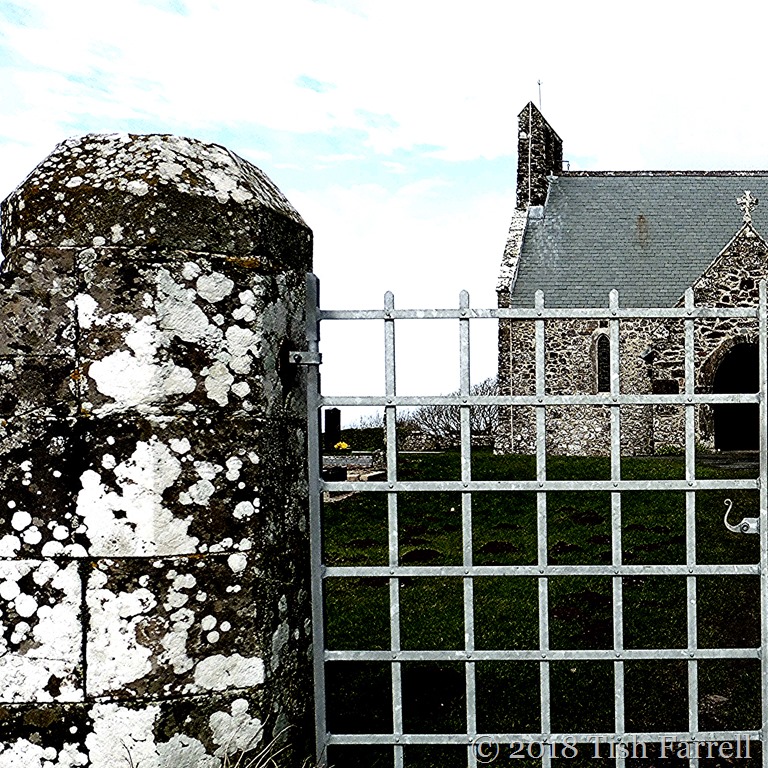
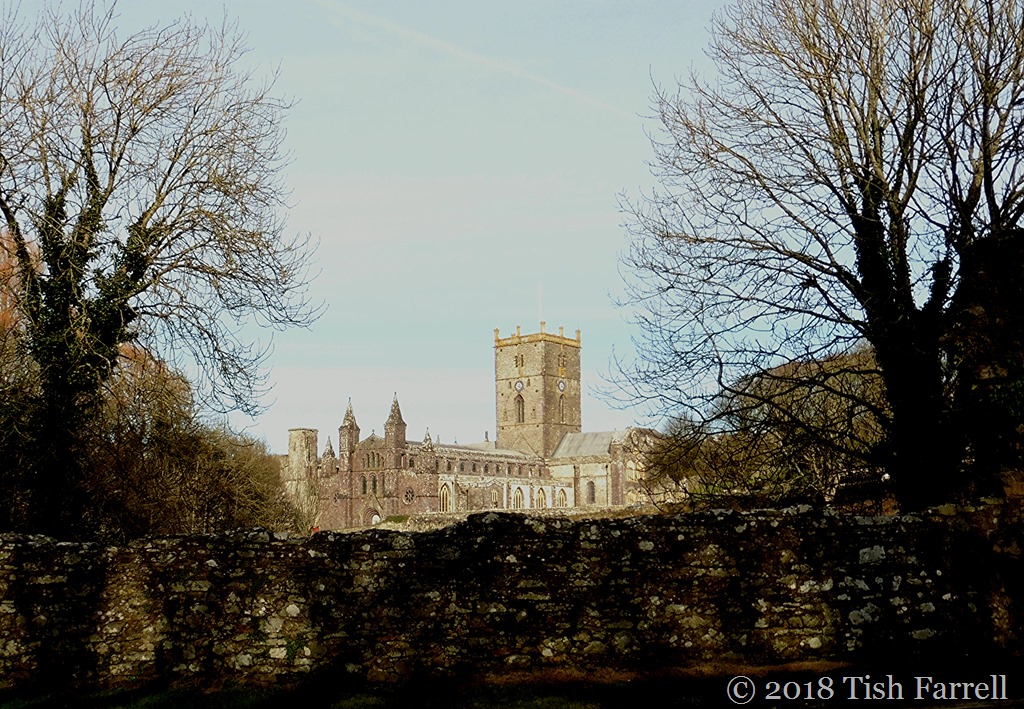
It stands beside the Wales Coast Path looking down on St. Bride’s Haven, a rocky cove with a long, long history. The church is also called St. Bride’s and is dedicated to St. Bridget of Kildare who, it is said, arrived on these shores from Ireland c500 CE. The original chapel dedicated to her is long gone, though before it went, local fishermen used the place for curing herring, for which act of ecclesiastical disrespect, the herring have ever since steered clear of St. Brides Haven.
It’s a good, if fishy yarn.
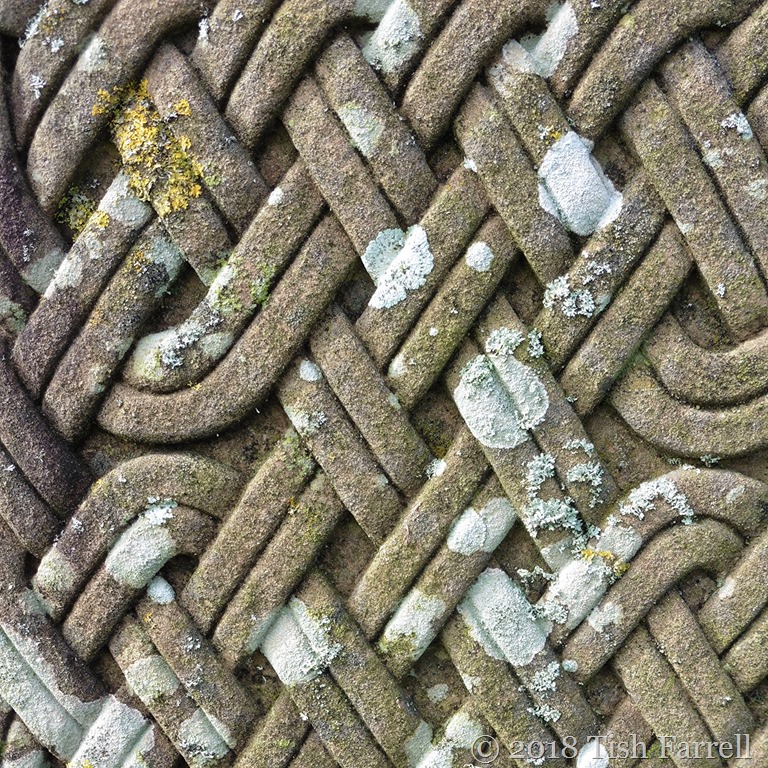
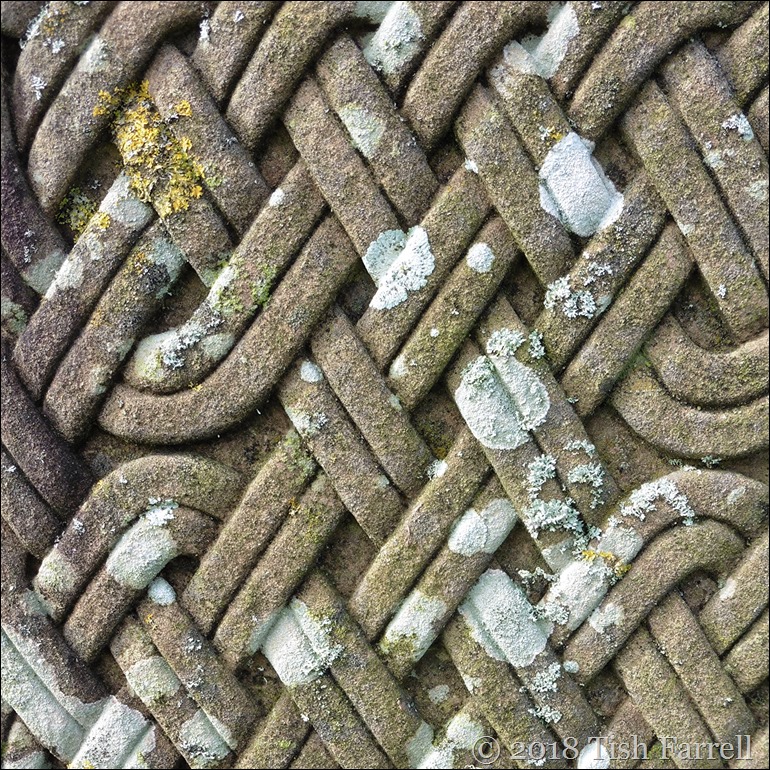
The present church was probably built by at least the 14th century, during which time it would have served the lords of the neighbouring medieval manor house known as The Abbey, and whose ruins may still be seen in the nearby woods. The old church was then thoroughly renovated in 1868, by which time it was very much the family church of the occupants of St. Bride’s Castle, a great baronial pile built by the Allen-Phillips family in 1830, but subsequently the second home of the Barons Kensington between 1880-1920. The latter marked their passing with monumental Celtic Crosses that rise starkly in the windy graveyard.
Between the church and the beach there are the remains of a lime kiln. Lime burning was an important trade in Pembrokeshire from at least the 13th century, the resulting quick lime used to neutralize acidity of farm fields before sowing wheat and barley. It was also an essential material in the building trade – for the mixing of lime mortar and whitewash. For 500 hundred years ships landed on Pembrokeshire’s beaches, coming and going with the tides, and bringing in cargoes of limestone and culm (coal chippings and anthracite dust) to be burned in the kilns. It was a highly skilled process, and a dangerous one.
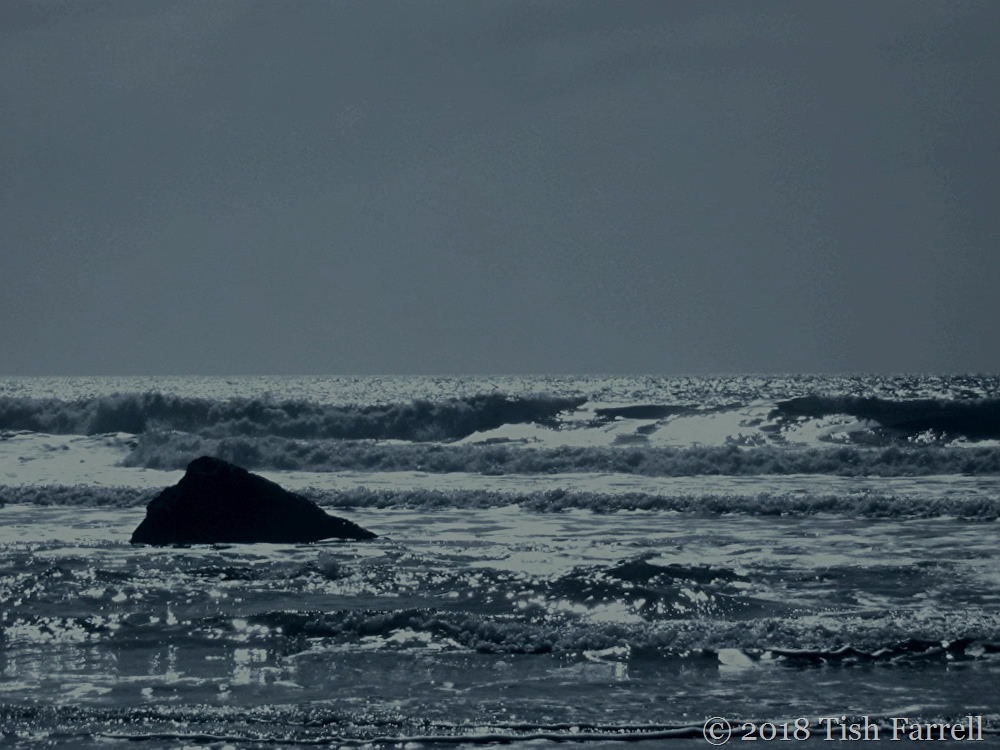
These days the ships seen off St. Bride’s Haven are oil tankers waiting their turn to put in at the great oil refineries of Milford Haven and Pembroke Dock. Their presence adds to the daily seascape below St. Bride’s Castle.
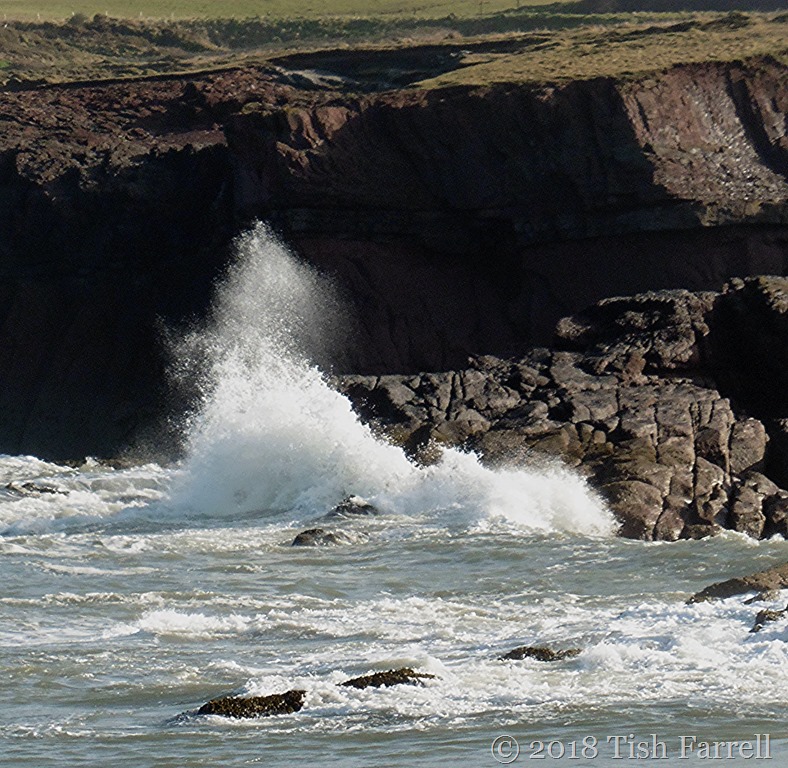
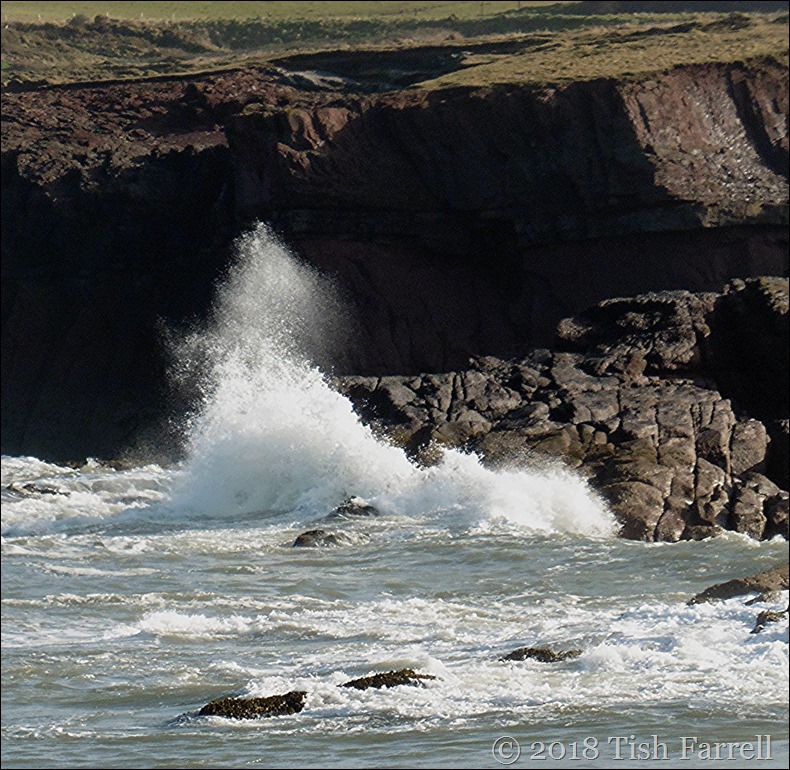
After the Barons Kensington sold up, the Castle became a sanatorium for sufferers of tuberculosis. Those poor souls who did not recover also have their graves in St. Bride’s graveyard. After World War Two it was a convalescent home. More recently the Castle and grounds have been given over to holiday apartments and cottages, the Castle’s public rooms – great hall, library, and billiard room – restored in English country house style for shared use by all the guests. And here we had our week’s family gathering (including cockerpoo puppy), staying in one of the cottages in the old walled garden. The only sounds were racketing rooks and jackdaws busy building their nests in the woods, and more distantly, the crash of surf on the cliffs at St. Bride’s Haven.
This slideshow requires JavaScript.
At the start I mentioned that St. Bride’s Haven has a long, long history. So far, time-wise, I’ve only scratched the surface. Later I discovered that if I’d taken the coast path around the cove and behind the cottages I would have come upon an Iron Age hillfort (c 800 years BCE). And more ancient still, near this site had also been found Mesolithic tools (9,000-6,000 BCE). This Middle Stone Age era of the post Ice Age is distinguished by the making of tiny flint arrowheads called microliths – usually around 1 cm in size. These were then mounted on a wooden shaft to create a hunting harpoon. Mesolithic hunters were also very fond of shell fish, camping out at likely beaches as part of their seasonal food gathering round. They thus left archaeologists with that other very exciting prehistoric find – the shell midden. Some are enormous, and were possibly used for several generations.
So next time we go to St. Bride’s I have promised myself a microlith ‘n midden hunt. It will make a change from gathering seashells.
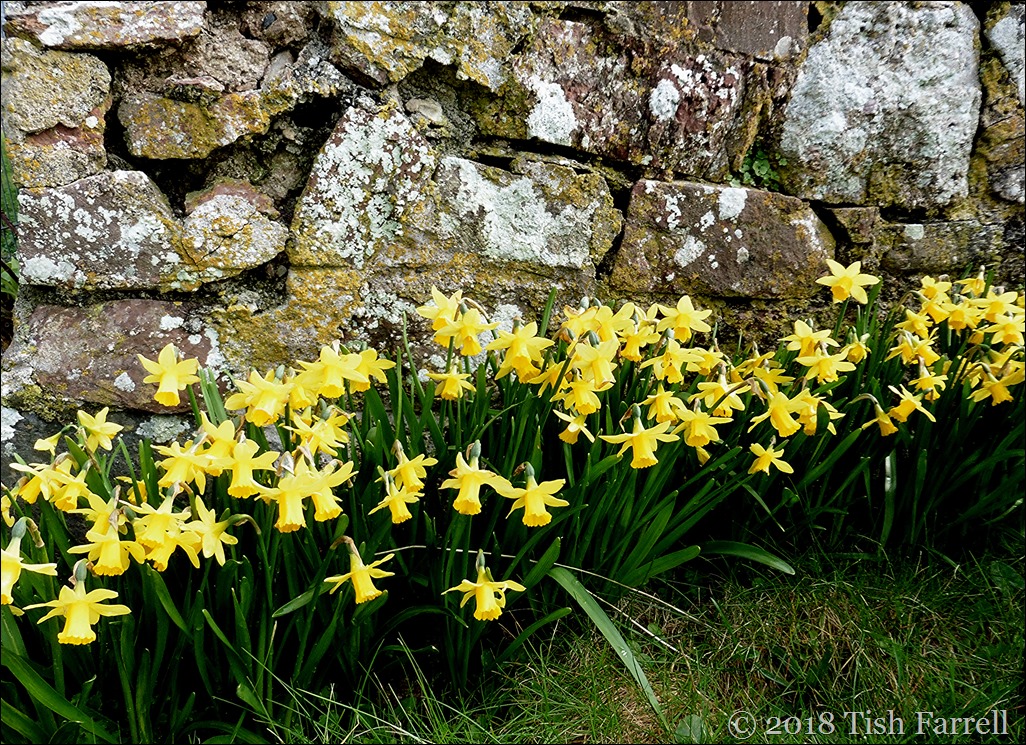
In which Six Go Potty In Pembroke With Cockerpoo Puppy – holiday snaps #2
Jo’s Monday Walk
Please visit Jo for some captivating scenes of Portuguese fisher-folk and a very gentle walk.
March Square #21
And pop over to Becky’s for more March squares and circles in squares.
#MarchSquare20