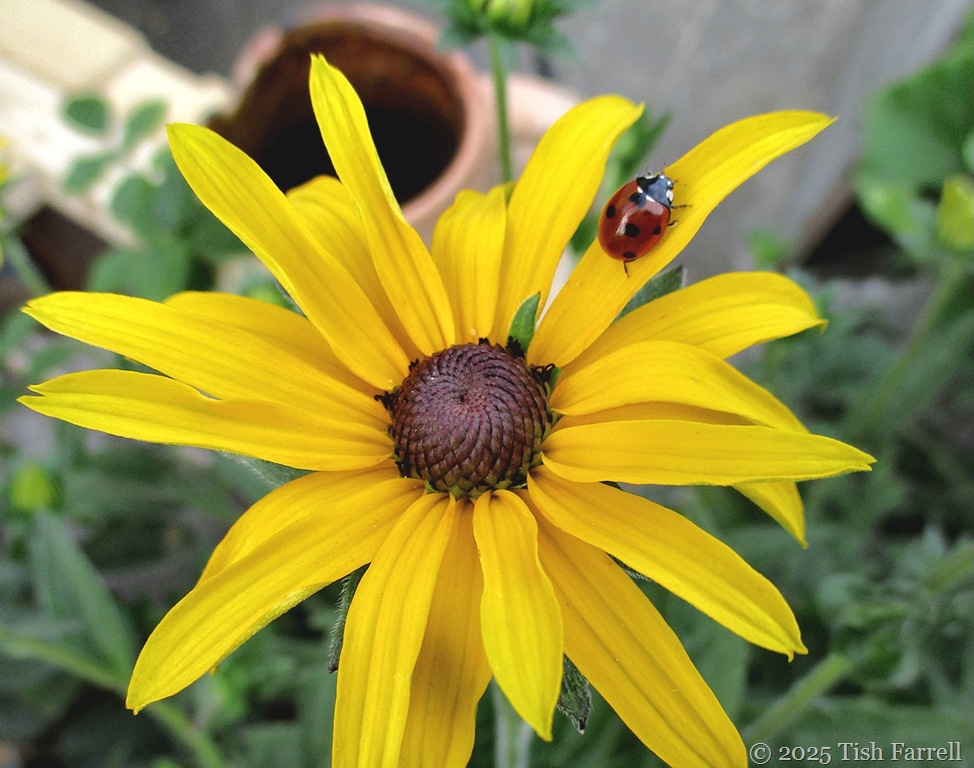
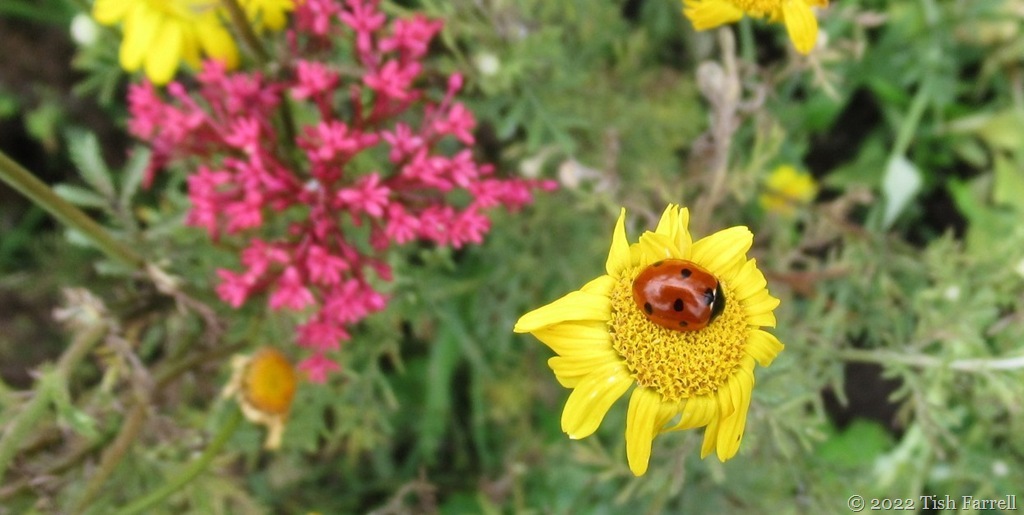
Seven-spot Ladybird on Rudbeckia

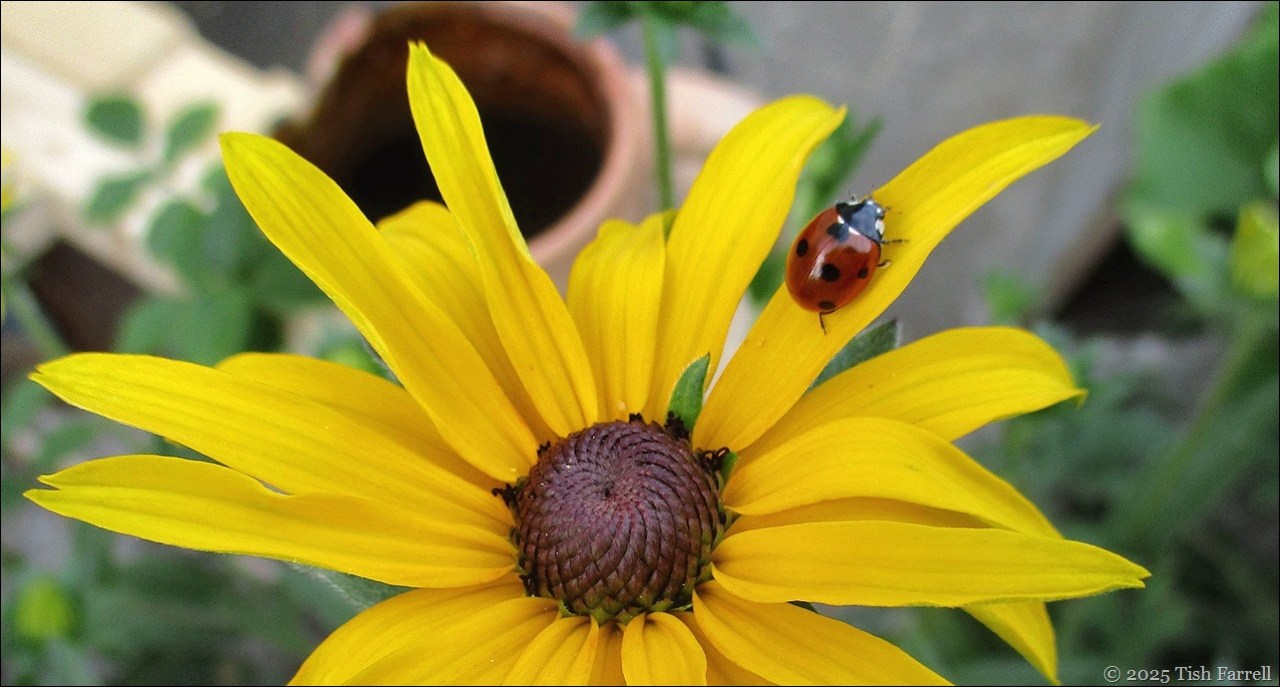
Seven-spot Ladybird on Rudbeckia
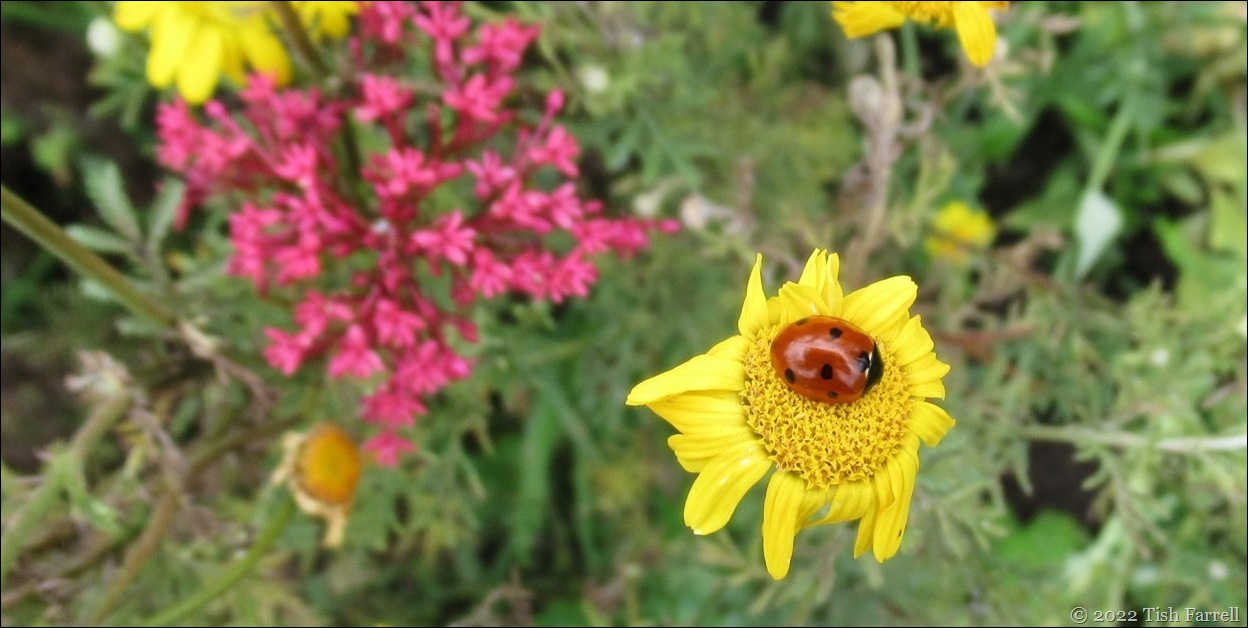
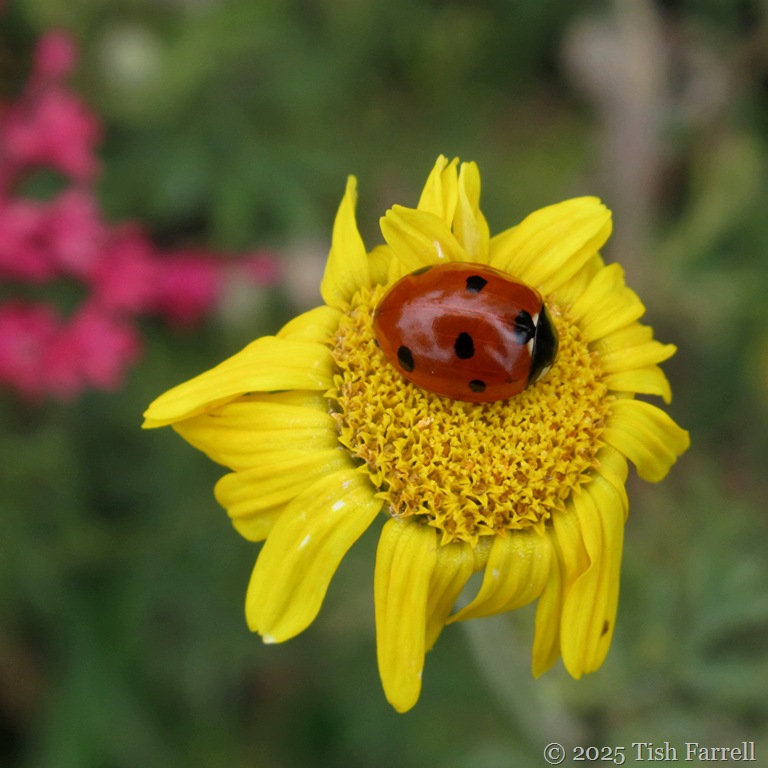
Much like poppies, ladybirds come with instant eye-appeal. Who knows why: the shiny red wing cases that look like polished enamel; those striking black dots. From infancy I was anyway brought up with the notion of them: those lovely Ladybird children’s books so exciting to receive; cosy Ladybird cotton jumpers (items now known as sweatshirts) in bright primary colours. I had a red one, the colour of the ladybird. And a yellow one, the colour of this Golden Marguerite (Anthemis tinctora).
These days, as a more than grown up gardener, I mostly appreciate their appetite for aphids. They are at their most voracious during the larval stage, when they are distinctly creepy beasties: the minute Darth Vaders of insectdom:
https://www.field-studies-council.org/shop/publications/ladybird-larvae-guide/
So do not squash!
Some of their kind also eat scale insects and feed on mildew, a fact I’ve only just discovered as I’m writing this.
And another surprising find (to me anyway) that according to the Woodland Trust site there are 26 kinds of ladybird in the British Isles, with our gardens likely to be host to several species at any one time. I’ve only ever registered the existence of three or four types, including the Seven-Spot in the header photo. One of the commonest is an incomer from Asia – the Harlequin, which may be black with red spots or vice versa. It also eats aphids, but may at times predate on native ladybirds. Advice seems to be to let it alone. Trying to eradicate it might involve too much mis-identification of native species which have similar livery.
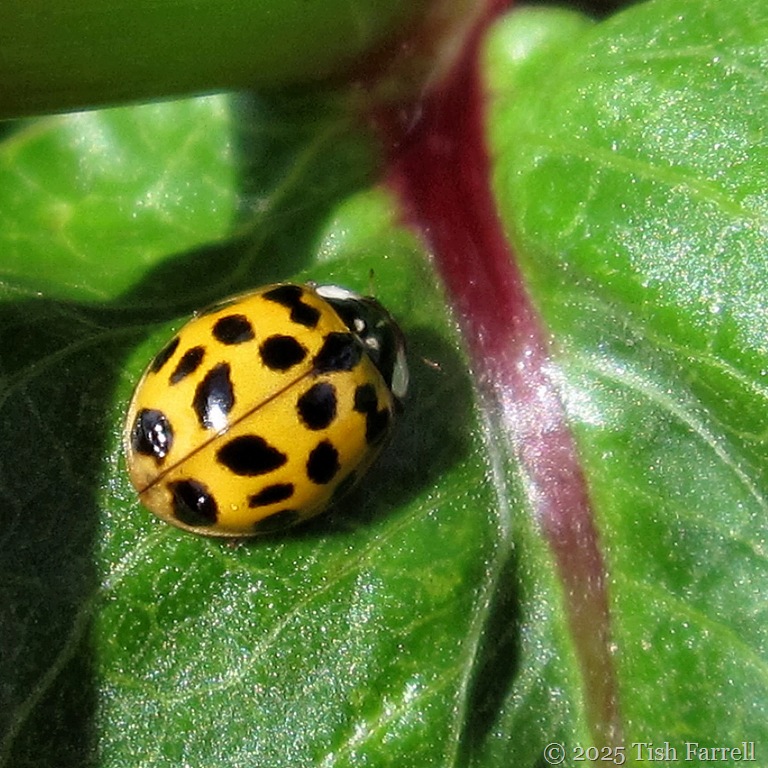
Looking now through my allotment photo archive, I’ve found I’ve snapped a Twenty-Two Spot ladybird. At least I think that’s what it is. It’s on a dahlia leaf and is one of the mildew eating varieties.
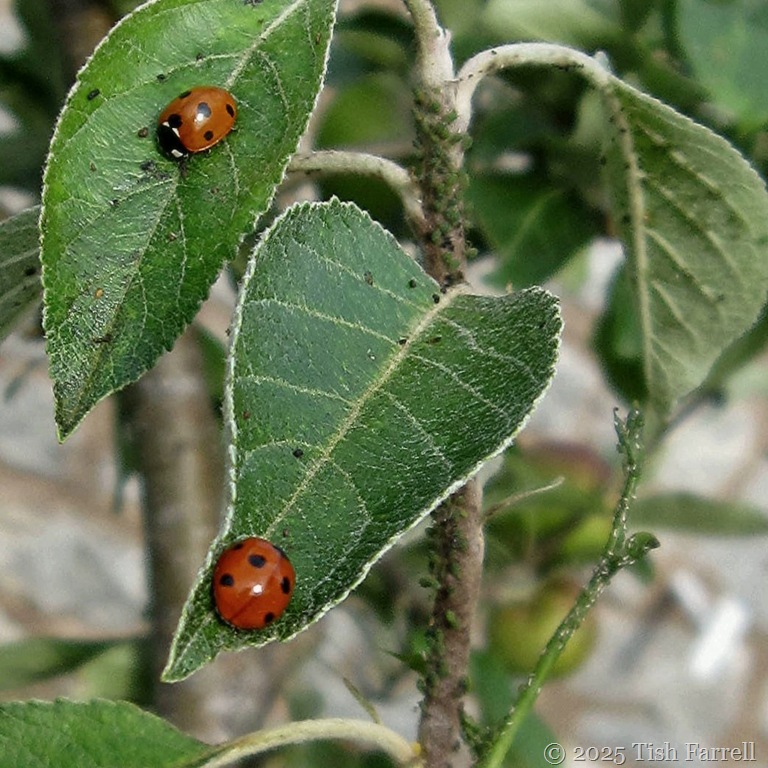
Seven-Spotters in action on an aphid colony
*
#SimplyRed Day 3 Becky has us all in clover today.

*
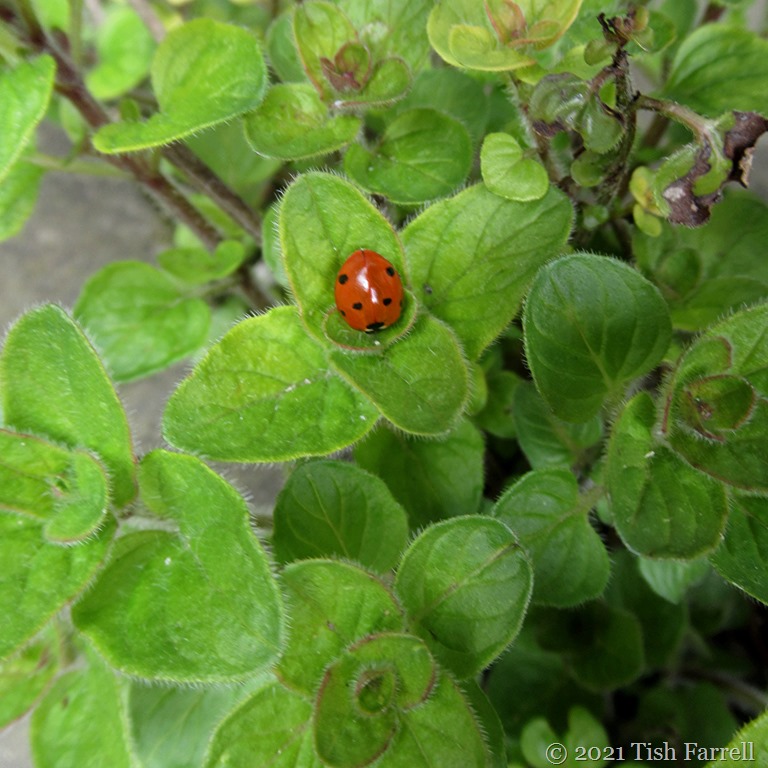
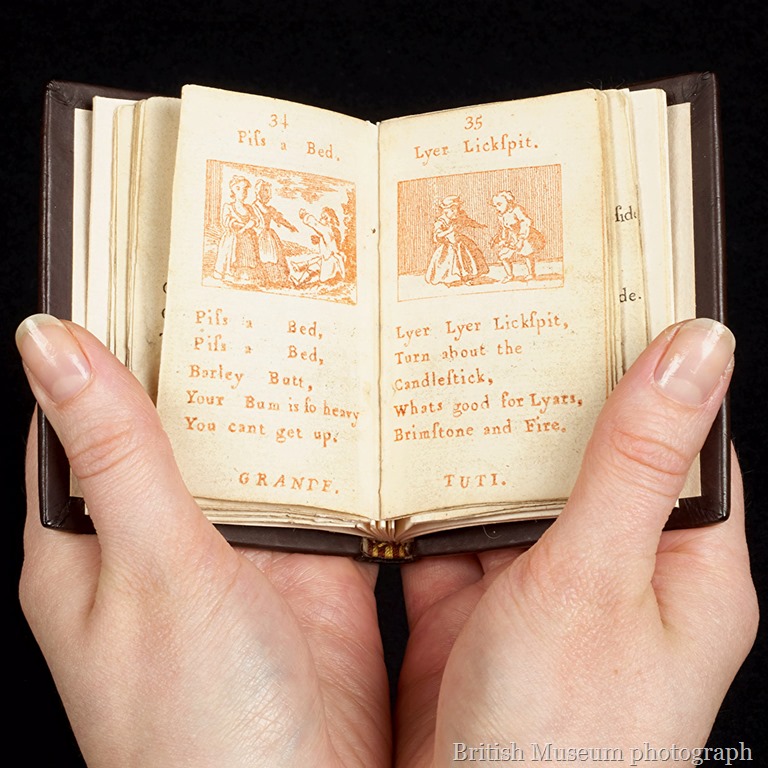
The rhyme comes from Tommy Thumb’s Pretty Song Book, published in London in 1744. Just like the ladybird, spotted this week inside a whorl of freshly sprouting oregano, the book is very tiny. Here are some images from the British Museum which owns one of two surviving copies. You can see more images and find out more about the little book of rhymes that some us once knew (well perhaps not all of them) HERE.


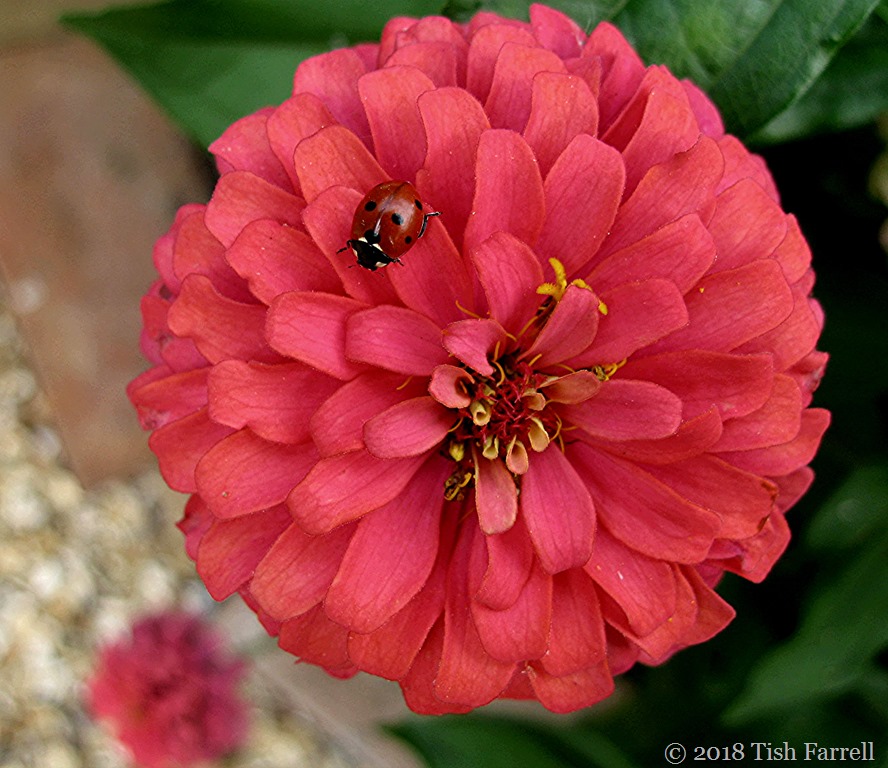
The other day I noticed the tips of the apple tree boughs were encrusted with greenfly. I was going to treat them to a soap and water spray, but then forgot. The next time I looked the ants and ladybirds had moved in on the job and the greenfly invasion was much diminished. This ladybird is obviously having some R and R in the nearby zinnias. Always good for a smile – ladybirds.
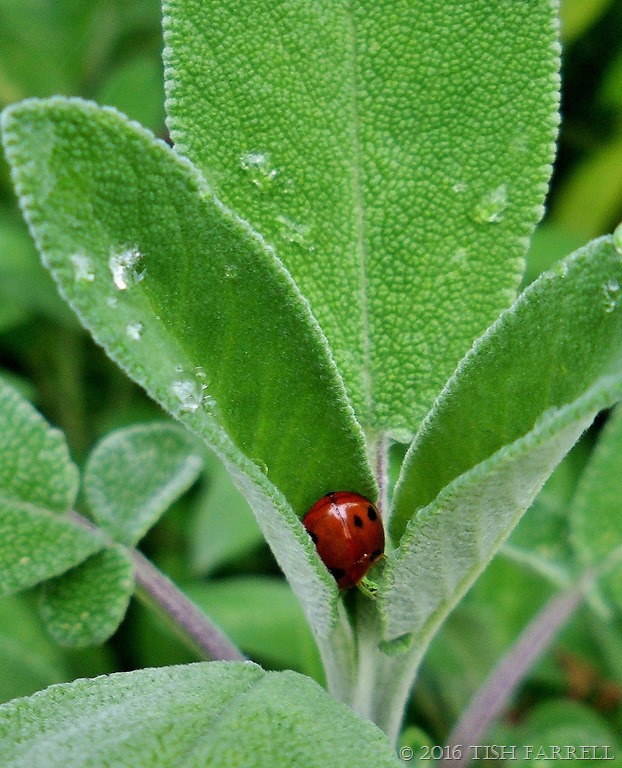
Ladybirds, as gardeners know, are good bugs to have amongst the fruit and veg. They eat aphids. Yay!
And they need to get gobbling now. For despite my recent whingeing about cold wind and lack of spring weather, the greenfly are already with us. And there’s a reason – our warmer winters.
We may have had endless rain, bad floods and storms this year in the UK, but we have not had the hard ground frosts that help to check slug and aphid populations; nor have had for several years. Back in early February when I was pruning the autumn raspberry bed up at the allotment, I was also finding ladybirds out and about. They are supposed to be hibernating (overwintering) between October and March, so hopefully they were finding something to eat and hadn’t simply been fooled into waking up too soon by the unusually warm February temperatures.
The ladybird in the photo is nestling in my garden sage bed, spotted last summer. And for those of you who wish to find out more about ladybirds (Coccinellidae) there is a brilliant website at UK Ladybird Survey. And if you live in the UK, they want to have details of sightings.
#7-daynaturephotochallenge #day 2
With thanks to Anna at Una Vista Di San Fermo who nominated me.
