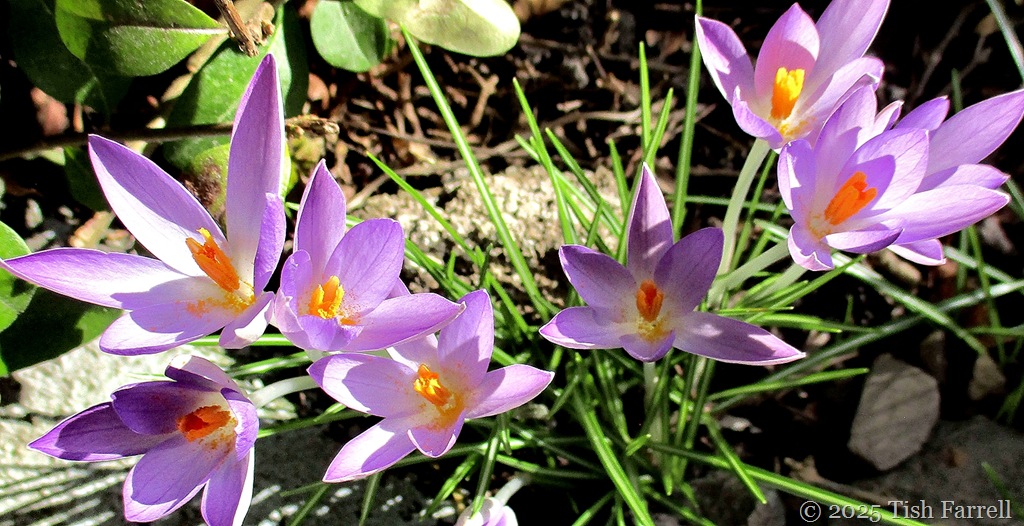

Or is it?
February in Britain often teases, bringing us a sudden mild and sunny day, as it did last Saturday, followed by bone biting winds (today). Countryman poet, John Clare 1793-1864, wrote a poem about February fickleness. I probably mentioned this time last year. It’s worth a read.
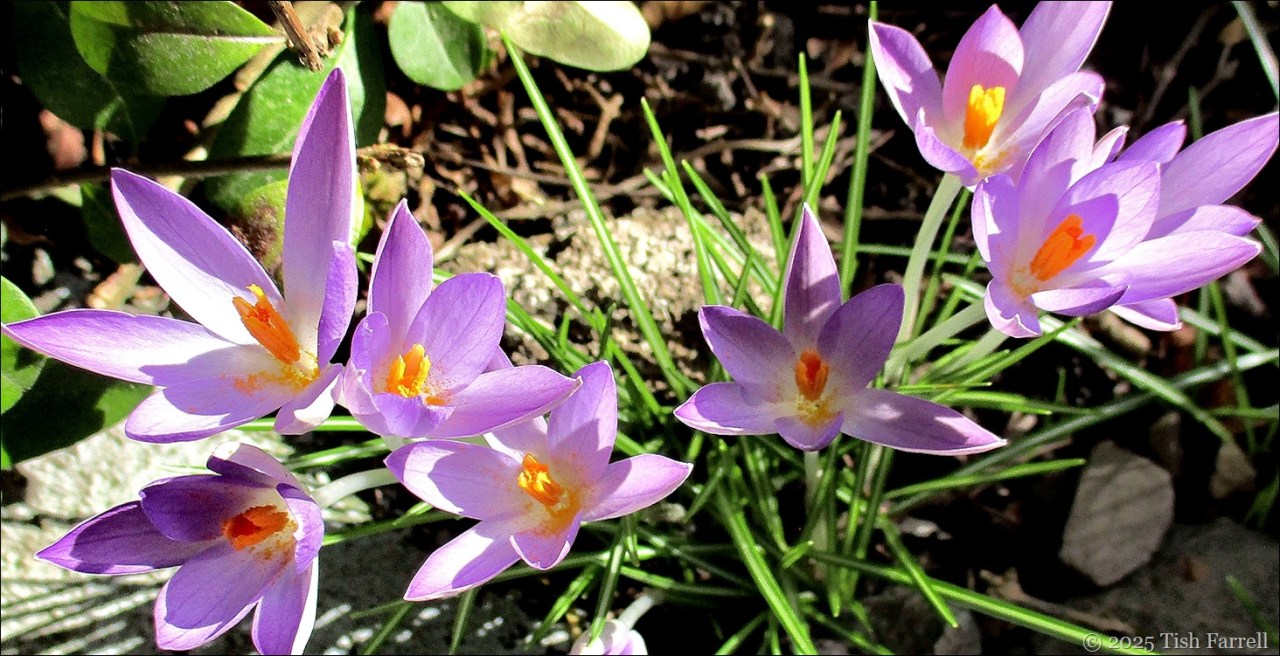
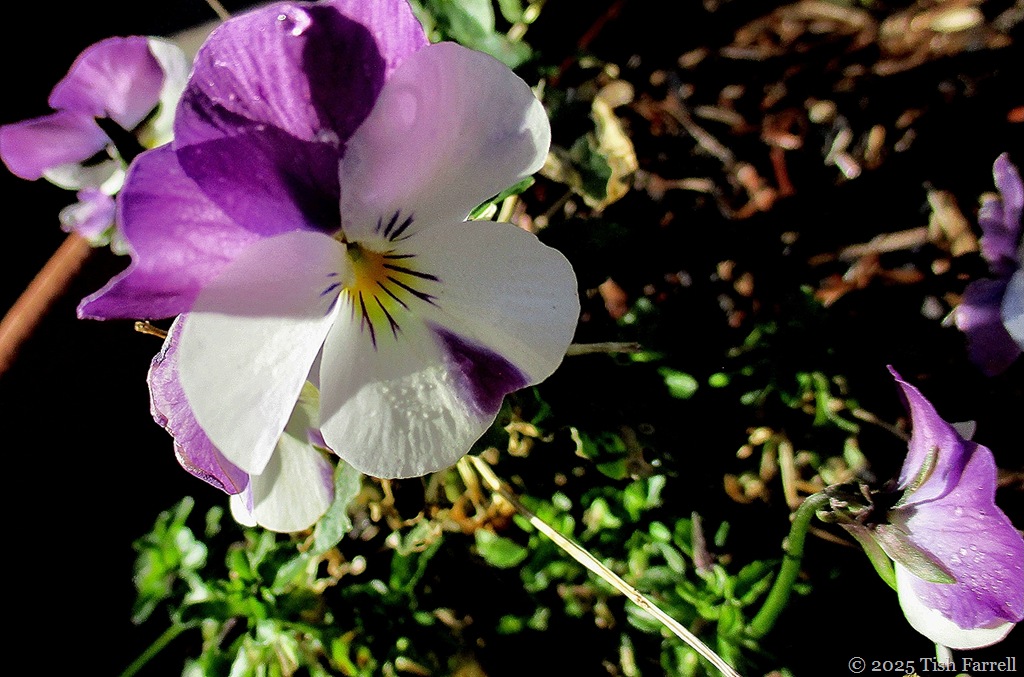
So: we have crocus and snowdrops, and the odd daffodil. Also hellebores, both waning and waxing. On the garden steps the winter pansies still thrive, although all but blustered out of their pot.
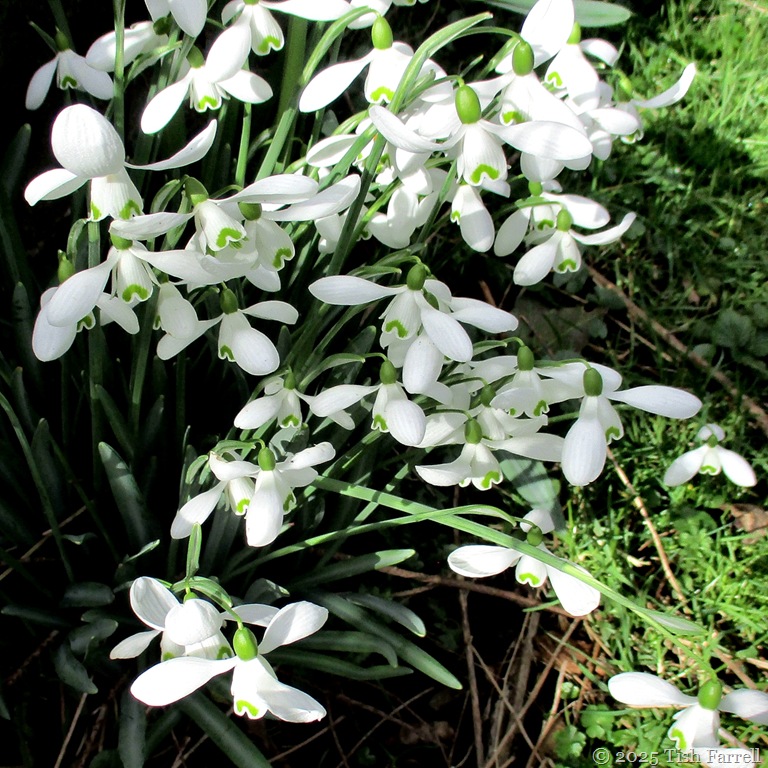
We have only a small scatter of snowdrops in the Farrell domain, but everywhere else about the town, in gardens, under lane-side walls and hedges there are drifts and drifts. Reinforcements, then, needed at The Gables for next year.
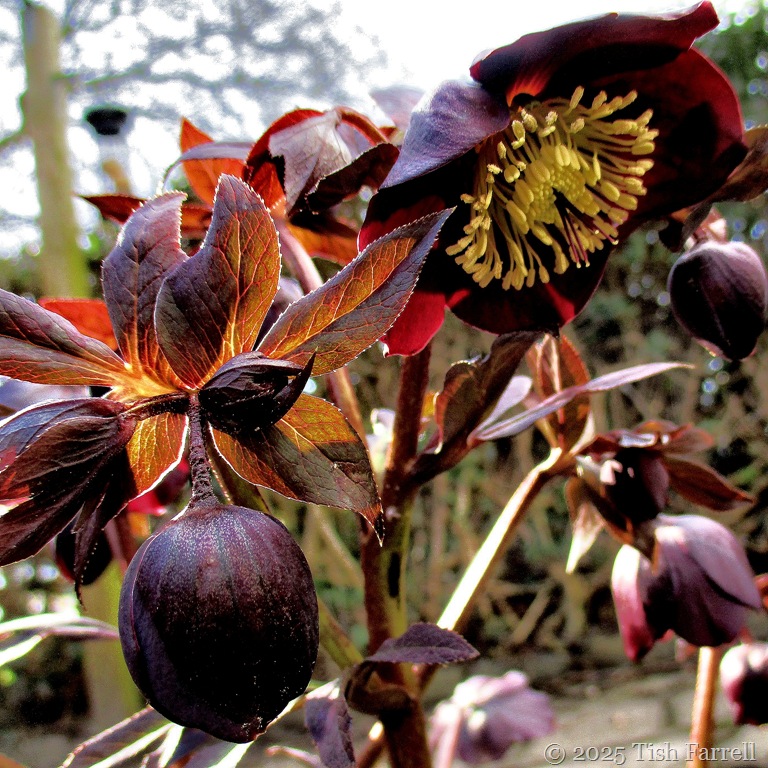
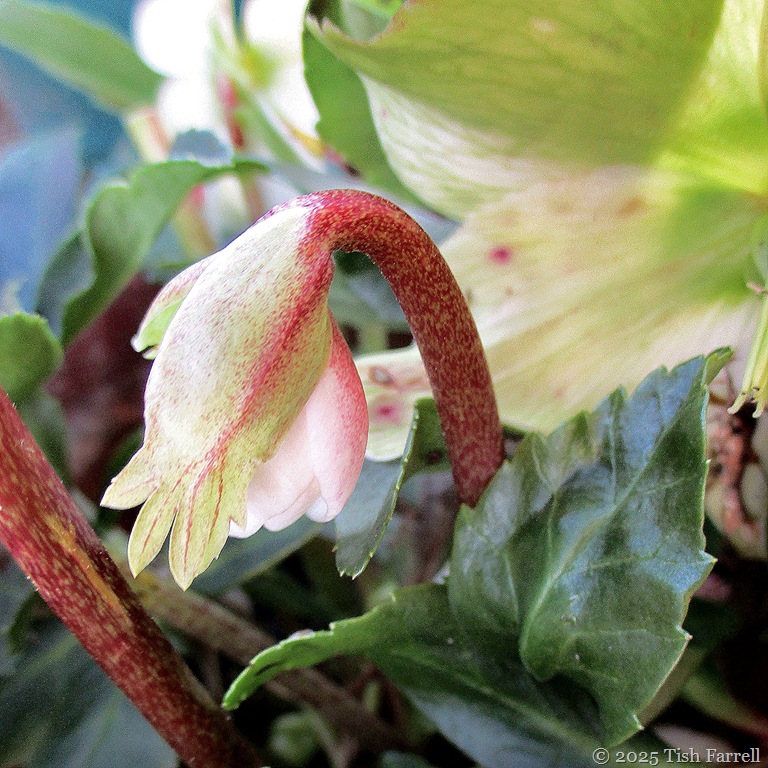
At the top of the garden steps the dark hellebore has just begun to flower. Very striking when the sun catches it. Meanwhile, in the pot below, Hellebore Christmas Carol is winding down after a three month performance. Although having said that, this morning I noticed there are new buds forming beneath the gone-to-seed blooms.
*
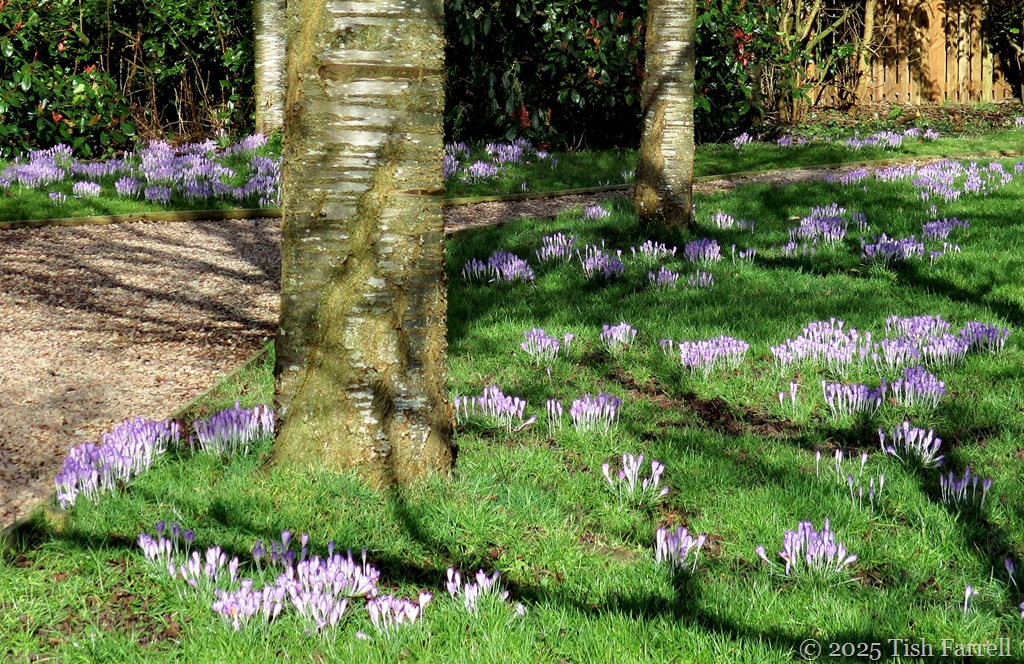
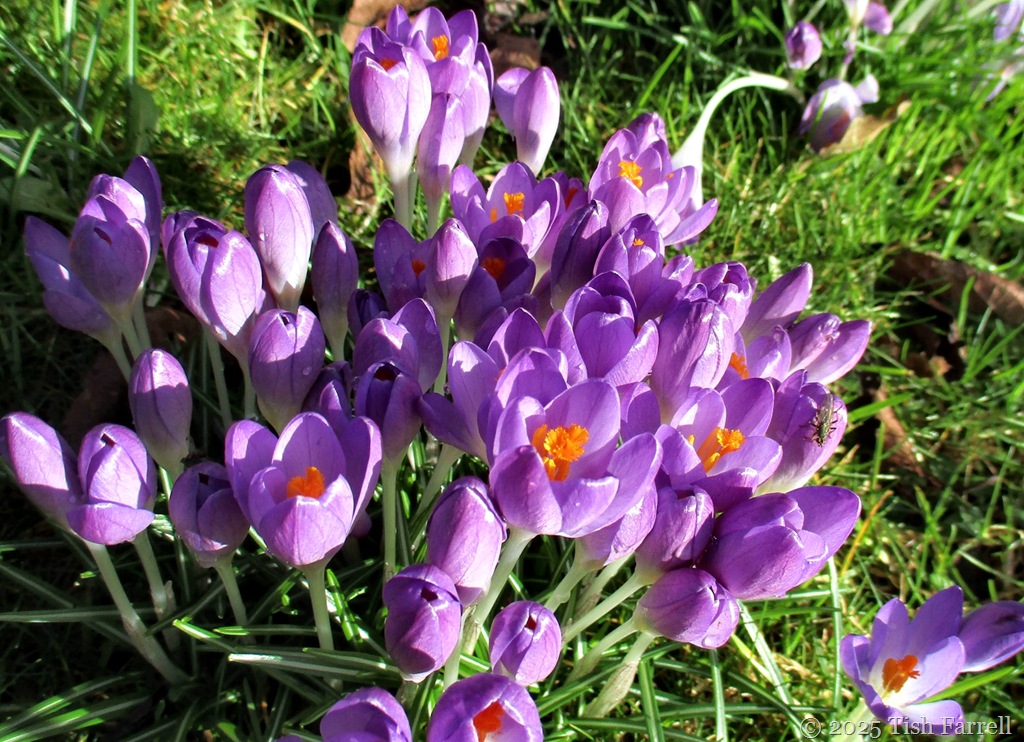
The clump of tiny crocus at the top of this post popped up this week by the front gate. Most welcoming of them. This particular variety also seems to be growing in every Bishop’s Castle garden. And of course there are the chunkier sorts too, a whole host in fact spotted in the grounds of the Wintles eco-houses:
*
Outside the kitchen window (on the far side of our horrid hedge) the ornamental cherry tree is now displaying the faintest haze of plum coloured buds. They will be candy floss pink when they open. Not a favourite colour, but still a sight to look forward to against a blue spring sky.
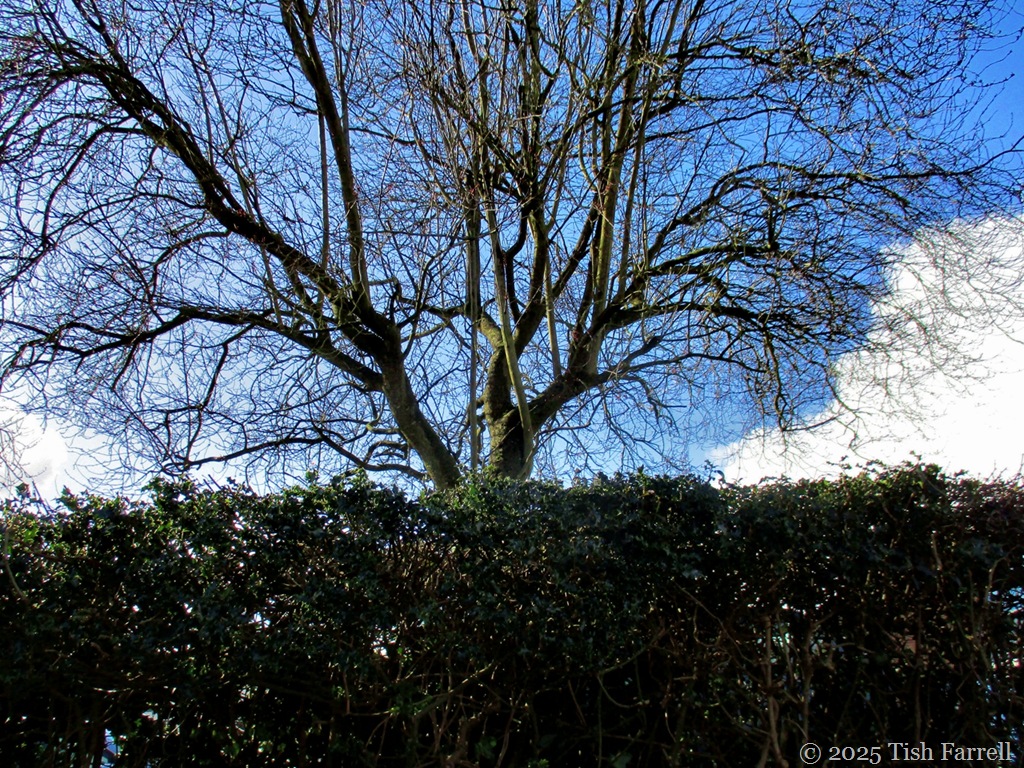
And talking of the horrid hedge, those of you who follow my gardening pursuits will know that last year I was doing battle with it: untangling swathes of ivy, pulling out decayed hawthorn branches, unpicking very prickly vegetation that had knitted itself into a chicken wire fence running the length of the back garden, whingeing about the forest of saplings – ash, sycamore and elder that had grown amongst the holly, privet, weigela and hawthorn, all of which meaning you pretty much need a chainsaw to keep it in check.
In an ideal world I would have it dug out and replanted with wildlife-human friendly species. In fact, looking at 1990s photos of it, I don’t think it was ever deliberately planted as a hedge: more a case of boundary holly trees and shrubs suckering up together with arboreal interlopers and encasing a very rotten field fence.
But then a few weeks ago I had a notion. I discovered I could buy individual wild hedging plants and so fill in gaps between existing thickets. We have now popped in bird cherry, field maple and briar rose whips. We also have a more substantial hornbeam still to plant on the sunny side of the biggest gap created by our recent building work.
My hope is that, as the new plants become established (well trained of course), we can then cut back the main stems of the ash, sycamore and overgrown weigela, encouraging them to sprout more usefully (and manageably) from the base. That’s the plan anyway. One for the long term, methinks.
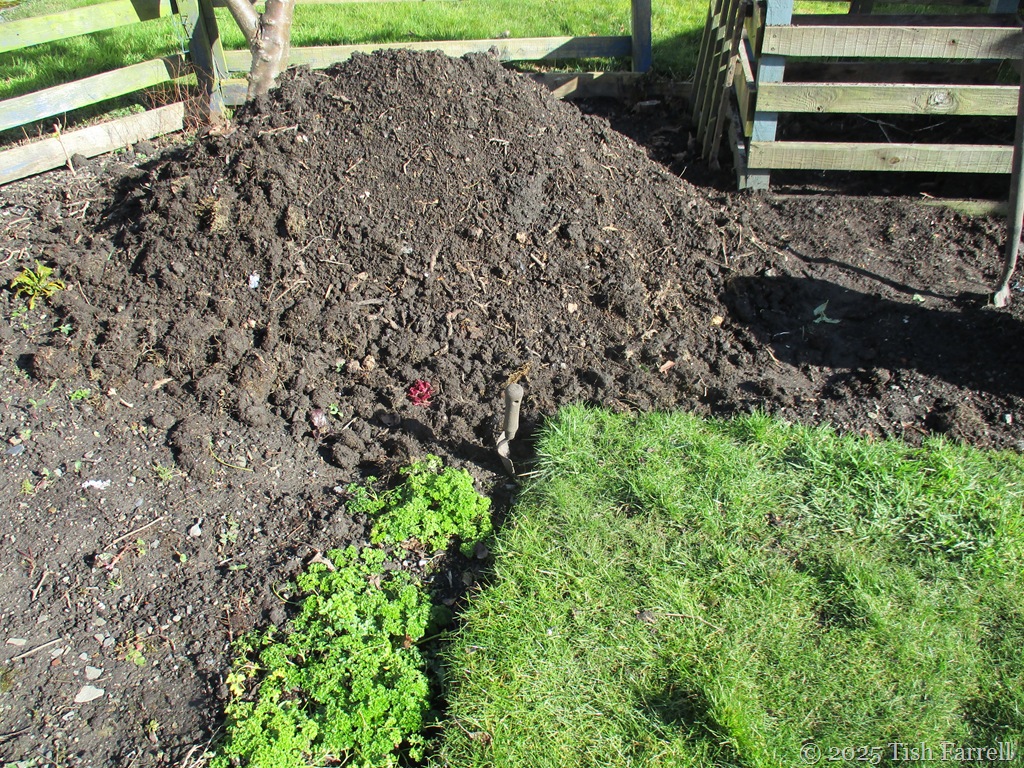
And apart from this, and in rare dry spells, my other betwixt-winter-spring gardening pursuit has involved digging out the compost bin. Last year I’d filled it with dug up lawn. And oh, what lovely stuff it’s become. I can’t tell you how happy it makes me – a lovely big pile of crumbly dirt. Perhaps enough for two raised beds.
Time to start some seed sowing then…
copyright 2025 Tish Farrell
*