
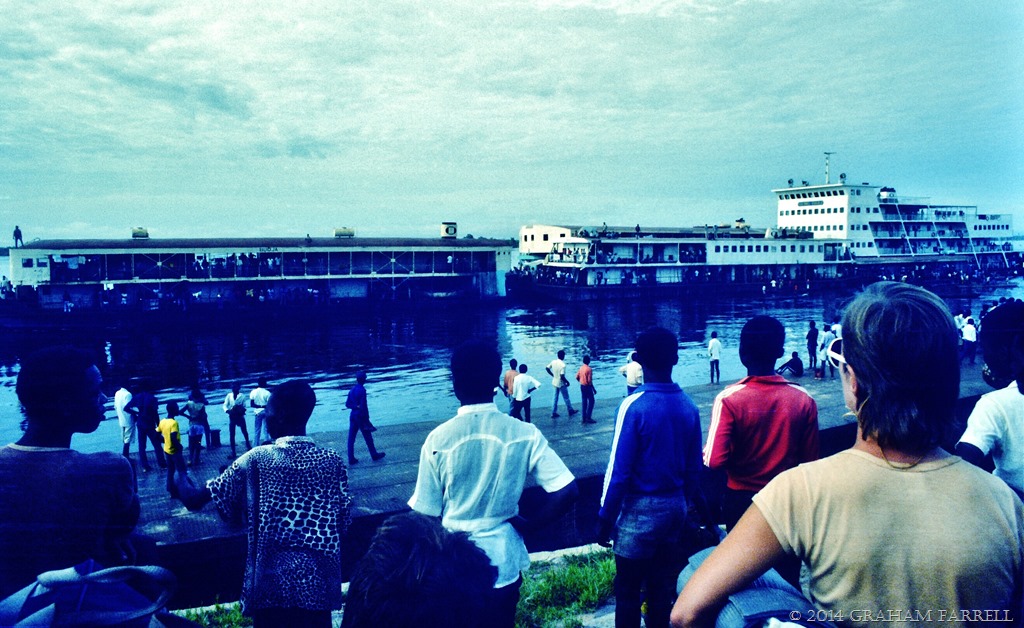
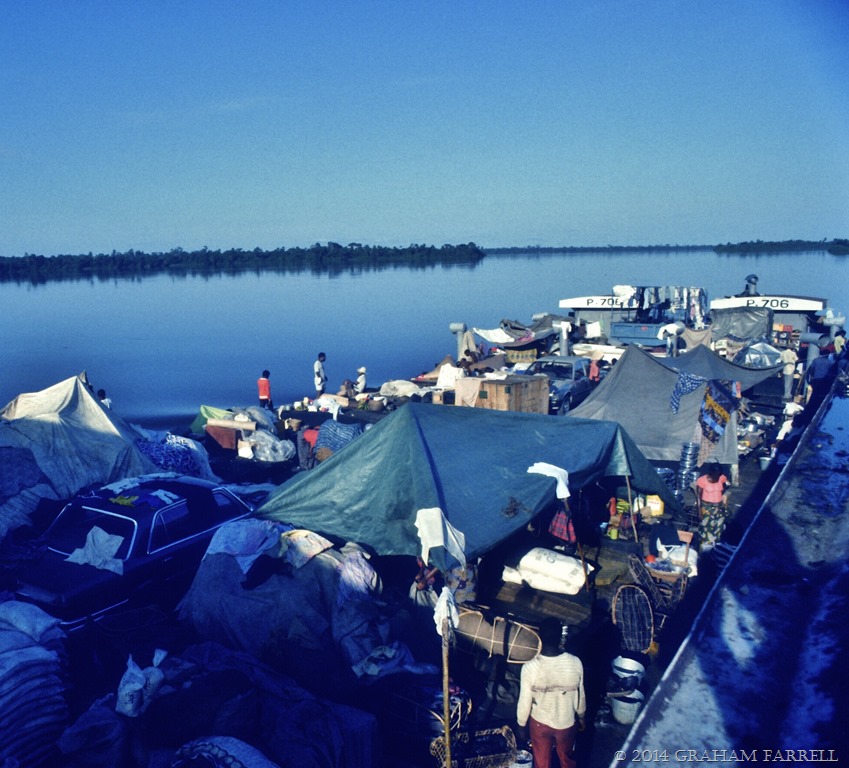
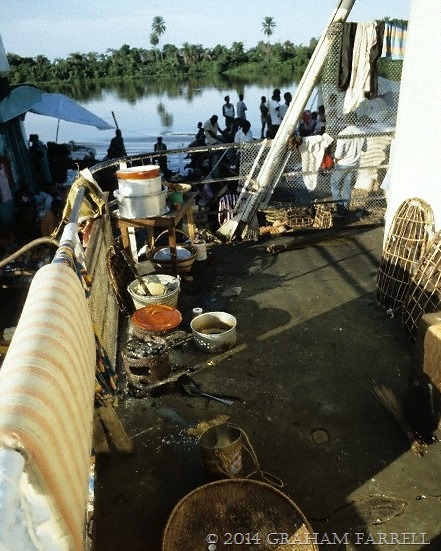
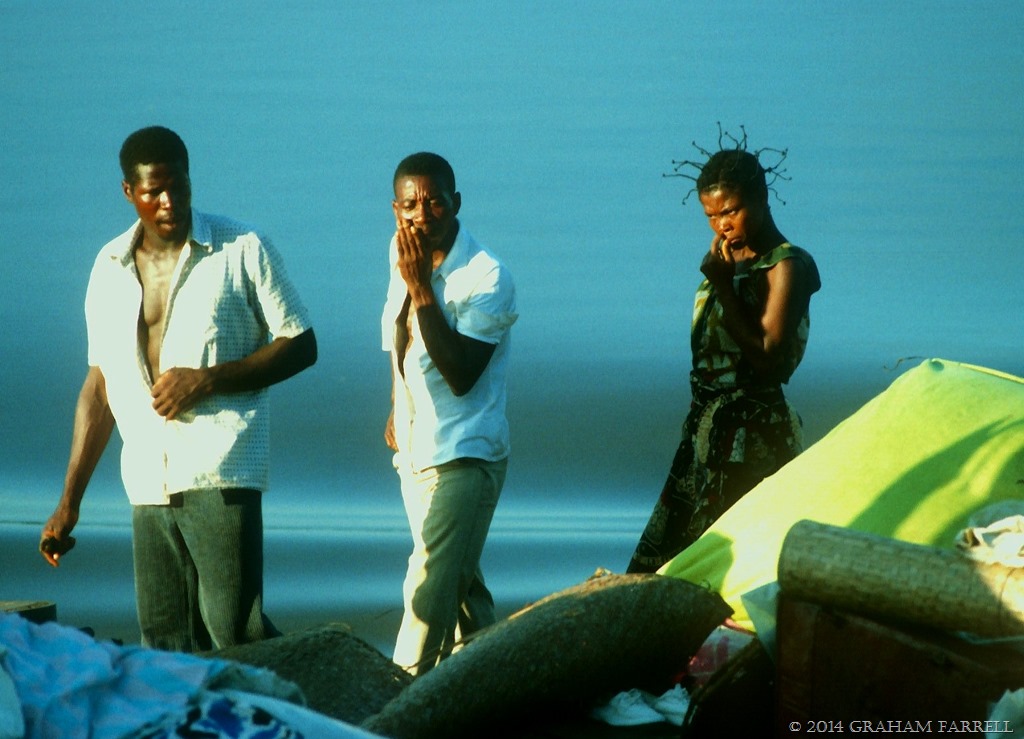
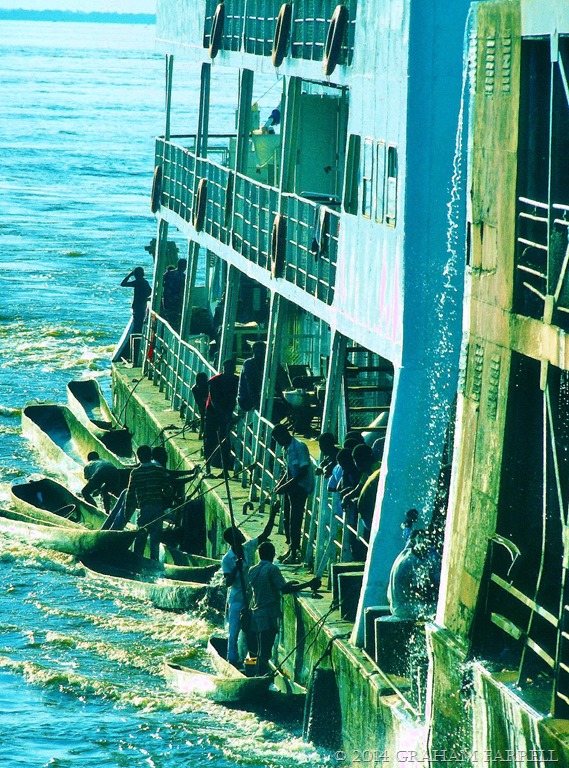
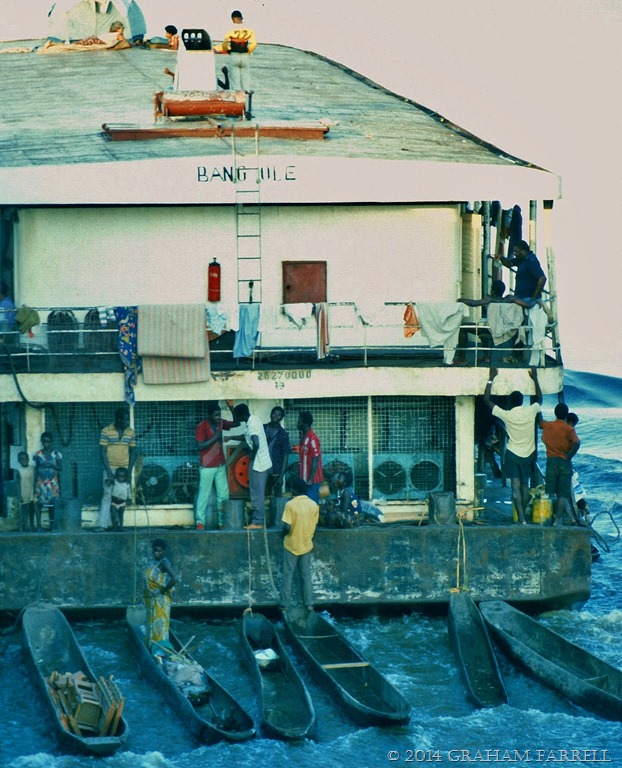
I have written elsewhere that the Team Leader’s long ago trip on the Congo Ferry is a source of great envy to me. I’ve said, too, that the Congo River is Central Africa’s super-highway. In a land with few roads and vast forests, the river is not only an essential means of transport, but a place to do business for communities along the river. This ferry plies some thousand miles of treacherous waterway between Kinshasa, the capital of the Democratic Republic of Congo, and Kisangani in the east. The ferry takes not only passengers, but also has several great barges hitched alongside, and to them are tied fleets of traders’ pirogues. Since progress can be slow with days of delay – running aground on one of the shifting sandbars being a common hazard – the ferry becomes a floating shanty town – all of life and death takes place here.
Henry Morton Stanley was probably the first European to explore the river’s length. It was down to his urging of the riches to be had there that King Leopold II of Belgium established one of the cruellest, most murderous regimes ever perpetrated on hapless humanity. Under the guise of humanitarian aid, Leopold secured this vast Central African territory as his personal fiefdom and named it Congo Free State. From 1885-1908 (until the Belgian Government forced him to relinquish control) Leopold was thought to be responsible for up to 10 million deaths*of African villagers who were terrorized, raped, mutilated and killed in order to provide their quotas of wild rubber and ivory to European Station managers. And believe me, you see only the merest glimpse of these European officers’ activities in Joseph Conrad’s Heart of Darkness, a tale that was rooted in his own brief experience as a steamboat captain on the Congo. Campaigners who helped to expose Leopold’s activities include British journalist E. D. Morel, Irish-born British diplomat, Roger Casement in the Casement Report, and Sherlock Holmes creator, Arthur Conan Doyle.
Nor has the resource grabbing by foreign powers ever stopped. One way and another, the world’s greatest nations have long defended their vast interests in the Congo. Western multi-nationals control millions of dollars of mining concessions. This was the reason why America installed, kept in power and armed the plundering Mobutu regime for 30 years. In 1998, after the repercussions of the Rwandan Genocide escalated into a civil war across the Congo, the US armed 3 of the African nations (Chad, Namibia and Zimbabwe) involved in supporting Laurent Kabila’s bid to take control**. In 2012 The Guardian newspaper reported that British MPs were investigating the ‘opaque dealings’ of London-listed mining companies in DRC***:
“News of the potential inquiry, which could involve top FTSE 100 mining executives being called to give evidence, comes as campaigners argue that natural resources deals are benefiting multinationals rather than the DRC’s population. Commodity trader Glencore will also face calls to explain its involvement in the resource-rich central African country.”
And so the question that nags is when, in the name of humanity, is the plunder and rapine ever to stop? Do not be fobbed off with the notion that the bloody conflicts that have been raging along DRC’s eastern border with Rwanda for over a decade are ONLY to do with local warlords, or Rwanda’s predation. They are to do with coltan that is an essential resource for making cell phones. They are to do with diamonds that adorn the elite and pampered, and are essential to industrial processes and make foreign dealers very rich. They are to do with gold, and copper, and cobalt, and hardwoods, and oil prospecting. They are to do with super-power arms dealing. For this piece of Africa is the most resource-rich territory on the planet, far beyond H M Stanley’s wildest dreams, or even Leopold’s rapacious imaginings.
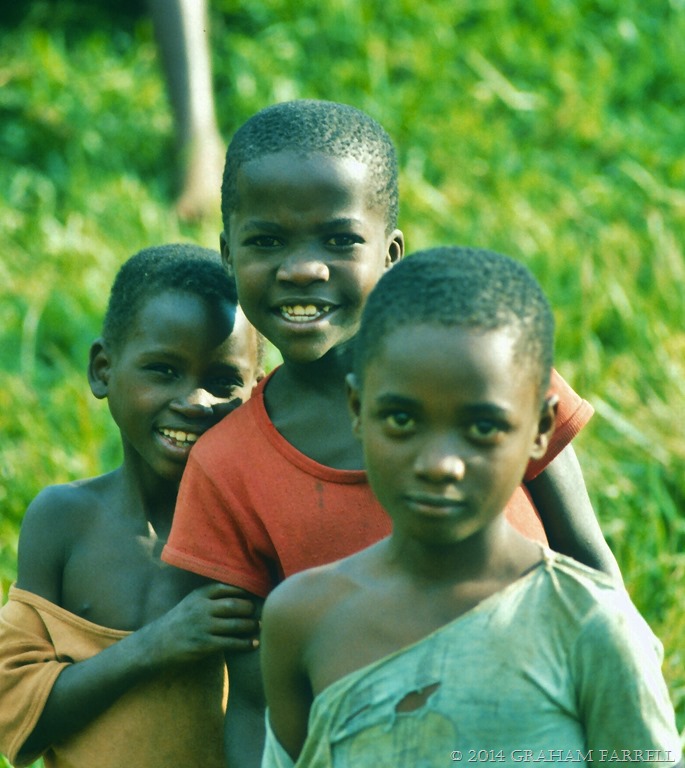
Yet its people remain the poorest on earth. Corporate wealth based on unfair trading comes at human cost, and that cost is the same kind of barbarity that Leopold’s men doled out. As the angry Karim in Monica Ali’s novel Brick Lane is wont to say, the question to ask is: “Who benefits?” In these conflict-ridden days, it is a question always worth asking. Sometimes it offers a glimpse of clarity between all the establishment smoke and mirrors.
copyright 2014 Tish Farrell
References:
* Andrew Osborn Belgium Confronts its Colonial Demons
**World Policy Institute report: US Arms to Africa and the Congo War
*** Mining firms face scrutiny over Congo deals
Corporate Watch Death on the lake: British oil company’s role in Congo killings exposed
Related: Up the Congo for more of the history
