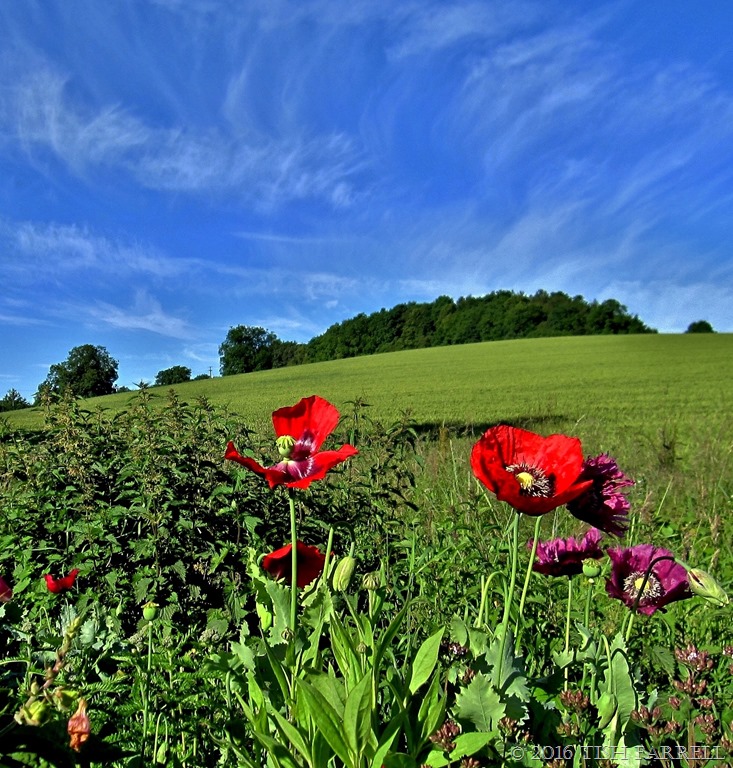
Shore, Reef, Ocean, Sky: Edge On Edge

dawn over Tiwi lagoon more contrast - Copy

Some of you will have already read the essay below. It won first prize in a Quartos Magazine competition years ago. The magazine is no more, but I’m posting the piece again for those of you in need of  a long, soothing wallow beside an African beach. Enjoy!

 Going to the Dogs on Mombasa’s Southern Shore

It’s a dog’s life on Tiwi Beach, the white strand where ocean roars on coral and trade winds waft the coconut palms; and where, best of all, as far as the local canines are concerned, there are quiet coves sparse in holidaymakers. It means they may do as they please. After all, it is their own resort, and every morning they set off there from the beach villages along the headland, nose up, ears blown back in the breeze, ready for the day’s adventures.

But the dogs are not churlish. They can take or leave the odd pale human wrestling to right his windsurfer on the still lagoon; ignore the sentinel heron that marks the reef edge beyond; pay no heed to the etched black figures of the Digo fishermen who search the shallows for prawns, parrot fish, or perhaps a mottled lobster or two.

But in this last respect at least, the dogs are smug. For the fishermen come down to the beach only to make a living. And when they are done hunting, they must toil along the headland from beach village to beach village, then haggle over the price of their catch with the rich wazungu who come there to lotus eat. Hard work in the dogs’ opinion.

The dogs know better of course; know it in every hair and pore. And each morning after breakfast, when they take the sandy track down to the beach, they begin with a toss of the head, a sniff of the salt air, a gentle ruffling of the ear feathers in soft finger breezes. Only then do they begin the day’s immersion, the sybaritic sea savouring: first the leather pads, sandpaper dry from pounding coral beaches, then the hot underbelly. Bliss. The water is warm. Still. Azure. And there can be nothing better in the world than to wade here, hour on hour, alongside a like‑minded fellow.

There’s not much to it; sometimes a gentle prancing. But more likely the long absorbing watch, nose just above the water, ears pricked, gaze fixed on the dazzling glass. And if you should come by and ask what they think they’re at, they will scan you blankly, the earlier joy drained away like swell off a pitching dhow. And, after a moment’s condescending consideration, they will return again to the sea search, every fibre assuming once more that sense of delighted expectation which you so crassly interrupted. You are dismissed.

For what else should they be doing but dog dreaming, ocean gazing, coursing the ripples of sunlight across the lagoon and more than these, glimpsing the electric blue of a darting minnow? And do they try to catch it? Of course they don’t. And when the day’s watch is done, there is the happy retreat to shore ‑ the roll roll roll in hot sand, working the grains into every hair root.

And if as a stranger you think these beach dogs a disreputable looking crew, the undesirable issue of lax couplings between colonial thoroughbreds gone native: dobermanns and rough‑haired pointers, vizslas and ridge‑backs, labradors and terriers, then think again. For just because they have no time for idle chit-chat, this doesn’t make them bad fellows: it’s merely that when they are on the beach, they’re on their own time. But later, after sunset, well that’s a different matter. Then they have responsibilities: they become guardians of the your designer swimwear, keepers of your M & S beach towel, enticing items that you have carelessly left out on your cottage veranda.

By night they patrol the ill‑lit byways of your beach village, dogging the heels of a human guard who has his bow and arrow always at the ready. And when in the black hours the banshee cry of a bush baby all but stops your heart, you may be forgiven for supposing that this bristling team has got its man, impaled a hapless thief to the compound baobab. It is an unnerving thought. You keep your head down. Try to go with the flow, as all good travellers should.

But with the day the disturbing image fades. There is no bloody corpse to sully paradise, only the bulbuls calling from a flame tree, the heady scent of frangipani, delicious with its sifting of brine. You cannot help yourself now. It’s time to take a leaf out of the dogs’ book, go for a day of all‑embracing sensation ‑ cast off in an azure pool.

And in the late afternoon when the sun slips red behind the tall palms and the tide comes boiling up the beach, the dogs take to the gathering shade of the hinterland and lie about in companionable couples. Now and then they cast a benign eye on you humankind, for at last you are utterly abandoned, surrendering with whoops and yells to the sun‑baked spume. They seem to register the smallest flicker of approval: you seem to be getting the hang of things.

copyright 2016 Tish Farrell
Edge

A Frog Whispering Kind Of Morning

P1050335

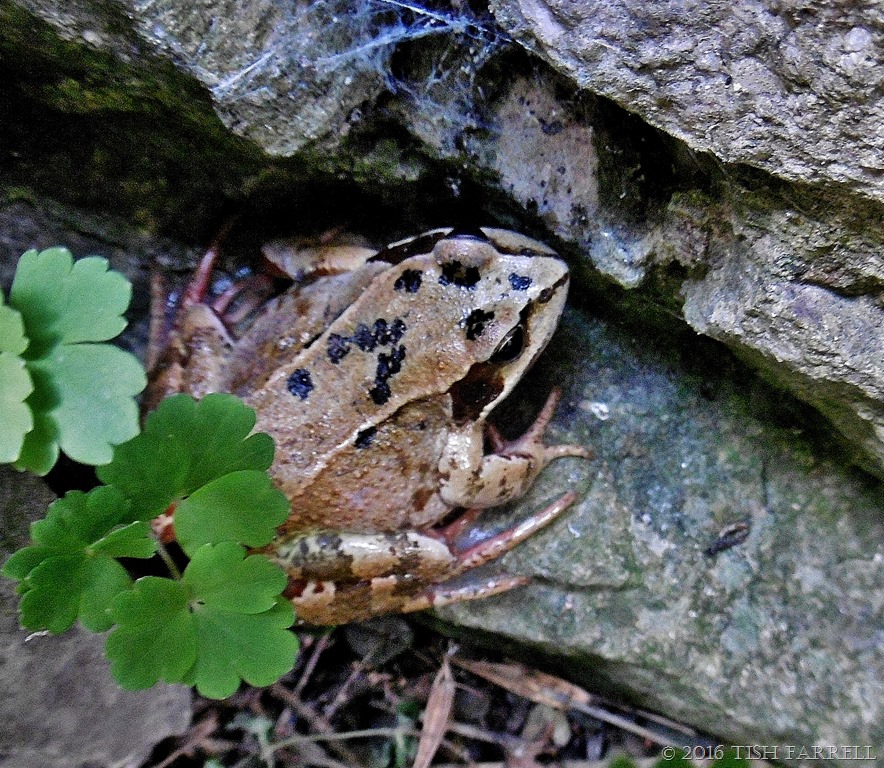
And I’ve the pictures to prove it – the frog whispering that is.

This handsome amphibian and I gave each other a shock on Sunday morning. I was tidying up the overgrowth of self-sown columbines and lady’s mantle outside the kitchen door. And there he was under a columbine leaf.  We both froze, until I thought to grab my camera. By then he was on the move, but froze again as the Lumix closed in. Being Sunday I was finding it hard to focus, and thinking he was about to flee, I started talking to him very quietly. And darn me, if he didn’t sit right up and listen:

P1050336

I don’t know how well  frog-human relations have been documented beyond that seminal work of the Brothers Grimm, but I can report there was no clinch, and thus no princely transformation. And it being an unfocused Sunday morning, as I said, I soon ran out of things to talk about and so returned to garden work, while he hopped off to his drain pipe in the wall. A brief encounter then. We will probably never meet again. But at least I have the photos. I can dream…

copyright 2016 Tish Farrell
 

Weekly Photo Challenge

And It Was A Right Bees’ Breakfast This Morning Over My Garden Fence…


IMG_2265

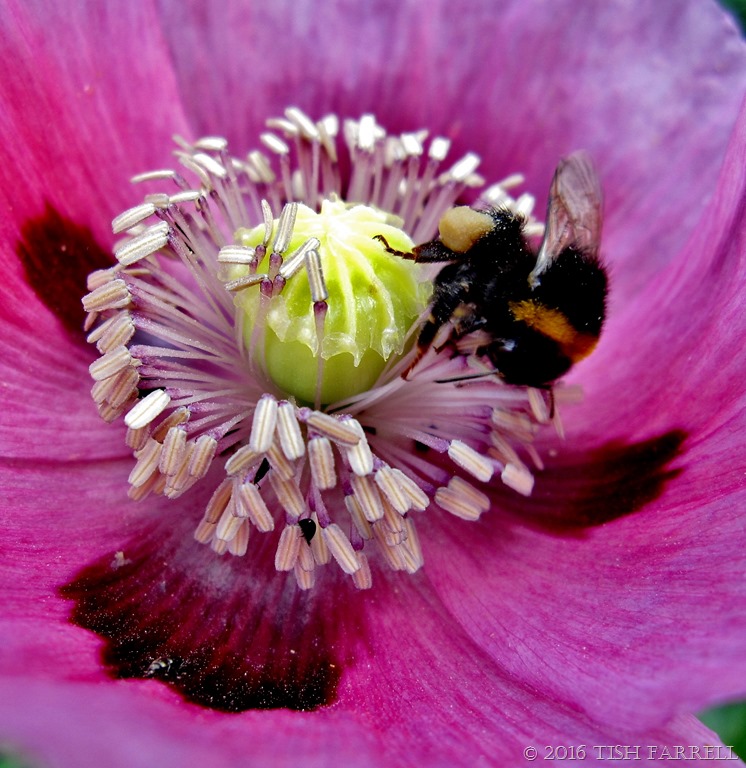
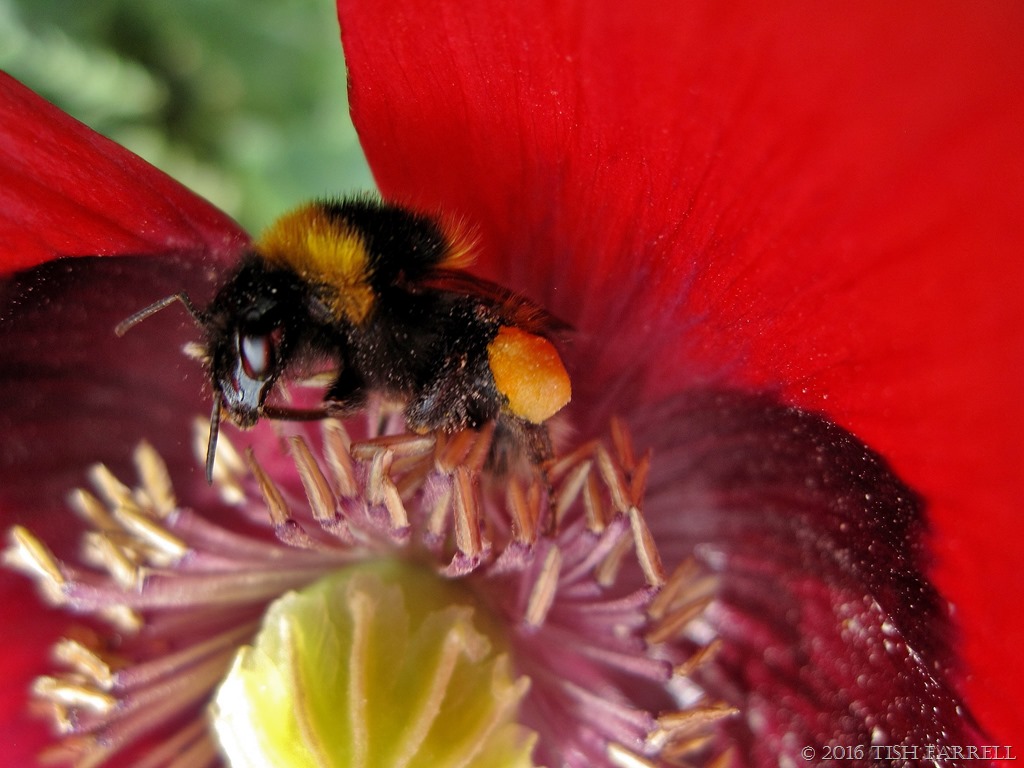
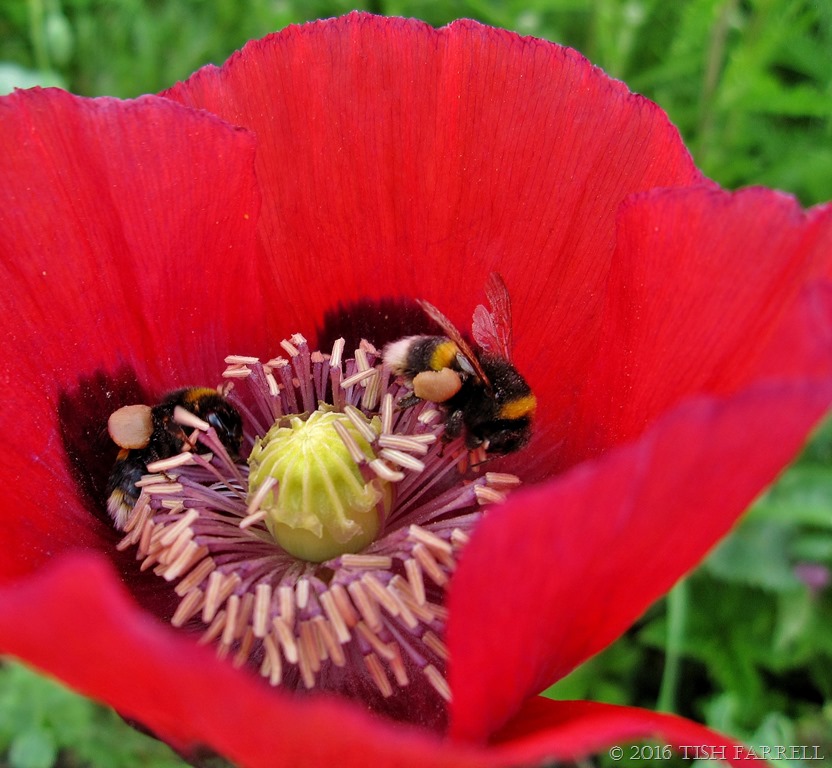
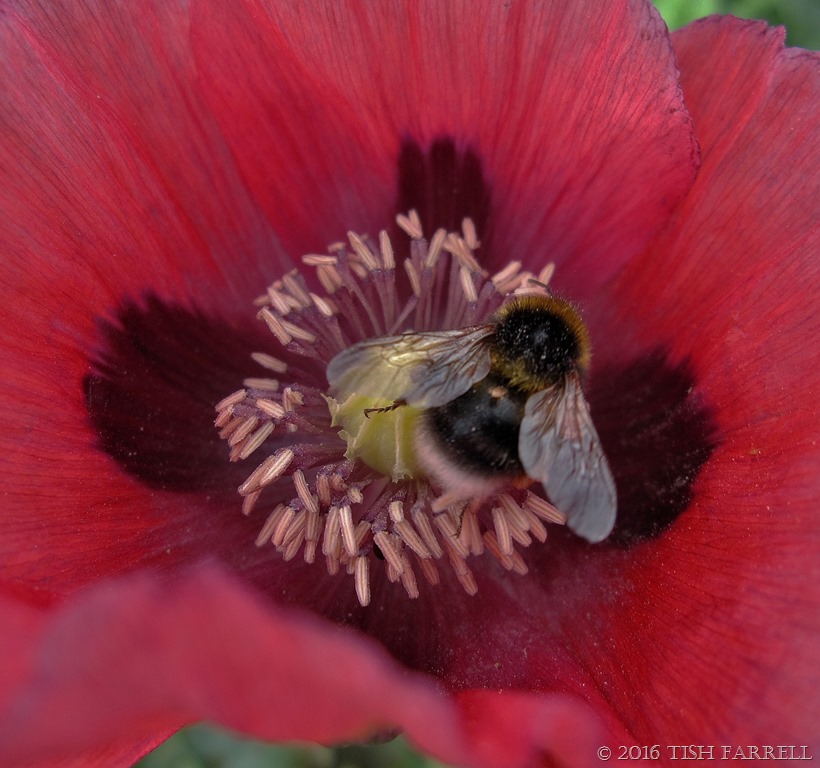
It was every bee for itself over in the poppy patch behind the garden sheds this morning: the apian equivalent of a supermarket trolley dash. Honey bees, little brown bumbles, dinky stripy bumbles, blooming big scary bumbles and white-tailed bumbles diving in for the poppy nectar while the air all round filled with happy bee hum.  Some were feeding with such speed and voracity that their baggage compartments were definitely approaching the overloaded mark. Now and then they would take a feeding break on the poppy’s crown while they dusted themselves down and redistributed the pollen cargo.

IMG_2252

The gathering technique is also fascinating. They dive into the base of the flower and speed round beneath the stamens, feeding on the nectar while every part of them hoovers up pollen from the anthers. Even with the biggest bumbles, once they get into their stride, all you can see are the stamens ruffling round like curtain pelmet tassels in a stiff breeze. Whoosh, and it’s on to the next feeding station.

IMG_2282

IMG_2310

I probably don’t need to say it again to those who follow this blog, but then no chance should be wasted. The wellbeing of our planet, and of humanity, and of the continued production of much of our food depends on protecting and nurturing bee populations any way we can. Masses are being killed off by pesticides and habitat loss. So loud applause for the opium poppies that came of their own accord to our boundary fence, and are doing their bit for bee world. Rah! Rah! Hurrah, poppies!

IMG_2360

IMG_2361

IMG_1828


Daily Post Weekly Photo Challenge: Details

Opposites: Sunshine & Shadow Over My Fence At 5 a.m. Or A Case of Elephants in The Corn And Other Unreal Realities

IMG_1786

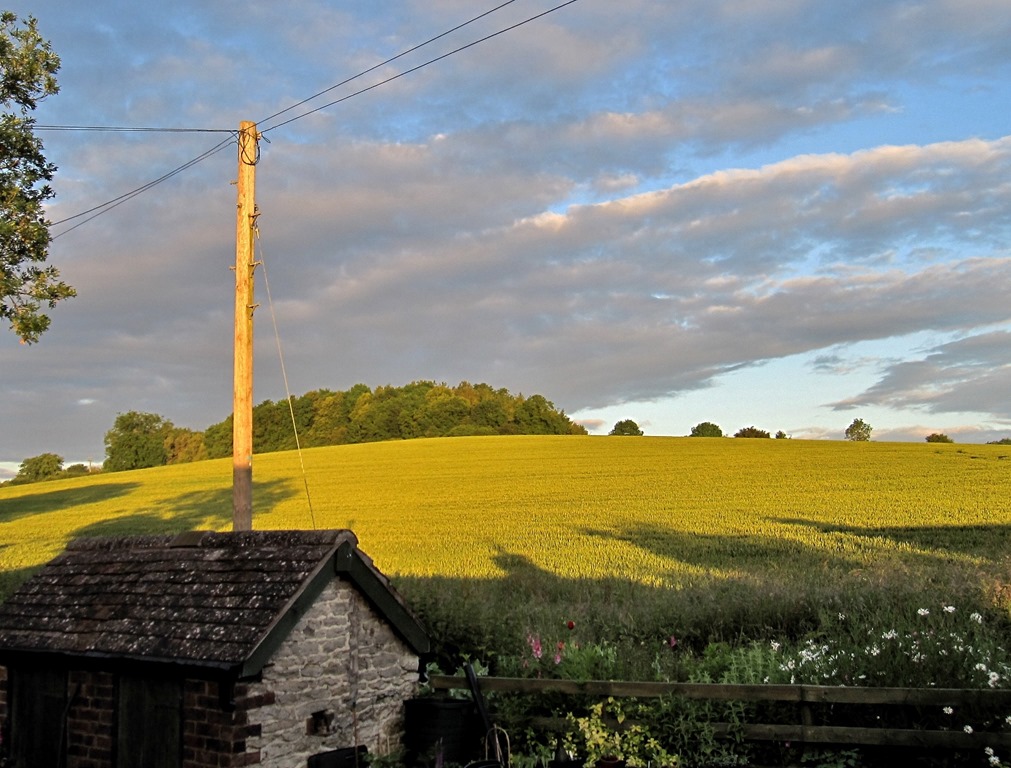
It makes you want to burst into song. You know, that cheesy Oklahoma number: There’s a bright golden haze on the meadow. There’s a bright golden haze on the meadow.*

When I was small, and we still lived in Love Lane House in the midst of the Cheshire countryside, my mother would always sing as she went around the house doing chores. This song was a favourite: Oh what a beautiful morning, Oh what a beautiful day.  She had a nice voice and always sang with great gusto. This in turn provided much needed reassurance on days when Miss Goodwin put in an appearance. Wednesdays. She was mother’s home help, and she came once a week to clean the acres of red quarry tile floors that ran throughout the house.

To a child she was an alarming gnome-like figure. Her straggle of black, limp hair had much in common with the wet floor mop that she wielded with dogged determination. As she twisted the mob head in the bucket, she would peer down at me through round, black-rimmed spectacles that made her eyes stand out on stalks. I thought she was probably a witch. I also associate her with green liquid soap – a cleaning product of times past. It had a repellent smell.

But mother went on singing, and all seemed well apart from the line about the corn being as high as an elephant’s eye.

This was a mystifying notion for a country child who, though surrounded by farm fields, had never seen elephants there, nor crops that grew so tall. My father worked for an agricultural merchants, and early on I learned the difference between the grain crops he dealt in. In those days we did not know much about American corn, which we anyway call maize, and corn was a word commonly used to refer to wheat.

A case of cereal confusion then.

Many decades later when I was out and about on Kenyan farms, and wondering at the height and vigour of some of the maize plots, I could well see how you might lose an elephant or two in there. In fact African elephants are very partial to scoffing poor farmers’ white maize crops just as they are ready to harvest. They can eat in a night produce that would have lasted a family half a year.

Anyway, there are clearly no elephants in the  wheat/corn in the photo. It is only half a metre tall. But the light is truly extraordinary.  A false dawn ripening since in reality the crop is still green with only the barest signs of turning. I kept my eyes open long enough to frame the shot and then went back to bed, inner sight still glowing from the vision: did I really see that strange light, and does this happen on other mornings when I’m not awake?

Mother’s voice comes winging back across the years: I’ve got a wonderful feeling/ Everything’s going my way.  Did I ever believe this back then? Mother was someone who ever came with undercurrents, despite the nice singing. For some reason the cornfield elephant I now picture has eyes the colour of summer-blue skies, which is odd. All of which is to say, childhood impressions, layer on layer, randomly and silently absorbed in the presence of unaware adults, can run deep. Like elephants in cornfields, you just never know when they’re going to ambush you.

~

*Lyrics by  Oscar Hammerstein II, music by Richard Rogers copyright 1943 Williamson Music

Daily Post Weekly Photo Challenge: opposites

Opposites
Layers

Partners In Steam On The Talyllyn Railway: WOO-HOOOOOO

P1040776

Take two steam enthusiasts

*

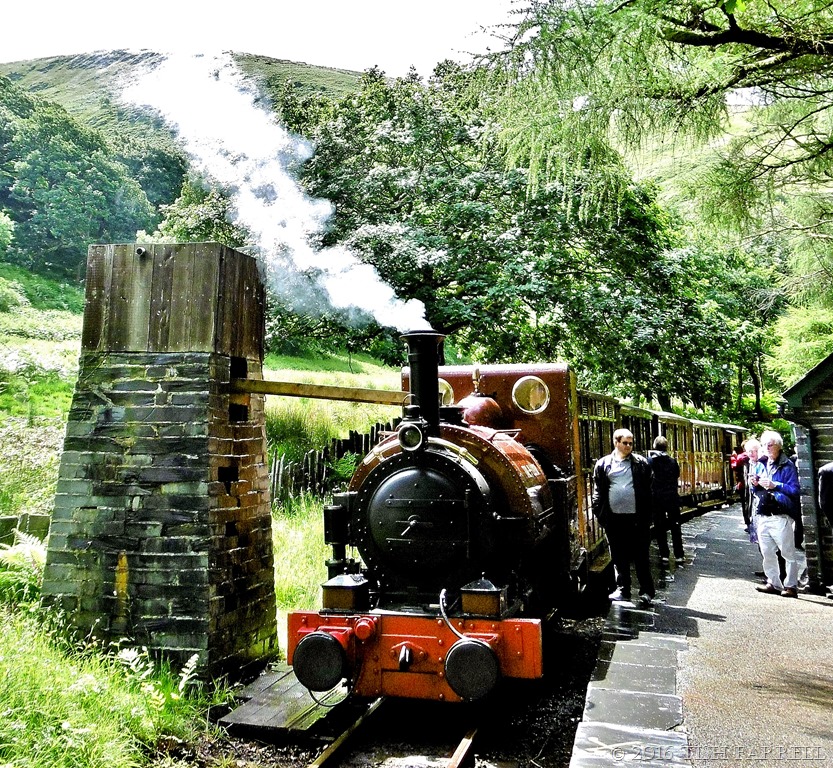
It has to be the best day out in Wales – a trip on the historic narrow gauge Talyllyn* Railway, setting out from Tywyn on the west coast and meandering up the hills to Nant Gwernol. The line was built in 1864 when the McConnell brothers of Manchester decided to branch out from cotton spinning into slate mining. The railway brought in supplies for the miners, and later carried a few passengers between the various valley communities. But mostly it delivered slate wagons which, from the railhead in Nant Gwernol, were winched on cables up mind-boggling inclines to the the heights of the slate quarry, and thence returned laden with slate for export from the port of Aberdovey.

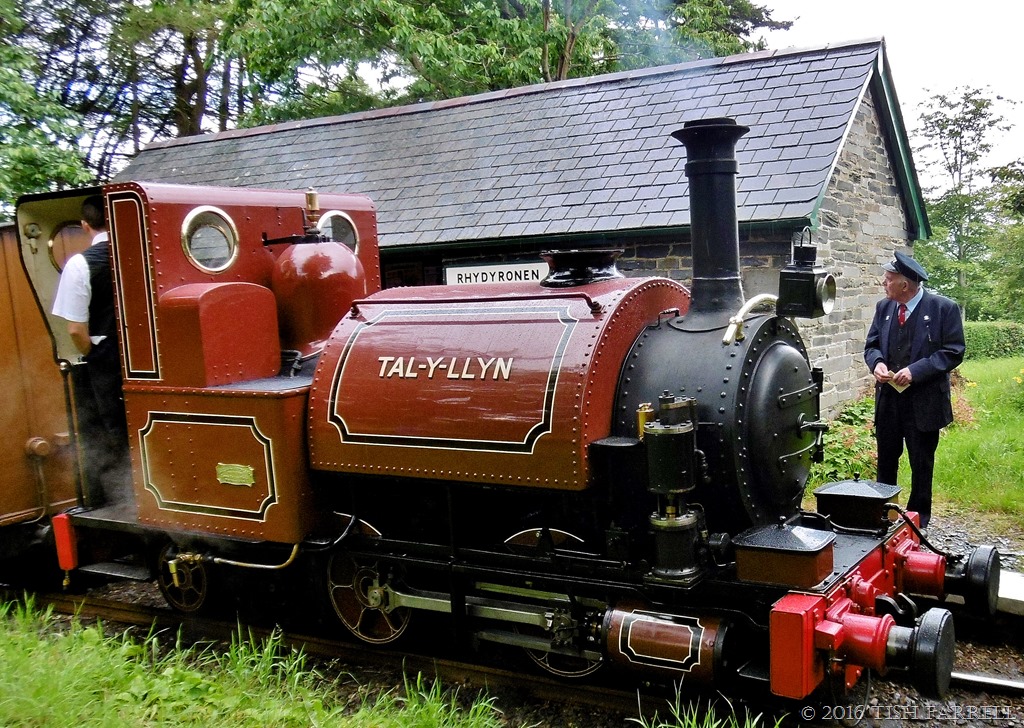
As a preserved line, Talyllyn is the world pioneer. The Preservation Society was set up in 1951, and ever since has run with the help of passionate volunteers who have supported the small corps of paid staff. One of the early volunteers was the Reverend W V Awdry who wrote the Thomas the Tank Engine books, still much loved by children big and small. But Thomas apart who cannot fail to fall in love with a locomotive that looks like this? It’s an original Victorian  engine too.

P1040771

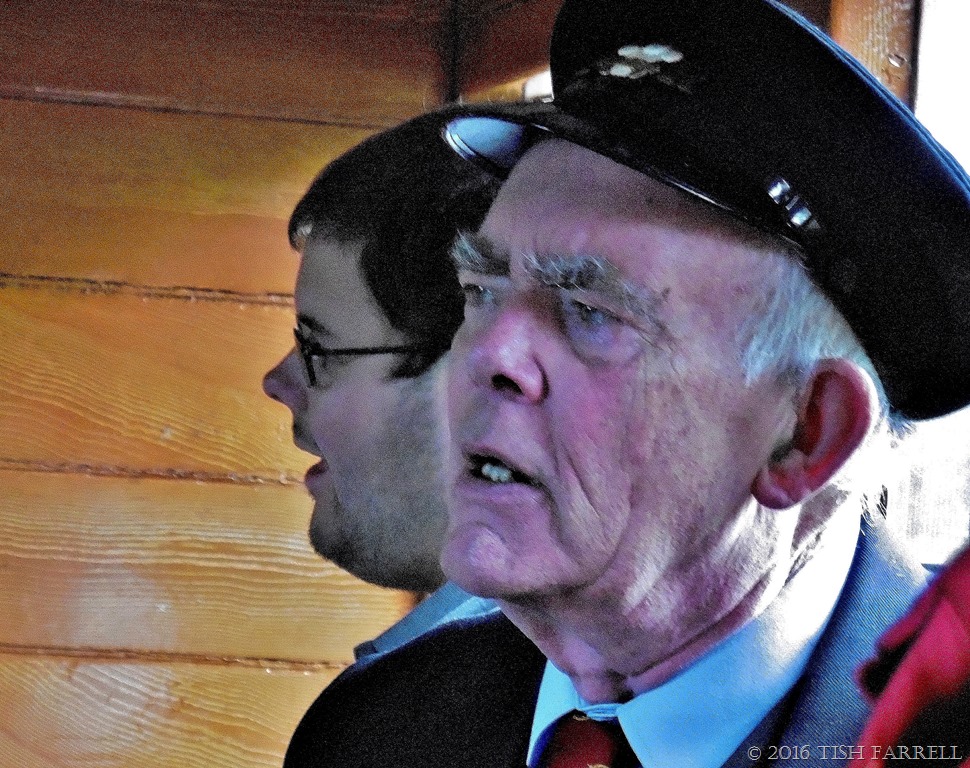
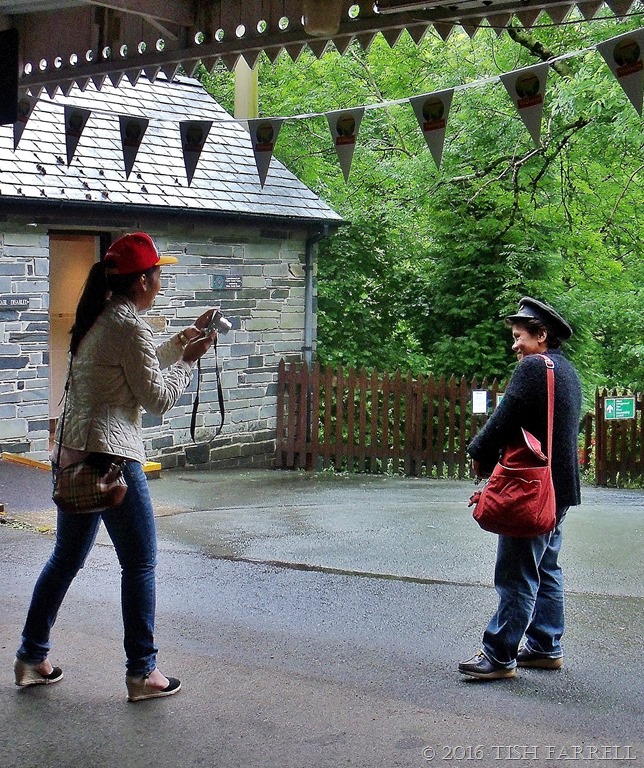
For our first trip on the line we had booked to go on the special Victorian Train Experience, a four-hour potter on an original period train which departed Tywyn Wharf at 11.15 am and aimed to return around 3.20 pm in time for a cream tea in the station restaurant. Our guide, David Leech (seen here in his guard’s uniform) informed us that we would spend that time “wombling around” on the line, fitting in between scheduled services which we would have to give way to at various points. He also explained that the train would stop in several scenic locations so we could get out and photograph it. This also included having the train reverse a mile or so back down the track so we could position ourselves on, or above bridges and catch it on the return, steaming at us for all it was worth.

It was all extremely silly, but thus enormous fun. And we didn’t even mind that it kept pouring with rain. We shared our carriage with a retired British Rail signal man and his wife, and a young extant signal man with his mate. For the first leg of the trip David Leech sat with us telling us daft anecdotes – Tales of the Talyllyn Railway. He had once been the railway’s traffic manager as well as being a life-long volunteer.

The entire Talyllyn enterprise is infused with the most enormous goodwill, humour and enthusiasm. It embraced us from the moment of our departure, and went on hugging round us as we rattled up into the hills to Dolgoch Falls and beyond. At Abergynolwyn we stopped for lunch in the Quarryman’s Tea Rooms where we were warmly welcomed by the serving staff who were dressed in Victorian costume while managing to not look naff.

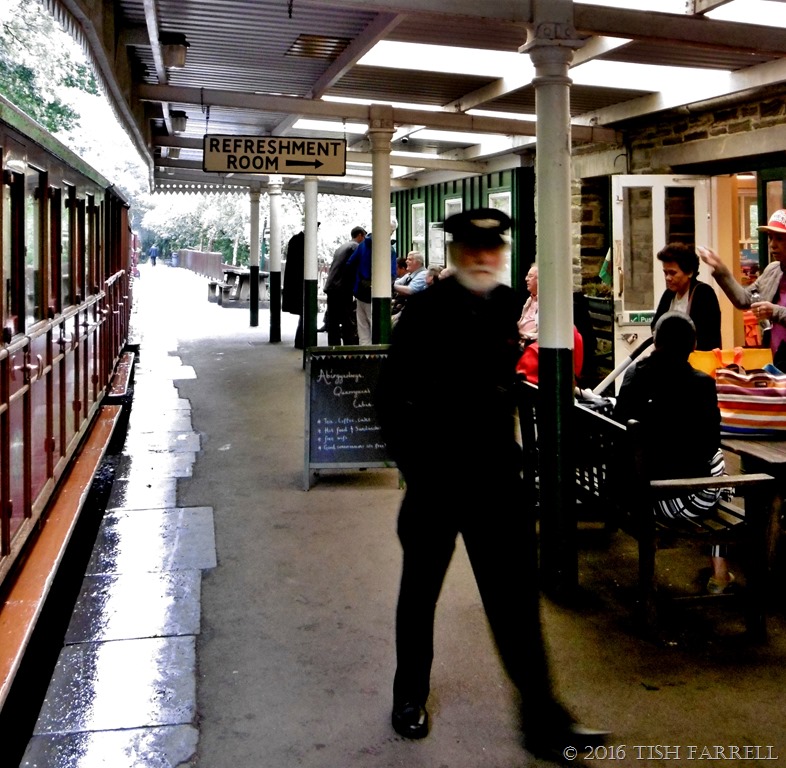
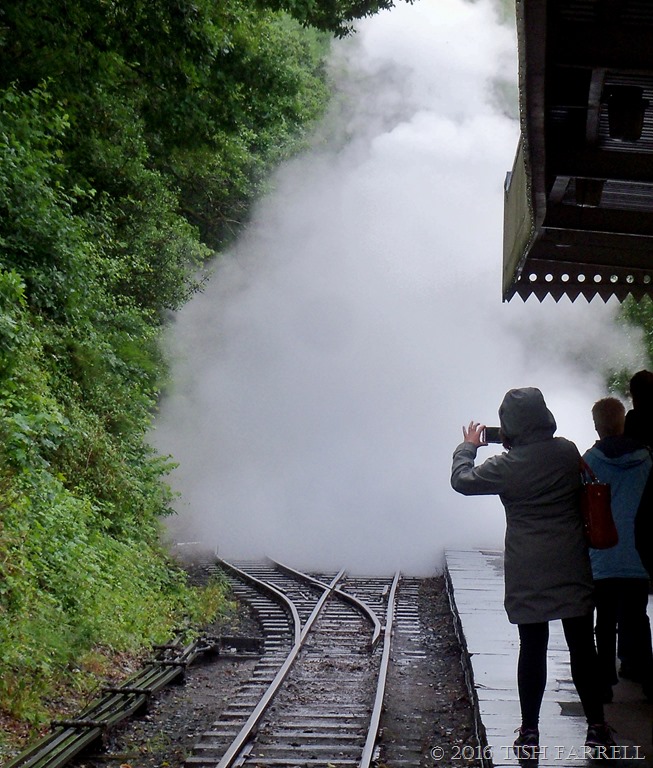
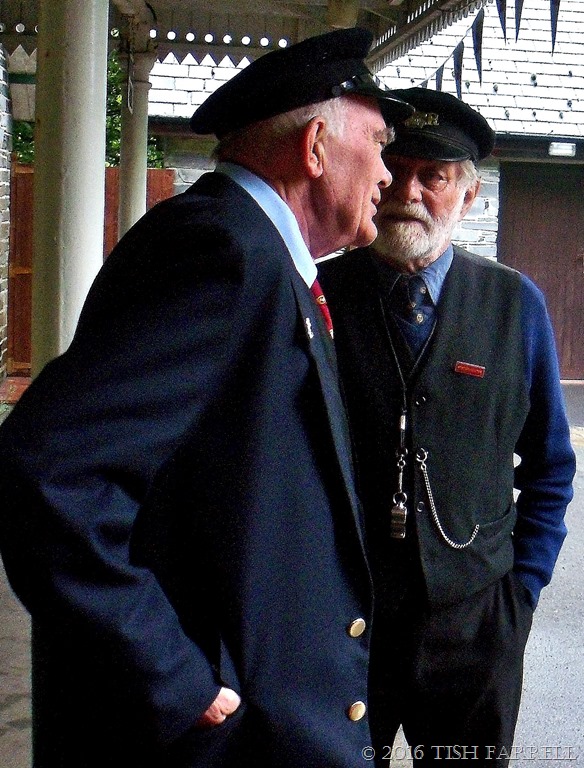
After lunch we had to wait on Abergynolwyn Station while another train came through so the platform was crowded with waiting passengers just like a main-line railway – the difference being the palpable excitement was all for the train ride itself rather than the destination. While we waited, and rain pummelled the platform roof, the Station Master told us jokes.

All this and the beautiful Welsh landscapes.  A steaming good day all round.

P1040793

Taking on water at Dolgoch Falls

*

P1040857

101_0154

P1040830

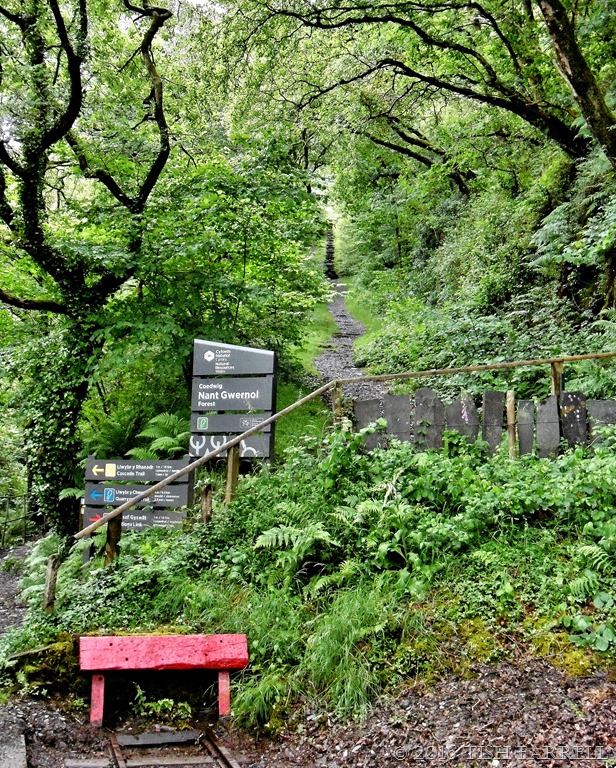
End of the line at Nant Gwernol and the incline ahead; the slate trucks were winched up and down here to and from the Bryn Eglwys quarry. Sometimes the winch cable broke.

*

101_0140

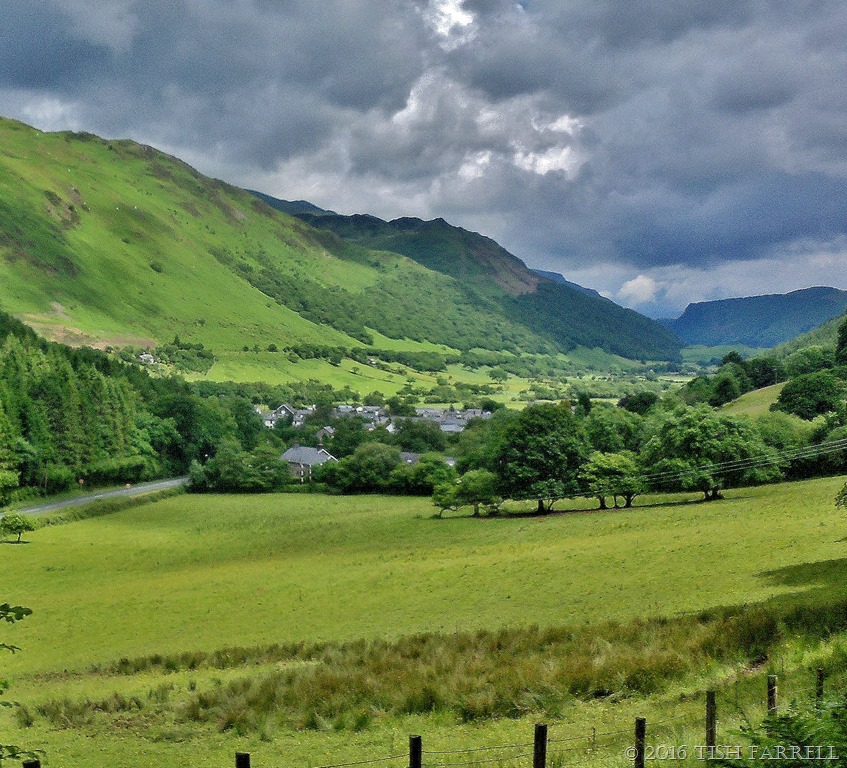
Looking down on Abergynolwyn village from the train. It began as a slate miners’ community in the 1860s.

*

101_0128

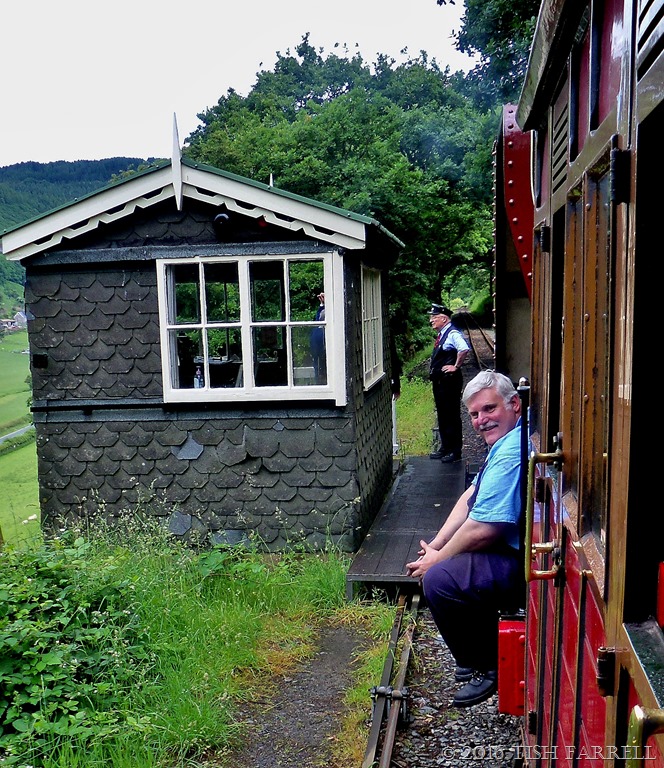
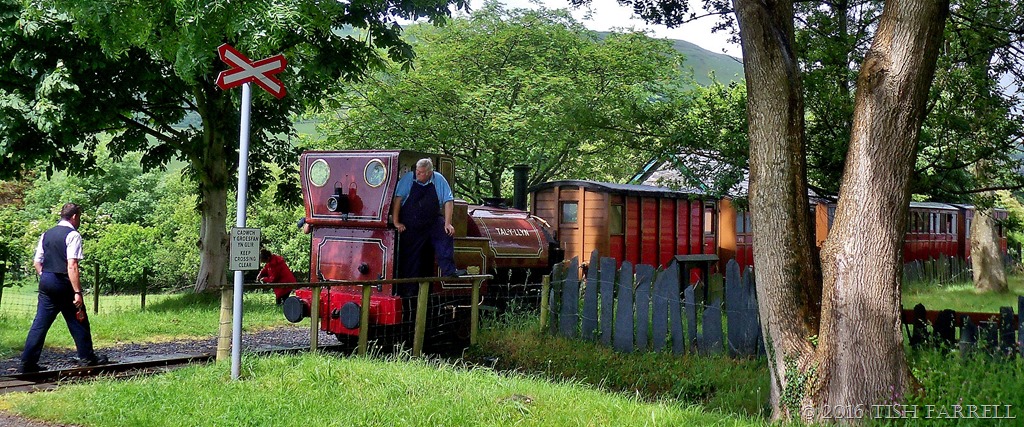
Our driver taking a break while we wait for another train to pass on the line.

*

101_0209

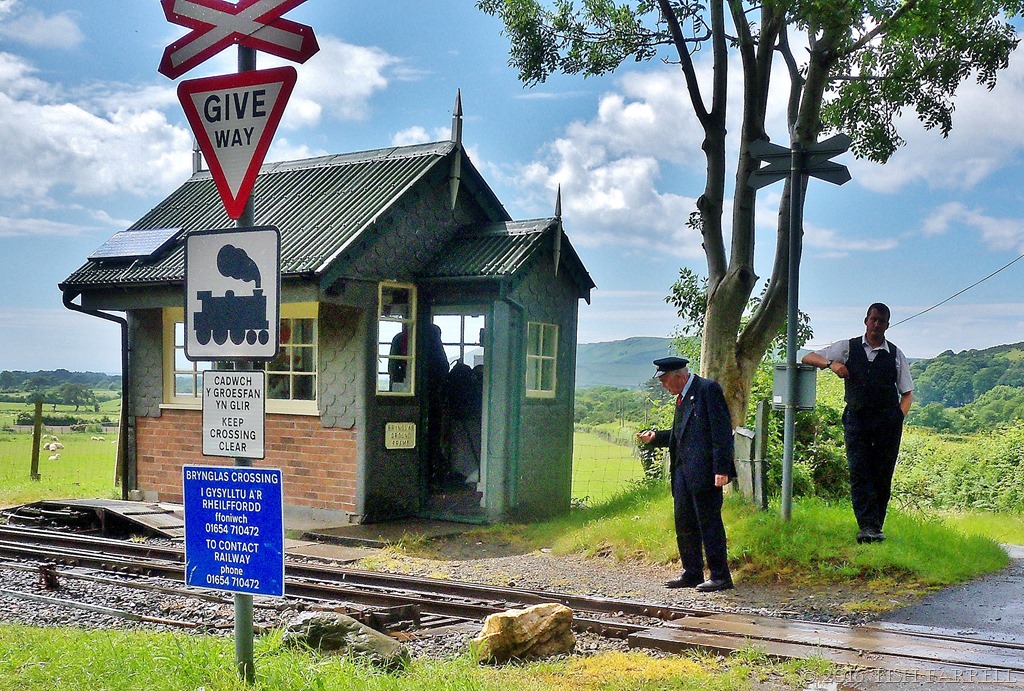
Heading back to Tywyn. The Brynglas crossing.

*

101_0204

At Brynglas Station, and behind the slate fence, is the Talyllyn Railway’s Memorial Garden. The ashes of supporters may be interred here. Those attending the funeral service get go there by train. What a send off.

*

101_0162

101_0119

101_0186

* ‘ll’ in Welsh is roughly pronounced ‘cl’

copyright 2016 Tish Farrell
 

Daily Post Challenge: Partners

#RheilforddTalyllynRailway

Elephant Partners

001 (2)

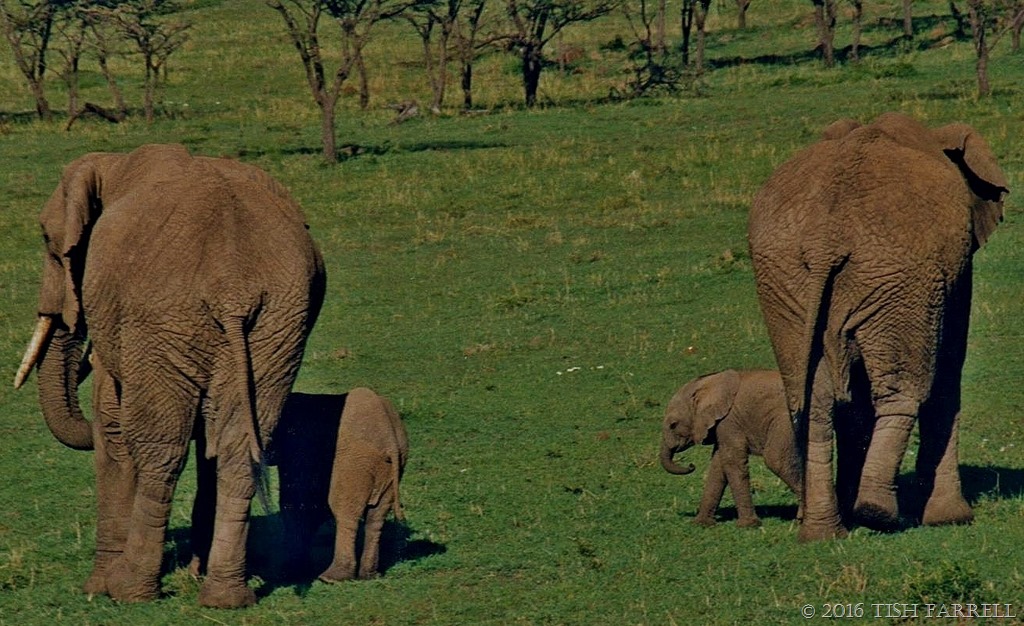
Elephant females and young spend most of their time in small family groups of ten to fifteen related individuals, ruled and guided by a matriarch. She is the equivalent of the institutional memory, and her role is to keep the family safe. These small groups gather into larger herds during the rainy season as they search for fresh vegetation.  Adult elephants consume up to 400 pounds/180 kilos of vegetation a day.  The two youngsters in the picture, however, will still be suckling  – when they’re not busy playing that is.

003 (2)


Partners

So What Is Your Reading Age? Believe Me: It’s All About Numbers

100_9945

On Saturday I had a very nice surprise. The usual post delivery person had been and gone at least an hour when along comes a courier with a neat, and quite unexpected package. Inside are my 6 author copies of the new edition of Mau Mau Brother. Yippee! Much jumping up and down in the kitchen. It’s always a thrill to have the freshly printed book clasped to one’s chest.

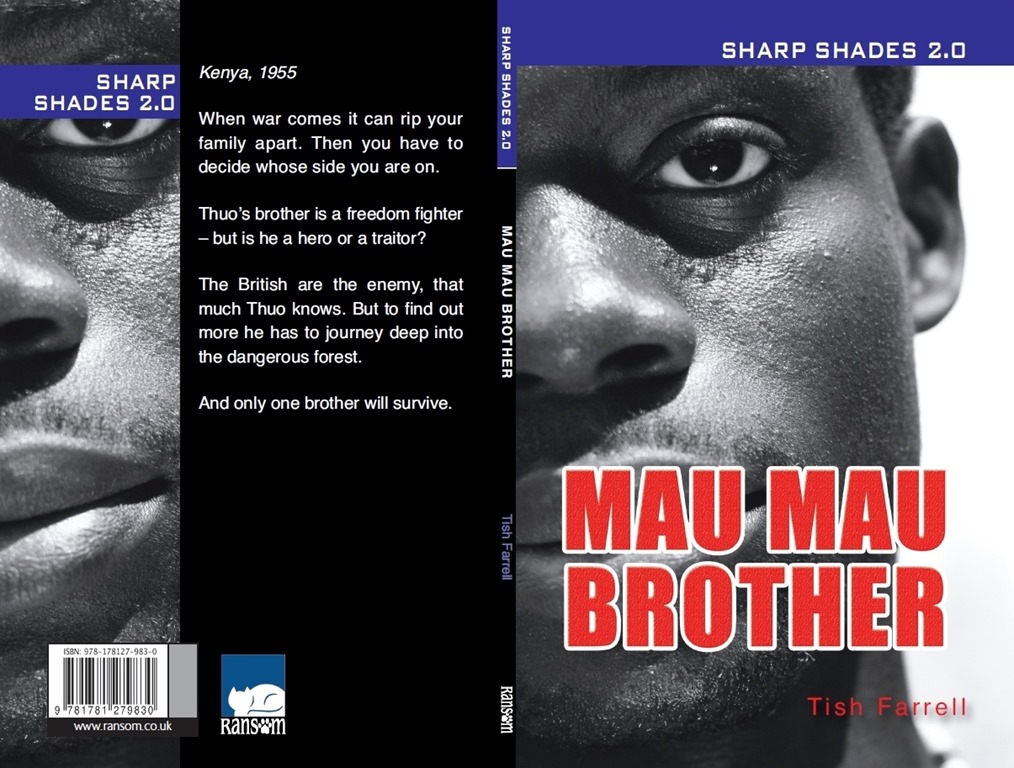
Some of you may remember that just over a year ago I was turning my brain inside out, cutting an already tightly written teen reader in half to make a new edition. The first version, bottom left, is a 6000-word, 64-page novelised short story aimed at struggling young adult readers with a reading age of 9-10 years. It is one of Ransom Publishing’s  Shades series of fast-paced, high interest teen fiction.

The new Sharp Shades 2.0 edition has the same number of pages, 3,000 words, larger font and the addition of several moody full-page, grey-scale  images. Its target audience are less able teen readers.

When it comes to reading age markers, it is worth pointing out that the average UK reading age (that includes everyone, adults and all)  is 9 years. The reading age for our best newspapers like The Guardian is 14 years, and the reading age for tabloids like The Sun is 8 years. But of course the ability to read, and the application of that ability, and using it to acquire information, learn or to nourish the mind, are not necessarily the same thing.

It’s quite simple too. Teens can struggle with the notion of actually picking up a book; are daunted by the size and word density of a 40,000 word novel. It can be tied in to a lack of self worth; some deep belief that if they attempt so big a book they will fail; that it will be yet another manifestation of their feeling of uselessness and inferiority; that so much dense text with no pictures is of itself BORING.

There are, after all, so many other more instantly engaging, loud and in-your-face-ears-eyes experiences to be had at the lightest press of a button, and every minute of the day. You can while away every spare moment on your smart phone with whatever teen version of TwitFace is currently cool. It’s like a continuous intravenous feeding – films, music, chat endlessly streaming into us. I think it was Margaret Atwood who, speaking of the addictive quality of the internet in the Observer, said that the problem is, every time you log on you expect WWW to deliver you an Easter Egg.

That’s it exactly. It’s how I feel. It must be how Margaret Atwood feels too!

All of which is to repeat that there is for many – adults and children alike – a big resistance to picking up a book in the first place, let alone losing themselves in it. Reading requires effort and application and being still. Which brings me back to my book. The aim of the Shades series is to engage teens with the process of reading; to help build a reading habit; to show that reading a story can deliver more than a tray load of Easter Eggs, something more meaningful that helps you grow within and without; to discover where your place is in the world. The stories, then, must be arresting, but their conveyance swift and affecting. Remember: we are up against competing intravenous streaming here.

Screenshot 2015-11-05 10.37.32 (2)

As you can see, I’ve taken some editing liberties with the covers in the intro photo. This is what the new Sharp Shades edition actually looks like.

The story is told in the first person, present tense by fifteen year old Thuo. And since the cover blurb already sets scene, I won’t say more. But to demonstrate something of the editing process involved in reducing one accessible text to an even more accessible text, here are excerpts from the two versions of Chapter 2. I think it’s anyway interesting to see what can be excised from a piece of prose and and have what’s left still carry the narrative. Of course in the process the whole tone may change. I actually found myself more engaged with the sparer version. But see what you think: the hard  pruned Sharp Shades first:


Bombers

The day we lose our home Mugo and I are taking our goats to graze. My little brother runs ahead, slapping the dewdrops from the grass. I stew on my anger.

Before the war, I was a schoolboy. I wore a smart white shirt and khaki shorts. I was studying hard to be someone. Then the British closed my school, and now I am a goat herder.

It’s another reason to hate Kungu.

I’m so busy fuming I don’t hear the Lincoln bombers. They come like giant birds.

Boom-boom-ker-boom.

Bombs fall. Trees fly apart. Hills sprout volcanoes. They are bombing God’s Mountain, bombing Mau Mau.

When the planes drone away and the smoke clears, Mugo grabs my arm.

‘Kungu?’ he chokes. ‘They’ve killed him.’

*

And now the here’s the original Shades version:


Bombers

On the day we lose our home, my little brother Mugo and I are taking our goats to pasture.

It is January, high summer. All around doves coo and cornstalks rustle, and I think: how can there be war on so fine a day?

The sun is just rising and Mugo runs ahead, slapping dew from the grasses, so the drops fly like jewels through the sky. I remember doing that too when I was younger.

But I was not minding goats. I was hurrying to school, wearing the white shirt bought four sizes too big from the Indian trader so it will last for years. And I am wearing khaki shorts instead of my kidskin wrap. It is my first day at the Kikuyu Independent School.

Father has taken me away from the Scottish Mission, saying the teachers there teach Africans to be nothing better than clerks and house servants. He says I will have a better future at KIS.

I don’t. With the uprising, the British close my school. I have been minding goats ever since. It is another reason to hate Kungu.

Mugo goes on swishing grasses, but I am so busy fuming I do not hear the planes. Then the world shakes to bits.

Boom-boom-ker-boom.

Mugo jumps like a spooked deer. And we run. At the top of the ridge we see the Lincoln bombers like giant birds above the forest.

Down come the bombs. One, two…five, more…till I want to vomit. The hills sprout volcanoes. Trees fly apart. Our goats shriek.

We stand and stare as if turned to stone. The bombers do not target our farms, only the forests outside the Reserve.

When  planes drone away the smoke clears, we stare at God’s Mountain. The jagged snow peaks, the dark forest slopes, are still there. It is hard to believe.

‘Kungu?’ Mugo’s eyes dart round in case there’s anyone to hear. ‘They have killed him?’

*

As you can see, nearly two thirds of the descriptive context has gone from the shortened version. It is easy to be sorry to lose these kinds of detail, but ruthless cutting of such passages was better than losing the story.

All fascinating stuff. I quite like seeing how many versions of a work I can come up with. And I really enjoy the challenge of a limited word count. After all, it’s not so much about how much you can hang on to, as how little you actually need to tell a well rounded and affecting story.

But there is a problem here for me as creator of fiction. If you produce work that is labelled for a specific purpose, then it is unlikely to be read by anyone else, i.e. those who consider themselves outside the target audience.  As a writer, I write for anyone who will read me, and tend to balk at categorisation of any kind. I especially dislike the category ‘educational writing’.

All the same, if the stories I write, and the different ways I can write them, will encourage unkeen readers to read and develop a love of reading, then I’m wholeheartedly for it. Not to read well is to be disenfranchised. Your options are shut down. You leave oneself vulnerable to those who would misrepresent, manouevre and manipulate the information-world we inhabit. Good reading promotes understanding, powers of discretion, a sense of autonomy; it strengthens mind and imagination, those attributes that make us keenly human; the very attributes we will increasingly need if we are to make something worthwhile of our lives on this planet.

In England we especially need to look to our laurels. In fact those laurels are down round our ankles like pants that have lost their elastic. We apparently have the lowest teen literacy rates, and second lowest numeracy rates of the world’s 23 most developed countries. Korea, Japan, Netherlands are respectively the first, second and third most literate and numerate nations. See The Spectator article HERE for more on this shaming state of affairs.)

In the meantime, more power to small publishing houses like Ransom who specialise in making books for struggling readers of all ages. Their extensive catalogue provides all the tools to tackle literacy. This particular writer is anyway proud to be a Ransom author: when it comes to better reading only the best writing will do.

*

Ransom blog on WordPress HERE

Numbers  – go here for the Daily Post Weekly Challenge
#RansomBooks  #literacy #NickyMorganSecretaryOfStateForEducation #NationalLiteracyTrust #Proud2BeARansomAuthor #BestWritingForBetterReading

The Earth ~ Where Would We Be Without It?

DSCF9251

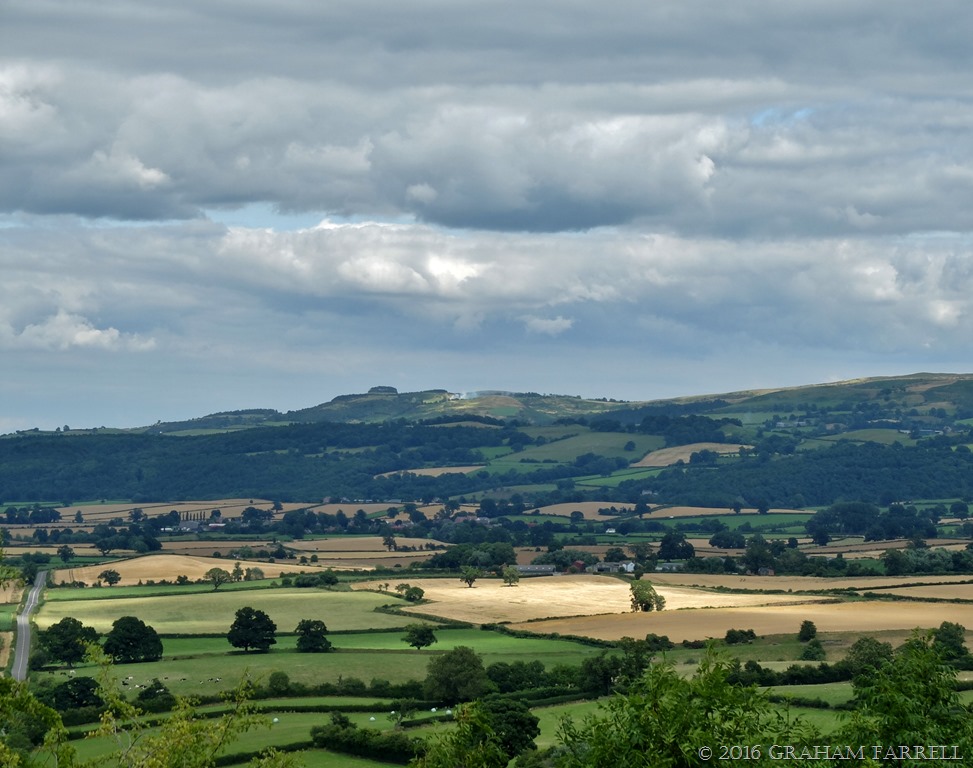
View of the Shropshire-Welsh borderland, a landscape shaped by farming communities since at least the Bronze Age some four thousand years ago

*

“I have seen the sun break through

to illuminate a small field

for awhile, and gone my way

and forgotten it. But that was a pearl

of great price, the one field that had

the treasure in it…”

Excerpt from the  The Bright Field  by R S Thomas


Earth

Admiration Maasai-style

Masai_Julie_171

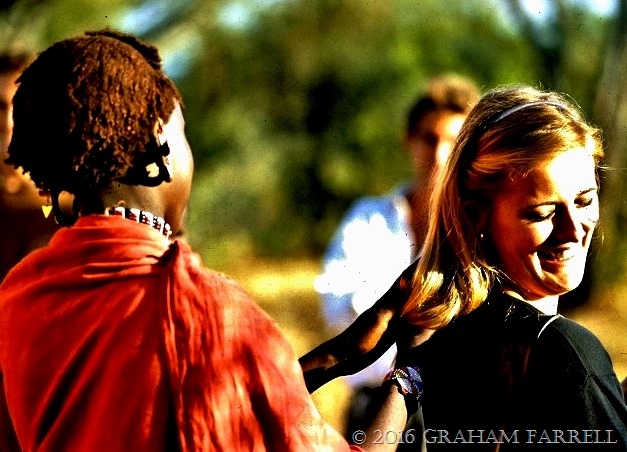
This shot of one of Graham’s fellow travellers was captured long ago in Tanzania when he was on an African overland trip. I find the gentle, almost reverential way in which the young Maasai moran is holding  the girl’s hair very touching. There is some irony too. Usually when a Maasai warrior turns up anywhere, it is he who is the focus of everyone’s admiration. It goes with the territory: the glowing red shuka and the fine beads. He even expects it.

 
Admiration


The Abstracted Writer ~ That Would Be Me

Thinking that just maybe it’s never too late to be a ‘poster girl’, and especially if some serious photo-editing is involved, I thought I’d give myself the Warhol treatment for this week’s Daily Post Photo Challenge. It’s perhaps also a metaphor for the state of me – spreading myself in too many directions at once.

Abstract