
*
In the last post you saw the Stiperstones in brooding monochrome. Those photos were taken on a dull and windy summer’s day. It was our first attempt to reach the Devil’s Chair. I had never seen it at close quarters. But in the end, the lack of light and the high wind across the tops put an end to the expedition.
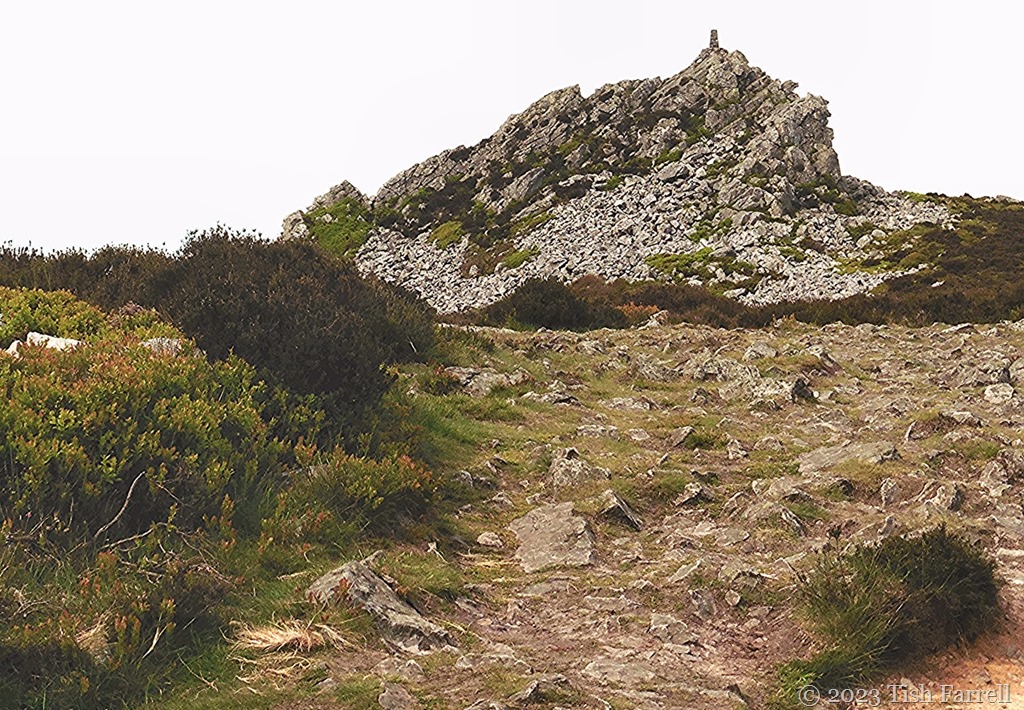
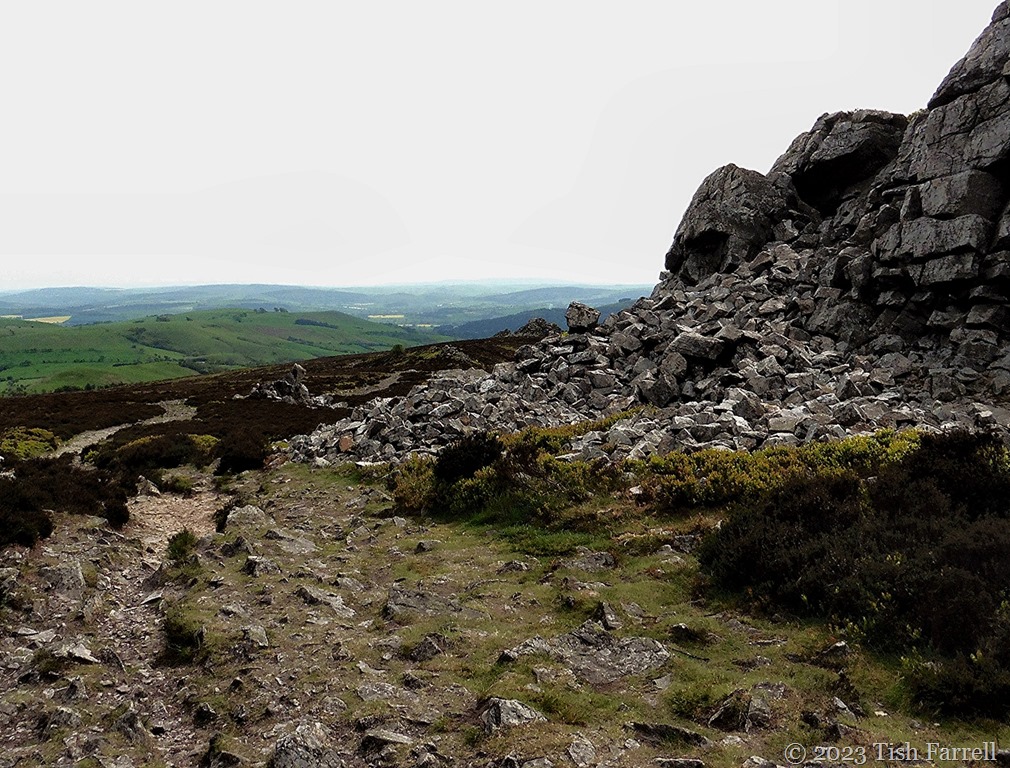
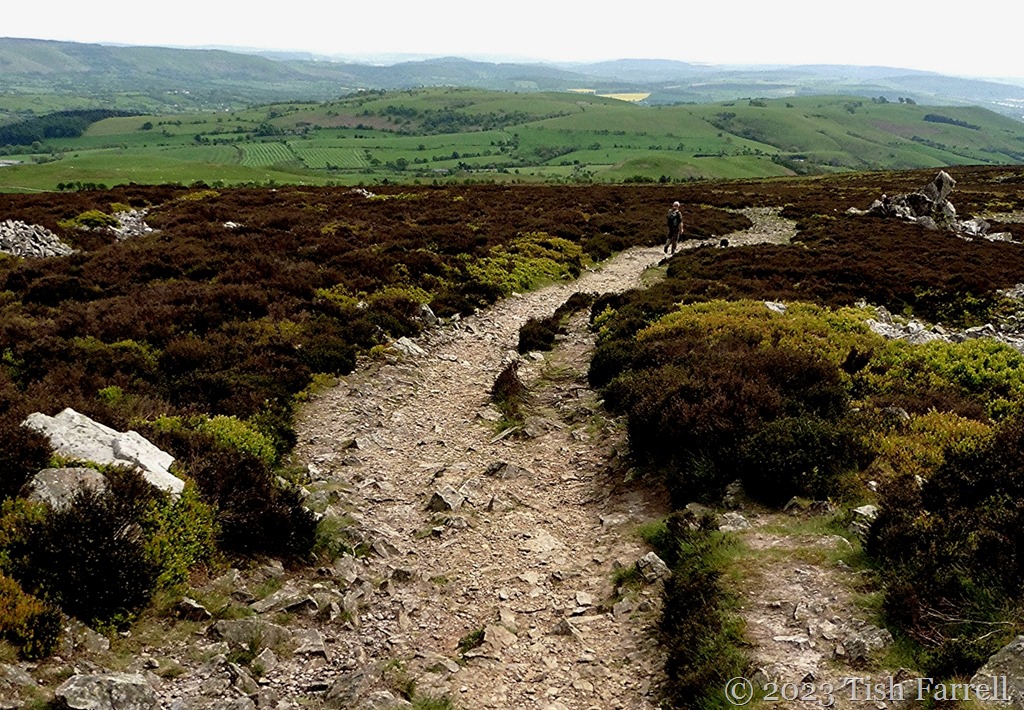
The big problem on this particular trail is the surface. The higher you climb, the worse the path becomes, forming a devilish spread of upended pointy cobbles, designed to turn ankles and gouge soles, even when the walker is shod with sturdy footwear. The wind only made navigation harder: hard to focus with watering eyes. At one point I tried deviating through the heather, but it was a struggle to stride over; and it meant walking twice as far, and the rocks still ambushed me. A retreat was called.
We then made another attempt on a windless sunny day, when these photos were taken, but again were defeated by the terrain; nobbled by the cobbles. Still, despite hazy skies, there were some good views of the South Shropshire Hills as we headed down. And there is no doubting: this is one dramatic landscape, the quartzite rock of the the tors and outcrops laid down 480 million years ago, then fractured and shattered during recurrent freeze and thaw phases of the last Ice Age, 15,000 years ago. Back then, the ice sheet that covered much of Britain lapped against these hills.
It’s quite a thought: the repeated cycles of warming and cooling, cooling and warming that planet earth has gone through over many million years. And here we are in a warmish interglacial (it was apparently warmer in Britain in the Bronze Age, during Roman times and in the Middle Ages), and we’re probably due another cooling, since the geological timetable appears remarkably consistent, or at least it does when one’s dealing in millennia. I’m not sure we’ll like it though, the cooling.