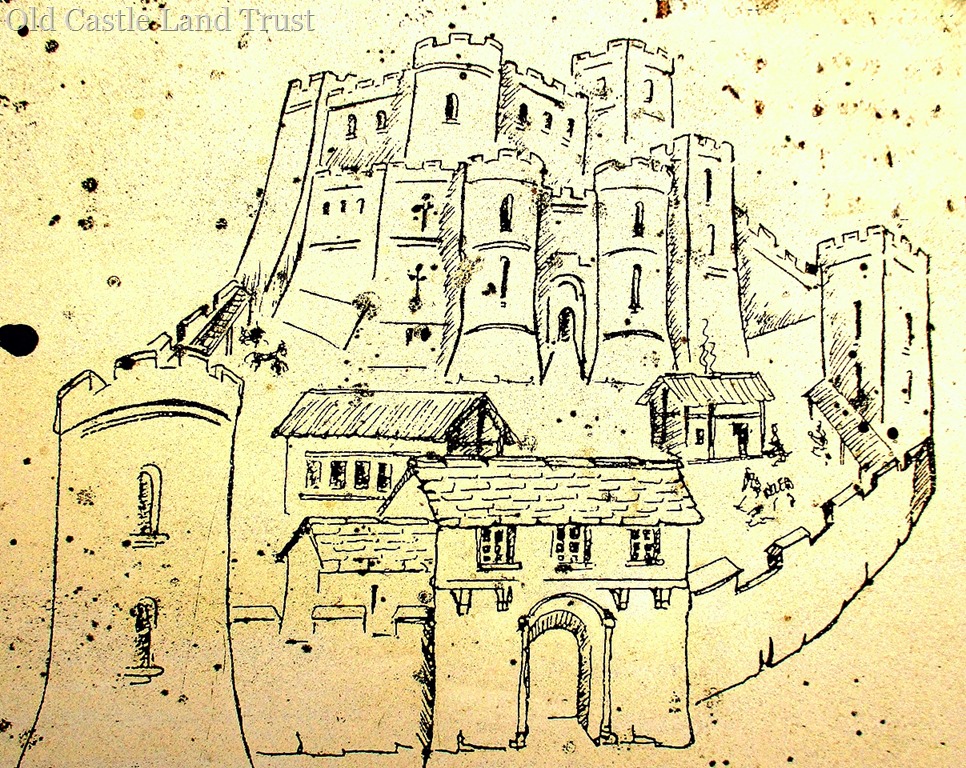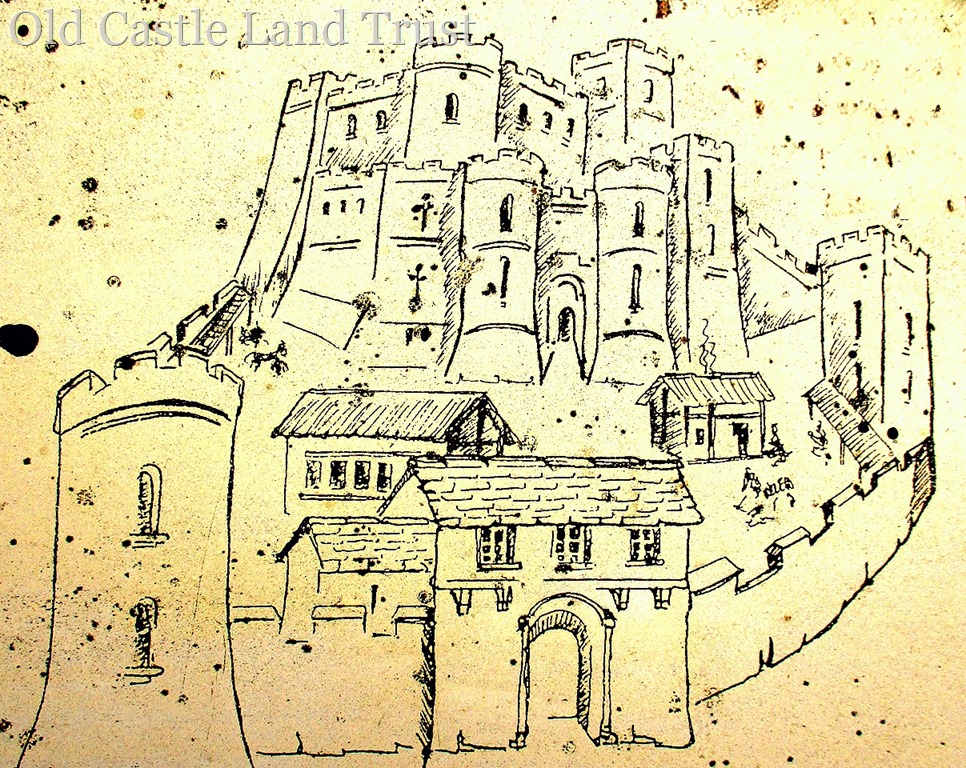
This is a very good question. Where indeed is Bishop’s Castle’s castle? In its last years (during the early 1600s) the stone towers of keep and bailey would have loomed high above the town. Given the steepness of the hillside approach, it could not be a more dramatic setting. It must have looked very much like our vision of a fairy tale castle from a children’s picture book.
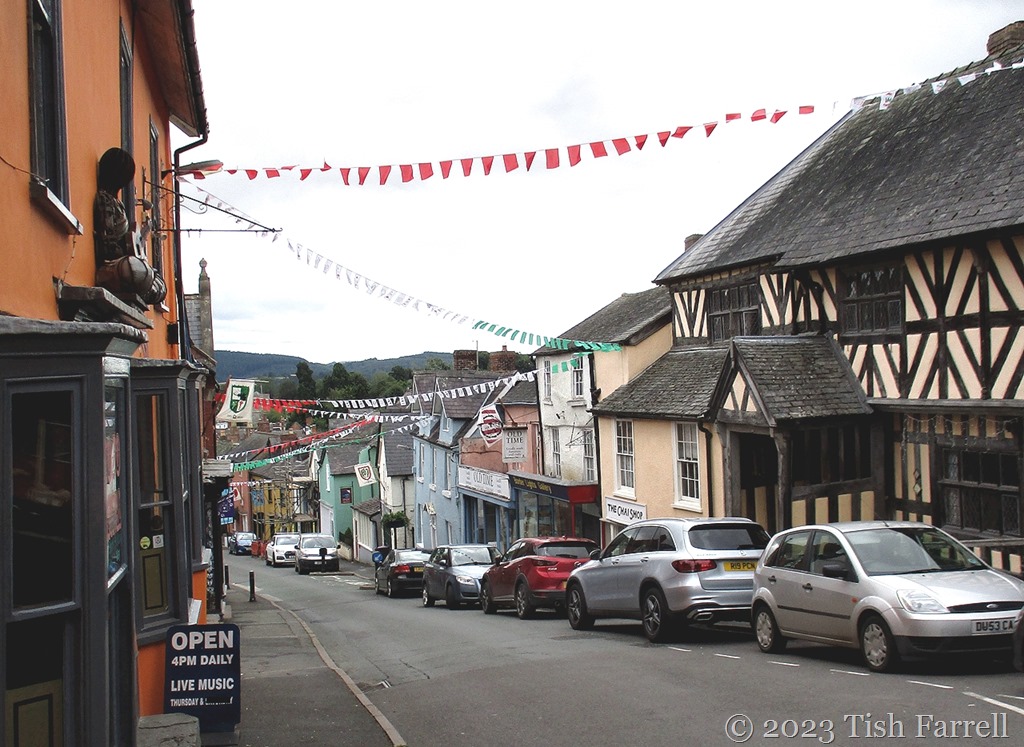
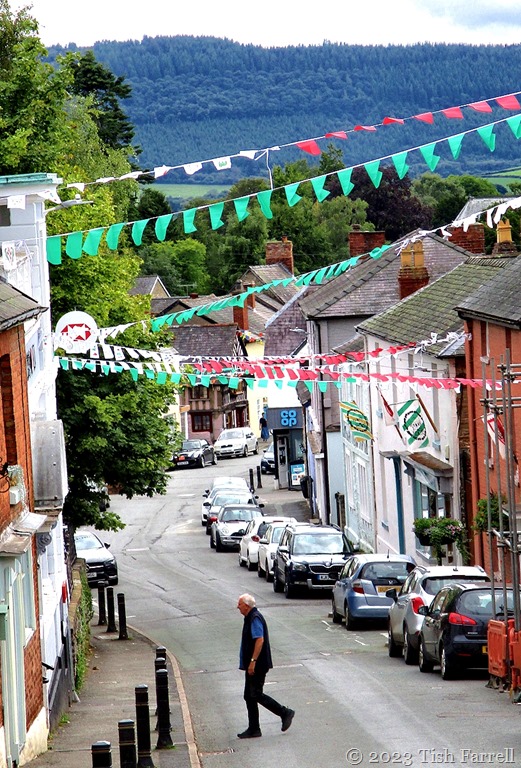
The outer bailey walls extended to the top of today’sHigh Street. See the next photo. If you home in on the on-coming red car below the brown building facing downhill, you’ll be in roughly the right spot.

*
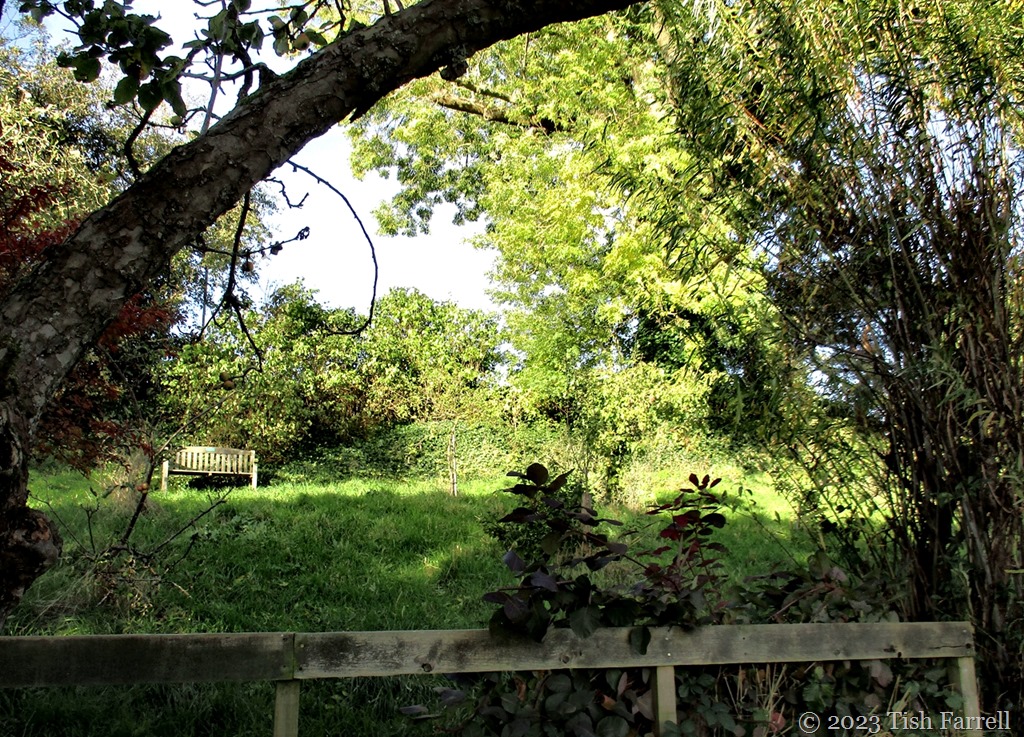
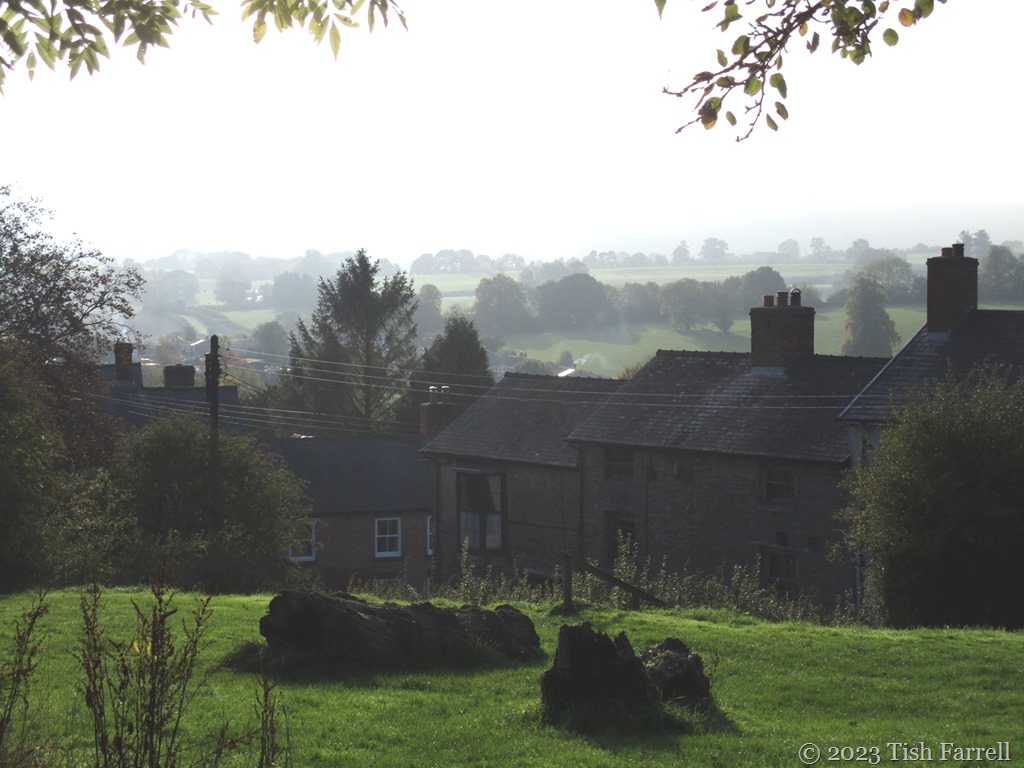
Of the actual castle, there is little left to see. The Old Castle Land Trust has secured a portion ground that lay outside the inner bailey, and here you can see a surviving portion of bailey wall. It’s also a pleasing place to sit and stare at the top of the town.

*
The original castle keep would have been much further back and up, on the hill’s summit in fact. The site is now occupied by the town’s bowling green which was created over the keep’s footprint some time in the 18th century. A pleasing feature here is the octagonal pavilion, presumably built when the green was constructed. It is oak framed and, during restoration, the centre post was found to be octagonal in section. No expense spared then.

*
So why was there a castle here at all?
The answer is law enforcement and taxes.
The earliest version was constructed not long after the Norman Conquest, put up between 1085 and 1154, at the behest of the Bishops of Hereford, they who ruled the local roost – spiritual and temporal. As with most early Norman castles, it would have comprised an earth mound or motte, topped by a wood framed keep, and the surrounding inner and outer baileys defended by timber palisades. The lower flanks were then surrounded by a defensive ditch or moat, complete with drawbridge.

*
The stone-built phase began around 1167 – including stone keep, curtain walls with towers and gatehouses to both bailey perimeters. Further fortifications and likely refurbishment of living quarters took place around a century later, following on the brutal attack by a bellicose neighbour, the Earl of Arundel, Lord of Clun in 1281.
The castle premises at this time were equipped to provide accommodation for the visiting Bishops of Hereford plus their retinues of some 30 horses and men. The outer bailey would have included stables, stores, smithy and brewhouse.
The bishop came at regular intervals to hold court, impose fines on wrong doers and infringers of local laws and regulations, and to exact taxes from the local populace. By this time, there was a well-established town on the hillside between castle at the top and parish church at the bottom.
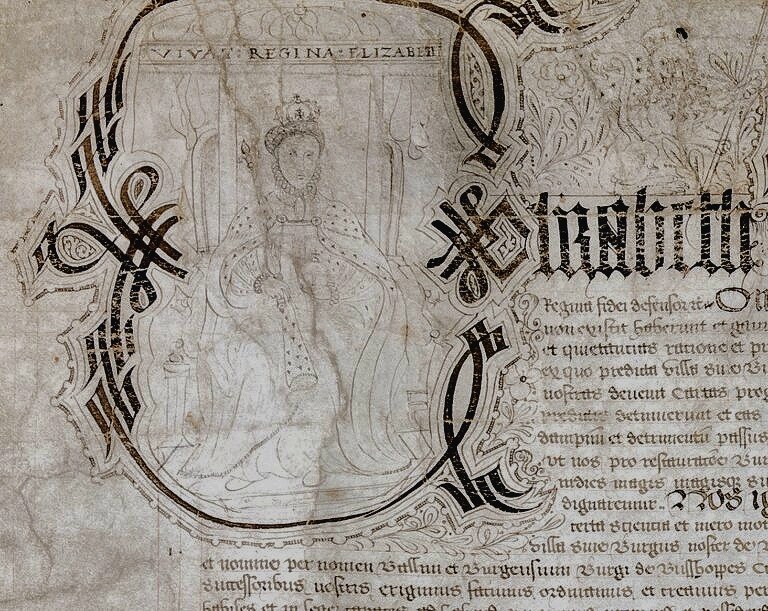
The bishops’ authority was finally overruled by Elizabeth 1, who simply took Bishop’s Castle for the Crown and then in 1573 issued a royal charter (see earlier post HERE) that handed executive control of the town’s affairs to an elected bailiff and 15 burgesses.
From this time on it seems the castle was left to its own devices, apparently ruinous by the 1600s. And so it is obvious what happened next: there was a general repurposing of the castle fabric as the market town grew in scale and prosperity.
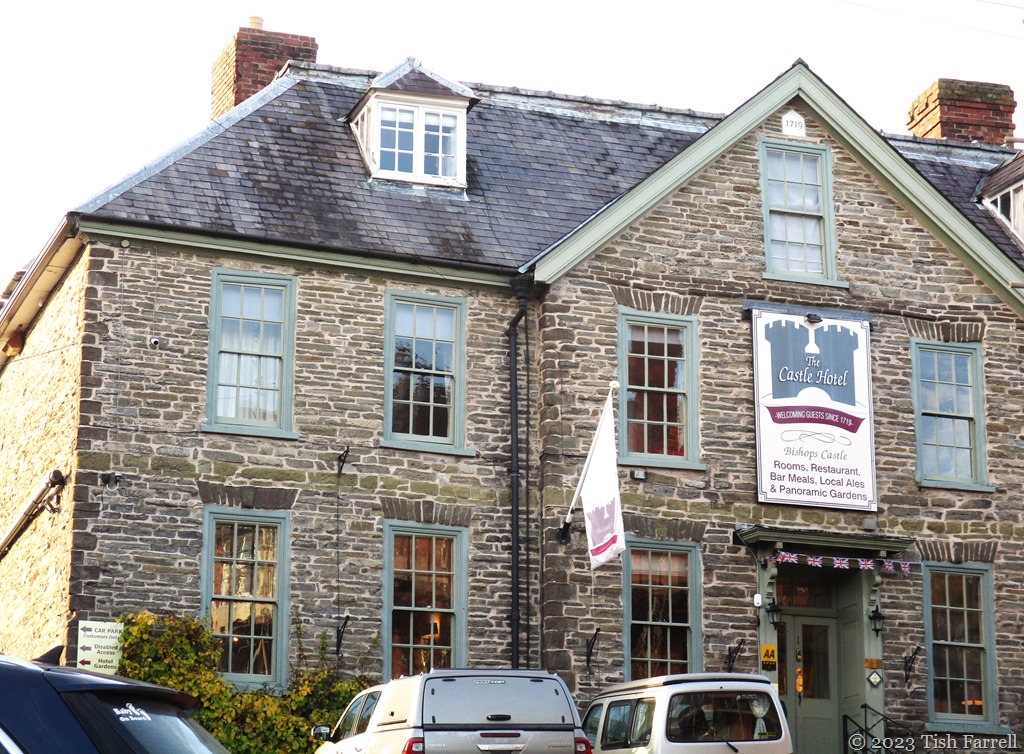
One beneficiary was the Castle Hotel, built in the 18th century inside the former outer bailey:
*
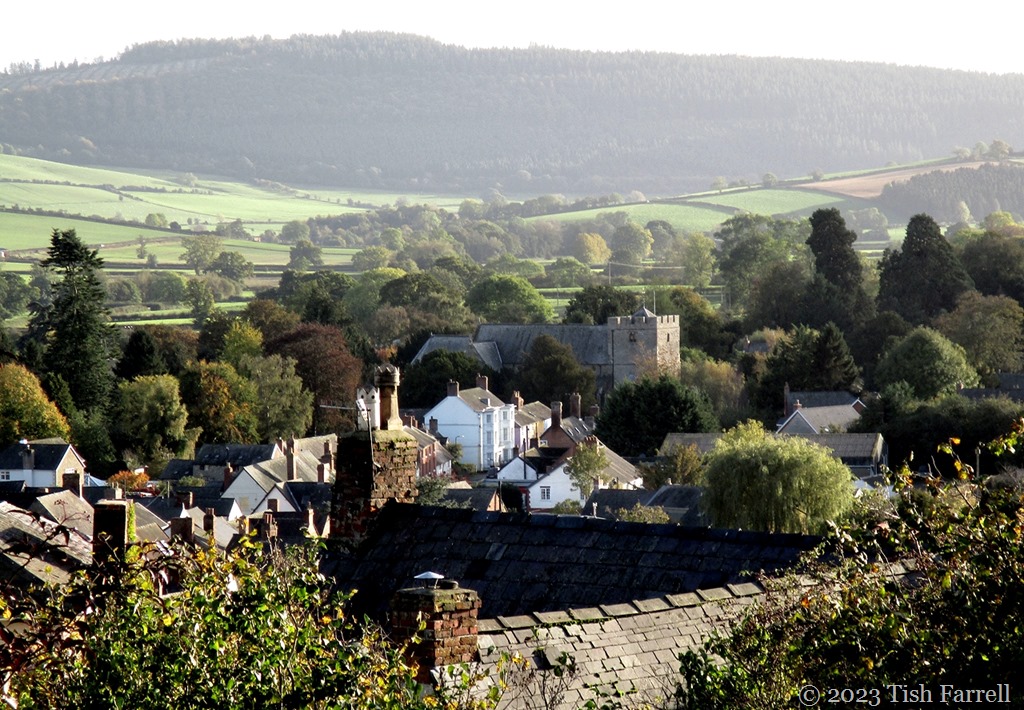
If you stand in the hotel gardens, as I did in sunny interval this week, you are treated to the kind of sweeping vista that castle-dwellers-past might have enjoyed from their bastions, though I’m guessing there would have been rather more forest than the wide-open fields of this next photo.

*
If you then turn through 180 degrees and look up the garden, you are now facing the spot where the inner bailey gatehouse would have stood. I’m thinking the huge ash tree makes a handy simulacrum for a castle tower: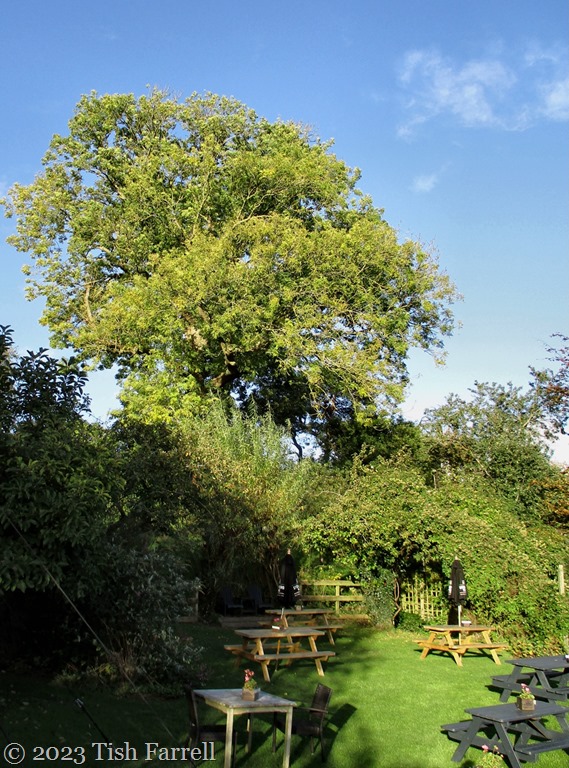
*
The bowling green is just beyond the tree. It used to belong to the hotel, and there’s a path through the garden to reach it. (Closed now for the winter season).
The late 17th and 18th centuries were a time when many townscapes had their ancient timber-framed houses clad and/or replaced in stone or brick. This certainly happened in Bishop’s Castle. Many of the 1700s and 1800s stone and rendered frontages will contain remnants of earlier wattle and daub dwellings. It was all part of growing urban show and gentrification.
*
And so the castle fabric has doubtless found its way into many a house and garden wall. The Moat House on Welsh Street seems a particularly obvious candidate, both by name and siting on the original castle defences.

A plaque on the wall also names it as no.41 of Bishop’s Castle’s town trail of lost inns, having been known variously as The George or The White Swan from around 1700. (Surprising to note that the town has hosted some 46 public houses over the last 400 years, but that’s a story for another day.)
I do know for certain that our house wasn’t built from castle remains. It’s all red brick, locally made, I think, and put up around 1922 by local builder George Nicholas. It stands in a corner of land formerly owned by the smithy and then by the Hit or Miss public house, which is three doors up from us. What a great name for a tavern. Now a private house, its plaque lists it as no. 38 in the lost pub trail, 1832-1915. These days it’s rather nicely ‘draped’ in laburnum fronds since it stands next to Laburnum Alley, one of the town’s intriguing shuts and pathways. Again, more of these in a future post.

For now, a view of our street and the former Hit or Miss public house. (You can just glimpse our red brick side elevation and chimneys furthest left).
And another view from the Castle Hotel garden, this time looking up motte, across the inner bailey, to where the castle keep would have once dominated the entire background. Interesting how things change: