Only One Ogunquit: the little gallery by the sea

105

Seated Bear by Bernard Langlais 1973, Ogunquit Museum of American Art

*

Ogunquit Museum of American Art

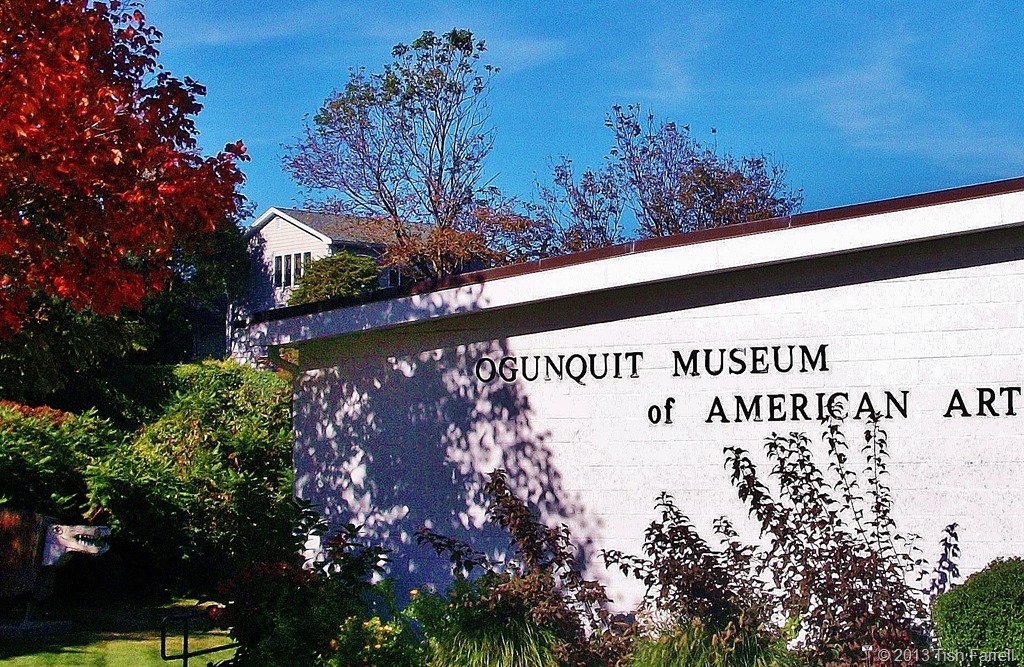
Last year when we were in Maine we went to Ogunquit, to the Museum of American Art. As the guide books have it, Ogunquit is an Abernaki word  meaning ‘beautiful place by the sea’. Some also say that this small art gallery is the most beautiful in the world. I think I must agree. It is certainly in the most stunning location. As you enter the main hall your eye is drawn, not so much to the works of art, but to the east wall that is entirely glass (a picture window if ever there was one), and looks out on the great Atlantic.

sculpture-gallery-overlooking[1]

Photo: copyright 2013 Ogunquit Gallery of American Art

*

Places of pilgrimage

Of course, not for all the world would I be without the world’s great art galleries. To simply speak their names: the Tate, Met, V & A, Hermitage, Rijksmuseum, to name but a few in my particular hemisphere, induces in me feelings of awe, reverence, and even that childhood sense of bursting expectation at opening Christmas tree presents. I may never visit most of them, but somehow it is enough to know they are there. Their palatial chambers may ooze worthy academicism and the particular brand of nineteenth century paternalism that was intent on informing the masses while keeping them firmly in their place, but these monumental repositories are indeed our treasure houses. And not because of the monetary value of the works they contain, but because the quiet spaces filled with marvellous pieces of human craft and ingenuity are true resorts: places of pilgrimage, edification, solace, joyousness, meditation. People come there to commune with the spirit of creation and creator, each according to their inclination. 

094b

The museum sits not so much in ‘grounds’ but in a lovely seaside garden with art amongst the plants.

*

Art without blisters

But for me, there is something altogether more beguiling about a small gallery. It is less physically arduous for one thing; you need not leave, as you can well do from the V & A or the Met, feeling cross that after many hours spent hiking up and down marble corridors and staircases, there was something important that you missed, but were simply too foot-sore to look for.

There is none of this at the Ogunquit Museum. It is definitely small-scale, and  its mission clearly defined: the art it shows is exclusively American art. In particular, the collection includes works by Ogunquit’s art colony that was founded by Charles Woodbury in 1890. The theme, then, is simple. The visitor’s mind and gaze is immediately focused.  The setting is intimate too, for once you tear yourself from the view of the sea in the main hall, the display spaces are of domestic scale. Only missing is the cosy arm chair and somewhere to put your tea tray. Wise omissions nonetheless; otherwise you might not ever leave.

123

‘An artist’s paradise’

When Bostonian, Charles Woodbury, visited Ogunquit’s Perkins Cove in 1890 and declared it ‘an artist’s paradise’, the seed for the Ogunquit artists’ colony was sown. He opened a school for his student followers, providing board and lodging in converted fishermen’s shacks along the shore. From the late nineteenth century Ogunquit’s reputation as a place for artists grew. Some of those associated with the colony include Edward Betts,  Hamilton Easter Field, Robert Laurent and Walt Kuhn. But many other American artists later lived or spent their summers here, including Edward Hopper, and their works are also included in the Museum’s collection.

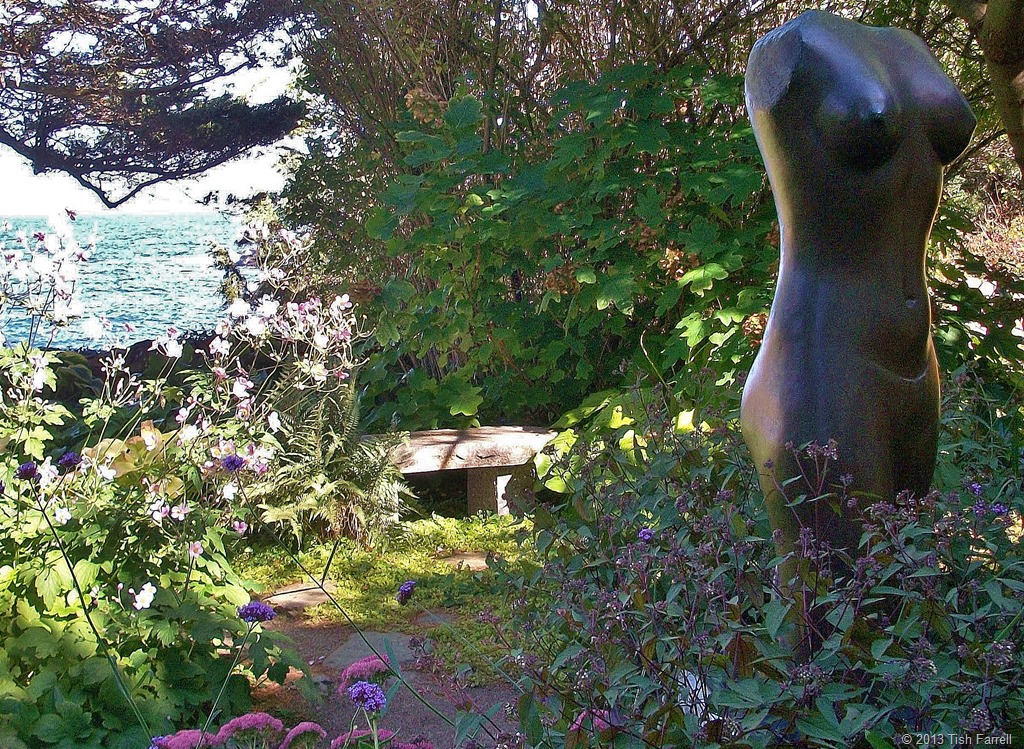
It was  Henry Strater, artist and friend of Scott Fitzgerald and Hemingway, who in 1953 founded the Ogunquit Museum. He sited it above the rocks on Narrow Cove where many artists used to congregate – a perfect fusion of place, building and content, or, for that  matter, of nature and culture. The three-acre garden is a rambling, blissful place with hidden corners and unexpected vistas and sculptures perfectly placed.

096

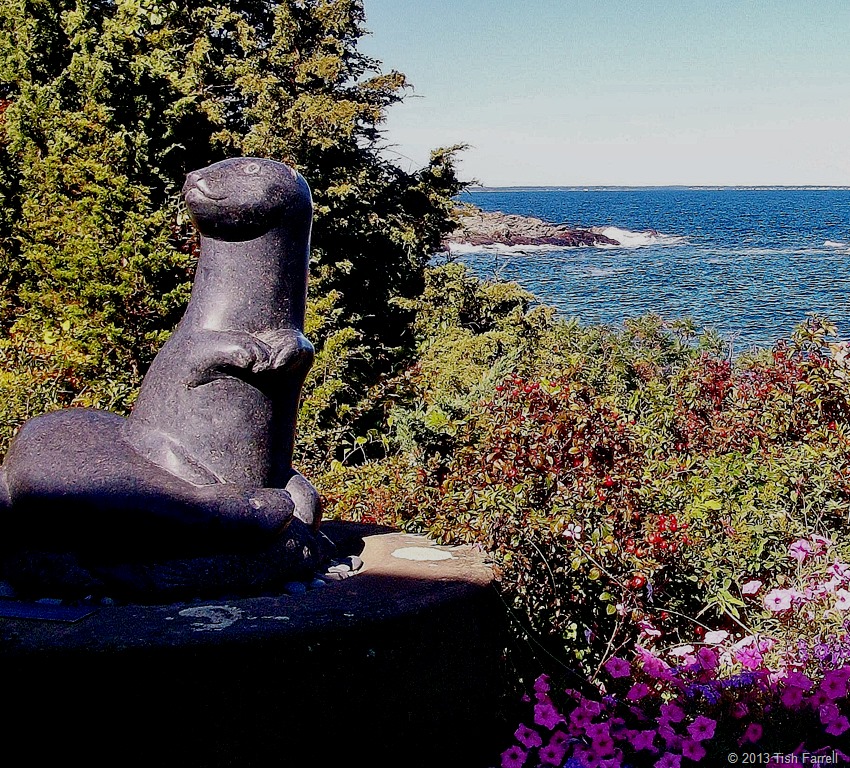
Cabot Lyford’s Otters above Narrow Cove.

*

097

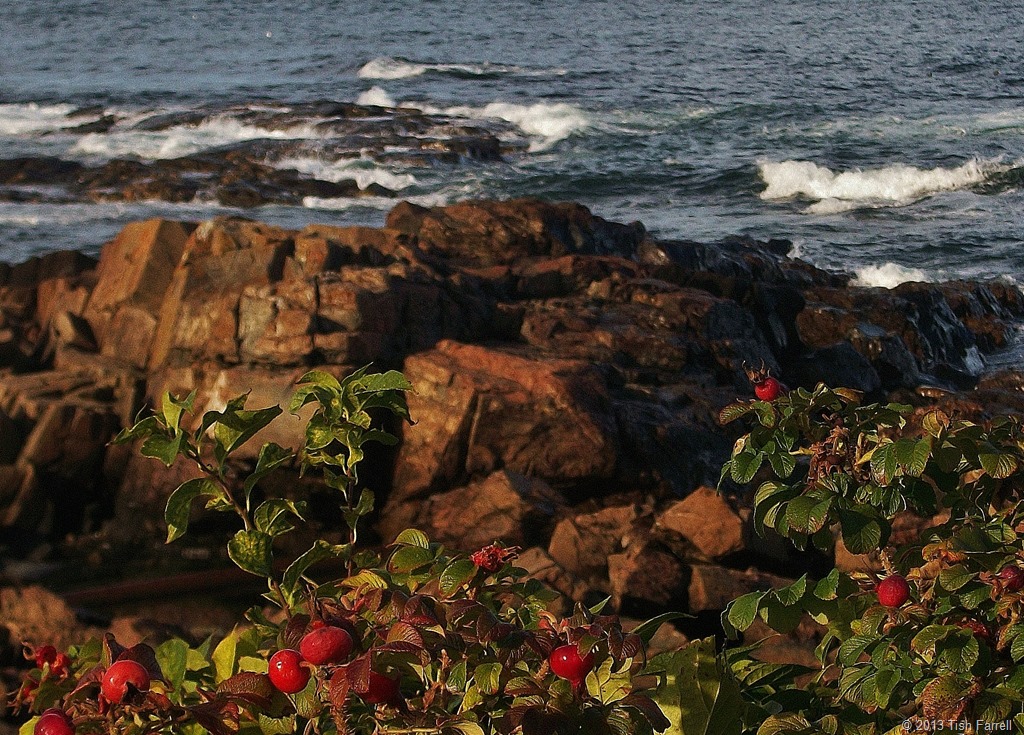
Narrow Cove below the Museum.

*

099

111

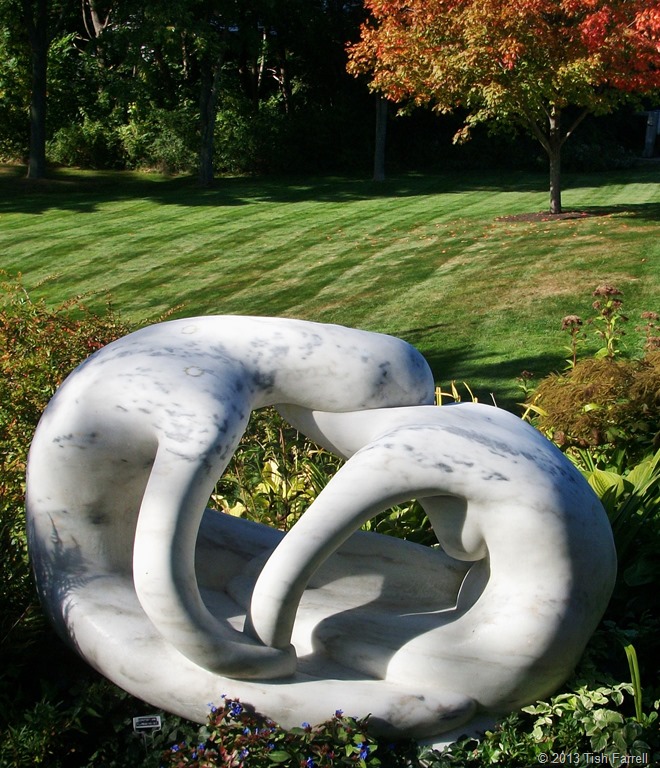
Antoinette Prien Schultze: Life Entwined 1988, Vermont marble.

*

100

*

Sixty works 60 Years

This year, then, the OMoAA is celebrating its sixtieth year with a show of works from its permanent collection.  The pieces have been chosen to illustrate the Museum’s collecting trends from the days of Henry Strater to the most recent acquisitions. If you are in Maine you have until October 31st to see it, along with the accompanying exhibitions. The programme of events is here. And if you are not in Maine, then make the OMoAA the reason to go there. You will not be disappointed.


You can find the Ogunquit Museum of American Art at 543 Shore Road, Ogunquit ME, on Facebook and the website links below:

https://www.facebook.com/OMoAA            http://www.ogunquitmuseum.org/

Related article:

Henry Strater’s Ogunquit Museum of American Arthttp://www.someoldnews.com/?p=440

*

Frizztext’s OOO-challenge

And some other entries:

© 2013 Tish Farrell

National Poetry Day

Today in Britain it is National Poetry Day, and this year’s theme is a quote from Coleridge’s Ancient Mariner: “Water, water everywhere…”

003.jpg

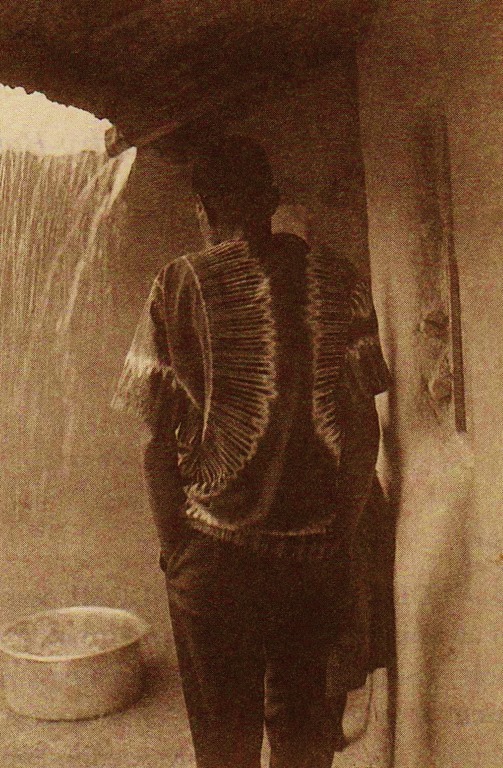
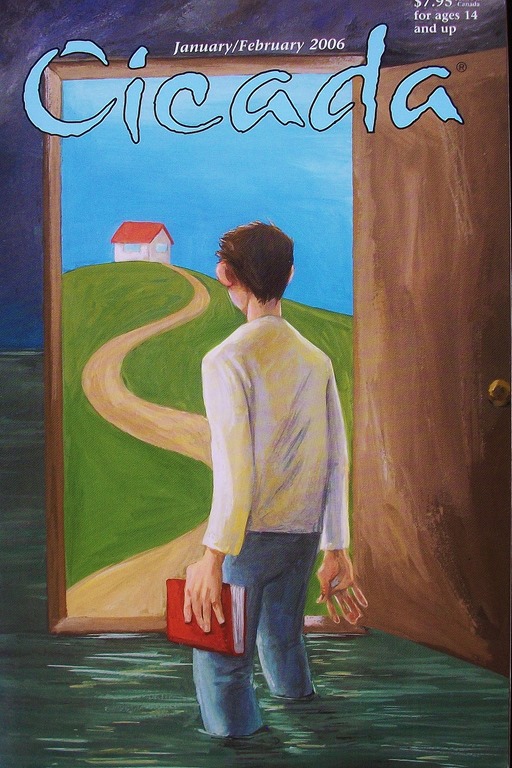
And since it is pouring in the UK, I thought I’d post a rainy-day poem written while  I was in Kenya. It was originally published in Cicada Magazine  March/April 2000, along with the picture above for which there was no attribution.

Long Rains

Rain days in Africa – roads run

rivers, mud blood red; and careless,

grey-dog skies shake out

their fill on ill-clad souls who

shuffle close in supermarket doors,

and moon-eyed in the drip and drip,

the backslap seep in thin-soled shoes,

no longer see the draggled flocks

of street boys perched in car park trees,

all glue-pot fused, nor show surprise

when sleek Mercedes cruise

the roads-turned-lakes and ditch their wake

on citizens whose only keep is

listless hope: that sometime soon –

the rains will stop…

*

And for all those interested in good reading and writing Cicada Magazine is part of the Cricket group of magazines published by Carus in the US. Each of their magazines – Babybug, Ladybug, Spider, Cricket and Cicada caters for a specific age group, from babes to teens and up. The house-style is literary rather than comic book, and with a strong multicultural element. Every story, poem or article in every edition is accompanied by specially commissioned artwork. The publishers accept submissions from both new and established writers and artists, but the emphasis is on quality.

100_3666

© 2013 Tish Farrell

Arch Wizard of Wales: Clough Williams-Ellis “Architect Errant”

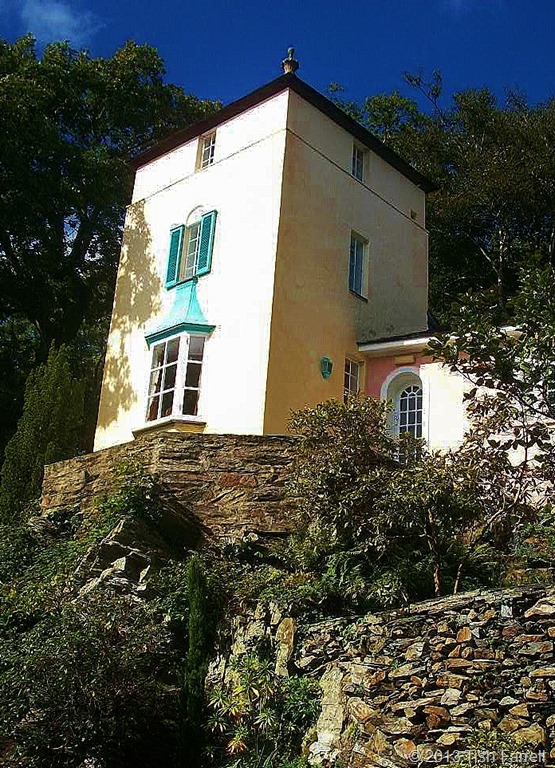
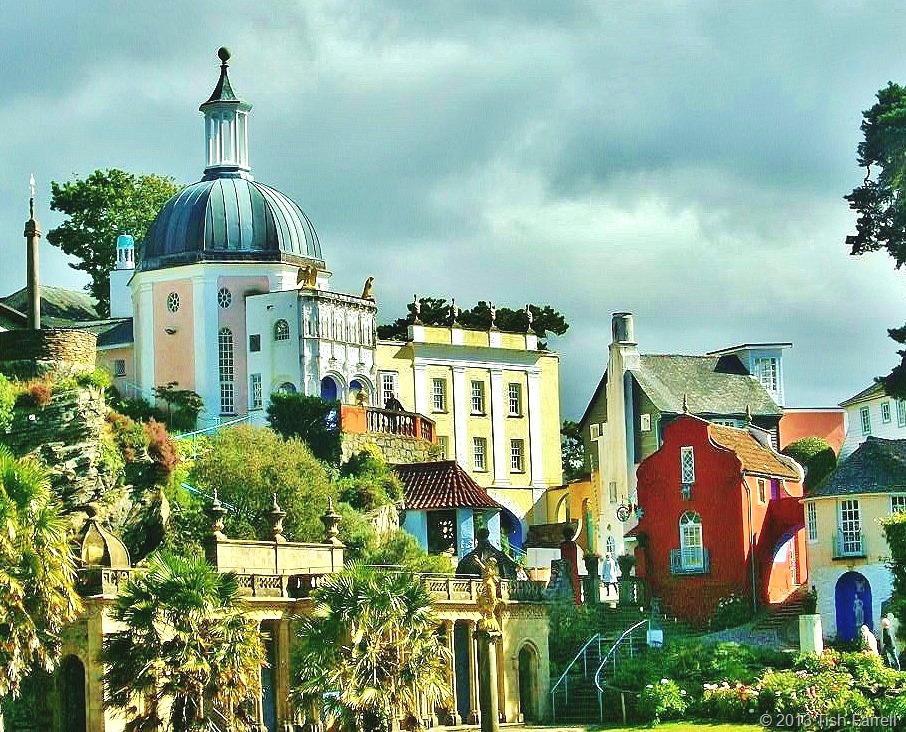
Surely only a wizard could have conjured this  place – or so I thought, aged six, when we, the Ashford family first made pilgrimage to Portmeirion on the North Wales coast.

100_4683

“Cherish the past. Adorn the present. Construct for the future.” This was the life-long credo of Clough Williams-Ellis, the man who dared to build an Italianesque village on a beautiful Welsh headland.

*

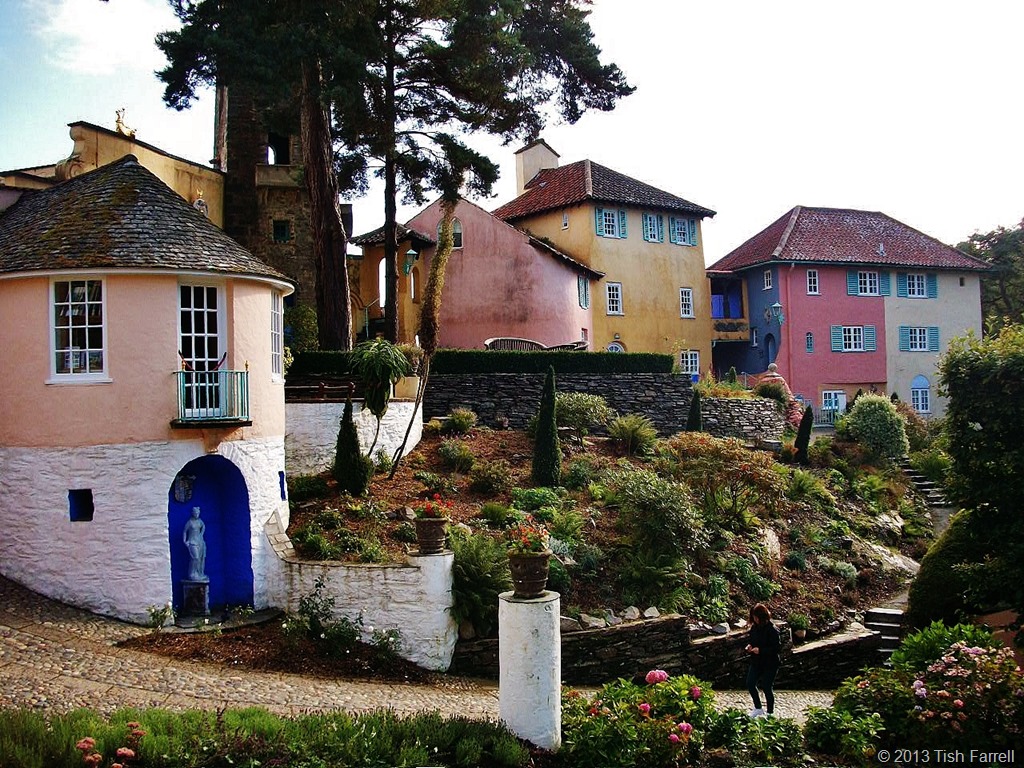
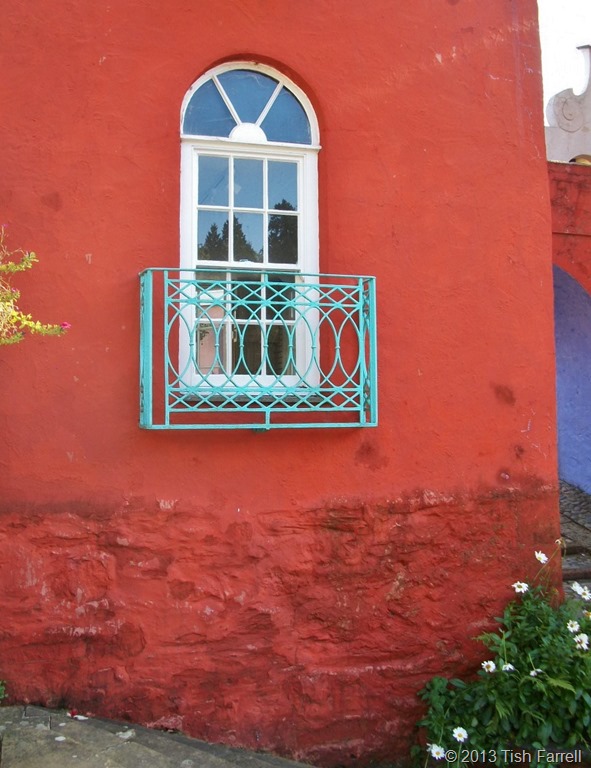
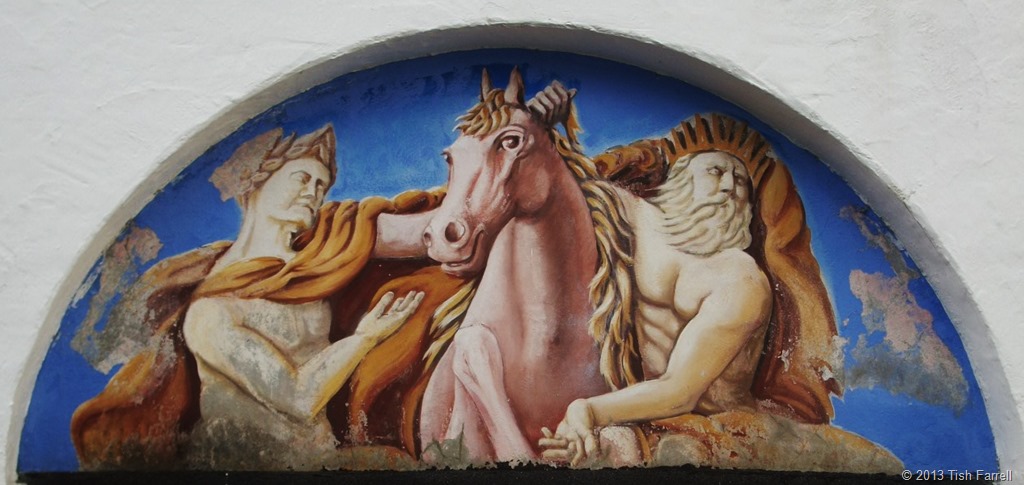
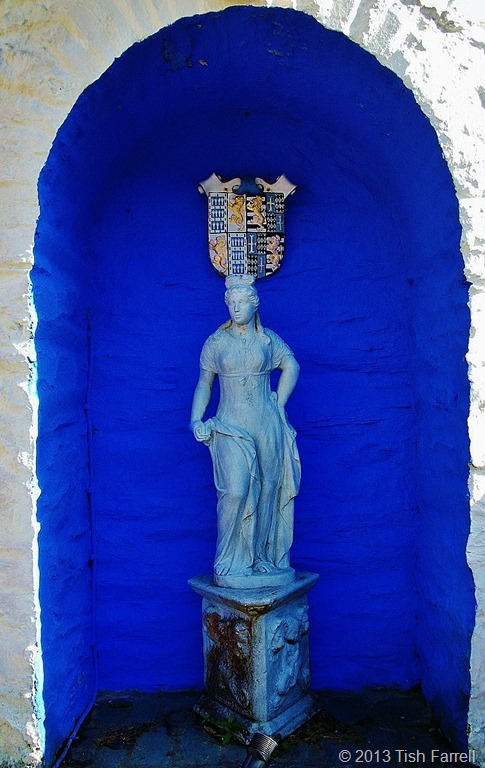
It was like stepping into a living picture book or melting through the mirror into Looking Glass Land. The houses were the rich, powdery, pastel shades of Loveheart sweets (does this strange confection still exist?). There were mythic frescoes in places were a child might least expect them, and best of all, a shell grotto that was just like the Little Mermaid’s deep-sea garden.

It was enchanting from the moment we stepped through the gatehouse entrance. How could there be so much colour, so many decorative flourishes to catch the eye, so many mermaids – here on a wooded Welsh headland with the lowering grey sky above? And the weather was gloomy on that first visit; I was forced to wear my dull brown mac over my pretty summer dress. The photos taken that day show me looking pensive and withdrawn. But I did love the place, and was quick to register the tones of admiration in my parents’ voices whenever they uttered the name of the man who had conceived this folly to beat all follies – Sir Bertram Clough Williams-Ellis, self-taught architect and champion for the preservation of rural Britain.

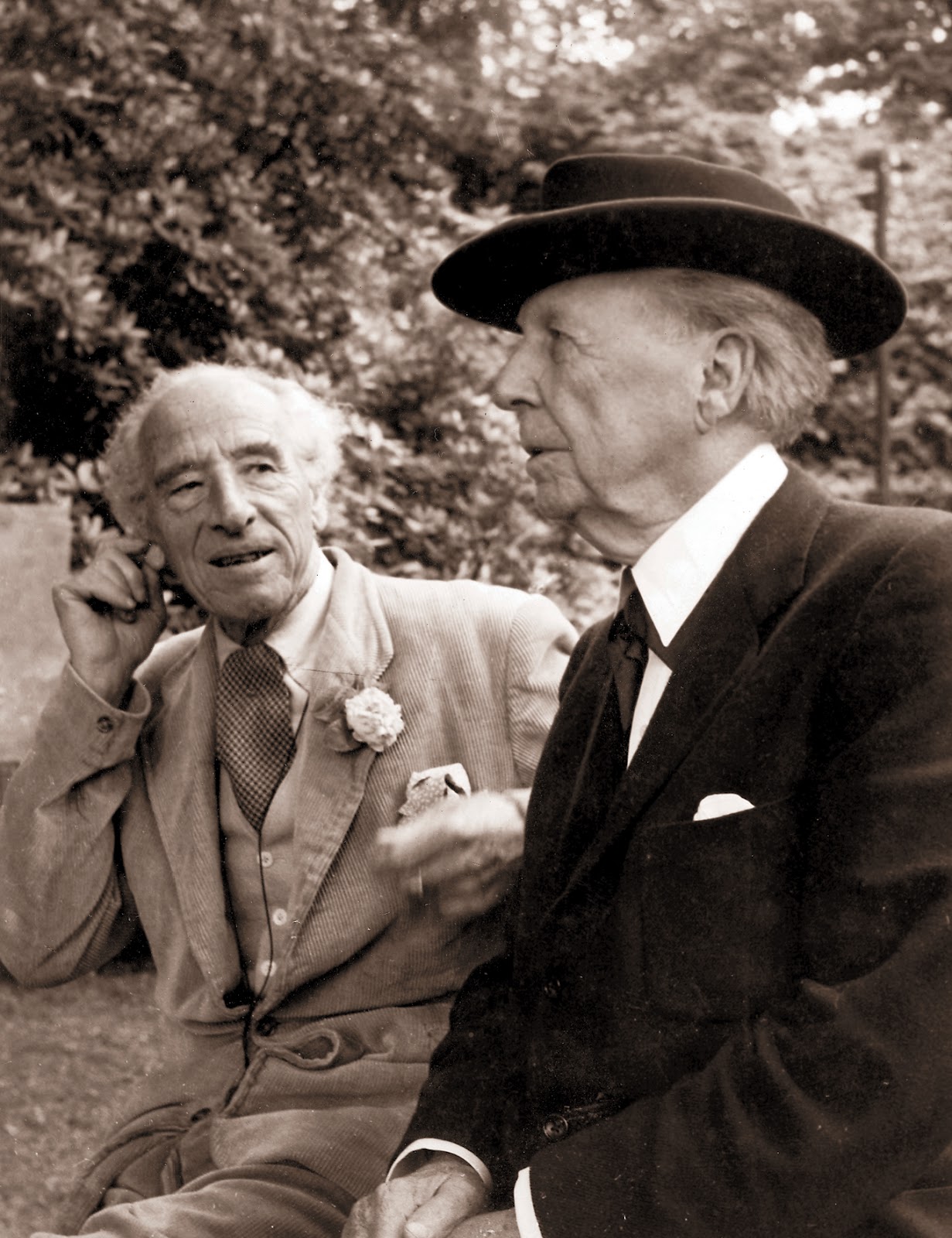
Clough Williams-Ellis (left) with Frank Lloyd Wright at Portmeirion in 1956

*

Of course he built Portmeirion to prove a point: that a beautiful site could be developed without wrecking  it. When he bought the land in 1925  he described it as “a neglected wilderness.” There was “a pale mansion, a hundred years old, spread along the balustraded terrace on the sea’s edge.”

That house became the Portmeirion Hotel, and some of its associated cottages were integrated in the village plan. The two previous owners from the 1850s onwards had planted the site extensively with specimen oriental trees and exotic plants, many of which still survive. The planting, along with the building of a close-knit hillside village continued from 1925 under Clough’s direction for the next fifty years.

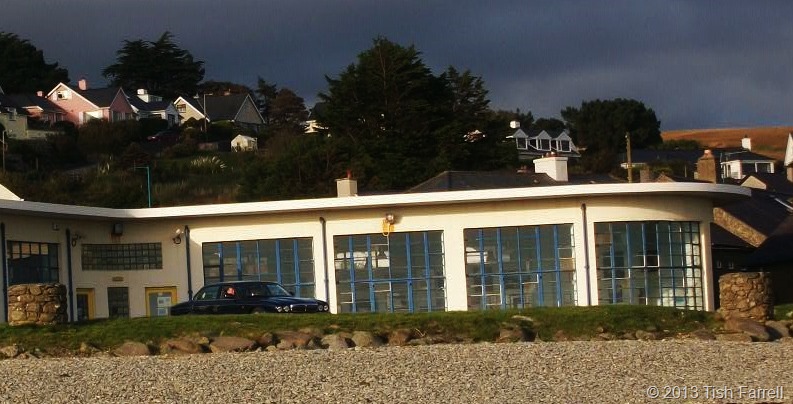
Many of the original plans still exist. The first phase of development was influenced by Clough’s interest in the Arts and Crafts movement. Later buildings followed Classical lines. He also made use of what today we refer to as architectural salvage, and indeed he called Portmeirion  “a home for fallen buildings.” With this architectural bricolage are references to some 5,000 years of architectural history from around the world. Critics of modernist inclination thus tend to overlook Clough’s contribution to architecture. This is a mistake. On our most recent visit to Wales we discovered his Caffi Morannedd Cafe at Criccieth, a few miles north of Porthmadog.

100_4741

Caffi Morannedd by the sea at Criccieth

*

Of course it was at Portmeirion that I first learned there was such a thing as architecture, and that this was something altogether more momentous and wonderful than drawing pictures of “our house” as one endlessly did at primary school.

Clough was also intent on giving people pleasure. He fought all his life to create and preserve beauty, which he called “that strange necessity.” But this did not mean that he was against development. “Enterprise by all means,” he said in 1931 when he was Chairman of the Council for the Rural Protection of Wales, “but reasonable, seemly development where it is in the public interest and nowhere else.”

And oh how fine it would be if English planning authorities were ruled by such objectives, instead of developer aspiration.

100_4627

As a child, I liked the way the houses seemed to have grown out of the rocky hillside, and that there was a mysterious “smugglers’ path” through a tunnel of overgrown rhododendrons that led to a secret sandy cove and the little tin lighthouse on the headland. It was all such fun, and created by a man who, like any magician, or indeed a wizard, wanted everyone to take delight in his illusions.

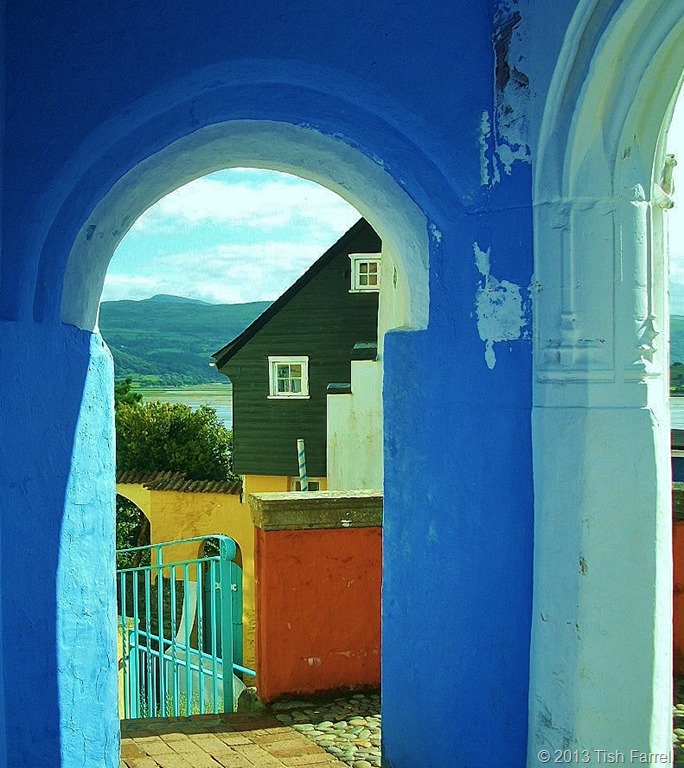
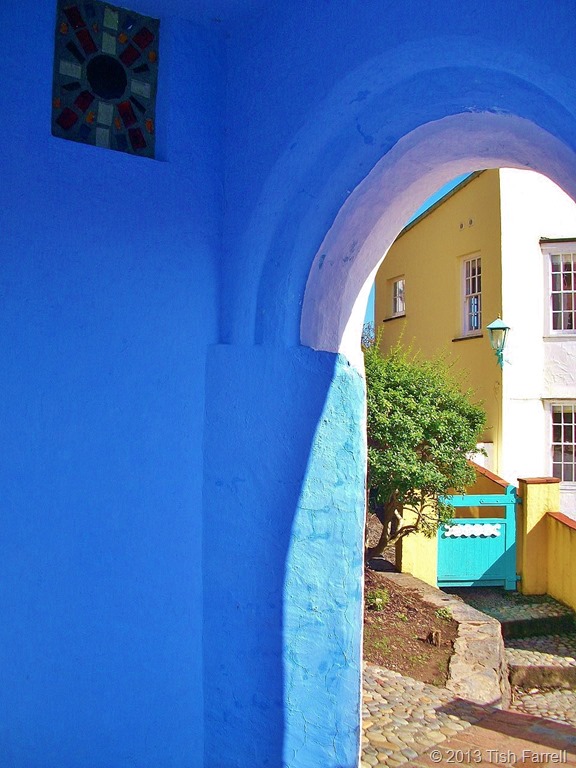
And now, since this post was prompted by Sue Llewellyn’s Word A Week arch challenge, here are some more views of Portmeirion – naturally with arches of all kinds in mind – all taken last week in Wales under mostly sunny skies.

 100_4672.jpg

100_4692

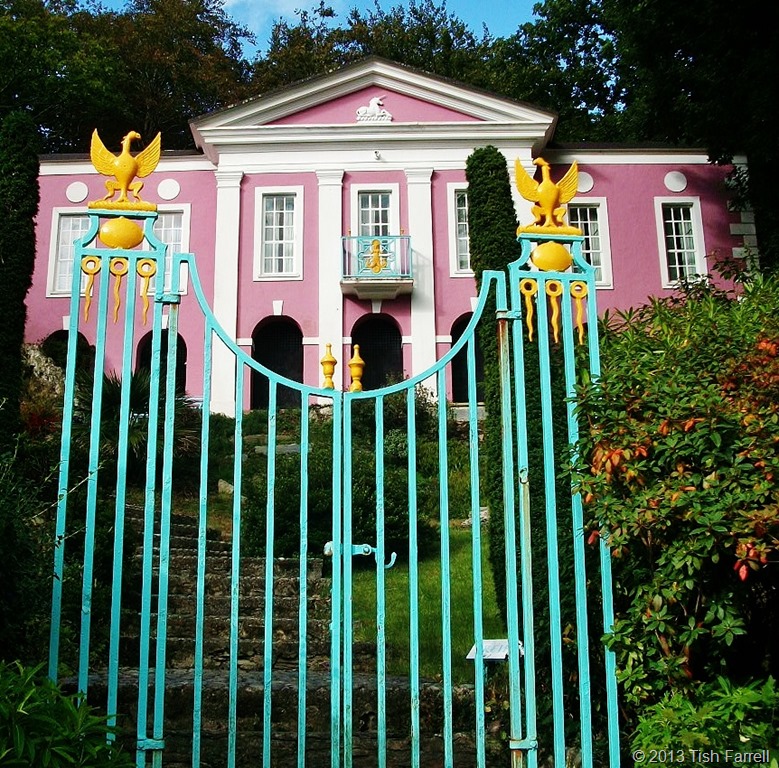
Unicorn Cottage: this illusion of a stately home is in fact a bungalow

*

100_4643.jpg

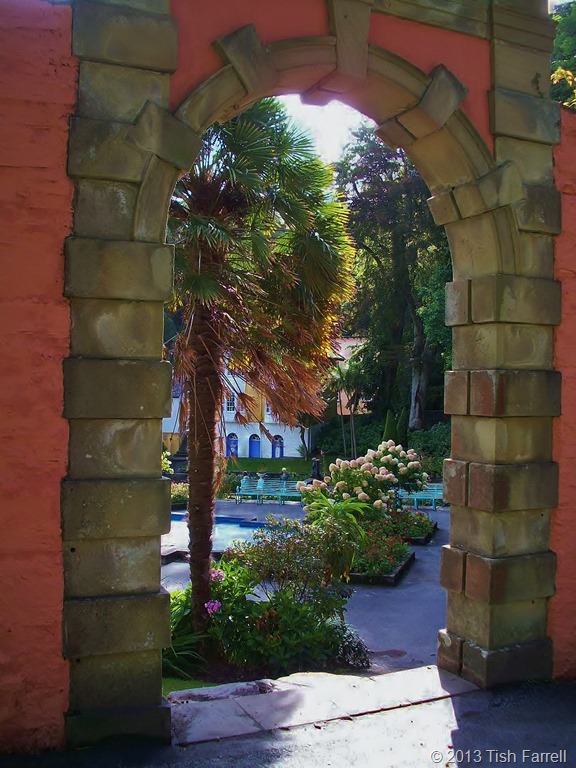
Arch with a view: glimpse of the estuary below the village

100_4645.jpg


IMG_0676.jpg

100_4631

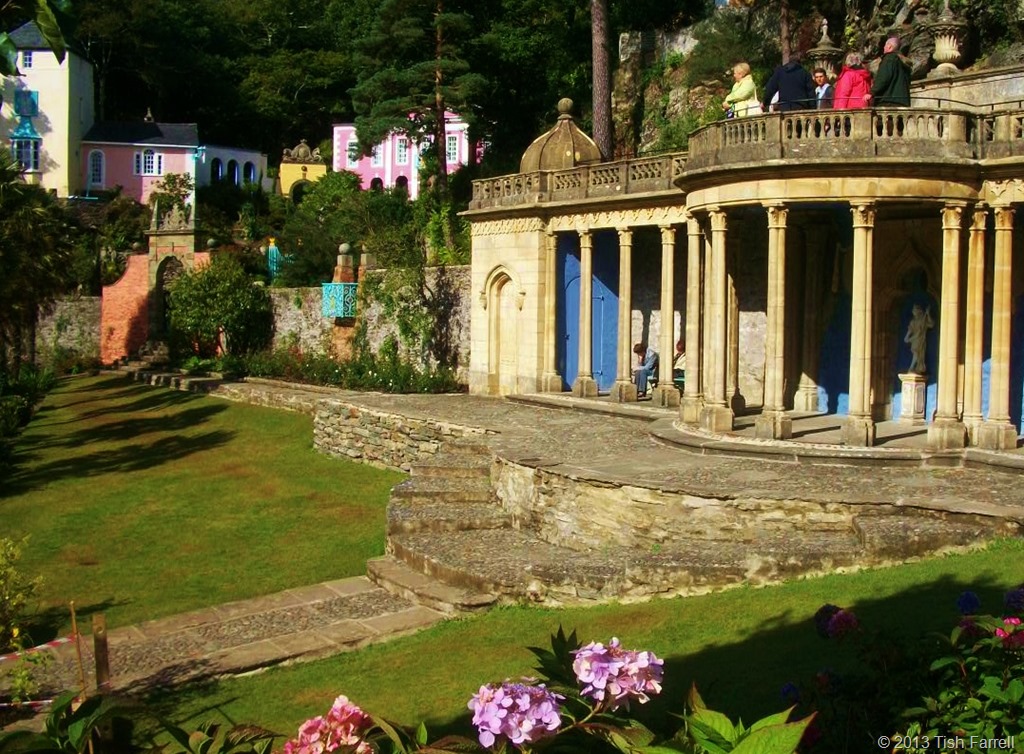
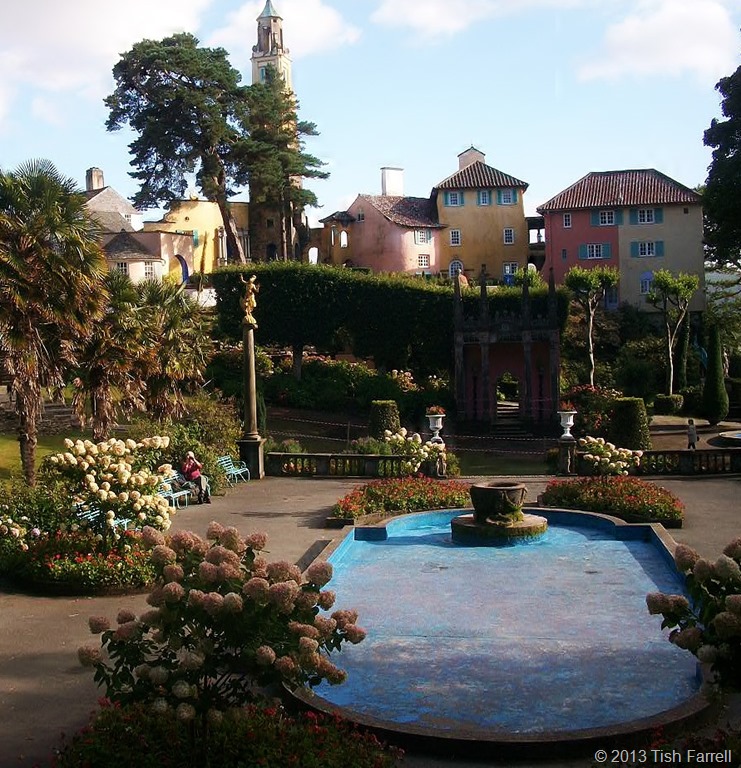
In the foreground, behind the palms, is the colonnade from a Bristol bathhouse built in 1760. Another view below.

100_4636.jpg

*

100_4661

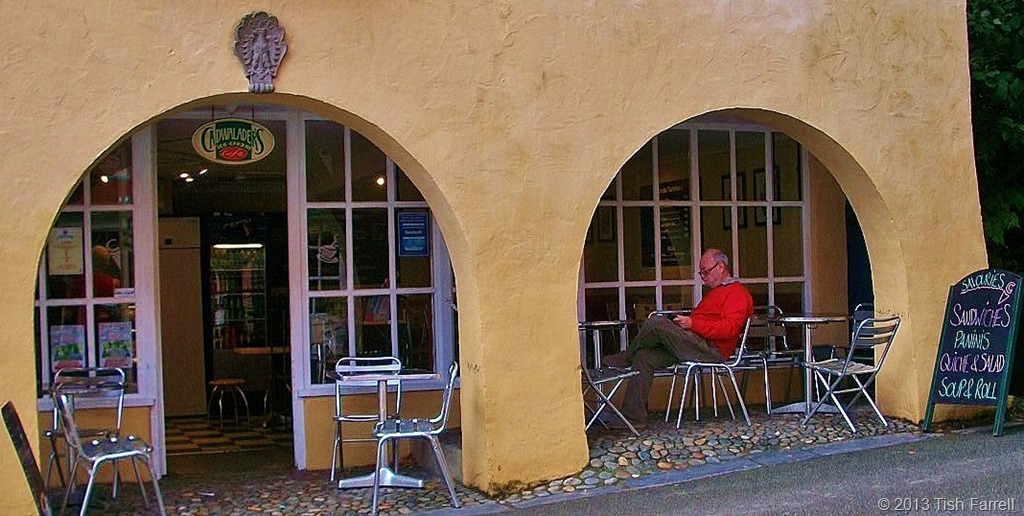
There are cafes and restaurants in the village, and cottages to let.

*

100_4666

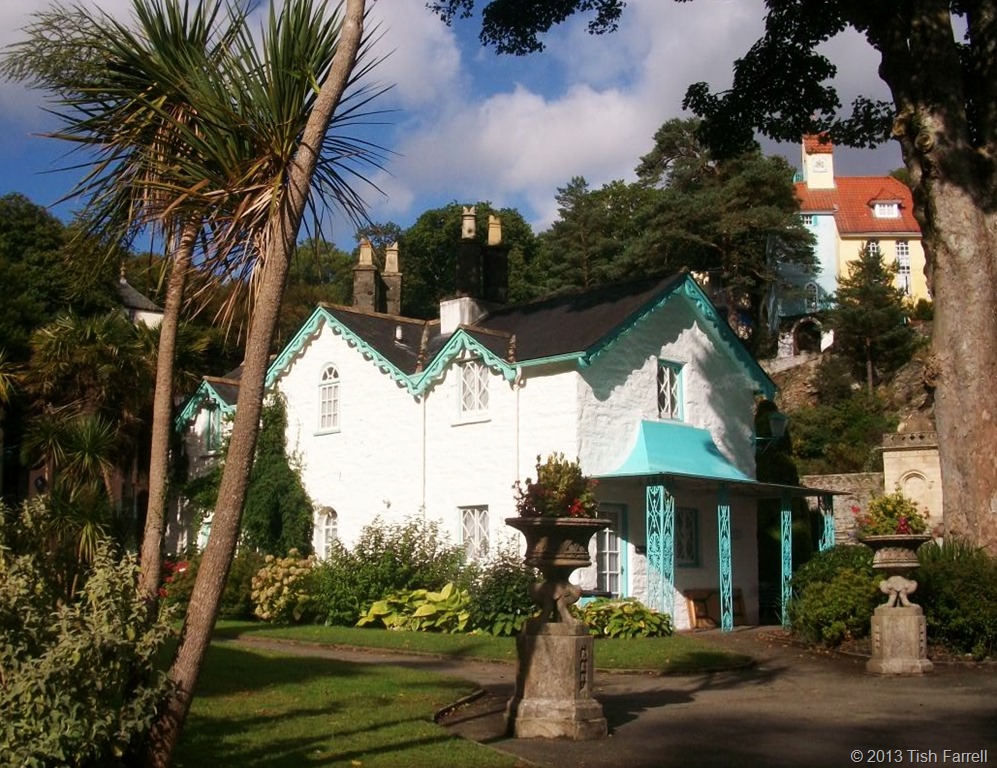
Mermaid Cottage was already on the site when Clough bought the land. It was built in the 1850s, and Clough adorned it with the canopy and added the palms for the Mediterranean look.

100_4668.jpg

*

100_4680

*

100_4667

The Hercules Gazebo, complete with cast iron mermaid panels, serves to disguise a generator.

*

100_4672

*

100_4673

*

100_4674

The Prisoner, the cult TV series of the late 1960s starring Patrick McGoohan, was filmed at Portmeirion. It put Portmeirion on the map and its association with the place is still celebrated.

*

100_4677

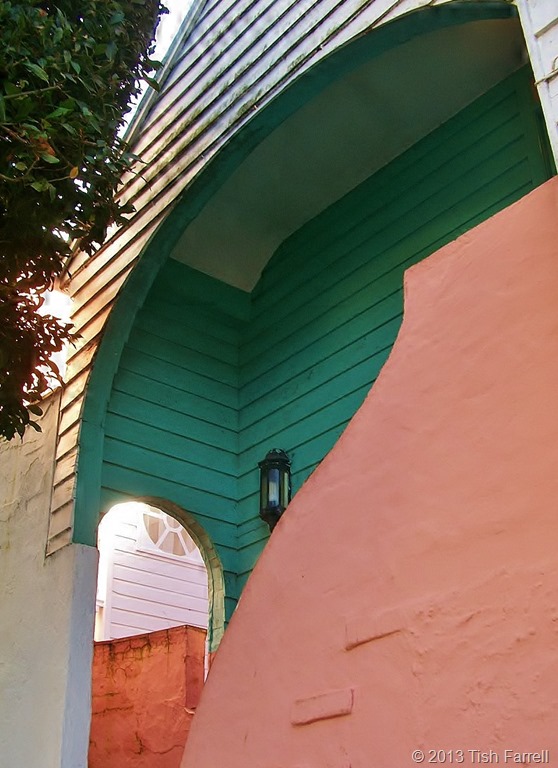
Arches at all angles.

*

100_4691

Archway to the Piazza and (below) the Piazza itself below.

100_4693

*

IMG_0670

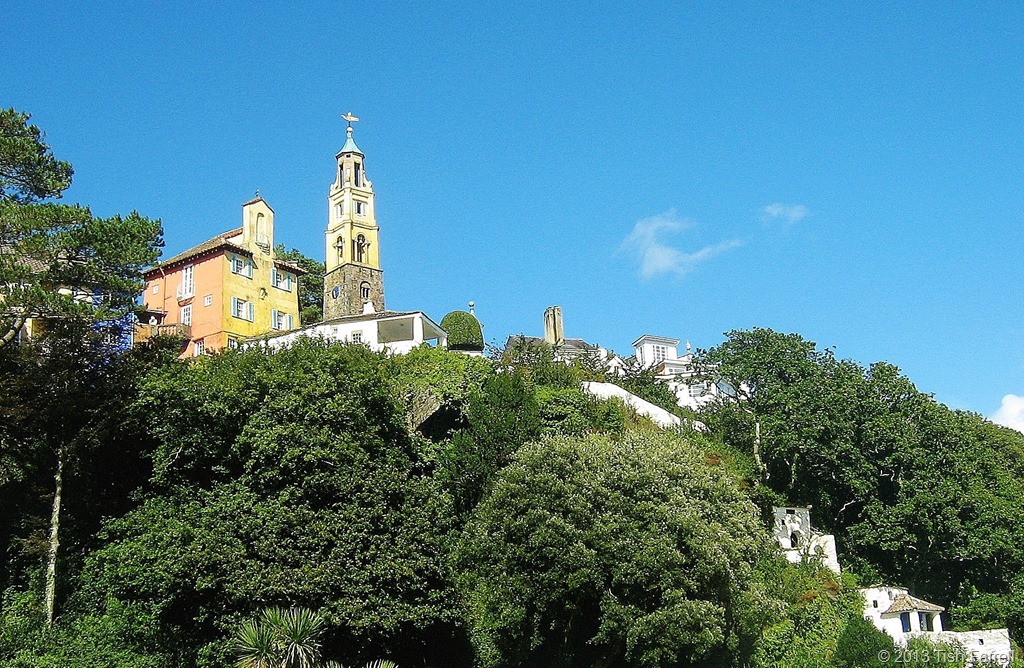
The village from the estuary.

IMG_0660

The arc of the Dwyryd Estuary taken from the esplanade at the Portmeirion Hotel

*

4363309520_fcd2edd736[1]

Clough Williams-Ellis 1883-1978  Photo: Polandeze Creative Commons

A man who lived creatively in all senses, and whose work has delighted millions.

copyright 2013 Tish Farrell

References:

http://www.portmeirion-village.com/en/visit/clough-williams-ellis/chronology/

http://www.brondanw.org/english/history/portmeirion.html

http://www.100welshheroes.com/en/biography/sircloughwilliamellis

Pattern for the Skyscraper

Weekly Photo Challenge: Pattern

100_3701

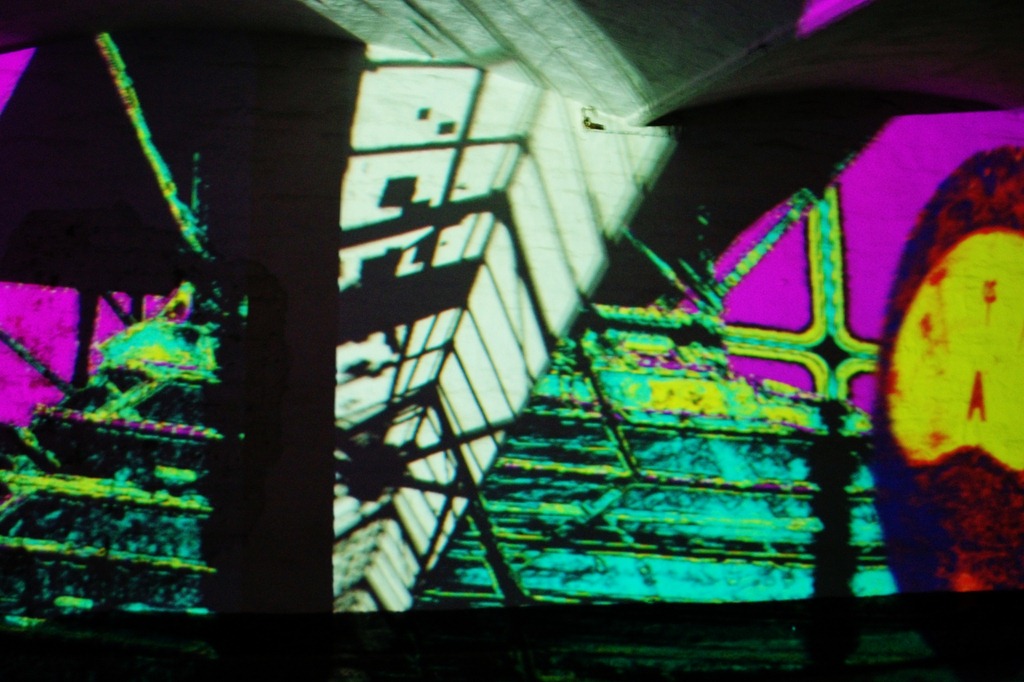
Fractured Light by Andy McKeown, Flaxmill-Maltings, Shrewsbury May 11-12 2013

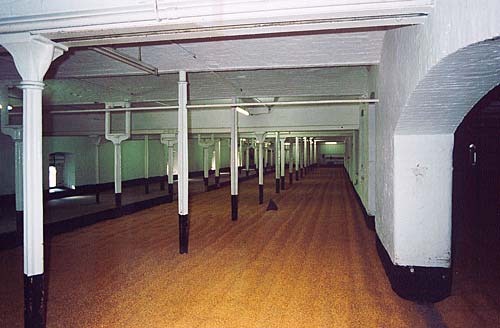
At first sight there may seem to be no connection whatsoever between Andy McKeown’s magical lightshows (Fractured Light) and the skylines of NYC, Dubai, Chicago, Hong Kong. But believe me there is. In fact there are some clues in the photo below, although they are heavily disguised by the giddy maypole effect of light streamers. Architects should spot them, though – the slender columns of cast iron.  And this is where the another kind of pattern comes in – not in the spectacle of fractured light, but in the venue. On the 11-12 May 2013 the Friends of the Flaxmill-Maltings held an open weekend so Nosy Writer and hundreds of other nosy people could look round this old industrial complex, perhaps for the last time before renovation work begins. Since the buildings have been lying derelict for decades this was something of a celebration, hence the performances by musicians, craftspeople and artists all over the complex.
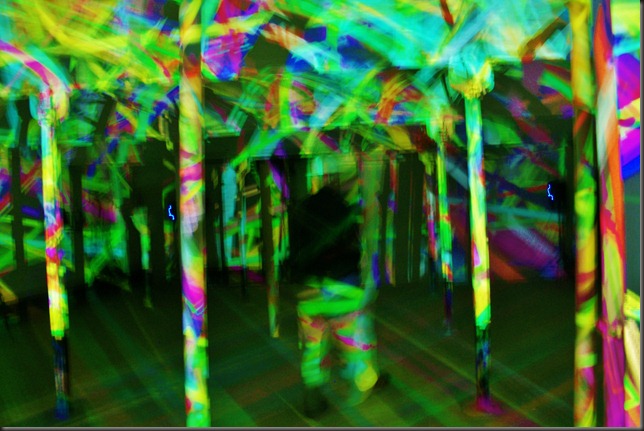
100_3688

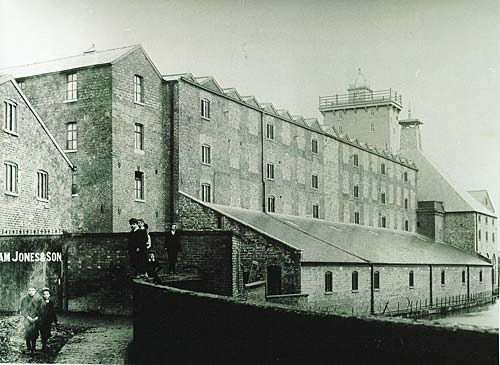
Andy McKeown’s ‘Fractured Light’ was up on the third floor of the Cross Mill, and without the entrancing light show the place would have been dank, cold and cavernous. It was originally the mill where hackling or flax dressing took place, and is part of a late eighteenth century iron-framed building – the first of its kind in the world. This is Bage’s Flax Mill in Shrewsbury, Shropshire, the place where, in 1796-7, the makings of the skyscraper began.

shropshire-uk-map[1]

Shropshire Archives

Photo: Shropshire Archives

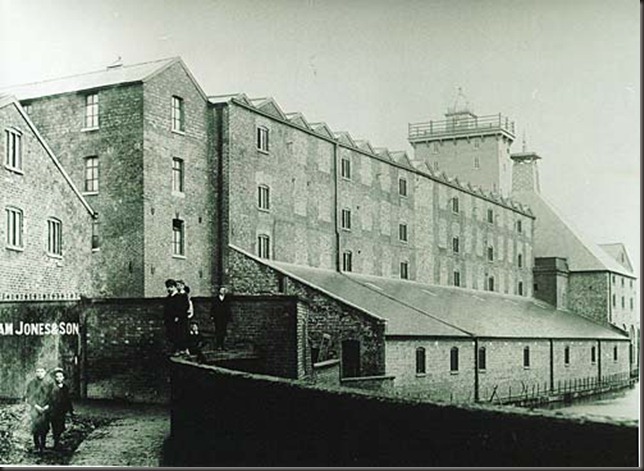
Above is the building around the end of the nineteenth century after it had been converted into a malting factory. The main five storey block was the original flax mill. And  its connection with the Manhattan skyline?

New York 214

IS THIS:

Shropshire Archives 3

…a constructional frame of iron columns and beams that ever since has allowed buildings to go upwards.

As with many great innovations, the development of iron framed buildings was prompted by disaster. In 1796, linen magnate, John Marshall and Shrewsbury businessmen, Thomas and Benjamin Benyon had suffered severe financial losses when their timber-built mill in Leeds, Yorkshire, caught fire. Such fires in textile mills were all too common. Flax and cotton dust  are highly combustible, and not only were the early mills built extensively from timber, they were also candlelit. And so when Messrs Marshall and Benyon had the opportunity to develop a new flax mill in Ditherington, Shrewsbury, a fire-resistant building was what they required.  And a good part of the answer lay in an up and coming new material – cast iron.

The late 18th century was the age of cast iron. It was the revolutionary material of choice for engineers and architects of vision. In 1781 the spectacular unveiling of the world’s first iron bridge had taken place at Coalbrookdale, a few miles downriver of Shrewsbury. It was a PR stunt of breath-taking proportions: to use this untried material in such a dramatic and highly visible  setting. But it was not all bravado. There were practical considerations too: the need to span the Severn in order to make a more convenient road link between various iron works, thus replacing a treacherous ferry crossing. Then there was show-off element of achieving this with a single arch that was tall enough to allow swift passage for the sailing barges that plied the Severn from Bristol to Shrewsbury. Usually these large cargo boats had to lower their masts to go under the Severn’s many stone bridges.

At the time, then, the Iron Bridge was a new world wonder and a magnet for celebrity visitors. Coalbrookdale ironmaster, Abraham Darby III, was the man making his pitch for the utility of cast iron, egged on by business associate John ‘Iron Mad’ Wilkinson whose works across the river from Coalbrookdale were being served by the new bridge.   When in 1795, the Iron Bridge was the only bridge to survive unscathed the massive river floods of 1795, it more than sparked the interest of Thomas Telford, ‘Father of Civil Engineering’. At the time he was also in Shropshire, working as County Surveyor. He went on to devise his own astonishing uses for cast iron, not least the Pontcyssylte Aqueduct near Llangollen in North Wales.

But if all this constructional enterprise in iron seems a bit old hat to us now, then perhaps we should try thinking of the River Severn in Shropshire as the Silicon Valley of its day. Cast iron helped drive the Industrial Revolution in all its component parts; it brought us to where we are today. 

The world’s first Iron Bridge, built by Abraham Darby III and opened in 1781. Today, it is a world heritage site and still spans the River Severn in Ironbridge, Shropshire.

While technological developments were proceeding in Shropshire, the possibilities of using iron in industrial buildings were also being explored by Derbyshire cotton spinner and architect William Strutt. He was particularly concerned to find a way to make cotton mills more fire resistant. To this end, he developed the shallow arched brick ceilings with tiled and plaster floors that his friend and fellow Derbyshire man, Charles Bage  was later to use in the Ditherington Flax Mill. He also used sheet iron to encase the mills’ timber beams to inhibit fire damage. All these measures he discussed by letter with Bage who shared his interests. And in 1776 Bage, just happened to be a wine merchant and surveyor, working in Shrewsbury.

And so as the old A-Team phrase would have it, here we have a good plan coming together. Charles Bage was engaged by Marshall and the Benyon Brothers to design their flax mill. There on the banks of the Shrewsbury Canal that Thomas Telford was just then completing, he would create a quite novel construction in iron, and since this was pioneering stuff, he decided to take nothing for granted. He set about undertaking a series of experiments to test the structural properties and strength of iron, and so established the modern discipline of structural engineering. The papers with his calculations still survive.

The Ditherington Flax Mill, then,  was the first mill to be built from brick and iron. It was this mode of construction that led the way for the development of multi-storey, fire-resistant buildings, and whose techniques were later  adapted for the rebuilding of Chicago after the Great Fire of 1871.

100_3717

Cast iron pillar on the ground floor of the flax mill warehouse.

But this is where the story of entrepreneurial enterprise and invention takes a nasty turn. We are, after all, also talking about the growth of the factory and and the enslaving of human beings to the demands of machines and mill owners. In the 1840s there were 800 employees at Ditherington and, as time went on, more than half of the workers were under twenty years old, with some as young as seven. These were the apprentices, mostly orphans and illegitimate children despatched from parish Work Houses in order to learn a trade. At Ditherington, the conditions were reputed to be better than most mills: accommodation in the Apprentice House was strictly segregated, and the welfare and moral upbringing was overseen by a manager. Even so, working hours were long and life was tough. There were cruel and vindictive overseers who beat the children for the slightest mistake, or dipped them head first into a water cistern if they dozed off at their work.  

In 1832 there was a House of Commons enquiry into factory working conditions and Ditherington workers gave evidence. One Samuel Downe, born in Shrewsbury in 1804, told the Committee that he began work at the mill from the age of ten. Of his working hours he says:

       “We used to generally begin at five o’clock in the morning till eight at night.”

And when he was asked if he had been beaten, he said that once he had been beaten so hard that he could not lie on his back to sleep. The reason given for the brutality was  this:

      “I had never been in a mill where there was machinery, and it was winter time, and we worked by gas-light, and I could not catch the revolutions of the machinery to take the tow out of the hackles; it requires some practice, and I was timid at it.”

1024px-Marshall's_flax-mill,_Holbeck,_Leeds_-_interior_-_c.1800[1]

Scene from one of John Marshall’s flax  mills in Leeds c.1800, much as his Ditherington Mill would have looked. (Copyright expired)

Despite such indictments, John Marshall saw himself as a benign employer. He believed that treating his workforce well meant they would work harder and yield greater profit. He thus provided ventilation and heating in the work rooms, and in time added baths and changing rooms. Also in 1834 when there were 92 child employees, they were by then allowed two two-hour sessions, morning and afternoon, for lessons.

Even so, the processing of flax on this vast scale, was a dusty, unpleasant business. The crop had to be dried, then de-seeded by threshing and combing. Then it was left to partially rot for up to three weeks so the stems could be peeled away from the useful fibre. Next this fibre was dried, separated and combed by machine and finally twisted into yarn on  spinning machines.

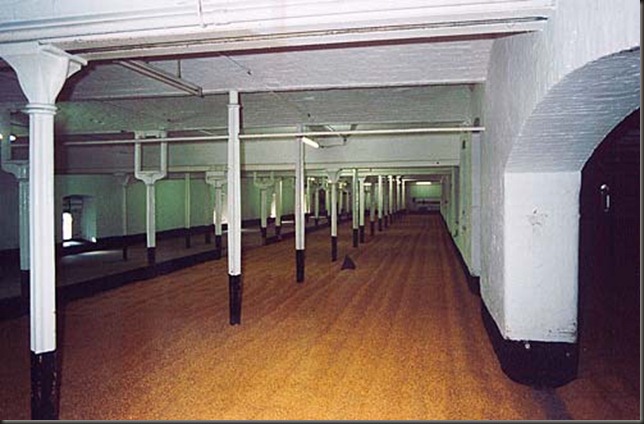
Throughout the 18th century, linen was a hugely important textile. In Shrewsbury flax yarn production took over from the dwindling wool industry, employing many of its skilled workers. During the Napoleonic Wars (1799-1815) Ditherington was supplying the yarn to make Britain’s military uniforms. But with successive generations of owners, and doubtless the growth of the Lancashire cotton industry, the mill began to fail, finally closing in 1886. Some ten years later it had a new lease of life. The five-storey building was converted into the Maltings, making malt for the brewing industry. These works finally  closed 1987, and since then this extraordinary building has been left to fall apart, despite being a Grade I listed building.

294451593_fd23d0623b_z[1]

Photo: Keith 1999 Creative Commons

This, though, is hopefully about to change. Finally, on the verge of collapse, and after much campaigning by the Friends of Flaxmill-Maltings, a partnership of English Heritage and Shropshire Council has put in a bid for funding from the Heritage Lottery Fund. Their plans include a massive regeneration scheme, bringing environmentally friendly office and workshop space to a currently depressed part of Shrewsbury. Perhaps at last this landmark structure will have a bright new existence, and just as Andy McKeown’s light show amazed and energized the Open Day visitors, infuse its occupants with life-enhancing potential, banishing the ghosts of dismal exploitation. 

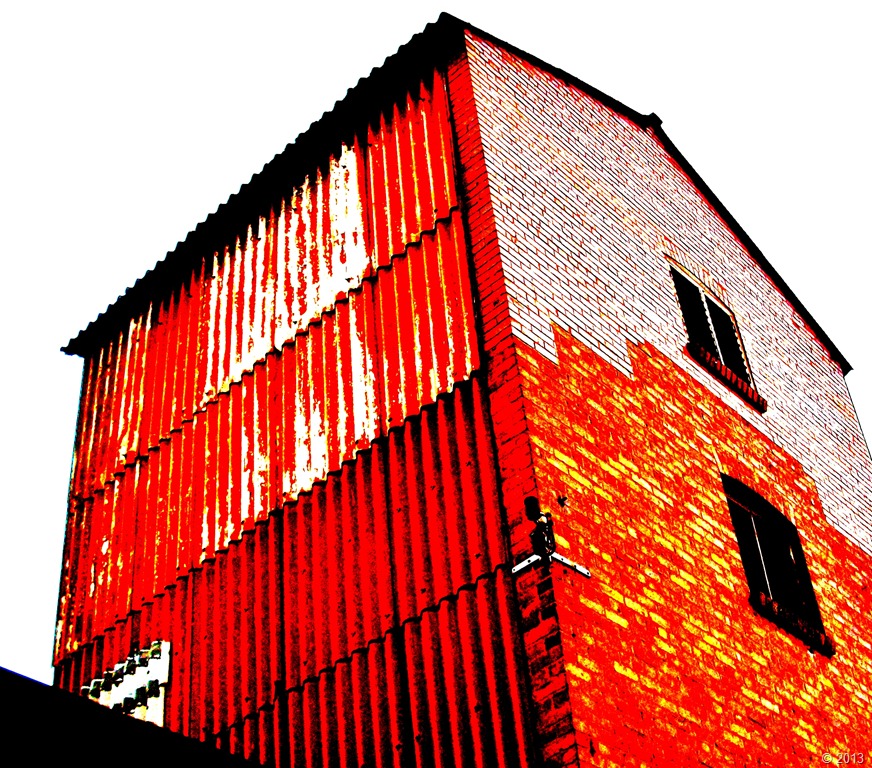
In the meantime, Nosy Writer, like many others, is rather keen on scenes of industrial decay. So here are a few shots of the Flax Mill-Maltings – pattern of bricks, timber and iron.

100_3728

100_3712

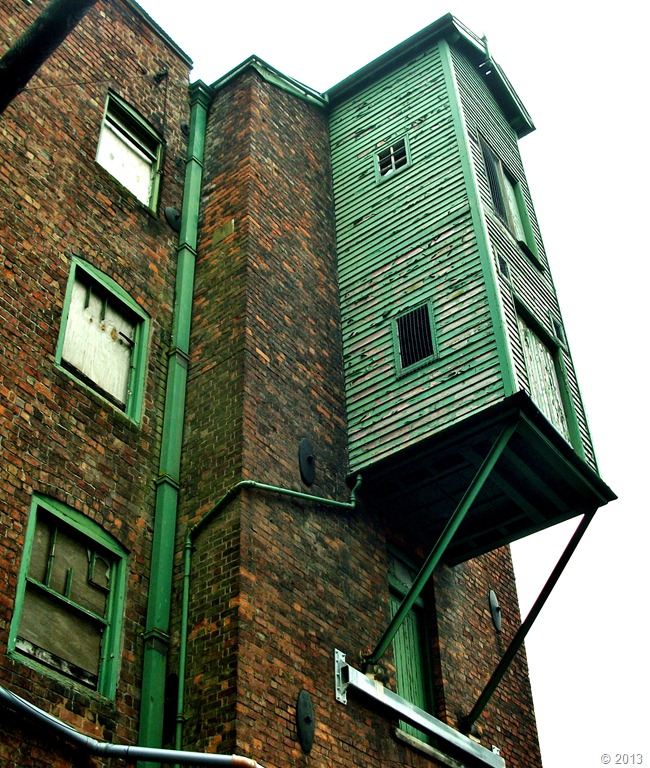
The timber hoist tower was added during the Maltings phase and the ornamental capping put up to celebrate Queen Victoria’s Diamond Jubilee in 1897.
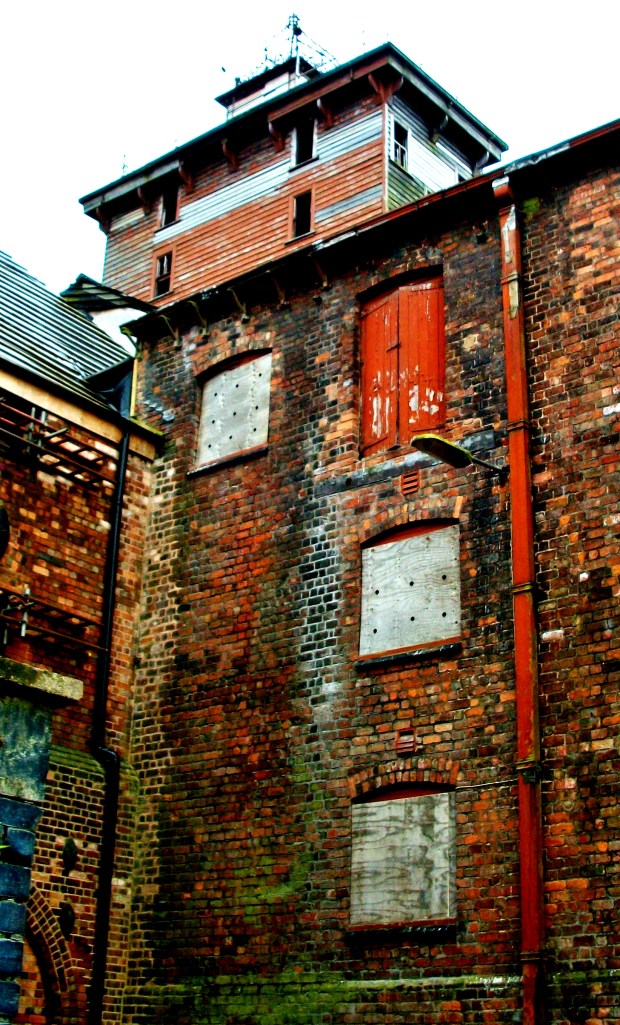
100_3719

100_3706 - Copy (2)

For more info about the Flaxmill project: http://flaxmillshrewsbury.wordpress.com/

© 2013 Tish Farrell

Weekly Photo Challenge: Colour

kitchen poster 100_3488

Christmas Kitchen

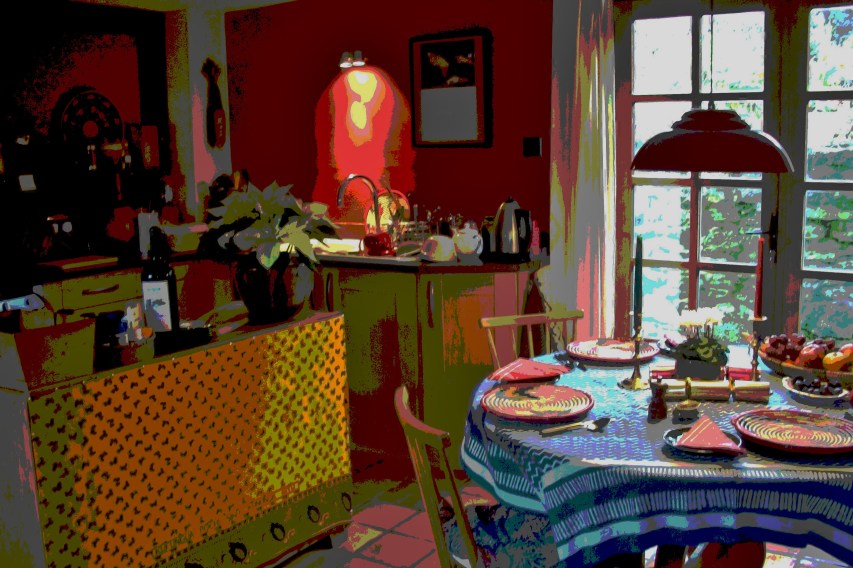
It’s interesting, not to say cheering, when you find a way to see the familiar with fresh eyes, or by accident  tweak the mediocre effort and create something  new. This, after all, is meant to be the artist’s way, whatever medium they choose to work in. It’s how I spend my days when I’m not digging my allotment or fanning the slow flame of local civic activism. So here’s a snap of my kitchen where my last post’s tulips hang, but rendered in ‘poster effect’. I think it’s rather intriguing.

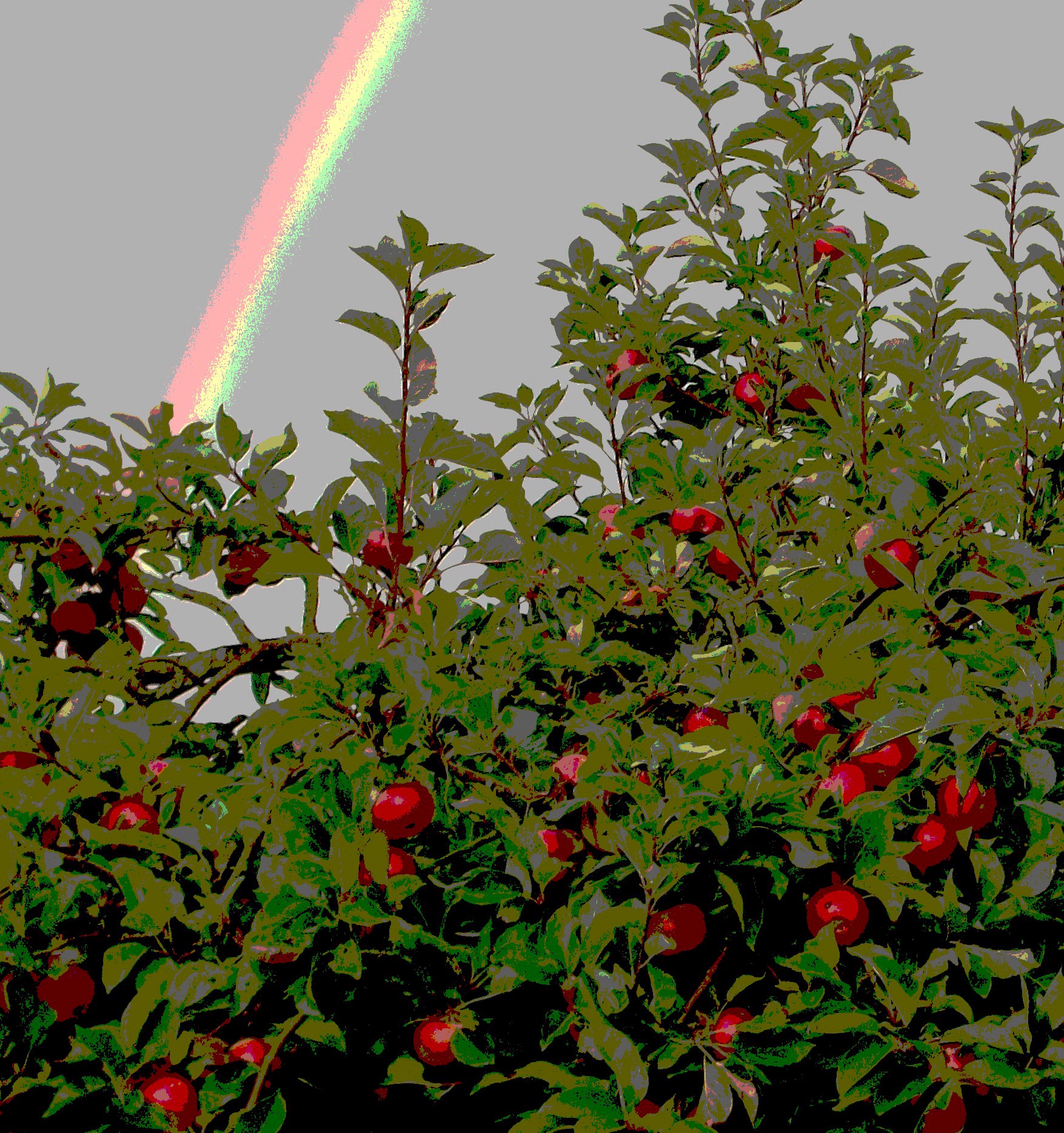
And since I mentioned my allotment, here’s the communal apple tree, which I call the Garden of Eden tree because of its very red apples, complete with rainbow – also in poster effect.

apple tree poster 2 100_2087

Weekly Photo Challenge: COLOUR

100_3567

Fruit Bowl by Penny Rees

Last week I posted a photo of tulips in my snowy garden. Now here are the tulips in my kitchen. This painting shouts undiluted joy to me; tulips that want to party. It was painted by Herefordshire artist Penny Rees and I love it. It hangs beside our dining table and encourages frivolity even on a Monday night.

100_3415

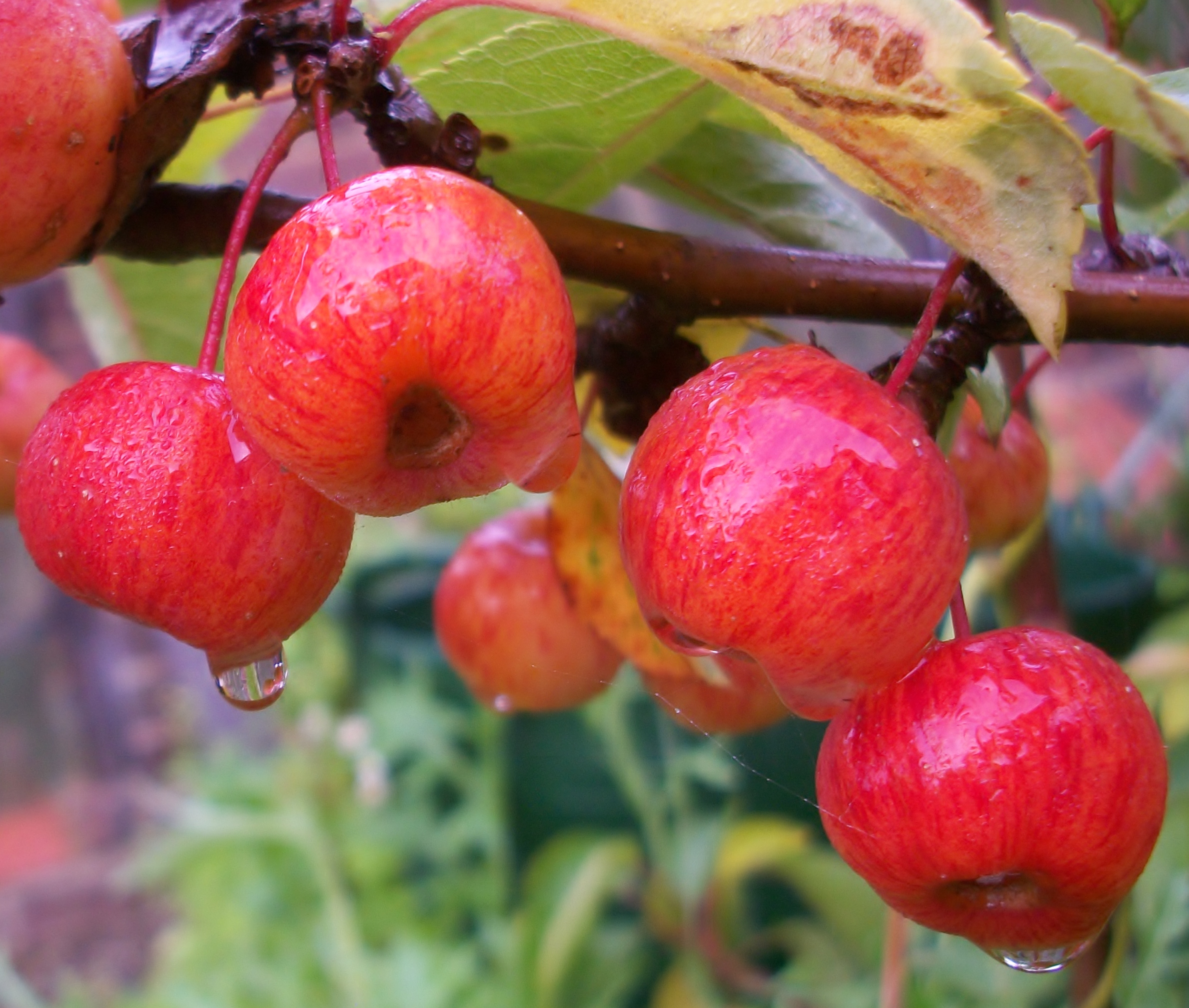
And now you’ve seen my tulips, here are my crab apples: another view from my kitchen taken back in the autumn. Red hot colours for a freezing April in Much Wenlock

…of a domestic goddess

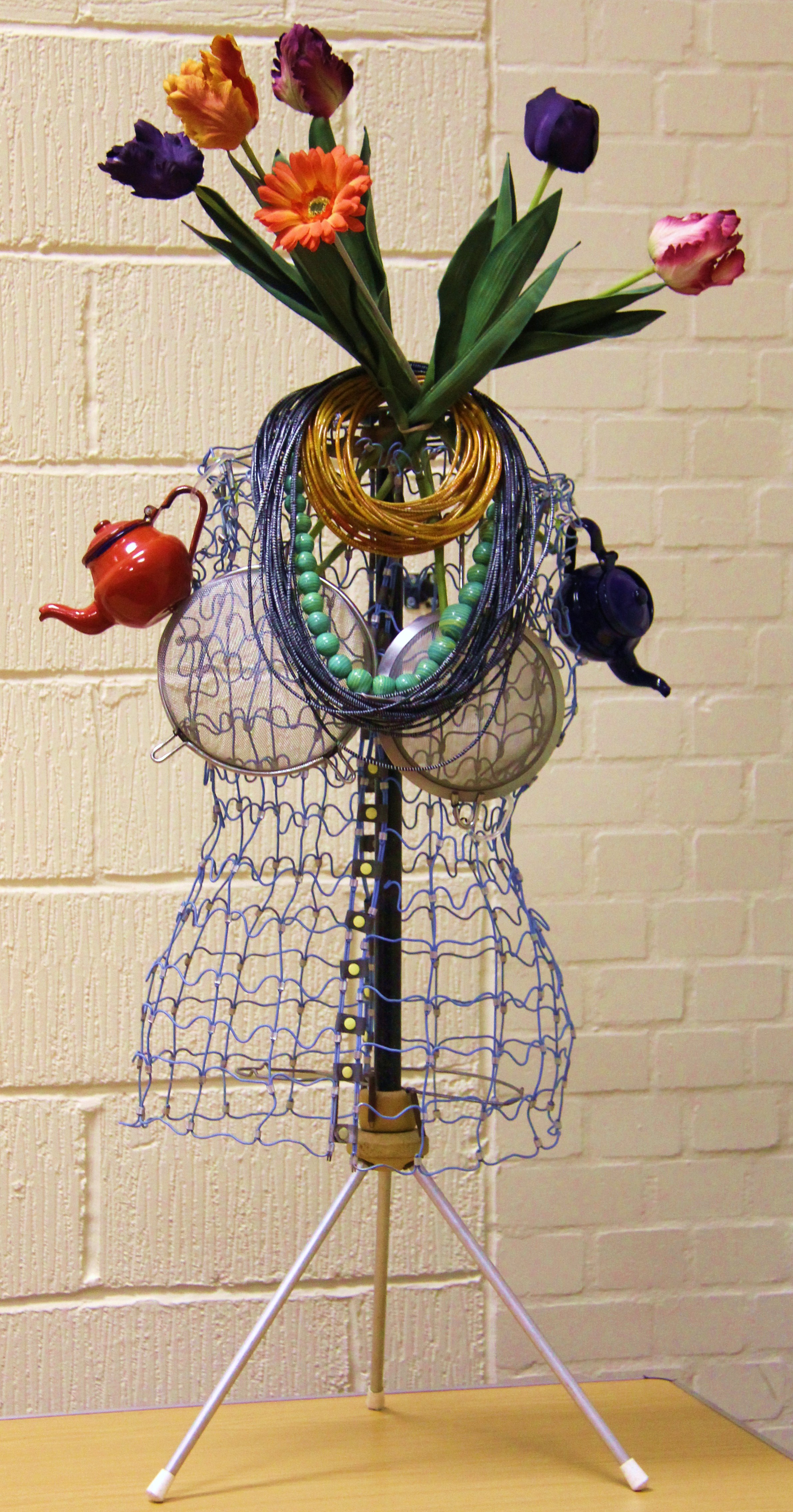
Domestic Goddess by Wren Miller

Domestic Goddess by Wren Miller

Women (men too if you like), why not wear our sieves with pride? Who knows what forms of household transcendence it could lead to.  In fact it is clear to me that this particular  manifestation of the Domestic Goddess (Wren Miller’s tribute to International Women’s Day) has much to teach us. But more of that in a moment. First a little about her creator, fellow Shropshire-dweller and eco artist, Wren Miller.  Wren is a specialist in large-scale sculptures (i.e. bigger than this one which is a domestic piece in more ways that one). Her materials are found things, or donated possessions such as books or even old trainers. They are not altered in any way, but ‘compiled’ into witty and spirit-raising structures somewhere on a landscape near you (if you’re lucky). She also creates art works in Mali, West Africa. The resultant creations are usually temporary, with the aim of sending the component parts on to a good home. For instance, Wren’s children’s book sculptures have later been shipped off to Mali where many children would otherwise never see a story book, let alone get to hold one in their own two hands. Through her ‘Send a Book to Mali’ scheme she collects books in both English and French. For more about Wren and her creations go to: http://www.wrenmillerart.co.uk/

Now to get back to to why Wren’s domestic goddess so took my fancy. Well quite apart from the fact she is beautiful and made me laugh, which are two good reasons for sharing her, it seemed to me that there were  several points of congruence with my ‘womanplace’ posts.  As is often the way with goddesses, this one gave me a whole new slant on things. She made me look at what I had written, but this time in relation to my own usually negative attitudes towards housework. For isn’t it an irony that in the industrialised world where we have more labour-saving, domestic gadgets than time or spare hands to use them, we generally consider doing housework an act of drudgery that makes us both ratty and resentful? We see the whole thing as an imposition that denies us the leisure time we believe we are owed.  So when we see women in non-technologised rural communities filling every waking hour with heavy manual labour we are appalled. We identify with their plight, in our minds multiplying our own sense of oppression several times over. It is a concerned/outraged/kindly response: the  ‘why should they still live like that?’

Now this is in no way to deny that millions of rural women work grindingly hard. But along with their labours they also take great pride in their domestic practices and skills. This may seem perverse to many of us, but an African woman might well be offended if a man offered to carry her heavy load of firewood; she might take it as a slight that she is not capable of doing her work properly. Indeed research has shown that African women carry loads on their heads that should not, at least in theory, be physically possible in relation to the deemed weight-bearing capacity of their spinal columns and their often poor levels of nutrition. Yet in the face of all the scientific data that tell them they can’t, carry those loads they do.

Here’s another instance. By our standards we might think it unquestionably good that village women are saved long trips to fetch water from the river by  constructing a well near their homes. But again, this might not be wholly true. A good friend in development agriculture once told me how, in a village where he worked, the women were very put out by the provision of a new well. It meant they could no longer justify spending hours away from home, time they spent meaningfully with other women as they drew water, or did the washing, or bathed their children. How could they discuss all the personal matters they usually discussed, and at the length they discussed them, in the middle of the village with all the men around? All of which boils down to being careful how we think other people’s problems can best be fixed.

Of course once we realise this, there is also a possible payoff, at least for us, the housework haters. In fact we could well learn something of great utility from the women we feel sorry for. It’s obvious really, but if we honour the fact of doing our ironing in the way a Maasai woman honours the building and maintainence of her home, or take pride in the hoovering of carpets in the way a Kikuyu farmwife scrupulously sweeps her compound, we might well find ourselves on the path to domestic deification; at the very least we’d feel happier in the doing of such work: ‘our day’s career’ as Faith Waithera says in my Power-play poem (…of womanplace). So as I said at the beginning, let’s wear our sieves with pride, but before I go here’s another image of transcendent womanhood:

Maasai womanphoto: Creative Commons: javic (www.flickr.com/photos/javic)

Maasai woman
photo: Creative Commons: javic (www.flickr.com/photos/javic)

text: copyright Tish Farrell 2013