
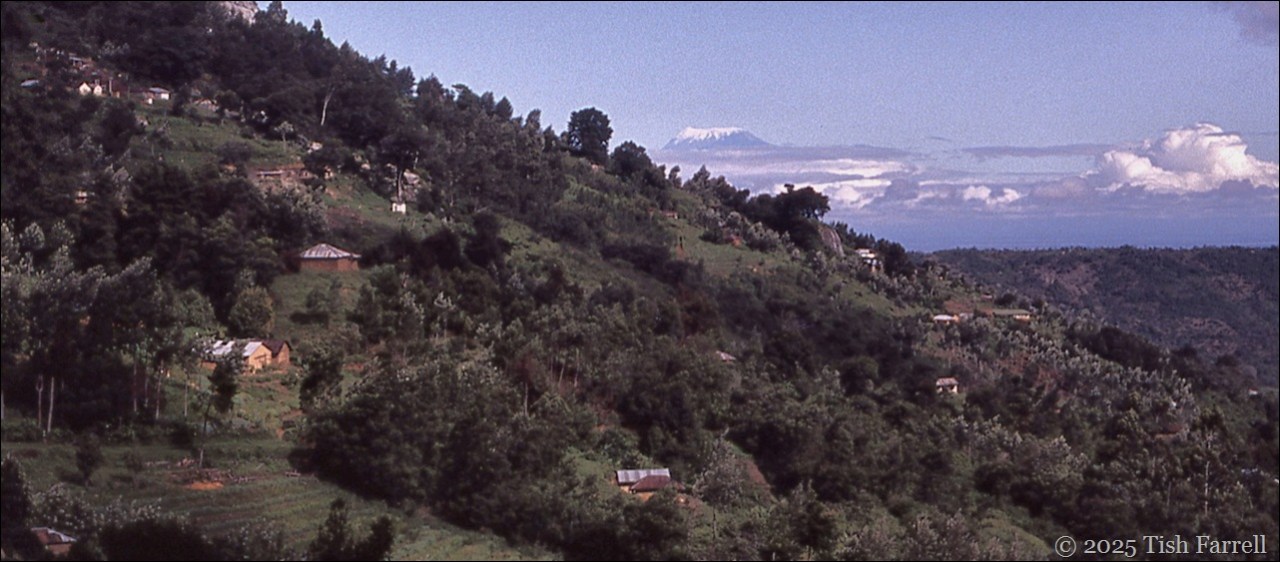
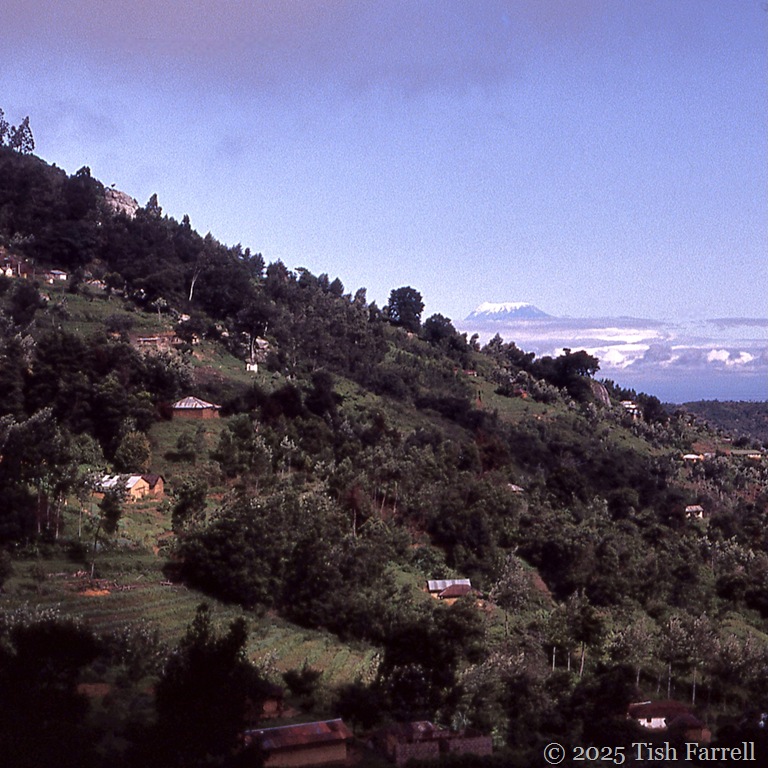
We were up in the Taita Hills. It was the final phase of the Larger Grain Borer (LGB)project (see previous post). Graham was checking on the on-farm release of predator beetles, Teretriosoma nigrescens (TN). There were high hopes that TN would be a viable control for LGB, a voracious (and imported) pest in grain stores. (In the project’s trial stores you could actually hear the gathered tiny entities grinding through maize cobs, one of Kenya’s essential food crops being turned to dust).
I was along for the ride. And what a ride it was up from the hot plains: hairpin bends and a rapid climb through 1500 metres, verges bursting with wild flowers – black-eyed Susan, wild hibiscus, morning glory, goats grazing, hillside farms steeply terraced, the scattered plots of maize and banana, the cooling presence of cypress forest. Everywhere along the road people walking, transporting something; jerrycans of cooking oil, sacks of maize flour, women hauling firewood, bundles of sugar cane, mamas with infants.
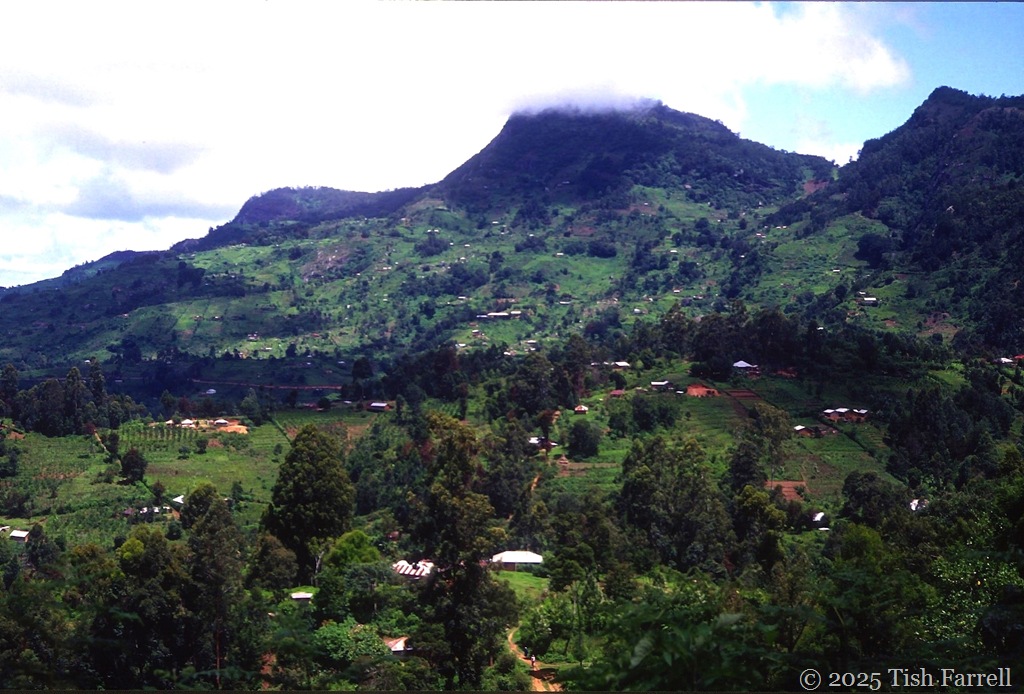
The Taita Hills comprise three massifs formed during the Precambrian era – i.e. between 650 and 500 million years ago. The peaks range from 700 m to 2,208 meters above sea level, and are covered with remnant cloud forest, which also has very ancient origins. The land is mineral rich and highly fertile. The flora and fauna include species endemic only to these hills, butterflies and orchids among them.
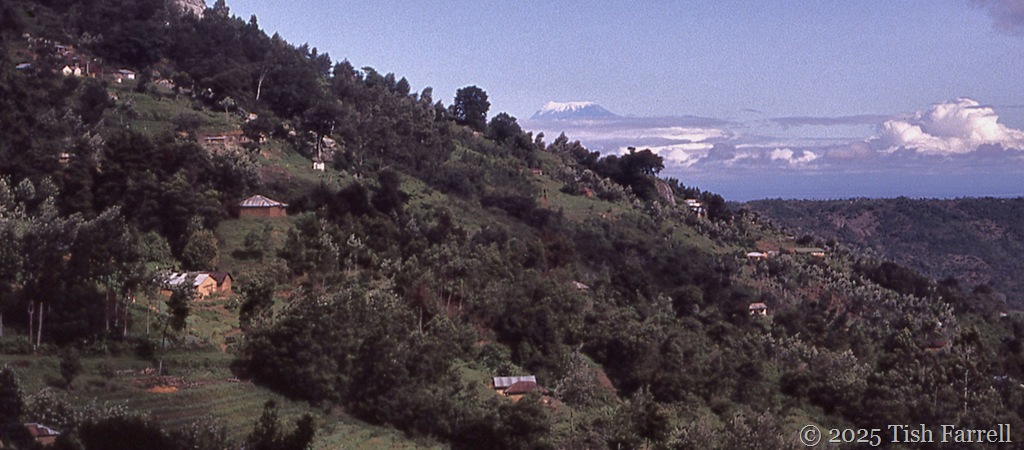
It is a landscape that scarcely fits the usual visions people may have of Kenya. And on top of that, if you choose your spot, there can be moments there when Kilimanjaro (just over the border in Tanzania) deigns to show itself. It is a capricious mountain, coming and going in a matter of seconds, dissolving impossibly into a blue and cloudless sky. It changes size too. Some days it can appear huge, shimmering in the sky with all the substance of a giant soap bubble; other times, as in the photo, it is more discreet. But however one sees it, it changes the day. The nervous system fizzes from head to toe: we’ve seen the mountain! We have!

What a sight!
It was, Sue.
😊
I can feel The passion and emotion of the moment you see the mountain shining through this post Tish. Truly a red letter day.
Thank you, Pauline, for that very lovely comment.
A red letter day indeed! I love the sound of that drive up into the hills, and the sight of the mountain is marvellous 😲
Thanks, Sarah.
Thank you for describing the beauty you drove through that day Tish, ending with sighting the mountain. Truly unforgettable.
There is so much more to Africa than we know..So.eday maybe we will all know
A continent of huge variability, Beverly.
So happy you enjoyed this, Anne.
😍
A lucky sighting, Tish! I remember looking across at Pico, in the Azores, playing the same kind of game. Wonderful when the cloud rolls away xx
Yes, mountain spotting can become a bit addictive.
What a thrillig jourey. So much to take in, so much novelty. No wonder you can remember it well.
It was a lovely spot. Kenya has some good highland spots.
More African beauty. I love the way you describe the journey into the hills
And the icing on the cake – or the snow on the mountain! No wonder this has stuck in your memory.
Thanks so much for that comment, Jude. There’s a good tarmac road up the mountain now, but the landscape hasn’t changed. Not so many folks walking. More lads on little motorcycles. It’s amazing how much safari-ing one can do on YouTube 🙂
I love the perspective in that first shot. A red-letter day indeed!
Thanks, Janet.
What an exciting adventure! Thanks for taking us along!
Thanks for coming along, Beth.
Such a journey and what a magnificent retelling.
Thank you, Flavia
absolutely stunning – wow
🙂 🙂 🙂