“The Red Elephants Of Tsavo East”…

img519sq

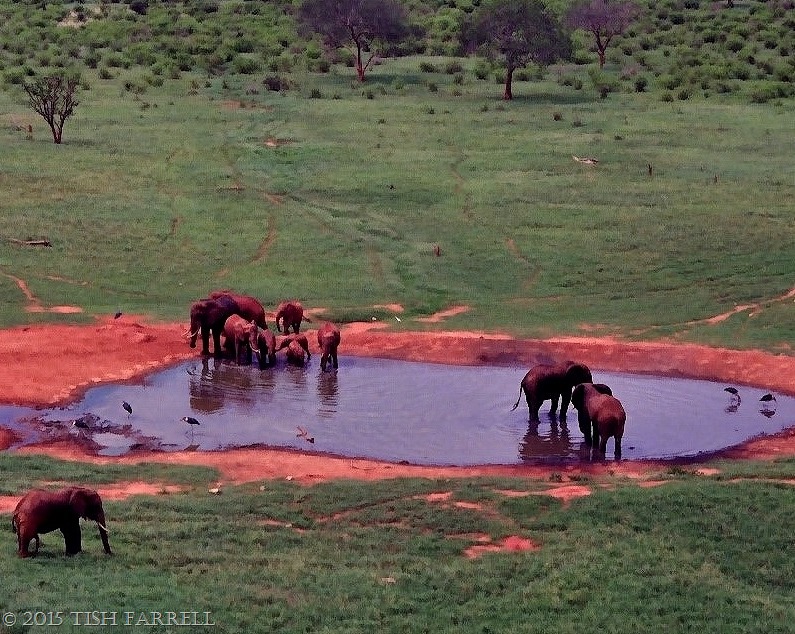
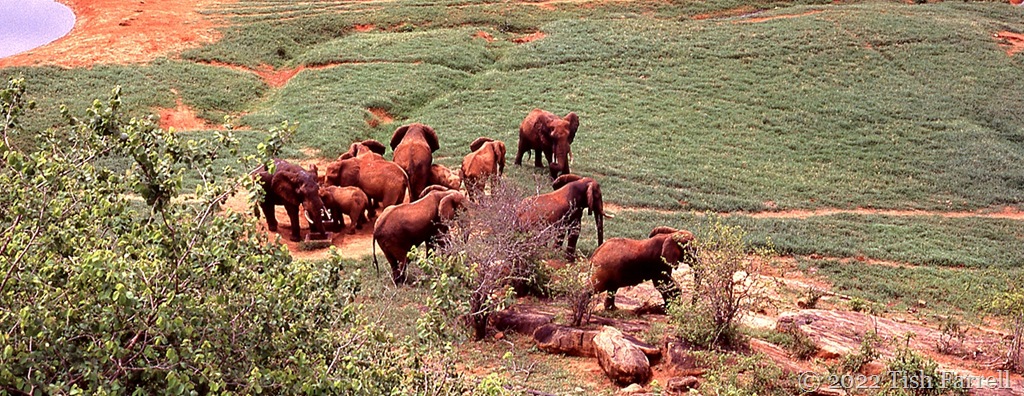
… so called because of their habit of dousing themselves with Tsavo’s iron-rich soil.

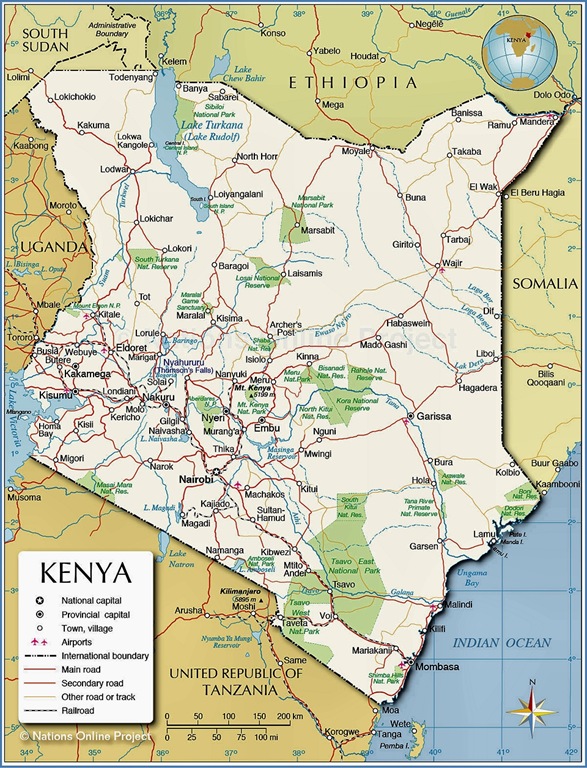
Tsavo East is one the largest parks in the world, covering 5,000 square miles. Together with its neighbour, Tsavo West, on the other side of the Nairobi-Mombasa highway, this adds up to nearly 9,000 square miles of designated wildlife reserve.

The map gives little clue of Tsavo East’s vast wilderness. The solid drawn lines of the designated parks suggest containment, but this is not the case. While areas near human settlement maybe fenced, elsewhere the boundaries are largely permeable. In 1994 the then director of Kenya Wildlife Service, Dr. David Western, famously stated that there was more wildlife outside the parks than in them. He also believed in protecting the free movement of animals, and especially in the one small park whose access was increasingly under threat from human settlement, i.e. Nairobi’s city park. This is still an ongoing issue, the one-time corridor from the southerly plains all but closed.
kenya_map best

The business of maintaining wildlife areas is fraught with problems. Elephants may invade farms and destroy a season’s food crops in a few moments. In times of drought, starving farmers may resort to age-old habits of hunting game for food. It is also a fact that elephants can kill people if they feel threatened. Lions and buffalo and crocodiles kill people too. Then there is ivory poaching, small-scale and big-crime funded. The latter comes with highly armed gangs with automatic weapons. So it’s hats off to wildlife rangers who try to do their best by all concerned, and may risk their own lives in the process.

I don’t seem to have many photos from our stay in Tsavo East. I remember the weather was mostly gloomy and driving along dirt tracks for hours without seeing a thing. But the photos at this site are well worth a look.
img519header 2


#SimplyRed Day 17

Copper elephants, copper land

221

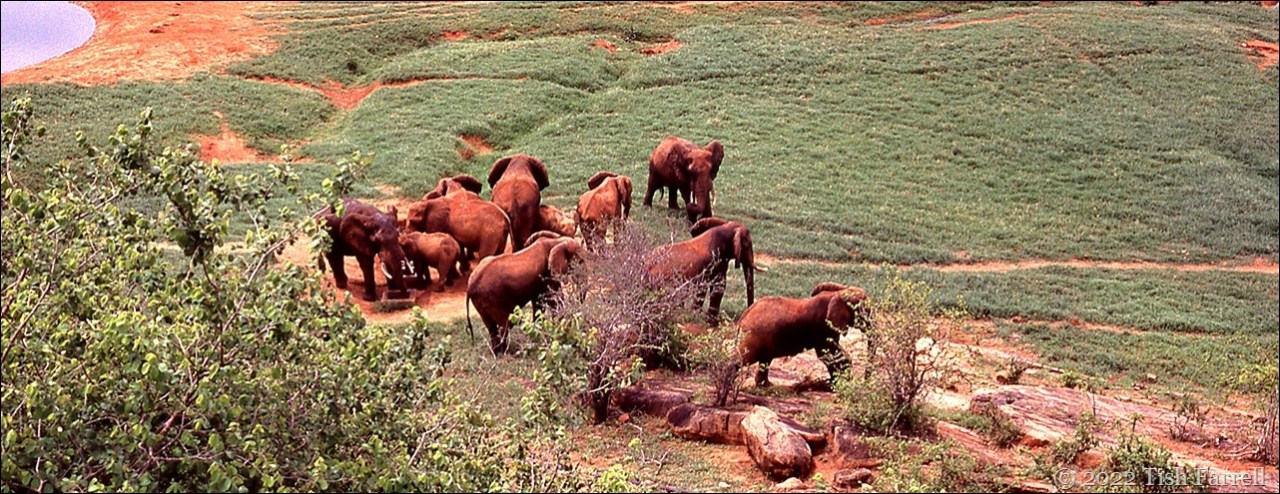
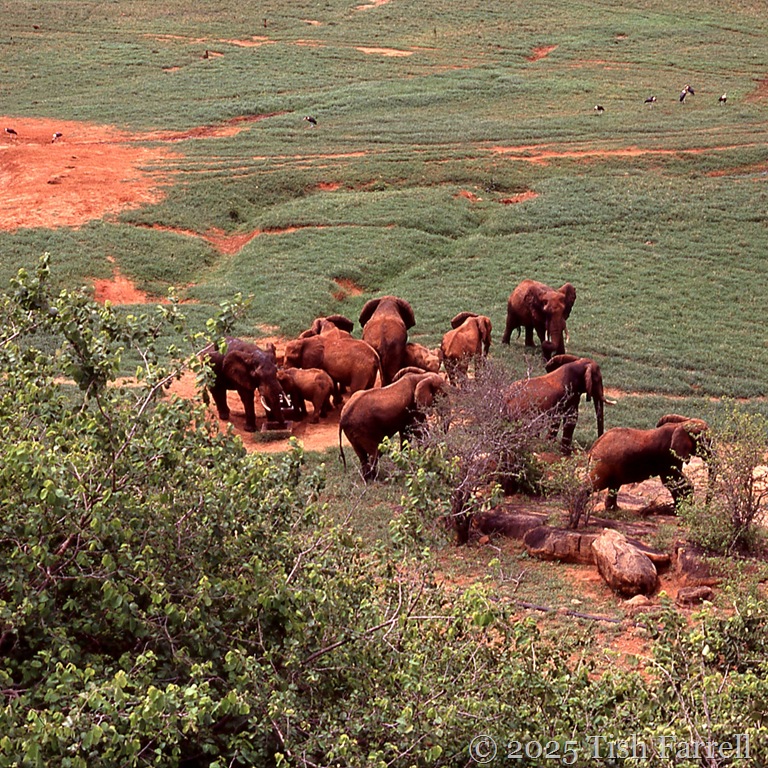
It’s a case of red elephants, then, in Kenya’s Tsavo East National Park. These red Tsavo soils are famous for their brilliance. They smell of red pepper too. But for the elephants it’s more about keeping their skins in good condition. Talk about glowing complexions.

222


For more of my Africa stories and more copper landscapes please see the backlist at:  https://tishfarrell.com/category/africa/


Jennifer Nichole Wells One Word Photo Challenge: copper

Thursday’s Special ~ Take Two Elephants

225

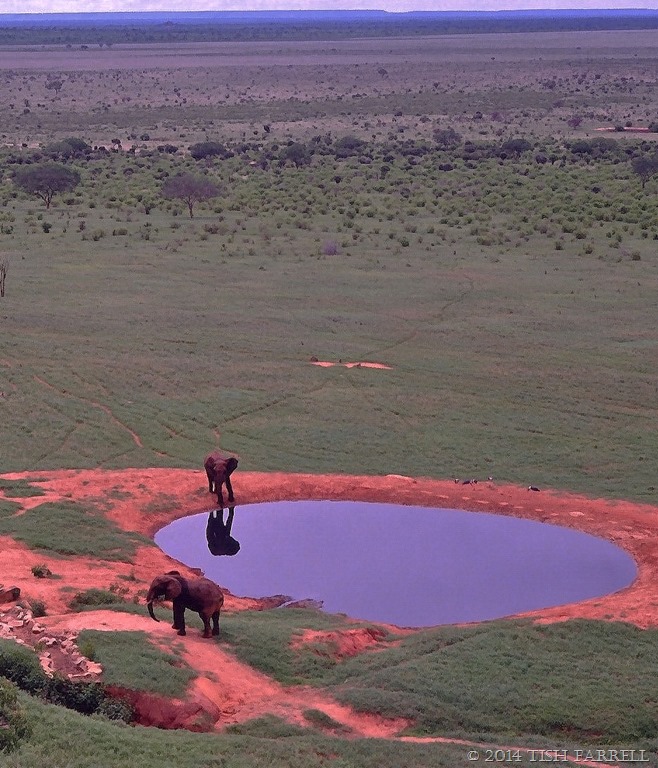
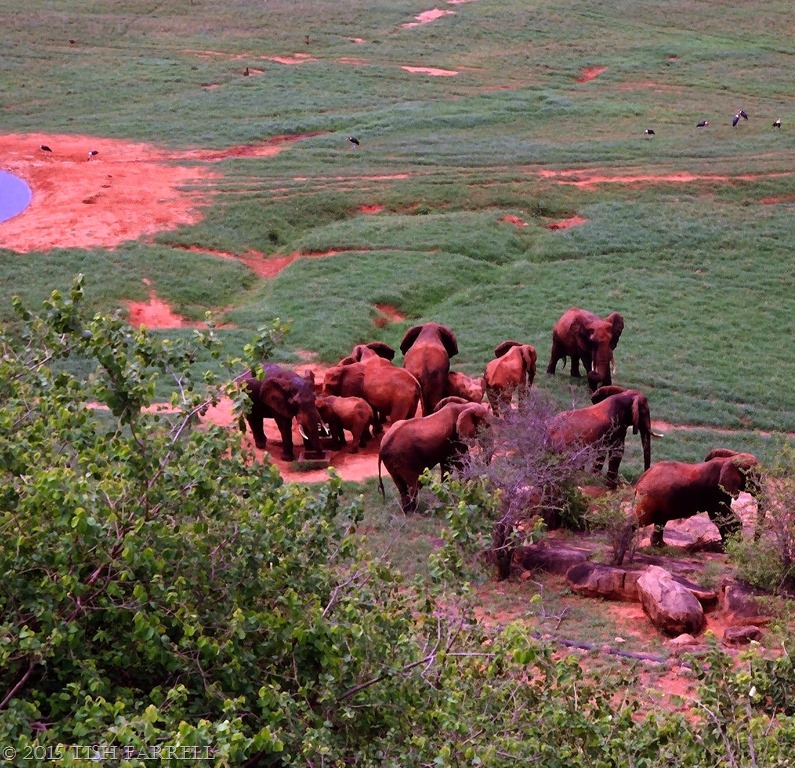
This week at Paula’s Thursday’s Special/Photo 101 the theme is ‘double’. I could have chosen several more striking close-ups of elephants and lions, but this shot is a double-take on double. I like that silhouette in the still pool. Also it is perhaps a more realistic view of how one most often sees wildlife on an East African safari: i.e. it’s usually too far away for a good photo, or else there’s a bush in the way. You can also drive round game parks for many hours and spot absolutely nothing – not even a bird.

This shot was taken from the terrace at the safari lodge in Kenya’s Tsavo East National Park, and such places can offer the best sightings, especially at dawn and sundown. Here you also get a good eyeful of Tsavo’s famously red earth. You can see, too, the web of game trails leading to the pool, and at the very top of the photo, part of the Yatta Plateau. This is a 180 mile long, single finger of lava that runs south east across Kenya from Thika near Nairobi.

Tsavo East  is a vast game reserve (4,500 square miles), mostly thorn scrub and much of it closed to visitors due to incursions by Somali bandits and poachers. Its elephant herds, however, are famous, though frequently under threat. For some truly fantastic images of them, accompanied by expert commentary please fly over to wildlife filmmaker, Mark Deeble’s blog. You will not be disappointed.