November Gold At Our Iron Age Hillfort

IMG_4250ed

Yesterday we woke to the first hard frost of the year. When I looked out of the bathroom window to the top of the town, there was a cascade of white cottage roofs instead of the usual grey slate. And all glistening too…

Because best of all, there was also sun. SUN by god – and the weather people’s promise it would stay all day. What a gift. After weeks of rain between gloom and deluge, plus a stint of accompanying coughs and sneezes, I knew we should go out and make the most of it in one of Shropshire’s most majestic spots.

To Bury Ditches, says I. We can take a packed lunch. And so we did.

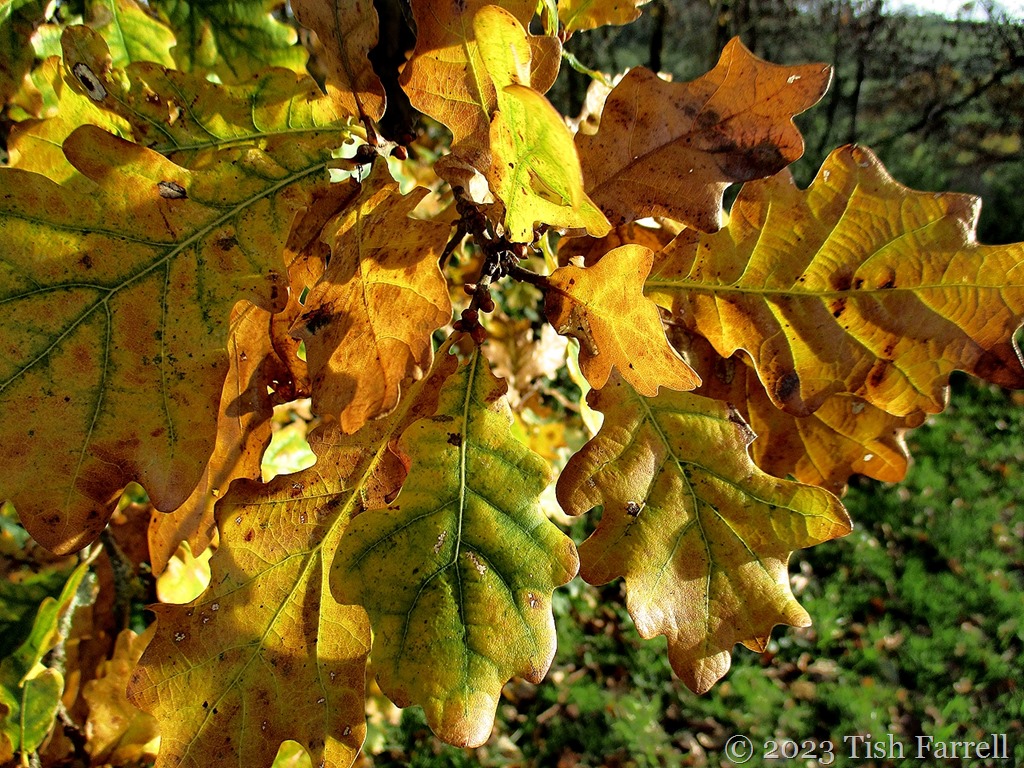
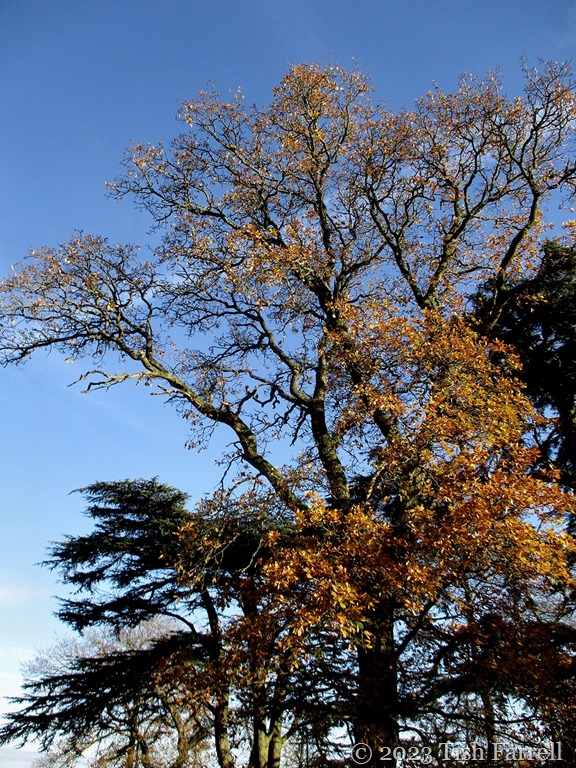
It’s only a five minute drive from our house, but up a very steep hill. For us unseasoned walkers, it’s too far to go on foot. The hillfort lies in Forestry Commission land, which means there is a car park, but the path to it rises further still above ‘monolithic’ stands of conifer, lit up here and there by the odd bright oak, or the orange haze of wintering larch.
IMG_4202ed

*

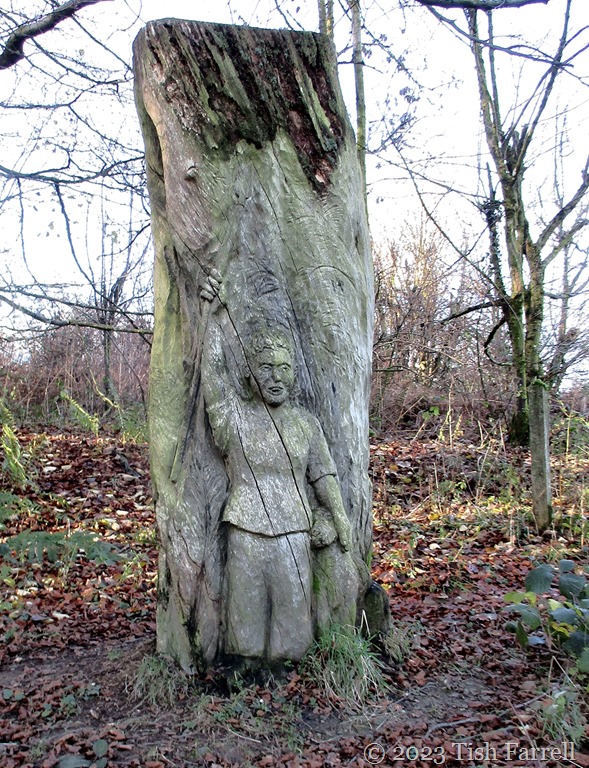
The morning sun had melted much of the frost, though it lingered in the verge shadows and in the valley bottoms. The air was absolutely still. So still, and so utterly silent, it seemed the world had stopped. It was a fine moment to come upon an ancestor, albeit one, turned to wood. What kind of magic was this?
IMG_4204ed

*

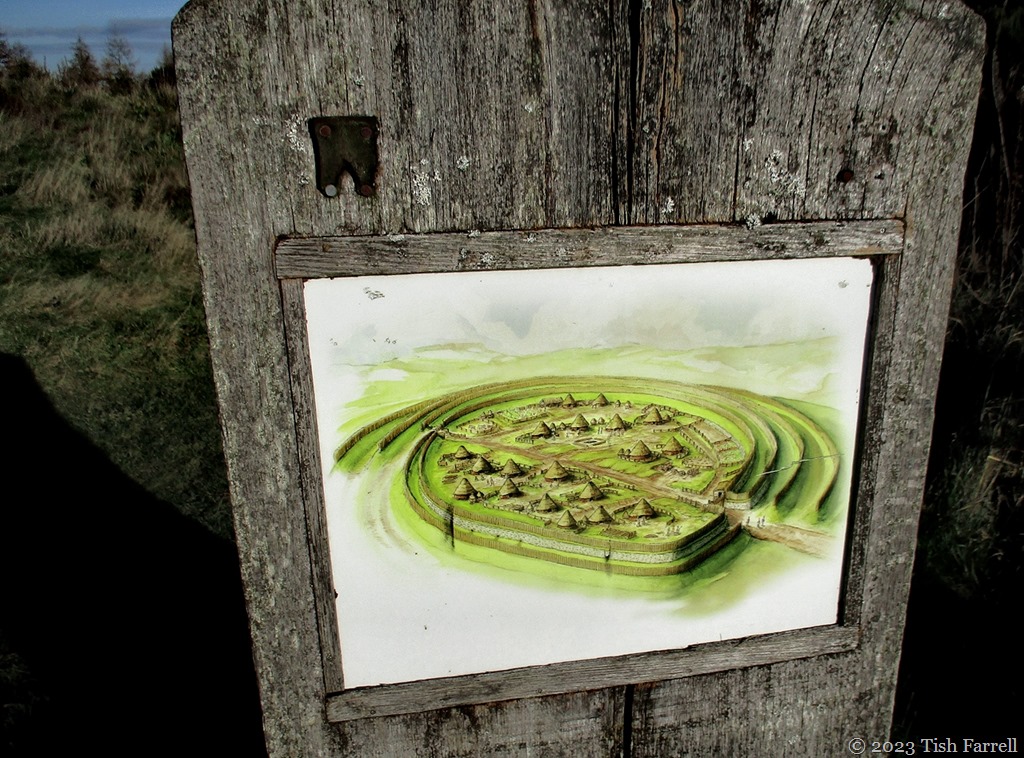
When we reached the hillfort, I tried to capture some idea of how it looks on the landscape, the scale of the ramparts – huge but nonetheless much diminished after 2,000 years of weathering. But it’s always impossible – the light not right, the site too overgrown, the earthworks ill-defined. And then there is the problem of  the enclosed ground: all quite featureless; a great expanse of rough pasture, with nothing to fix on, or frame.

Here’s an artist’s reconstruction of the site, then a couple of my rampart shots.
IMG_4210

IMG_4208

IMG_4215ed

*

For some better hillfort views than I could manage, please have a look at Virtual Shropshire’s page on Bury Ditches.

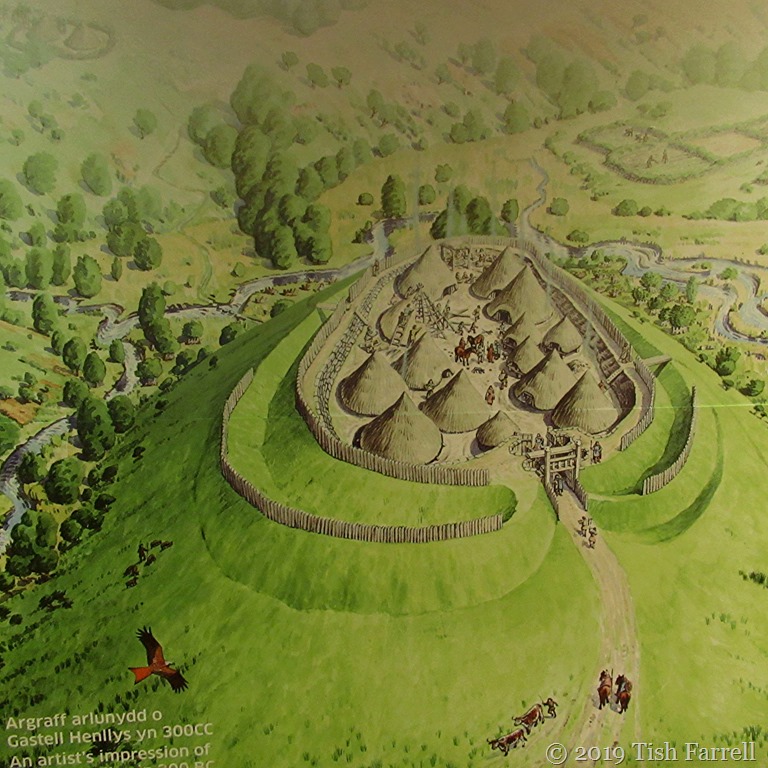
And so what are we left with? A sense of place, of space, the commanding views, the resonating mystery of who exactly built these monumental structures over 2 millennia ago. They are found across the uplands of Great Britain and yet we know so little about them. Some of course have been excavated and yield signs of village settlement inside (Castell Henllys). Some also revealed evidence of siege (e.g. Maiden Castle). Others seemed to have been simply places of refuge in times of war. Or perhaps also gathering places for festivals and markets. But the big disadvantage of hilltop refuges is they usually lack easy access to fresh water.

One thing we can say: these places were hugely important to the ruling hierarchies of the Iron Age people who built them. Imagine the man and woman hours involved, digging into bedrock with bone and antler picks and mattocks (for at this time iron, a scarce and valuable commodity, was reserved for the making of prestige weaponry not tools), heaving loads of earth in precipitous locations where horses and carts could scarcely serve the purpose. Yet…And yet…when freshly excavated in limestone country, or better still on chalk, the ramparts of these forts would have looked marvellous, glistening white on the skyline; visible for miles.

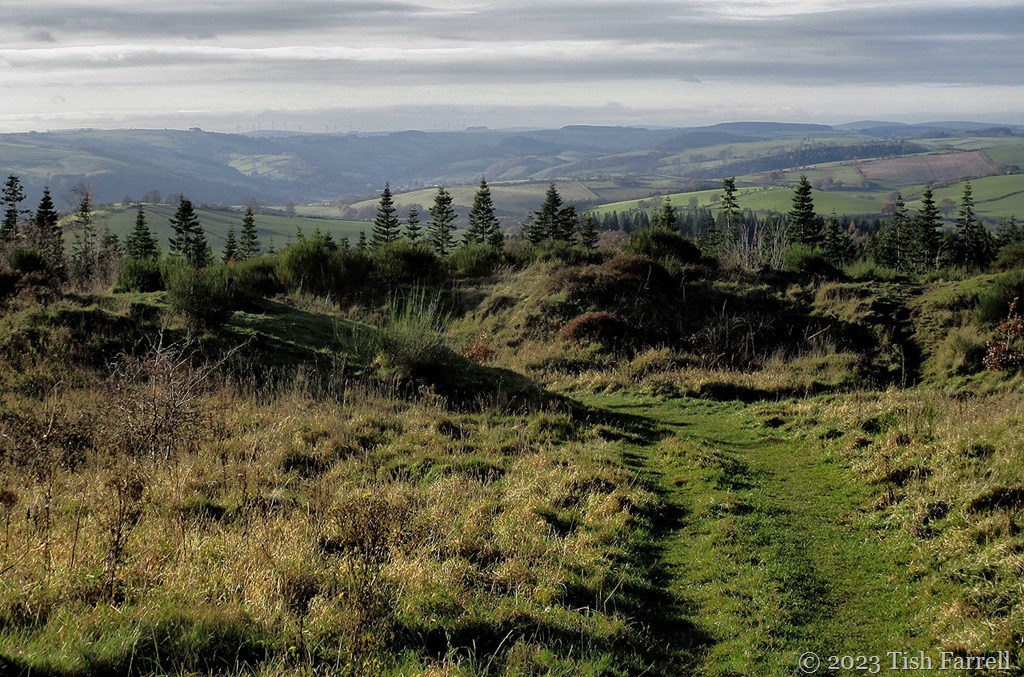
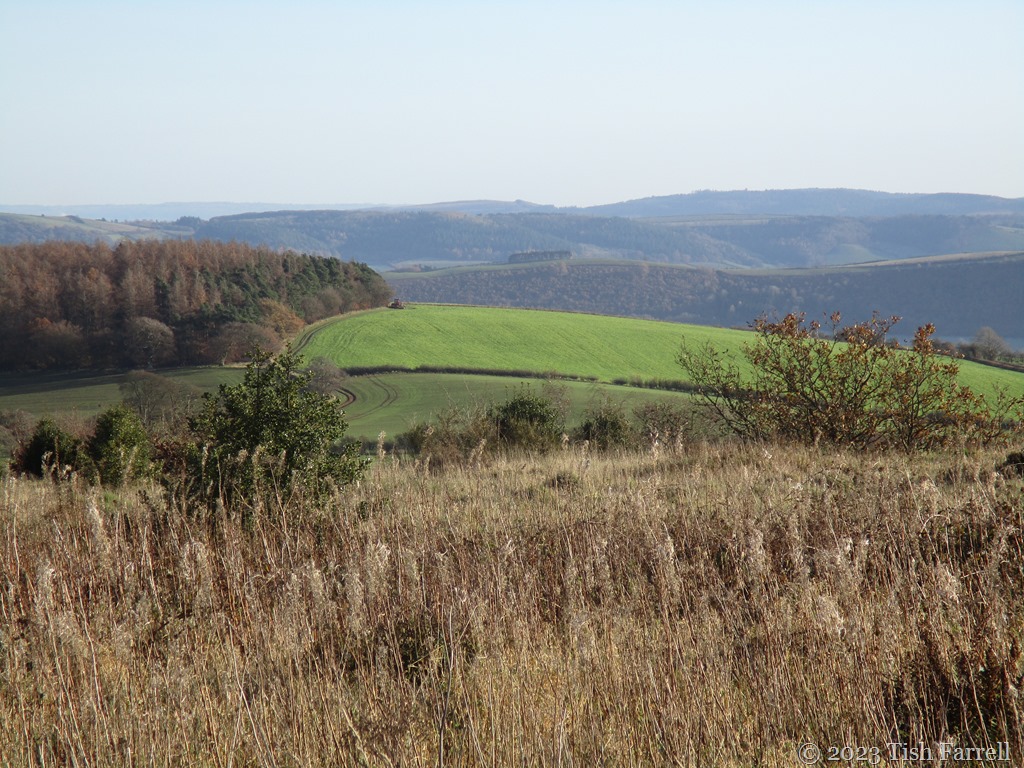
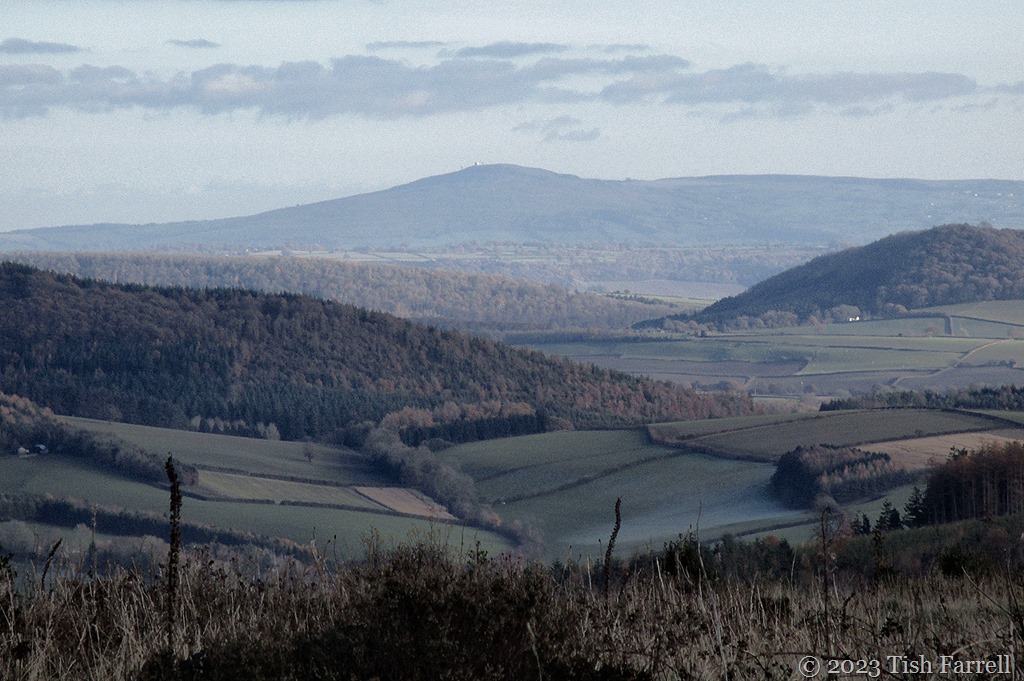
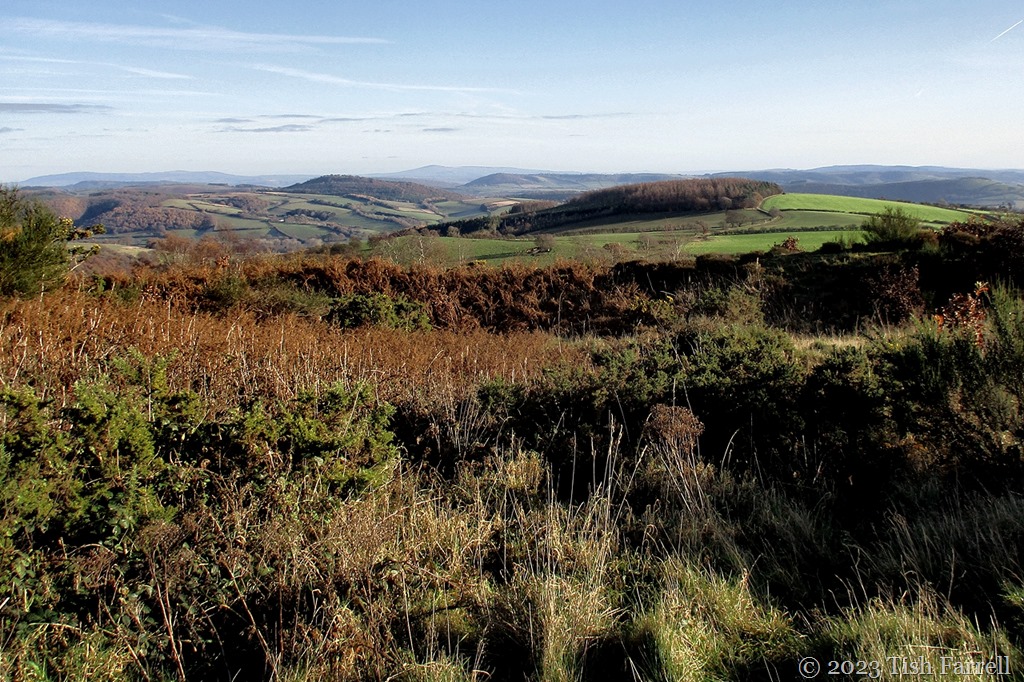
So if I couldn’t quite bring you a hillfort, here are the vistas we enjoyed, looking out, this after perching in a heather clump to eat our packed lunch. Herewith  Shropshire and the Welsh borderland:
IMG_4211ed

IMG_4213

IMG_4232ed

*

By 2 o’clock the sun’s warmth was gone, the remnant frost creeping back, fingering parts not properly wrapped up. We were glad to stride back to the car. A five minute drive home and we were by the log fire with a cup of tea. Such a little journey and yet we had been transported to another world and time. Passports not needed. Only willing hearts and minds and a small car.

IMG_4240ed

IMG_4243ed

Fancy Living Along Iron Age Lines?

IMG_4882

And surely a query worth contemplating. For instance, how would we get on without all our high-techery and labour-saving homes? Or fare without the daily multiple-choice comestibles. Or the mass entertainment streams. Or the means to travel where and when we want and in great comfort. Or the shopping opportunities by land, air and internet.  Would we think it a life worth living without plumbing and waste management systems? Would we feel ourselves utterly impoverished? Could we even survive as our ancestors survived over tens of thousands of years?

Of course by the time we in Britain reached the era of technological development that archaeologists call the Iron Age (c. 800 BCE to 43 CE and the Roman invasion), the manner of existence is at least broadly recognisable to us. People lived in farmsteads and fortified villages and belonged to regional tribal groups ruled by individual chiefs (men or women). These people were horse-riding, chariot-driving warriors as well as farmers. They also had specialist metal workers, potters, and weavers. They built hillforts on a monumental scale (e.g. Maiden Castle, Danebury, Old Oswestry). Some were inhabited. Some were not. Some were elaborations of earlier earthworks begun in the Neolithic and Bronze Ages. Their exact purpose is often unclear – tribal prestige, defence, seasonal market and ritual gathering places. All of these.

Some things we do know about Britain’s Iron Age people – they were prosperous farming folk employing improved methods of agriculture (iron-tipped ploughs and new strains of barley and wheat; they cultivated peas, flax, beans; they raised pigs, sheep and cattle). The great numbers of Iron Age sites suggest that the population was on the rise. Nor in Britain were they isolated islanders. They traded with continental Europe, exporting (in particular) grain, hunting dogs and rain-repellent woollen capes, possibly also slaves, and importing wine in return. At least three to four hundred years before the Romans arrived, Greek, Phoenician and Carthaginian traders were coming to Britain for Cornish tin.

The southern British tribes had their own coinage. Iron Age smiths worked in gold as well as iron and created torques, brooches and bracelets of unsurpassed beauty as well as magnificently wrought swords and shields. Many that have survived appear to have been votive offerings, placed in lakes and rivers. Roman historians write of druidic cults and of human sacrifice and other deemed dark Celtic practices.

IMG_4886

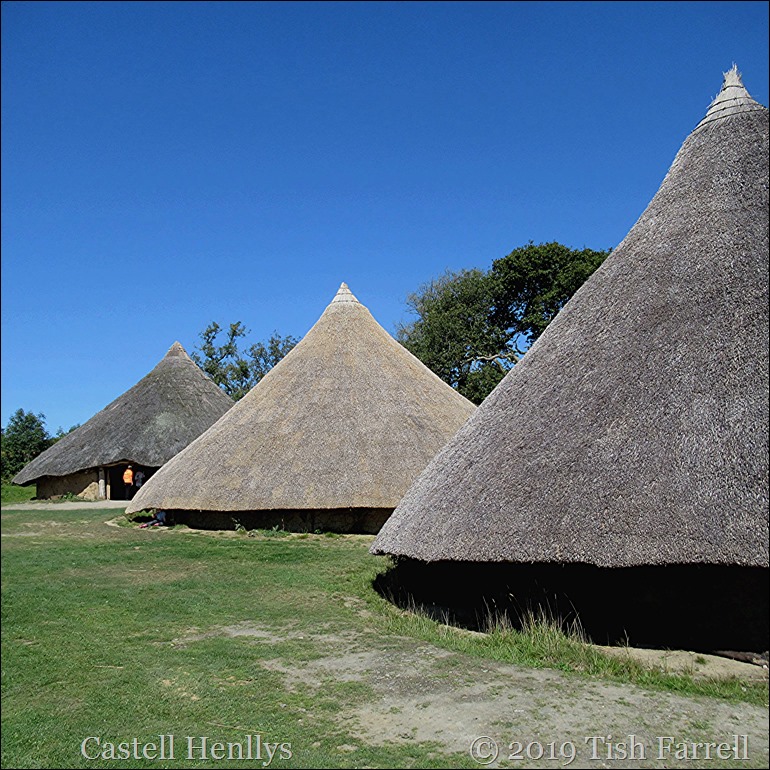
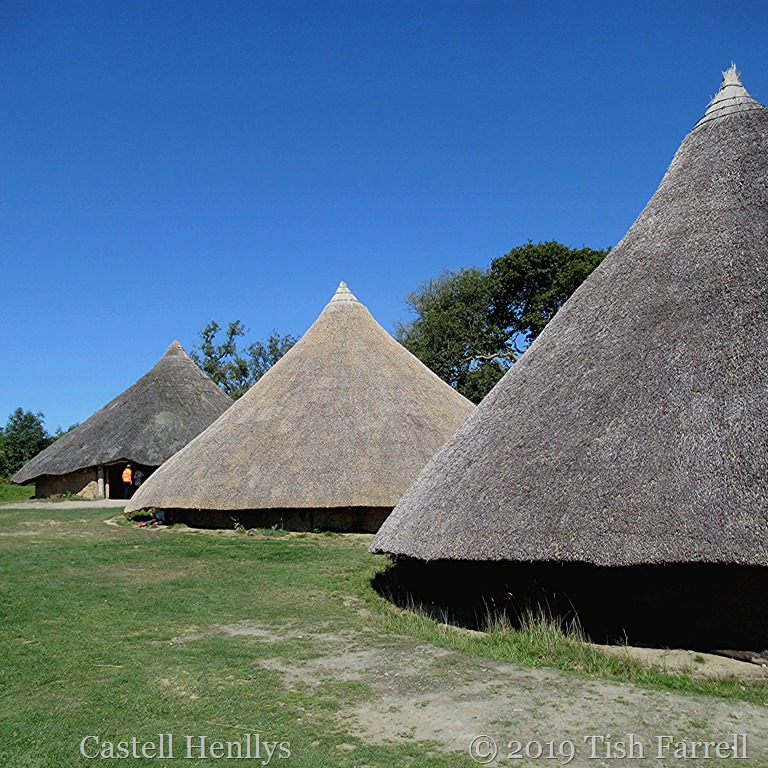
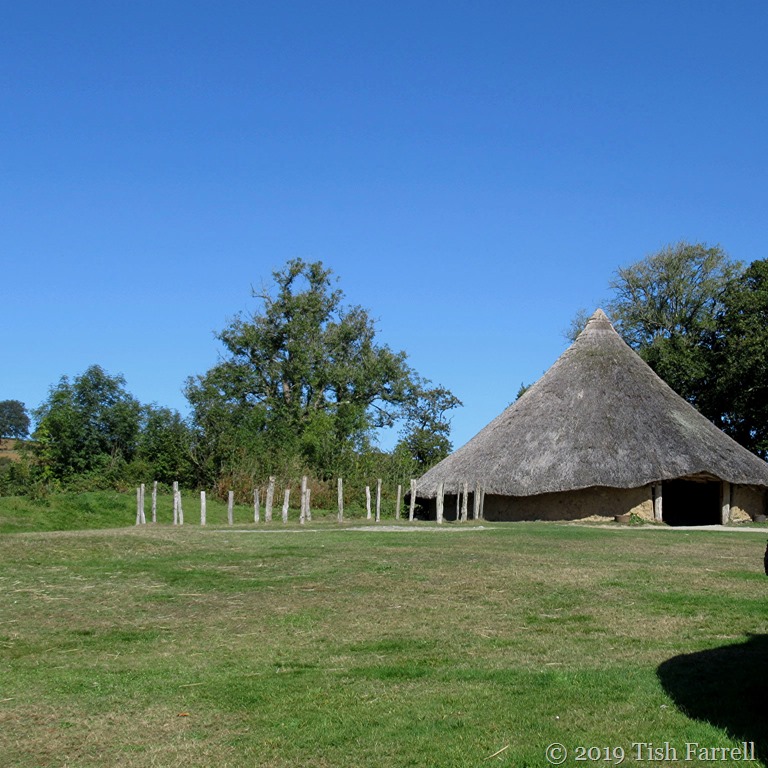
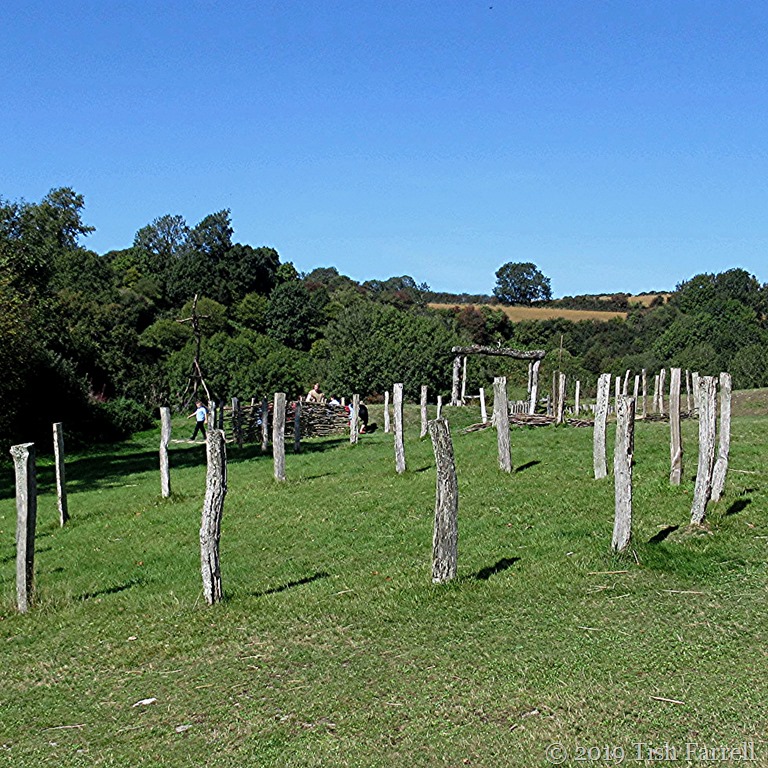
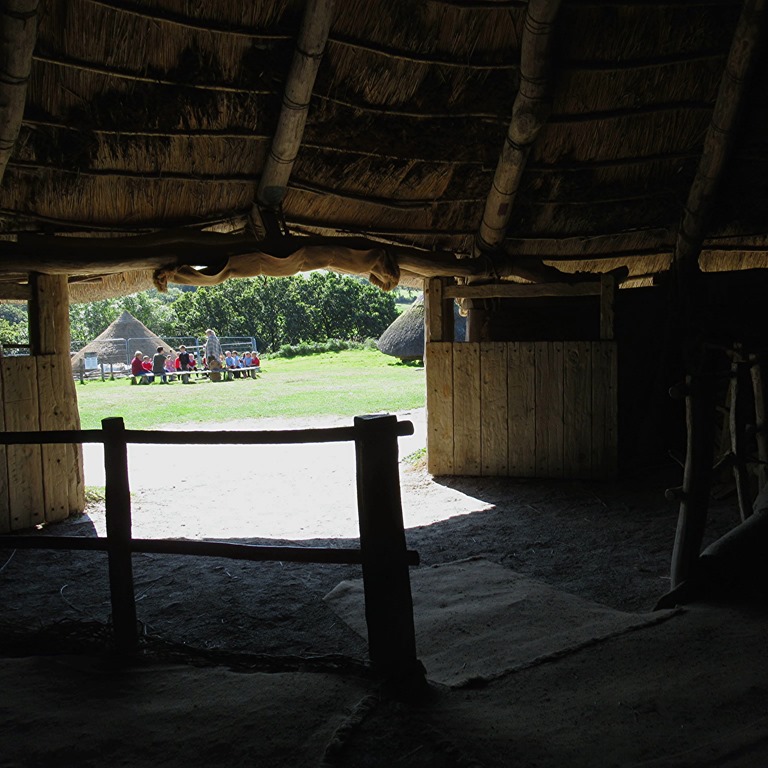
The photos here were taken at Castell Henllys, a promontory fort in the uplands between Newport and Cardigan. Excavations have been continuing on this small hillfort site since the 1980s, and for the last twenty years it has served as a training ground for York University archaeology students. The reconstructions are based on the excavations and occupy parts of the site where there is no archaeology. The outlines of the original excavated homes of these Iron Age Celts are marked with posts. When we were there some primary school children were using them to weave willow panels – the basis of Iron Age wattle and daub house wall construction. (Seen in the distance in the next photo; also the reconstructed fort gateway).

IMG_4885

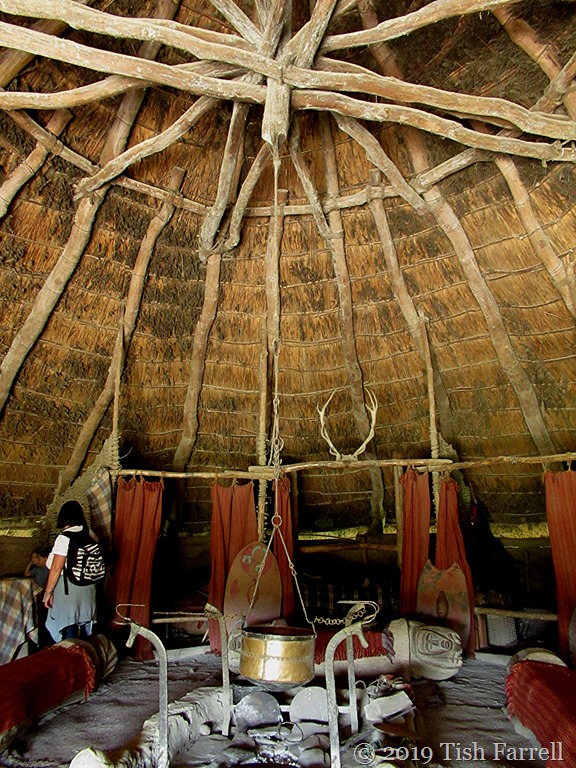
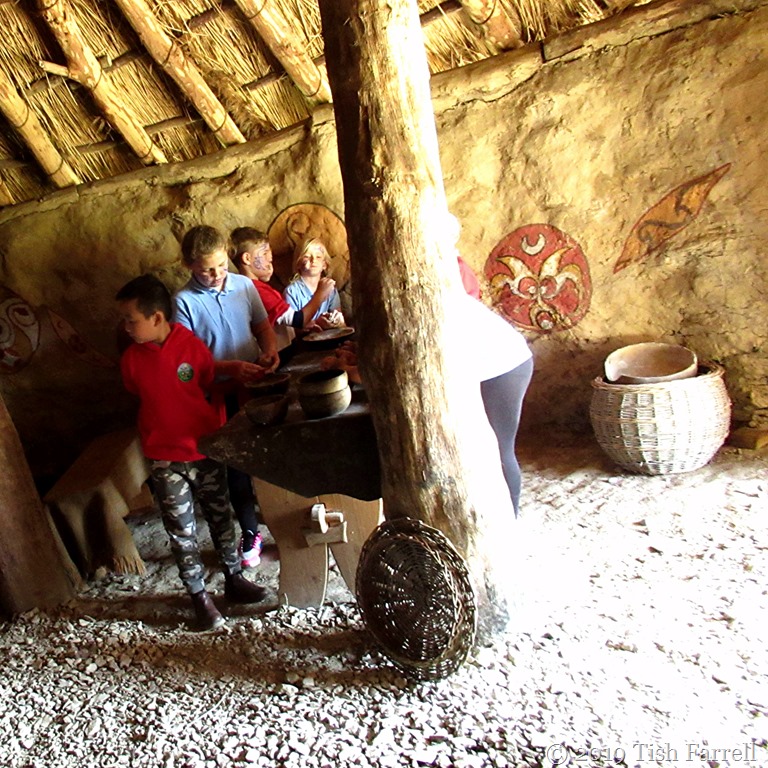
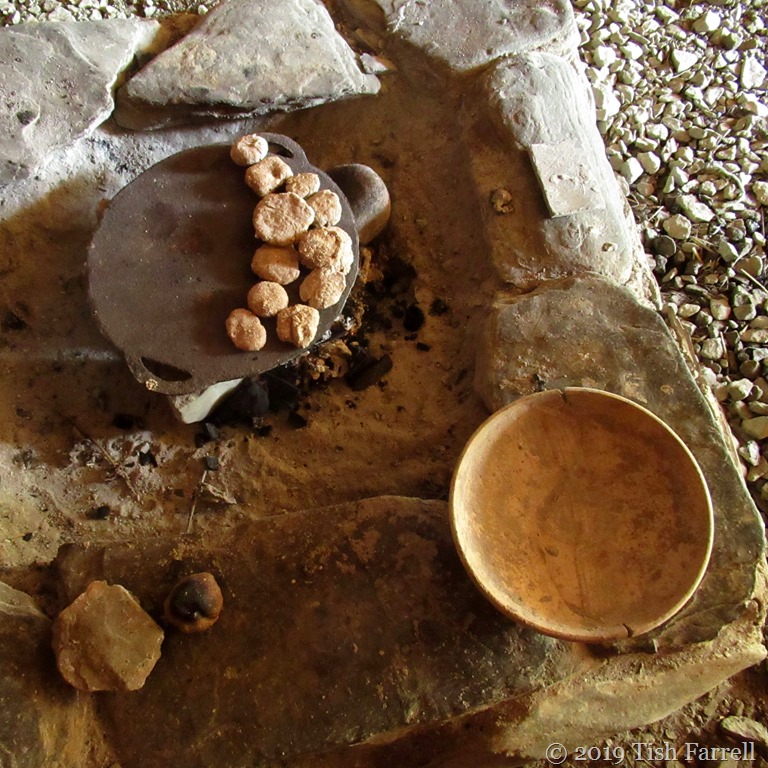
The main frame of the houses (20-30 feet in diameter) comprises some pretty heavy duty posts, the roof thatched with grasses laid on cross laths. There is no chimney, but the smoke from the central cooking hearth would have risen through the rafters and helped to seal the thatch. It would have been pretty fumy, but also draughty too with a wide gated entrance.

IMG_4871

IMG_4872

*

As you can see, the houses were spacious inside, probably catering for one family unit while the settlement as a whole would be made up of extended family members. The primary school children were having a fine time learning domestic skills.

IMG_4880

Iron Age cookery lesson.

IMG_4879

IMG_4883

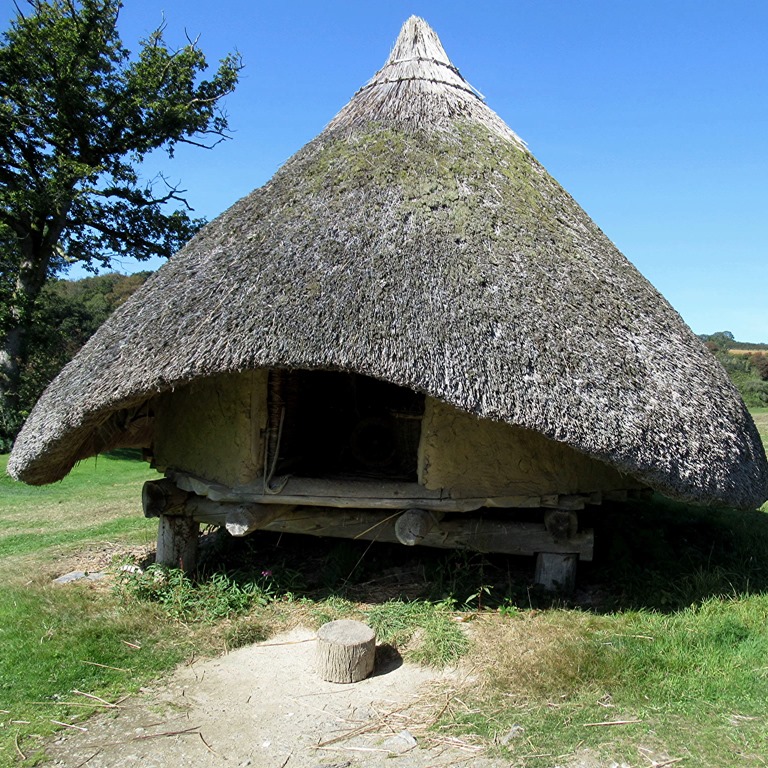
The Granary

*

IMG_4899

Artist’s impression: Castell Henllys in around 300 BCE

*

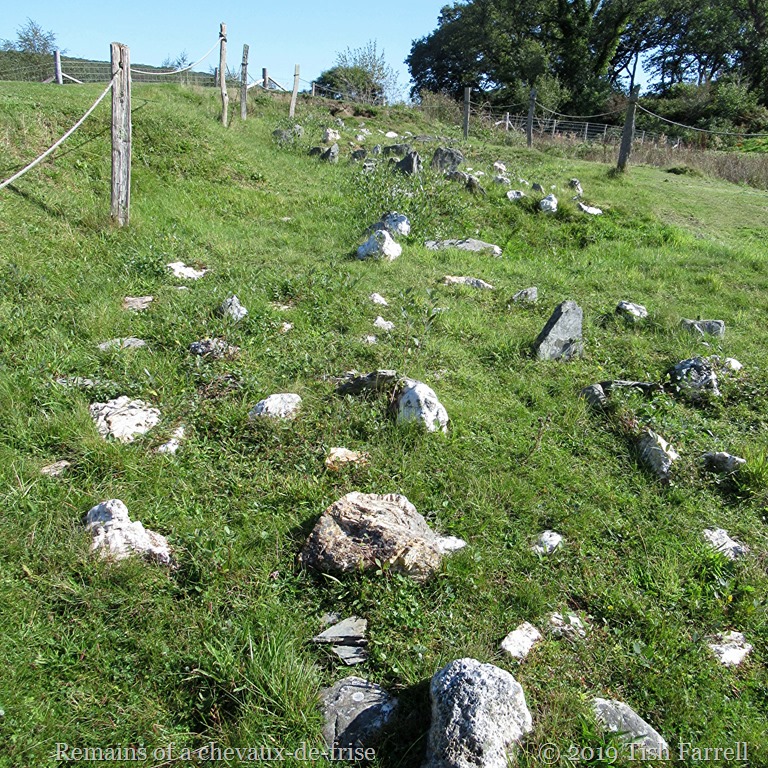
The fortifications around the houses certainly suggest their inhabitants were well prepared for marauding invaders. Archaeologists uncovered an unusual feature in the outermost line of defence – a ‘cheveaux-de-frise’ – a formation of embedded rocks placed to stop chariots in their tracks, and within sling-shot range. And to go with it, a large hoard of slingshots was also discovered, placed in readiness behind the rampart. Both finds are more commonly known from European and Irish sites.

IMG_4864

And what happened here after the Romans invaded? It seems the people adapted. Just north of the hillfort there are remains of a Romano-British farmstead. Life goes on then, but not always as we expect it to.

copyright 2019 Tish Farrell

Related: https://tishfarrell.com/2013/06/18/the-great-earthly-curves-mystery-what-when-and-why/

Line Squares #18