Installation Geometry: ‘Green Dwelling’

IMG_2355ed*

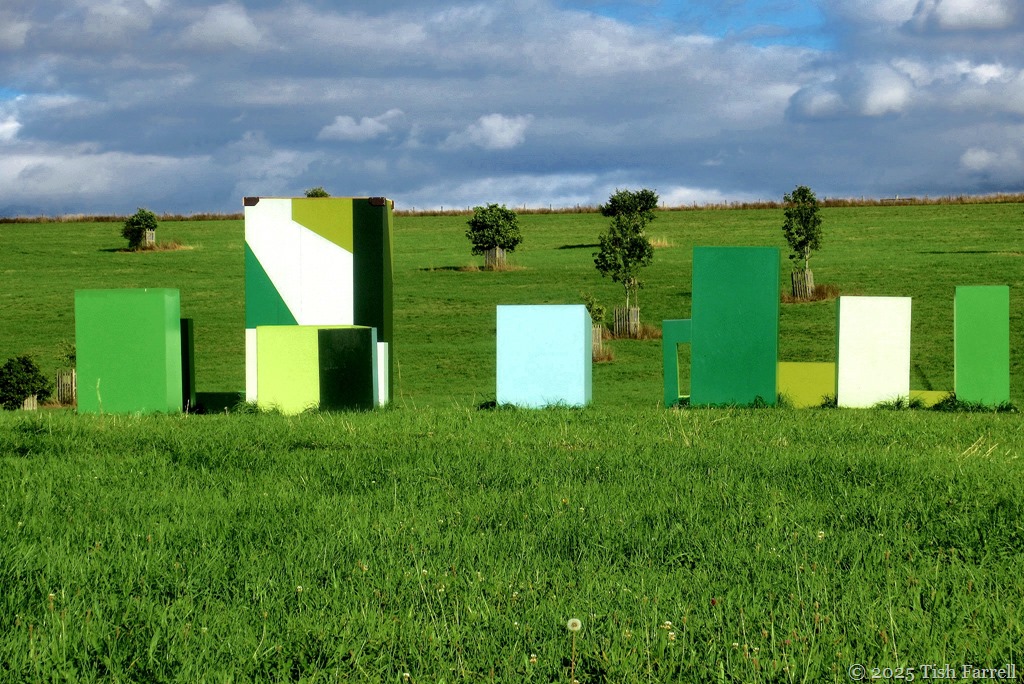
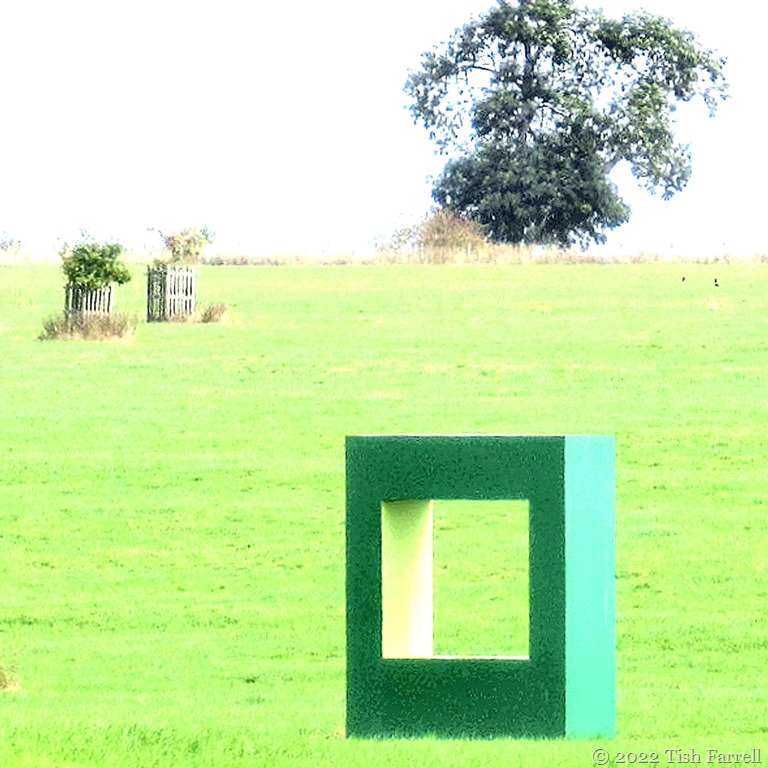
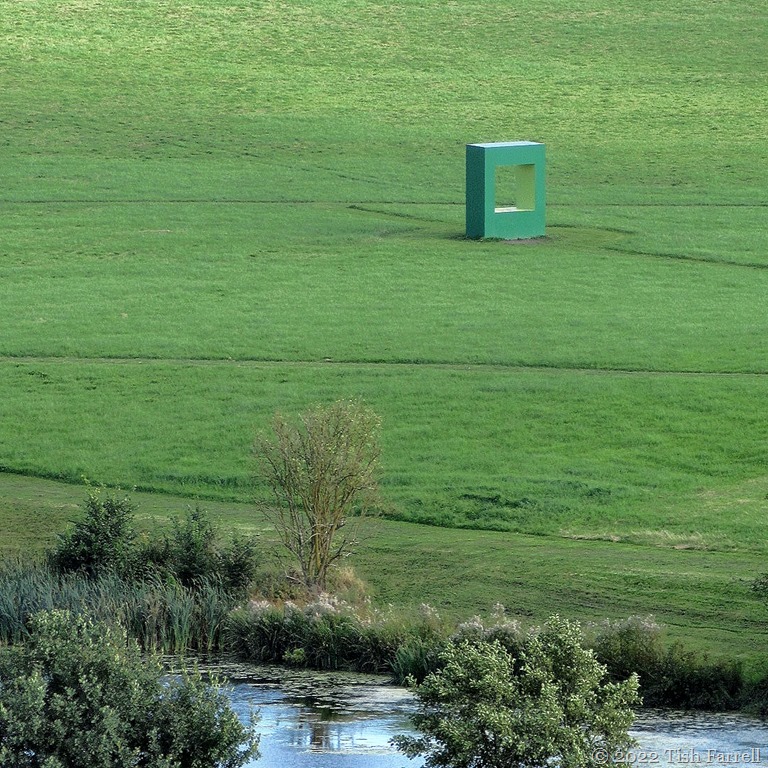
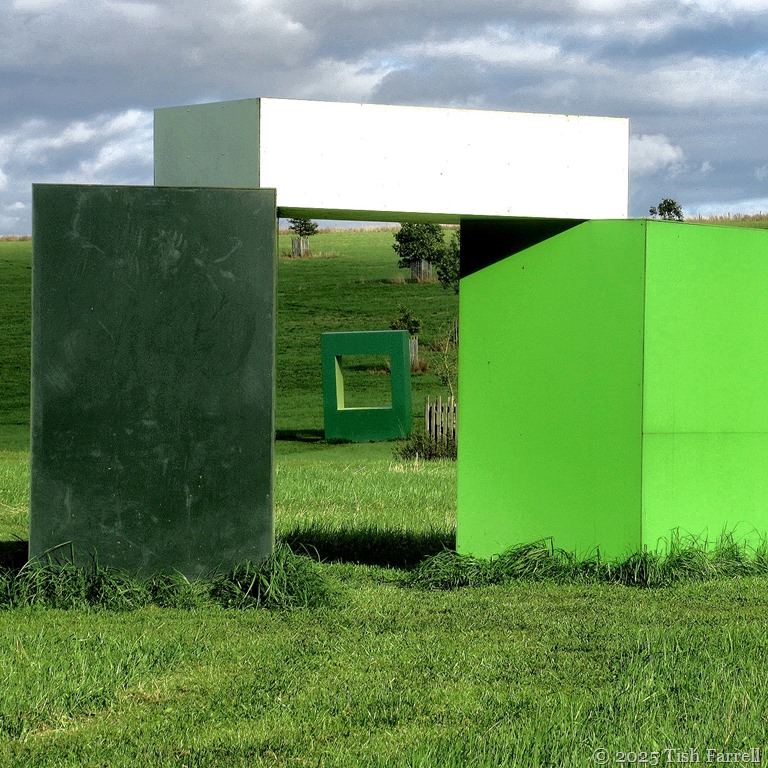
Here we have one element of an art installation called ‘Green Dwelling’. In 2021 it was sited in the Old Town Meadow of Compton Verney Art Gallery & Park, a grand Warwickshire venue for some magnificent art, ancient, old, and contemporary. Very well worth visiting.

But I’m not quite sure what to make of Green Dwelling as a whole, although for some reason I like this square. Perhaps it feels like a happier, more mundanely accessible version of Mark Rothko’s many ‘windows’, which I also admire, but find more challenging.
IMG_2526 green dwelling

*

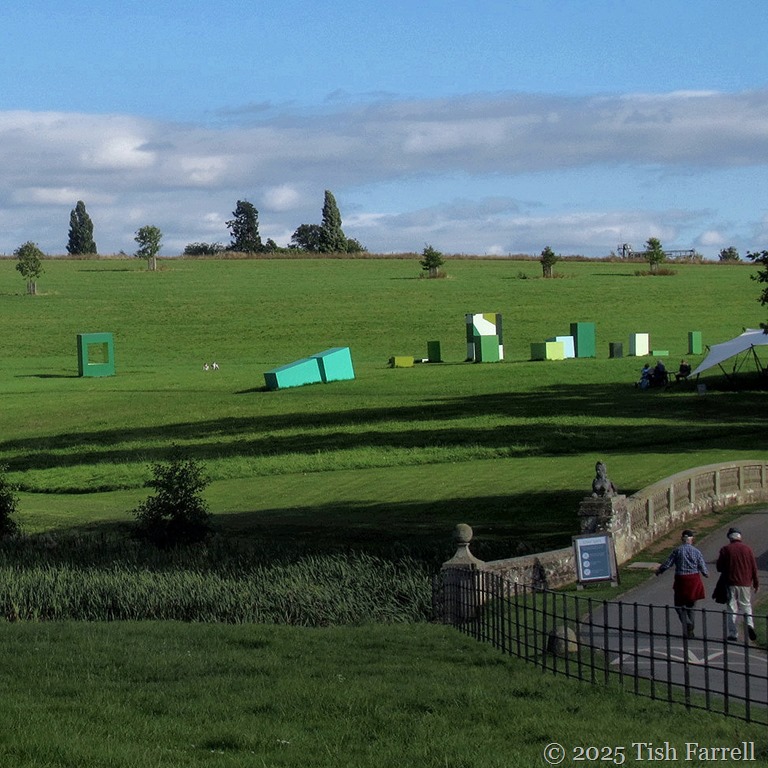
Here are the 23 other blocks that comprise the installation.
IMG_2524 green dwelling

IMG_2537

Dutch artist Krijn de Koning was commissioned to create a work that would encourage people to engage with Compton Verney’s landscape, designed by Capability Brown in 1779.  It also marks the site of the lost medieval village of Compton Murdak, the blocks placed to create new framed vistas, and arranged on mown pathways that might suggest the presence of the ancient settlement.
IMG_2540ed

Well, as I said, I’m not quite sure what to make of the whole; perhaps more appealing in the conception than the physical manifestation. Perhaps, too, if I’d thought to venture closer, I might have become more involved. On the other hand, it looks to me as if the landscape, domesticated as it is, needs no such cues of engagement. In fact it rather outdoes the structures.

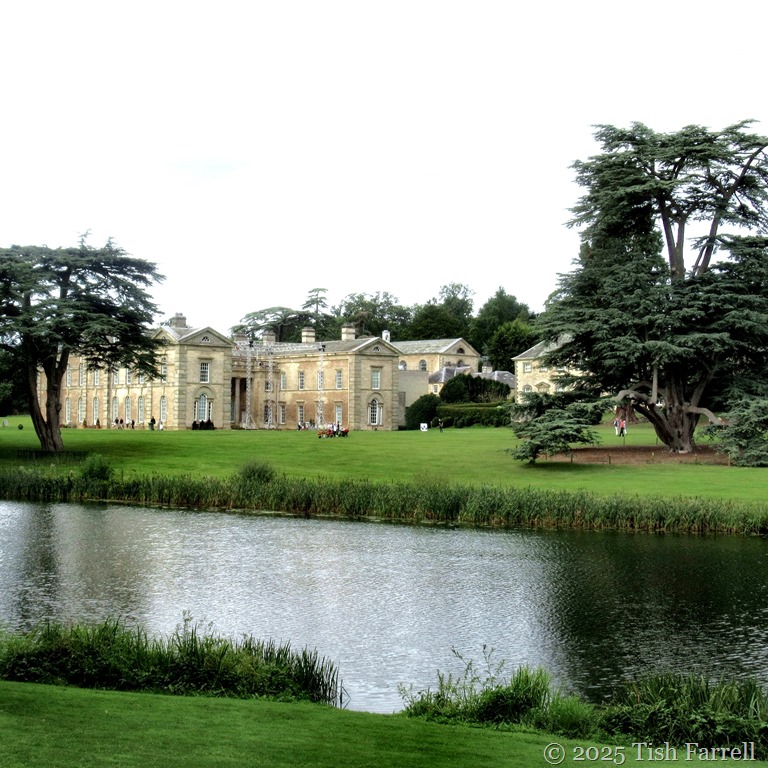
If I had walked to the further side of the square and looked through, I might have seen this kind of vista: Compton Verney Manor, essence of classical architecture – symmetry, perspective and lots of angles…
IMG_2364house

#GeometricJanuary

Of Right Royal Geometry

IMG_2129ed

*

So begins Becky’s month of square format photos – of things geometrical. So here goes.

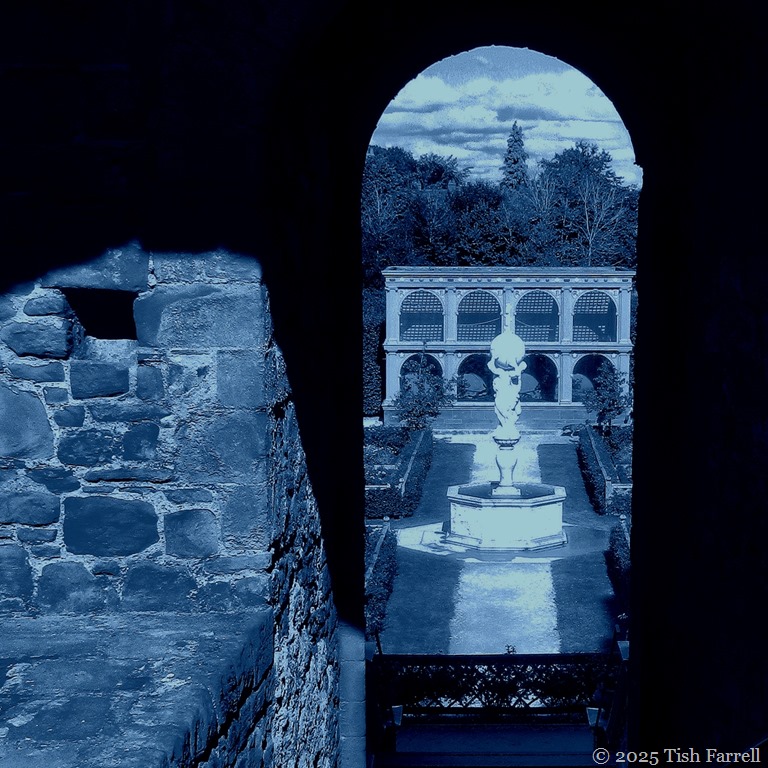
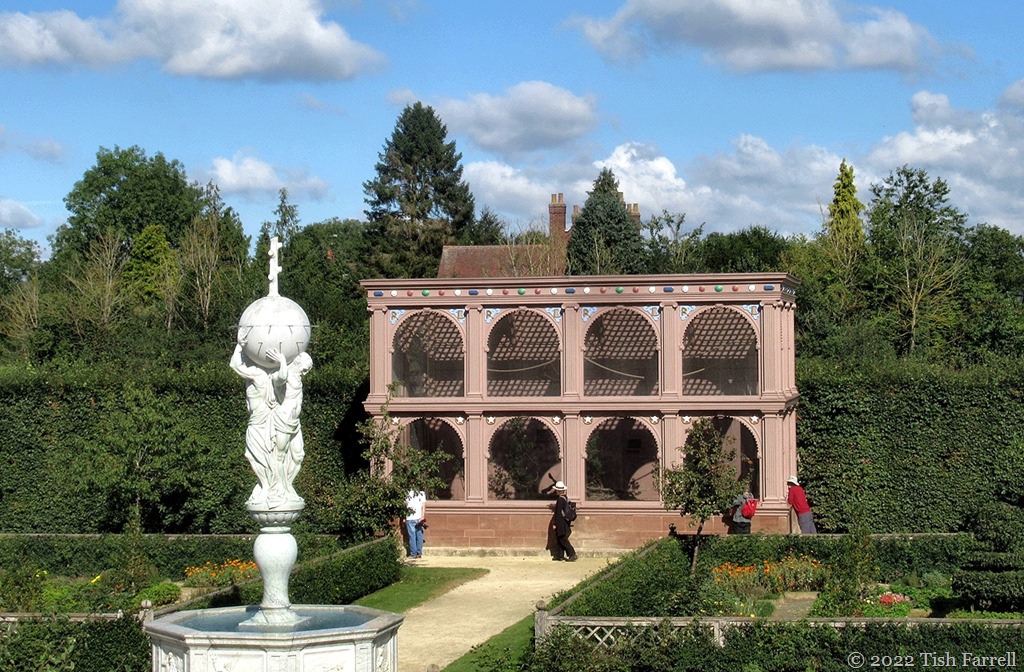
There’s almost too much geometry in this shot: triangles, rectangles, circles, semi-circles, octagons. It is was taken at Kenilworth Castle in Warwickshire, a medieval fortress transformed in the 1570s into a grand Tudor palace, wrought at huge expense by Robert Dudley, Earl of Leicester, and with the sole purpose of entertaining his queen (and rumoured lover)  Elizabeth I.

More of that story here: Greater love had no man…

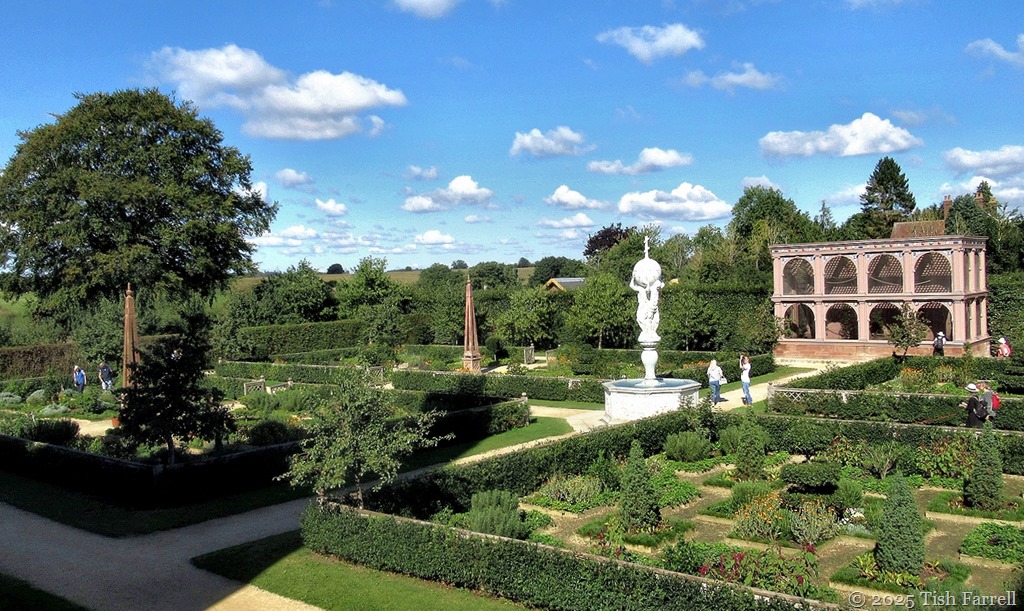
The photo shows a slice of the pleasure garden and ornamental aviary constructed in 1575, specifically for Elizabeth’s visit. This is how she would have first glimpsed it, descending from the royal apartments to a loggia terrace, whence she could view the whole extravagant horticultural confection. For this particular visit, it is said Elizabeth arrived with thirty-one barons and four hundred staff.

And they  stayed nineteen days. (Just imagine!)

Robert Dudley pretty much bankrupted himself to keep them all amused, not only with lavish banquets, but also with hunting, pageants, plays, bear baiting and fireworks.

And after all this, Elizabeth still could not be persuaded to marry him.

As to the garden, it was lost for nearly 400 years. English Heritage have reconstructed it using an eye-witness account of the visit by one Robert Langham plus archaeological and historical investigation.

You can read Langham’s account HERE. He speaks of ‘fair alleys…green by grass…and some (for a change) with sand…pleasant to walk on, as a sea-shore when the water is availed.’ He mentions too (and not an inconsequential attribute in those times) ‘the sweetness of savour on all sides, made so respirant from the redolent plants and fragrant herbs and flowers, in form, colour, and quantity so deliciously variant’.

*

IMG_2086

IMG_2084ed

*

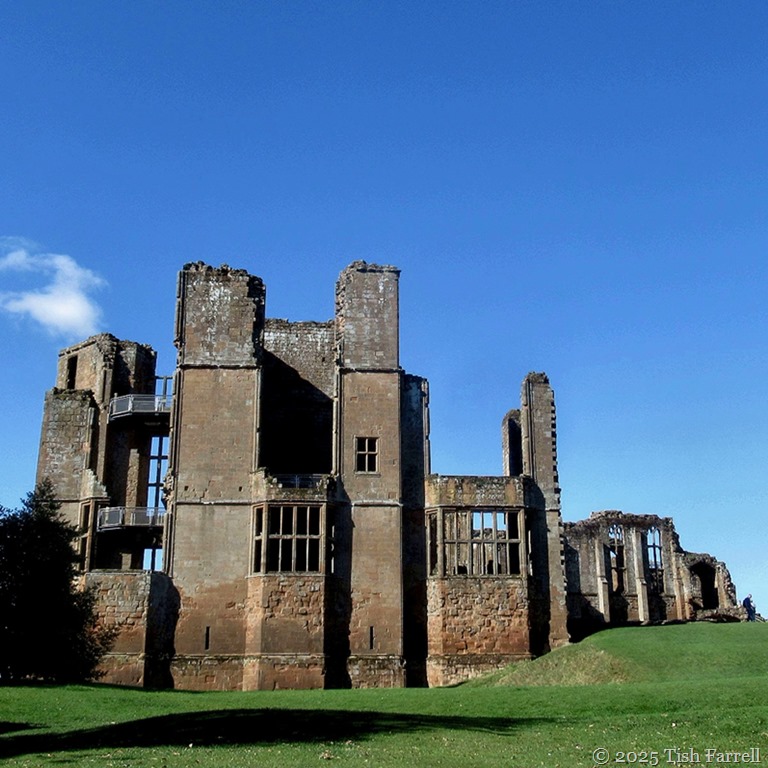
And the ruins of the erstwhile royal apartments:

IMG_2065sq

*

Wishing everyone an all round happy New Year

*

#GeometricJanuary  You can join Becky’s square posting every day this month. The only rule is the photo must be in square format. How you interpret ‘geometry’ is up to you.