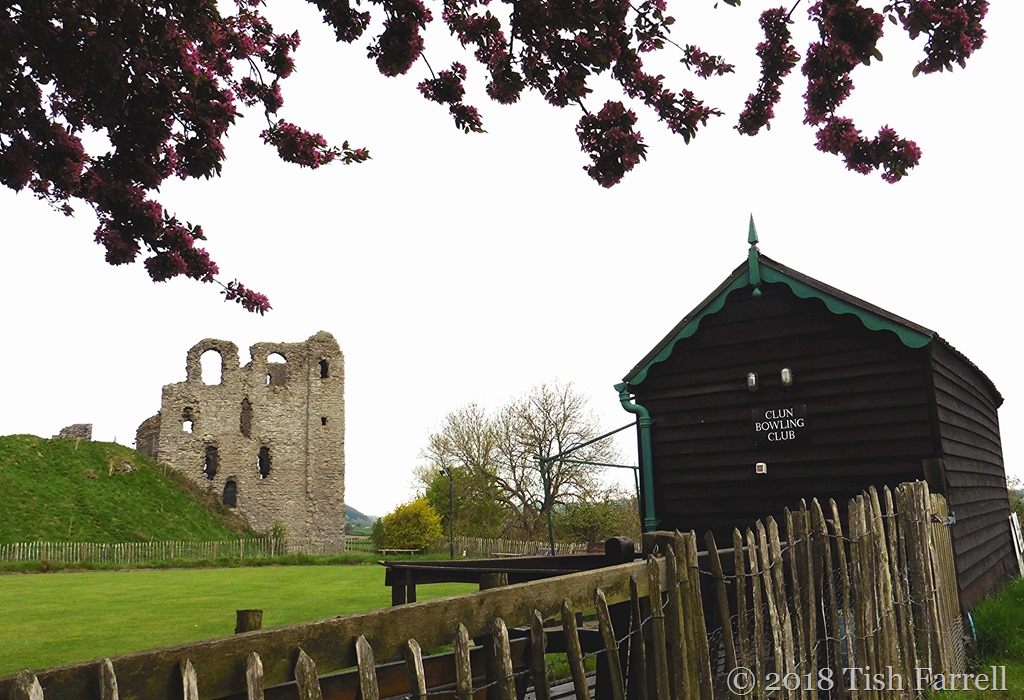
“Clunton and Clunbury,Clungunford and Clun…

IMG_4257ed

*

…are the quietest places under the sun.”    A E Housman  A Shropshire Lad

*

Except there was no sun on Tuesday when we went to Clun, only rain clouds, bloated, iron grey, hanging in shrouds across the hills and pine woods; the lanes streaming with run-off from two days’ deluge; field hedges newly farmer-sheared to thorny starkness, the herbaceous version of a convict cut.

It did not matter. We were on an outing after several days indoors.
IMG_4260

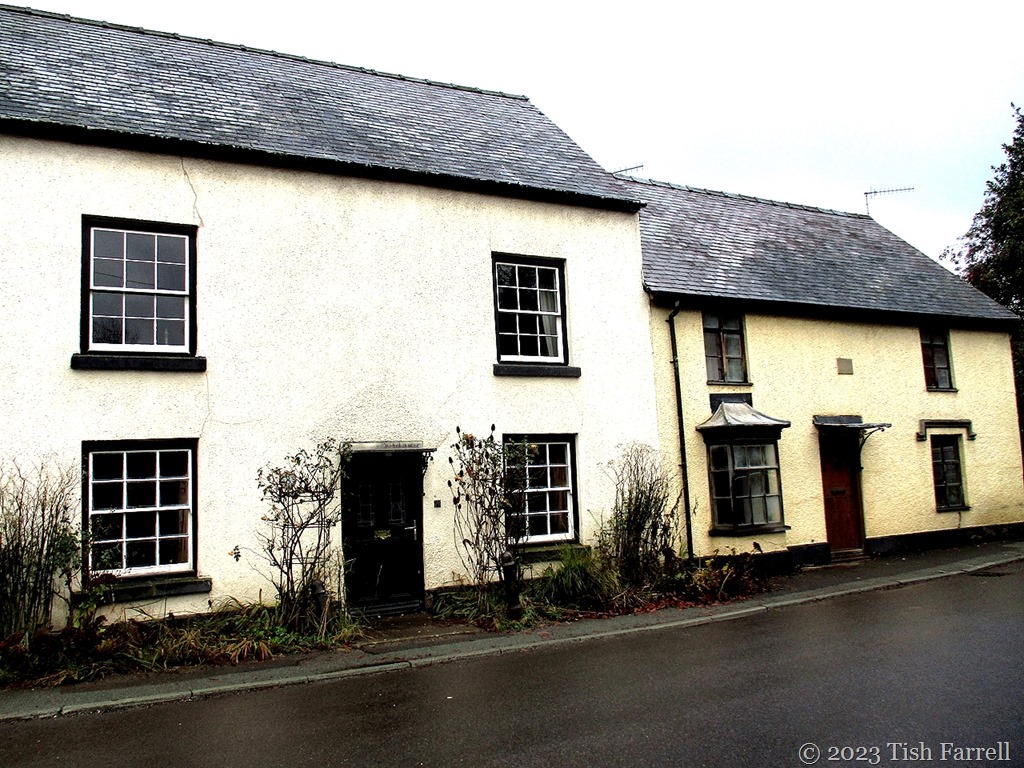
Clun is the next large village along the A488 between Bishop’s Castle and Knighton on the Welsh border. These days it is home to around 700 souls, and with or without sun, it is always quiet there, except perhaps during the Green Man Festival in May when I gather things may become a touch excitable. Once, though, it was a nexus, standing on the ancient drovers’ route out of Wales. You can picture it now, can’t you, the herds of  cattle and sheep being driven on well worn paths to faraway markets in the Midlands and London; passing through many a town, the taverns en route places where news and other goods were exchanged.  This then is essentially a Saxon landscape, later knocked somewhat into shape by the invading Normans, but all rooted in five millennia of farming life going back to the Neolithic period.

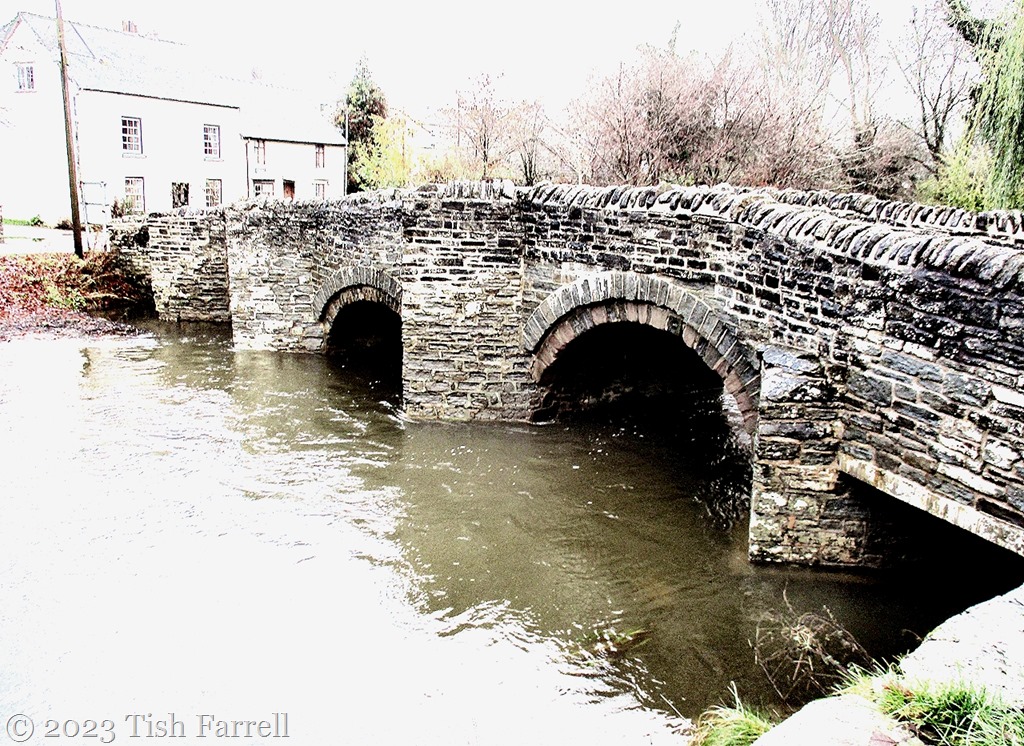
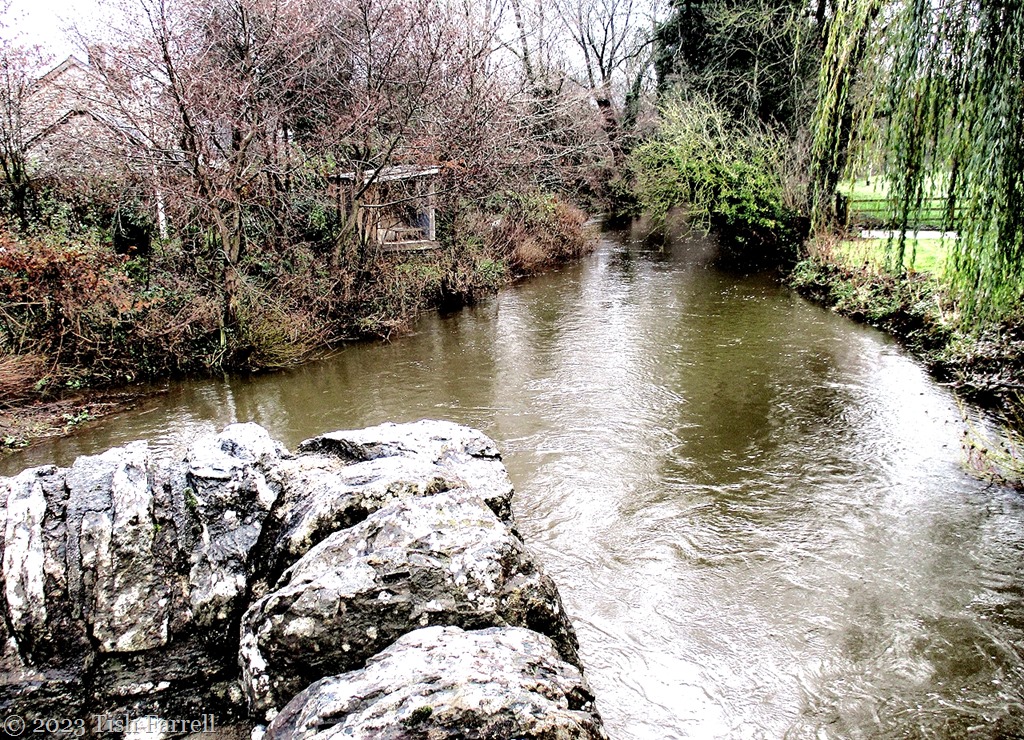
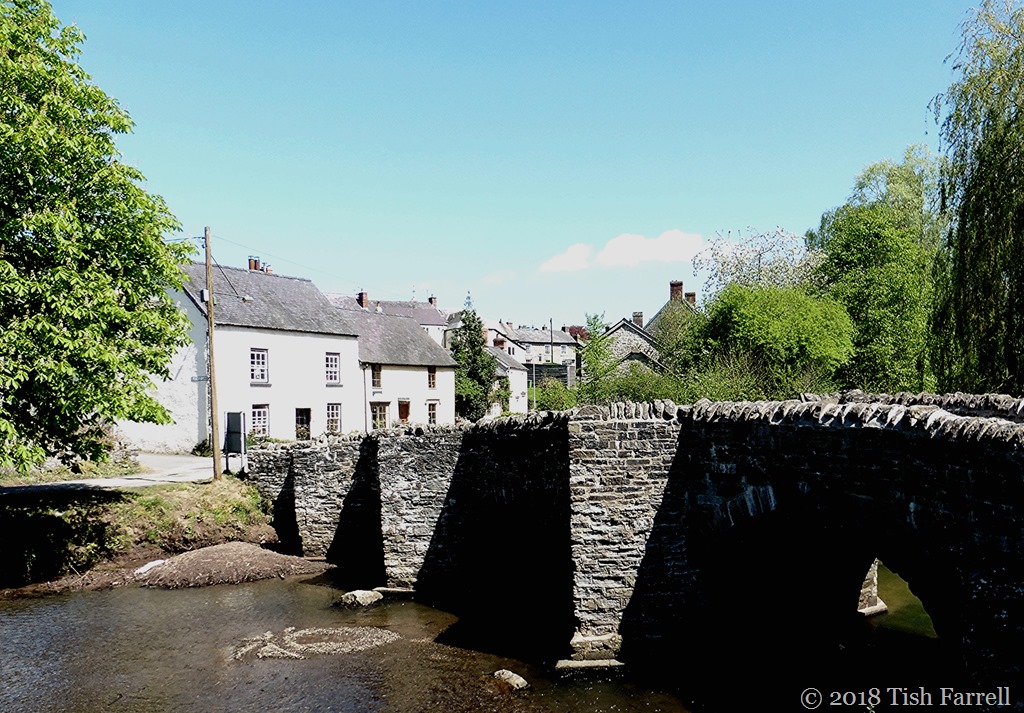
The packhorse bridge in the header photo is not that old however. It dates from the 1300s, leaving us with only 8 centuries of passing traffic to contemplate. But you do have to keep your wits about you when you cross, dodging the occasional speedy van-man, making sure you’re tucked into a niche before standing and gazing at the River Clun. In fact there is a local saying that could be said to confirm the necessity for alertness: “whoever crosses Clun Bridge comes back sharper than he went”.  On the other hand, it may refer to long ago times when the crossing formed the link between Saxon Clun on one side of the valley, and the newfangled Clun of Norman interlopers on the other.
IMG_4259

*

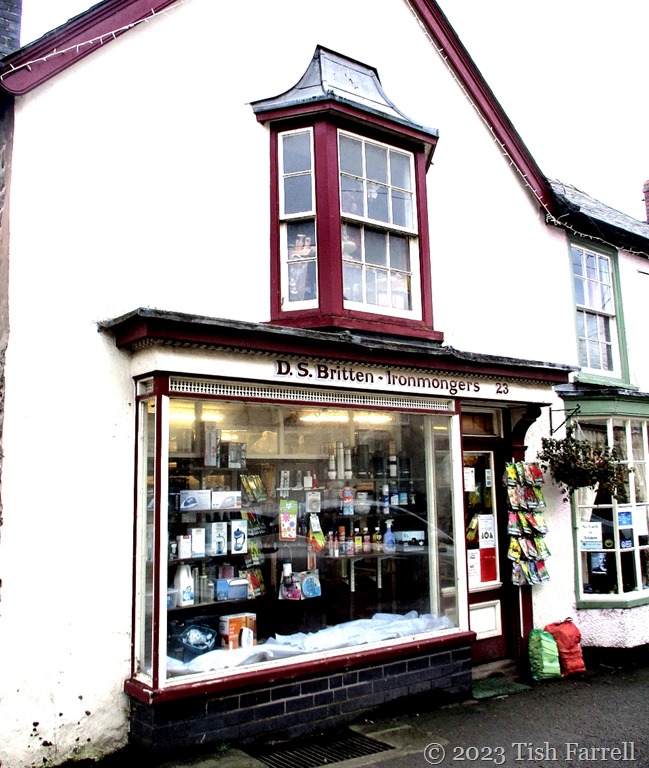
There was a purpose to our visit on such a gloomy day. I recalled there was an ironmongers there – an all but disappeared facility on Britain’s high streets. Brasso was needed – a good old fashioned metal polish, and also dubbin for keeping the rain out of our boots.
IMG_4271ed

And we found them both immediately when we opened the door and stepped back in time in Mr. Britten’s magic emporium. It proved to be the hardware enthusiast’s equivalent of Willy Wonka’s chocolate factory, including the glimpse of snug ‘Dickensian’ office beside the counter.

There might be no sun outside, but there was everything under it inside. On top of that, Mr. Britten proved the most engaging proprietor, a true gentleman. He told us he was happy to sell us two screws if that’s all we needed. We didn’t, but we appreciated the gesture, and said we’d be back when we did.

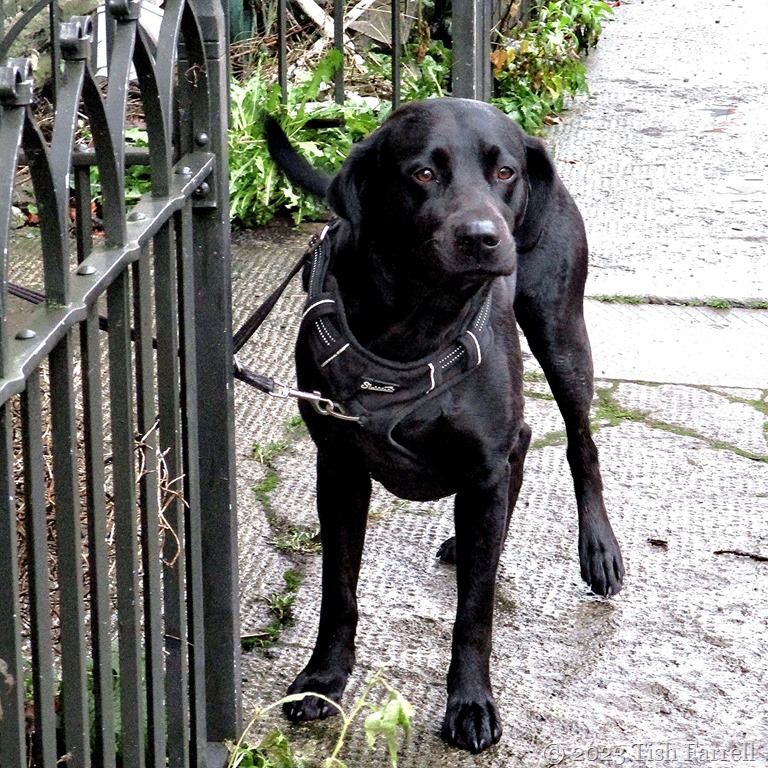
After that we mooched about on the High Street, were greeted as we went by passing locals, and also some nice dogs, found a good bottle of wine and sticky pastries in the Spar supermarket plus more welcoming encounters. And then headed for home. By midday it was almost twilight.
IMG_4267

*

So no, it really did not matter that it was such a dank and gloomy day. Human and canine warmth sufficed; another grand trip out and only a few miles from home.
IMG_4282

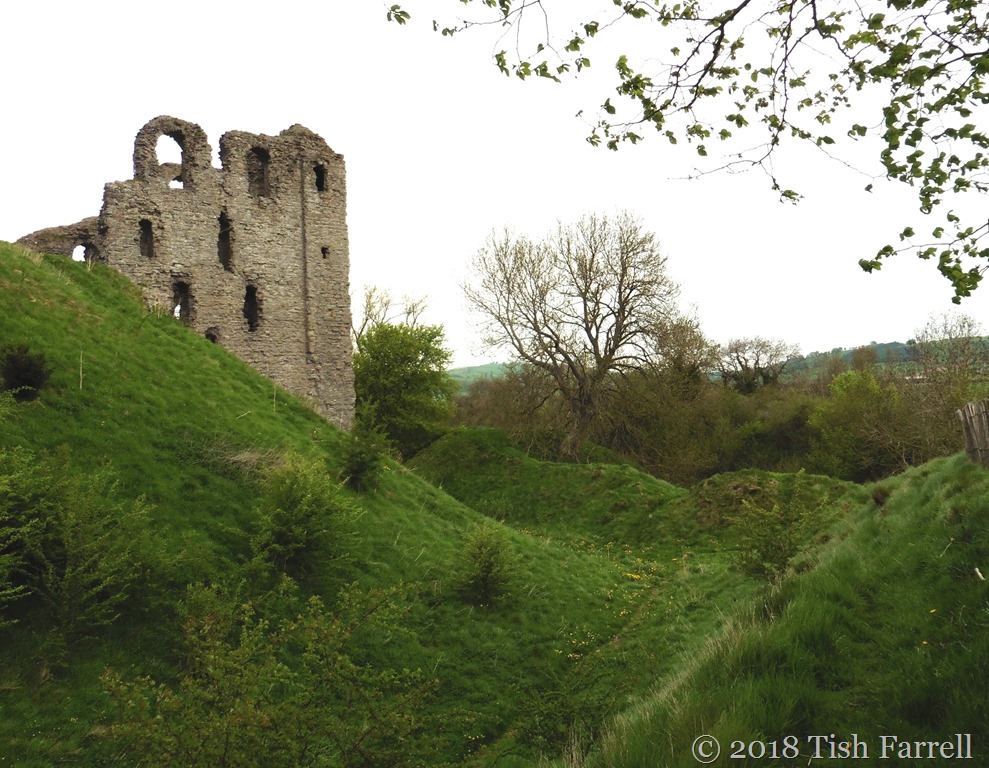
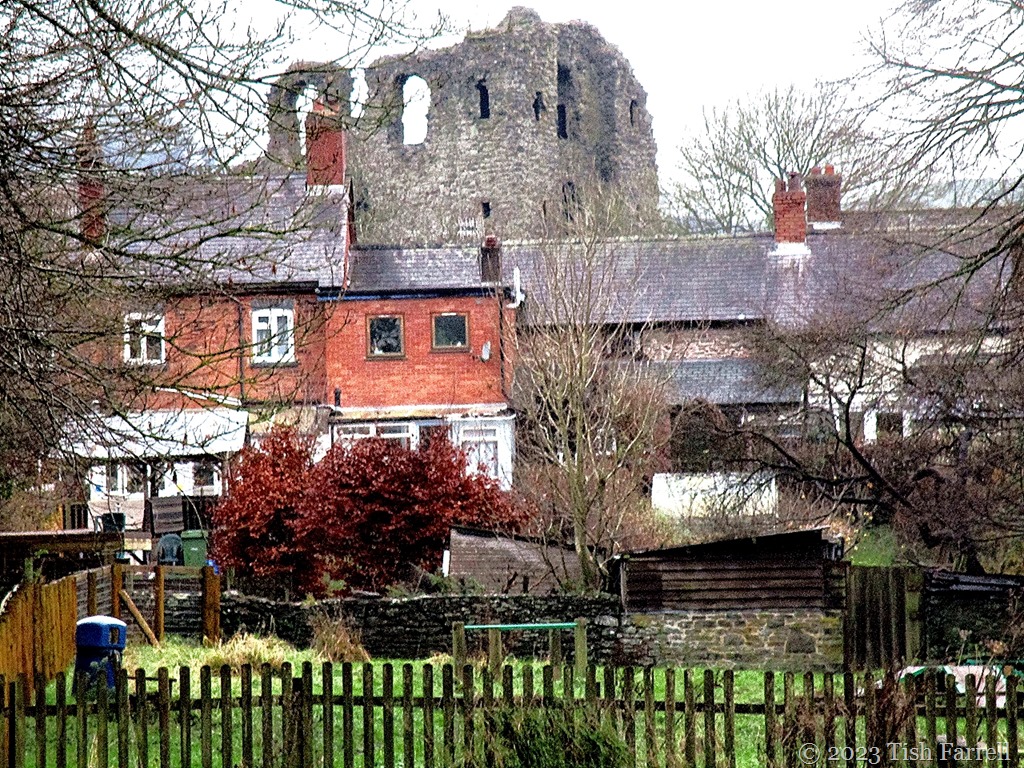
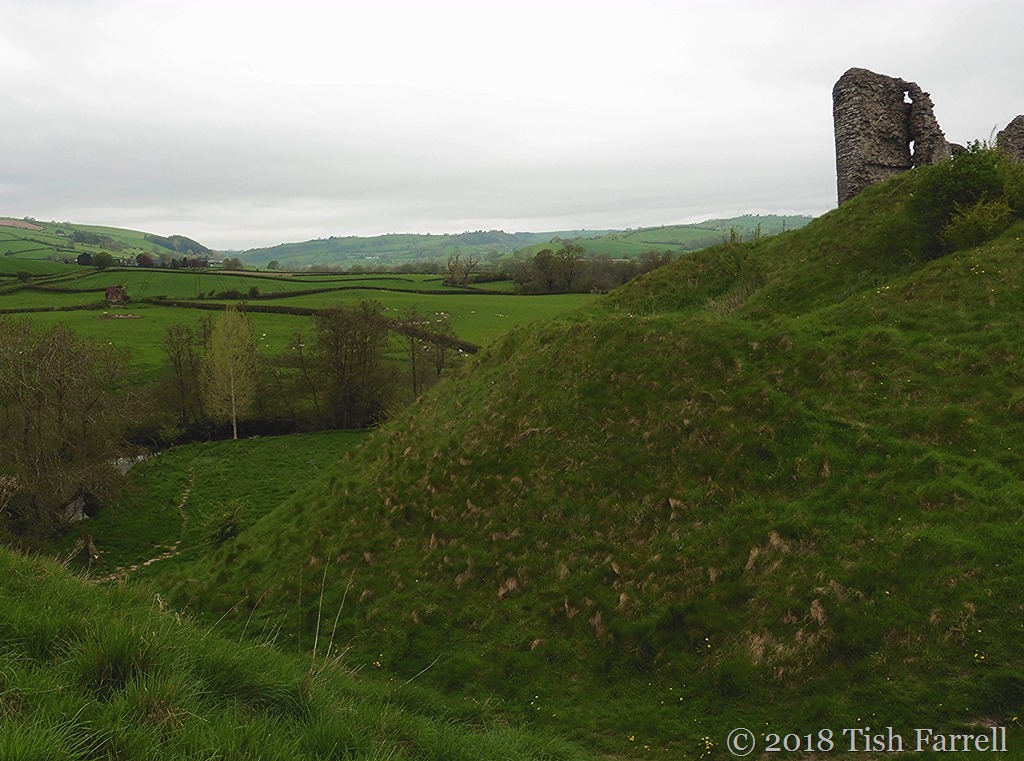
The ruined keep of the Norman castle looking especially lugubrious. We will return for a sunnier exploration.
Following In The Footsteps Of The Green Man

Clunton and Clunbury, Clungunford and Clun, are the quietest places under the sun.
A E Housman A Shropshire Lad

P1050735

We arrived in Clun last Tuesday in summer weather and headed for the Bridge Cafe. The little South Shropshire town was indeed quiet, although the young woman at the cafe apologised for still being in a bit of a confusion after the town’s two-day Green Man Festival. It was quite a do from all accounts, and the Green Man duly defeated the Ice Queen after heavy battling on the bridge.
One can easily imagine, too, that if the Green Man still lived anywhere, then it would be in the Clun Valley. The mysterious manifestation of spring renewal has ancient roots, possibly Celtic, or maybe older still, back in Stone Age. Trees and greenery have anyway long been reverenced in many cultures across the world. And you will certainly see his face peering from a garland of leaves among the carvings and gargoyles of many medieval churches.

crop

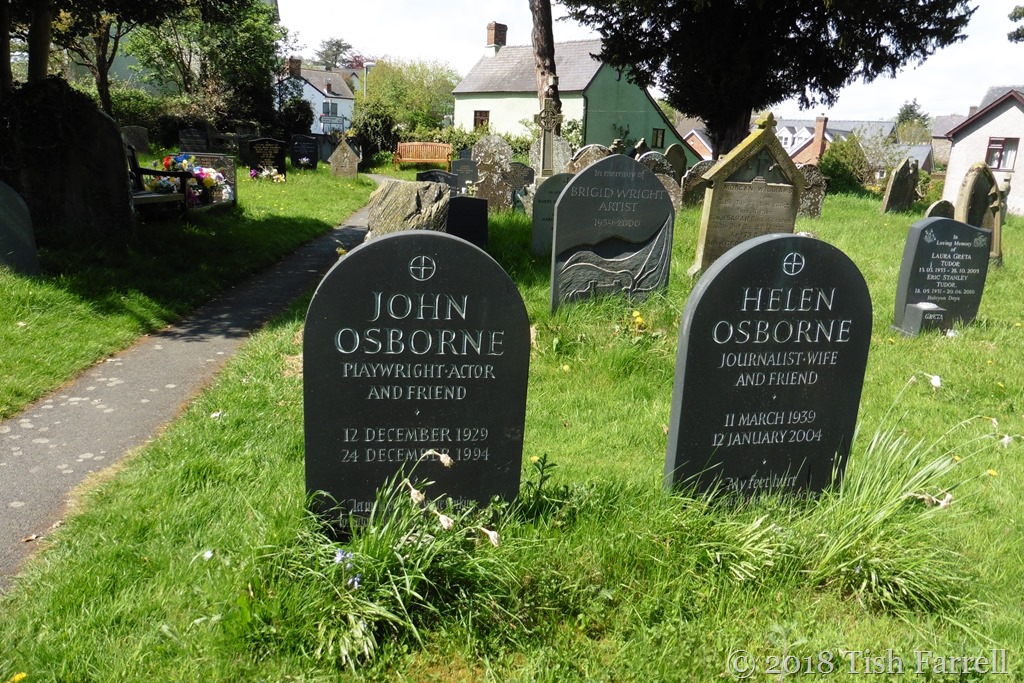
But I forgot to look for him at the parish church of St. George, our next stop up the hill from the cafe. I was too diverted with other finds there. Most particularly the graves of playwright John Osborne and his journalist wife, Helen Osborne. John Osborne blazed into the theatrical world with Look Back In Anger (1956) and The Entertainer (1957) changing British theatre forever. In fact he changed the air we breathed in post-war England, especially in the sixties when his plays were often performed. We grew up questioning establishment mores. These were the days of activism.

After his death, Helen honoured his wishes to hang on to their house, The Hurst, at nearby Clunton – this despite massive debts – and later ensured that it would serve future would-be writers. It is now one of the three homes of the world famous Arvon Foundation that nurtures creative writing and writers on its residential courses.

P1050748

Let me know where you’re working tomorrow night and I’ll come and see you

Inscription on John Osborne’s grave

*

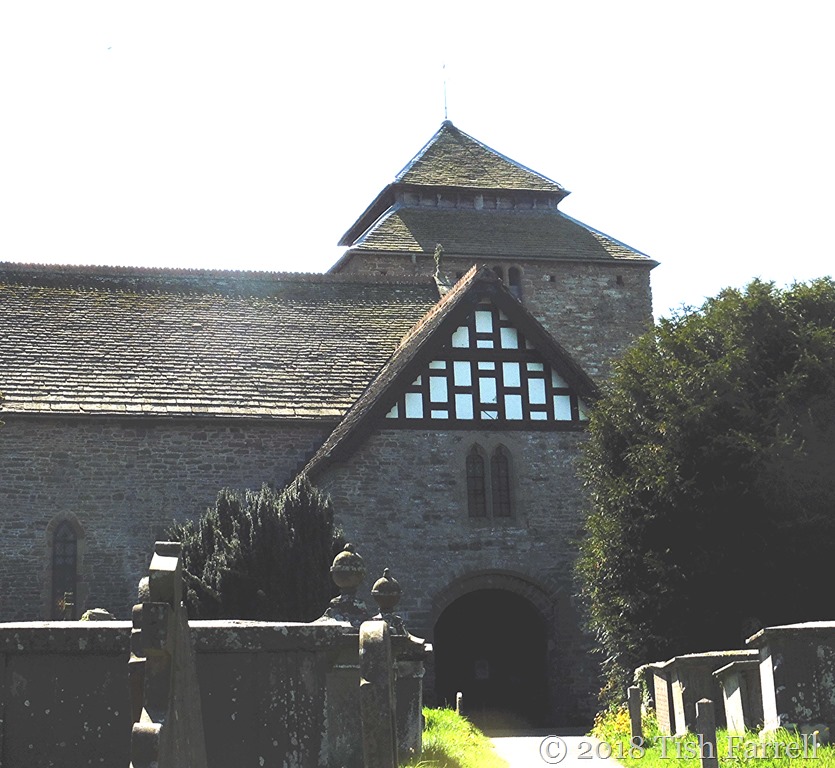
The church itself is very old, begun in the C12th, but added to in the C13th, C14th, and C17th centuries and considerably and carefully restored in 1877. It has some fine Norman arches, and a magnificent timber ceiling with added angels. Also in the porch are some interesting C18th and C19th boards announcing  donations by the well off to the poor of the parish. Beyond the acts of generosity, the public proclamation of them at the church door rather struck me as more of a bid to ensure holy favours for the donors.

P1050743


*

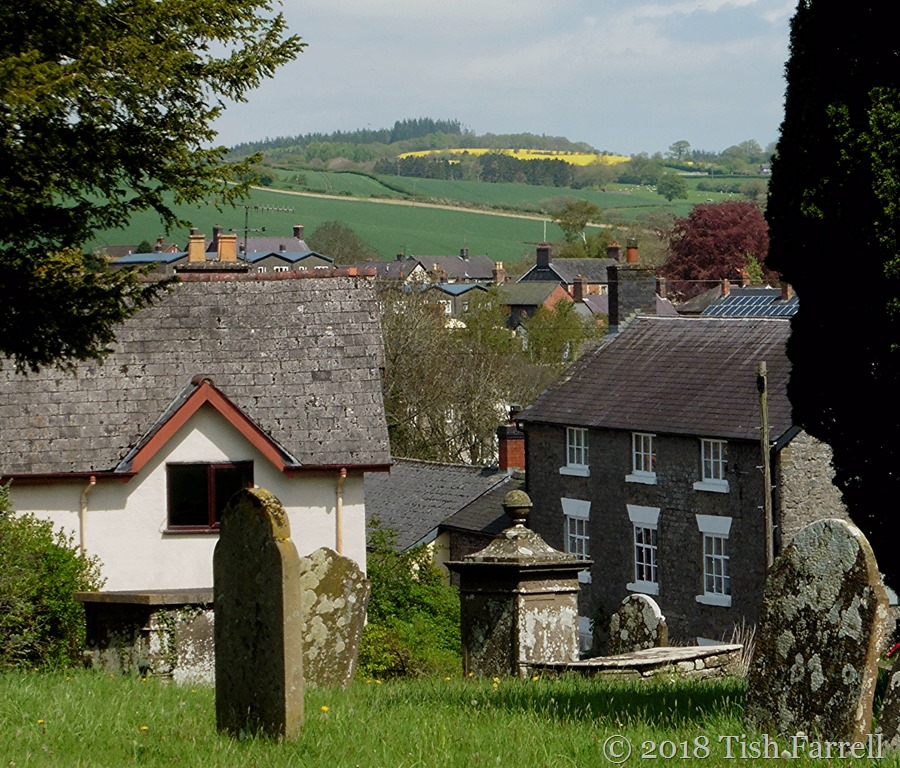
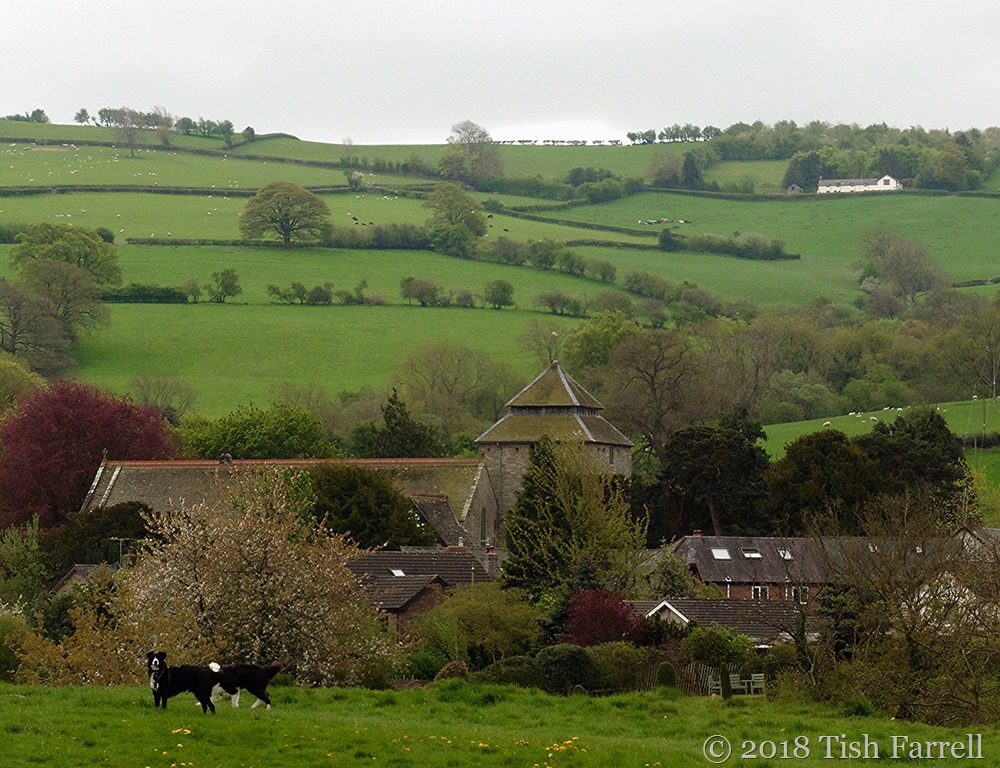
One of the most pleasing aspects of St. George’s are the fine views of the countryside from the churchyard. The town itself has a population of around 700.

P1050758

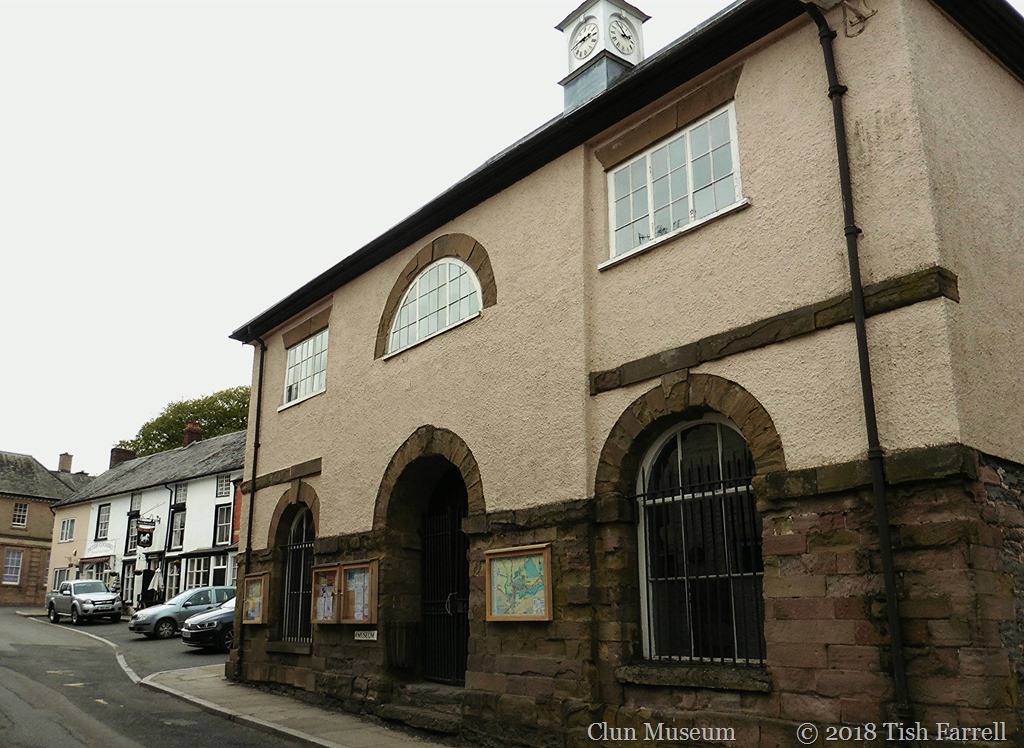
From the church it’s back down the hill and over the river, and up another hill into the main street where there is a butcher’s, a Spar supermarket, two inns, a gift shop, hair salon, hardwear store, cafe and (in the old town hall) a small museum. By the time we got there, after stopping to eat some very fine fish cakes in the Malt House Cafe, the summer weather had gone, so the following photos have lost their sunny lustre.

The museum is well worth a visit – mostly for its quirkiness. It is very much the community attic (and none the worse for that in my professional museum person’s opinion). It houses a melee of artefacts and memorabilia dating from 10,000 years ago (Mesolithic micro-flints used in the making of harpoons) to the silk dress worn by one Mrs Nora Bright in 1928. Hanging on the wall there is also a horrific mantrap (use illegal in England since 1827 apart from within houses at night to deter thieves). Alongside are spears and various agricultural implements, and in nearby Victorian display cases there’s an array of prehistoric flint tools, a Roman bead, and the once personal belongings of Clun’s inhabitants. Upstairs the display is more themed and mostly features military and war-time service uniforms with associated period objets. You can also rifle through three files of the town’s photographic collection – a must for those with tendencies to nosiness.

P1050863


*

Back into town:


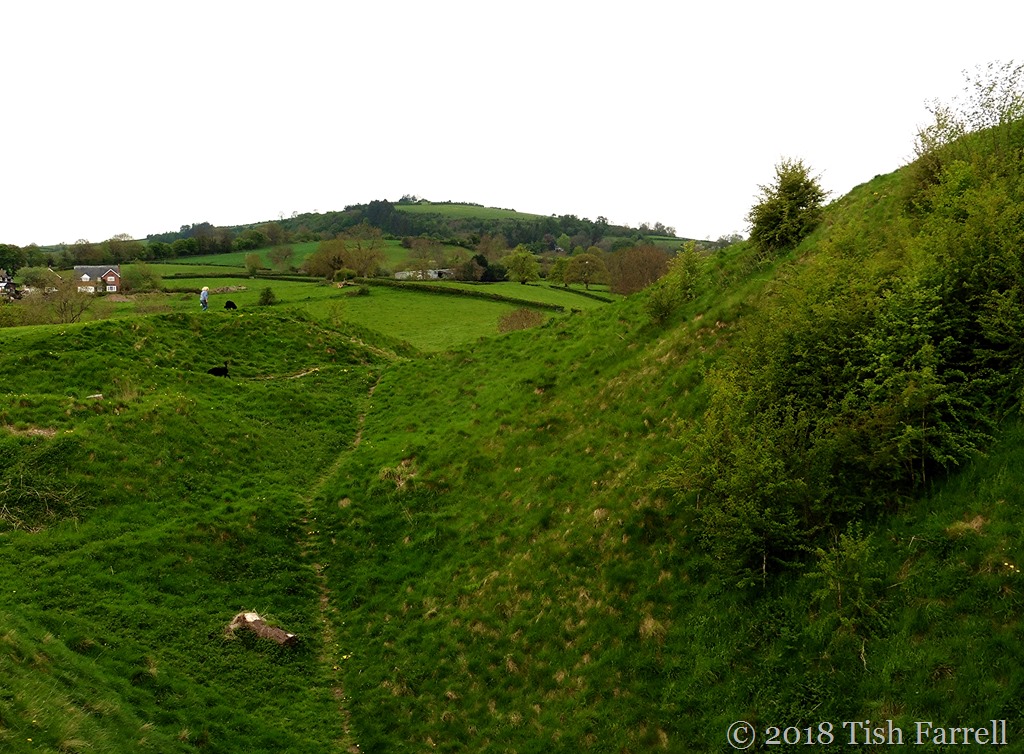
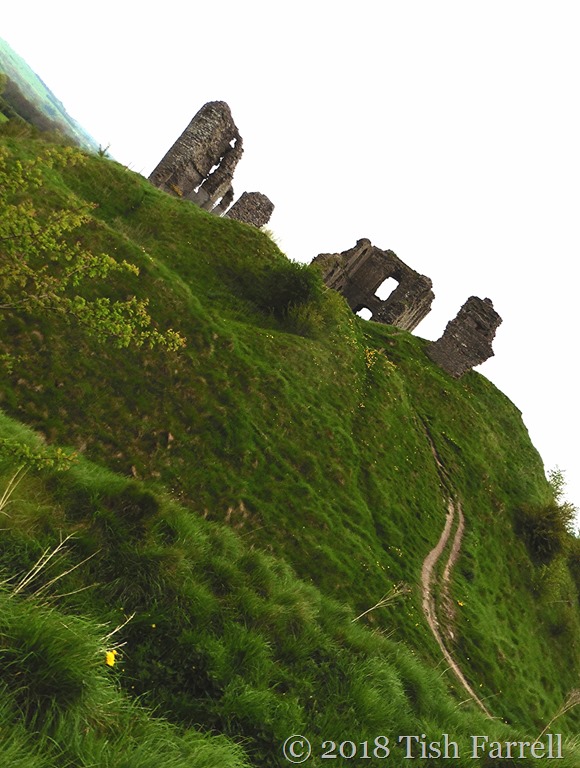
We had saved the best of this visit until last. Because Clun also has a castle – or at least some very dramatic ruins thereof. The only problem was, by the time we reached it, the weather gods had opened the door and let winter back in. So much for the Green Man’s conquest of the Ice Queen. Not only was it too cold to explore – the sudden wind cutting us in half, but the light was very poor. So these next photos only give a quick view of this ancient Norman motte and bailey fortress. But just look at the scale of the earthworks – and think of the enforced human-power necessary to construct them.

Norman rule was all about domination of locals. The castle was built to control the rebellious souls of the Welsh Marches in the late C11th  by one of King William’s marcher lords, Picot de Say. In 1155 it passed by the marriage of Isabella de Say into the powerful Fitzalan dynasty (later known as the Earls of Arundel).

P1050806

P1050808

*

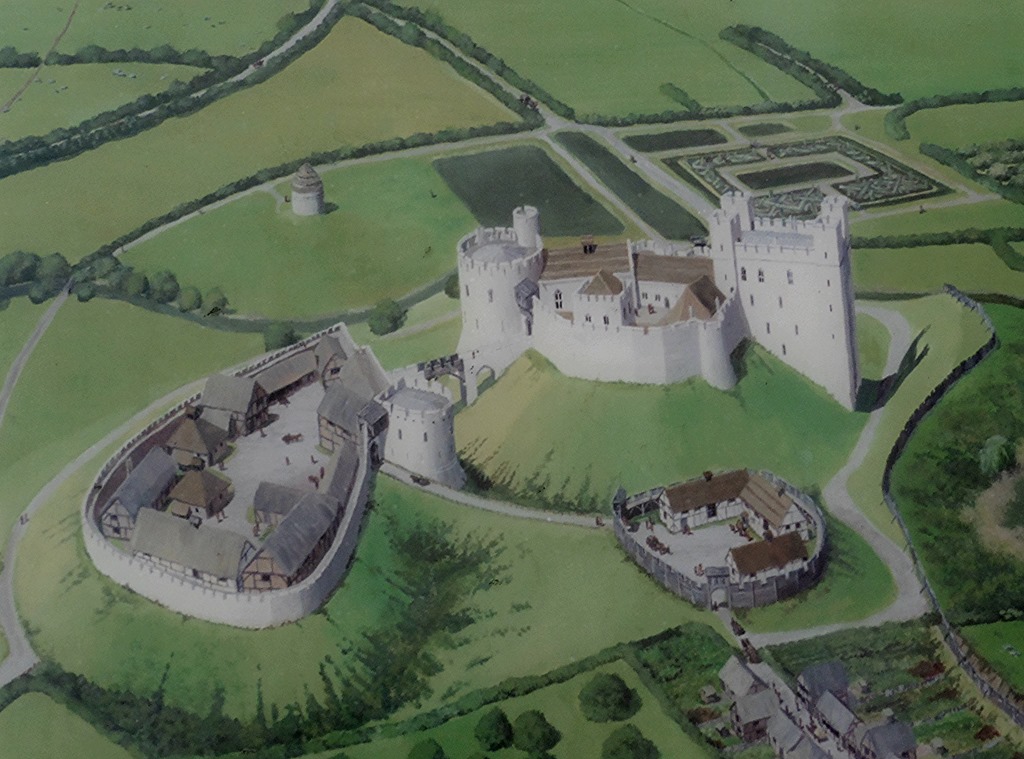
English Heritage kindly provide a visual reconstruction for the year 1300 as drawn by Dominic Andrews, by which time life was less martial in aspect, and lords in castles also went in for pleasure gardens. You can see them in the right hand top corner. The castle also had its own farm (bottom right) and accommodation with associated trades for the soldiers and servants (left outer bailey).

P1050812cr

P1050823

P1050803

P1050814

P1050813

And with this final very green view of the Clun Valley and of St. George’s church, Dr. and Mrs. Farrell hotfooted it back to the car before it started to rain.

I’m linking this to Jo’s Monday Walk. I’m thinking she might have paid Clun a wee visit during her Shropshire safari last summer.