
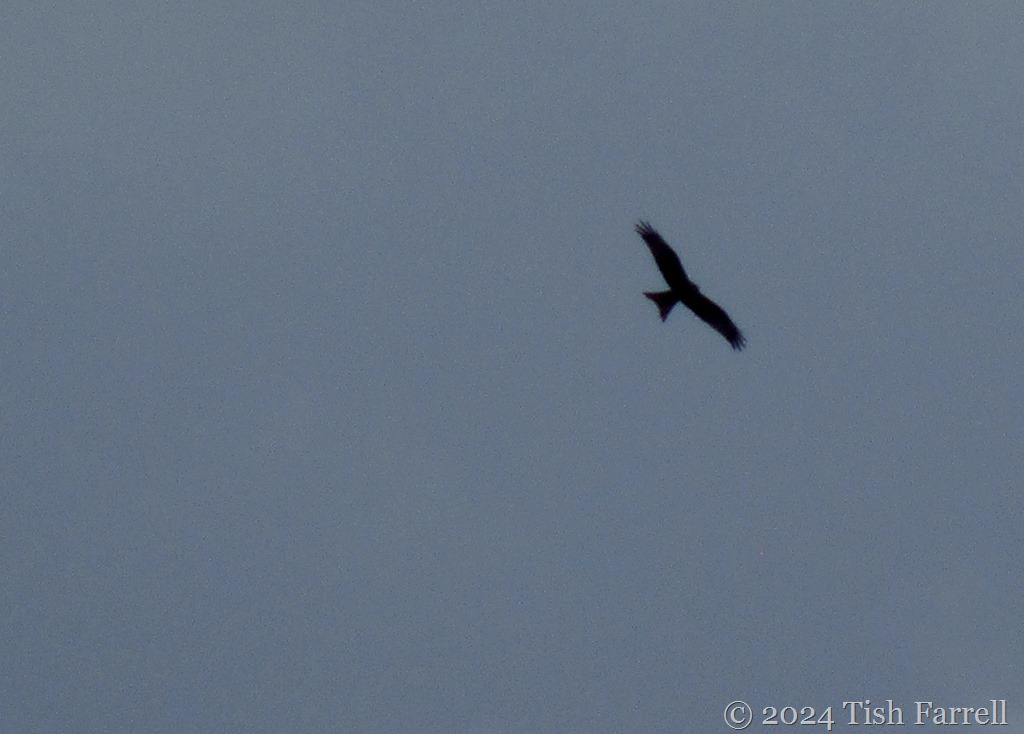
Now that we’ve moved our dining table to its winter position – i.e. from the conservatory at the back of the house to the front sitting room window – we can eat breakfast while watching a red kite scanning the town. It comes most days, drifting over the High Street, circling high above nearby gardens. With a wing span of around six feet (180 cm) it is one of Britain’s largest birds of prey (i.e. bigger than a buzzard and easily distinguished from that particular raptor by the forked tail.)
A few years ago the species was believed to be near extinction. In the early 20th century the birds were targeted by gamekeepers who thought they were eating their pheasants. Not so, it seems. The birds’ main menu comprises carrion and worms and sometimes small mammals. In fact, back in Tudor times, kites also frequented towns in large numbers, filling an essential function as street refuse cleaners.
When we lived in Kenya, their cousins, the black kites, performed similar duties. Less welcome, we discovered there, was the cousins’ tendency to ‘gate-crash’ Nairobi’s ambassadorial garden parties. They had learned to spot the distracted guest, one with wine glass and plate politely poised and as they hung on the words of some ministerial bigwig. In the birds swooped, snatching up the undefended sailfish canape or piri piri chicken wing. Whoosh and away.
That scene jogs another black kite memory. An indelible brain cell recording. One used to roost in our front garden on Mbabane Road. It would perch in the jacaranda tree and mew all night long. A mournful cry.
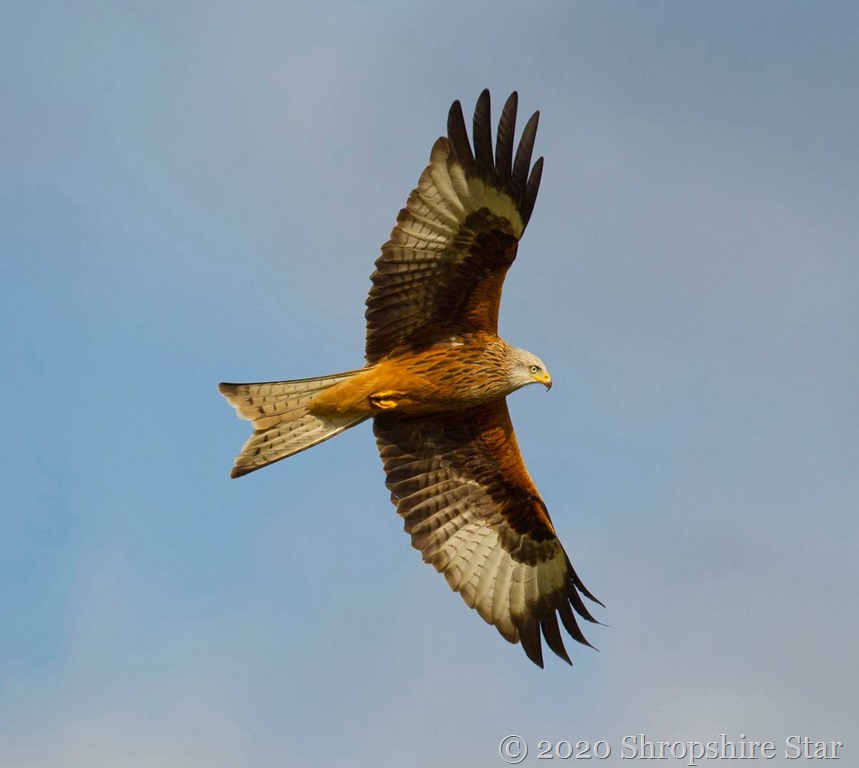
But back to the red kite. Here in Shropshire and Wales, and some illegal shooting incidents apart, they are mostly thriving. This thanks to a re-introduction programme late last century which helped boost remnant populations. And while of course we are more than happy to see them, we can only hope they do not recover the habits of their distant ancestors.
The Wildlife Trusts website explains (also see a nice video clip of a kite in flight):
Red kites were common in Shakespearean London, where they fed on scraps in the streets and collected rags or stole hung-out washing for nest-building materials. Shakespeare even referred to this habit in ‘The Winter’s Tale’ when he wrote: ‘When the kite builds, look to lesser linen’. The nest of a red kite is an untidy affair, often built on top of an old crow’s nest. It is lined with sheep’s wool and decorated with all kinds of objects like paper, plastic and cloth.
I will let you know how my washing fares when drying weather resumes.
