Sounds of Portland Head

IMG_0258_thumb[2]

It stills the mind, listening to the sea. The chattering monkey mind shuts up. Gives in. Surrenders to the inward rush of waves, the rhythmic retreat. But add in the doleful wail of a lighthouse foghorn, and something else happens. A door in the imagination swings wide: images of storm-lashed fishing boats, a ship off course, the warning blast resounding on fog-laden seas,  the tremors of anxiety as seafarers hear that sound and know of invisible danger ahead. Shoals, sandbanks, submerged rocks?

*

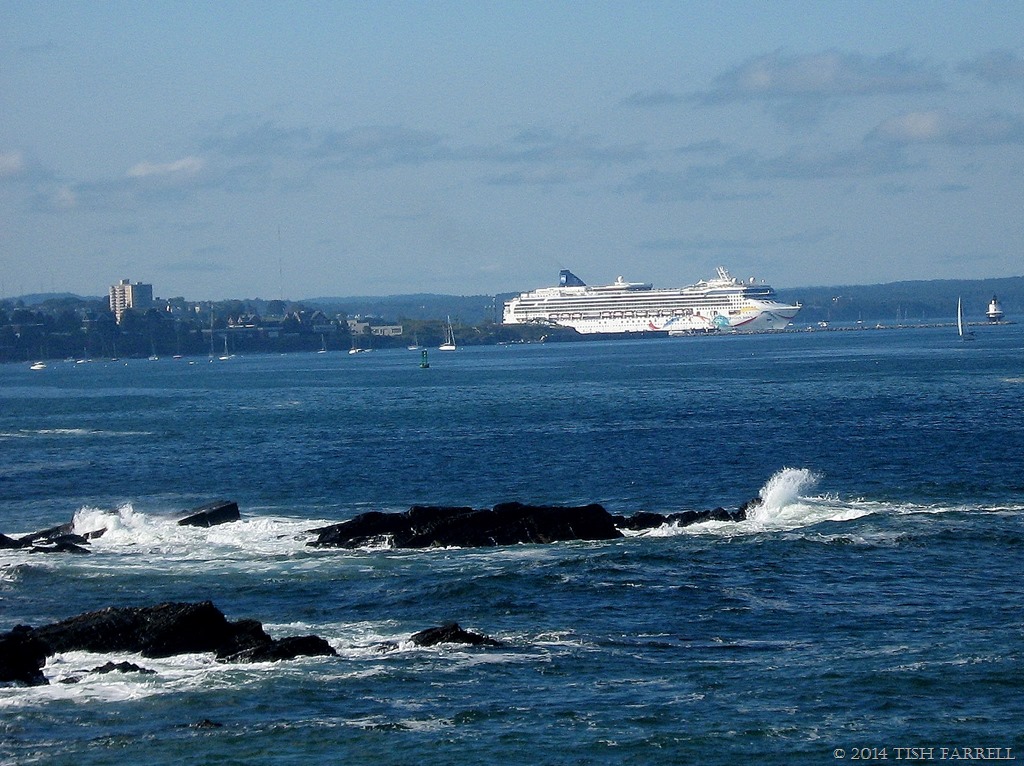
There was none of this kind of drama on the day we went to Portland Head Light. The morning’s sea mist had dispersed to dreamy afternoon sunshine. We watched a huge cruise ship sail out of Portland. People milled about the gift shop and ate ice creams. September in Maine – what could be nicer?

The Portland Head Light is the state’s oldest lighthouse, built at the behest of President George Washington between 1787 and 1791. Apparently government funds at the time were very tight and the story goes that the President ordered the masons, Jonathan Bryant and John Nichols of  Portland, to use materials taken from the fields and shore and haul them to the site by oxen.

The original plan was for a 58-foot tower (17 metres), but when it was done it was realized that the light would not be visible beyond the headlands to the south. A further 14 feet (4 metres) was required, at which point Mr. Bryant quit, leaving Nichols to finish the job and build the small house beside it. The Light was dedicated by the Marquis de Lafayette and first lit on January 10 1791 using 16 lamps fuelled by whale oil.

The first keeper was Captain Joseph Greenleaf, an American Revolution veteran. For his pains of manning the Portland Head Light, Greenleaf was allowed to live in the keeper’s house and fish and farm nearby. He received no pay. By June the following year he had had enough. He wrote to the authorities telling them of his travails. For one thing in the winter the ice would form so thickly on the lantern glass it obscured the light, and he would have to go up there and melt it off. It is hard to imagine what kind of effort this would have involved, and in alarming conditions too. In 1793, until his death two years later, he received an annual salary of $160, which by today’s values would be around $4-5,000.  Not exactly riches for saving life and property from treacherous seas.

Portland Headlight

IMG_0255

Ailsa’s travel challenge: noise

copyright 2014 Tish Farrell

Far away in black and white in the Shropshire Hills

IMG_1309 - Copy (2)

mitchells fold monolith 2 - Copy (2)

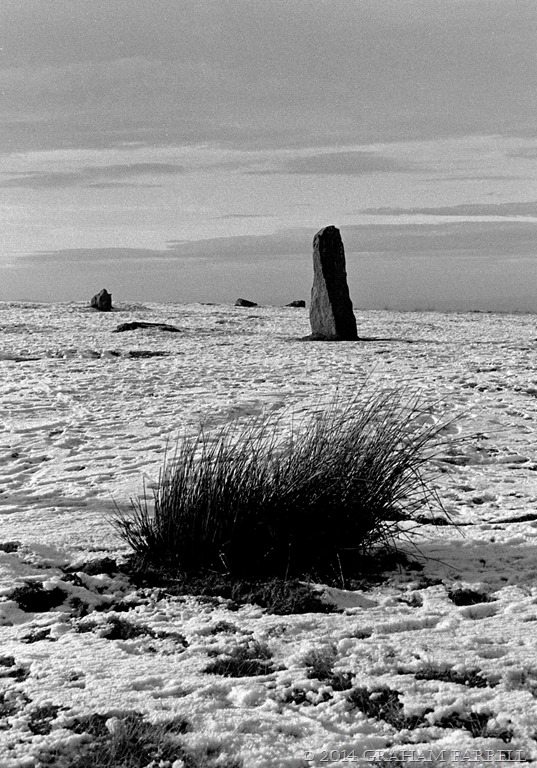
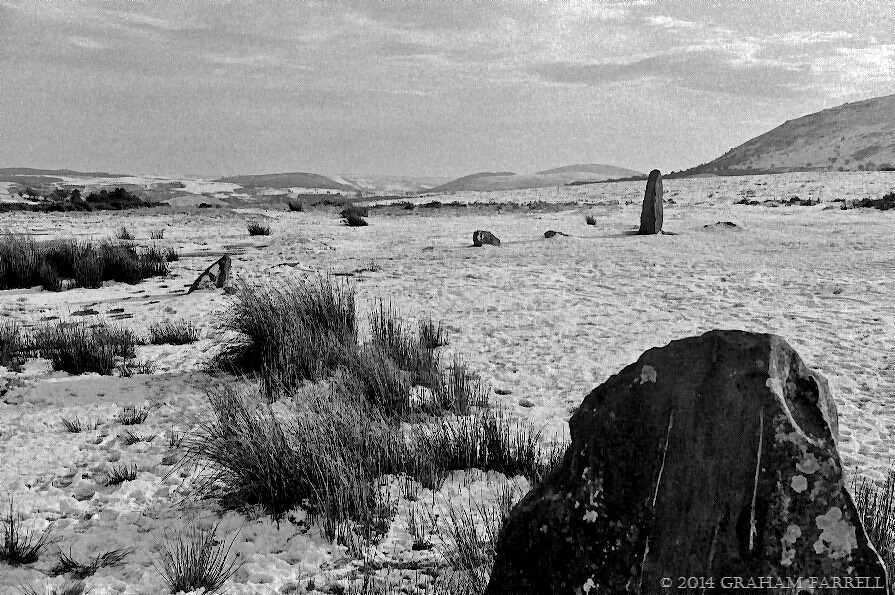
These photos were taken at the Bronze Age stone circle of Mitchell’s Fold, up in the South Shropshire hills. It seems isolated now, but four thousand years ago there was much human activity in these uplands. There are the remains of field systems from this era as well as burial cairns and other stone monuments. In more recent times this stone circle has been associated with the legend of a wicked witch called Mitchell. She is reputed to be entrapped within the stones. You can read more of this story at Witch-catching in the Shropshire Wilds.

copyright 2014 Tish Farrell


With thanks to Cee for her brilliant challenges, and to Graham for the use of his photos.

Cee’s Black & White and Far Away Challenge

Sundown in the Maasai Mara

Scan-140726-0025


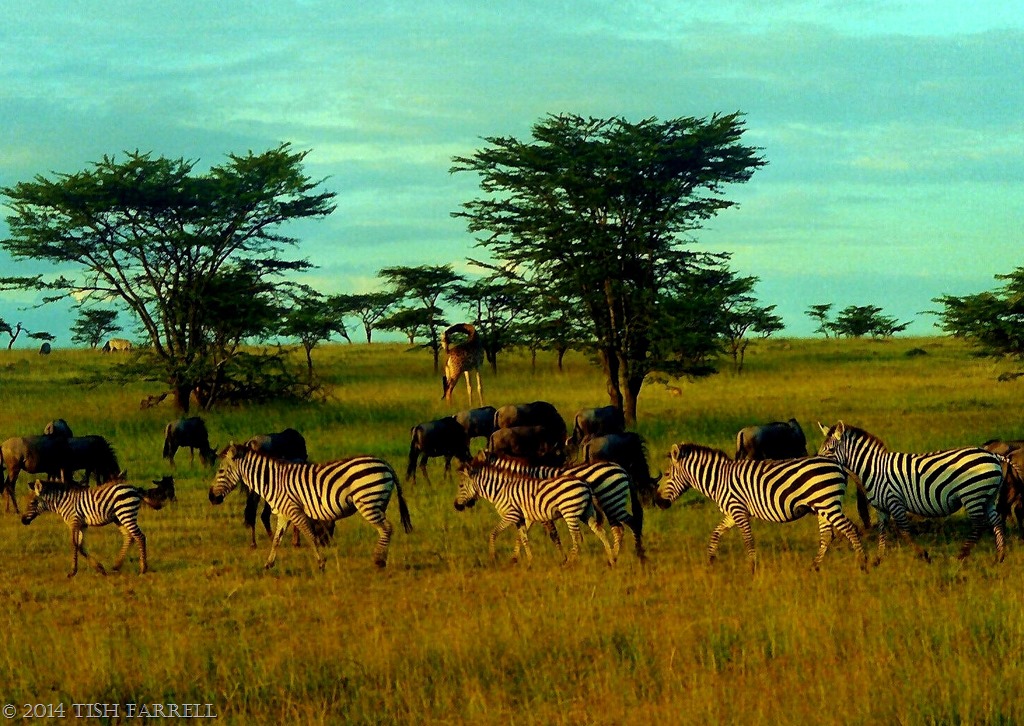
Night comes swiftly at the equator, usually at 6 to 6.30 pm. But around 5 pm there is that perfect moment when the light is like molten honey.  This shot was only a quick snap, taken after a game drive, and as we were heading back to camp on the Mara River. Our driver-guide was intent on one last go at spotting a leopard. For our part, we were simply entranced by this scene. Even at the time it seemed as if we had stepped into an oil painting. Besides, this was the most game we’d seen in one place all afternoon. Because that is something that wild life films tend not to show you: that you can drive for hours across the African bush and not see a single animal.


There is also more going on in this scene than is immediately obvious. Behind the zebra are some wildebeest; then the giraffe between the thorns. I’m not sure what the pale animal is on the top left horizon, but from its size I’d say  it is probably an eland. Then if you look carefully  just below the right hand bough of the right hand thorn tree, you might make out a brown dog-like shape. Hyena. There will doubtless be others in the grass. Once it was thought they were only scavengers, moving in on big cats’ kills. But now they are known to be hunters too. They prey on gazelles and larger antelope. Even a lone hyena can bring down a full-grown wildebeest, and pack away 15 kilos of meat at one sitting. They have jaws like industrial meat grinders, and believe me, to come upon one at close quarters, is not recommended.


Sunday Stills: Crowd Work

copyright 2014 Tish Farrell

Transported on Lamu


Scan-140801-0001


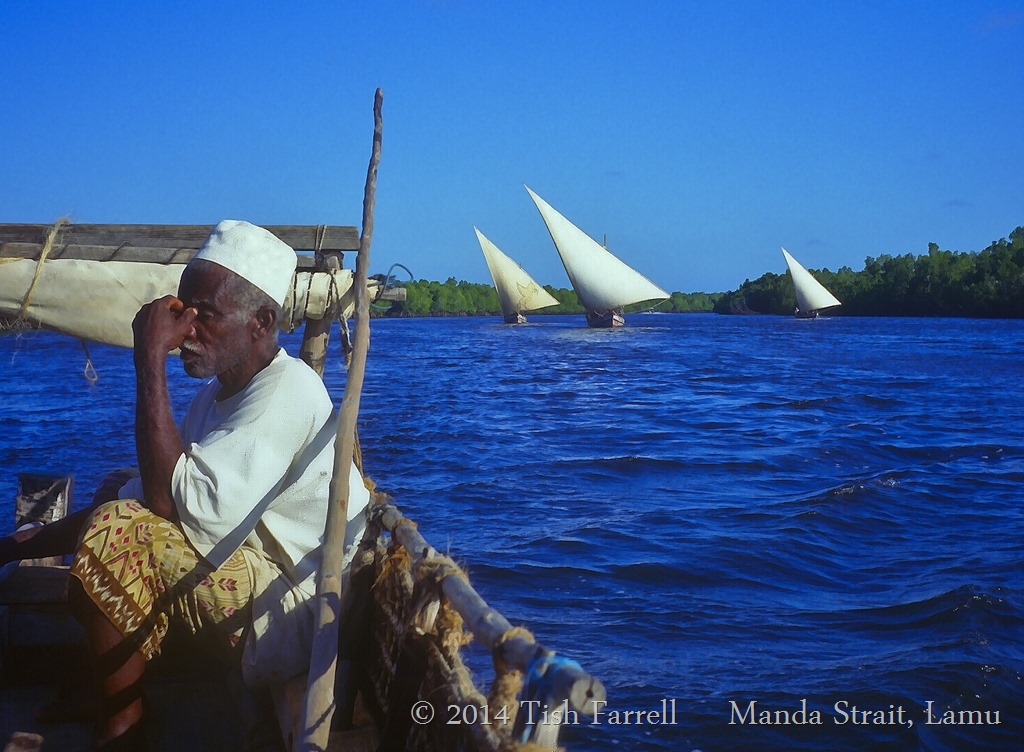
There came a time when Sendibada signed on with a strange sea captain. The next day, as dawn was breaking, the ship cast off, a strong breeze filling the lateen sails, and bearing them swiftly out to sea. But towards noon the wind died, and the boat drifted, becalmed, on still waters.

At this the captain strode out on the bridge, and began to utter words that Sendibada could not fathom. He stared and stared for, to his astonishment, the ship began to rise, graceful as an egret taking flight. Sendibada grinned. He liked a good adventure, and now it seemed this strange captain of his was none other than the most powerful magician.

Up into the clouds they soared, flying, flying until at last they saw a faraway red spot. But little by little the spot grew, until at last Sendibada saw it was a city in the sky, and that every house there was made of copper. Soon they set down in the harbour and, as the crew made to go ashore, from every quarter, lovely girls came out to greet them, bearing on their heads copper trays laden with the most delicious fruits and sweetmeats and tender roasted morsels.

And so it was that much time passed, the ship’s crew enjoying month after month of this most gracious hospitality. Sendibada, though, was growing homesick, and said as much. Now the magician gave him a round mat and told him how to use it.

Sendibada followed the instructions, placing the mat on the ground and seating himself upon it so that he faced the direction of his home town. Then he spoke the foreign words that meant: Behold! We shall all return to it . And at once the mat rose into the clouds, and faster than a diving hawk, set Sendibada back on the beach just outside his home town.

 copyright 2014 Tish Farrell

The Copper City  retold from a translated text in Jan Knappert’s Myths and Legends of the Swahili


P.S. In case you hadn’t guessed, Sendibada is the Swahili version of Sinbad.


A Word A Week challenge: transport

Meeting with Lions in the Mara


Scan-140726-0004 (8)

It is late afternoon when Daniel, our guide, takes us to the rock-strewn  place where he knows  the lions will be.

Scan-140726-0003 (10)

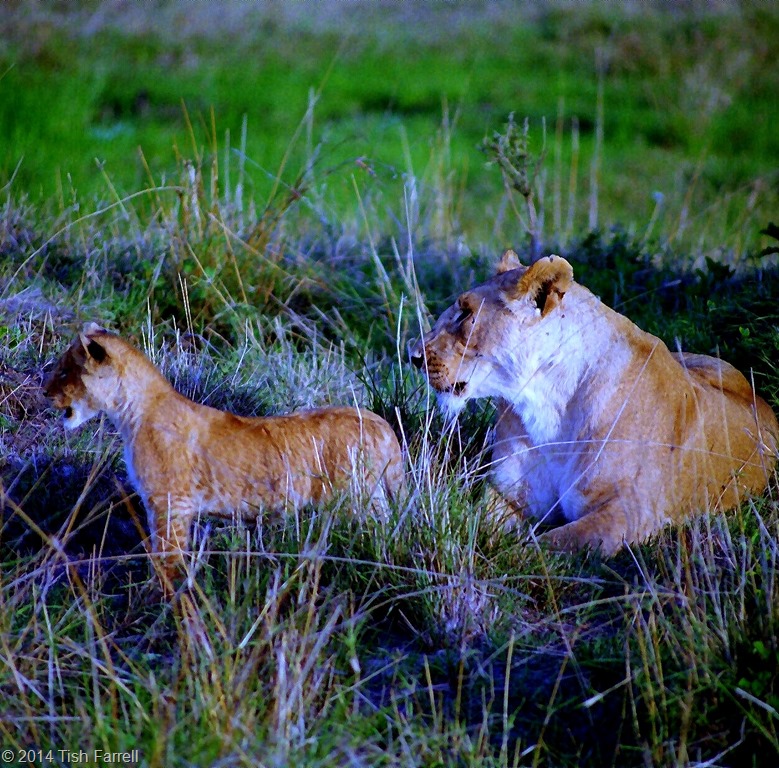
The males are hiding away in longer grass, but the females and cubs are out in the open, enjoying the last of the sun. The light is spectacular. I wonder if the lionesses have chosen this place on purpose: because their young blend in so well with the landscape. In any event, they seem utterly relaxed. This mother (above) simply watches us as she feeds one of her cubs. There is another at her tail, disguised as a boulder, while the third one takes off on a small adventure.

Scan-140726-0013

The quiet proximity of these lionesses is breath-taking, our intrusion on their family life above their notice. We watch them until the sun goes down and it is time to return to our camp on the Mara River.

Scan-140726-0008

Scan-140726-0006 (8)

Scan-140726-0015


Ailsa’s travel challenge: meeting places

Go here for Ailsa’s and other bloggers’ meeting places. Meanwhile, here are a few that caught my eye:


Travel Tales of Life Cinque Terre: Meeting in an Italian Paradise

Third Person Travel

Stefano Scheda

Almost Italian