Come September and the months of drought simply switched off. Instead we have rain between showers. There have been days and days of lowering skies and serious downpours, and although this may be considered ‘typically English weather’, it comes as a shock after months of wall-to-wall sunshine.
But then last Tuesday we had a reprieve. Cloud yes, but rain on hold.
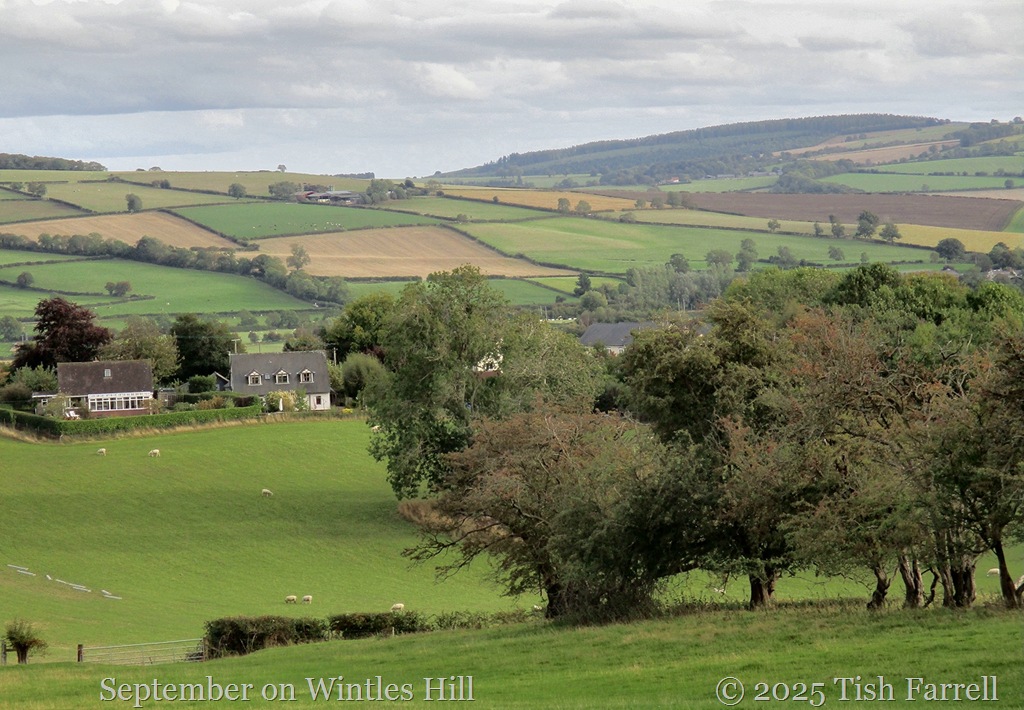
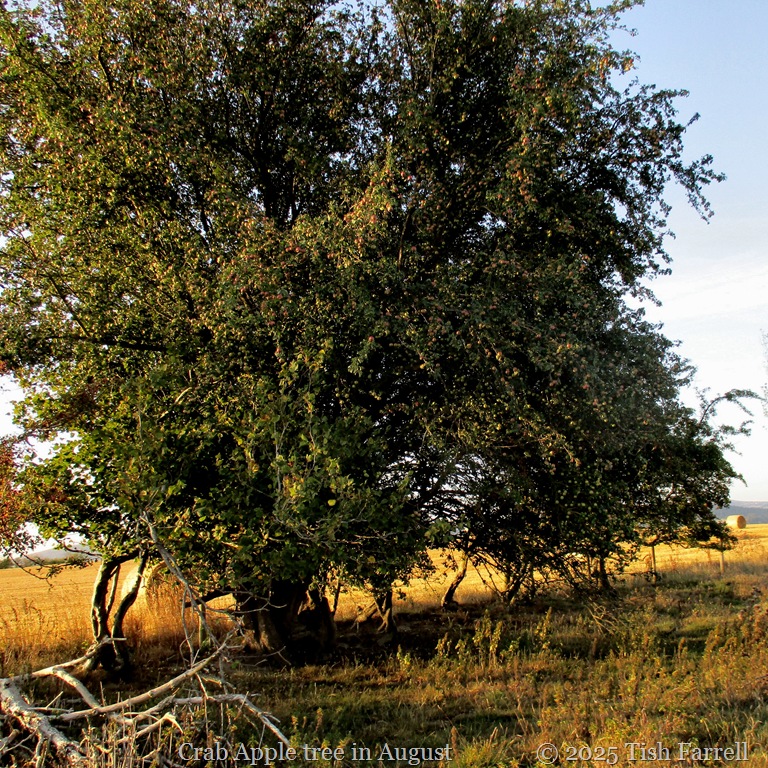
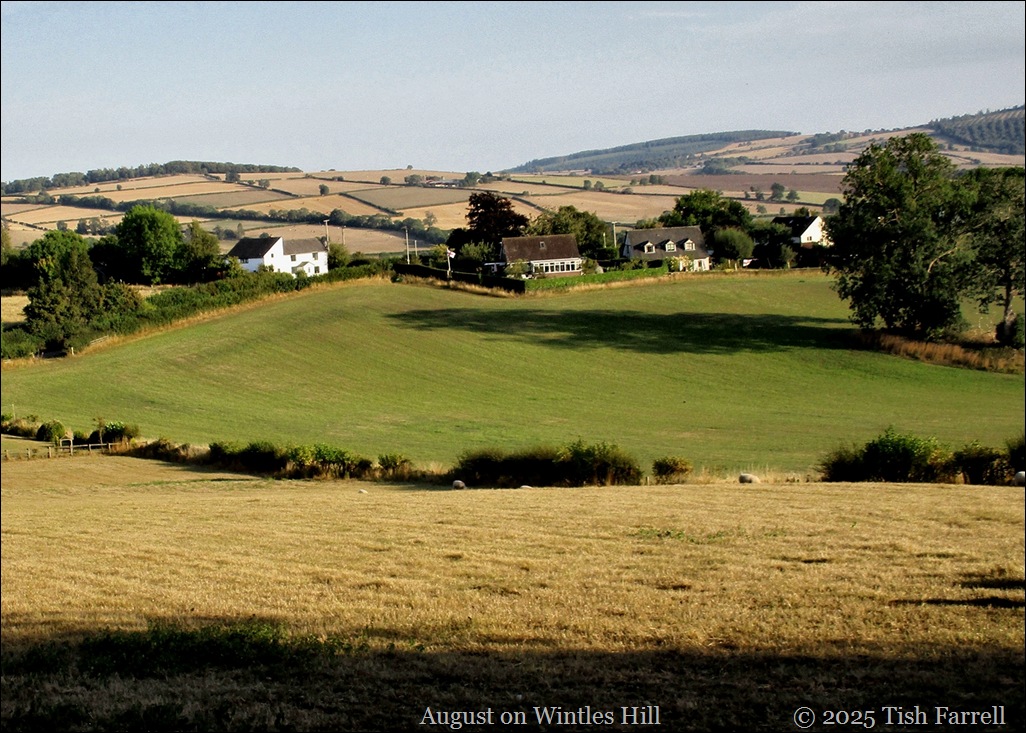
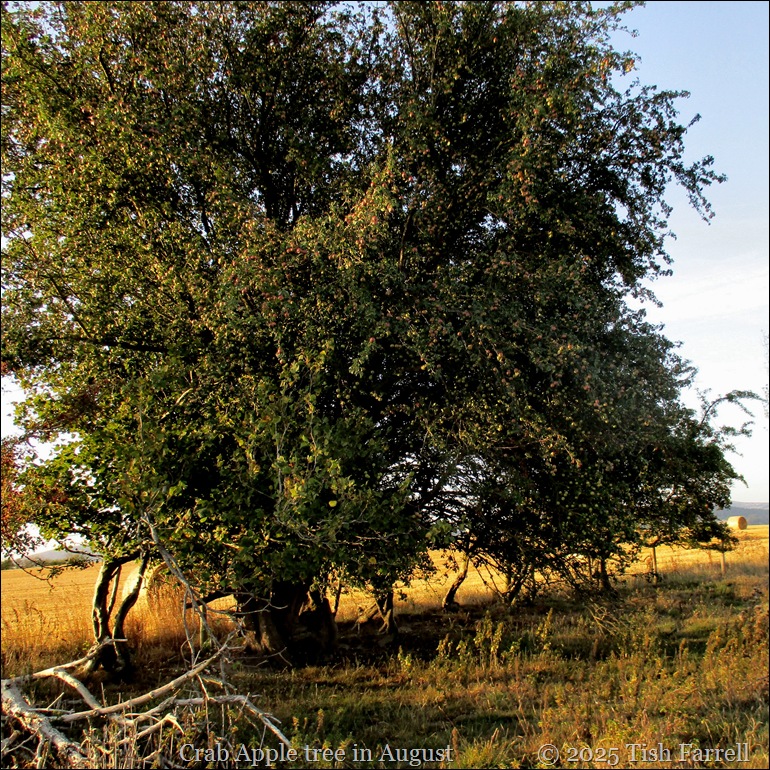
Let’s go for those crab apples, I say to he-who-builds-carports-that-aren’t-for-cars. He was not keen. The crab apple tree we first spotted in August is on top of Wintles Hill. It’s quite a haul up the green lane from town, followed by a gasping scramble up a steep sheep field. But he kindly yielded and came along too. It’s glorious once you’re up here, he says.
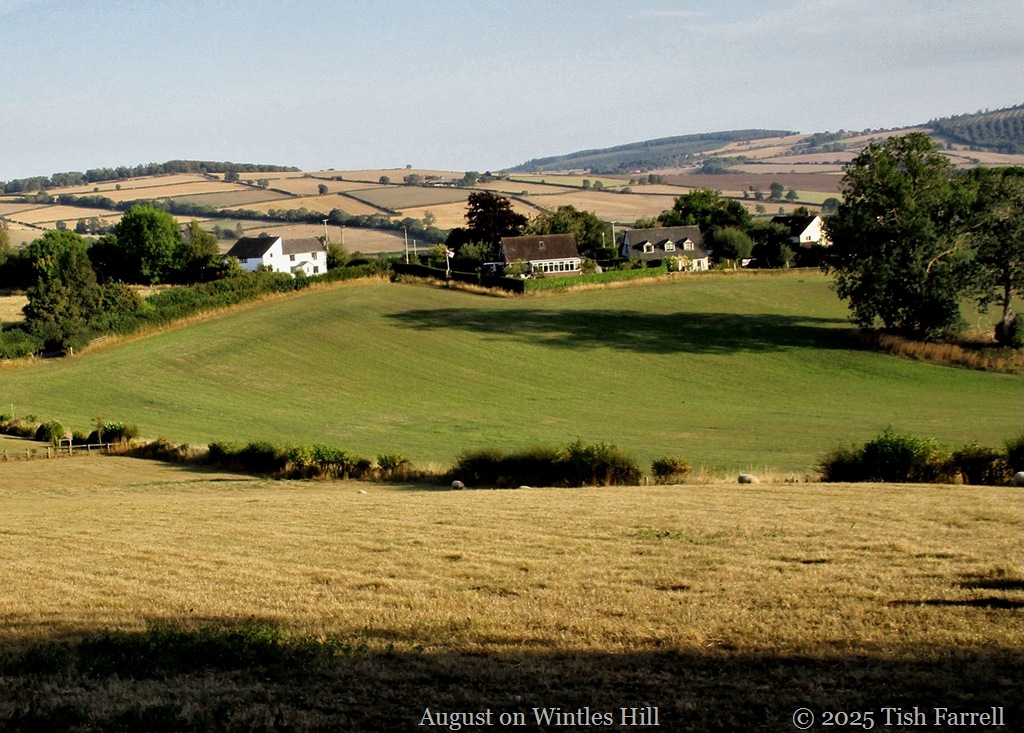
Back in August, when were are last here, the world felt toasted, the farm fields bare from an exceptionally early harvest, the grass brown and dead looking. But this week, after so much watering, all was mostly green again – the pasture fields rejuvenated. We even found some field mushrooms, the first I’d seen in years.
*
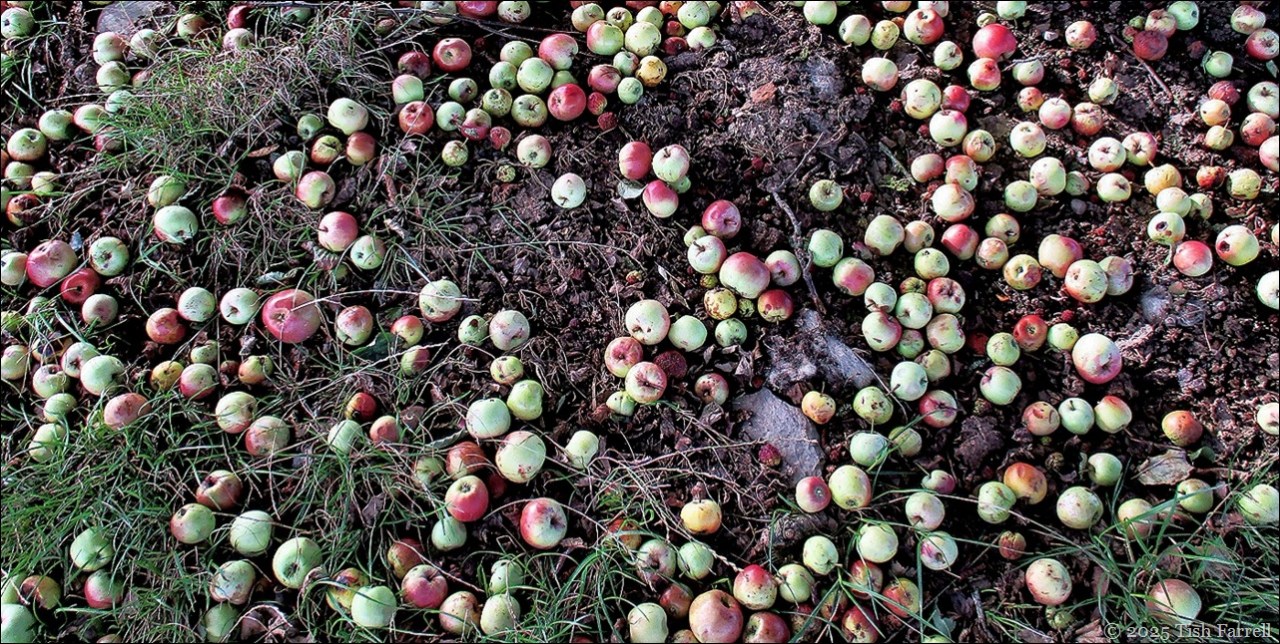
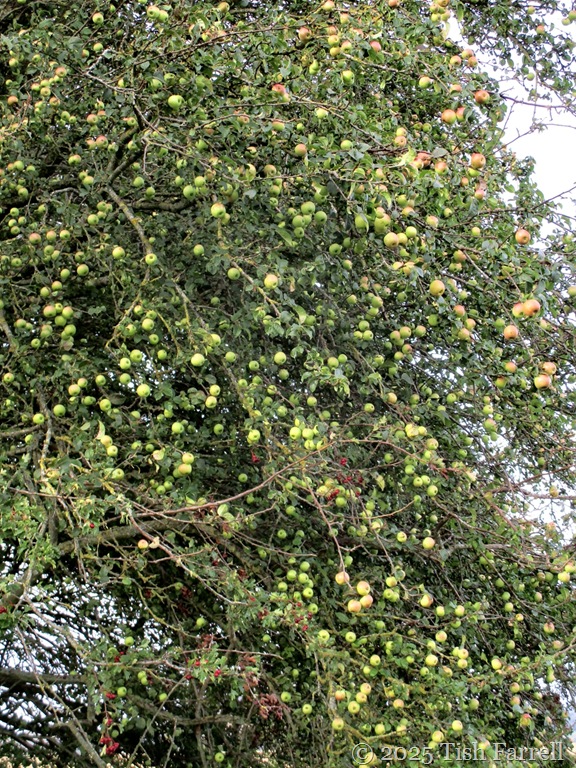
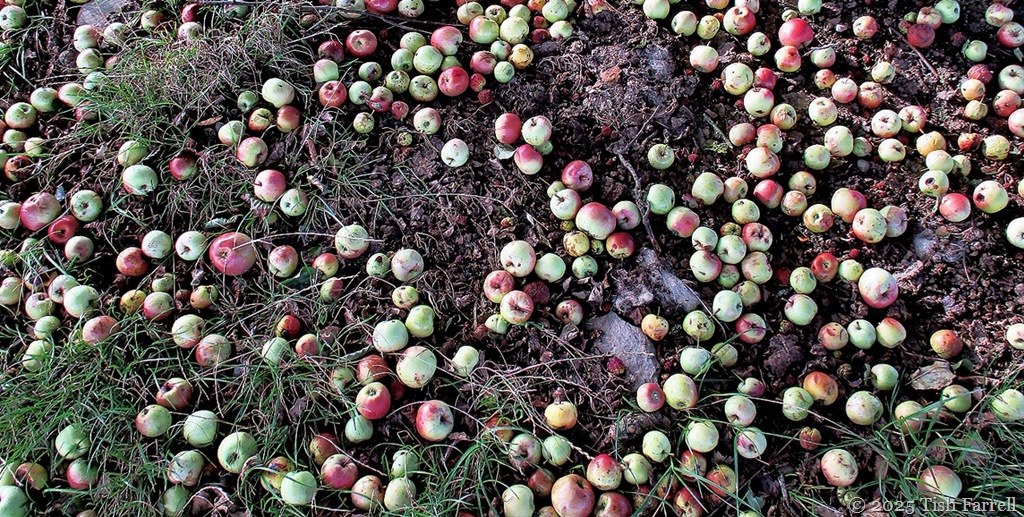
When we arrived at the tree we found it as crammed with fruit as it had been a month earlier, but now there was a mass of tiny apples underneath. (We’ve also had gales).

*
Since August I had been dithering about gathering the apples. It seemed too early. I had inkling they were better for making jelly after they’ve weathered a cold spell. But oh well, we were there now and with bags to hand. The fallen apples were anyway ripe and it occurred to me, that given the mass of apples still on the tree, I could come for another forage later in the year. And then I’d know, one way or the other – before or after a frosting.
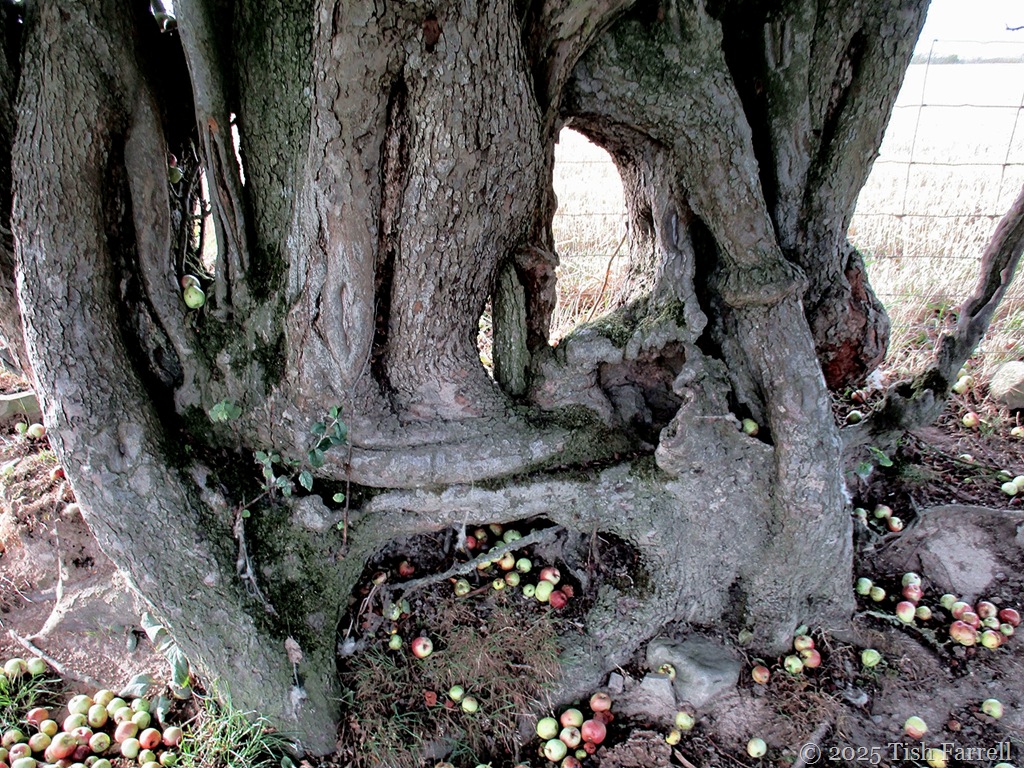
As I was crouched, head down, picking over the fruit, I noticed the tree’s trunk – or rather trunks: talk about the drive to survive come what may…
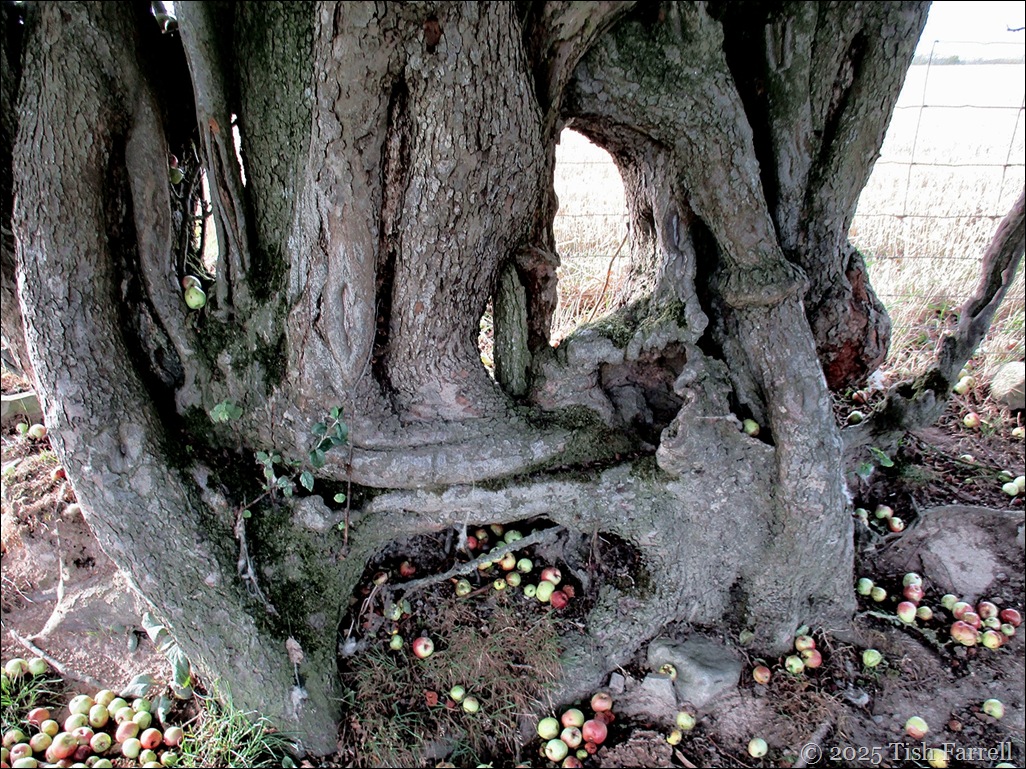
Wild art as well as wild apples then.
There is definitely a remnant slip of hawthorn in the melee of roots and stems. But it makes me wonder: how ancient is this tree or trees? And how amazing that, here on so exposed a hilltop, and with so many gaps in its infrastructure, it can still produce such a prodigious crop.
*
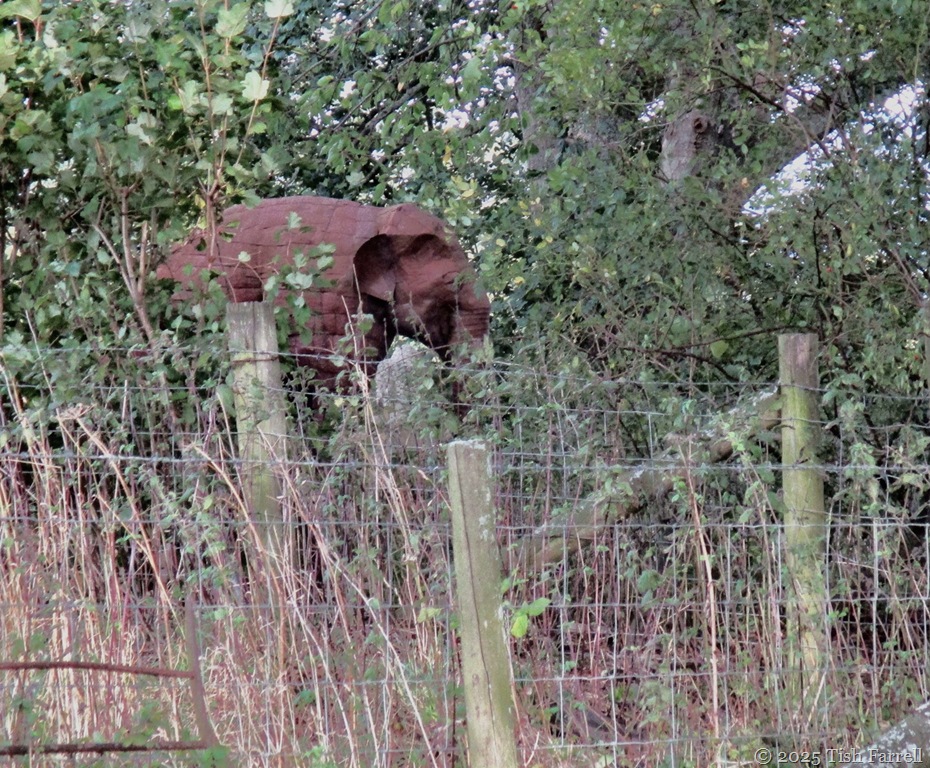
I collected a couple of kilos of fallen fruit. The apples on the tree did not want to be picked, holding fast to their twigs. We headed onwards and homewards down an easier slope, glimpsing the Indian
elephant sculpture through the trees. We didn’t visit it this time, but it amused me that this view was often how we saw wild elephants when we lived in Kenya. In fact you were lucky to see this much of them…
*
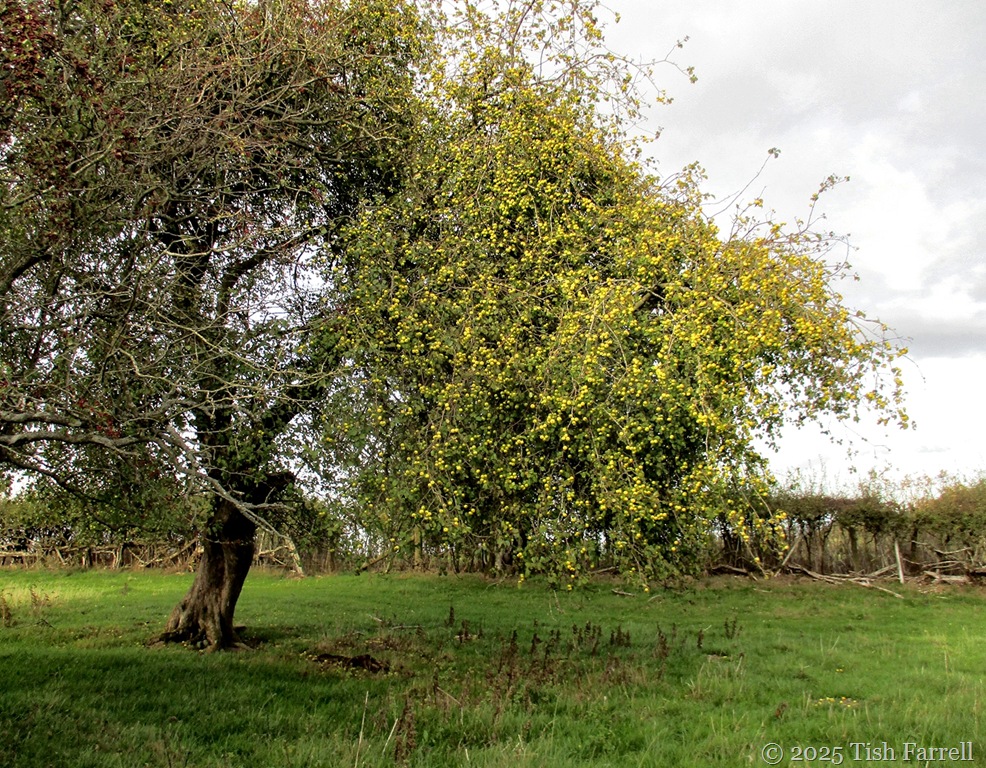
And it was here we found yet another crab apple tree, the fruit pale yellow, smaller and rounder than the hilltop apples. And it too was laden. Well! No need to worry about jelly supplies.
*
I also wished I could think of something useful to do with hawthorn berries. There was a profusion of them on a nearby tree. All around Shropshire this year the fruit is providing a spectacular show, seemingly quite unaffected by the rainless spring and summer. The berries are of course very important in herbal medicine: tinctures and teas deemed restorative for the
heart and arteries, and more besides. Simply looking at that glorious red made me feel brighter:
*
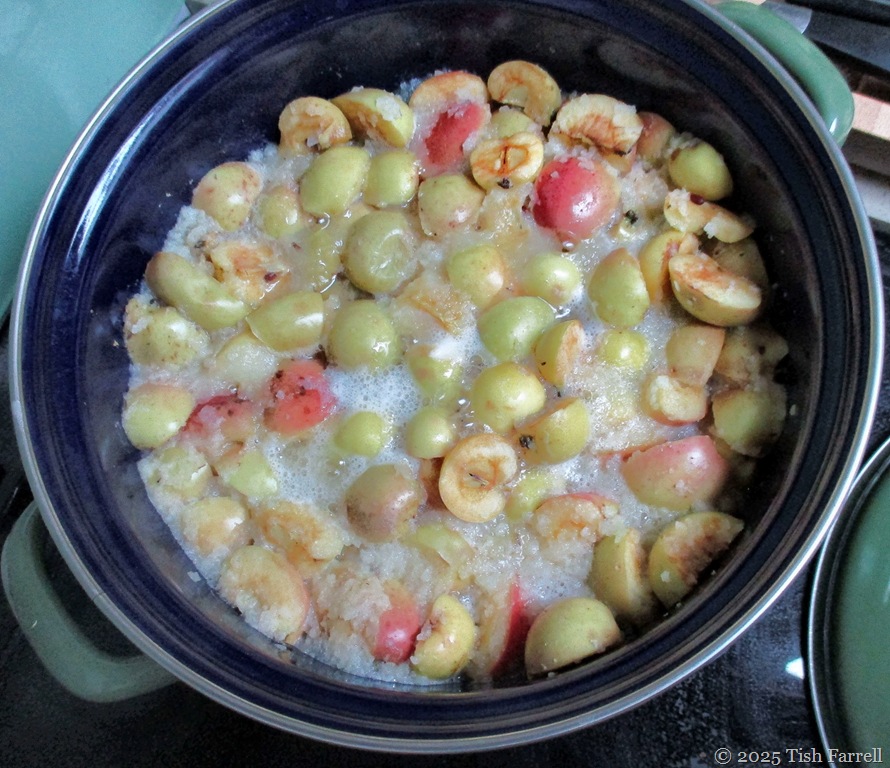
And so to the kitchen to chop apples and simmer till soft.
The pulp is then put in muslin and strained overnight (allowed to drip, but not squeezed).
*
*
The resulting juice is measured and put in a heavy pan with sugar at a ratio of 10:6 juice to sugar. You can add some lemon juice and herbs – chopped mint or rosemary, but I don’t. After stirring in the sugar until it is melted, a steady 7-8 minute boil is usually enough to achieve a set. The jelly should then be poured into sterilized jars.
*
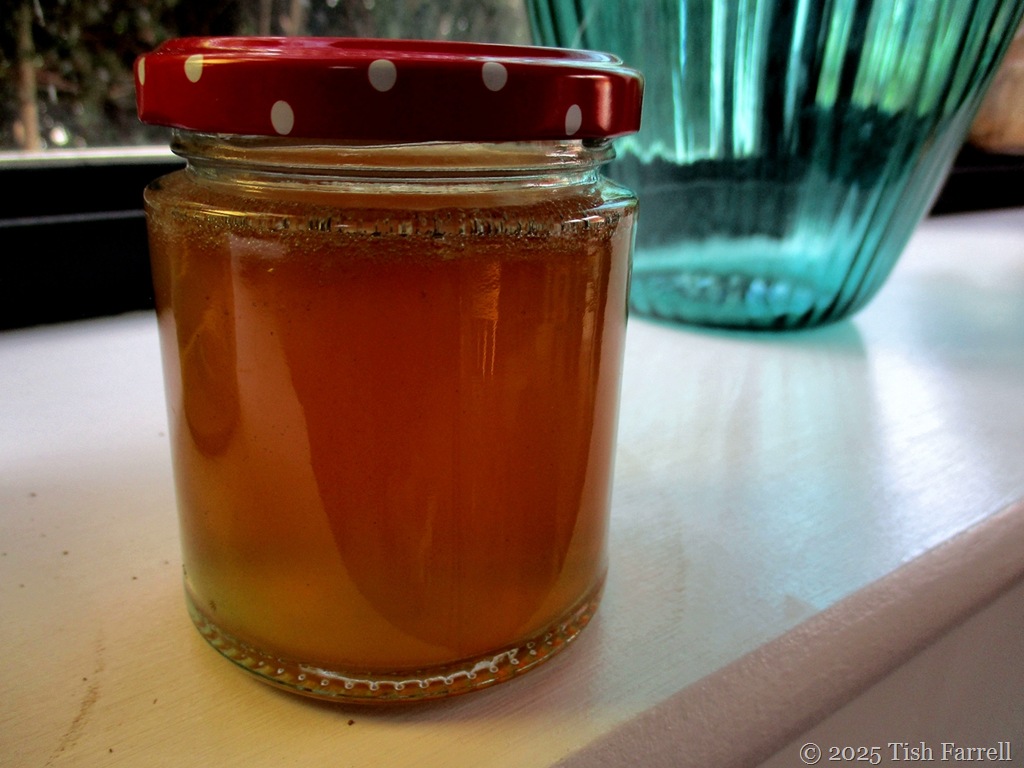
This being a once-a-year activity, I find it helps to make a small batch first to get the gist of things. This jar would definitely not pass muster at a Women’s Institute jam and preserves contest – too cloudy (must have squeezed the straining muslin), too many bubbles as I probably overdid the ‘setting’ in order to be on the ‘safe side’.
This particular crop obviously had a high pectin content: the gelling happened in less than 5 minutes. But never mind. It will still be fine with roast lamb, and delicious on a warmed croissant or with soda bread toast. And using the Wintles Hill wild apples means I can leave my lovely little garden crab apple trees looking decorative with their full complement of fruit. The blackbirds will get to enjoy them in December.